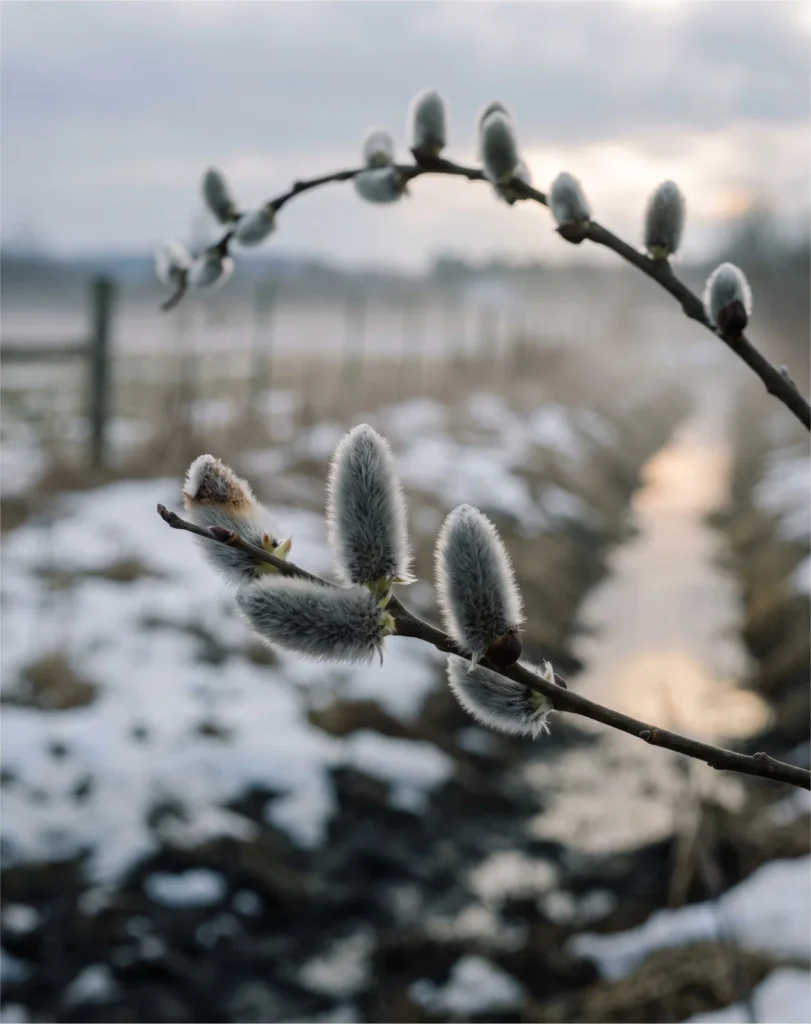
Which willow the name actually means
In the United States the name usually means Salix discolor, the American pussy willow, a fast-growing, multi-stemmed deciduous shrub or small tree native to Canada and the lower 48 states. Salix caprea, the goat willow, is the European one, at home across cool temperate and boreal Europe and Asia. It stands behind the weeping standards sold for small gardens. Salix cinerea, the gray willow, is the third, also northern European. The three are not interchangeable in a garden.
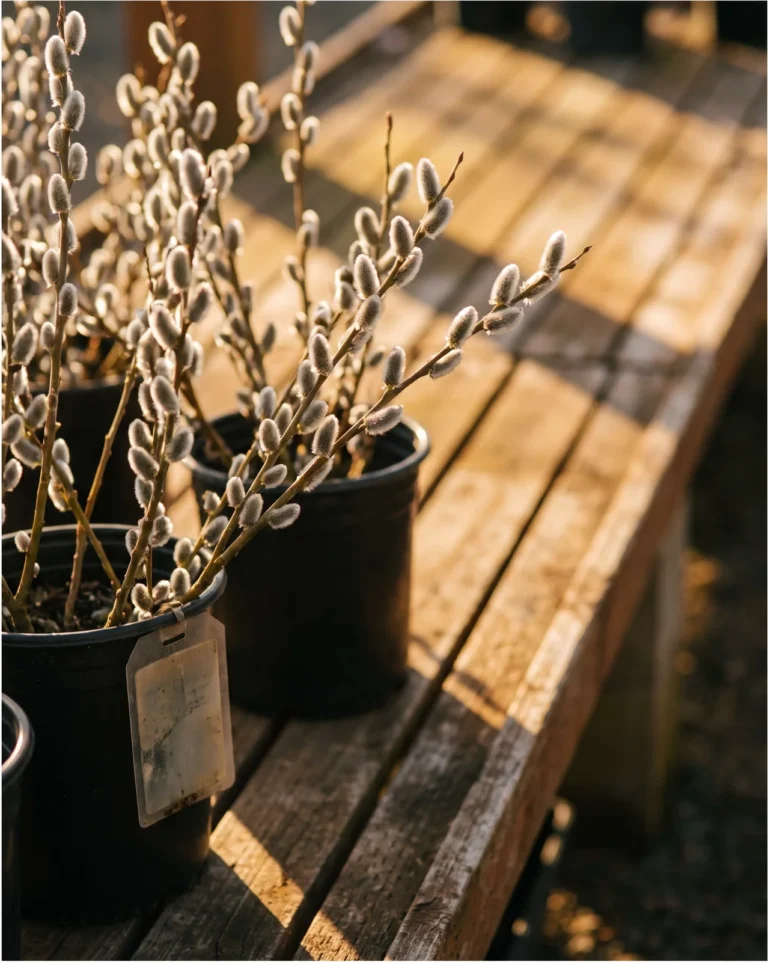
Male catkins on the American species run 1 to 1.5 inches long, pearl gray and silky, opening before the foliage. On goat willow they run 1 to 2 inches and are pinkish gray and woolly. Goat willow and gray willow get confused with each other, and goat willow lacks the prominent ridges on the wood under the bark. The bare-root shrub sold under the plain name 'Pussy Willow' is Salix caprea, with soft purplish brown catkins in March, and the French pussy willow is a male selection of the same species. If you want the native American plant, the tag has to say Salix discolor.
Size varies more than any other figure here. The American species usually lands between 10 and 25 feet tall and 8 to 15 feet wide, and a mature plant can reach 40 feet. Goat willow makes 12 to 25 feet tall and 15 feet wide in garden use, and grows taller in the wild.

The catkins, and why some plants have better ones
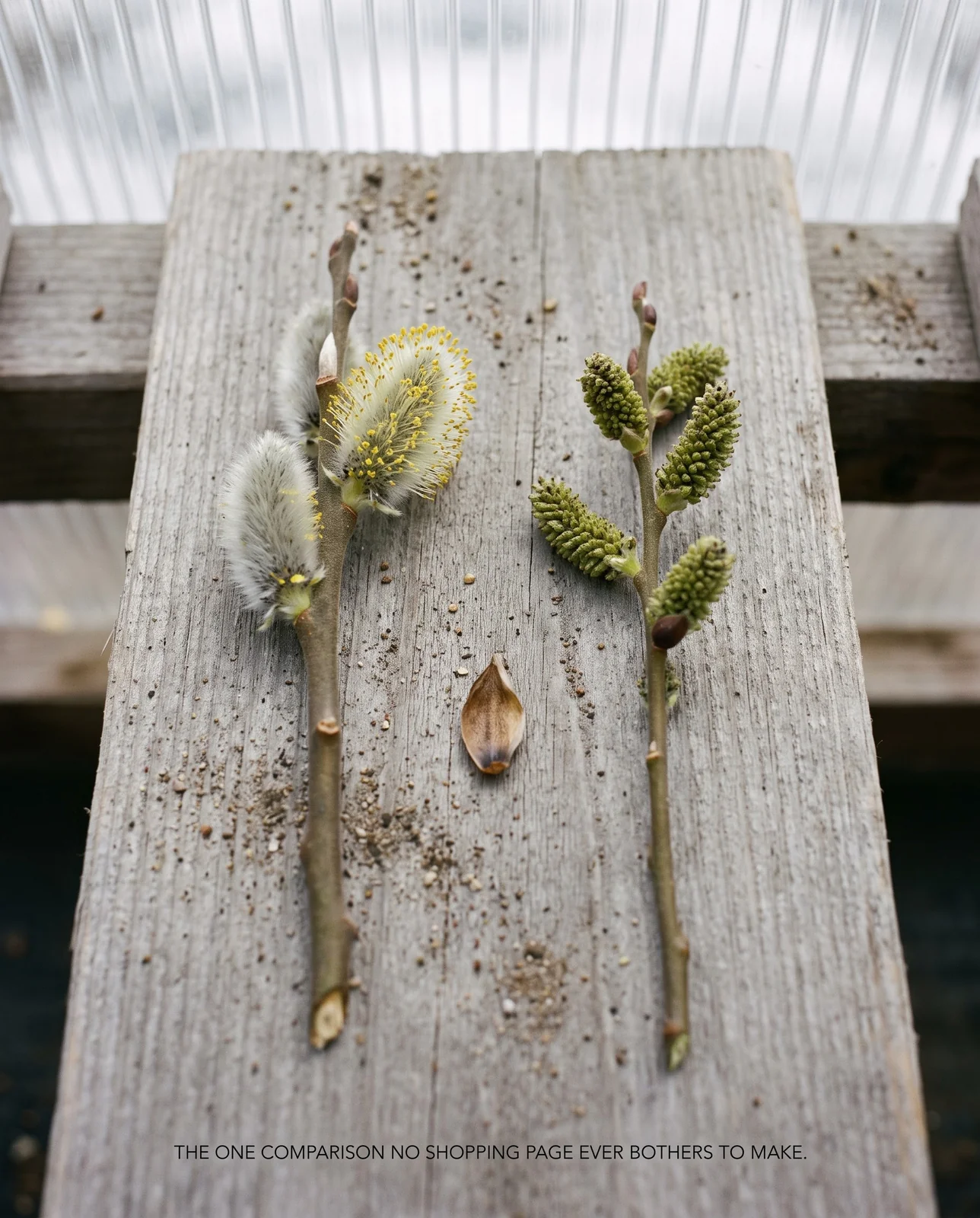
The catkins are the flowers, and the silver ones belong to male plants. Pussy willow is dioecious, so male and female flowers grow on separate plants. Only male plants carry the fuzzy silver catkins that get cut and sold. Female flowers read more like small greenish hairy caterpillars, smaller and greener beside the male display. Missouri Botanical Garden puts it as an instruction: buy a male plant if you want the catkin display. Named male selections exist, so it is a question you can ask at the counter.
A catkin does not stay silver. It opens from the bud as a silky cylinder ahead of any leaves. On the American species it runs 1 to 1.5 inches long and pearl gray; on goat willow, 1 to 2 inches and pinkish gray. Then scores of yellow stamens push out and cover it, each carrying a small clump of pollen at its tip. Most cut stems in a store never get that far, because the trade dries them at peak fuzziness. One male catkin has been counted at 270 individual flowers, a female one at 142, and goat willow catkins run roughly 200 to 300 flowers on a male and 100 to 200 on a female.
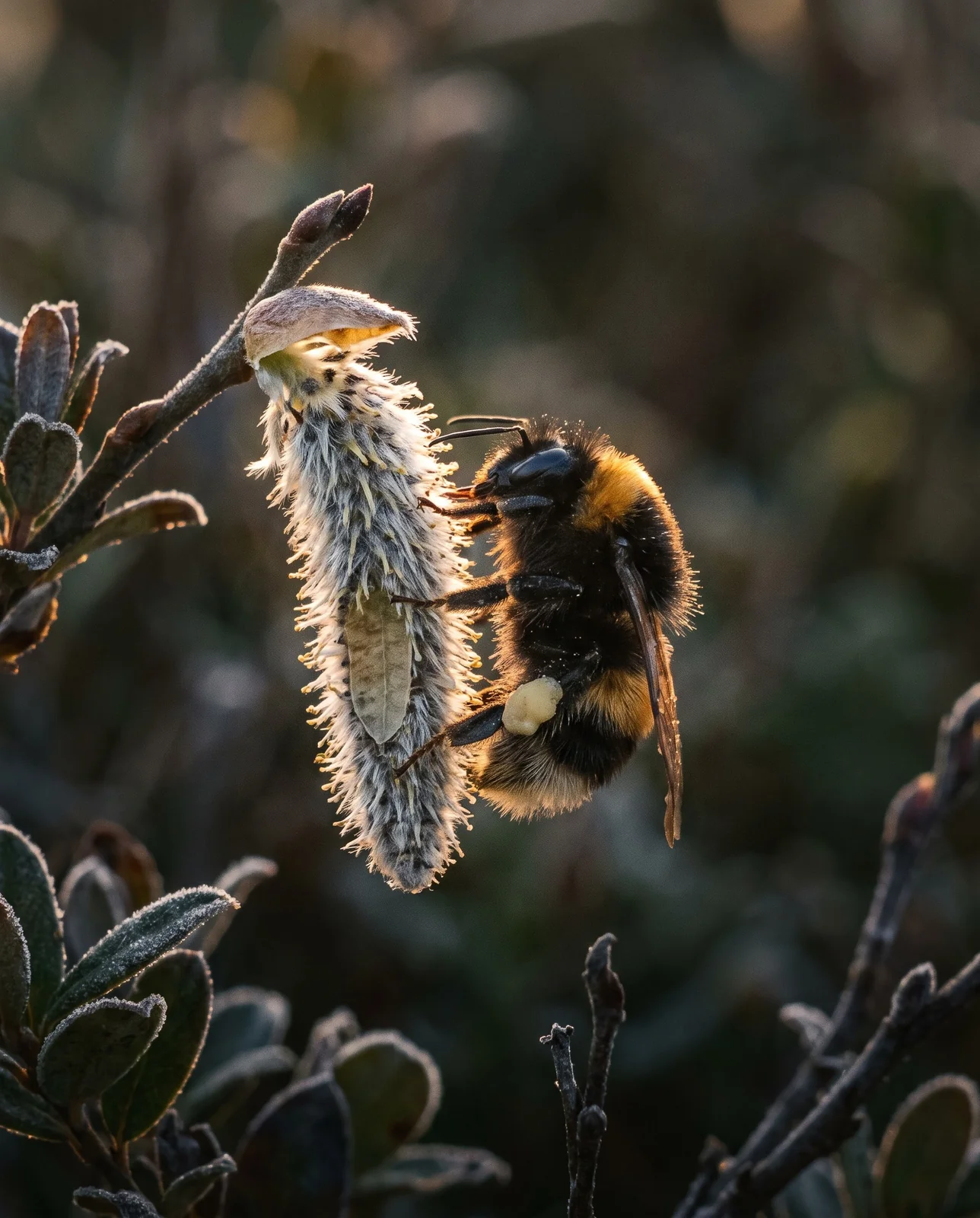
The bloom lands early enough to matter to insects. It comes in the same stretch of late winter as snowdrops, before most of the garden is awake. Both sexes feed whatever is flying: male blooms are pollen-covered stamens with nectar at the base, female flowers nectar-rich pistils. Catkins collected from a Maine bog averaged 2.2 microliters of nectar and 1.4 milligrams of sugar apiece, the highest sugar content among the 17 species measured with it.
Will the roots cause damage
Keep it well away from anything that carries water. The roots are shallow and they spread fast, and they can clog sewers and drains. The plant throws surface roots as it ages, with a minimum rooting depth of 20 inches. They travel in search of water, so buried pipes and septic tanks are exactly what they find. Most willow trees will invade any water source available to them. Gardening underneath an established plant gets difficult as well.
How far the roots go has never been measured. Nothing is documented for shrub-form willows, and the 50-foot figure people quote most likely belongs to the large willow trees. Gardeners planting around a septic mound work on 50 feet anyway, and a willow does not belong near a well tap or a septic system whatever its size. Taking one out is no easier, because cutting the top off and leaving the roots gives you the plant back.
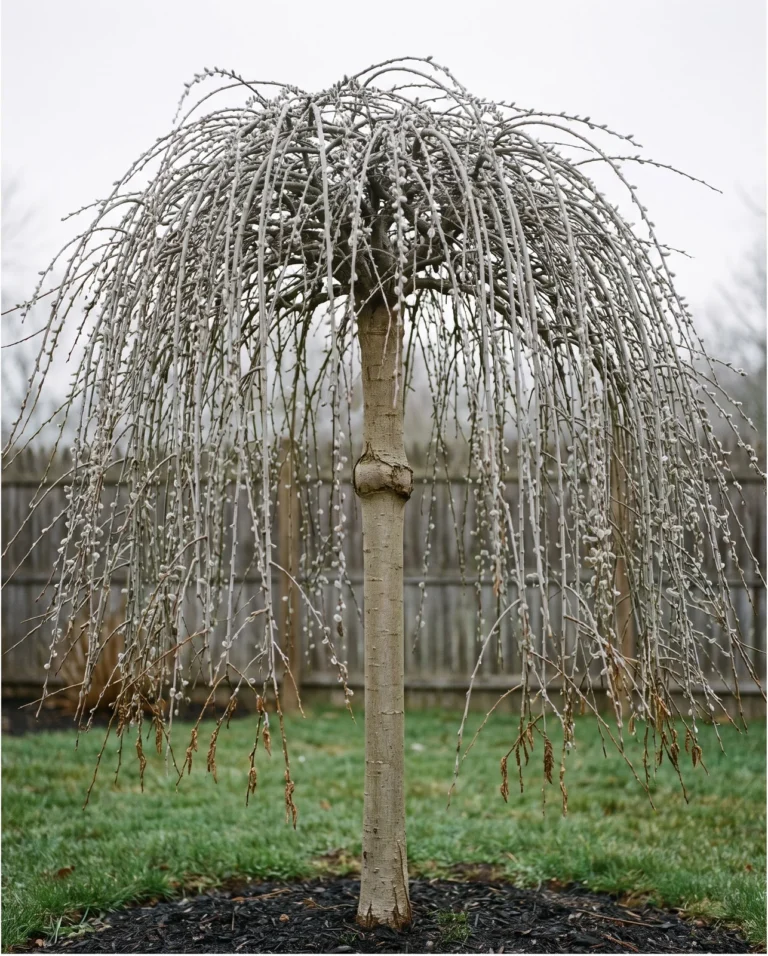
The weeping Kilmarnock form usually sits on a graft made onto a standard at about 6 feet, turning a shrub into a small weeping tree. Oregon State University flags a trade problem alongside it. Both male and female clones are sold under the Kilmarnock name, and the female clone, the weaker one in flower, is the more common in the United States. The rootstock species is not published, so the graft tells you nothing about root behavior. Ask what the plant sits on; until the seller answers, site it by the species warning.

Where to plant it
Full sun, and ground that stays damp. Six hours of direct light a day, and the plant does best in full sun with moist, well-drained soil, taking genuinely wet ground once it has settled in. This is the shrub for the low corner that never dries, the ground beside standing water, the rain garden that has defeated everything else. It will also grow on drier sites and in average garden soil, but it needs full sun or close to it to bloom well.
Shade is the one thing it will not take. This is a pioneer species that wants open ground, and goat willow is the same. For catkins in particular the answer is full sun. Soil pH barely registers. The plant runs from 4.0 to 7.0 and prefers ground near neutral at 6.8 to 7.2, which covers ordinary garden soil.
The common failure in a new planting is thirst mistaken for disease. Dieback on a young weeping plant points first at water, then at a nutrient shortage or a root problem, because pussy willows want a fair amount of water. Water a young plant harder than feels reasonable through its first summers, and give it room to reach the top of its size range. One thing to weigh before you dig: continuously moist soil, the condition the plant likes best, is also the condition under which it suckers hardest.


Pruning and coppicing
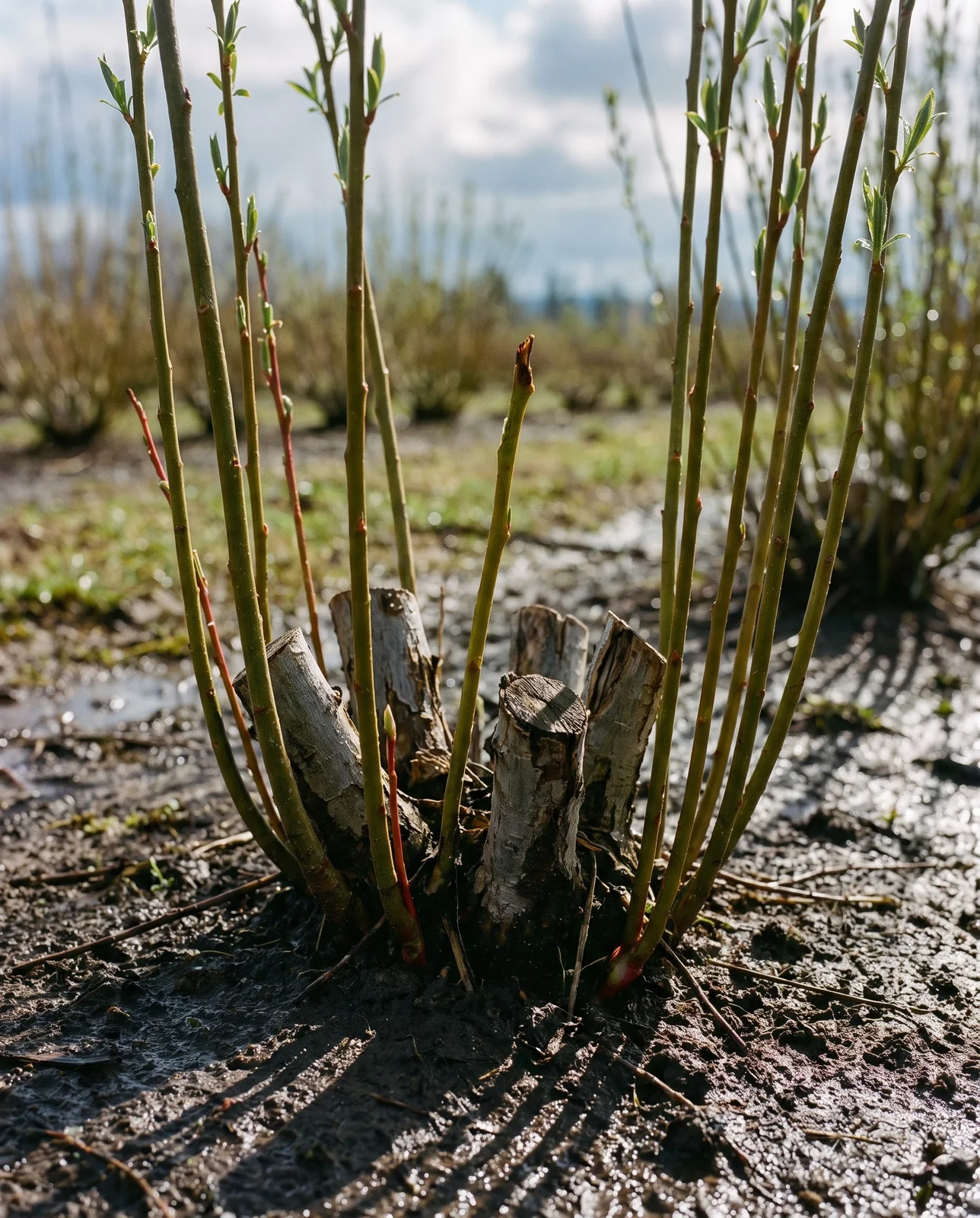
Cut it hard, and cut it as soon as the catkins are finished. Catkins come on young wood, so coppicing works: cut back each spring after bloom and the plant regrows long stems usually covered with catkins. A light tidy leaves you with old wood, and old growth on a willow is less vigorous and more open to disease. Regrowth is fast. Two years after shrubs were cut down in north-central British Columbia, the sprouts stood over 8.2 feet tall.
Timing decides your spring. Late winter to early spring is one window. After flowering finishes is a second. Shrub-willow thinning is dormant-season work, finished before late March or early April in most of Wisconsin. Dormant pruning is easier on the plant and easier to see, and it takes the catkin display with it. Cutting after bloom costs the plant the start of its season and keeps the show. Grow it for catkins and cut when they fade.
Sanitation is the part people skip. When you cut out diseased wood, wipe the shears with rubbing alcohol after every cut, so a pathogen does not travel down the plant and into the next one. The shrub prunes on the same signal as forsythia: the flowers sit on wood that is already made, so the shears go in as soon as the flowers are spent.
How much to cut, and how often
No single schedule fits. What separates them is how much wood you take at once.
Cutting branches for the house
Cut when the buds have pushed out into silver and before the yellow stamens show. That silver stage is what the trade sells: stems are harvested and dried at peak fuzziness, held there, and never allowed to flower. Kept dry they stay that way, and water and warmth do the opposite. Twigs stood in water in winter can be forced into flower in a warm room, some throwing golden stamens and others slender greenish pistils, according to the sex of the plant.
Take less than you want to. Harvest no more than 15 percent of a plant for decoration, because it is one of the earliest pollen and nectar sources of the year. Cut from your own plant, or one you have permission to cut. A vase also behaves like a propagation bench, because stems kept hydrated go on to leaf out and then need planting in soil outdoors.
Rooting a branch
Willows are among the easiest of all plants to root. Semi-hardwood and hardwood stem cuttings, and root cuttings, take readily in any well-drained medium and need no hormone treatment. For a deliberate batch, cut pieces about a foot long in spring from the straightest new growth. Stand them in water and move them to soil once the roots reach 3 to 4 inches. Stems that root in a vase can be potted or planted straight into the ground in spring. Gardeners have long steeped willow branches to make a rooting tea for other cuttings, a homemade alternative to bottled hormone.
A rooted vase branch is a full-size shrub in waiting. A stem started on a windowsill needs a site sized for a plant of 10 to 20 feet, and not a pot beside the steps. Extensive root systems bind soil and cut erosion, so the plant goes into vegetative filter strips between farmland and waterways, and stems there can be harvested two years after establishment.
Hardiness and where it grows
It is one of the hardiest shrubs you can plant. The American species is hardy from zone 2a through 7b and takes a minimum temperature of minus 33 degrees Fahrenheit. Plants sold as goat willow run warmer at the top end, zones 4 to 8, and the Kilmarnock weeping form is hardy to zone 4. The warmest figure anywhere on the group is 8b.
The American pussy willow belongs to Canada and the lower 48 states, a plant of wetlands and damp ground that can nonetheless take a drier site. Goat willow is Eurasian, at home across cool temperate and boreal Europe and Asia. Where the plant is happiest is easy to describe: an open, sunny, permanently damp spot, well clear of any buried line.
The forms sold under the name, side by side
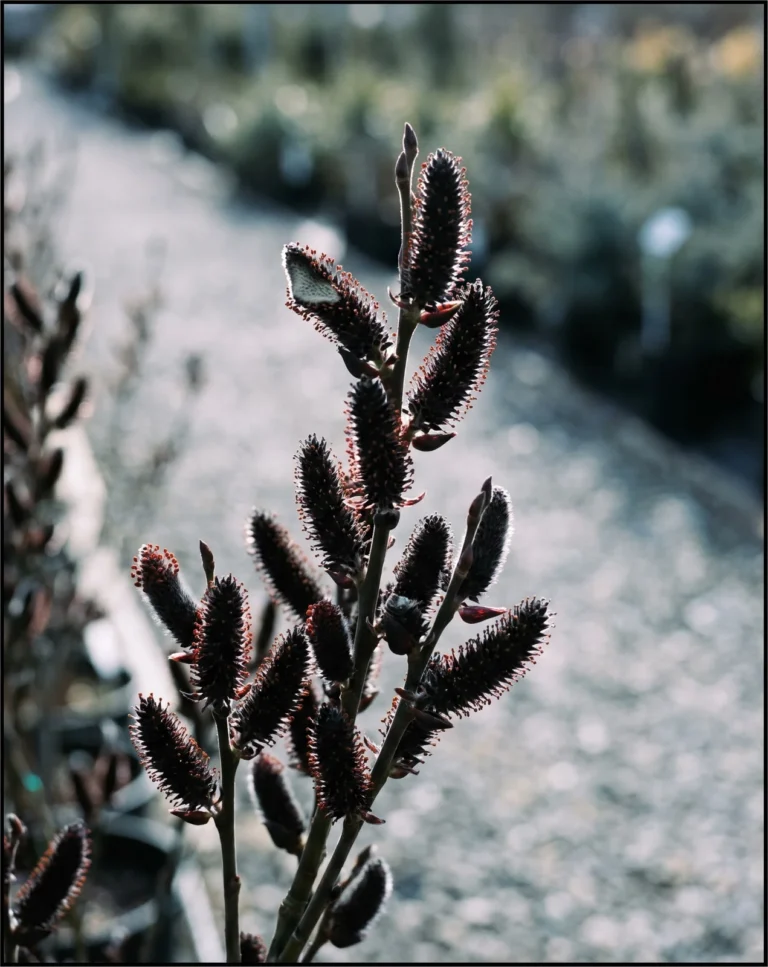
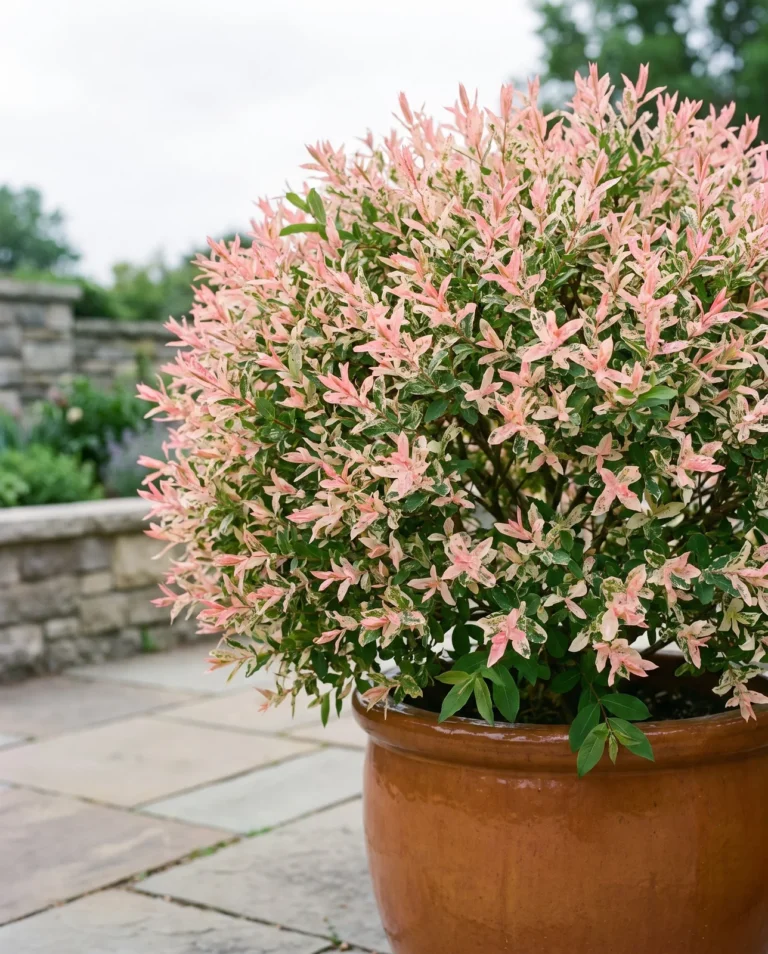
What separates them: species, catkin color, and whether the plant sits on a graft.

How long it lives
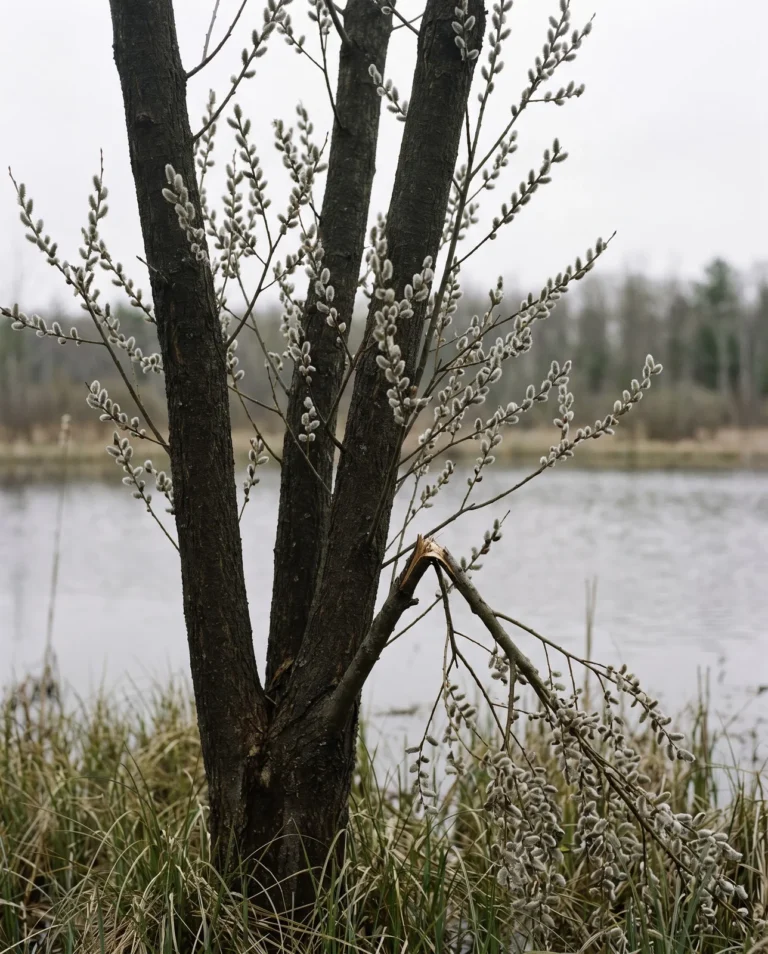
It grows fast and it ages fast. Morton Arboretum classes pussy willow as short-lived, and the European goat willow is short-lived too, replaced quickly in natural succession. A shrub cut to the ground every three to five years behaves like a crop, replaced from its own stems, which root in any well-drained medium without hormone treatment. Keep a young plant coming along and let the old one go. Do not site it as the permanent anchor of a bed the way you would a magnolia.
What it feeds
It opens weeks before most of the garden and feeds insects that have nothing else to work with. The catkins carry special value for native bees, bumble bees and honey bees, and the shrub is a larval host for the mourning cloak and the viceroy butterflies. Viceroy larvae run two or three broods from May through September. The caterpillars overwinter on the plant itself, sealed inside the remains of a willow leaf they fasten down with their own silk. A winter cleanup therefore costs butterflies: cut stems go to the brush pile with next summer's brood inside. Female plants pay their way later, forming seed capsules whose silky tufts songbirds collect as nest lining. The bloom lands in the same cold weeks as hellebores, and between them they cover the stretch when early bees are flying and almost nothing is open.
Larger animals browse it hard. In Quebec, browsing of available pussy willow stems climbed from 13.5 percent in the first winter after a cut to 21.4 percent by the third, so a hard prune produces exactly what gets eaten. Buds and leaves made up 8.8 percent of ruffed grouse gut contents in winter and 3.6 percent in spring. On a two-year-old burned site in Minnesota, willows accounted for 25 percent of the total moose diet from April to December. None of it is a reason to skip the plant. Cage a new one for its first winters.
Pests and diseases
Willows carry a long list of troubles, and most of it is cosmetic on a plant that gets cut back. Susceptibility runs to mildew, blights, leaf spots and canker diseases, plus borers and aphids, with gray scab, scale, lacebugs and caterpillars on the same list. Two fungal problems are worth telling apart. Willow scab shows as small olive-brown masses on leaves, petioles and twigs after wet weather, and repeated heavy infection kills twigs and branches back. Black canker makes brown to black lesions that develop into cankers on the twigs, and the two running at once are what gardeners call willow blight. Rust is the least serious: small orange or brown raised pustules on the leaf surface, favored by cool, moist summers.
The insect side is mostly defoliation and boring. Sawfly larvae feed on young leaves and leave only the midrib, stripping a plant in a short window. Stem sawfly larvae tunnel inside the wood and bore their way out, killing the stem above the exit hole. Borers work more slowly, killing stems, and sprouting from below the damage is common afterward. One beetle defoliates pussy willow before it moves on to other willows. A plant kept on a hard-cut cycle carries young wood, sheds its infected stems into the brush pile at every cut, and outgrows damage that would disfigure a permanent tree.
What actually goes wrong
The first is settled before you dig. The rest are settled by the cutting cycle.
Symptoms: nothing above ground; the plant looks healthy while the line or the well fails. Cause: roots travelling toward water. Management: distance, decided before you plant, since nobody has measured how far shrub-form willow roots go.
Symptoms: bare lower stems, floppy growth, catkins carried out of reach on old wood. Cause: no hard cut. Management: take about 30 percent of the biggest, oldest stems at ground level every year, or the whole plant to the ground every three to five years.
Symptoms: limb dieback within a season or two of transplanting. Cause: water first, then a nutrient shortage or a root problem. Management: water hard through the first summers. The head sits on a graft at about 6 feet, so one failing trunk takes the whole plant.
Symptoms: dull greenish catkins with the look of small hairy caterpillars. Cause: a female plant. Management: buy a male; some cultivars, the black-catkin one among them, reach the trade in male form only.
Symptoms: brown to black lesions turning into twig cankers, with olive-brown masses on leaves and petioles after a wet spell. Cause: willow scab and black canker together, called willow blight. Management: cut the infected wood out, wiping the shears with rubbing alcohol after every cut.
Symptoms: foliage eaten back to the midrib, or a plant defoliated by beetles that take pussy willow before other willows. Cause: sawfly larvae and leaf beetles. Management: a plant on a hard-cut cycle regrows through it in one season.
Symptoms: shoots around the parent plant, and a cut stump that returns hard. Cause: roots left in the ground. Management: take the roots out with the top, or put the plant where a thicket is welcome.
Is it invasive
Two different questions travel under that word. Goat willow carries no known regulations in the United States, with a single administrative exception: Illinois restricts aquatic plants that are not explicitly approved, and the species falls under that blanket rule. It does appear in the invasive-plant literature, which carries no binding force. In the Great Lakes its environmental impact is moderate, and its socioeconomic impact little or none. The American species carries none of this. It is a native plant of North American wetlands.
The garden meaning is the one most people are actually asking about. It is a maintenance question about suckering and regrowth in a bed. Gardeners do put the plant forward for a living fence, on the grounds that it stays under the width and the height a true weeping willow reaches. Regulatory status says nothing about roots near a septic line. That answer lives in siting and distance, in how far the plant sits from the thing you do not want it to reach.
Where the name comes from
The name is about the fur, and so is the botanical word. The fine grayish fur on the young male catkins produced a fancied likeness to tiny cats, or pussies, and catkin itself comes from katteken, the old Dutch word for kitten. Both names describe a stage the catkin passes through, which is why the label on the pot tells you more than the common name does. The likeness goes the moment the stamens push out and break the outline up.
Five things people get told
Five claims that arrive with the plant.
The myth: Pussy willow is one plant.
The reality: The common name covers goat willow, gray willow and the American pussy willow, and the bare-root shrub sold plainly as 'Pussy Willow' is usually the European one.
The myth: Every pussy willow carries silver catkins.
The reality: Only male plants do. One widely sold cultivar carries almost black catkins lit by red anthers that age to yellow.
The myth: Prune it in fall along with the rest of the shrubs.
The reality: Catkins come on young wood, and a cut made after bloom regrows long stems usually covered with them. Thinning finished in the dormant season, before late March or early April, takes that spring's display with it.
The myth: A grafted plant is safe to put near a septic line.
The reality: The rootstock species is not published, so a graft tells you nothing without documentation from the nursery, and most willow trees will invade any water source they can find.
The myth: Put it in a wet corner and forget about it.
The reality: Left alone it goes leggy and oversized. The maintenance plan is a cut to the ground every three to five years, and gardening underneath an established plant is difficult.
What to expect, year by year
Three stages, and the middle one is where the plant becomes what people buy it for.
Year one is roots. A new plant spends the season establishing and wants water more than anything else. Catkins are few and sit low. Cut nothing beyond broken wood: stems for restoration plantings are not harvested until two years after establishment.
Year two or three brings the first hard cut, and the growth that follows is quick. Sprouts from a cut plant can stand over 8.2 feet two years on. Make the cut as soon as the catkins fade, taking either the oldest third of the branches or the whole plant down to ground level. The stems that come back carry the next display.
From then on it is a cadence you pick once. Either take about 30 percent of the biggest, oldest stems at ground level each year, or put the whole plant down every three to five years. Left to run, the American species reaches 20 feet by twenty years, and a plant on a coppice cycle never gets near that. Expect to replace it eventually, since the shrub is short-lived and a cut stem starts a new plant on its own.
FAQ
Why is it called pussy willow?
From the fuzz on the young male catkins, read as a likeness to tiny cats, or pussies.
How long do cut pussy willow branches last?
Kept dry they hold at the silver stage, which is how the trade sells them: stems are harvested at peak fuzziness and never allowed to flower. Stood in water in a warm room they open, some throwing golden stamens and others slender greenish pistils.
Will a willow survive if some roots are removed?
Usually, which is the difficulty when you want it gone. Take the top off and leave the roots, and the plant comes back hard.
How far can pussy willow roots spread?
Nobody has measured it for shrub willows, and the 50-foot number in circulation describes the large willow trees. Gardeners planting around a septic mound assume the roots cross that distance eventually.
Do willows have a deep root system?
No. Pussy willow is shallow-rooted and develops surface roots as it ages, with a minimum rooting depth of 20 inches. Shallow roots still spread fast and still clog sewers and drains.
Where should you not plant a pussy willow?
Clear of a septic field, a well, and any buried water or sewer line, because the roots travel in search of water. Planting a bed underneath an established plant is hard going too.
When should you prune a pussy willow?
For catkins, cut as soon as flowering finishes, taking either the whole plant to ground level every three to five years or one third of the oldest branches every year. Dormant thinning before late March costs you that spring's display.
How do you root a pussy willow cutting?
Cut pieces about a foot long in spring from the straightest new growth, stand them in water, and move them to soil once the roots reach 3 to 4 inches. No rooting hormone is needed.
How can you tell a male pussy willow from a female one?
By the catkin. Male plants carry the fuzzy silver ones that get cut and sold; female catkins are smaller and greenish. If the display is the point, buy a male plant.
Is pussy willow toxic to dogs or cats?
Neither ASPCA plant list carries an entry for pussy willow, goat willow, Salix discolor or Salix caprea under any name. The one willow that does appear, Salix purpurea, is non-toxic to dogs, cats and horses. Toxicity for the American species is none, but that is thin evidence, so a dog that has chewed stems still earns a call to the vet.
Interesting tips
- Cut branches stand in for palm fronds on Palm Sunday in Ukrainian Orthodox, Russian Orthodox and Polish Catholic households. The blessed branches are sometimes kept in the family icon corner for the rest of the year.
- In Chinese tradition the branches read as prosperity and are bought from markets at Chinese New Year, then hung with gold, red, pink and yellow ornaments.
- Willow bark carries salicin, a close relative of acetylsalicylic acid, and was used historically against fevers, pains, colds and rheumatism. The same plant supplied rope, baskets, containers, fasteners, cooking tools and netting.
Related Guides & Flowers

Cherry blossom
The spring show people plan a trip around, opening just after the catkins.

Crocus
Comes up in the same cold weeks and feeds the same first bees.
Tulips
Planted in fall for the bed the catkins arrive ahead of.

Types of flowers
The full index of flower guides on the site, sorted by kind.
Enjoying our flower guides? Add YourFlowersGuide as a preferred source on Google. It helps more readers find us.
Add to Preferred Sources