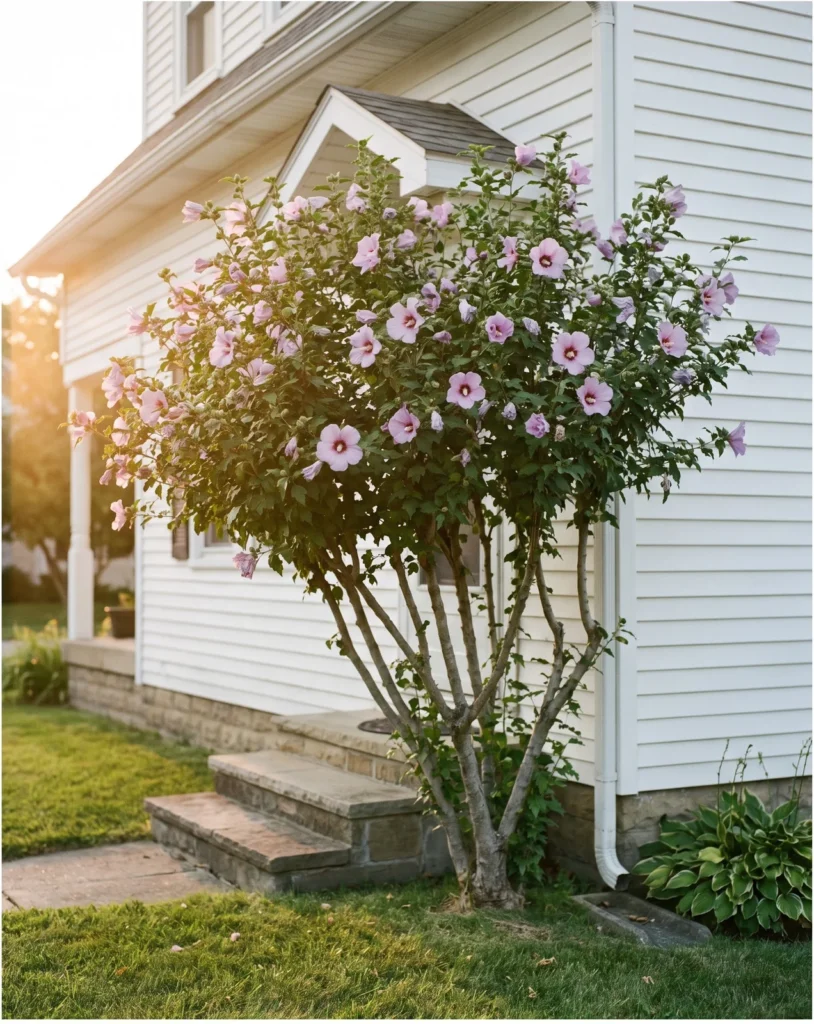
What rose of Sharon is and where it comes from
Rose of Sharon is Hibiscus syriacus, a deciduous shrub in the mallow family and a true hibiscus. Its genus name is simply the ancient Greek and Latin word for mallow. It is sold under several confusing names, including shrub althea, Syrian mallow, Syrian hibiscus, and rose of China. The species name syriacus is misleading: botanists named it after collecting specimens from Syrian gardens, though the plant actually originates in eastern Asia.
Its wild range centers on south China and Taiwan, stretching from China to India and eastern Asia, though it is now widely planted elsewhere. It was also historically endemic to Korea, arriving in Japan in the 8th century for garden cultivation. In South Korea it is the national flower and is named in the national anthem, known under the Korean name mugunghwa as an eternal blossom that never fades.
Which hibiscus you are actually looking at
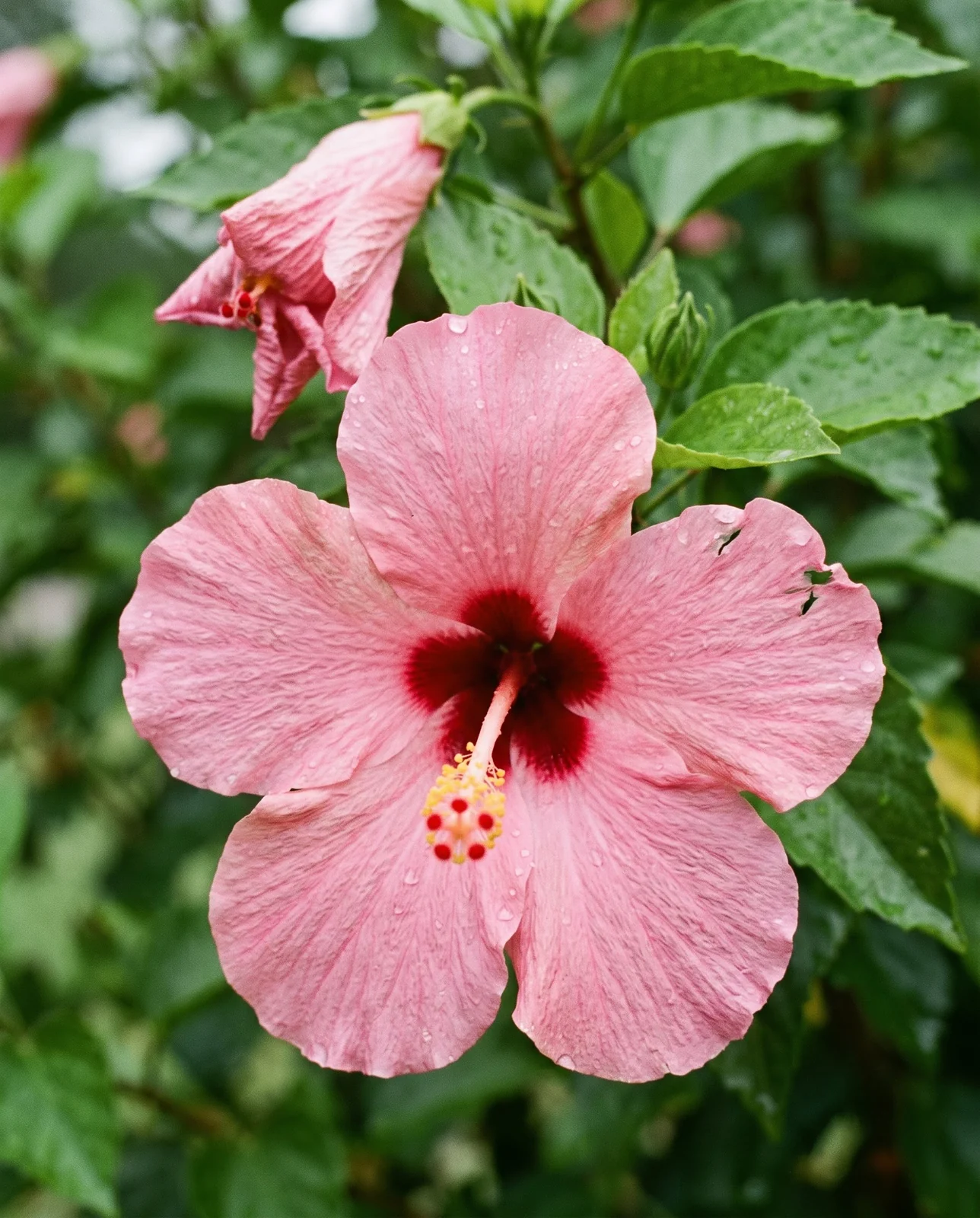
Two different shrubs sell under the name hibiscus, and hardiness separates them at a glance. Rose of Sharon (Hibiscus syriacus) is a hardy bush that drops its leaves in fall and winters as bare wood. Tropical hibiscus (Hibiscus rosa-sinensis) is a tender evergreen, likely native to tropical Asia and unknown in the wild today. That divide decides where each plant can grow outdoors, how tall it gets, and how you prune it.
The divide shows up the first time temperatures dip in autumn. Tropical hibiscus stays evergreen year-round only in South and Central Florida. Even a mild cold snap can turn its lower leaves yellow and make them drop. In North Florida, it freezes to the ground each winter and usually regrows from the roots. Cold hardiness for it is unsettled: ratings place it across zones 9 to 11, narrow it to zones 10 and 11, or hold it to coastal zone 9 alone. Zone numbers do not show when cold begins to harm the bush, so how it acts outdoors is the best test.
Care advice easily gets crossed between the two shrubs. Advice to plant in zones 9 to 10 or move pots indoors by a sunny window describes tropical hibiscus. That tender plant needs steady indoor warmth between 65 and 75 F. Patio types like Cinnamon Grappa reach 4 feet tall and usually live about five years. Common names add to the mix, since rose of China is used for both shrubs. Across the wider hibiscus family, names often get swapped around. Checking the plant tag settles the question. The name syriacus marks the hardy bush that stands as bare wood through winter, while rosa-sinensis marks the tender tropical hibiscus.
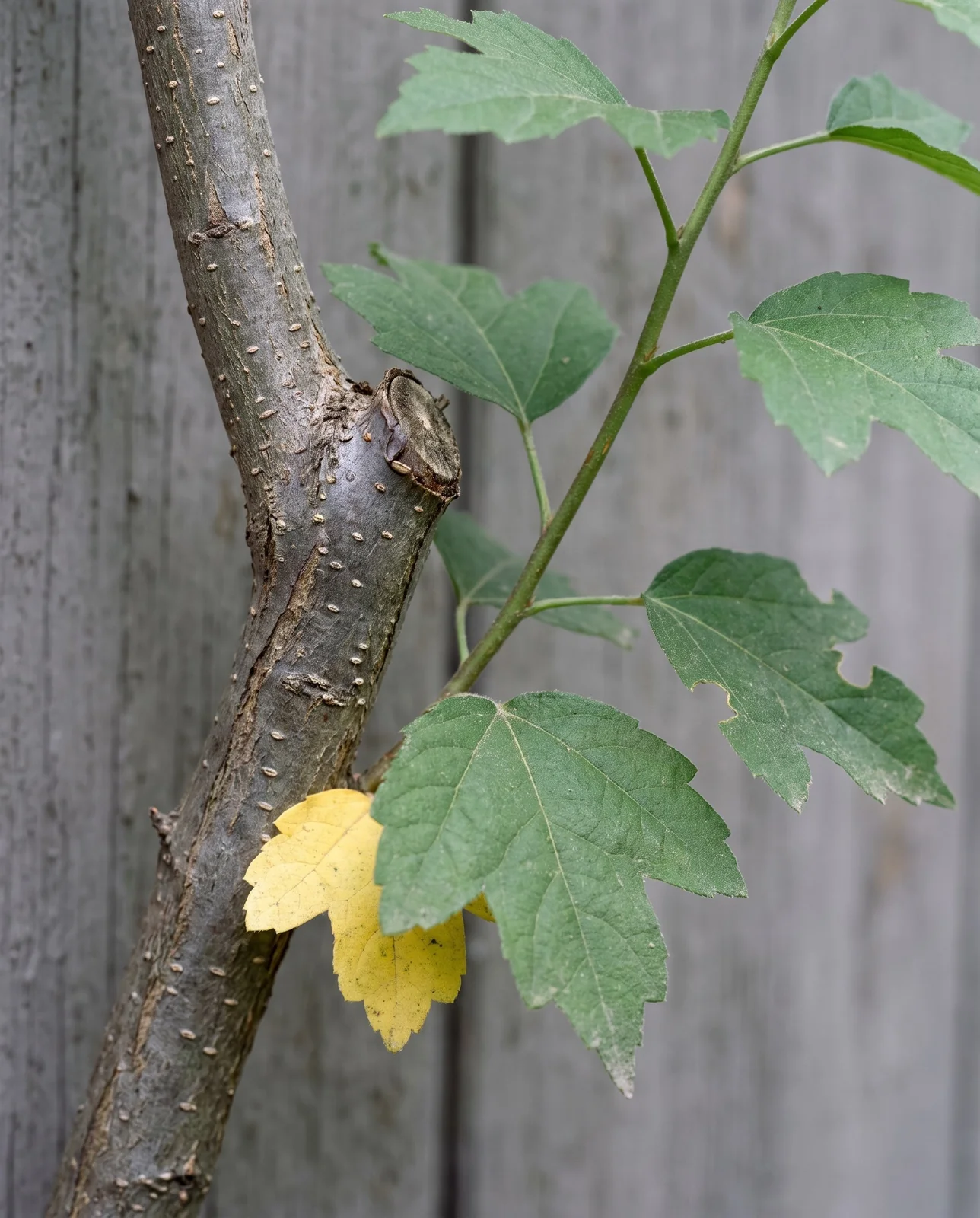
The two hibiscus side by side
The two plants part company on four points, beginning with the name printed on the nursery tag.
What the shrub and its flowers look like
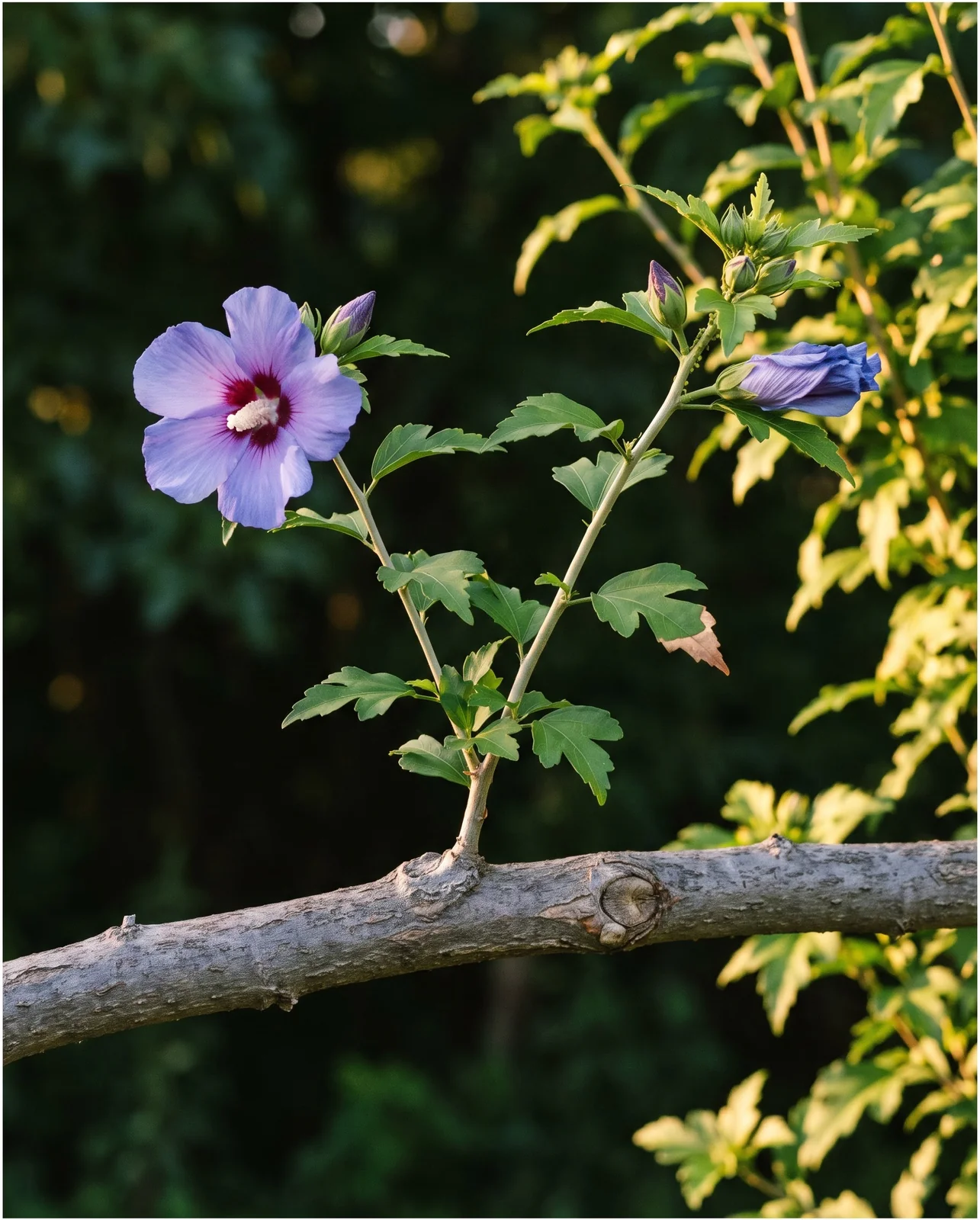
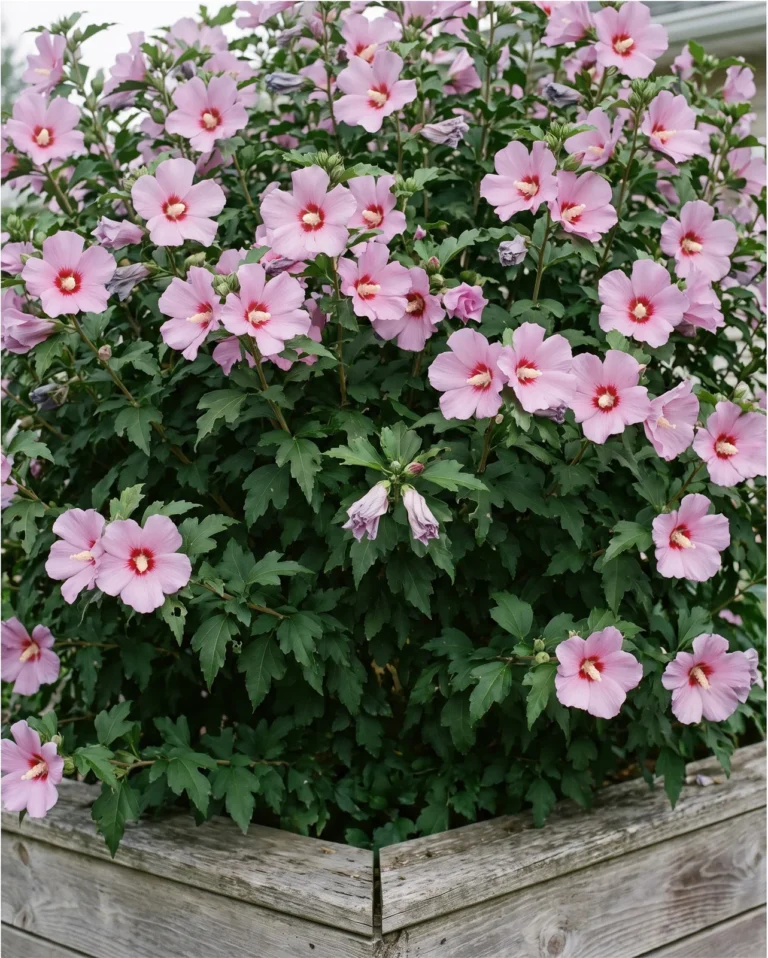
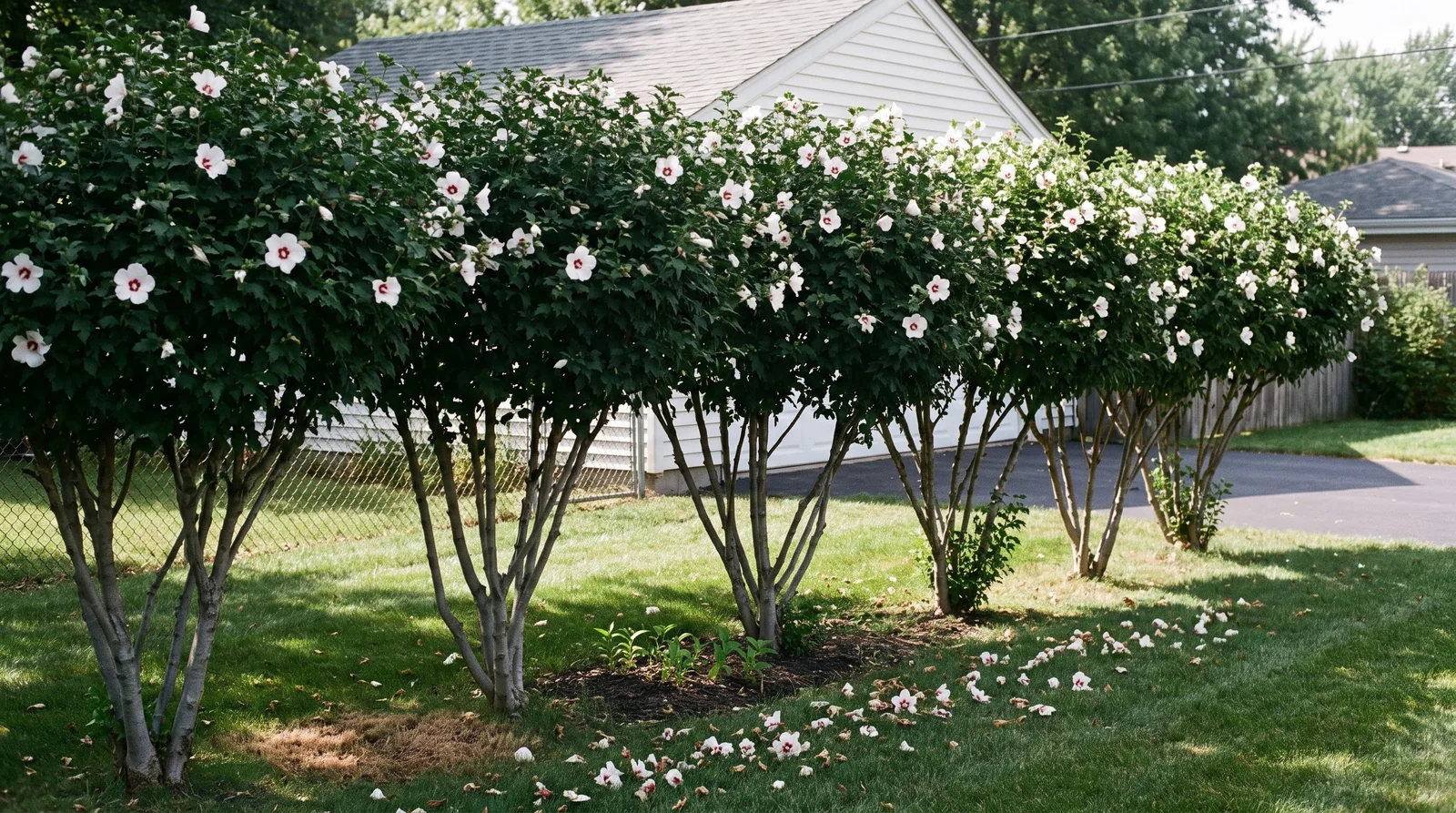
Rose of Sharon grows as an upright, vase-shaped shrub with multiple sturdy stems. Its trumpet-shaped flowers display five crepe-like petals around prominent, yellow-tipped white stamens at the center. Blooms span between 1 and 4 inches across, most often opening 2 to 3 inches wide. An individual flower lasts for one day.
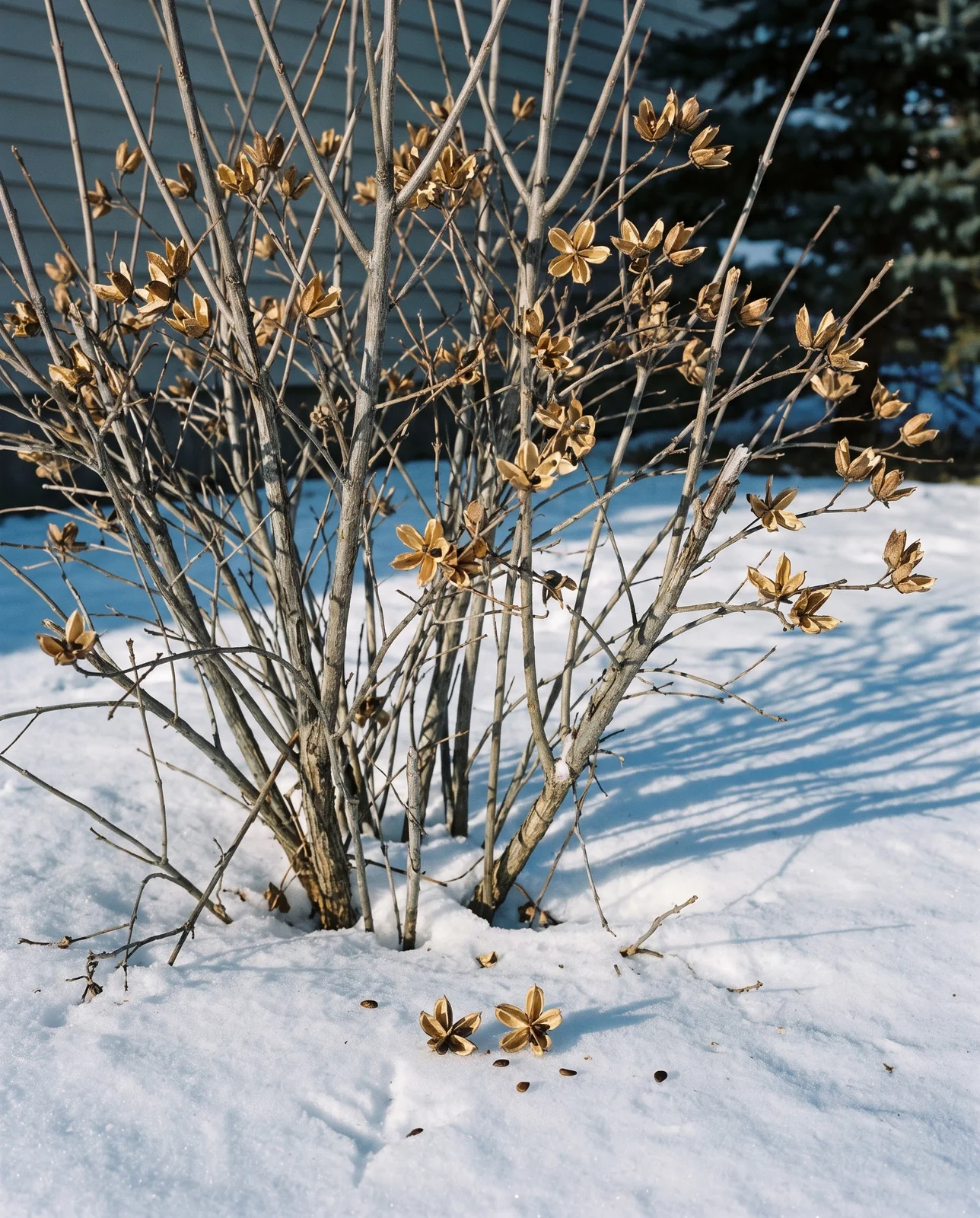
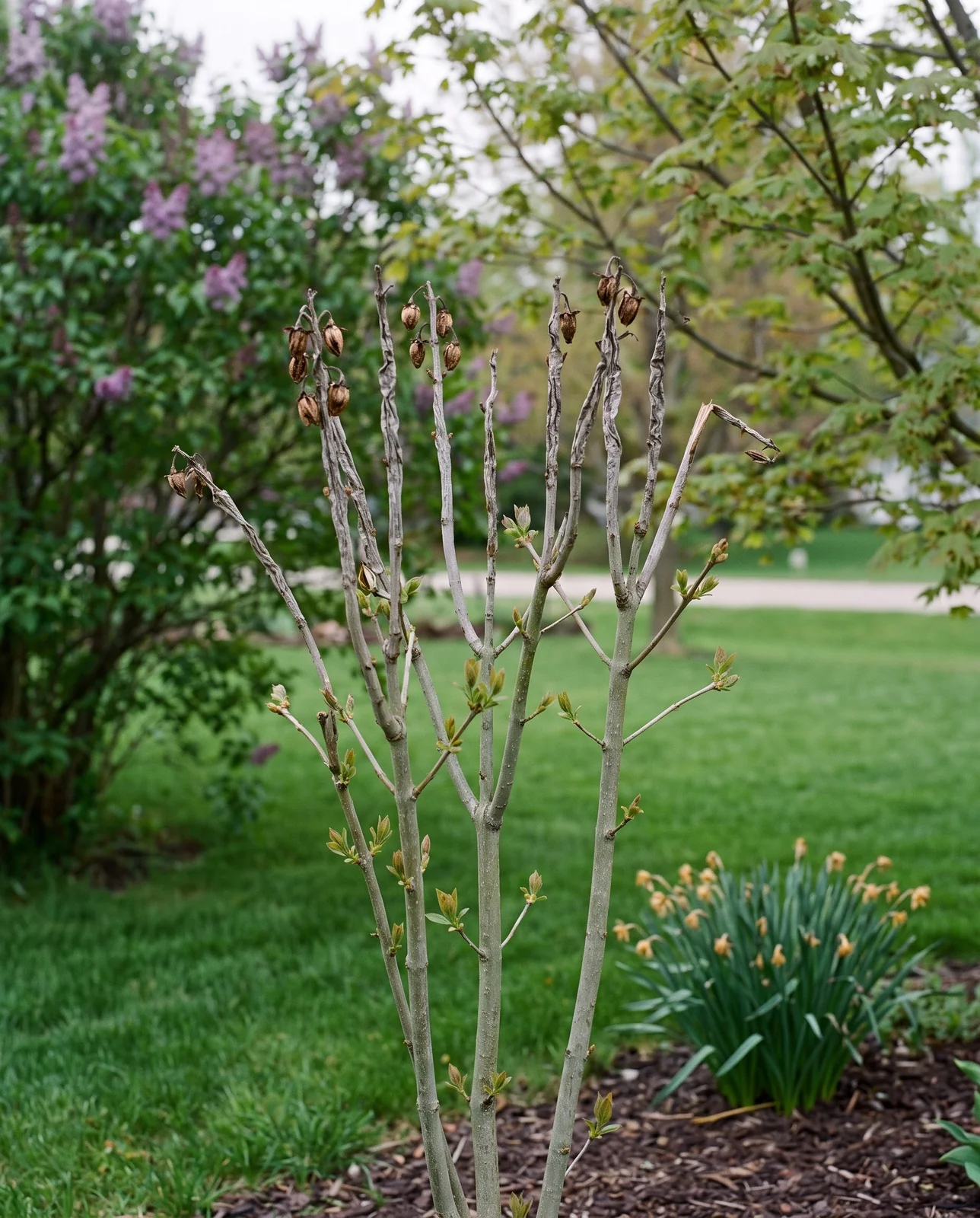
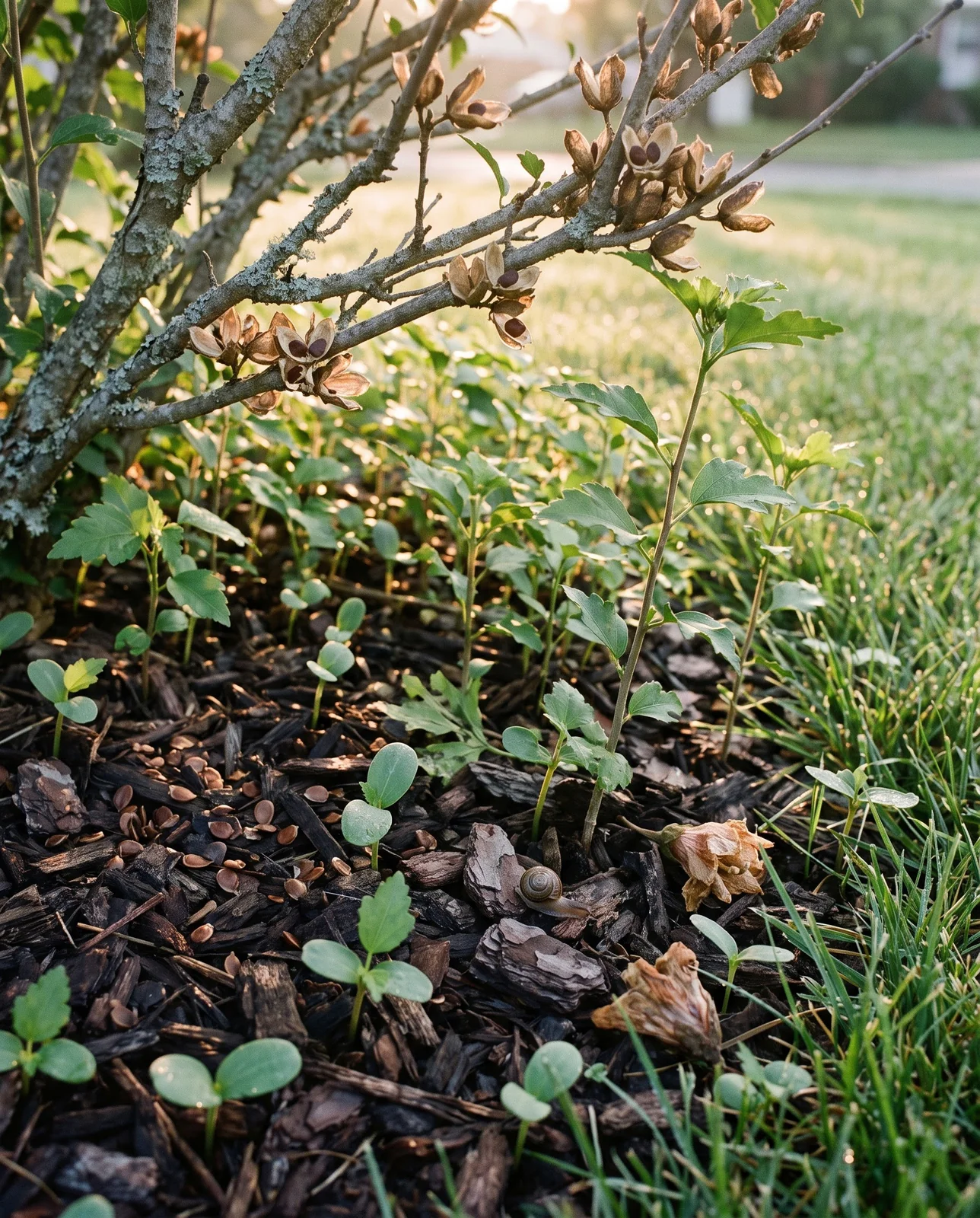
Outside the flowering season, its calendar brings two surprises. It is among the last shrubs to produce leaves in spring, often waiting until May, so a healthy bush can appear dead early in the year. In late summer and fall, the flowers form dry, five-valved capsules about 3/4 inch long and wide. These brown capsules split open and hang on the branches through winter, helping identify the shrub in February and scattering the seeds that sprout below.
Zones, and what happens at the cold edge
Rose of Sharon is hardy from zone 5 through zone 8, with plantings frequently thriving into zones 9 and 9b. In northern Illinois it withstands zone 5 cold, grows well in zone 6 around Chicago, and continues through zones 7 and 8. The cold boundary is well tested: triploid cultivars like Aphrodite, Helene, and Minerva are rated down to zone 5b.
At the cold edge of its range, winter injury rarely kills the shrub outright. If branches look dead in spring, scratch the bark lightly: green wood underneath means the shrub took winter damage but can regrow. Give an injured plant until fall to show new shoots before deciding it is lost. The wait takes patience, because the shrub is naturally late to leaf out. Attempting it in zone 4 is an unverified gamble, since the plant needs more warmth than that climate provides.
Shrub or tree, and how big it gets
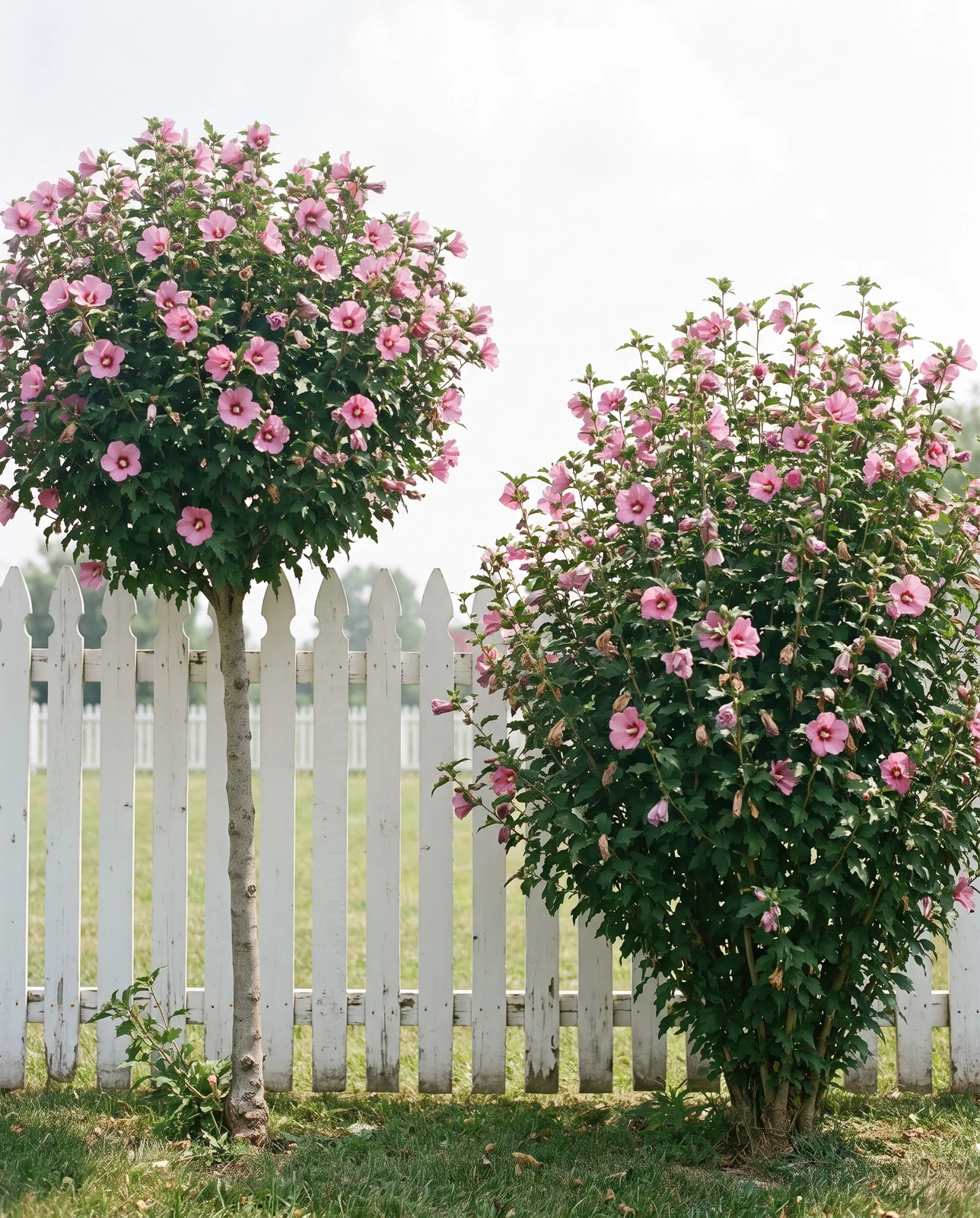
Whether grown as a shrub or a small tree, rose of Sharon is the same plant trained in two different styles. Naturally, it grows rapidly into an erect, multi-stemmed bush, building a vigorous, vase-shaped profile over time. You can train that same plant into a single-trunk small tree or flatten it against a wall as an espalier. Keeping a tree shape requires yearly upkeep because the roots continually push new stems.
At maturity, expect a shrub between 8 and 12 feet tall with a spread of 6 to 10 feet. Some selections stay smaller at 8 to 10 feet, while older specimens can reach 7 to 13 feet. Although it grows rapidly, reaching that full span of 8 to 13 feet takes roughly 10 to 20 years.
Where to plant it
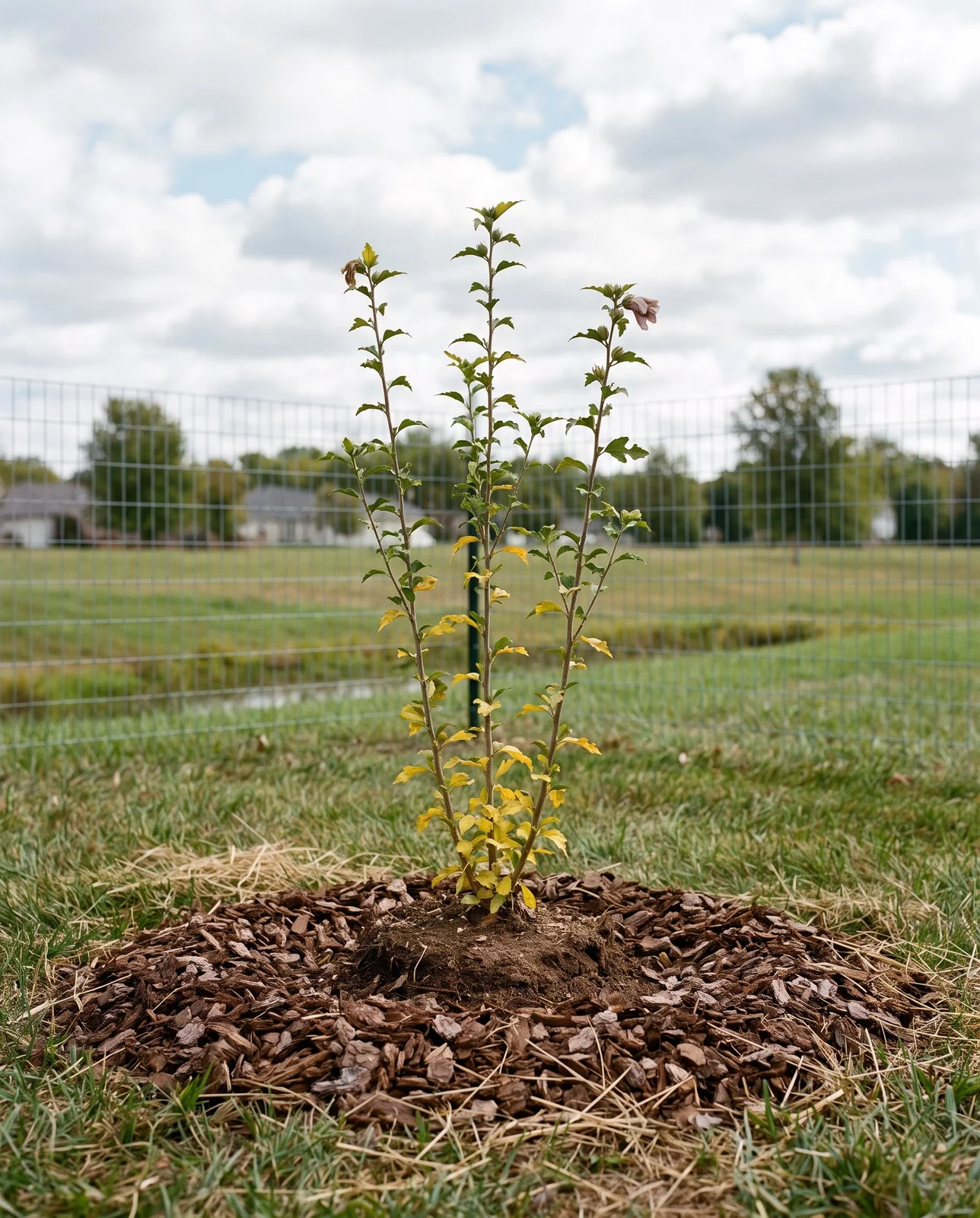
Pick a sunny spot with soil that drains freely. Rose of Sharon thrives in full sun to partial shade, tolerates neglect, and adapts readily to different soil pH levels. It thrives best in ground that stays moist but drains well, and it welcomes the warmth of summer. Summer heat rarely bothers it in an American garden, but soggy soil quickly causes trouble.
Avoid low spots where puddles linger after rain. While the shrub tolerates most garden ground, standing water rots the roots and can keep flower buds from forming. Spacing is just as important as drainage. Give each shrub plenty of room from its neighbors, whether you are growing standalone bushes or a hedge. That gap can look wide around a young plant, but it makes sense once the branches reach their full spread.
It blooms on new wood, so it is pruned in late winter
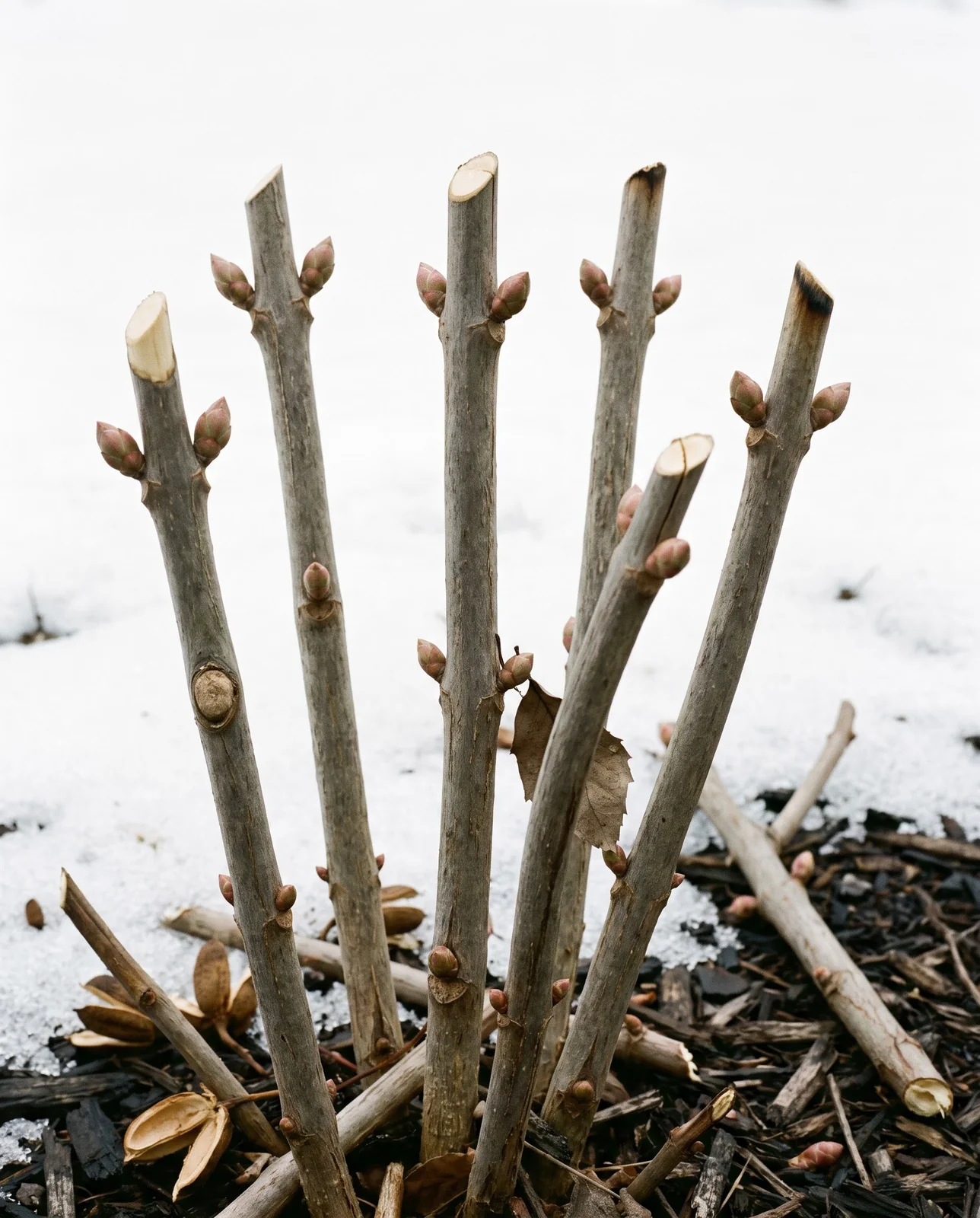
Rose of Sharon flowers on the current season's growth, so pruning belongs in late winter or early spring before new shoots emerge. Blooms develop along that fresh spring growth starting in early summer and continue opening into late fall. Cutting branches in late winter will not sacrifice flowers, because the shrub replaces that growth before flowering begins.
How hard you cut directly shapes the size of the flowers. Spring pruning encourages vigorous new growth and increases bloom size. Cutting stems back to 2 or 3 buds in late winter may produce larger individual blooms, while pruning back heavily in spring promotes the best summer flowers. Severe pruning is not required every year, because the shrub blooms on whatever new wood it makes during the season.
Pruning timing often trips growers up when treating all garden shrubs alike. A bigleaf hydrangea nearby sets buds on old wood, so spring shears that benefit rose of Sharon would strip the hydrangea of flowers. Even within the hibiscus genus the rules differ: tropical hibiscus requires removing 1/3 of old wood and cutting remaining stems by 1/2 in early spring.
Why it is not blooming
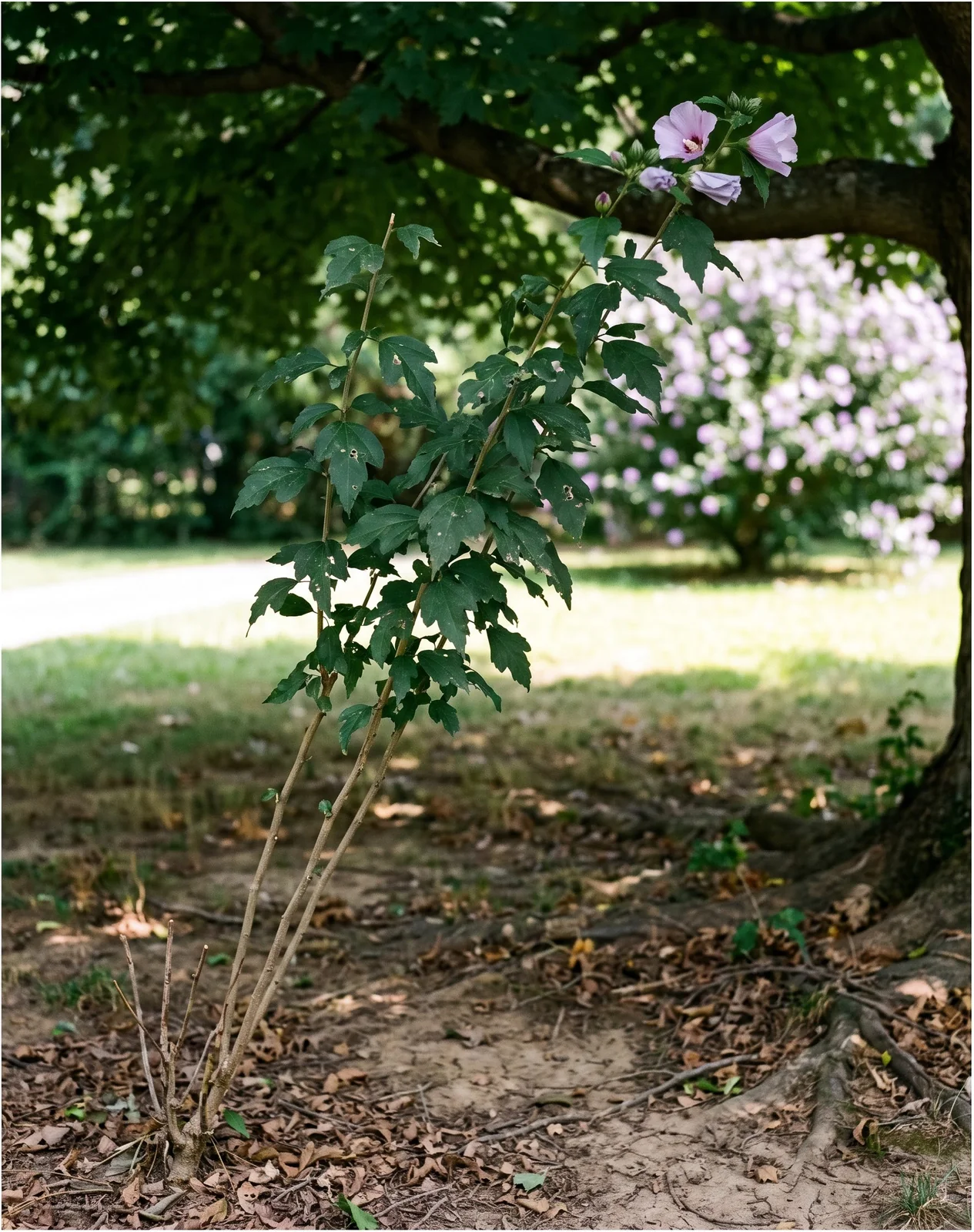
Check the calendar before worrying about missing blooms, because flowers develop on fresh spring shoots and a shrub with no buds in June is often just running on schedule. When a plant sets no buds at all, look first for too little sun, drought during an exceptionally dry summer, or rot from poorly draining soil. Low phosphorus and pruning at the wrong time or skipping it can also keep buds from starting. Direct sun is the hardest piece to fix where the bush stands. If nearby trees have grown up and cast heavy shade, you have to thin overhead branches or move the shrub to a brighter spot.
Buds that form and then drop point to a different problem. Water is usually the trigger, and soggy soil can rot the roots and prevent flowering. That creates an easy trap for worried owners, because a bush with yellowing leaves and no blooms invites extra watering that makes things worse. Blossoms that get wet and stay wet for extended stretches can rot and drop, and that loss is worse when the shrub sits out of full sun. Settle sun and moisture before reaching for fertilizer, because feeding sits further down the list of reasons buds fail.
Work out why yours has no flowers
Work through these checks in order; the first one that fits usually explains the trouble.
Yellow leaves, and what they usually mean
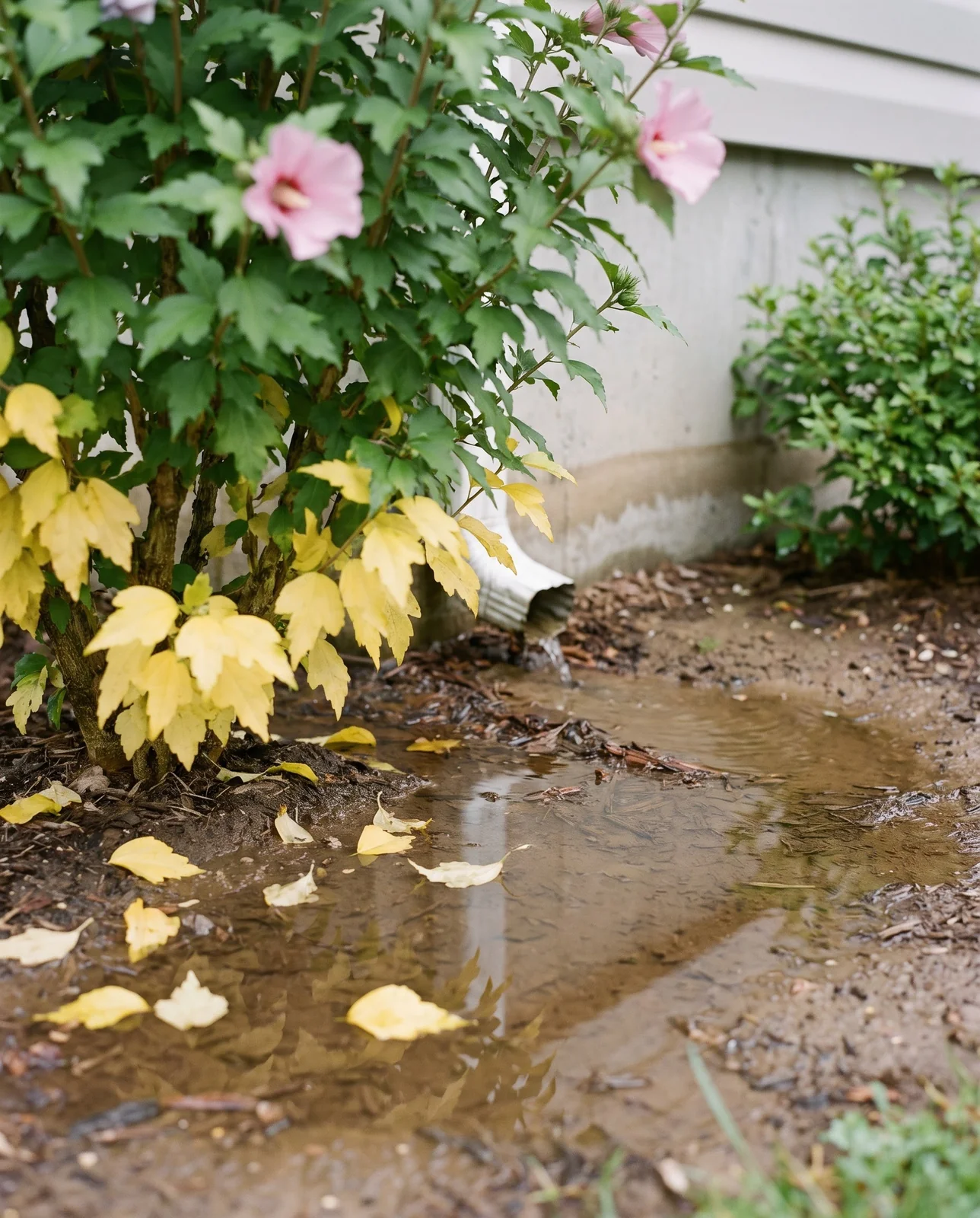
Start with the soil under the shrub. Overwatering and poor drainage cause most yellow foliage, followed by soil nutrient problems, pests, and diseases. Watch where puddles sit after heavy rain before changing anything else.
Late in the season, yellow leaves are usually just autumn arriving. A modest yellow is the natural fall color for rose of Sharon foliage, and dark green cultivars show that same yellow color before winter. As a deciduous shrub that sheds all its leaves each year, foliage that turns yellow as the days shorten and then falls is simply the plant finishing its season.
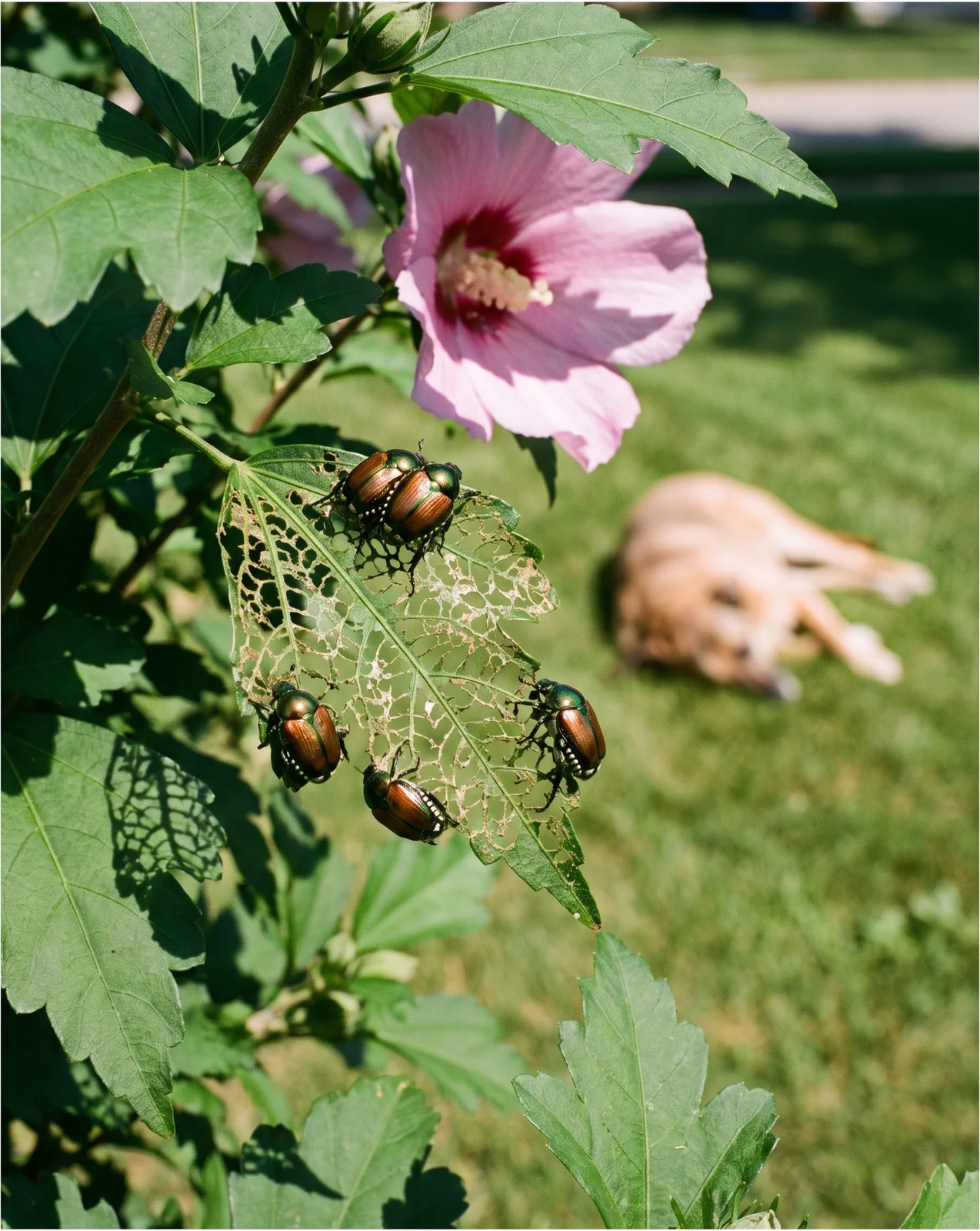
Moisture does not explain every yellow leaf or fallen bud. In some gardens, buds turn yellow and drop from bushes watered only every three days with heavy rain ruled out, leaving the cause unsettled. Once the ground is known to drain well, look next to soil nutrients, pests, or diseases. Aphids, whiteflies, and Japanese beetles occasionally visit the shrub, and beetles can severely damage foliage if left unchecked.
What actually goes wrong
Listed from the most common complaints down, led by yellow leaves and questions about whether to keep the bush. Each problem covers symptoms, the cause, and what to do.
Symptoms: leaves turn yellow on a shrub standing in ground that holds water after rain. Cause: overwatering or poorly draining soil that leaves roots standing in water. What to do: fix drainage before adding fertilizer, and treat modest yellow foliage in late fall as natural autumn color.
Symptoms: metallic green beetles chewing leaves, with heavy feeding capable of defoliating the entire bush, causing severe foliage damage when left unchecked. Cause: adult Japanese beetles about a third to a half inch long, recognizable by bronze wing covers and five white patches along each side. What to do: hand-pick beetles daily while numbers remain low, and avoid beetle traps because they attract more beetles than they catch.
Symptoms: blotched, spotted, or dying leaves and shoots, with the shrub showing some susceptibility to leaf spots, blights, rusts, and canker. Cause: fungal issues, including powdery mildew and rarely honey fungus. What to do: give the shrub generous spacing, good air circulation, and well-drained soil so the leaves dry quickly.
Symptoms: flower buds form normally and then drop while the rest of the shrub looks healthy. Cause: too much fertilizer, sometimes combined with other stresses. What to do: stop feeding, water evenly, and test your soil before giving the plant any more food.
Symptoms: leaves scorch or drop shortly after an insecticide spray, leaving the bush looking worse than before. Cause: damage from malathion, which should never be used on hibiscus. What to do: choose insecticidal soaps or horticultural oils for common pests like aphids, whiteflies, and mealybugs.
Seedlings everywhere, and what to do about them
Rose of Sharon seeds freely, and the capsules left on winter branches explain why seedlings appear everywhere. Those pods split open in winter. The seeds drop around the base of the parent bush, sprouting easily and forming thick colonies over time. In good growing spots, the wild type can self-seed aggressively, and it may spread into nearby garden beds where it is hardy. The bush reseeds itself if you do not clip off old blooms, but taking off the seed pods after flowering stops new seedlings. That chore needs doing before winter, because the dry pods ripen in late summer and hang on bare branches. Once they split, the seed is already on the ground.
How much trouble those seedlings cause depends on where you live. Rose of Sharon is an introduced plant in the United States. It has been reported as invasive in some states, including Virginia and Kentucky, and can be weedy and aggressive. State lists track that spread: Georgia puts it in Category 3, and Kentucky keeps it on a watch list. Maryland restricts planting it, and the National Park Service lists it as invasive in the Mid-Atlantic. Arlington County and the City of Alexandria also treat it as an invasive plant. In many neighborhoods the bush has simply settled in, and some call it slightly invasive because it seeds so readily.
You can dig up the bush and plant a native mallow, or let the wild seedlings grow where they fall. The flowers feed wildlife, attracting butterflies, specialized bees, hummingbirds, and pollinators. New garden varieties solve most of this seedling trouble anyway. The U.S. National Arboretum bred triploid selections that stay compact, bloom steadily, and set little or no seed. When a pod does form on these plants, it holds mostly blank ovules and seldom more than 1 to 3 partly formed seeds. Across garden centers today, most modern selections stay nearly seedless, giving you a long bloom season without a carpet of weeds underneath.
The native rosemallows people suggest instead
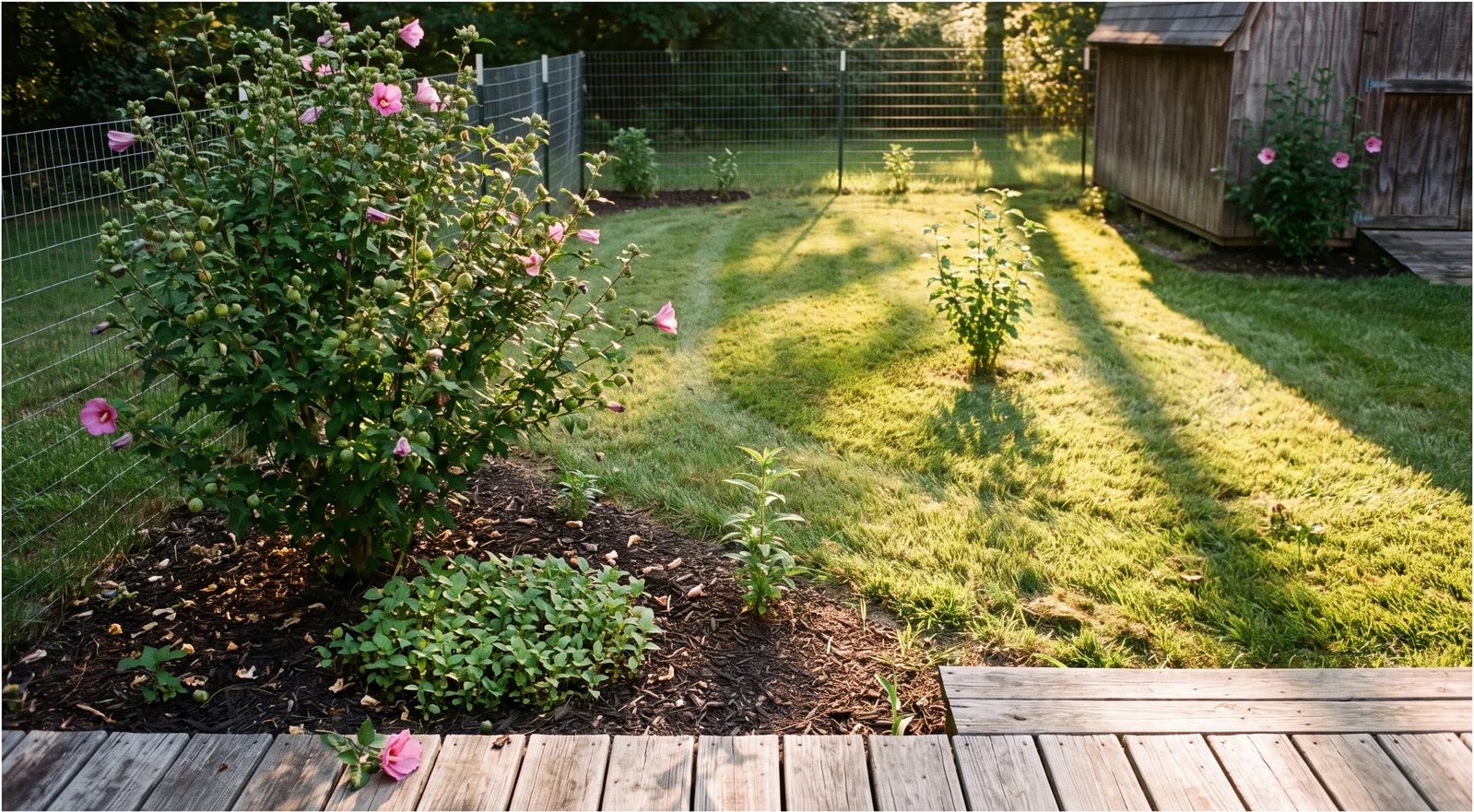
Gardeners looking for a native alternative are usually pointed toward halberd-leaf rosemallow, Hibiscus laevis, or the wild rosemallows around Hibiscus moscheutos. Hibiscus laevis is a herbaceous perennial native to central and eastern North America. It opens creamy-white or pink flowers up to 6 inches across that need direct sun to open and last only one day. The plant spreads by seed, and the stalks die down every winter before growing back from the root in spring. Hibiscus moscheutos is a cold-hardy wetland perennial found along river systems from Texas to the Atlantic coast and north into Ontario. It grows about 5 to 8 feet tall with flowers up to 8 inches across, which makes the blooms noticeably larger than rose of Sharon. In the wild it thrives across zones 4 to 9 in marshes, wet meadows, swampy woods and ditches.
Across the United States, about 35 species of native hibiscus grow in colors ranging from white to pink, yellow and red. Two of them stand out in the South. Scarlet rosemallow, Hibiscus coccineus, is an upright herbaceous perennial that can reach 4 to 8 feet tall. Its deep red flowers appear in mid to late summer. It is hardy in zones 6 to 9, opening brilliant red flowers 6 to 8 inches across with separate, star-shaped petals. Swamp rosemallow, Hibiscus grandiflorus, grows around swamps and ponds as a large shrub-like plant with pink or white blooms up to 10 inches wide. None of these native species keeps a woody frame through winter. Hibiscus laevis and Hibiscus coccineus are both herbaceous perennials. Their stems die down each winter and grow back from the root in spring. Hibiscus moscheutos and Hibiscus grandiflorus also thrive in damp ground along wetlands and water edges. They provide generous color in moist soil, but a screen that stands through winter remains the job of a woody shrub like a viburnum.
Named selections worth telling apart
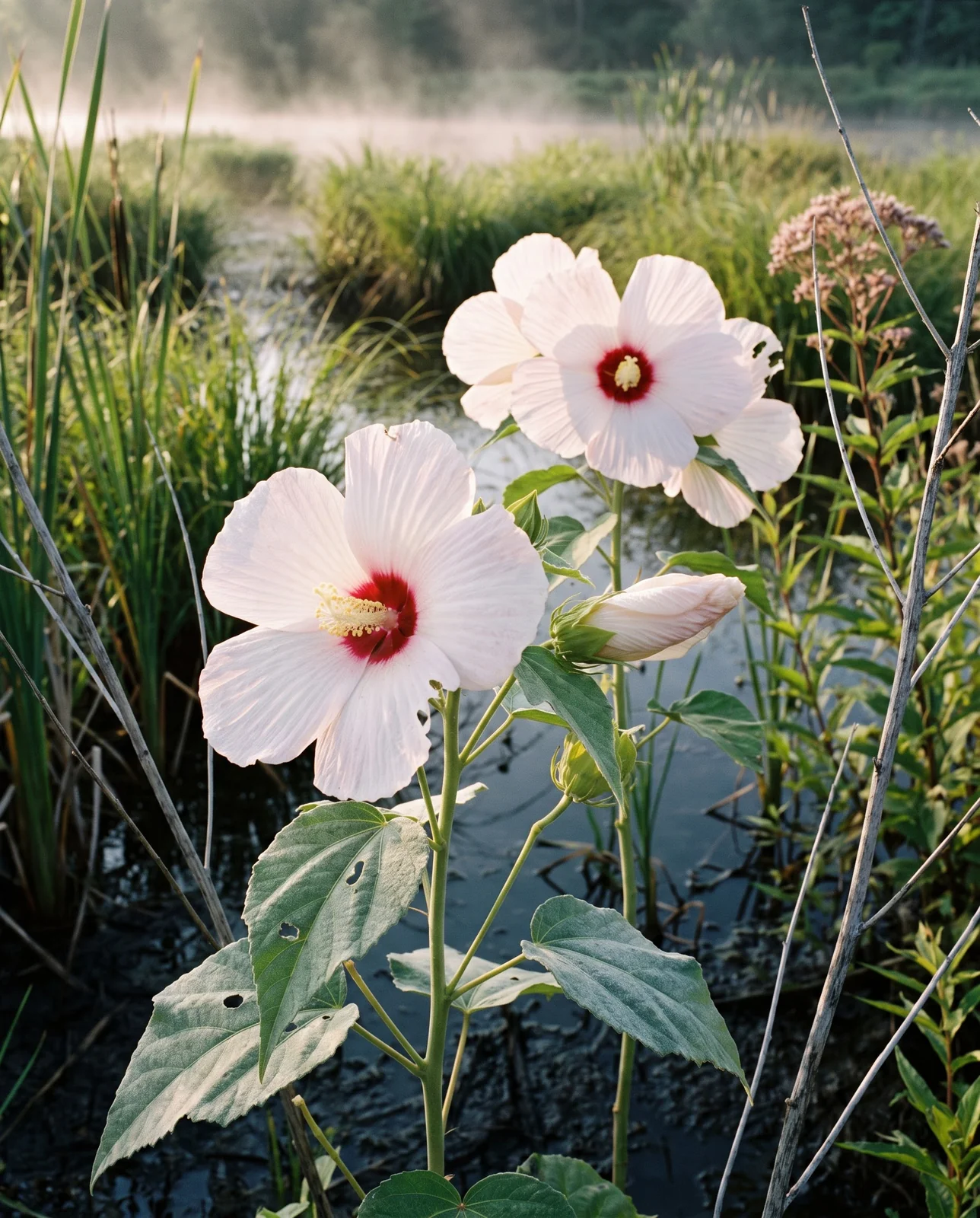
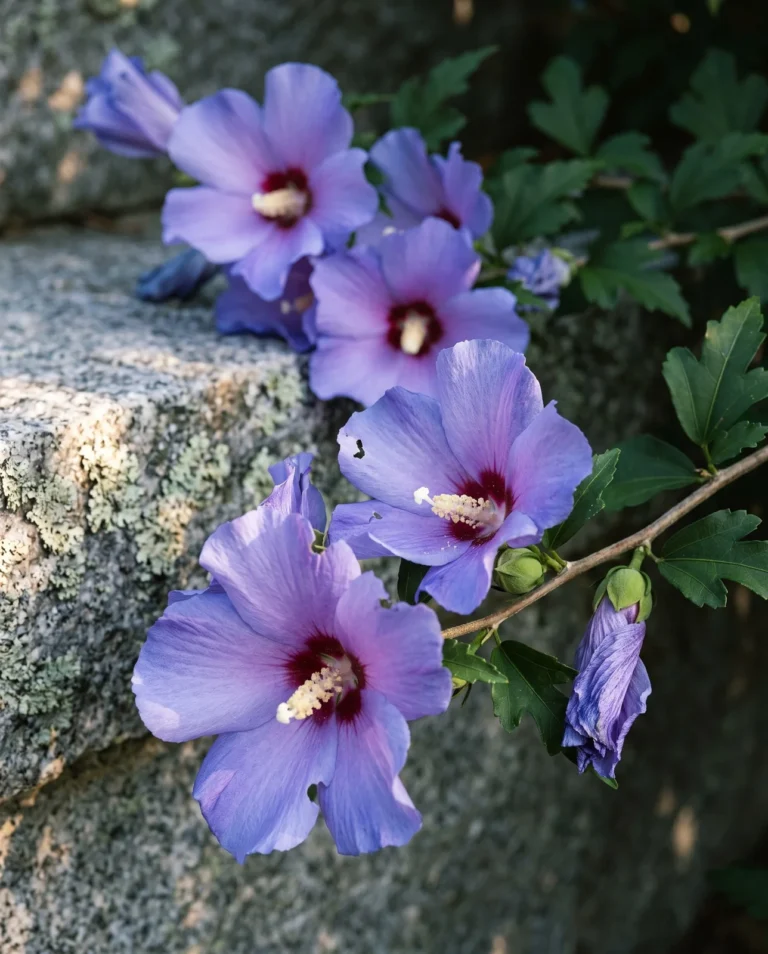
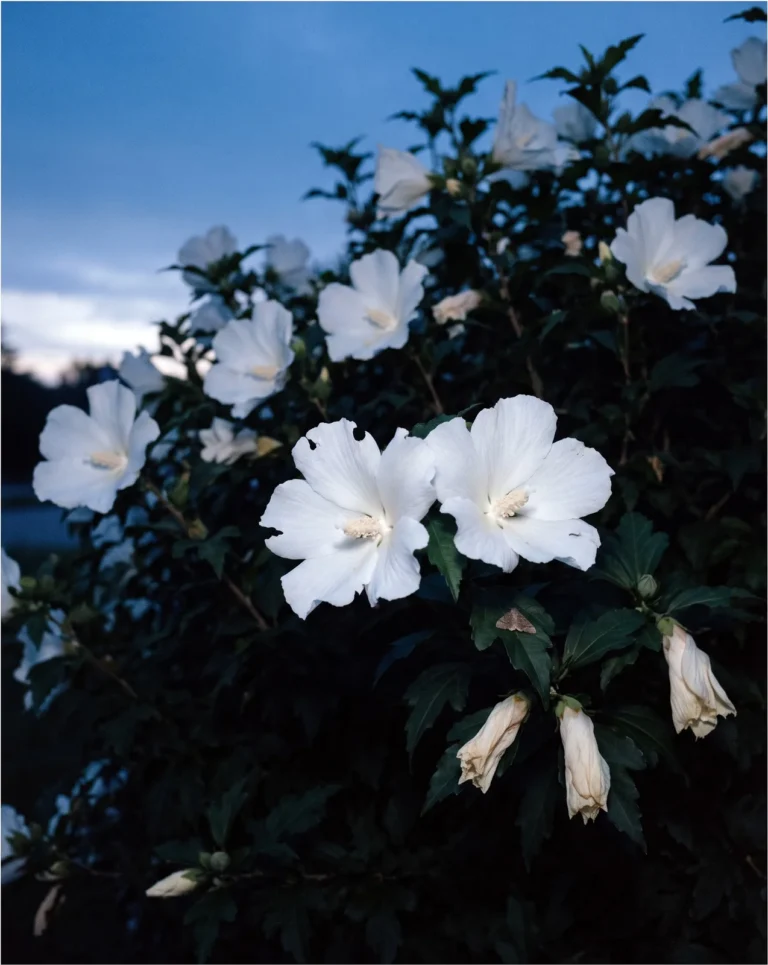
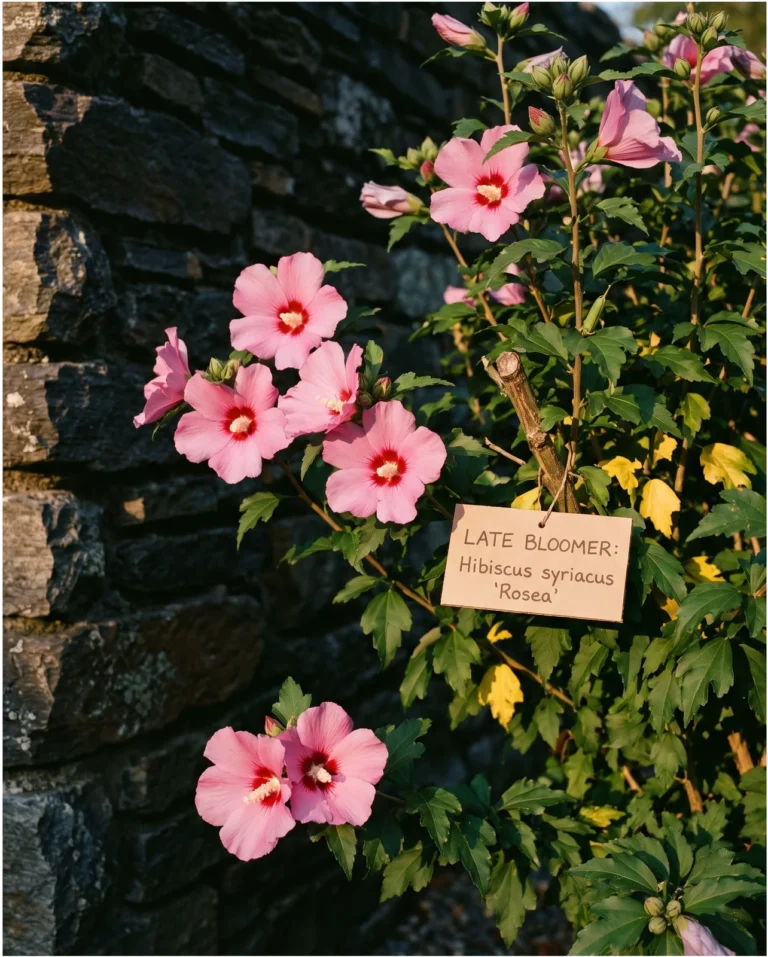
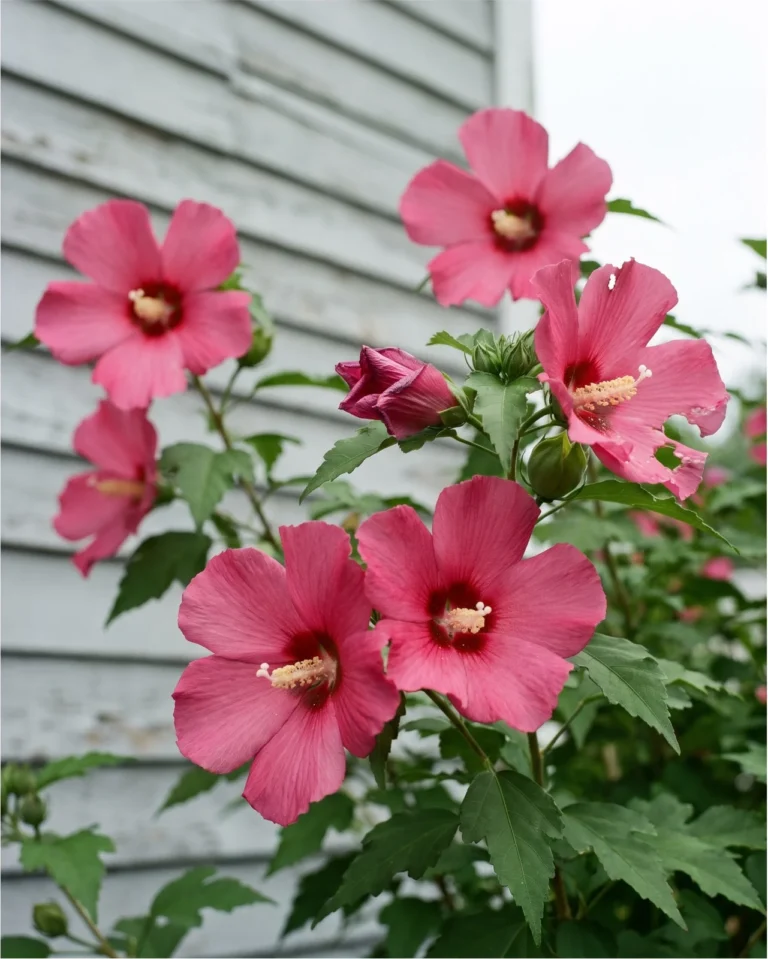
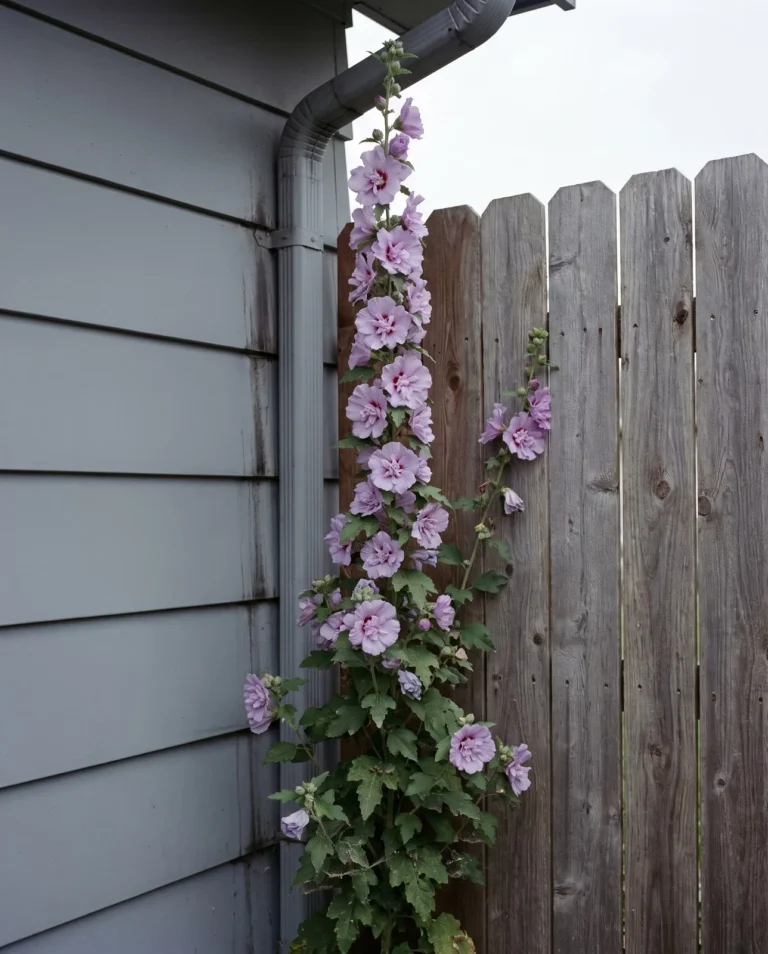
These standout selections show the best of the species, from reliable award winners to triploid varieties that set almost no seed.
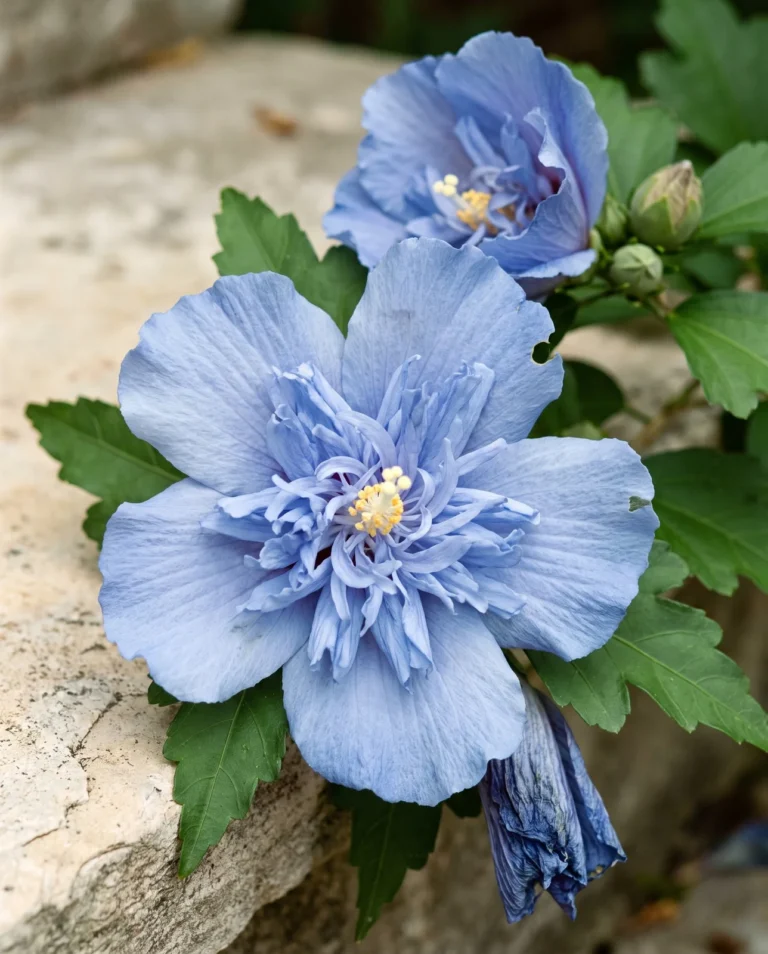
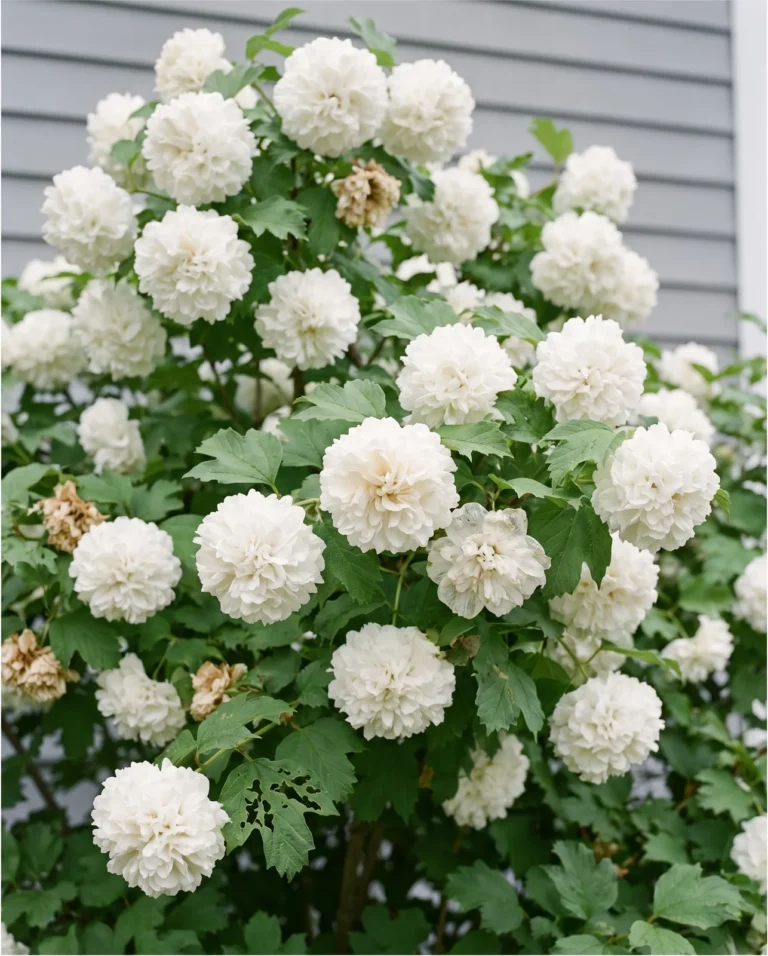
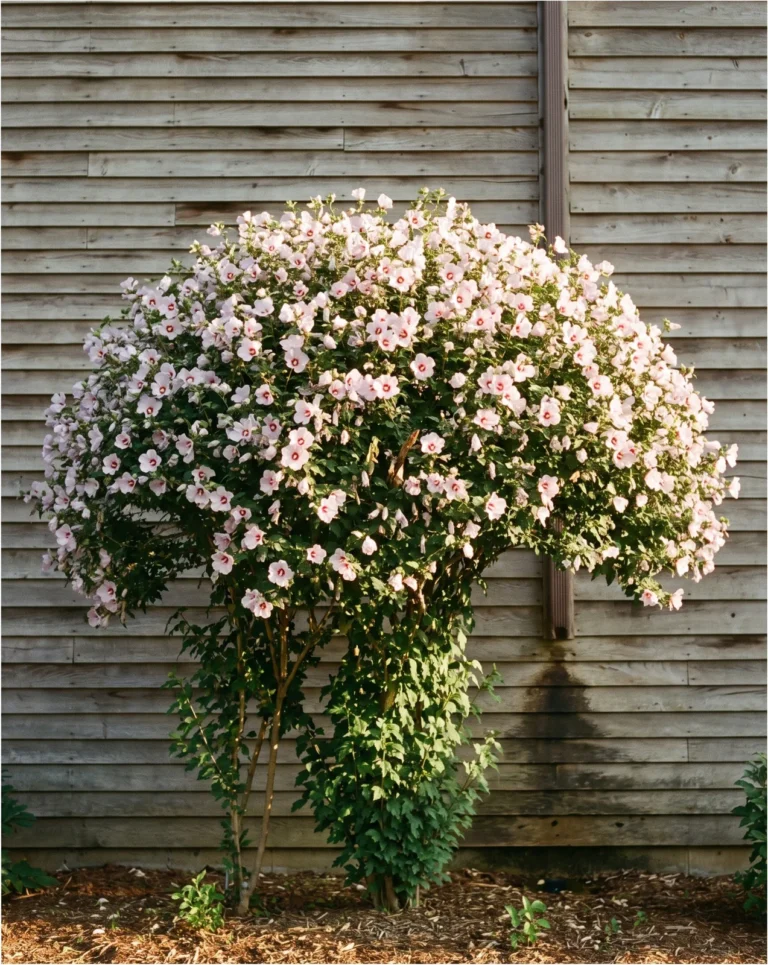
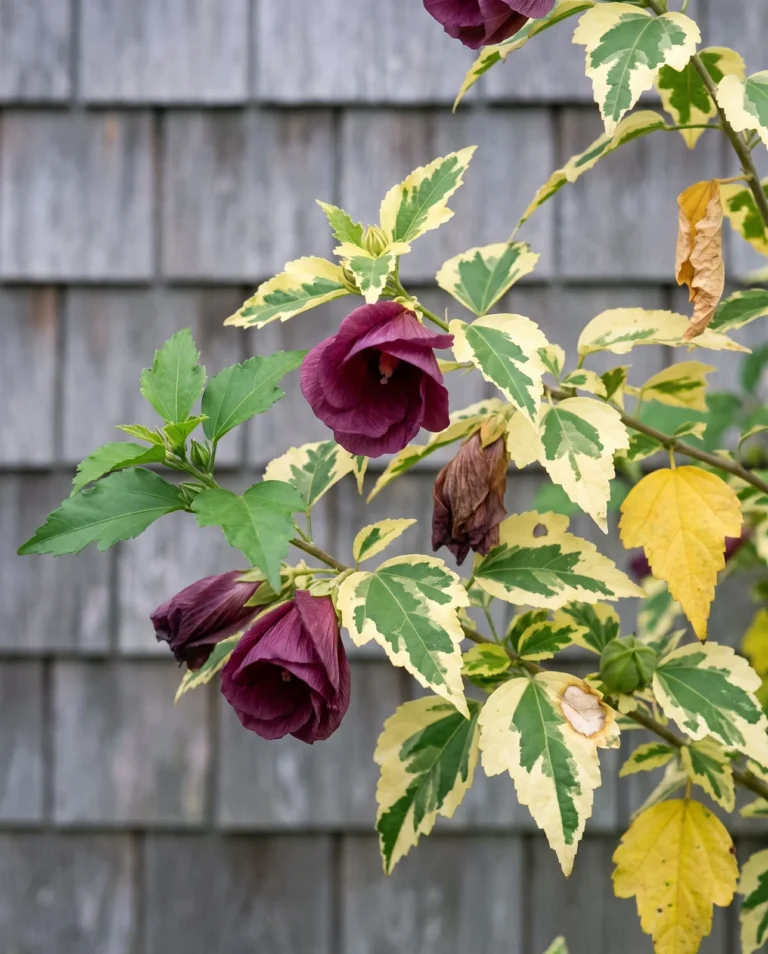
When to plant it
Plant rose of Sharon in spring or early fall while the weather is mild. In cooler zones, an early fall planting gives the roots time to settle in before the ground freezes. Summer heat is rarely an obstacle, because the plant naturally welcomes warm weather. What matters just as much as timing is drainage, because the bush struggles in soggy ground. A low spot that holds standing water after a storm will drown the roots no matter when you plant.
Watering and feeding
Rose of Sharon needs moderate water, and once established it handles poor soil and dry spells easily. Whether it counts as low or high maintenance is unsettled, but good drainage matters most for keeping it happy. Give the bush about 1 to 1.5 inches of water each week. Soggy ground can rot the roots and stop blooms altogether. The plant handles dry spells only after its roots have settled in.
Fertilizer is rarely needed, and feeding too much often works against the flowers. If low phosphorus keeps buds from forming, you can add bone meal or plant food high in phosphorus and low in nitrogen. Use it sparingly unless a soil test shows the ground needs it. Heavy feeding often backfires, because too much fertilizer can make developing buds drop. If a bush puts on lush green leaves without flowers, test the soil before giving it more food.
Hedges and privacy screens
Rose of Sharon makes a fine living barrier, and low-seed cultivars are widely recommended for clipped hedges and mass screens. Space shrubs 6 to 12 feet apart in a row. That spacing gives each bush room to reach its mature spread, and the hedge fills out from the base within a few seasons.
A rose of Sharon hedge offers little privacy in the winter. As a deciduous shrub that leafs out late in spring, it stands bare through the cold months with only dry seed capsules left on the branches. If you need screening all year, this seasonal habit will fall short. Gardeners looking for summer color along a boundary often alternate it with crape myrtle, but keeping a screen dense in winter takes an evergreen.
Growing it in a container
Growing rose of Sharon in a container works best if you choose a compact triploid cultivar. These selections stay smaller and suit large patio containers well. The standard species is difficult to keep in a pot, because it grows rapidly into a large, multi-stemmed bush. Whether potted shrubs survive winter outdoors in cold climates is unsettled, so container growing is safest during the warmer months. The hibiscus most gardeners keep in patio pots across the country is tropical hibiscus, which stays evergreen outdoors year-round only in the warmest regions.
How much sun it needs
Rose of Sharon grows easily in full sun to partial shade, but its best flowering occurs in full sun. A sheltered position in full sun gives the shrub the best start and the strongest flower display. Heat is no obstacle, because the shrub handles summer heat and humidity well. Planting in too much shade reduces the bloom before it harms the foliage, so give it the brightest spot you have.
Soil and drainage
Good drainage is essential, while almost every other soil condition is flexible. The shrub grows best in moist, well-drained soil in a sheltered location. It tolerates poor soil and some drought, is very tolerant of summer heat and humidity, and is generally tolerant of urban conditions. It tolerates nearly all ground except soil that stays extremely wet or extremely dry. If water stands in puddles an hour after a storm, look for a better-drained spot to dig.
Pests, and whether it is safe around animals
Pests rarely cause severe trouble on a healthy shrub. Outdoors, it can host aphids, whiteflies and Japanese beetles. When grown under glass, it may also be susceptible to scale insects, mealybugs, aphids and glasshouse whitefly, alongside powdery mildew and rarely honey fungus. A healthy plant manages well on its own, with no need for routine spraying.
Around pets, rose of Sharon is safe. The ASPCA lists Hibiscus syriacus, in the mallow family Malvaceae, as non-toxic to dogs, cats and horses. Its entries under hibiscus and rose of China lead to that same non-toxic rating for this hardy shrub. Rose of China is a common name usually applied to tropical hibiscus, but the organization keeps no separate entry for that tender species.
What to expect, season by season
The shrub settles into a distinct rhythm across three stages.
The first year is about building roots and practicing patience. This is one of the last shrubs to leaf out in spring, with leaves appearing as late as May. A shrub that stays bare while neighboring plants green up is behaving normally. Its water need is medium through that first stretch, and it tolerates some drought once established. Look for fresh foliage and steady growth while the roots settle in.
The first flowering year sets the pattern for seasons to come. Flowers open on the current season's growth, beginning in early summer and lasting into late fall. Each bloom lasts a single day, with fresh blossoms opening each morning to renew the display. Prune in late winter or early spring before new growth starts. Cutting stems back to 2 to 3 buds in late winter may produce larger flowers.
A mature shrub brings one regular chore. Growth is rapid, and stems reach 8 to 12 feet tall as the plant fills out. Dry seed capsules ripen in late summer and fall, persisting on the branches. During the dormant season they split and scatter easily germinating seed around the base. Remove the seed capsules after flowering to prevent reseeding, since leaving them in place is how a single shrub turns into a group.
Myths worth dropping
Four common claims about this shrub, and how the plant actually behaves.
The myth: It has no leaves in May, so it is dead.
The reality: Leaves appear unusually late on this shrub, often waiting until May to show, making it one of the last garden shrubs to produce foliage in spring. If a branch shows green under the bark when scratched lightly, the shrub likely suffered winter injury but is still alive and can regrow.
The myth: Bud drop means the same thing on every hibiscus.
The reality: Each hibiscus reacts to different stresses. On potted tropical hibiscus, moving containers, changing temperatures, or poor light during the growing season may cause bud drop. On hardy rose of Sharon, buds can rot and drop off when blossoms get wet and stay wet for extended periods. Giving the shrub too much fertilizer can also trigger bud drop.
The myth: Yellow leaves mean it needs feeding.
The reality: Overwatering and poor drainage are the main causes of yellow leaves, with nutrient problems, pests, or disease trailing behind. Late in the year, modest yellow is the shrub's normal fall color before the foliage drops. Adding fertilizer can cause trouble of its own, because too much fertilizer can trigger bud drop.
The myth: Mine has never seeded, so the plant is sterile.
The reality: Species plants can self-seed aggressively in optimum growing conditions, but most modern cultivars are virtually fruitless. Triploid selections hold mostly abortive ovules and seldom more than 1 to 3 partially developed seeds when a capsule forms. A shrub without pods is usually one of these low-fruiting selections.
FAQ
Is rose of Sharon a hibiscus?
Yes. It is Hibiscus syriacus, a true hibiscus in the mallow family. It is often confused with Hibiscus rosa-sinensis, the frost tender tropical evergreen, but the species name on the plant tag tells them apart.
What are the cons of rose of Sharon?
It reseeds itself if not deadheaded, and has been reported as invasive in some states, including Virginia and Kentucky. Because it is a deciduous shrub, it also stands bare through winter as one of the last shrubs to leaf out in spring.
Does rose of Sharon come back every year?
Yes. It is a hardy deciduous shrub that drops its leaves for winter and returns each spring, surviving down to zone 5 at the cold end. New leaves appear unusually late in the season, in May, which often leads growers to fear a healthy plant has died.
How do you treat yellow leaves on rose of Sharon?
Check the soil drainage first, because overwatering and soggy ground are the leading causes of yellow leaves. Late in the season, a modest yellow is simply the normal fall color of the foliage. If soil moisture is not the issue, check next for nutrient problems, or look for pests and diseases.
Why does my rose of Sharon never bloom?
When a shrub forms no flower buds, the cause is usually a lack of adequate sun, rot from poorly draining soil, inadequate phosphorus, drought during an exceptionally dry summer, or inappropriate pruning. Before troubleshooting, check the calendar, since flowering naturally begins in early summer and continues into late fall.
How do you encourage rose of Sharon to bloom?
Give the shrub full sun, because its best flowering occurs in full sun. Pruning stems back to 2 or 3 buds in late winter may produce larger blooms. Spring pruning will also encourage flowers on new growth and increase their size.
What month is best to plant rose of Sharon?
Plant in spring or early fall while the weather is cool. In cooler zones, early fall planting is preferred so the roots can establish before winter.
How long does it take for rose of Sharon to reach full size?
It takes 10 to 20 years for rose of Sharon to reach full maturity, even though its seasonal growth rate is rapid. Over that time, the shrub reaches a mature height and spread of 8 to 13 feet.
Is there a difference between a rose of Sharon bush and a rose of Sharon tree?
No, they are the same plant grown in two different shapes, naturally forming an erect, multi-stemmed shrub. The tree form is simply that shrub trained to a single trunk, or trained flat against a wall as an espalier.
Is rose of Sharon poisonous to dogs and cats?
No. Rose of Sharon is non-toxic to dogs, cats and horses under ASPCA guidelines. That same non-toxic verdict for Hibiscus syriacus covers general hibiscus and rose of China, with no separate rating for tropical hibiscus.
Can rose of Sharon grow in zone 4?
Not reliably, as the standard cold limit is zone 5, and notable low-seed cultivars are rated to zone 5b. Growing it in zone 4 is an unproven experiment that depends on a warm, sheltered site.
Interesting tips
- Japanese beetle traps often make the problem worse, because they tend to attract more beetles than they capture. A trap can draw in 75 percent of the neighborhood's beetles, leaving the remaining 25 percent to feed on your plants.
- Rose of Sharon is native to China and Taiwan, or more broadly across Asia.
- Donald R. Egolf developed the low-seed triploid line, releasing Diana as his first introduction. Helene followed in 1980, Minerva in 1986, and Aphrodite in 1988.
Related Guides & Flowers
Hibiscus moscheutos
The native rosemallow behind the swap most often suggested for this shrub, a perennial of wetlands and river systems whose flowers run wider than this one's.
Hollyhock
Another mallow with the same wide, five petaled flower, for a gardener who wants the bloom without a woody plant.
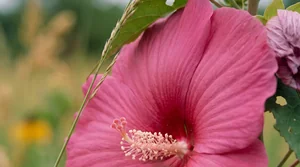
Hardy hibiscus versus tropical hibiscus
A closer look at which hibiscus survives a winter outdoors, for anyone still holding an unlabeled plant tag.

Types of flowers
The full index of flowers on the site, for working out what is standing in the yard.
Enjoying our flower guides? Add YourFlowersGuide as a preferred source on Google. It helps more readers find us.
Add to Preferred Sources