The pairing · pick a flower
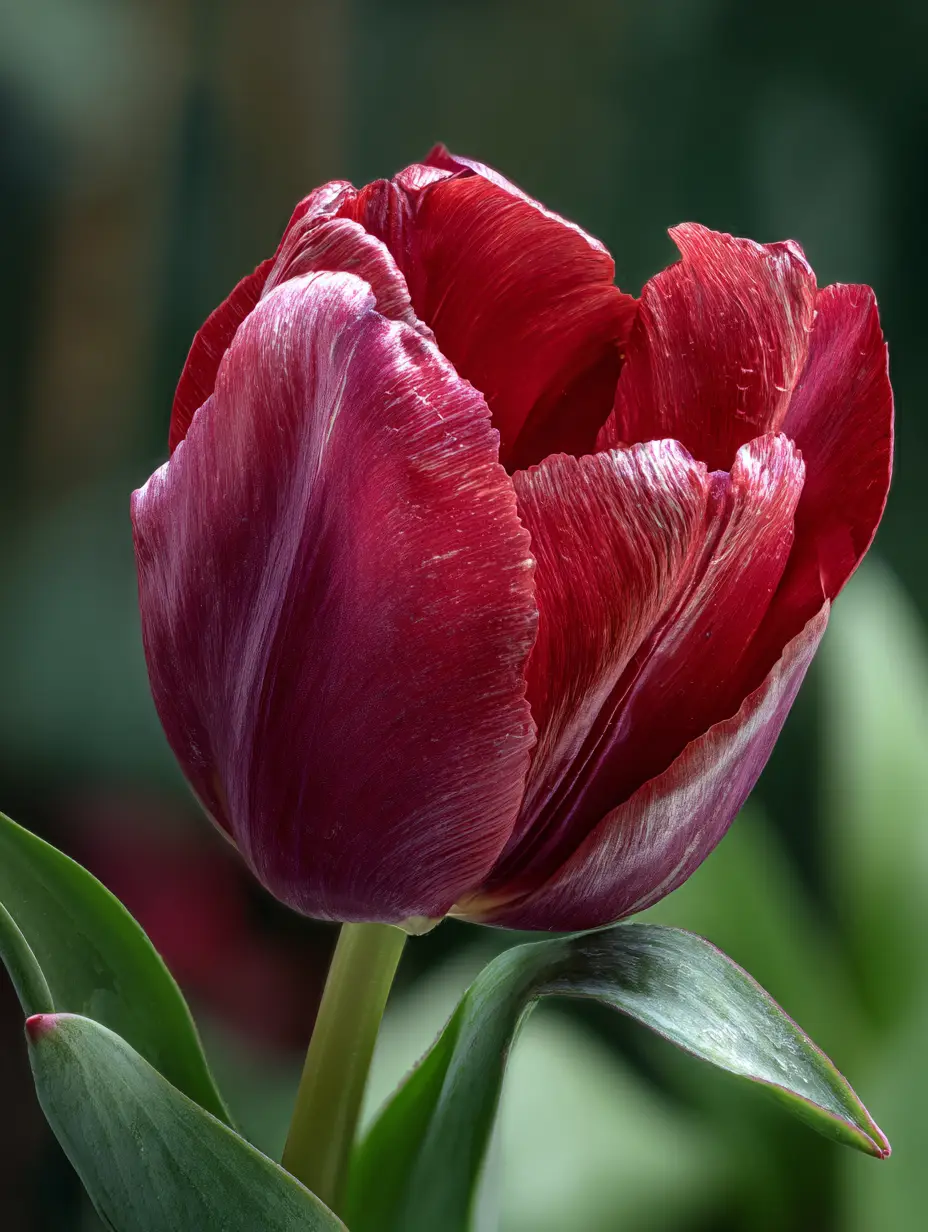 Tulip+
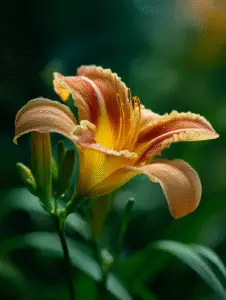 DaylilyProven
Strap-like leaves echo the tulip's own foliage in spring, then keep expanding right through the six to eight weeks tulips need to yellow and die back, physically covering the decline by early summer.
Tulip+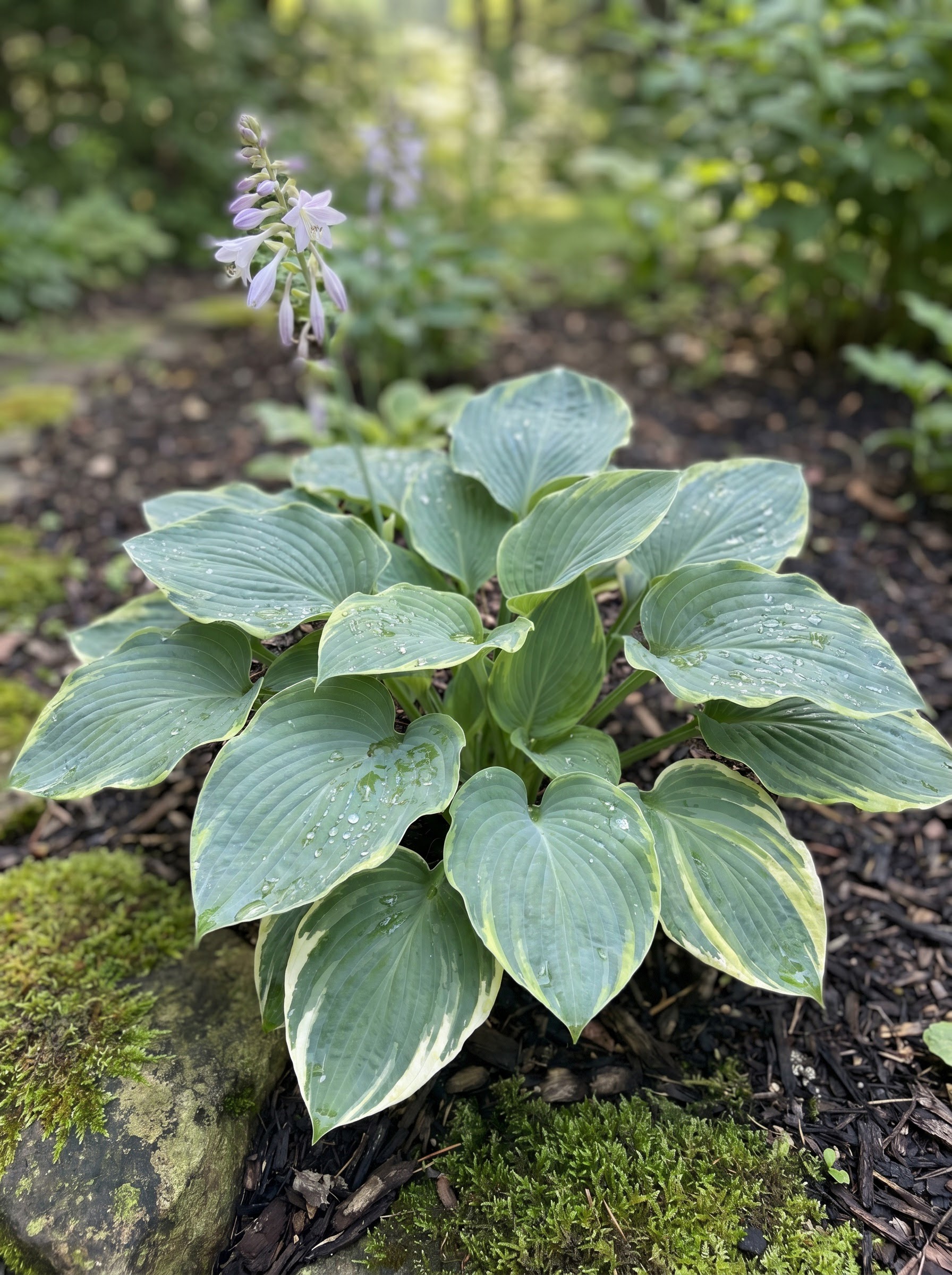 HostaProven
Tulips get their full sun early, before deciduous trees leaf out; hosta then unfurls just as the canopy closes and the tulip's leaves start browning, hiding the decline under its own bold foliage.
Tulip+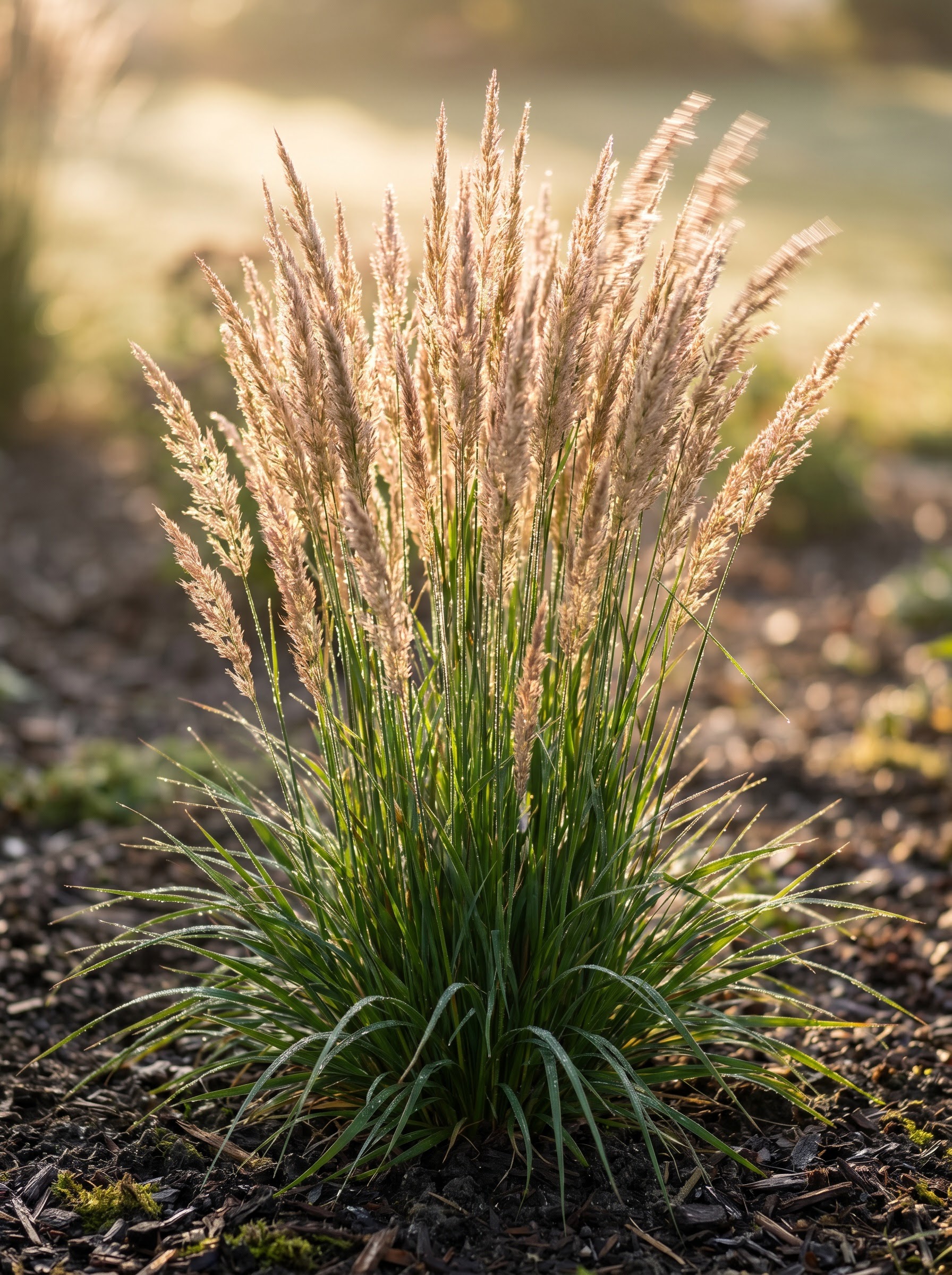 Ornamental grassesPartial
A cool-season grass like Karl Foerster greens up early but stays low through the tulip bloom window, then reaches its full height by early summer, screening the spent bulb bed without ever shading it in spring.
Tulip+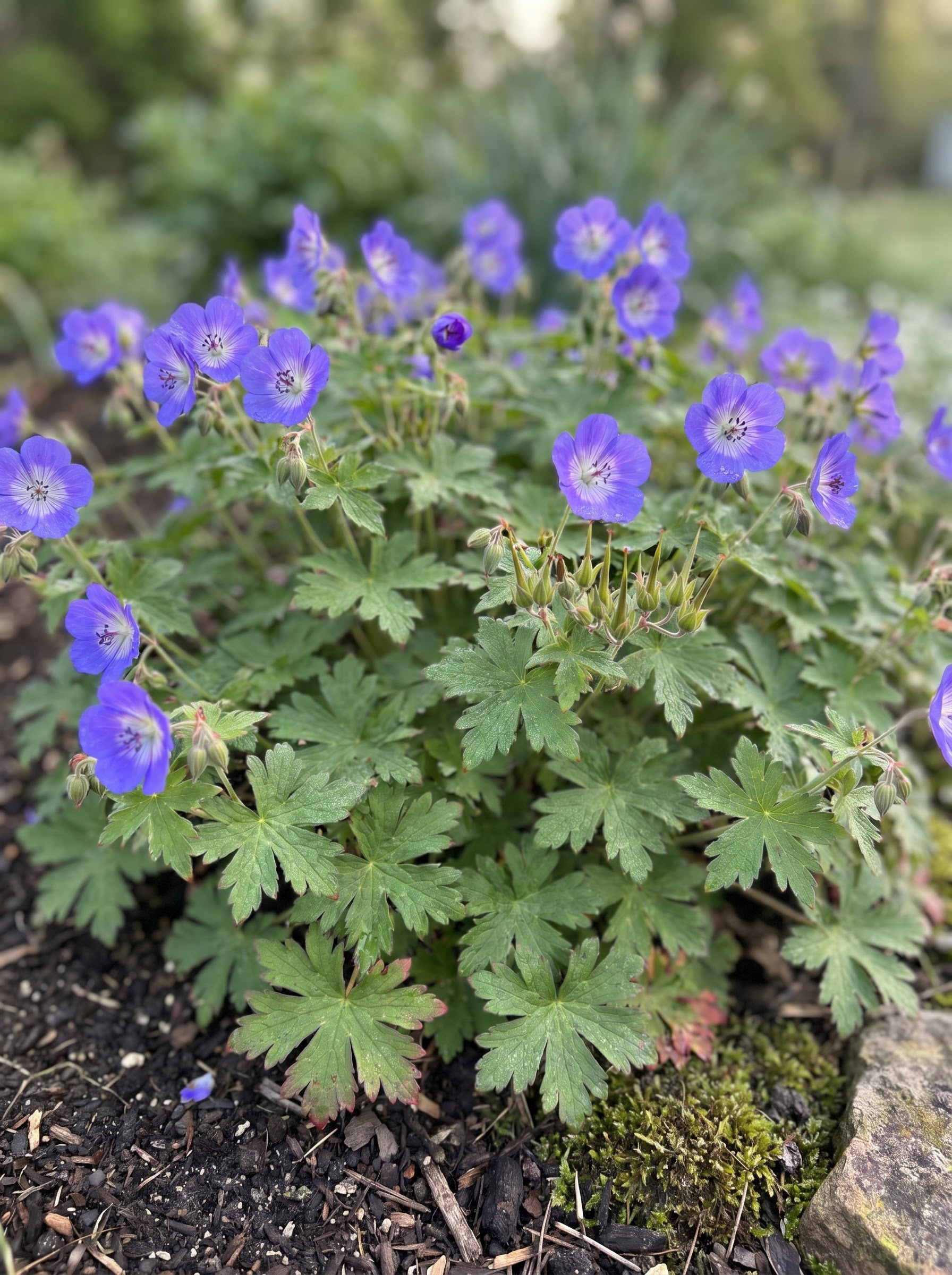 Hardy geraniumPartial
A low, spreading mound that leafs out right as tulip foliage starts to decline, covering the yellowing leaves at ground level while asking for the same full-to-part-sun, well-drained spot.
Tulip+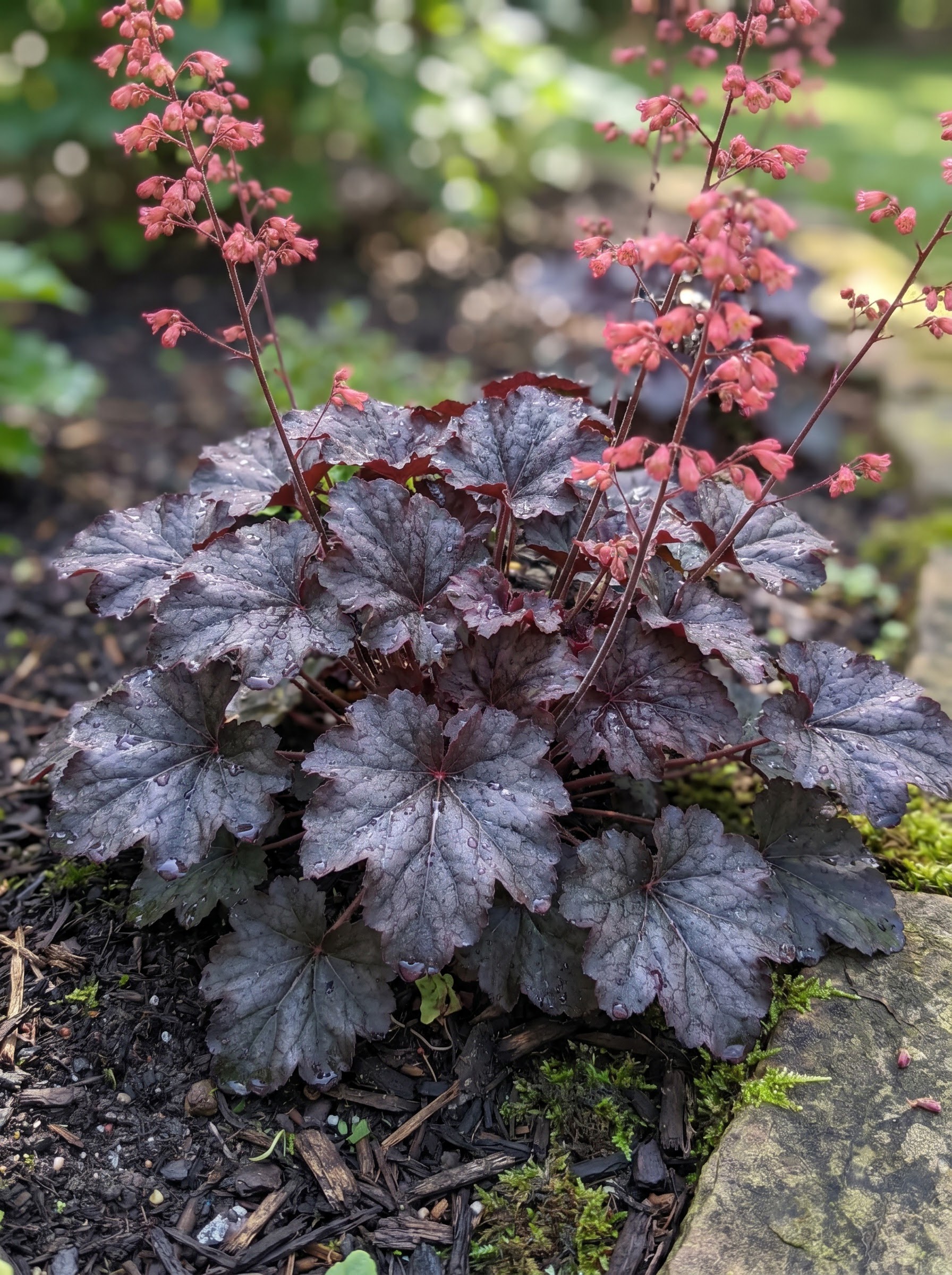 HeucheraPartial
Low, colorful foliage that holds its shape through the season, giving a year-round mound at the tulip's feet; the tannin in the leaves also makes it rabbit resistant, a small bonus in beds animals already target.
Tulip+ Forget-me-notPartial
A low blue carpet that flowers in April and May, timed to peak with mid-to-late tulips and fill the gaps at ground level during the actual bloom window rather than waiting until after; the classic cottage-garden pairing for a reason, though the tulip-specific pairing itself is horticultural convention rather than a claim tested in the source below.
Tulip+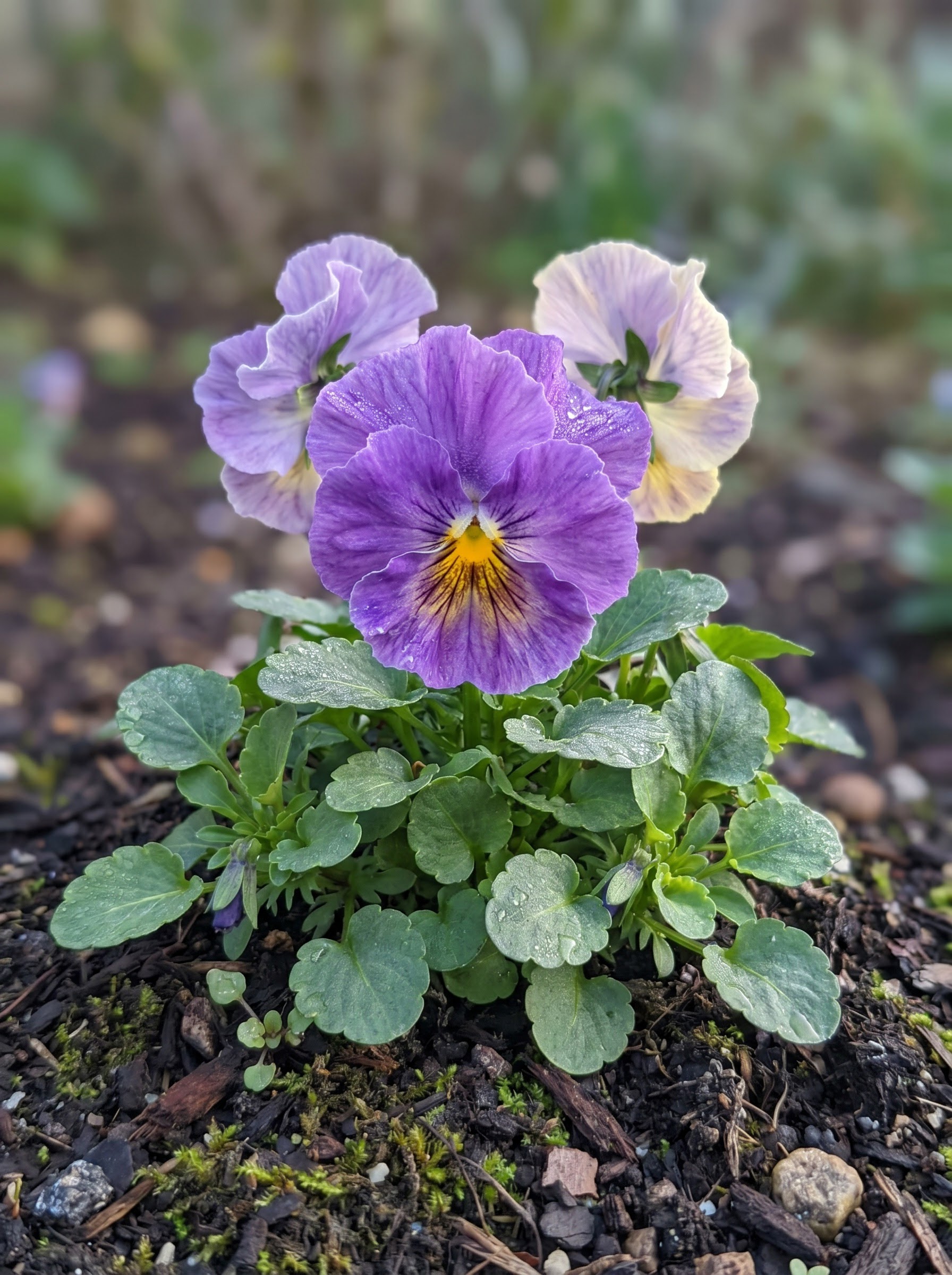 Pansy andProven
A cool-season annual that shrugs off frost into the high 20s, so it is already blooming when tulip shoots first push through and keeps going after, covering bare soil the whole time.
Tulip+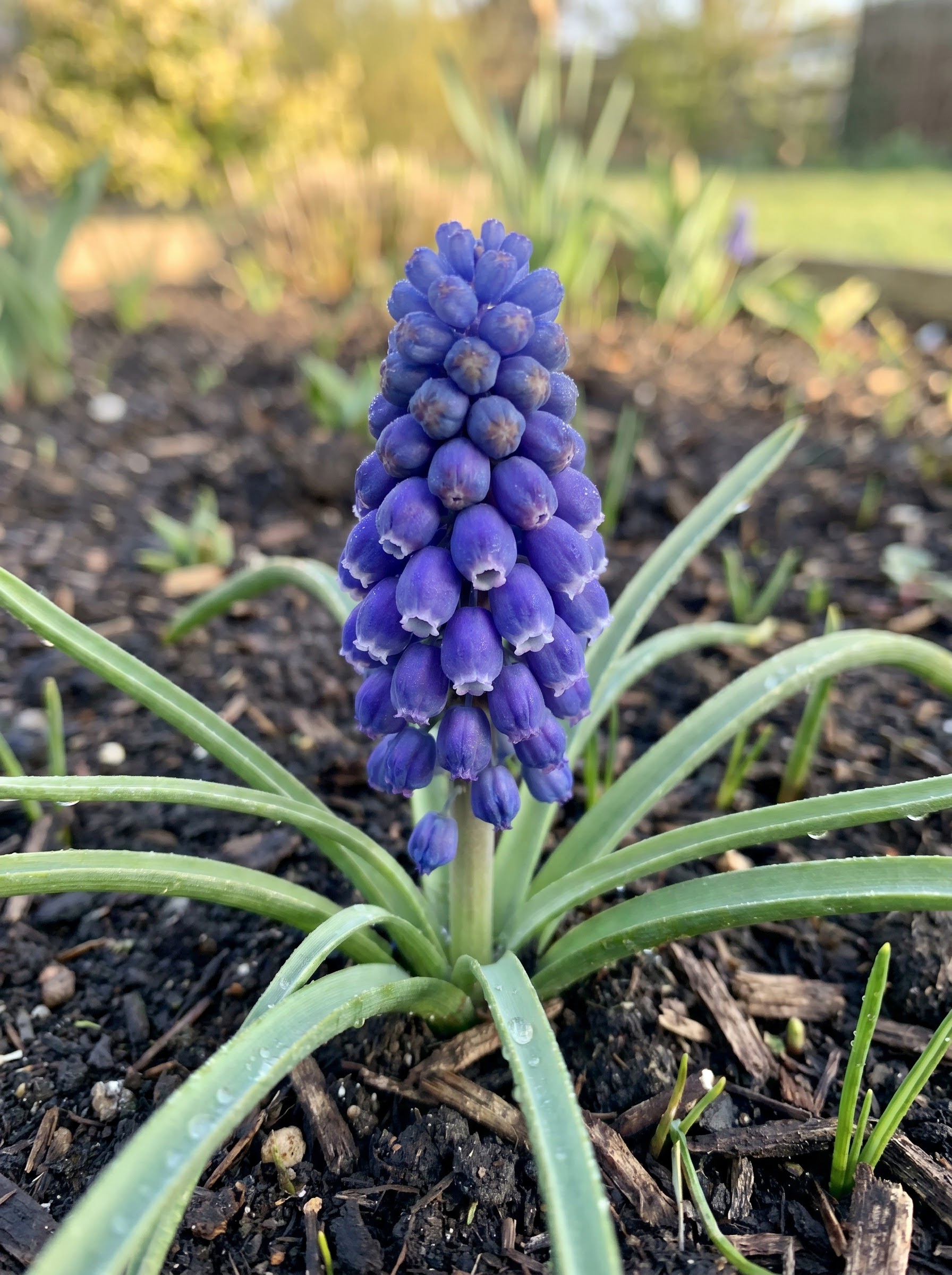 Grape hyacinthProven
Grown, chilled and planted under identical conditions to tulips, muscari blooms slightly earlier and keeps going into the tulip flush, and Michigan State University Extension names grape hyacinths directly alongside tulips as one of the standard bulb-lasagna combinations.
Tulip+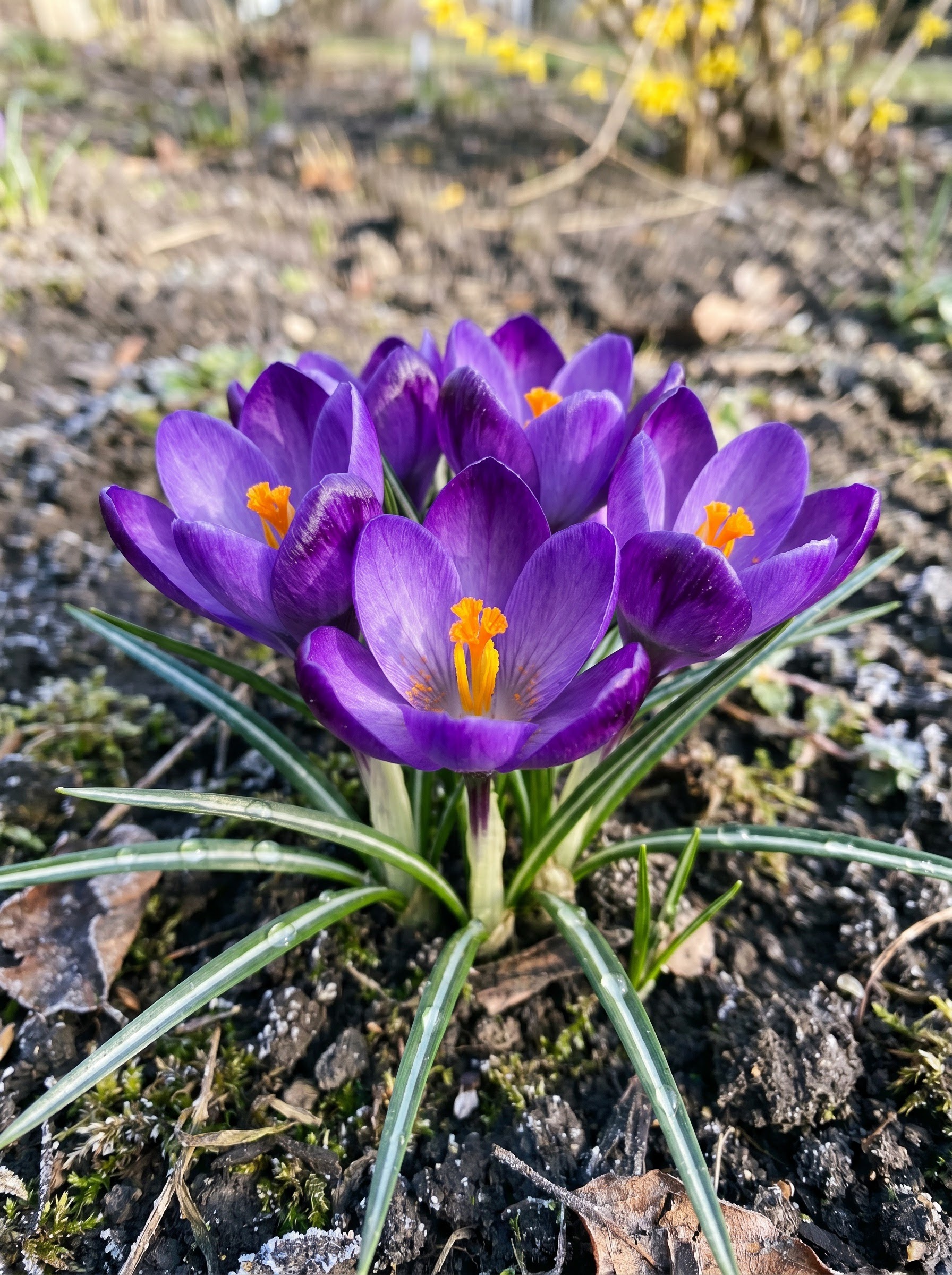 CrocusProven
The earliest layer in a bulb lasagna, opening before tulips and extending the display at the front end; Michigan State University Extension lists crocus alongside tulips and grape hyacinths as one of the standard bulb-lasagna combinations, and shares the same fall-planting, full-sun, sharp-drainage culture.
Tulip+ DaffodilPartial
Same planting depth, same fall timing, same sun and drainage needs, and daffodils are left alone by the squirrels and chipmunks that dig up tulips; a reasonable bed mate, though the honest note on rodent protection lives in the avoid section below, not here.
Tulip+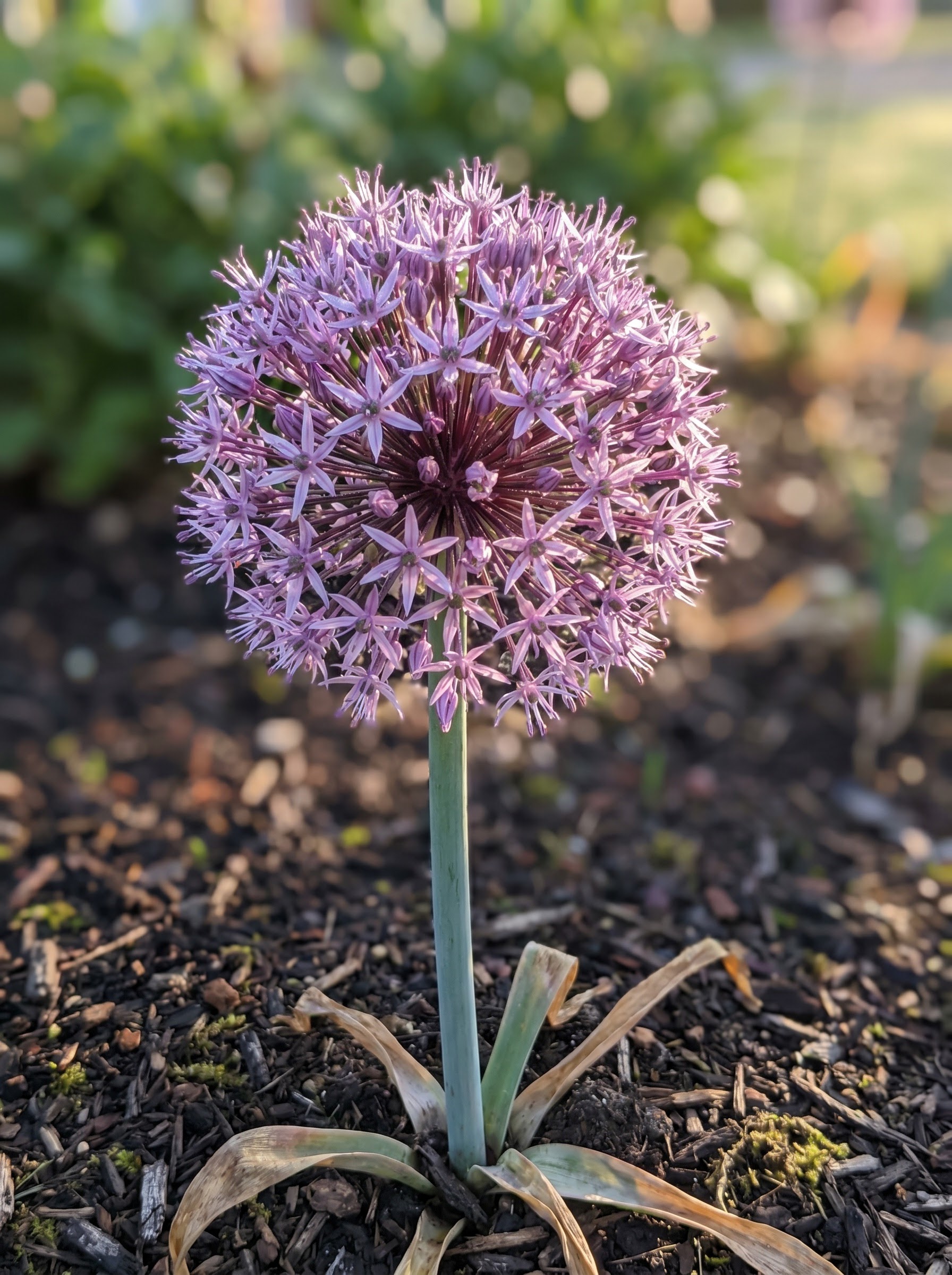 AlliumPartial
Blooms after tulips finish, in the same bulb family and the same fall-chilled culture, stretching the display into early summer; its own strong-flavored, oniony-scented bulb is genuinely unpalatable to deer and squirrels, though that protects the allium itself more reliably than it protects the tulip beside it.
All tulips companions
11 flower companions, best match first
What not to plant near tulips
Most bad neighbours are not evil, they just want the opposite light, water or root run. Here is what to keep away, and what to do instead.
Deep shade and under-tree siting (hosta grown in heavy shade, astilbe, brunnera, hellebore sited beneath dense evergreen canopy)
Tulips need at least six hours of direct sun for strong stems and reliable rebloom; Iowa State Extension is explicit that insufficient light produces large, floppy foliage with no flowers at all.
Waterlogged sites and moisture-loving neighbors (bog or water-garden plants, or any low spot that collects runoff)
Tulip bulbs rot in standing water; Iowa State Extension names poorly drained and wet soil directly as the cause of bulb decline and short garden life, independent of what else is planted nearby.
Very dense, established groundcovers (Japanese pachysandra especially, if left to mat thickly)
This one is grower folklore more than a settled horticultural rule: consumer gardening sources repeatedly warn that thick, greedy matting groundcover competes at the shallow depth tulip shoots need to push through each spring, but no extension source opened for this page actually studies pachysandra against bulb emergence, and Rutgers NJAES lists pachysandra as a workable groundcover choice for hiding bulb foliage rather than a threat to it.
Replanting tulips in the same soil within three years of a tulip fire outbreak
This is a bed-history rule, not a neighbor-plant rule: Botrytis tulipae survives as hard sclerotia in soil and old plant debris, and Arkansas Cooperative Extension states plainly that tulips should not be planted for at least three years in a site where the disease has occurred. It affects tulips only, so daffodils and other bulbs can go back into that same ground safely.
Black walnut (Juglans nigra), commonly listed as a tulip avoid but not actually one
This is a myth-reversal, not a real avoid: many consumer lists warn tulips off walnut soil, but The Morton Arboretum's own juglone-tolerance list names Tulipa spp., along with Narcissus and Muscari, as tolerant of the juglone black walnut roots and leaf litter release. The popular 'avoid' claim is the folklore here, not the tulip's actual tolerance.
The best companions for tulips, explained
Tulips ask for something most flowers do not: a plan for what happens after they stop looking good. The bulb needs its own leaves in place for six to eight weeks after the last petal drops, quietly rebuilding the energy for next spring, and cutting that foliage early is the single fastest way to lose next year’s flower. So the strongest tulip companions are not chosen for a chemical benefit or a pest-repelling trick. They are chosen for timing. Daylily and hosta both stay low through the tulip bloom, then expand right on schedule to physically cover the yellowing leaves by early summer, and Iowa State University Extension names this pairing directly as the practical fix for the decline period. Ornamental grasses do the same job with a different silhouette, staying short during bloom and reaching full height by the time the tulip bed needs screening.
A second, separate strategy solves a different problem: stretching the display itself rather than hiding its end. Grape hyacinth and crocus are grown, chilled, and planted under identical conditions to tulips, and both bloom slightly ahead of or alongside them, which is why Michigan State University Extension names all three directly as a standard combination for layered bulb planting. Forget-me-nots add a low blue carpet timed to peak with mid-to-late tulips rather than after them, filling the gaps at ground level during the actual bloom window. Pansies and violas do similar work from the surface of a bed or pot, tolerant of frost into the high 20s and already flowering by the time tulip shoots first break ground. None of these pairings depend on one plant helping another grow better in the biological sense. They depend on one plant’s calendar covering for the other’s, and that honest mechanism, more than any repellent claim, is what actually holds up.
What not to plant near tulips
Tulip’s avoid list is real but thin, and mostly comes down to two conditions the plant cannot compromise on: sun and drainage. Deep shade, whether from a dense evergreen canopy or a poorly chosen shade perennial like astilbe or brunnera planted where a tulip clump also needs to grow, cuts bloom and produces the floppy, flowerless foliage Iowa State Extension describes as the direct result of insufficient light. Wet, poorly drained ground does the same kind of damage from the other direction, rotting the bulb outright rather than just weakening the flower, which is why the same extension source names standing water as the leading cause of bulb decline independent of anything planted nearby. A dense, established groundcover like Japanese pachysandra is worth a caution rather than a hard rule: gardeners repeatedly describe it crowding out shallow bulb shoots at emergence, but that is grower experience rather than a claim any extension source has actually studied, and Rutgers Cooperative Extension lists pachysandra as an option for hiding bulb foliage rather than a threat to it, so the sensible move is to watch a thickly matted planting rather than avoid the pairing outright.
The one disease-driven avoid rule on this list is not about a neighboring plant at all. Tulip fire, caused by the fungus Botrytis tulipae, survives as hardened structures in the soil and in leftover plant debris, and Arkansas Cooperative Extension states plainly that an infected bed should not host tulips again for at least three years. The good news inside that bad news: the disease affects tulips exclusively, so daffodils, alliums, and other bulbs can go straight back into that same ground while the tulips sit out. Then there is a genuine myth to correct rather than confirm. Black walnut shows up on plenty of consumer companion-planting lists as something to keep tulips away from, but The Morton Arboretum’s own juglone-tolerance list names Tulipa spp. directly, alongside daffodils and grape hyacinth, as tolerant of the compound walnut roots and leaf litter release. The popular warning is the unproven part here, not the tulip’s actual resilience.
Do they like the same conditions?
Every companion on this page gets measured against the same ruler: full sun, soil that drains fast and dries out between waterings, and a pH sitting close to neutral, around 6.0 to 6.8. Tulips will tolerate part sun, but the strongest stems and the best chance of a repeat bloom next year come from six or more hours of direct light, which is why the shade-tolerant companions on this list, hosta and heuchera among them, are chosen specifically for varieties or siting that still let spring sun reach the tulip before a deciduous canopy fills in. Hardy geranium sits comfortably in the middle of that range, tolerant of full sun to part shade without asking the bed to compromise. Drainage matters just as much and gets less attention. Tulips are far more drought-tolerant than they are moisture-tolerant, closer in that respect to a Mediterranean herb than to a typical spring perennial, so a companion that wants consistently damp soil, the kind a fern or an astilbe prefers, is fighting the tulip’s real preference even if the two look fine together in a catalog photo.
There is a genuine myth worth settling plainly rather than repeating by habit: interplanting daffodils or alliums among tulips as a squirrel deterrent. Both bulbs really do contain compounds that make them unappetizing to rodents, and squirrels and voles really do leave them alone while digging up tulips nearby. But that toxicity protects the daffodil and the allium, not the tulip growing a few inches away in the same bed. UNH Extension’s own list of squirrel-resistant bulbs recommends daffodils, snowdrops, and alliums as safe choices in their own right, without claiming that planting them near tulips changes the tulip’s odds. The honest fix for bulb predation is mechanical: adequate planting depth, a buried hardware-cloth cage, or a crushed-oyster-shell layer, not a clever neighbor.
How to plant them together
In an open border, the working order is bloom sequence first, height second. Crocus and grape hyacinth go in as the earliest, lowest layer, opening days to weeks ahead of the tulips and staying under six inches so they never shade the taller bulb. Tulips and daffodils occupy the middle layer at their standard six-to-ten-inch planting depth, spaced far enough apart, roughly six to ten inches, that neither crowds the other’s root run. Behind or beside that layer, plant the foliage-hiding perennial, daylily, hosta, or an ornamental grass, twelve to eighteen inches from the bulb clump so its mature spread does not smother the tulip’s own early growth before it has bloomed. Forget-me-not or a scattering of pansies can go almost anywhere in the gaps, since both stay low and simply fill bare soil rather than competing for space.
Containers follow the same bloom-sequence logic in a single pot, and it has a name: bulb lasagna. Tulips go in deepest, at the bottom of the container, followed by a shallower layer of alliums or daffodils, then muscari or crocus closer to the surface, each layer covered with a thin blanket of soil before the next goes in. Pansies or violas finish the top, both for early color while the bulbs are still underground and for continued bloom once the tulips finish. A container at least twelve inches deep gives enough room for three full layers without crowding, and drainage holes are non-negotiable, since the same wet-soil rot that threatens tulips in the ground threatens them just as fast in a pot that cannot drain.
Does companion planting actually work for tulips?
For the foliage-hiding pairings, yes, and it is one of the more clearly proven cases in ornamental gardening. Daylily and hosta genuinely grow on the schedule tulips need, and Iowa State University Extension recommends the combination directly, not as a folk tip passed between gardeners but as documented horticultural practice. The bulb-lasagna layering is nearly as solid: it is standard technique with wide practitioner consensus, and Michigan State University Extension names tulips, crocus, and grape hyacinth together as one of the standard combinations for it, even though no one has run a controlled study proving one bulb helps another bloom better. For the design pairings, forget-me-not and pansy, the case rests on well-documented bloom-time overlap rather than any measurable biological benefit, and that is a fair, honest basis for a pairing even without a study behind it.
Where the honesty has to be sharper is the squirrel question, because it is the single biggest fear driving people to search for tulip companions in the first place, and the popular answer oversells what the evidence supports. Daffodils and alliums are genuinely left alone by rodents. They do not reliably extend that protection to the tulips planted near them, and no extension source claims they do. The tulip fire rotation rule and the black walnut myth-reversal both hold up well under a direct source check, one confirming a real avoidance, the other correcting a false one, which is roughly the split an honest companion-planting page for any bulb should expect: some real mechanisms, some good design logic, and at least one popular belief that does not survive contact with the source.
FAQ
What can I plant with tulips to hide the dying leaves?
Daylily, hosta, and clumping ornamental grasses are the most reliably documented answers, since all three stay low during the tulip bloom and then expand on schedule to cover the foliage as it yellows over the following six to eight weeks. Hardy geranium and heuchera do a smaller-scale version of the same job at ground level.
Do daffodils really protect tulips from squirrels?
Not directly. Daffodils are genuinely toxic enough that rodents leave them alone, but that protection covers the daffodil bulb itself, not a tulip planted nearby. Squirrels and voles will still dig up tulips in a mixed bed. Planting depth and a buried wire cage are the protections that actually work.
Can I plant tulips and daffodils together?
Yes. Both are fall-planted, want the same full sun and sharp drainage, and bloom close enough in timing that they read as one display, even though their bulbs need to stay in separate clumps rather than mixed together in the same hole.
What should I avoid planting near tulips?
Deep shade, whether from dense evergreen cover or a shade perennial sited too close, and any spot that stays wet after rain. A thick, established groundcover like Japanese pachysandra is worth watching too, since gardeners commonly describe it crowding shallow bulb shoots, though that is grower experience rather than a claim backed by university research.
Is it true tulips can’t grow near black walnut trees?
No, that is a myth worth correcting. The Morton Arboretum’s own juglone-tolerance list names tulips directly as tolerant of the compound black walnut trees release. If tulips struggle under a walnut, shade or root competition from the tree’s canopy is a more likely cause than juglone.
Can I replant tulips in the same spot every year?
Generally yes, unless that bed has had a tulip fire outbreak. After Botrytis tulipae shows up, Arkansas Cooperative Extension recommends waiting at least three years before putting tulips back in that same soil, since the fungus survives as hardened structures in the ground and on old plant debris.
Sources
- Iowa State University Extension: All About Tulips
- Iowa State University Extension: How to Manage Potential Problems Growing Tulips
- Iowa State University Extension: Growing Cool-Season Annuals
- Arkansas Cooperative Extension Service: Tulip Fire
- University of Illinois Extension: Cranesbill, Hardy Geranium
- NC State Extension Gardener Plant Toolbox: Heuchera
- NC State Extension Gardener Plant Toolbox: Myosotis sylvatica (Forget-me-not)
- Michigan State University Extension: Planting Bulbs, Lasagna Style
- University of Wisconsin-Madison Extension: Feather Reed Grass ‘Karl Foerster’
- The Morton Arboretum: Black Walnut Toxicity