Three plants share the name wax flower
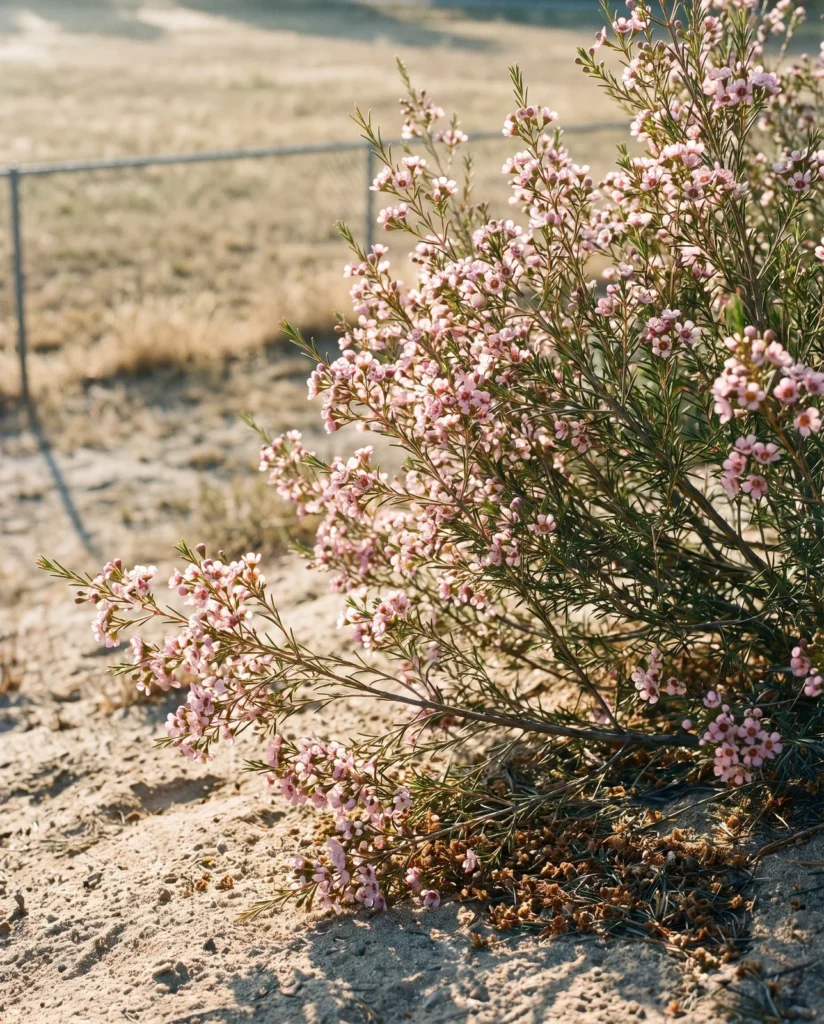
Three unrelated plants answer to the name wax flower. This page is about the Australian shrub Chamelaucium uncinatum, sold by florists as waxflower or Geraldton wax. The genus holds about 25 species, some still without formal names, and grows wild only in south western Australia. Geraldton wax comes from the coastal sandplains between Perth and Geraldton. That explains most of its behavior in a garden. It is a myrtle family plant, related to eucalyptus, bottlebrush and leptospermum, built for deep sand, hard sun and a long dry summer.
The second plant is a houseplant. Hoya carnosa, the wax plant or honey plant, climbs or trails and belongs to the dogbane and milkweed family. Its name honors Thomas Hoy, who gardened for the Duke of Northumberland in the 18th century, and the wax points at the texture of its flowers and leaves. Indoors it reaches 2 to 4 feet tall and 1 to 2 feet wide, and it is winter hardy only in the warmest corners of the country.
The third is a bedding annual. Wax begonia, the Semperflorens Cultorum Group, is a compact, mounded, fibrous-rooted garden annual. Its fleshy stems and waxy dark green to bronze leaves gave it the name, and outside the warmest zones it is replaced every year. Humid, still air leaves it susceptible to powdery mildew, botrytis and stem rot. A low mound of glossy round leaves in a summer bed is this plant, and it shares nothing with the Australian shrub except the word wax.
How to tell which one you have
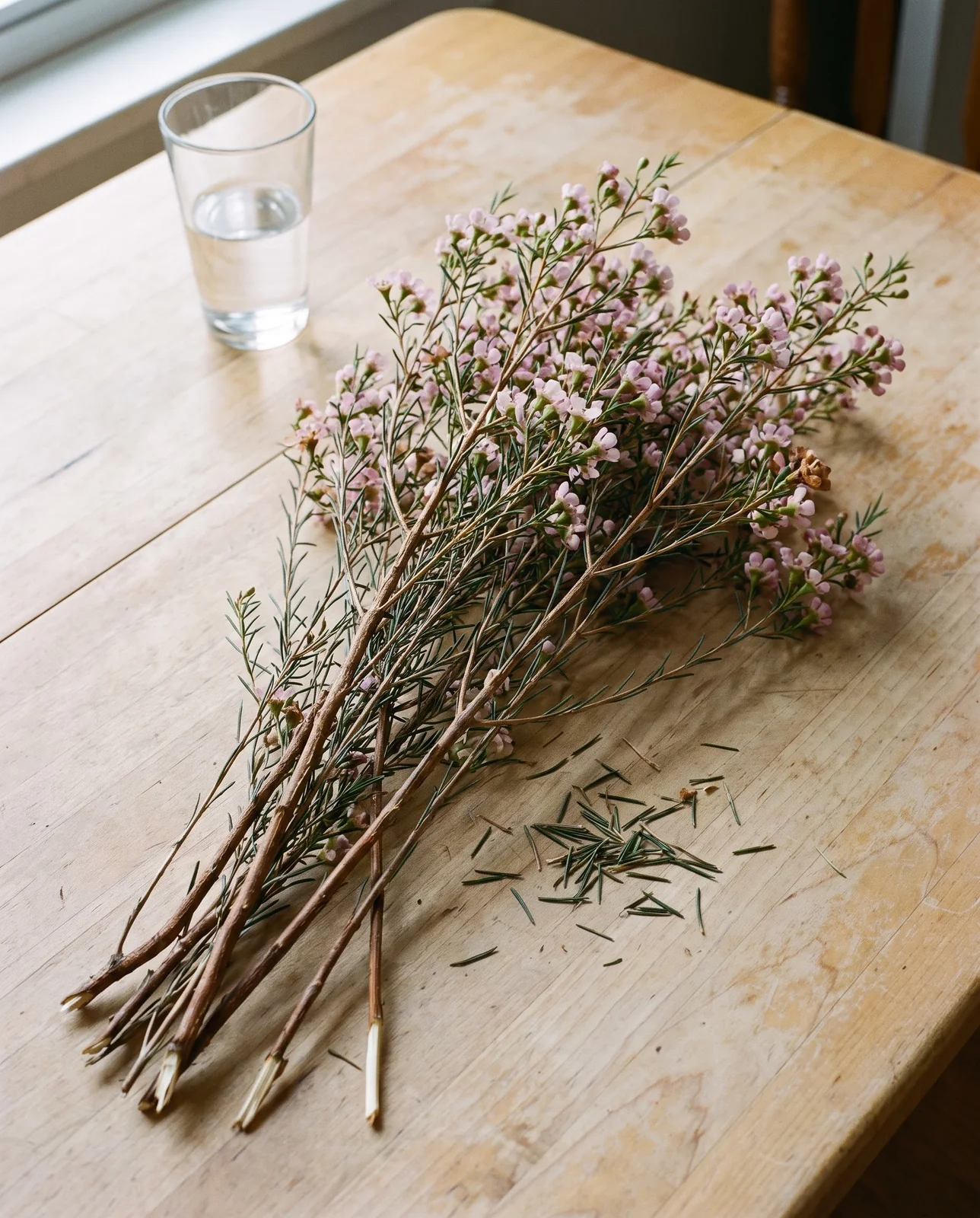
Four checks separate them: the leaf, the flower, the way the plant was sold, and where it can live.
What wax flower is and where it grows wild
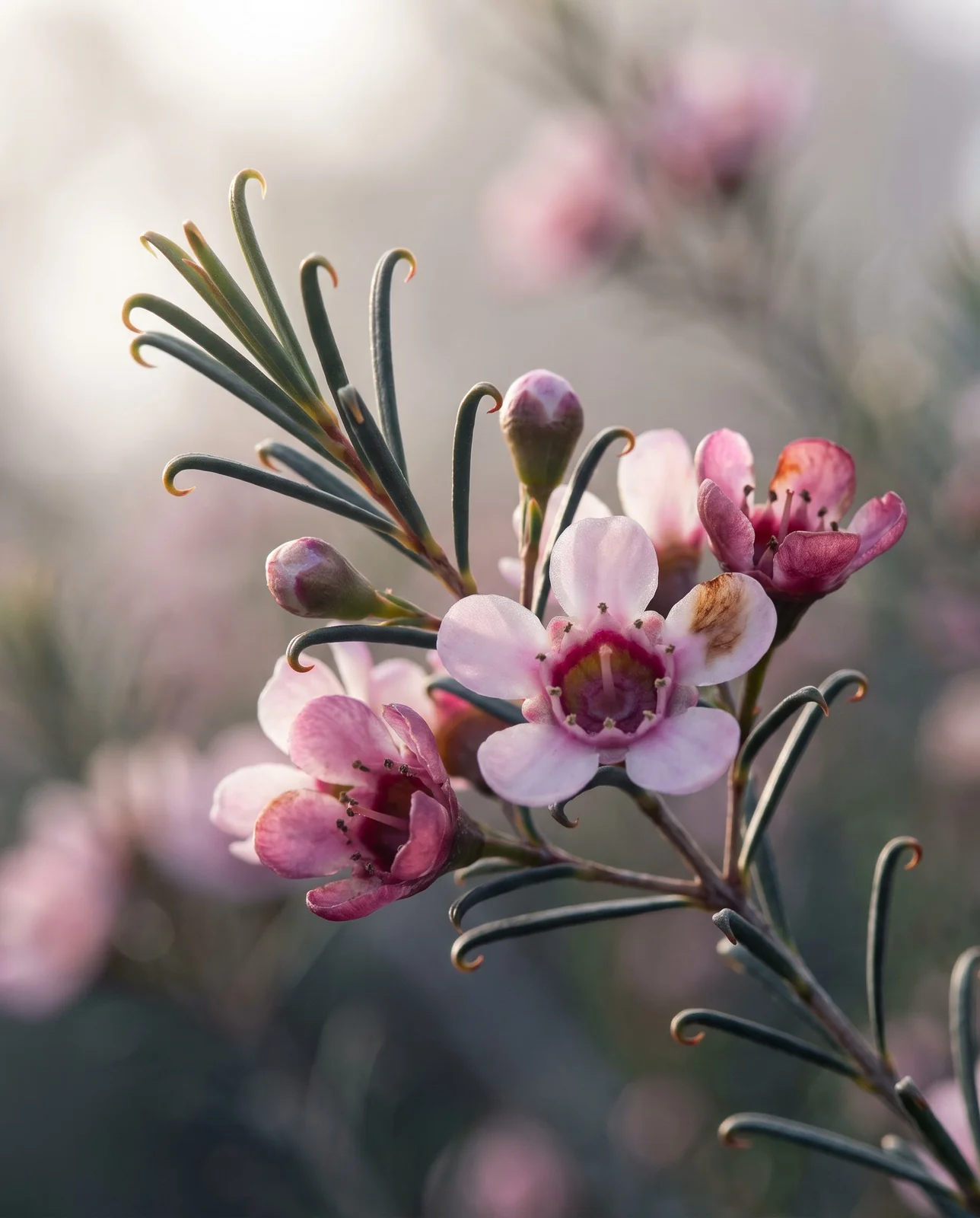
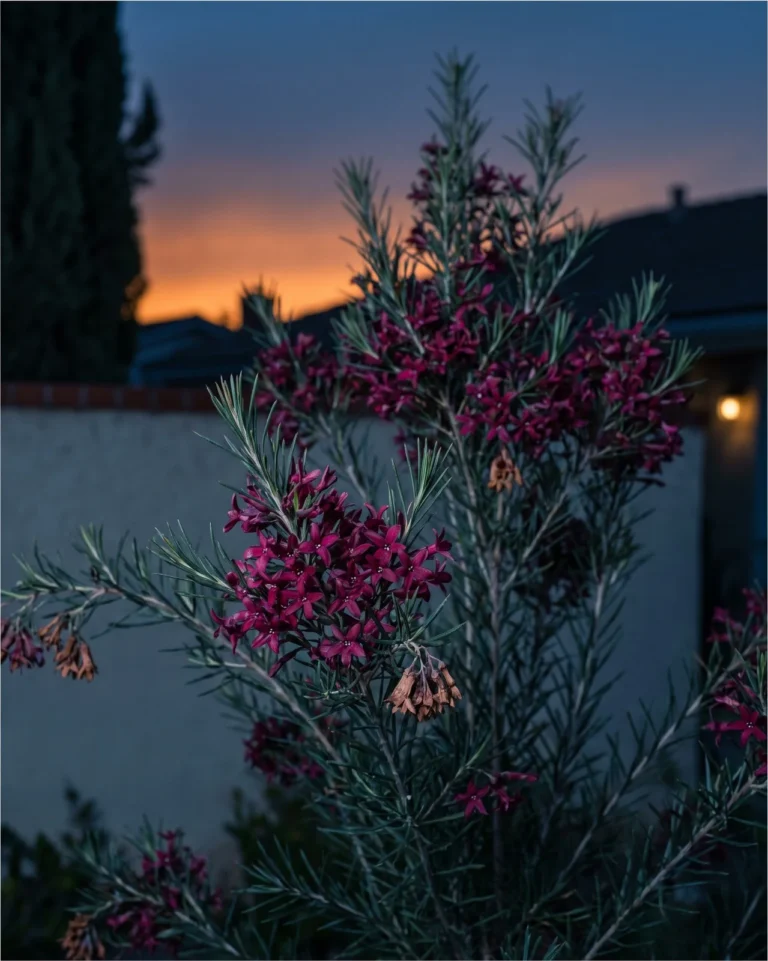
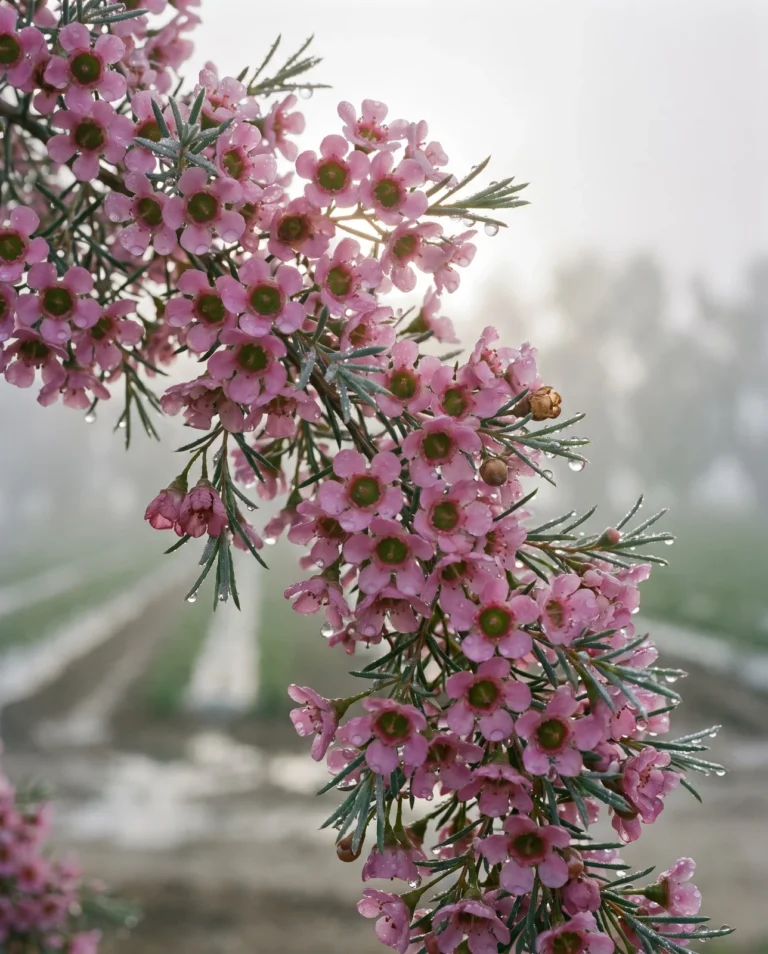
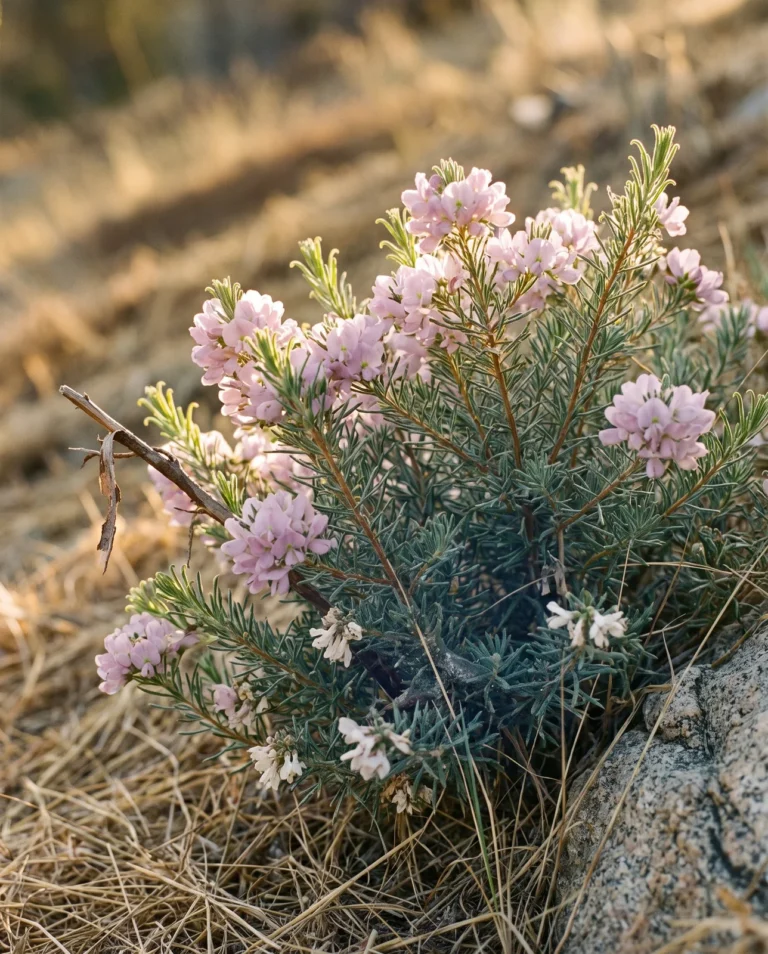
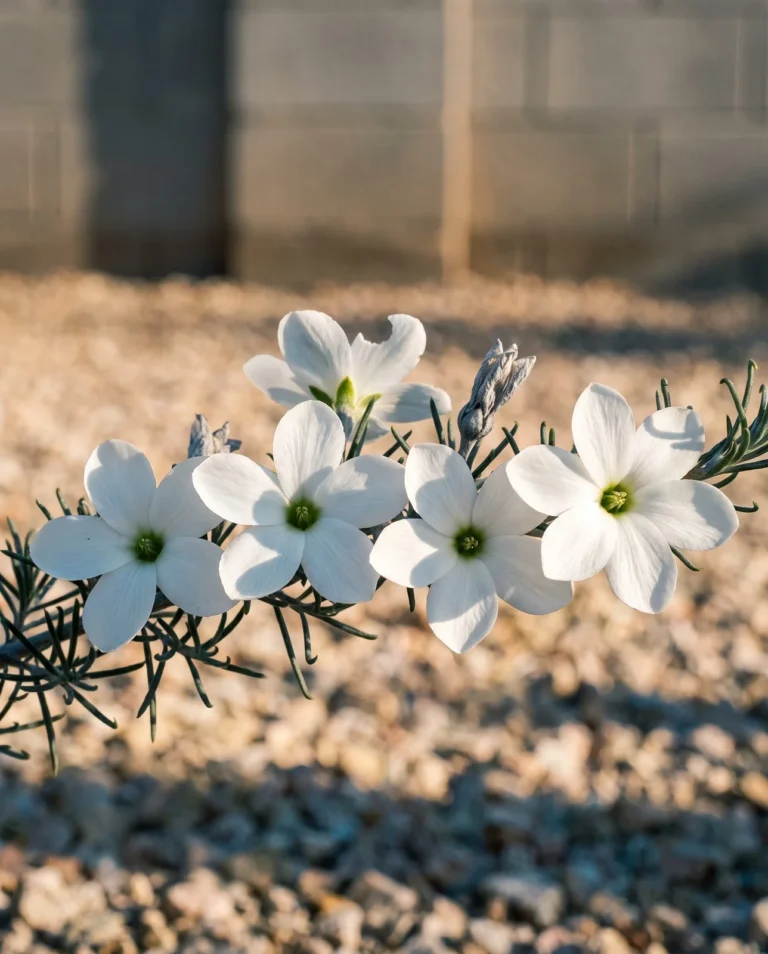
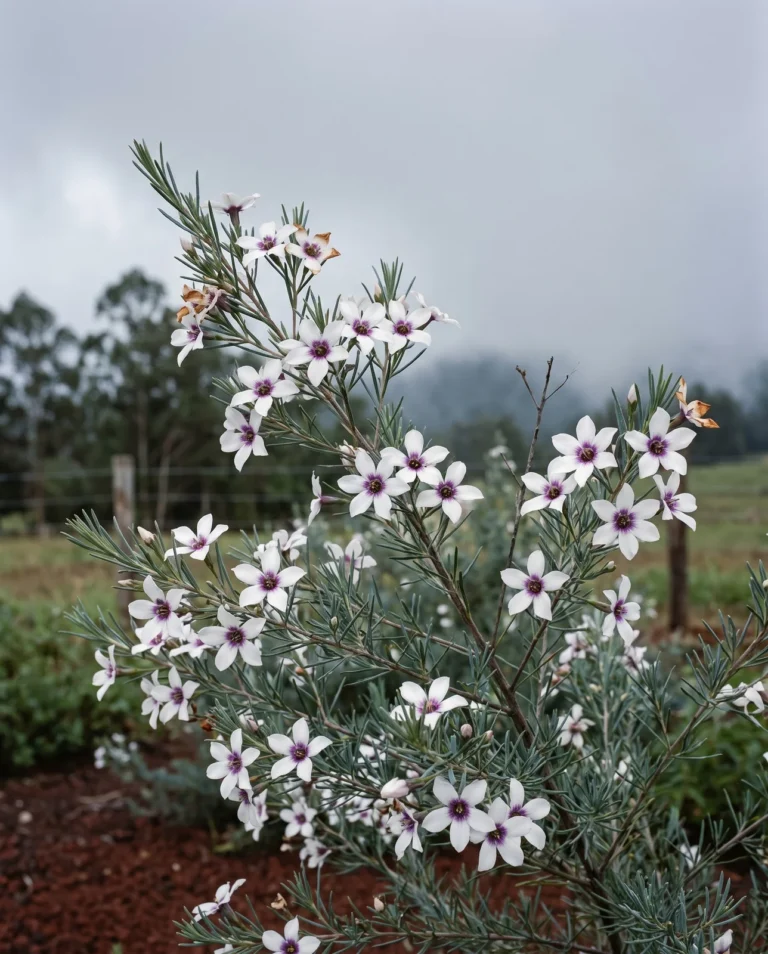
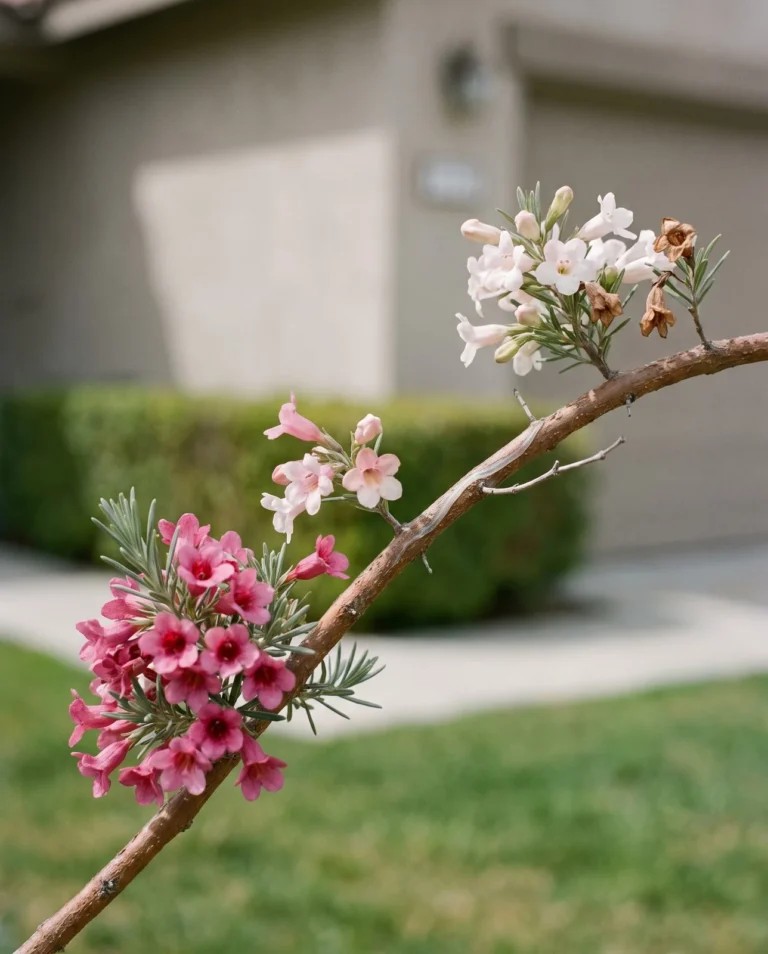
Wax flower is an evergreen shrub with needle-fine foliage and stiff sprays of small waxy flowers. The species name describes the leaf: uncinatum comes from the Latin uncinatus, hooked, for the tiny hooks at the leaf tips. The flowers are circular, half to three quarters of an inch across, and usually pale to mid pink in the ordinary form. Breeding for the cut flower trade has added white, pink and purple, much of that work leaning on Chamelaucium megalopetalum, a related species carrying larger flowers.
The flowers are not what you smell. A bunch on the table will not perfume a room the way a gardenia does. The aromatic part is the foliage, strongly scented when the leaves are crushed. What the shrub produces in quantity is flowers and seed, and the flowers draw bees. In Australia 'Purple Pride' is grown as a plant for honey eating birds and insects.
Wax flower as a cut flower
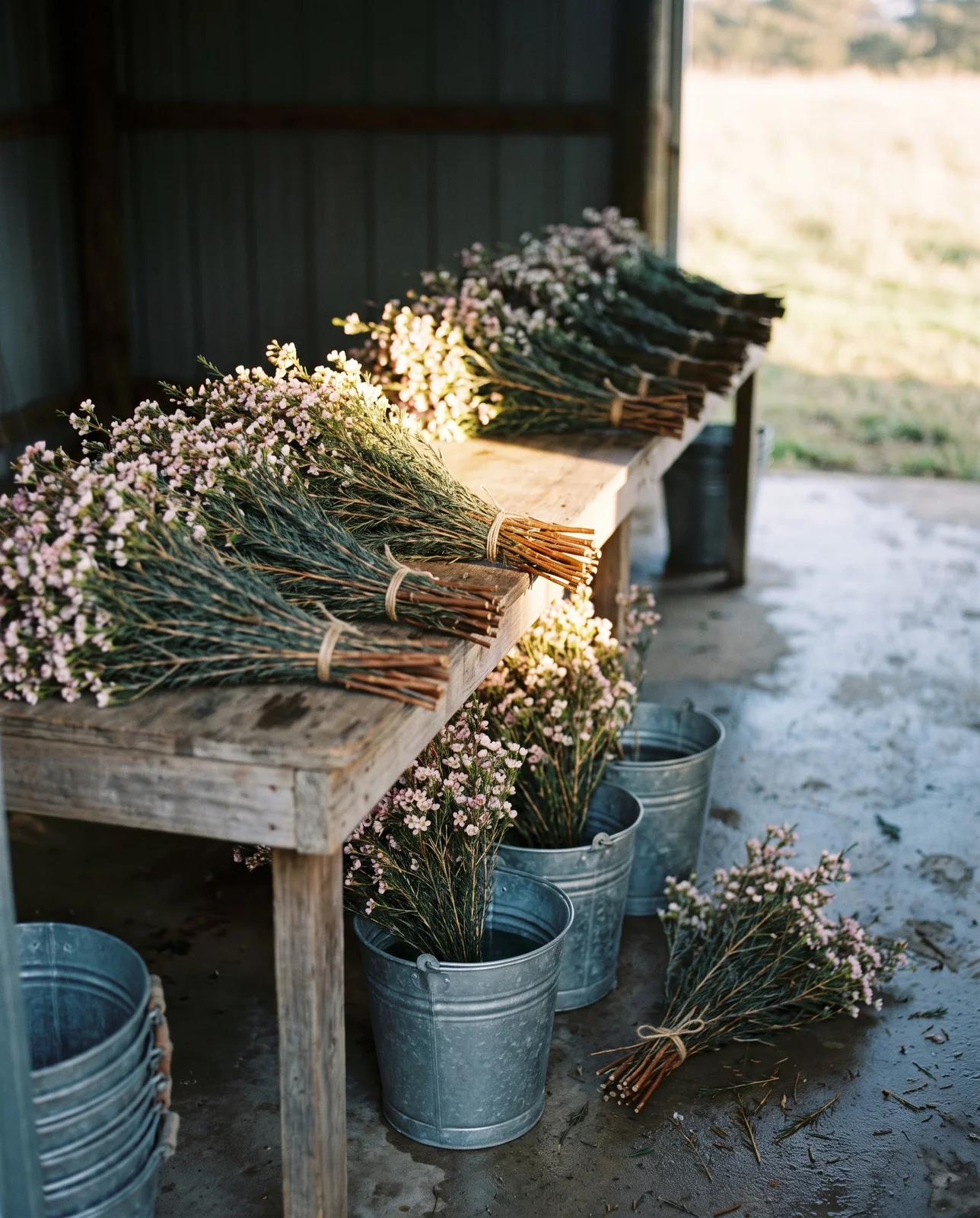
Most readers meet wax flower as the filler in a mixed bouquet. The trade buys it for exactly that: a long vase life, several colors, and a shape that sits behind the focal flowers. The stems run 24 to 36 inches long, so a single branch spreads through a whole arrangement, and the foliage earns its place along with the flowers. Waxflower on an American counter is often grown in Australia and shipped in. The choice behind the label is wider than it looks: one Australian farm alone grows more than 25 varieties, most of them crosses of Chamelaucium megalopetalum with uncinatum.
A bunch mostly holds 5 to 9 days, varying greatly by species and cultivar. In one published experiment 'Newmarracarra' held 5 days while 'Mullering Brook' reached 12, and well over a week is the ordinary expectation. The three weeks sometimes claimed for it sits above every result those trials produced. The name on the bucket matters more than anything done at home, and the hybrid selections such as 'Albany' and 'Purple Pride' last longer from harvest to vase.
Most of what shortens a bunch happens before it reaches the counter. Stems are cut when 25 to 80 percent of the flowers are open, depending on species and cultivar. They can then be held at 32 to 34 degrees Fahrenheit for up to 2 weeks with a fungicide treatment against botrytis, so a bunch may already be part way through its life on the day you buy it. Quarantine costs something too: across 13 insecticide dips tested for Australian export, vase life fell by 0 to 49 percent. At home the foliage is the early warning, since water stress often shows on the leaves before it reaches the flowers.
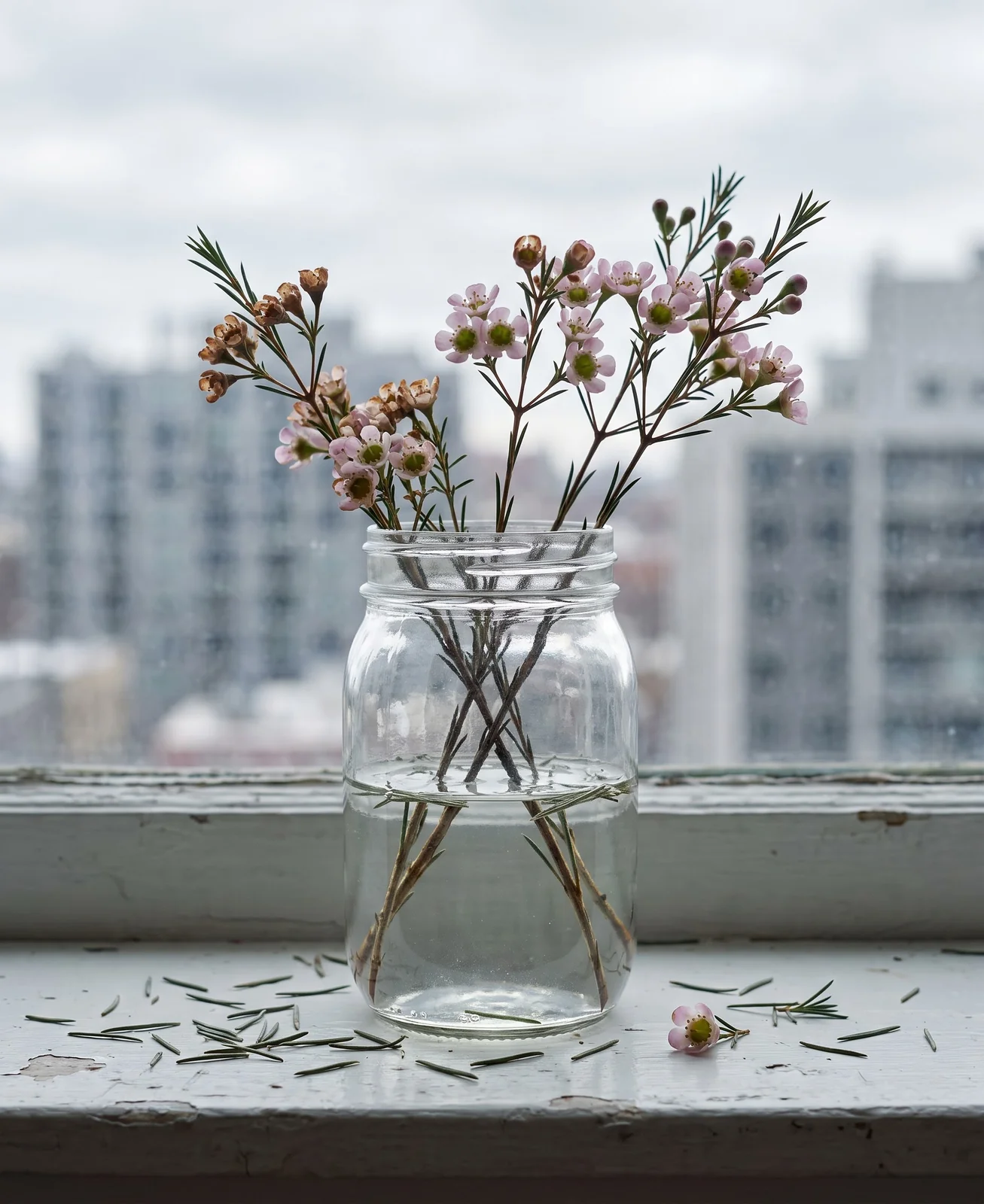
When wax flower blooms
Wax flower blooms in late winter and early spring, filling the emptiest part of the garden year. In its native Western Australia that same season runs June through November, which is why Australian dates read strangely to an American eye. Flowering there can begin in late winter and last well into summer. Where the climate suits the shrub the season reads long, because individual blooms may persist for weeks once they open.
A florist calendar measures something else. One California cut flower farm cuts waxflower from early October to March, with 'Blondie' among the earliest varieties to flower each season and 'Pixie Moon' typically closing it. Those months describe the harvest, not bloom in a garden. That is how a florist sells wax flower in months when the shrub is out of season in most gardens. In Hawaii the plant flowers throughout most of the year, with pollinators often visiting the flowers.
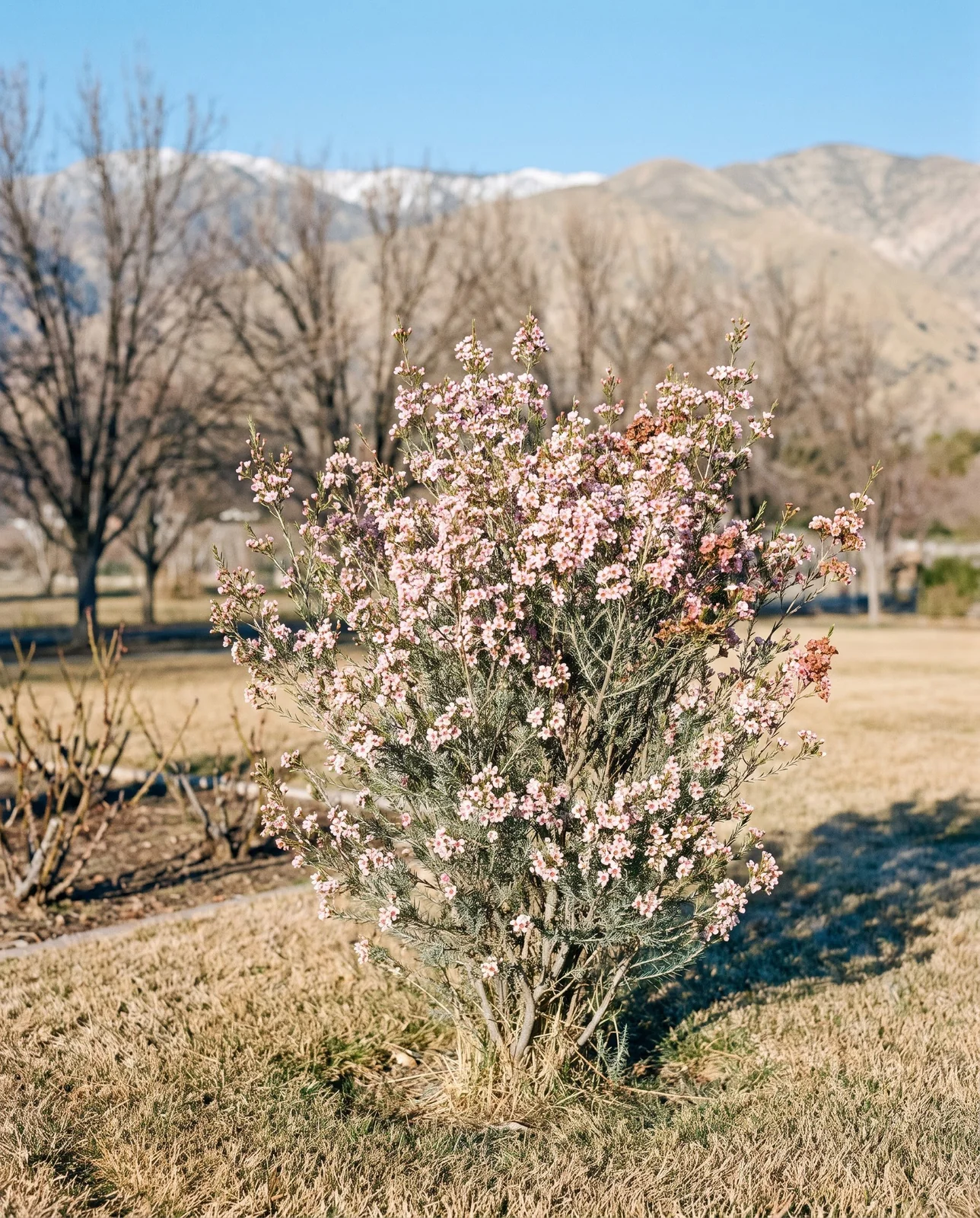
Growing wax flower outdoors
Wax flower wants full sun and ground that drains fast, and it asks for very little else. It is relatively hardy and fairly easy to grow in a Mediterranean climate with well drained sandy soil and a sunny aspect. On soil texture the guidance conflicts. Growing instructions for 'Purple Pride' call for loose sand and warn against heavy clay and soggy soils, while in South Australia the same cultivar is credited with tolerating clay, loam and sand. The two meet at drainage: clay that water moves through is a different proposition from clay that holds it. What matters is water standing at the roots, because the plant dislikes wet feet and the soil should not stay wet for long periods. Root rot can follow where conditions are too moist.
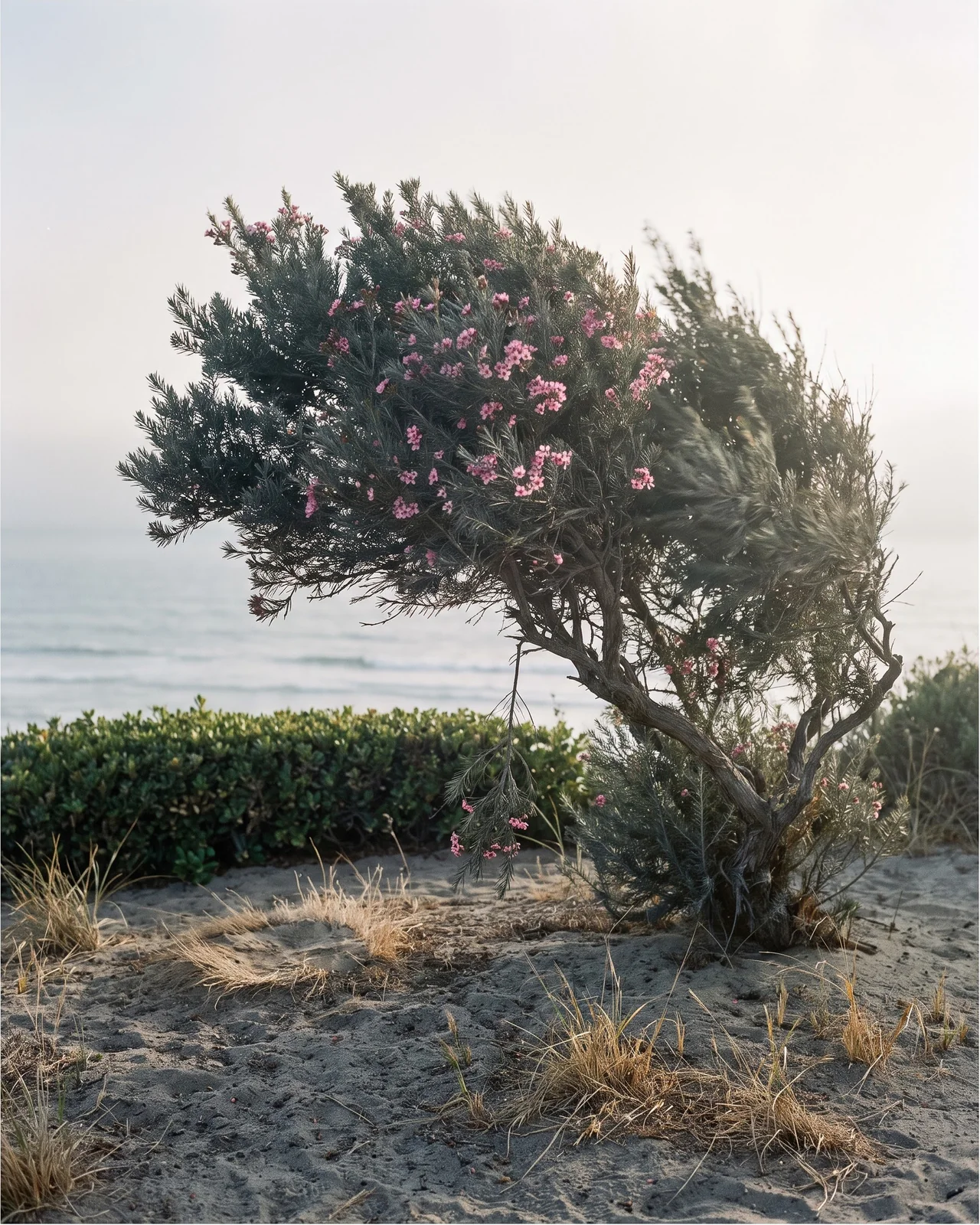
Put it in the open and leave it hungry. It grows well near the ocean given some wind protection, and in Hawaii it is moderately wind tolerant and grows at most elevations. What it will not take is enrichment. The care most gardeners give a new shrub is a list of what this one is warned against. Moisture-holding ground, watering on a schedule past the first year and a general feed for a plant whose native soil is low in nutrients all work against it. Dropped into a watered border between annuals, it is on the wrong side of all three.
Humid summer air is the condition it tolerates least, and it costs this shrub more than a mild winter does. Geraldton wax cannot be recommended for the humid tropics, although some forms tolerate humid, temperate or sub-tropical areas. In a humid coastal city such as Sydney it grows but tends to be short lived, and humid summer environments may limit its lifespan. Warm and dry suits it; warm and wet shortens it. Check that line first, because no amount of grit under the roots changes what the air does in August.
Watering and feeding
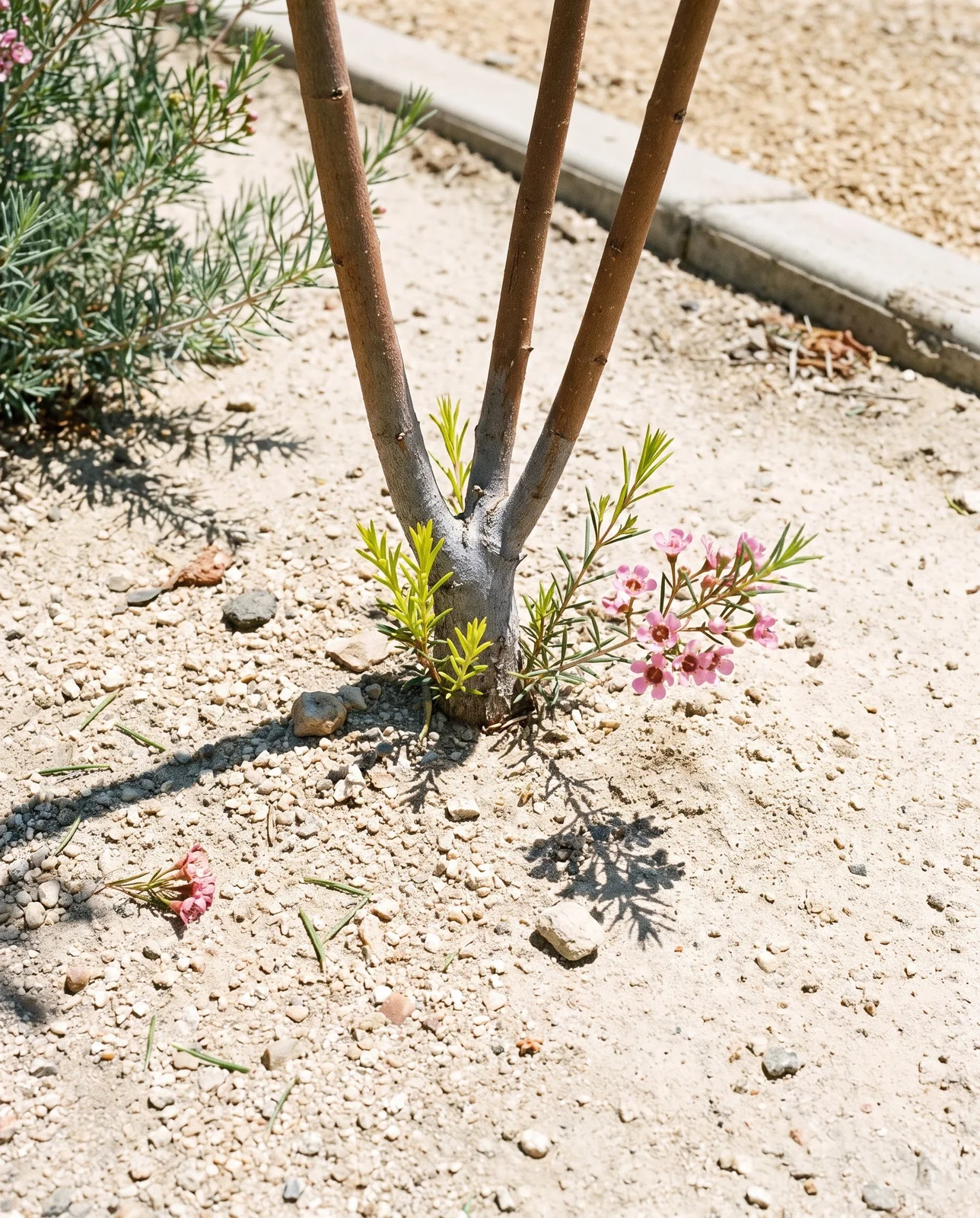
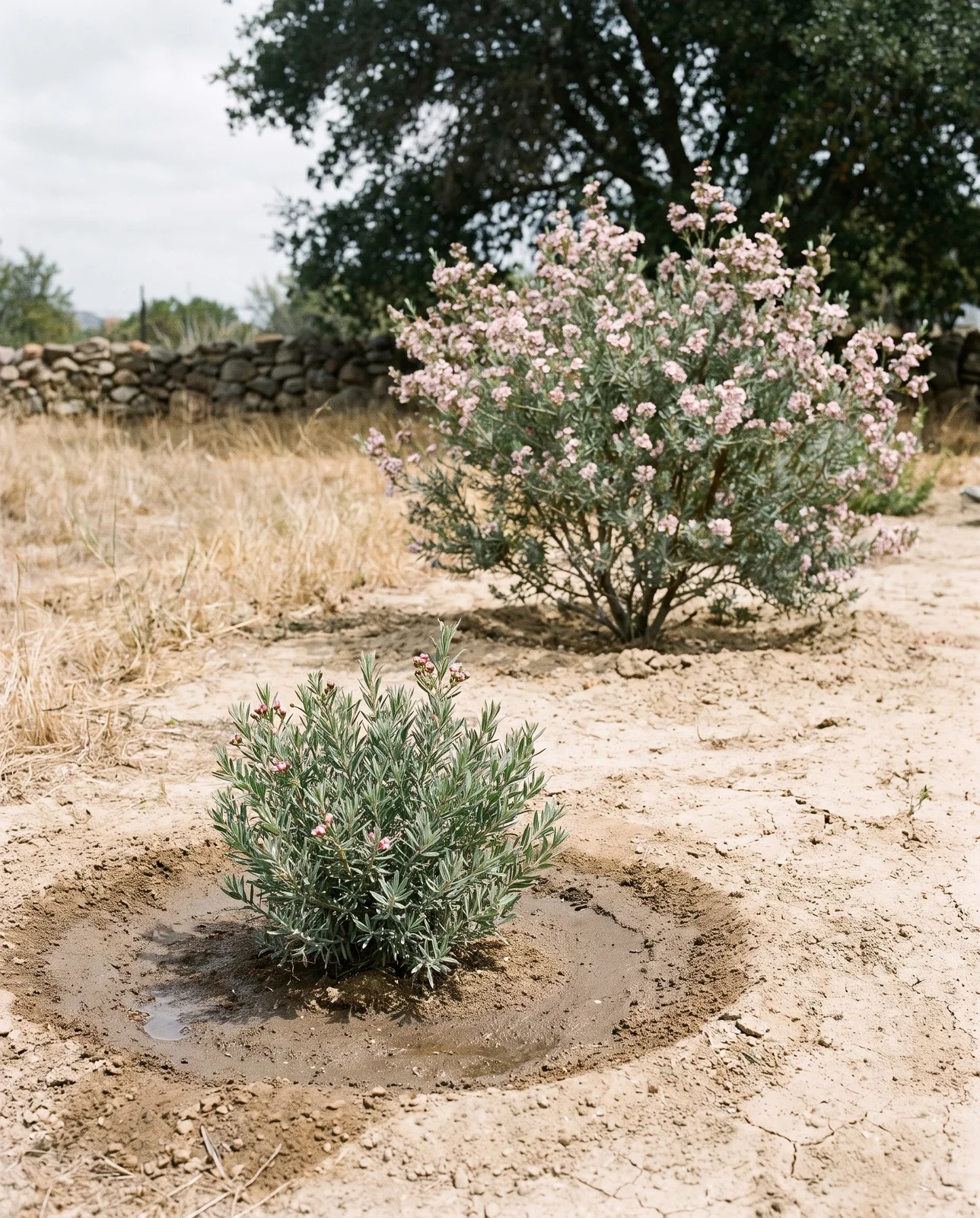
Water a new plant well, then step back. Young plants need supplemental irrigation while they establish, and mature plants can withstand fairly long periods of drought. One Western Australian farm waters its waxflower crop through the first year, after which the plants survive on emergency watering only in harsh weather. A garden follows the same shape: attention for a season, then very little. Soil that stays wet for long periods is what the plant dislikes, and root rot can follow where conditions are too moist. A hose left running on a border for the sake of everything else planted in it threatens this shrub more than a dry month does.
Feed it lightly with a native formula, or not at all. Kings Park in Perth recommends an 8 to 9 month slow release native fertilizer at planting and again annually in spring. The warning running the other way is that commercial fertilizers might actually harm waxflower, because the soil it comes from is low in nutrients. The two are not describing the same product, and neither addresses the other. Where feeding is credited with a result it is at commercial scale: on one waxflower farm a seaweed based fortnightly foliar feed is credited with ending the frost and fungal disease problems the crop used to have.
Pruning wax flower
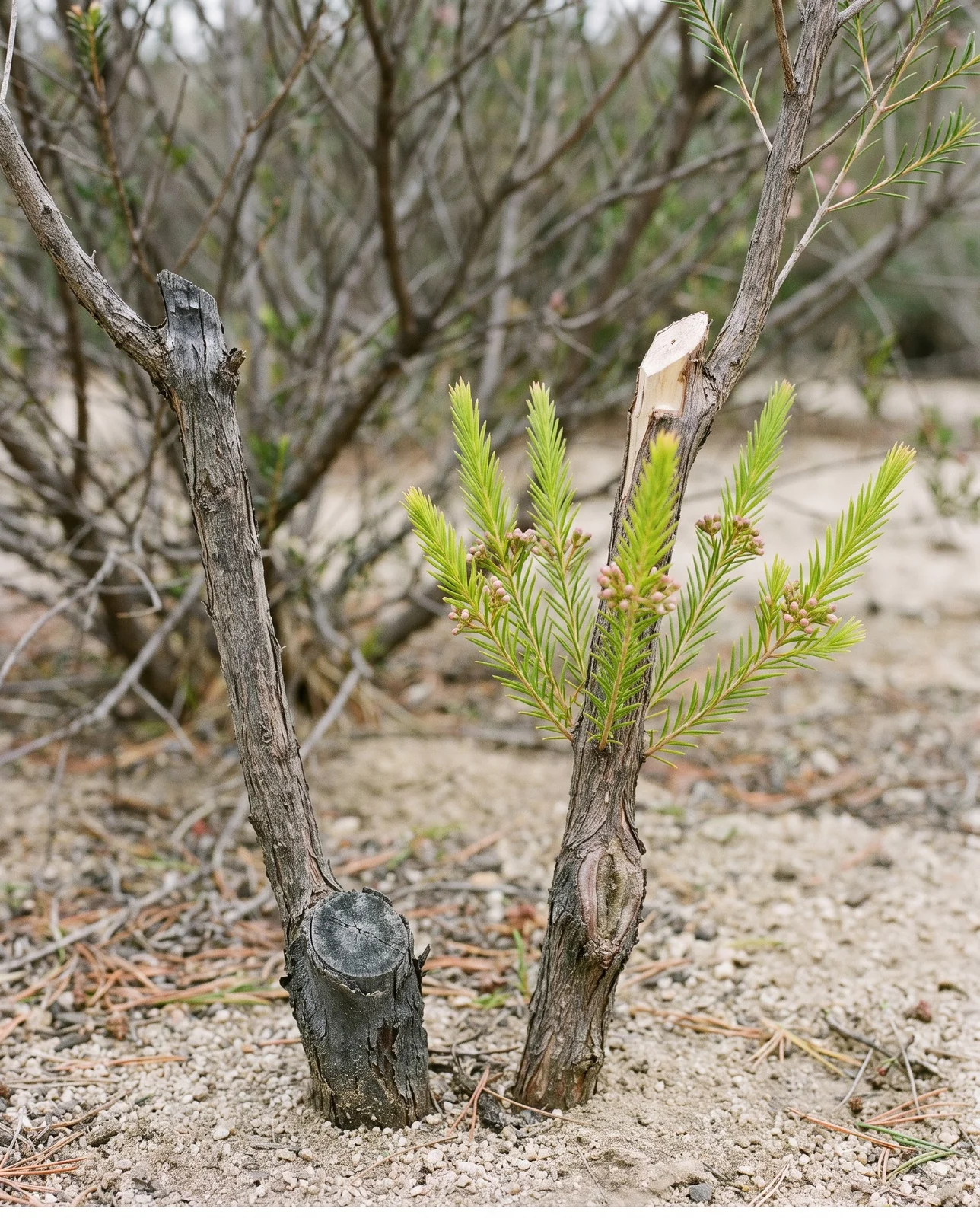
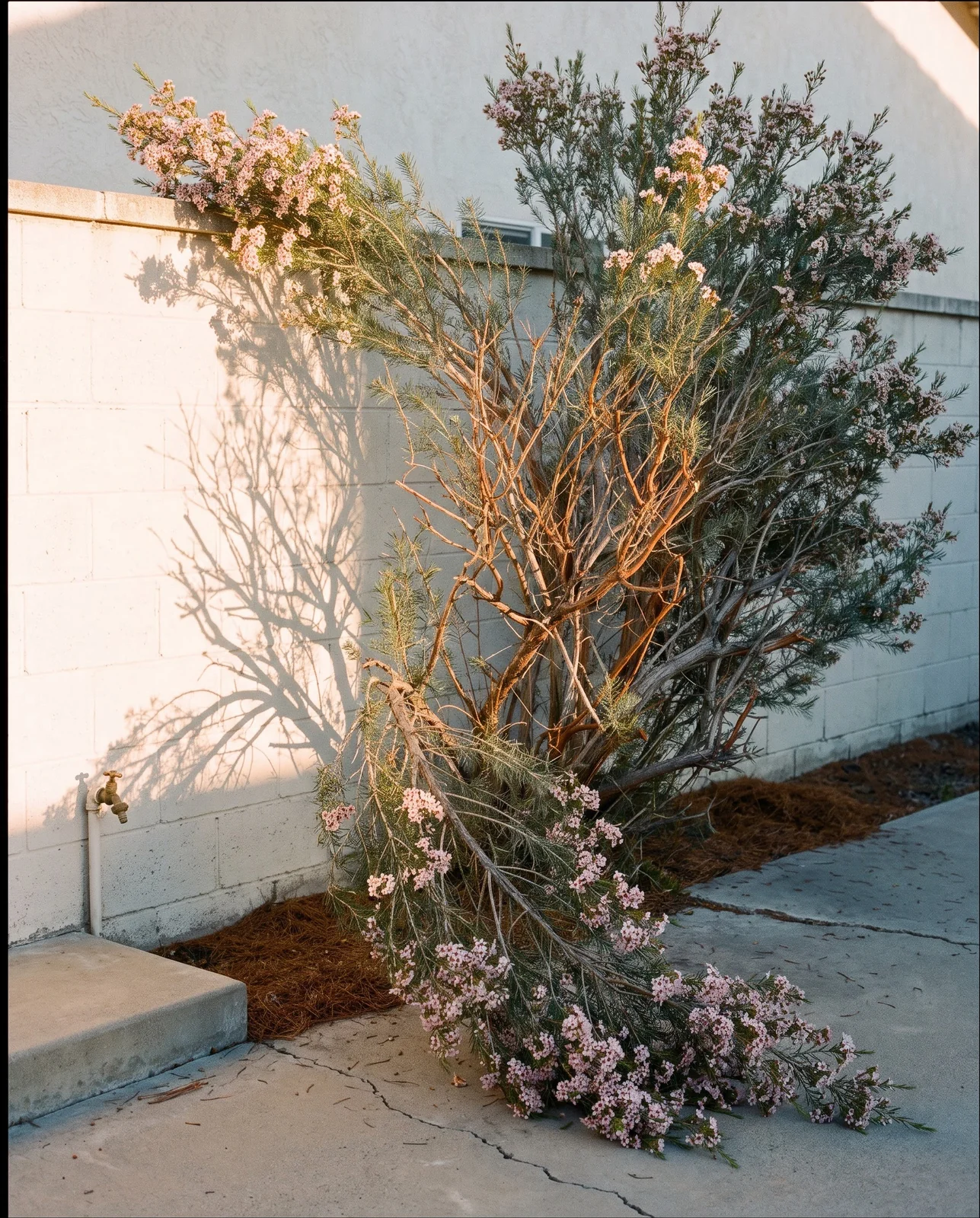
Prune it lightly, straight after it flowers. Cut back by about a third, once a year, as soon as flowering finishes, and the same third is given for 'Purple Pride' to promote dense, bushy growth and better flowering. The timing is mechanical: that cut encourages the new shoots that bear the next season's blooms. Light pruning after flowering is enough, tip pruning encourages a bushy form, and the plant responds very well to pruning in general. Left uncut it opens up and leans, with a tendency to fall over that may need support.
How far back you can go is the harder question. The instruction that repeats everywhere is that light annual third, and none of it says what happens to a stem cut below its leaves. One warning is explicit: tender stems only, no drastic cuts, old wood left alone. In South Australia 'Purple Pride' is credited with responding well to heavy pruning. Commercial practice sits closer to the cautious reading. On one Western Australian farm the stems are cut 20 inches above the previous year's cut each spring, so the cutting line climbs the plant season by season and stays clear of the old wood. The safe course is the annual third, taken while the stem still carries leaves.
Why yours is not flowering
Work down in order and stop at the first one that fits. Only the pruning date is tied to flowering itself; the other four describe a shrub under stress, which looks much the same from outside.
Yellow leaves on wax flower
Start at the roots. Yellowing on this shrub tracks water. The species does not tolerate excess humidity, drainage governs the rest, and leaves turning yellow or dropping at an unusual rate are the signal to check the soil and adjust the watering. That fits the rest of what is known: the plant dislikes wet feet, and its one named disease is root rot in conditions that are too moist.
One insect is named. Empoasca leafhoppers cause necrosis and yellowing, worst on young plants during summer, so turning a few leaves over is worth the minute it takes. A trailing vine with thick oval leaves is Hoya carnosa, of the dogbane and milkweed family, and it does not share a diagnosis with a needle-leaved shrub in a garden bed.
Growing wax flower in a pot
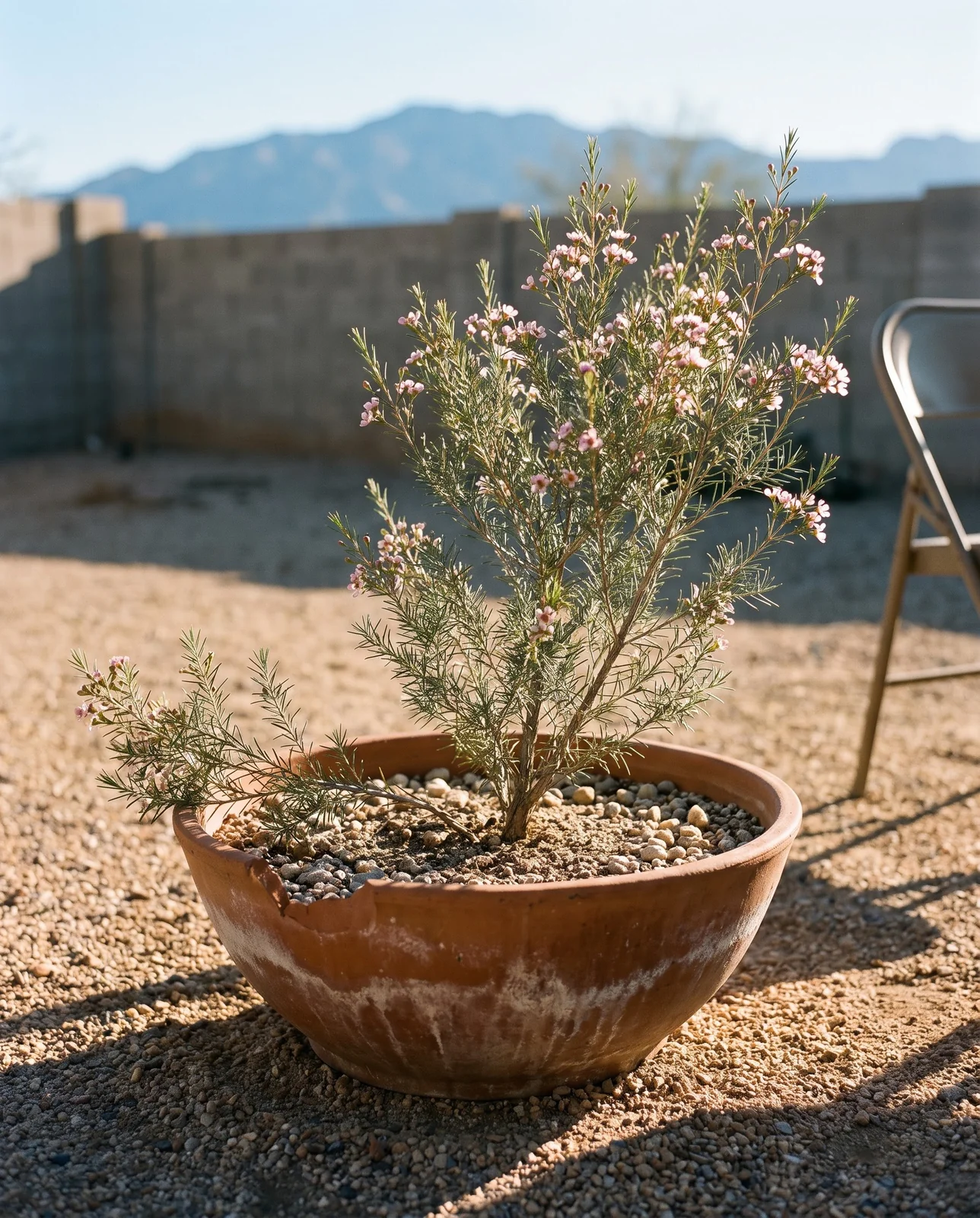
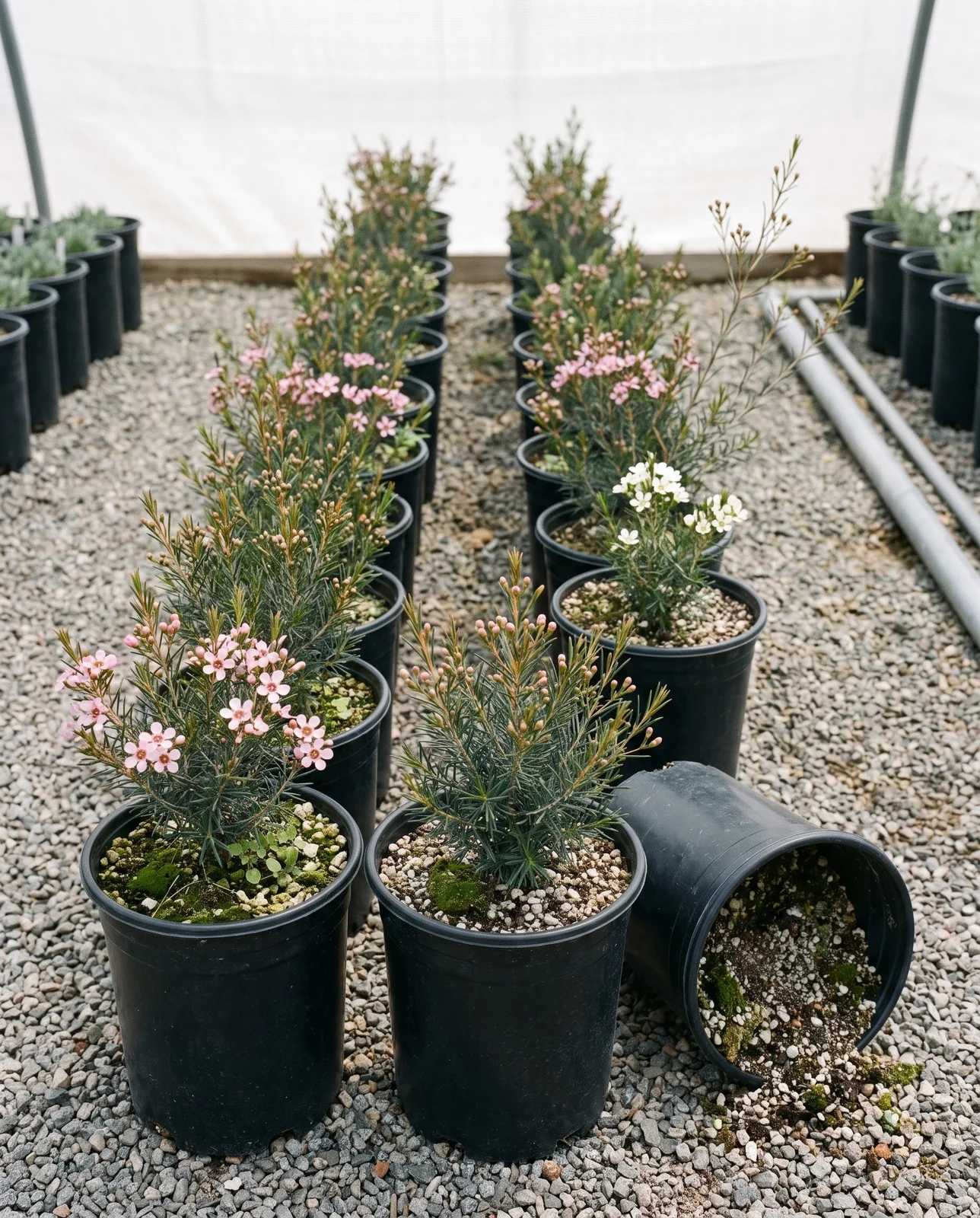
A pot fixes the one thing this plant cannot forgive, which is ground that holds water. In a container the loose, sandy, well drained mix it wants can be built exactly. The wet feet it dislikes and the root rot that can follow when conditions are too moist become a question of what goes in the pot and how often the hose comes out. Stand it in full sun anyway, because a container changes the soil and not the light. Nursery stock arrives small, usually as compact clumps of 16 to 20 inches, so a mid sized container holds one through its first seasons.
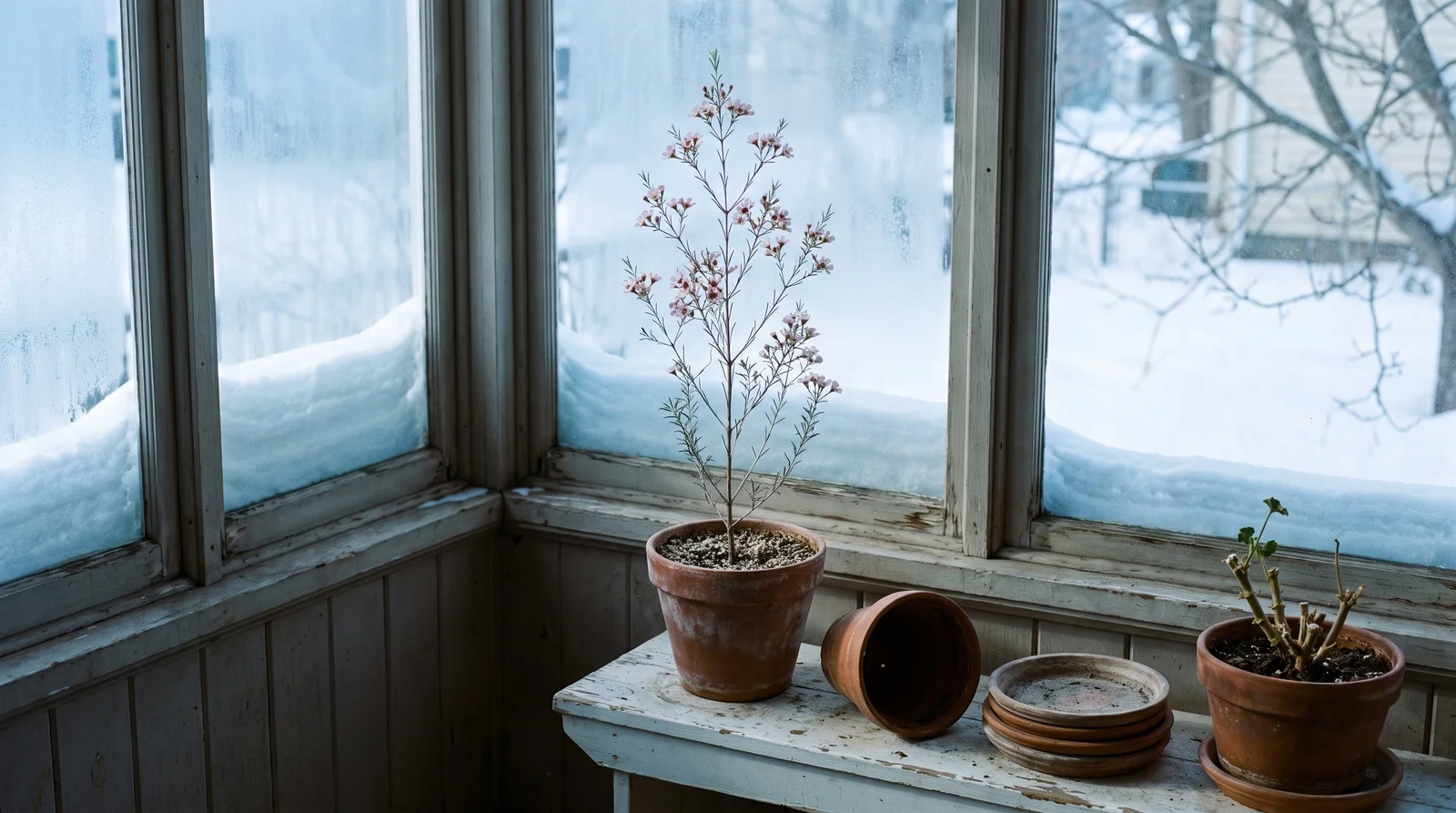
Under cover the air matters more than the temperature. Indoors it wants a cool, frost free, airy spot with a dry atmosphere, and a humid room such as a bathroom is the wrong place. That is an awkward set of conditions for a heated house in winter, and it is why the plant is kept as a conservatory subject in Britain, where it cannot stand outside all year.
Zones and where it survives
The published range is zones 9 to 11, and it belongs to a cultivar: 'Purple Pride' carries that rating. No range is published for the species as a whole, which is worth knowing before you trust the number on a tag. Cultivars released more recently are frost hardy down to 27 degrees Fahrenheit, or minus 2 Celsius, which covers a light frost and nothing colder. Outside that band the shrub turns into a seasonal plant or a bought bunch: a container that stands outside through summer and comes in before frost, or the florist counter. Anyone who wants something permanent in a cold border should pick another entry from the full index of flower types. Pushing this one two zones north means replacing it every second spring.
Wax flower in the kitchen
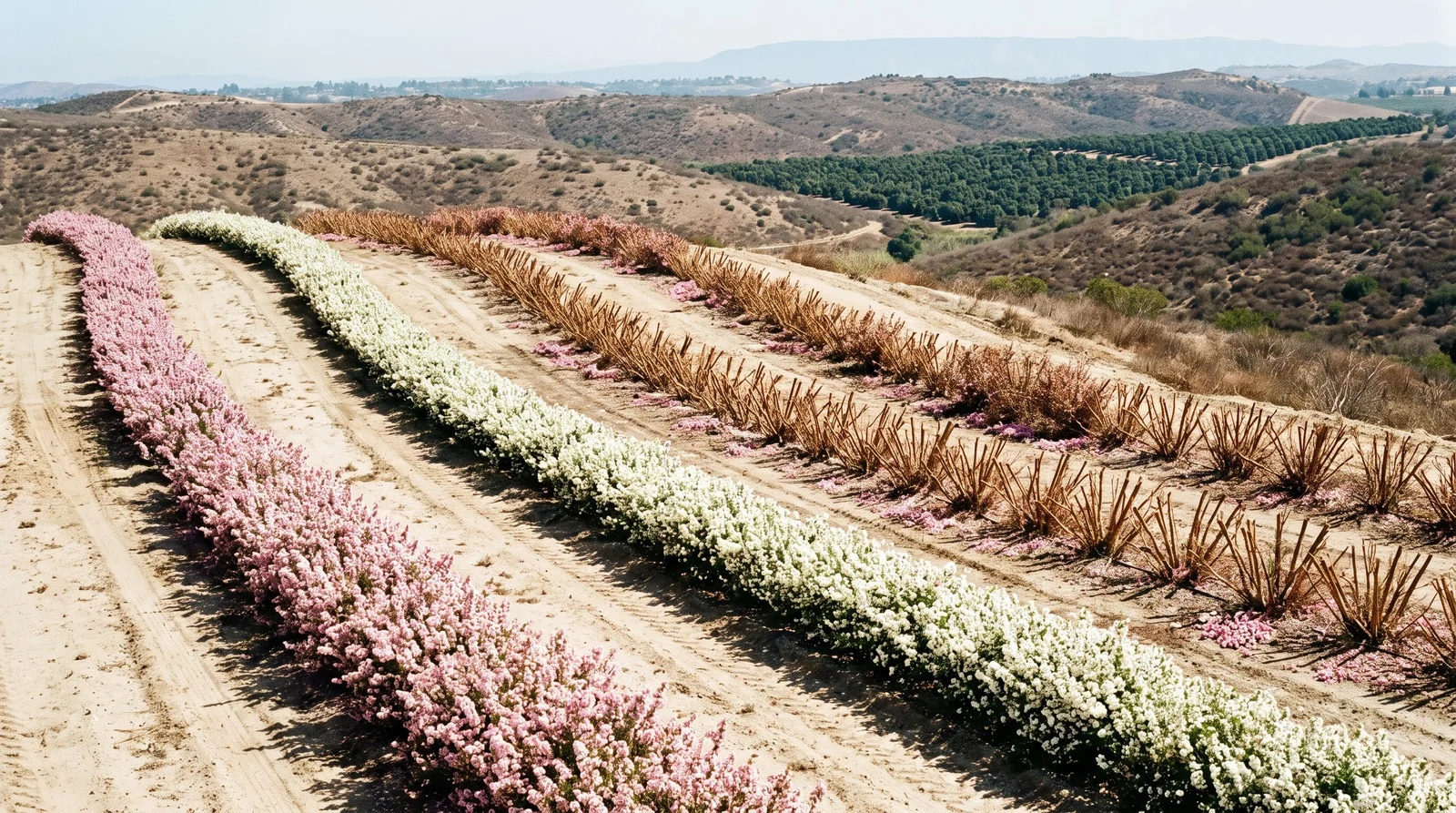
The foliage is the part that gets eaten, and it tastes of citrus. The leaves are used in cooking the way rosemary is, as a flavoring agent, and the flavor is basically citrus, comparable to lemon myrtle or Kaffir lime. The rosemary comparison has chemistry behind it: work published in 1995 found the essential oil shares alpha-pinene, limonene and linalool with rosemary. One cook describes it as a lemony pine needle, delicious with seafood and stuffed inside a whole fish.
The uses are mostly savory and liquid. Australian restaurants have put it into beverages, seafood dishes, sauces and stir fries, and the leaves add citrus notes to gin and other distilled spirits. The flowers are edible too, in smaller amounts than the leaves. Treat the leaf as a herb: it goes into the pot and comes out before serving.
Wax flower varieties worth telling apart
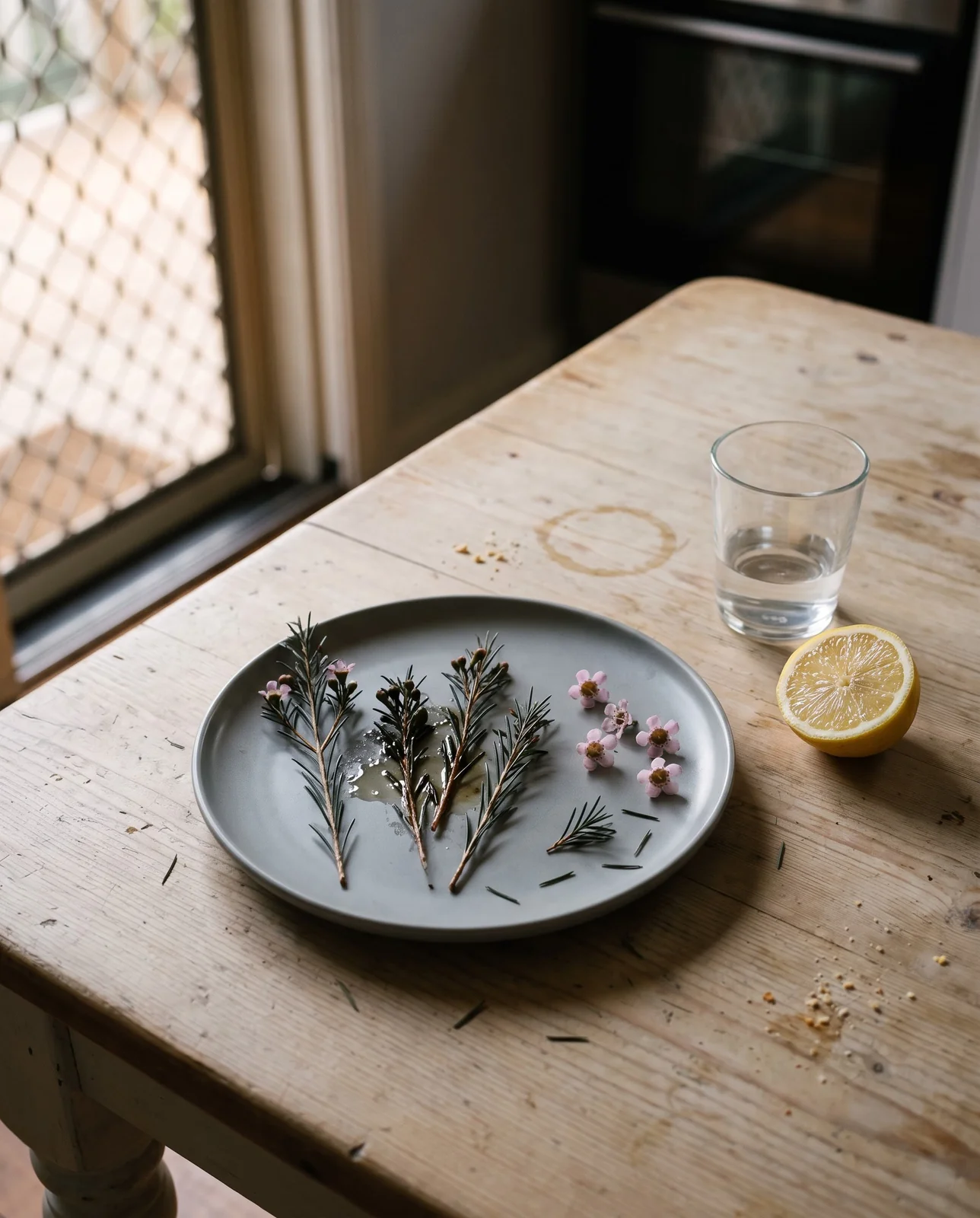
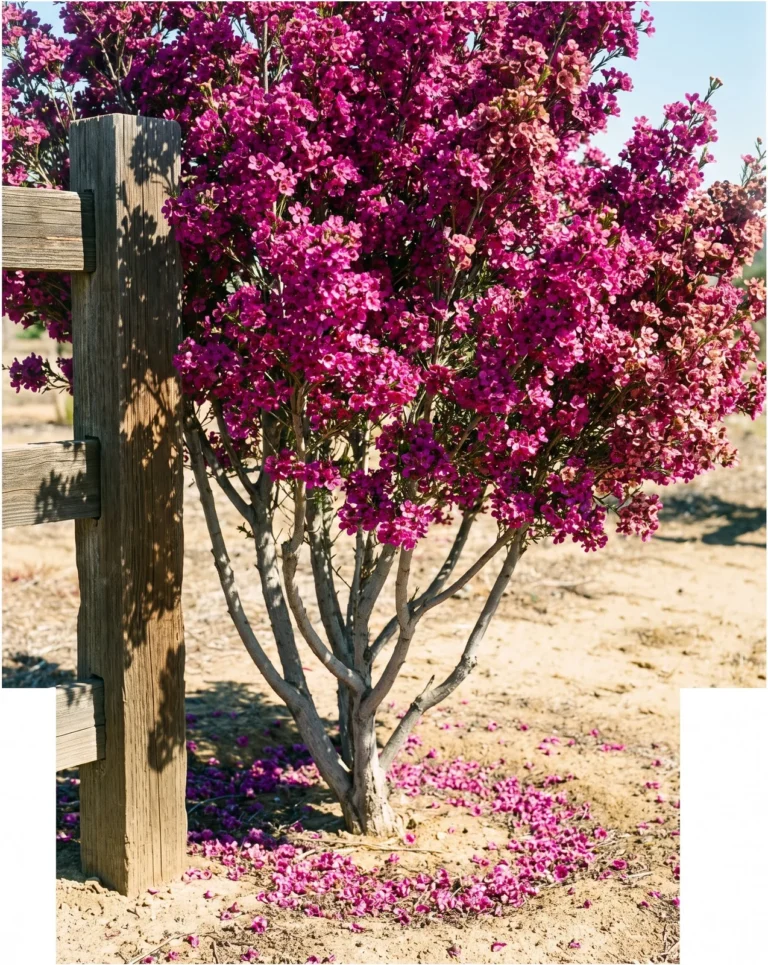
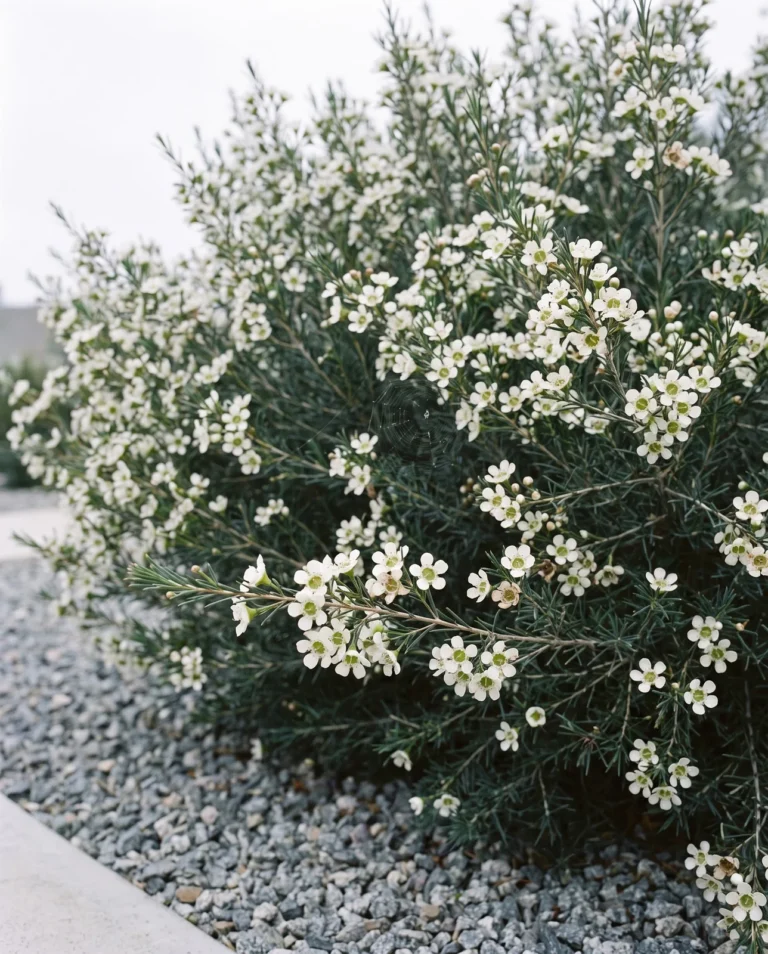
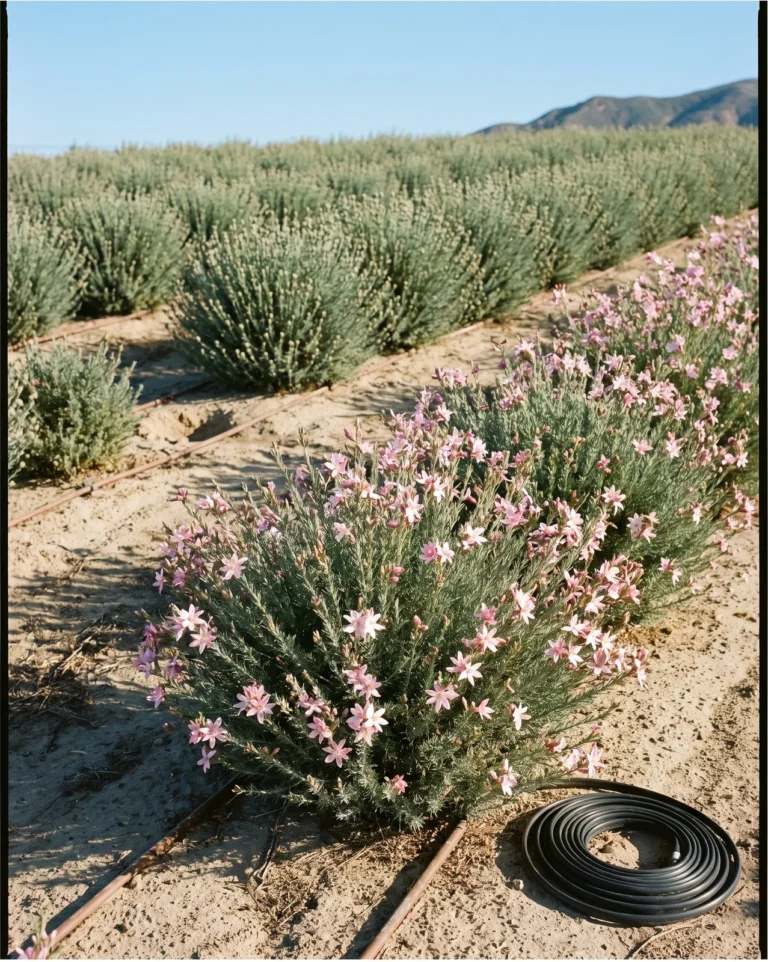
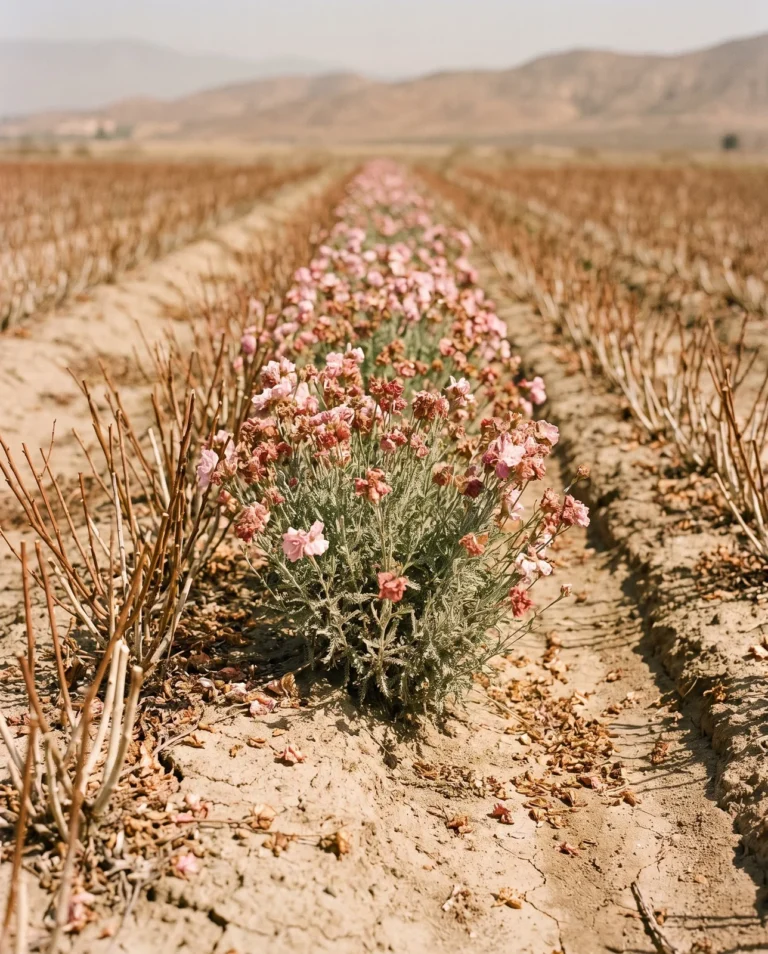
Color separates most of these. The names come from two directions: garden forms grown in Australia, and selections named by the farms that cut them for market.
Wax flower and pets
No toxicity listing exists for this plant, which is a different answer from a clean bill of health. The ASPCA has no entry for wax flower, waxflower, Geraldton wax or Chamelaucium under any of those names. On its alphabetical list for the letter W the only two wax entries are Wax Plant and Wax Rosette, the second of which is Echeveria gilva. That Wax Plant entry carries the scientific name Hoya carnosa 'krinkle kurl' and is non-toxic to dogs and cats. It is what stands behind every article reporting wax flower as confirmed safe for pets. The shrub itself is not considered toxic to pets or people, with the caution that eating any part of it is not recommended. None of that amounts to an entry for this plant, so caution is the reasonable position until one exists.
How big wax flower gets
In a garden this is usually a fast growing, thick shrub of about 4 to 6 feet with a similar spread, and the figures above and below that span a factor of three. In its home state it is given 6 to 20 feet in both height and width. In Hawaii it should not reach more than 8 feet, and it is considered safe to grow under utility lines there. Nursery growing puts it at about 6 feet unpruned, kept smaller with annual trimming. Cultivar numbers behave better than species numbers, since 'Purple Pride' comes out at 6 to 10 feet tall and 6 to 8 feet wide on both sides of the Pacific. Give it room and cut it back yearly.
What actually goes wrong, ranked
Almost everything that goes wrong here comes back to water or humid air. Work down in that order.
Symptom: a plant that thins and declines with no pest on it, in soil still damp days after rain. Cause: conditions too moist, which this shrub is susceptible to. Fix: improve the drainage and water less often, since it dislikes wet feet and the soil should not stay wet for long periods.
Symptom: leaves turning yellow or falling at a rate that looks wrong for the season. Cause: excess moisture, since the species does not tolerate excess humidity and drainage governs the rest. Fix: check the soil and adjust the watering first.
Symptom: one or two good seasons, then a plant that thins out and dies with nothing else wrong. Cause: humid summer environments may limit its lifespan, and in humid coastal cities it grows but tends to be short lived. Fix: pick a form that tolerates humid, temperate or sub-tropical areas, since it cannot be recommended for the humid tropics.
Symptom: none specific, and the risk sits in the feed itself. Cause: commercial fertilizers might actually harm waxflower, whose native soil is low in nutrients. Fix: stop the general garden feed.
Symptom: necrosis and yellowing, worst on young plants during summer, attributed to Empoasca leafhoppers. Fix: turn the leaves over and confirm the insect before anything is sprayed.
Symptom: a shrub of fairly open habit leaning away from itself and splitting at the base. Cause: a tendency to fall over that may need support. Fix: cut back by about a third after flowering to hold its shape and height.
Buying wax flower
Three different purchases hide behind one search, and the first is a bunch of cut stems. That is how most readers meet it, and the price at the grower end runs by the bunch: one California farm lists 'Purple Pride' waxflower stems from $65. At a florist counter the same stems sit beside the other small white and pink flowers kept for volume in an arrangement, stephanotis among them. The label on the bucket rarely says which selection is in it.
The second purchase is a live shrub, and that market is narrower than the cut stems suggest. Under an American label the cultivar is 'Purple Pride', and the American company behind that name no longer grows the plant. In Britain it is an uncommon plant, sometimes sold beside house plants or found where exotic and conservatory subjects are the specialty. The third purchase is seed, and it is the slow road, since propagation from seed is difficult while cuttings of firm current season growth usually strike readily. A rooted cutting skips the part that goes wrong.
Myths worth dropping
Four claims travel with this name, and none of them survives a look at the plant.
The myth: Wax flower is the trailing plant on my windowsill.
The reality: That one is Hoya carnosa, a climbing or trailing perennial of the dogbane and milkweed family, winter hardy only to zones 10 to 12 and kept indoors nearly everywhere. The plant on this page is an outdoor shrub.
The myth: It is on the pet safe list, so it is cleared.
The reality: The entry people are reading belongs to a different plant. The Wax Plant listing is Hoya carnosa, reported non-toxic to dogs and cats, and no entry exists for wax flower, waxflower, Geraldton wax or Chamelaucium at all.
The myth: Feed it like any flowering shrub and it will bloom harder.
The reality: Commercial fertilizers might actually harm waxflower, because its native soil is low in nutrients. The only feeding recommended for it is a slow release native fertilizer at planting and again annually in spring.
The myth: It is drought proof the day it goes in the ground.
The reality: Drought tolerance arrives with age. Young plants need supplemental irrigation as they establish, and only mature plants can withstand fairly long dry periods. One Western Australian farm waters its crop through the whole first year.
FAQ
Is wax flower easy to grow?
In the right climate, yes: relatively hardy and fairly easy in a Mediterranean climate with well drained sandy soil and a sunny aspect. Outside that it gets harder, because it dislikes wet feet and tends to be short lived where summers are humid.
Is wax flower a perennial or an annual?
A perennial. It is an evergreen shrub that lives for years where the climate suits it, and behaves like a short lived plant in humid summer climates.
How long do wax flowers last in a vase?
Mostly 5 to 9 days, varying greatly by species and cultivar. In one published experiment 'Newmarracarra' held 5 days while 'Mullering Brook' reached 12.
Why are the leaves on my wax flower turning yellow?
Check the soil first: yellow or dropping leaves are the signal to check the moisture and adjust the watering, since the species does not tolerate excess humidity. Empoasca leafhoppers also cause yellowing in young plants during summer.
How do you get a wax flower to bloom?
Cut it back by about a third as soon as it finishes flowering, since that encourages the new shoots bearing the next season's blooms. Then keep it lean and dry, because fertilizers might harm a plant whose native soil is low in nutrients.
What hardiness zone do wax flowers grow in?
Zones 9 to 11, published for the cultivar 'Purple Pride'. Some more recent cultivars are frost hardy down to 27 degrees Fahrenheit, or minus 2 Celsius.
Is wax flower toxic to cats and dogs?
No toxicity listing exists either way. The animal poison list people cite covers Hoya carnosa under Wax Plant and has no entry for this shrub under any of its names. It is not considered toxic to pets or people, though eating any part is not recommended.
Can you eat wax flower?
The leaves are used as a flavoring in the way rosemary is, tasting of citrus, close to lemon myrtle or Kaffir lime. The flowers are edible in smaller amounts than the leaves.
What season are wax flowers?
Late winter into spring in a garden, and Australian flowering runs from late winter well into summer. Cut stems follow a production calendar instead, one commercial season running early October to March.
Is wax flower the same as the wax plant?
No. Wax plant is Hoya carnosa, the trailing houseplant of the dogbane and milkweed family. Wax flower here is Chamelaucium uncinatum, an outdoor shrub of the myrtle family related to eucalyptus and bottlebrush.
Is wax flower invasive?
Not on the evidence available. A Hawaii weed risk assessment scored it -2.5 and classed it a low risk plant when it was screened on November 20, 2002. No documented history of severe invasiveness has been recorded globally.
Interesting tips
- Cuttings beat seed, and the timing is specific: semi-woody cuttings taken at the end of summer from branches that are not flowering are the most effective method.
- In its own country the shrub has a December job. It works as an alternative Christmas tree, and it is a good plant for attracting bees.
Related Guides & Flowers
Longest lasting cut flowers
Where a bunch of waxflower stands against the flowers that hold longest in water, for anyone buying by the day.
Wax begonias
The bedding annual that carries the same wax name and none of the same needs, if that is the plant you actually have.
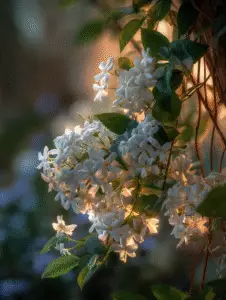
Jasmine
Another small white star flower sold both as a florist stem and a garden plant, carrying in its flowers the scent this one keeps in its leaves.
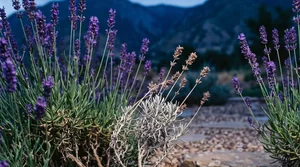
Lavender in humid climates
The same failure in a plant far more people grow, a dry climate shrub thinning out through a wet summer, and the varieties that hold on.
Enjoying our flower guides? Add YourFlowersGuide as a preferred source on Google. It helps more readers find us.
Add to Preferred Sources