What flowers mean by feeling, from love to the hard ones
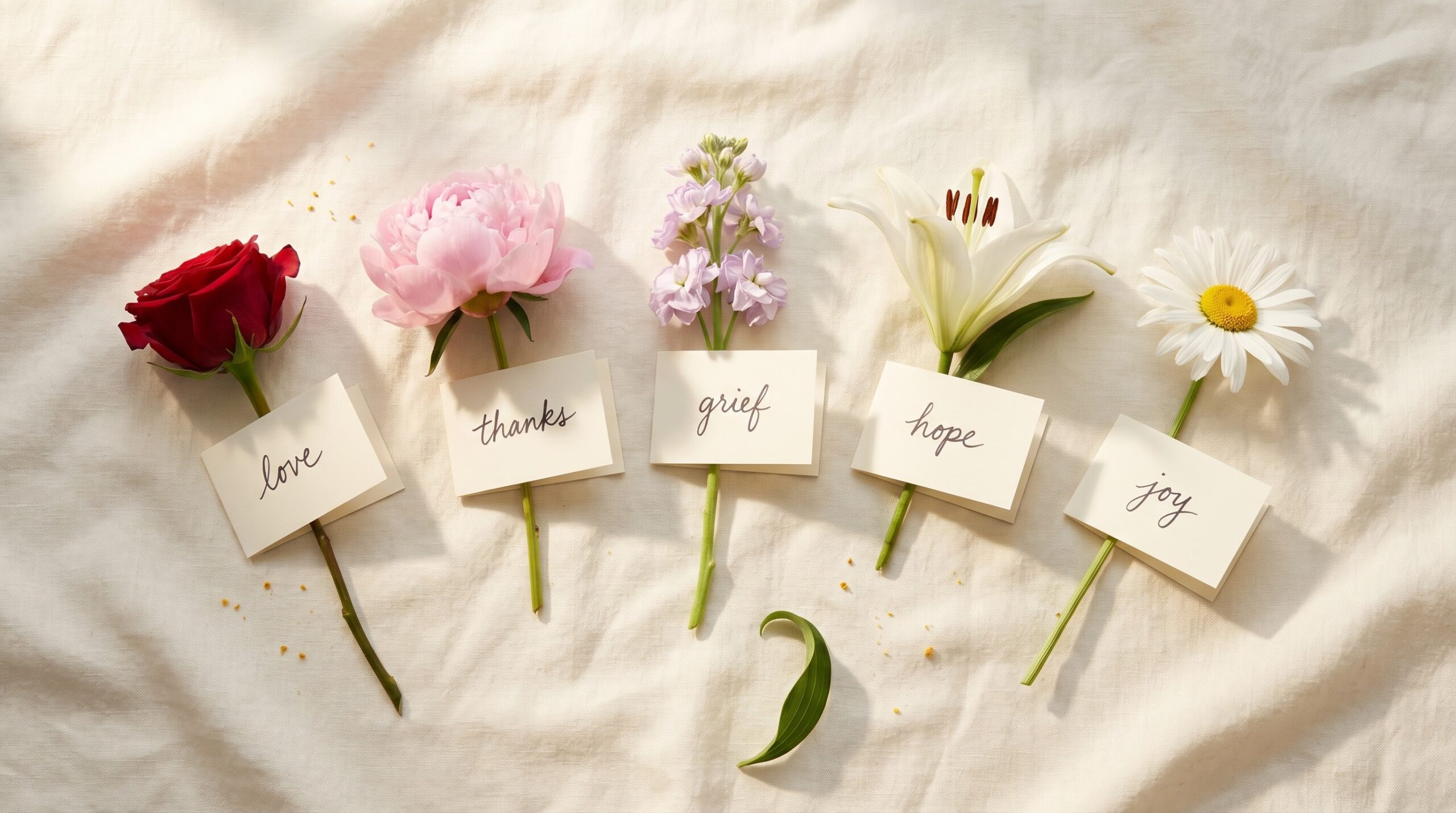
You want a flower for one feeling, and the search has handed you five contradictory answers. Start with the short version. Love is red roses, with tulips, peonies, and carnations close behind. Gratitude is hydrangea and pink roses. Sympathy is the lily. Strength is the gladiolus, the protea, the coneflower. New beginnings belong to the daffodil. None of those is the only answer, though, and that is the part most lists hide. A single feeling almost always maps to several flowers, because the meanings were written down by different people in different centuries who did not agree with each other. What follows is the honest reading of each emotion, the soft ones and the hard ones, so you can pick the flower that says what you actually mean.
The reason the answers clash is built into the subject. Horticulturists at Iowa State University Extension note in their own list that the sources behind these meanings overlap and contradict, and that a single flower often carries more than one. There is no master dictionary, only a stack of competing ones, so treat the flowers below as a strong starting point rather than a code. Mood and colour land before any coded reading does, which is exactly why the choice is yours to make rather than a rule to obey.
The warm feelings most people are looking for
Love has the deepest bench of any feeling, which is why it is also the most confusing. The red rose is the clearest possible statement, and nothing has replaced it, but it is far from your only option. Tulips read as a simple, perfect declaration. Peonies carry romance plus the promise of a happy, prosperous life, which is why they fill so many weddings. Camellia means steadfast devotion, the old card line being "my destiny is in your hands." Maybe you want love without the full romantic weight of a dozen red roses. A peony, a pink rose, or a handful of tulips softens it into something warmer and less formal.
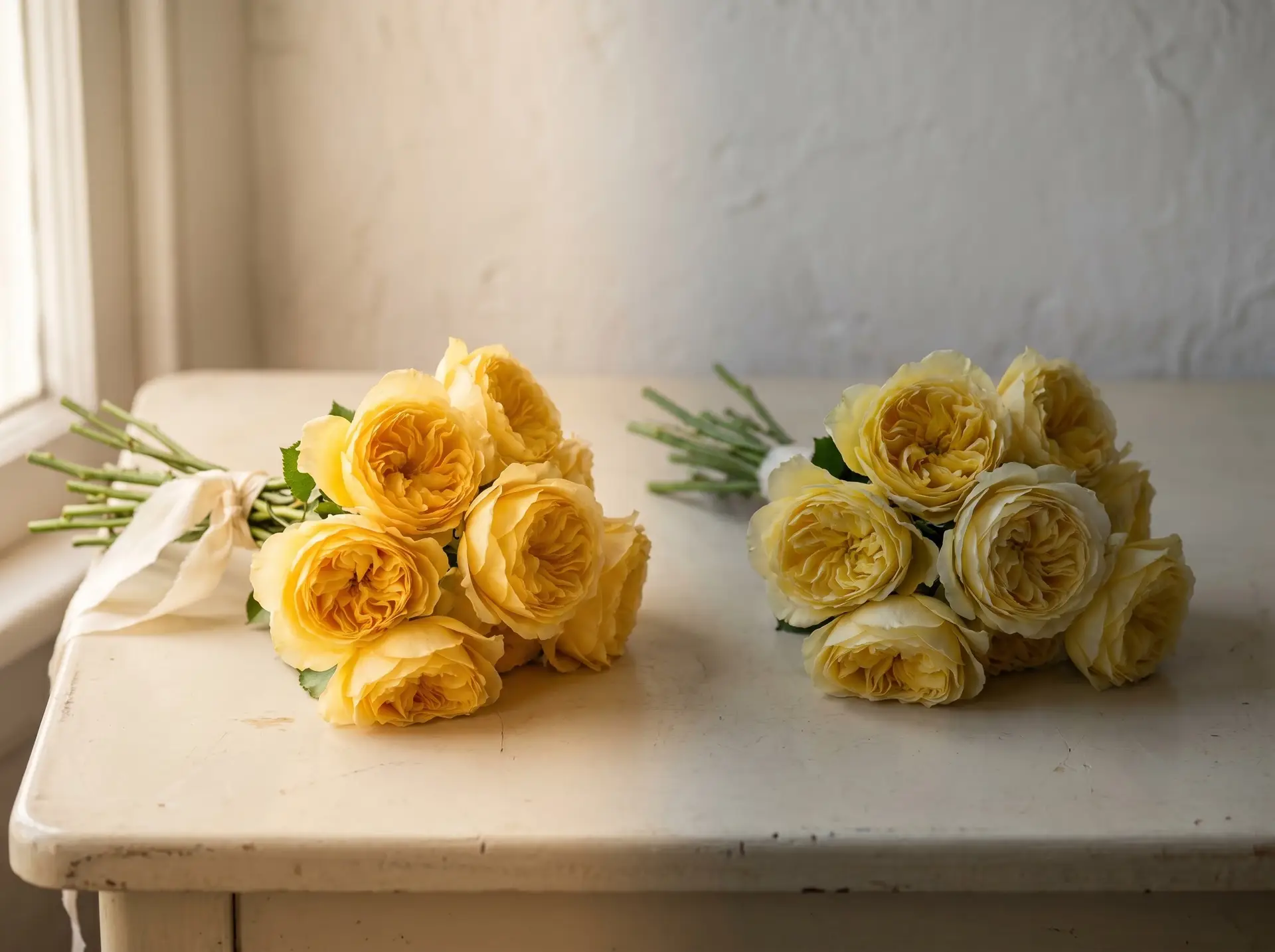
Gratitude and friendship overlap, and both have softer flowers than love. For thanks, hydrangea is the modern favourite, the one that says "I noticed, and I am grateful," with pink roses and sweet pea close behind. Friendship leans on the alstroemeria, whose twisted leaves stand for the ties that bind people, along with the daisy, the freesia, and the cheerful yellow rose. That yellow rose matters here, because in Victorian lists it could mean jealousy or even infidelity, while today almost everyone reads it as warm friendship and joy. A hundred-odd years of use quietly flipped it, and friendship is now the safe assumption. Joy and cheer are the easiest of all: sunflowers, gerbera daisies, marigolds, and ordinary daisies do the work without needing a card to explain them.
The feelings that come with an occasion
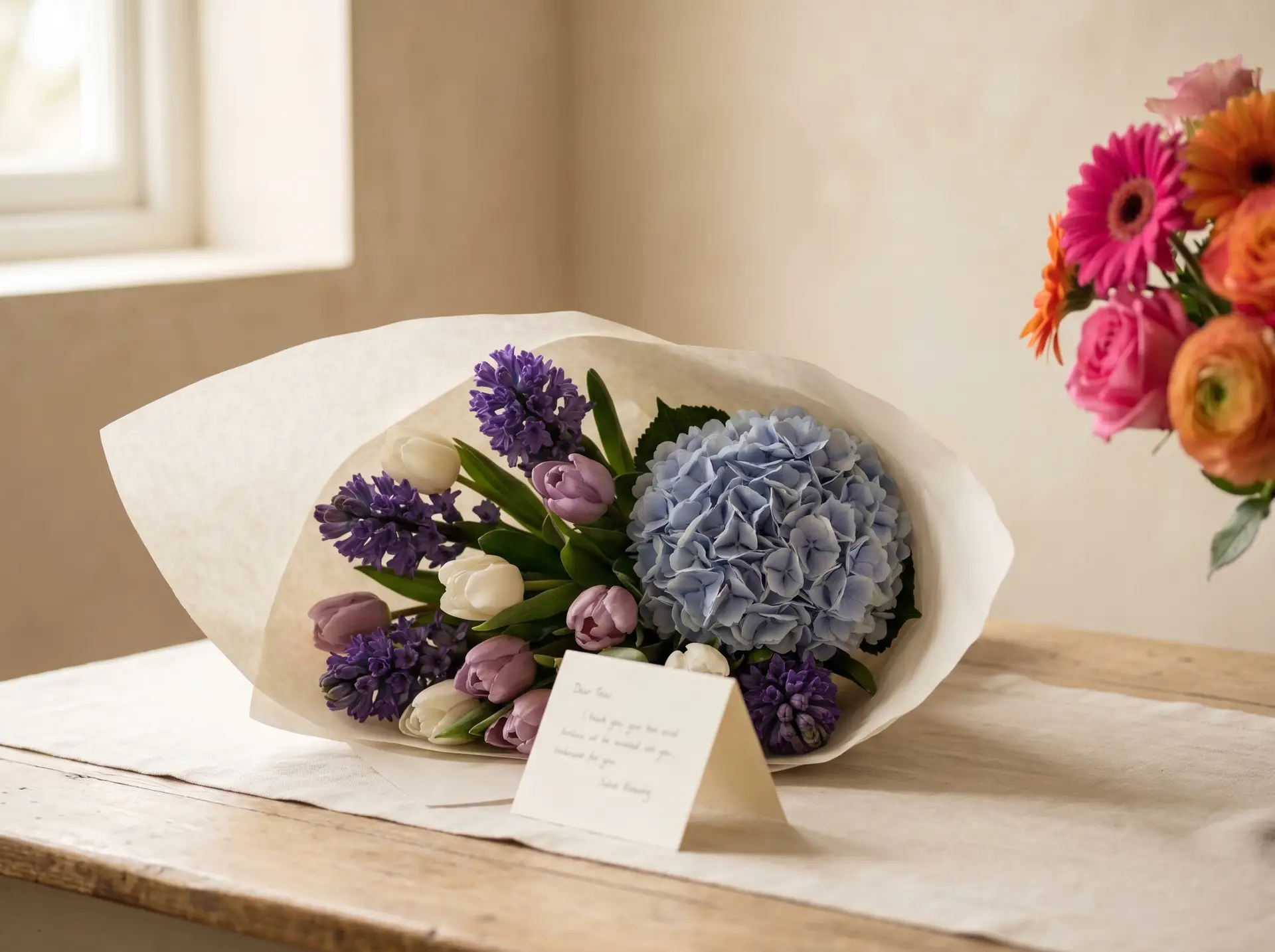
Some emotions arrive attached to a moment. For those, the meaning matters less on its own than in combination with what you avoid and what you say alongside it. An apology is the trickiest of the bunch. Purple hyacinth is the old standard for "I am sorry, please forgive me," and tulips with a blue hydrangea fill it out, the hydrangea reading as quiet understanding. Steer well clear of anything bright and party-coloured here. A bouquet that looks like a celebration undercuts the point when you are trying to repair something, so let the flowers stay restrained and put the real contrition into a few honest sentences on the card. Petals soften the approach; only your words can do the actual repair.
Sympathy and grief are not the same feeling, and the flowers split accordingly. For sympathy, the formal language of comfort, the traditional choices are lilies, white roses, gladiolus, and statice. Statice is the flower that is "remembered, and not fading." Grief, the rawer thing, often reaches for the marigold, which lights the way back in remembrance, and for the poppy. People call the poppy the flower of death, but its real weight is remembrance, restful sleep, and consolation. That is gentler and truer to how it is actually used. One firm warning lives here. Chrysanthemums read as joy and long life across much of Asia and the United States. Across much of Europe, though, they are strictly funeral flowers, so a cheerful mixed bouquet built around mums can land badly in France or Italy. When in doubt, match the meaning to where the person is from. For congratulations, the iris carries good news, while bird of paradise, gladiolus, peony, and tiger lily all say pride and bold success with no apology or grief clinging to them.
Strength, healing, and starting over
The quietly resilient feelings are some of the most useful flowers to know, because they are what you reach for when someone is going through something hard and a bright bouquet would feel false. Strength and resilience belong to the gladiolus, named for the gladiator. The protea is a flower of transformation and daring. The coneflower carries the card line "strong roots, getting stronger," and the globe thistle stands for "defended, and unbroken." The amaryllis is strength won through effort, good for someone who earned a hard win. None of these is delicate, and that is the point.
Healing and recovery want softer textures. Lavender means rest and gentle devotion, the flower for someone weary who needs to feel safe and cared for, though the same Victorian lists that loved its calm also, oddly, tied lavender to distrust. Chamomile is patience in adversity, hellebore is relief from anxiety and "something blooming even now, in winter," and yarrow is an old flower of healing and courage, once called a cure for heartache. For mental health and recovery specifically, those gentle, hopeful flowers do more honest work than anything triumphant. New beginnings are clearer. The daffodil is the first flower of spring and the plainest symbol of a fresh start. The lily of the valley stands for the return of happiness. The snowdrop pierces the snow as "the first sign that you will be okay," and the lotus opens its bloom unstained above the silt it grows in, so it reads as rising above hardship. Hope sits right beside them, carried by the iris, the bearded iris, the cornflower, and the snowdrop again. Peace and calm round out the set with lavender, cosmos, hellebore, and the poppy in its restful-sleep sense.
The hard feelings the lists skip
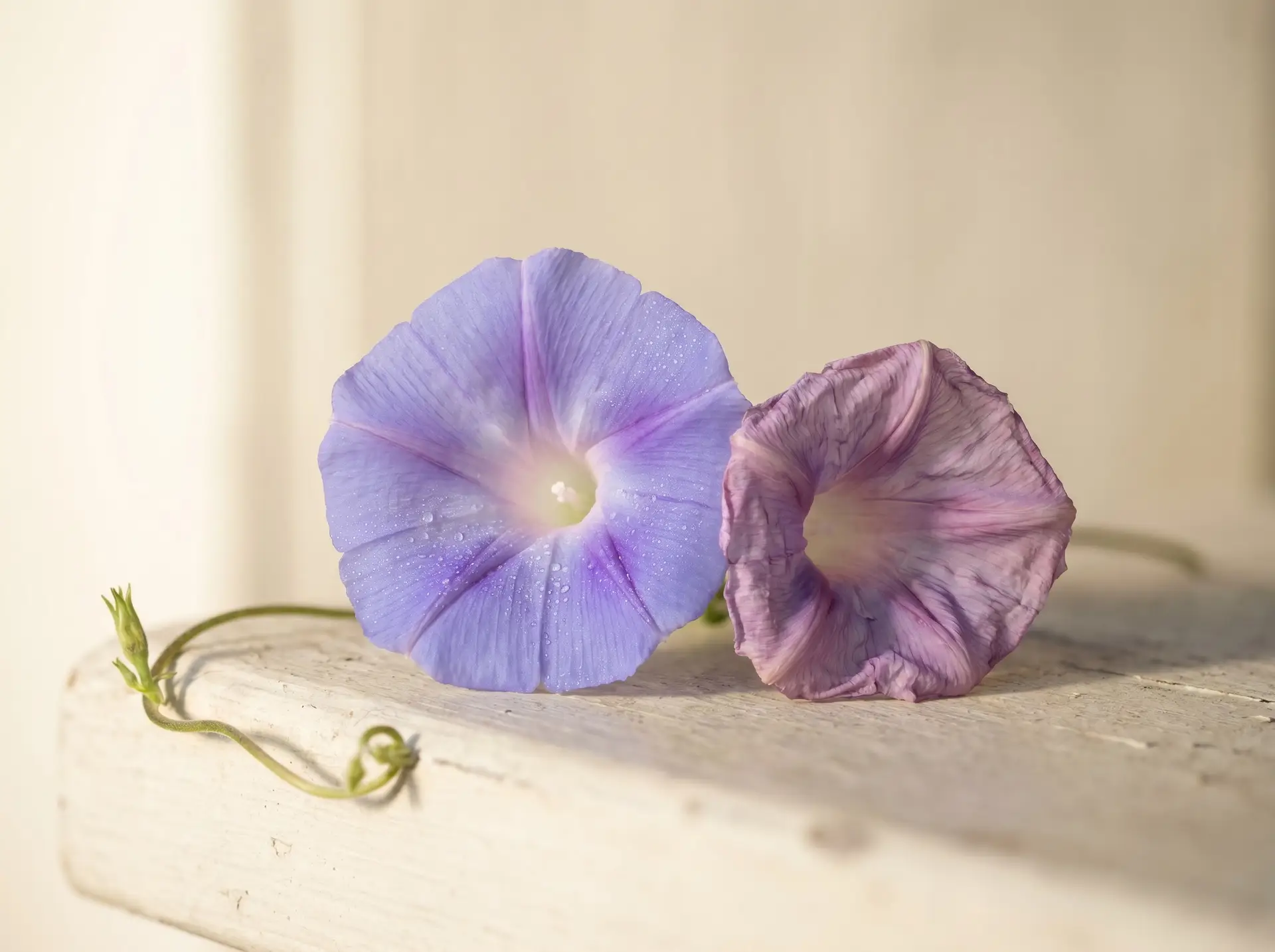
Most flower-meaning pages stop at the greeting-card emotions, but real feelings are not all bright, and writers, grieving people, and anyone sending something complicated need the harder vocabulary too. Longing and unrequited love have their own flowers. The camellia is deep, aching admiration. The morning glory is the bittersweet one, warm affection that doubles as love in vain, since each bloom opens at dawn and dies by afternoon. For secret or unspoken love, the gardenia says "I have never said it, but you are lovely," the agapanthus reads as a love letter never sent, and the moonflower is love that blooms only in the dark.
Then there is the genuinely cold end of the spectrum, and the Victorians built an entire vocabulary of polite hostility for it. Tansy was a literal declaration of war. A yellow carnation meant disdain and a striped one meant refusal. Monkshood and oleander both signalled beware. Reach for these on purpose when you want the bouquet to carry an edge, and steer around them on the days you do not, since dropping one into a friendly arrangement sends the wrong message entirely. They turn poisonous in more than the symbolic sense too, so the full, careful catalogue of rage, refusal, and the polite insult bouquet lives in our guide to dark and warning flower meanings. Acceptance and closure are quieter than rage but just as real, and the goodbye flowers carry them well. The sweet pea is the classic farewell, "thank you for such a lovely time," while the forget-me-not promises that distance changes nothing, and the zinnia keeps thinking of an absent friend. They let you close a chapter without pretending it did not matter.
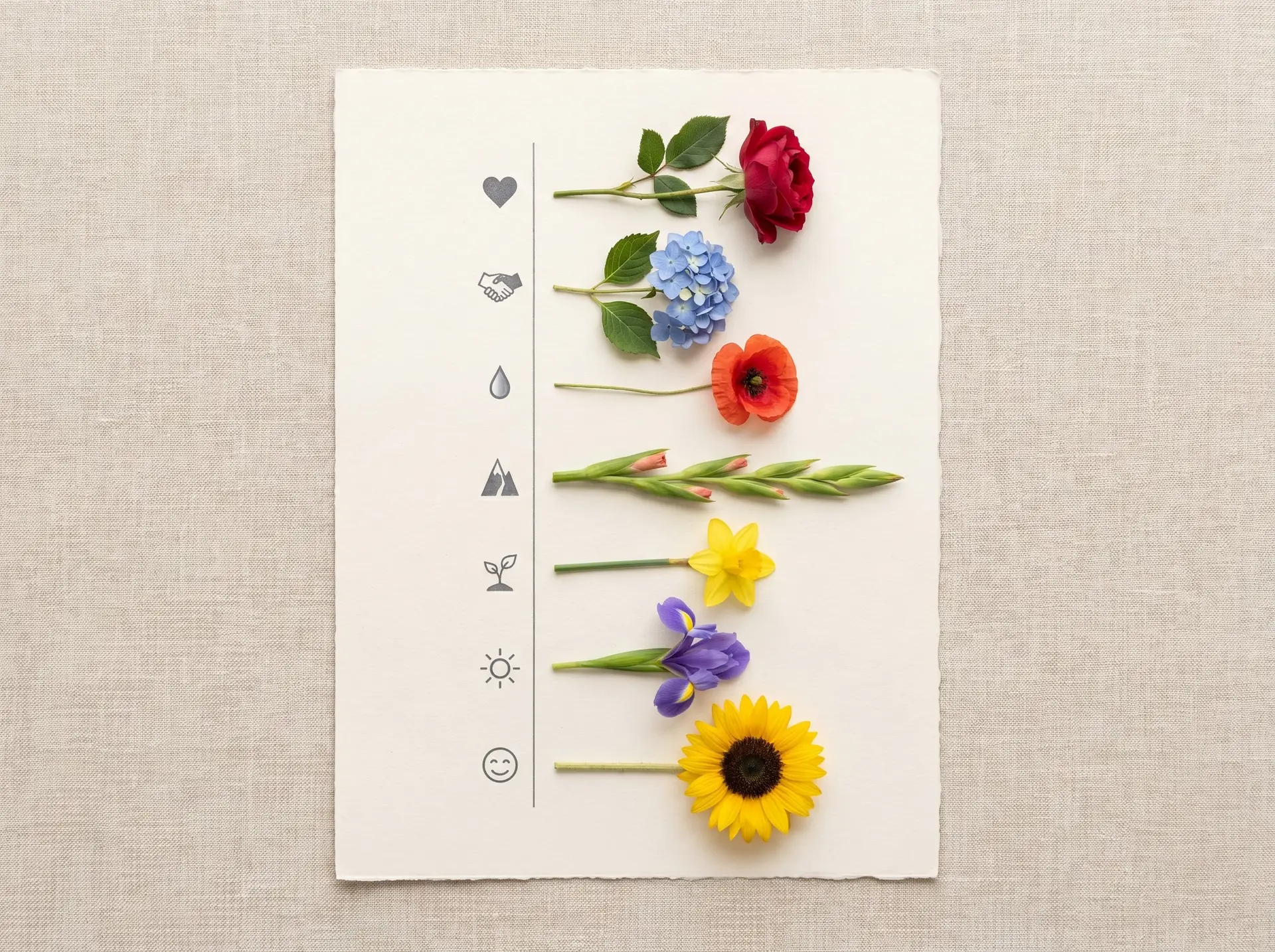
Why one feeling has so many flowers
By now the pattern is obvious. Almost every feeling on this page has three, five, even a dozen flowers attached to it, and that is not a flaw in the lists, it is the truth about how flower meanings were made. No single authority ever set them. The language of flowers was largely assembled as a publishing fashion in 18th and 19th century Europe. Much of the British tradition grew out of France, with each new book copying and revising the last, according to Cornell University's exhibition on the subject. That is why the meanings drift by era, by colour, and by country, and why you keep finding several confident, contradictory answers.
It also means you have more freedom than the lists let on. If you want to say strength, you are not stuck with one flower. You can choose the one whose look and personality fit the person: gladiolus for someone formal, protea for someone bold, coneflower for someone quietly healing. Colour shifts the message again, which our guide to flower colour meanings covers in full, and the meaning of any single bloom is laid out tier by tier across the pillar on the meaning of flowers. Read those together and the contradictions stop being confusing and start being options.
Every feeling and the flowers that carry it
The whole map sits in one place below, the way the finder reads it. Each feeling lists the flowers traditionally tied to it, the most reliable pick in bold, and a short note on what to write or what to watch. Treat the bold one as the safe default and the rest as room to choose by colour, season, or the person's taste. For occasion-shaped feelings like sympathy or congratulations, our guide to flower meanings by occasion adds what to avoid alongside what to send.
| Feeling | Flowers (best pick in bold) | What to write or watch |
|---|---|---|
| Love and romance | Red rose, tulip, peony, camellia, carnation | "You have my whole heart." Pink or peony softens it. |
| Gratitude | Hydrangea, pink rose, sweet pea, begonia | "I noticed, and I am grateful." |
| Friendship | Alstroemeria, daisy, freesia, yellow rose, sunflower | The yellow rose reads as friendship today; older lists said jealousy. |
| Apology | Purple hyacinth, tulip, blue hydrangea | Keep it soft rather than celebratory. Add a sincere note. |
| Sympathy | Lily, white rose, gladiolus, statice | Skip red roses (too romantic) and loud colour. |
| Grief and remembrance | Poppy, marigold, forget-me-not, statice, pansy | The poppy carries remembrance and consolation more than death. |
| Strength and resilience | Gladiolus, protea, coneflower, globe thistle, amaryllis | "Strong roots, getting stronger." |
| Healing and recovery | Lavender, chamomile, hellebore, yarrow, coneflower | Keep it gentle rather than triumphant for someone unwell. |
| New beginnings | Daffodil, lily of the valley, snowdrop, lotus, tulip | Give daffodils in a bunch; folklore frowns on a single stem. |
| Hope | Iris, bearded iris, cornflower, snowdrop, daisy | "Even now, something is blooming." |
| Peace and calm | Lavender, cosmos, hellebore, poppy, Russian sage | For rest and a quiet mind. |
| Joy and cheer | Sunflower, gerbera daisy, daisy, marigold, hibiscus | No card needed; the colour says it. |
| Congratulations and pride | Iris, bird of paradise, gladiolus, peony, tiger lily | "So proud of you. You earned this." |
| Protection | Holly, globe thistle, heather, snapdragon, yarrow | "Watched over, wherever you go." |
| Goodbye, acceptance, closure | Sweet pea, forget-me-not, zinnia, morning glory | "Until we meet again. I will not forget." |
| Longing and unrequited love | Camellia, morning glory, gardenia | Bittersweet by design; say so on the card. |
| Secret or unspoken love | Gardenia, agapanthus, moonflower | "I have never said it, but you are lovely." |
| Rage and hostility | Tansy, yellow carnation, monkshood, oleander | A deliberate insult; see the warning guide first. |
- Cornell University, Written in Petals: The Language of Flowers, on the history of floriography.
- Iowa State University Extension, Flowers and Their Meanings, on why sources disagree.