Flower meanings by occasion: what to send and what to say
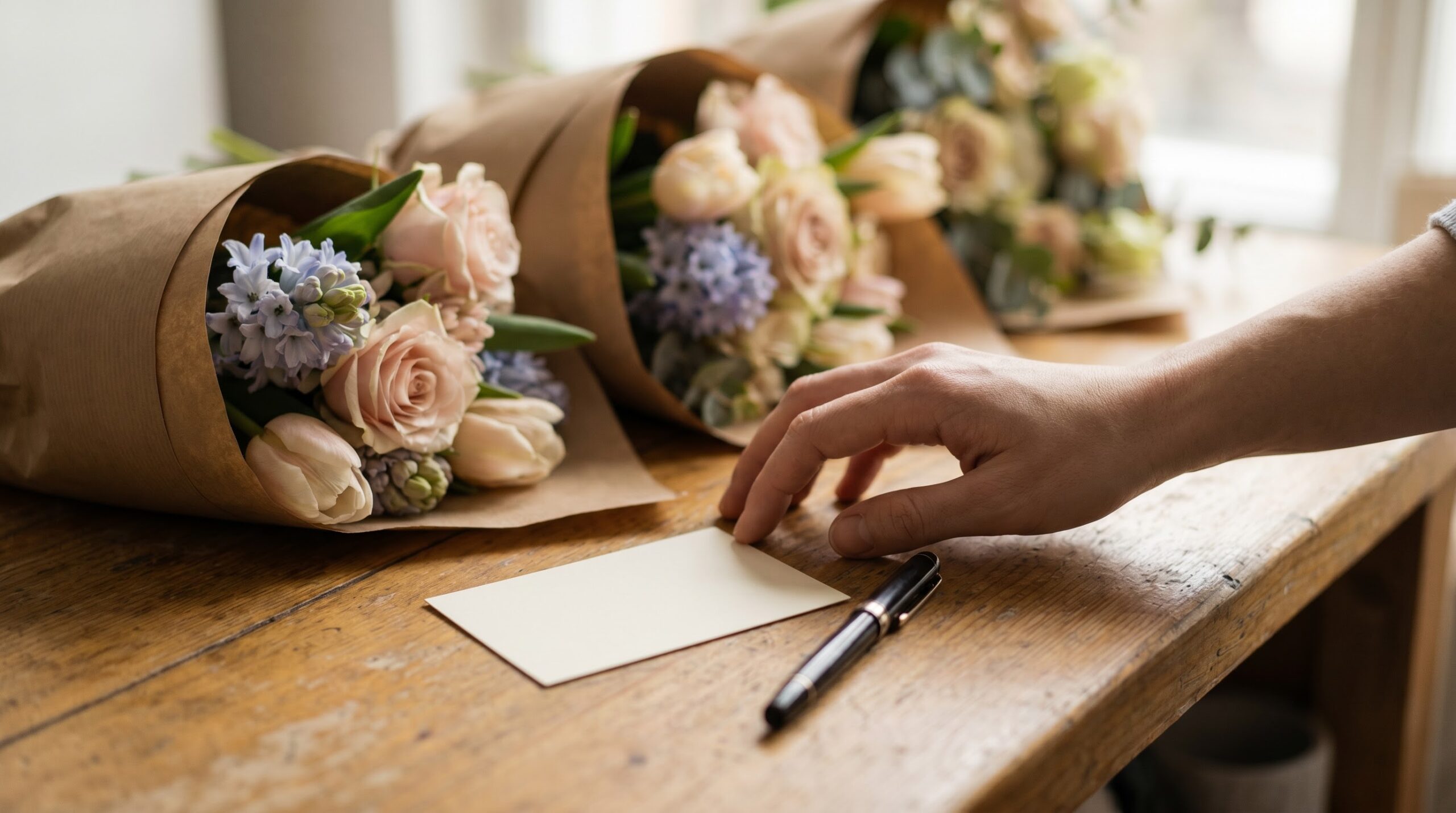
Picture yourself at the flower stall on the way to something that matters, an apology you have been rehearsing, a funeral, a friend in a hospital bed, a new baby down the street. You have a few minutes and three questions to answer: what to send, what to leave out, and what to write on the card. This guide walks through ten occasions and answers all three for each one. The choices below come from the traditional language of flowers, which is to say a long-running custom rather than a fixed rule, so treat them as a sensible starting point and let the person you are sending to be the final word. What the recipient registers fastest is the overall feel of the arrangement, the colour and the warmth, long before anyone decodes a single stem.
One honest thing to hold onto before you spend anything. No flower can apologise for you, grieve for you, or thank someone on your behalf, and across these ten occasions the gesture only ever sets the scene for the sentence you write yourself. A bouquet buys you a softer moment to say the hard thing; it does not say it. So read every recommendation below as the easy half of the job, with the line on the card carrying the weight. None of this is settled law either, because the traditional meanings were assembled by writers over generations rather than fixed by anyone in charge, and our guide to the meaning of flowers lays out why no two lists ever quite agree.
Romance and Valentine's
For love, the reliable choices are roses, tulips, camellia, peony, and ranunculus, with the red rose still the clearest statement anyone will read without thinking. If you want romance with a softer edge, a pink rose or a peony carries warmth without the full declaration of a dozen reds. The one thing to keep out of a romantic bouquet is the carnation in two specific colours, since a yellow carnation was listed traditionally as disdain and a striped one as refusal, which is the opposite of the message. A card line as simple as "It has always been you" does more than the flowers, because the flowers were only ever there to make you say it.
Apology, when you are saying sorry
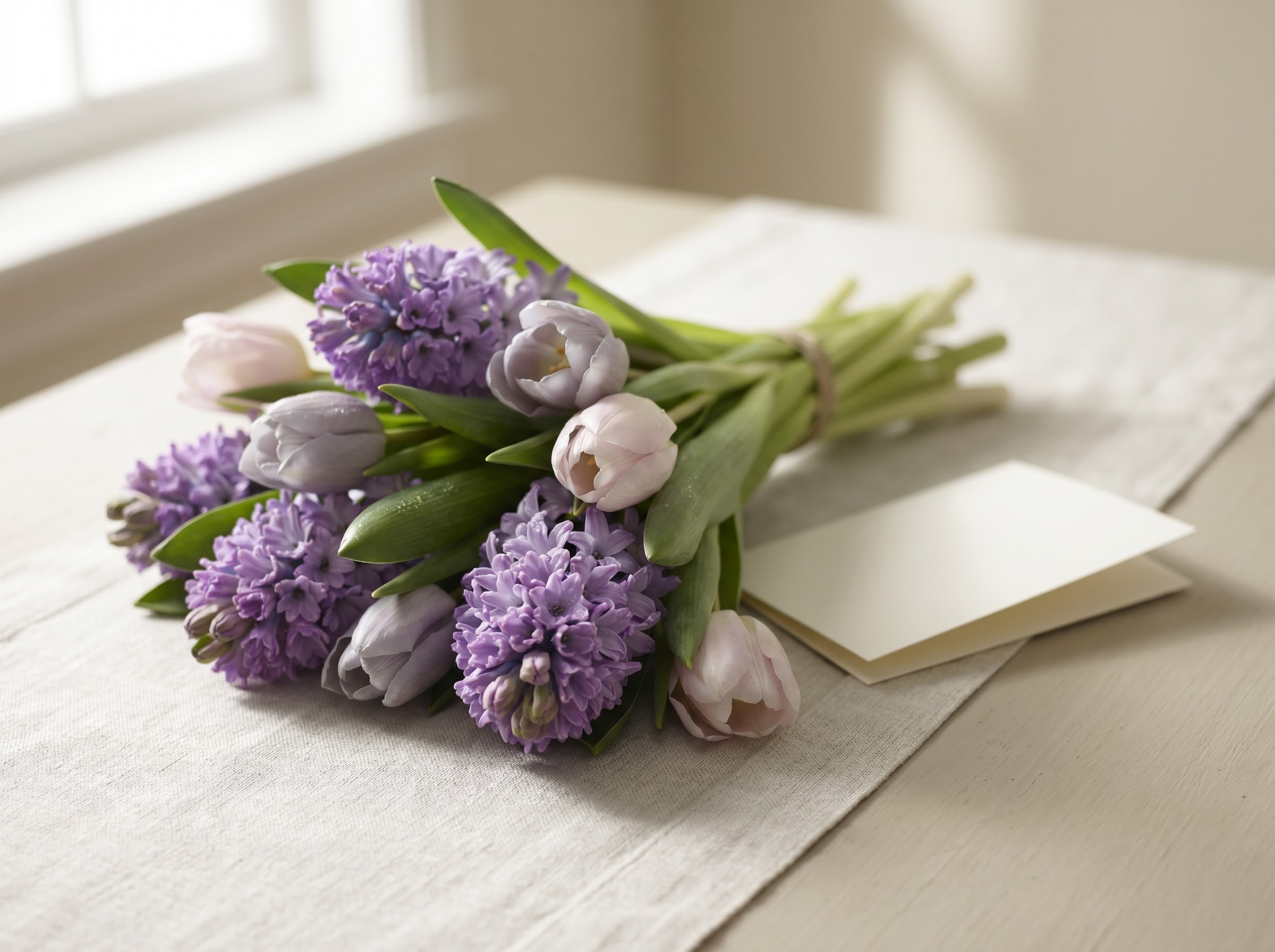
Soft hyacinth, tulips, and hydrangea are the gentle, traditional choices for an apology, and they work because they keep their voice down rather than shouting. The purple hyacinth in particular has carried "I am sorry, please forgive me" by old custom for generations. The mistake to avoid is the bright, festive mix; an arrangement that looks like a celebration lands wrong when you are trying to repair something and tells the other person you have not really understood what went wrong. Keep the card just as plain, something near "I am sorry, please forgive me," and stop yourself from filling the rest of the tag with explanation. A flower can soften the room, but only your words can actually own the mistake, and an apology bouquet fails when it is sent in place of saying so rather than alongside it.
Sympathy and funerals
For sympathy, the traditional flowers are the lily, white roses, chrysanthemums, gladiolus, and statice, leaning toward white and soft tones rather than loud colour. Keep red roses out of a sympathy arrangement, since they read as romantic, and skip bright, festive palettes that feel wrong for the moment. There is one cultural rule worth knowing, because getting it wrong is easy and painful. Across much of Europe, including France and Italy, the chrysanthemum reads strictly as a funeral flower, tied to graves and remembrance days, while across much of Asia and the United States the same flower means joy and long life. If you are sending sympathy within Europe, chrysanthemums alone are appropriate and expected; if you are sending the cheerful, mixed bouquet that mums anchor anywhere else, you can cause real offence. A line like "Holding you and your family close" says enough, and grief does not want to be talked at.

Get well
A recovery room wants brightness and life, so daffodils, gerbera daisies, sunflowers, coneflower, and hellebore lift a space far better than anything solemn. The flowers to leave out here are lilies and all-white arrangements, which can read as funereal and land oddly next to someone who is trying to recover. Scent matters too in a hospital or sickroom, so lean toward lightly fragrant or unscented stems rather than anything overpowering. The card can be light without being flippant. Something like "Rest up, brighter days are coming" matches the flowers and the moment, and a get-well bouquet is one of the few where cheer is exactly the message you want.
Congratulations
For a win, a graduation, a promotion, or any moment of earned pride, send flowers that stand tall and look confident: iris, bird of paradise, gladiolus, peony, and tiger lily. The structure and height of these is part of the message, since a bold, upright arrangement reads as celebration in a way a soft, drooping one does not. The trap to avoid is sending anything that carries an apology or grief meaning, which can muddle a happy occasion with a note you never intended. Keep it clearly celebratory. A card that says "So proud of you, you earned this" does the heavy lifting, and on a congratulations bouquet the words and the flowers are pulling in the same cheerful direction, which makes this one of the easier occasions to get right.
Friendship and thank you
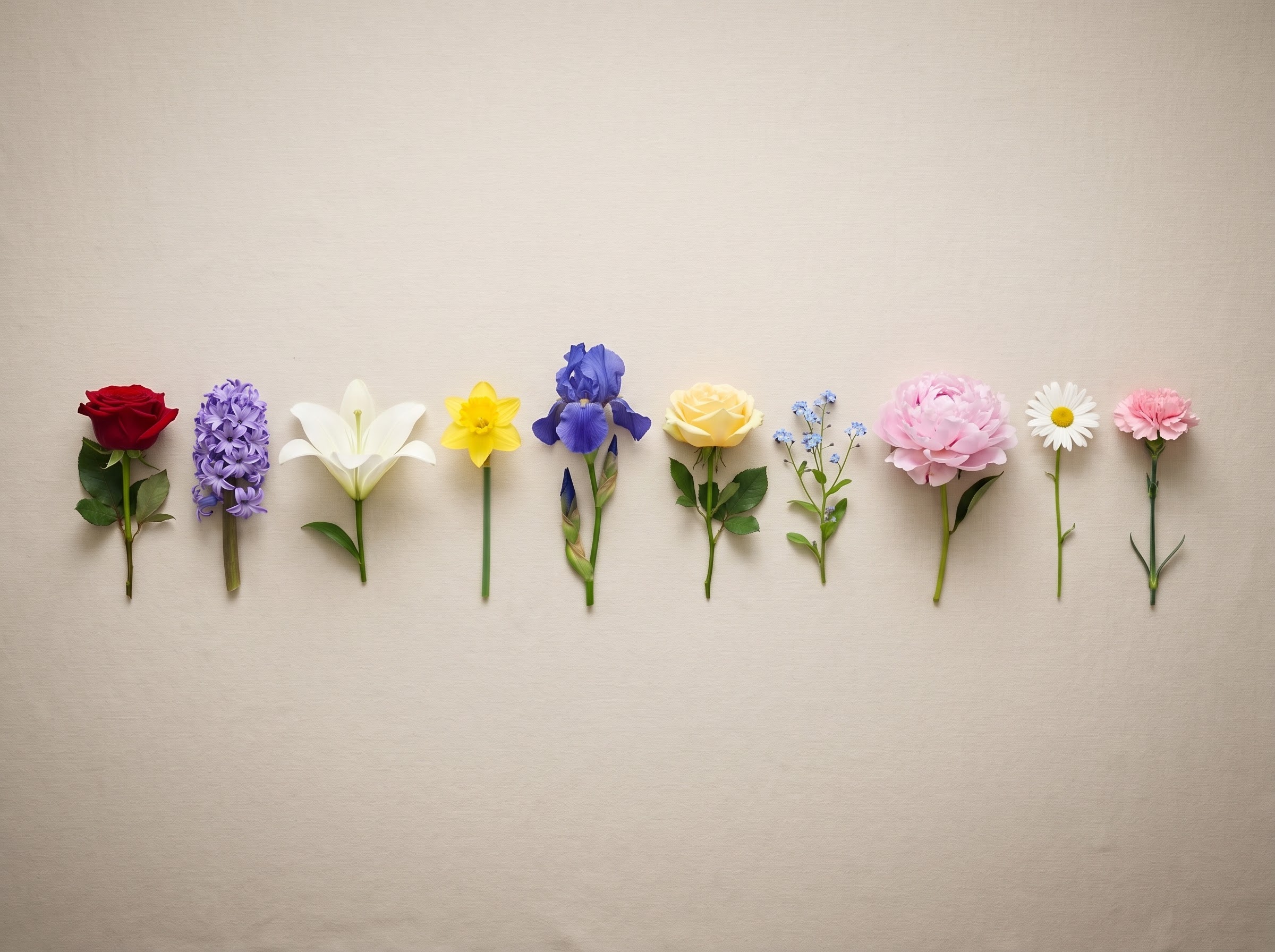
Friendship and gratitude share a tone, warm and uncomplicated, and they share flowers too. Roses in friendly colours, alstroemeria, sunflowers, freesia, and zinnia all carry affection without romance. The one thing to be careful with is the red rose, which reads as romantic love and can send the wrong signal to a friend or a colleague you are simply thanking. A yellow rose, by contrast, has come to mean friendship and joy in modern use, even though older Victorian lists once tied it to jealousy, so for a friend the yellow rose is now a safe and warm choice. Keep the card honest and specific, along the lines of "Grateful for you, always," and name the thing you are grateful for if you can. For more on which flower fits a particular emotion, our guide to what flowers mean by feeling goes deeper than any single card.
Goodbye and farewell
A goodbye is its own kind of occasion, somewhere between celebration and sympathy, and the traditional flowers sit right in that gentle middle. Sweet pea, forget-me-not, and zinnia all carry the right note, with the forget-me-not saying almost exactly what a farewell wants to say. Unless the parting is genuinely sad, keep funereal whites out of it, since an all-white arrangement can make a hopeful goodbye feel heavier than you mean it to. A line like "Until we meet again, I will not forget" matches the flowers and gives a leaving colleague or a friend moving away something to keep. A goodbye bouquet is one of the rare cases where the meaning of the flower, remembrance, fidelity, lines up neatly with the moment.
Weddings
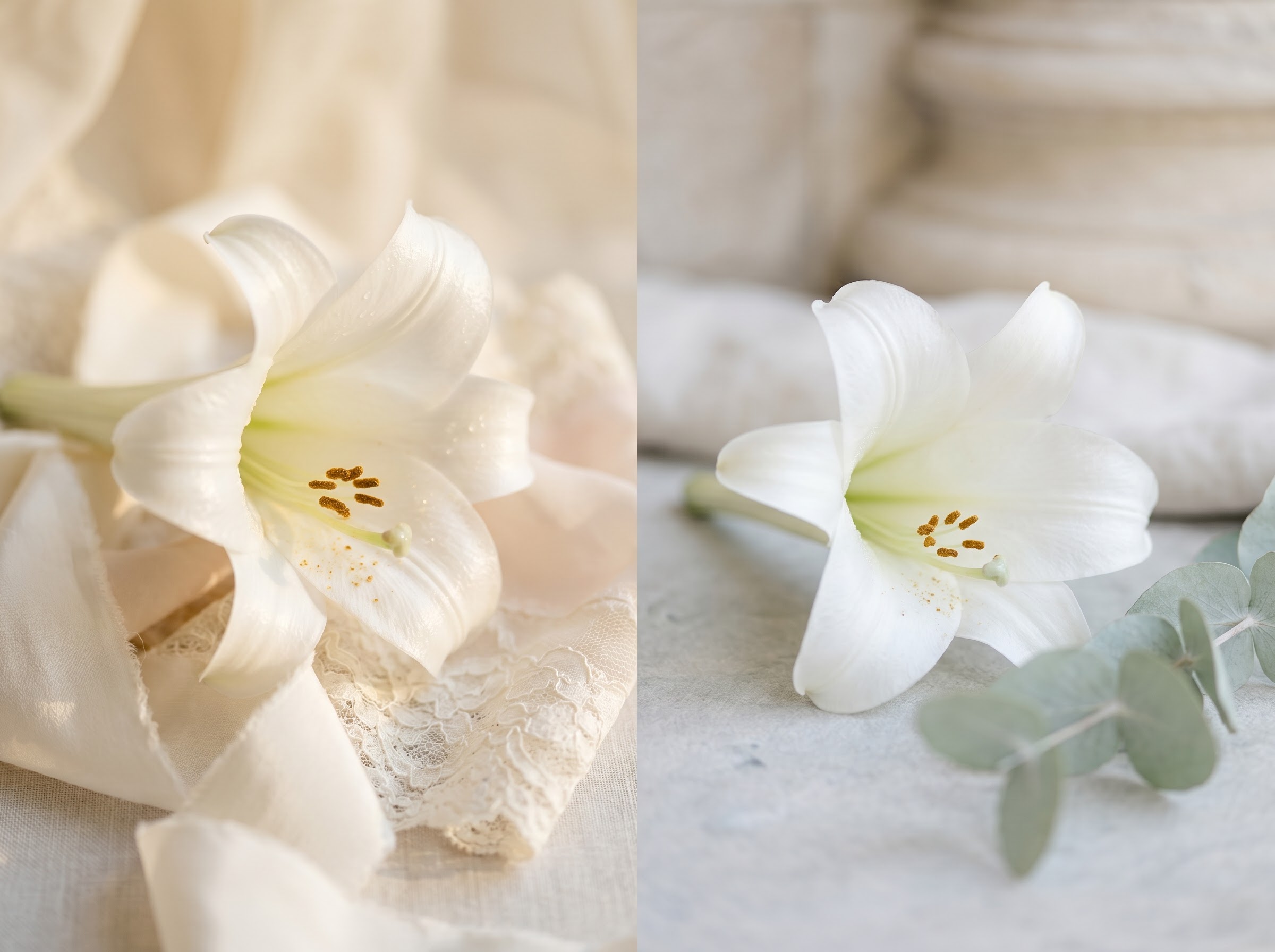
Wedding flowers carry the most weight of meaning of any occasion, and the traditional choices reflect it: peony for a happy marriage and prosperity, ranunculus and roses for love, stephanotis for marital happiness, lily of the valley for the return of happiness, and baby's breath for everlasting love and innocence. The classic things to avoid are the yellow or striped carnation, which carry disdain and refusal, and any flower whose primary meaning is grief, since a wedding is no place for a sympathy note hidden in a bouquet. Colour and season do more of the work than strict symbolism here, so let the flowers suit the day first and the meanings second. If you are writing on a card or a gift tag, "To a long, lucky, love-filled life" says the whole wish in a line, which is all a wedding card really needs to do.
New baby
For a new arrival, keep everything soft, bright, and fresh: daisy, baby's breath, roses in gentle colours, and lily all suit the occasion, with the daisy carrying innocence and new beginnings almost on its own. Steer clear of heavy, sombre meanings and dark, dramatic palettes, which feel out of place around a baby and a tired new parent. Pastels and small, cheerful blooms read better than anything grand. The card can be warm and simple, something like "Welcome, little one, a fresh, bright start," and a new-baby bouquet is often as much for the exhausted parents as the child, so a kind word to them belongs on the tag too.
Mother's Day
The carnation has been the Mother's Day flower for over a century, and it sits well alongside daylily, peony, and roses, all of which carry motherly love, devotion, and gratitude. The one carnation colour to avoid is yellow, which traditional lists tie to disdain, an easy and unfortunate mistake to make when the rest of the carnation family says exactly the right thing. Beyond that, choose by what your mother actually likes more than by strict meaning, because affection shown in her favourite flower beats correct symbolism in one she does not care for. A card line as plain as "Thank you for a lifetime of love" carries more than any arrangement, and on Mother's Day the words are very much the gift.
Every occasion, side by side
When you are standing in front of a flower stall with a few minutes to decide, what you send, what you keep out of the bouquet, and the line you write on the card matter more than the symbolism behind any single stem. The avoid column deserves as much attention as the send column, since the wrong flower in the right bouquet undoes the whole gesture. As with everything in the language of flowers, these are common, sensible choices rather than fixed rules, and the colour you pick can still shift the message, which our guide to flower colour meanings explains shade by shade.
| Occasion | What to send | What to avoid | What to write |
|---|---|---|---|
| Romance and Valentine's | Rose, tulip, camellia, peony, ranunculus | Yellow carnation (disdain), striped carnation (refusal) | It has always been you. |
| Apology | Hyacinth, tulip, hydrangea | Bright, celebratory mixes that read as tone-deaf | I am sorry. Please forgive me. |
| Sympathy and funeral | Lily, white rose, chrysanthemum, gladiolus, statice | Red roses (too romantic); in much of Europe send chrysanthemums only; skip loud colours | Holding you and your family close. |
| Get well | Daffodil, gerbera daisy, sunflower, coneflower, hellebore | Lilies and all-white arrangements that feel funereal | Rest up. Brighter days are coming. |
| Congratulations | Iris, bird of paradise, gladiolus, peony, tiger lily | Anything carrying an apology or grief meaning | So proud of you. You earned this. |
| Friendship and thank you | Rose, alstroemeria, sunflower, freesia, zinnia | Red roses, which read as romantic | Grateful for you, always. |
| Goodbye and farewell | Sweet pea, forget-me-not, zinnia | Funereal whites unless the parting is a sad one | Until we meet again. I will not forget. |
| Wedding | Peony, ranunculus, rose, stephanotis, lily of the valley, baby's breath | Yellow or striped carnation, and any flower with a grief meaning | To a long, lucky, love-filled life. |
| New baby | Daisy, baby's breath, rose, lily | Heavy or sombre meanings and dark palettes | Welcome, little one. A fresh, bright start. |
| Mother's Day | Carnation, daylily, peony, rose | Yellow carnation (disdain) | Thank you for a lifetime of love. |
When the meaning and the moment disagree
A few flowers cause trouble because they carry two readings at once, and an occasion is exactly where that bites. The lily is the clearest example, since it means joyful purity at a wedding and is also the classic funeral flower, so colour and setting have to do the deciding for you. The rose has its own wrinkle, where a red rose is love and a yellow one has, over the past hundred years or so, drifted from old jealousy toward modern friendship. The safe habit is to read a flower the way most people will read it today rather than the way a Victorian dictionary once did, and to trust the arrangement's overall colour and feel ahead of any one symbolic stem. If you would like to see exactly how a rose changes meaning by colour and number, our guide to rose meaning and colour settles the famous disputes one by one. When you are genuinely stuck, send what the recipient would actually be glad to receive, then say the true thing in your own words on the tag, because no occasion in this guide is improved by a clever flower attached to an empty card.
- Cornell University, Written in Petals: The Language of Flowers, on the history of floriography.
- Iowa State University Extension, Flowers and Their Meanings, on why sources disagree.