What angel's trumpet is and how big it gets
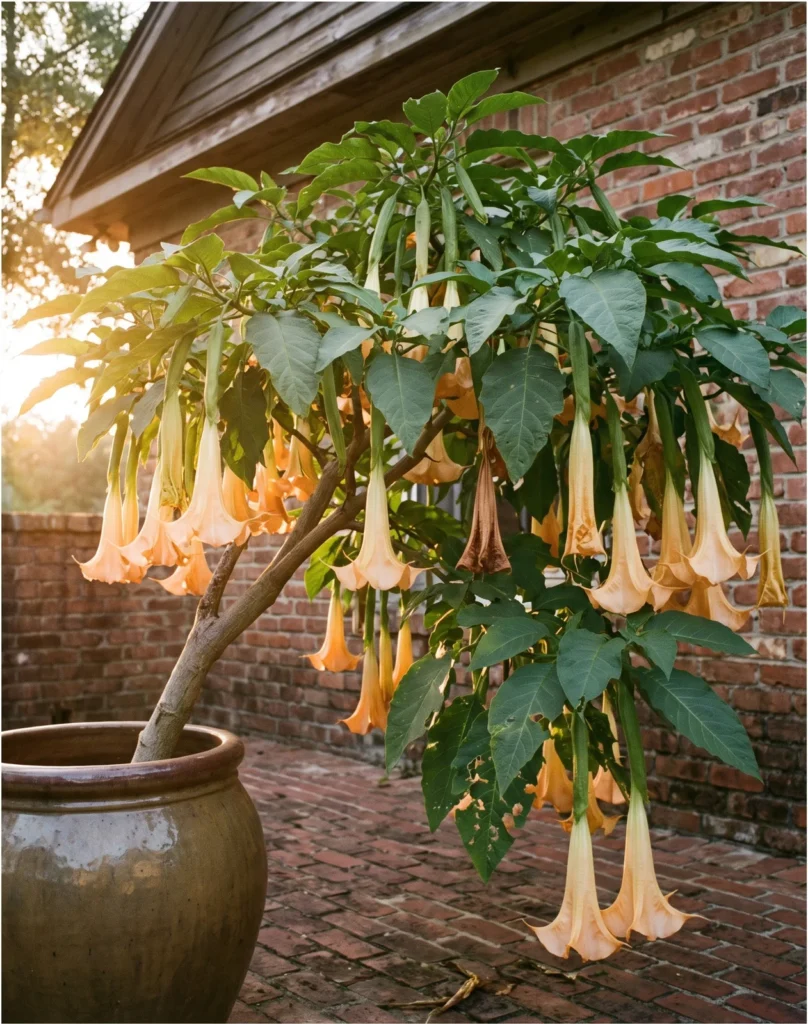
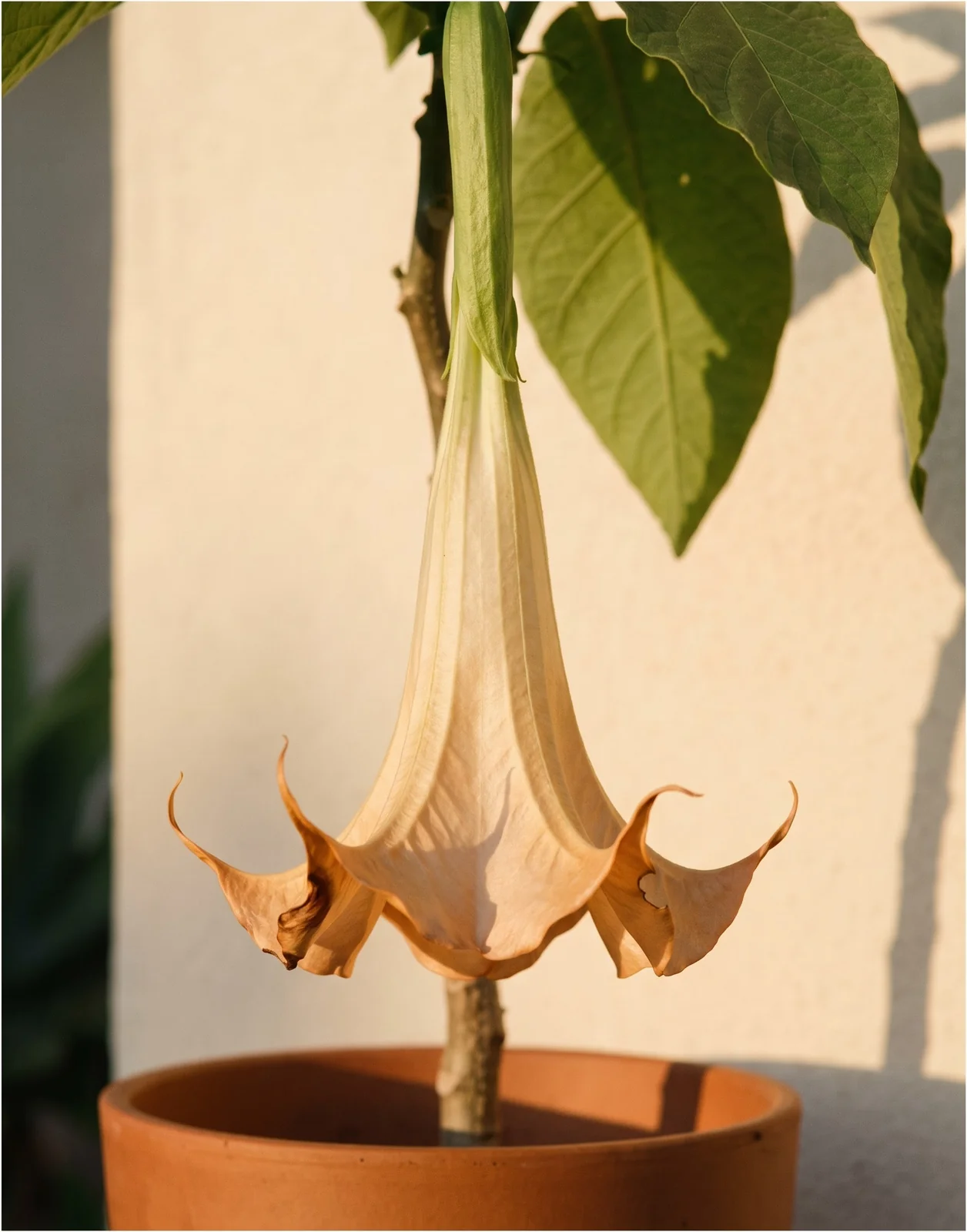
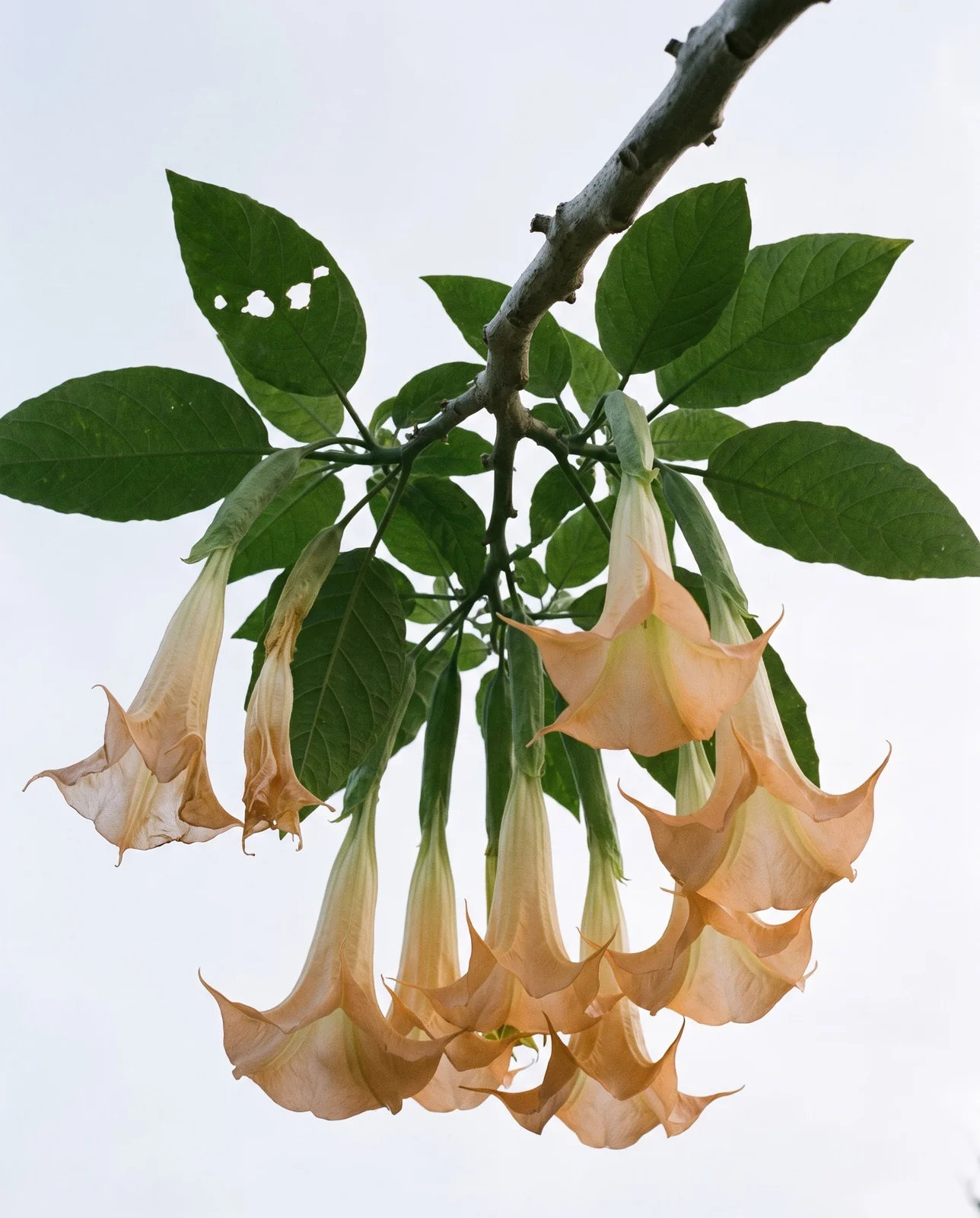
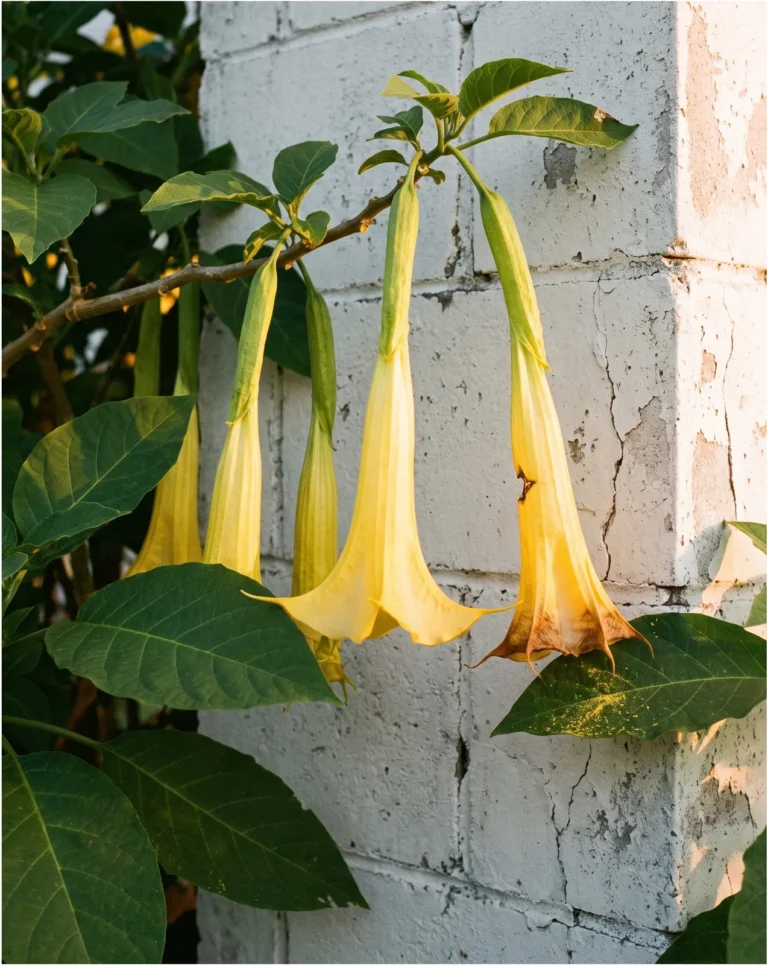
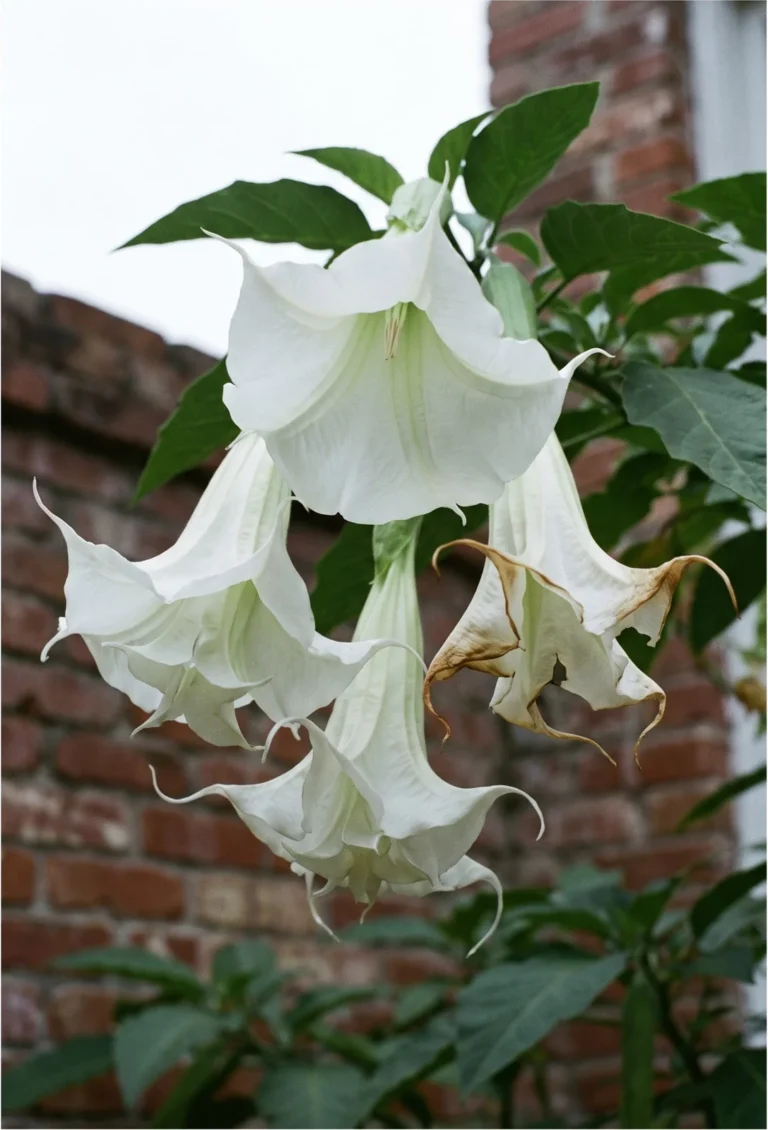
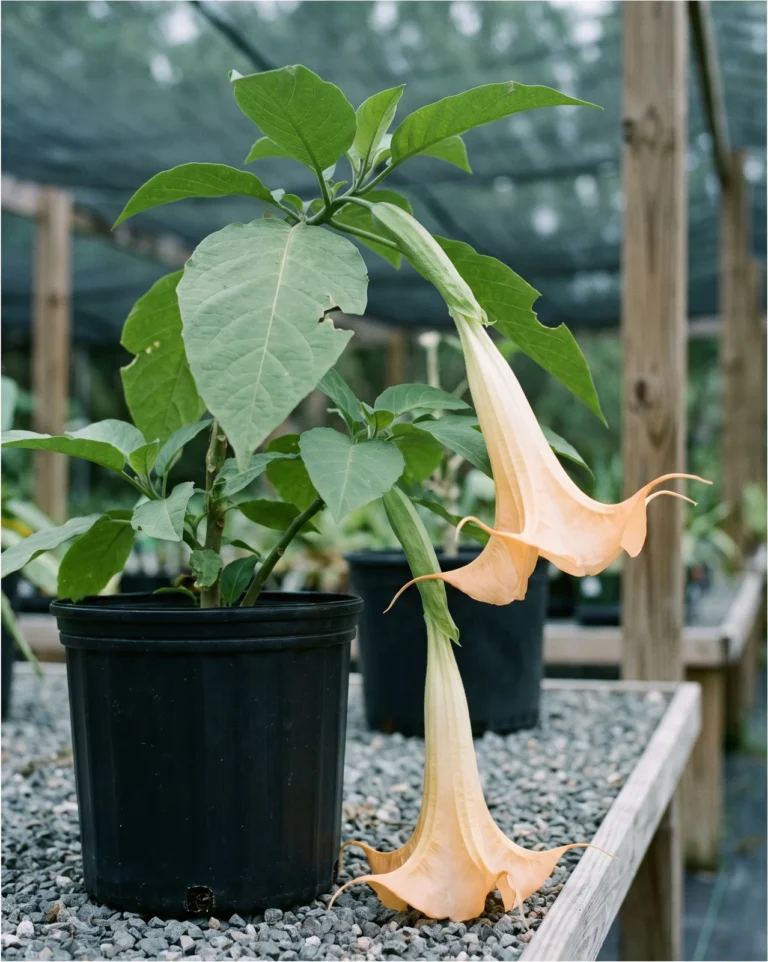
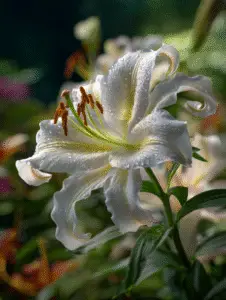
Angel's trumpet is Brugmansia, a group of seven shrubs and small trees in the nightshade family. They are woody, long-lived perennials that branch into a broad crown, hanging their blooms below the foliage. The flowers turn fragrant in the evening to draw night-flying moths. Each bloom reaches 6 to 20 inches long and 4 to 14 inches across the flare, in shades of white, yellow, pink, orange, green, or red. The plants come from South America, particularly the Andes, where they thrive on slopes with warm, humid days and cool nights.
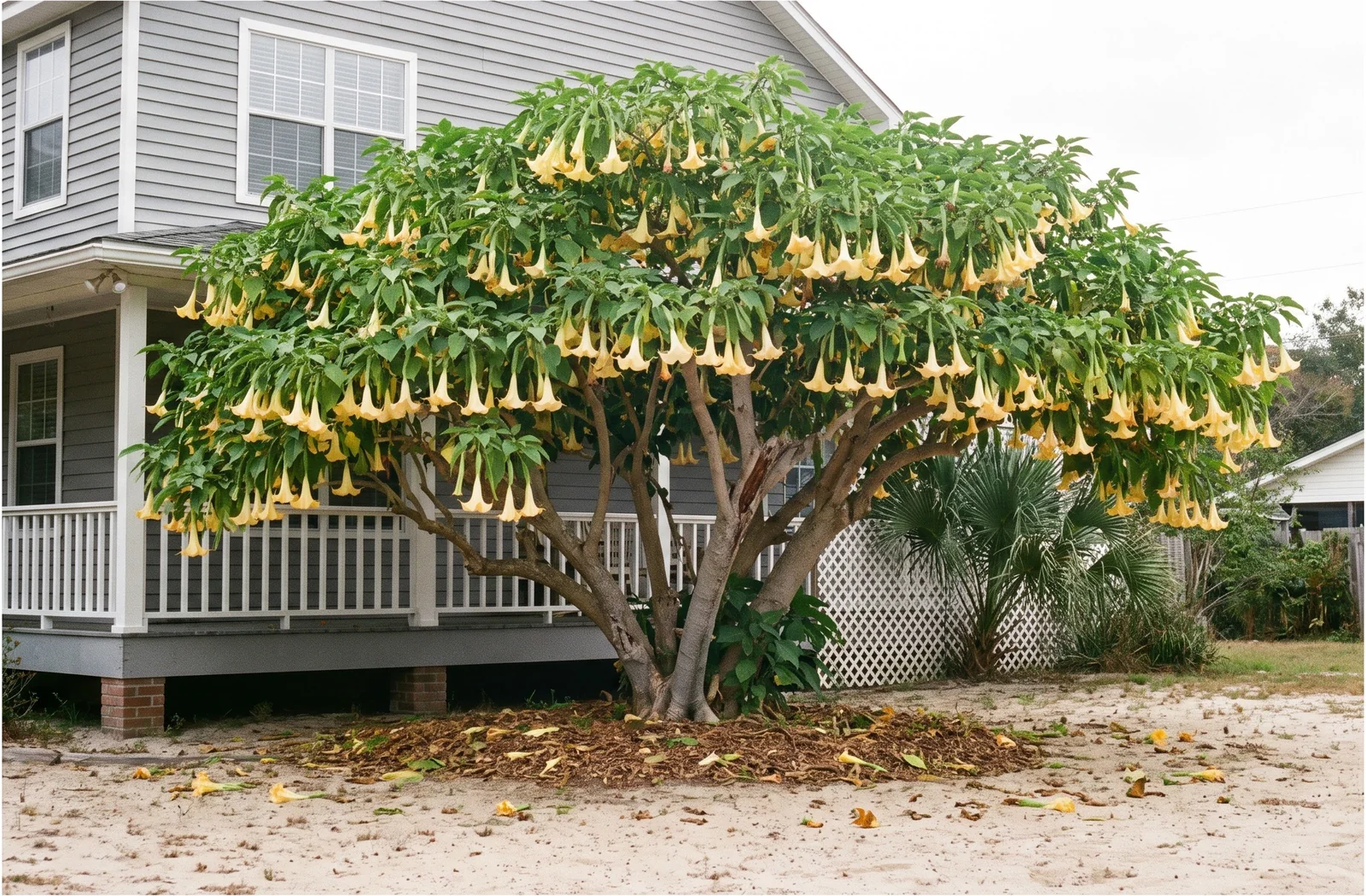
In a container, angel's trumpet grows 6 to 15 feet tall, while in open ground it can reach up to 35 feet. Across the entire genus, sizes range from 6 to 35 feet tall and 3 to 10 feet wide. Cultivated forms of Brugmansia suaveolens stay more compact, growing 3 to 8 feet tall and 2 to 4 feet across. In a pot on a patio, a plant near that top height is a heavy small tree that catches the summer wind.
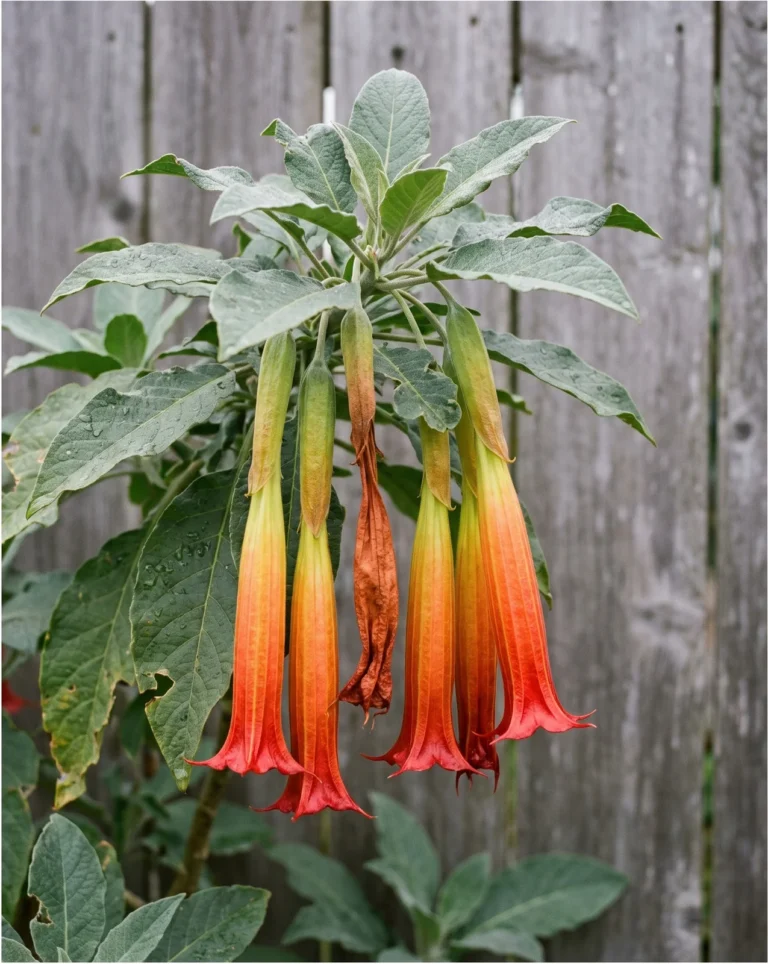
Scent varies widely across the genus and follows an evening clock. Most species release their fragrance at dusk to attract pollinating moths. The perfume ranges from faint to overpowering, carrying notes of musk, lemon, mint, lily, hyacinth, citrus, jasmine, or gardenia. The only scentless species is Brugmansia sanguinea, which bears true red flowers and is pollinated in the wild by the sword-billed hummingbird. All seven species survive only in cultivation or as garden escapes, with no wild populations confirmed, and all are extinct in the wild. Large mammals that probably carried their seeds vanished in the Pleistocene, leaving the fruit to shrivel on the plant without producing wild offspring.
Angel's trumpet or devil's trumpet
The direction of the bloom gives the quickest answer. Angel's trumpet hangs its flowers downward or slightly outward. Devil's trumpet, or Datura, holds its blooms upright or spreading above the foliage. A single open flower makes the identity clear. When the plant is out of bloom, you can still tell them apart by their stems, life span, fruit, and seed. The names are harder to separate, because botanists grouped the two plants together long before nurseries did.
Linnaeus first grouped the plants under Datura in 1753, calling them Datura arborea. In 1805, Persoon moved them into their own genus, Brugmansia. He named the genus for Dutch naturalist Sebald Justinus Brugmans. Botanists debated the classification for another 168 years. In 1973, Lockwood studied their structure and confirmed them as separate genera. The name tree datura still lingers in plant references, folding the old grouping into modern care advice. Gardeners frequently merge the two under one common name, though Datura and Brugmansia remain separate plants.
Datura carries several common names of its own. These include devil's trumpet, thorn-apple, horn-of-plenty for Datura metel, and jimsonweed for Datura stramonium. It also goes by moonflower, sharing that title with the fragrant night opening climber. Tree datura also remains a familiar name for angel's trumpet. The two plants were once placed in the same genus. Because they share flared trumpet flowers alongside toxic alkaloids, their identities still easily blur.
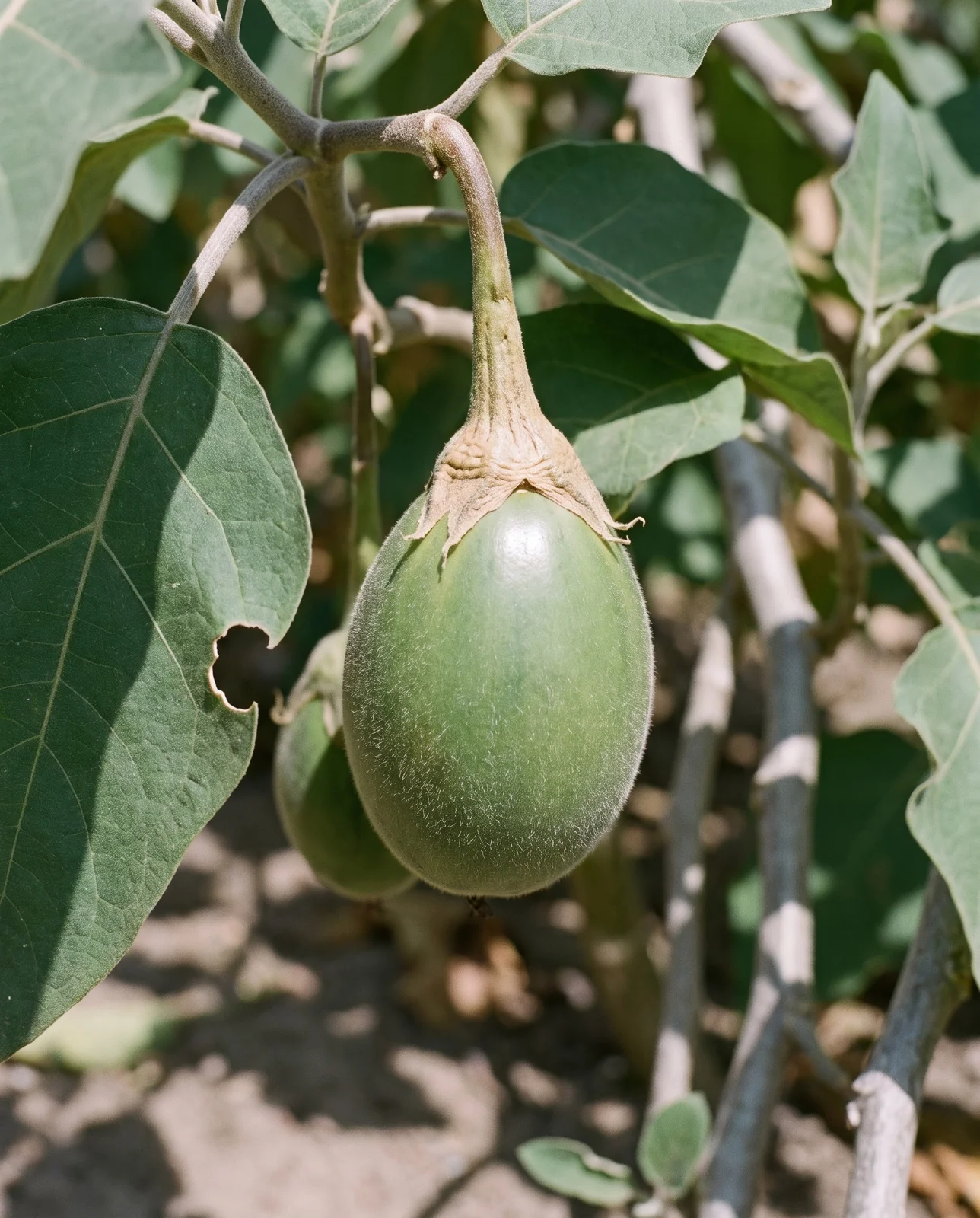
The two trumpets, side by side
Practical details you can check on the plant itself, with only flower size requiring an open bloom.
How poisonous angel's trumpet is
Every part of angel's trumpet is poisonous, with the seeds and leaves being especially dangerous. The plant contains potent tropane alkaloids, including atropine, scopolamine, and hyoscyamine. These are the same toxins found in jimsonweed and deadly nightshade, ranking angel's trumpet among the most toxic ornamental plants you can grow. Eating any part of the plant is extremely dangerous, and deaths have occurred. Ingestion can trigger intense thirst, dry mouth, a rapid pulse, dilated pupils, tremors, poor coordination, confusion, hallucinations, delirium, seizures, and paralysis.
The effects can take hold quickly. Symptoms often develop rapidly, appearing as early as 5 to 10 minutes after ingestion. Early sweating and salivation soon give way to dry mouth, dilated pupils, and a racing heartbeat, followed by fever and urinary retention. Accidental poisonings show the danger: drinking leaves brewed into herbal tea caused acute delirium that took 15 hours of treatment to resolve. In another case, eating petals served as a food garnish brought on confusion and slurred speech that lasted 10 hours. Memory loss for the hours following ingestion, along with dilated pupils, can persist for days after other symptoms fade.
Whether bare skin reacts to angel's trumpet is unsettled. One assessment reports no contact dermatitis, while others treat the sap as an irritant to skin, eyes, and airways. Because the sap can irritate skin, wear gloves whenever touching or pruning the plant. Sap in the eyes causes immediate danger, with the potential for dilated pupils and temporary blindness. Simply rubbing an eye after handling leaves and flowers can leave one pupil dilated and vision blurred while the other eye remains normal. These toxins absorb readily through mucous membranes as well as by ingestion. Even the strong evening fragrance can cause respiratory irritation, headaches, nausea, and light-headedness.
Seek immediate medical care for any ingestion and for any sap exposure in the eyes. Keep every plant out of reach of children and pets, and never eat any part of it. Assessments differ on how much plant tissue triggers poisoning. One assessment treats angel's trumpet as toxic only if large quantities are eaten, citing hallucinations, dry mouth, muscle weakness, elevated pulse and blood pressure, fever, dilated pupils, and paralysis. Another classes the plant as extremely toxic with no minimum quantity attached.
Growing it anyway, and where the pot goes
A toxic plant is only a hazard if someone can reach it, so placement and garden habits decide how safe it is. Wear gloves whenever touching or pruning the plant, since sap transfers readily to bare skin and eyes. Handle all trimmings with gloves, either rooting them as new cuttings or bagging them away from curious pets. Keeping the plant safely away from children and pets means placing the pot off main pathways, entryways, and evening seating.
In a home with toddlers or dogs that chew, yard layout makes all the difference. A container on an open lawn invites trouble, but a raised deck or gated courtyard keeps the plant safely out of traffic. It shares that elevated space well with potted oleander, keeping curious pets away from both. Pruning requires the most caution, because wet sap coats tools, gloves, and fallen trimmings. Cut the branches when pets are inside, discard waste promptly, and wash thoroughly before touching your face. A container brought into a warm, bright room can flower through winter.
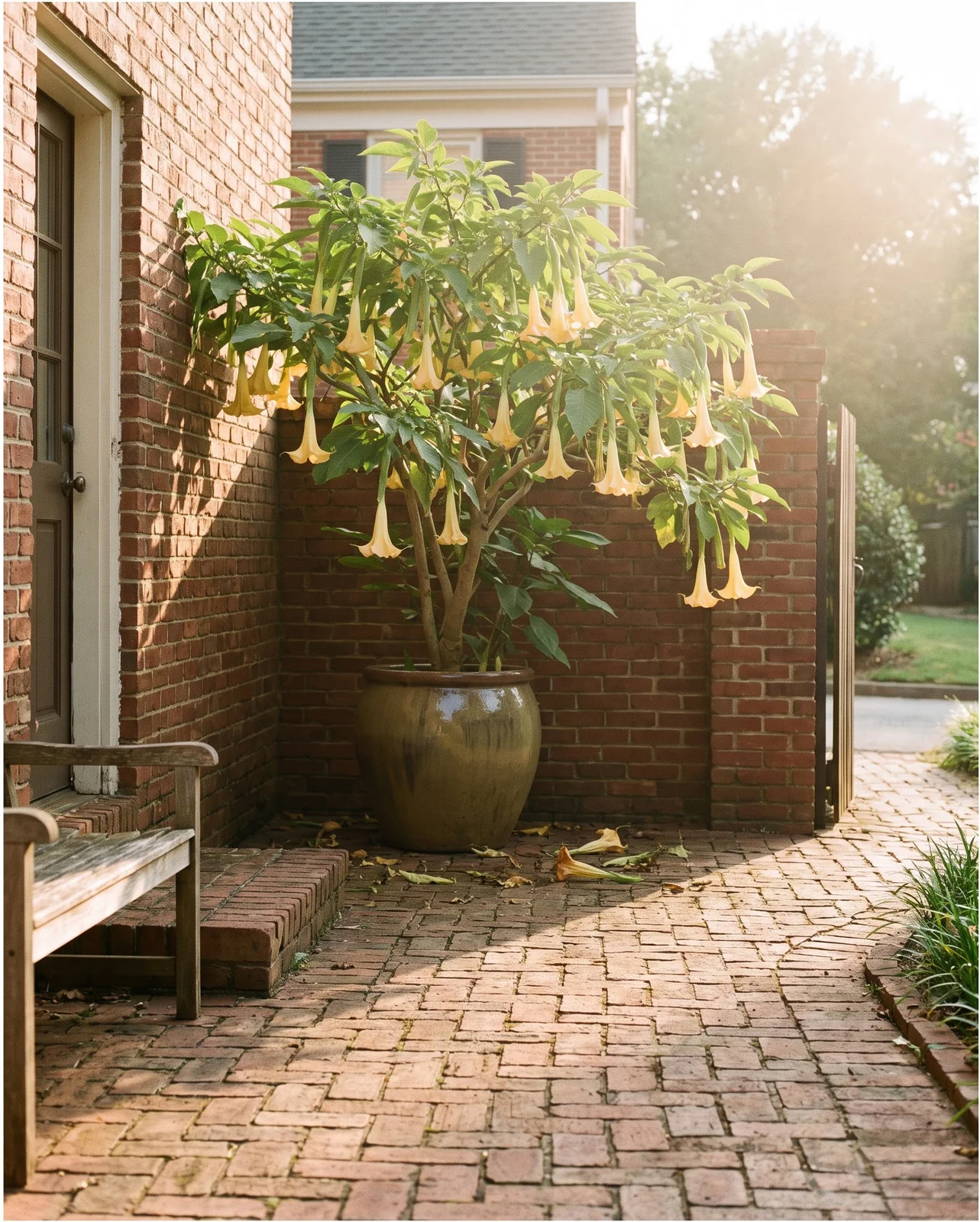
Where angel's trumpet lives through winter outdoors
Winter hardiness ratings for angel's trumpet vary enough to change how you grow it. In USDA zone 9a and warmer, it behaves as a reliable, long-lived woody perennial. For Brugmansia suaveolens, winter hardiness covers zones 8 to 10. Tougher selections and the hybrid Charles Grimaldi extend survival down into zones 7b through 10b. Because those ranges face very different winter lows, checking your local frost depth helps you choose between a garden bed and a pot.
Where winter temperatures dip below that line, the plant needs protection. Keep the plant above 45 to 50 F through the coldest months, making a movable container the easiest solution. In border zones, winter protection makes outdoor survival possible. In North Carolina, plants survive most winters under a mound of mulch, dying back to the ground but usually returning in spring. In sheltered spots in northwest Arkansas, it can overwinter outdoors, though it is not quite as winter-hardy as devil's trumpet. In frost-free climates with ample sun and temperatures above about 60 F, it can flower year-round.
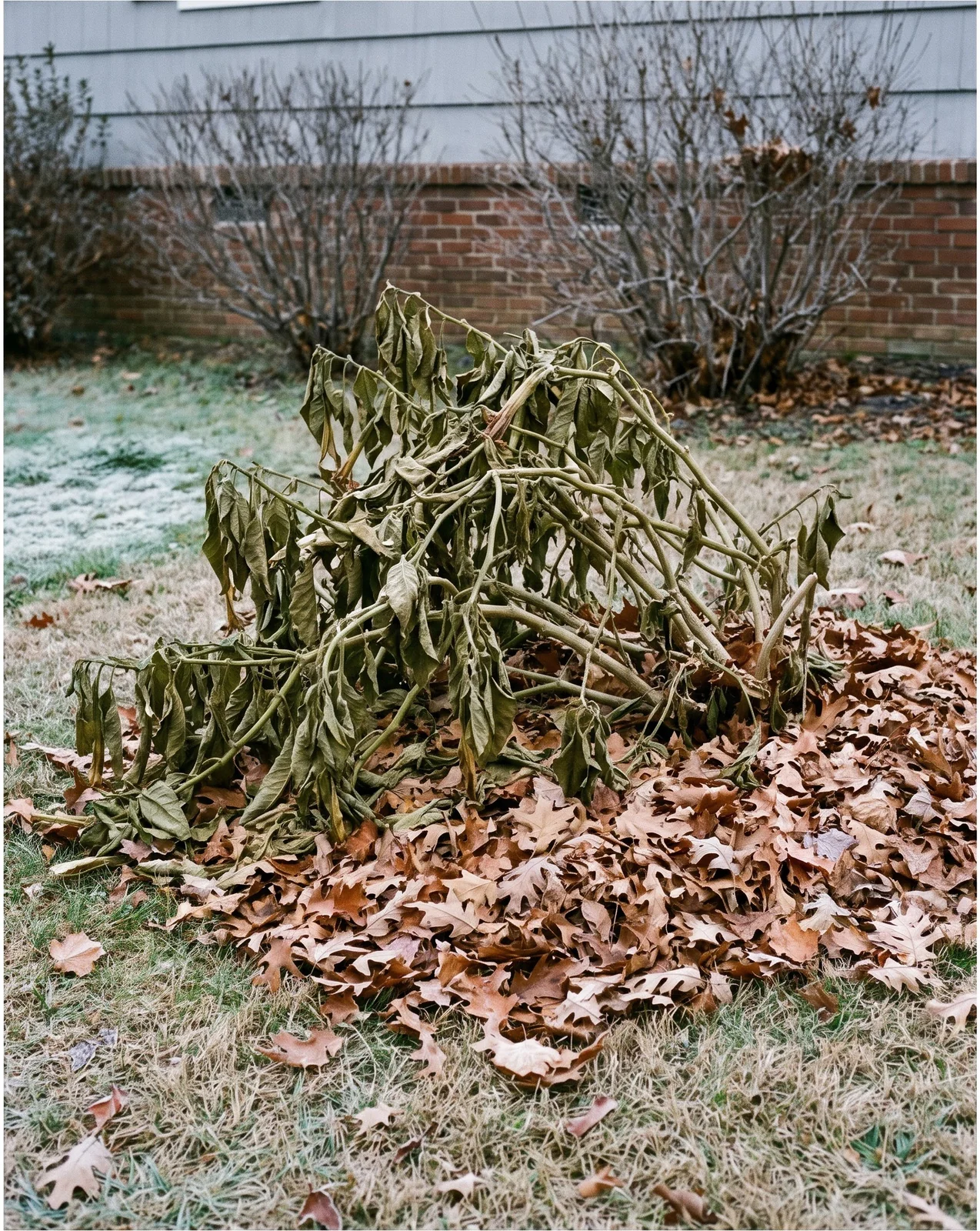
Three ways to keep one, and what each costs
Winter cold decides which method works in your garden, and each choice gives you a different size of plant.
When to move it outside and where to stand it
Move your potted plant outside in spring once night temperatures stay reliably above 45 to 50 F. That warmth provides a reliable floor for tender growth as the season gets underway. If the plant spent winter resting in the dark, ease it into brighter light gradually before moving it outside after frost.
Stand the container near a patio or bench where you sit after dark, because the fragrance peaks on warm summer evenings. Because the plant is toxic, keep the pot safely out of reach of children and pets along walkways or seating areas. Give a plant with a canopy 2 to 3 feet wide or 3 to 4 feet tall a 12-inch pot, and keep it well watered.
How much water and food it actually wants
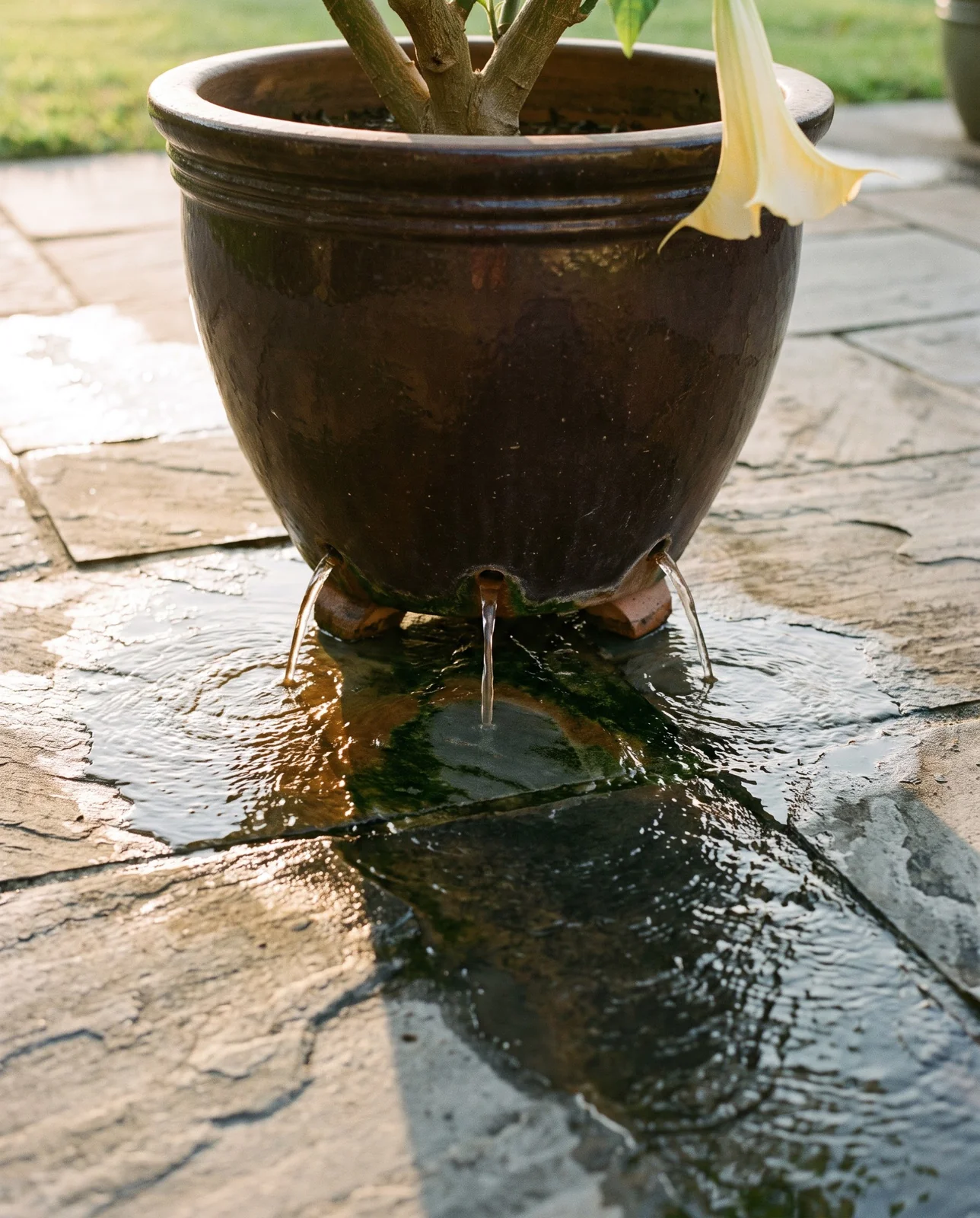
Angel's trumpet drinks enormous amounts of water, but it requires good drainage and dislikes standing in soggy soil. Containers can dry out very quickly, so check the potting mix daily through the growing season. On hot summer days, a large plant may need watering 2 to 3 times daily. The leaves droop when the plant gets thirsty, then recover quickly once you give it a deep drink. A plant can survive on too little water, but it will struggle and may be reluctant to flower.
Angel's trumpet is a heavy feeder that needs regular food all through the growing season, because more food produces more flowers. You can fertilize every 1 to 2 weeks from April to November to help it grow quickly. Larger plants often take food twice a week, and very big plants three times a week, with Epsom salts added about once a month. In spring, start with an organic liquid seaweed feed, then switch to high-potassium tomato food in summer to encourage blooms.
Both routines reverse for winter. The plant needs much less water and fertilizer in cold weather, and a dormant plant takes little water and no fertilizer at all. You water and feed generously through the heat of summer, then step back and let the resting plant sit quietly until spring.
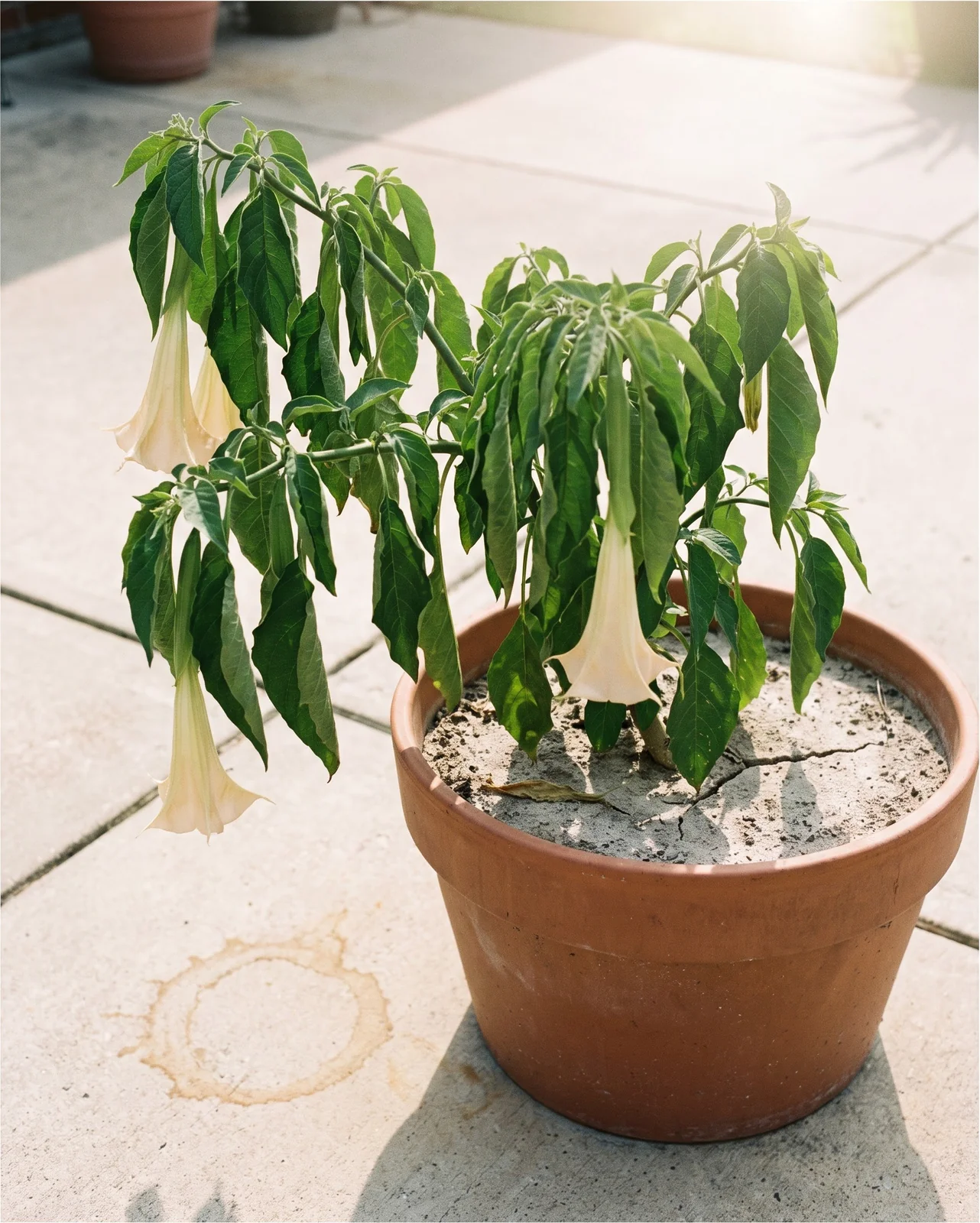
Why a healthy angel's trumpet carries no flowers
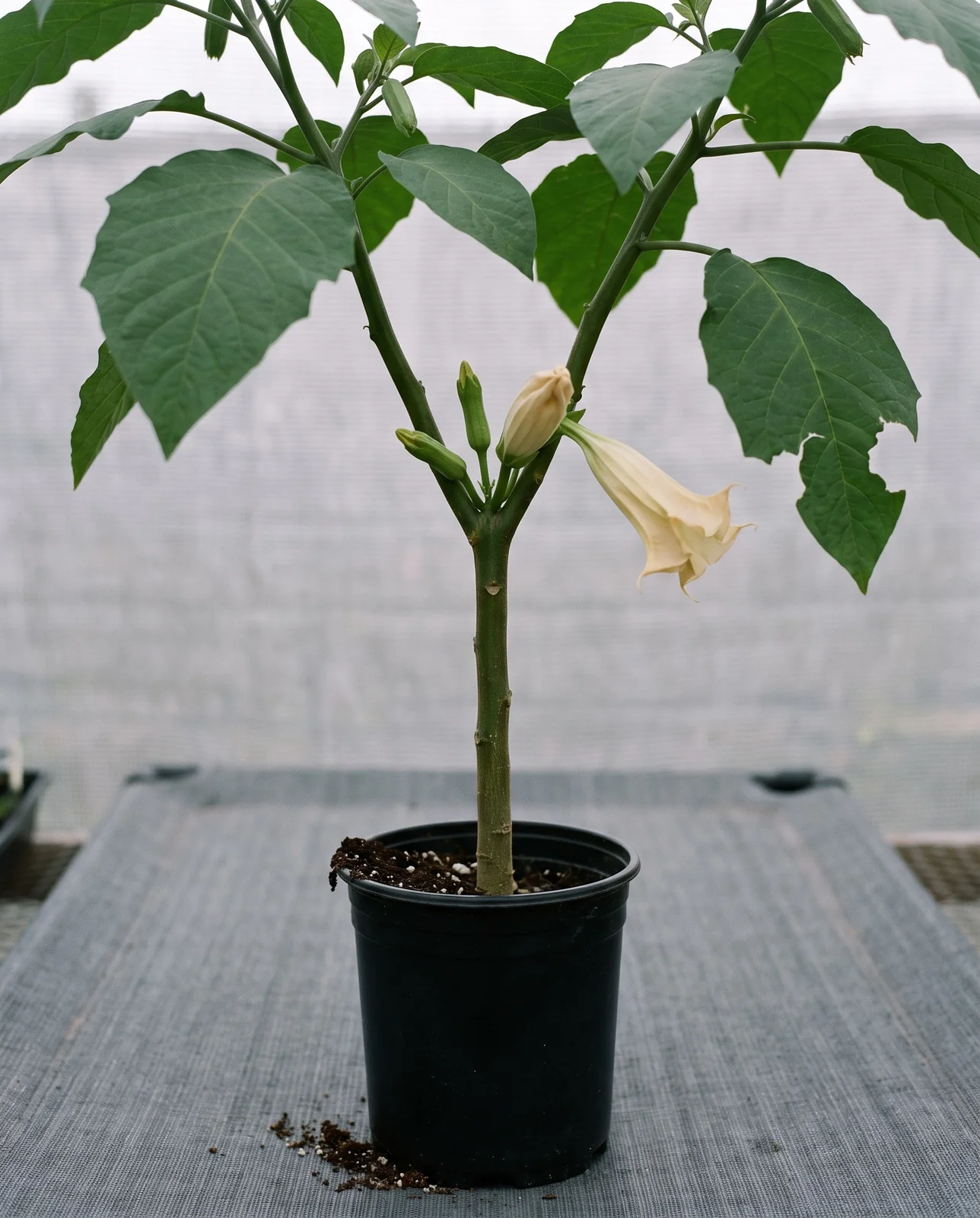
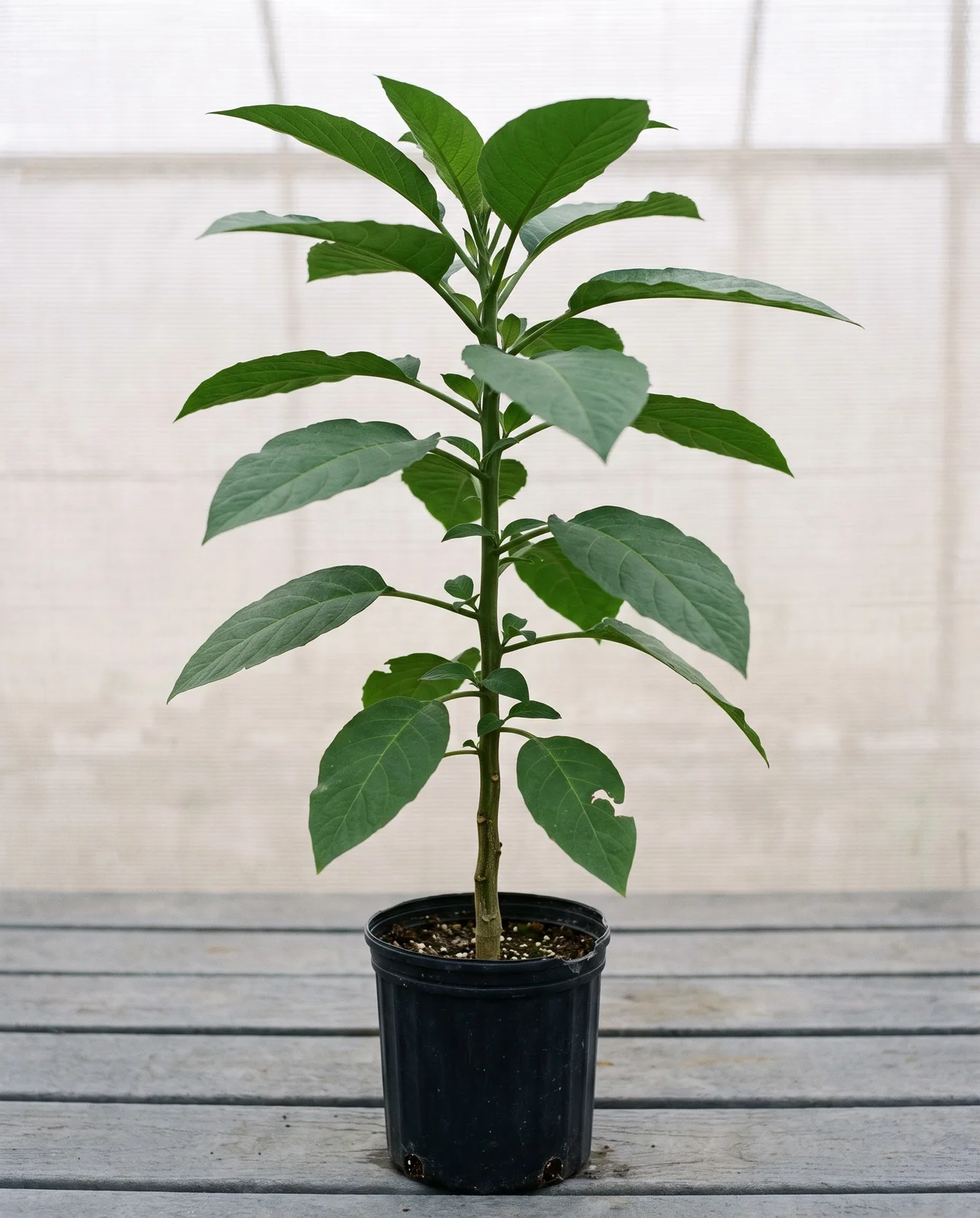
If a healthy plant carries no flowers, look at the shape of the trunk before changing your care routine. A young plant grows straight up on a single stem, and it will not flower until it reaches its first main fork. That fork usually appears once the stem grows 2 1/2 to 5 feet high, or about 3 1/3 feet, when the plant is ready to flower.
Reaching that first bloom takes time, because a young plant must reach maturity before flowering, which can take a year or more. Plants grown from cuttings may take three or more years to reach flowering size, and seedlings may take even longer. A cutting from the lower unbranched stem has to grow to a similar height before flowering, but one taken from upper flowering growth will often flower at a very low height.
Working through a plant with no flowers
These checks apply once your plant has made its first fork. Until it branches, the young plant is simply not mature enough to flower.
Yellow leaves and leaf drop, in the order to check them
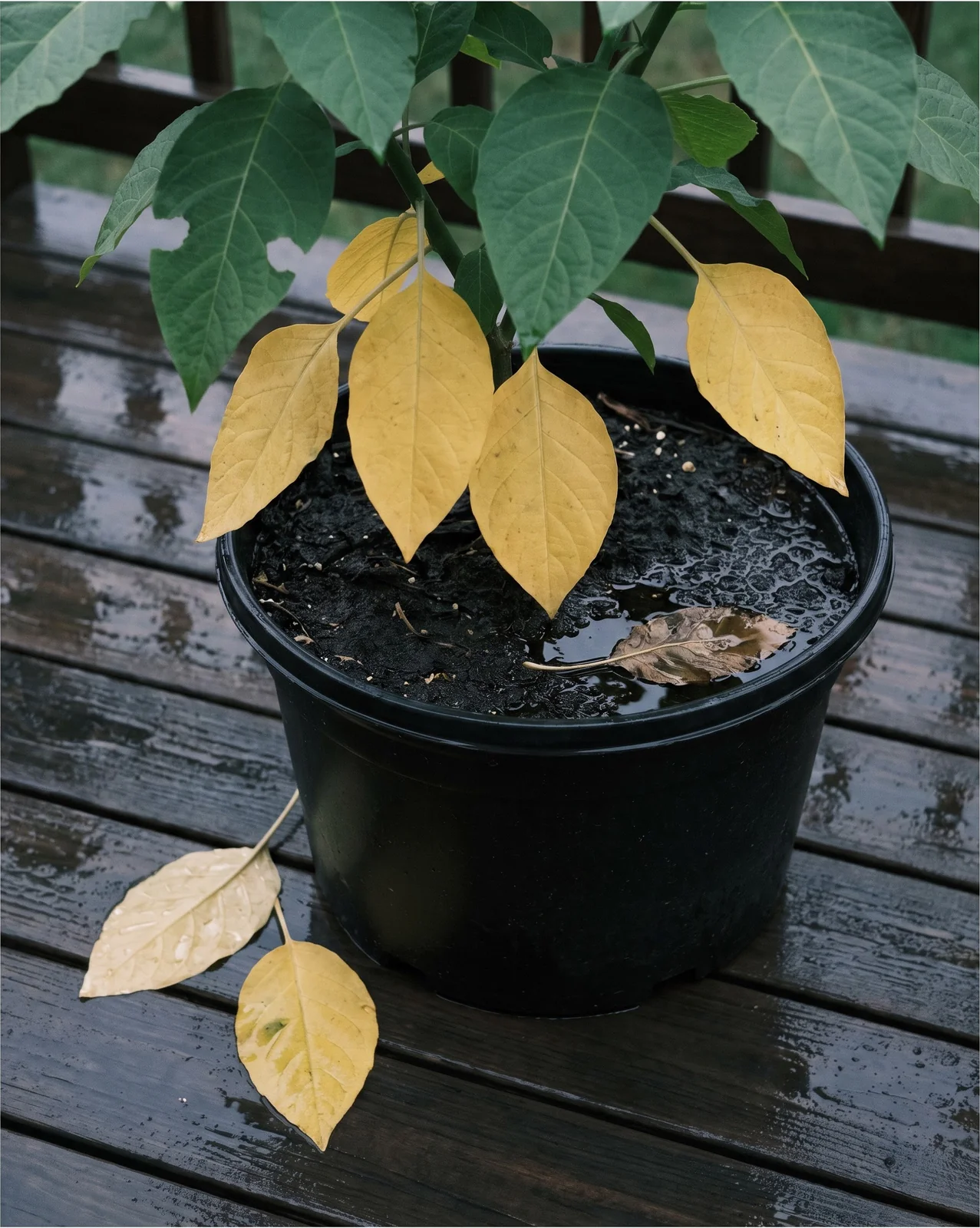
Start by checking how wet the soil is, because overwatering or waterlogged roots are the usual reason leaves discolor and drop. When that happens, cut back on watering and make sure excess water drains away freely. A nutrient deficiency also turns foliage yellow, though a shortage of food typically affects all the leaves across the plant while wet soil strikes isolated patches.
Next, check for spider mites with a simple paper test: hold white paper under a leaf and tap it to knock tiny pests into view. Water quality can also cause trouble, although salt tolerance is unsettled: the plant may tolerate slight salt, or none at all. Often the cause is simply age, because older leaves naturally turn yellow before falling off.
Some yellowing is simply the plant following its natural growth cycle. Foliage can stay lush for about 3 weeks before yellowing and dropping as the plant directs its energy toward blossoms. Leaf loss is also normal as winter nears. If you keep a leafy plant in light through winter, fertilize only if the leaves show chlorosis with yellowing, and withhold food while it rests.
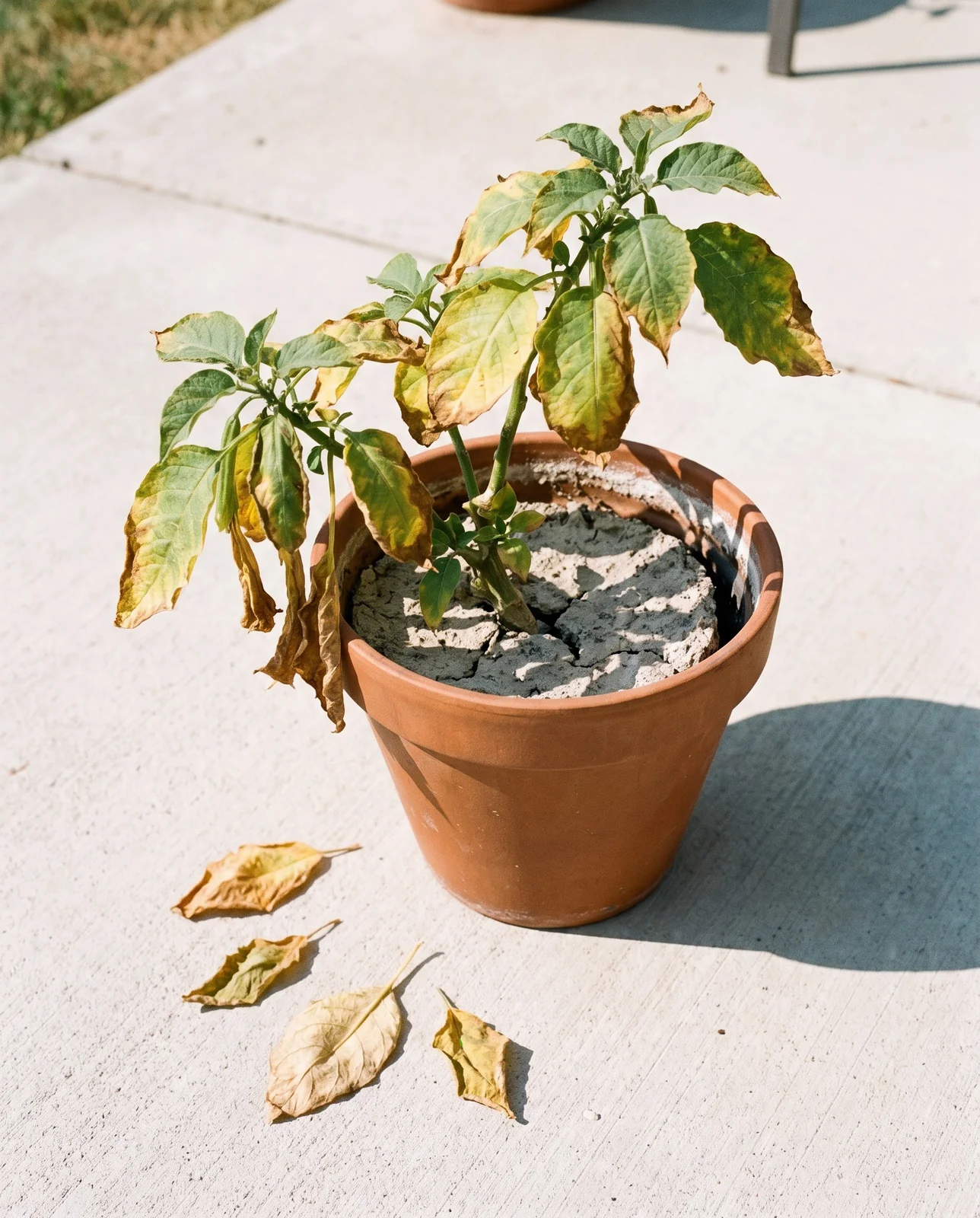
What goes wrong, most common first
Listed from the most common complaint down. Each entry explains the symptoms, the cause and what you should do.
Symptoms: a 4-foot plant grows full of healthy green leaves without setting any flower buds. Cause: the trunk has not yet branched into a Y. What to do: let the stem keep growing, because buds appear at the crotch of each fork as soon as new growth branches.
Symptoms: the plant produces lush foliage through June and July but sets no flowers through midsummer. Cause: angel's trumpet typically does not begin blooming well until late summer or early fall. What to do: keep feeding and watering consistently, because the plant can continue blooming right up until frost.
Symptoms: the plant declines and looks sickly while being heavily fed to encourage flowers. Cause: over-fertilizing can kill an angel's trumpet. What to do: dilute bloom booster to half strength when feeding twice a week.
Symptoms: a plant brought indoors for winter keeps its buds and opens flowers inside the house. Cause: feeding too late in the season keeps flower buds forming. What to do: stop fertilizing by the start of October so the plant does not bloom indoors once brought inside.
Symptoms: the plant drops its leaves after a heavy insect infestation. Cause: stress from severe pest damage. What to do: clear the pests and add fertilizer, because the plant generally regenerates new leaves quickly when given extra food.
Putting it away for winter, and what March looks like
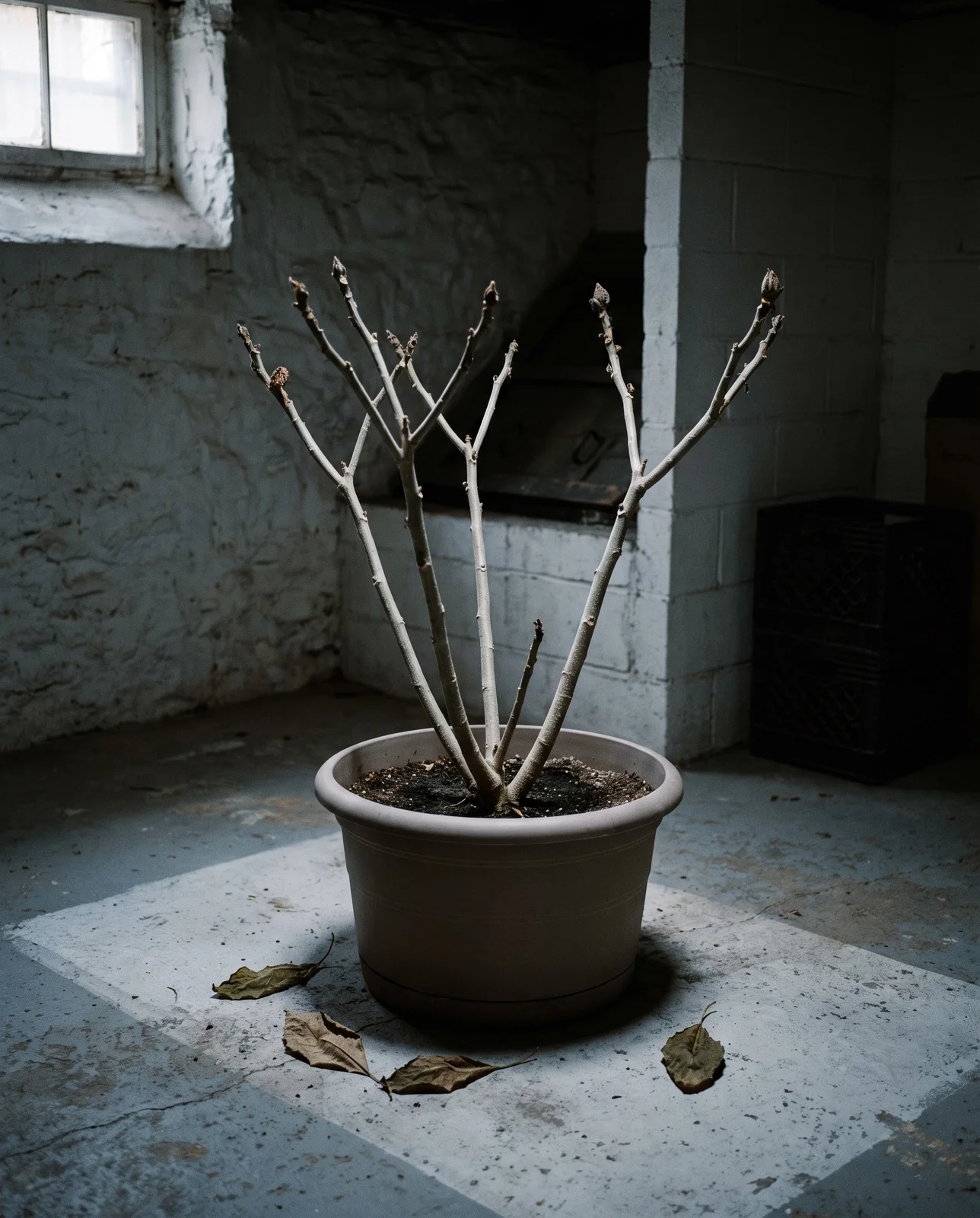
Bring angel's trumpet indoors before the first autumn frost and let it rest. You can let the leaves and stems dry naturally, or strip the foliage at the start because it drops anyway. A dormant plant loses its leaves and some shoots may die back, but it should recover in spring. It overwinters in a dormant or semi-dormant state on its thick, succulent stems, with no bulbs or tubers below ground.
A basement, cellar, enclosed porch, large cupboard, or cool garage with little or no light works well for storage. Keep the space cool and frost-free, ideally around 40 to 50 F. Most species kept dormant need at least 45 to 50 F at night and 50 to 54 F by day. Water sparingly, giving just enough every 2 to 4 weeks to keep the soil barely moist and prevent stems from drying out.
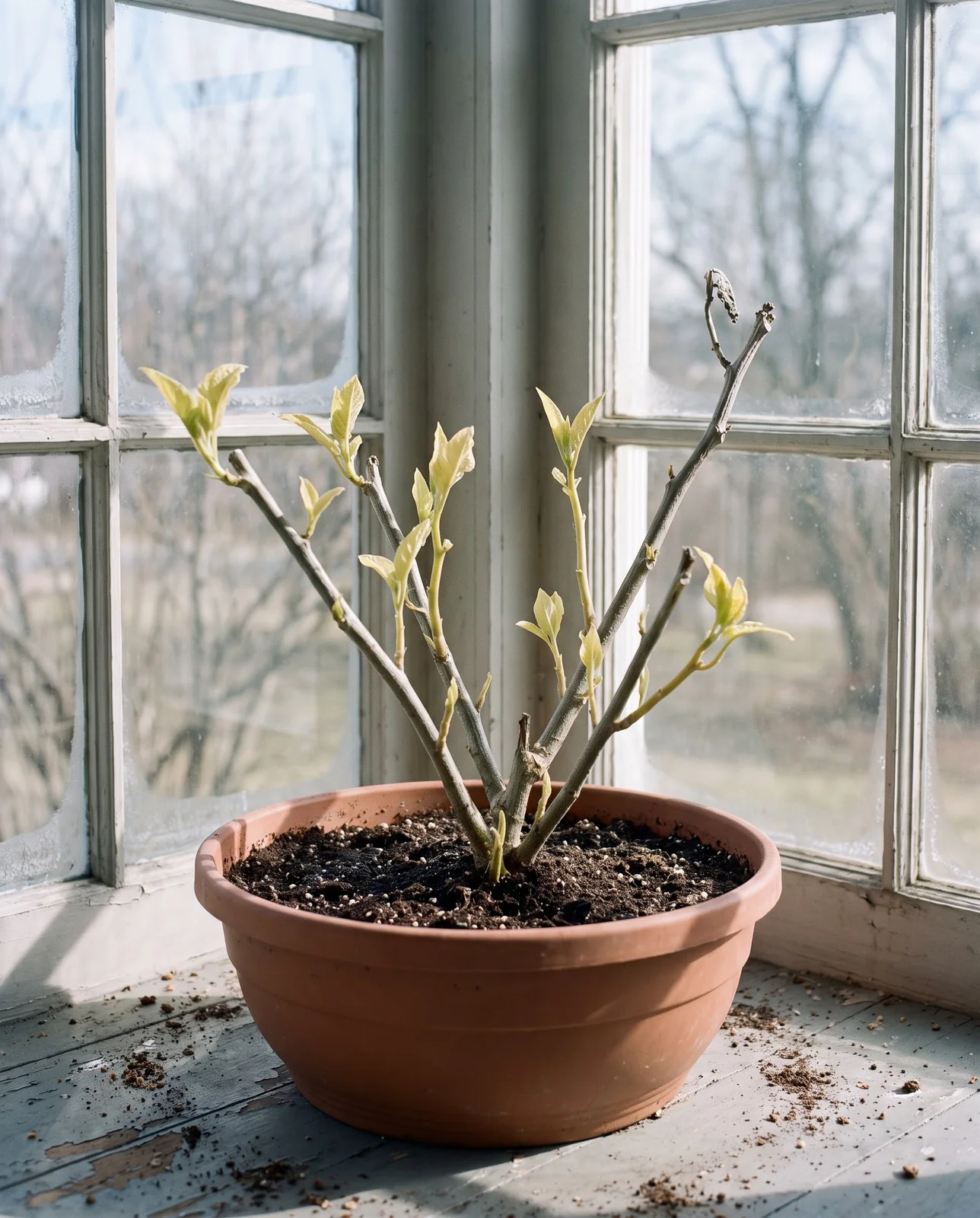
If your angel's trumpet grows in open ground, dig it up before frost, pot it, and keep it in a cool, frost-free spot at about 40 F with minimal water. You can also cut an in-ground plant to the soil line in fall and save the stems for cuttings. It joins other tender porch favorites like plumeria and tropical hibiscus when clearing the patio for winter. Come spring, prune away dead stems, replant, and transition the pot into brighter light over 2 to 4 weeks before setting it outside after frost.
Pruning it to a size a container can hold
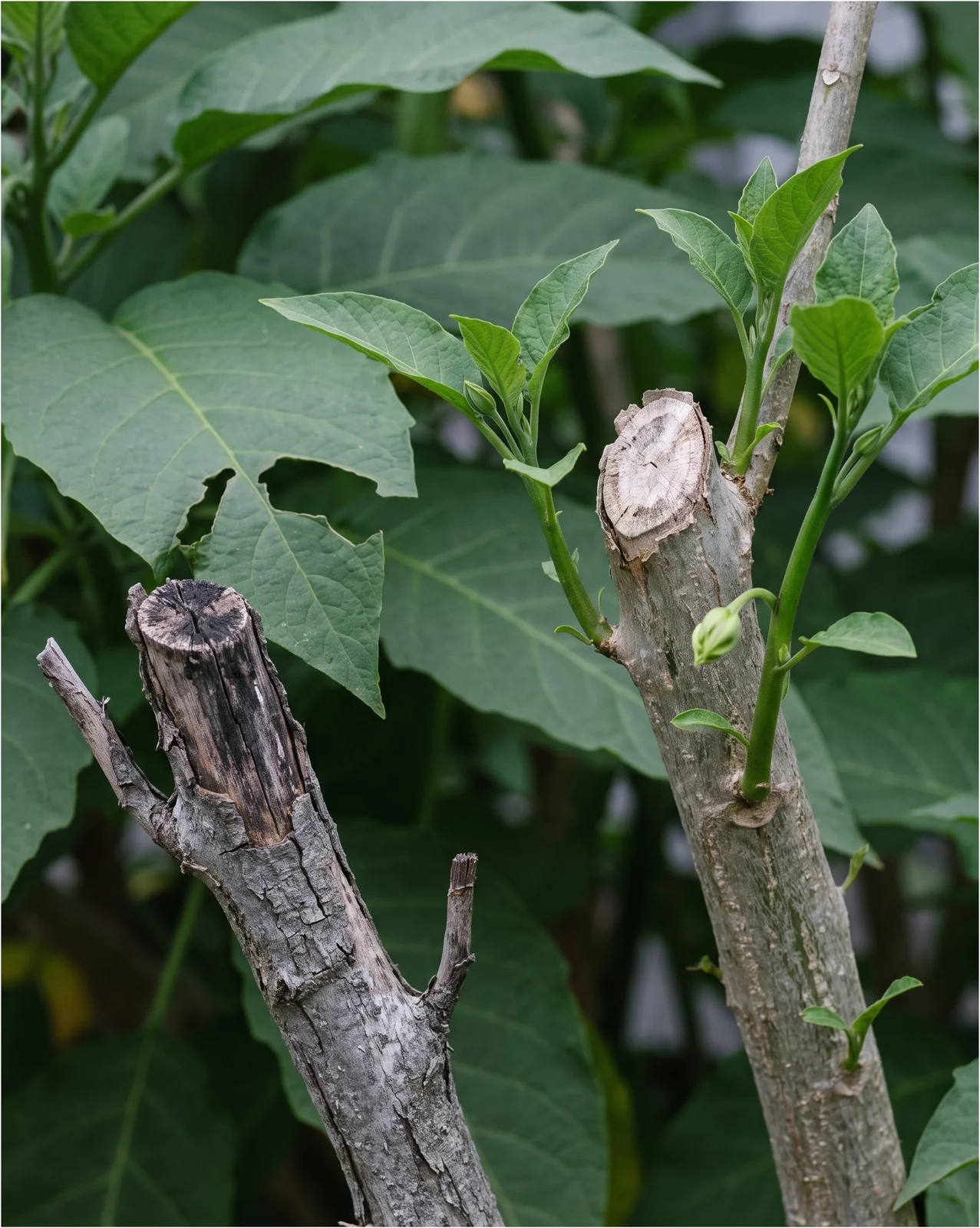
Cut the plant back in autumn when bringing it indoors, and prune hard in spring if it outgrows its container. In fall, trim new growth back to within about 1 inch of the older wood, maintaining a permanent framework of branches. If a plant becomes overgrown or misshapen, it tolerates being cut back hard in late summer and should regenerate well. You can also prune hard when moving it outdoors in spring to shape the plant, limit its size, or encourage bushy growth. Wear gloves when pruning, because the sap can irritate the eyes and sometimes the hands.
What hour the scent arrives, and from which plant
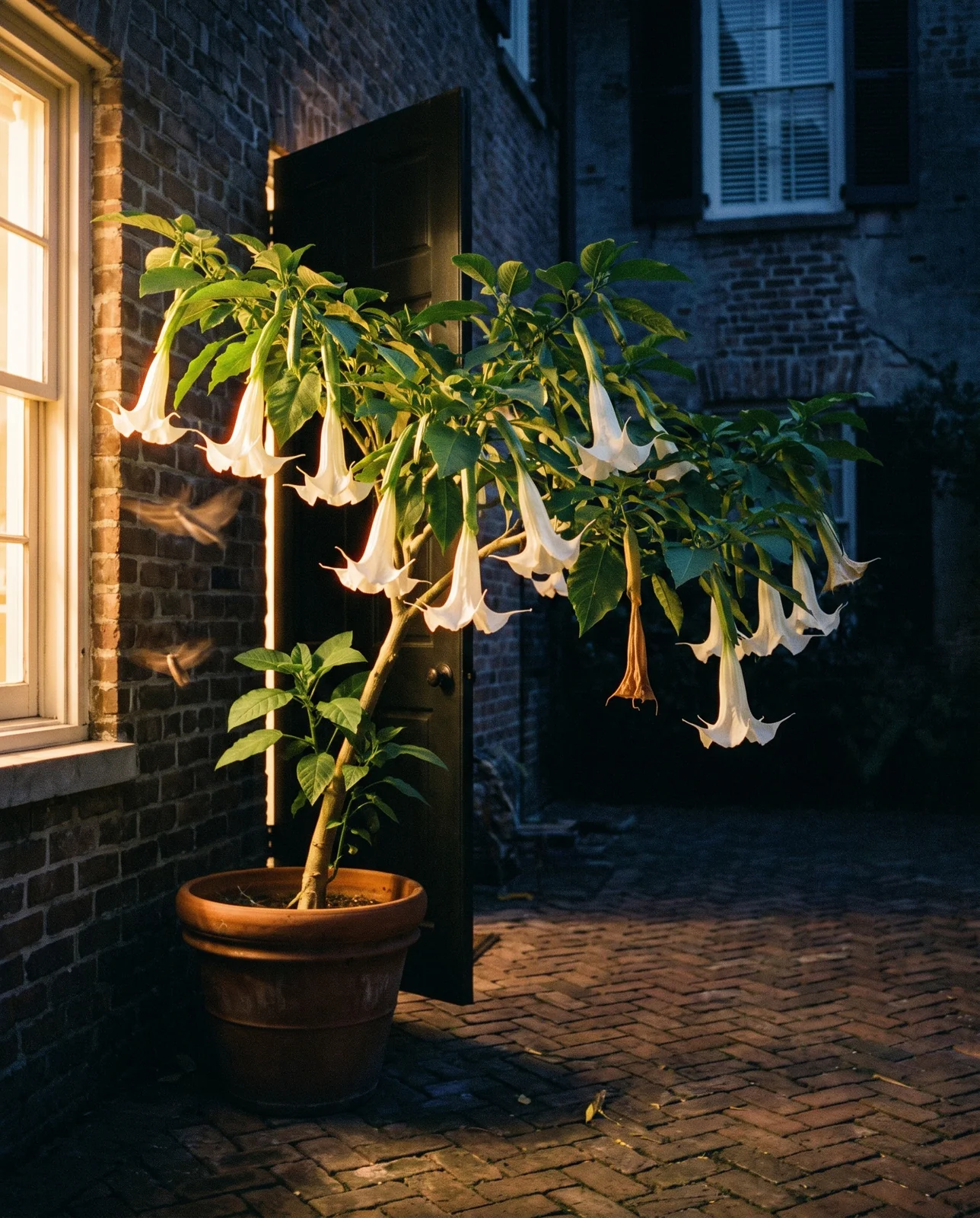
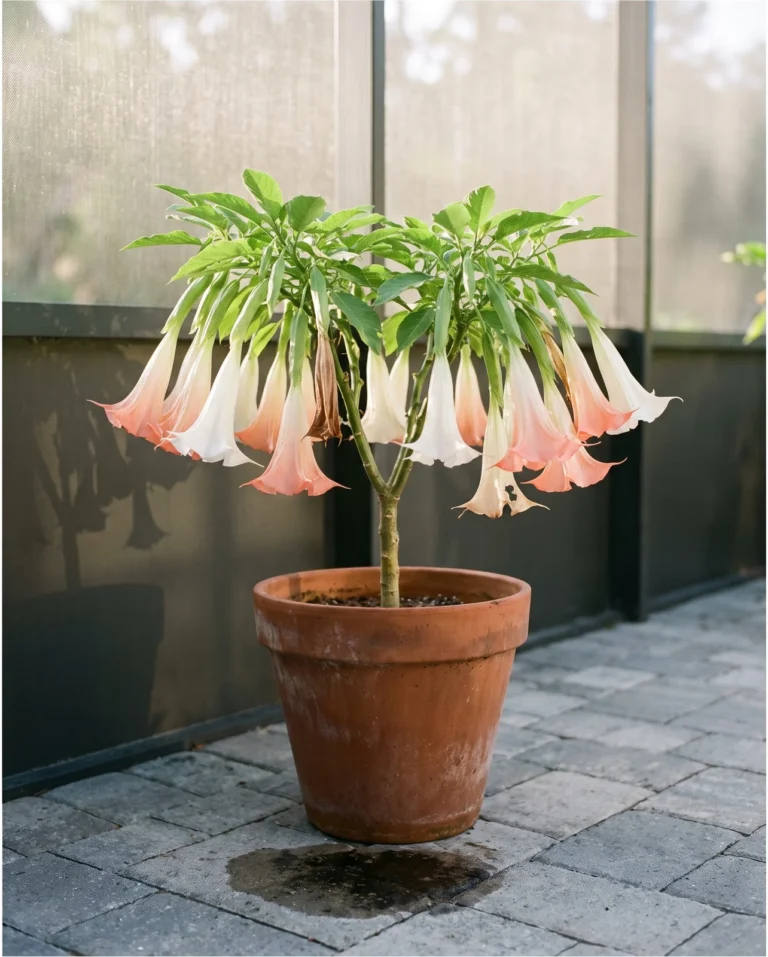
The hour the fragrance arrives depends on which variety you choose. The hybrid 'Charles Grimaldi' is most fragrant in the late afternoon and evening. Night brings out the strongest scent on 'Cypress Gardens', which opens dozens of trumpets at once that shift from white to light salmon. Another fragrant choice is 'Jamaican Yellow', with bright lemon-yellow blooms.
Knowing when the scent peaks helps you place the container. Place a cultivar that is most fragrant in the late afternoon and evening near an outdoor seating area. A plant that peaks at night belongs beneath an open window. Still evening air carries the perfume only so far, so keep the pot close enough to enjoy.
The named hybrids, and what separates them
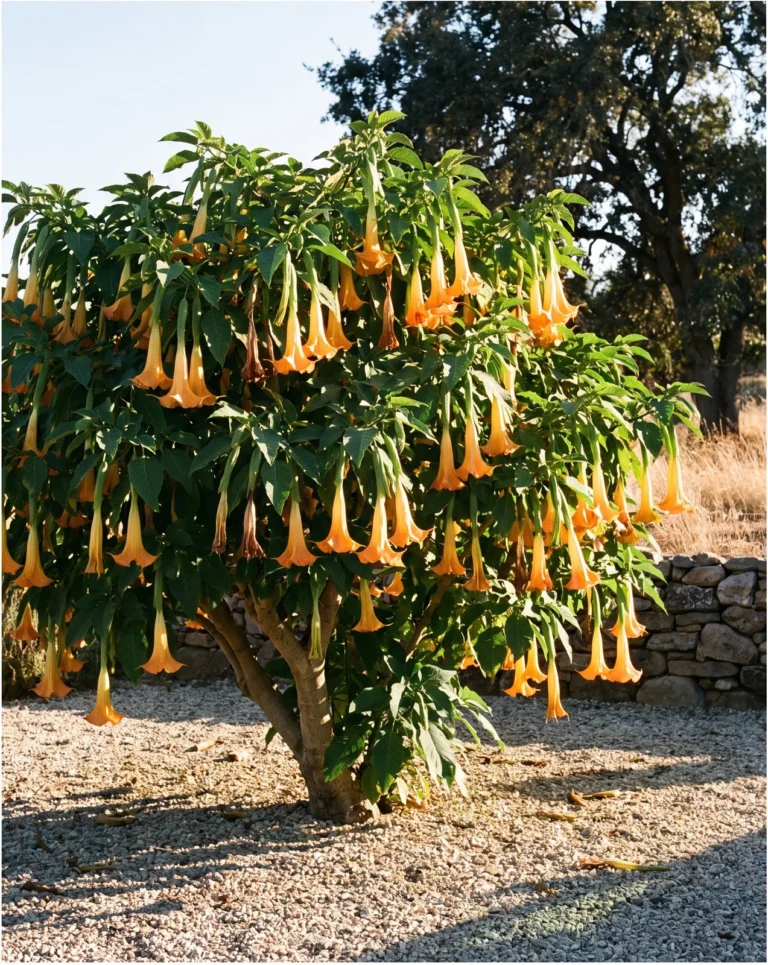
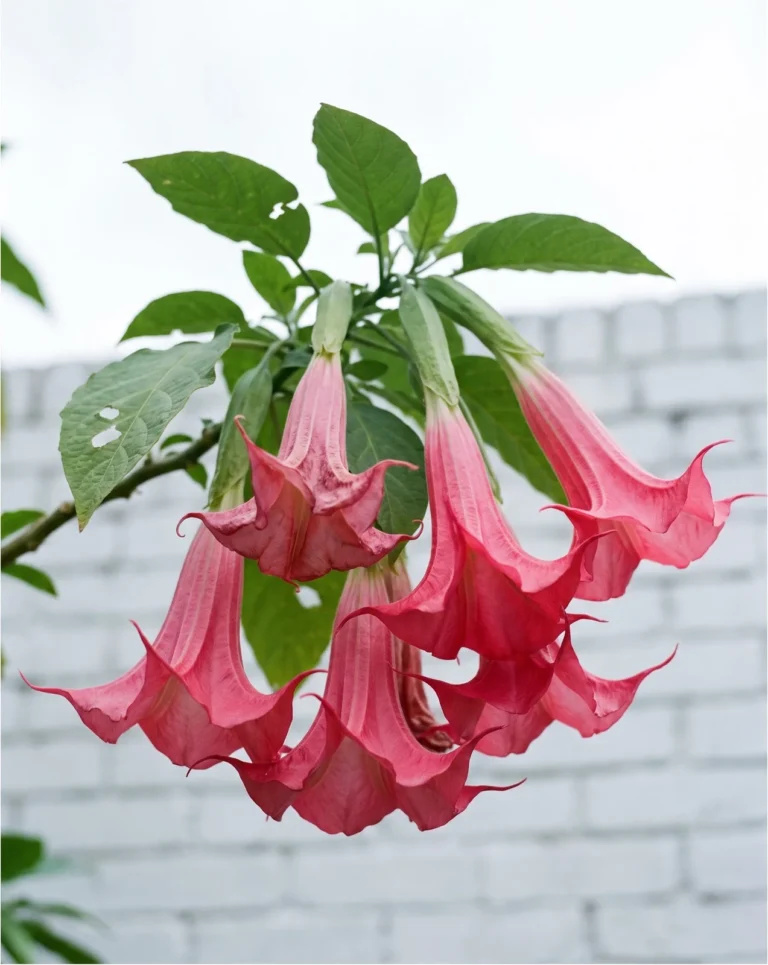
Color is only part of choosing a plant. Mature size and bloom habits vary widely among the named selections. Some flower nearly continuously through the growing season, while others bloom intermittently, opening most abundantly once nights turn cooler.
How much sun it takes
Recommendations range from full sun to partial shade, though some advice warns against full sun altogether. Young plants need shelter from strong midday sun around noon, while mature specimens handle direct sunlight without trouble. Bright light is needed to keep the growth full and bushy. Watch the foliage closely through summer: wilting or paling leaves are your signal to shift the pot into gentler shade.
The soil and the pot it asks for
Angel's trumpet asks for soil rich in organic matter that drains freely while staying evenly moist. That balance matters because the plant drinks heavily yet dislikes standing in soggy soil. A loose, rich potting mix lets a large plant take frequent summer waterings without rotting. Any water trapped at the bottom rots the roots while the surface still looks dry enough for another can.
Making more of it from cuttings
Angel's trumpet roots easily from stem cuttings, producing vigorous young plants with little effort. Semi-hardwood cuttings 6 to 8 inches long root in water, damp sand, or perlite without rooting hormone. Softwood or semi-ripe cuttings 4 to 6 inches long root well in sandy compost with bottom heat. You can also take 4 to 8 inch cuttings from the ends of branches during summer. Seed is the slower path: sow at 60 F in spring, where a heated propagator speeds germination. Any stems you prune away can become cuttings, but wear gloves because the sap can irritate skin.
What turns up on it, outdoors and in
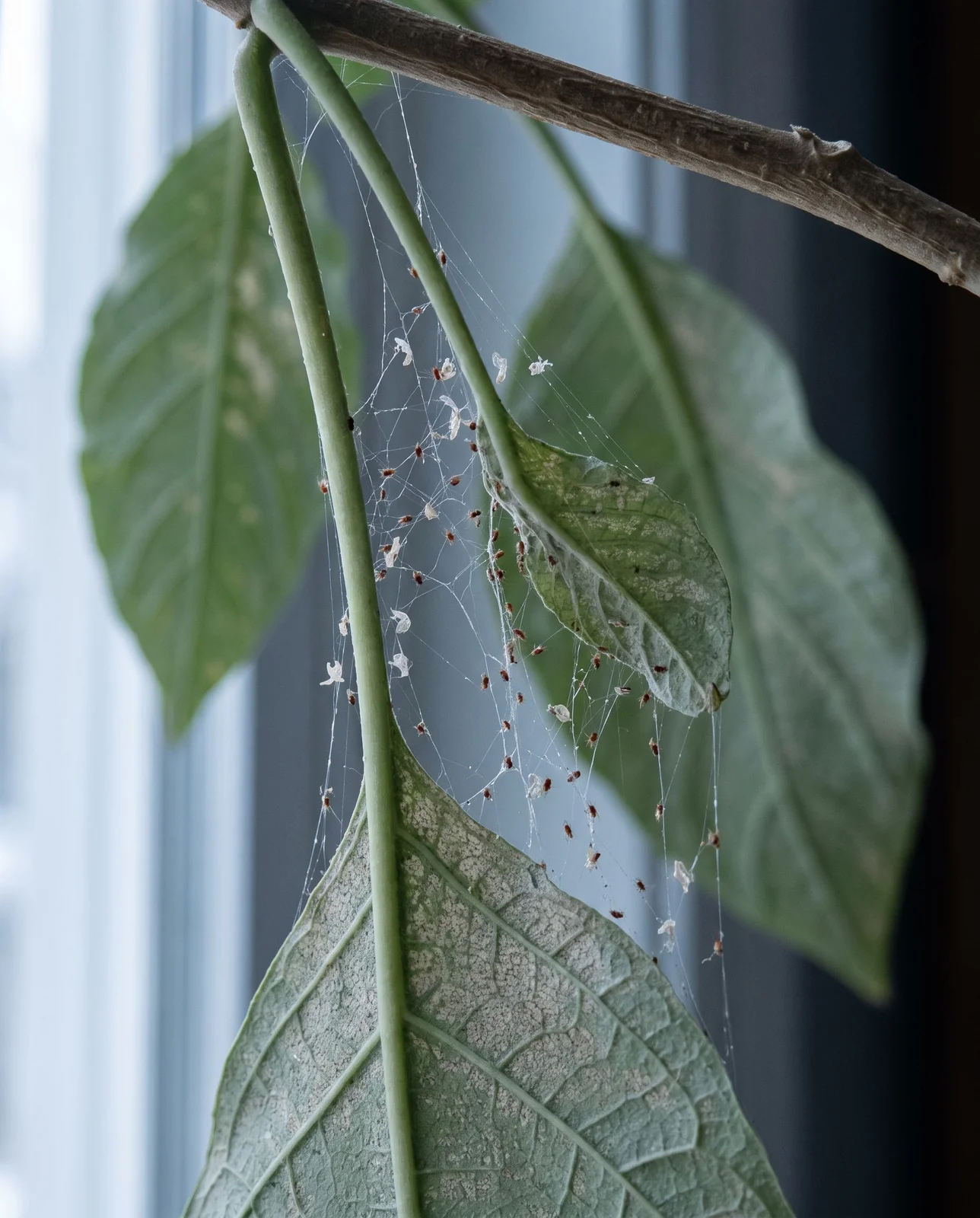
Aphids, mealybugs, whiteflies, and especially spider mites will ravage foliage if left unchecked, but regular sprays of insecticidal soap control them. When you bring a plant inside for winter, caterpillars, spider mites, and whiteflies can continue to cause trouble. Indoor conditions also invite sap feeders like mealybugs, whiteflies, and red spider mites that leave leaves speckled or bleached. Check the undersides of the leaves carefully in autumn before storage, and look again before setting the pot outdoors in spring.
What to expect, season by season
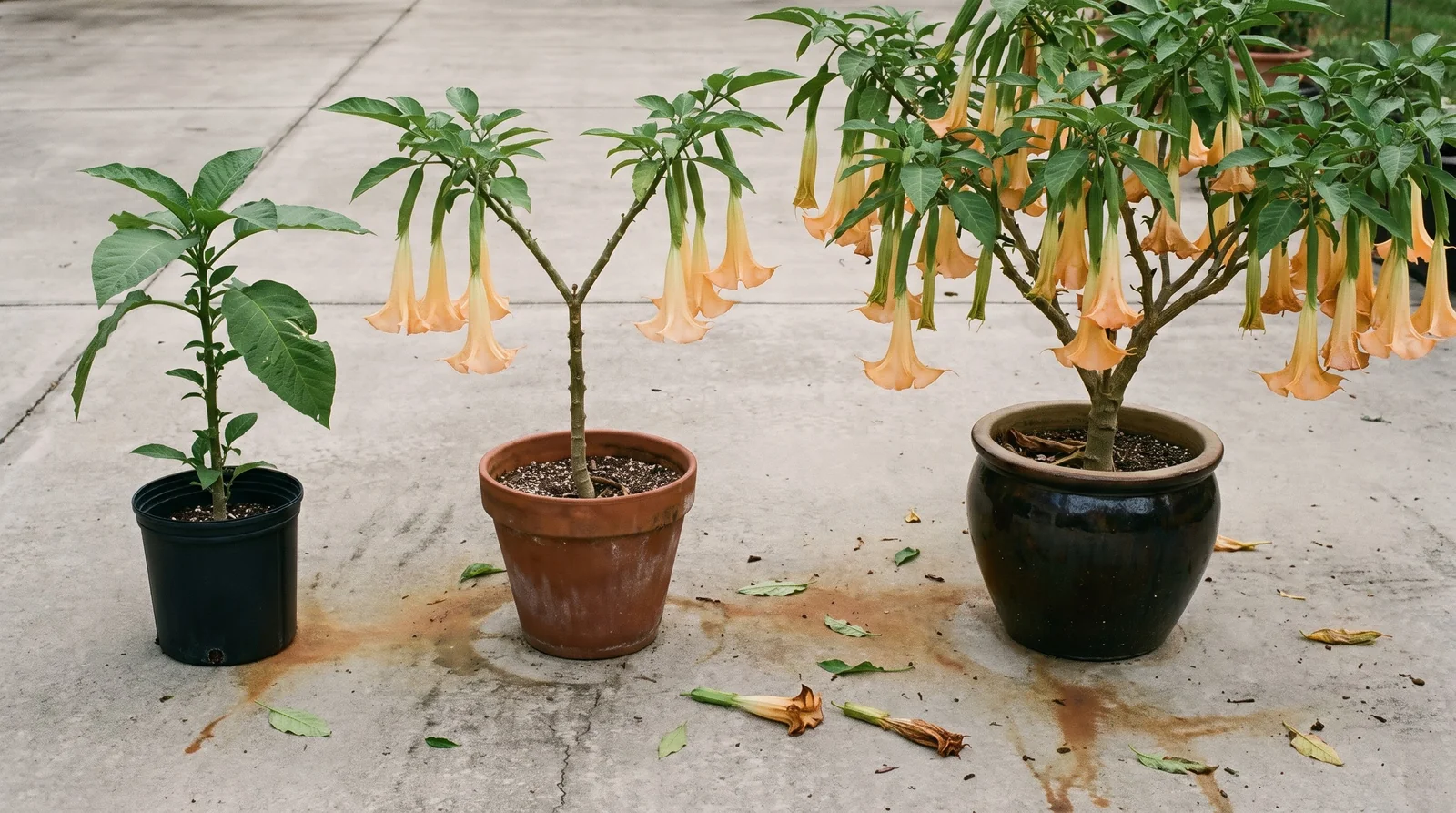
Three seasons cover what a young plant does, and only the first is mostly waiting.
The first summer is all about building height. A young plant grows straight up on a single stalk toward its first main fork at 2.6 to 4.9 feet high, holding off on flowers until after that fork forms. In the heat of summer, a large plant may need water 2 to 3 times a day. It feeds heavily and benefits from fertilizer as often as twice a week through the growing season, producing more flowers the more it is fed. Before the first frost arrives in fall, you can bring the plant indoors.
The fork changes everything in the second season. Once new growth splits into a Y, buds appear right at the crotch of each fork and flowering begins. The plant typically does not bloom well until late summer or early fall, but it can keep flowering right up to frost. After that first display, the blooming habit follows the cultivar: some bloom throughout the growing season, others come in flushes every 6 to 8 weeks, and others flower only in cool weather.
From then on, winter care sets the rhythm. When moving the plant indoors in autumn, prune new growth back to within 1 inch of the older wood to preserve a permanent framework of branches. A dormant plant drops its leaves and some shoots may die back in storage, but it should recover in spring. Once spring arrives, prune off dead stems and give the plant 2 to 4 weeks of gradually brighter light before setting it back outside after frost. Planted in the ground, it behaves as a long-lived perennial in zone 9a and warmer. In North Carolina, it overwinters outdoors most years if you pile leaves or mulch around the base; it dies back to the ground, but usually returns each spring.
Four claims that travel with this plant
Four common claims travel with this plant, from what to call it to how it handles winter.
The myth: The upward facing trumpet at the nursery is the same plant.
The reality: The direction the blooms face tells them apart: devil's trumpet is mainly a bush with flowers pointing upward, while angel's trumpet is mainly a tree with flowers hanging downward. Devil's trumpet flowers face upright and are usually white or purple, on a plant that rarely grows taller than about 4 feet. Angel's trumpet typically grows as a small tree or large shrub, carrying large hanging flowers in white, pink, yellow or apricot.
The myth: It is only dangerous if you eat it.
The reality: Eating any part of the plant is dangerous, but handling it calls for care as well. Whether sap irritates bare skin is unsettled: NC State finds no contact dermatitis, with risk only from eating or inhaling flowers, while the RHS treats sap as an irritant. Keep it away from your eyes in any case, because sap in the eye may cause dilated pupils and temporary blindness.
The myth: Yellow leaves mean it needs water.
The reality: Discolored and dropping leaves usually point to overwatering, waterlogged soil, or a lack of nutrients, so cut back on watering and check that the pot drains well. Leaf drop can also be part of a normal bloom cycle. A plant can stay lush and green for about three weeks, then drop its leaves as it puts its energy into flowers.
The myth: A leafless plant in winter storage has died.
The reality: A dormant plant drops its leaves and some shoots may die back, but it should recover in spring. It can overwinter in that bare state by relying on its thick, succulent stems. Kept in a cellar for over a month with no artificial light, a plant can lose most of its leaves and still open an unexpected large flower. That happens because flower buds develop well in advance, carrying enough momentum to keep going after the plant goes into storage.
FAQ
Is angel's trumpet safe to touch?
Wear gloves whenever you touch or prune the plant, because the sap can irritate skin and eyes. Whether it causes contact dermatitis is unsettled, and the poison may act only if swallowed or if the flowers are inhaled.
What is the difference between devil's trumpet and angel's trumpet?
The quickest tell is flower direction. Devil's trumpet grows mainly as a bush with upward-facing flowers, while angel's trumpet forms a tree with blooms that hang down. Angel's trumpet is also woody, while devil's trumpet is soft-stemmed and rarely lives past 3 to 4 years.
Where is the best place to plant an angel trumpet?
Plant it where you can catch the evening scent, but keep it safely out of reach of children and pets. Young plants need shelter from the strongest sun around noon, while larger ones handle direct sunlight well.
Why are the leaves on my angel's trumpet turning yellow?
Yellow leaves usually point to overwatering or waterlogged soil, so reduce watering and improve drainage. A fertilizer shortage can also yellow the foliage on this heavy feeder, though a deficiency typically affects all the leaves, so a single yellow patch points elsewhere.
How do you get an angel trumpet to bloom?
First check whether the stem has forked, because the plant will not bloom until it reaches its first main fork. After it branches, feed weekly from late spring onward with a high-potassium fertilizer and water copiously through the growing season.
Will angel trumpets come back every year?
Yes, where winters stay mild. In zone 9a and warmer, it behaves as a long-lived perennial. In North Carolina, it dies back to the ground under a mound of leaves or mulch and usually returns each spring. In colder climates, keep it above 45 to 50 F by bringing the pot indoors for winter.
When can you plant angel trumpets outside?
Move angel's trumpet outdoors once night temperatures stay reliably above 45 to 50 F. An overwintered plant needs 2 to 4 weeks to adjust to brighter light before going outside after the last frost.
What is the ideal growing zone for angel's trumpet?
Hardiness depends on the selection. It ranges from zone 9a and warmer, to zones 8 to 10 for Brugmansia suaveolens, down to zones 7b to 10b for hardier selections.
Is angel's trumpet poisonous to dogs and cats?
Yes. All parts of the plant are poisonous and contain tropane alkaloids. Keep it safely out of reach of pets and children, and call a veterinarian right away if an animal chews any part of it.
How big does angel's trumpet get in a pot?
In containers, it grows 6 to 15 feet tall, compared to up to 35 feet in the ground. Size the container to the canopy, giving a plant 2 to 3 feet wide or 3 to 4 feet tall a 12-inch pot kept well watered.
Interesting tips
- If your plant stays in the ground, leave the old stalks through fall. Clear them away in spring before new growth appears, because the plant needs those old stems and leaves for winter protection.
- Where winters are too cold to leave the plant outdoors, cut some canes in fall and store them over winter in a bucket of moist peat moss kept above freezing.
- When rooting cuttings in water, change the water every day or two and keep the level consistent.
Related Guides & Flowers
Datura metel
Horn of plenty, one of the upward facing daturas that share the trumpet shape and half the common names.
Jasmine
The other evening scented plant people grow for the hour after dark.
Flowers toxic to cats
The list to check before a new plant goes anywhere a cat can reach it.

Types of flowers
The full index, for anyone still deciding what to put on the terrace.
Enjoying our flower guides? Add YourFlowersGuide as a preferred source on Google. It helps more readers find us.
Add to Preferred Sources