The pairing · pick a flower
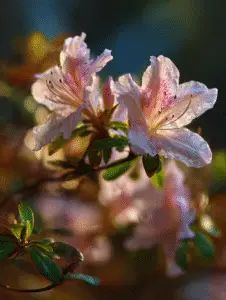 Azalea+
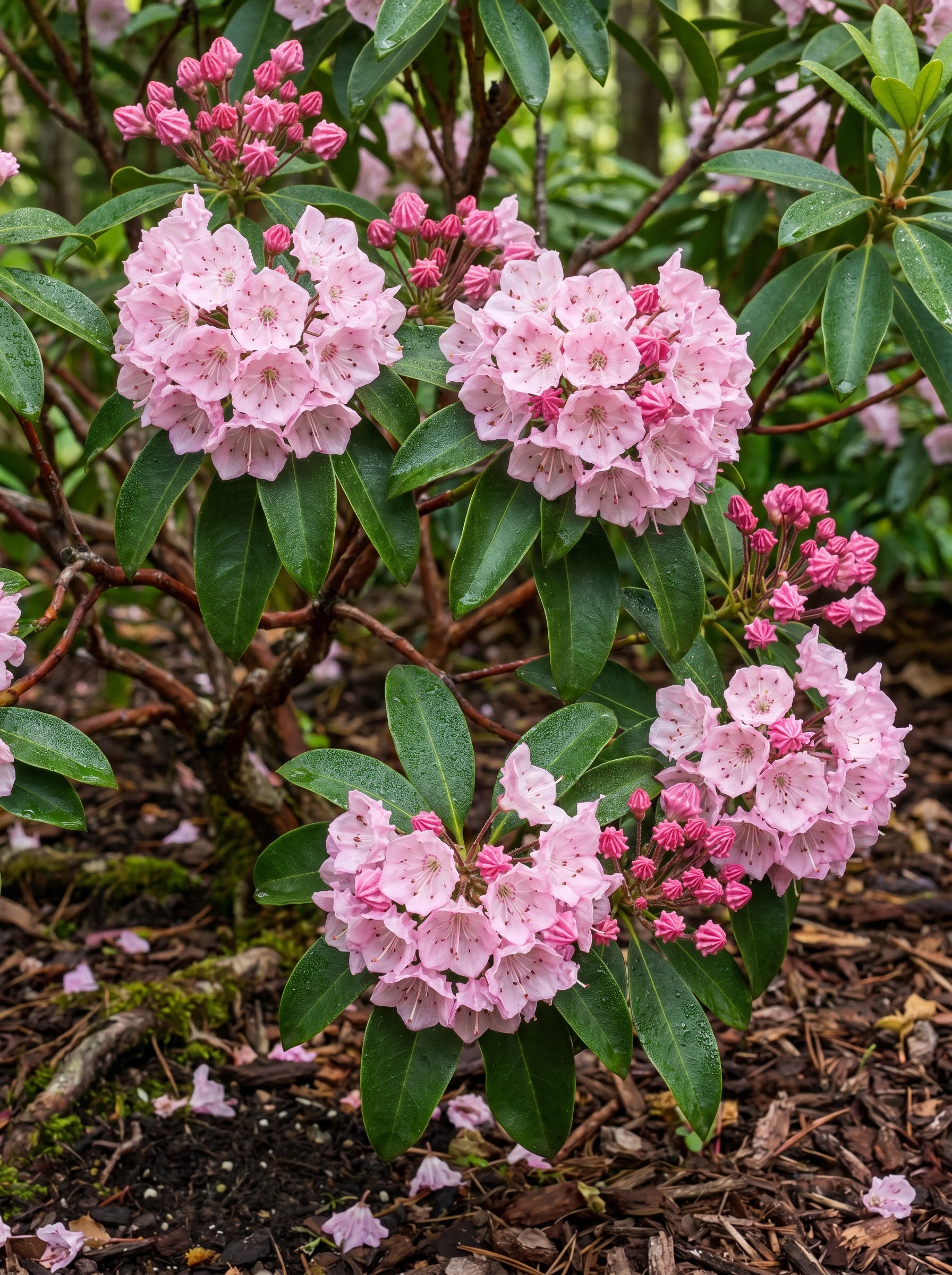 Mountain laurelProven
Singled out in the rhododendron literature as a shrub every garden should have, sharing the exact same acidic, moist, part-shade requirements as azalea down to the pH.
Azalea+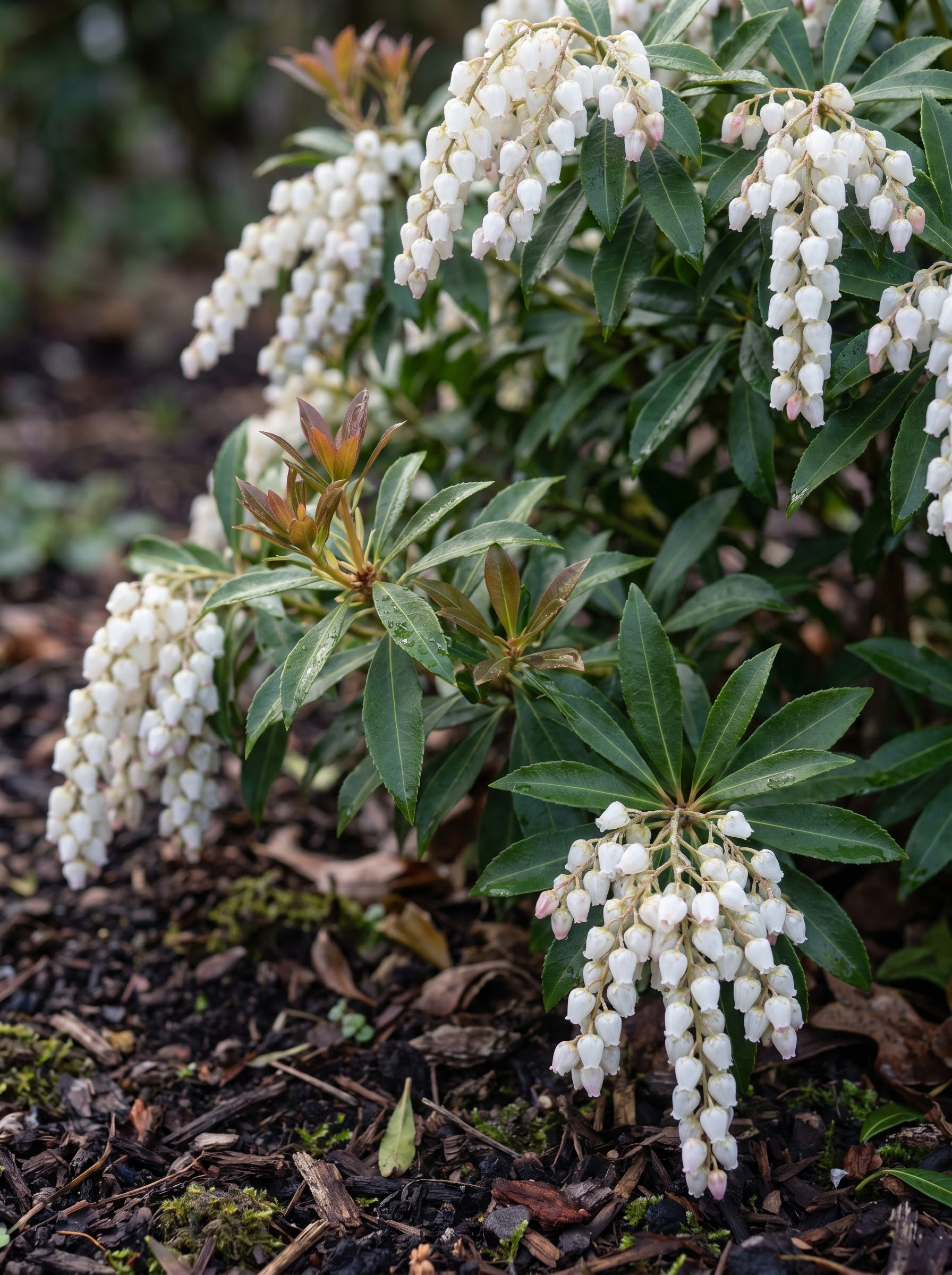 PierisProven
Also singled out in the same source as a shrub every garden should have, an evergreen Ericaceae relative that opens waxy, lily-of-the-valley-like blooms before azalea wakes up, bridging the pre-bloom gap.
Azalea+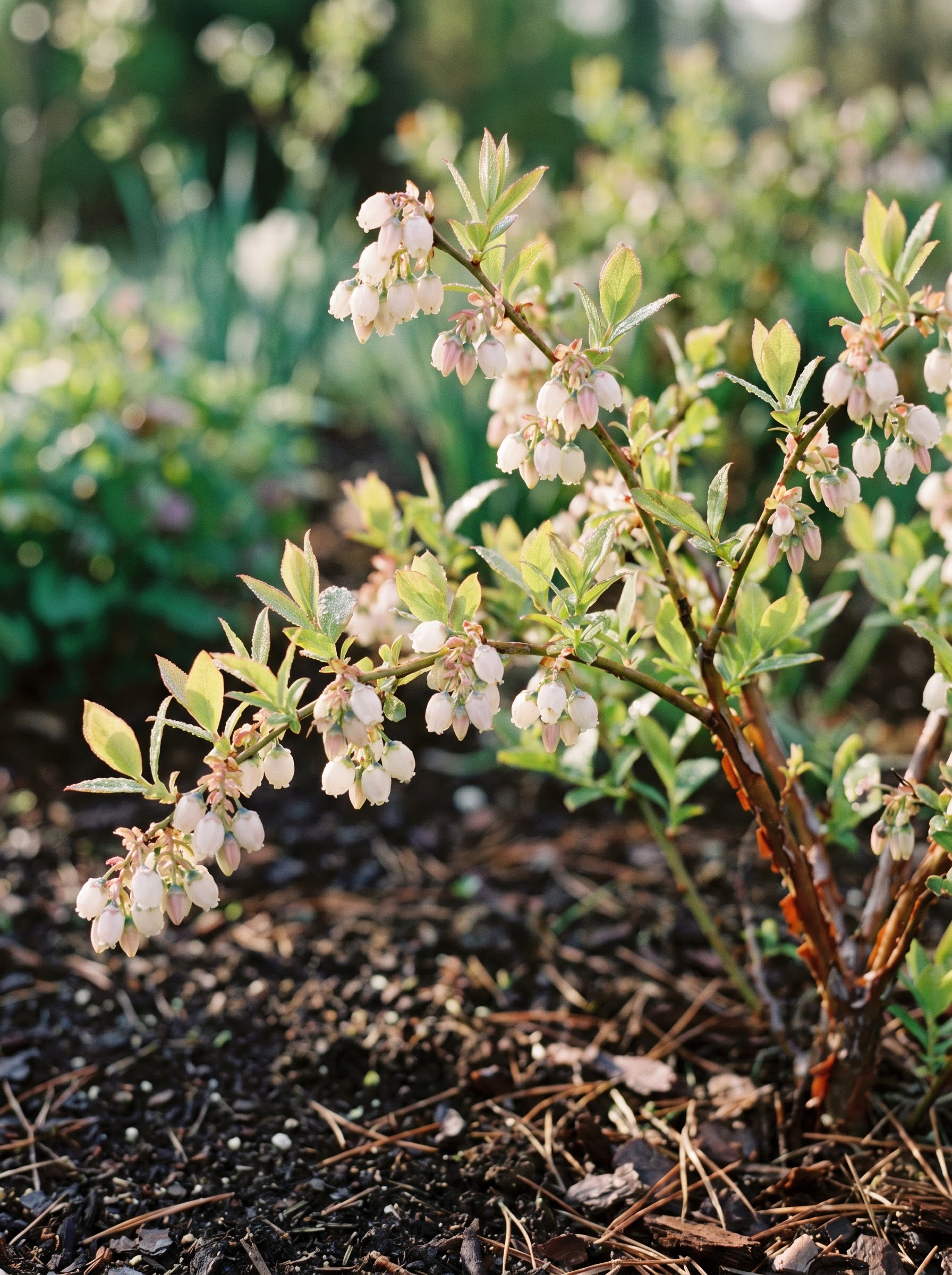 BlueberryProven
Same plant family as azalea and named independently across multiple sources for needing the identical acidic soil, with the rare bonus of an edible harvest and strong scarlet fall foliage most azalea companions lack.
Azalea+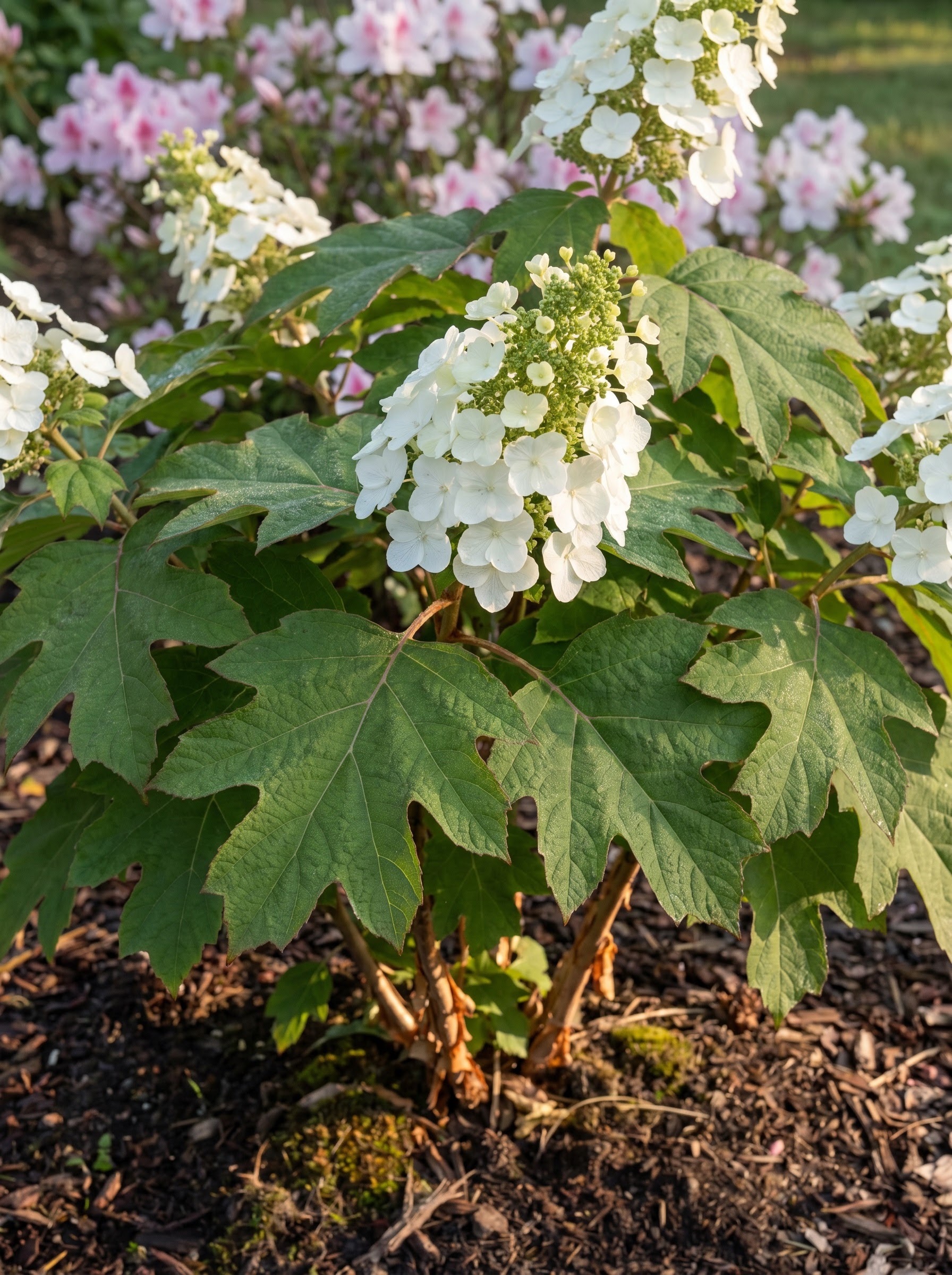 Oakleaf hydrangeaPartial
Tolerates the moist, organically rich, part-shade to full-sun bed azalea needs, though unlike true Ericaceae relatives it does not require acid soil specifically, then blooms in summer, well after azalea fades, so the border never goes flat.
Azalea+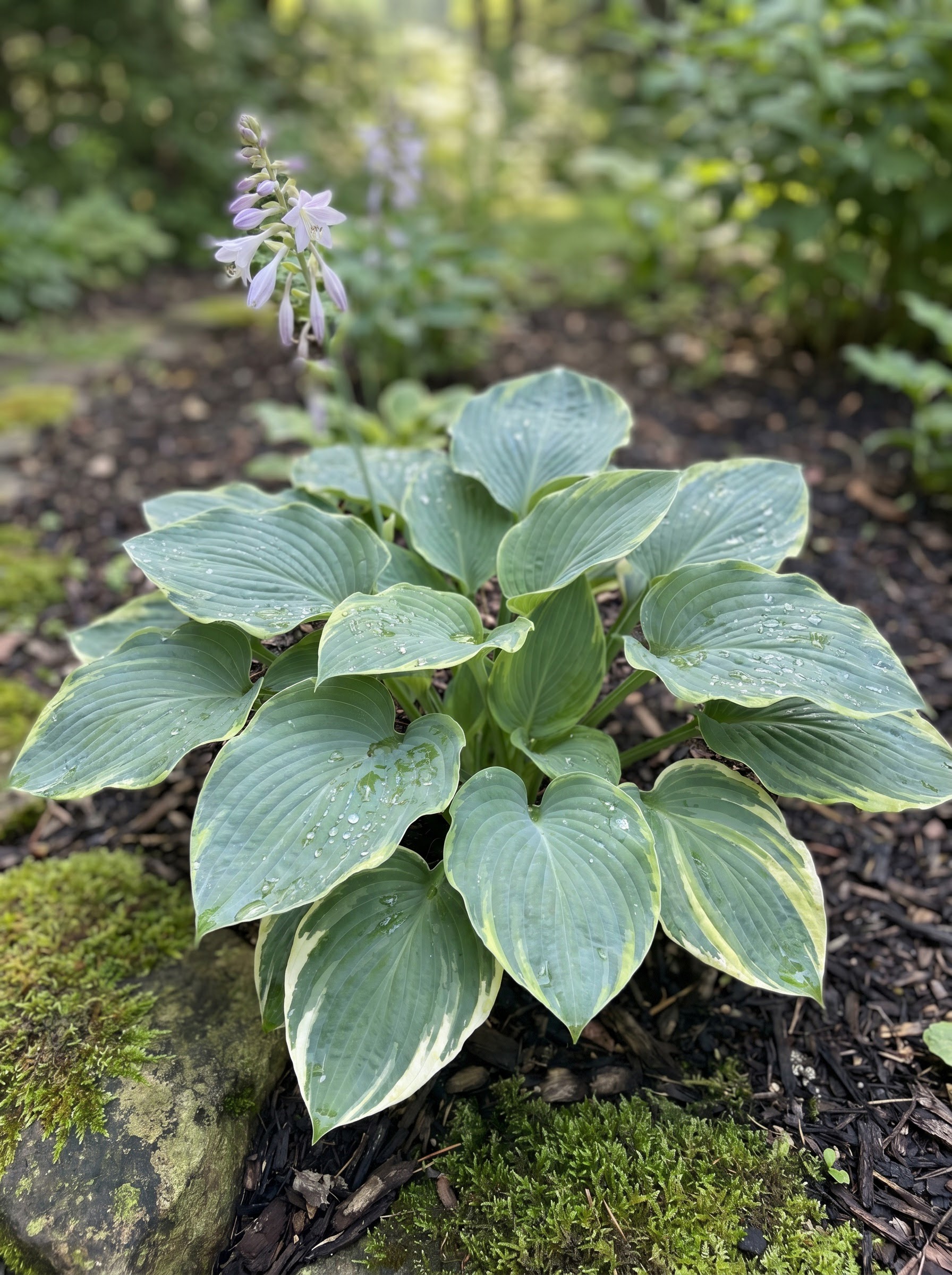 HostaProven
Thrives in the same rich, slightly acidic, consistently moist shade azalea needs, and its large ribbed leaves are the strongest textural foil to azalea's small glossy foliage.
Azalea+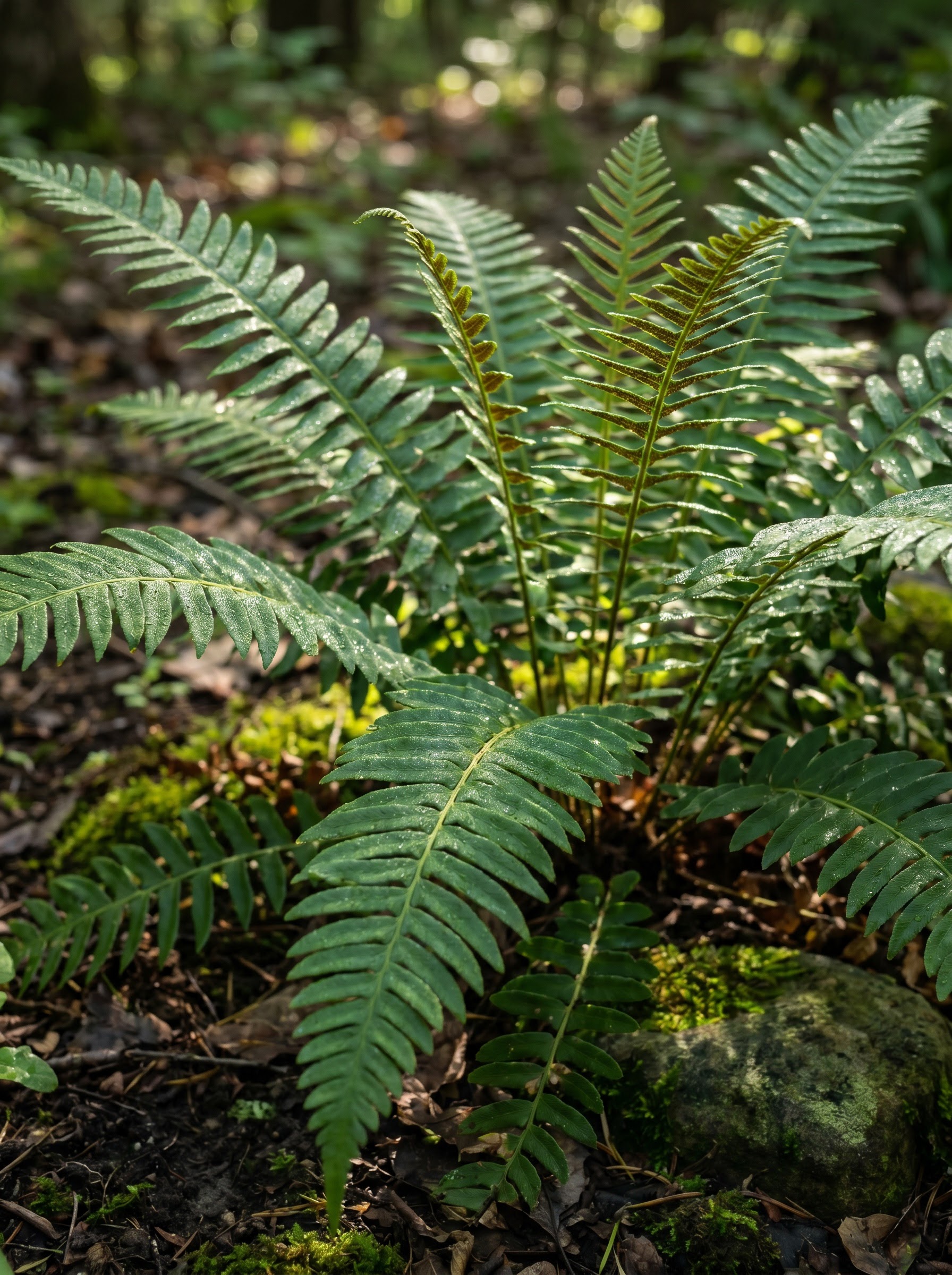 Christmas fernProven
An evergreen native fern that stays green through winter, filling the bare-ground gap under deciduous azalea types, with fine fronds that are the clearest textural contrast to azalea's dense mounded foliage.
Azalea+ CamelliaPartial
Evergreen, acid-loving and shade-tolerant, its dark glossy foliage is already used on this site as a structural backdrop planted slightly further back from azalea, and blooms fall through early spring when azalea is bare.
Azalea+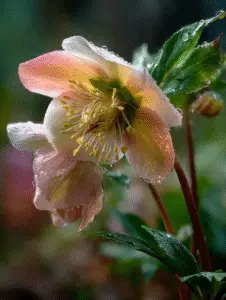 HelleborePartial
Shares the same moist, humus-rich, part-shade bed and blooms in late winter, before azalea leafs out or flowers, already used this exact way on this site's own azalea design content to bridge the gap before the spring show. One caveat: hellebore actually prefers neutral to slightly alkaline soil, so it tolerates azalea's acidic bed rather than needing it, which is why this pairing is a shade-and-moisture match, not a full soil-chemistry match.
Azalea+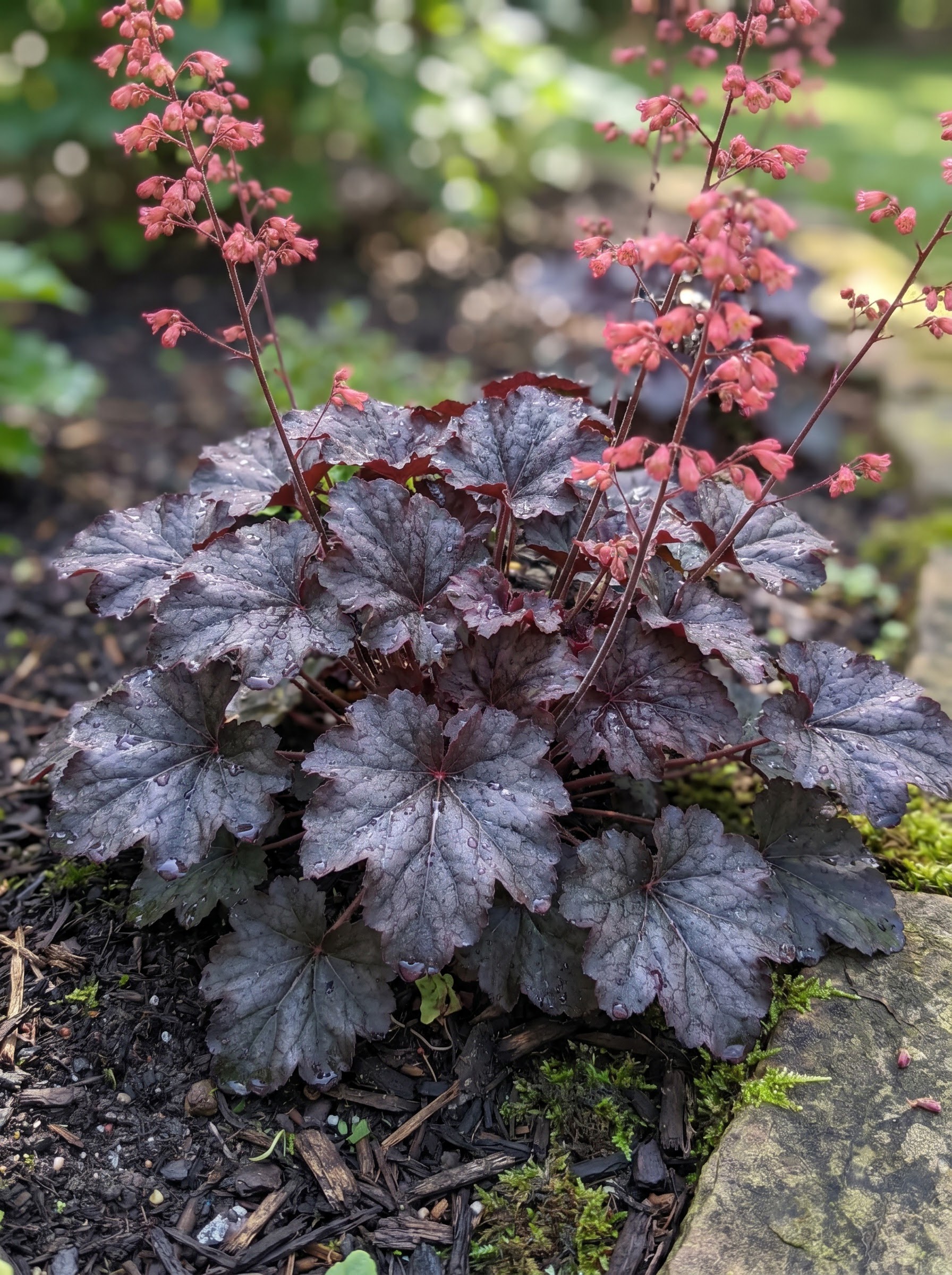 HeucheraPartial
Tolerates the same acidic-to-neutral, part-shade soil as azalea and its dark or caramel foliage is a deliberate color echo against pink, red or white blooms, though it is more sun- and drought-flexible than the core acid-loving cluster.
Azalea+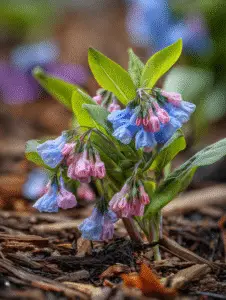 Virginia bluebellsPartial
A spring ephemeral that prefers the same part-to-full shade and moist, rich soil as azalea, already used on this site's own azalea design content to underplant the bare, architectural stems of deciduous azalea types, blooming and fading around the same window as the shrub's early flush.
Azalea+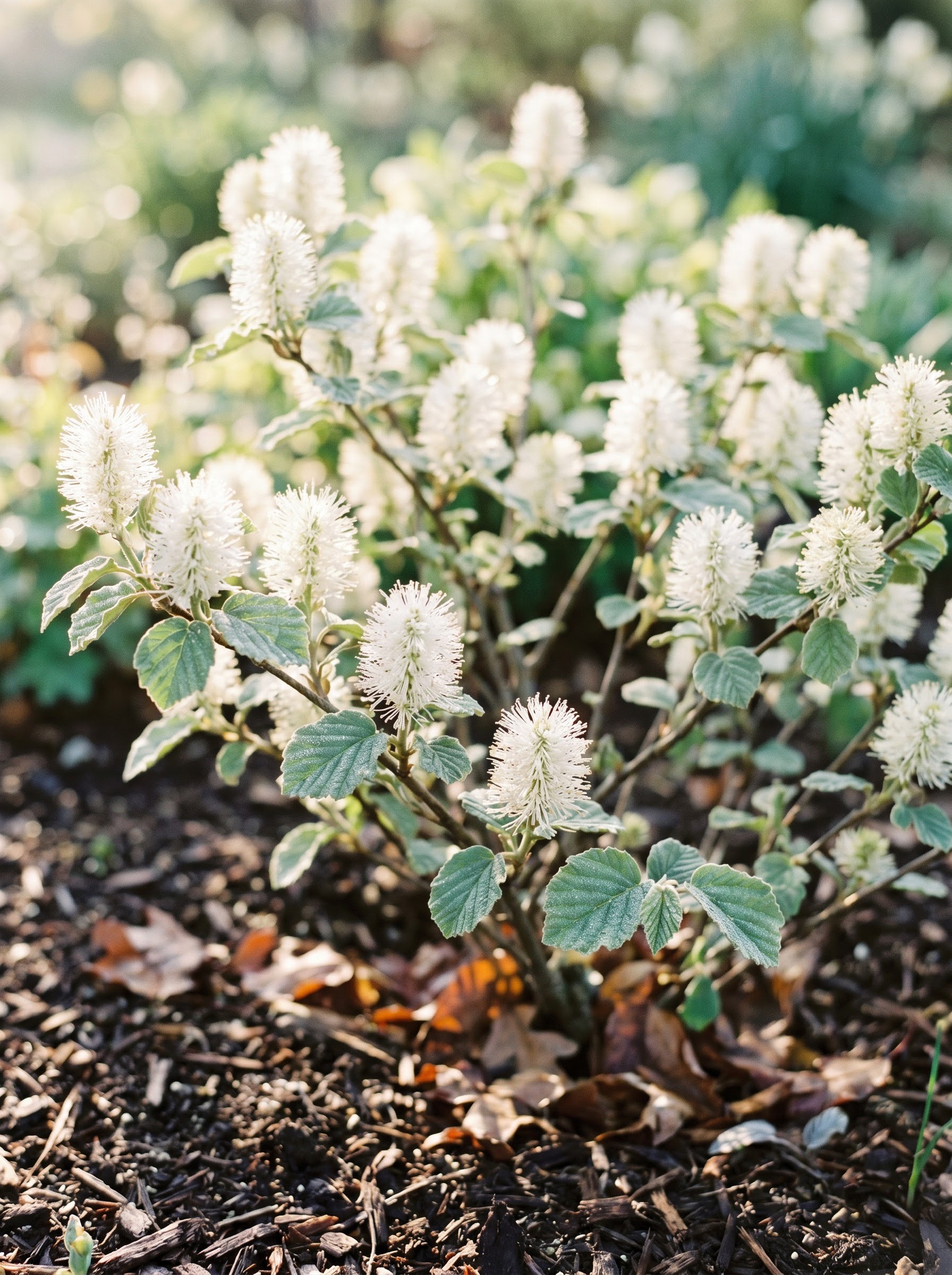 Japanese fothergillaProven
Named by its own university extension profile as a great flowering shrub with rhododendrons and azaleas, sharing the same moist, slightly acid, organically rich soil and full sun to partial shade, offering honey-scented bottlebrush flowers and strong fall color as a genuine alternative pick.
All azaleas companions
11 flower companions, best match first
What not to plant near azaleas
Most bad neighbours are not evil, they just want the opposite light, water or root run. Here is what to keep away, and what to do instead.
Lavender
A double mismatch, not just one: lavender wants neutral to alkaline, sharply drained soil on the dry side and full sun, the near-exact opposite of azalea's acidic, consistently moist, part-shade bed, so one plant is always fighting its own nature.
Goldenrod
Goldenrod actually tolerates acidic soil fine, so pH is not the real conflict here; the mismatch is light and moisture, since goldenrod wants full sun and dry-to-medium, well-drained soil, close to the opposite of azalea's part shade and consistent moisture.
Boxwood, interplanted directly among azaleas
Boxwood forms a dense mat of fine roots in the top few inches of soil and prefers neutral to alkaline conditions, so tucked into the same amended, acidic bed it competes directly with azalea's shallow roots for water and nutrients. As a distant structural hedge at the bed's edge, in its own soil, this conflict does not apply.
Roses
Roses prefer soil in the 6.0 to 7.0 range, well above azalea's 5.0 to 5.5 target, which forces a constant two-directions amendment fight in a shared bed, and both are heavy feeders drawing on the same nutrients from that soil.
Bluebeard (Caryopteris)
A full-sun, well-drained-soil shrub that does not tolerate wet or shaded ground, essentially the same profile as lavender in a different plant, so it fights azalea's shade and moisture on two fronts at once.
Japanese barberry
An aggressive spreader that roots wherever its arching branches touch the ground, forming dense thickets that compete directly with azalea's shallow root zone; it is also regulated or restricted for sale in a number of US states independent of this pairing question.
Peony
Listicles disagree on this one. Peony wants 6 to 8 hours of full sun and neutral-to-slightly-alkaline soil with a deep, extensive root system, closer to azalea's opposite than its match, even though a few sources list the two as a bloom-timing pair on looks alone rather than a genuine conditions check.
Shallow-rooted shade trees (maple, ash, elm)
This is a siting mistake more than a flower-to-flower pairing, since azalea is so often planted precisely for the shade these trees cast. Their feeder roots move quickly into the amended, improved soil of an azalea bed and compete directly for water and nutrients; deep-rooted overstory trees like most oaks and pine are explicitly fine and even recommended as high canopy.
The best companions for azaleas, explained
Azalea sets stricter terms than most flowering shrubs on this site: strongly acidic soil, part shade, and moisture that never swings to bone dry or waterlogged. The companions that actually work are the ones built for that exact bed, not the ones chosen because they photograph well next to a mass of pink or red bloom. Mountain laurel and Pieris are close to the ideal partners for this reason, each singled out in the rhododendron literature as a shrub every garden should have, because they share the identical acidic, moist, part-shade profile down to the soil pH, and both are broadleaf evergreens that carry structure through the months azalea is bare. Pieris goes further by blooming in late winter, its waxy white clusters opening before azalea even leafs out, while mountain laurel picks up the color in late spring just as azalea’s own show fades, stretching a two to three week burst into a much longer season.
Blueberry rounds out the strongest tier for a related reason: it is azalea’s own plant-family relative, sharing its acid-soil requirement exactly, and it adds something azalea cannot supply on its own, an edible harvest and sharp scarlet fall color. Oakleaf hydrangea earns its place a step below that top tier, tolerating azalea’s moist, organically rich, part-shade bed without needing the same acid soil specifically, and bringing large white summer blooms that pick up right where azalea leaves off, plus its own strong fall foliage. Hosta and Christmas fern do the underplanting work at ground level, both tolerating the same moist, shaded bed while giving azalea’s dense, small-leaved foliage the textural contrast it badly needs, hosta with big ribbed leaves in rich, slightly acidic soil and Christmas fern with fine evergreen fronds that stay green through winter when deciduous azalea types go bare. Camellia and hellebore earn a place too, both already used this exact way in this site’s own azalea garden-design content: camellia as a dark, glossy backdrop planted slightly further back, hellebore colonized around the base to bridge the color gap before azalea’s spring show even starts, though hellebore actually prefers neutral to slightly alkaline soil itself, so this one is a shade-and-moisture match more than a soil-chemistry match. Heuchera, Virginia bluebells, and Japanese fothergilla round out a genuinely credible second tier, each sharing the shade-and-soil profile with one honest caveat apiece, worth reading in the shared-conditions section below rather than treated as automatic yeses.
What not to plant near azaleas
Azalea’s avoid list is unusually rich compared to most flowers on this site, and the reason is specific: there is no meaningful toxicity or allelopathy case here, the way there is for black walnut against roses or hydrangea. Every genuine avoid on this page comes down to conditions mismatch and competition, not chemical harm, which makes the mechanism easy to check rather than take on faith. Lavender is the single most repeated avoid pairing across sources, and it earns that reputation honestly: it wants neutral to alkaline, sharply drained soil on the dry side in full sun, close to the exact opposite of azalea’s acidic, consistently moist, part-shade bed, so planting them together means one is always being fought against its nature. Goldenrod is a more surprising case worth getting right: it actually tolerates acidic soil fine, so pH is not the real conflict, the mismatch is light and moisture, since goldenrod wants full sun and dry-to-medium soil, working against the part shade and steady moisture azalea’s roots depend on. Bluebeard, or caryopteris, shares lavender’s mechanism in a different plant: full sun and well-drained soil that will not tolerate wet or shaded ground, fighting azalea on both fronts at once.
Boxwood deserves a more careful answer than a flat no. Its own dense mat of fine roots spreads through the top 15 inches of soil and it prefers neutral to slightly alkaline conditions, so tucked directly among azaleas in the same amended, acidic bed it competes hard for water and nutrients, a real conflict backed by extension guidance on the plant’s root habit and soil preference. As a distant structural hedge at the edge of the property, in its own separate soil, that conflict simply does not apply, which is why this page treats boxwood as an avoid for direct interplanting rather than a blanket ban on having it anywhere near the yard. Roses carry a similar, more surprising mechanism worth naming specifically: beyond the pH-management fight of keeping one bed acidic and another closer to neutral, both are heavy feeders drawing on the same nutrients, and roses commonly host aphids and Japanese beetles that can spread to nearby azaleas once established. Japanese barberry roots wherever its arching branches touch the ground, spreading aggressively enough to compete for the same shallow root zone, with the added note that it is regulated or restricted for sale in a number of US states for reasons entirely separate from this pairing. Peonies are the genuine contradiction on this page: some sources list them as a companion purely for bloom-timing overlap, while their actual culture, 6 to 8 hours of full sun, neutral-to-slightly-alkaline soil, and an extensive root system, sides clearly with treating them as an avoid or at best a distant pairing, not a shared-conditions match. And one avoid here is about siting rather than a specific flower at all: shallow-rooted shade trees like maple, ash, and elm send feeder roots straight into an azalea bed’s improved soil, competing for water and nutrients, while deep-rooted overstory trees like most oaks and pine are explicitly fine as high canopy, the exact structure most azalea beds are planted under in the first place.
Do they like the same conditions?
The rule that filters this entire list is soil chemistry, tested against every candidate before shade or moisture even enters the conversation. Azalea needs roughly pH 5.0 to 5.5, distinctly acidic, and this is where azalea’s honesty angle runs the opposite direction from its cousin hydrangea. For hydrangea, acid soil is mostly a color trick, steering flowers blue or pink without threatening the plant’s health either way. For azalea, acidic soil is a hard physiological requirement: in neutral to alkaline ground the roots cannot take up iron properly, and the plant becomes visibly chlorotic, yellow leaves with green veins, slowly starving even while otherwise well cared for. That is exactly why azalea’s classic companion cluster, rhododendron relatives like mountain laurel and Pieris, blueberry, camellia, hosta, and fern, reads as such a tight, repeatable list across sources. They are not picked primarily for how they look together. They are picked because almost nothing else survives in the same deliberately amended, acidic soil. Oakleaf hydrangea earns its place on the list a different way, through shared shade and moisture rather than a shared acid requirement, which is worth knowing rather than assuming every companion here needs the same pH azalea does.
Light and water both matter, but neither is quite as unforgiving as the pH. Part shade, filtered light under high canopy or morning sun with afternoon shade, is the sweet spot; dense full shade thins the bloom, while hot full sun bleaches flower color and stresses the plant, which is why heat-tolerant Encore-type cultivars soften but do not erase this rule. Water needs to stay consistent without ever sitting wet, since azalea’s fine roots rot quickly in poor drainage, a detail that makes drainage matter just as much here as moisture itself, unlike many companion flowers where drainage is a secondary concern. This is also where the boxwood question resolves cleanly: boxwood is a perfectly reasonable evergreen hedge in its own right, but its neutral-to-alkaline preference and shallow, competitive root mat put it in direct conflict with azalea’s amended acidic bed the moment the two share soil, which is a real, sourced mechanism rather than a vague nutrient-competition claim copied from one listicle to the next.
How to plant them together
Give the tightest matches, mountain laurel, Pieris, blueberry, and oakleaf hydrangea, their own mulched footprint 3 to 6 feet from the azalea’s base depending on their mature size, rather than tilling one shared soil pocket for the whole bed. All of them want the identical acidic amendment azalea does, so there is no chemistry fight here, only room to grow into their eventual size without crowding the shrub’s own shallow, easily damaged roots. Hosta and Christmas fern belong at the front edge and directly under the lower canes, 10 to 24 inches out depending on cultivar, exactly where azalea’s foliage needs the textural break and where their own light, fibrous roots barely compete for water or space. Camellia and hellebore work as a seasonal bracket: camellia planted 4 to 6 feet back as a dark evergreen backdrop that also shields the bed from harsh afternoon sun, hellebore tucked in close at 12 to 18 inches so its evergreen leaves cover the ground and its late-winter blooms open before azalea does anything at all.
In containers, the same acid-soil logic holds at a smaller scale, and it is worth being direct about it since potted azalea is a real, distinct search on this site already: a dedicated ericaceous or acid-loving potting mix lets the grower control pH far more precisely than in-ground amendment ever can, and a shallow-rooted, shade-tolerant companion like heuchera at the rim does the same front-of-pot job an in-ground planting would, as long as both get watered on azalea’s schedule rather than a drought-tolerant one. Whatever the setting, mulch two to three inches deep with pine bark or partly decomposed oak leaves rather than cultivating or tilling near the roots; azalea’s fine root system is easily damaged by digging, and a heavy organic mulch does the moisture-holding, weed-suppressing work that root disturbance would otherwise undo. Keep any shallow-rooted shade tree, maple, ash, or elm, well clear of the bed’s edge, and site new plantings under deep-rooted overstory trees like oak or pine instead, since that canopy gives the same filtered light without sending feeder roots into the amended soil below.
Does companion planting actually work for azaleas?
Some of it is genuinely proven, and it is worth being specific about which parts rather than treating the whole list as equally solid. The shared-acidic-soil matches carry the strongest evidence on this page: mountain laurel, Pieris, and blueberry are ericaceous relatives of azalea itself, sharing not just a preference but a hard requirement for the same soil chemistry, which is why extension and horticultural-society sources name them independently of each other rather than copying one blog’s list. Oakleaf hydrangea and hosta follow close behind on the same logic, with the added, verifiable benefit of extending bloom or foliage interest well past azalea’s brief two to three week window. The seasonal-succession argument holds up specifically for this flower in a way it does not for every plant on this site: azalea’s bloom is short and dramatic rather than long and steady, so pairing it with something that opens before it wakes, hellebore, or after it fades, mountain laurel and oakleaf hydrangea, is a real structural fix, not just a design habit repeated because it looks nice in photos.
Where the evidence gets thinner is anywhere a claim goes beyond shared conditions and seasonal timing into something closer to folklore. There is no credible allelopathy or toxicity case for azalea harming its neighbors, unlike black walnut’s well-documented effect on roses and hydrangea, so avoid claims that hold up here are entirely about competition and mismatch, never chemical harm. Peony is the clearest case of a popular pairing that needs a caveat rather than a blanket yes: some sources pair it with azalea purely because the bloom colors and timing look good together, while its actual culture, full sun and neutral-to-alkaline soil, argues the opposite. Camellia and hellebore sit in a middle tier, real and sourced companions with strong design-tradition support, though slightly less rigorously documented at the mechanism level than the true Ericaceae cluster above them. That is the honest verdict: match the soil chemistry first, since it is the one requirement azalea genuinely cannot compromise on, use bloom timing to fix the short-season problem second, and treat any claim beyond shared conditions and succession, repelling pests, boosting azalea’s own bloom count, as unproven until shown otherwise.
FAQ
What can I plant under azaleas?
Hosta and Christmas fern are the two most reliable underplanting choices, both tolerating the same moist, acidic, shaded bed while giving azalea’s dense foliage a textural break; Virginia bluebells work as a spring ephemeral underneath deciduous types, since it blooms and dies back to the ground within the same window azalea is showing color.
What should you not plant next to azaleas?
Lavender, goldenrod, and bluebeard are the clearest mismatches, all wanting drier, full-sun conditions that fight azalea’s moist, shaded bed directly, lavender and bluebeard on soil chemistry too; boxwood and roses need a longer answer, fine at real distance but a genuine problem interplanted in the same amended soil.
Does azalea actually need acidic soil to grow companions, or is that overstated?
For azalea specifically, it is not overstated. Unlike hydrangea, where soil pH mostly just changes flower color, azalea’s roots cannot take up iron properly in neutral to alkaline soil, which is why its strongest companions are almost always the same short list of acid-loving relatives rather than a wide range of shade plants.
Can I plant azalea and hydrangea in the same bed?
Yes, and this is one of the more genuinely proven pairings on this page: oakleaf hydrangea shares azalea’s acidic, moist, part-shade requirements closely enough to be named across multiple independent sources, and it blooms in summer, directly extending color after azalea’s spring show ends.
What extends the color before and after azalea’s bloom?
Hellebore opens in late winter, before azalea leafs out at all, while mountain laurel picks up right as azalea’s own bloom fades in late spring; together they stretch a two to three week spring event into color that spans winter through early summer.
Sources
- American Rhododendron Society, Companion Plants for Rhododendrons and Azaleas (Journal, Virginia Tech archive)
- University of Missouri Extension, Growing Azaleas and Rhododendrons
- RHS, Acid soil shade planting combinations
- Mt. Cuba Center, Christmas fern (Polystichum acrostichoides)
- Clemson Cooperative Extension (HGIC), Boxwood
- NC State Extension Gardener Plant Toolbox, Hydrangea quercifolia (Oakleaf hydrangea)
- NC State Extension Gardener Plant Toolbox, Heuchera (Coral bells)
- NC State Extension Gardener Plant Toolbox, Fothergilla gardenii (Dwarf fothergilla)
- NC State Extension Gardener Plant Toolbox, Clethra alnifolia (Summersweet)
- NC State Extension Gardener Plant Toolbox, Hamamelis virginiana (Witch hazel)