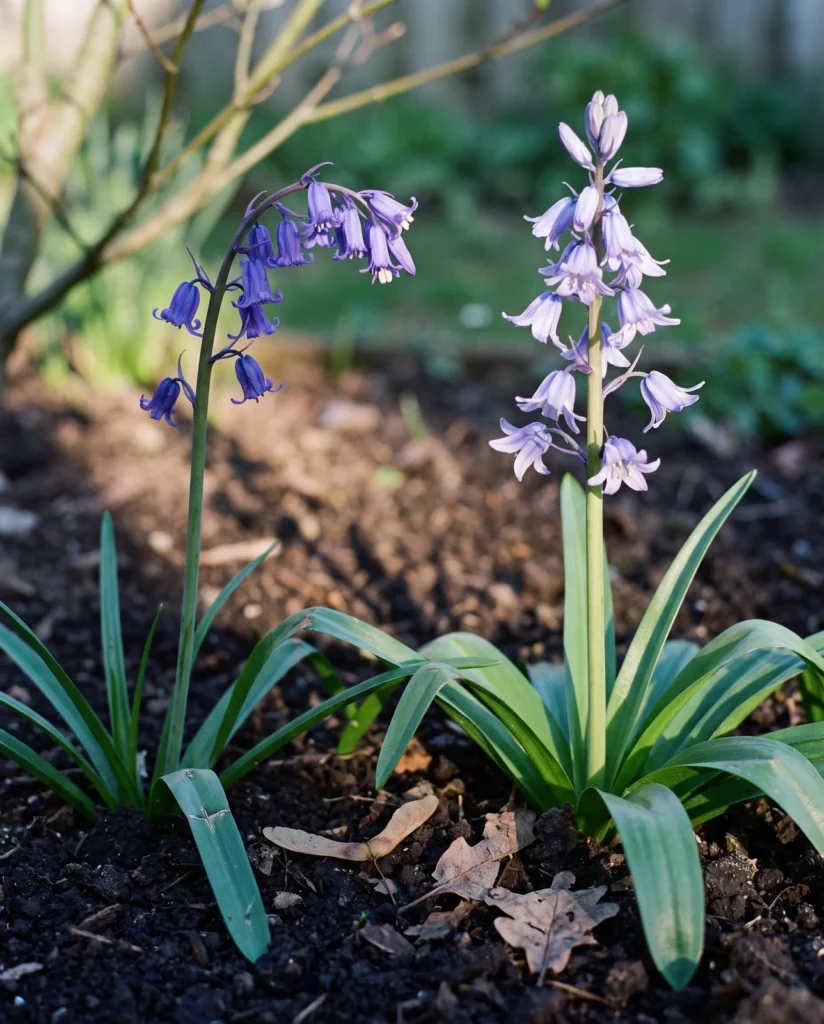
Three plants called bluebell
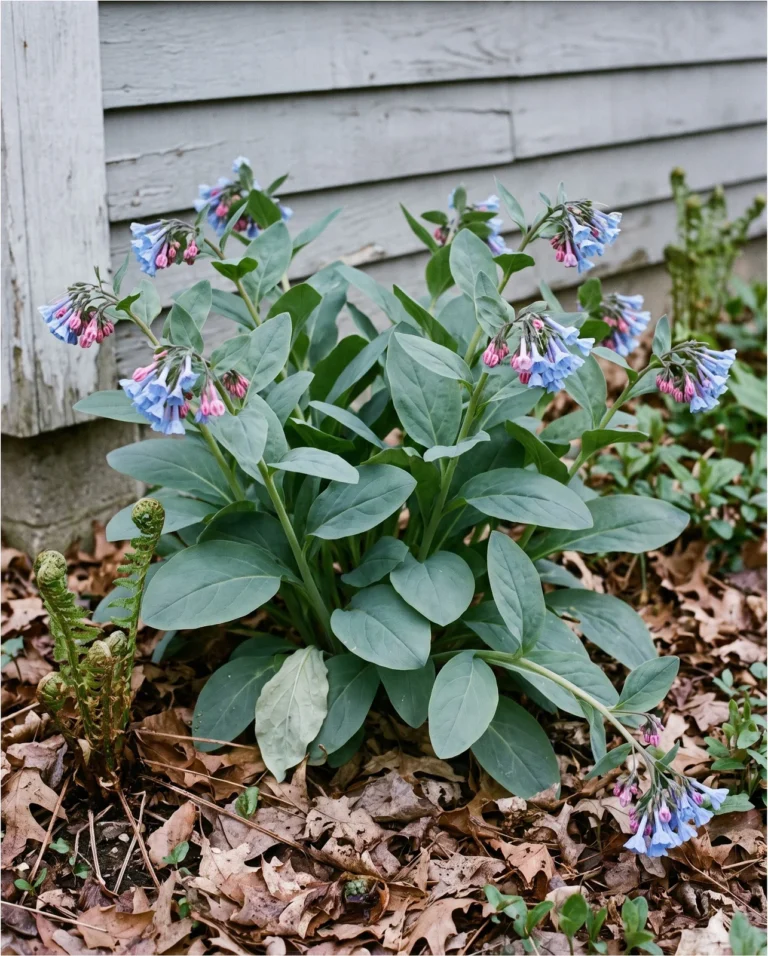
Three plants share the name bluebell, and only two are related. English bluebell, Hyacinthoides non-scripta, is a bulbous perennial of open woodland in western Europe. Its native range runs from western Europe to northwest Portugal, across Belgium, France, Great Britain, Ireland, the Netherlands, Portugal and Spain. Spanish bluebell, Hyacinthoides hispanica, is the same genus out of a smaller range: Portugal to western and southern Spain, or southwestern Europe with northwestern Africa. Both sit in the family Asparagaceae. Virginia bluebells, Mertensia virginica, belong to Boraginaceae, the borage and forget-me-not family. They grow wild across the eastern and central United States and into eastern Canada, reaching Ontario and Quebec. The native shares nothing with the other two except the color and the word.
For an American gardener the practical split is between what you can buy and what you probably already own. Spanish bluebell is the one that has naturalized outside gardens here, introduced in several states including Virginia and Washington. English bluebell bulbs are scarce, though not absent. They turn up in mail order marked restricted for delivery and usually out of stock. A white-flowered Hyacinthoides non-scripta sells as the woodland bluebell that predominates in England and performs better in cooler climates. The English and Spanish cross Hyacinthoides x massartiana 'Meike' carries white bells with a pink blush. The plain deep blue English bulb is the one that stays hard to find.
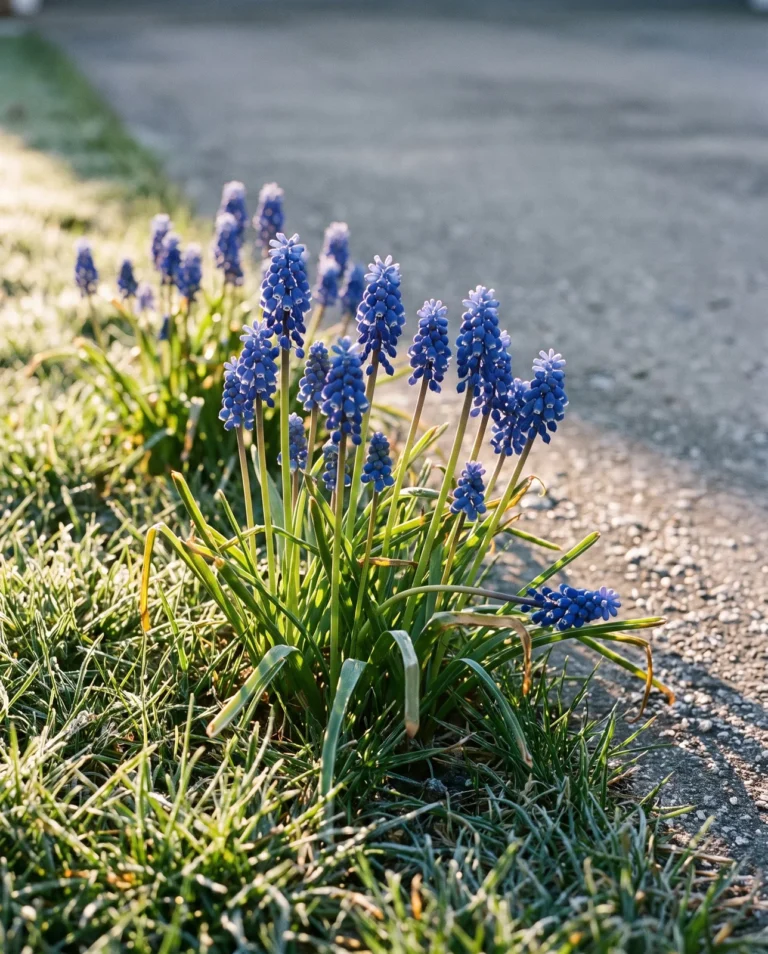
A fourth plant belongs on the list because so many people arrive holding it. Grape hyacinth, Muscari armeniacum, packs small cobalt blue bells into a short spike like an upside-down bunch of grapes. The stalks stand 4 to 8 inches high and hold 20 to 40 flowers each. It is neither a true hyacinth nor a relative of bluebells, and it gets mistaken for one constantly. If the flowers are thimble-sized and stacked tight up a short stalk, the plant is grape hyacinth, which shares part of its name with the fragrant garden hyacinth without being one of those either.
How to tell them apart
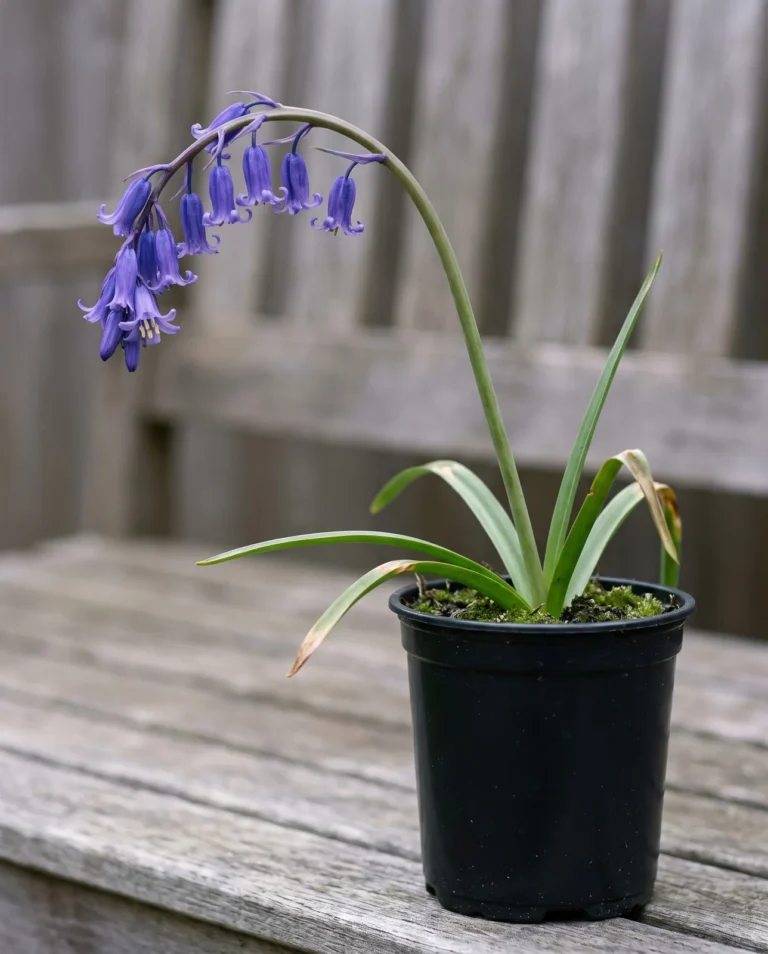
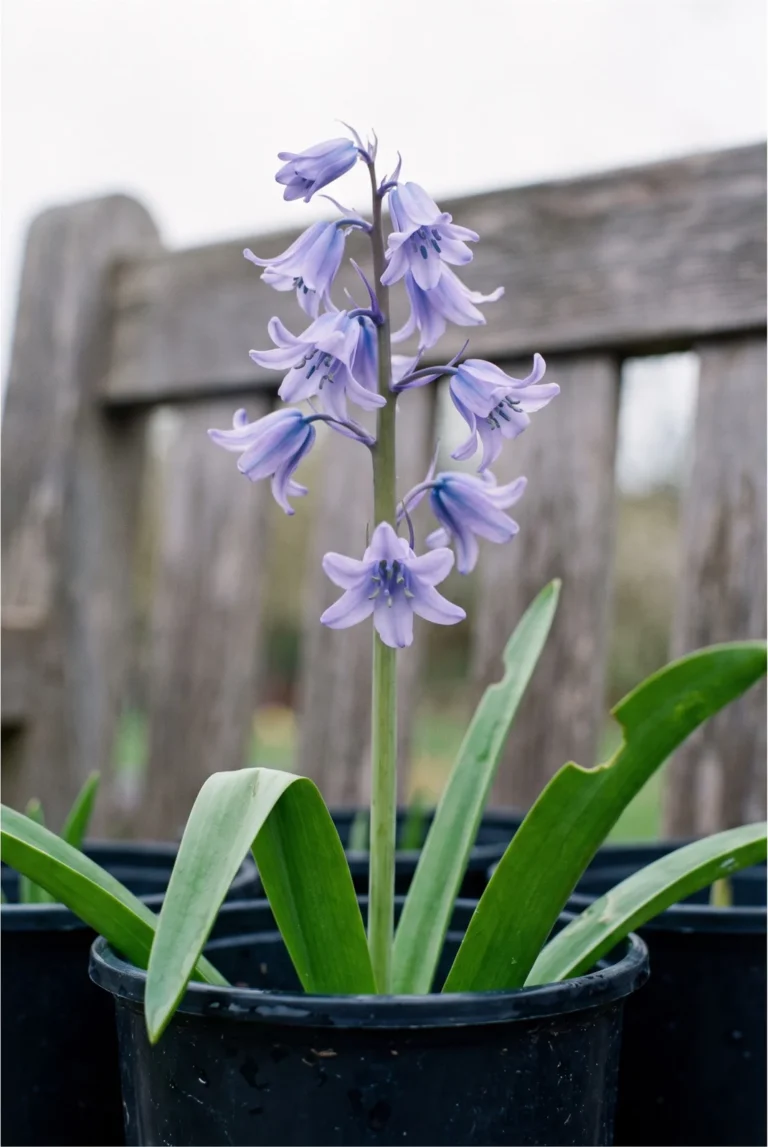
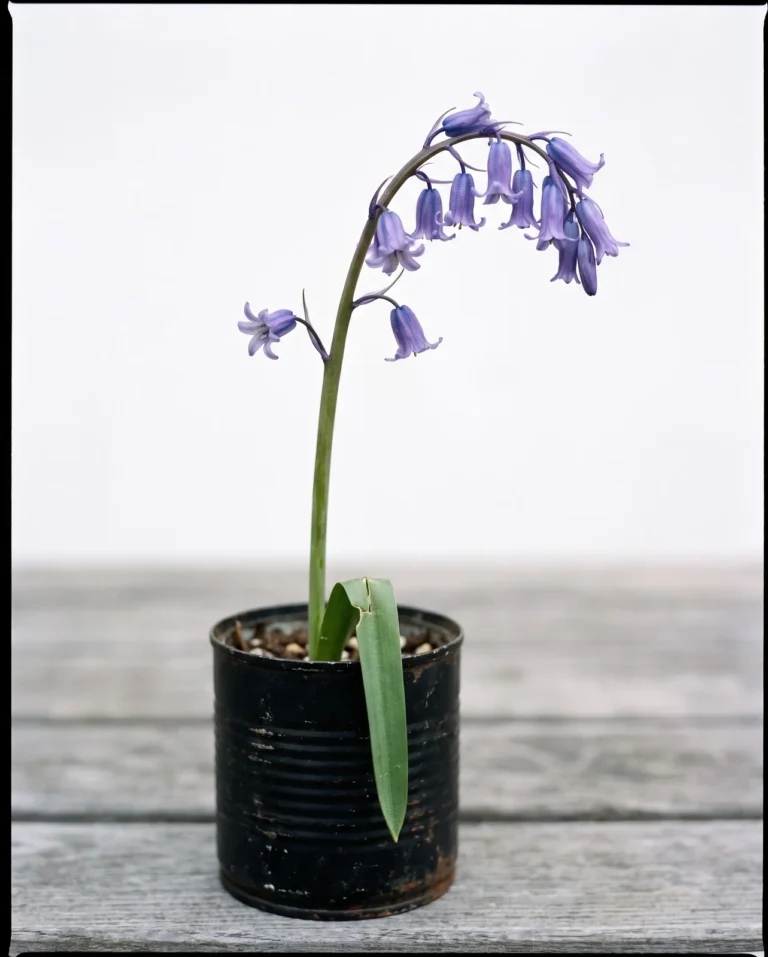
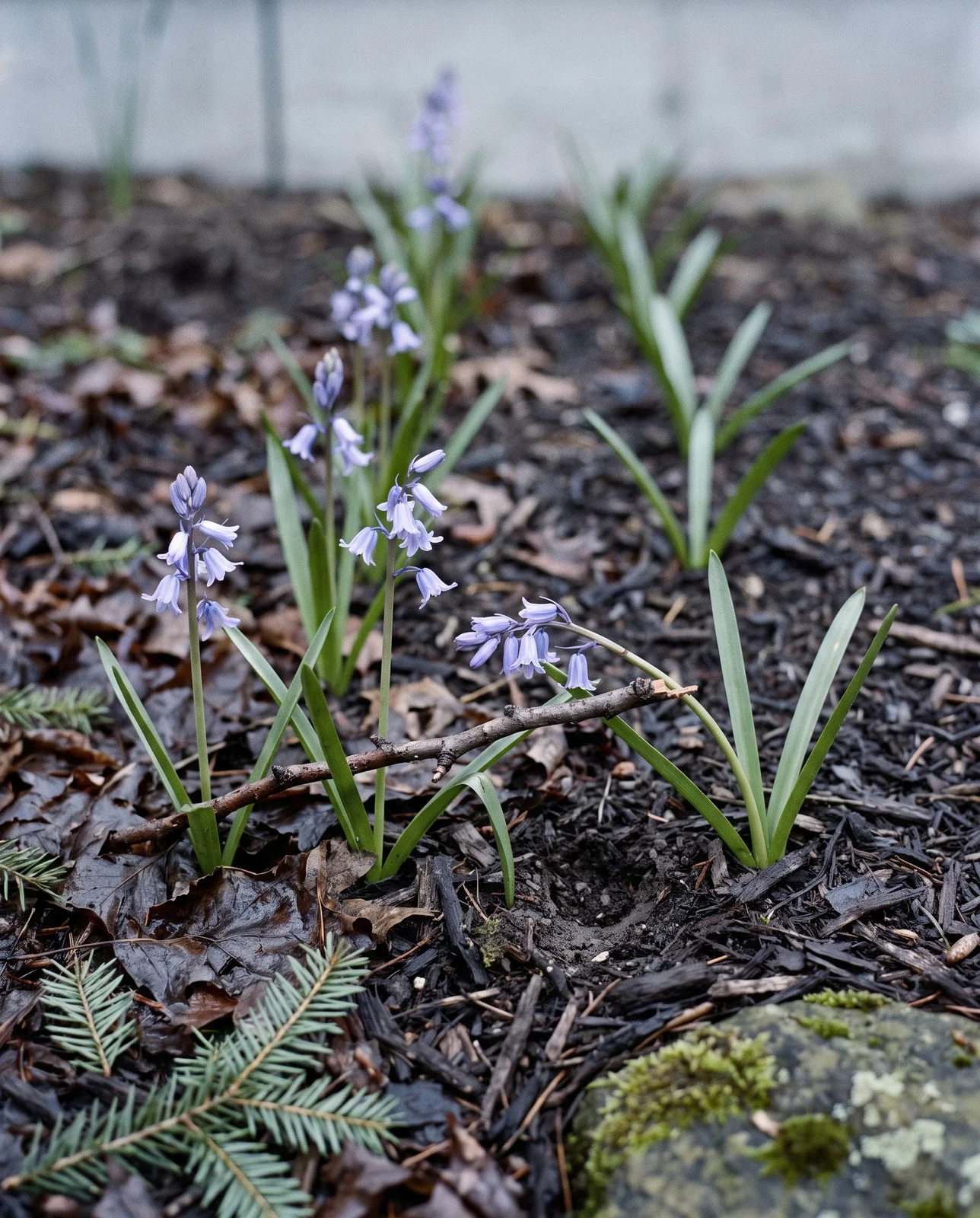
The differences read at arm's length once you know where to look: leaf width, which way the bells hang, whether there is any scent, and the color of the pollen inside.
Which ones are toxic
Both Hyacinthoides bluebells are poisonous, and the Virginia native is unsettled ground. All parts of the English and Spanish plants contain scillarens, cardiac glycosides close in structure to those in foxglove. NC State Extension rates Spanish bluebell highly toxic and possibly fatal if eaten. Every part carries it, from bark and sap through flowers, leaves, roots, seeds and stems. The symptoms are pain in the mouth, nausea, abdominal pain, vomiting, cramping, diarrhea and a lowered heart rate. Poisoning by the genus runs two ways at once, gastrointestinal signs of abdominal pain, vomiting and diarrhea alongside cardiac ones including bradycardia, tachycardia and arrhythmias. That toxicity is also why the bulbs found little use in modern medicine, whatever they were once credited with as a diuretic and a styptic.
Whether Virginia bluebells can be eaten is unsettled. Foragers eat the leaves, raw ones tasting aquatic and cooked ones turning gently bitter, while warning that the British plants sharing the name are poisonous to people and horses. Against that sits a flat statement that the plant is unsafe to eat, causing nausea, vomiting, abdominal pain and diarrhea, and poisonous to livestock and household pets. The native carries no poison rating at all. Unrated is not the same as safe, so keep Mertensia off the plate.
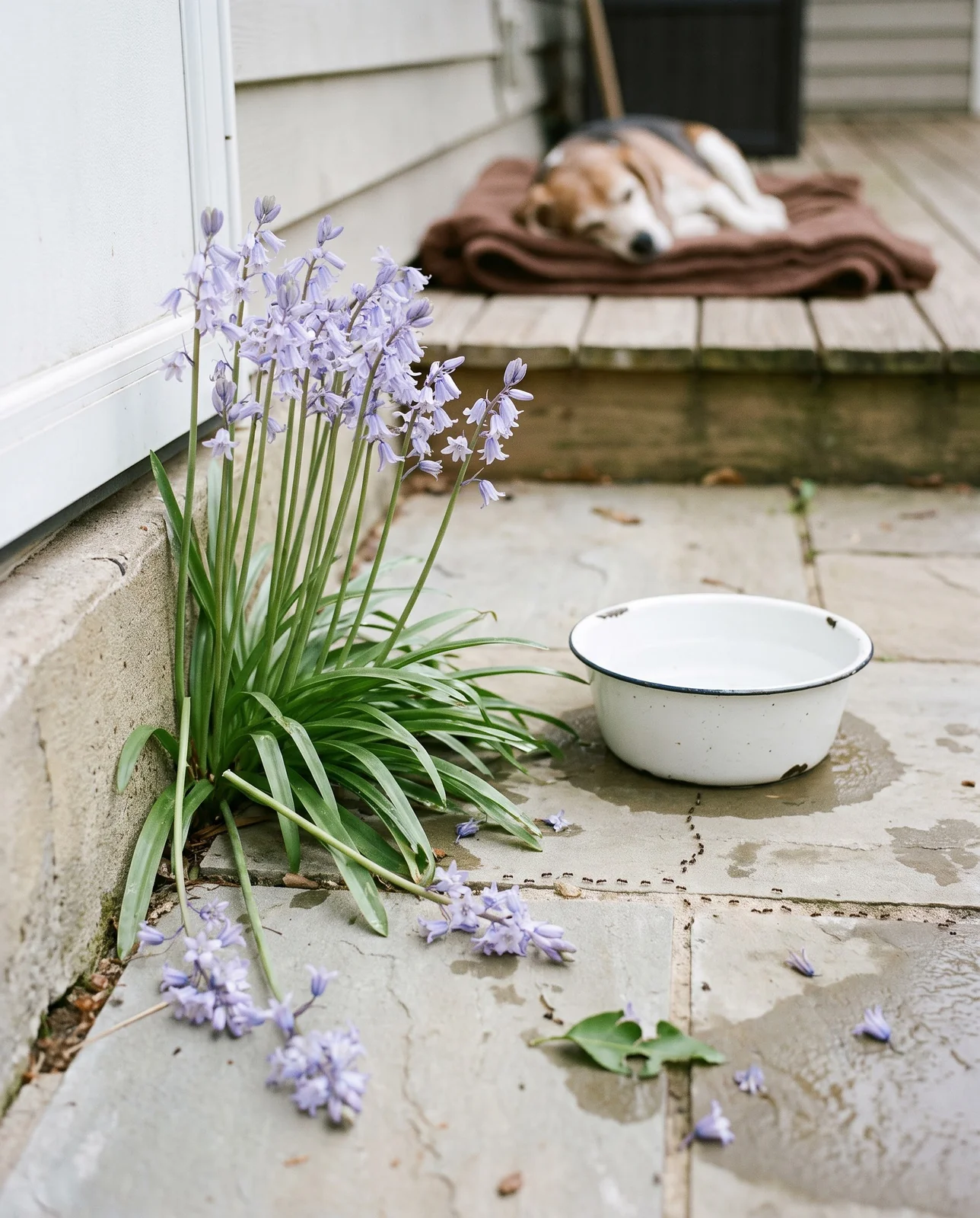
For pets there is no entry to check. The ASPCA toxic and non-toxic plant database holds no page for bluebell under any of its names, and lookups for bluebell, English bluebell, Spanish bluebell, Virginia bluebells and wood hyacinth all come back empty. It does hold two near neighbors that get taken for the answer. Hyacinth, Hyacinthus orientalis, a different genus altogether, is toxic to dogs, cats and horses; grape hyacinth, Muscari armeniacum, is non-toxic to all three. Cats and dogs that ate Hyacinthoides showed gastrointestinal signs only, with no serious cases among them, though bluebell poisoning can reach a dog's heart quickly in quantity. With a chewed bulb, call the vet with the plant's name in hand.
Are they invasive in the United States
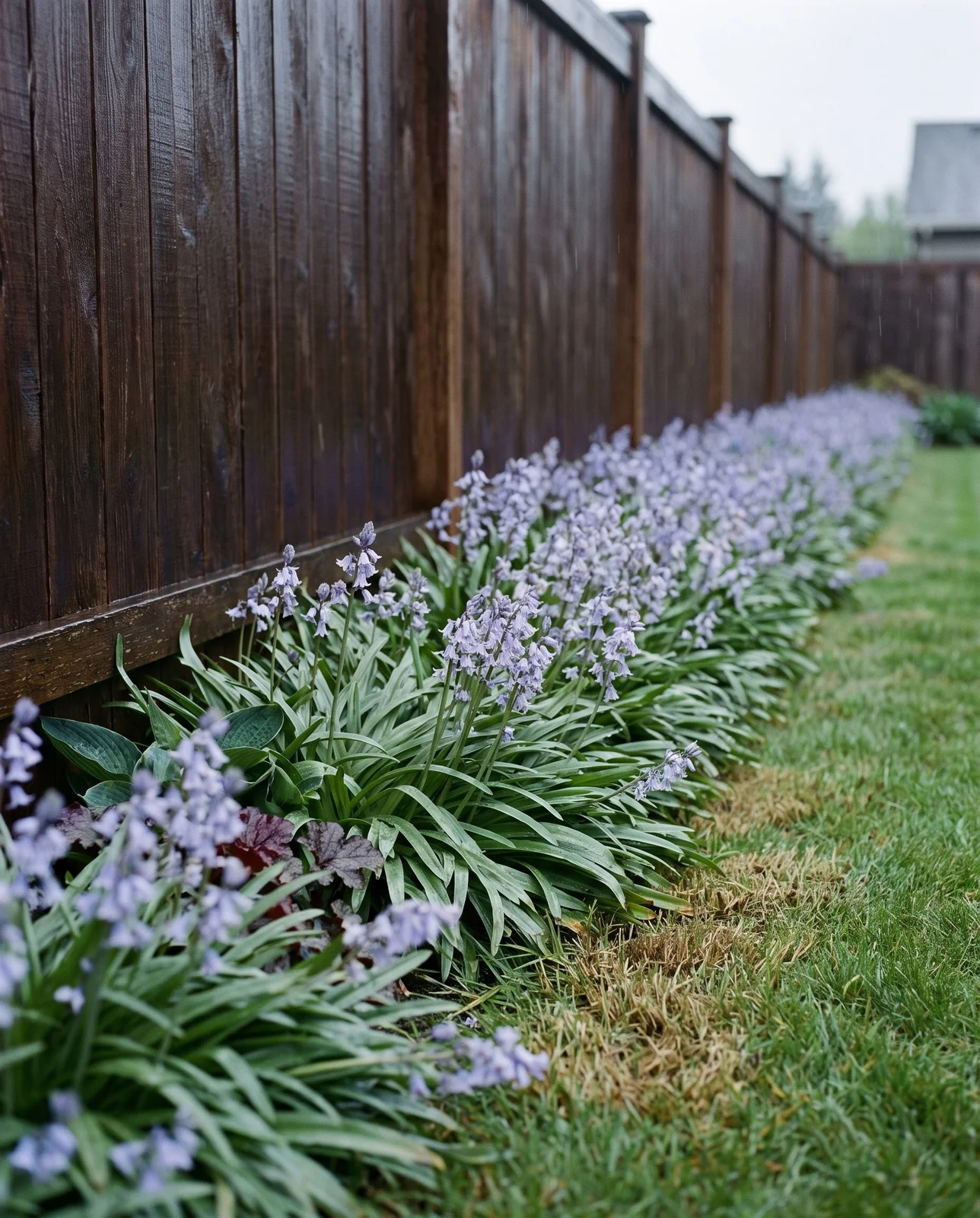
Spanish bluebell is not a listed weed anywhere it has been checked, and the gardeners who say it takes over are still right. Neither Hyacinthoides, bluebell, wood hyacinth nor Spanish bluebell appears on Washington State's noxious weed list, or in any regulated or unregulated category of King County's. Virginia's invasive plant species list, about 103 species ranked high, medium and low, returns nothing for the plant, and it exists for education with no regulatory authority behind it. What does exist is observation. The Invasive Plant Atlas of the United States tracks Spanish bluebell as an exotic forb. A Mid-Atlantic advisory publication and Arlington County, Virginia's own invasive plants program both flag it locally, and a Northern Virginia bird conservation group has added it to its invasive list.
The behavior behind the complaint is documented even where the regulation is absent. In Lane County, Oregon, digging it out is the best control on offer to a yard being overrun. In Britain the same species is a menace for a different reason. It is more vigorous than the native bluebell and outcompetes it for light and space, and the two interbreed freely enough that most bluebells in British urban areas are now hybrids. With no protected wild population on this side of the Atlantic, the identical plant is a conservation emergency in one country and a garden nuisance in the other.
Listed and aggressive are two different things, and running them together is what makes this question so hard to answer online. Spanish bluebell has the behavior without the listing in the places checked, so a gardener deciding what to do with a patch is working on judgment with no rule to point at. Virginia bluebells sit outside the argument entirely, since a native spreading through its own range is doing what it evolved to do.
The legal question, and which country it belongs to
The bluebell law is British, and it is narrower than its reputation. Schedule 8 of the Wildlife and Countryside Act 1981, headed Plants which are Protected and running across England, Wales and Scotland, lists bluebell with a qualifier attached: in respect of section 13(2) only. That subsection covers the sale and trade of wild plants, which makes it an offense to trade in wild-collected bluebell bulbs and seeds. The Woodland Trust puts it more broadly and states that digging up the plant or bulb in the countryside is prohibited under the same Act. So selling wild bluebell bulbs is specifically an offense, and lifting them from the countryside is treated as prohibited as well.
None of that is American law. The plant sits on no regulatory list in Washington State or Virginia under any of its names. The widespread worry that digging up bluebells is illegal here has nothing behind it. The British rule protects a wild native population that does not grow on this continent at all, and it says nothing about a bulb you bought and planted in your own yard. Nursery bulbs come with no legal question attached, and anything growing on land you do not own is a matter of permission from whoever manages it.
Should you remove Spanish bluebells
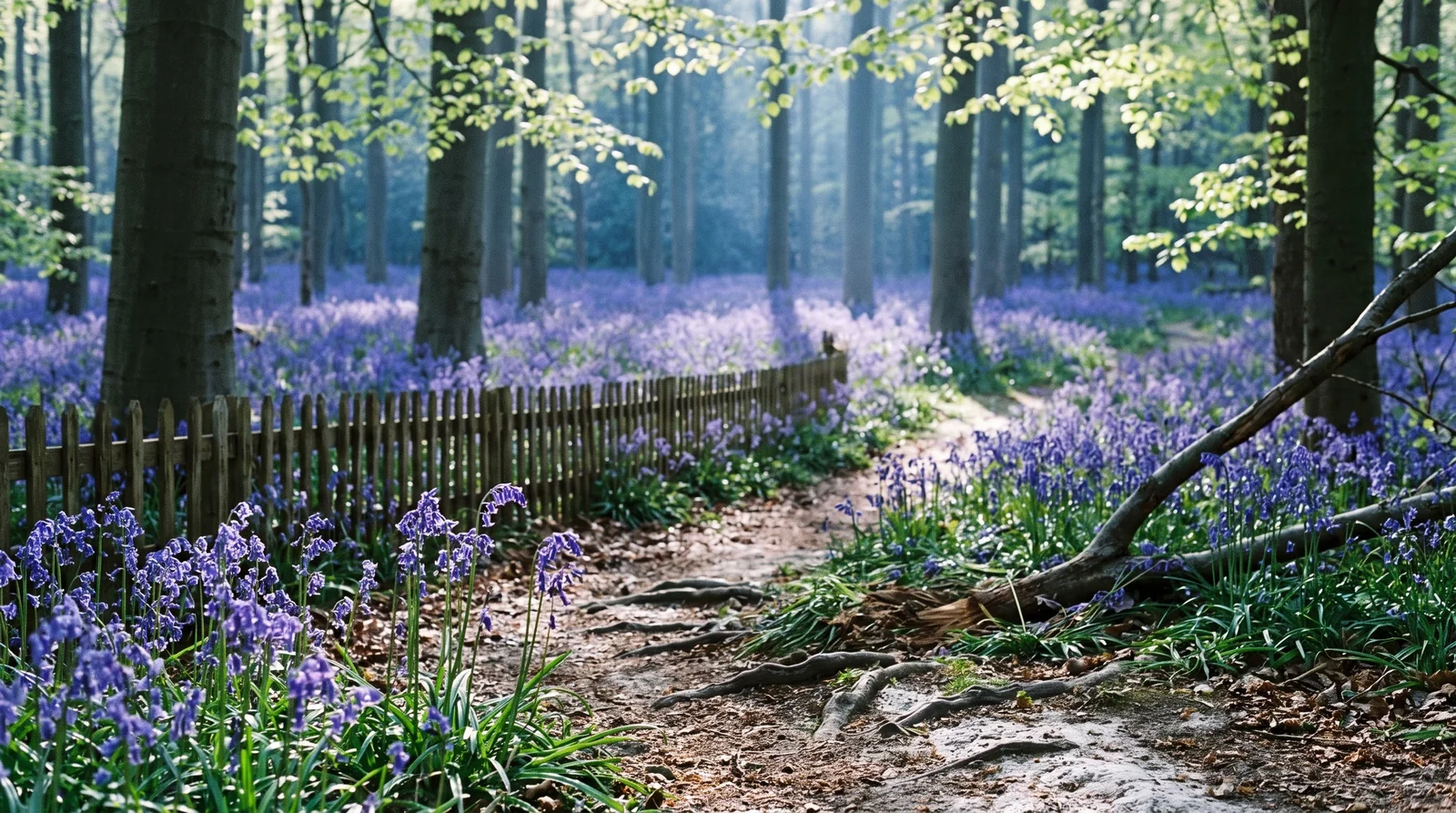
Removal earns its effort where a native population is at stake, and stays optional everywhere else. In Britain a protected wild plant is on the other side of the decision. In an American garden nothing forces it, so it comes down to whether you want a spring bulb that thickens every year and returns from whatever you leave in the ground. It spreads fast, it forms dense clumps, and it is very hard to clear completely.
If you decide to lift them, work while they are dormant. Autumn or winter is the window, because the plants suffer less root damage then. Dig whole clumps with a spade or fork and take out every bulb and underground part, looking closely for the small offset bulbs that rebuild the patch if they stay behind. Most bulbs sit in the top 20 cm, about 8 inches, of soil, though it pays to check deeper, and some sit more than 12 inches down. No herbicide will touch bluebells, so digging is the method. All parts of the plant are poisonous, so wear gloves and keep the lifted bulbs out of the compost heap. Because the bulbs travel by offsets and by self-seeding, cutting the flower stems before seed sets closes one of the two routes while you work through the other.
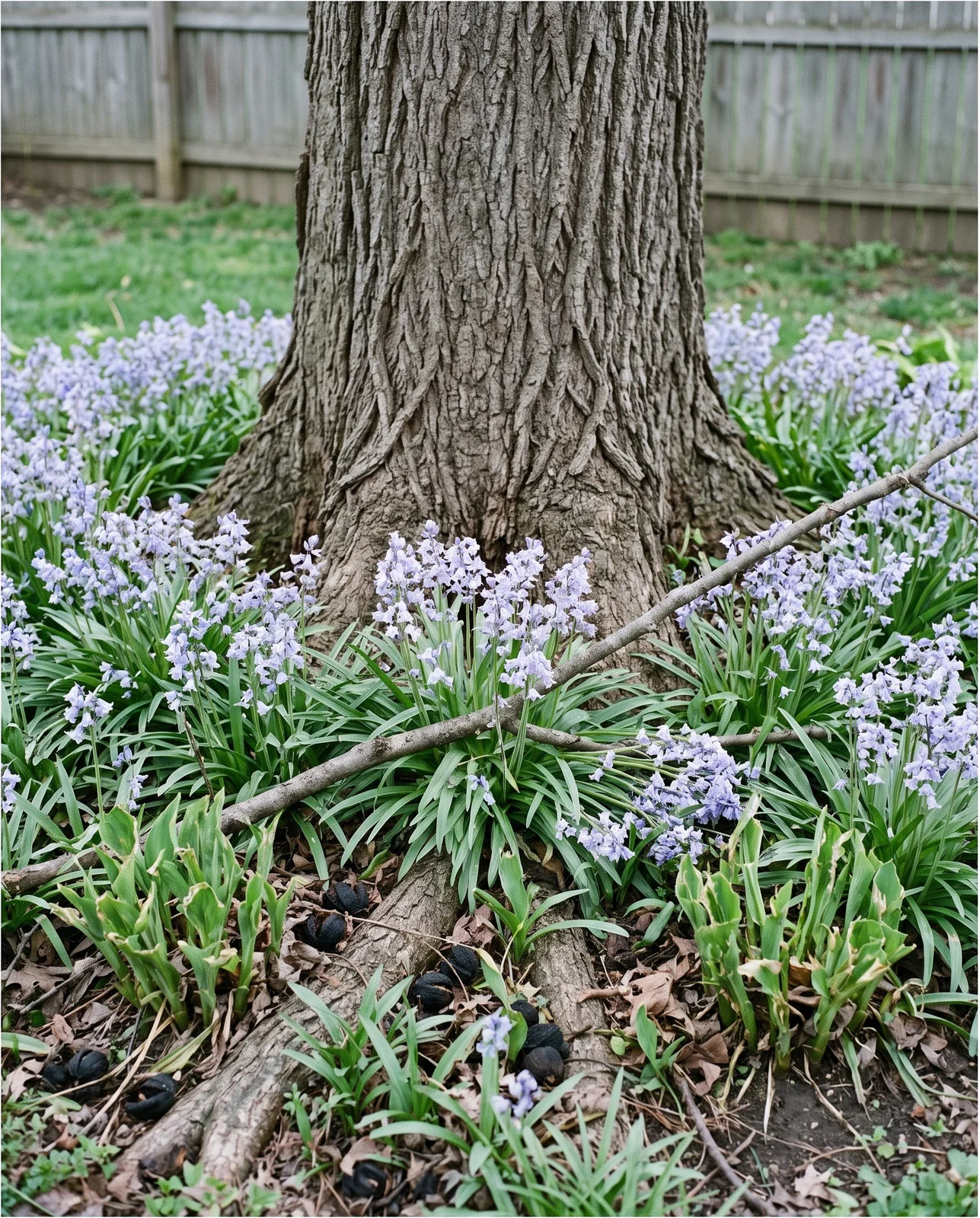
The alternative is replacement. Planting natives is the only way to be sure you are not planting a future invasive. There is also a case for keeping the Spanish one where it can do no harm. It tolerates black walnut trees and is generally left alone by deer and rabbits. Both traits are credited to the same toxicity that makes it a poor plant to have where small children put things in their mouths. Under a walnut, in a bed the deer patrol, well away from any woodland edge, it does a job few spring bulbs will.
Planting bluebell bulbs
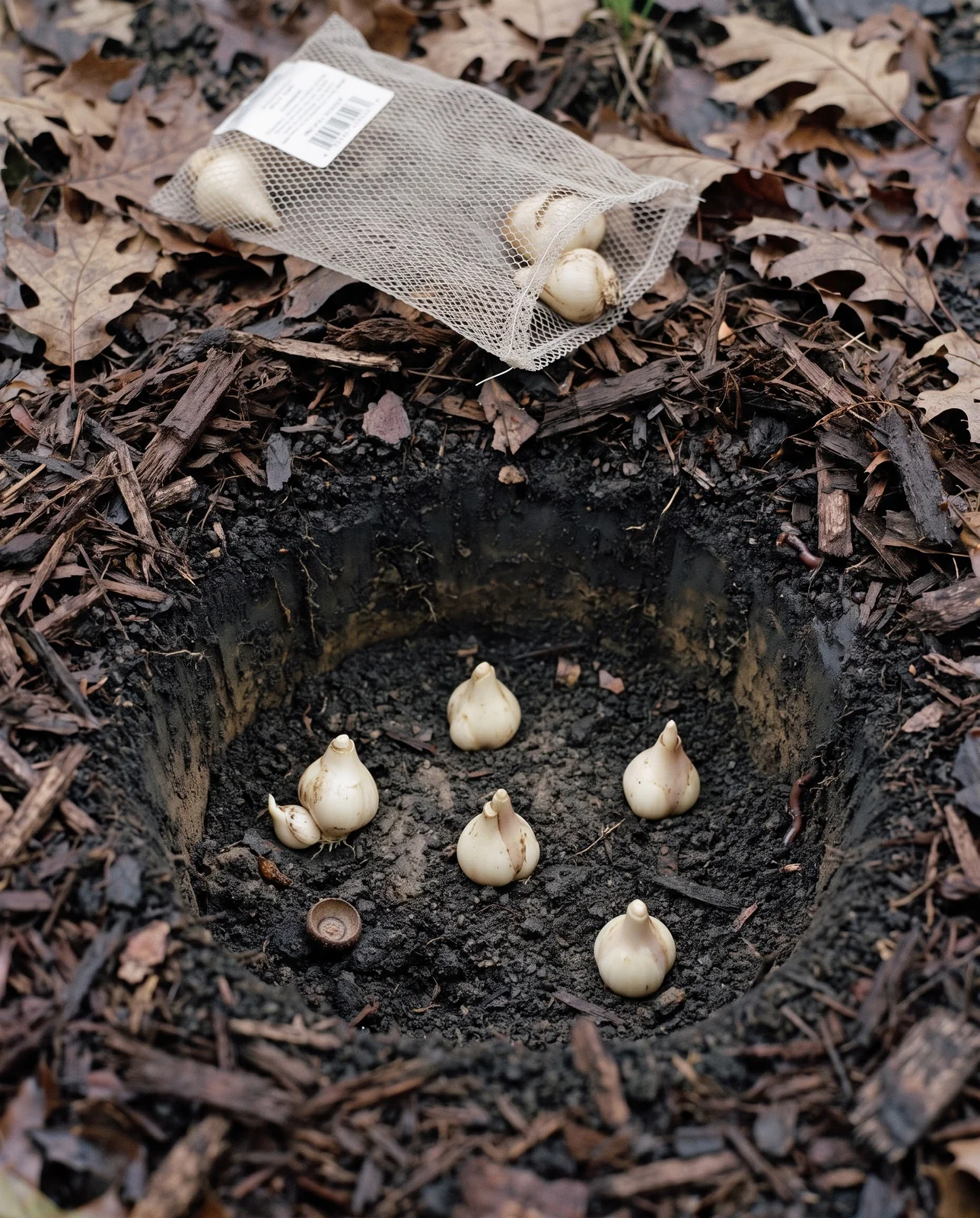
Plant bluebell bulbs in fall while they are dormant. English and Spanish bulbs go in about 3 to 4 inches deep and 4 to 6 inches apart. British practice sets them deeper, at 10 to 15 cm down and 15 cm apart, and either setting grows a good patch. Drainage is the part that is not negotiable, and it decides more of the outcome than the extra inch of depth does. A first spring without flowers is normal, and it is the moment gardeners decide something has gone wrong. Bulbs lifted and divided in summer may not flower the following spring, and fresh plantings show the same quiet first season. Leave them alone after that, because an undisturbed patch thickens on its own schedule.
Seed is the slow route. Sowing to flowering takes years, running from the third spring after sowing to seven, with 4 to 5 years in between. Scattering seed is done in autumn at 160 to 500 seeds per square meter. Every one of those waits runs longer than a bulb takes, so bulbs are what gets sold.
Where they grow best
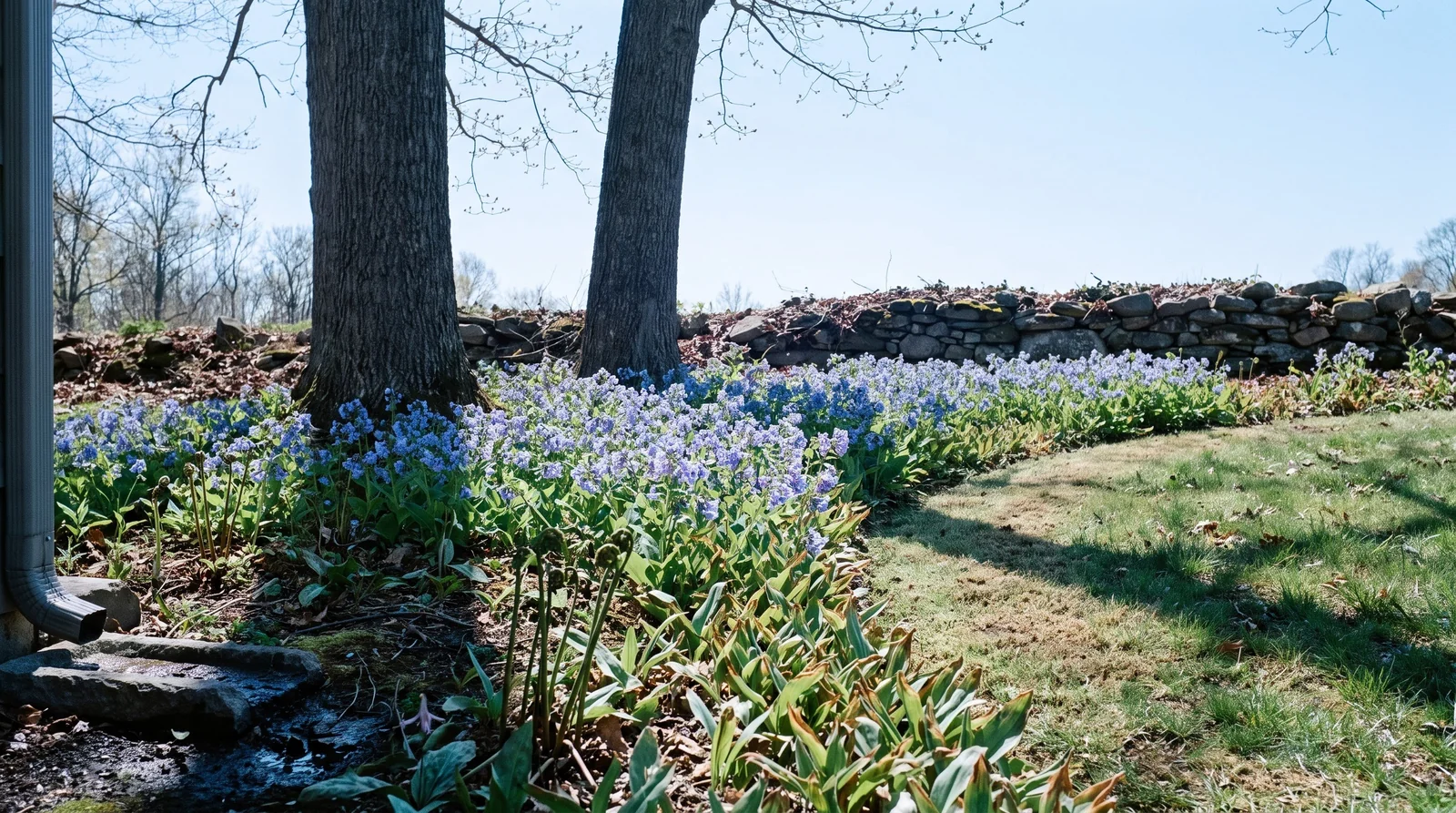
All three are woodland plants: moisture in spring, shade once the canopy closes, and soil with leaf mold worked through it. Bluebells need leafy, humus-rich soil that holds spring moisture without turning waterlogged in winter, and thin dry sandy soils and hot free-draining chalk are their worst sites. Shade tolerance differs by species. Virginia bluebells take part shade to full shade, deeper than the two Hyacinthoides, which are happy with spring sun under a canopy that has yet to leaf out. All three do their growing before the trees close overhead, which makes them workable in the shaded parts of a yard and good company for other flowers that grow in shade.
Hardiness splits by species as well. English bluebell holds zones 5 to 8, and Spanish bluebell the wider 3 to 8. Virginia bluebells are hardy from zone 3, and the southern edge is either 8 or 9b, which is a real difference in how much summer heat they will take. All three then disappear for the season, the two Hyacinthoides going dormant by early summer and Virginia bluebells dying back by midsummer. So the site has to be one you will not dig into in July.
After the flowers go over
Leave the leaves alone until they yellow and fall away on their own. Foliage that yellows and dies back after bloom is the plant's ordinary route into summer dormancy, and a bluebell that looks finished in June is a bluebell doing what it does every year. Cutting green leaves off at the base, or knotting them to tidy the bed, takes away the plant's last working weeks above ground. Waiting is the answer for all three plants, and what has dried rakes off in one pass.
Two jobs are worth doing while the foliage is still standing. If a patch is meant to stay the size it is, cut the flower stems off before the seed pods dry. The two Hyacinthoides bulbs travel by seed as well as by offsets underground, and seed is the route that puts them into a lawn or a border nobody planted. The second job is marking where they are. The ground goes bare and stays bare, and bare ground in July reads as free space to anyone holding a trowel. A label, a stone, or a standing neighbor all do the job.
Virginia bluebells, and whether they are the one to buy
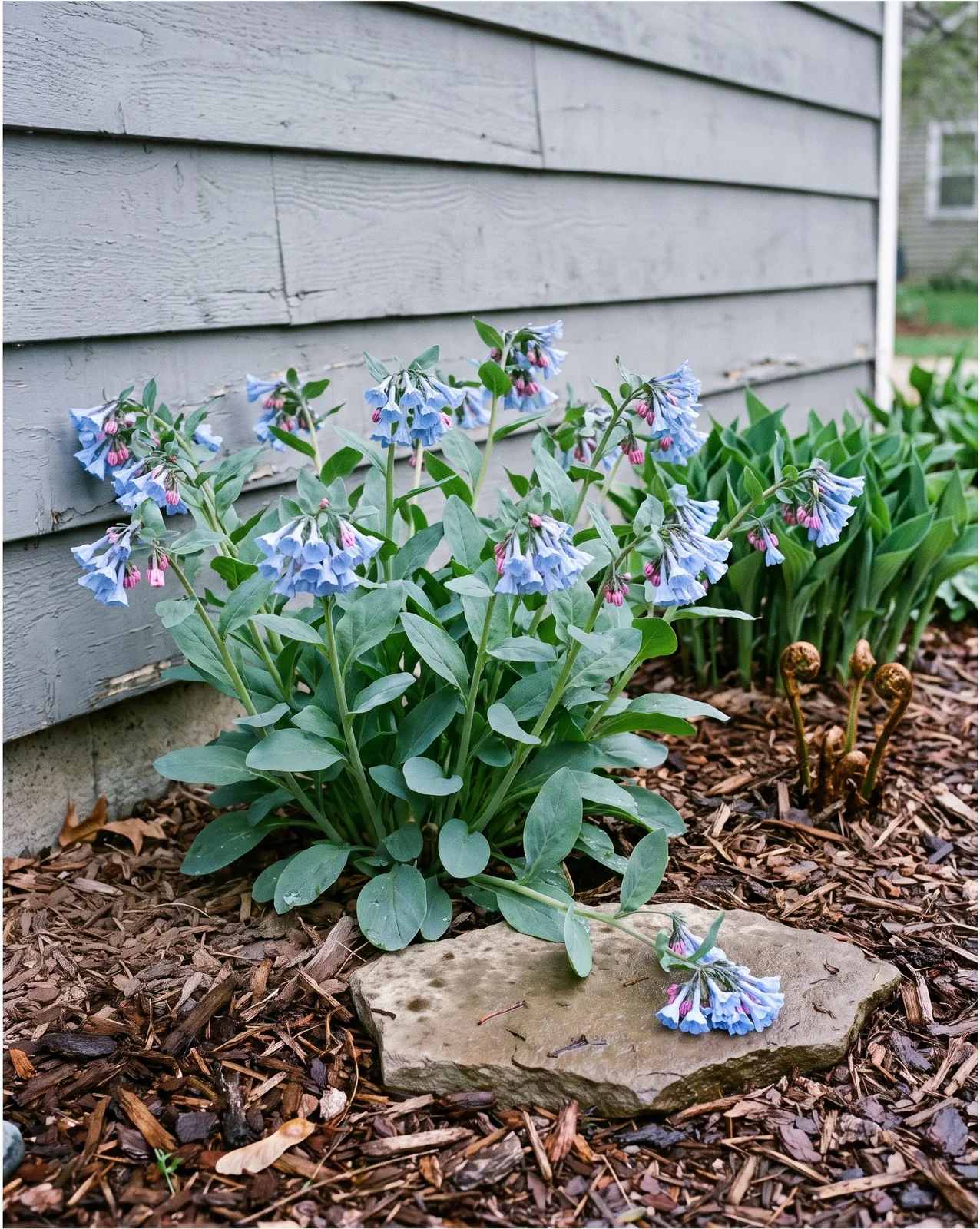
Virginia bluebells are the American native of the three, and in a bed they read as a bigger, softer plant than either bulb. They stand 1.5 to 2 feet tall with a spread of 1 to 1.5 feet. English bluebell holds 12 to 18 inches on a spread of only 3 to 6 inches, and Spanish bluebell 9 to 18 inches on 9 to 12 inches. So the native takes floor space the two bulbs never ask for, and it fills that space with soft leafy growth where a bulb gives a tuft of straps. The buying decision turns on patience as much as on looks, since bare root crowns take their time to settle in.
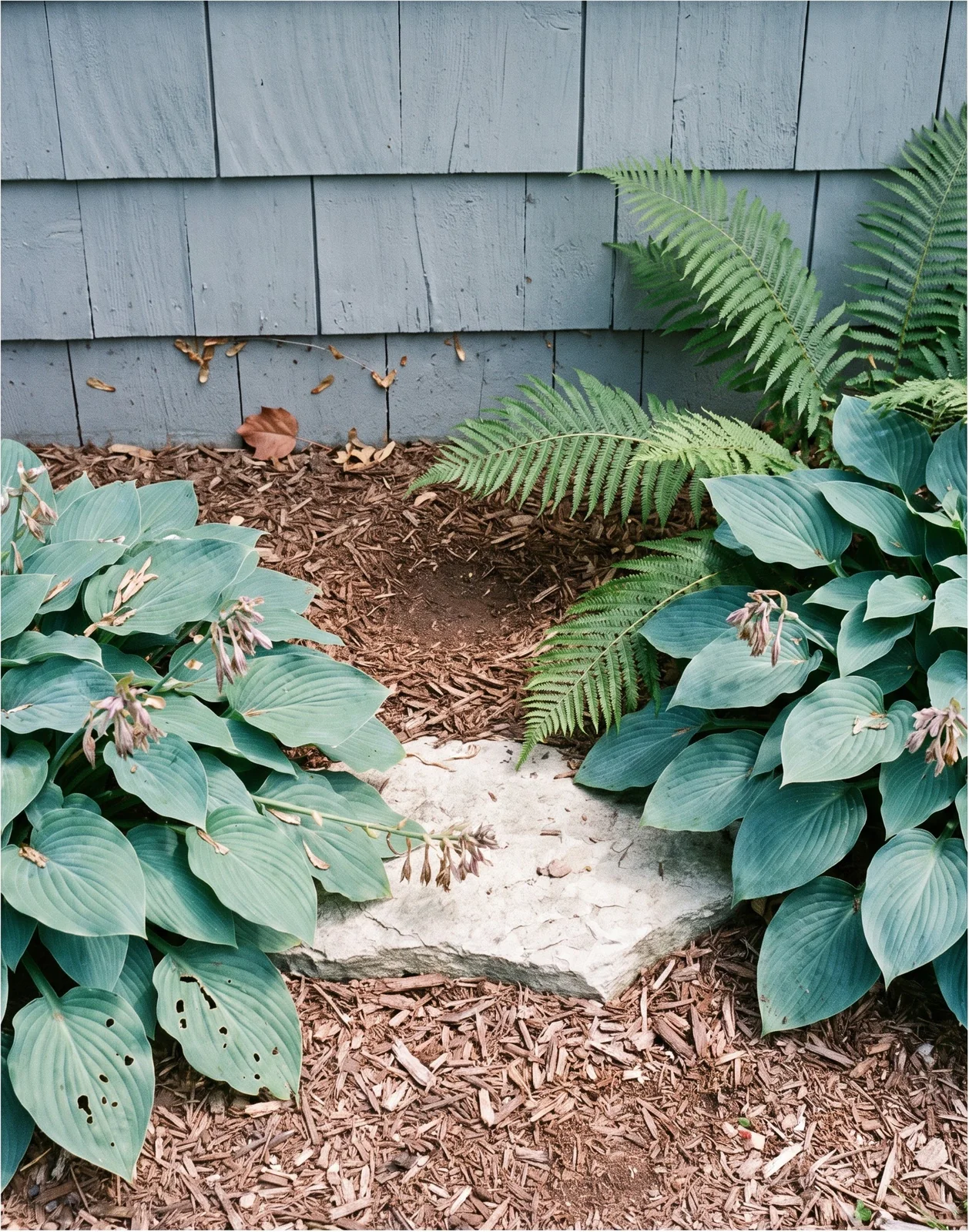
The warning worth having before the order goes in is about July. Virginia bluebells flower early and then go completely, the foliage dying to the ground by midsummer while the plant spends the rest of the season underground. A clump at the front of a bed leaves a hole where it stood for the longest half of the growing year. That hole is part of the decision, and it is the reason the plant does its best work in the middle of a shaded border where something else can close over it. Everything about growing it, from the bare root crown to the summer gap, sits on the Virginia bluebells page.
White and pink bluebells
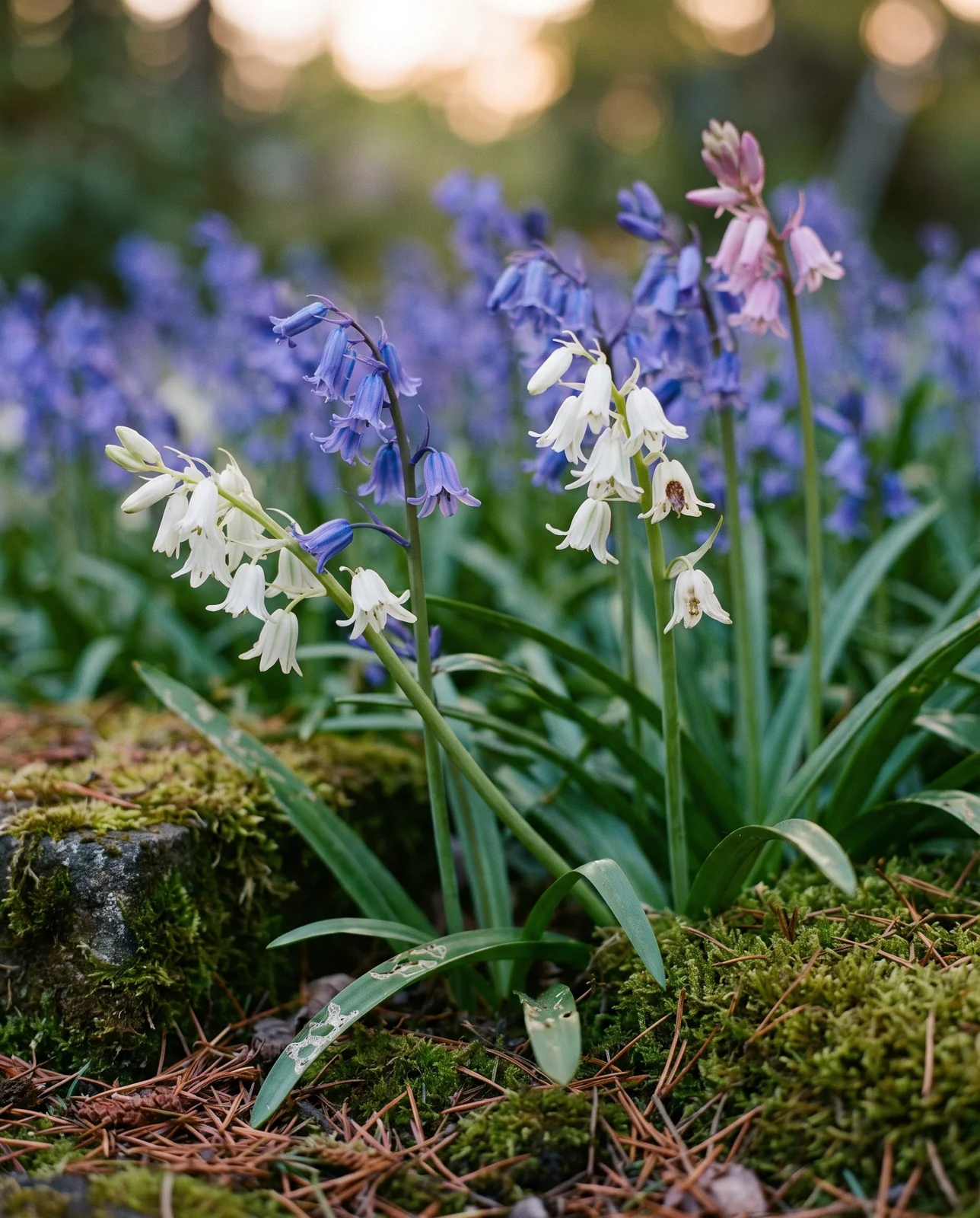
A white or pink bluebell is still a bluebell, and what the color means depends on which of the three plants is in front of you. Virginia bluebell colonies occasionally throw plants that open all pink or all white where everything around them is blue. For the English bluebell the same colors are argued over. One side reads pink and white bells as contamination with Spanish genes, since the native comes in blue and never in pink. The other reads them as plain genetic variation with no hybrid behind it. Neither position is botanical, so a pale bell on its own settles nothing about a colony's parentage. The plant grows and spreads exactly as a blue one does, which leaves only the question of whether it still suits a bed built around blue flowers.
Bees, butterflies, and what bluebells feed
Bluebells open when very little else has, which earns them their space. Woodland butterflies, bees and hoverflies all take bluebell nectar, and the flowers are out early enough to feed insects as they come out of hibernation. Virginia bluebells draw a wider list in American woods: flies, butterflies, skippers and moths work the hanging trumpets, and hummingbirds do too when they arrive in time for them. That timing is the ground the native plant argument stands on, since the Virginia native supports a range of bees, butterflies and hummingbirds and is what gets recommended in place of the Spanish bulb.
What actually goes wrong
These are the failures that actually come up with bluebells, in the order they come up.
The commonest bluebell problem is telling one plant from another. The confusion runs English against Spanish, both against the Virginia native, and all three against grape hyacinth. Settle it on leaf width first, then on which way the stem carries its bells, and photograph the stem from the side so the arch shows.
Dense clumps that thicken every season and rebuild from anything left in the ground. Dig while the plants are dormant in autumn or winter, when they suffer less root damage, and plan on going back over the same ground for several years.
Strong foliage and no bloom, often after a good first season, with no single cause behind it. The levers you actually hold are soil and disturbance: leafy ground under a deciduous canopy, and a patch that is not dug through every year.
Leaves sprawling over the bed after the flowers finish. It looks like neglect and it is the plant working. Waiting is the whole answer, and a neighbor that grows up into the space makes the wait easier to look at.
Bare root crowns and moved plants that sulk. The species establishes slowly and vanishes for the summer while it is doing it, so a dead crown and a dormant one look alike until the following spring.
Somebody has eaten part of a plant. Every part of the two Hyacinthoides bluebells is poisonous, so the call to a vet or a doctor goes out with the plant's name attached and, where possible, a photograph.
Bulbs sliced by a spade or turned up where nobody remembered planting anything. Dormant bluebells leave no sign above ground from midsummer until spring, so mark the position before the leaves disappear.
Meaning and folklore
Most of what bluebells are said to mean is British folklore, and it is older and stranger than the florist version. The plants belonged to the fairies, who hung their spells on the petals, and the flowers themselves were fairy bells, rung to summon fairies and pixies to their secret gatherings. That material is genuinely old and genuinely tied to the woods where the English species grows wild. The gratitude and constancy reading attached to bluebells today has no folklore behind it, which is worth knowing before a bouquet is given on the strength of it.
Bluebell myths worth clearing up
Four claims come up around this plant more than any others, and each one has a plain answer.
The myth: Bluebell is the name of one flower.
The reality: The name covers three plants: two Hyacinthoides bulbs out of Europe and the American Mertensia virginica, which sits in a different family altogether.
The myth: Virginia bluebells are the American version of the English bluebell.
The reality: Mertensia virginica belongs to Boraginaceae and English bluebell to Asparagaceae, so neither plant is a form or a variety of the other.
The myth: Virginia bluebells are safe for dogs.
The reality: No compound known to harm dogs has been identified in the plant, and nothing rates the native for toxicity either way. Treat it as unknown and keep dogs away from it.
The myth: A weedkiller will clear a Spanish bluebell patch.
The reality: No herbicide reliably kills established bluebell bulbs, so digging and repeated removal of the leaves are the methods that work.
What to expect year by year
Bluebells run on a slower clock than most spring bulbs, and the first season is the one that misleads people.
The first year is mostly waiting. Bulbs go in during fall while they are dormant and spend the winter rooting before anything shows above the soil. Virginia bluebells started from bare root are slower again, and several years can pass before a crown settles in.
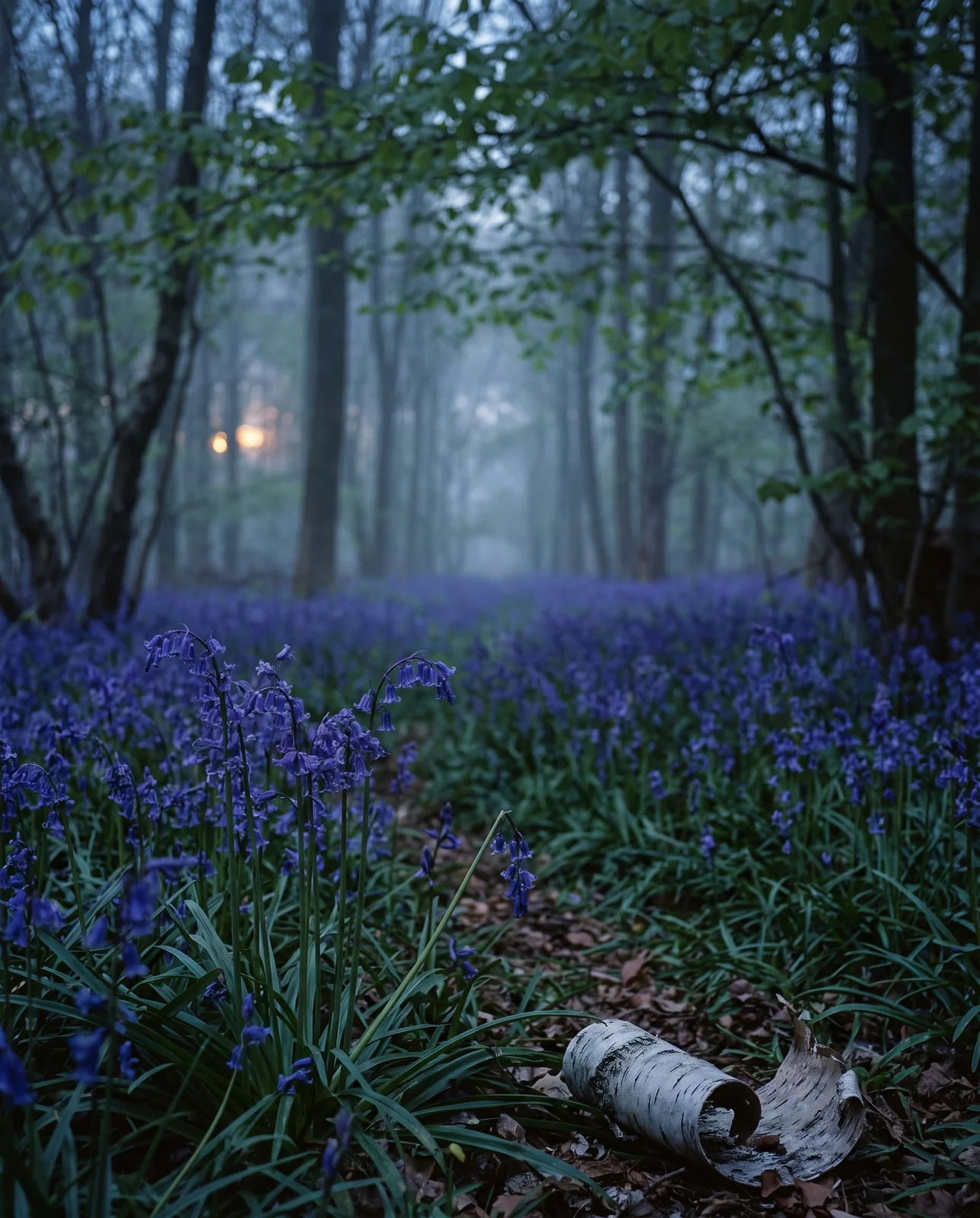
The springs that follow are when a planting starts to look like the photographs. Bulbs multiply by offsets underground while seed drops around them, so separate stems close into a patch. An English planting carpets the woodland floor with bells on arching stems in mid to late spring. The same doubling is why a Spanish colony is hard to hold at its edges, and why cutting the seed heads is a yearly job in a small garden.
The summer gap arrives every year and is worth planning for once. Ferns and hostas are the usual partners for the Virginia native, expanding into the space as it goes over, and a standing neighbor keeps the ground from reading as empty in July.
FAQ
What does a bluebell flower symbolize?
In British folklore the flowers belonged to the fairies, who hung their spells on the petals and were summoned by the ringing of the bells. The gratitude and constancy meaning attached to bluebells today is a florist's addition with nothing older behind it.
How can you tell if a bluebell is English or Spanish?
Leaf, stem and scent. English bluebell has narrow leaves, hangs its bells down one side of an arching stem and smells sweet. Spanish bluebell has leaves about 3 cm wide, stands them all round an upright stem and has no scent.
Are Virginia bluebells the same as English bluebells?
No. Virginia bluebells sit in the borage family, Boraginaceae, and English bluebell in Asparagaceae. The American plant also flowers earlier, March to April against April to May.
Are Spanish bluebells invasive?
They spread hard in gardens, and they are on no noxious weed or invasive list in Washington or Virginia. The species is tracked nationally as an exotic forb, which records a sighting and imposes nothing on anybody.
Should you pull up Spanish bluebells?
Only if you want them gone, because nothing obliges it in an American garden. If you do, dig in autumn or winter while the plants are dormant and lift every bulb and offset, since anything left behind rebuilds the clump.
Can I just scatter bluebell seeds?
You can, in autumn, at 160 to 500 seeds per square meter. The wait is long and unsettled: first flowers in the third spring after sowing, 4 to 5 years, or seven.
How deep do bluebell bulbs need to be planted?
About 3 to 4 inches deep and 4 to 6 inches apart, planted in fall. British practice sets them deeper, at 10 to 15 cm deep and 15 cm apart.
Do bluebell bulbs come back every year?
Yes. They are perennial bulbs that naturalize by offsets and by self-seeding, going dormant by early summer and returning the following spring.
Where do bluebells grow best?
In leafy, humus-rich soil that holds spring moisture and never waterlogs in winter. Thin dry sandy soils and hot free-draining chalk are their worst sites.
Are bluebells poisonous to dogs?
Treat them as poisonous. Every part of the two Hyacinthoides bluebells holds scillarens, cardiac glycosides close in structure to those in foxglove, though reported cat and dog cases produced gastrointestinal signs only.
Interesting tips
- Bumblebee queens are among the earliest pollinators out in spring, foraging before most other insects have emerged, which puts them on bluebells before almost anything else finds the flowers.
- British folklore ties bluebell blooming to Beltane, the Gaelic festival at which the veil between the human and the fairy worlds was said to thin.
Related Guides & Flowers
Forget-me-nots
A borage family cousin of the Virginia native, and another small blue flower for shaded spring ground.
Daffodils
The fall-planted bulb most likely to be sharing the same ground under deciduous trees.
Snowdrop
Opens weeks before the bluebells and works the same shaded soil while the branches are bare.
Crocus
Another early bulb for the weeks before the canopy closes, with the saffron story attached.
Enjoying our flower guides? Add YourFlowersGuide as a preferred source on Google. It helps more readers find us.
Add to Preferred Sources