What a clivia is and where it comes from
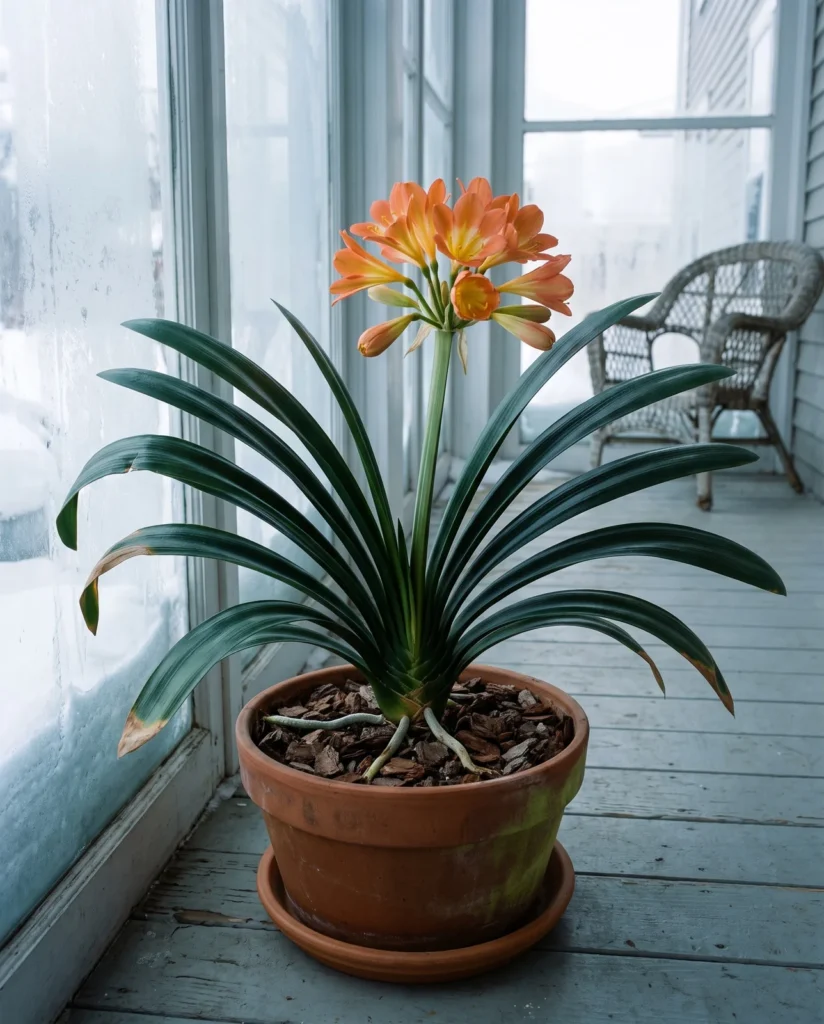
Clivia is an evergreen perennial from the amaryllis family, native to the forests and bush lands of subtropical southern Africa. In the wild it roots in deep leaf litter, sometimes on top of a rotting log, in dappled shade and open, humus-rich ground. That habitat is the whole care sheet: no direct sun, an airy organic mix, and a dry season followed by a wet one. It is not a bulb. The plant grows from a thick rhizome, and the fleshy roots running off it store water, so a clivia tolerates drought better than most houseplants. The name honors Lady Charlotte Clive, Duchess of Northumberland, who first flowered the plant in England.
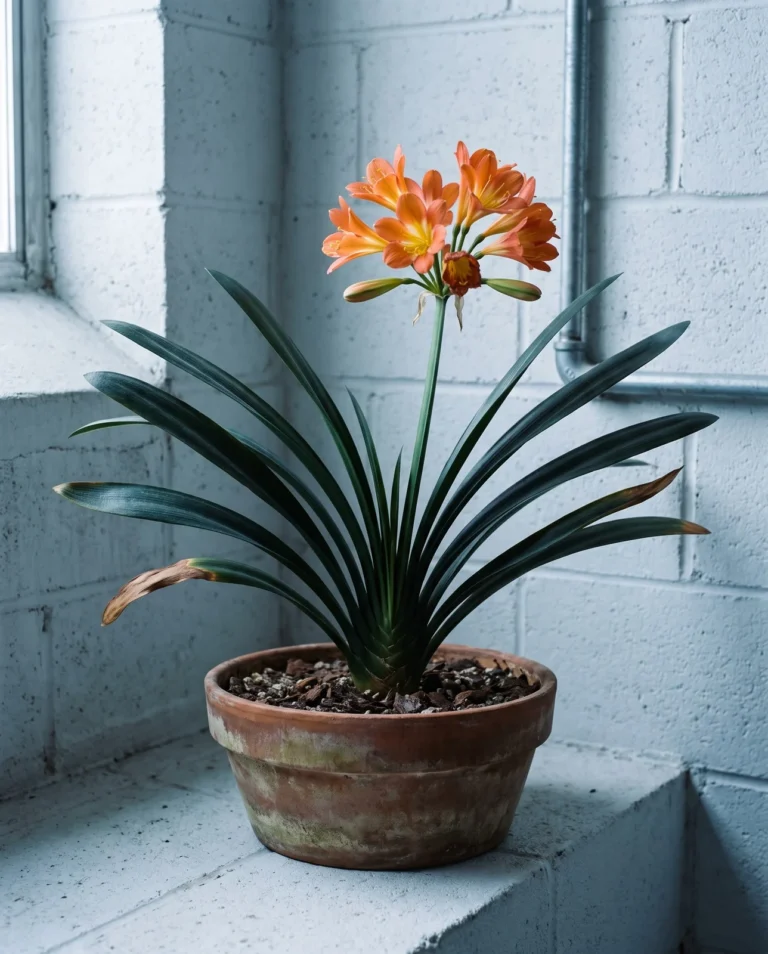
The flowers open in a dense head on a thick stem pushed up from between the leaves, 12 to 20 blooms to a head. Each is funnel-shaped and 2 to 3 inches long, in shades of yellow, orange and red. A single flower lasts a few days, but buds keep opening in succession, so the display runs for weeks. Orange is the usual color, and mature plants bloom from December to April, which puts clivia among the orange flowers that arrive in midwinter. A grown plant makes a clump of strappy leaves about 2 to 3 feet tall and as much across. At home it is bush lily in English, boslelie in Afrikaans and umayime in Zulu. Kew accepts seven species, and the trumpet-flowered Clivia miniata is the one that became the houseplant.
The winter rest is the whole thing
A clivia sets flower buds reliably only after a spell of cold and dryness taken together. The rest imitates the plant's native winter, when no rain falls and the temperature sits just above freezing. The two levers are the thermostat and the watering can, and neither works without the other. The shape of the treatment is not in dispute. The plant goes cool, the water is cut hard or stopped outright, feeding stops completely, and the light stays where it was.
How long the rest has to run is the one thing nobody settles. Six to eight weeks is the figure repeated most often, taken any time from October through January, and it is the one to plan around. Published windows reach from five weeks of chill at the short end to fourteen weeks at the long end. Growers who work by the calendar simply hold their plants cool for three full months every year. They are not all measuring the same thing: some count the chill, some the dry spell, some the months a greenhouse finds convenient. An average of them would be a number nobody stated. Temperature is where the range narrows: below 50 degrees Fahrenheit, and above about 36, the coldest the plant takes.
The published rest schedules, side by side
The room has to stay cool without freezing: below 50 degrees Fahrenheit, and above about 36, the lowest the plant tolerates. They differ in length, in temperature and in how hard the water is cut.
Why a clivia will not bloom
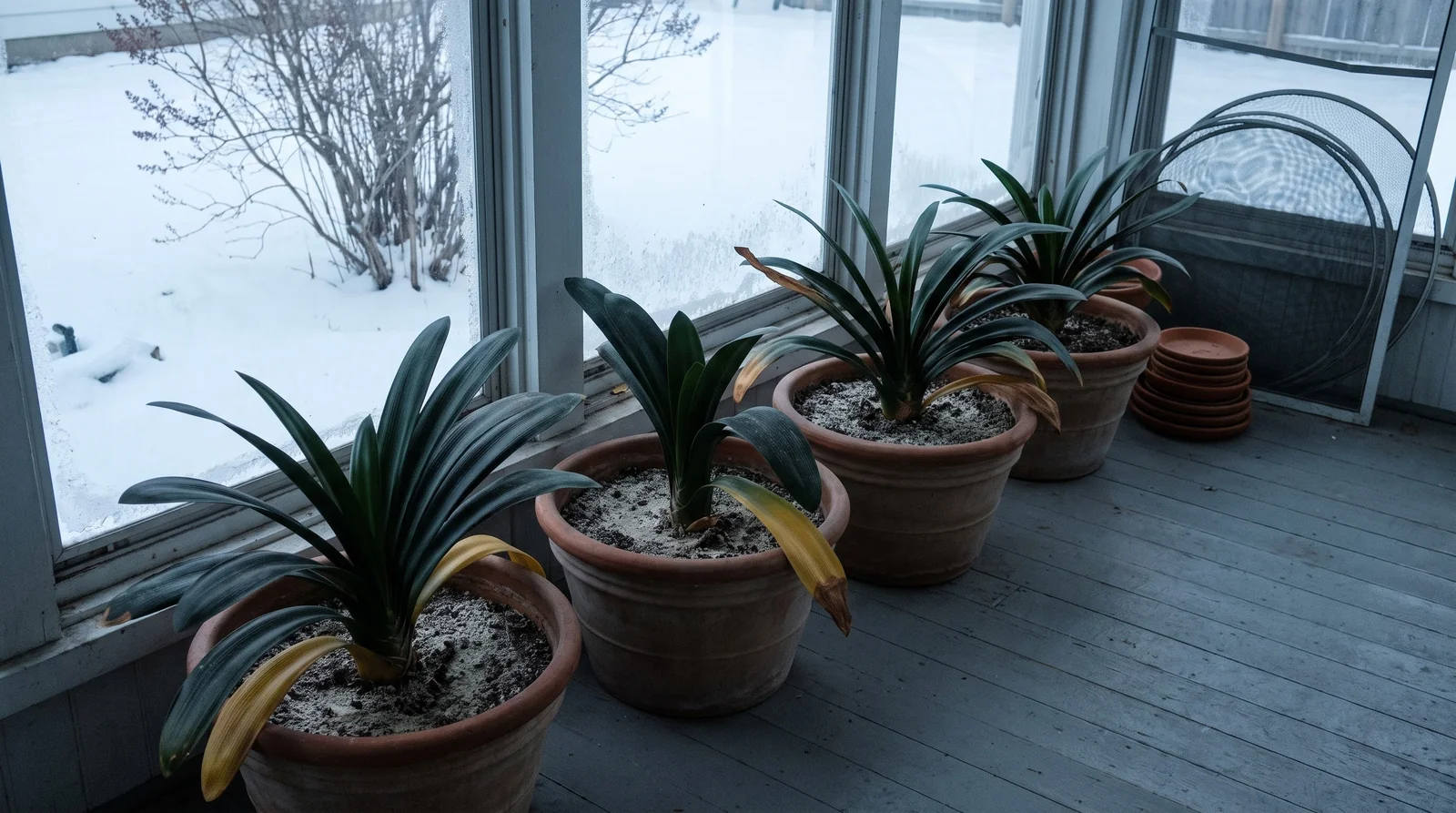
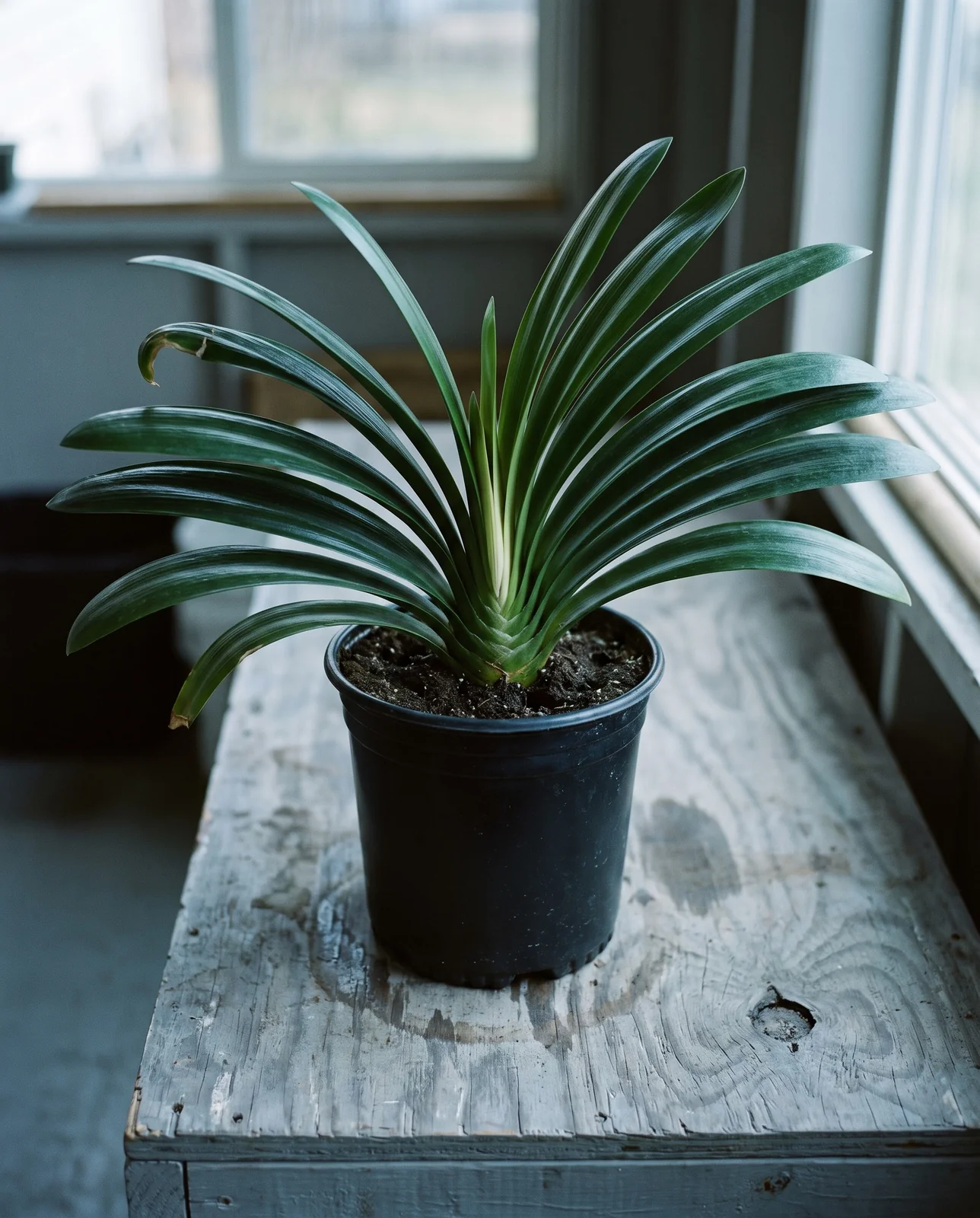
The commonest reason a healthy clivia will not flower is that it never had a cool, dry rest, or had one that stayed too warm. Low light through the year is the other half of the answer: a plant kept dim rarely flowers even while it keeps making good leaves. Age comes next, and it defeats a lot of first-time owners. A seedling has to build a fan of at least 12 mature leaves before it is worth bringing into flower, and that takes 2 to 4 years. Blooming size arrives at about five years. After age, look at the pot: clivia flowers when its roots are crowded, so a plant recently moved into a large container is busy filling it.
Water is the last common cause, and its timing counts for more than its amount. Keep watering freely from October on and often no flower stem appears at all. Two milder outcomes are worth knowing. A rest that is genuinely cold but too short delays flowering without canceling it. A plant that never got its cold treatment may still bloom, only very late, sometimes not until the end of summer.
Work out why yours is not flowering
The first two checks settle most cases, so take them in order and stop at the first honest no.
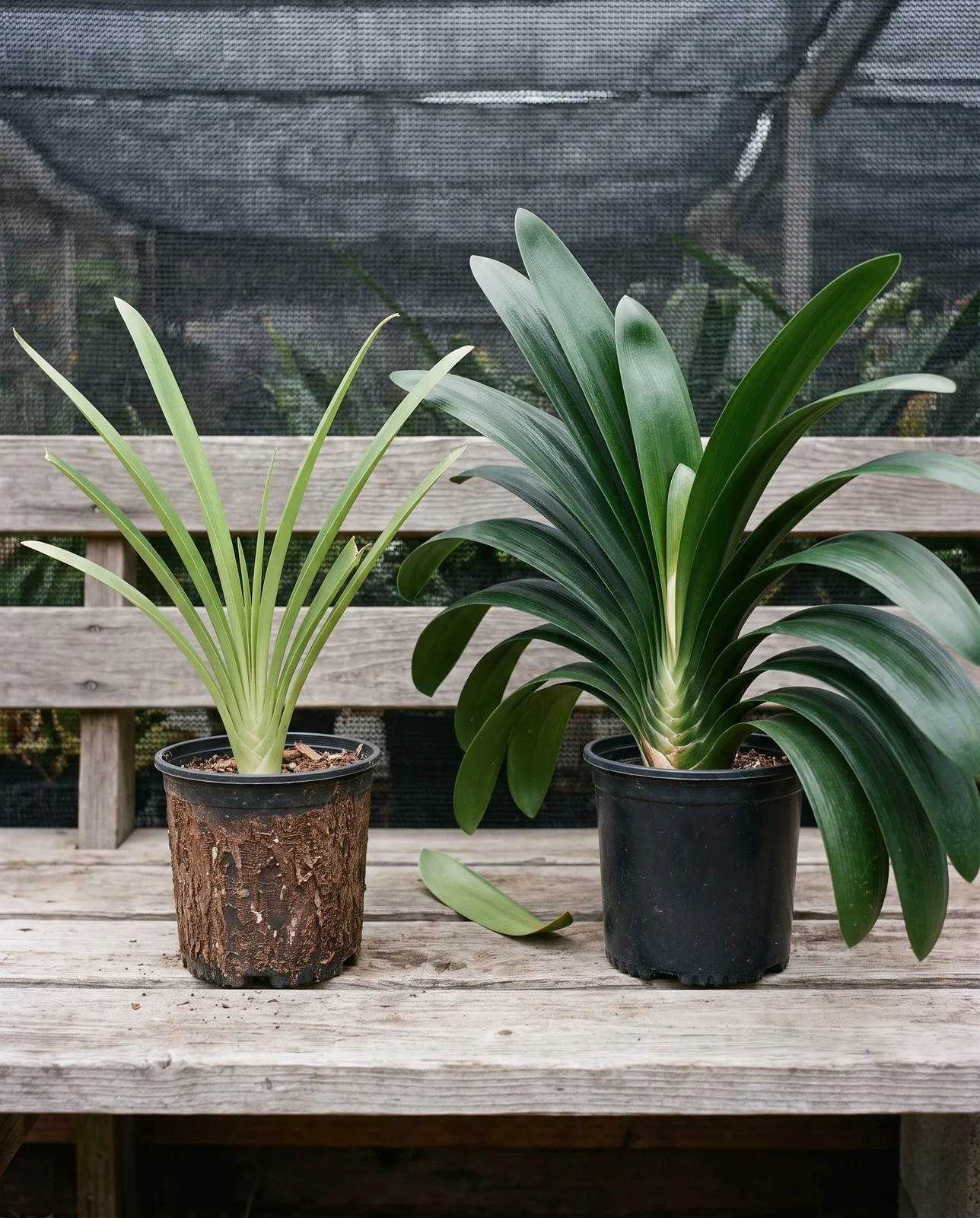
The flower stalk that stays too short
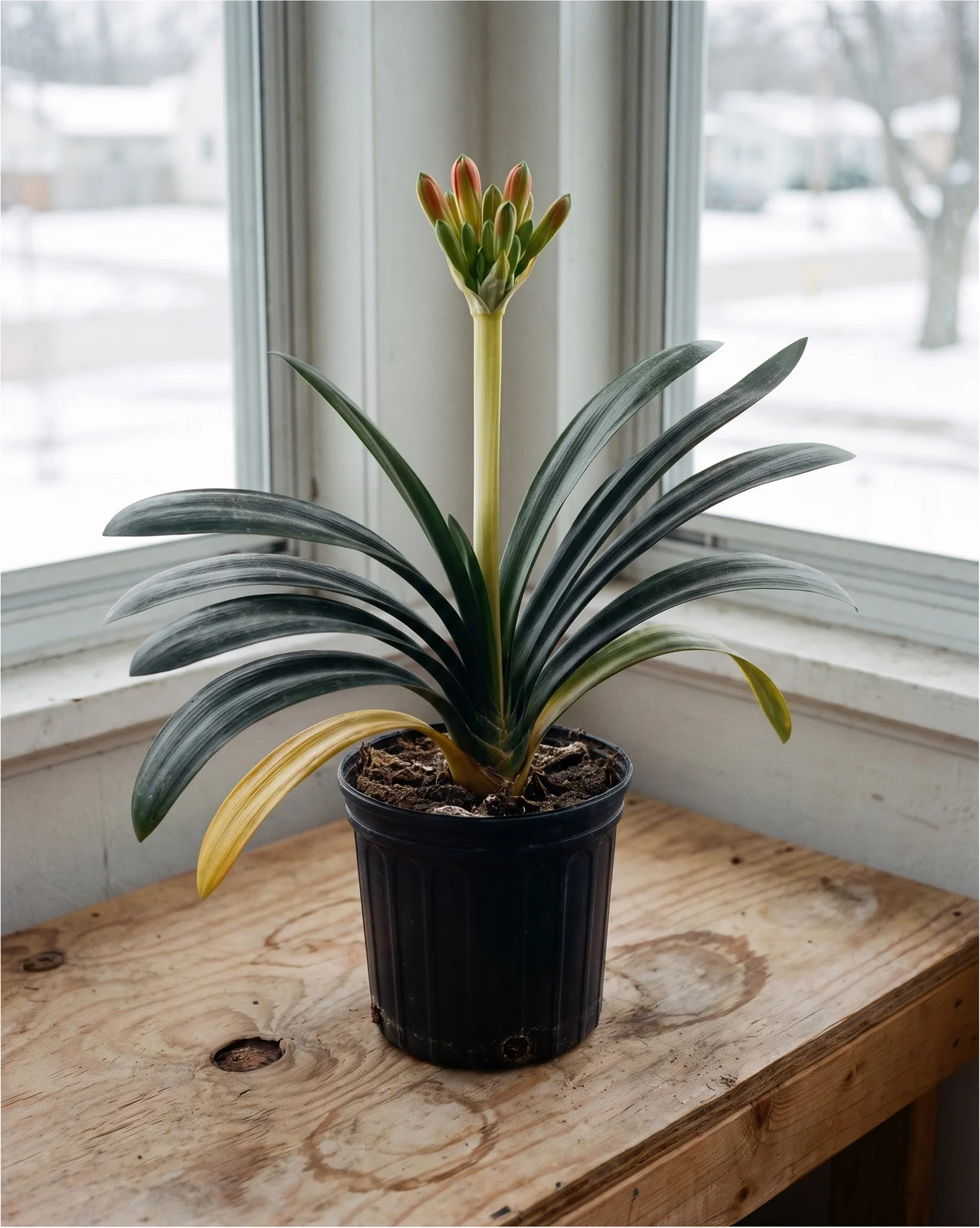
A flower head that opens down among the leaves, on a stalk too short to clear them, is the mark of a rest that was not cool enough or not long enough. Skip that cool, dry six to eight weeks below 50 degrees Fahrenheit, or cut it short, and the flowers come early on stubby stems. Too little water, weak light, thin feeding and a dense mix can do the same thing. The failure also arrives from the other direction. Warm the room up too fast and the plant jumps the gun, opening flowers before the stem has grown out from the leaves. That warmth shortens the life of the blooms as well. The correction is made the following autumn, in a colder room and over a longer window.
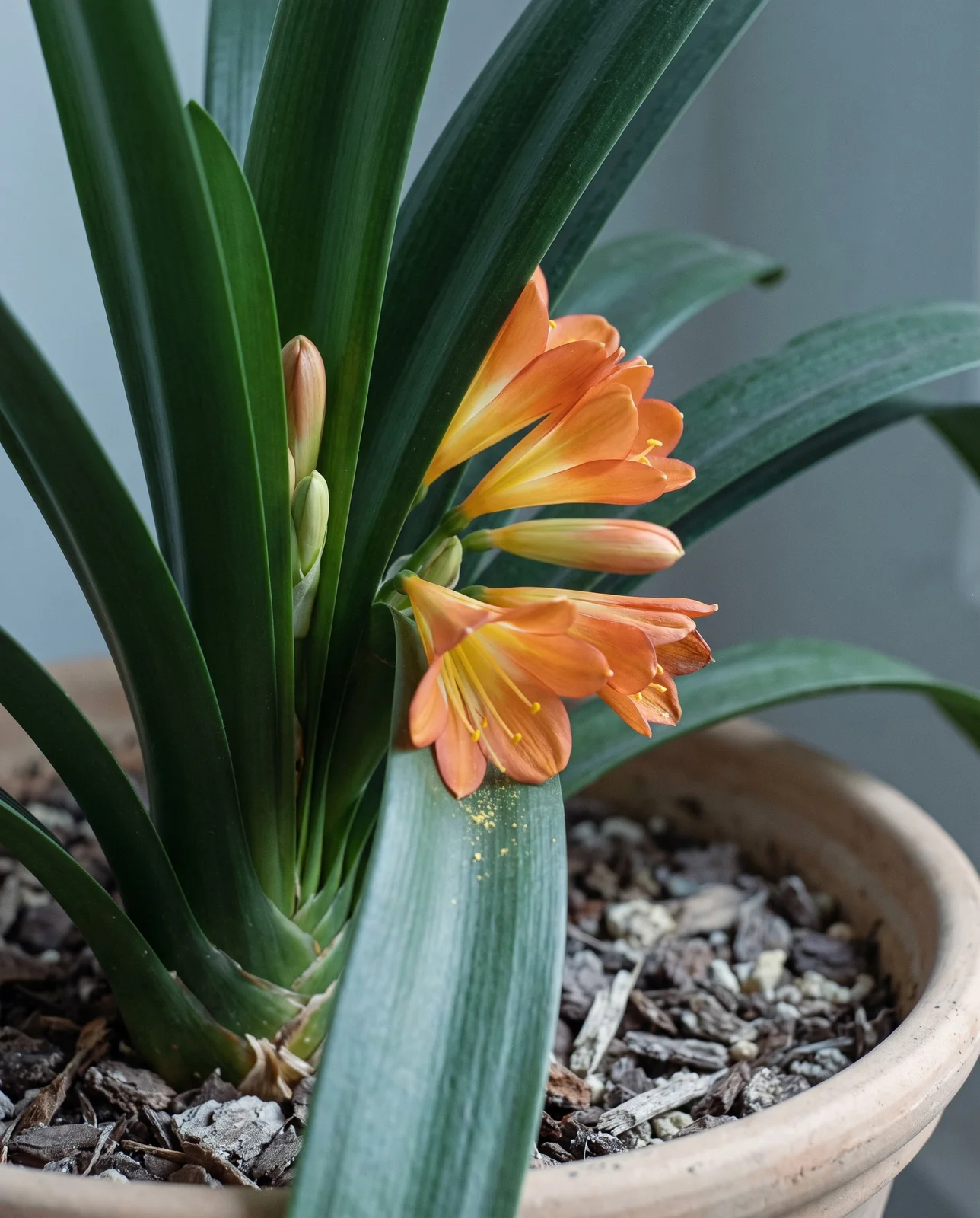
Light
Clivia wants bright light with the sun kept off it: a bright north window, or an east or west window shaded from the sun. Too much sun burns the plant indoors or out, leaving bleached and browned patches on the leaves. A hand held between the light and the leaves should cast no shadow on them; if it does, the light is too strong. Outdoors the plant needs dappled shade, because it is sensitive to sunlight and burns easily.
Those leaves do the whole season's work, so scorched ones stay on the plant. They collect most of the energy that fuels the flowers, through late spring and summer. Take off only a leaf that has gone almost entirely brown, and use a sterile tool. Light shows in the leaves one other way: a leaf that splits lengthwise is asking for more sun.
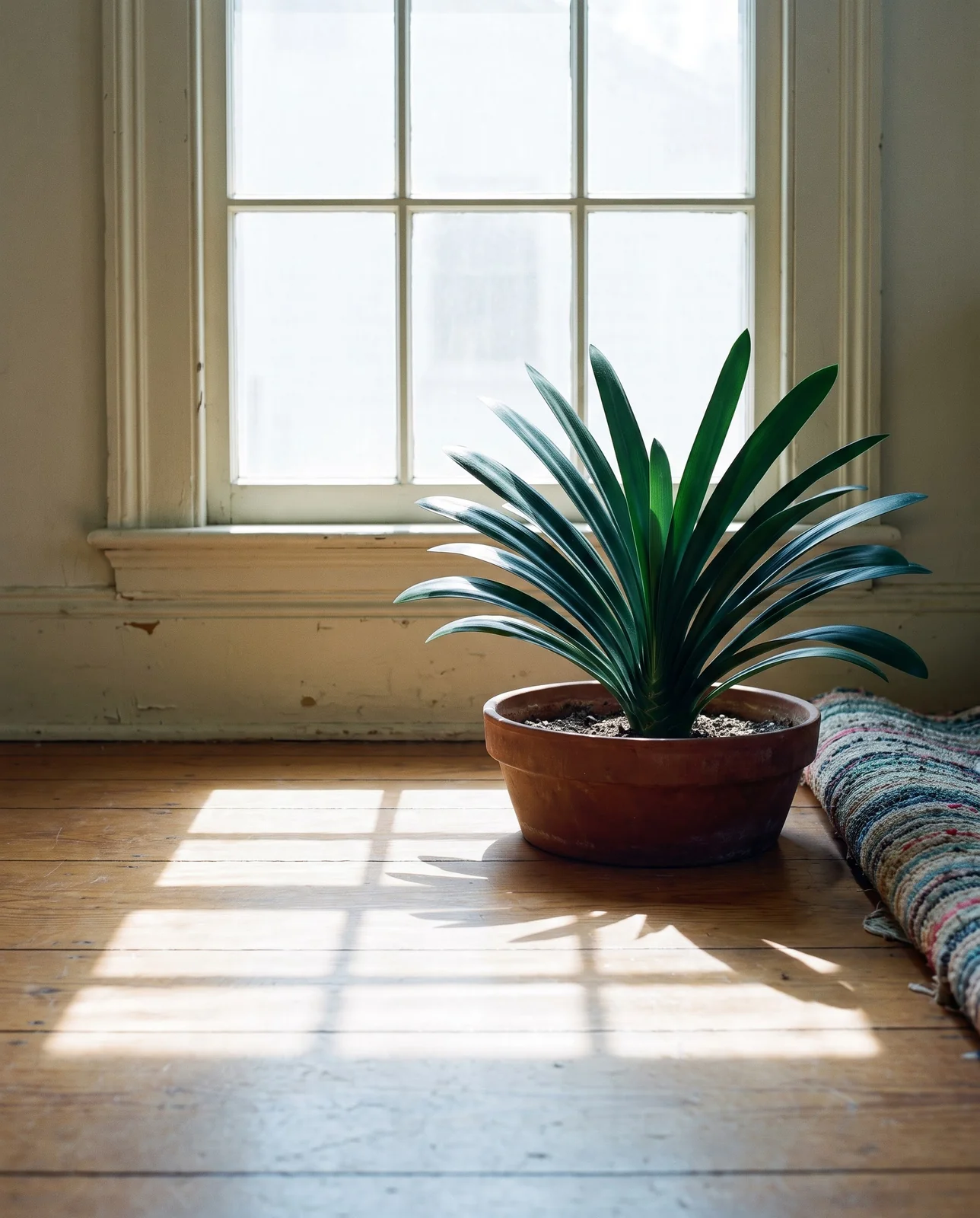
Water
Water a clivia when the top inch of the mix has gone dry to the touch, and drop any weekly routine, because a weekly watering is usually more than the plant can use. The thick roots store water and leave it genuinely drought tolerant, so the mistakes run almost entirely one way. A mix that stays wet rots the roots, and the first sign turns up on the leaves as pale green or bright orange cankers. Yellow spots point the same direction, to too much water or to water sitting in the heart of the fan. Keep water out of the leaf fan itself, where it brings on crown rot, and never let the pot stand in water. Water at the soil, since overhead watering can bring leaf diseases such as rust.
Watering changes completely for the rest period, and that change is half of what makes the plant flower. When the rest ends and a flower stalk starts up, keep the soil just moist until the stalk reaches 6 inches, then water normally. Brown leaf tips are the ambiguous symptom. They follow a nearby heating or air conditioning vent, overfeeding, a rest that ran too warm, too little water, or air that is very dry.
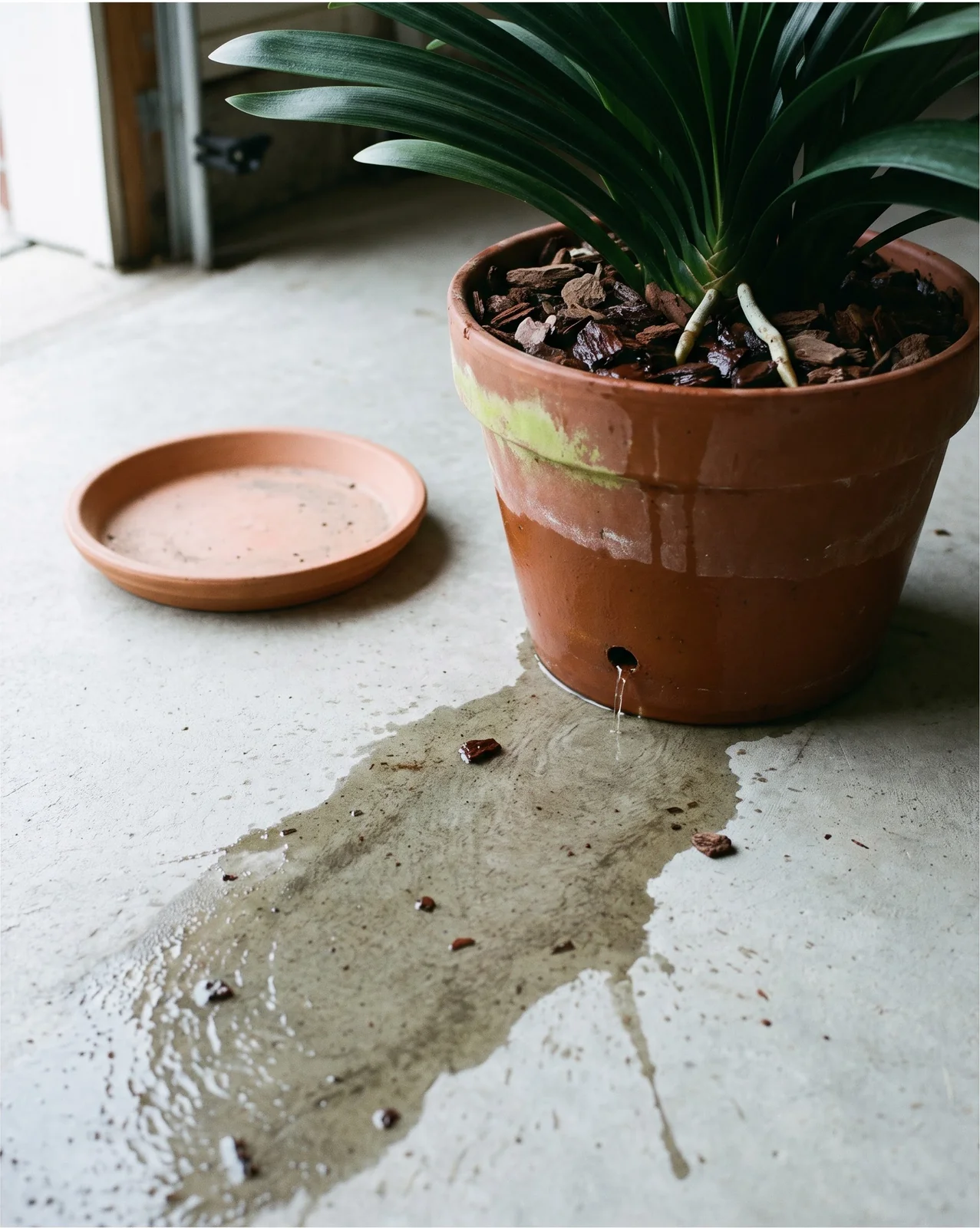
Pot and soil
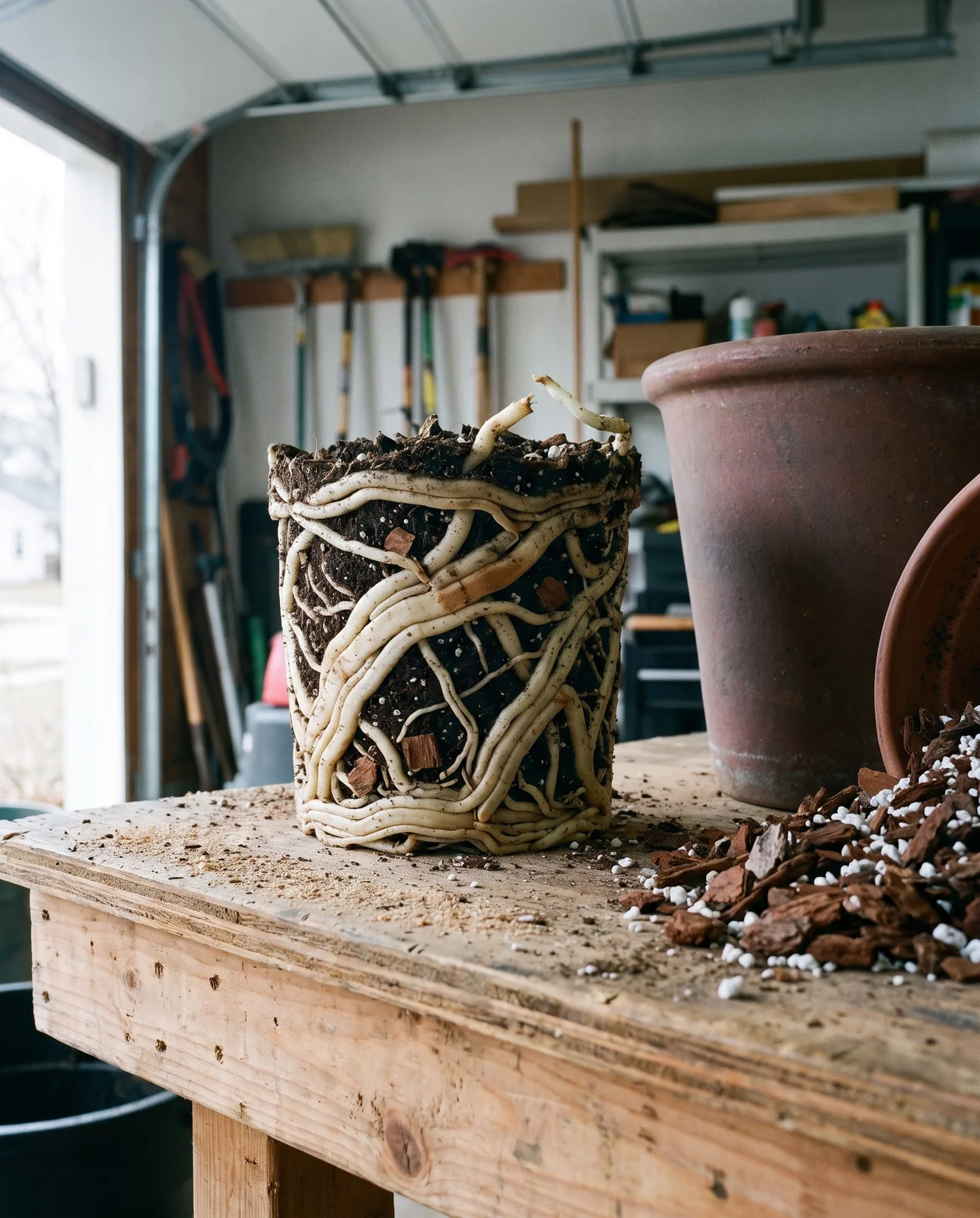
A clivia flowers best when its roots are crowded, so the pot stays small on purpose and gets changed as rarely as the plant allows. Fleshy roots pushing up above the mix are normal and are not on their own a reason to repot. In a well grown plant that root mass can lift the whole plant and its medium out of the container. Move it only once the roots have completely filled the pot, which works out at roughly every three to five years, and then go up no more than 2 inches in pot diameter. A mature clivia is top heavy, so a wide-based clay pot that will not tip over is the usual choice.
The mix matters more than the pot. These roots are thick, spongy and semi-epiphytic: they have to meet air to survive, and ordinary soil rots them and eventually kills the plant. Coarse and well drained is the requirement, and orchid mixes suit it exactly. A soil-based mix with plenty of peat moss, ground pine bark and coarse sand or perlite gives the mildly acidic, open medium it wants, and at least half of that should be organic matter. In the wild the rhizome sits in a deposit of leaf litter, so an airy mix works and a dense one does not. Wear gloves for repotting and dividing, and wash clothes and tools afterward, because the plant is toxic.
Feeding
Feed a clivia through its growing season and stop completely for the winter rest. The intervals vary: a balanced fertilizer once a month, monthly at half the recommended strength with a water-soluble 20-20-20, or every two weeks from spring into fall. Feeding stops in the fall, either by mid-September or the moment the cool rest begins. It restarts once ordinary room temperatures return, roughly April to August. Growers also give a single dose of a higher-potassium fertilizer right after the dry rest, around February, to push the plant into bloom, then monthly 20-20-20 once flowering starts.
After it flowers
When the last flowers fade, cut the stalk off at its base, unless you want seed. Letting seed develop takes a lot of the plant's resources and can cost it flowers and strength. Indoors the question usually settles itself, because natural pollination does not happen in a house, and a berry forms only where the flowers were hand-pollinated with a fine paintbrush.
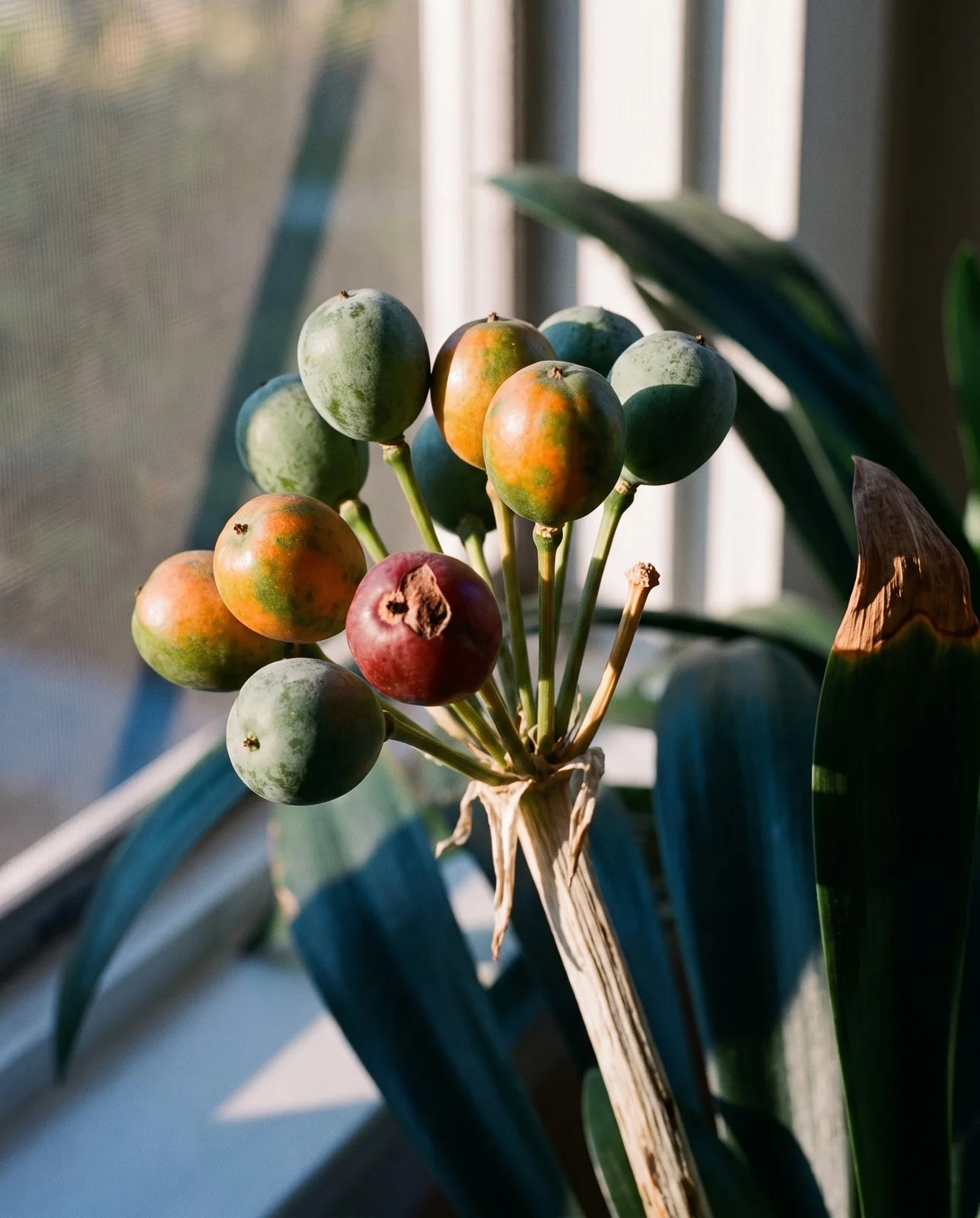
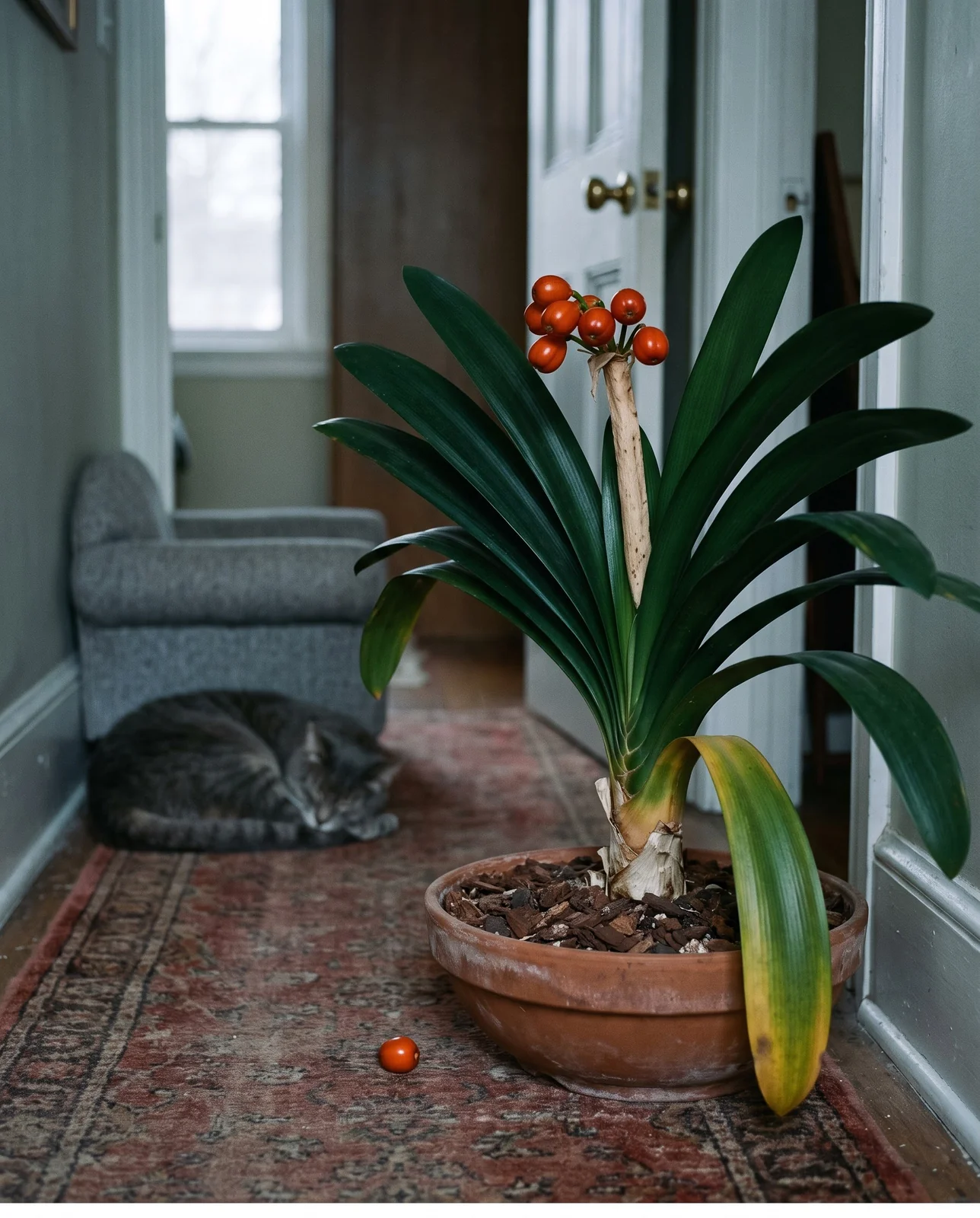
A pollinated flower makes a green berry about the size of a cherry, which reddens slowly over many weeks. The red, orange or yellow ball left sitting on an old stalk is that berry, with the seed inside. Ripening runs on the scale of seasons, close to a year from flower to ripe seed. A berry carried that long is one the plant has been feeding all year.
Offsets and growing from seed
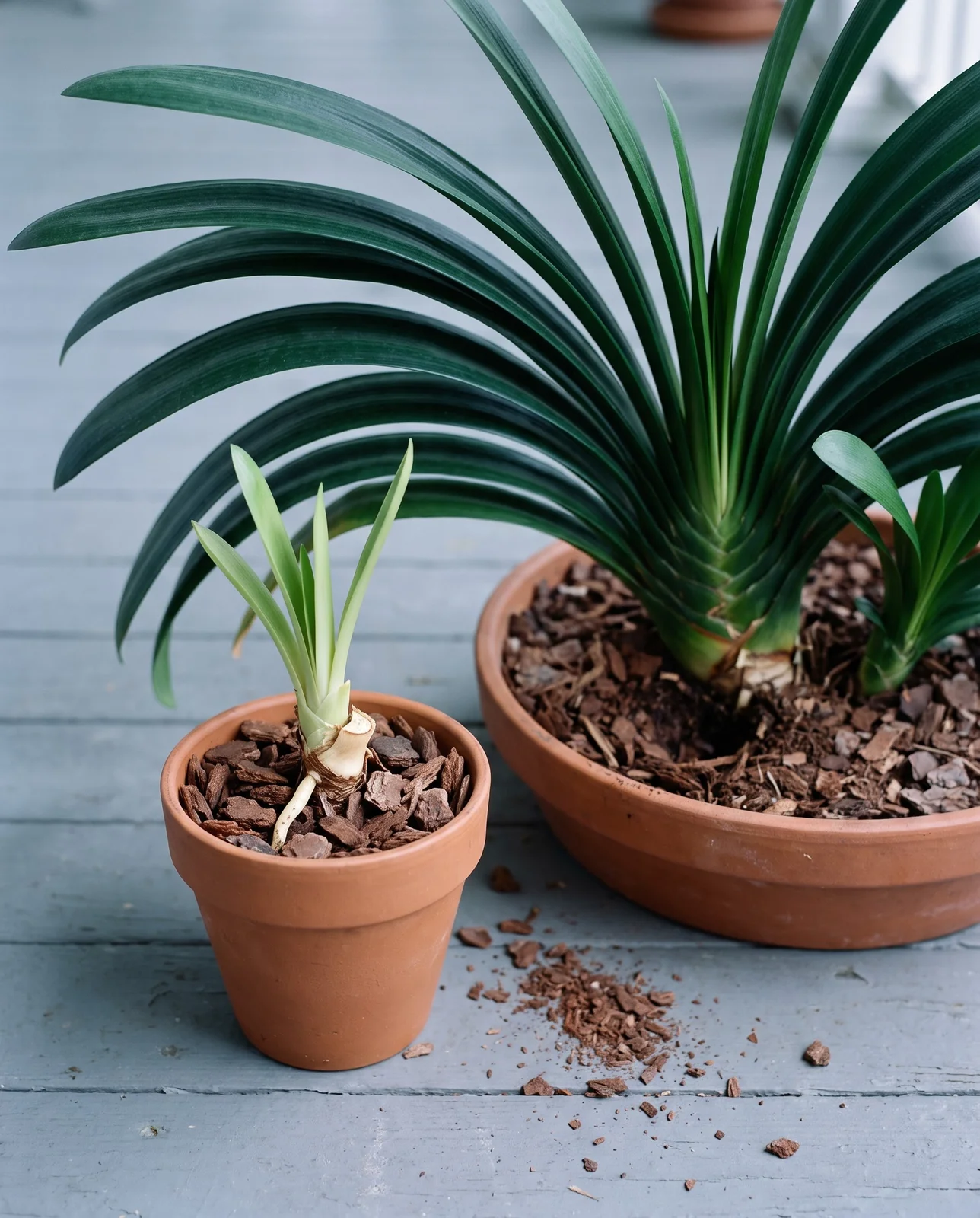
Division is the practical way to make more clivias, and the only way to keep a color true. A mature plant, from 3 to 4 years old, begins throwing one or more offsets a year, and an offset can come away from the parent once it has 3 or 4 leaves. Take the ones with real size, pot them into a fast-draining seed-starting mix, and keep them warm at around 70 degrees Fahrenheit. Then wait, because a split plant may not flower for a couple of seasons.
Seed is the slower road and the one that gives plants in quantity. Sow it fresh, keep it evenly moist and warm at 80 to 85 degrees Fahrenheit, and expect slow germination, commonly four to six weeks. Seedlings can sit in their trays for as long as two years before they are big enough to plant on, and a young plant flowers only once it carries about a dozen leaves.
Why clivias cost what they do
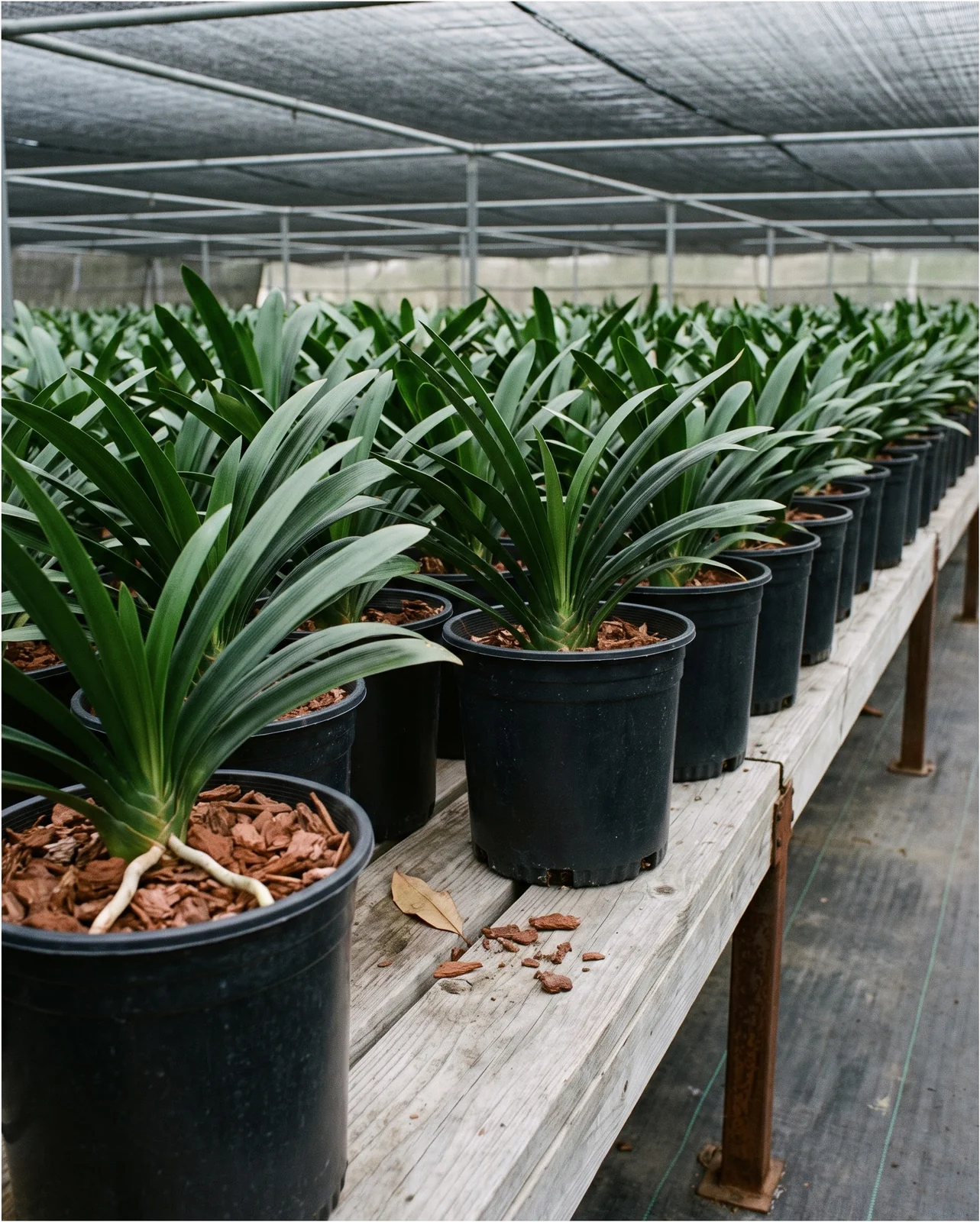
A clivia costs what it does because nobody can grow one quickly. From seed it takes three to five years to bloom for the first time, and the big plants that fill a whole container are five to 10 years or more of growth. The plant is slow-growing and difficult to propagate, and it cannot be tissue-cultured, so growers cannot fill a bench with identical plants the way a peace lily allows. Hence the standard advice: buy a plant already at flowering size unless you are very patient.
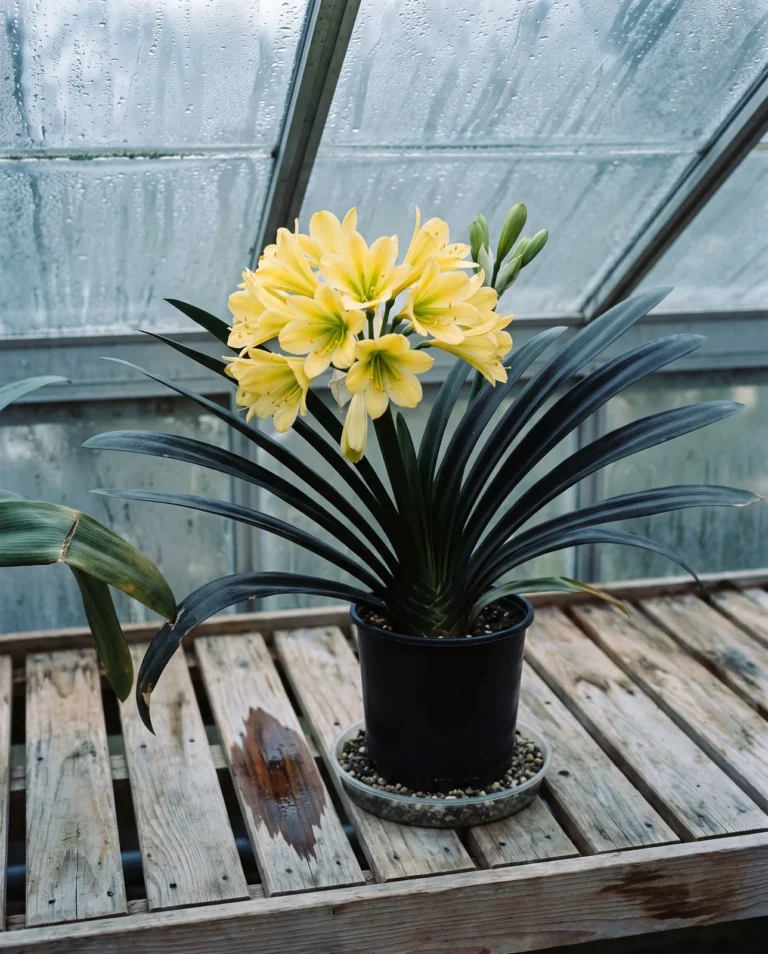
Color is the other half of the price. Yellow-flowered cultivars are rare and quite expensive, and the premium is old: the yellow form turned up in the late 1800s and set off an interest that has not faded since. Seed will not reproduce it, so a dependable yellow comes from division, one offset at a time. Most of the breeding now happens in Japan, China and Korea.
Clivia types worth telling apart
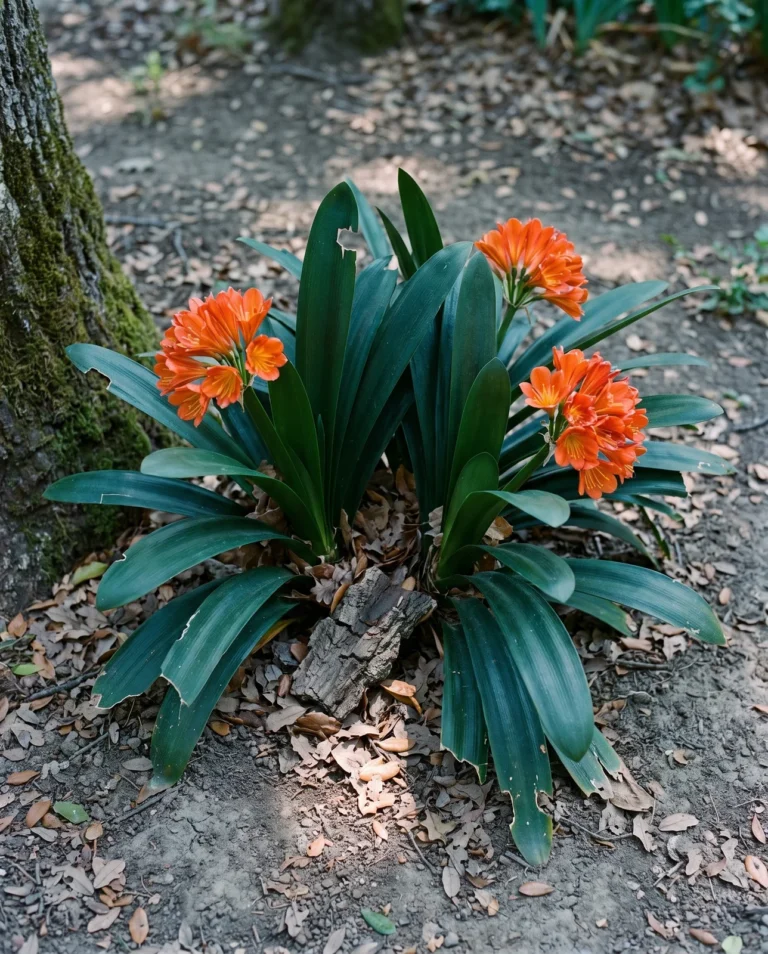
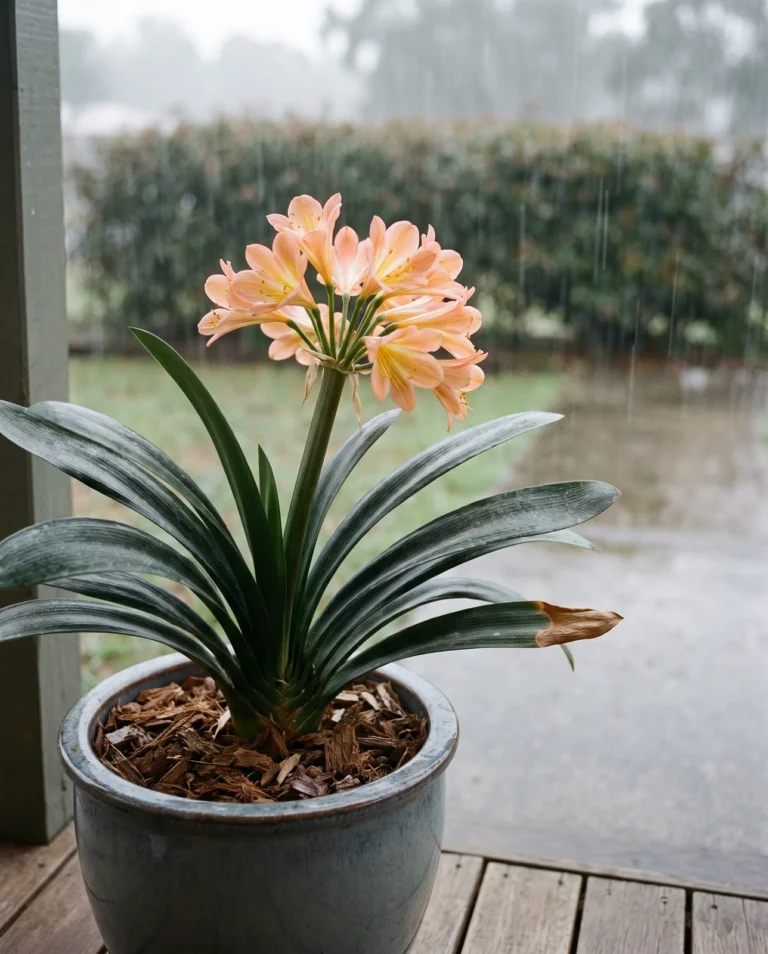
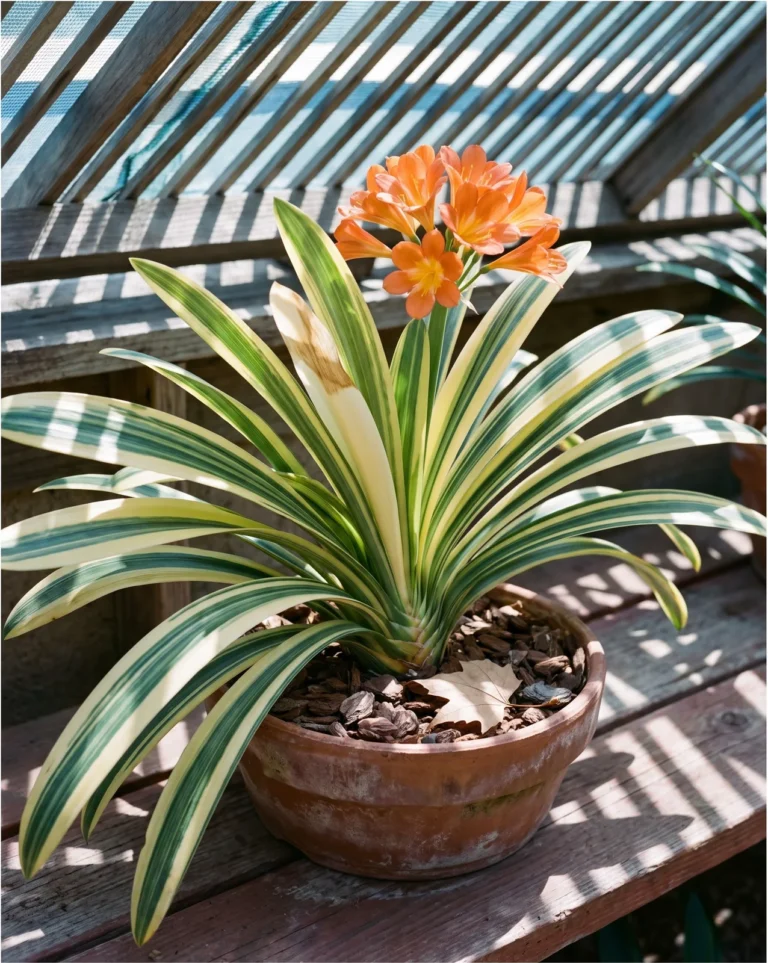
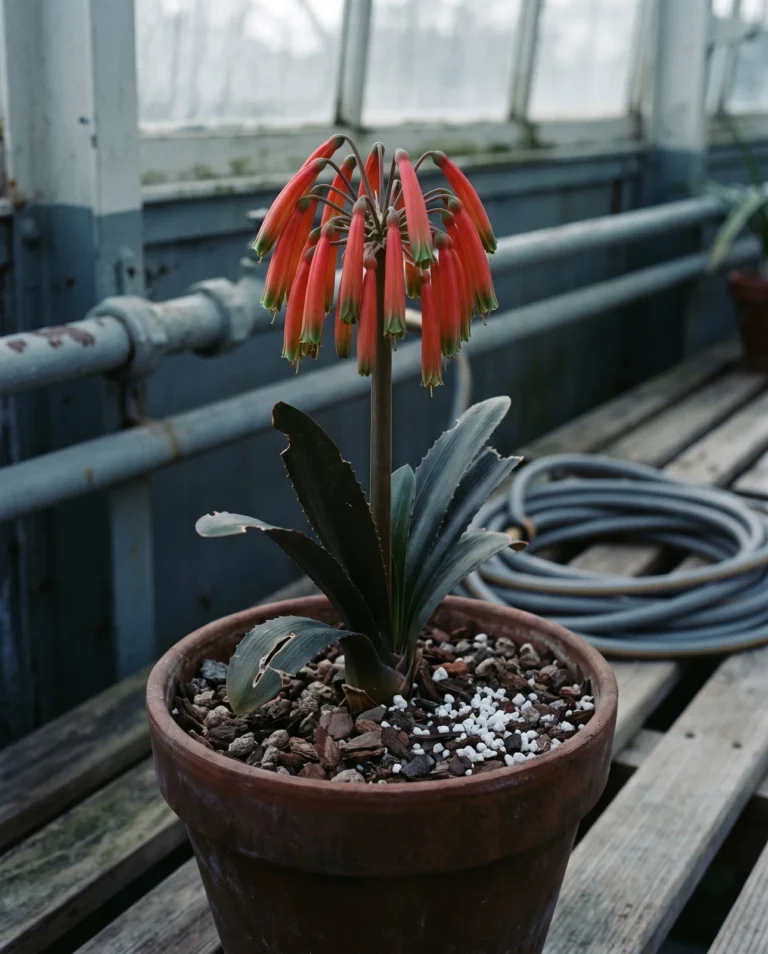
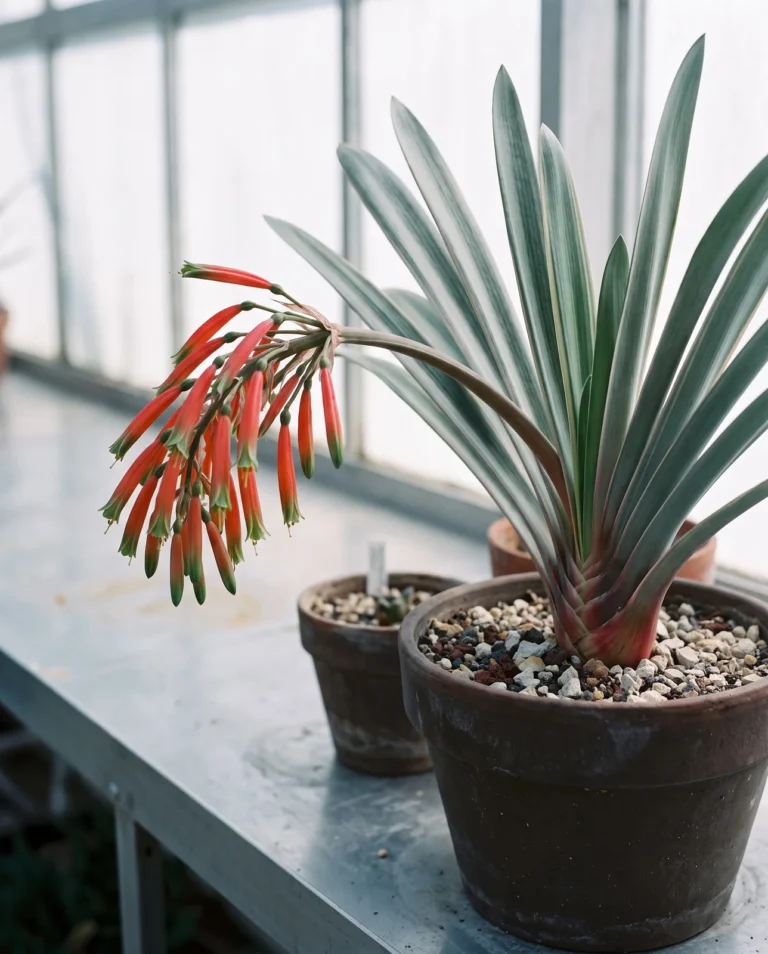
Nearly every clivia sold is one species in a handful of color forms, and the rest of the genus turns up mostly in collections. Among the flower types grown as houseplants this one is unusual: the differences that move the price are differences of color.
Growing clivia outdoors
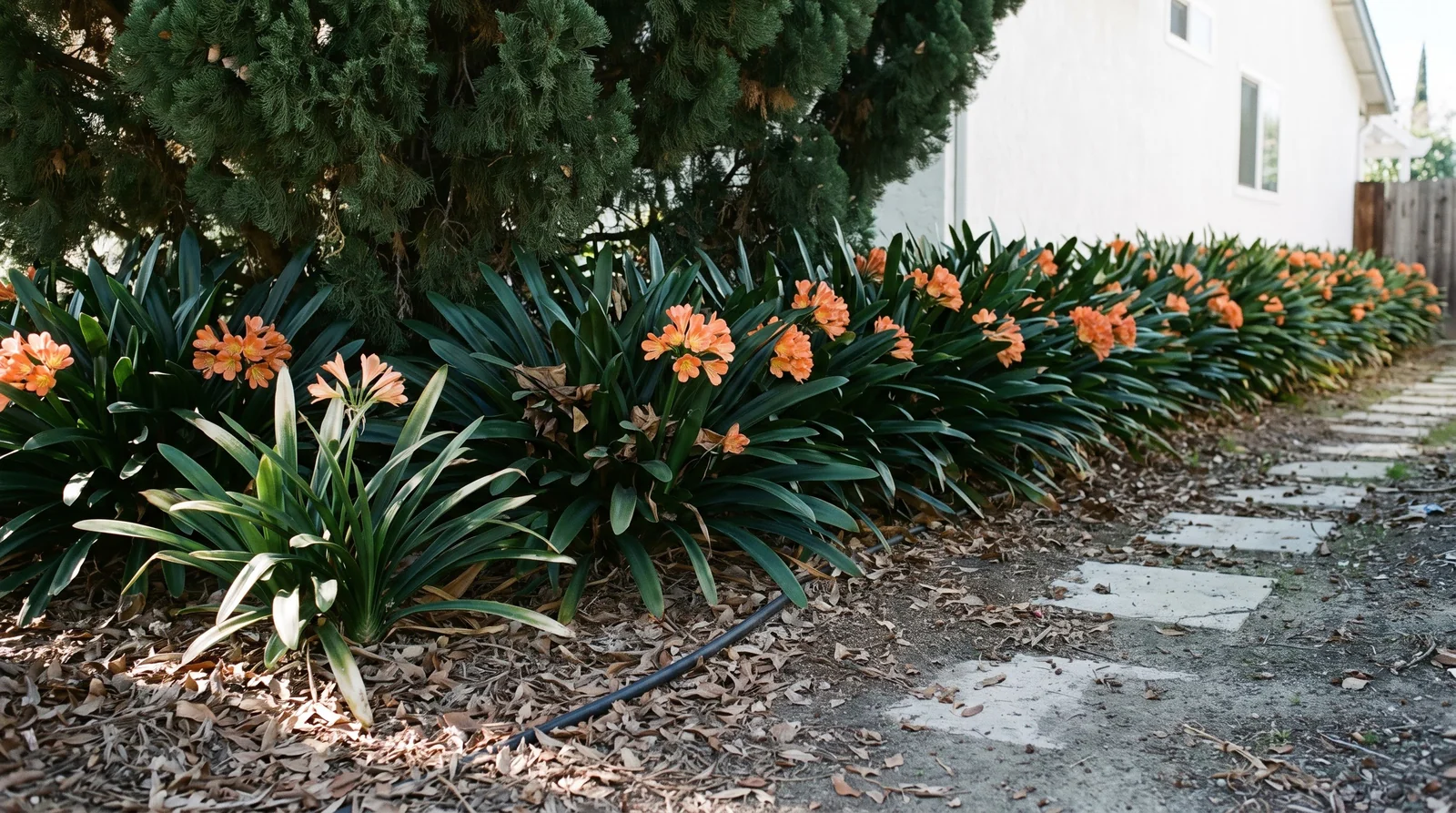
Clivia lives outdoors year round only where hard frost stays away, which means zones 9 to 11. Inside that band it goes into the ground in shade, where big clumps fill parks, gardens and front yards, and where agapanthus and other South African natives take the open sun. Water it through the warmer months and let it go dry for winter. Pick a sheltered position, because the plant is frost tender and damage from cold wind takes a long time to grow out.
Everywhere colder, clivia is a container plant that summers outside and comes in for the winter. It takes only light frosts even at home and will not survive much below freezing, so it comes indoors before the first frost. That move opens the cool rest for most people. The fall nights that end the outdoor season are the ones the rest is built on, below 50 degrees Fahrenheit and starting around November. Outdoors it meets one pest it rarely sees inside: snails, which feed on the flowers.
Toxicity and pets
Clivia is toxic to cats and dogs, and the toxic principle is lycorine with other alkaloids. ASPCA gives vomiting, salivation and diarrhea as the clinical signs, with convulsions, tremors, low blood pressure and cardiac arrhythmias after a large ingestion. NC State rates the poison severity low, names the same alkaloids, and puts flowers, fruits, leaves, roots, seeds and stems on the poisonous list. The alkaloid content is small, and a large quantity has to be eaten before symptoms appear.
Dose is what separates a nibbled leaf from an emergency. In a controlled study, lycorine injected into dogs brought on nausea and vomiting from 0.5 mg per kilogram of body weight. The effect reached statistical significance at 1.0 mg/kg and peaked at 2 mg/kg, arriving within two and a half hours and passing quickly. In a house with small children the berries are the part to watch, since fruits and seeds sit on the poisonous list.
Pests and problems
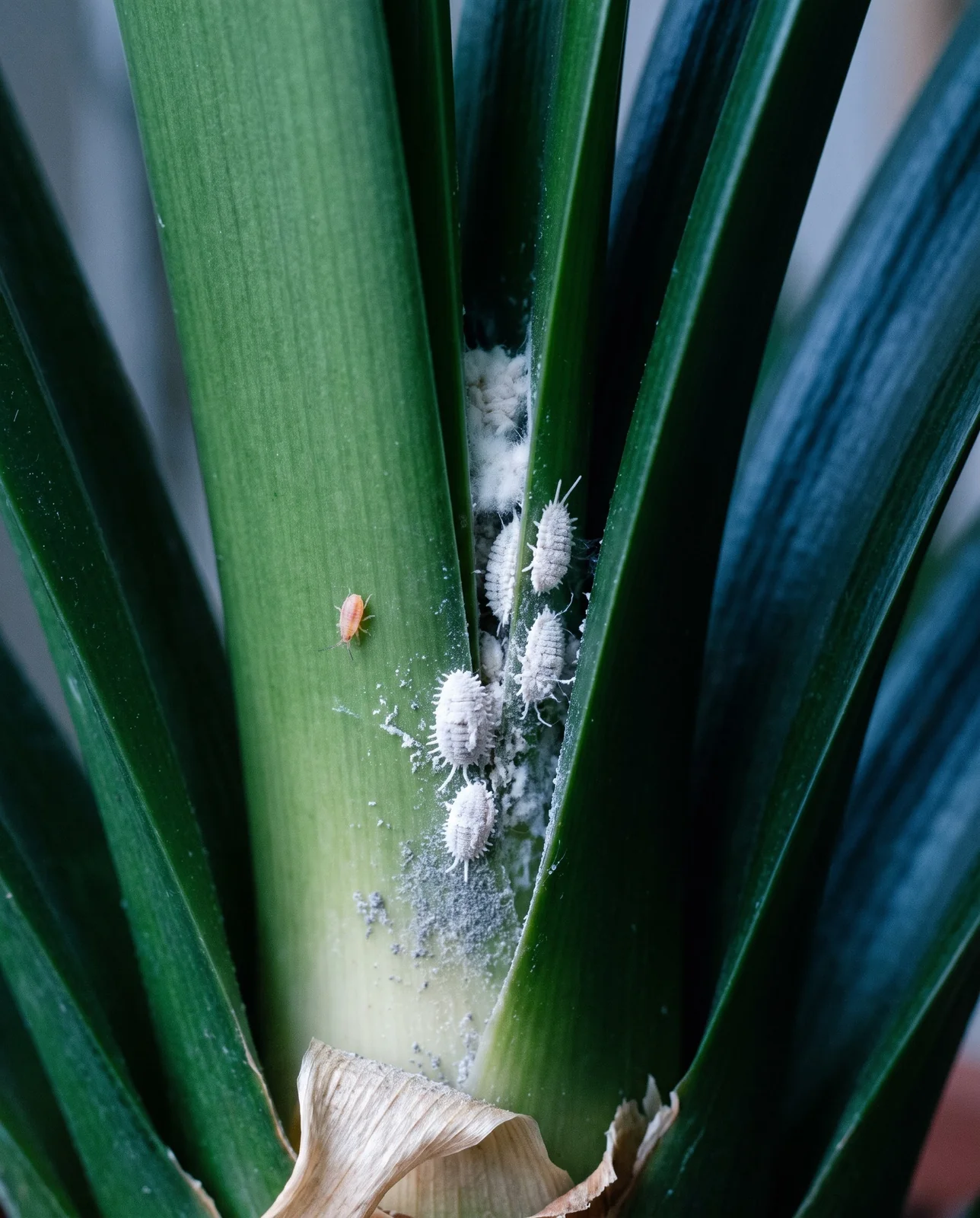
Clivia carries few pests, and mealybugs head the short list: they hide in the tight spaces between the leaf bases and go unnoticed until a plant is badly infested. Scale and mites fill out the rest, and indoors either turns up only occasionally. Disease is a simpler story, because most of it is water. Wet conditions and overwatering lead to root rot, which ordinary soil packed around those air-hungry roots only makes worse.
What goes wrong most often
Ordered by how often each one comes up, the commonest first.
Where the plant is old enough, the cause is a winter spent at room temperature, or a dim position the rest of the year. Give it a cold, dry spell next fall.
Yellow spots mean too much water, or water sitting in the heart of the fan; a leaf splitting down its length wants more sun. Water at the soil and keep the fan dry.
From seed the first flower is three to five years away, and 2 to 5 years from a division. Nothing shortens this but time.
Buds open at the crown and the stem never lifts them clear: the rest was too warm or too short, or the warmth came back too fast. Correct it next autumn in a colder room, held longer.
Pale green or bright orange cankers are the first sign of a mix that stays wet. Repot into a coarse orchid-type mix and let the top inch dry between waterings.
They wedge in between the leaf bases where nobody looks, and scale and mites come with them. Look into the fan whenever you water.
How long a clivia lives
Nobody has published a lifespan for clivia. What can be given is the pace. The plant is slow-growing and can sit in the same pot for as long as five years without being disturbed. Once a season's flowering is finished it adds four or more new leaves in a year. Those two figures are the closest thing to a clock on it: a clump wide enough to fill a large pot has been building for many seasons.
Myths worth dropping
Five ideas that come up in nearly every clivia conversation.
The myth: A bigger pot will make it bloom.
The reality: Clivia does best when its roots are constricted, and the pot is changed only once the roots have completely filled it.
The myth: Clivia is a low light plant, so any dark corner will do.
The reality: A plant kept dim rarely flowers, though it still makes good foliage. It wants bright diffused light: a north window, or one facing east or west with the sun shaded off.
The myth: More fertilizer will push a stubborn plant into flower.
The reality: More fertilizer is not better on this plant. Cold and drought are what set the buds.
The myth: Cutting the leaves back forces flowers.
The reality: The big leaves collect most of the energy that fuels the flowers, so only an almost entirely brown leaf comes off, and then with a sterile tool.
The myth: Yellow clivias are a different species.
The reality: The yellow houseplant is a color form of the same species, and rare yellow-flowered plants occur naturally in every species of the genus.
What to expect, year by year
Three stages, assuming the plant is healthy and the winter rest actually happens.
Year one is quiet. A plant bought in flower finishes its head and then spends the season making leaves, and a seedling will not flower until it carries about a dozen leaves. The work of that first year is position and routine. Bright light with the sun kept off the leaves, water once the top inch has dried, and feeding only while the plant grows.
The first real test comes the following autumn. Move the plant somewhere cool and dry, hold it there, then bring it back into warmth. Buds show about two weeks after the temperature is raised at the fastest, and can take as long as two months at the slowest. A stalk that lifts the head clear of the leaves says the room was cold enough for long enough, and a head stuck among them says it was not.
From the third or fourth year the plant changes character. A mature clivia begins producing one or more offsets a year, the single fan becomes a clump, and the pot fills. After that it runs on a decade-scale clock: five to 10 years or more to fill a whole container, divided when it gets there, and left alone in between.
FAQ
Do clivias like sun or shade?
Shade, with bright light and no direct sun on the leaves. Indoors that means a bright north window, or an east or west window shaded from the sun; outdoors, dappled shade, because clivia burns easily.
Why are clivias so expensive?
Because nobody can grow one quickly: three to five years from seed to the first flower, and no way to mass-produce duplicates, since the plant cannot be tissue-cultured. Yellow cultivars cost more again for being rare.
What do you do with clivias after they bloom?
Cut the flower stalk off at its base once the flowers fade, unless you want seed. Carrying seed takes a lot of the plant's resources and can cost it flowers and strength.
How do you look after a clivia plant?
Bright indirect light and water only when the top inch of the mix has dried. Give it a coarse orchid-type mix in a pot the roots have filled, monthly feeding while it grows, and a cool, dry rest in late fall and winter.
Why is my clivia not flowering?
Most often because it missed its cool, dry rest, or because it sits in low light through the year. Age and pot size come next: a plant flowers once it has about a dozen leaves, and pots are changed only when roots fill them.
How can I encourage my clivia to bloom?
Put it in a room below 50 degrees Fahrenheit and stop watering for six to eight weeks, the most repeated of the schedules; others run to three full months. Then warm it and water again: buds usually follow between about two weeks and two months later.
How many times a year do clivias bloom?
Once, December to April on mature plants. A plant that missed its cold treatment may not bloom until late summer.
When should clivia be cut back?
Cut the flower stalk at its base when the flowers have faded. Leave the leaves alone; take off only an almost entirely brown one, with a sterile tool.
What zone does clivia grow in?
Zones 9 to 11 outdoors. Anywhere colder it is a container plant that comes in before the first frost.
What are common clivia plant problems?
Not flowering after a warm winter, a flower head stuck down among the leaves, root rot in a mix that stays wet, and mealybugs between the leaf bases.
Interesting tips
- The alkaloids that make clivia unpalatable to animals are also why its rhizomes are chopped and sold in South African markets as muti, a traditional medicine, though those rhizomes are extremely toxic.
- Leaf variegation in clivia passes only from the pod parent, the mother plant, so a cross made with variegated pollen will not carry the striping on.
- The flowers hold well and can be cut for a vase, and a cool room extends the display, because warmth during flowering shortens the life of the blooms.
Related Guides & Flowers
Calla lily
Another South African plant grown from a rhizome in pots, and another one that resents wet feet.
Tulips
The other flower that refuses to bloom without a cold spell first, though its cold comes from the ground.
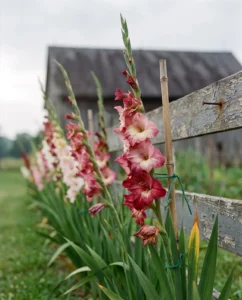
Gladiolus
A South African native that went the other way, into full sun and summer beds.
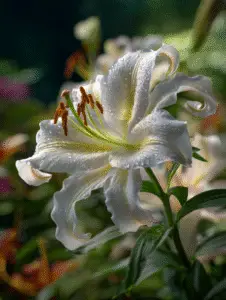
Lily
The true lilies, which share half a common name with the bush lily and little else.
Enjoying our flower guides? Add YourFlowersGuide as a preferred source on Google. It helps more readers find us.
Add to Preferred Sources