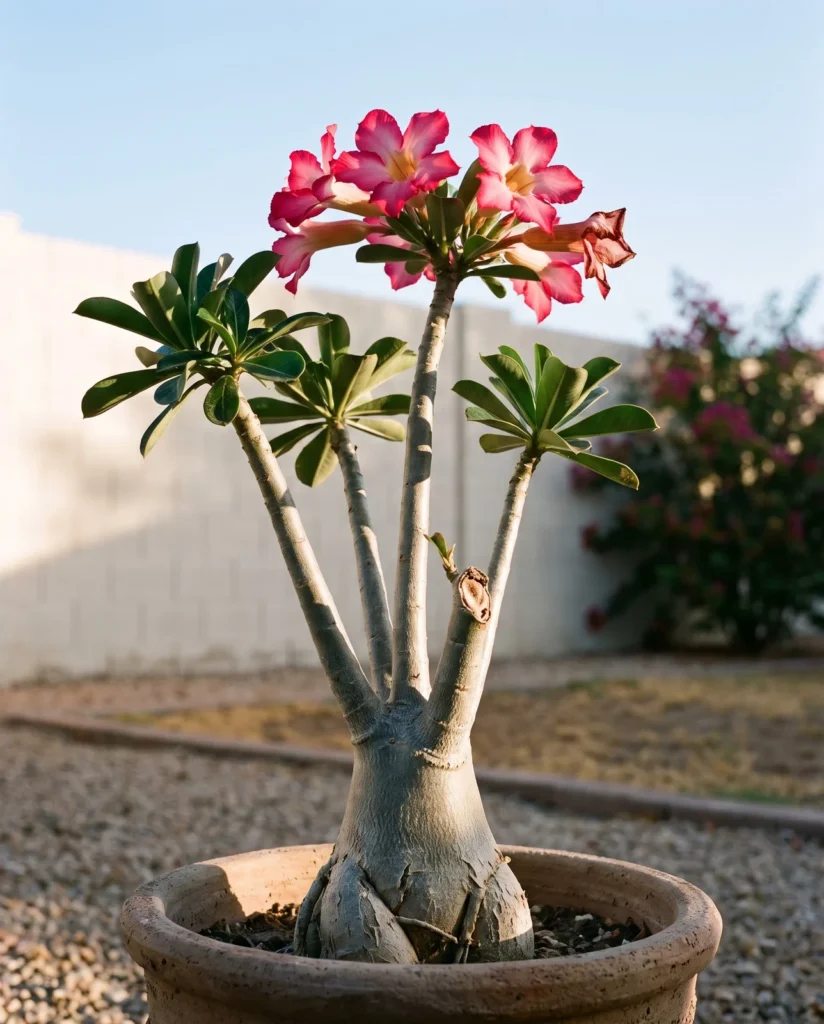
Not the crystal, and not the song
The name desert rose belongs to four unrelated things, but only one of them is a living plant. The other three are a gypsum mineral rosette, an anime title, and a Sting song with over 615 million video views. The plant is Adenium obesum, a succulent shrub sold under names like sabi star, kudu lily, mock azalea, desert azalea, and impala lily. The genus also answers to karoo rose.
What a desert rose is and where it comes from
Desert rose is a succulent shrub in the dogbane family, Apocynaceae, sitting in the subfamily Apocynoideae and the tribe Nerieae. It was first classified with oleander as Nerium obesum, then moved into Adenium, where that early name remains a synonym. Its native home stretches from west tropical Africa to the Arabian Peninsula and Tanzania. The genus has been split into as many as twelve species or gathered into five. That matters more here than taxonomy usually does, because the plants sold under one common name do not all behave alike in sun or in dormancy.
The swollen base is a caudex, a water-storage organ that helps the plant survive long dry spells. Most of its care comes down to protecting that reservoir. It takes a deep soak and then wants to dry out, because standing moisture rots the swollen base. Outside the tropics, it is grown mostly in containers, both as a houseplant and as a bonsai subject.
The sap is the first thing to know
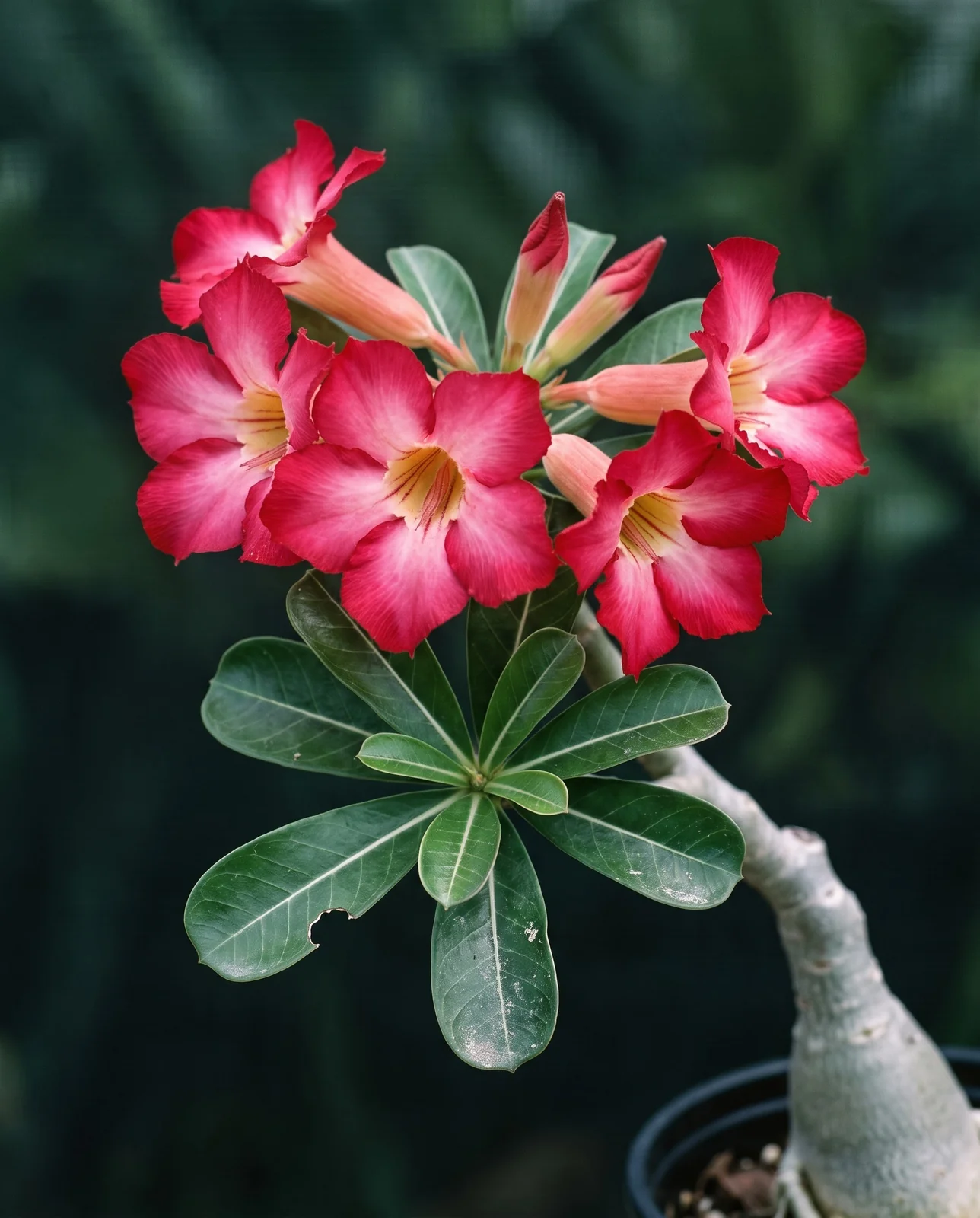
All parts of the plant are poisonous if eaten, and the milky sap causes contact dermatitis on bare skin. The plant contains cardiac glycosides, specifically obebioside B. In heart muscle, these compounds inhibit the sodium-potassium pump, which raises excitability and can trigger arrhythmias. Swallowing sap or plant tissue causes nausea, vomiting, and diarrhea, while severe exposure can lead to heart block and irregular rhythms. The ASPCA classifies desert rose as toxic to dogs, cats, and horses, noting vomiting, diarrhea, poor appetite, depression, irregular heartbeat, and death. In East Africa, the sap was historically used as an arrow and fish poison.
For people, the poison severity is low, largely because the plant tissue is extremely bitter. It is unappealing enough that few people or animals are likely to eat enough to be seriously poisoned, and even goats are said to leave it alone. No human deaths from adenium poisoning are known. On skin, the sap usually causes only local irritation or contact dermatitis, but the real danger is sap reaching the eyes or mouth. Wash any sap off immediately and keep it well away from your eyes. Wear gloves when pruning or repotting, and keep cuttings away from pets and children. Keep trimmings out of the compost pile, because the toxic compounds survive drying and could end up on food crops.
What it looks like and how big it gets
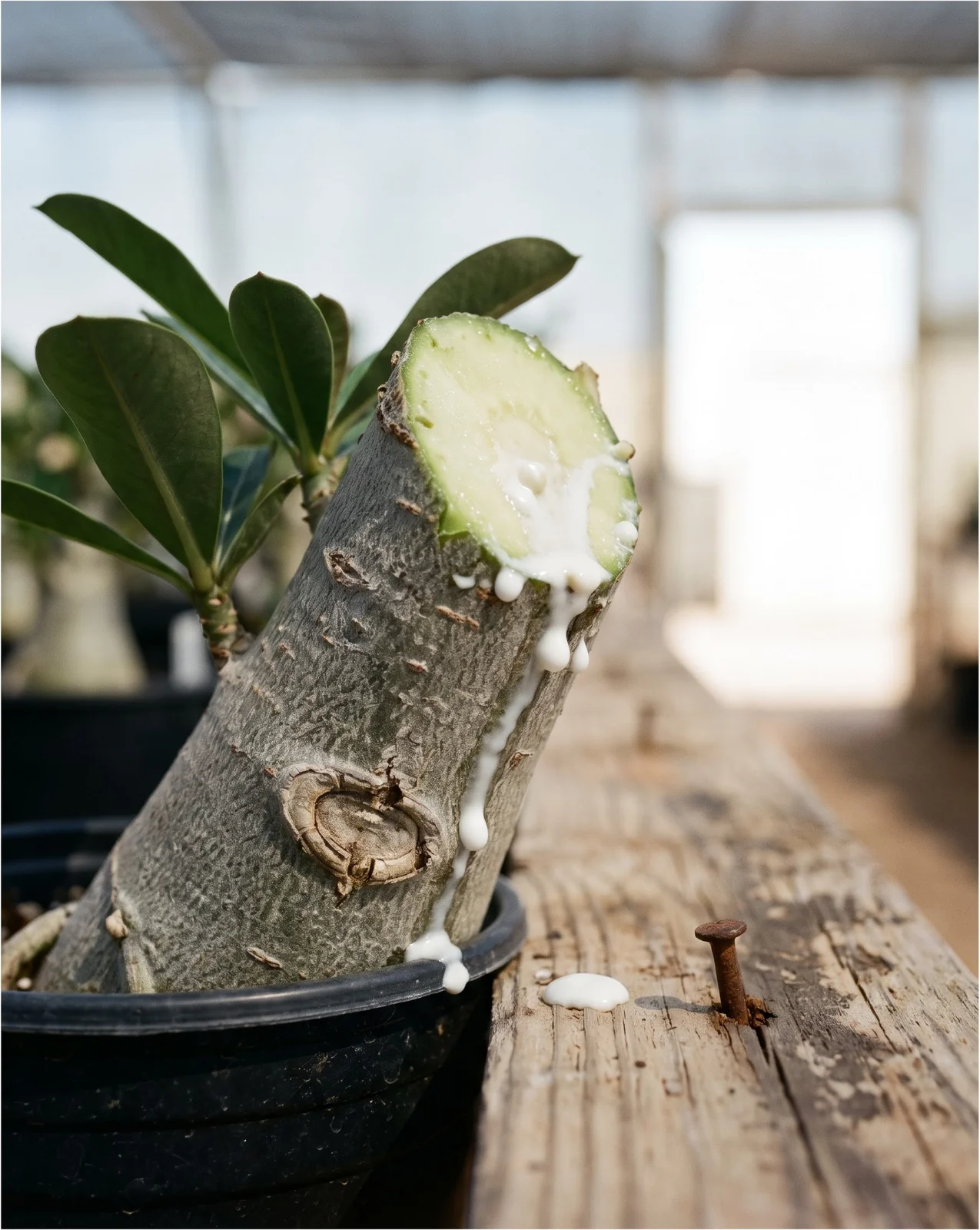
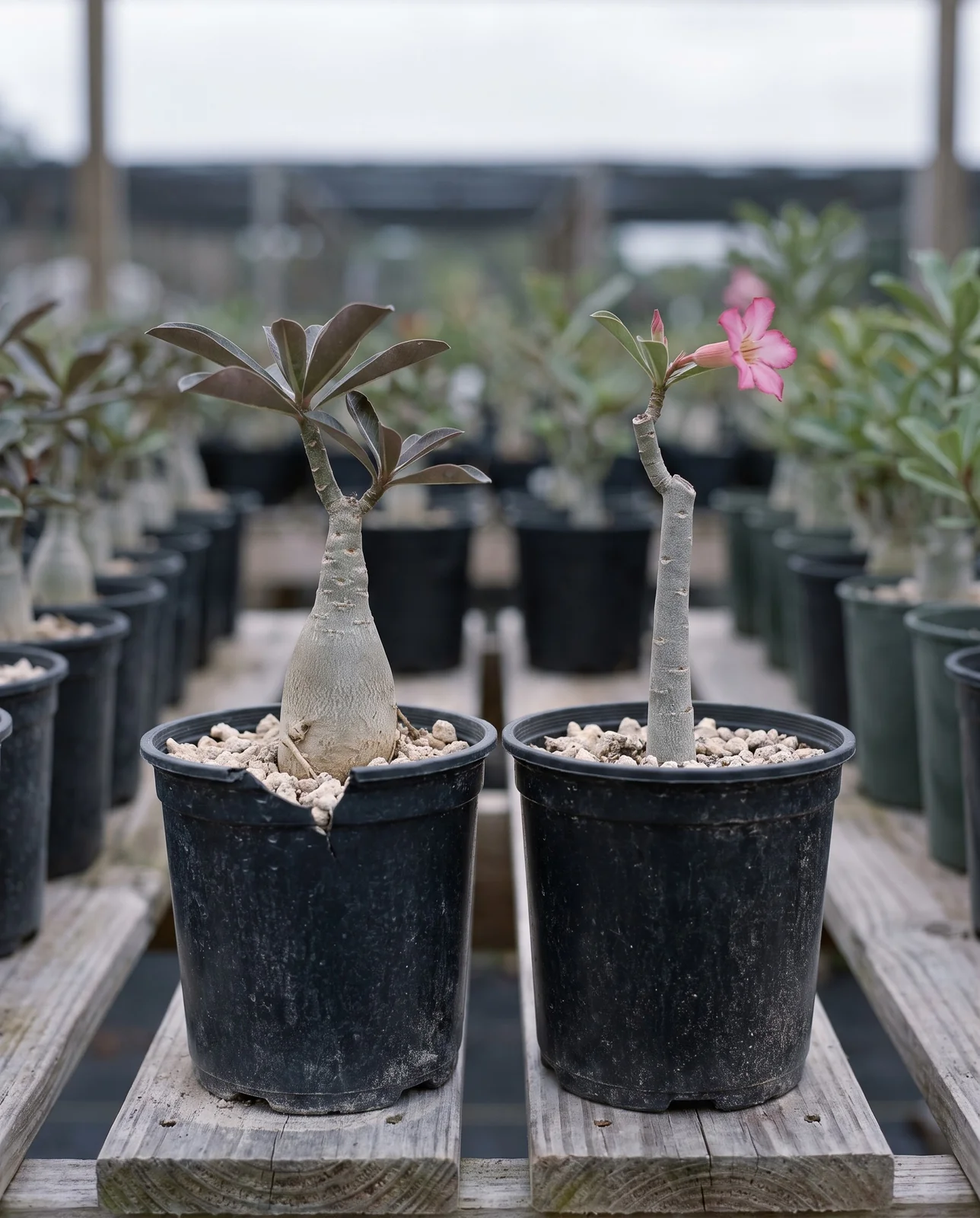
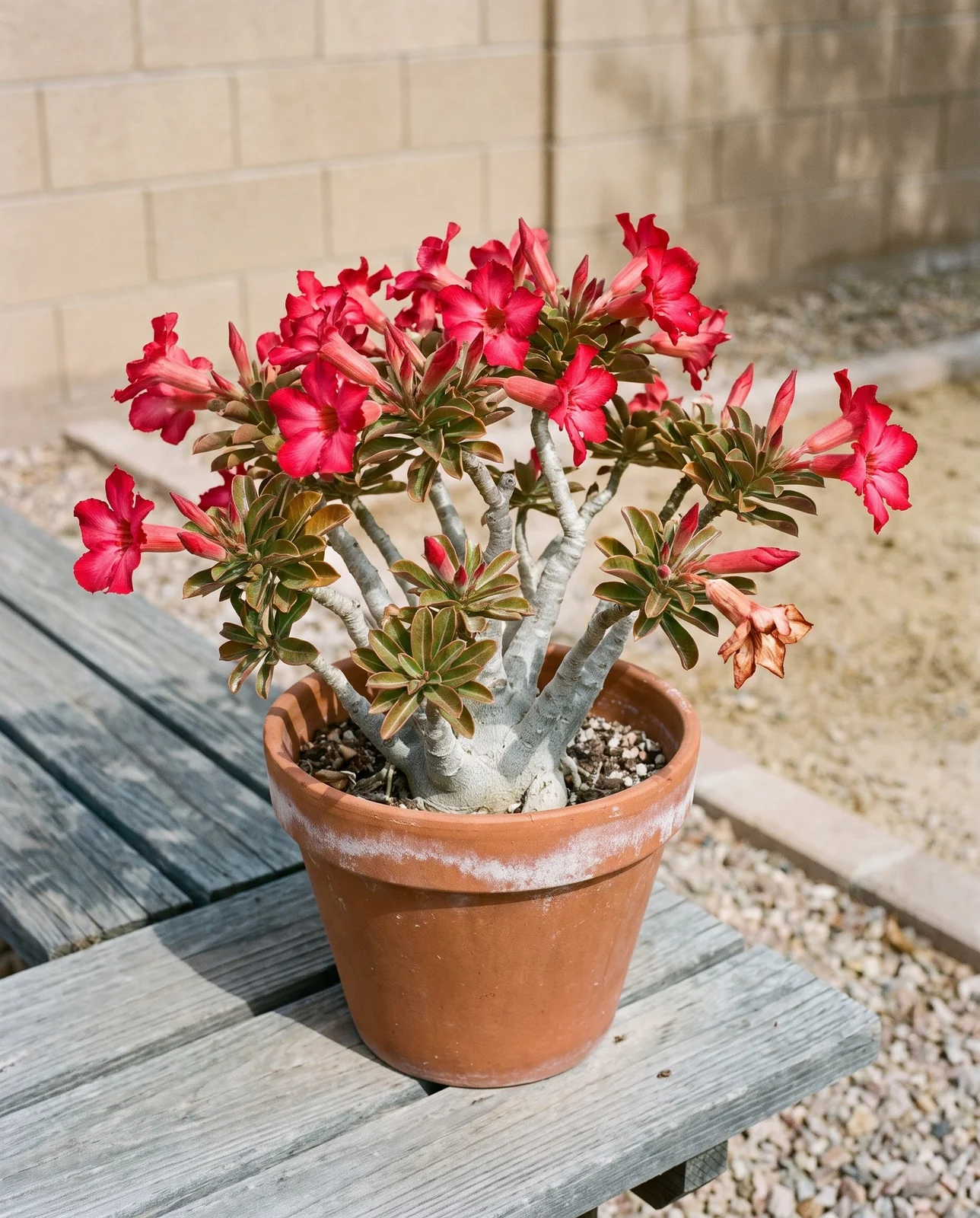
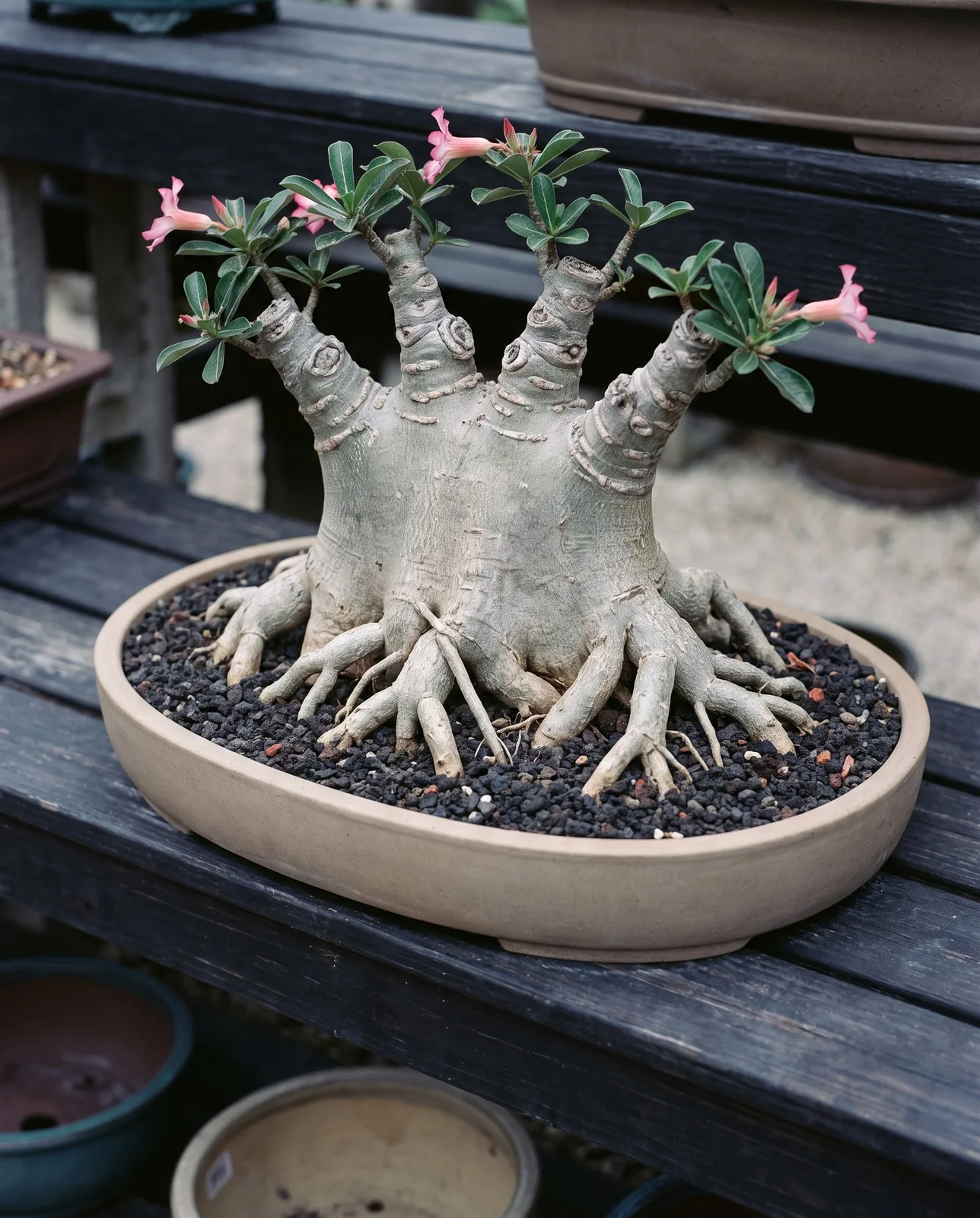
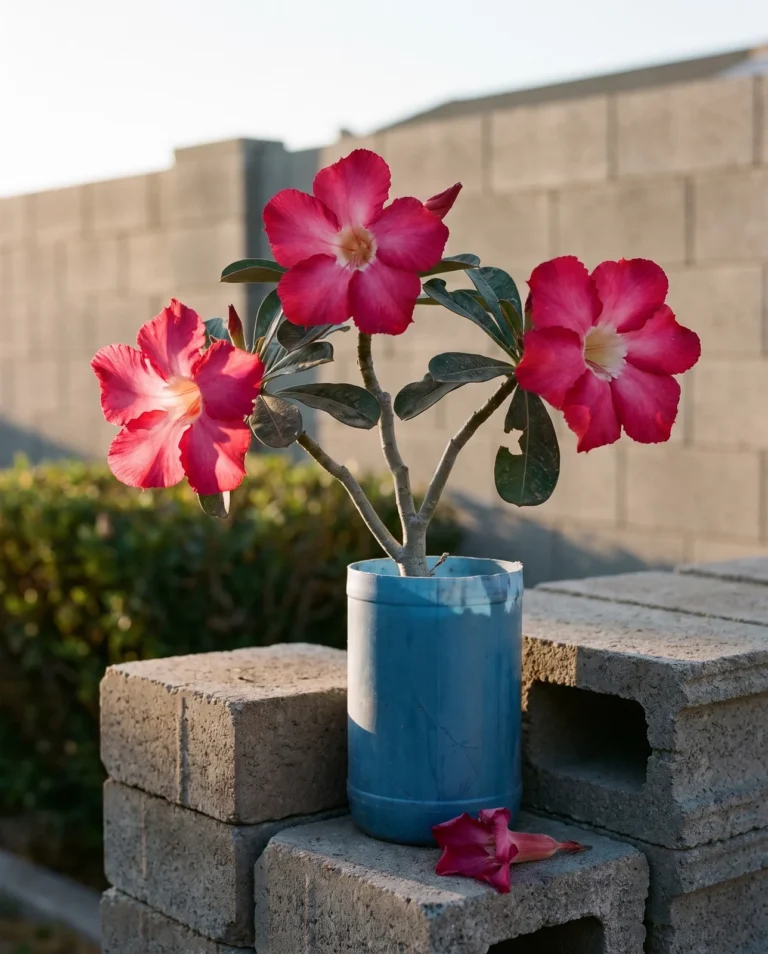
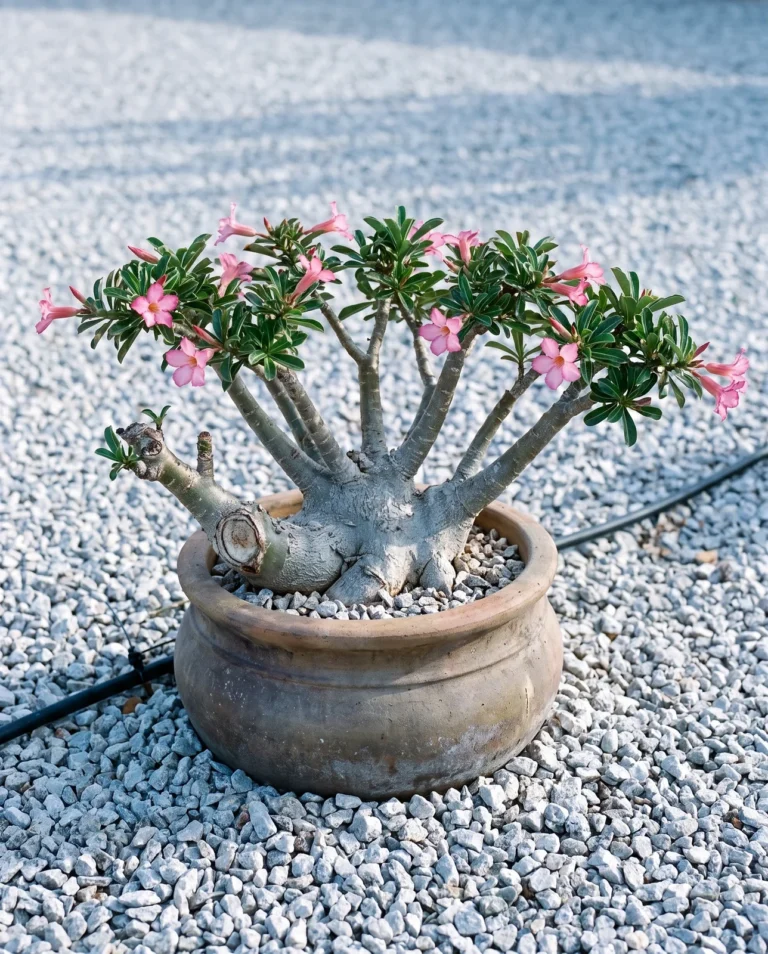
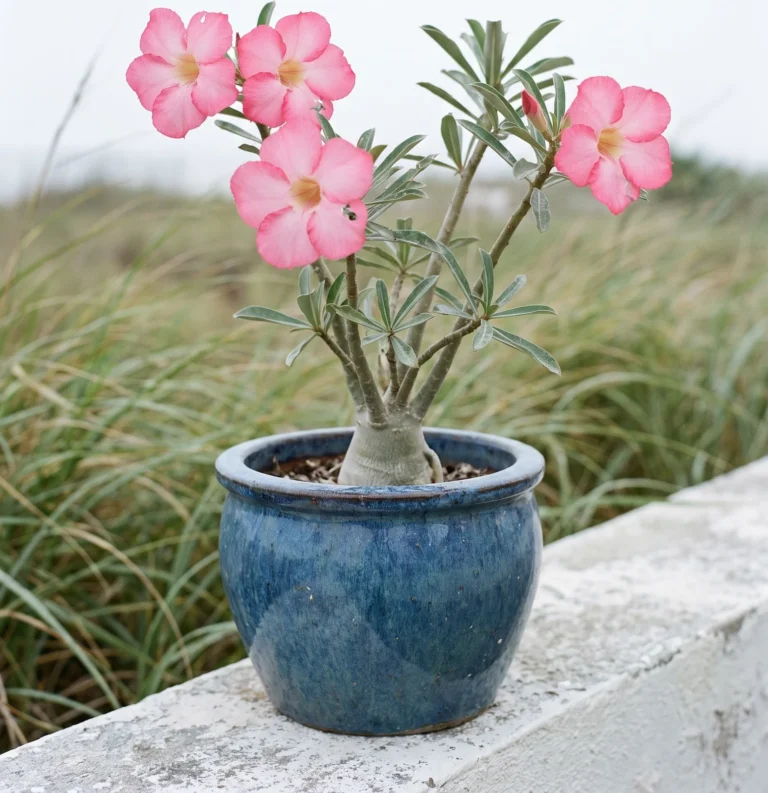
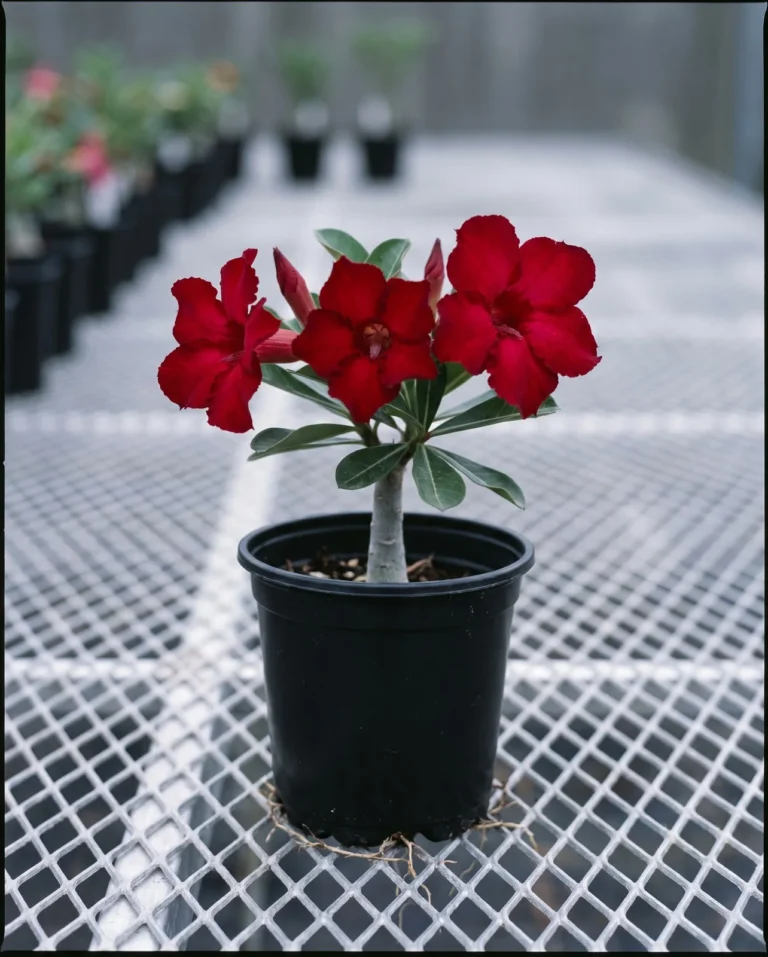
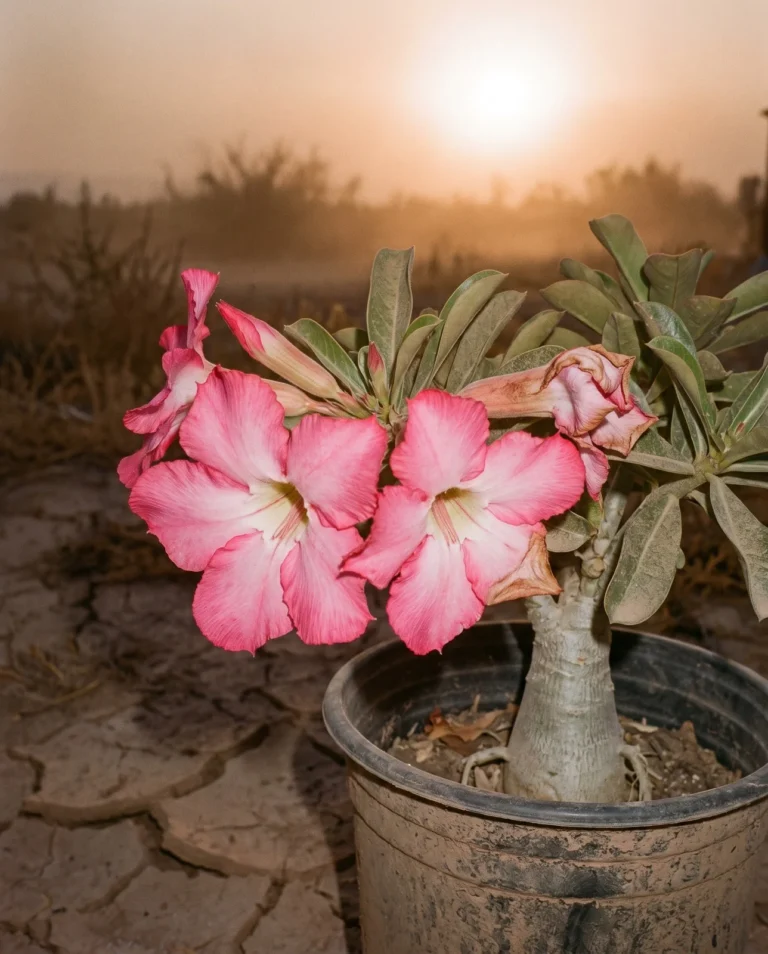
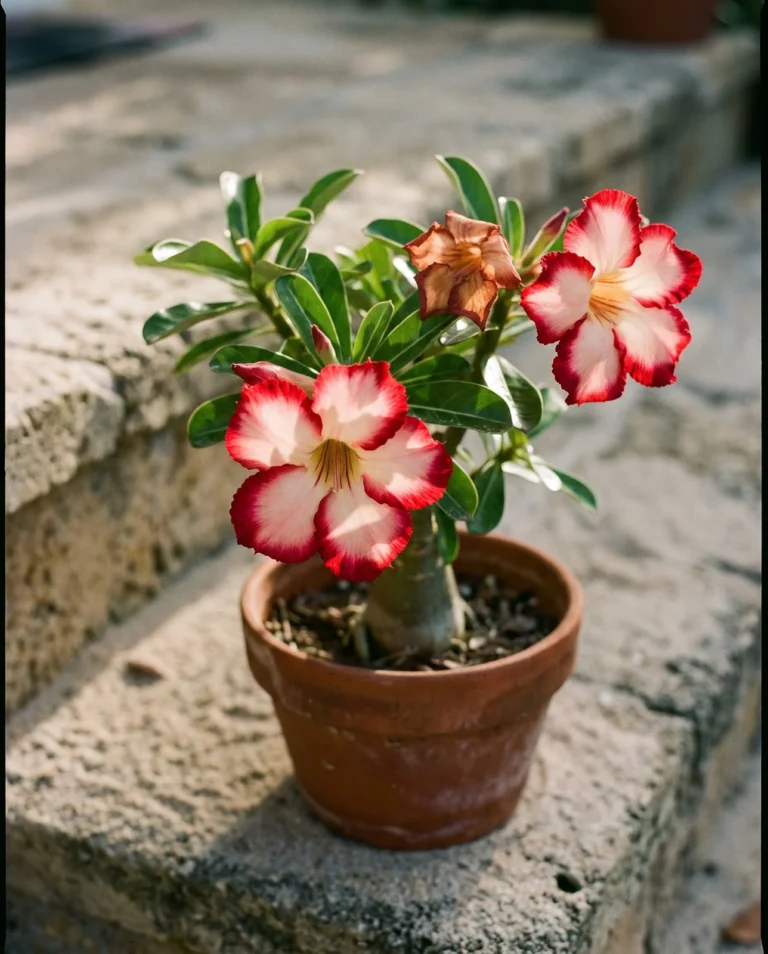
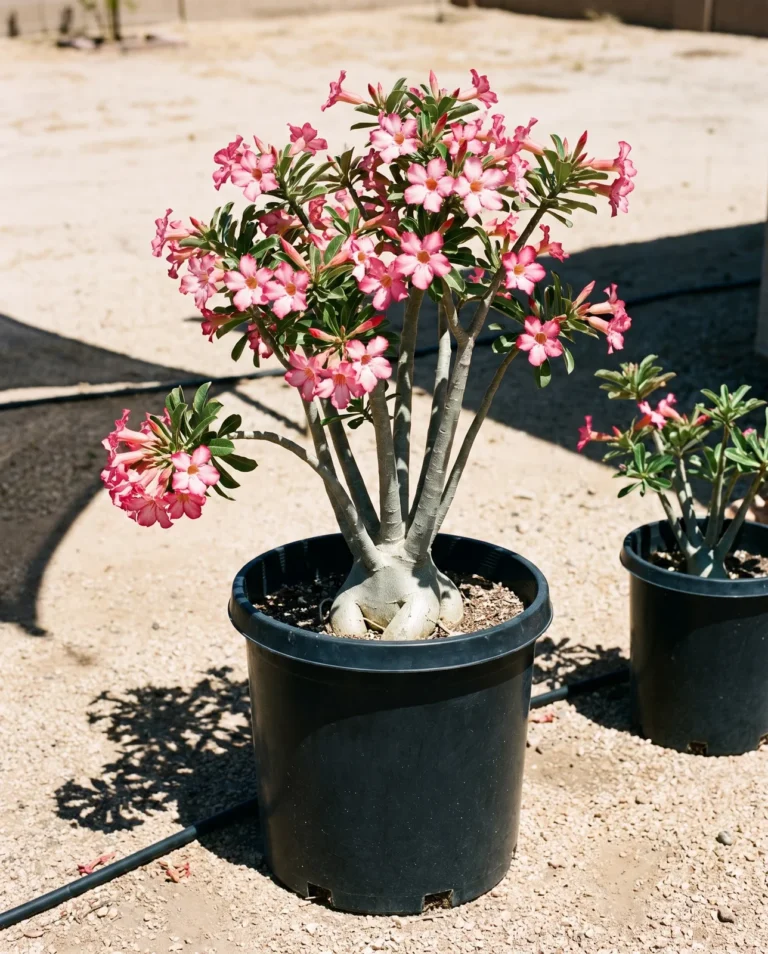
A desert rose looks like a small, sculpted tree with an unusually swollen base. Its smooth gray trunk widens at the soil line into a rounded caudex, crowned by branches with leathery green leaves clustered at the tips. Flowers open at the branch ends, averaging 2 to 3 inches across in single, double, or triple petal forms. Selected varieties bloom in shades from bright pink to deep blood-red. Growth is naturally slow, largely because the plant is built around minimal water, and that slowness produces the thick, unusual shape that defines the plant.
How tall a desert rose grows depends on whether it lives in the ground or in a container. In its wild native habitat the plant can reach 15 feet, though it seldom grows that tall in a garden or home. In ground plantings, it typically reaches 3 to 9 feet tall and spreads 3 to 5 feet across. In containers, it usually stays 2 to 3 feet tall, compared to 6 to 9 feet in nature. Over time, an older potted plant can reach 4 or 5 feet as the caudex widens and swells at the base.
The caudex, and why not every plant grows a big one
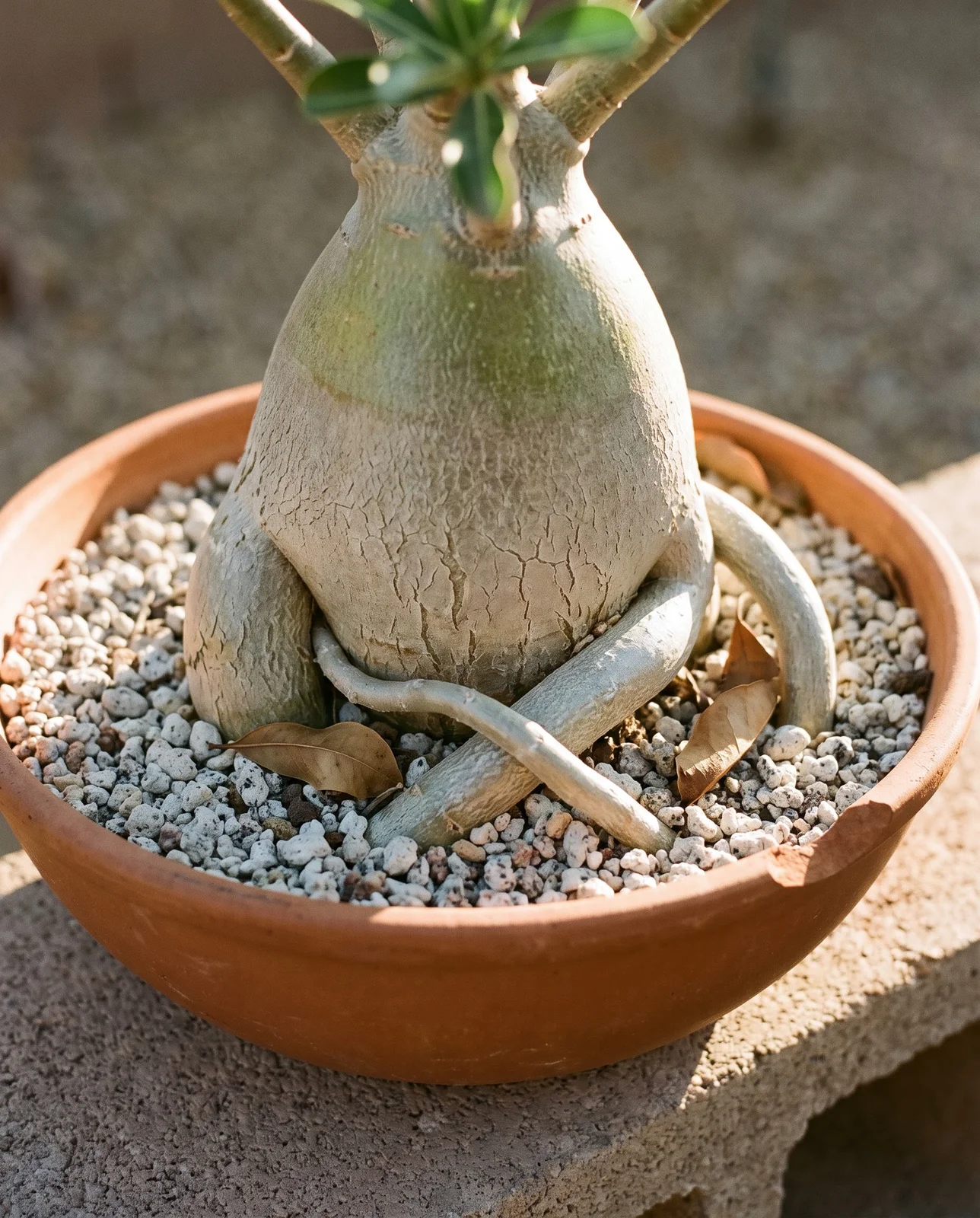
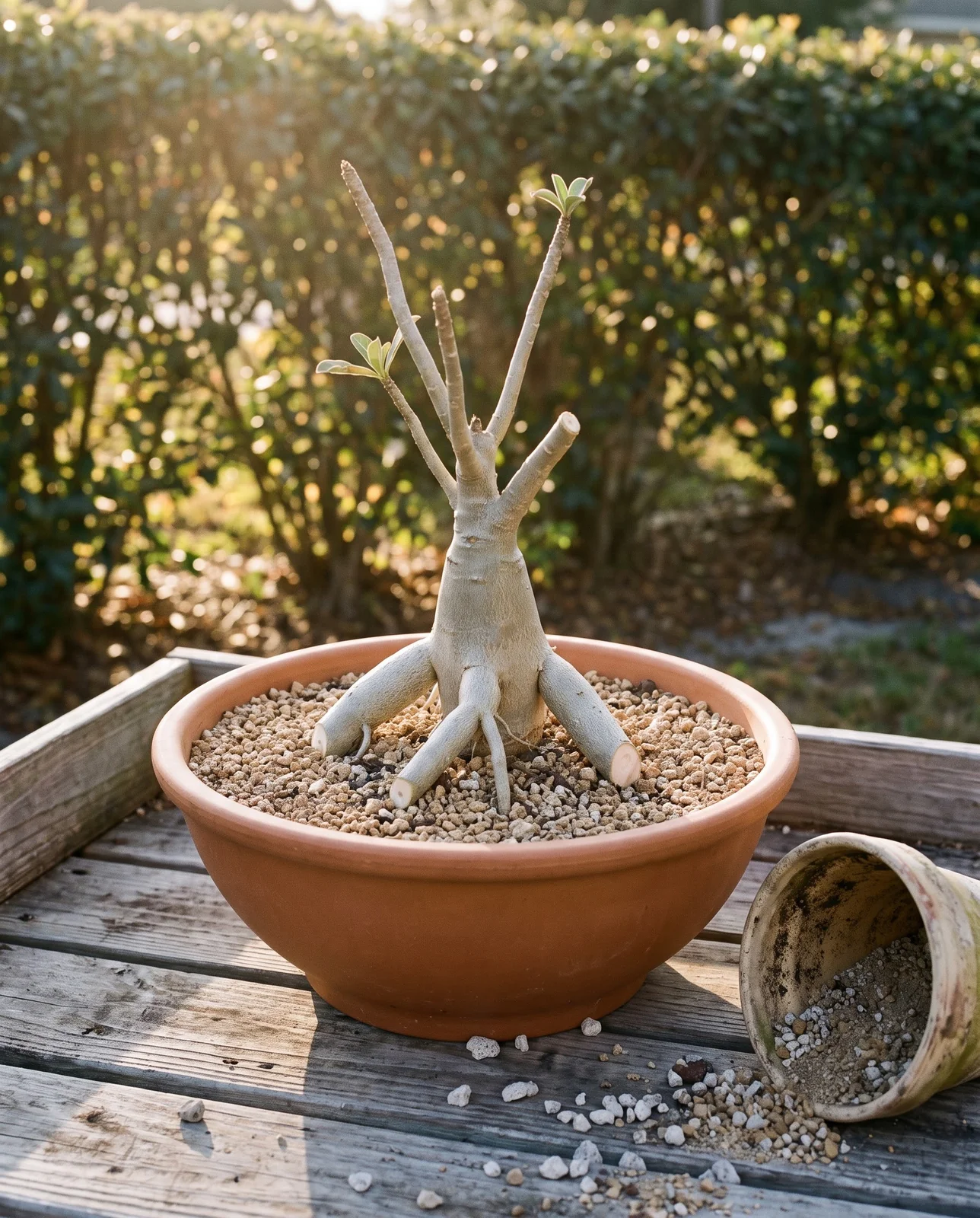
The caudex can grow quite large, with some reaching 20 to 30 inches across. Shape matters as much as size, and plants are often lifted by washing the roots and resetting them higher so the swollen base sits above the soil. Exposing the caudex this way is not recommended until the plant is at least 3 years old. From then on, you can raise it slightly with each repotting to reveal the upper roots. The plant commands attention on its own, because the caudex is ornamental even without flowers.
How a desert rose was started influences whether it ever develops a base worth lifting. For container plants, the best caudex usually develops from seed-grown stock. Cuttings do not tend to thicken as quickly as seedlings, so prized named varieties are usually grafted. That difference fades with age: seedlings swell earlier, but over time many cutting-grown plants cannot be told apart from them. Grafting solves the problem neatly by placing hybrid branches onto seedling rootstocks, providing both a swollen base and dependable flowering. A cultivar with fine flowers but weak base growth may be grafted onto a caudex-forming rootstock, and the graft union fades as the trunk expands.
Sun is the bloom switch
A desert rose will not flower under low light and needs bright sunlight. For good flowering, it usually needs at least 6 hours of direct sun each day, and outdoor plants often bloom better than indoor ones. Indoors, provide at least 6 to 8 hours of direct sun, which in most homes means a south or west window.
Intense heat changes how much direct light the plant wants. Mature plants adapt to full desert sun if acclimated gradually, though most species perform better with light afternoon shade. Species vary as well, since Adenium swazicum and its Arizona hybrids tolerate blazing desert sun better than A. obesum or A. multiflorum. A plant moving outdoors from a windowsill gets to full sun in gradual steps.
Water, and the rule about going dry
Water needs are low: let the mix dry fully between waterings, cut back sharply during winter dormancy, and remember that overwatering causes root rot. Soak the container thoroughly when the soil dries out during the growing season, and keep the mix nearly dry through winter dormancy. In hot summer weather, pots smaller than 10 inches may need water 3 to 4 times a week, while larger pots take it twice. Watering every 7 to 10 days through the growing season is common, tapering to once a month or less during dormancy. Indoors, water regularly without letting the soil get waterlogged, and outdoors, irrigate regularly while providing good drainage. A sunny windowsill next to a potted kalanchoe provides the warm, dry air it enjoys while the potting mix dries.
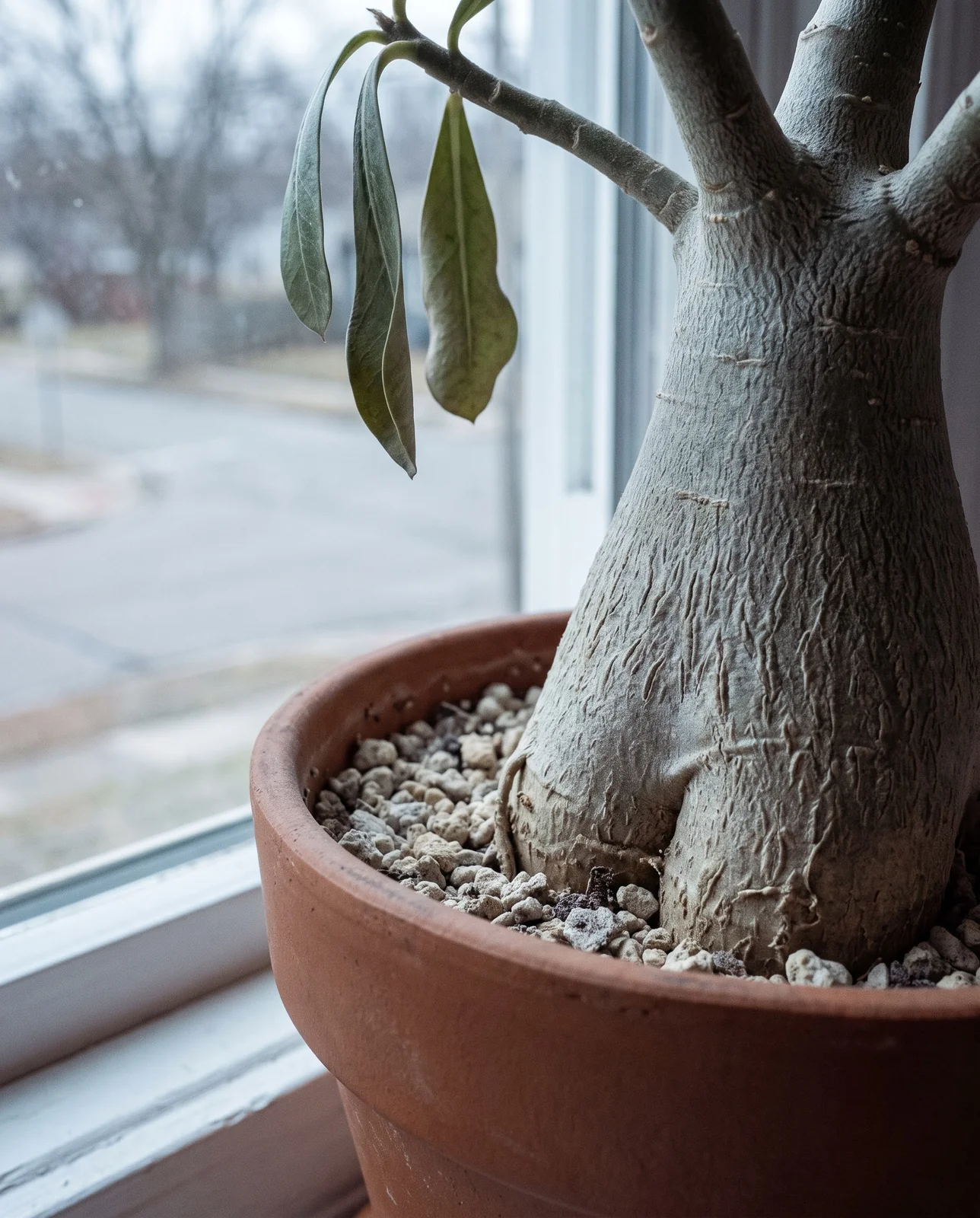
Because the caudex stores water, it cannot tolerate wet soil pressing against it. Water standing around the base rots the trunk from the inside, and that rot is usually well advanced before soft spots show outside. Overwatering is the single commonest way these plants die, and the danger peaks in winter when growth has slowed. Feeling the trunk gives you an immediate health check. A wrinkled caudex from dehydration can often recover, whereas a soft, mushy caudex from rot is far more serious. If the base feels soft, check the soil moisture: dry soil points to underwatering, while wet soil warns of root rot. Touch the potting mix with a finger and feel the trunk before reaching for the watering can.
Winter dormancy is not death
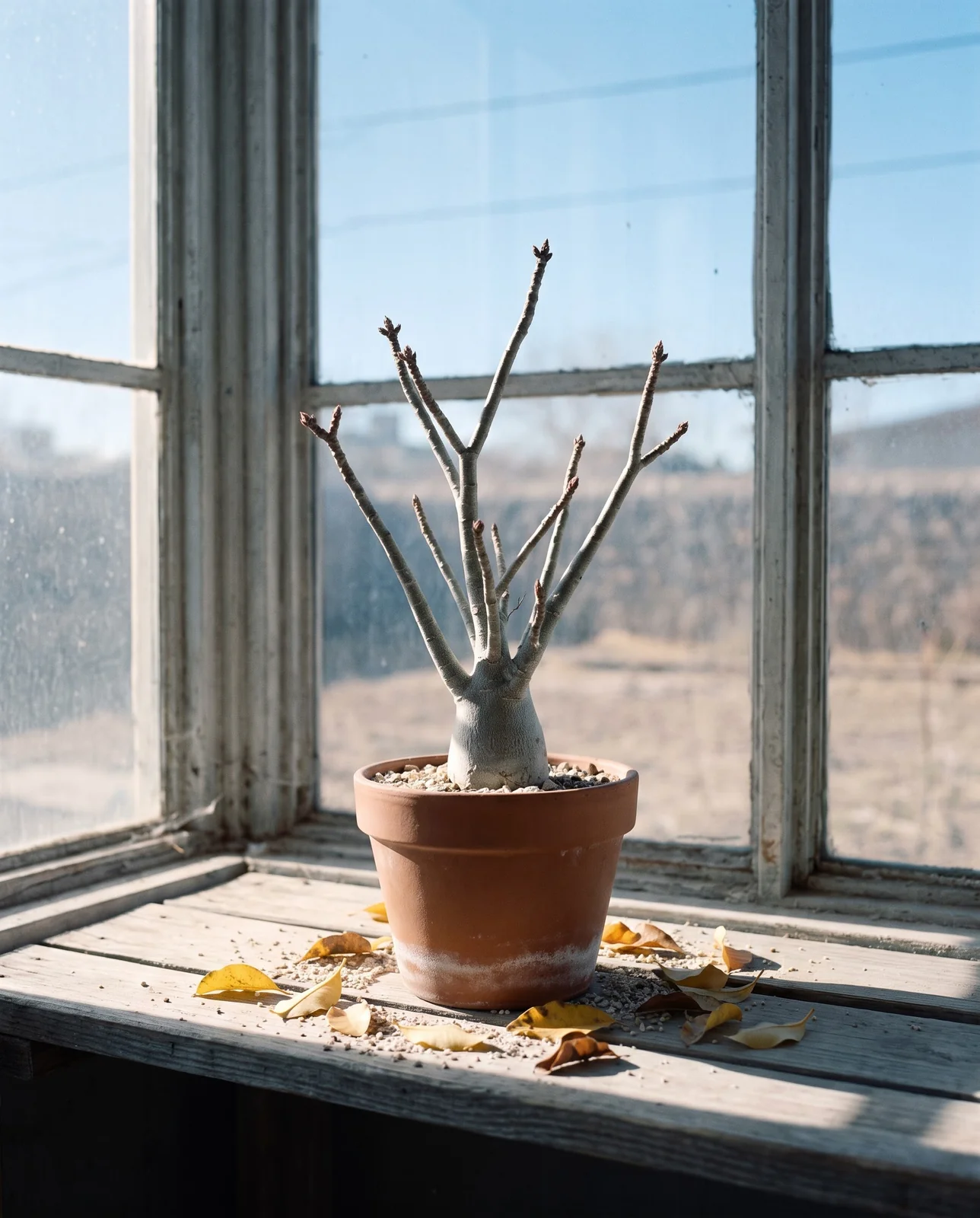
When a desert rose drops its leaves in the cool months, it is usually entering normal winter dormancy, though some plants keep their leaves. Withhold water during the cold months and let the plant rest for 3 to 4 months, as shedding leaves and flowers is part of its natural cycle. Dormancy varies widely, running from a few weeks to as much as 6 months, though nearly all plants rest for part of the year. Adenium multiflorum takes a long fall and winter rest even in a greenhouse, flowering profusely for about 2 months at winter's end before growing new leaves. You know the rest is healthy when growth slows, flowers stop, and leaves drop while the caudex stays firm.
Too much water during dormancy is the most common cause of root and caudex rot. Keep the plant dry and without water through its rest, even if it flowers. Watering and feeding can continue until night temperatures drop below 50 degrees Fahrenheit, when you should hold off on water and move the plant indoors. In spring, avoid watering until night temperatures stay above 50 degrees, then water sparingly. It is best not to water at all when nights stay consistently below 50 degrees, keeping the plant dry through dormancy even if that runs for several months. Foliage and flowers will reappear as temperatures warm in spring.
Yellow leaves: which one is it
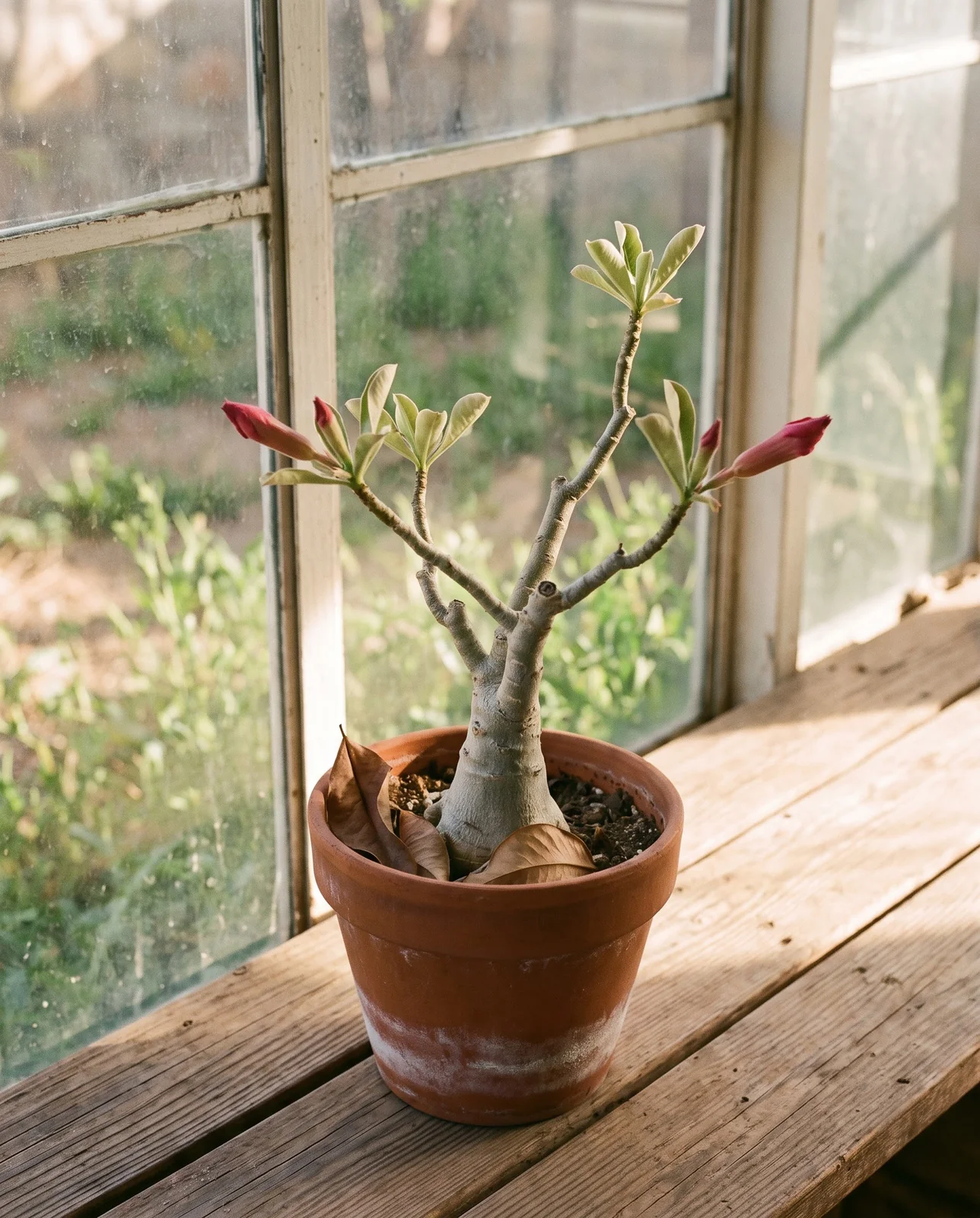
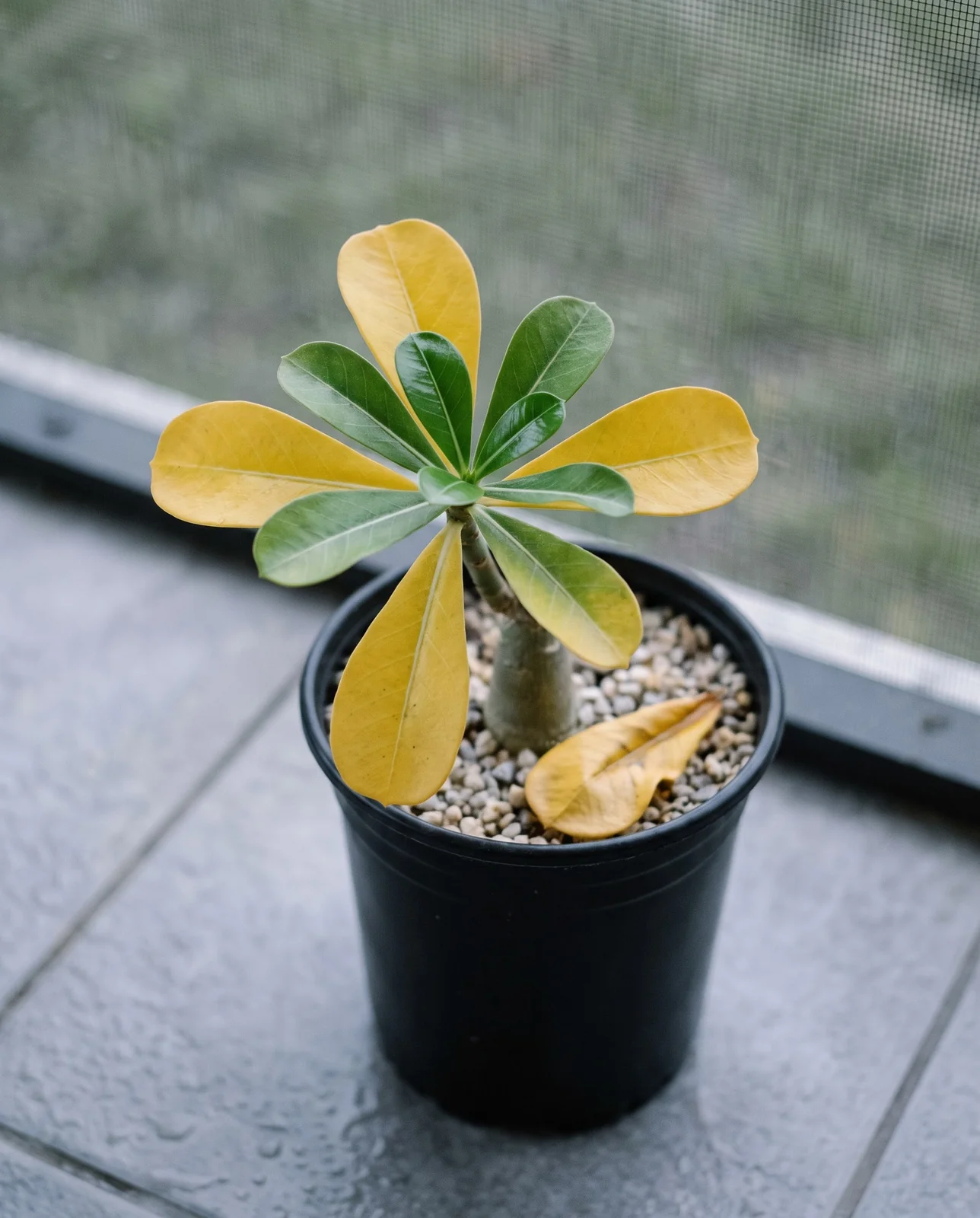
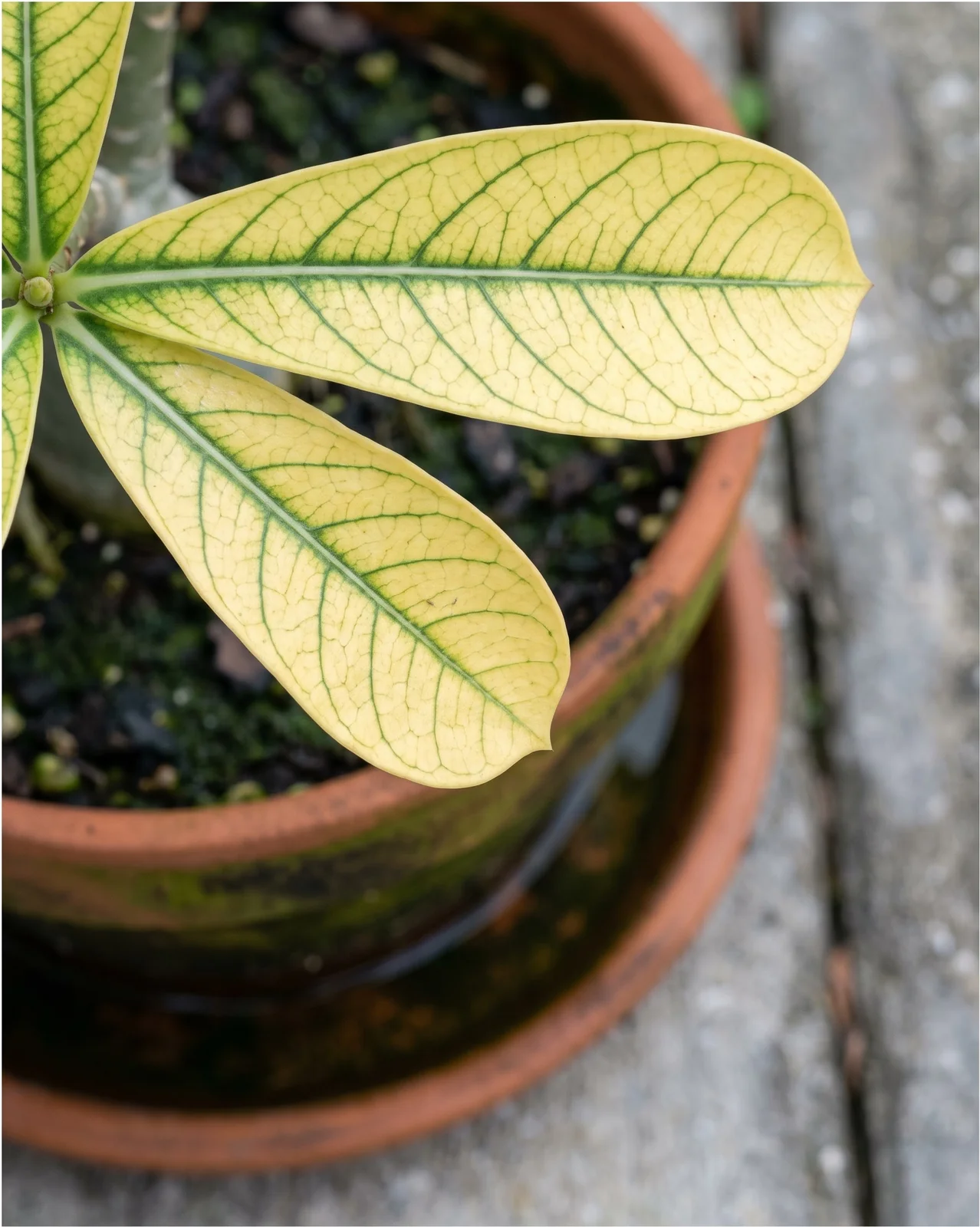
Yellow leaves have many possible causes, and overwatering is the most common. Work down the list and stop at the first line that matches your plant.
Why a healthy desert rose will not bloom
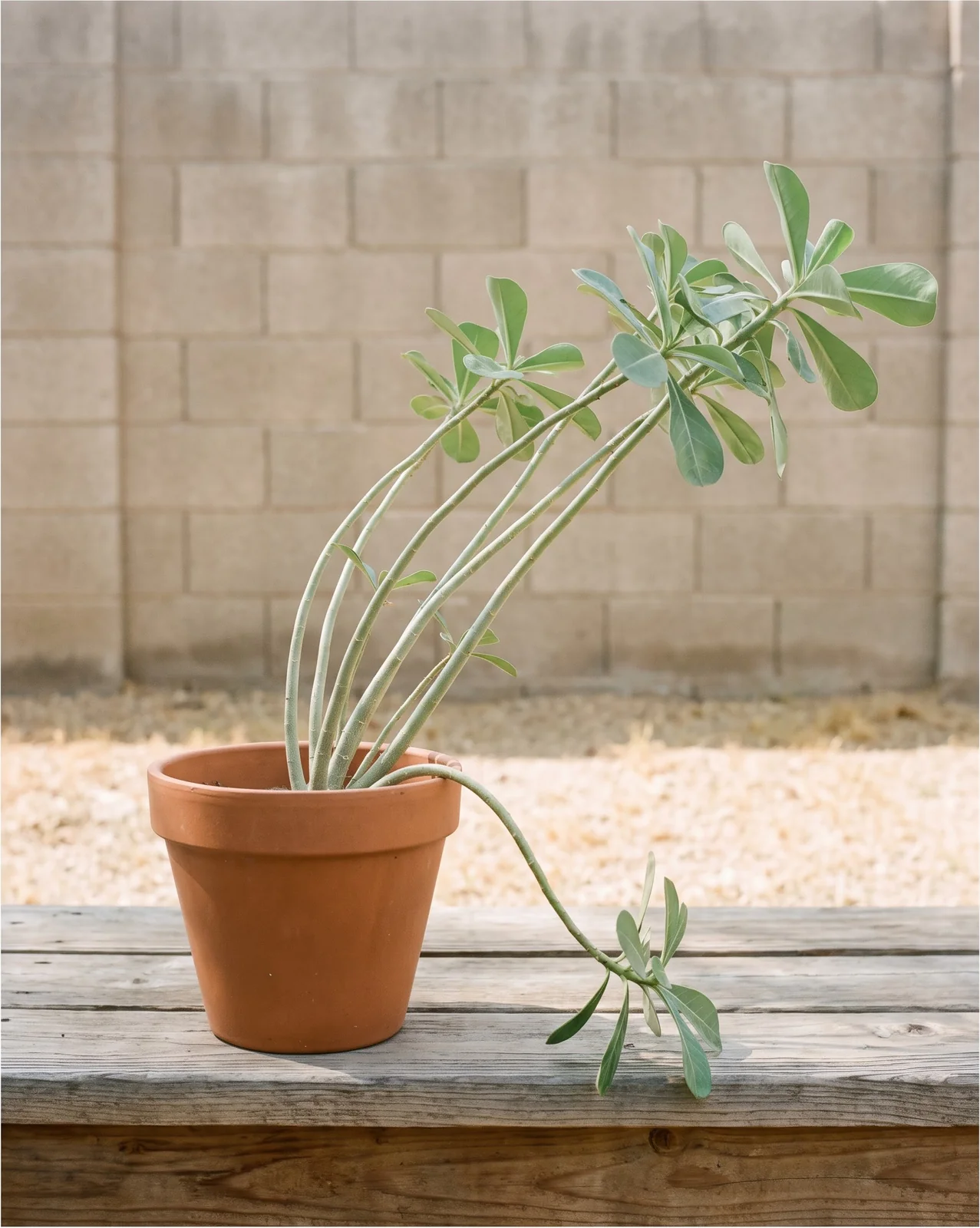
Nearly all failure to bloom comes down to light and the winter rest. The winter rest is the part that often gets missed, because withholding water can feel like neglect. A plant kept above 70 degrees Fahrenheit on a year-round schedule stays vegetative and rarely blooms. To trigger flowering, give it a winter rest of roughly 54 to 61 degrees, watered sparingly for at least two to four weeks. That cool pause is difficult in a heated home, which explains why an indoor plant can thrive for years with nothing but green leaves.
Other reasons for missing flowers include being too young, too much water, too much nitrogen fertilizer, poor drainage, cool temperatures, root stress, recent repotting, and dormancy. Heavy nitrogen is an easy mistake, because feeding produces lush foliage at the expense of buds. A repotted plant may spend months recovering its roots, and young seedlings need time before they bloom. Yet none of those matter if the main needs are missing: in low light or kept warm all winter, the plant will not flower no matter how carefully it is fed.
Soil and the pot
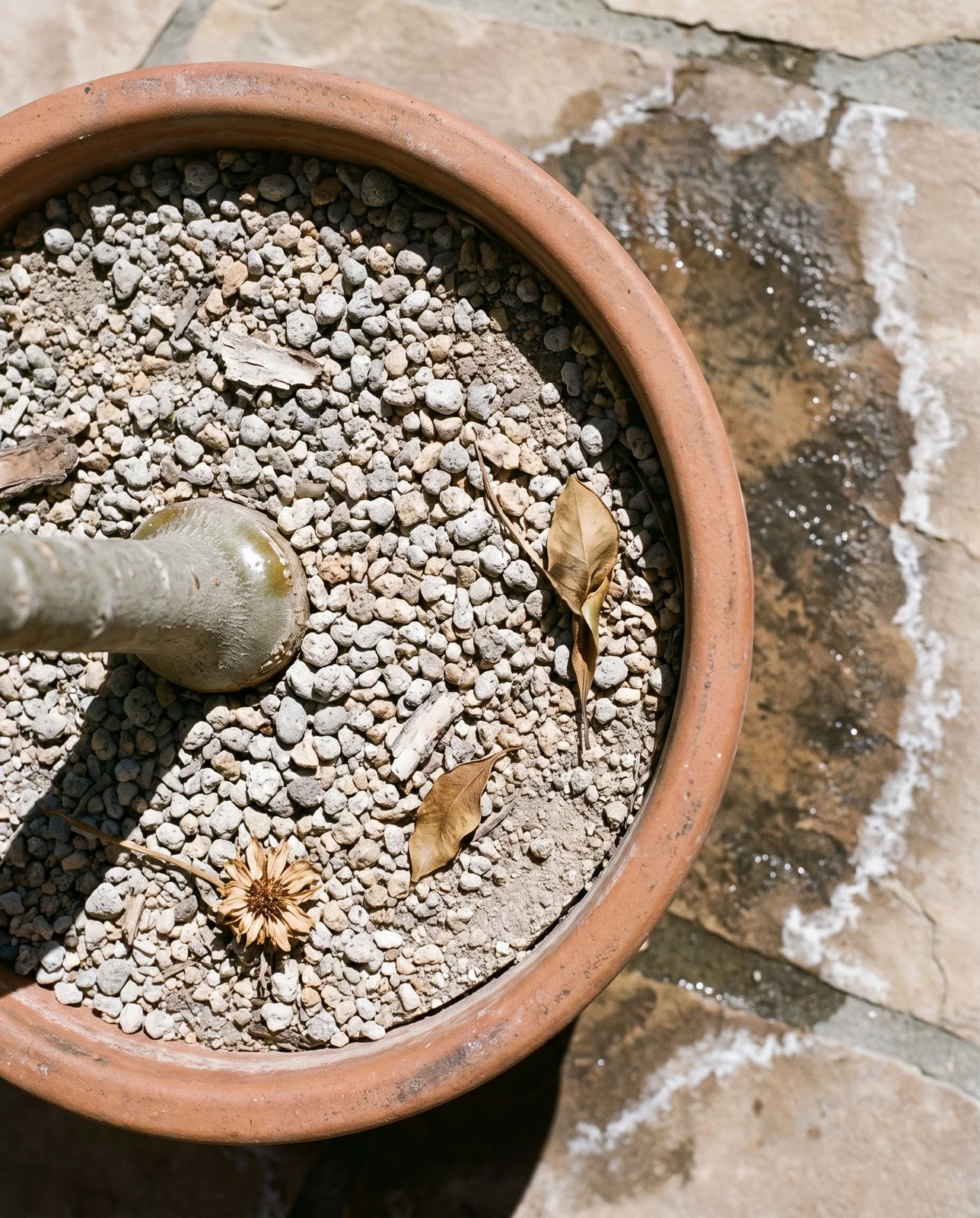
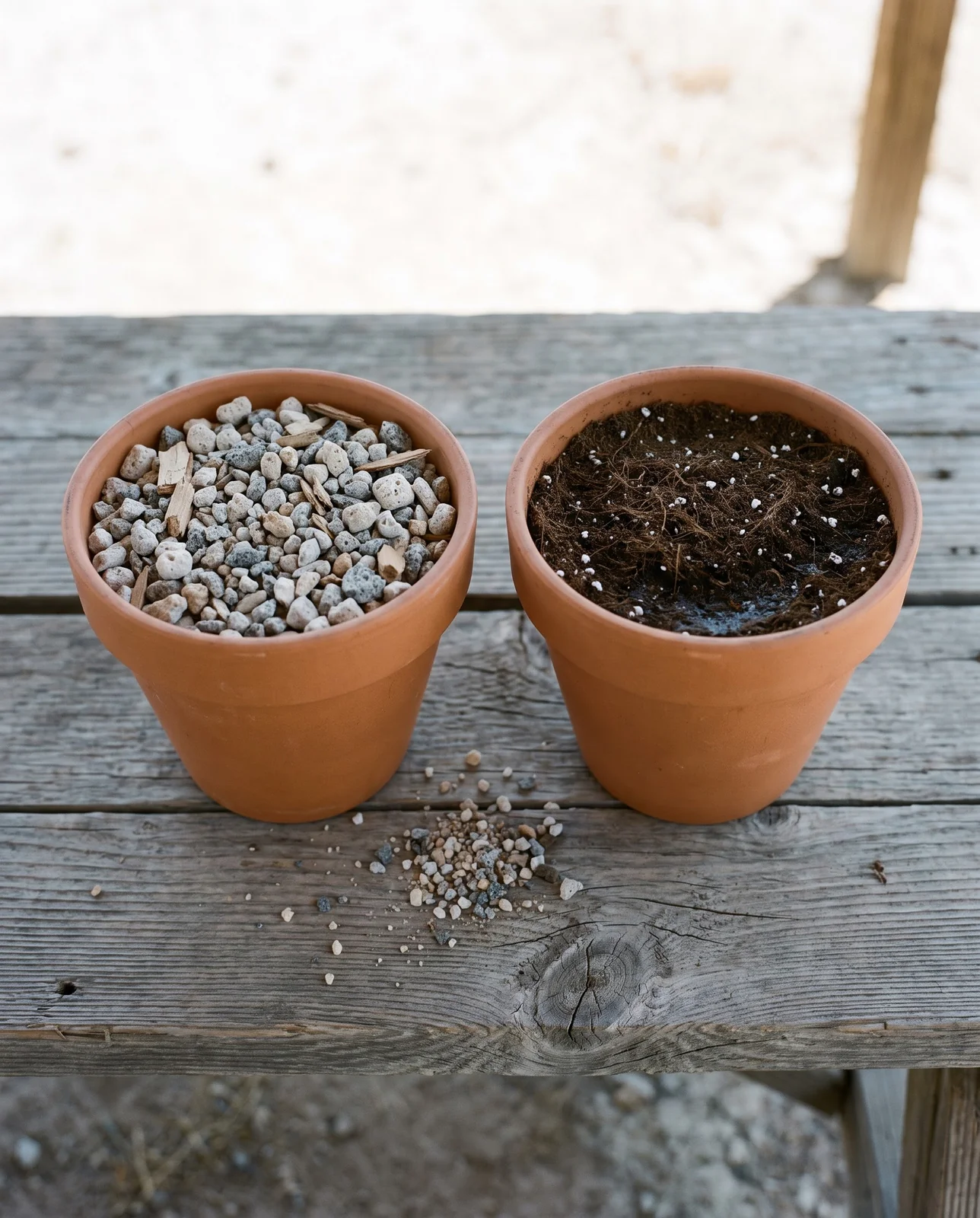
Sharp soil drainage is required to prevent the possible onset of rots. In full sun, a container plant grows best in a loose, sandy or gravelly, well-drained mix. An indoor plant can take a rich, organic peat- or bark-based potting soil, while in the ground outside it needs only well-drained soil. In arid desert climates, bagged potting soil is typically too rich in organic matter to be the sole ingredient, even when labeled for cactus. A mostly inorganic mix built around coarse pumice is the popular choice there. When in doubt, choose the coarser mix.
The pot is part of managing moisture. Clay pots help prevent excess moisture around the roots, especially when paired with a very coarse, free-draining cactus or succulent mix. Avoid clay or other moisture-retaining soils, as they can hold too much water and cause root rot; a 50-50 blend of potting mix and sand or perlite works well as a homemade option. The pot needs to drain freely.
The problems that actually come up
Yellow leaves usually come from stress, too much water, or not enough sun. Rot is a significant problem for plants that are not properly cared for. The list below covers the main problems with their symptoms, causes, and what to do.
Symptoms: leaves turn yellow and drop in cool weather on a plant that is otherwise firm. Cause: mistaking normal winter rest for drought and watering. What to do: keep the plant dry and without water through dormancy, even if it flowers, because too much water during dormancy is the most common cause of root and caudex rot.
Symptoms: the soil stays wet, the base yields under a thumb, and the pot smells sour. Cause: root rot can set in from watering during dormancy or too early in spring, and frozen or cold-stressed plants may rot as well. What to do: take the plant out of the pot to inspect the roots; it may recover after losing a large portion of its roots and caudex if enough of the plant is uninfected.
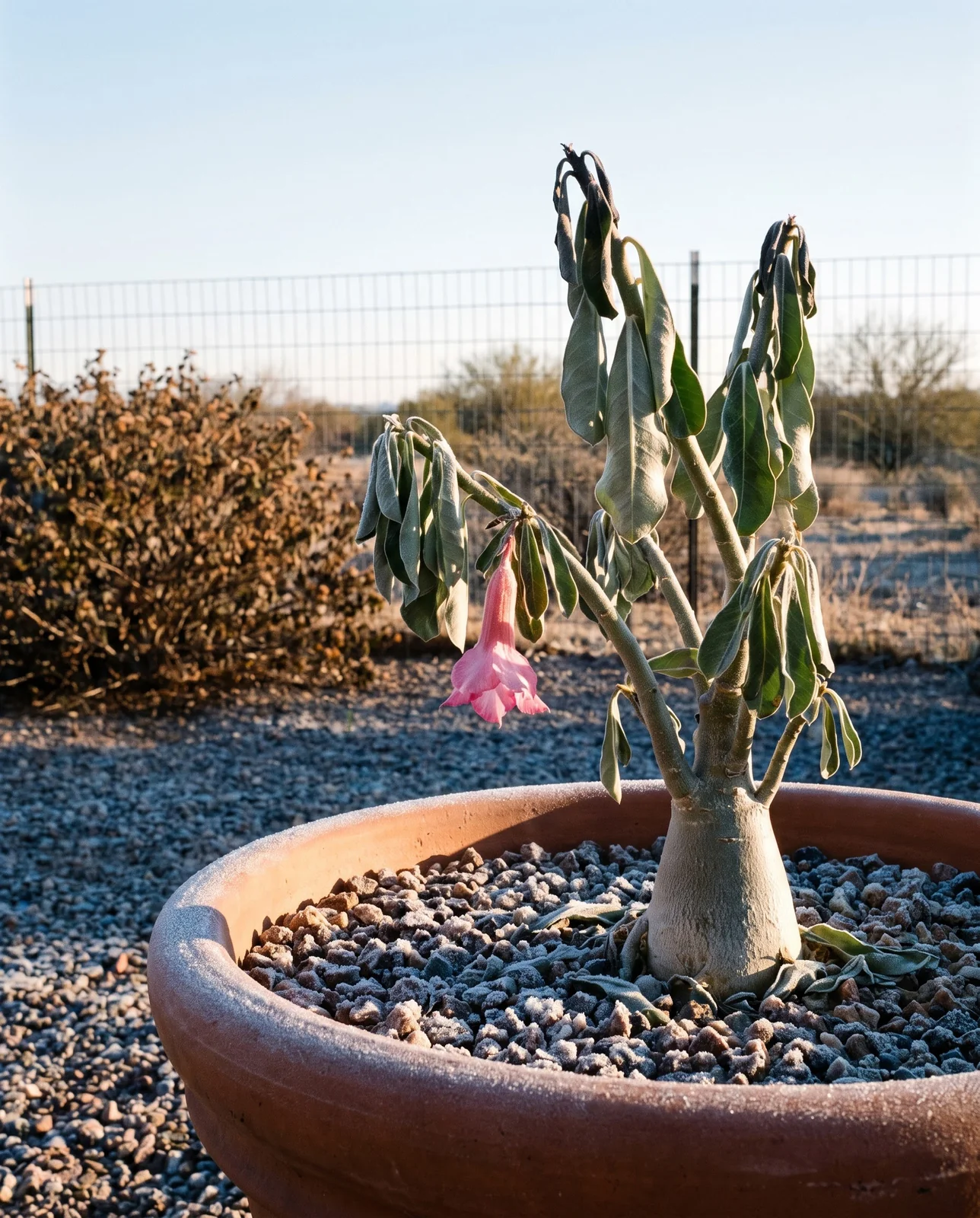
Symptoms: freezing temperatures kill stem tips first, and greater exposure kills entire plants. Cause: leaving the plant outside in freezing weather. What to do: hold off on water and move the plant indoors or under shelter once night temperatures drop below 50 degrees Fahrenheit.
Symptoms: leaves drop from an actively growing plant after a long dry stretch. Cause: prolonged drought during warm weather. What to do: resume normal watering; a drought-stressed plant may drop its leaves, but they regrow once water becomes available again.
Symptoms: ashy-white deposits on the roots, throughout the soil, and on the inside of the pot. Cause: root mealybugs infesting the root zone. What to do: check the root ball and the inside of the container whenever you unpot the plant.
Symptoms: new growth after dieback blooms or grows differently from the plant you bought. Cause: dieback reaching down to or below the graft union. What to do: if a grafted plant dies back to or below the graft union, what regrows is the rootstock; it may be more vigorous, but its flowers and habit may look nothing like the plant you bought.
Zones, and why the numbers disagree
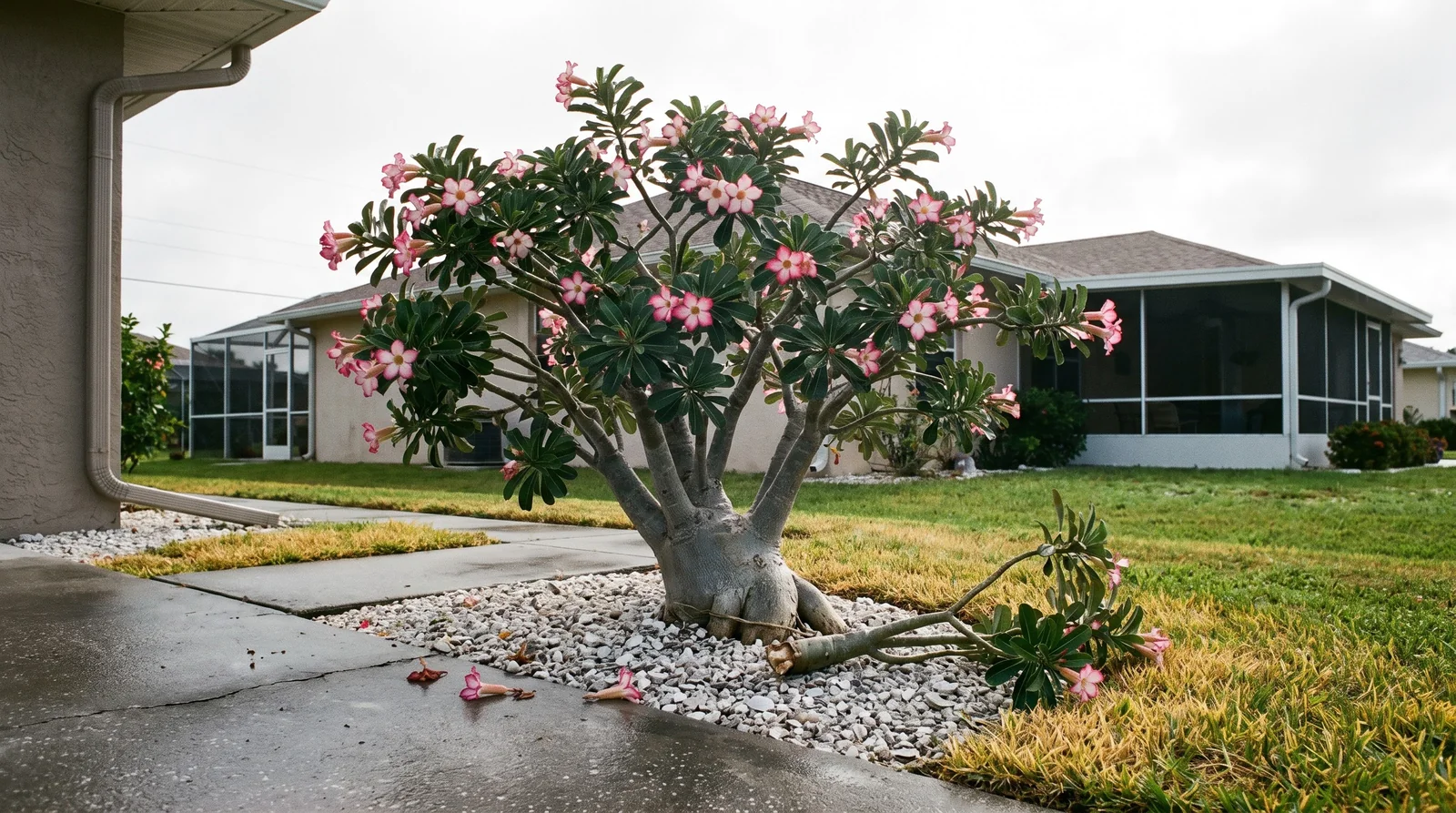
At the widest reach, desert rose grows outdoors in USDA zones 10 to 12, but winter survival and year-round growth draw the line in different places. Winter survival in the ground runs through zones 10 to 11, covering subzones 10a through 11b, with protection from cold and winter rain needed anywhere colder. Year-round outdoor growth starts instead at zones 10b to 12 or zones 11 to 12, covering subzones 11a through 12b. Those warmer locations stay frost-free and keep temperatures above 50 degrees Fahrenheit. North of zone 11, the plant belongs in a container brought indoors for winter.
Both answers make sense once you look at winter growth. A desert rose can survive a zone 10 winter in the ground, but for most American gardens, wintering outdoors is out of reach anyway. In zone 9b and colder, mulch is not enough protection, so grow the plant in a container and move it indoors before the first frost.
The lowest temperature it tolerates
The lowest temperature a desert rose can survive is 32 degrees Fahrenheit, because it has no freeze tolerance below that point. Cold damage can start well before freezing, and the most common species may show injury below 50 degrees. Protection should begin at 50 degrees to prevent damage ahead of freezing cold. Between 55 and 35 degrees the plant is chill tolerant, though leaves may yellow and drop. The plant shows sensitivity below 40 degrees, and thrives outdoors if temperatures stay above about 40 degrees.
Soil moisture decides how much cold the plant can endure. Desert roses can manage down to near freezing if you keep them bone dry whenever nights drop below 50 degrees. In the growing season they want genuine warmth, thriving between 60 and 90 degrees, 65 and 90 degrees, or 75 and 95 degrees.
Indoors, in a pot, or in the ground
Planting in the ground works where frost does not reach, leaving containers as the practical choice for most gardens. In South Florida you can grow desert rose outdoors as a small shrub, while elsewhere it is usually grown in containers brought inside for winter. In frost-prone areas, a potted desert rose shares winter shelter with bougainvillea and plumeria until warm weather returns. A container gives you control over the two biggest risks, making it easy to move the plant indoors and hold back water during dormancy. The trade-off is summer care, because smaller pots dry out quickly in hot weather.
Keeping a desert rose indoors year-round rarely works well. It is not really a houseplant, because while it tolerates indoor light, it does not perform in it. Adeniums will not thrive as year-round houseplants because ordinary rooms lack the hot temperatures and intense sunlight needed for active growth. While indoor heating is easy to provide, natural light is what falls short. The most reliable routine is keeping the pot outdoors in full sun through summer and bringing it inside for winter protection.
Planting and repotting
Repot a desert rose early in the warm growing season, and avoid repotting during fall or winter. Young plants benefit from repotting every year or two until they reach the size you want, since growth slows once roots become crowded. Established plants need fresh soil every 2 to 3 years in spring or early summer. Another option is to repot and prune roots every couple of years in late winter as the plant breaks dormancy. Move up gradually each time, choosing a container just 1 to 2 inches wider in diameter than the old pot.
Each repotting is also the chance to raise the plant 1 to 2 inches higher above the soil line than it sat before. Setting the plant higher exposes the shoulders and upper roots of the swollen base. Watering afterwards depends on how roughly the roots were handled. If roots came through undamaged, you can water immediately or within a day or two. If roots were cut or broken, hold off on water for about a week so the injuries heal before regular watering resumes. Avoid fertilizing immediately after repotting as well, giving disturbed roots time to settle.
Bonsai, and the caudex reveal
Desert rose makes a natural bonsai subject because its swollen base can develop fantastic shapes on its own. Traditional bonsai techniques force dwarfed growth from trees that would naturally grow tall, while an adenium naturally grows into a form that already looks like a small tree. Lifting the swollen caudex at repotting simply puts that sculpture on display. Shaping the canopy is straightforward: taking about a third off each branch is safe, and pinching out the top inch of a shoot forces several new stems to break. Over a season or two, those extra branches build a dense crown with far more places to bloom.
Varieties worth telling apart
Cultivars set themselves apart by flower size, color, and how many months of the year they stay in bloom. Which named selections reach local garden centers shifts by region and year.
Propagation: seed, cuttings, and grafts
You can propagate a desert rose by seed, stem cuttings, or grafting, and each method gives a different result. Seed is the fastest to start, typically germinating within 1 to 2 weeks. Cultivars will not breed true from seed, so seedlings do not duplicate either parent's genetics and should not carry the parent's cultivar name. The seed is often polyembryonic, producing several embryos with some genetically different from the parent, so stem cuttings preserve a specific plant's flowers. Grafting joins a scion that carries desirable traits onto a rooted plant serving as rootstock, sometimes chosen specifically for its ability to form a large caudex. Because seedlings do not duplicate the mother plant genetically, desirable varieties are commonly propagated this way.
Stem cuttings face two very different recommendations for preventing rot at the base. Leafy cuttings taken from soft growth are handled differently from most succulent cuttings: do not let them dry out or callus over. Dip the fresh cut in rooting hormone and set it straight into a warm, very well-draining mix in moderate light. Another method lets the bleeding cutting dry for three or four days so the cut face calluses over, because skipping that wait is the usual reason cuttings rot before they root. How much drying the cut tolerates is unsettled, so you can test both if you have several cuttings to spare.
Pruning
For a lanky plant that needs reshaping, prune after the winter rest, in late winter or early spring, just as the plant is about to start growing. Pruning late in the season produces short branches that tend to grow weakly the following year. If your plant is grafted, take care not to cut the stems off below the graft. Pruning cuts bleed a milky sap, so wear gloves while working and wipe the blade clean afterward.
Feeding
Feed lightly while the plant is actively growing, and go easy on nitrogen. A fertilizer low in nitrogen, moderate in phosphorus, and highest in potassium is ideal at quarter to half strength. You can also use a balanced water-soluble 10-10-10 or 20-20-20 every 2 to 4 weeks, diluted to half strength. Indoors, apply a low dose of liquid fertilizer weekly through the summer growing season, or use a balanced slow-release pelletized feed outdoors in summer. A blend with a slightly higher middle number for phosphorus supports flower formation.
Pests and diseases
Outdoors, pests rarely bother a desert rose, and a sharp spray from the hose easily dislodges spider mites, aphids, or mealybugs. Indoors, mealybugs are the main pest to watch, while mites and aphids show up more often outside. Scale insects can also attack the plant, and fungal leaf spot can develop as a disease problem. For stubborn bugs, apply insecticidal soap or horticultural oil every 7 to 10 days for at least two applications to catch successive life stages.
What to expect, season by season
The first year establishes the plant through its summer warmth and winter rest, while the second is when its mature shape begins to show.
The first warm season. Growth and flowering continue as long as nights stay warm, and you can water and feed until night temperatures drop below 50 degrees Fahrenheit. The plant prefers hot, tropical warmth between 75 and 95 degrees. It is naturally slow-growing, mostly due to its need for minimal water, which makes for its unusual growth form. If you need to repot, do it during the warm growing season, the earlier the better.
The first winter. Leaves yellow and drop during a winter rest of 3 to 4 months, shedding all foliage and flowers as part of the plant's natural cycle. Dormancy varies widely, lasting anywhere from a few weeks to as much as 6 months. Withhold water completely while the plant is dormant, even for several months, and give none when nights stay consistently below 50 degrees. A firm caudex confirms that the plant is resting safely. Do not let the plant freeze, and flowers and foliage will reappear once temperatures warm in spring.
The second year. Repot every year or two until the plant reaches your desired size, because growth slows once it becomes pot-bound. When repotting, situate the base an inch or two higher above the soil line than it sat before. Lifting and exposing the caudex is not recommended until the plant is at least three years old, so early repottings simply give roots room to expand. A cool winter rest triggers flowering: keeping the plant at roughly 54 to 61 degrees and watering sparingly for at least two to four weeks brings on the blooms.
Myths that keep circulating
Four common misunderstandings that can set the plant back, and what it actually needs.
The myth: It is a cactus.
The reality: A desert rose is a succulent shrub in the dogbane family, Apocynaceae. Bagged houseplant soil, even when labeled as a cactus mix, is typically too rich in organic matter to be the sole ingredient in an adenium potting mix.
The myth: Yellow leaves mean the plant is thirsty.
The reality: Yellow leaves usually point to too much water. Overwatering is the single commonest way these plants die, and the risk is worst in winter when growth has slowed. Underwatering is far easier to fix, because a drought-stressed plant may drop its leaves, but the foliage regrows once water becomes available again.
The myth: Any cutting will grow you a fat trunk.
The reality: Plants grown from cuttings do not tend to develop a desirable thick caudex as quickly as seed-grown plants. Named cultivars are commonly grafted, joining a flowering scion onto a rooted plant sometimes chosen specifically for its ability to produce a large caudex.
The myth: The trunk is a bonsai technique.
The reality: Bonsai techniques force dwarfed growth from tree species that would naturally grow large, but a desert rose naturally grows into a plant that already looks like a small tree. Careful pruning and repotting simply display the swollen base, and these caudices can develop fantastic shapes that make them popular as specimen and bonsai plants.
FAQ
Is a desert rose hard to care for?
It is simple to grow as long as you watch the water and give it plenty of sun. Overwatering is the single commonest way these plants die, worst in winter when growth has slowed. Light is the other demand, because the plant will not flower under low light conditions and needs bright sunlight.
What is the lowest temperature a desert rose can tolerate?
The plant is tender, and the most popular species may show cold damage at temperatures below 50 degrees Fahrenheit. It tolerates chill between 55 and 35 degrees, though leaf yellowing and leaf drop may occur. Below 32 degrees, it is not freeze tolerant.
Can a desert rose be a houseplant?
Adeniums will not thrive as year-round houseplants, because indoors they are unlikely to receive the hot temperatures or intense sunlight needed for active growth. A desert rose tolerates indoor light, but does not perform in it. Outside the warmest regions, it is usually grown in a container brought inside for winter.
Do desert roses do better in pots or in the ground?
They grow in the ground where winters stay mild. In South Florida, gardeners can grow desert rose outdoors as a small shrub, while elsewhere it is usually grown in containers brought inside for winter. In zone 9b and colder, mulch is not enough protection, so grow plants in containers and move them indoors before the first frost.
When to plant desert roses?
Plant or repot during the warm growing season, the earlier the better, and not in fall or winter. You can move plants in late winter as they break dormancy, or wait for spring to early summer once the weather warms.
Why does my desert rose have leaves but no flowers?
Light and the winter rest account for nearly all missing flowers. A plant kept above 70 degrees on a year-round schedule stays vegetative and rarely blooms. To trigger flowering, give it a cool rest of roughly 54 to 61 degrees for at least two to four weeks, watered sparingly.
What to do when desert rose leaves turn yellow?
Start by checking the soil and the season. If the soil feels wet or heavy and leaves are turning yellow, overwatering may be the problem, accompanied by a soft caudex, drooping foliage, and a foul soil smell. During cooler months, yellow leaves on an otherwise firm plant may simply mean it is entering dormancy, so reduce watering and keep it warm.
Is desert rose poisonous to dogs and cats?
Yes, desert rose is toxic to dogs, cats, and horses because it contains cardiac glycosides. Signs of poisoning include vomiting, diarrhea, loss of appetite, depression, an irregular heartbeat, and death. Poison severity to humans is low, and the plant tastes so bitter that few people or animals are likely to eat enough to be seriously poisoned.
How to bring a desert rose back to life?
Start by lifting the plant from its pot to check the roots. If the soil is wet but the caudex is wrinkled, roots may be damaged and unable to absorb water. Adeniums may recover after the loss of a large portion of their roots and caudex, as long as enough of the plant remains uninfected.
How fast does a desert rose grow?
They grow slowly. Adeniums are naturally slow growing mostly due to their need for minimal water, which creates their unusual growth forms. Growth slows down further once a plant becomes pot-bound, so repot every year or two until it reaches your desired size.
Where is the best place to plant a desert rose?
Give it your warmest, sunniest spot, where the plant can get 6 or more hours of direct sunlight each day. In containers, it grows best in full sun using a loose, sandy or gravelly, well-drained soil mix. Because plants are hardy only in zones 10 to 12, gardeners elsewhere keep them in pots that move with the seasons.
Interesting tips
- Fertilizer salts build up in the pot over the summer, so flush the soil with clear water occasionally to wash them out.
- If you want to produce seed, you usually need two different clones to exchange pollen, because adeniums generally do not self-pollinate.
- Named cultivars in the trade include Fireworks, Mumbai Passion, Good Luck, and Strawberry Swirl. Cultivars such as Black Rose, Impala Red, Obsidian, Pink Belles, Raspberry, and Superbum also circulate, though availability shifts by region and year.
Related Guides & Flowers

Types of flowers
The full index of flowers on the site, sorted by kind.
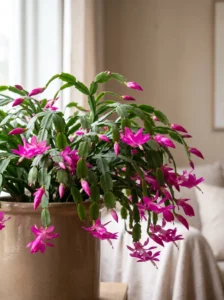
Christmas cactus
The other windowsill succulent whose flowering answers to a cool seasonal rest.
Pink flowers
Pink is the color most of these hybrids come in, and this is the wider pink list.

Red flowers
The red end of the same shelf, from blood red hybrids to red bedding flowers.
Enjoying our flower guides? Add YourFlowersGuide as a preferred source on Google. It helps more readers find us.
Add to Preferred Sources