Flowering quince and true quince are two different plants
Flowering quince and the quince grown for cooking sit in two different genera. The ornamental one is Chaenomeles, a deciduous shrub of the rose family, native to China. The other is Cydonia oblonga, planted for fruit where this one is planted for flowers. John Lindley split the two in 1822 on a detail almost nobody looks at: true quince carries one row of stamens, the shrub two. The old confusion survives in the shrub's name, which comes from the Greek for to gape and for apple, from a mistaken belief that the fruit splits open.
In a yard the two separate quickly. True quince grows into a tree of 16 to 26 feet that can live more than 50 years. The ornamental stays a multi-stemmed shrub topping out around 6 to 12 feet. Young quince fruit wears dense grayish-white hairs that disappear as it ripens. Its foliage is deep green and hairy underneath, where the shrub's leaves are smooth and hairless. The tree's branches are twisted and crowded, and it has long served as dwarfing rootstock for European pear.
Two species cover most garden plants, and they are not interchangeable. Chaenomeles speciosa is the common flowering quince, the tall thicket-forming one. Chaenomeles japonica is the dwarf Japanese species, 2 to 3 feet high and 3 to 6 feet across. The twigs tell them apart without a single flower. On the dwarf they are rough and turn warty with age, the leaf edges are shallowly toothed, and the fruit runs 30 to 40 mm across. The common species has smooth twigs, sharply toothed leaves and fruit of 40 to 60 mm. The named cultivars sit on those two species or on a cross between them.
What flowering quince looks like
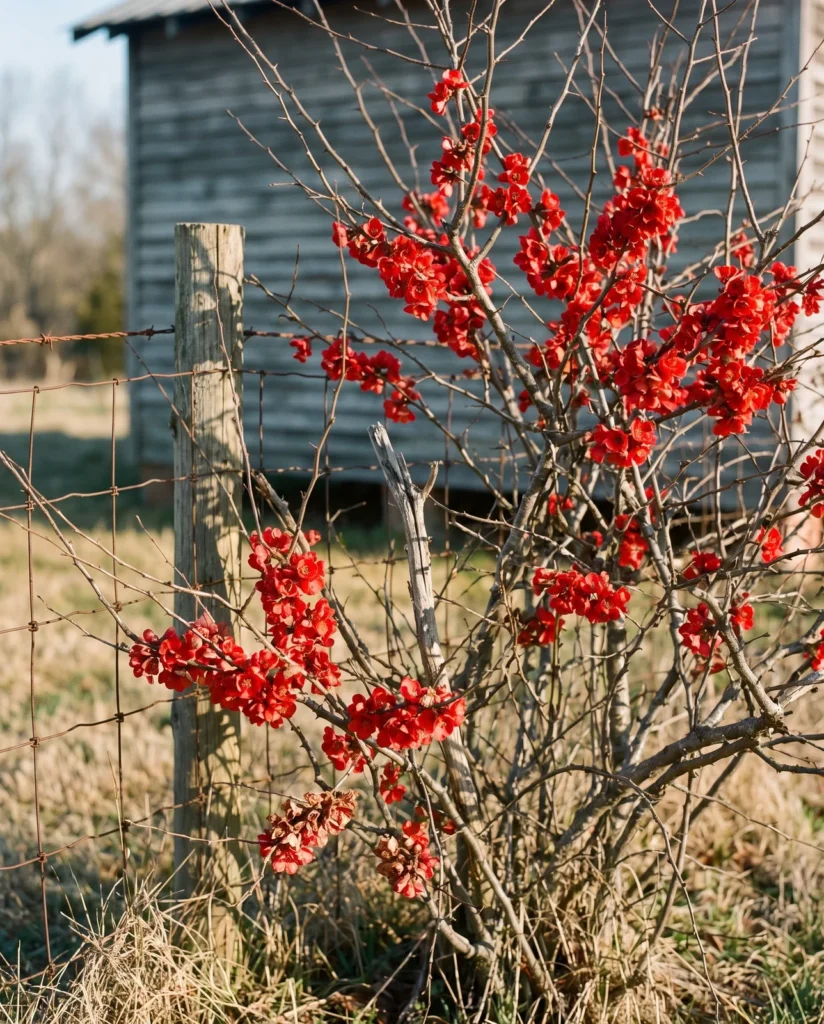
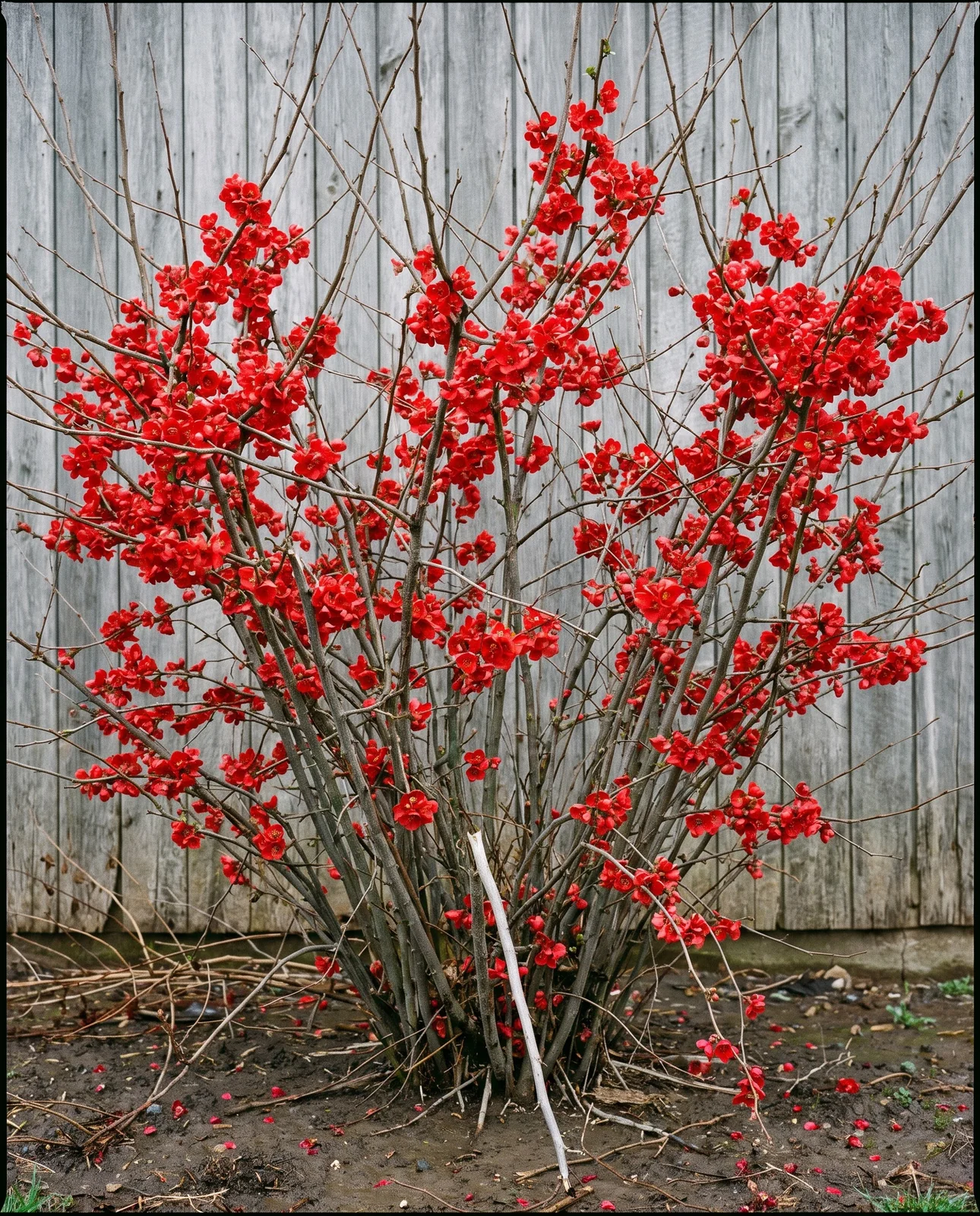
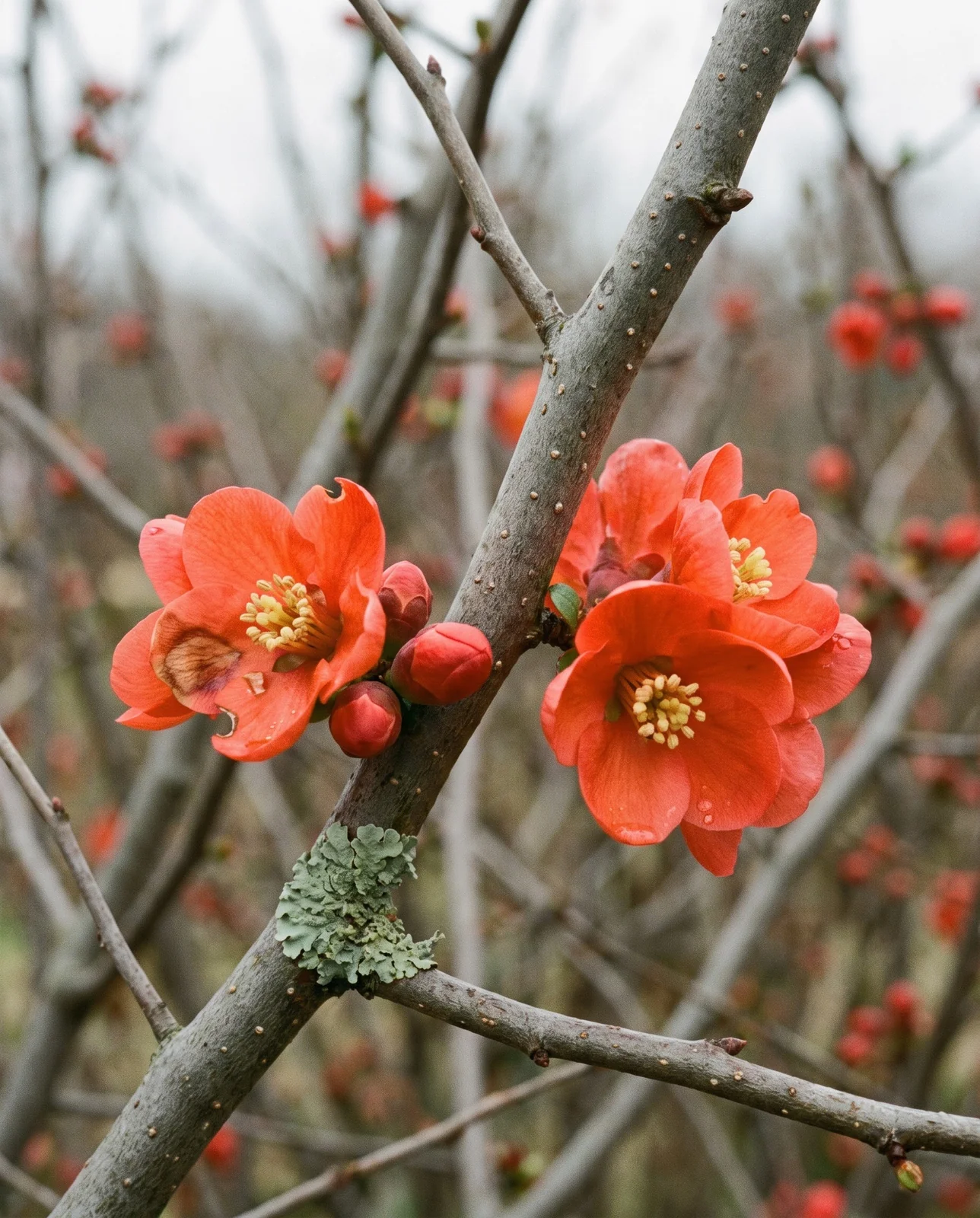
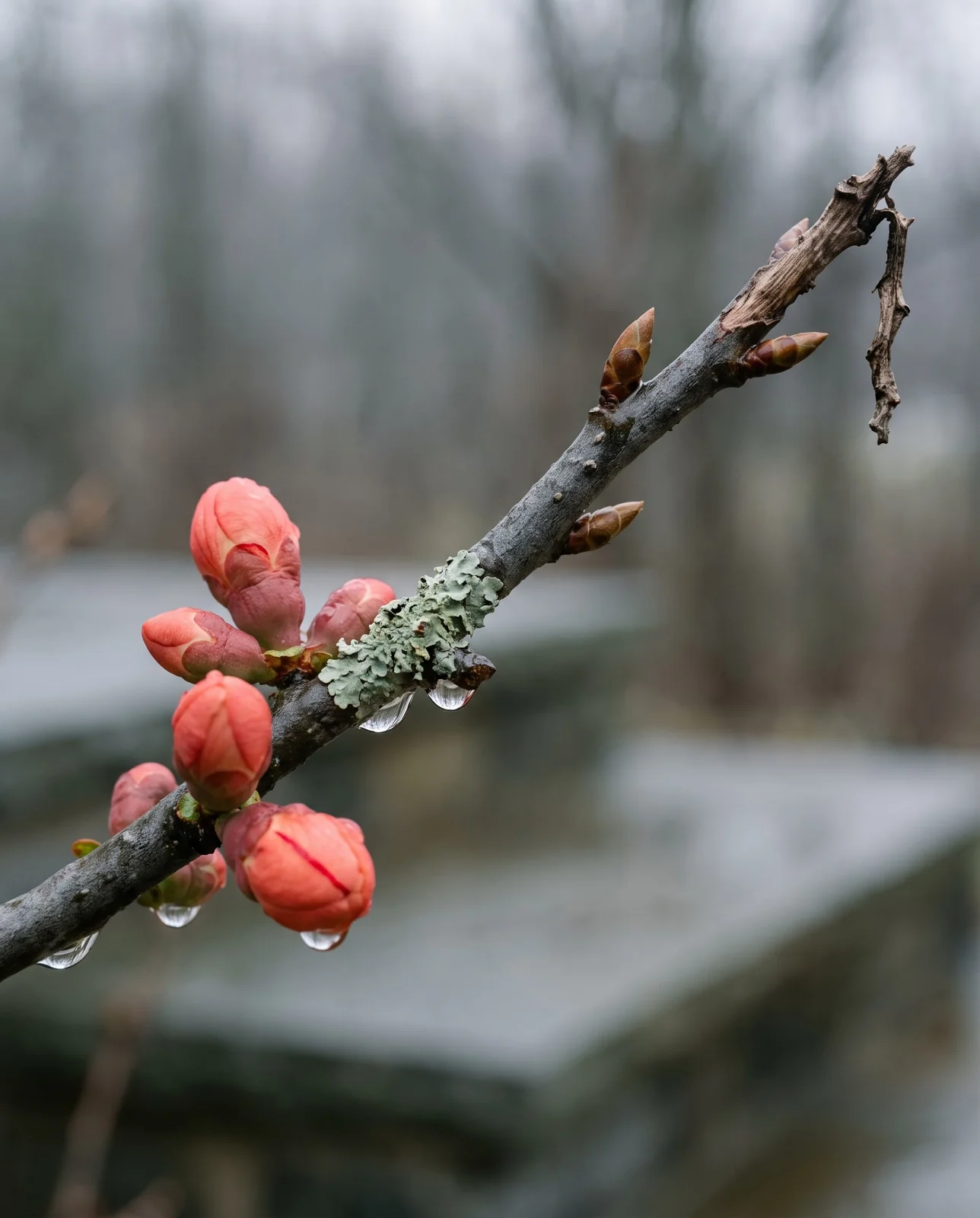
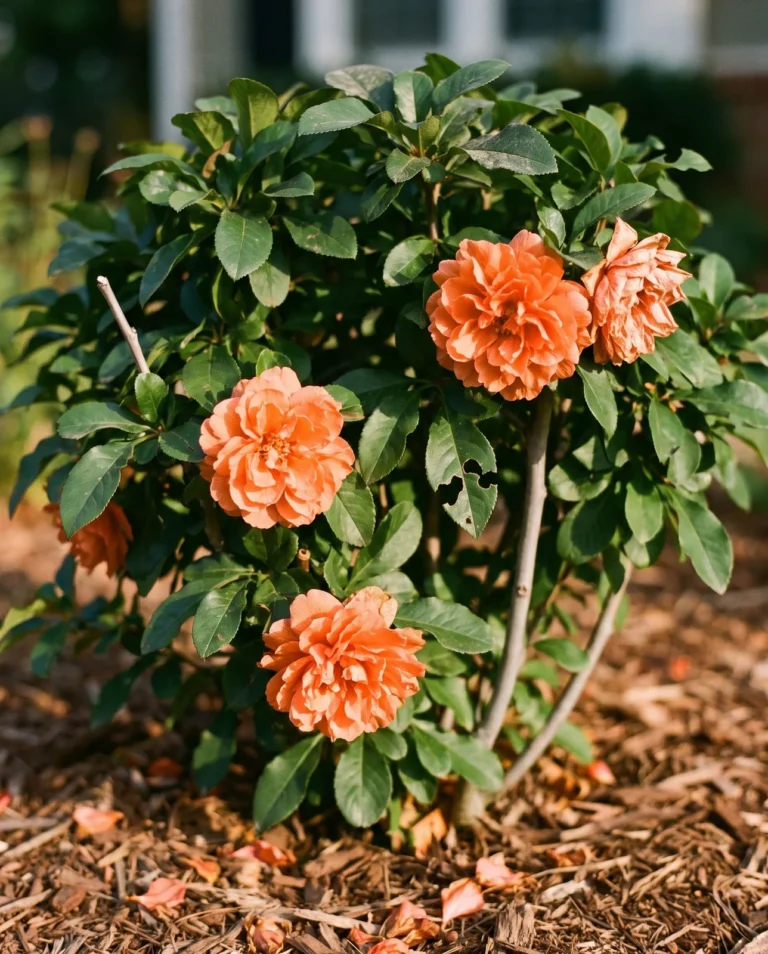
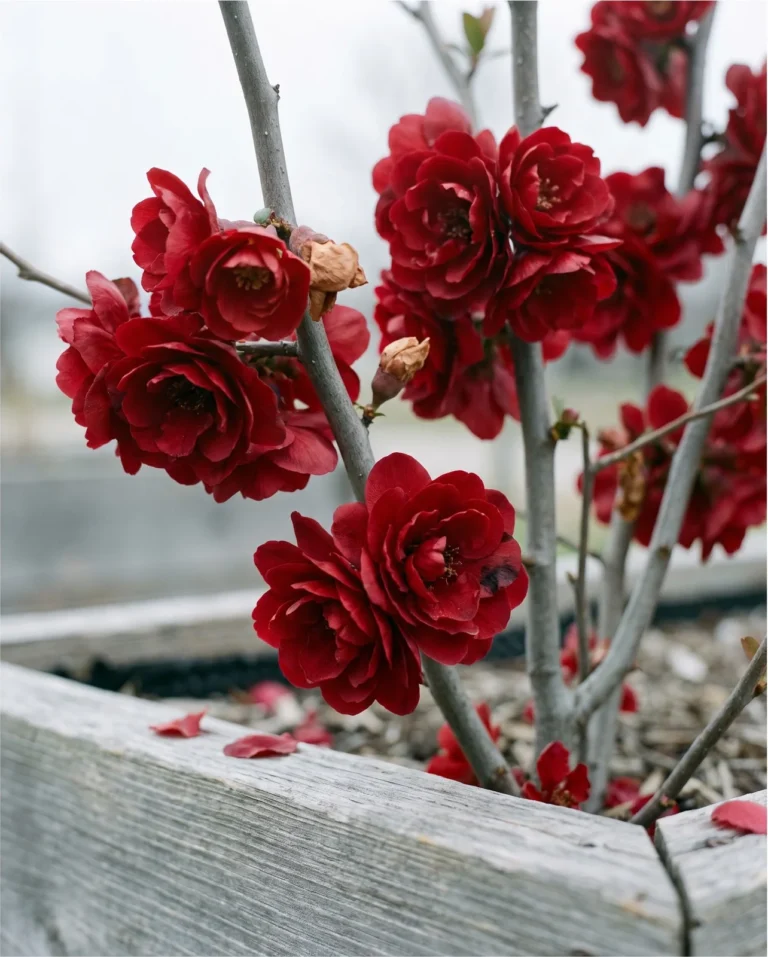
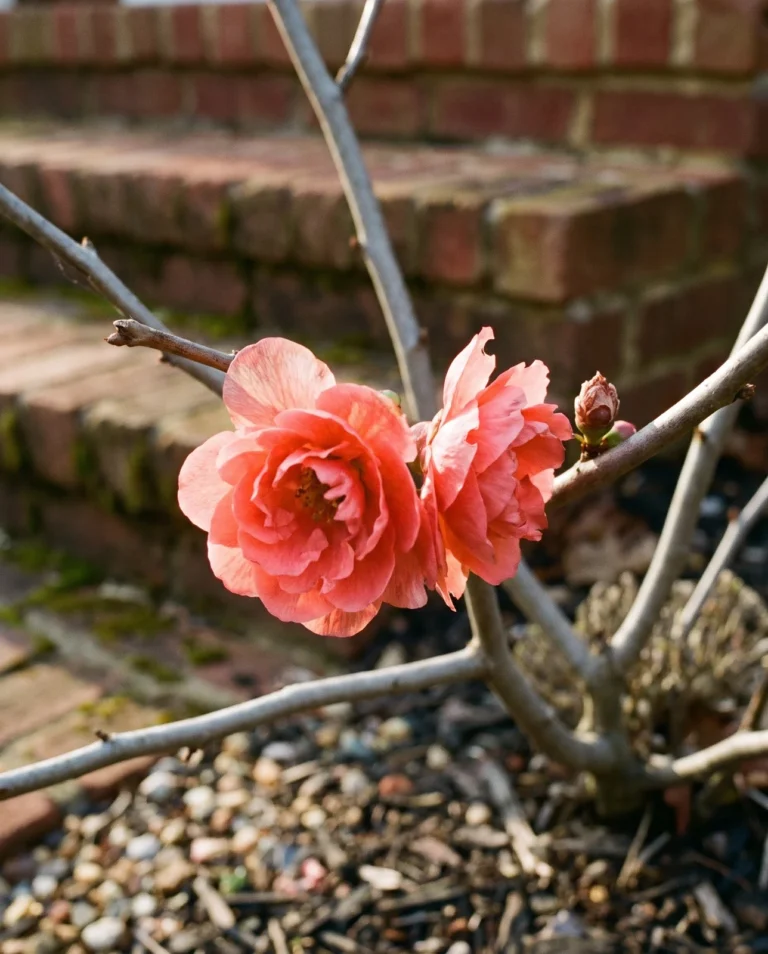
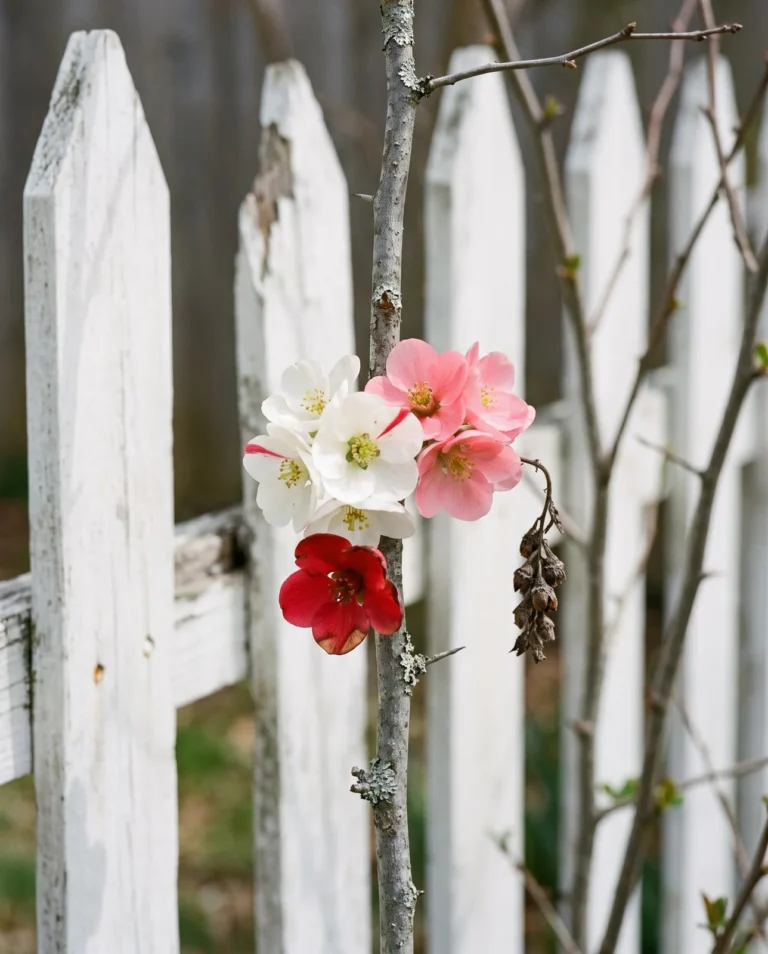
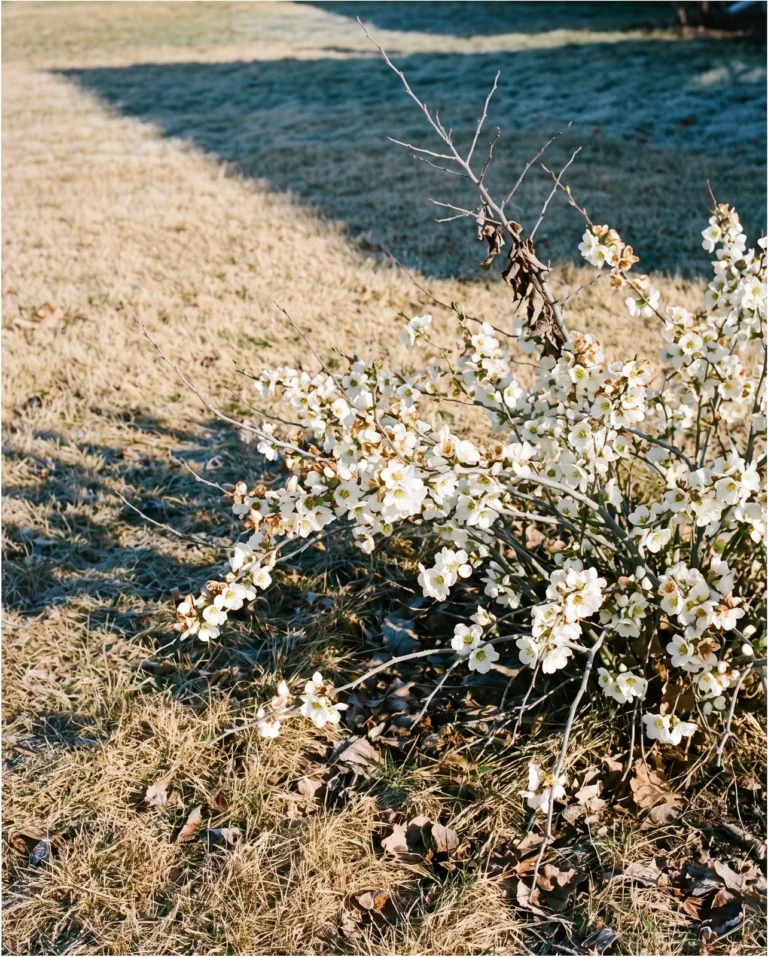
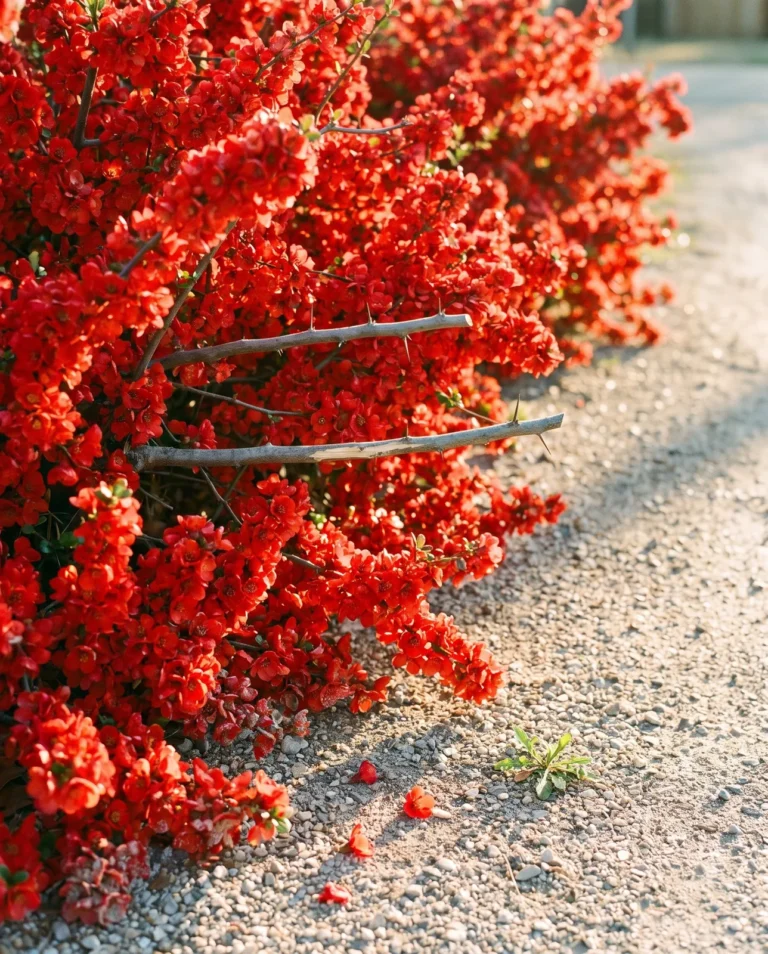
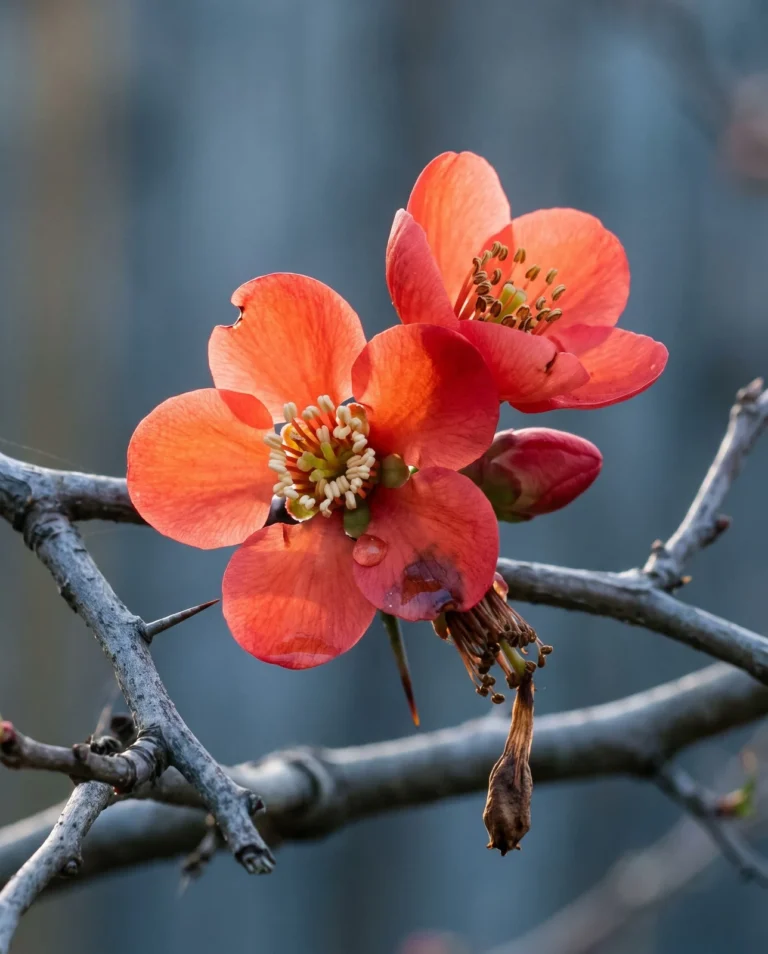
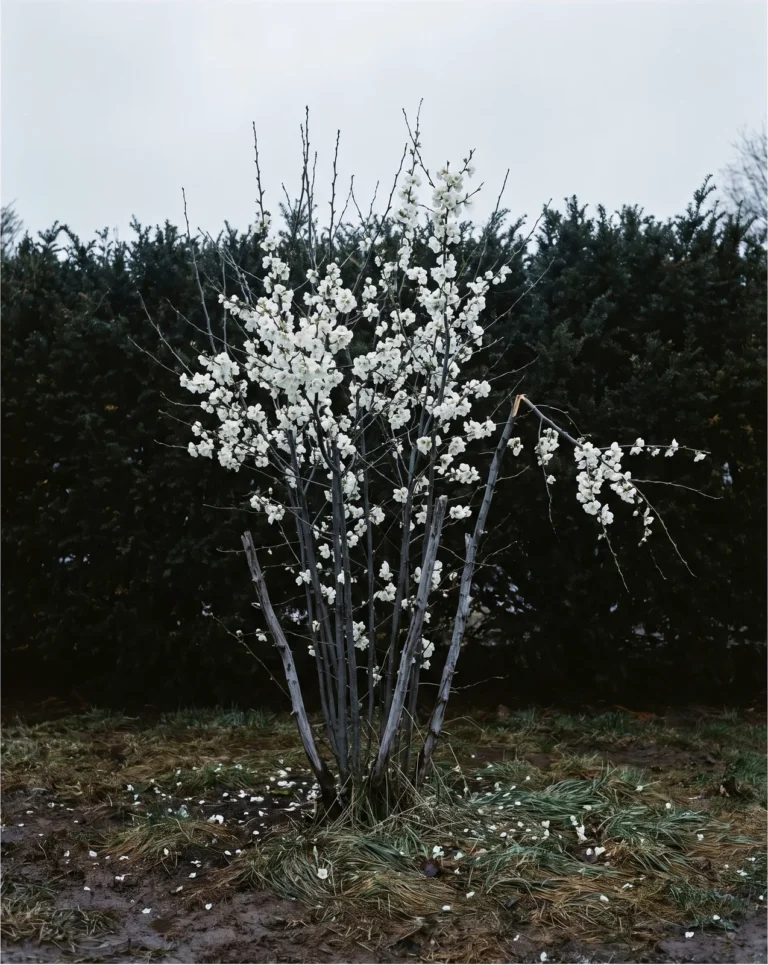
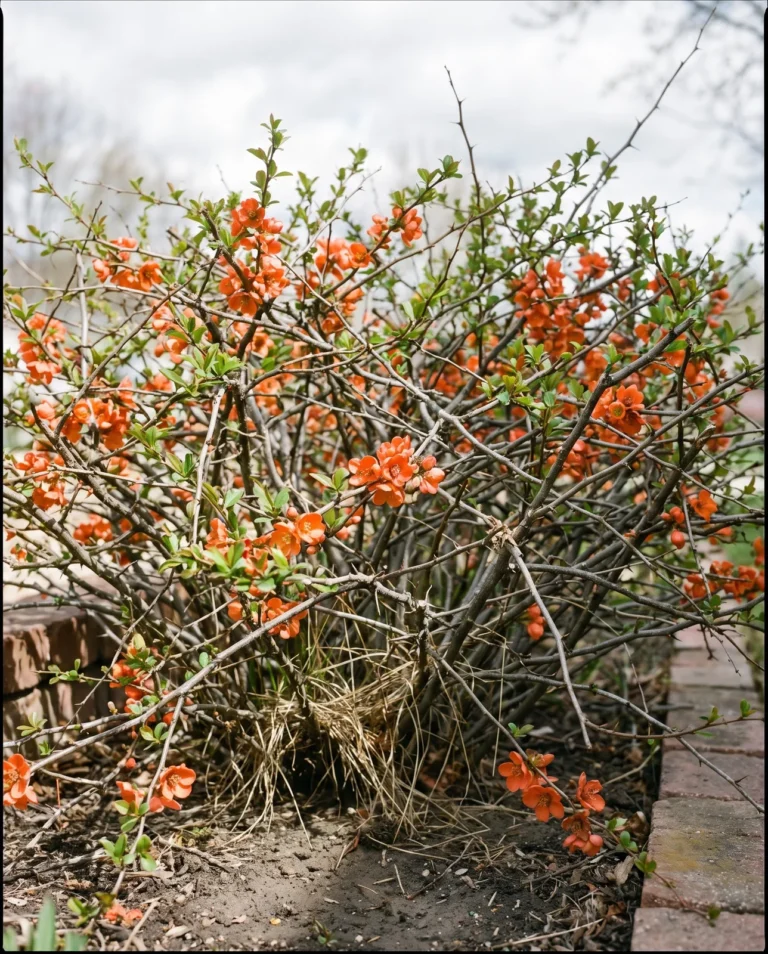
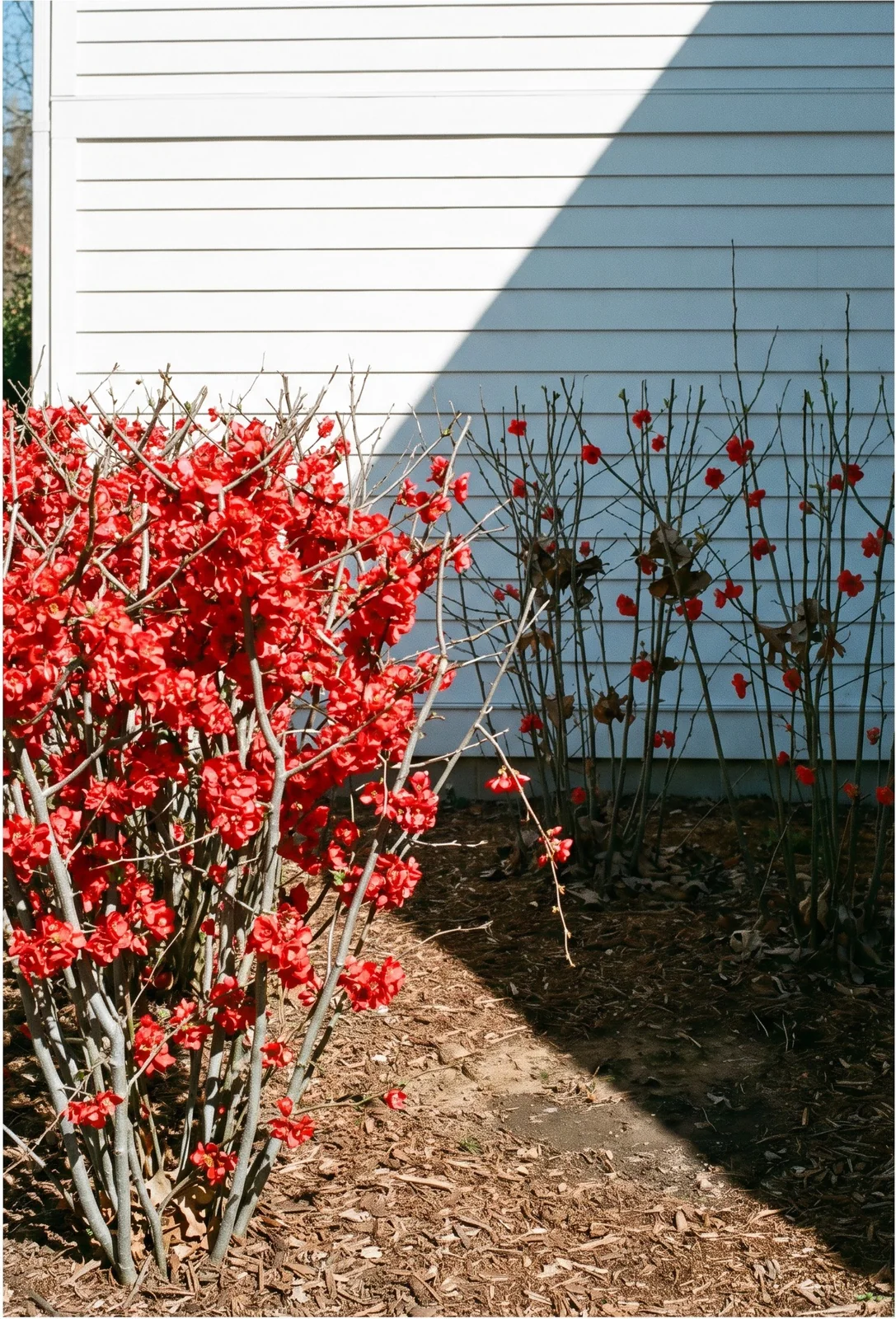
The flowers open directly on bare wood, ahead of the leaves, in scarlet, red, pink or white, single or double and about 1.5 inches across. Nothing softens the effect, because no foliage sits behind the color yet, and the stems carrying it are gray, angular and often armed. Breeders have pushed the flower a long way from the wild form. 'Orange Storm' carries frilly doubles of 31 to 49 petals, close to a camellia, while the older selections keep the single, open face of the species.
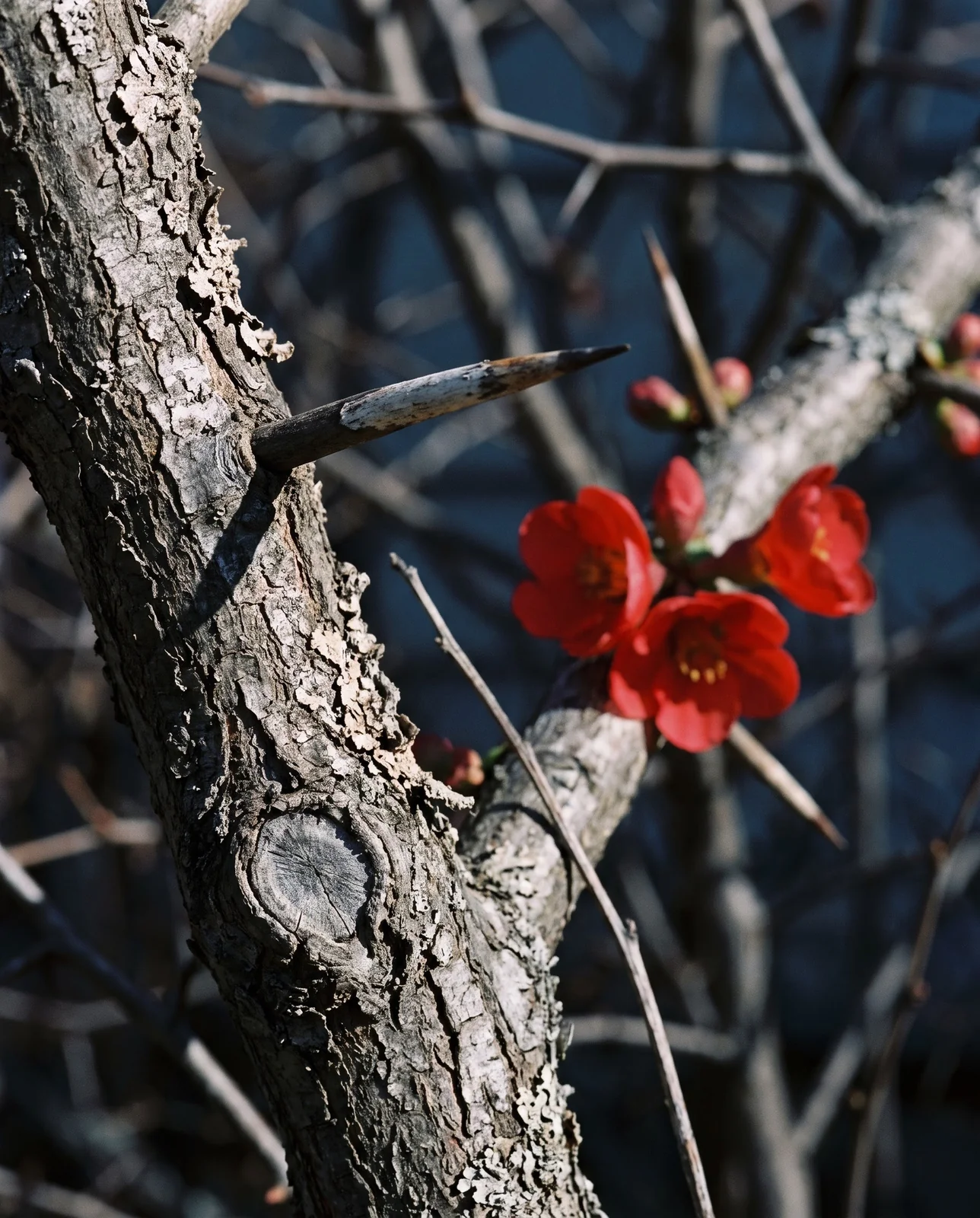
Thorns are the other half of the plant's reputation, and they are not evenly spread. Most stems of the Japanese species carry them, so keep that shrub away from sidewalks and heavy-traffic corners. Selections vary: 'Orange Storm' has none at all. The habit is what stays constant. Many stems rise from the ground and thicken from the base outward, dense and broad on the common species, an interlacing thorny net on the dwarf.
When it blooms, and how to open cut branches indoors
Bloom lands in March and April, and each flush holds for 10 to 14 days. The dwarf Japanese species starts earlier, opening orange to orange-red on bare stems in late winter. Those buds were made the previous growing season, and they need a stretch of dormancy, usually about six weeks, before warmth can move them. That is the whole basis of forcing. Once the cold has been served, a cut stem cannot tell a warm kitchen from an early spring. Flowering quince sits on the short list of shrubs worth cutting for it, beside forsythia.
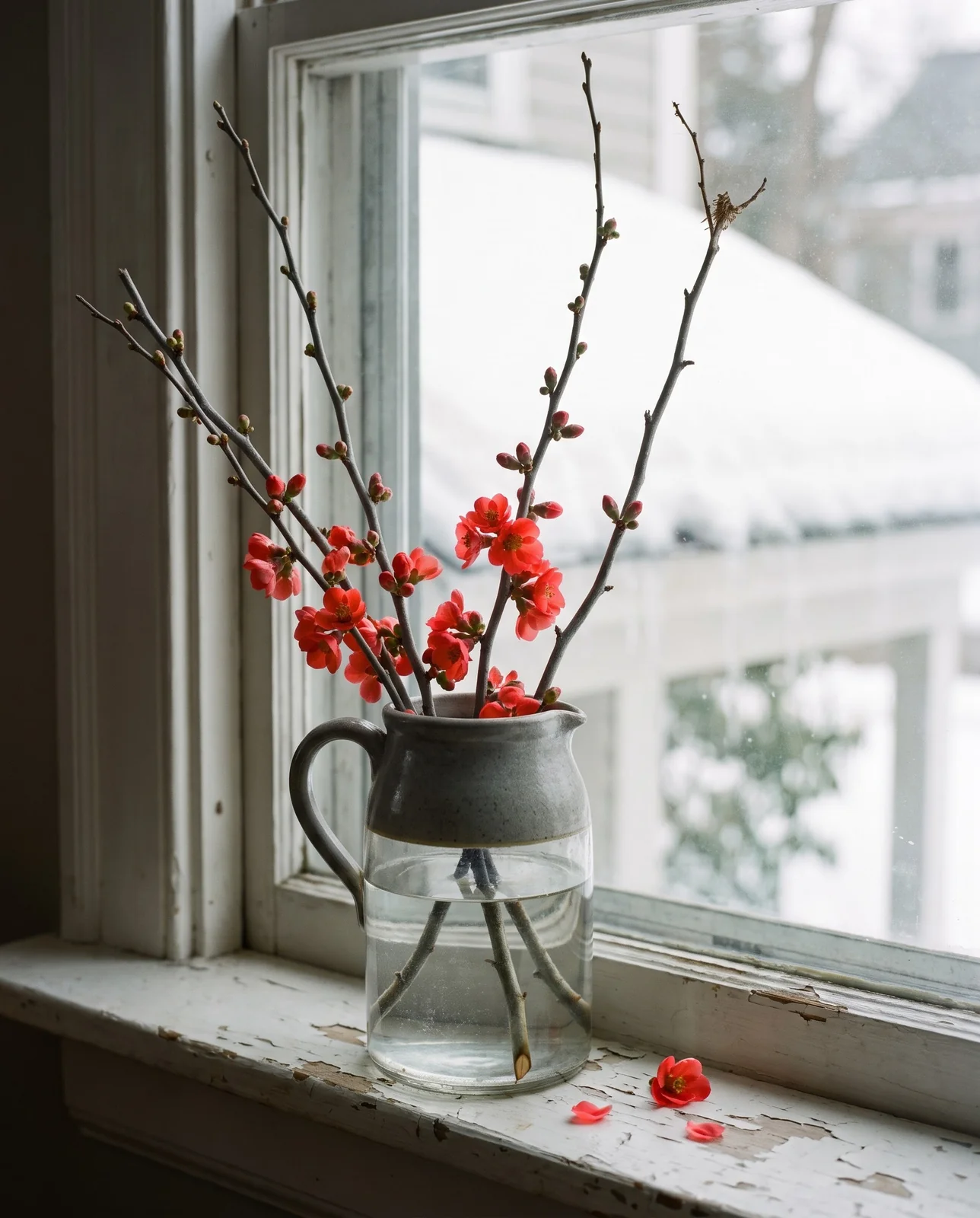
Cut on a mild winter day when the temperature is above freezing, so wood and buds stay pliable. Take branches at least 12 inches long and less than half an inch thick, loaded with plump round buds; the small pointed ones are leaf buds. Strip every bud and twig from the length of stem that will sit below the waterline. Stand the branches in warm water and cut an inch off each base while it is submerged. Keep the container in a warm room, 60 to 70 degrees Fahrenheit, out of direct sun, and change the water every few days. Buds typically break dormancy two or three weeks after they meet that warmth and moisture.
Once the flowers begin to open, move the arrangement somewhere bright and cool, 50 to 70 degrees Fahrenheit and still out of the sun. The cooler the spot, the longer the branches hold their bloom. A branch that has done nothing after three or four weeks was probably cut too early, and the answer is to cut again closer to the shrub's natural bloom time.
Hardiness zones, and why the two ranges disagree
The two ranges on the labels belong to different plants. NC State rates the straight species, Chaenomeles speciosa, at zones 4 to 8. The genus and the named selections carry 5 to 9 instead, and that band covers the dwarf Chaenomeles japonica, the branded Double Take cultivars and 'Toyo-Nishiki' alike. So the species is the cold-hardy plant, good a zone further north, and the named selections trade that zone for one at the warm end.
None of that promises flowers. The shrub needs real winter cold to set flower buds, so where winters stay mild it may grow well and still probably not bloom. Check the species name before buying for a cold garden: zone 4 belongs to Chaenomeles speciosa, while the named doubles start at 5.
Why a healthy shrub skips a spring
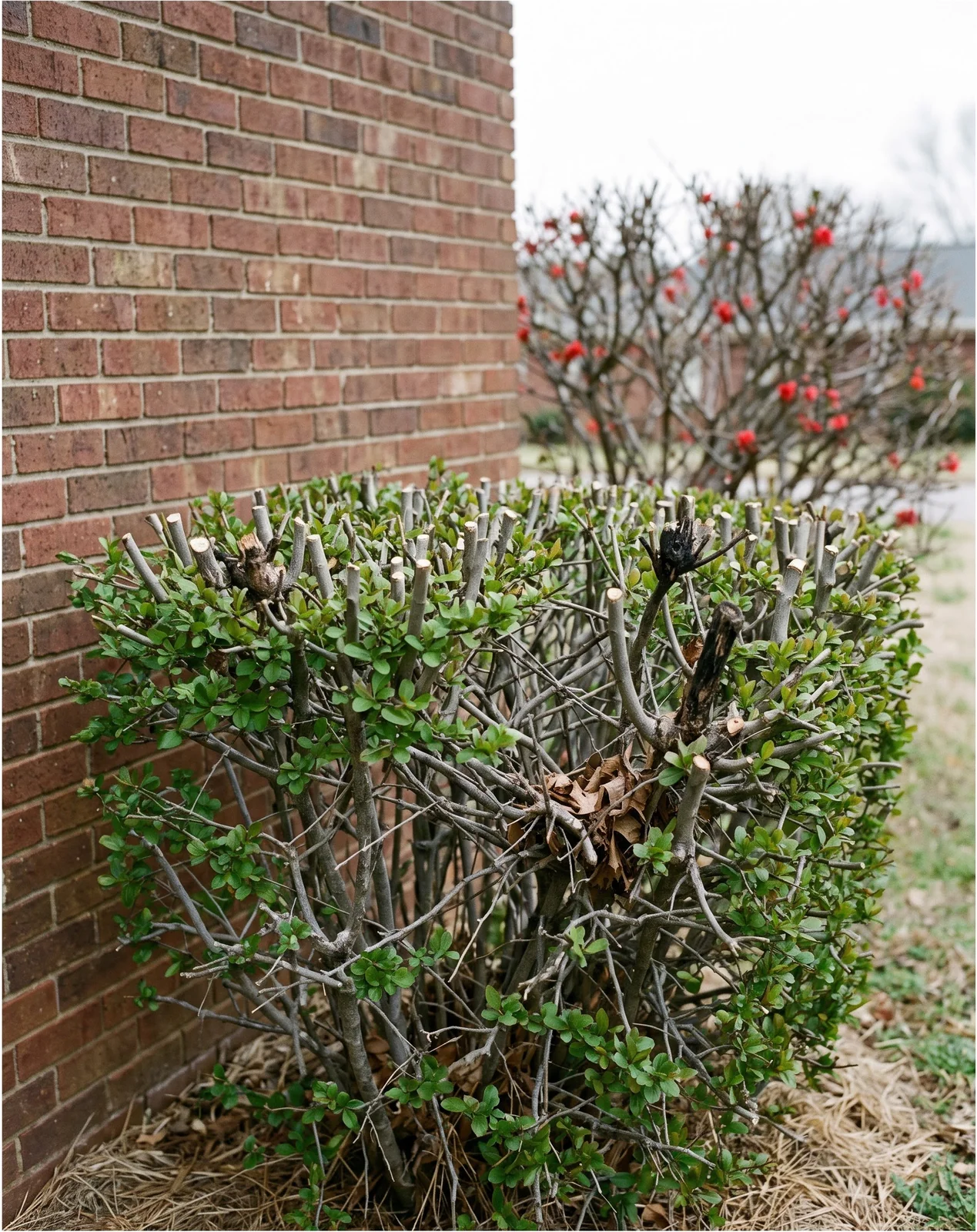
The first suspect on a plant that grows well and refuses to flower is a badly timed cut. Flowering quince blooms on old wood, so next spring's buds are already on the stems by the time this spring ends. Prune right after flowering finishes, before those buds go into the brush pile. Cut it in summer, fall or midwinter and the wood you remove is the wood that was going to flower, so pruning stays sparing here. The dwarf Japanese species keeps the same calendar and does not take severe cuts well.
Three other suspects are worth checking before anyone reaches for fertilizer. A shrub taken to the ground to renew it spends the seasons afterward rebuilding the old wood the flowers come from. Too much shade can cost bloom as well, and it stands beside bad timing as one of the two usual reasons for few or no flowers. And in a mild-winter garden the plant may never get the cold it needs to set buds at all.
Work out why yours is not flowering
Four checks to run in order, before anything gets fed or replaced.
How and how hard to prune
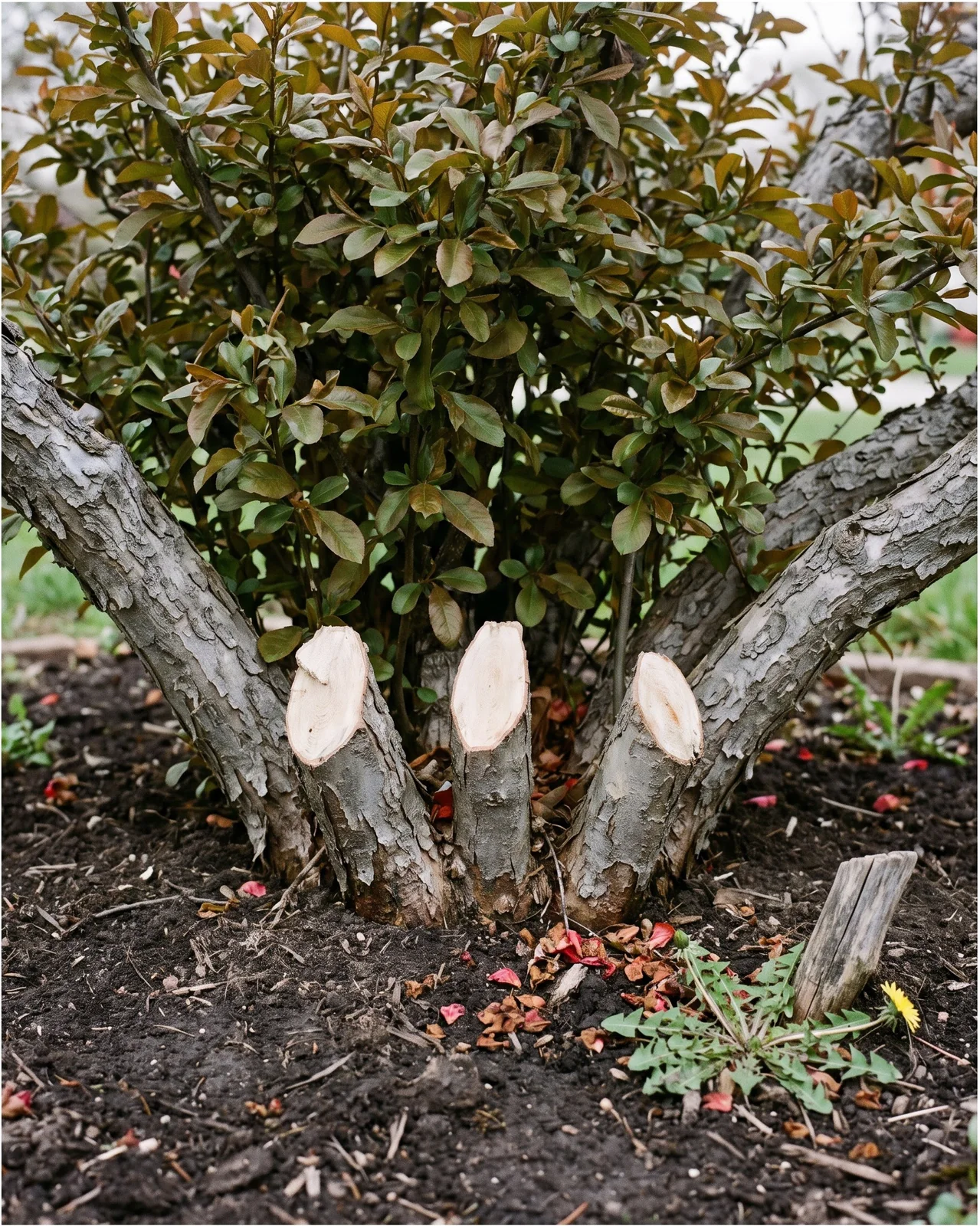
Prune right after the flowers finish, and take no more than about one third of the wood. The cuts go on the oldest branches and any weak growth, at ground level. Doing that every year or two thins crowded growth and pushes new shoots. The wood coming out is then the oldest in the shrub, and the stems left standing hold next spring's buds.
An old thicket that has gone past thinning can be rebuilt from the base. Cut it to about 6 inches above the soil, and repeat that rejuvenation every few years to hold its shape. Expect the flowers to pause while the new wood ages. Heavy spring pruning trades one crop for the other. It builds the flowering spurs that carry next year's bloom but cuts the current year's fruit, so keep it moderate where fruit matters.
Yellow leaves and what the veins tell you
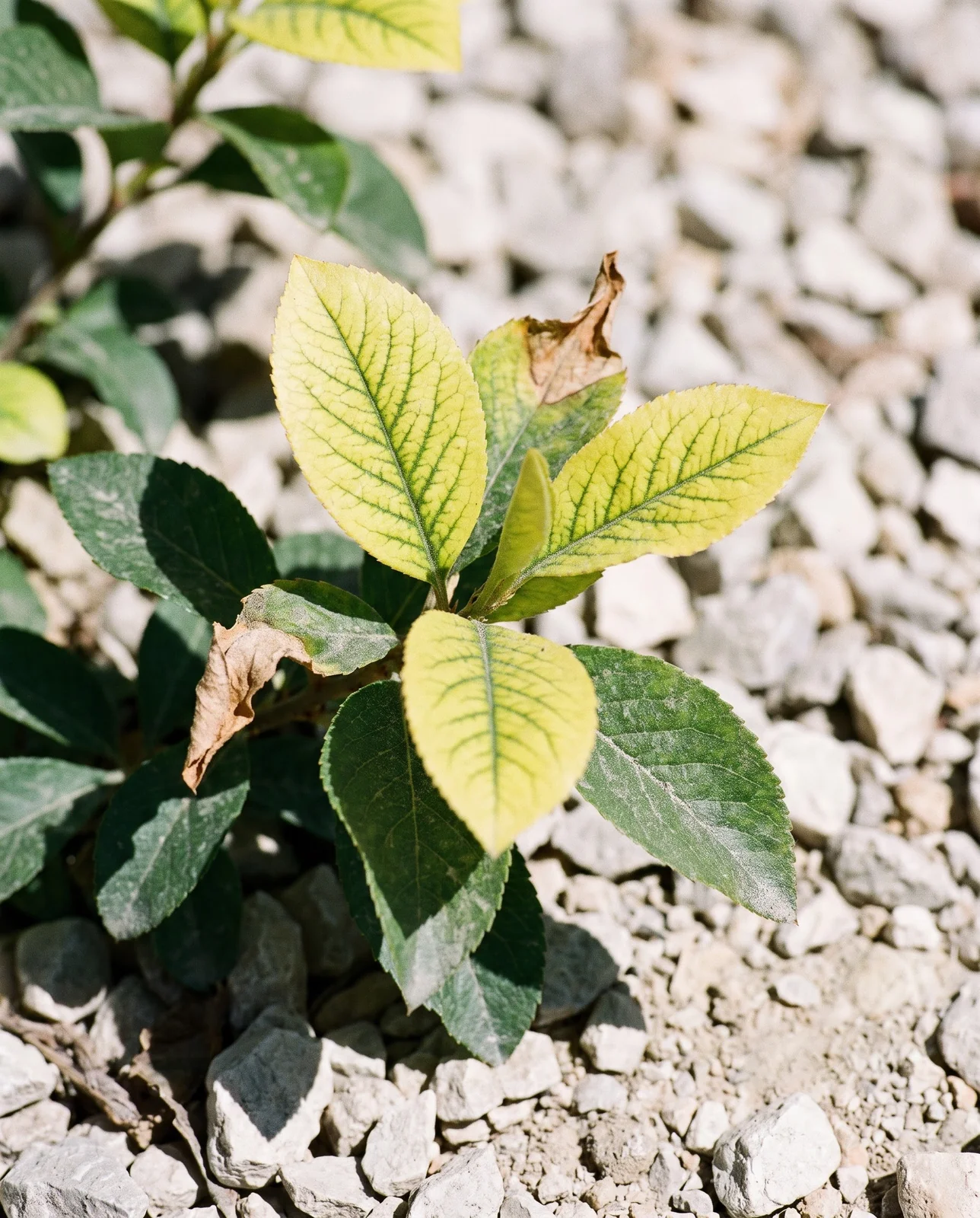
Look at the veins before anything else. Iron chlorosis is interveinal: the blade yellows while the veins stay green. That pattern points at soil chemistry. Flowering quince does not tolerate alkaline soil, and the yellowing follows in high-pH ground. Above pH 7 the iron already there is fixed rapidly into insoluble forms that roots cannot absorb, so plain iron scattered on the surface corrects nothing.
Start with a soil test, because the number decides which treatments are still open. Once pH passes 7.5 the effective approaches are limited. Only chelates formulated for high pH work up there, the EDDHMA and EDDHA products. The cheaper EDTA and DTPA chelates suit acid to slightly alkaline soil and lose their grip past about 7.2 to 7.5. Timing counts as much as the product: soil applications made after May 1st are less likely to show results. A foliar spray may green the leaves up in days, though the effect is often spotty and short-lived. There is no easy, inexpensive or long-term correction for iron chlorosis.
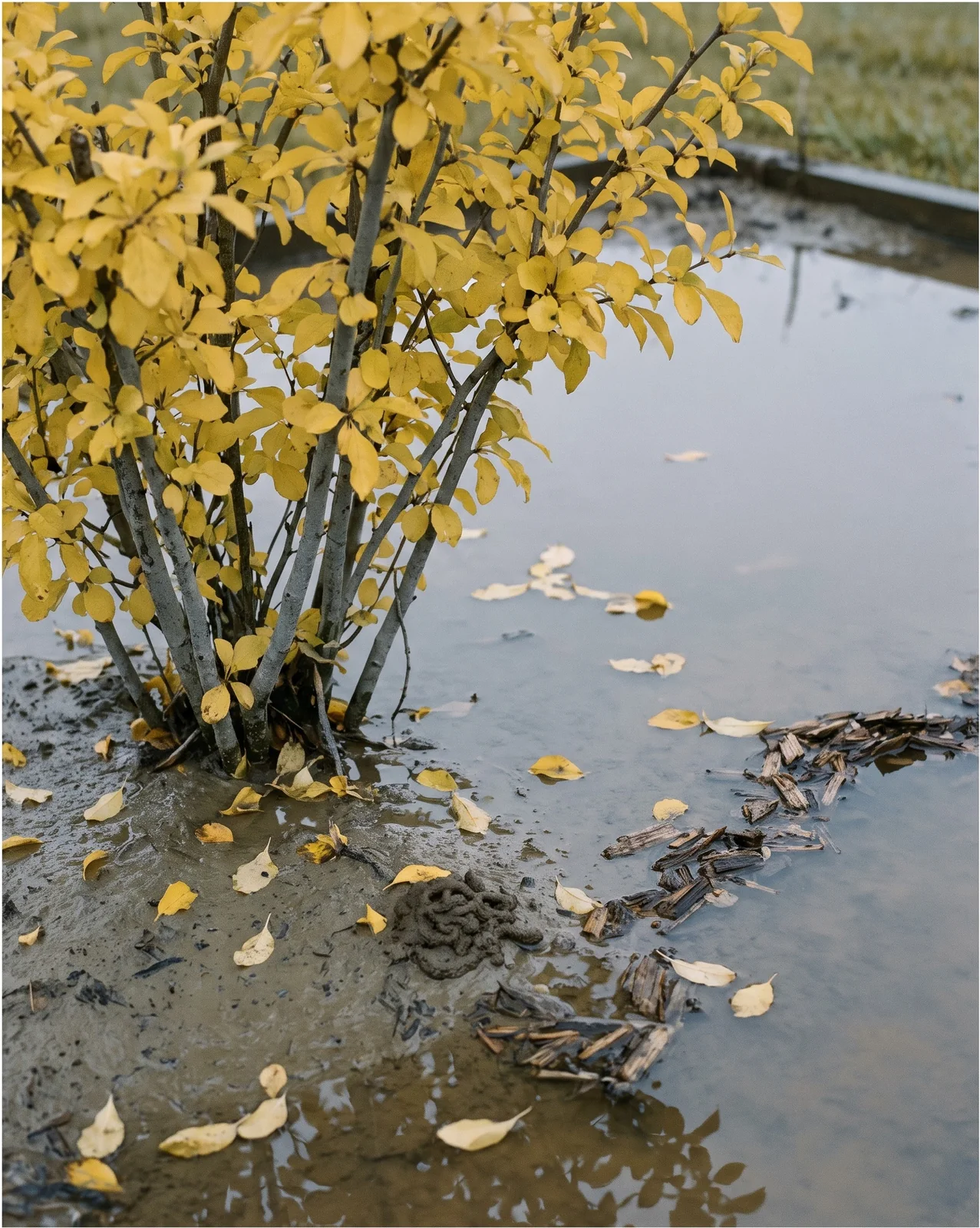
Not every yellow leaf is chlorosis. Leaves that yellow while carrying distinct spots in a wet season point somewhere else, at the fungal leaf spot that can strip a plant in a year of heavy rain. There the spots are what name it.
What actually goes wrong with flowering quince
What the trouble looks like on the plant, and what to do about each one.
Symptoms: strong leafy growth in spring with few or no blooms on it. Management: the buds for next spring sit on old wood, so cut only in the weeks right after the flowers fade.
Symptoms: the leaf blade fades while the veins stay green. Management: test the soil first, because above pH 7.5 the treatments that still work narrow to chelates formulated for high pH.
Symptoms: a thorny multi-stemmed shrub sold or discussed as quince. Management: the fruit tree grows 16 to 26 feet and can live more than 50 years, and its young fruit wears grayish-white hairs that only disappear as it ripens.
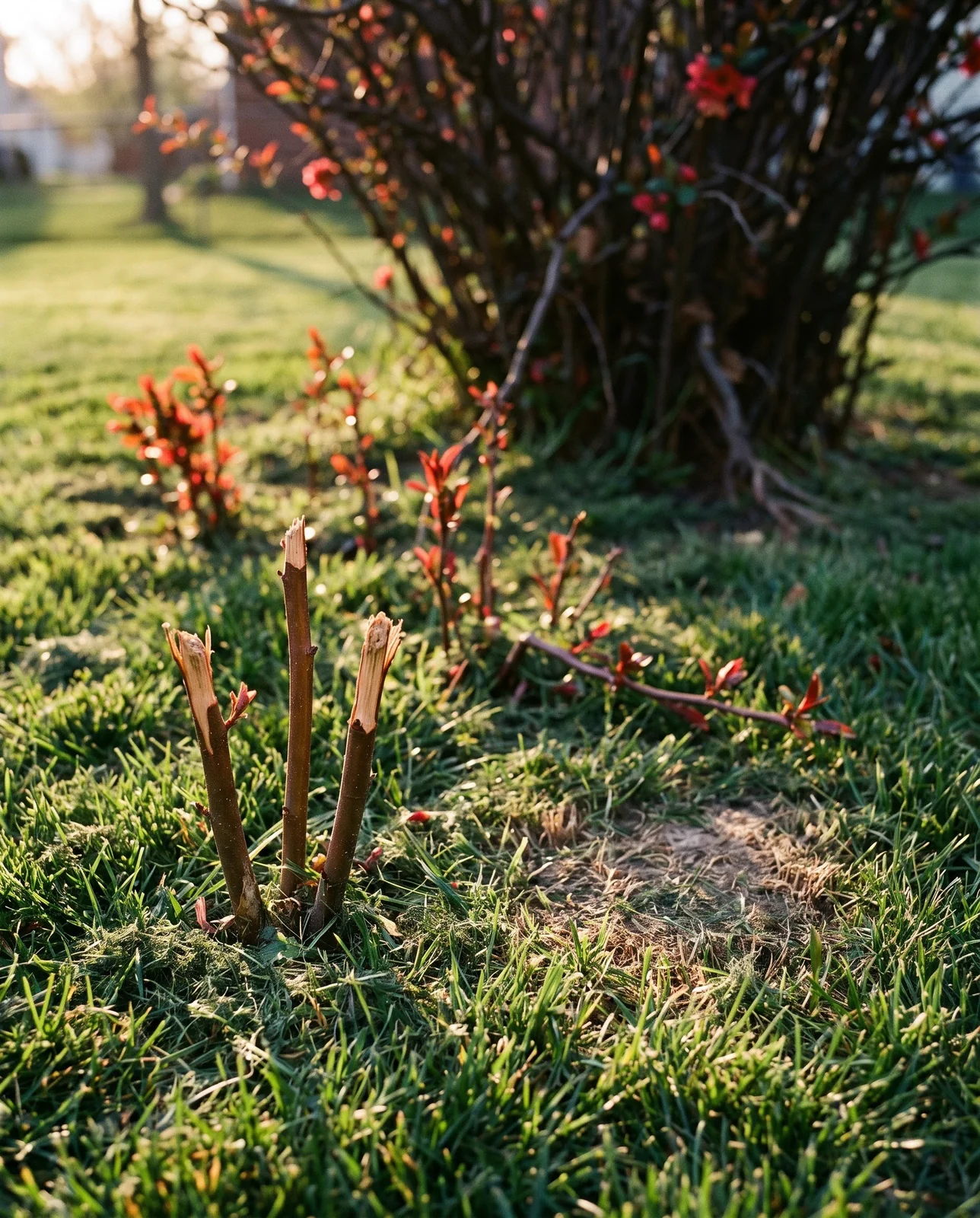
Symptoms: new thorny shoots in the lawn or bed, out beyond the clump. Management: dig a foot or more to the side and pull the sucker out with its root. Where one sits at the surface, cut it off above soil level with a clean, sharp cut.
Symptoms: fungal leaf spot on the foliage, worst in years of heavy rainfall, sometimes stripping the plant. Management: it tracks the weather more than anything you do, and no fungus name is published for it on this shrub.
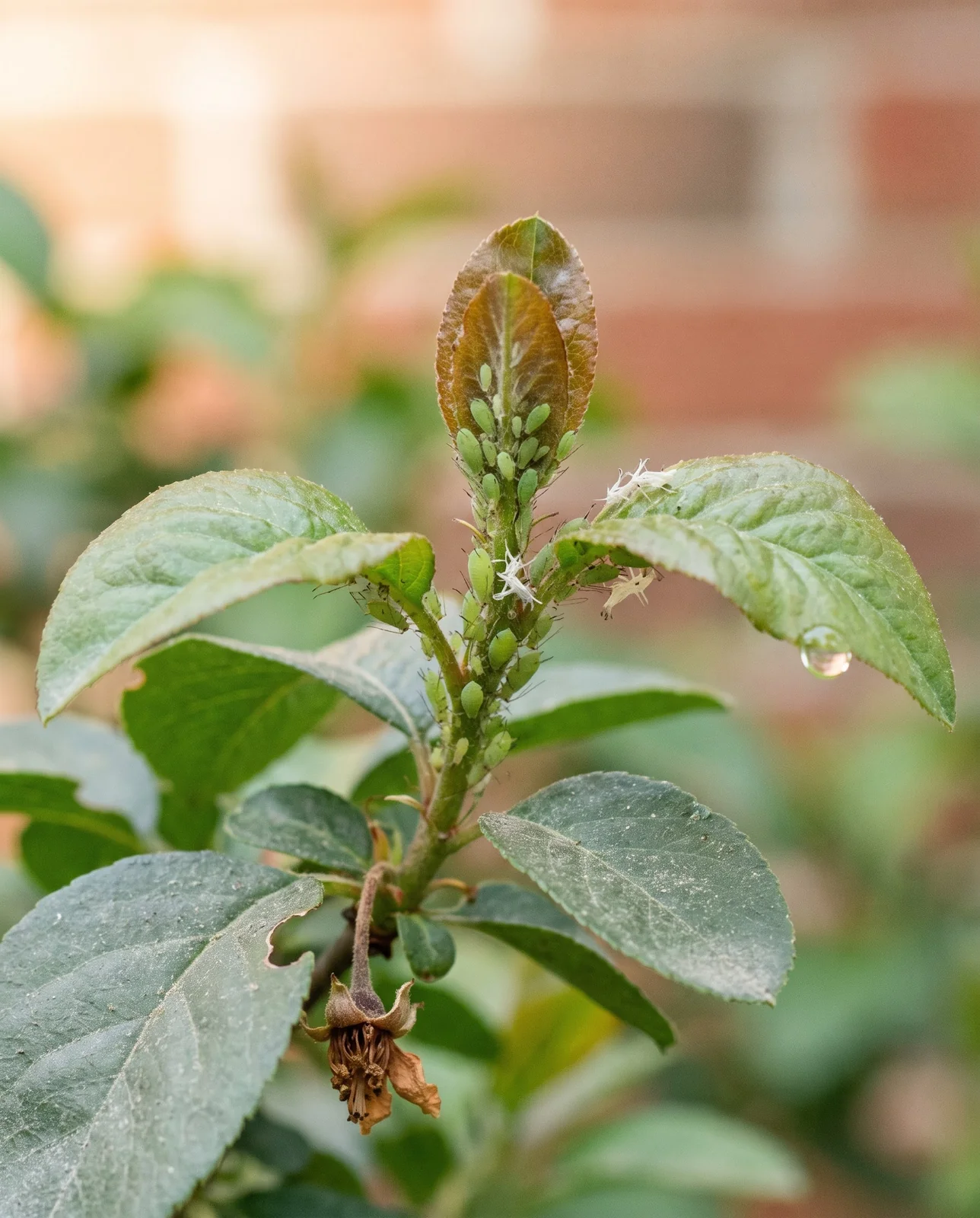
Symptoms: aphids clustered on soft new shoots, with scale and mites turning up less often. Management: aphids head the insect list for the genus, alongside fire blight and apple scab on the disease side.
Symptoms: thorny stems throughout a dense, multi-stemmed clump. Management: thornless selections exist. The branded orange cultivar carries no thorns at all, and 'Texas Scarlet' has few.
The fruit, and what to do with it
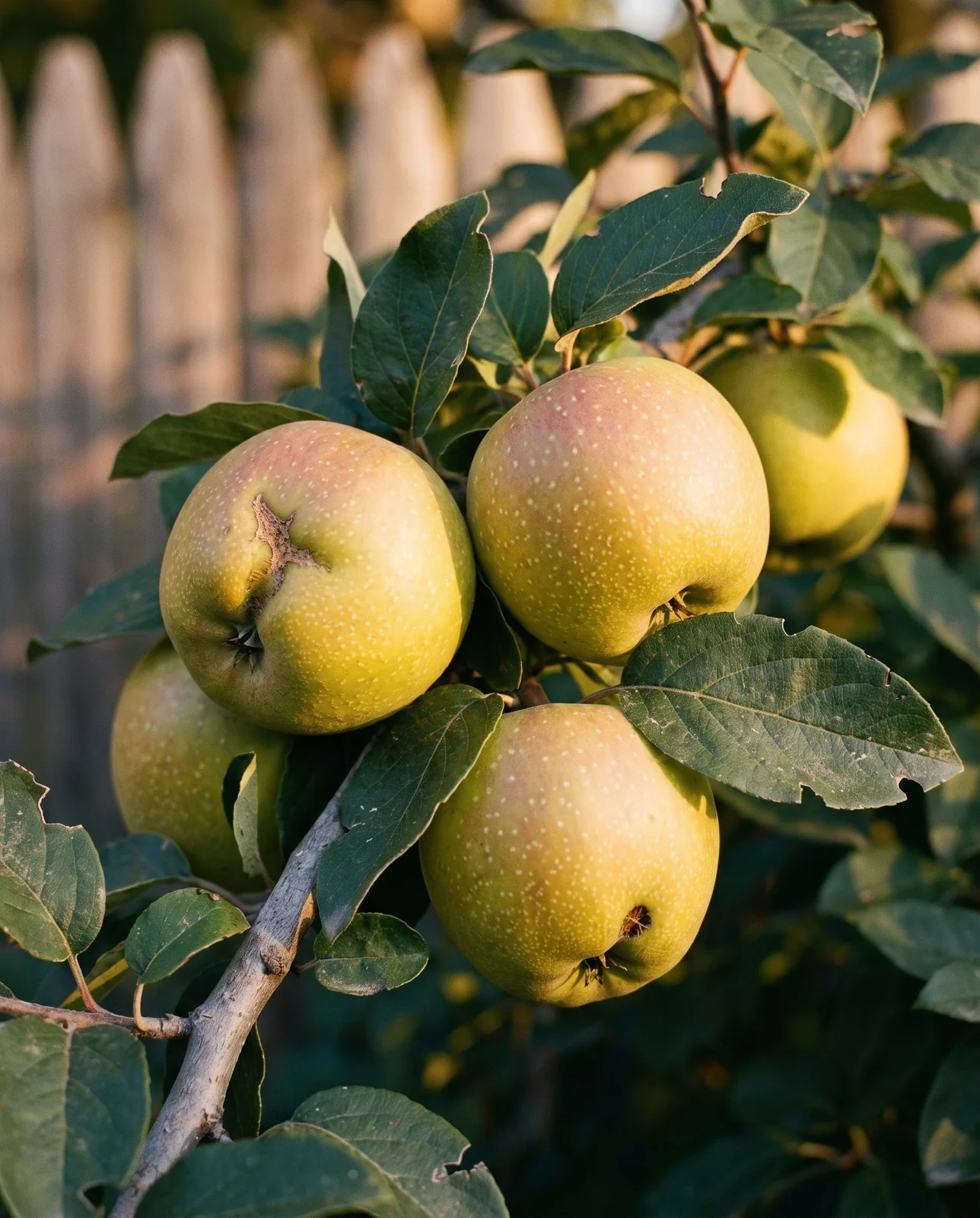
The fruit is worth cooking and close to useless raw. It ripens in early fall as a yellowish-green pome with a reddish blush, speckled and fragrant, apple-shaped and usually up to about 2.75 inches across. Straight off the branch it is hard and bitter. So it gets called inedible and goes into preserves and jellies all the same, and some people eat it once it has ripened off the shrub. The dwarf species carries a smaller version, 1 to 2 inches across, astringent and used the same way.
Very high natural pectin makes this a standout for jelly. Seeds are the other question, because true quince seeds carry cyanide the way apricot and peach pits do. The shrub's fruit is a different and much less aromatic thing, and its seeds are not particularly dangerous and may be cooked with the fruit. Some plants set nothing at all by design: the branded orange cultivar was bred fruitless, its pistils traded for extra petals.
Varieties worth telling apart
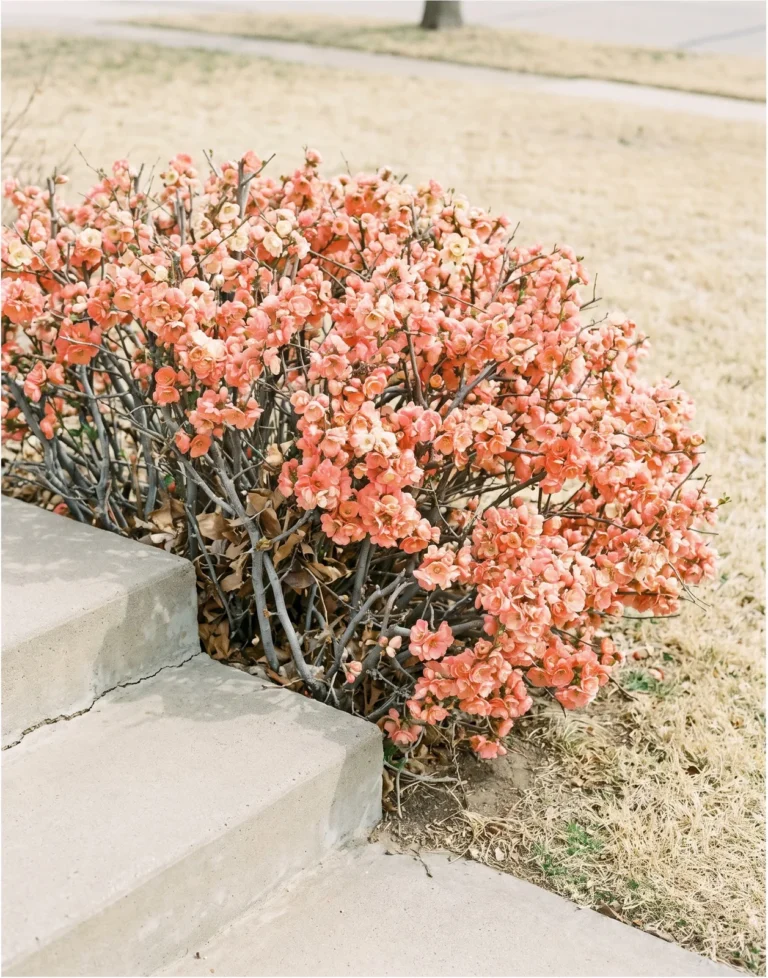
The named selections differ in four things a plant label rarely spells out together: flower form, thorns, finished size, and whether the plant sets fruit.
Where to plant it
Sun, drainage and clearance are what the site has to provide. The shrub is surprisingly adaptable, taking less-than-perfect soil once established, though it prefers ground that drains. It transplants easily. Clearance is the part people regret. The stems are armed, and the clump widens from the root by suckers where they are left. Set it beside a walk or a mowing line and the argument gets settled every year with a saw at the wrong time. At shrub scale it does what a magnolia does at tree scale, opening flowers on bare wood before any leaf arrives. Go easy on feeding: one light dose of a balanced, slow-release fertilizer in late winter or early spring is enough.
How much sun it needs
Full sun buys the full flower show. Flowering is best in full sun, and the shrub still performs in light shade, which helps where summers run hot. On a hot southern site light shade is a real option, and the price of taking it is paid in flower count.
Soil and the pH ceiling
Almost any soil that drains will do, up to a ceiling at neutral. The workable range runs from pH 3.7 to 7.0, generous at the acid end and stopping where alkaline ground begins. Under that ceiling the plant is undemanding, adaptable to poor soil once settled and asking mainly for drainage. Over it, iron is the problem, and the leaves show it. Anyone gardening over limestone or on builder's fill against a foundation has reason to test before planting.
Watering
Water it through the first season, then ease off. A mature plant is mildly drought tolerant, and that is the sharpest care difference between it and the fruit tree it is named after. True quince roots shallowly, is susceptible to drought, and needs regular watering. Drainage is the other half of the request, since even an adaptable plant prefers ground that drains.
As a hedge and a barrier
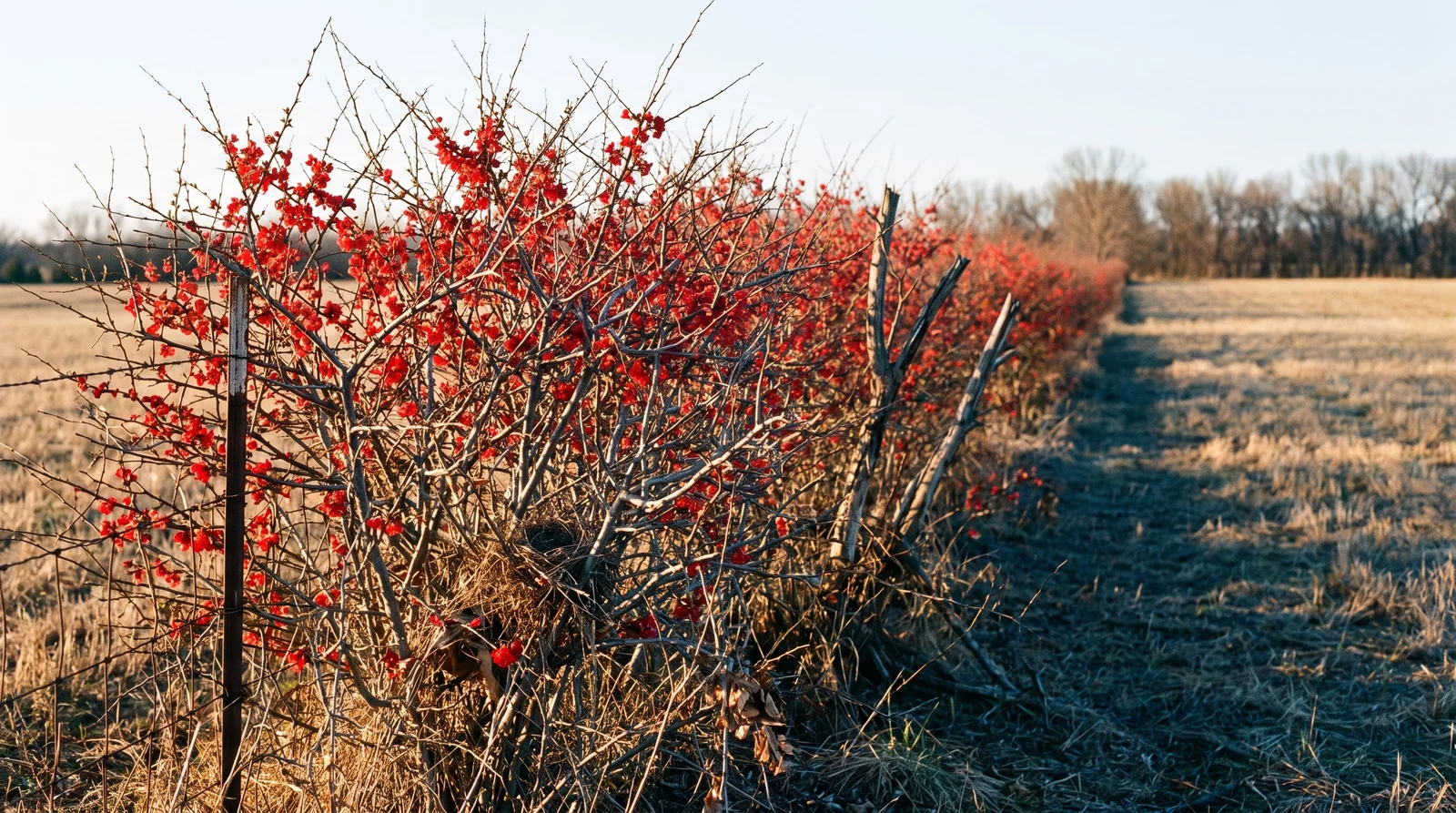
Thorny stems are the reason this shrub ends up along property lines. They are recommended outright as a border or a security barrier against intruders, and hedge, screen and barrier sit on its list of landscape uses. The same thicket draws birds, hummingbirds and butterflies. The cost is handling. A hedge of this cannot be waded into, the thorns that stop a shortcut also stop a rake, and thorn hazard sits among the plant's named drawbacks.
Height and spread
The size gap between the two species is why labels confuse people. The common one reaches 6 to 12 feet tall and 6 to 10 feet wide on spiny, tangled stems. The dwarf Japanese species runs 2 to 3 feet tall and 3 to 6 feet across. Newer branded selections sit between them, usually topping out around 4 to 5 feet against up to 10 feet for the older types. The big one finishes dense, broad, erect and multi-stemmed, and it trims or even shears easily where someone wants a line held. Many stems from the ground is what separates it from the small spring trees like redbud that people shop beside it.
Does it spread, and is it invasive
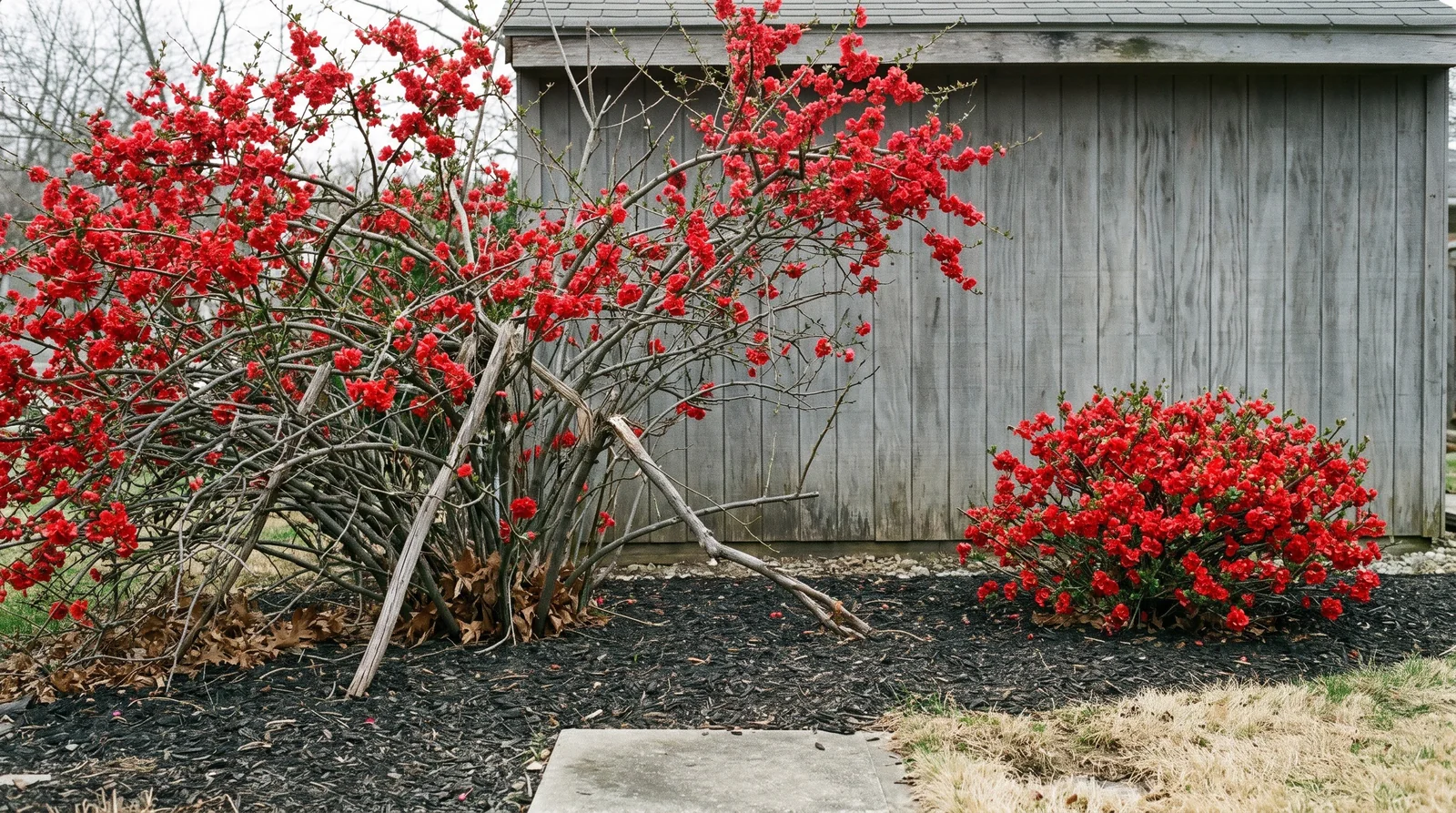
It spreads by root, and that half is well documented. Both species sucker, and taking the suckers off promptly helps control possible spread. To remove one, dig a foot or more out to the side and pull the sucker up with its root. Where a sucker sits at the surface, cut it off above soil level with a clean, sharp cut that does not tear the stem it rises from.
Whether it invades has no clean answer. The national invasive-plant atlas files its nativity as Exotic. It grows naturalized in disturbed ground, forest edges and forest in Connecticut and Massachusetts, and nowhere else in New England. Massachusetts gives it the rank used for non-native plants that nobody tracks for conservation concern, which settles nothing either way. The plain position is narrow: it suckers hard, and it has escaped into wild ground in part of New England.
Pests, diseases, and the blight that belongs to the other quince
The standing list is short: aphids, fire blight and apple scab across the genus. The dwarf species adds a fungal leaf spot that can defoliate it in years of heavy rainfall, with aphids on new growth and occasional scale and mites. On the common species the same leaf spot is worst after a wet spring, alongside fireblight, scab, aphids, scale and mites. Telling the fungal yellowing from the soil kind is a matter of pattern: spots and early leaf fall on one side, an even fade between green veins on the other.
The disease people arrive asking about by name is quince leaf blight, and it belongs to the other quince. RHS attributes it to the fungus Diplocarpon mespili, which spots leaves severely, drops them early and distorts the fruit in wet seasons. It runs mainly on common quince, though other rose-family plants can be affected. The published host lists name hawthorn, medlar, pyracantha, pear, photinia and serviceberry, and none includes Chaenomeles. So the leaf spot on flowering quince stays real and unnamed.
Deer, rabbits and birds
Deer will sometimes browse the shrub and sometimes leave it alone, and rabbits take it in some yards too. The one structured resistance rating belongs to a single cultivar, the branded orange selection, listed as resistant to deer, drought and heat. A label promising deer resistance is reporting that one cultivar's rating.
What to expect, year by year
Three points in the life of one plant, from the year it goes in to the thicket it becomes.
The planting year. What it wants first is water while the roots take and ground that drains under it. Hold back on fertilizer: one light dose of a balanced, slow-release product in late winter or early spring covers it, and older plants often need little more. Whatever flowers arrive that first spring were set on the wood a season earlier, before the plant reached the yard.
Once it has old wood of its own, the plant starts answering questions about yield. Fruit is produced where both male and female plants are present. A thin set may trace to pollination knocked out by rain or cold at bloom time, or to too much nitrogen pushing leafy growth at the expense of flowers and fruit. Branded selections add a second show in fall, reblooming often enough to be noted.
An old thicket. Suckers left in place widen the clump from the root, and the crown fills in dense, broad and erect. The plant takes trimming or even shearing when someone decides to hold a line. Rabbits browse it in some yards, and the thorns turn every late correction into a job in long sleeves.
Four things people repeat about flowering quince
Four claims that follow this shrub around, and how each one holds up.
The myth: It is a quince tree.
The reality: It is a shrub in a different genus. True quince is the only species in its own genus, with the flowering quinces once filed beside it.
The myth: Prune it in winter with everything else.
The reality: Blooming happens on old growth, so a winter cut carries next spring's flowers off to the brush pile. The sparing cut belongs right after flowering, and the dwarf species takes severe cutting badly.
The myth: The fruit is inedible.
The reality: Raw off the branch, that is fair. Cooked it is another thing: hard and nearly inedible fresh, high in pectin, and sometimes mixed into jellies and preserves.
The myth: It needs rich soil.
The reality: The workable range runs from about pH 3.7 up to neutral, and the plant takes poor soil once established, asking mainly for drainage. Alkaline ground is the one that defeats it.
FAQ
What is the difference between quince and flowering quince?
They sit in two genera. Flowering quince is Chaenomeles, a shrub grown for its flowers; true quince is Cydonia oblonga, a tree grown for fruit that reaches 16 to 26 feet.
Is flowering quince fruit edible?
Cooked, yes; raw, barely. It is hard and bitter straight off the shrub, and it still goes into preserves and jellies, with some people eating it once it has ripened off the plant.
Is flowering quince invasive?
There is no clean answer. Its nativity is filed as Exotic on the national invasive-plant atlas, it grows naturalized in Connecticut and Massachusetts, and its one conservation rank is the untracked category and carries no verdict.
Does flowering quince spread?
By root, yes. It suckers, and removing the root suckers promptly is what controls possible spread. One comes out best when you open the soil a foot or more to the side and lift the shoot with its root.
When should flowering quince be pruned?
Right after the flowers finish, because the plant blooms on old wood. Take about one third of the wood at most, cutting the oldest branches and any weak growth back to the ground.
Why is my flowering quince not blooming?
Check for a cut at the wrong time first, since the buds ride on old wood. A mild winter is the other candidate: without real winter cold the shrub may grow and still not set flower buds.
Is flowering quince toxic to dogs or cats?
No verdict exists on the main national list. ASPCA has no page for flowering quince, and its own note says the list covers the most frequently encountered plants and is not all-inclusive.
Do deer eat flowering quince?
In some gardens yes, in others no. Deer will sometimes browse the shrub and sometimes leave it alone, and rabbits take it in some yards.
What is quince leaf blight, and does it affect flowering quince?
It is a fungal disease of the fruit tree, caused by Diplocarpon mespili, which spots leaves and fruit and strips foliage early in wet seasons. Its host list names hawthorn, medlar, pyracantha and pear, and nothing published applies that name to the ornamental shrub.
How big does flowering quince get?
The common species reaches 6 to 12 feet tall and 6 to 10 feet wide. The dwarf Japanese species stops at 2 to 3 feet tall and 3 to 6 feet across, and newer branded selections usually finish around 4 to 5 feet.
Can you force flowering quince branches to bloom indoors?
Yes. Cut on a mild winter day above freezing, take branches at least 12 inches long that carry plump round buds, and stand them in warm water in a warm room. Buds typically break dormancy two to three weeks later.
Interesting tips
- The ripe fruit is a room scent on its own, smelling of pineapple, lemon and vanilla, and the juice can stand in for lemon in the kitchen.
- Live plants in nursery pots commonly run 15 to 40 dollars, with pot size doing most of the work on price.
Related Guides & Flowers
Cherry blossom
The other early spring bloom people plan around, at tree scale and without the thorns.
Dogwood
A small spring tree for the same front yard, flowering as its leaves come out.
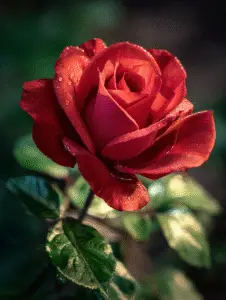
Roses
The best known member of the same plant family, with the thorns to match.

Types of flowers
The full index of flower guides on the site, sorted by kind.
Enjoying our flower guides? Add YourFlowersGuide as a preferred source on Google. It helps more readers find us.
Add to Preferred Sources