
in bloom
now
through Oct
Bloom calendar
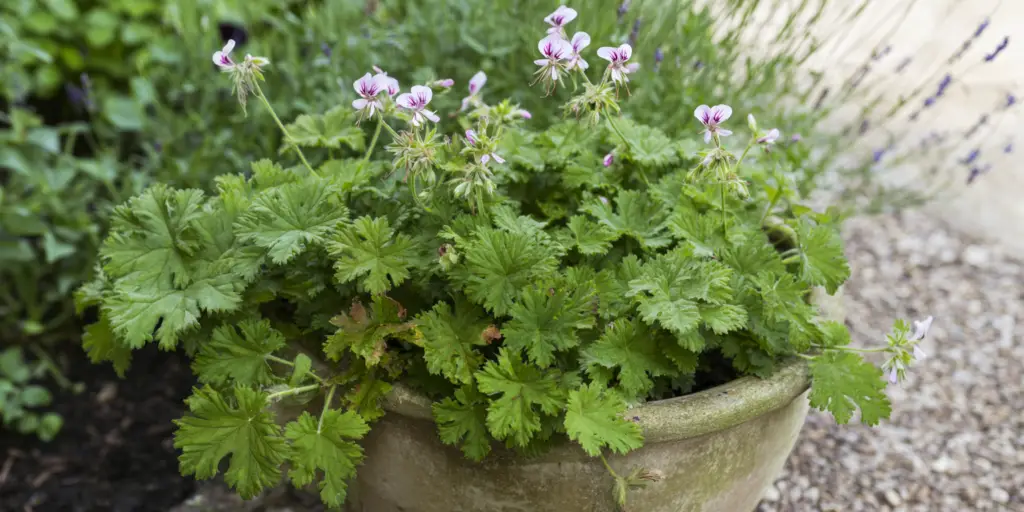
Pelargonium graveolens
Scented‑leaved geranium
At‑a‑glance
- Group/Class: Scented‑leaved geranium
- Height × spread: 18 to 36 in × 18 to 24 in (45 to 90 cm × 45 to 60 cm)
- Bloom window: Summer; sporadic in warm climates
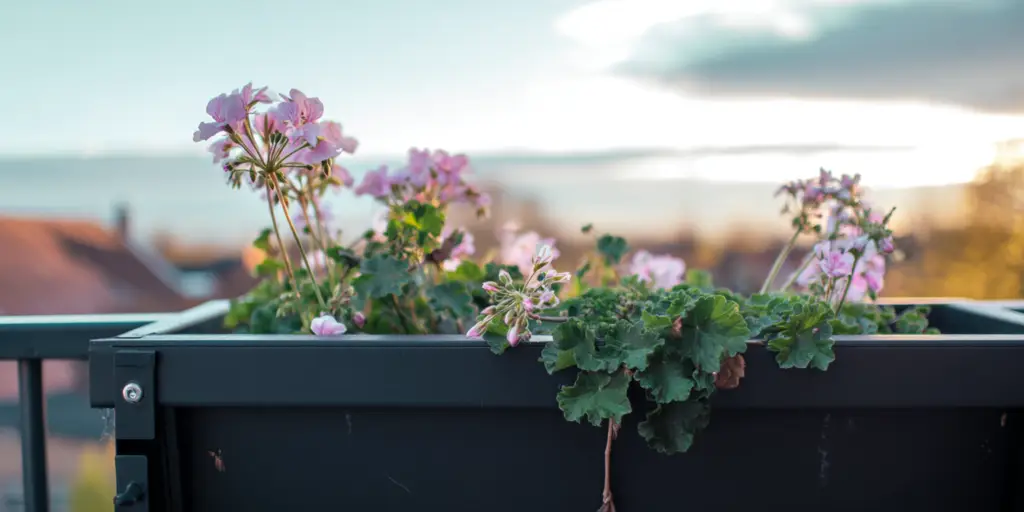
- Color & flower form: Small pink to white clusters; foliage deeply cut and velvety
- Fragrance: 3 strong
- USDA hardiness: Zones 10 to 11; grown as annual elsewhere
- Breeder / Year / Origin: Species; unknown; South Africa
- Pet safety: avoid
How it differs
- Grown for strongly scented leaves rather than showy flowers.
• Highest fragrance among commonly grown geranium types.
• Handles heat and leaner soils well.
• Ideal for pots where leaves can be brushed for scent.
Strengths
- Strong rose‑like leaf scent noted by botanic and extension sources.
• Performs in full sun to part shade with modest water.
• Useful in herb, sensory, and container gardens.
• Responds well to regular pinching and pruning.
Care in one minute
Site in full sun to part shade with very well‑drained soil or potting mix.
• Water when the top inch of mix dries; do not keep constantly wet.
• Feed lightly about once a month in containers.
• Pinch stems often to maintain a compact form and increase branching.
• Inspect for aphids and mites; provide airflow to limit mildew.
• Overwinter indoors in bright light and cool temperatures.
Watch‑outs
- Not winter‑hardy; move indoors before frost.
• Can grow leggy without pinching.
• Minor skin irritation is possible for sensitive people when handling leaves.
• Overwatering can lead to root issues.
Best uses (tags)
Provenance note
A South African species long grown for its essential oil and aromatic foliage; often grouped in the scented‑leaved Pelargonium class in horticulture.
References
- Missouri Botanical Garden – Pelargonium (scented‑leaved group)
- NC State Extension – Pelargonium (genus overview, scented uses and minor skin irritation)
- SANBI – Pelargonium graveolens species profile
- ASPCA – Scented geranium toxicity to pets
Similar Flowers
Enjoying our flower guides? Add YourFlowersGuide as a preferred source on Google. It helps more readers find us.
Add to Preferred Sources