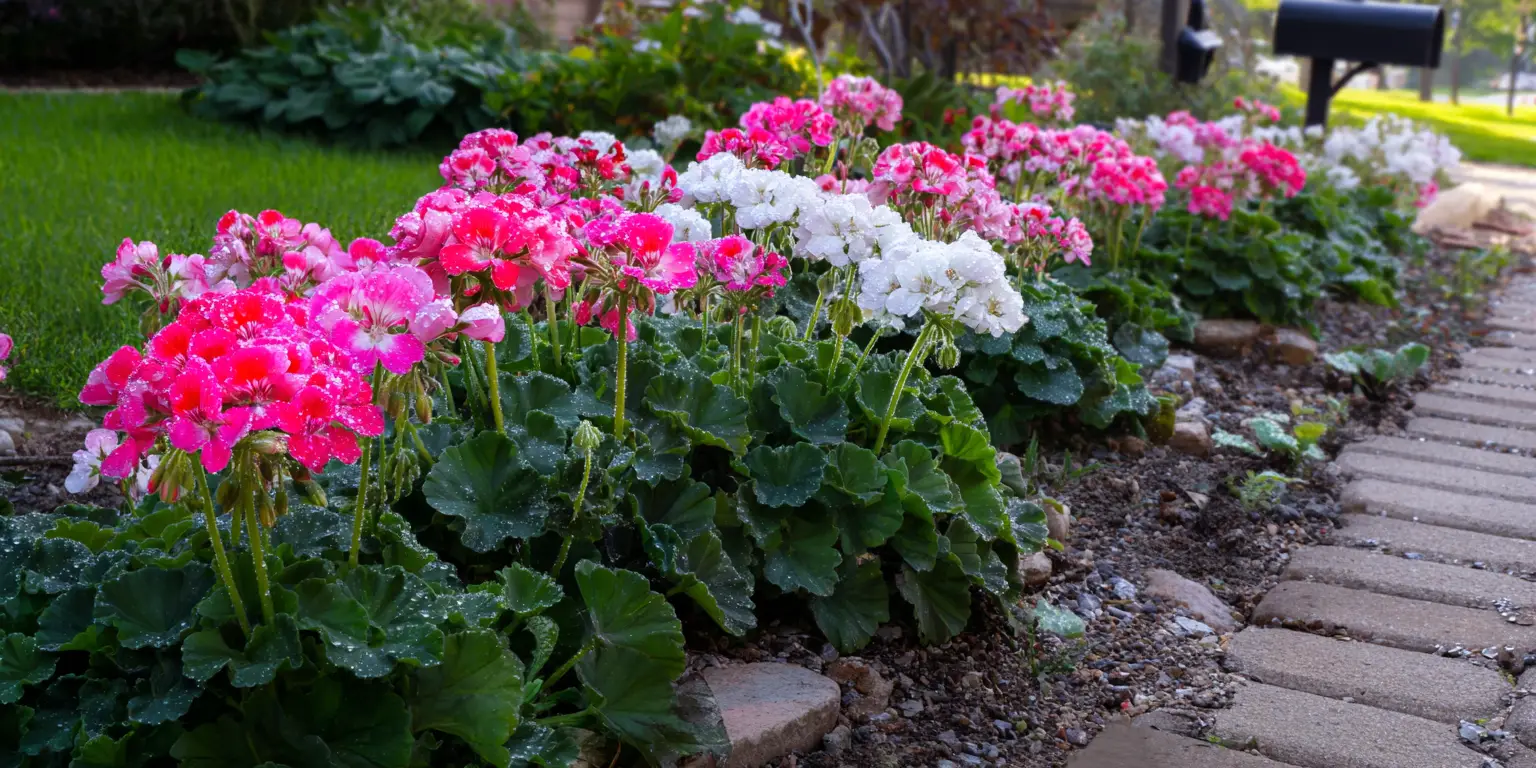
in bloom
now
through Oct
Bloom calendar
Pelargonium × hortorum
Zonal geranium
At‑a‑glance
- Group/Class: Zonal geranium
- Height × spread: 12 to 36 in × 12 to 36 in (30 to 90 cm × 30 to 90 cm)
- Bloom window: Late spring to fall; slows in peak summer heat
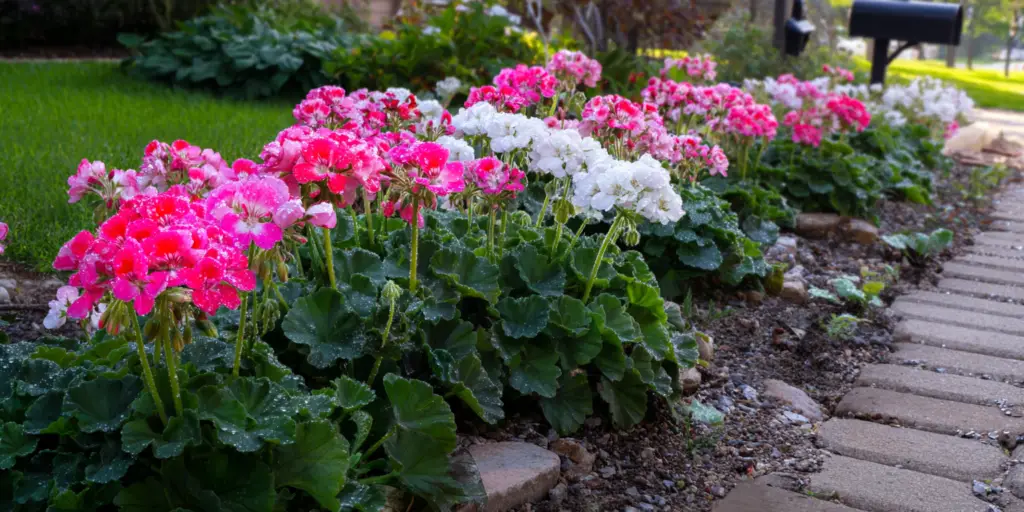
- Color & flower form: Rounded clusters of single to double blooms in red, pink, salmon, orange, white, and purple
- Fragrance: 0 none
- USDA hardiness: Zones 10 to 11; grown as annual elsewhere
- Breeder / Year / Origin: Unknown; complex hybrid with Pelargonium zonale and P. inquinans; South African species origin
- Pet safety: avoid
How it differs
- Upright mounding habit rather than trailing stems.
- Dark leaf banding is typical and helps identification.
- Blooms freely but can pause in extreme heat and humidity compared with hardy geraniums.
- Frost tender; used as a seasonal annual in most of the region.
Strengths
- Long, colorful display with routine deadheading.
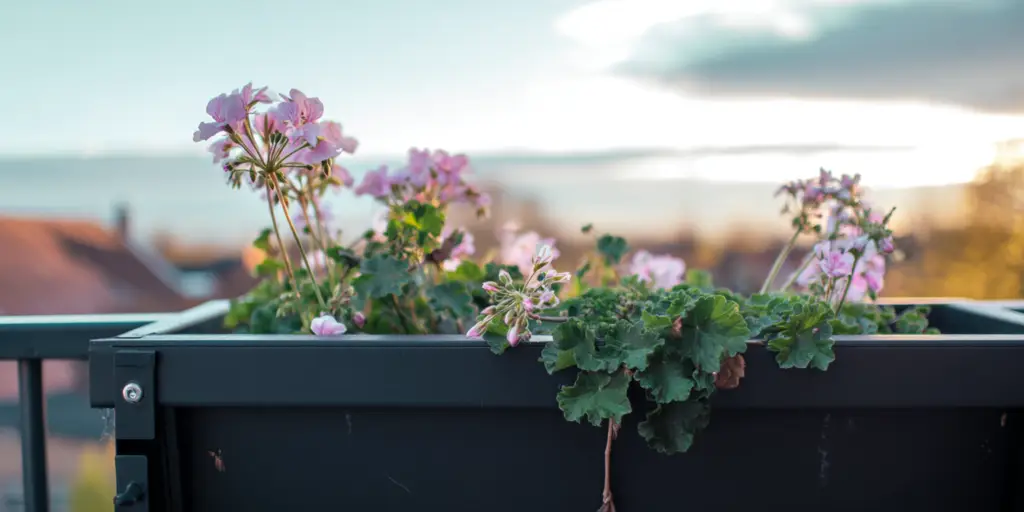
• Performs well in containers and massed bedding.
• Low maintenance in well‑drained soil.
• Tolerates rabbit browsing.
Care in one minute
Site in full sun; give afternoon shade where summers are very hot.
• Plant in average to rich, well‑drained soil that is neutral to slightly alkaline.
• Water when the top inch of soil dries; avoid constant wetness.
• Feed lightly every 4 to 6 weeks during active growth.
• Remove spent flower clusters and pinch to keep plants bushy.
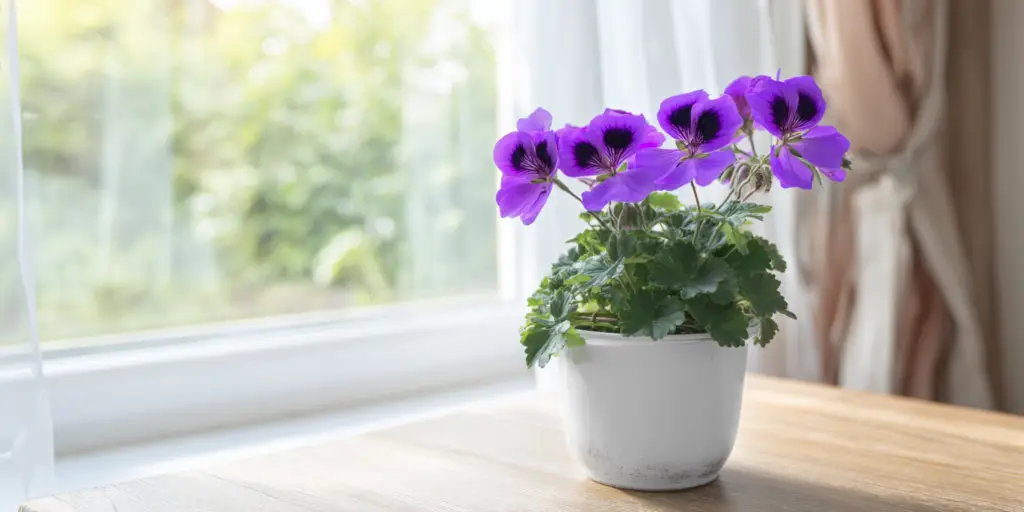
• Before frost, take cuttings or overwinter indoors in a bright, cool window or as dormant potted plants.
Watch‑outs
- Not winter‑hardy; protect from frost.
• Leaf spots and gray mold can appear in wet weather.
• Tobacco budworm may chew buds and flowers.
• Waterlogged soil can cause root and stem rot.
Best uses (tags)
Provenance note
Zonal geraniums are complex hybrids in which Pelargonium zonale and P. inquinans are dominant parents; both species are native to South Africa.
References
- Missouri Botanical Garden – Pelargonium × hortorum
- UF/IFAS Extension (FP458) – Pelargonium × hortorum
- NC State Extension – Pelargonium (genus overview)
- ASPCA – Geranium (Pelargonium species) toxicity to pets
Similar Flowers
Enjoying our flower guides? Add YourFlowersGuide as a preferred source on Google. It helps more readers find us.
Add to Preferred Sources