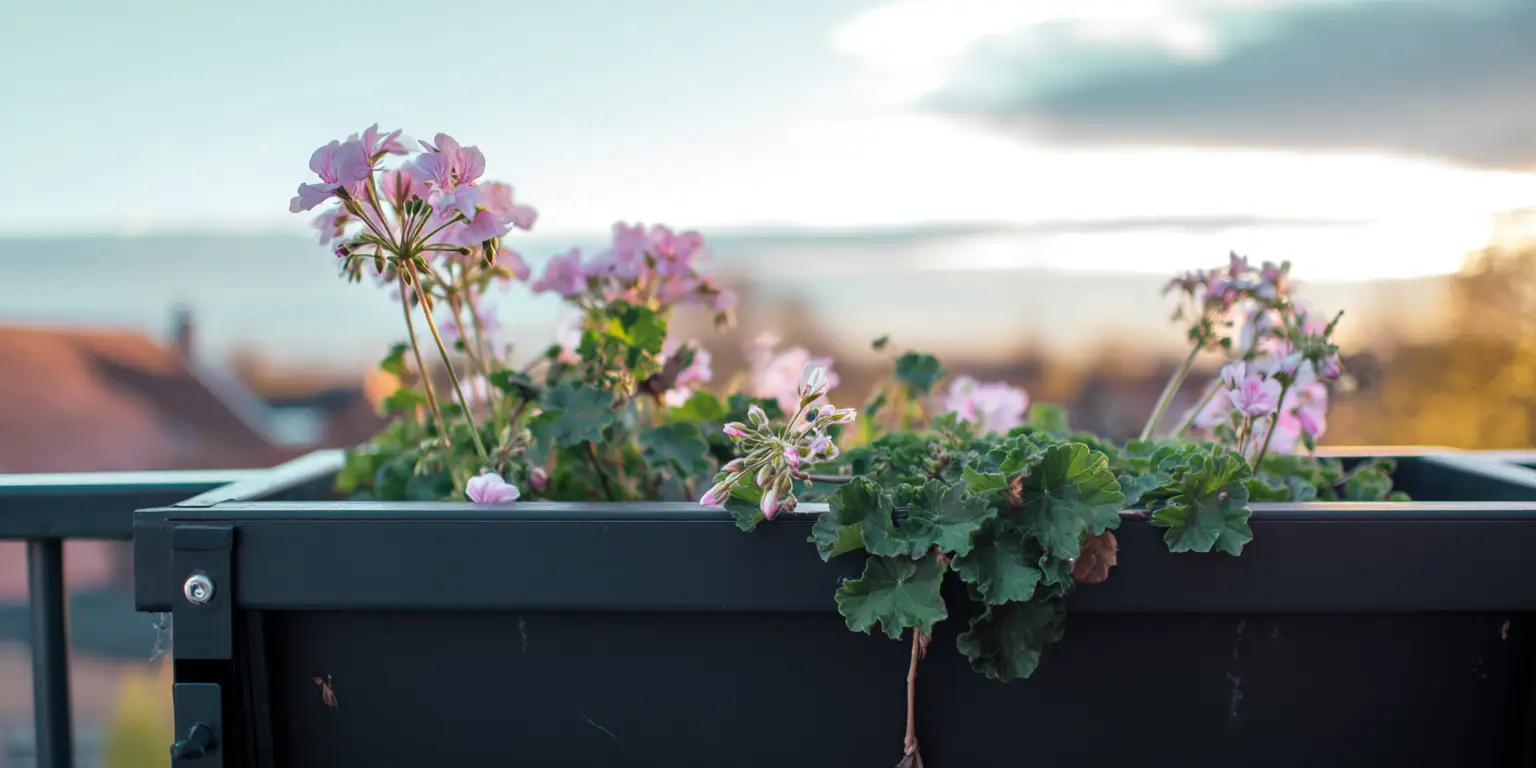
in bloom
now
through Oct
Bloom calendar
Pelargonium peltatum
Ivyleaf geranium
At‑a‑glance
- Group/Class: Ivyleaf geranium
- Height × spread: 12 to 24 in × 18 to 36 in (30 to 60 cm × 45 to 90 cm)
- Bloom window: Late spring to fall; best with cool nights
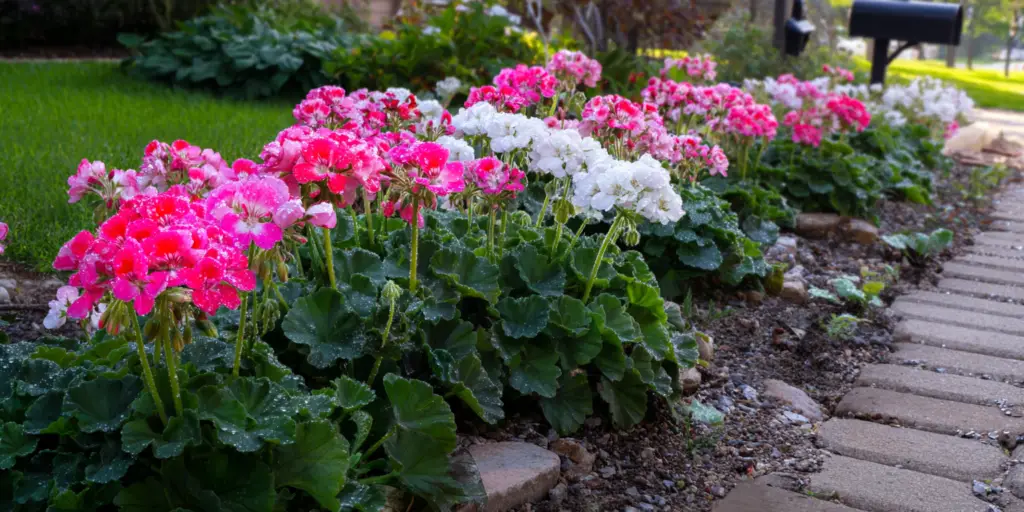
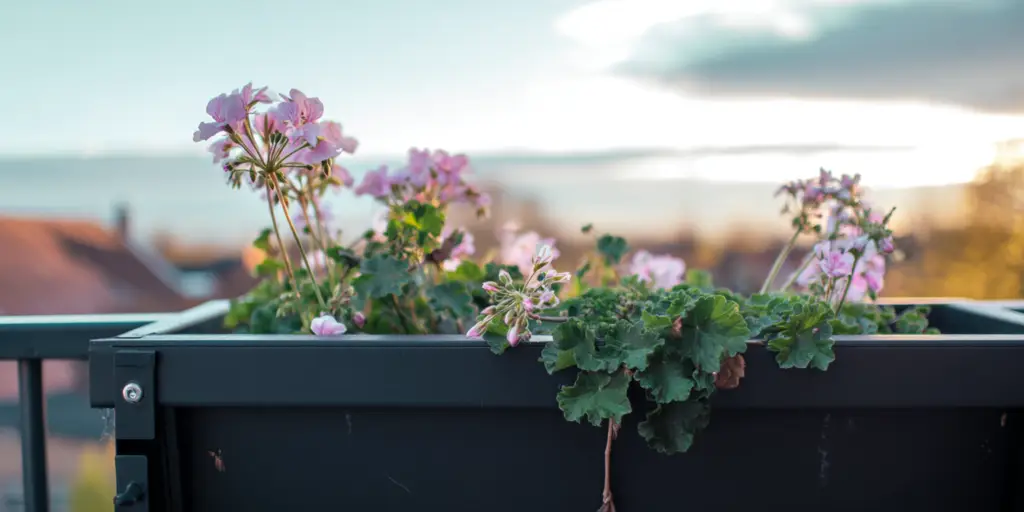
- Color & flower form: Cascading clusters of single to double blooms in red, pink, salmon, violet, and white
- Fragrance: 0 none
- USDA hardiness: Zones 10 to 11; grown as annual elsewhere
- Breeder / Year / Origin: Species; unknown; South Africa
- Pet safety: avoid
How it differs
- Trailing habit for baskets and window boxes rather than upright bedding.
• Best flowering occurs when nights are cool.
• Foliage is somewhat succulent and tolerates brief dryness better than many bedding types.
• Less tolerant of prolonged heat and humidity than hardy geraniums.
Strengths
- Natural cascading habit suits containers and ledges.
• Flowers well with good light and routine deadheading.
• Performs in full sun to part shade.
• Easy to shape by pinching.
Care in one minute
Place in full sun where summers are mild; give afternoon shade in hot inland sites.
• Use a well‑drained potting mix with neutral to slightly alkaline reaction.
• Water when the top inch of mix dries; do not leave pots standing in water.
• Feed lightly every 3 to 4 weeks in containers.
• Pinch stems and remove spent clusters to keep plants dense and blooming.
• Overwinter indoors in bright light before frost or restart from cuttings.
Watch‑outs
- Stems become leggy without regular pinching.
• Overwatering can cause edema and root rot; ensure sharp drainage.
• Tobacco budworm and whiteflies may appear.
• Frost sensitive and must be protected from cold.
Best uses (tags)
Provenance note
Native to South Africa, ivy geraniums became popular trailing ornamentals in European and North American gardens.
References
- Missouri Botanical Garden – Pelargonium peltatum
- NC State Extension – Pelargonium peltatum
- UF/IFAS Extension (FP458) – Pelargonium × hortorum cultural timing as context
- ASPCA – Geranium (Pelargonium species) toxicity to pets
Similar Flowers
Enjoying our flower guides? Add YourFlowersGuide as a preferred source on Google. It helps more readers find us.
Add to Preferred Sources