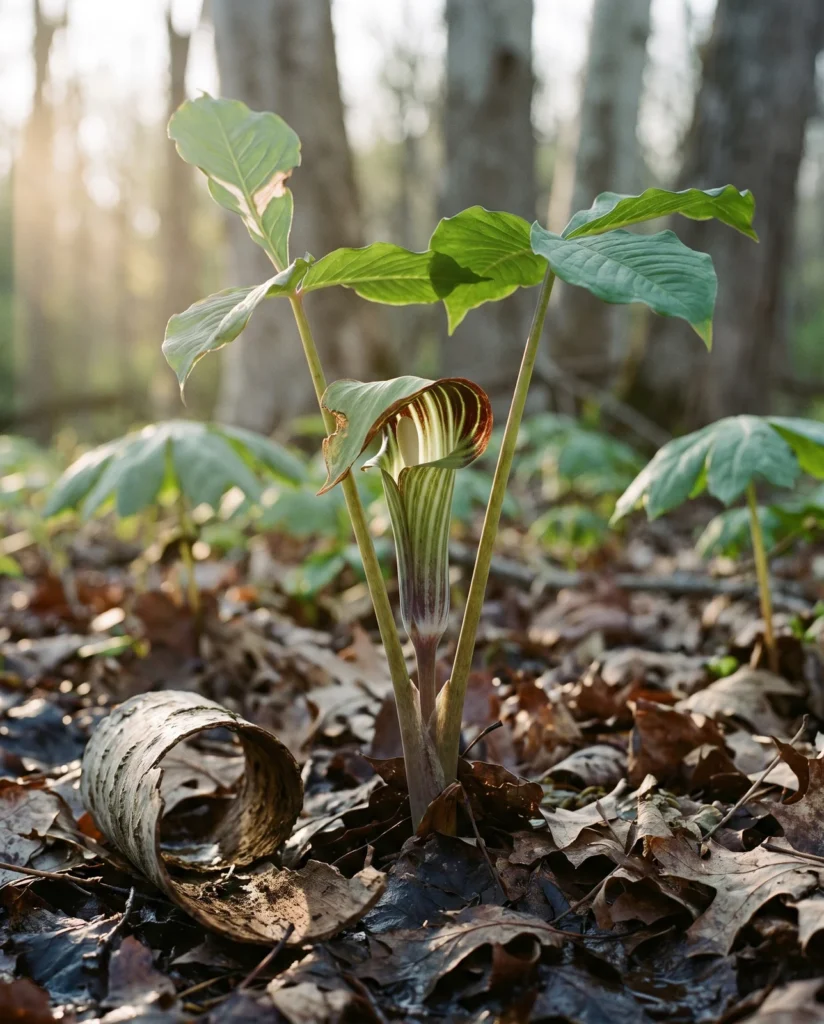
What jack-in-the-pulpit is
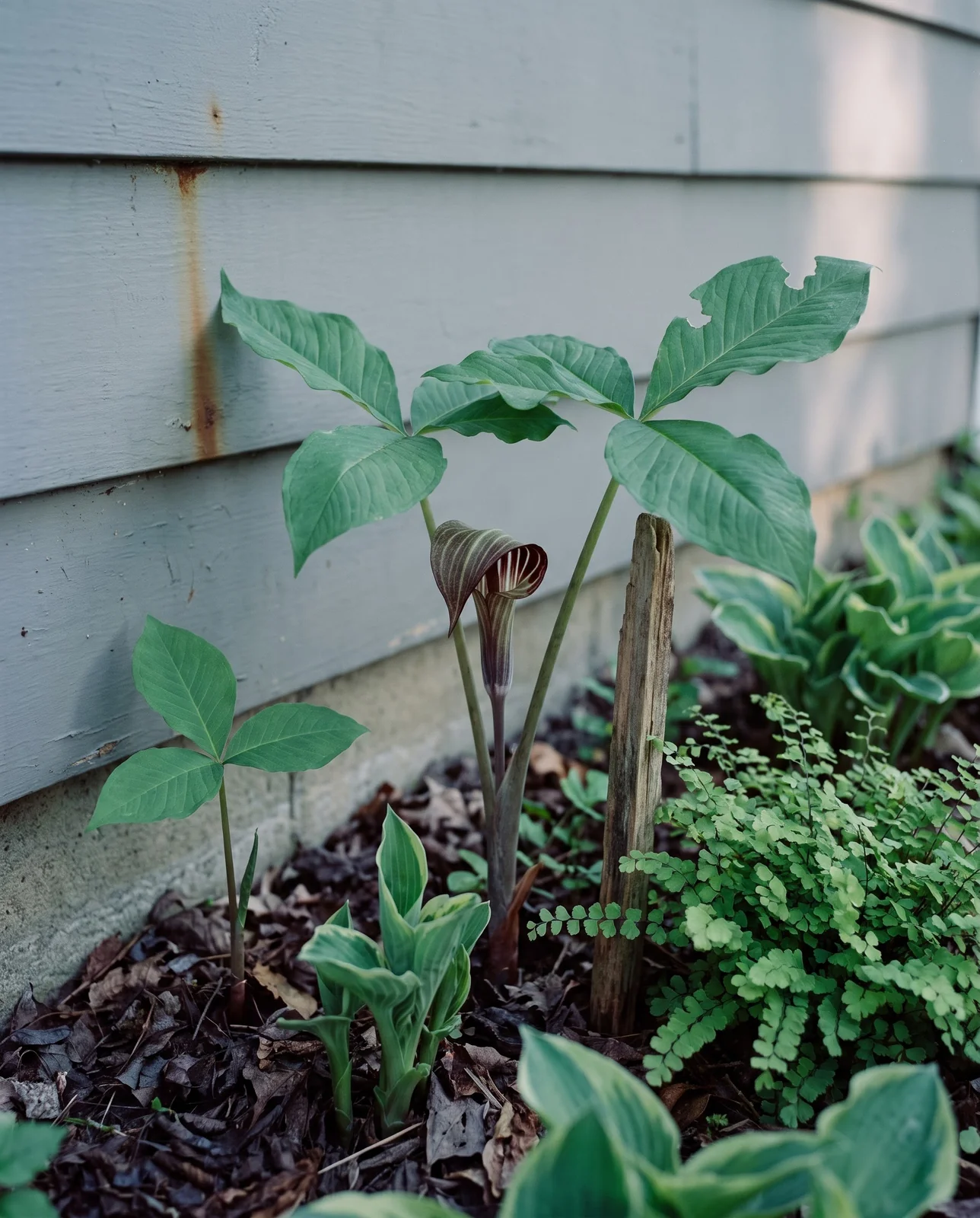
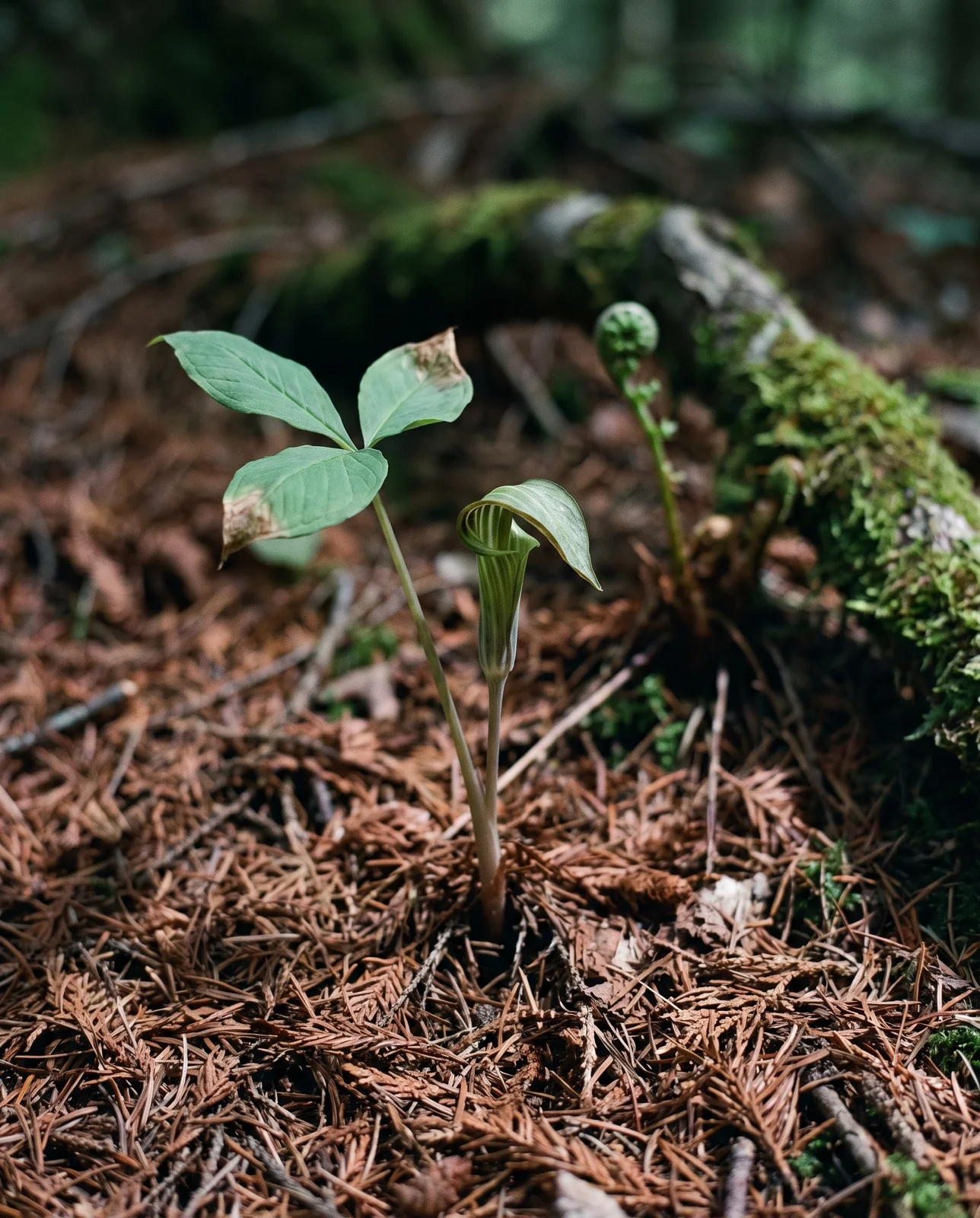
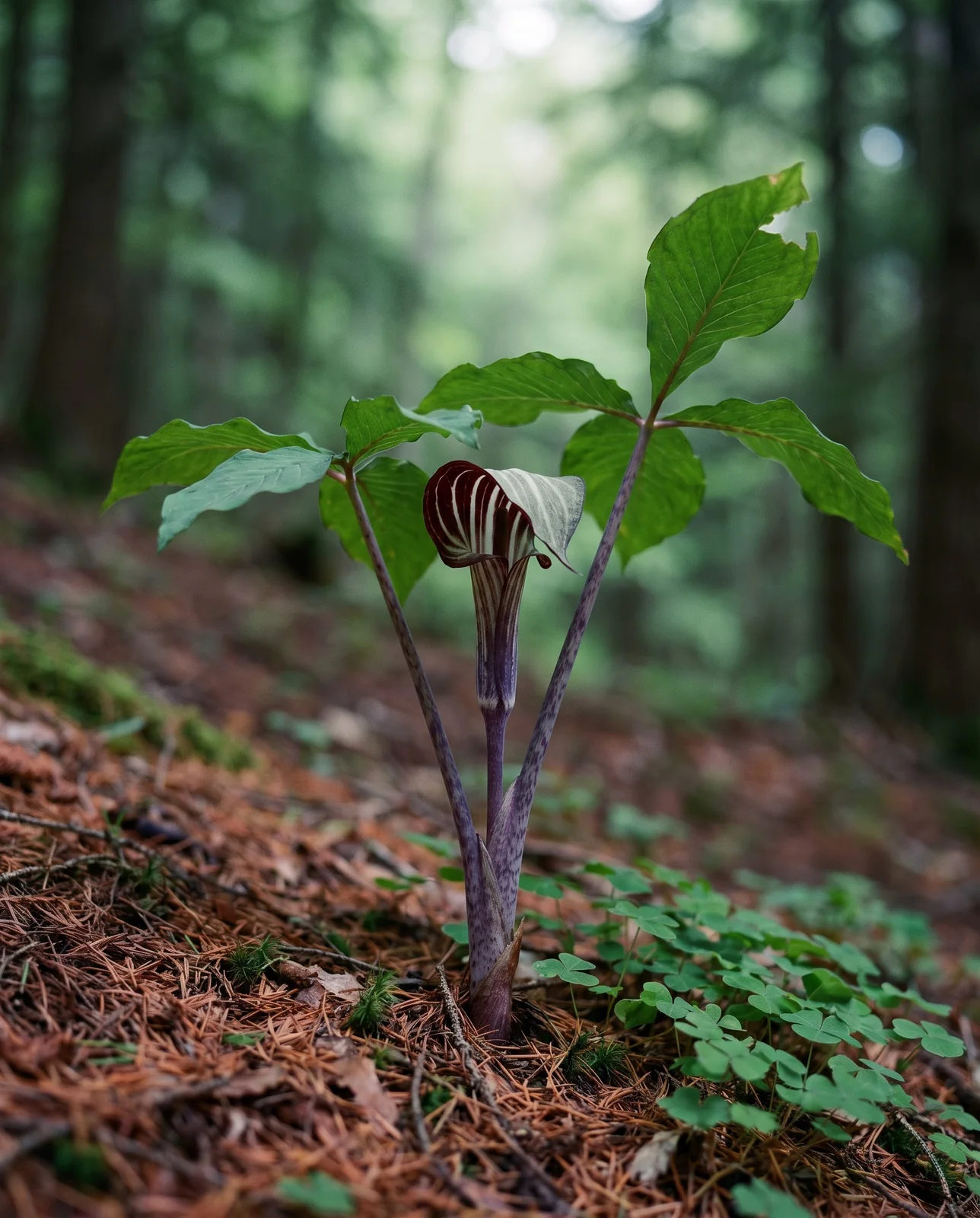
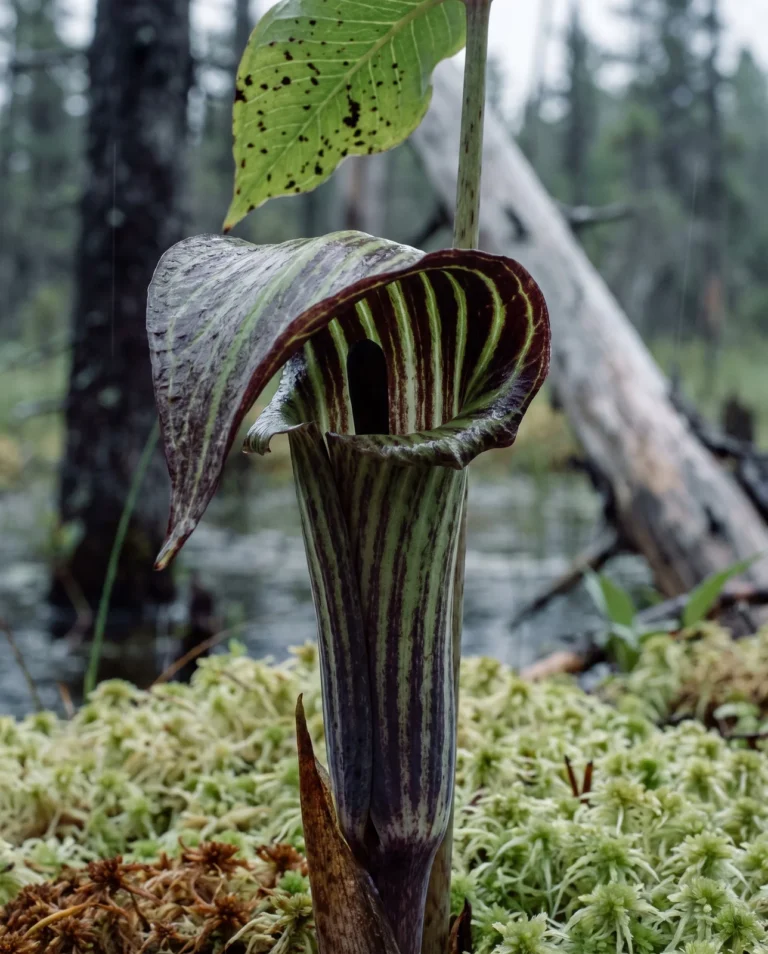
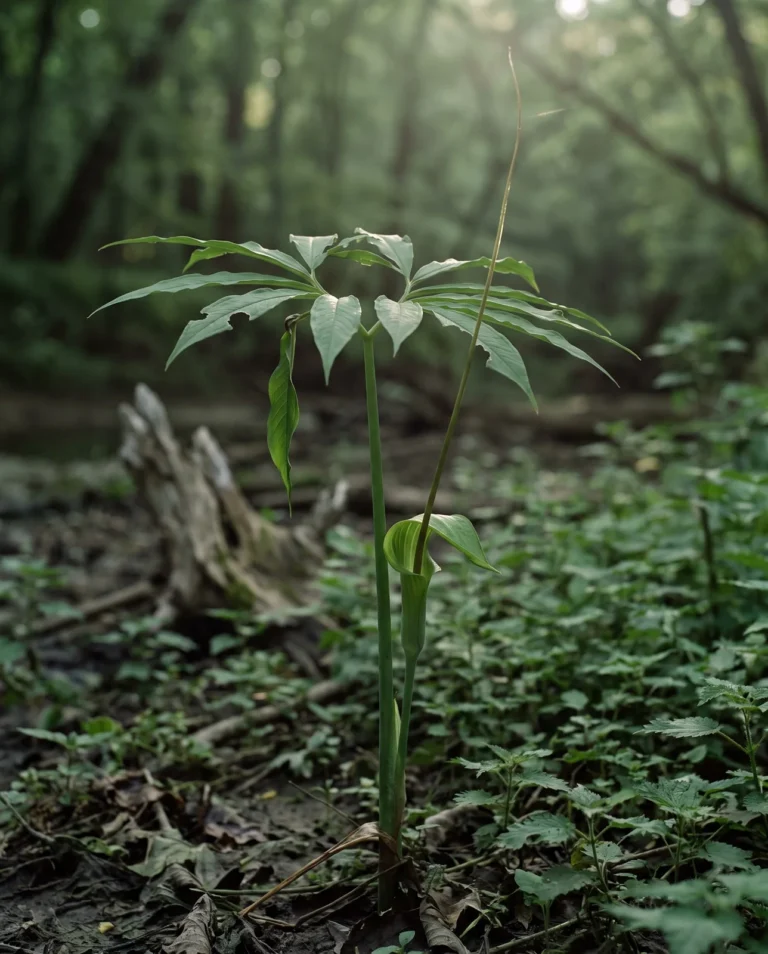
Jack-in-the-pulpit is a spring-flowering woodland perennial of eastern North America. Its flower is a hood over a club: the hood is a modified leaf, the spathe, and the club inside it is the spadix. The spathe is the pulpit and the spadix is Jack. It belongs to the arum family, and the peace lily and the calla lily are built to the same plan, a sheath wrapped around a spike. The spathe runs 4 to 6 inches long. Above it stand compound leaves, each split into three leaflets, and that count separates it from green dragon, which carries 5 to 13 leaflets to a leaf. A mature plant stands 1 to 2.5 feet tall and 1 to 2 feet wide.
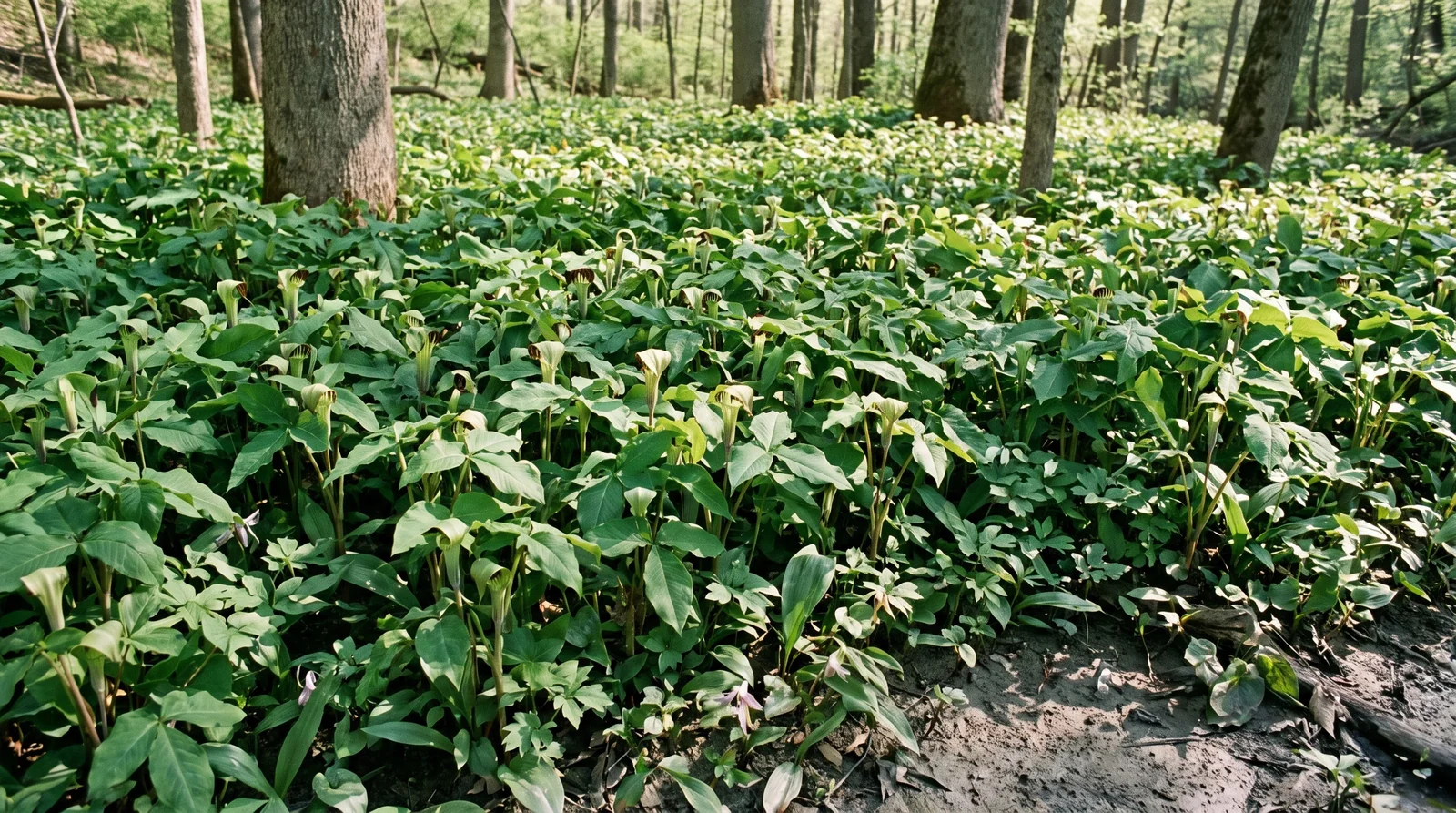
It grows from a corm and it lasts: 25 years or more, spreading and colonizing over time. The range runs from Texas to eastern Canada, and the habitats are wet ones, from bogs and fens to floodplains and swamp margins. The hood comes up in March in the south and as late as June farther north. Berries follow, redden in late summer and ripen in fall. The plant is also a species complex: New England alone holds three subspecies.
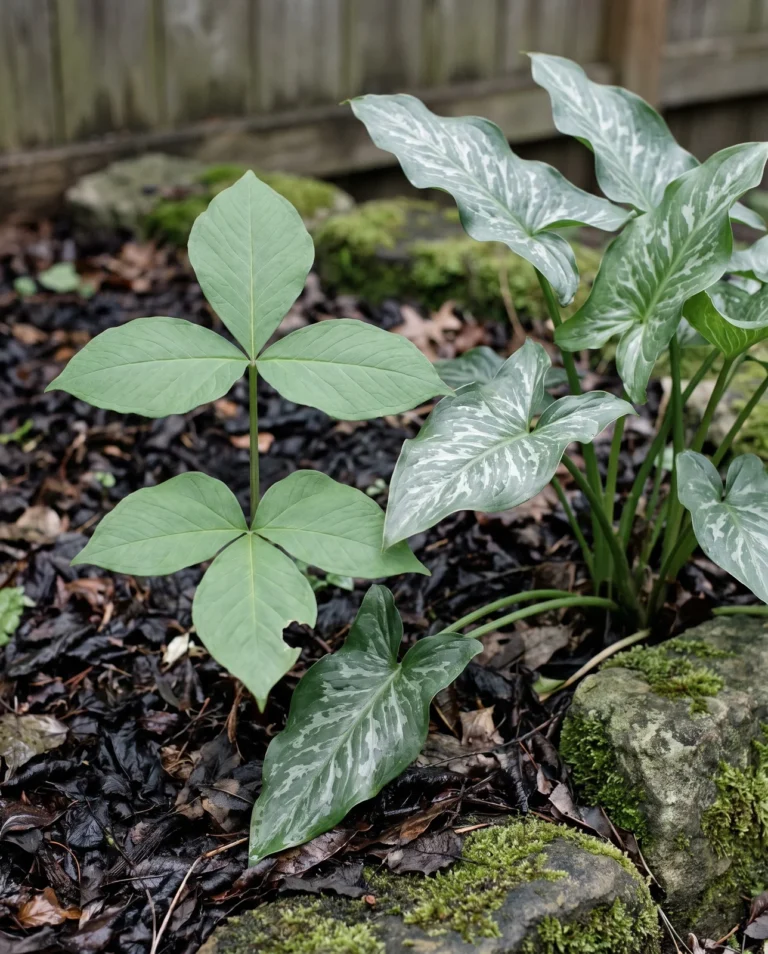
Is it jack-in-the-pulpit or Italian arum?
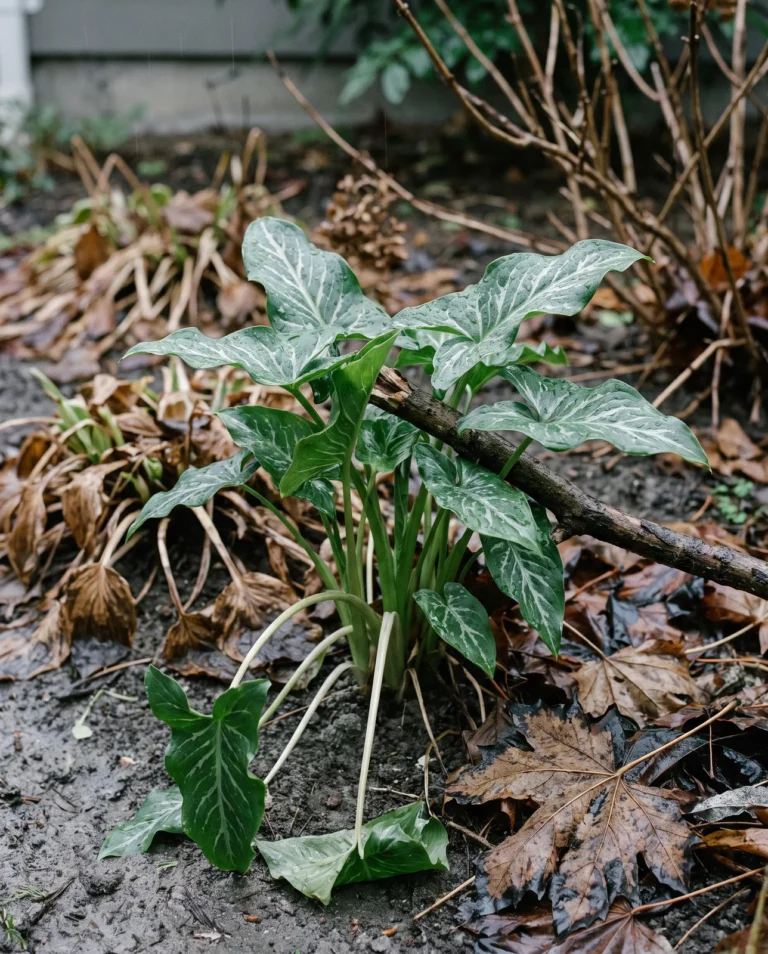
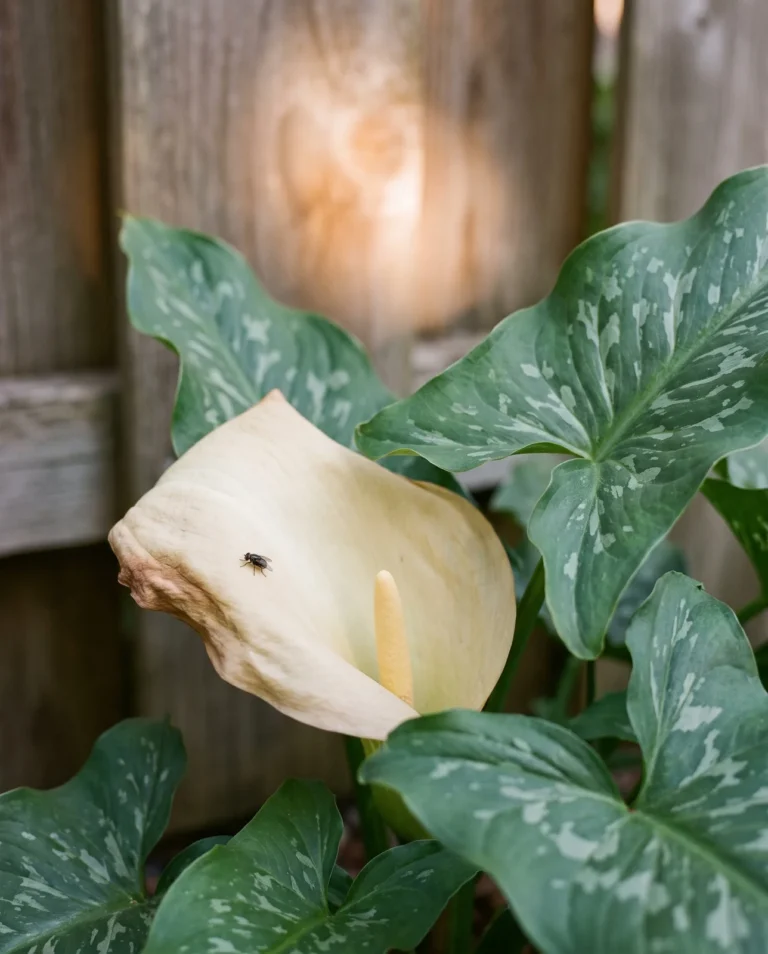
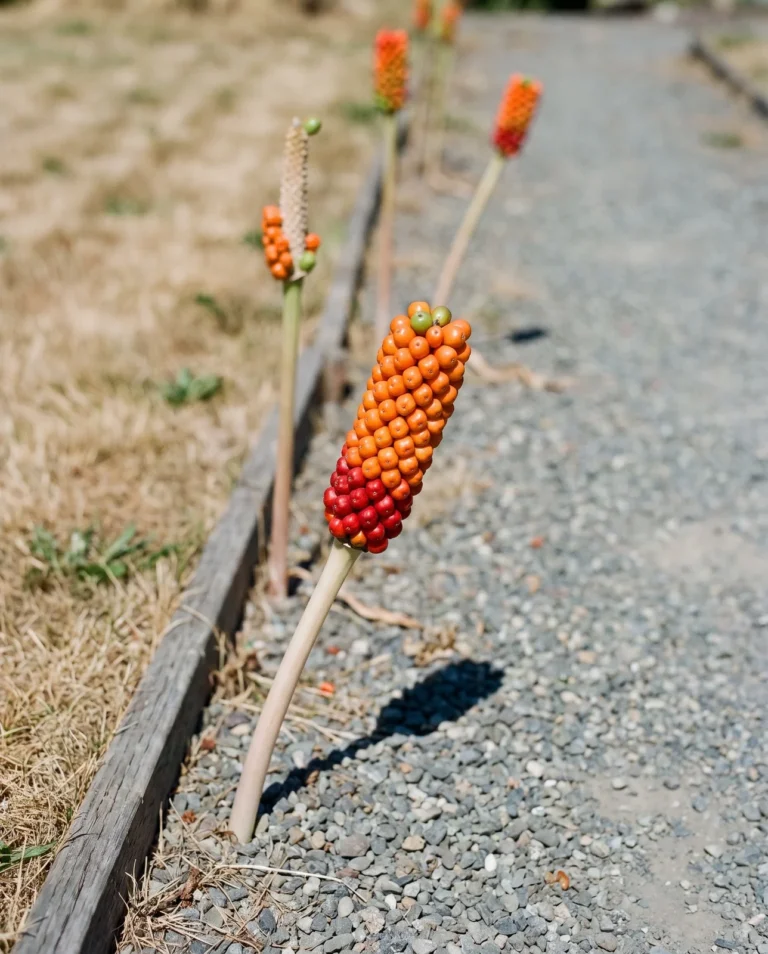
The plant most often mistaken for jack-in-the-pulpit in an American garden is Italian arum, a southern European relative that King County, Washington classes as a noxious weed. These tells work when only one part of the plant is showing.
Where it grows, and where to put it in a yard
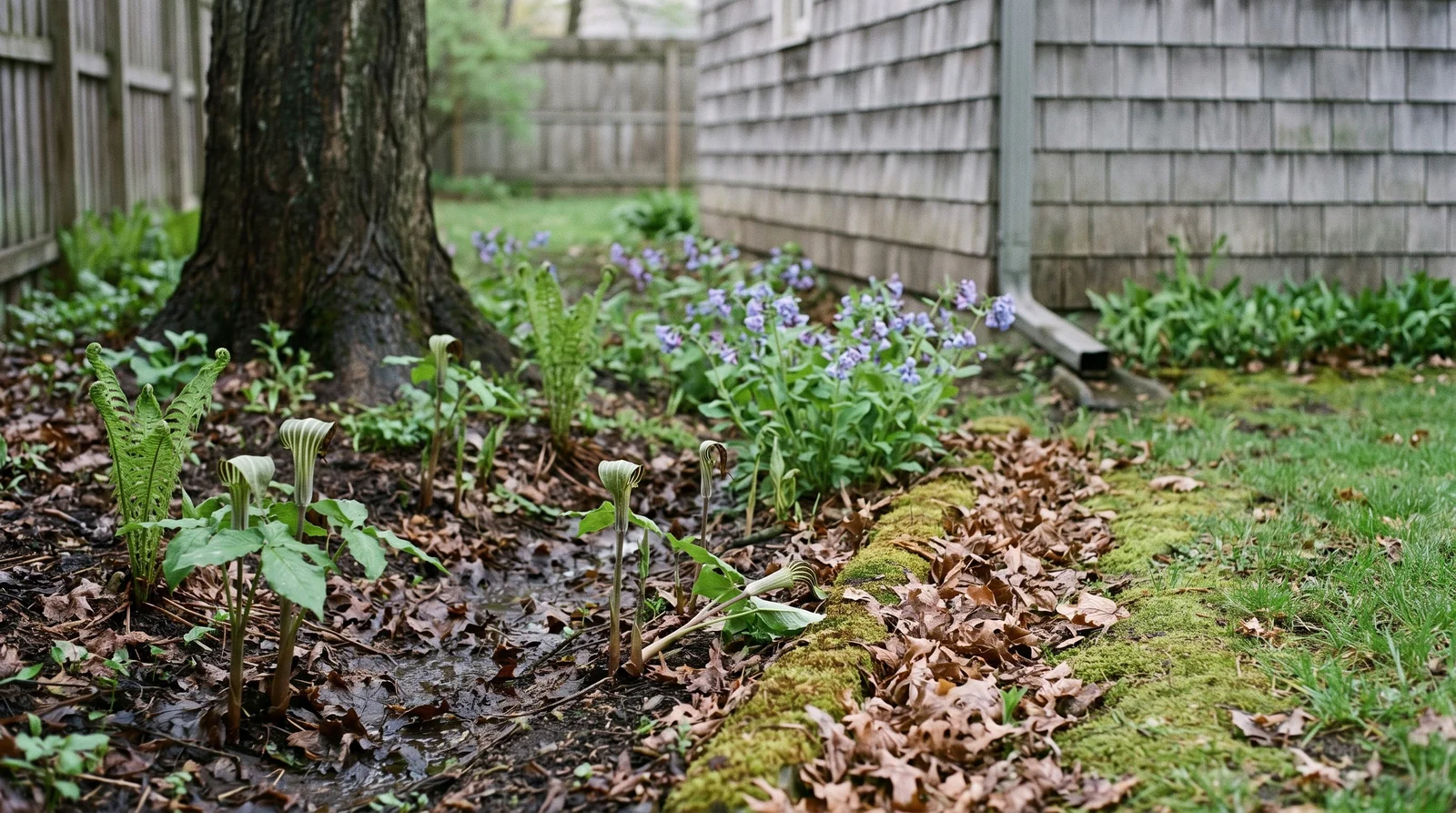
The best place in a yard is the low, shaded corner that stays damp: under deciduous trees where leaf litter collects, or the edge of a spot that holds water after rain. The plant grows most vigorously in moist, shady, seasonally wet ground, and its wild habitats are bogs, fens, floodplains, marshes, riverbanks, swamps and wetland margins. Every one of those holds water at some point in the year. Light can run from deep shade, meaning under two hours of direct sun, through partial shade, with four hours of sun a day the practical ceiling. Soil can be sandy loam or clay loam if it holds plenty of organic matter. The guide to flowers that grow in shade covers the neighbors that take the same conditions.
Cold hardiness reaches zone 9 at the warm end, and the floor sits at 3 or 4. In Canada it has been grown and fruited in zone 3. A hot southern summer is survivable on constant moisture and deep shade. At the cold end, leave the leaves where they fall: a heavy, leafy winter cover should be left in place. That means not raking the bed clean and not swapping the litter for bark mulch.
How deep and how far apart to plant a corm
Plant the corm a few inches deep and 10 to 18 inches apart. A corm is a solid swollen stem base, and bulb-planting depth charts do not apply. Seedlings go closer, 6 to 8 inches apart, since arisaemas carry little root. No month is published for setting a bought corm. The documented window is the one for lifting and dividing a large one, late fall or very early spring, every five years or on a very mature plant. Work inside that window, while the soil is cool and wet.
What a corm needs once it is in is what the plant needs everywhere: moist shaded ground, plenty of organic matter, and a spot that stays wet through the season. Mark the position as you plant it. The top growth is absent for a long stretch of the year, the corm sits shallow, and a fork through a dormant one ends it.
Growing it from seed
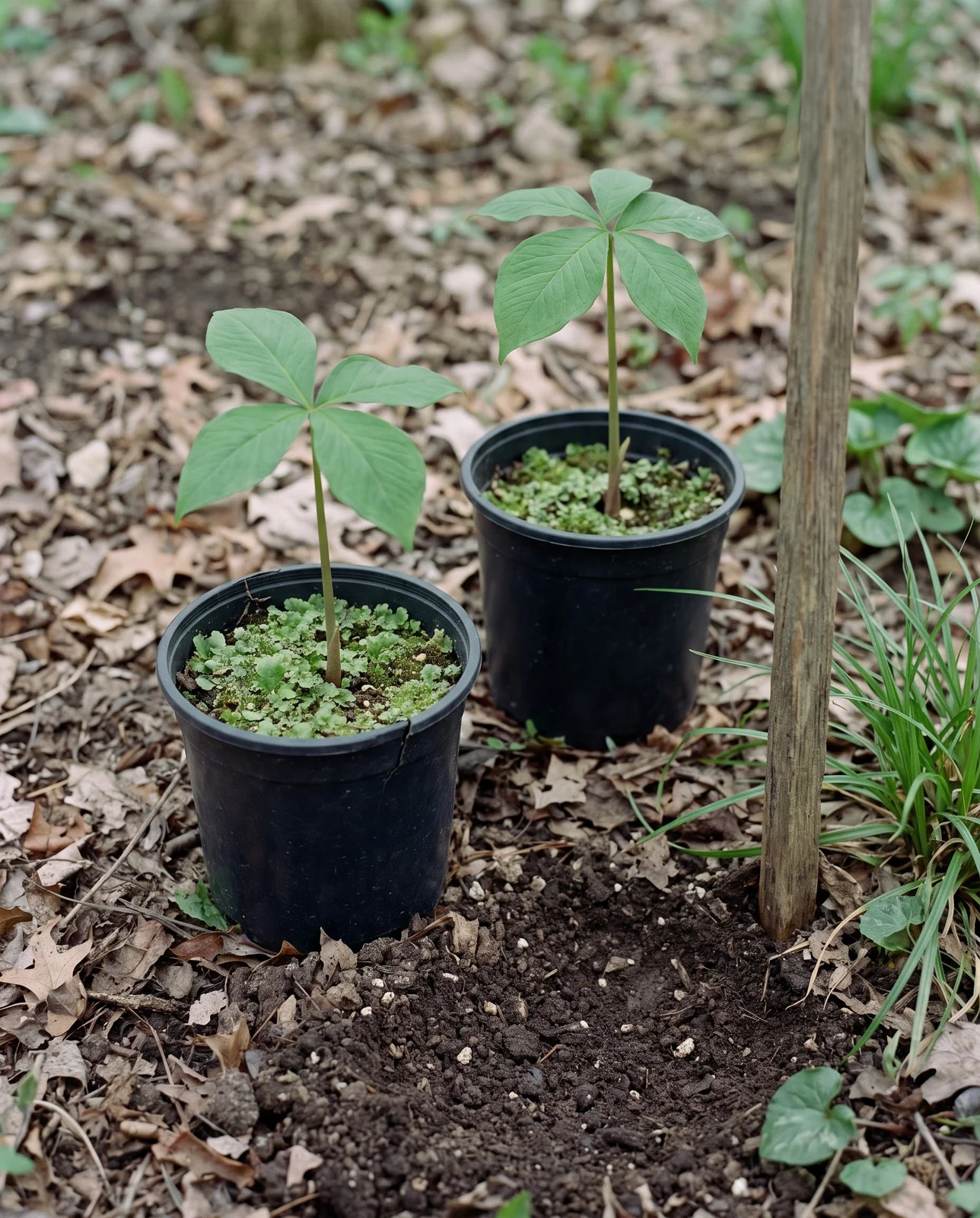
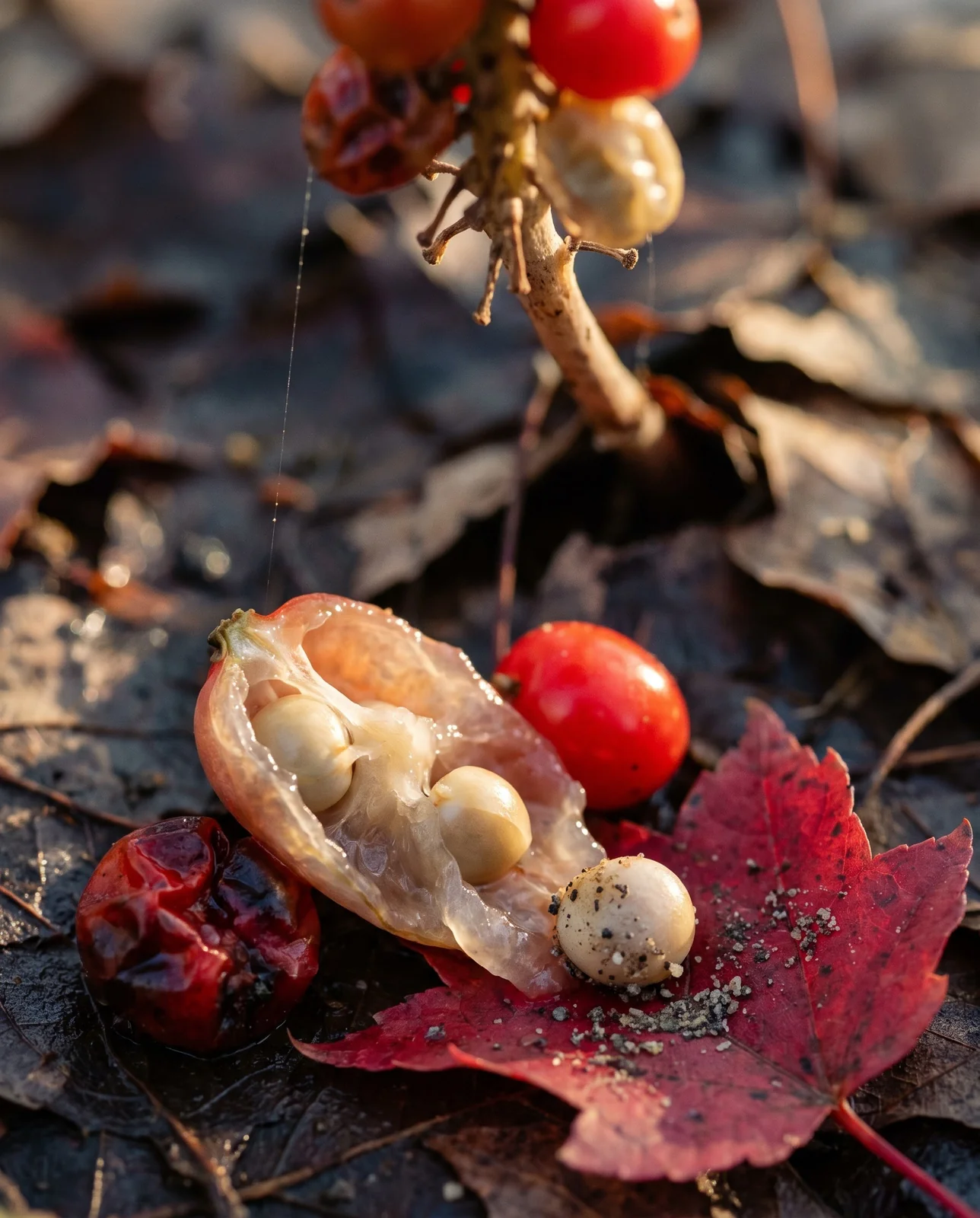
Collect the berries as soon as they turn red in late summer. Wear gloves: the leaves and the fruits carry calcium oxalate that can irritate skin. Work the pulp off in warm water and sow several of the small seeds to a pot. Each berry holds 1 to 6 seeds. Seed can go straight outdoors, half an inch down in moist shaded ground.
Cold breaks the dormancy, and the two published routines differ by a year of calendar. One is a single chill of 60 to 75 days cold and moist. Pack the seed into damp sphagnum peat moss or fine sand and hold it in the refrigerator for 2 to 2.5 months. The other is a double dormancy, cold then warm then cold then warm again, 60 to 90 days a stage. Then comes the wait: flowering size arrives 3 to 5 years from sowing, about five being usual. Seed builds a colony over a decade. A bought corm gives you a hood next spring.
From berry to first flower, stage by stage
What a seed does between the berry and the first hood.
Does it come back every year?
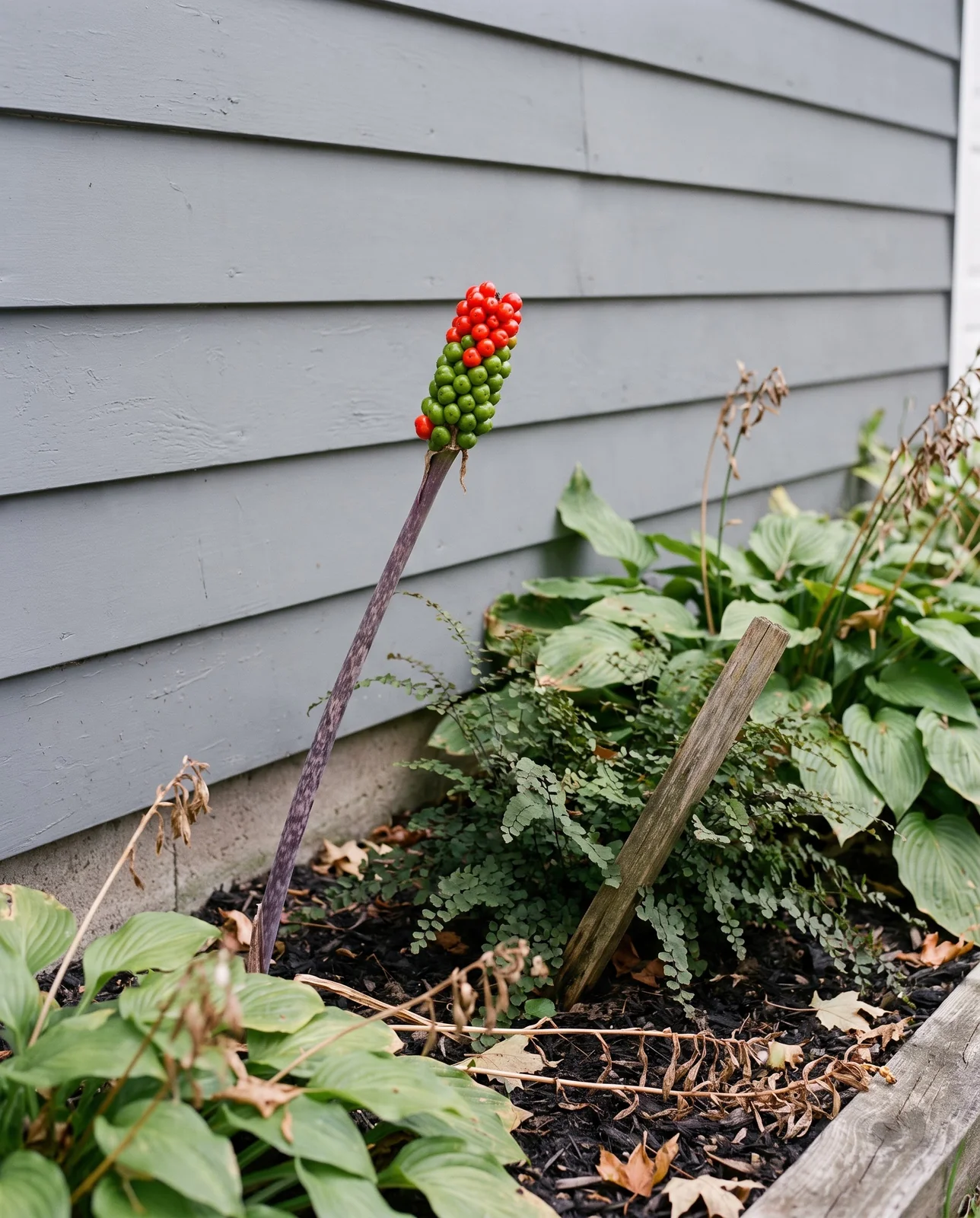
Yes, and for decades: this perennial lives 25 years or more, spreading and colonizing from its corm. What confuses people is that the visible plant is seasonal while the corm underneath it keeps going. The hood comes up in spring, the berries ripen in fall, and then the top growth goes. An empty patch in late summer, with a bare fruiting stalk still standing, is a plant doing what it does. An empty patch in May is a different report: that is the window when a healthy corm should be pushing leaves.
Two habits follow from the die-back. Mark the position, because the plant is invisible for a good part of the year and the corm sits only a few inches down, well inside spade range. And expect the patch to grow. One Philadelphia garden ended up overrun, its owner pulling corms by hand to deplete them. That is one garden and one soil.
When it does not come up
Work down these checks before you dig anything up.
The burning, and the low severity rating
Every part of the plant carries calcium oxalate crystals, and raw tissue in the mouth burns. NC State's plant database sets the poison severity at low, while the toxicity note on that same page says in capital letters that eating the plant causes severe pain in the mouth. The Lady Bird Johnson Wildflower Center is harsher: all parts can cause severe pain and blisters if put in the mouth raw. Work from the harsher reading. The recorded symptoms are irritation and swelling of the lips, tongue and throat, drooling and vomiting. The agent is the insoluble form of calcium oxalate, the same chemical dieffenbachia carries.
Touching it carries a smaller warning. The leaves and the fruits both carry calcium oxalate that can irritate skin. Wear gloves to collect or clean berries, and wash your hands well before touching your eyes, mouth or nose.
The old name, Indian turnip, comes with a history that needs stating carefully. Native Americans used the roots medicinally for eye and respiratory ailments, and treated the plant as highly toxic without proper preparation. That preparation is not documented, and the corm is poisonous in the state anyone would dig it in.
The berries, children, and dogs
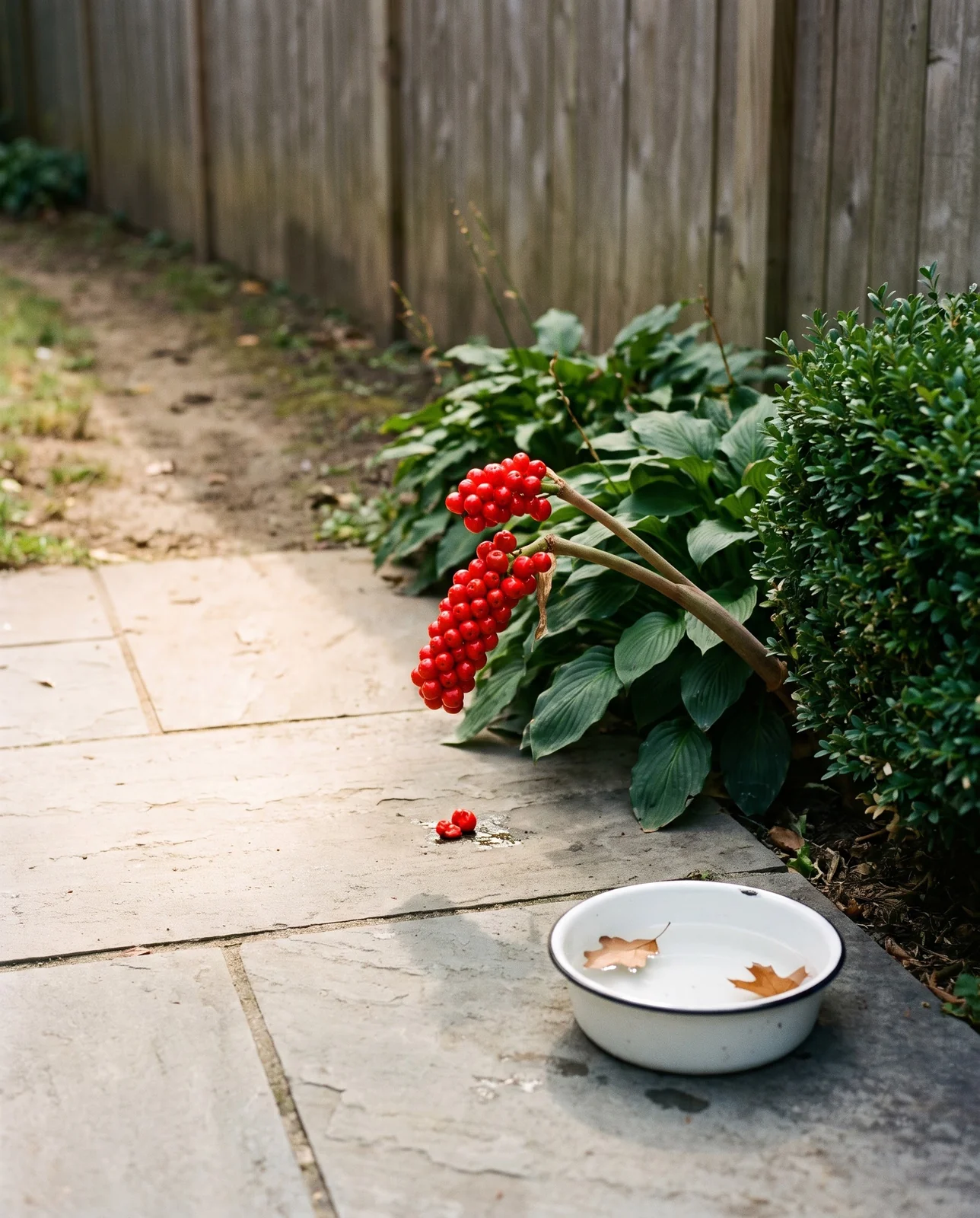
The exposure people actually have is a stalk of bright red berries at knee height in a shaded corner in late summer. Jack-in-the-pulpit is toxic to dogs, cats and horses, and the toxic principle is insoluble calcium oxalates. The berries are the obvious hazard, and every part of the plant carries the same crystals.
The decision this leaves is about the space. Where a small child plays or a dog patrols, cut the fruiting stalk off at ground level once the cluster colors, and bag it, gloved. The corm the plant lives from is untouched. Where nobody small goes, leave the berries standing, since that is how you get seed. If a child or a dog does chew a piece, watch for pain and swelling of the mouth, tongue and lips, heavy drooling and difficulty swallowing. Any of those is a reason to call a vet or a poison control line the same hour.
Is it illegal to pick jack-in-the-pulpit?
There is no single national rule, so the answer follows the land you are standing on. Inside a unit of the national park system it is strictest. The federal regulation written for them, 36 CFR 2.1, prohibits removing, digging or disturbing a plant from its natural state. The exceptions are narrow, running to treaty rights and permits. Breaking it is a federal offense carrying up to six months imprisonment and fines reaching $5,000. National forest land is looser. The rules there prohibit taking any plant classified as threatened, endangered, sensitive, rare or unique. Small-scale personal gathering of ordinary wildflowers is generally tolerated, though individual forests may set stricter rules of their own.
State law sits on top of ownership. In New York, Environmental Conservation Law section 9-1503 makes it a violation to collect or destroy a listed protected plant without the landowner's permission. Whether jack-in-the-pulpit is on the state's protected list is an open question, in New York and in the other states of its range. One habit works everywhere: treat a wild plant as protected until a state list says it is not. Nurseries sell it, with garden spacing published at 10 to 18 inches, and a wild corm is the one thing to leave in the ground.
Is it rare or endangered?
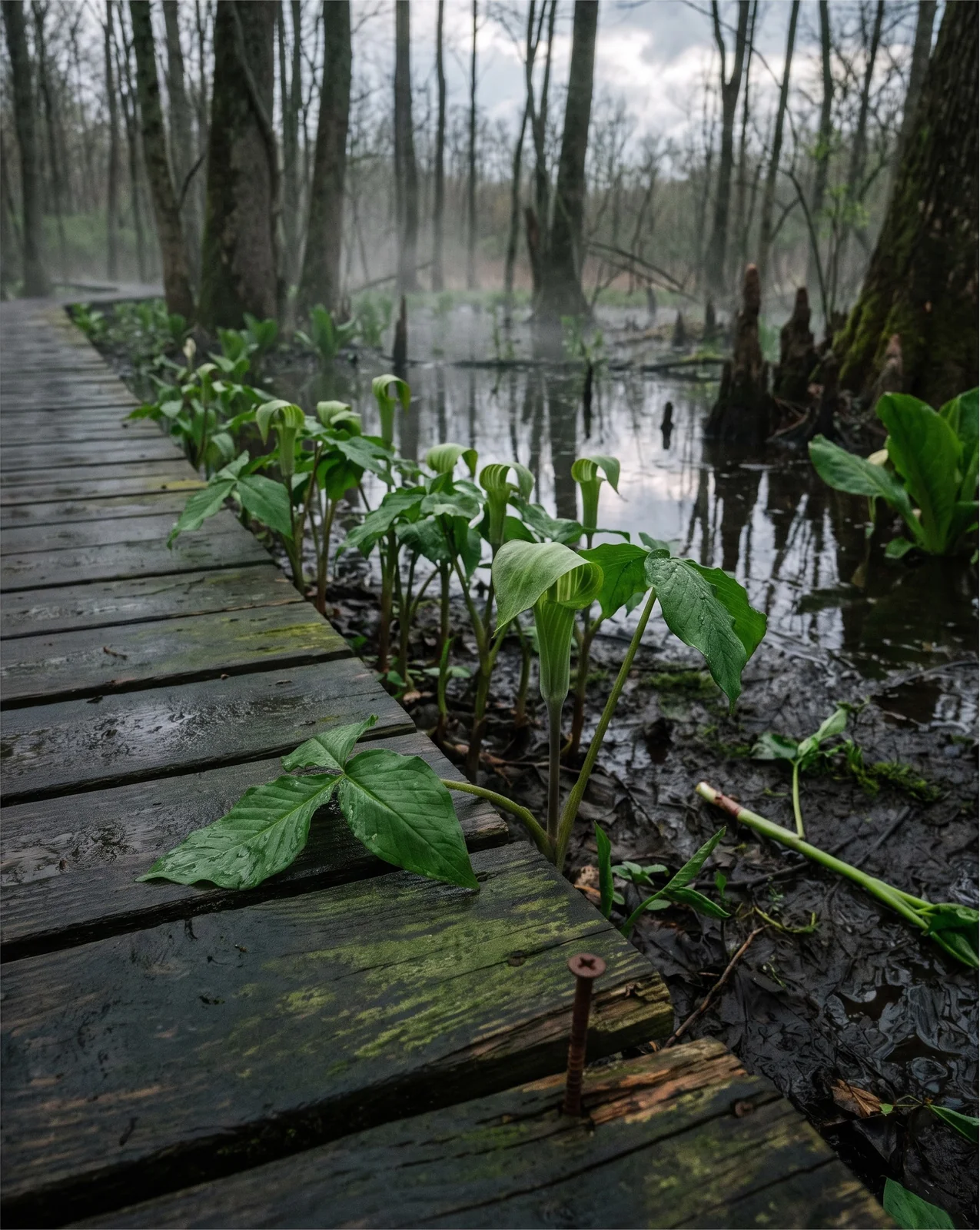
No: across its range this is a common plant. NatureServe ranks the species G5, secure at the global level. Maine leaves the species unranked, and Massachusetts designates the subspecies pusillum uncommon or uncertain, while stewardsonii and the straight triphyllum are widespread there. That entry attaches to one subspecies inside a complex of at least three New England forms, and the plant most people are standing over is the widespread one.
The question that follows a rarity worry is whether you can move one. Gardeners do: one who found wild plants on her own property lifted them into a woodland garden, worried that her compost-heavy soil would not hold water. Whether a dug corm settles into a new garden is not something anyone has followed through the seasons. Nurseries sell the plant, and seed reaches flowering size in about five years, which is slow going and costs a wild colony nothing.
It changes sex between years
A jack-in-the-pulpit can flower as a male one season and as a female the next, and size is what the switch tracks. Sex and size both change from one growing season to the next, and the gain in reproductive success that comes with being larger is much greater for females. Across two upstate New York populations, males were smaller than females, and nonflowering plants were smaller than males. In one of those two populations, 8 percent of nonflowering plants, 64 percent of males and 63 percent of females changed sex between seasons.
The mechanism is stored food. Young plants, and plants growing in very dark conditions, produce only male flowers because their food reserves are limited, and the plant turns to female reproduction as the corm enlarges. The threshold is a weight, and a large one: the corm reaches roughly 4.5 times the weight of an average male corm before the plant carries berries. A berry cluster is a report on the corm below it. Leaves with no hoods are small plants, and that is what seedlings look like for their first years.
The gnat trap, and why it is not carnivorous
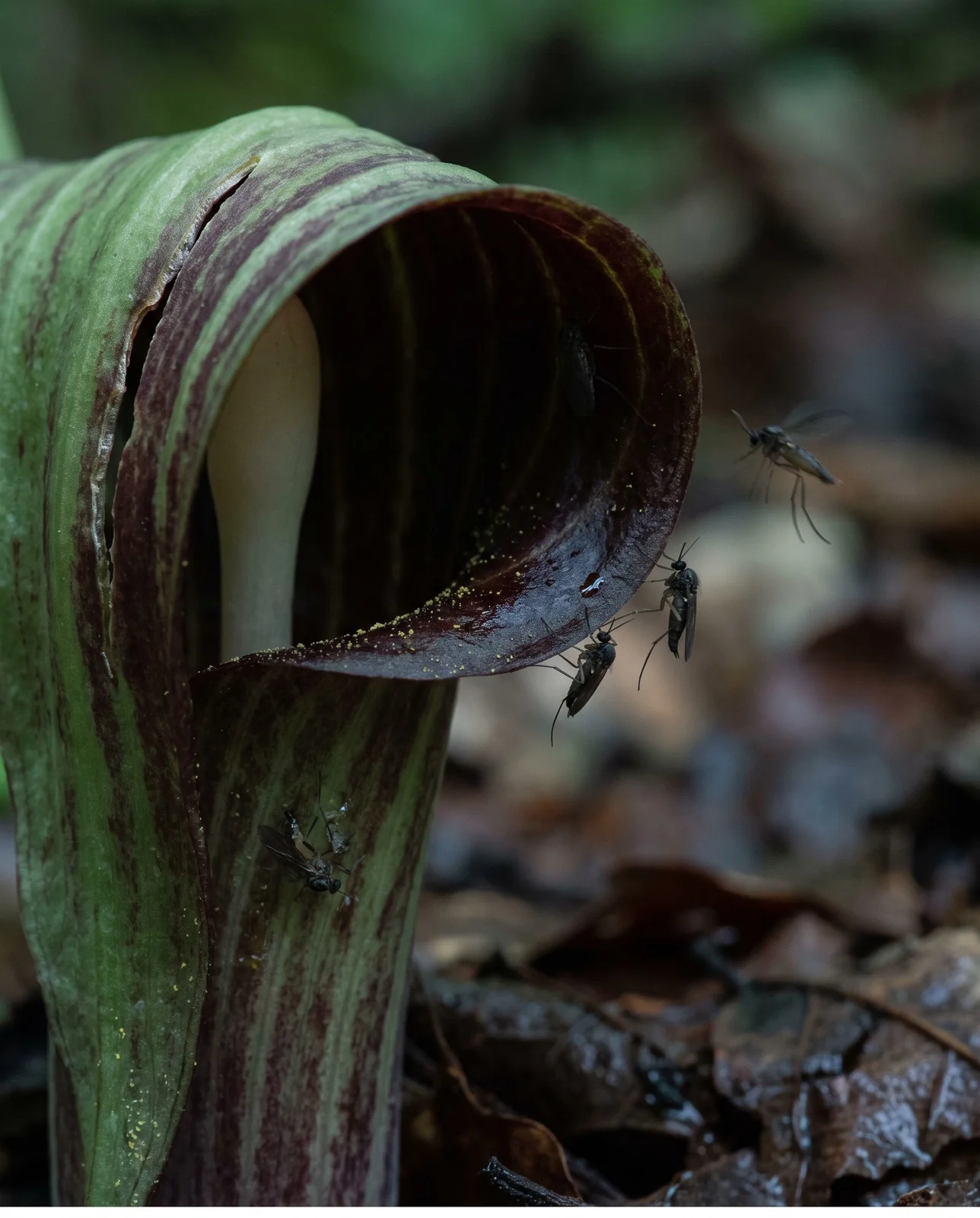
The plant is not carnivorous, and the hood is a trap built for pollination. Fungus gnats are drawn into the hooded spathes by a slight fungal odor, and small flies are its pollinators. What happens next depends on which plant the gnat entered. A male spathe has a small opening at its base, and a gnat dusted with pollen can leave through it. A female spathe has no opening, so the gnats that enter one die inside it. None of that is digestion.
The one-way design is the point: pollen has to travel from a male spathe to a female one, and only the male has an exit. The build is a family trait. The arum relatives grown as houseplants, the anthurium among them, carry the same sheath around a spike, without the closed hood and the fungal advertisement.
Deer and the red berries
Deer mostly leave the foliage alone, and the reason is the chemistry that makes the plant dangerous to people. The calcium oxalate crystals that make it toxic to humans when ingested also deter wildlife such as deer from eating the foliage. That is deterrence, which stops short of deer proof. The cluster reddens in late summer and ripens in fall on a bare stalk, and no bird or mammal has been recorded taking it. What you get out of a cluster is the seed inside, 1 to 6 to a berry.
Named forms, and the plants sold under the same genus
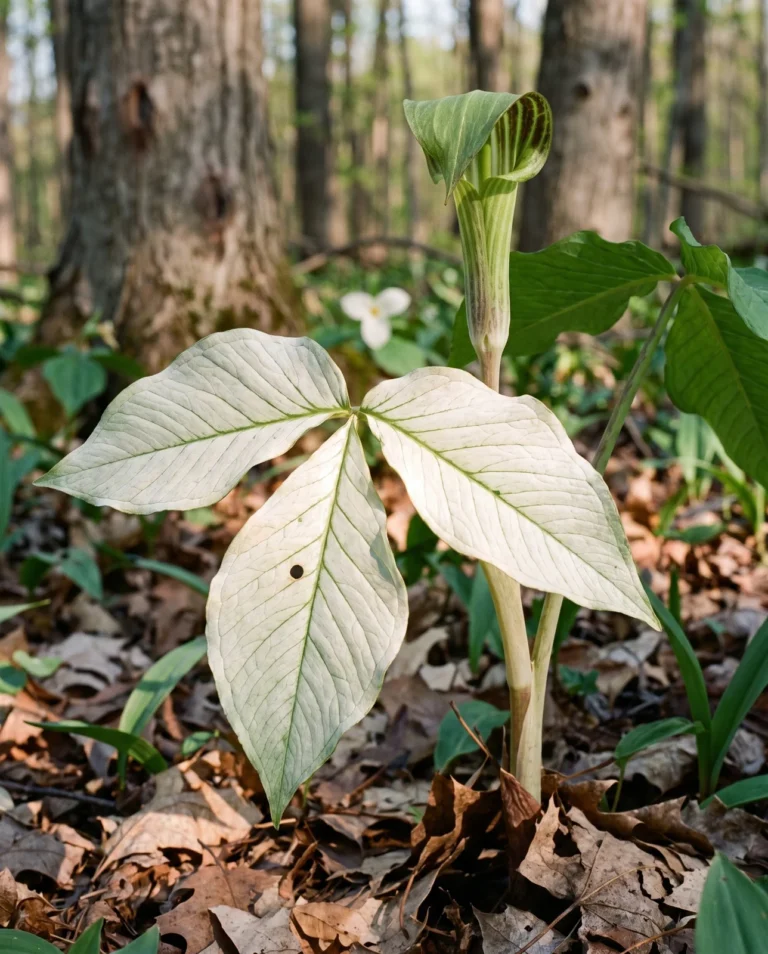
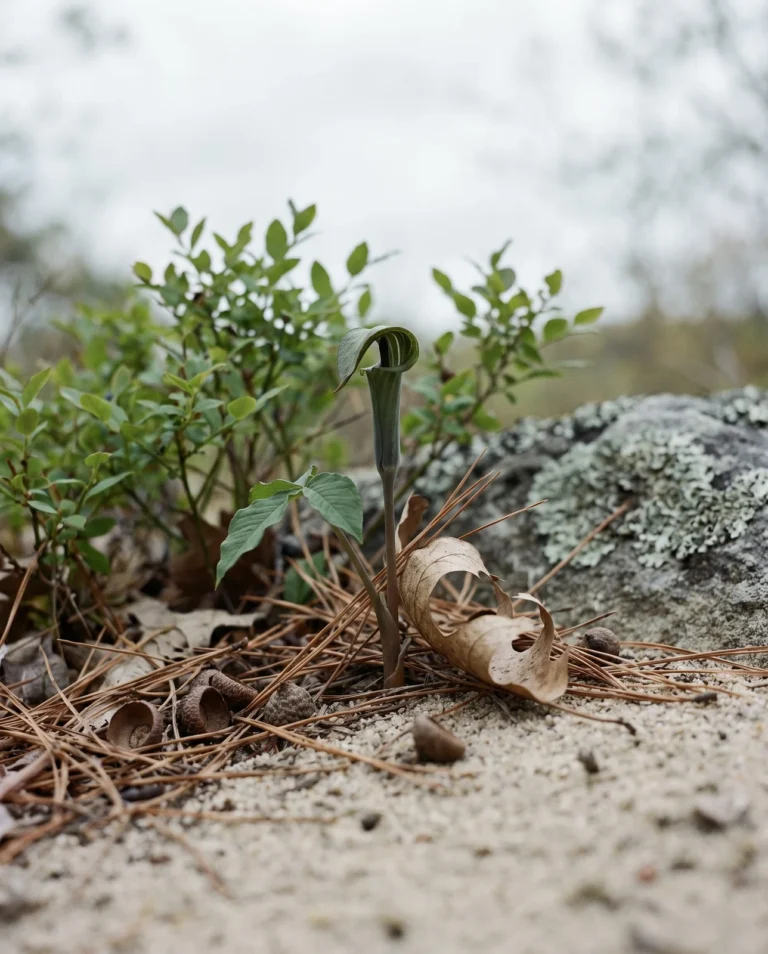
This is a species complex, so the names that matter are three subspecies, one close native relative, and a collector's species sold under the same genus. More shade and woodland plants sit in the wider index of flower types.
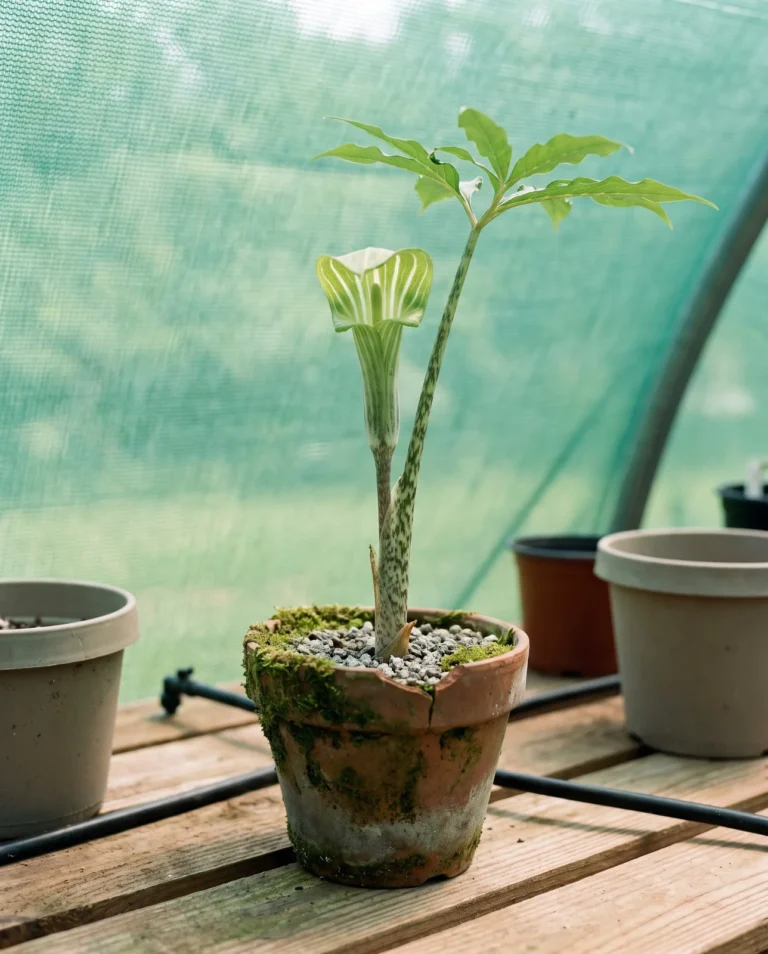
Care through the year
The year comes down to four moments, and only one of them is work. In spring the hood comes up. Through summer the single job is water, since this is a plant of seasonally wet ground. In late summer the berries redden, and a decision arrives with them: leave the stalk standing for seed, or cut it out where small children and dogs use the space. In fall the last job is to do nothing, since a heavy, leafy winter cover should be left in place.
Division is not annual maintenance. A large corm can be lifted in late fall or very early spring, every five years or on a very mature plant. Left alone, the patch thickens on its own. The same damp shade under deciduous trees suits Virginia bluebells, and a bed built for both keeps the ground covered while the jack is underground.
What actually goes wrong
The things that actually go wrong with this plant, and what to do about each.
Leaves you cannot place, or glossy arrowhead foliage standing green in a shaded bed in November. That is Italian arum: single arrowhead leaves marbled silver to white, with berries in a tight orange-red cob in August and September. Dig the clump out and bag the berries.
Nothing comes up from a sowing. Germination alone can take up to 2 years. Seed can go into moist shaded ground as soon as it is clean. Indoors it wants 60 to 75 days cold and moist, or the longer cold, warm, cold, warm cycle at 60 to 90 days a stage. Leave the pot undisturbed through two winters before writing it off.
A moved plant sulks or fails to reappear. Wait until the native plants around you start sprouting, and set moved seedlings 6 to 8 inches apart, since arisaemas do not carry much root. Give the new spot ground that stays damp through the season.
It never establishes, or it dies out after a winter. Cold hardiness reaches zone 9 at the top and the floor sits at 3 or 4. Heat at the southern end is survivable on constant moisture and deep shade. At the northern end, leave the leaf litter on the bed.
A patch turns into a colony. The corm spreads and colonizes over time, and one Philadelphia garden was overrun after years of being left alone. Pull or dig the unwanted corms, gloved.
Red berries in reach of a mouth in late summer. Every part carries toxic calcium oxalate, and the plant is toxic to dogs, cats and horses. Cut the fruiting stalk at ground level, gloved, and bag it.
Holes, spots or wilting, and no pest to pin them on. This species has no serious insect or disease problems, so check the growing conditions before reaching for a treatment. A bed that dried out in July accounts for most of what looks like damage.
Four things people say about it
What people get wrong about the hood, the berries and the plant's reputation.
The myth: It is carnivorous.
The reality: The hood catches gnats to move pollen and does nothing else with them. The lure is a slight fungal odor, and a gnat that enters a male spathe leaves through an opening at its base.
The myth: The berries must be safe, since wildlife eats them.
The reality: The plant is toxic to dogs, cats and horses, with insoluble calcium oxalates as the toxic principle, and the same oxalate keeps deer off the foliage.
The myth: It is endangered everywhere.
The reality: The global rank is G5, secure. Only the subspecies pusillum carries a state designation, uncommon or uncertain in Massachusetts.
The myth: It is a difficult plant to keep.
The reality: It is an excellent woods garden plant, very easy to cultivate and needing very little care, on one condition: moist ground, and light between deep and partial shade.
What to expect, year by year
What a planted corm and a sown seed actually do, from the first spring onward.
Year one, from a corm. Set in late fall or very early spring into moist shaded ground, a corm sends up its hood the following spring. Whether berries follow is decided underground: a corm carries fruit once it reaches about 4.5 times the weight of an average male corm.
Years two and three. The corm thickens, and the plant can read differently from one spring to the next, because sex and size both shift between growing seasons. Flowering follows the corm, so a plant moves from a male hood to a fruiting female one as its reserves build. Seed sown in year one is still below flowering size, which arrives about five years out.
The long view. This is a plant measured in decades, 25 years or more, spreading and colonizing from the corm. The sex switching runs through all of it, and in ground that suits it the end state is a patch thick enough to need pulling back by hand.
FAQ
Are jack-in-the-pulpit plants rare?
No. It is secure across its range, ranked G5 at the global level. Only the subspecies pusillum carries a state designation, uncommon or uncertain in Massachusetts.
Is it illegal to pick jack-in-the-pulpit?
It depends on whose land you are on. In a national park unit, digging or disturbing a plant is prohibited without an authorization, and a violation is a federal offense. National forest rules bar taking rare or protected species while tolerating small-scale personal gathering. In New York, taking a listed protected plant without the landowner's permission is a violation.
Do jack-in-the-pulpits come up every year?
Yes, for 25 years or more from the same corm. The top growth is seasonal, so a bare patch in late summer is ordinary; a bare patch in spring is the one to investigate.
Where is the best place to plant a jack-in-the-pulpit?
The low, shaded corner that stays damp. It grows most vigorously in moist, shady, seasonally wet ground, in sandy loam to clay loam holding plenty of organic matter.
Are jack-in-the-pulpit seeds poisonous?
Treat every part as toxic. All parts can cause severe pain and blisters if put in the mouth raw, and the leaves and fruits irritate skin, so clean berries with gloves on.
Are jack-in-the-pulpit berries edible?
No. The berries carry toxic calcium oxalate, and eating any part of the plant causes severe pain in the mouth.
Is jack-in-the-pulpit poisonous to touch?
The leaves and the fruits carry calcium oxalate that can irritate skin. Wear gloves to handle the berries, and wash your hands before touching your eyes, mouth or nose.
Will jack-in-the-pulpit spread?
Yes, slowly, from the corm. One Philadelphia garden was overrun after years of being left alone, its owner pulling corms by hand.
Do deer eat jack-in-the-pulpit?
Rarely. The calcium oxalate crystals that make the plant toxic to people also deter deer from the foliage.
Is jack-in-the-pulpit poisonous to dogs?
Yes, and to cats and horses, with insoluble calcium oxalates as the toxic principle. The signs are oral pain and swelling, drooling and difficulty swallowing.
How deep do you plant jack-in-the-pulpit corms?
A few inches deep. Seed goes shallower, half an inch down.
Interesting tips
- Which sex a plant flowers as is not settled by this season's size alone. A model using current size, last year's size and last year's sex predicted a plant's sex better than current size by itself. A corm that spent a season fruiting carries that history into the next spring.
- The lookalike matters beyond a naming argument. Italian arum's fruits turn from green to orange-red and carry seeds that move the plant into new ground, so a misidentified clump left standing is how an invasive gets sown into woodland.
Related Guides & Flowers
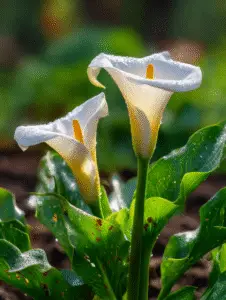
Calla lily
The same arum build, a sheath around a spike, grown in pots and beds for the flower itself.
Hellebore
A shade perennial that holds its leaves through the months when the jack is underground.
Lily of the valley
The other damp-shade spreader with red berries and a toxicity question attached.

Snowdrops
The bulbs that open under the same deciduous trees weeks before the hood appears.
Enjoying our flower guides? Add YourFlowersGuide as a preferred source on Google. It helps more readers find us.
Add to Preferred Sources