What lisianthus actually is
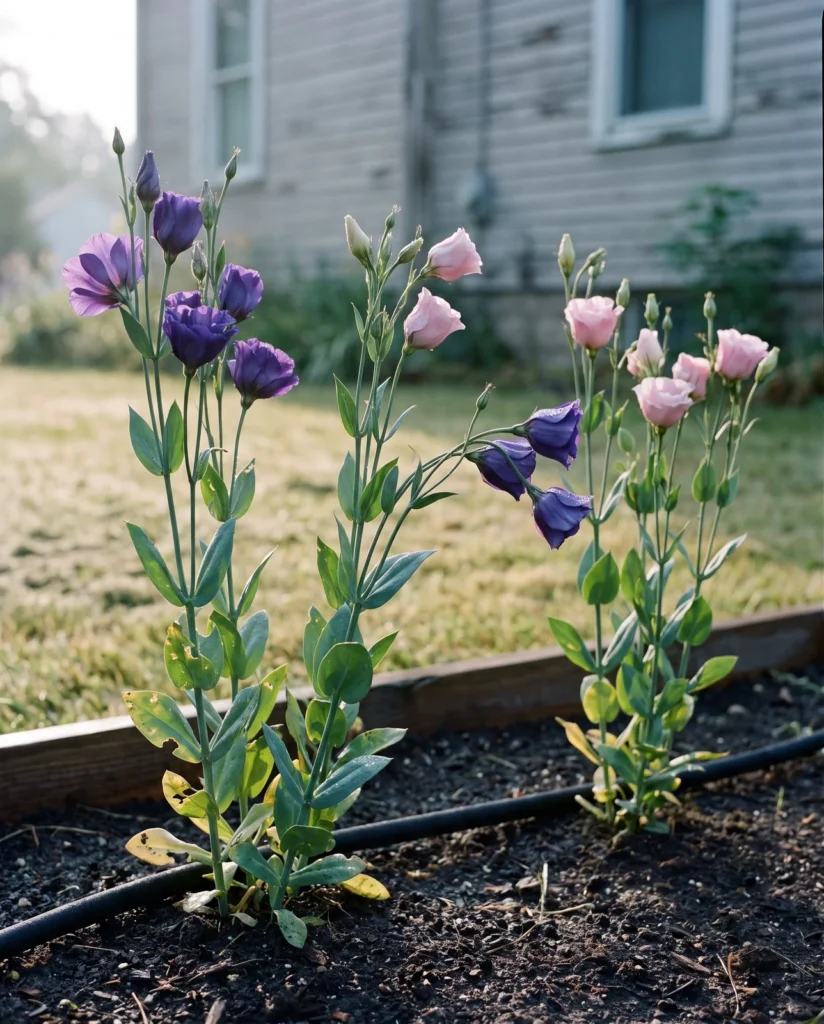
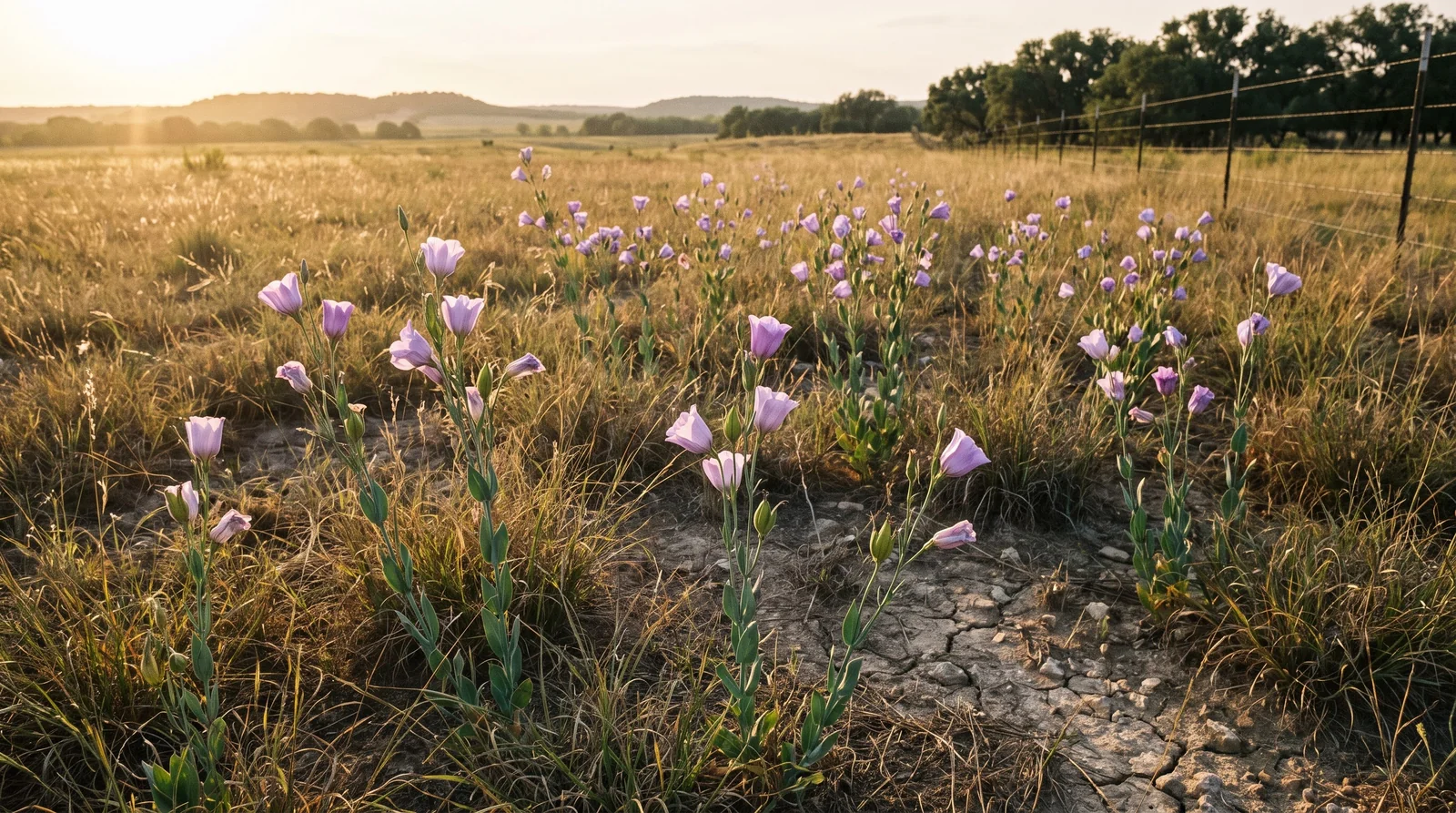
Lisianthus is a prairie wildflower sold under a trade name that hides its relatives: it belongs with the gentians. The word on the bouquet sleeve comes from Lisianthus russellianus, a Latin name botanists discarded. It also answers to prairie gentian and Texas bluebell, and the epithet grandiflorum means large flowers, the quality that took it off the prairie and into the flower trade. Two Latin names are still in print: most of horticulture uses Eustoma grandiflorum, while Kew files that as a synonym of Eustoma russellianum. Nothing about the plant changes with the label. In the wild it grows on the southern plains, from Texas and Kansas north into Nebraska and Colorado.
You probably met it in a bouquet
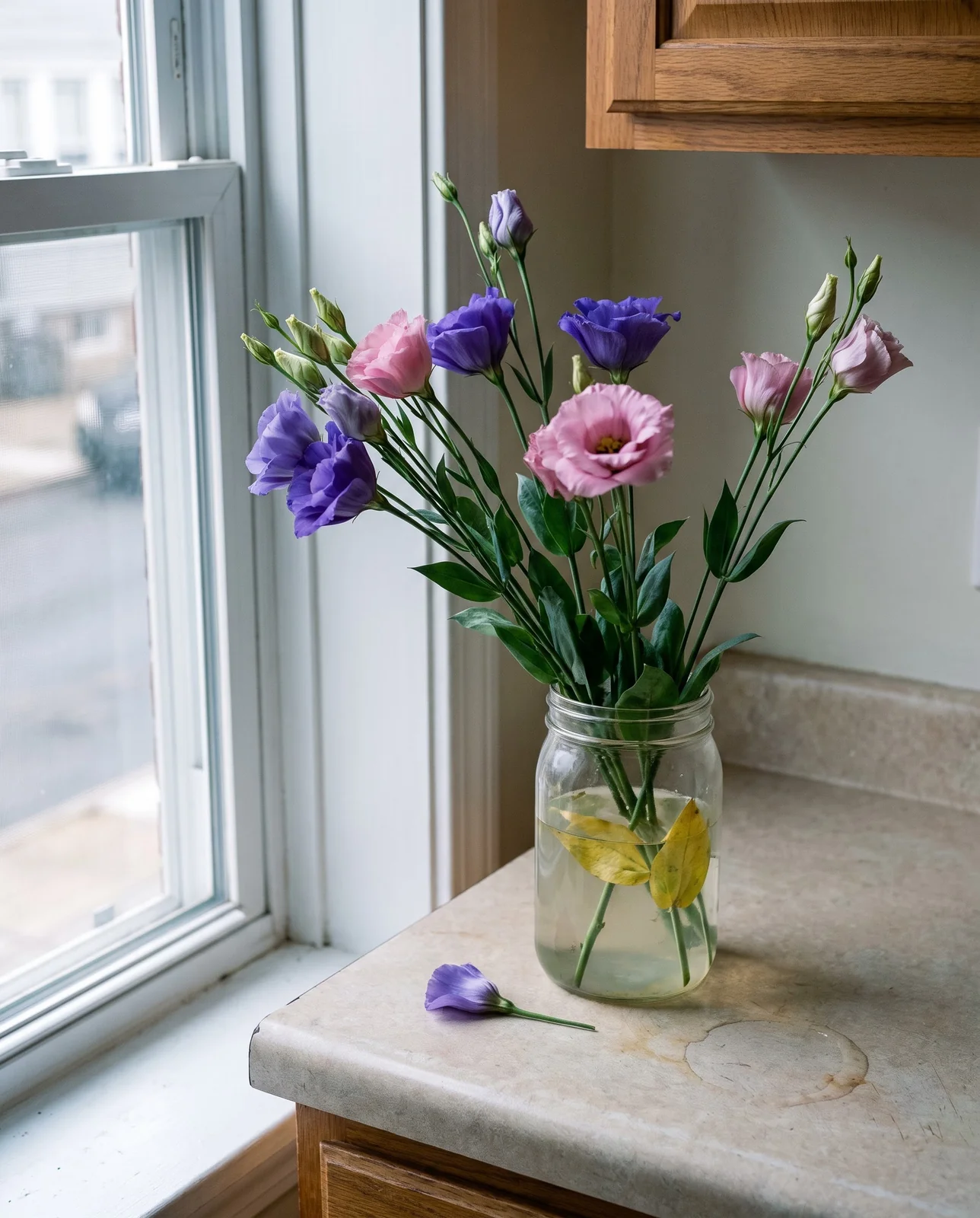
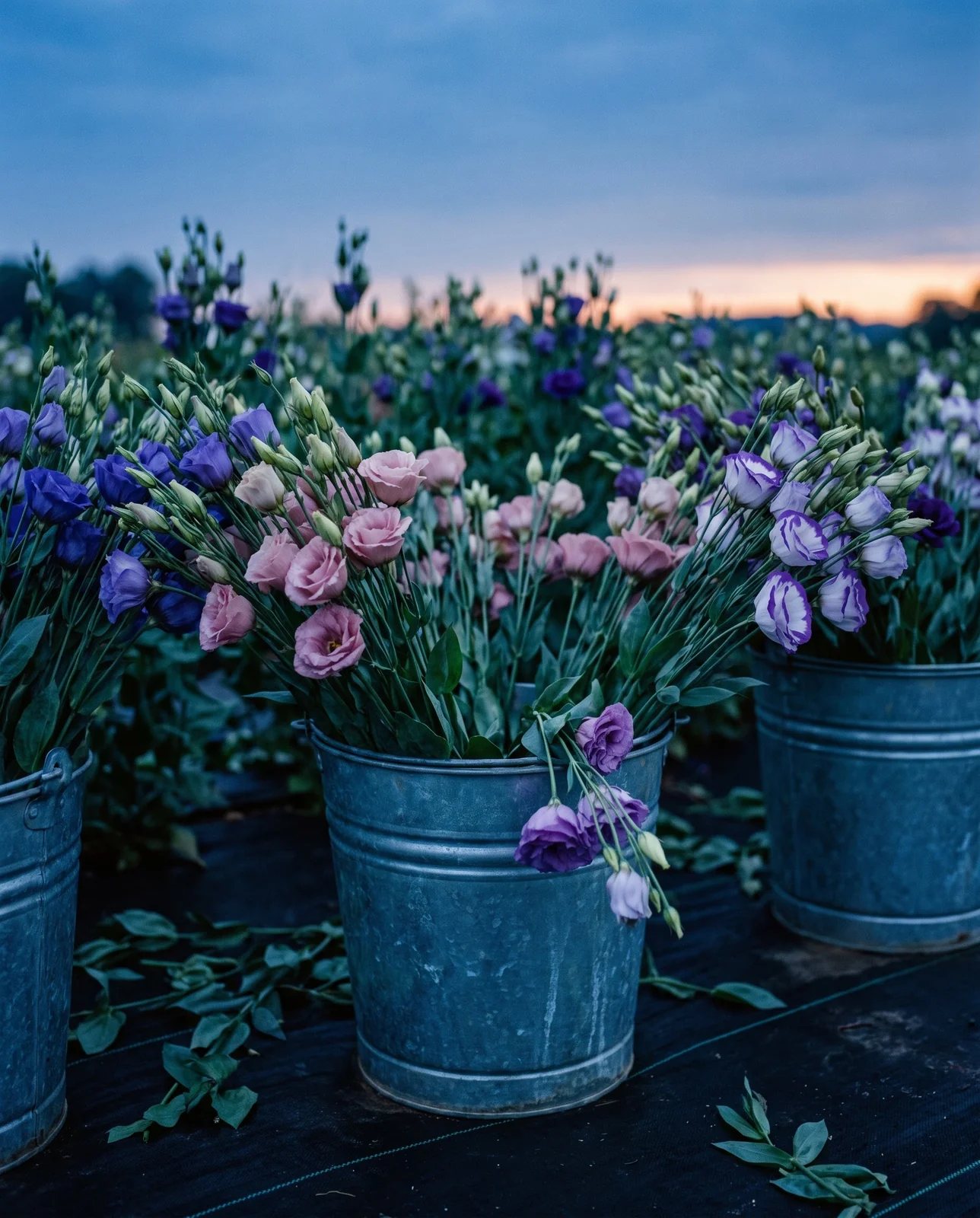
Most people meet lisianthus as a cut stem long before they meet the plant. It is a commercial crop first: worldwide cut flower sales run past four billion dollars, and sales of this one have surged. There are three ways in. Buy the stems already cut. Buy a started plant. Or raise it from seed, which is the hardest route for anyone growing at home, since the seed is notoriously tricky and temperature is the part that matters most. The seeds are very small and a plant takes months to mature from them, so lisianthus is more often bought and transplanted. The same slowness is the reason flower farms buy in young plants and skip raising their own.
What it looks like
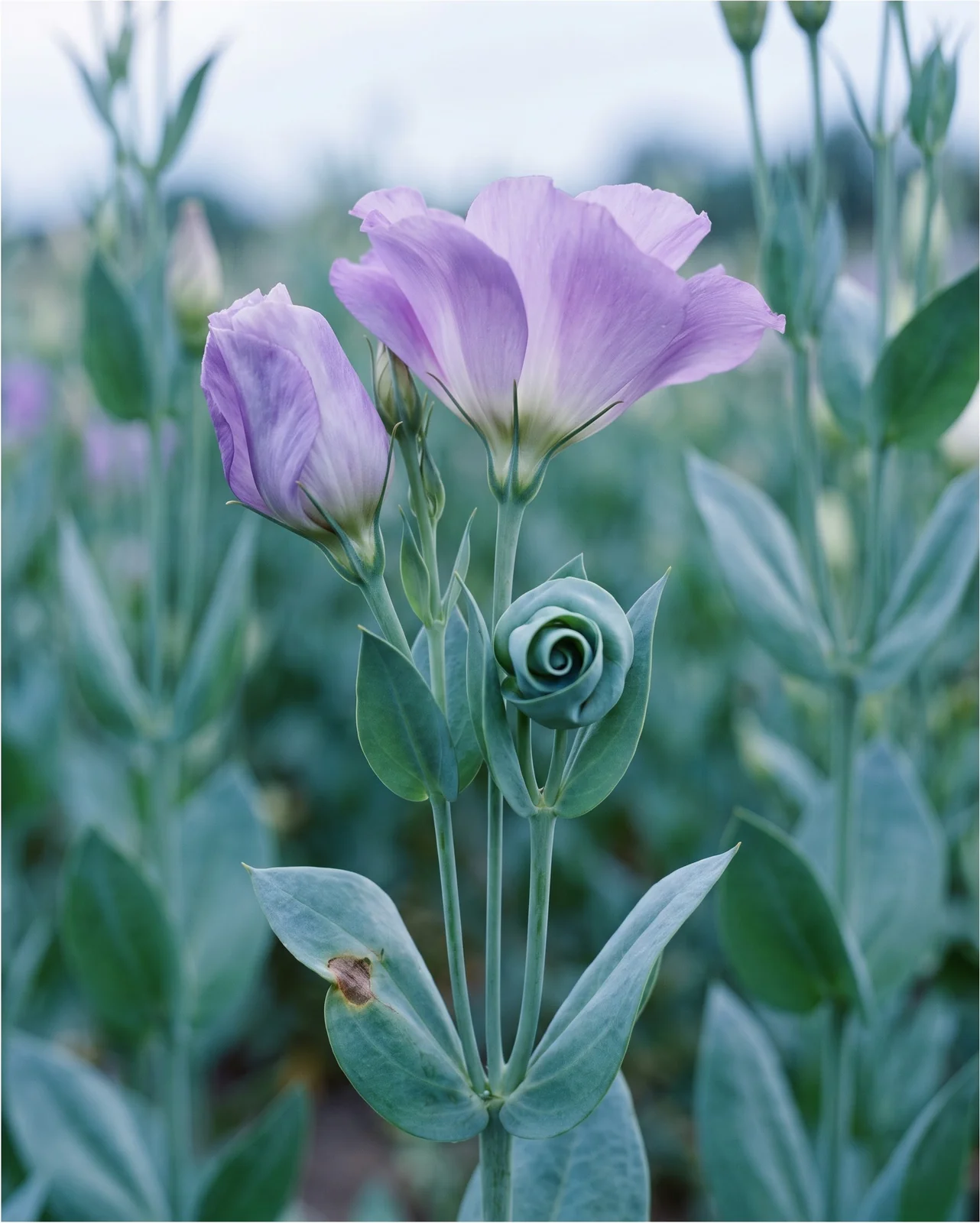
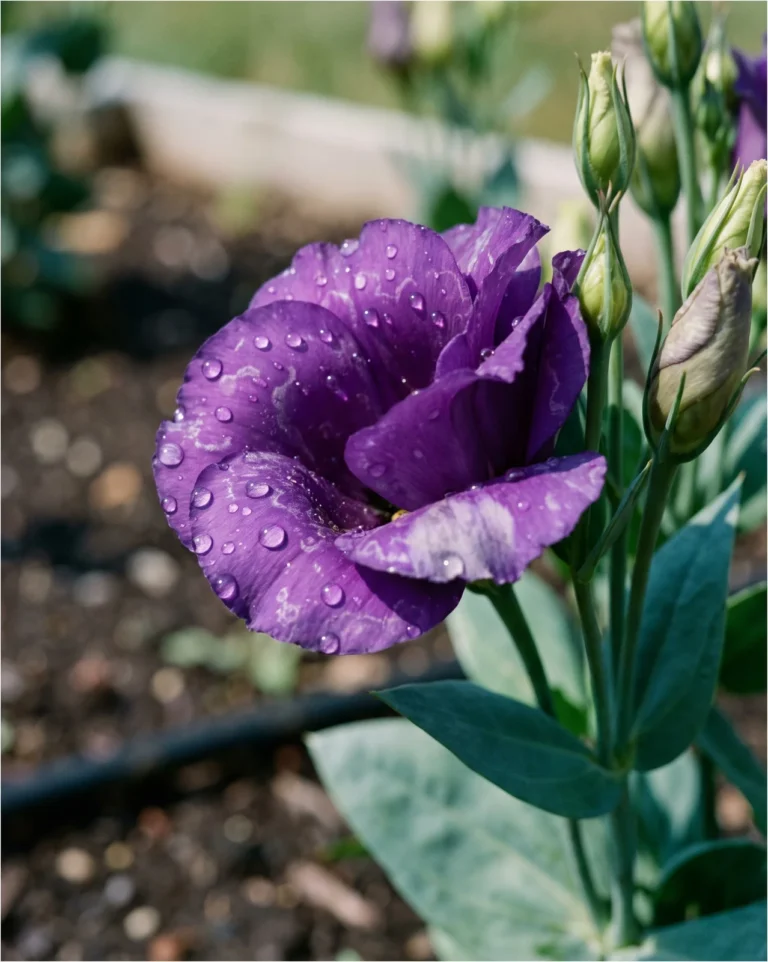
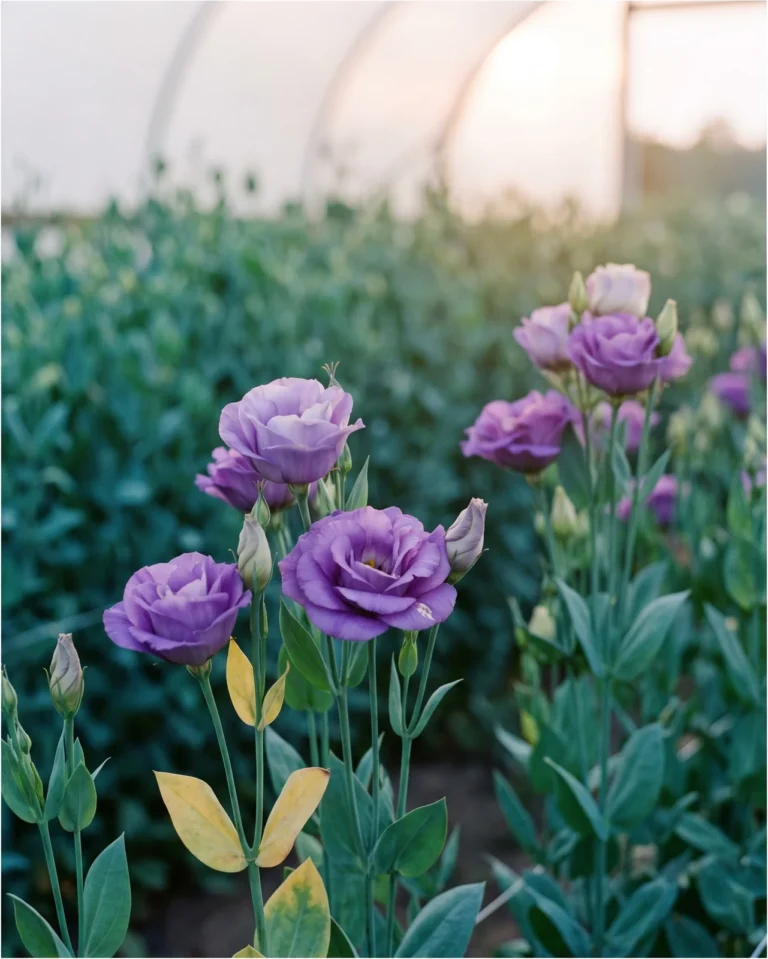
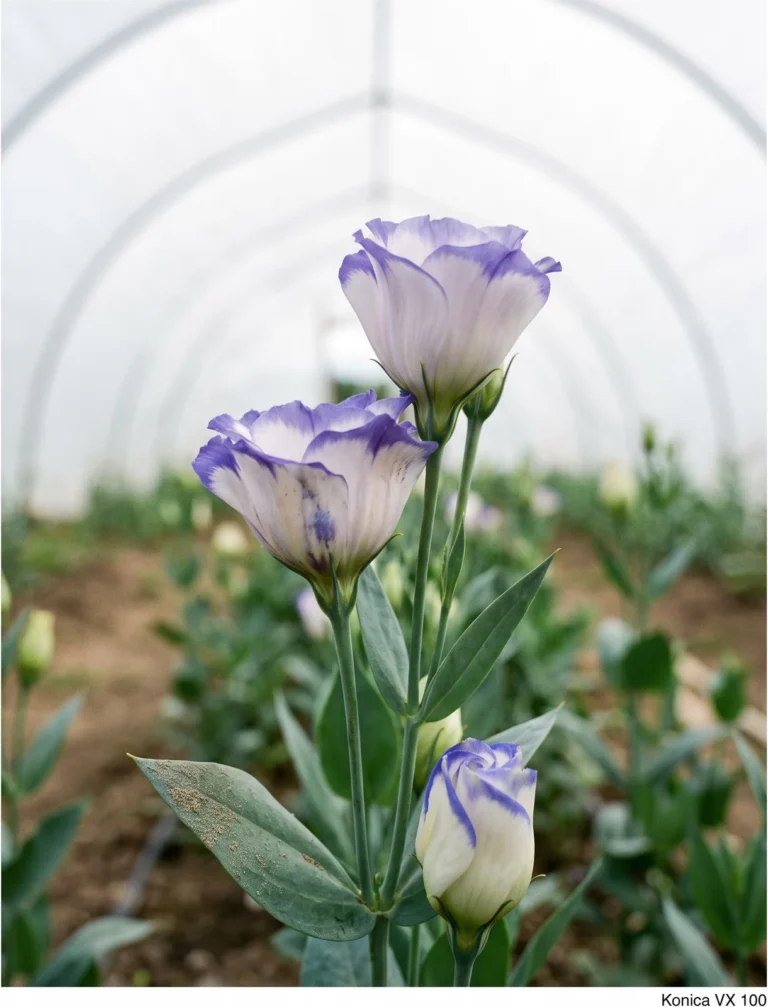
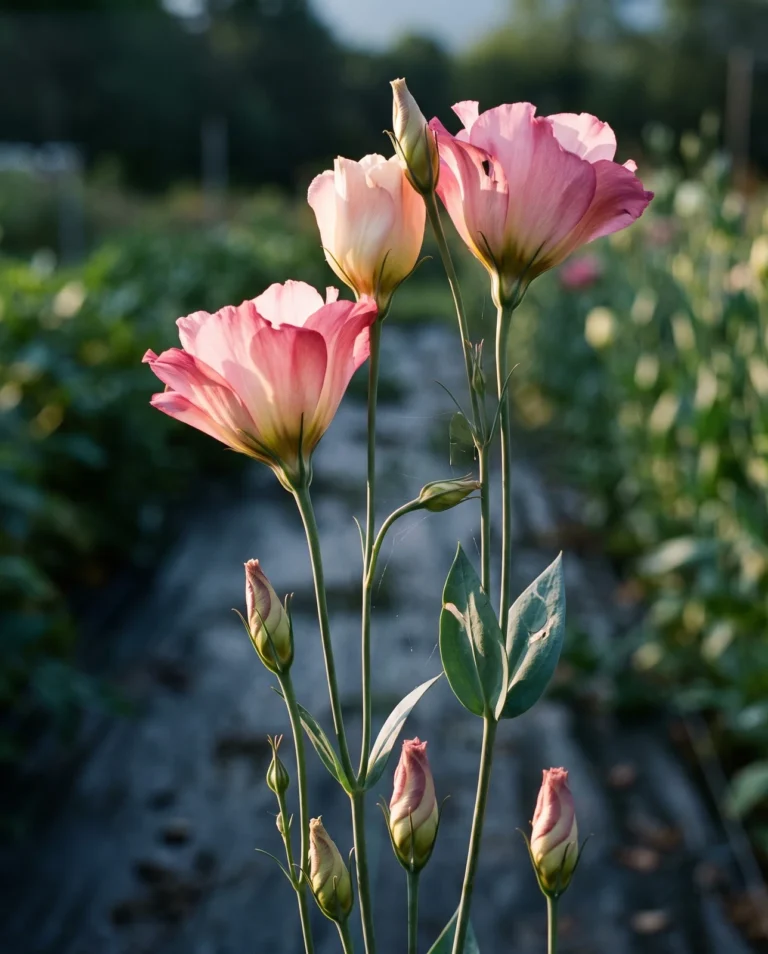
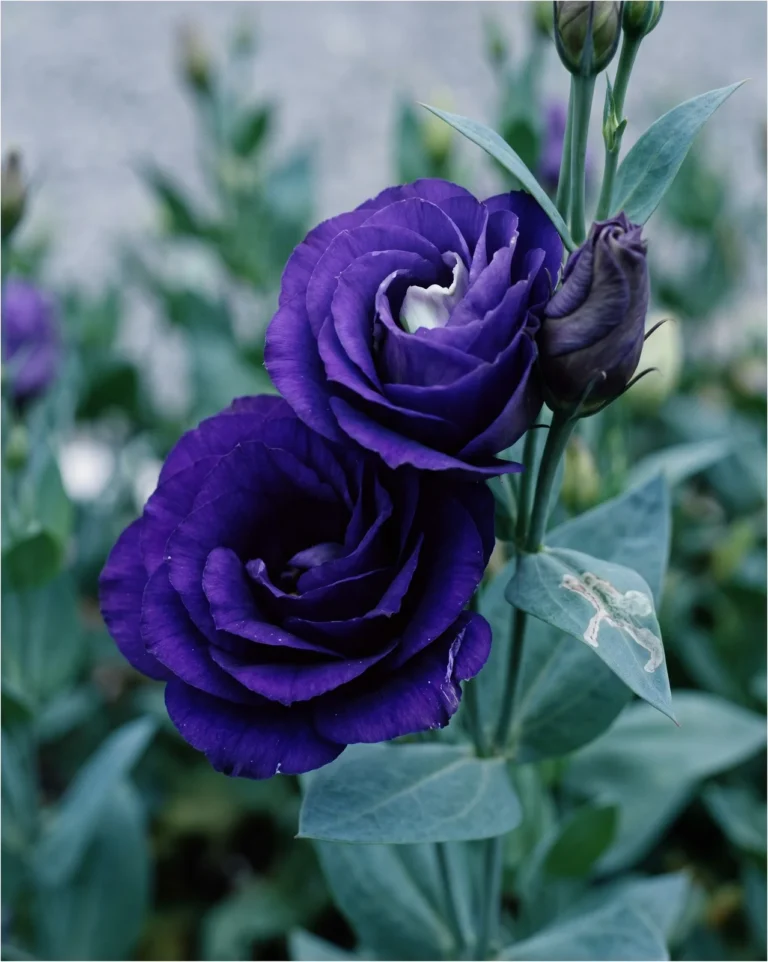
The flower is a wide bell about 2 inches across, with petal like lobes that flare open, carried in summer from the upper leaf axils. On the wild species those lobes are pale purple. In gardens and in the trade it also comes in the blue and purple shades that have long eluded rose breeders. The bloom sits between a rose and a tulip, large and showy. Cut flower growers have taken to calling it the next rose for its flower size, long stems, color range and vase life. Out of the vase the plant is modest: 1 to 3 feet tall and 9 inches to a foot wide. Named cultivars usually run 18 to 30 inches, and dwarf ones only 6 to 8 inches. The foliage is an unusual blue green.
What people call it before they know the name
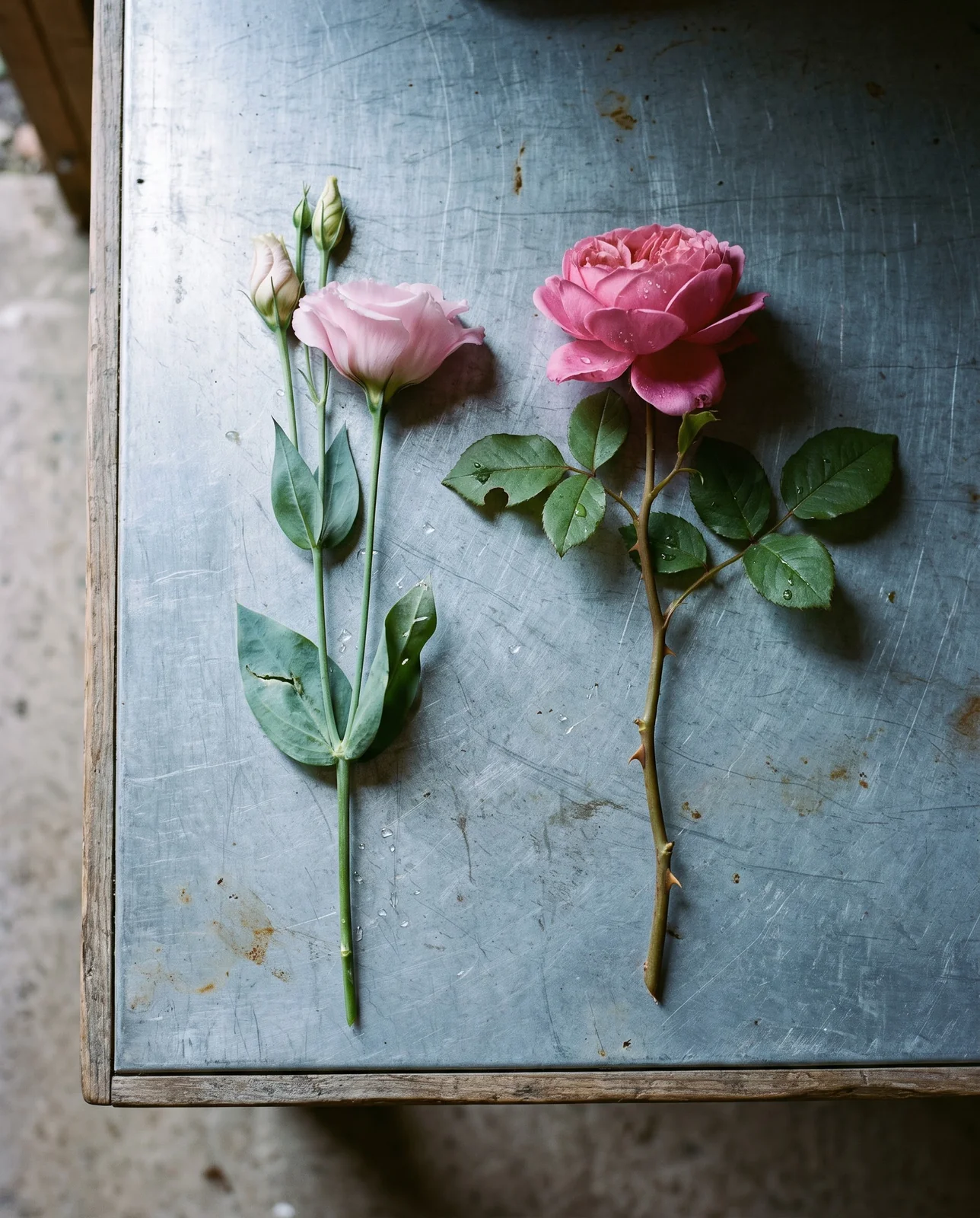
Three names get used for it before anyone reaches the right one. Two of them are wrong, and the differences show without touching the stem.
Annual, biennial, or perennial
Lisianthus is a tender perennial that almost every American garden grows as an annual. Production says the same from its own side: perennial in its native southwest, annual in most systems. In the wild, where conditions suit it, it can carry on for a few years as a short lived perennial. What ends it in a garden is winter. Cold winters kill the root systems, so nothing regrows in spring. Where winters stay mild it does return, behaving as a short lived perennial for several seasons. Anyone in a cold state waiting for last year's bedding plant to come back is waiting for something the roots cannot do.
Why you see two different zone ranges
Two zone ranges are printed for this plant, and they answer two different questions. Zones 8 to 10 is the range where it lives through winter in open ground. Zones 3 to 11 is the range where you can carry it from seed to bloom inside one season, given an early enough indoor start. Both get printed without the question attached, so they read as a contradiction. The gradient between them is worth reading in order. In zones 10 to 11 it grows on as a true perennial, though vigor drops enough that plants are rotated every 2 to 3 years. In zones 8 to 9 it overwinters as a short lived perennial with mild frost protection. In zones 3 to 5 it is an annual only, started indoors very early and often carried under a high tunnel to stretch the season.
One number decides the season. In the ground the plant is hardy to 20 degrees Fahrenheit, and established plants take heat well. Young plants come through 20 degrees once they are planted out, while the same plugs sitting in a tray above ground would freeze solid. That toughness is why growers set plants in the field 2 to 4 weeks before the last frost date, or 4 to 6 weeks before it under a tunnel.
Growing it in the garden
It wants full sun, 6 to 8 hours of direct light a day, on rich loose soil that drains, at a pH of 6.5 to 7.0. Six hours is enough on loam or sandy ground with good drainage. Florida is the exception: there it takes partial sun with some shade. Young transplants do well slightly lower, at 6.0 to 6.8. Soil type matters less than soil behavior, and what fits is ground of average fertility that drains freely and still holds moisture.
Water is where it gets particular. It wants steady moisture, though once established it carries good drought tolerance and few pest problems beyond fungal disease. Water at the base and do not let it dry out while it is flowering. The flowers themselves dislike getting wet and spot or mold when water lands on them. Growers run drip lines and water early in the day, and under cover even condensation can spot a deeply colored bloom.
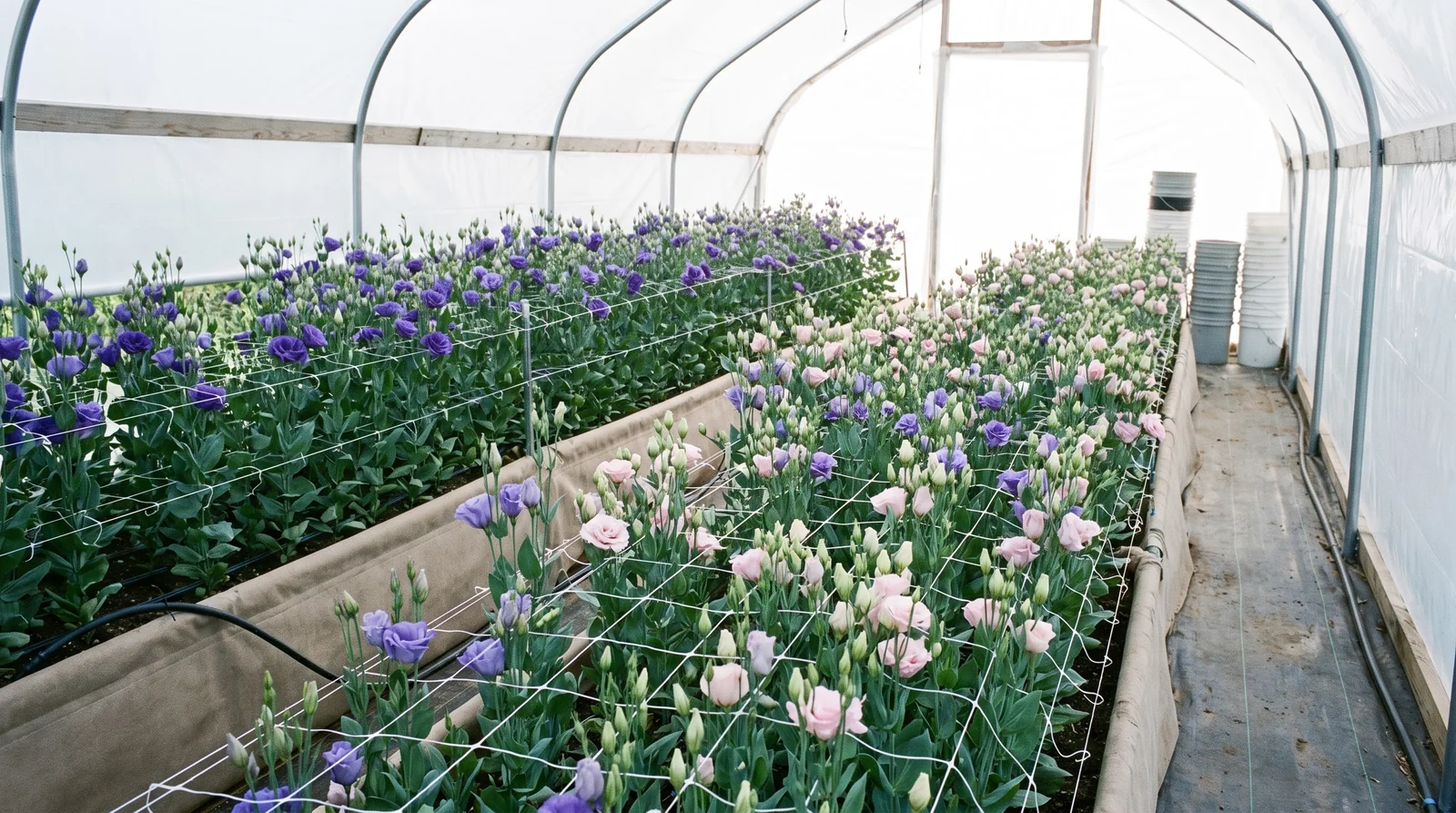
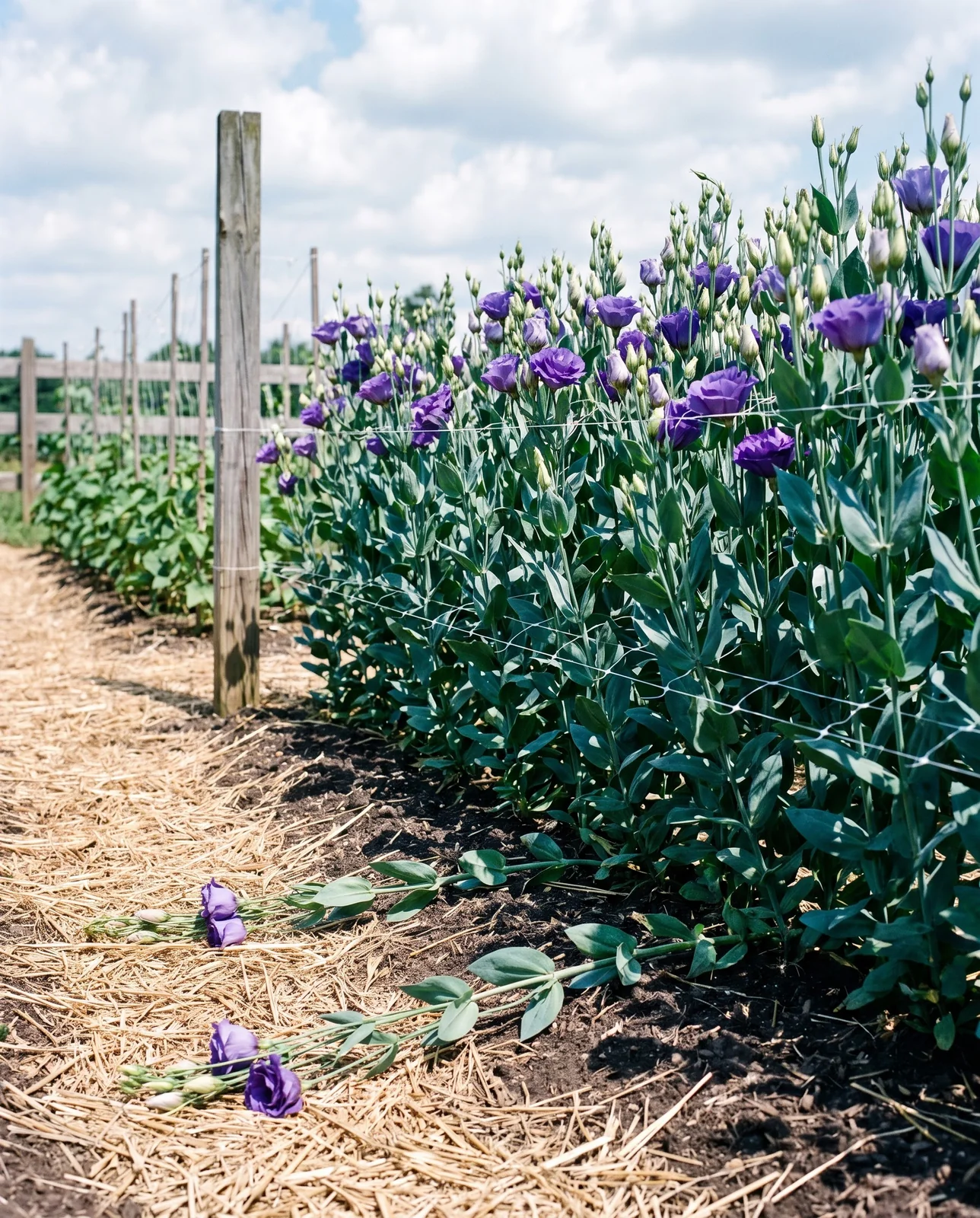
Spacing and support decide whether the stems stand up. Plants fall over as they grow taller, so most people plant them in masses. Growers answer the same problem with two layers of netting, since with plenty of water and a good transplant date the stems can reach 3 to 4 feet. Production beds run 6 by 6 inches; at 9 by 9 inches plants branch more but the bed yields less. Transplants go into beds 5 to 6 inches apart.
Growing it from seed, and why that is hard
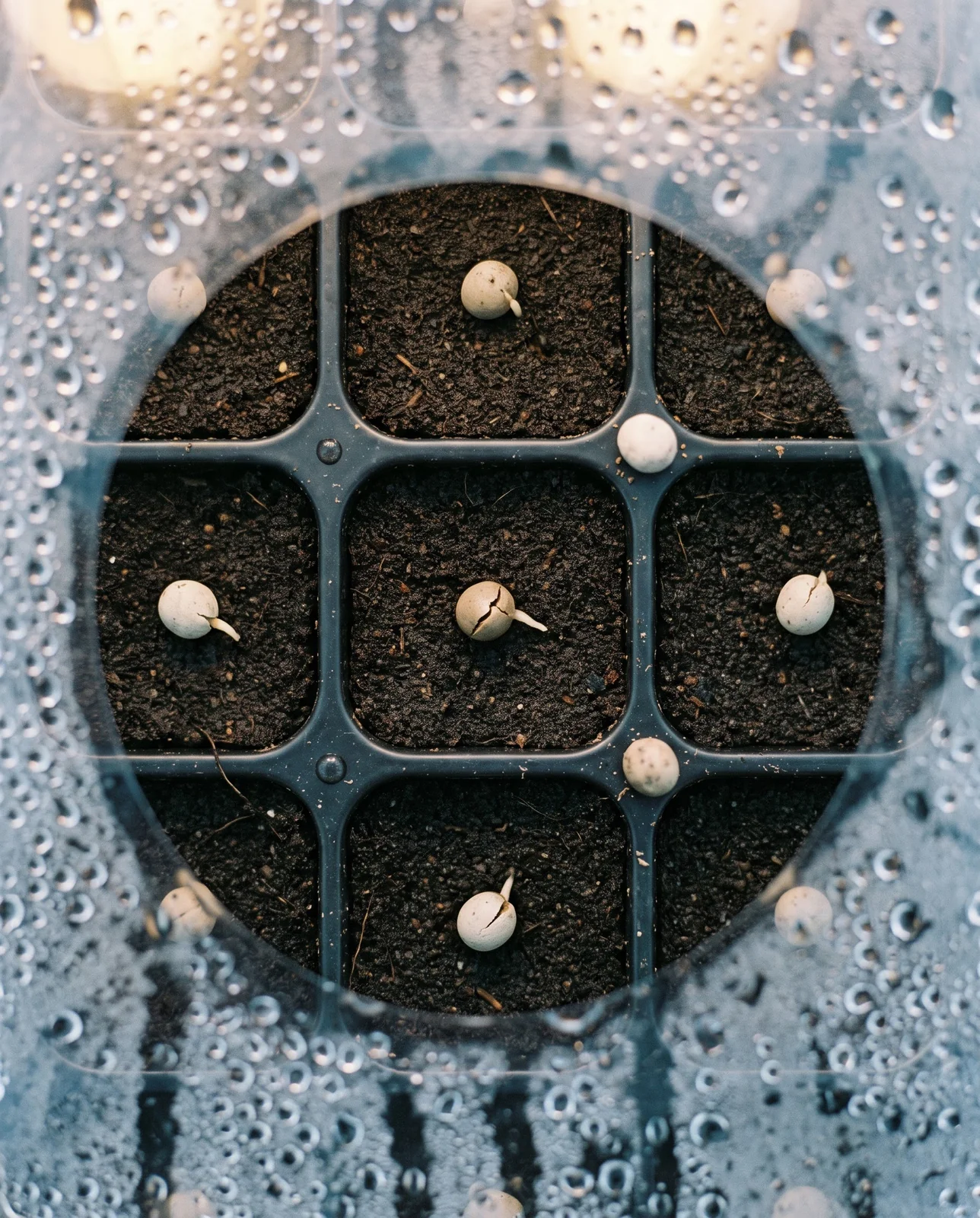
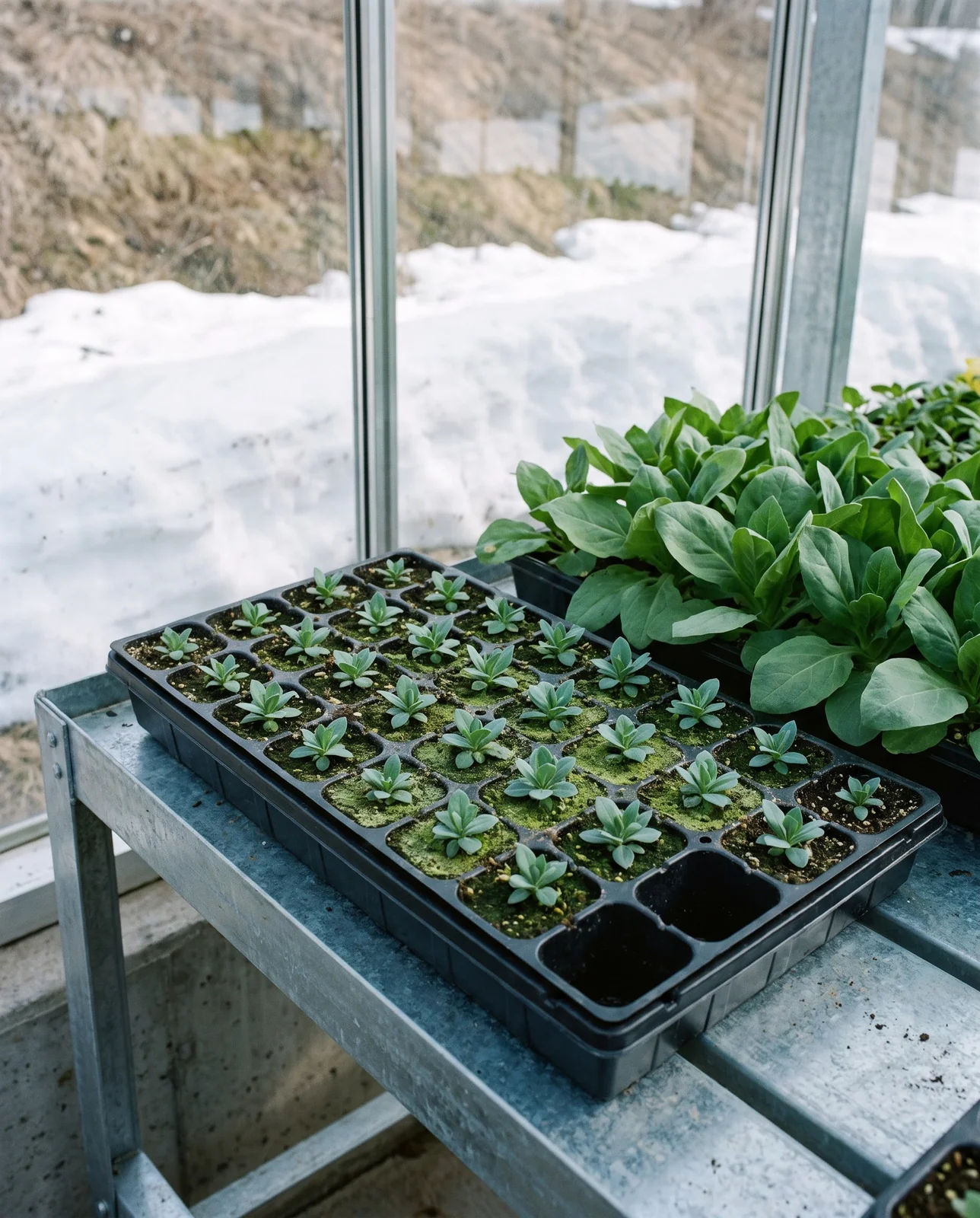
The seed itself is the first obstacle. It is the size of a dust particle, one of the tiniest of any commercial cut flower, so it is almost always sold pelleted, coated so it can be handled and sown accurately. The coating shortens its life, so pelleted seed gets used within a year of purchase, and viability drops faster than in most flower seed. Sow it on the surface and never bury it, because it needs light to germinate. Germination takes 10 to 14 days under a clear plastic cover at about 70 degrees Fahrenheit. Even handled correctly these are among the hardest seeds to germinate, and damping off takes seedlings soon after they come up where there is overwatering, poor sanitation or no airflow.
The failure with a name is rosetting, and it is a heat problem. The plant never elongates or flowers, making only a flat basal cluster of leaves. It sets in above 72 degrees during the seedling stage, up to the fifth pair of leaves. It also shows where plants are stressed by long spells above 85 degrees by day and 70 at night, or where the plug is overwatered or dried out. Growers hold nights at 55 to 59 degrees to keep it down when the days run warmer than they would like. A seedling stage held at 65 to 70 degrees largely prevents it. Once it happens it is hard to undo, though 50 degrees for about 30 days may reverse it.
Then there is the calendar. Seed goes in indoors 10 to 12 weeks before the last frost, and the run from sowing to first bloom is about 5 months. Seedlings are slow: 60 to 75 days to reach transplant size, moving on once they have four true leaves, then another 60 to 75 days from transplanting to flowering. A late January greenhouse sowing gives transplantable seedlings in early May. Counted end to end the run is 18 to 22 weeks from sowing to bloom, or 5 to 6 months from germination. The dust sized seed and that timeline together are what rule out sowing straight into the ground in spring.
What the seed group numbers mean
A group number on a lisianthus packet or plug list is a bloom order code, grower shorthand that nobody translates for shoppers. Group 1 flowers first, then 2, 3 and 4. The number encodes the conditions the variety was bred for: the four groups each match a day length and temperature range. The group therefore says which planting and harvest window a variety was built to fill. A variety name carrying no group number simply has not been assigned one.
Using it takes one more fact: bud set here depends on day length, light intensity and temperature together. The crop behaves as a long day plant, so longer days or supplemental lighting bring buds on sooner. All the groups can be planted at the same time, and planting several weeks before the last frost gives them a long cool spell to root before summer heat. For a warmer, later planting the pick is Group 2 or 3, which hold off flowering until they have made a good root system. The earliest varieties start in late June from a February sowing, and Group 3 can run about a month behind them with longer stems. Even with the number in hand, hitting a chosen date is hard for experienced growers.
Buying plugs and started plants
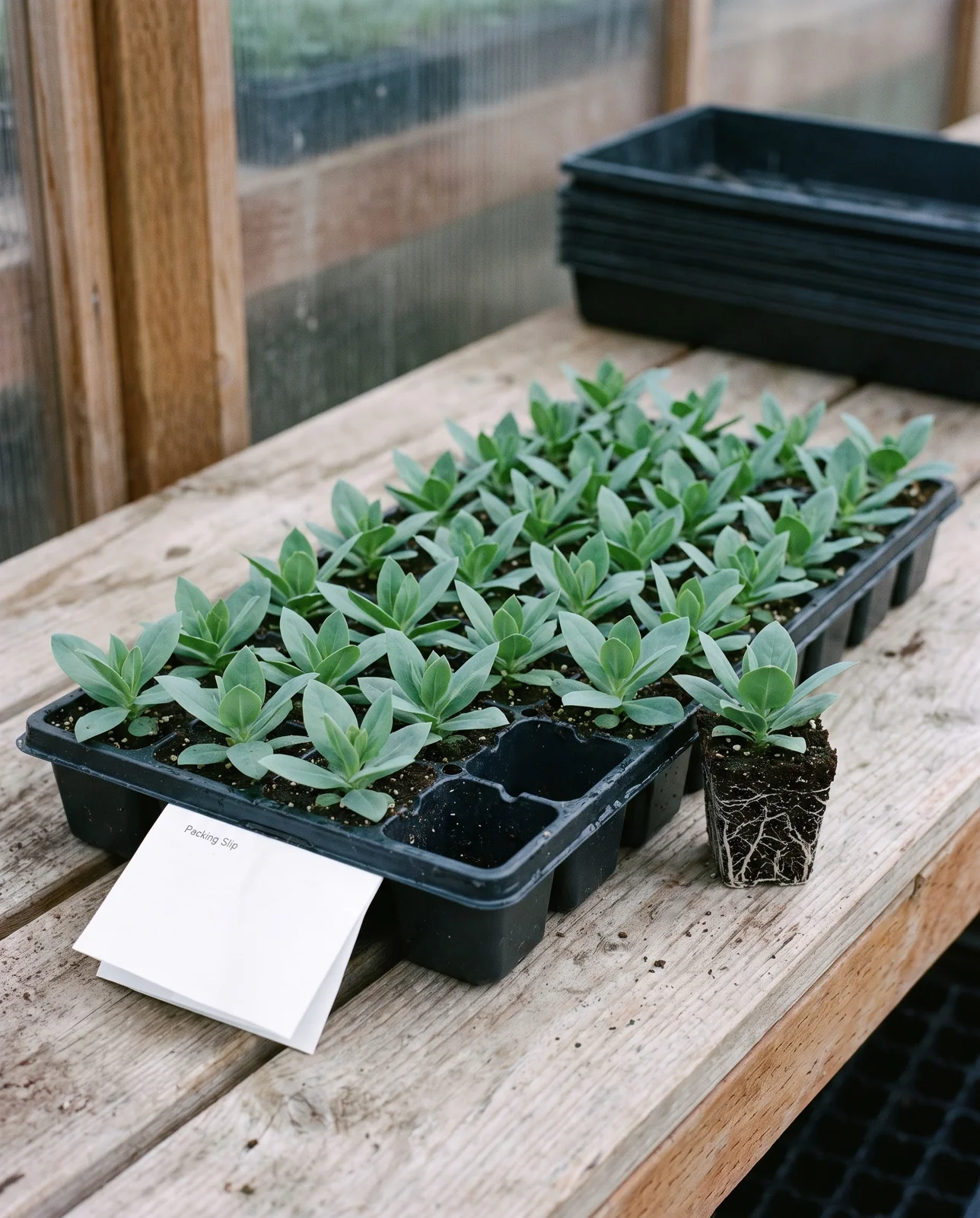
A plug is a young plant raised in a cell tray to the point where it can go straight into the ground, and it is the route that skips the seed tray. Trays come in 128, 216 and 288 cells. Getting seed to that stage takes perfect conditions every day for about 12 weeks, so most growers buy plugs and never raise their own. Plug growers want orders 4 or 5 months ahead of the planting date, because the trays are grown to order on that 12 week schedule.
You can take the same shortcut. The plant is slow from seed, so it is more often bought as a started plant and transplanted, and growers are told outright to buy seedlings and skip the long greenhouse stage. Finding one takes asking: look for a good independent garden center near you and ask whether it carries lisianthus. When a tray does arrive, plant it inside a week, because plugs held longer become rootbound and stay stunted later in life.
Why lisianthus leaves turn yellow
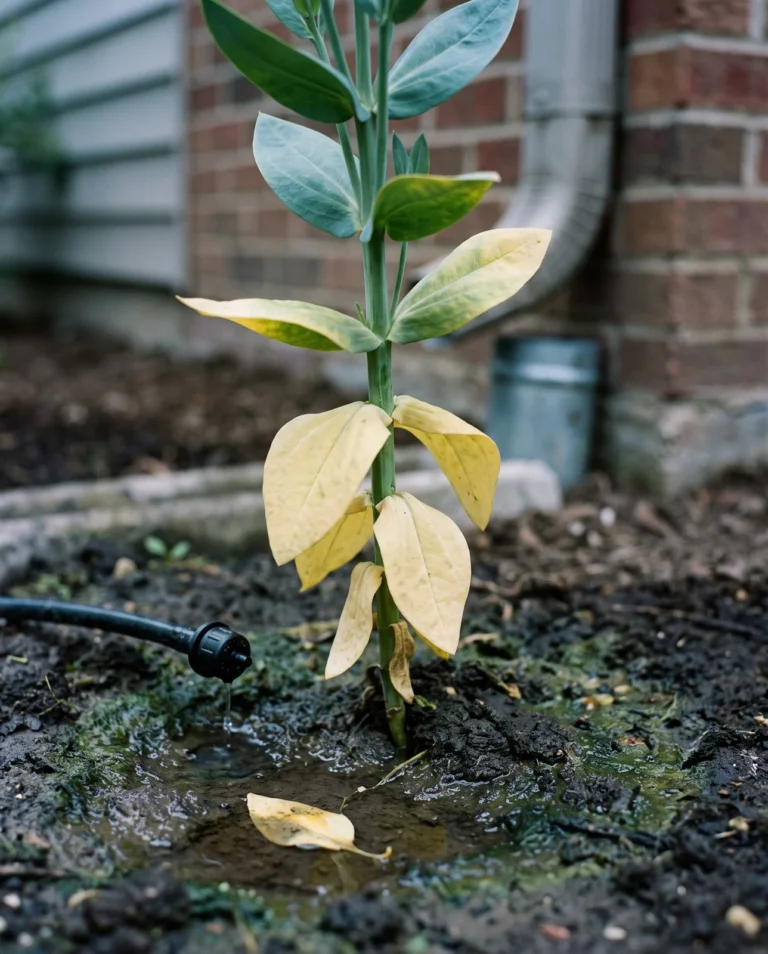
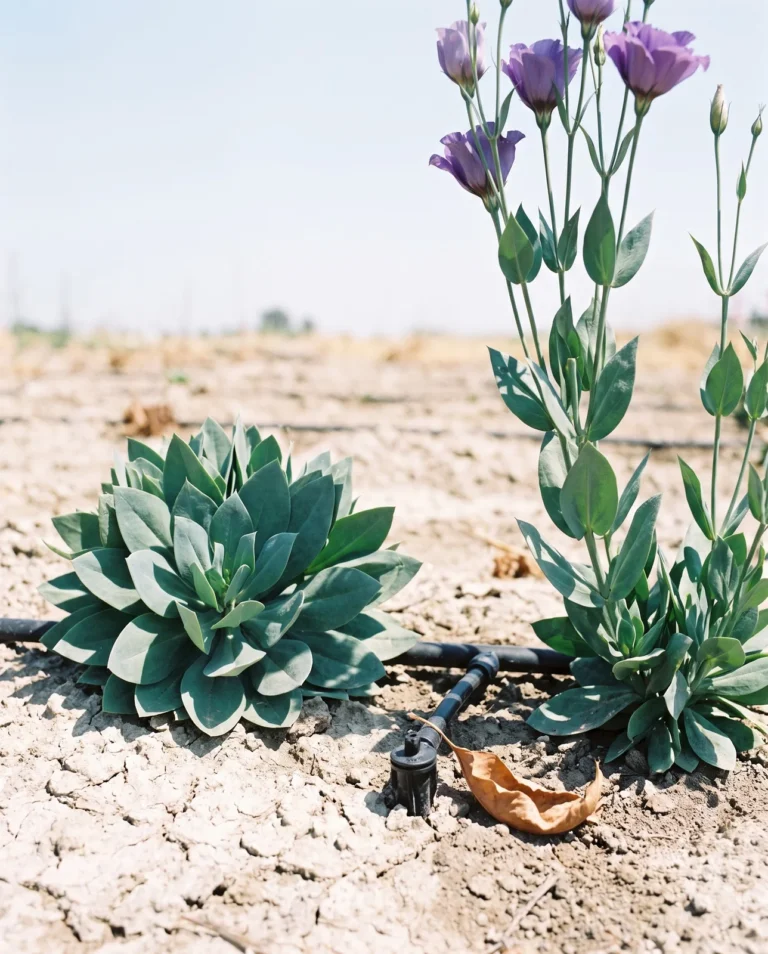
Yellow leaves on lisianthus point at the roots, and water is the first thing to check. Overwatering is a common hidden cause of a plant that stalls or stops flowering. It shows in a set pattern: the lower leaves go first and the base of the stem turns soft or discolored. Roots need oxygen, and soil that stays saturated suffocates them until they rot. Once it is root rot the tells stack up: growth stops, the plant wilts while the soil is still moist, and the roots come up brown or mushy. Root rot comes down almost entirely to soil conditions, to poor drainage, watering too often, or ground that stays wet for long stretches. The first yellow leaf pair standing over wet soil is the moment to act.
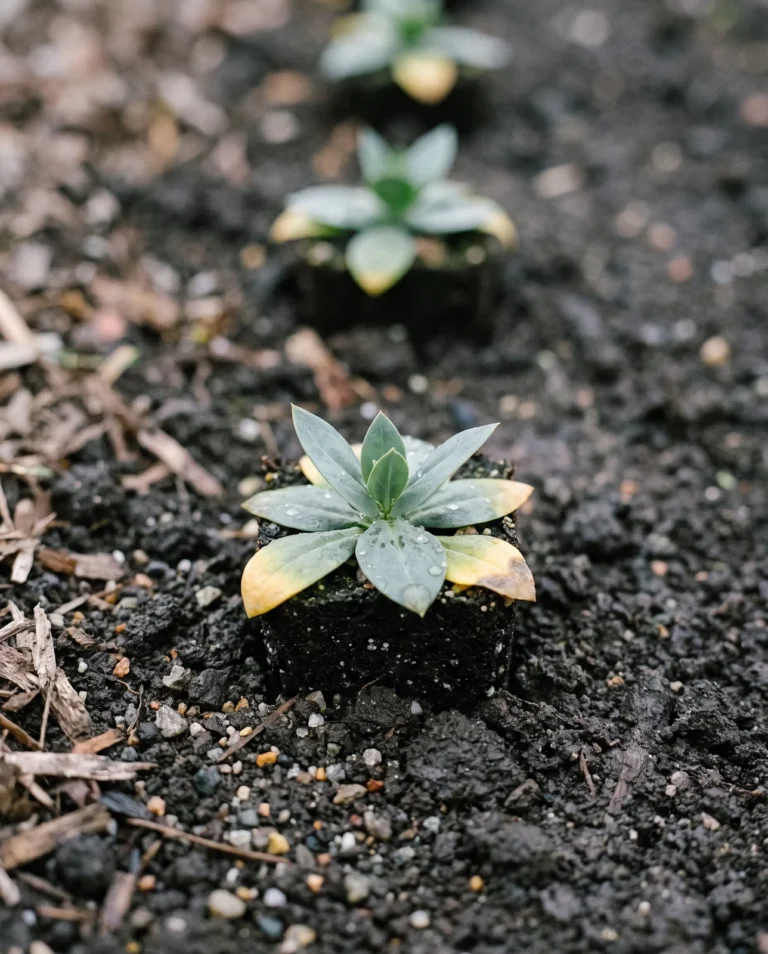
A plug that yellows within days of going out is a different case. Straight after transplanting, stunted growth and yellowing leaves mean transplant shock or ground that is still too cold, so harden seedlings off gradually and wait for warmer nights before setting them out. Telling the two apart is simple in practice. The water case starts at the bottom of a plant that has been growing for weeks. The cold case shows on a plant that has not grown at all since the day it went in.
Reading the symptom back to a cause
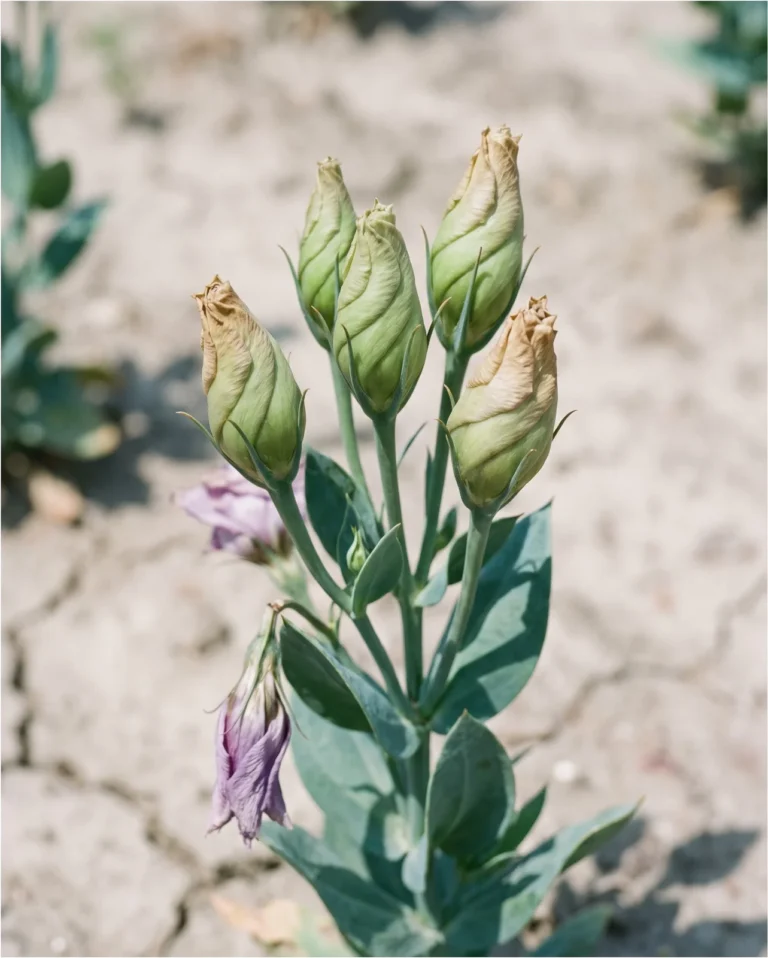
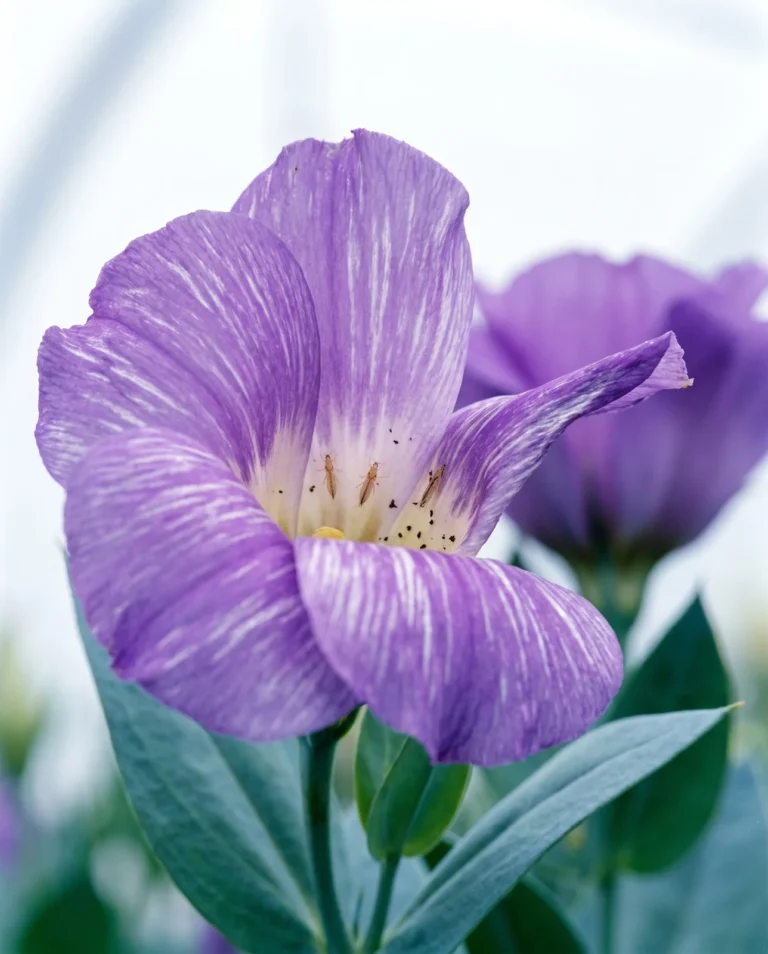
Each case has one visible tell, and most of them can be read without lifting the plant out of the ground.
Why it grows and does not flower
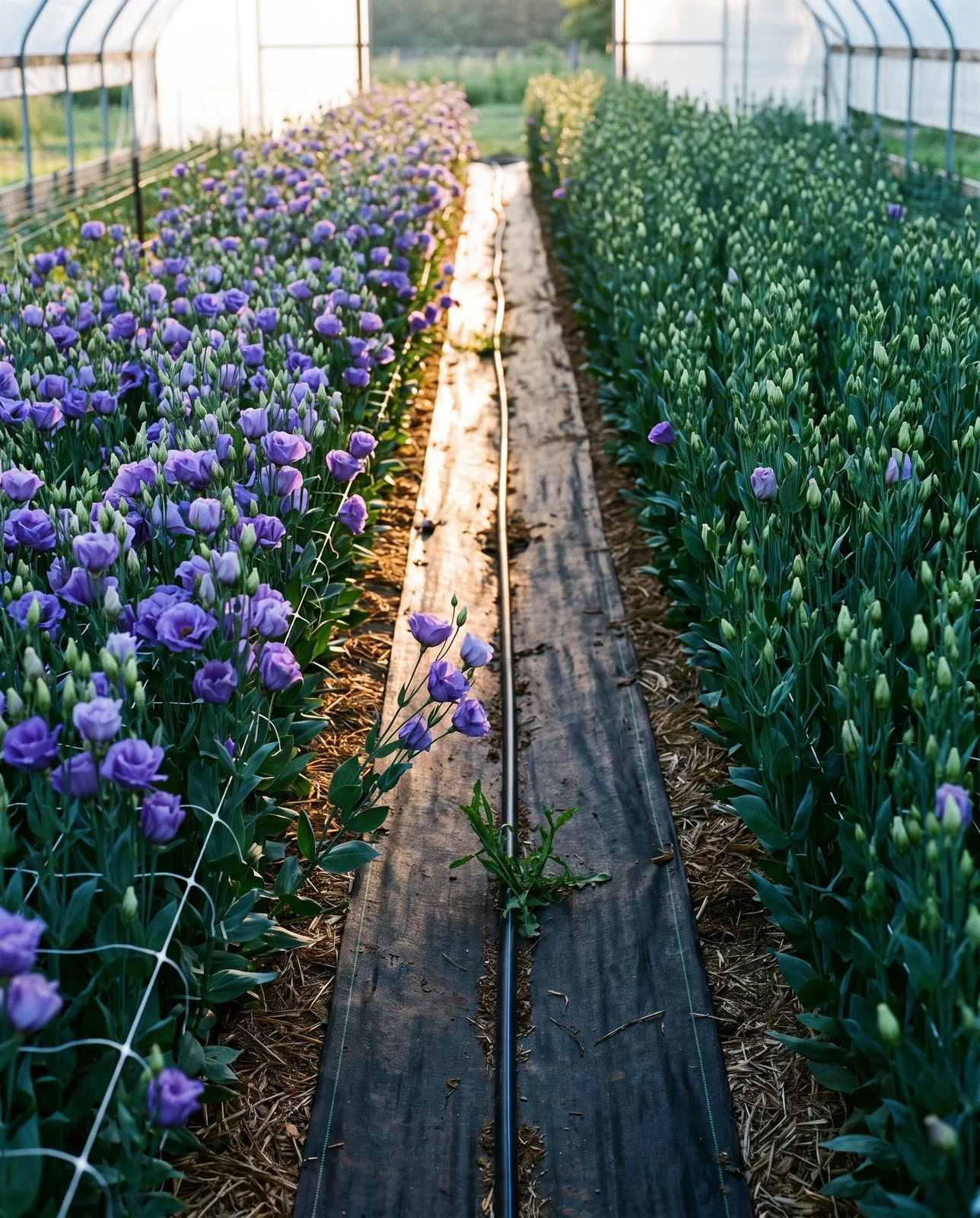
A lisianthus that grows well and never flowers is answering its conditions, and temperature is the first place to look. Buds set at 70 to 75 degrees Fahrenheit by day with nights around 60 to 65, and temperatures held above 85 or below 50 can prevent bud set entirely. Heat that arrives after the buds have formed does something else: they form and then fail to open, a failure known as bud blast. Day length is the other lever. The plant is a long day plant, and in short days it can keep growing and still refuse to bolt or set buds.
Two other cases look the same from a distance. A plant that never ran up a stem at all did not fail at flowering: it rosetted as a seedling, and that outcome was settled months earlier. A plant raised from seed the same season may simply be too young for the question, since the run from sowing to first bloom is measured in months.
What actually goes wrong, heaviest first
Four failures cost a crop more often than the rest, and each one has a step that answers it.
Symptom: seedlings still small when the planting season opens. Cause: a start date borrowed from the other annuals. In zone 5b lisianthus can already be too late to sow while other cool season flowers still have time, and in 6a the seed goes in the day it arrives. Fix: count back from your last frost date and give it the full indoor lead time.
Symptom: thrips inside open flowers, bad enough to make the blooms unsaleable. Fix: neem oil mixed with dish soap concentrate, sprayed only out of direct sun, has given some success.
Symptom: buds turning brown and dying without ever opening. Cause: a fungus, most likely botrytis. Fix: open the planting up and dry the air around it.
Symptom: a white coating on the leaves. Fix: fungicides and better air circulation.
The diseases named most often
Fusarium root rot is the disease named again and again, the primary disease problem in this crop and present at some level in most natural soils. It turns up almost everywhere, most growers meet it sooner or later, and the sign is plants that suddenly wilt or turn brown. Where the pathogen is known to be in the ground, drench the plugs before transplanting with a biofungicide such as Rootshield, Actinovate or PreFence, or with a fungicide. Then pull and destroy affected plants to slow the spread.
Botrytis, the gray mold, is the other recurring name and one of the most common lisianthus diseases, especially in greenhouses and high tunnels. The signs are gray fuzzy mold on stems or flowers, soft rotting tissue near the crown, buds that fail to open, and collapse in cool humid weather. Wet, stagnant air around crowded plants is what drives it, so the prevention is more spacing, no overhead watering, watering early in the day, and removing infected material at once. In a border the picture is calmer. NC State Extension reports no serious insect or disease problems, asks gardeners to look out for viruses and stem cankers, and notes that the plant is susceptible to a number of fungal diseases. Both readings are honest, and they describe different situations: a few plants in a bed, and a block grown for cut stems.
How long the cut stems last
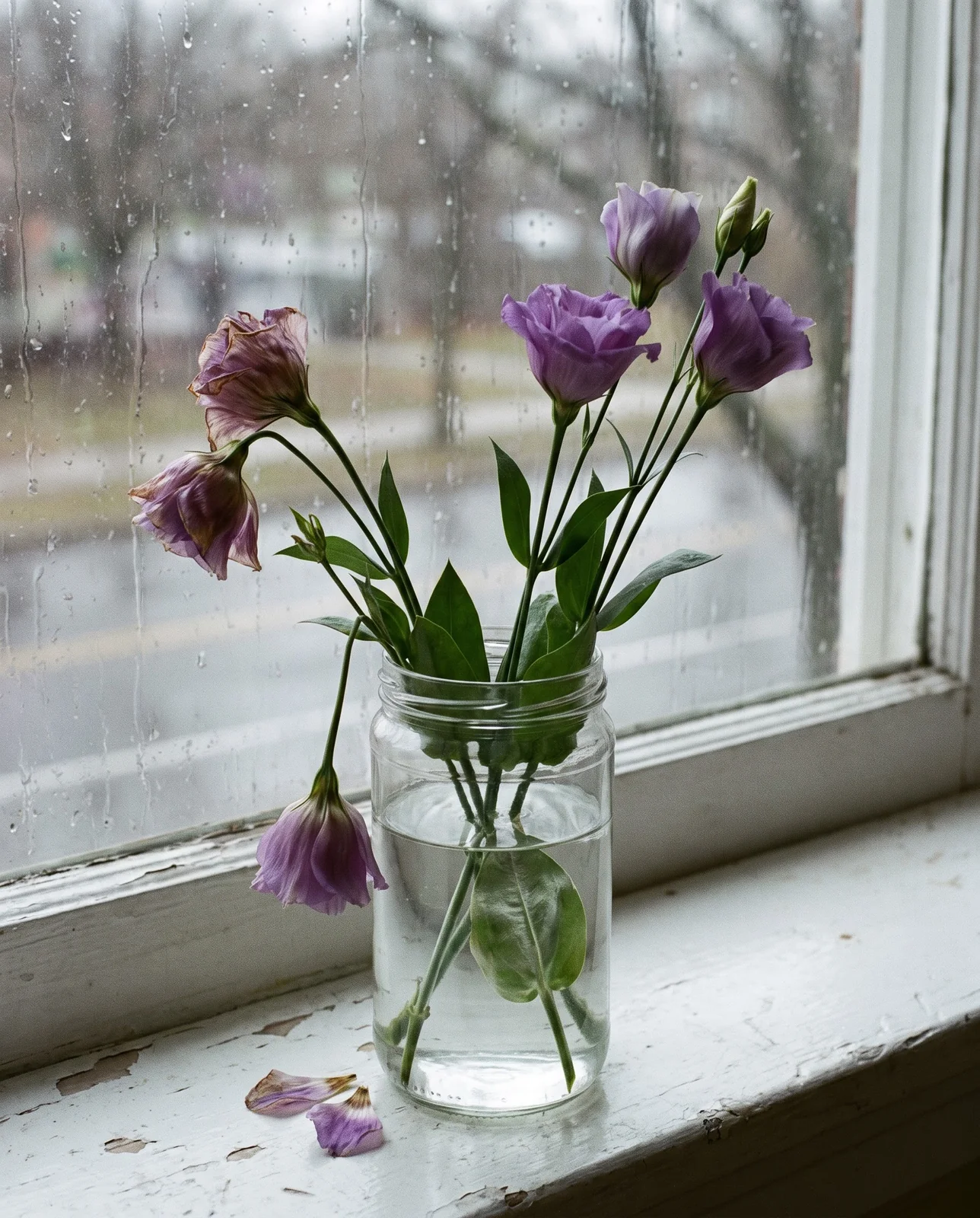
In a mixed bunch these stems stand beside alstroemeria and carnations, and how long they hold is the first thing anyone asks. The figures spread wide. Trade guides expect 14 to 21 days, stems held cold at 36 to 41 degrees Fahrenheit are given 10 to 15, and measurements across cultivars and growing methods ran 5 to 28. Flower food is the part a vase on a table can change, since a holding solution keeps bacterial levels low and feeds the buds still developing on the cut stem.
Whether it flowers again after cutting
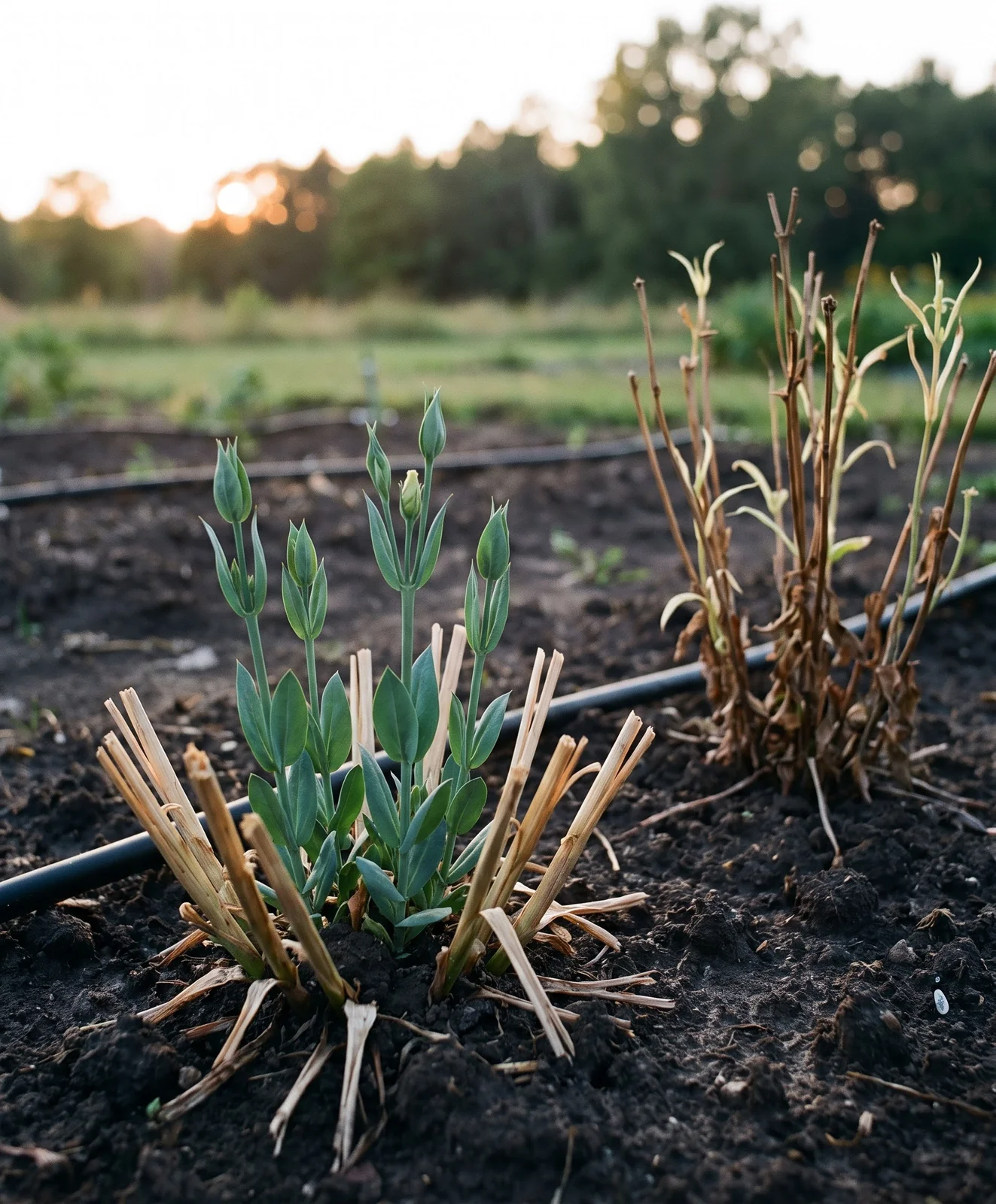
It can, when the season is long enough to allow it. In long summer places growers take two or three flushes from one crop, while northern growers may only expect one. How the first harvest is made decides whether there is a second at all. Cut that first flush back almost to the base, since stumps of stem left standing give weak secondary growth. Leave a couple of pairs of leaves, then feed and water well straight afterward. The rest is arithmetic on the calendar: a second flush comes only if the season is long enough for it, so the wait is measured by how much summer is left.
Saving seed from your own plants
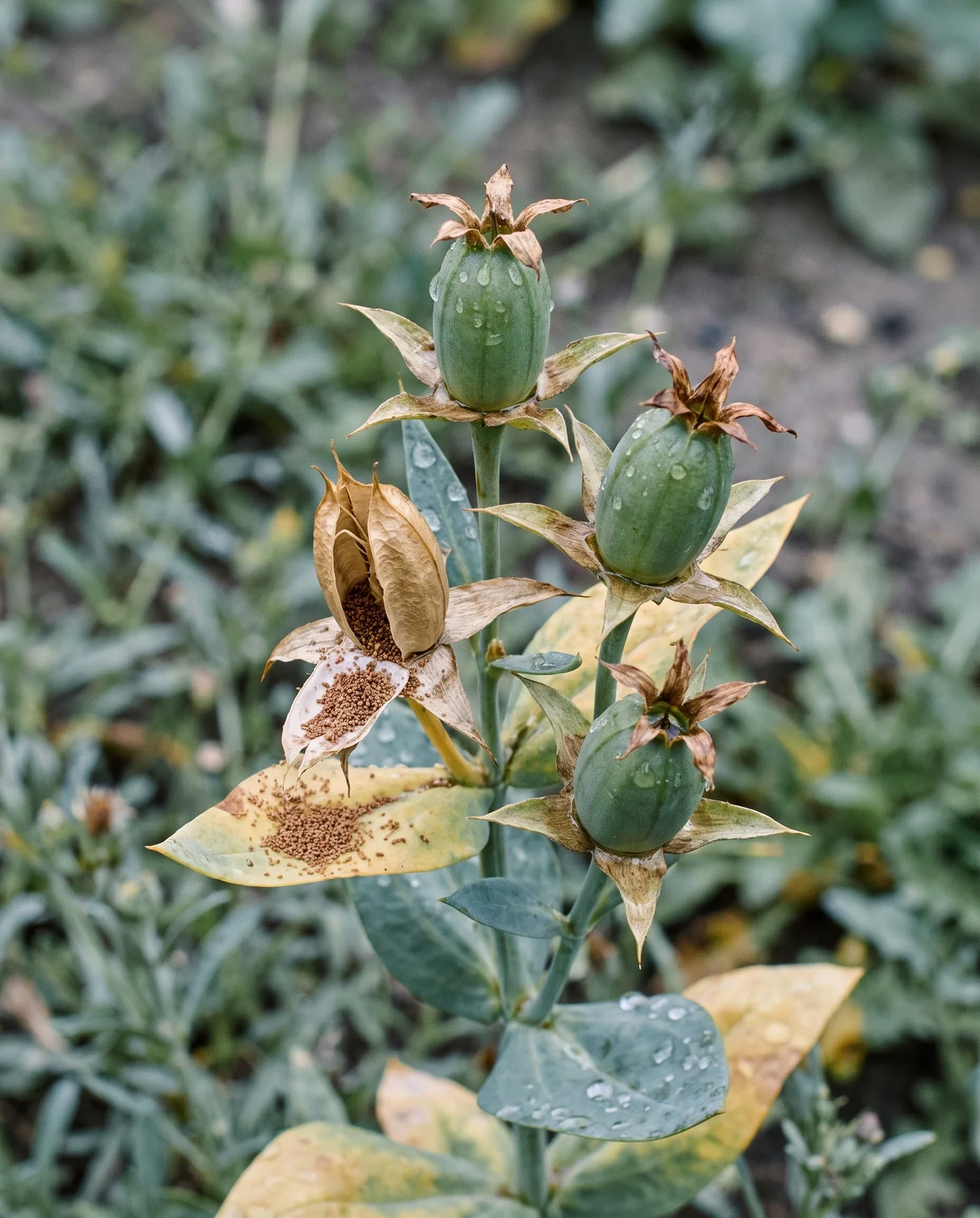
Seed pods form once the flowers are pollinated, and a green pod is not a ripe one: pods take 10 to 12 weeks to mature and stay on the plant to do it. That number is what makes seed saving awkward in a short season. Pods only ripen on stems left standing, and those are the same stems cut back almost to the base to bring on a second flush. One bed cannot do both jobs at once, so the choice between a second cut and a seed crop is made at the first harvest.
The varieties with something behind the name
These five carry something firmer than a photograph: a bloom date, a measured vase life, or a size a shopper picks on.
Growing it in a pot
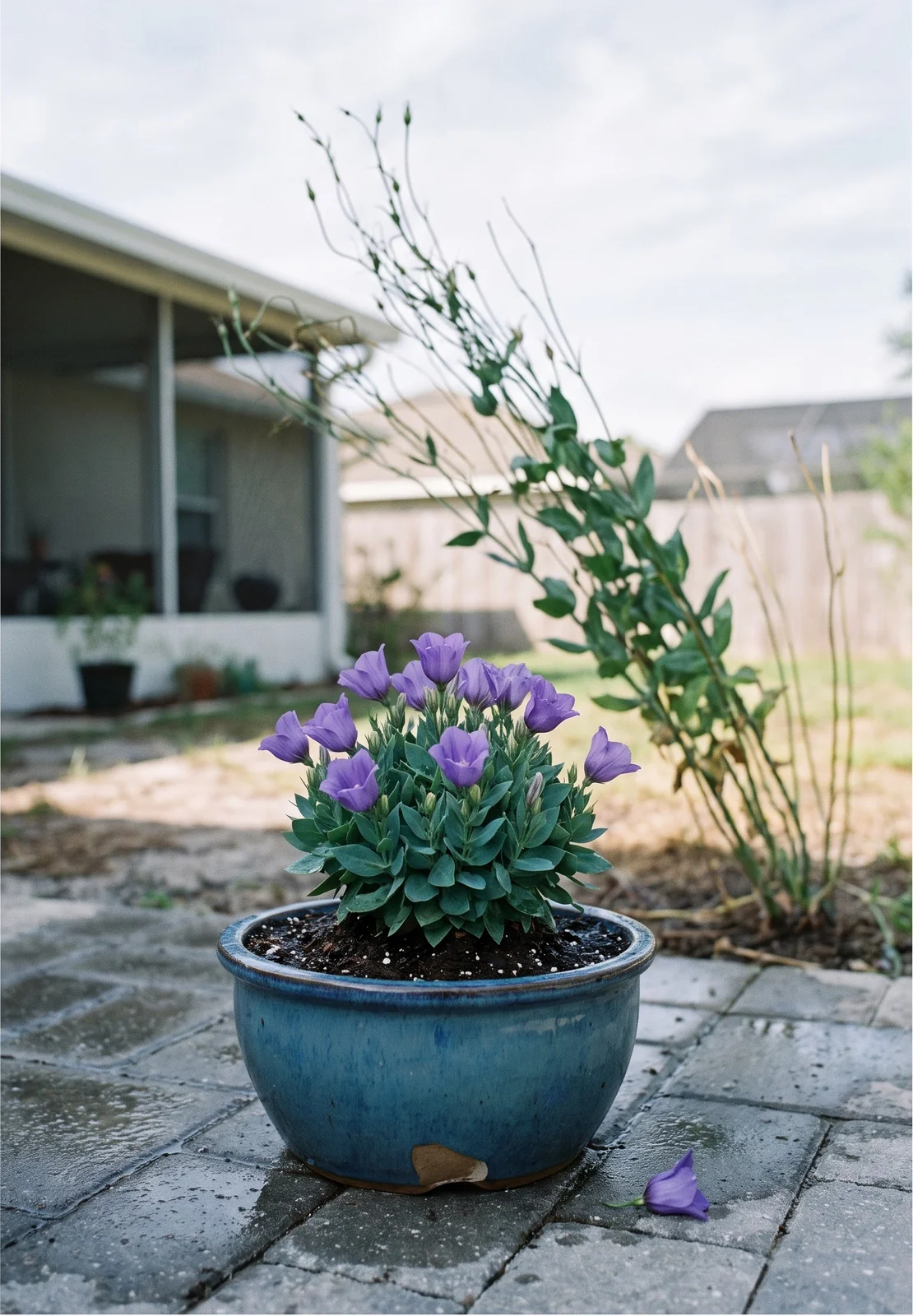
Containers are the dwarf varieties' job. The dwarfs are the ones that suit a pot, on a patio or a deck, or indoors as a houseplant. A pot changes nothing about what the plant wants. The sharp drainage and the even moisture a garden bed would give it have to come out of the mix and out of a container that empties freely after every watering.
Why it costs what it costs
The price follows greenhouse time. Getting seed to a plantable plug takes perfect conditions every day for about 12 weeks, and that work is done to order by specialists. One Pennsylvania flower farm orders about 1500 to 2000 plugs a season. Nothing in the sequence can be hurried, and a stem on a counter or a started plant in a pot carries the whole of it.
Three claims that keep circulating
Three claims follow this flower around, and each one has an answer.
The myth: A newly planted lisianthus needs a frost cover
The reality: It does not. A young plant in the ground is pretty cold hardy, and it comes through better uncovered than under a frost cover.
The myth: Feed it harder and it will flower
The reality: Too much nitrogen is a cause of no blooms: nitrogen drives leafy growth, while phosphorus and potassium drive flowering.
The myth: It can only be started from seed
The reality: Cuttings root. Prunings from greenhouse plants put into a tray have rooted successfully, though a short growing season may not leave them time to flower.
FAQ
Why are my lisianthus leaves turning yellow?
Water first: overwatering is a common hidden cause, and after that a plug set out into ground that is still too cold. Yellowing that comes with stalled growth, wilting in moist soil and roots that lift brown or mushy is root rot.
How long do cut lisianthus last in a vase?
Commonly up to 14 days or more, though measured vase life runs from 5 to 28 days depending on the cultivar and the way the plants were grown.
Do lisianthus rebloom after cutting?
In a long enough season, yes: two or three flushes in long summers, often only one in the north. The first cut has to go almost to the base, since stumps left standing give weak secondary growth.
What month does lisianthus bloom?
Summer. The earliest group begins flowering in late June from a February sowing.
Why is lisianthus so expensive?
Time. The run from sowing to first bloom is 18 to 22 weeks, and the seed is among the hardest to germinate of any commercial flower. That is why the crop is raised by specialists and bought in as started plants.
Is lisianthus toxic to cats and dogs?
The poison control plant lists carry no entry for it under lisianthus, Eustoma, prairie gentian, Texas bluebell or bluebell gentian. Those lists are not all inclusive, and eating any plant material can cause vomiting and stomach upset in a cat or a dog, so caution is the safer reading.
How far apart should lisianthus be planted?
Field growers plant tighter than a border does: about 8 plants per square foot, and as close as 3 inches on center in a plastic mulch system. Both figures come from production beds.
Do lisianthus come back every year?
Not in a cold garden. Cold winters kill the root systems, so nothing regrows in spring. In mild winters it can act as a short lived perennial and return for several seasons.
When do you plant lisianthus seeds?
Indoors, 10 to 12 weeks before the last frost. Plants go out into the ground 2 to 4 weeks before the last frost date, or 4 to 6 weeks before it under a tunnel.
Interesting tips
- The long vase lives measured in research come from conditions a kitchen does not have. A 15.29 day mean belonged to plants grown hydroponically with a salicylic acid treatment before harvest. The strongest postharvest result on one cultivar came from 60 grams per liter of sucrose combined with citric acid.
- The pest list stays short and predictable: aphids, leaf miners, thrips and whiteflies are the most common, with crop rotation to keep pathogens from building up in the soil.
Related Guides & Flowers
Ranunculus
The other many petalled flower that turns up in the same mixed bunch, grown from corms and on a spring schedule of its own.
Snapdragon
Named by a grower in a timing thread as one of the cool season flowers to start when lisianthus is already too late.
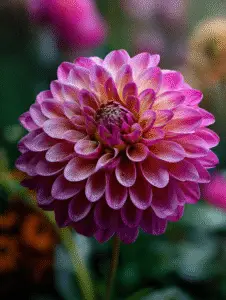
Dahlia
The summer cutting garden staple that fills the same beds, with tubers to lift in autumn and no seed tray to nurse.
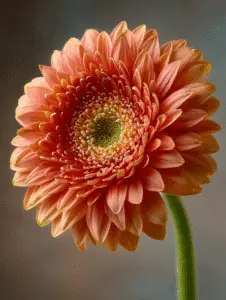
Gerbera daisy
Another florist counter flower most people meet as a cut stem long before they meet the plant.
Enjoying our flower guides? Add YourFlowersGuide as a preferred source on Google. It helps more readers find us.
Add to Preferred Sources