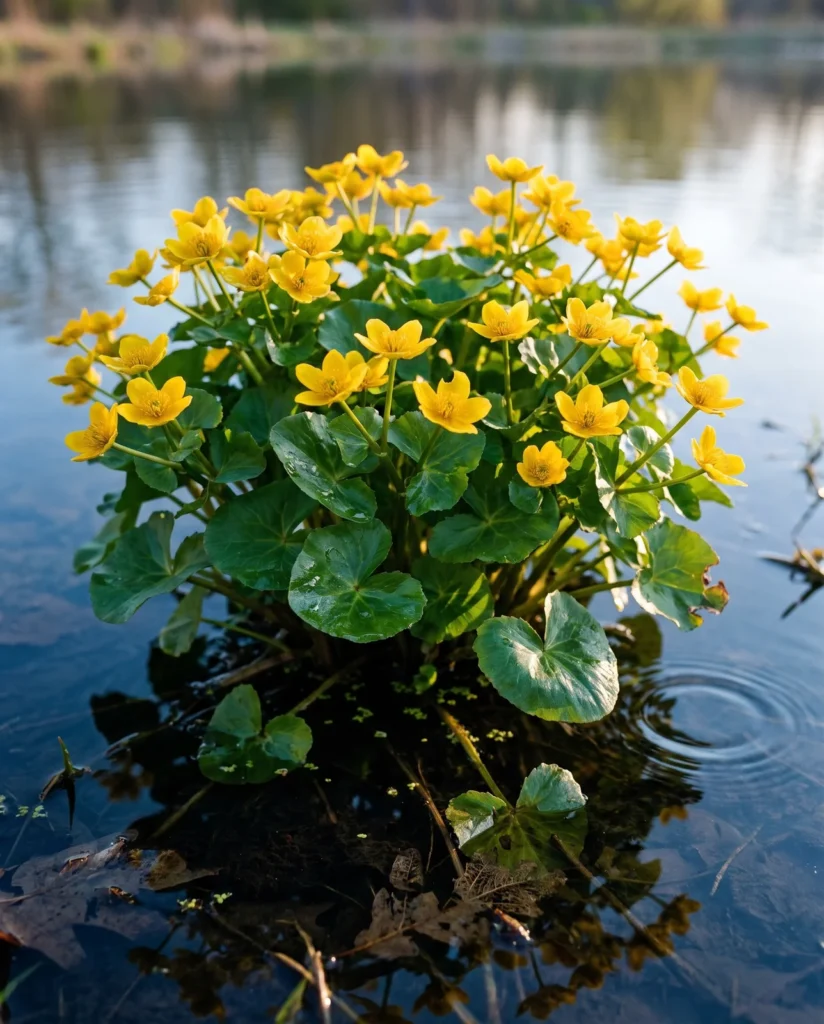
Marsh marigold is not a marigold
Marsh marigold belongs to the buttercup family, Ranunculaceae, and is not related to any plant sold as a marigold. The French and African marigolds of every garden center, and the pot marigold of the herb catalogs, are asters. The common name describes the wet ground this plant grows in and nothing else about it. Its older American names carry none of the confusion: cowslip, cowflock and kingcup. What you get is a mound of glossy foliage under buttercup yellow flowers.
The mix up costs people plants. Care advice for a marigold with yellow leaves and no flowers is meant for the bedding annual, and its standard fix is more sun, which on a bog plant moves the trouble in the wrong direction. Anyone who wanted the annual with the pungent foliage wants marigolds, a dry soil plant whose requirements run opposite to this one at almost every point. The second mix up happens in the field, with the plant in front of you, and the two candidates are wild calla and lesser celandine. The second of those is weedy.
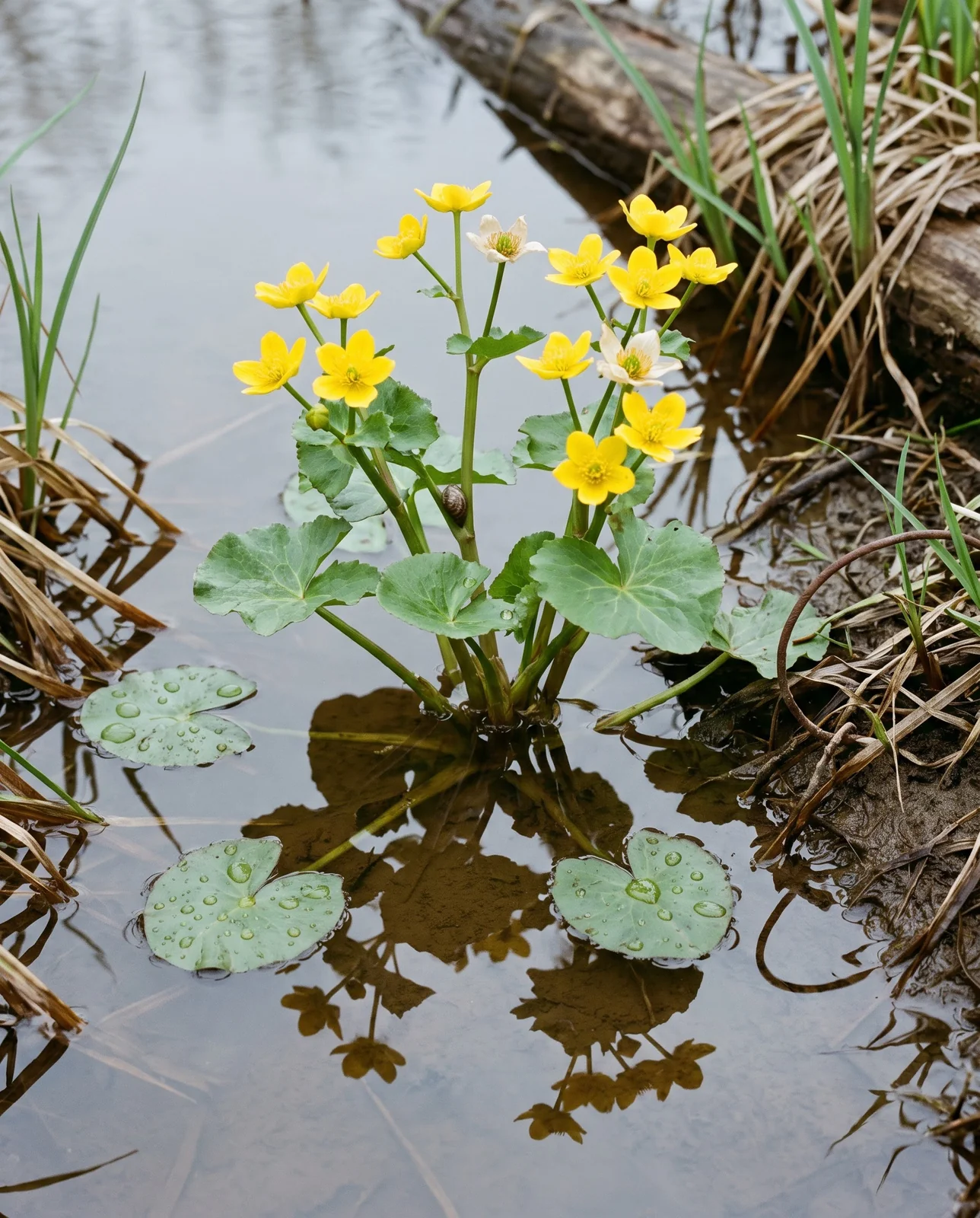
Telling it from lesser celandine and the buttercups
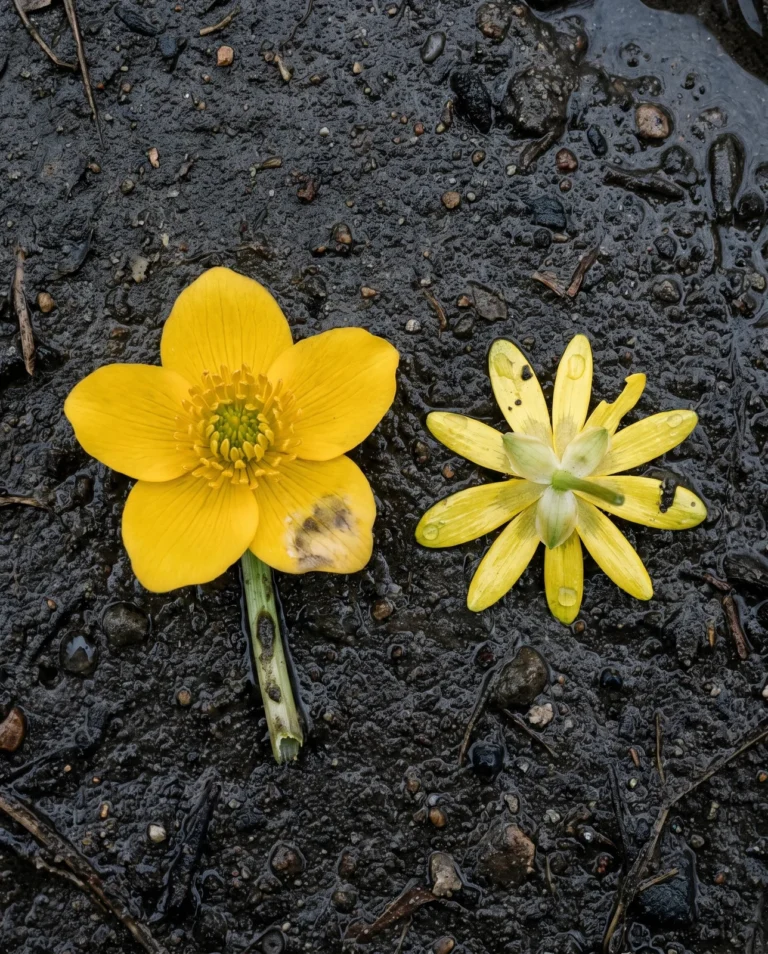
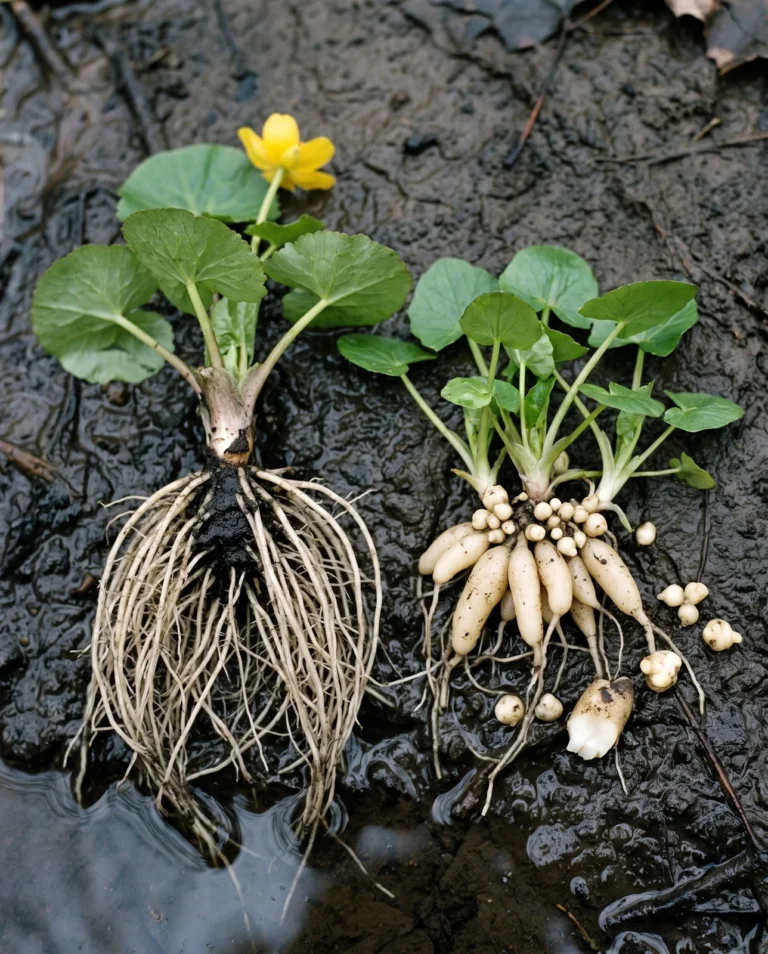
One of these two plants is a native wetland perennial, and the other is prohibited in Wisconsin and banned from sale in Ohio. Three checks separate them, and each one works with the plant in hand.
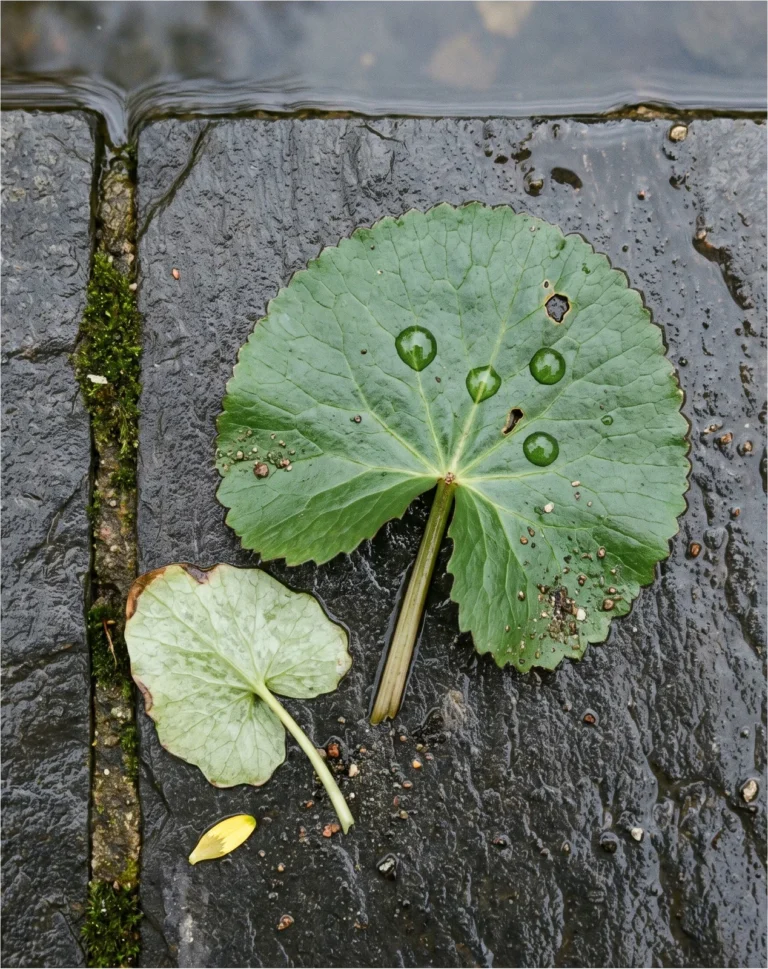
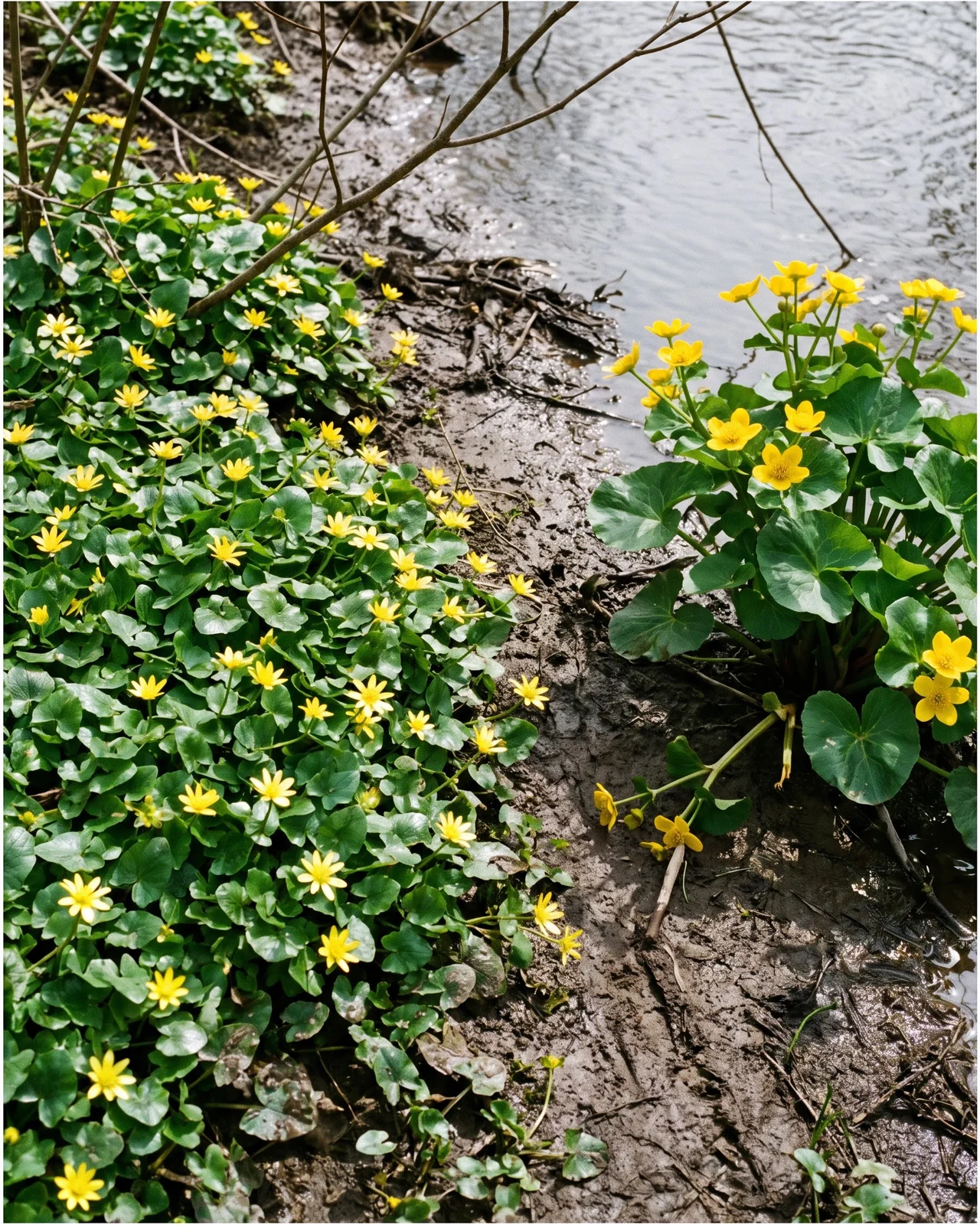
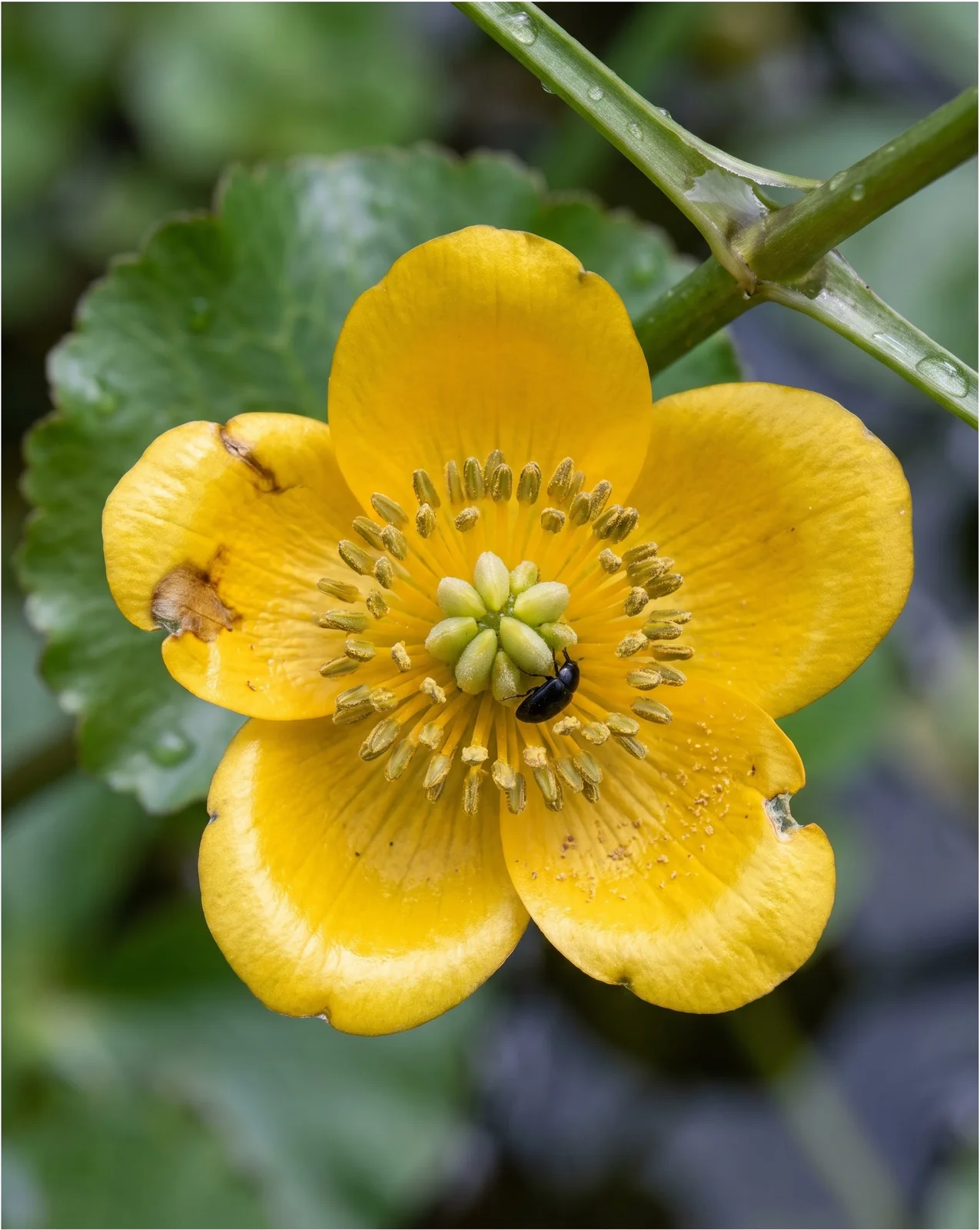
What marsh marigold looks like
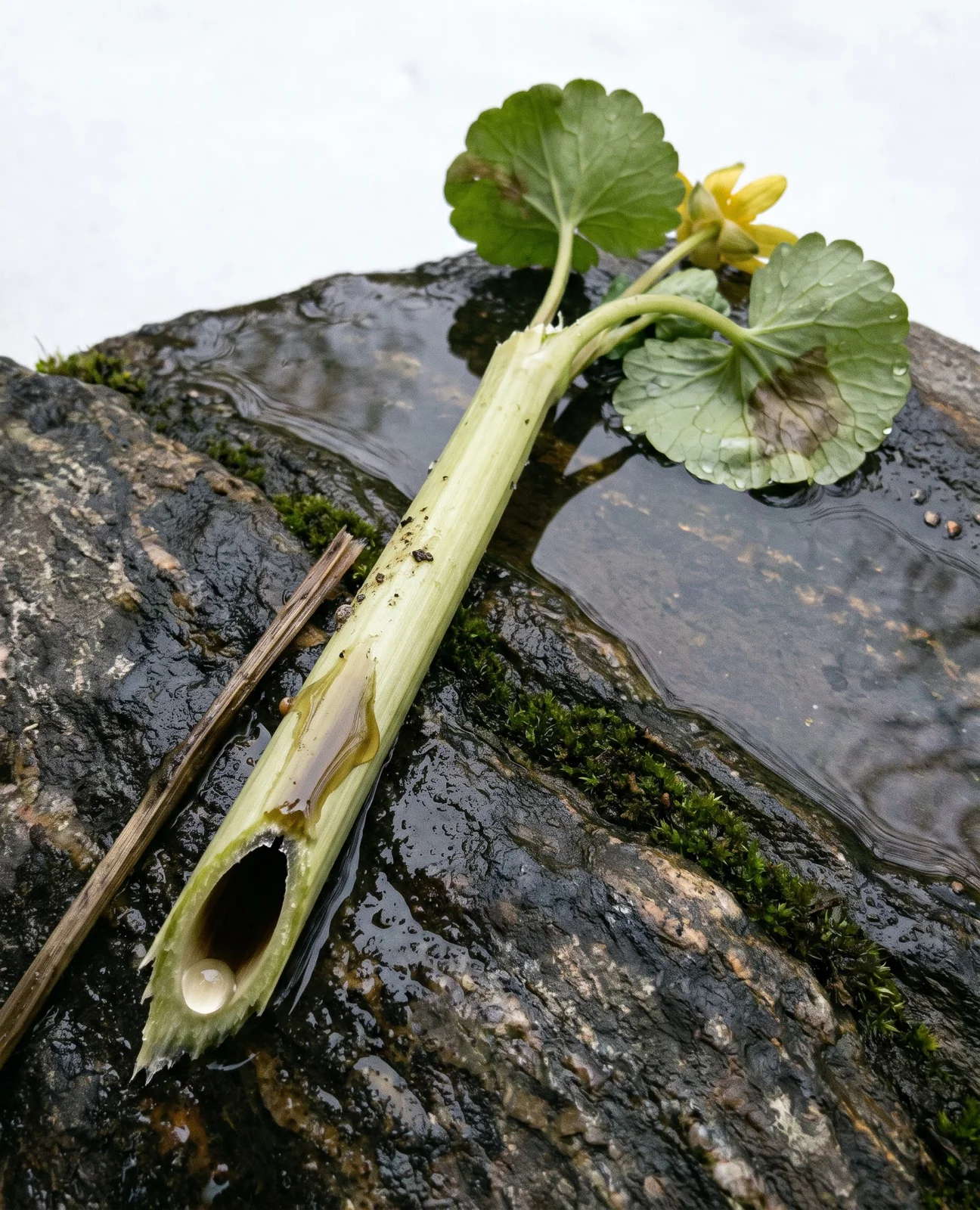
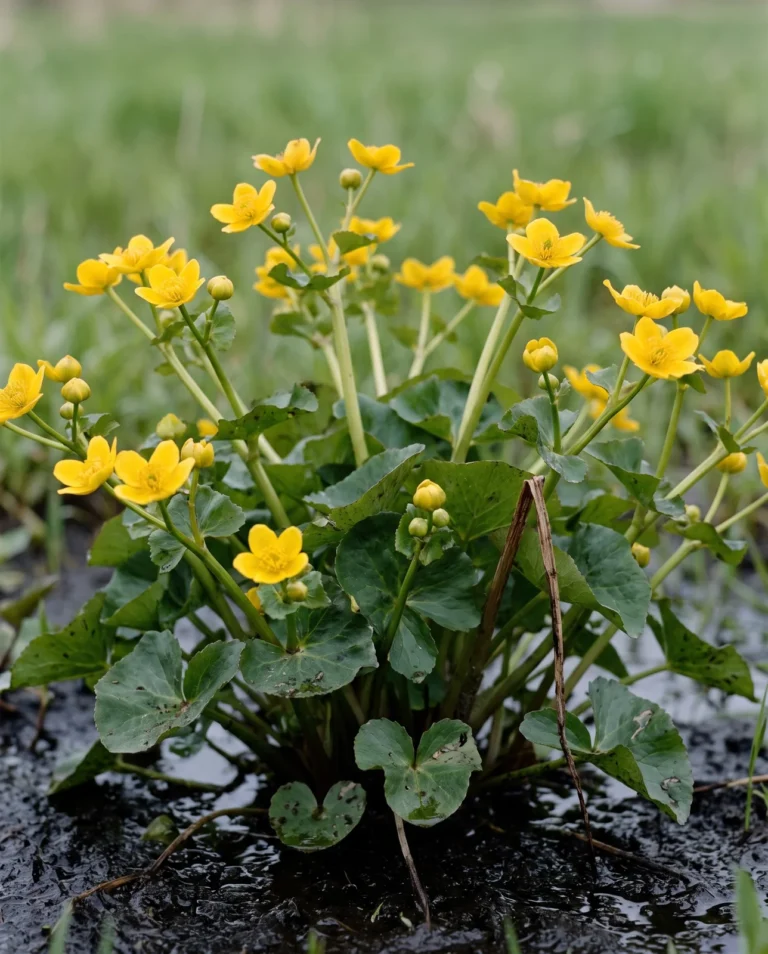
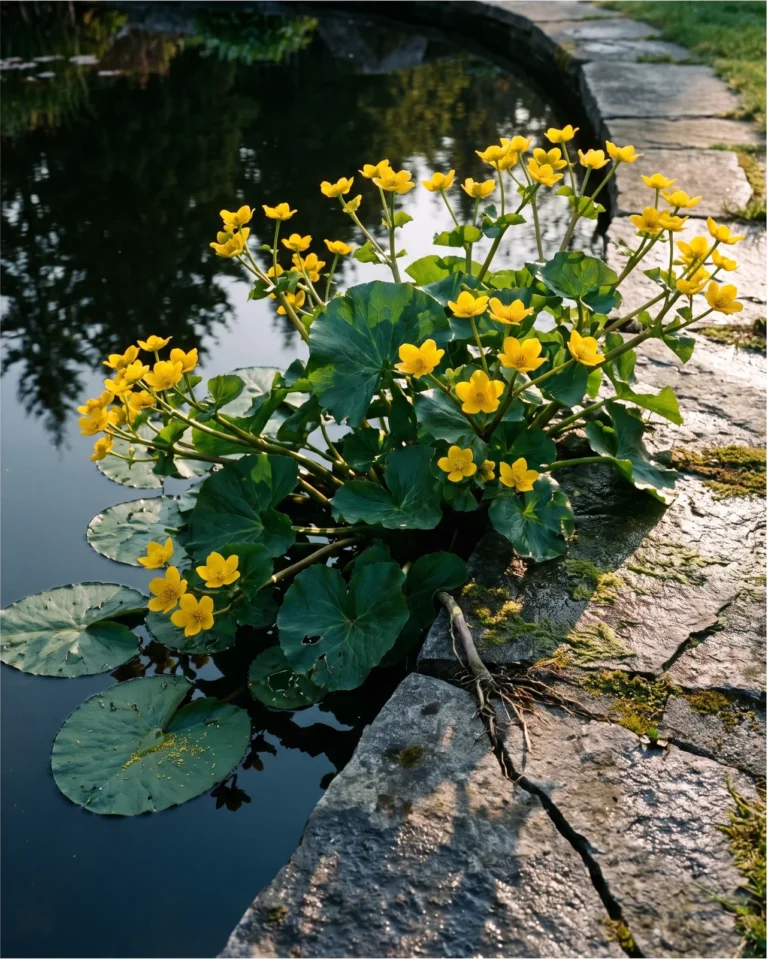
The flower is a waxy deep yellow cup 1 to 2 inches across, and what look like petals are sepals, 5 to 9 of them, thick and glossy. Bloom runs April to June depending on the region. Each flower stands singly on a hairless, hollow stem, over a center packed with yellow stamens. Carry the sepal count in your head. It is the simplest test that separates this plant from the look alike flowering beside it.
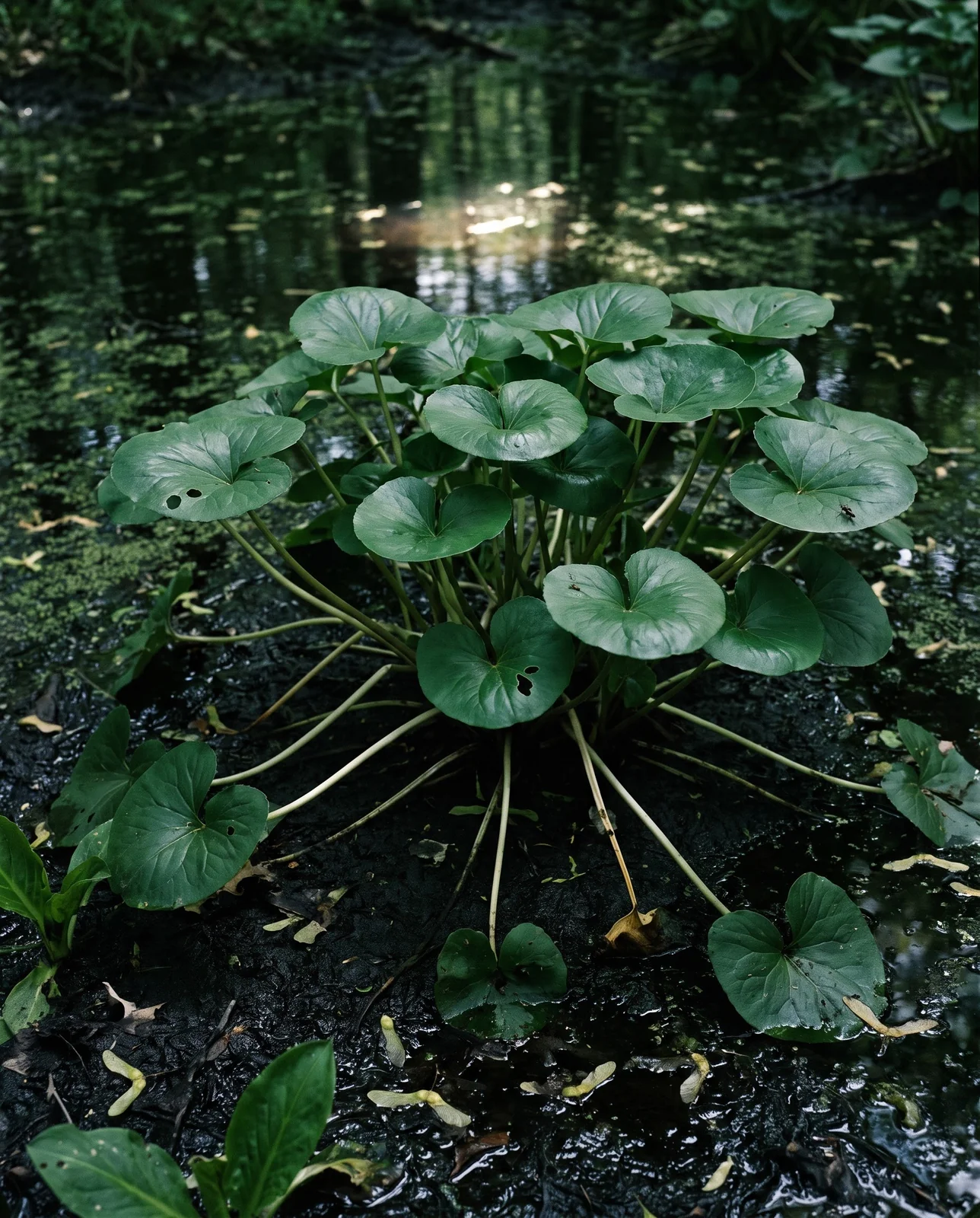
The leaves do the rest of the identification. They are long stalked, round to heart shaped with a deep notch where the stalk joins, scalloped and toothed along the edge, hairless, and dark enough to look lacquered. They reach 3 to 6 inches long and about as wide, and the basal ones can run to around 7 inches across. They keep growing after the flowers are gone and only reach full size in summer.
Where marsh marigold actually grows
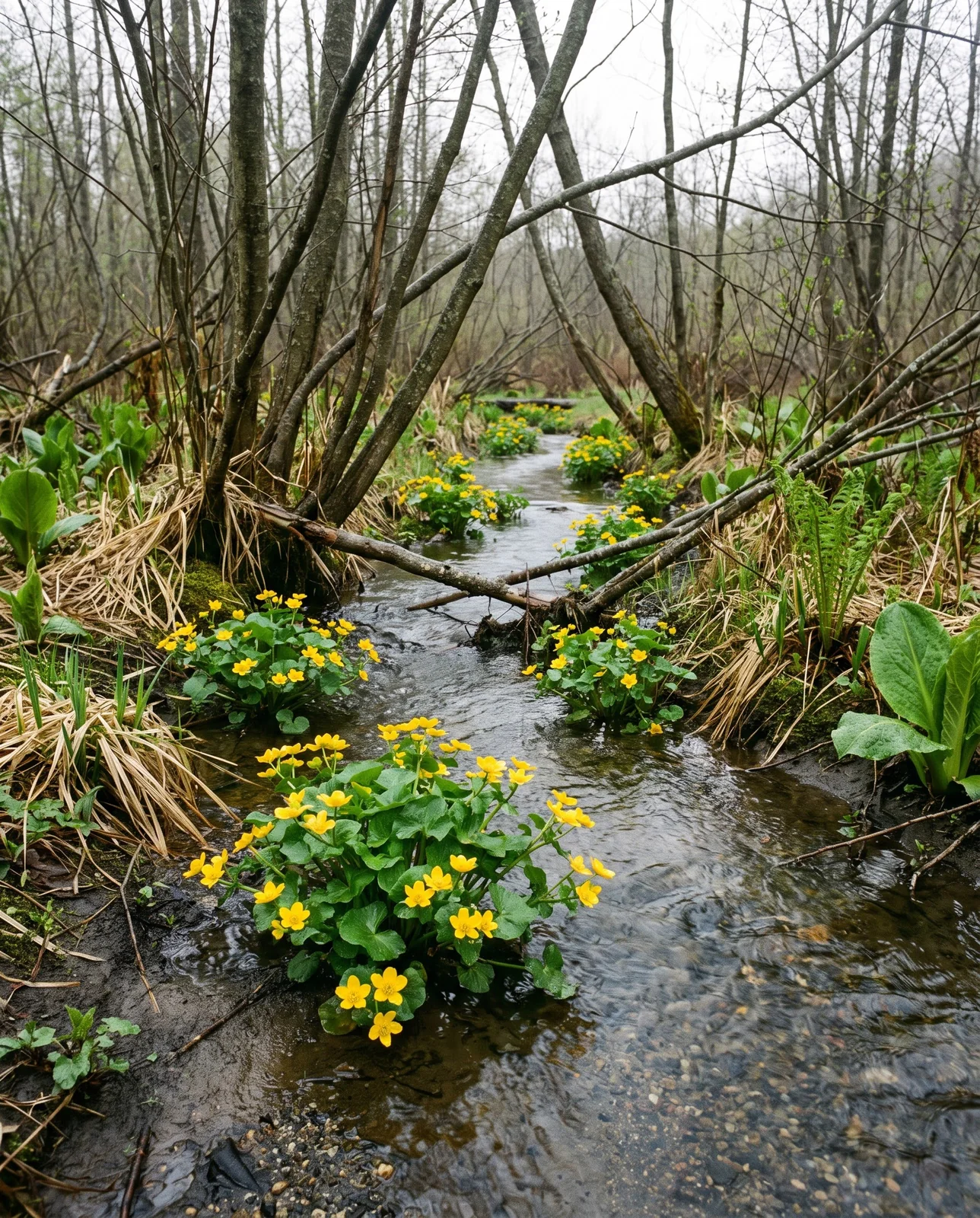
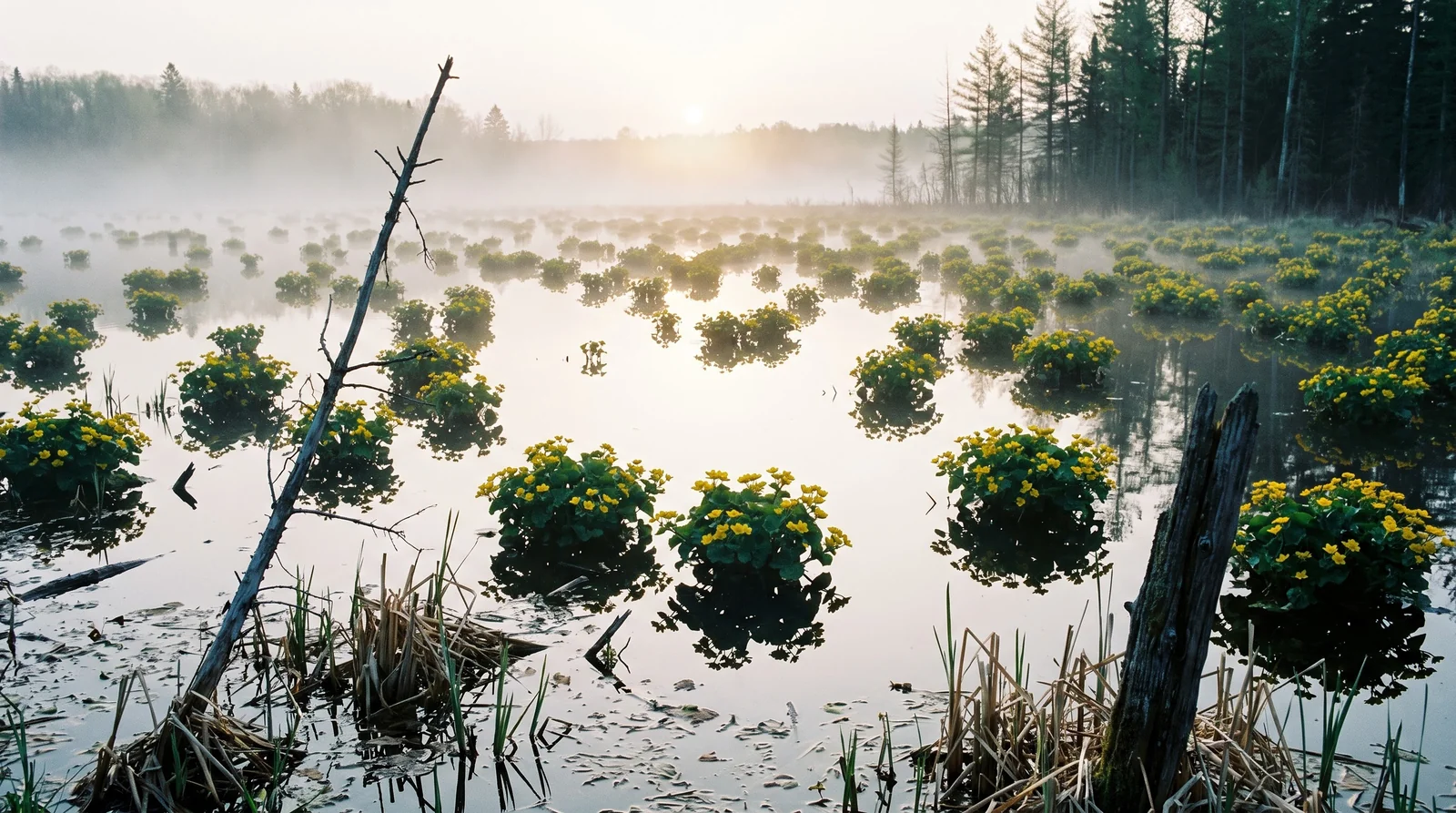
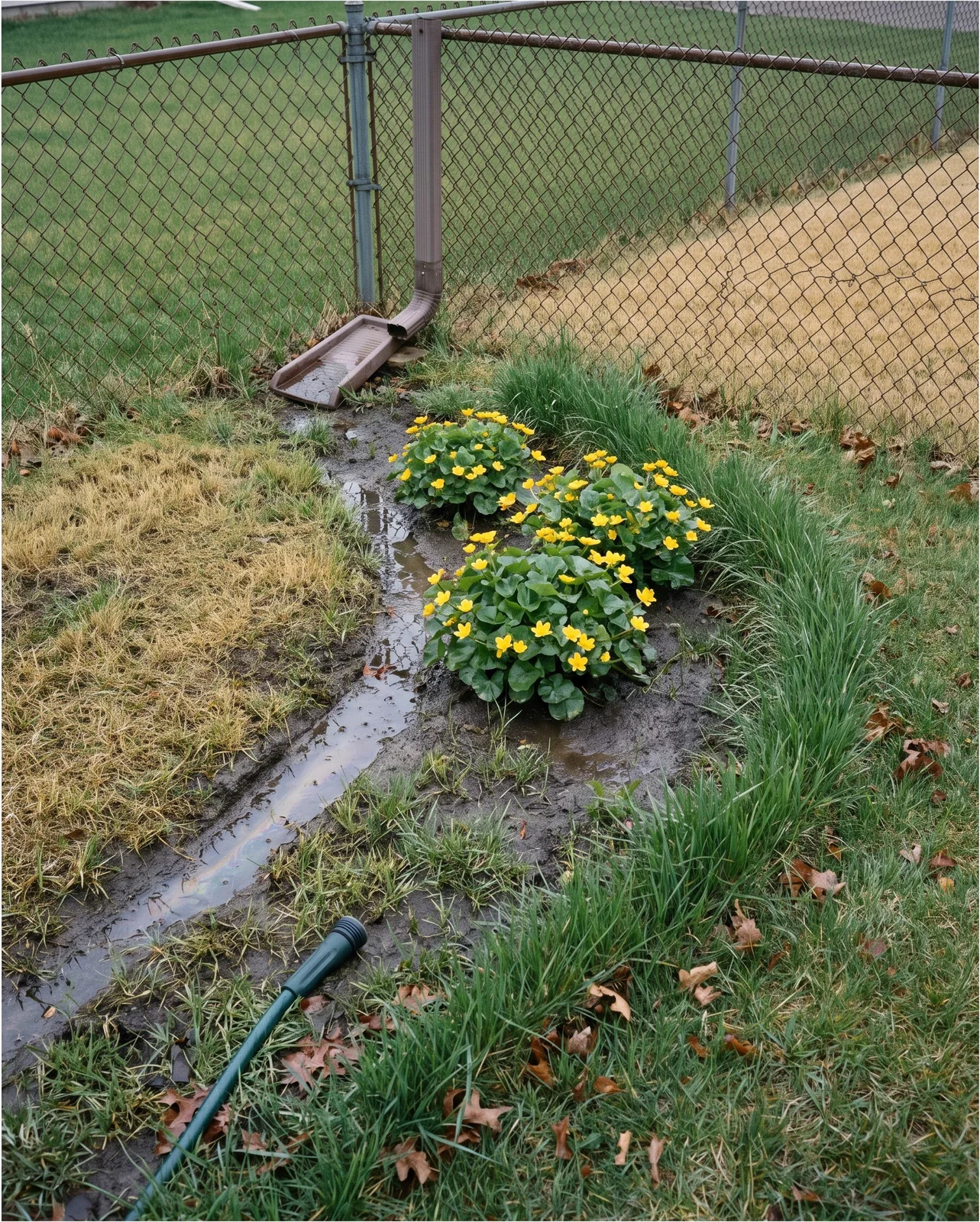
Wet ground, all year, is the whole requirement. In the wild it fills marshes, swamps, wet meadows and stream margins from Newfoundland to Alaska and south to Nebraska, Tennessee and North Carolina. The same habitats repeat across the temperate northern hemisphere: fens, ditches, wet woodland. It is native to most of the United States, and especially to the north. The drainage it takes is nothing like an ordinary perennial's: frequent standing water, moist, occasionally wet. Plant it at a pond edge, in a rain garden or in boggy ground, set either in shallow water at the margin or in wet, boggy soil.
It is a marginal plant, at home in the shallows and along the edge, on the shelf inside the bank where a water lily would be rooted further out in deeper water. Below the surface it wants oxygen rich water close to the soil. Two dislikes are worth naming, because both are routine practice elsewhere in a garden: it dislikes fertilizer, and it avoids high phosphate, ammonium and brackish water. A pond edge or a rain garden supplies what it needs without anyone managing it.
Sun or shade
Both, and summer heat decides which. Flowering is best in full sun, and the plant takes anything from six or more hours of direct light down to two. The catch is unusual for a perennial: full sun in summer may force it into dormancy, and afternoon shade corrects that. In a hot summer climate such as St. Louis, plants sited in full sun may go dormant, and some part shade through the heat is what is advised there. It will take hotter climates as long as the soil is kept consistently moist, and it does well in partial shade.
The cold end is easy; summer heat sets the limit
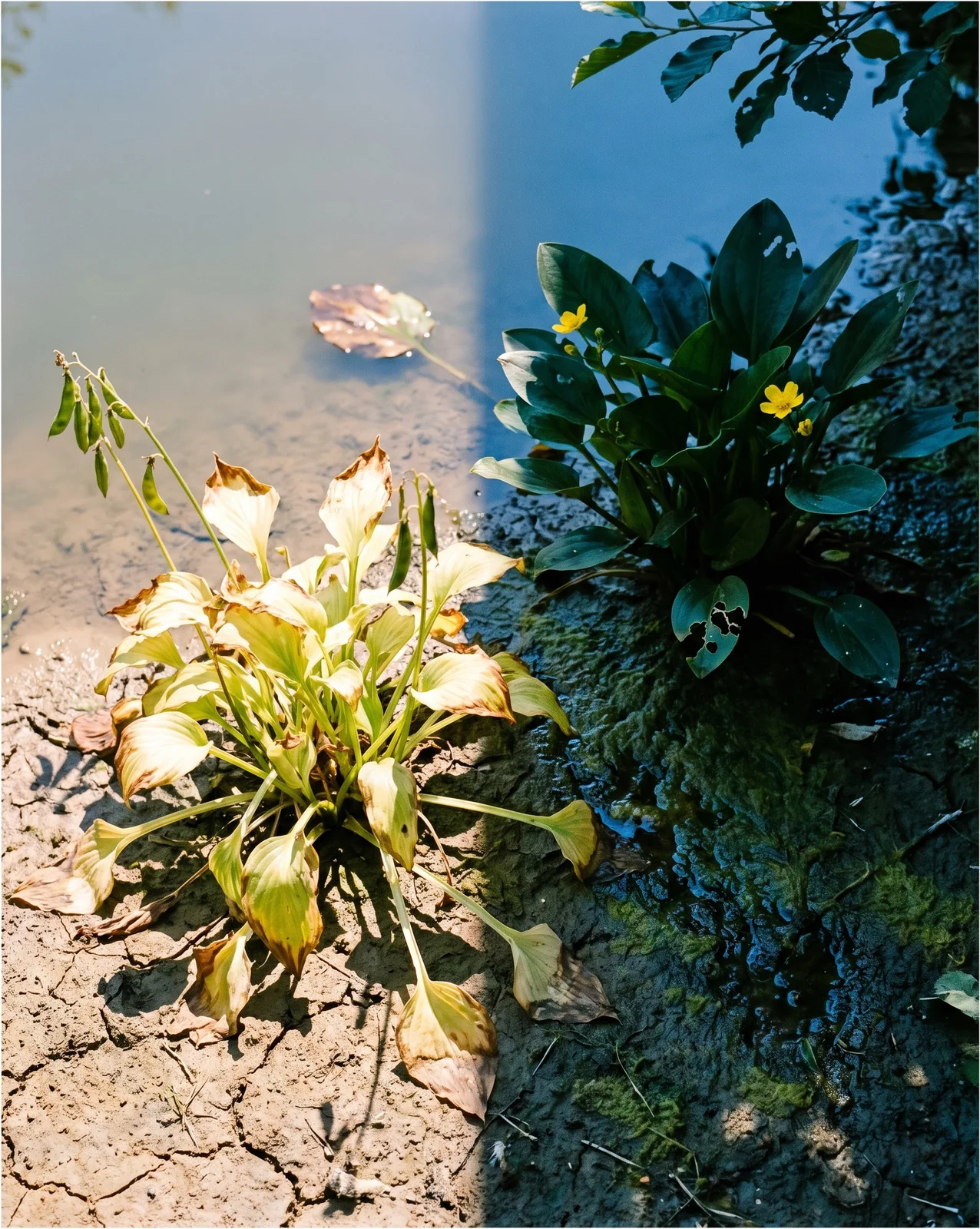
Marsh marigold is hardy through zones 3 to 7, and it has been grown as cold as zone 2. Zone 8 appears at the warm end. The disagreement there is about summer, since the climates that reach zone 8 are the ones where a plant in full sun may go dormant by midsummer. It does take hotter ground, but only where the soil stays consistently moist. A growing season around 65 to 75 degrees suits it.
Planting marsh marigold, and growing it from seed
A bought plant and a packet of seed are two different projects on two different clocks. Set a potted plant out in early spring, in March or April. Division is the other quick route: lift the rhizomes in fall and replant them in early spring. Division and seed are the only two propagation methods for the species. Whatever goes in, the ground has to stay wet from the day it is planted, because the plant needs consistently moist soil and tends to dry out and turn brown without it.
Seed has one step that cannot be skipped, and that step is cold. Germination is best after 60 to 90 days of cold, moist stratification, and 60 days of cold treatment is the standard for the species. The simplest way to serve that is to sow in late fall, scattering seed on bare ground in October or November so it overwinters where it is meant to grow. Dryness works against it at every stage: the seed does not tolerate dry conditions, stored dry seed germinates poorly, and seed keeps at 33 to 38 degrees in cold storage. Even handled properly, the species may be difficult or slow to germinate and to reach maturity. Then comes the wait, because 4 to 5 years pass before a seed grown plant is large enough to bloom. A potted plant or a division starts from a crown that has already done that growing. An established clump sows itself, since the seed pods split open when ripe and spill their seed.
Yellow leaves in July are usually summer dormancy
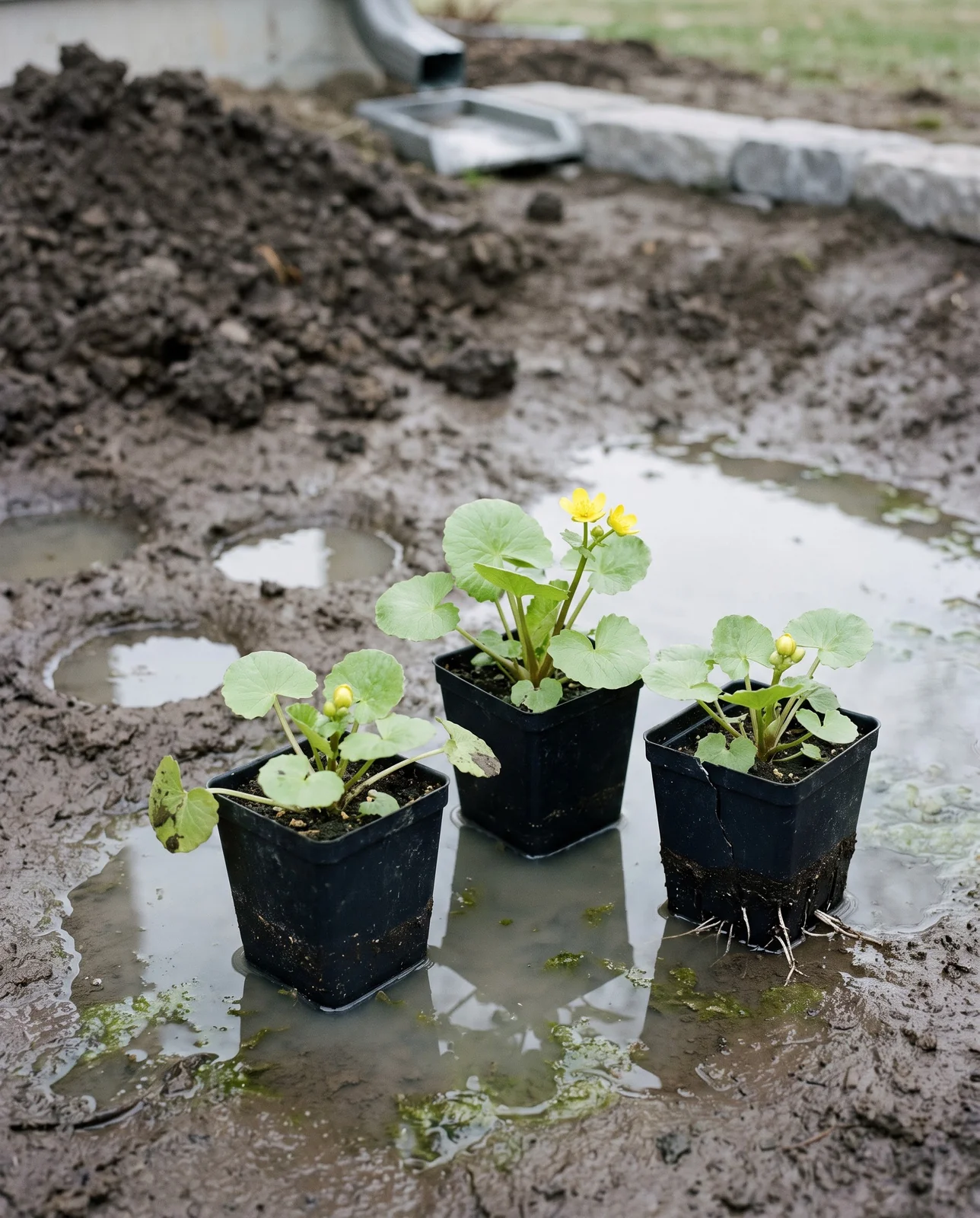
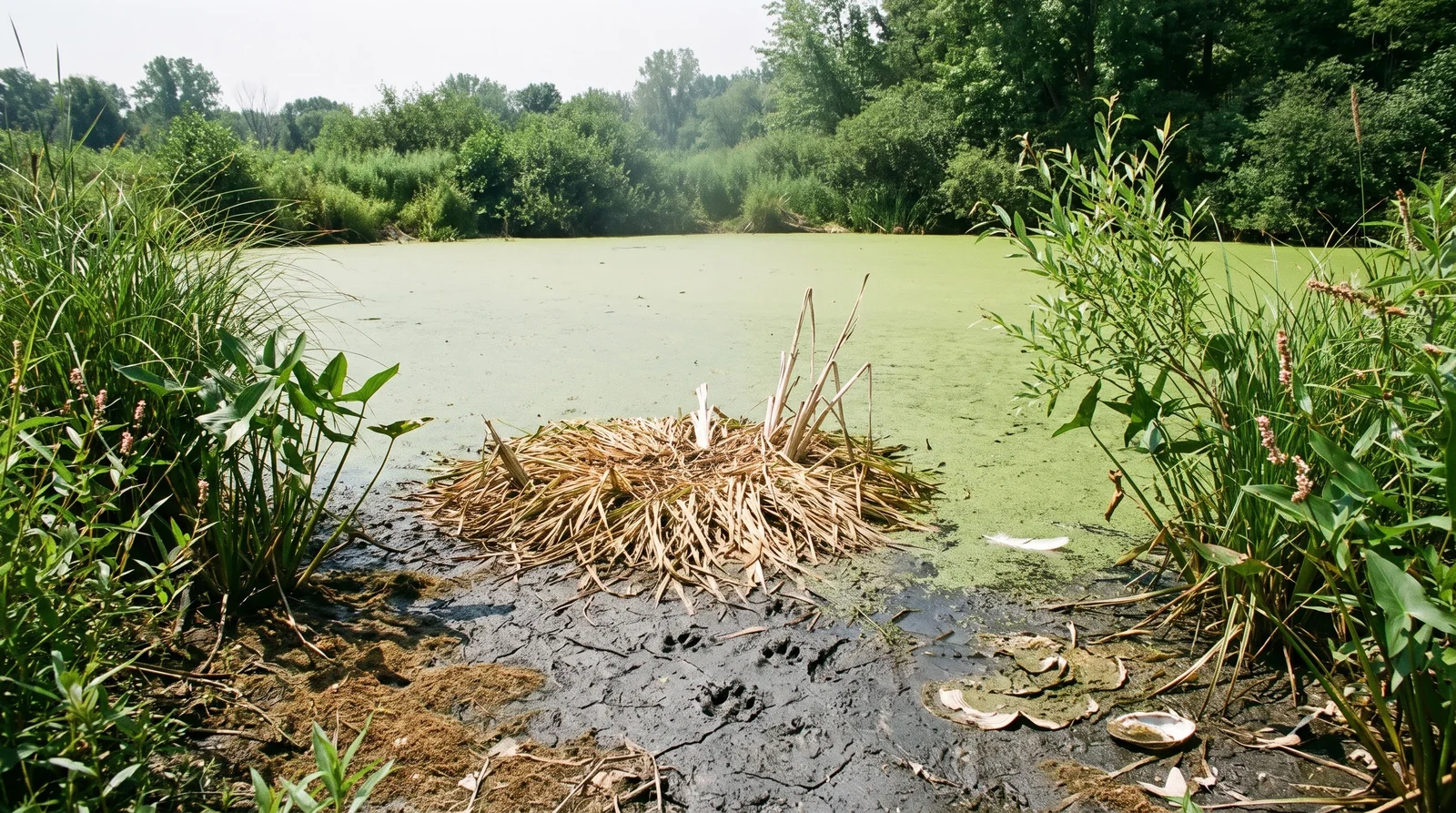
A clump that yellows and collapses after flowering is usually running on schedule. Siting explains most of it, because in a hot summer climate plants in full sun may go dormant, and full summer sun may force dormancy even where the plant is otherwise well placed. Dry ground does the same, and the plant may go dormant if the soil dries out completely or gets too hot. The timing fits its year. It flowers in spring, the leaves reach full size in summer well after flowering, and only then does the top growth go. Summer dormancy is not a dead plant.
The version worth acting on looks the same from above and has a different cause underneath. Browning that arrives as the soil goes dry is the documented failure, since the plant needs consistently moist soil, tends to dry out quickly and often turns brown. Color will not tell you which one you have, and the ground will, because it either holds water or it does not. Disease is a short list either way. Powdery mildew and rust are the two problems documented for the species, and beyond those two no serious insect or disease problems are reported.
Why marsh marigold does not flower
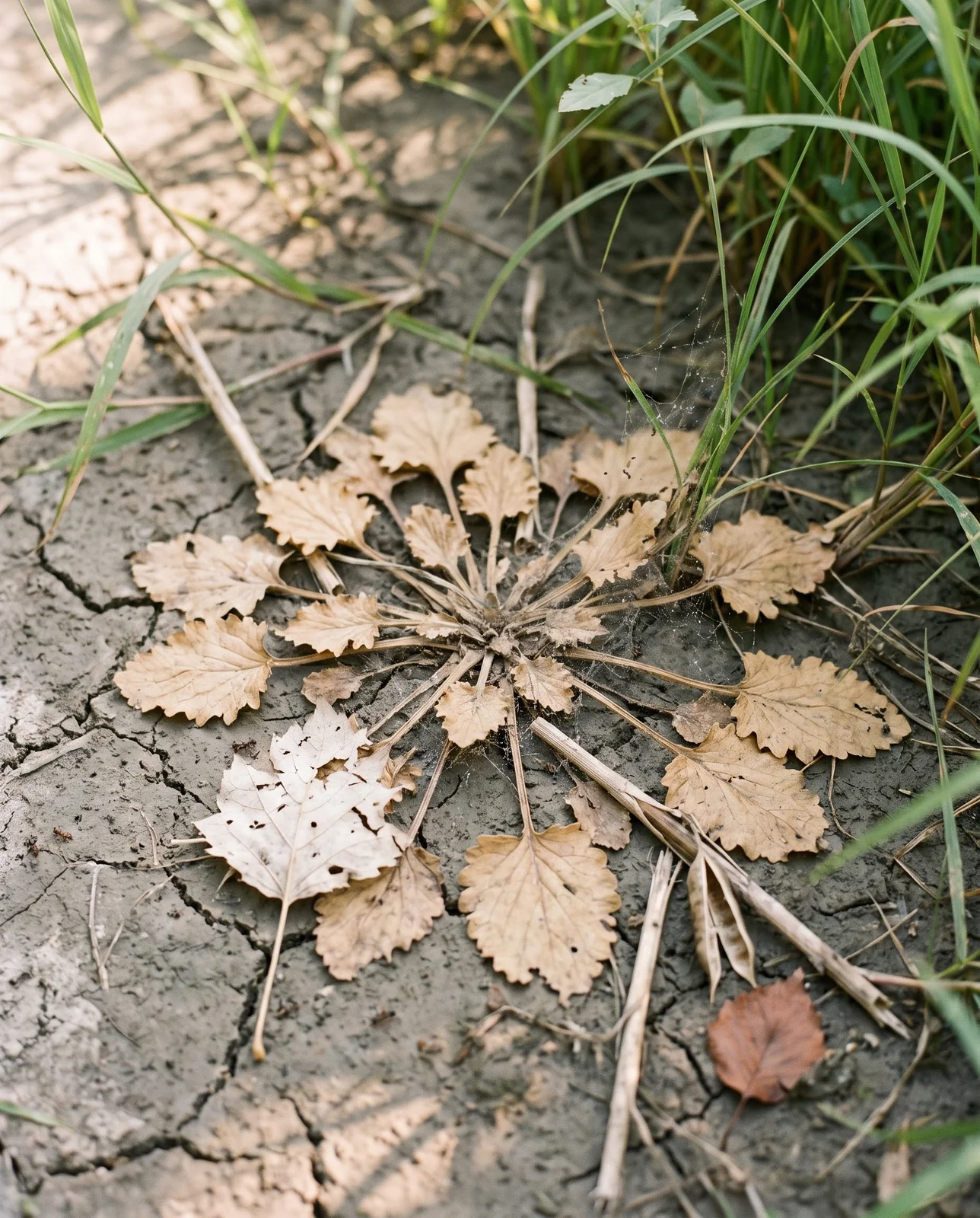
Two causes are documented, and feeding is not one of them. The first is light, since flowering is best in full sun, which gives a clump shaded out by whatever grew up around it a documented reason to bloom less. The second is age, because a plant raised from seed needs 4 to 5 years before it is large enough to bloom, so a patch sown two springs ago is not failing at anything. Care for the species comes down to steady moisture and sun exposure, with no feeding program attached. A third case is not a failure to flower at all: a plant that went dormant after a hot spell in full sun has finished its flowering year, and the next flowers are due the following spring.
What actually goes wrong with marsh marigold
Little goes wrong with this plant once the ground is right, and most of what does starts with water or with seed.
Symptoms: a basket held 1 to 2 inches under the water makes two very tiny leaves in a season and stops there. Cause: this is a margin plant, and it may dislike being kept below the level. Fix: raise the basket onto the shelf, in damp mucky soil or a small amount of standing water. Behavior can vary with the individual plant, and some grow in standing water without complaint.
Symptoms: white powder on the leaves, or rust colored spots under them. Cause: powdery mildew and rust are the only two diseases documented for the species. Fix: pick off the worst leaves and leave it alone, since no serious insect or disease problems are reported beyond those two.
Symptoms: a packet gives nothing, or a scatter of seedlings years apart. Cause: dry seed, since the seed does not tolerate dry conditions and stored, dried seed germinates poorly, and the species may be difficult or slow to germinate even when it is handled properly. Fix: sow fresh seed on bare wet ground in October or November and let the winter do the stratifying.
Symptoms: plants set close to an established clump growing less than the same plants elsewhere in the bed. Cause: the species can be a greedy grower that inhibits nearby plants, especially legumes. Fix: give beans, peas and clovers their own ground.
How poisonous marsh marigold is
No part of this plant should ever be eaten raw, and the early spring greens and buds that get foraged are edible cooked and poisonous raw. NC State Extension rates the poison severity low, names protoanemonin as the toxic principle and identifies the leaves as the poisonous part. Eating large amounts of the leaves can lead to burning of the throat, vomiting, bloody diarrhea, dizziness, fainting and convulsions. The compound is not sitting in an intact leaf waiting to be swallowed. It forms when ranunculin is broken down by enzymes after the plant is wounded or crushed, and the oily toxin it makes is in every plant of the buttercup family.
Contact is the part you meet first. The juices can cause blistering or inflammation on skin and mucous membranes, and gastric illness if they are swallowed; protoanemonin is a vesicant, so contact raises those rashes and blisters. For pets there is less to go on than owners expect. ASPCA has no entry for this species at all, and every name variant returns the general poisonous plants list, whose scope is plants reported to have systemic or intense gastrointestinal effects on animals. A missing entry settles nothing either way. The leaves are separately named poisonous to livestock and humans through protoanemonin, while small amounts in hay are reported to cause livestock no problems and larger quantities lead to gastric illness. Cooked use is documented too, with flower buds pickled as a caper substitute and young leaves boiled as greens.
Does marsh marigold spread
Yes, by seed and by rhizome, and how fast depends on where it sits. In a yard it spreads by seed or by division of the rhizomes, and it is otherwise low maintenance and easy to grow. Whether it behaves invasively depends entirely on the exact location. On a wet pond shelf a single pot can fill its space within the year, while in a garden in Denmark the same plant did not spread as described. Before calling any fast spreader marsh marigold, confirm it is not the look alike, because the true species will not spread that quickly.
The invasion people mean when they ask this question usually belongs to lesser celandine. It was reported invasive and established in 25 states at a 2014 count, and federal plant health regulators rate it a high risk weed that could spread across 79 percent of the United States. It emerges before most other spring ephemerals and excludes native plants by doing so. In Maryland it went from seven counties at an earlier survey to the entire state. It is believed to have arrived in North America as an ornamental in the mid-1800s, with escapes reported in Pennsylvania in 1867, and it is called highly invasive in northern Ohio. Its tubers separate easily and can become new plants when digging animals or people disturb them, and tetraploid plants can develop up to 24 bulbils at the base of the leaf stalk. Range separates the two as well, since marsh marigold reaches farther north, and farther west in the Midwest.
Weed in a lawn, plant in a bog garden
A plant is a weed only where it is unwanted, and this one gets sold and dug out on the same day. Lawn care advice brands marsh marigold a lawn weed and a mild poison that can be problematic to handle. Its prevention step, avoid overwatering, is the reverse of the constant moisture the plant needs. The same advice calls it an annual flowering herb, which it is not. Identification settles most of the argument, because the true species keeps to intact wild areas and does not usually occur in lawns, which sends most lawn sightings back to the look alike.
What visits the flowers, and what leaves them alone
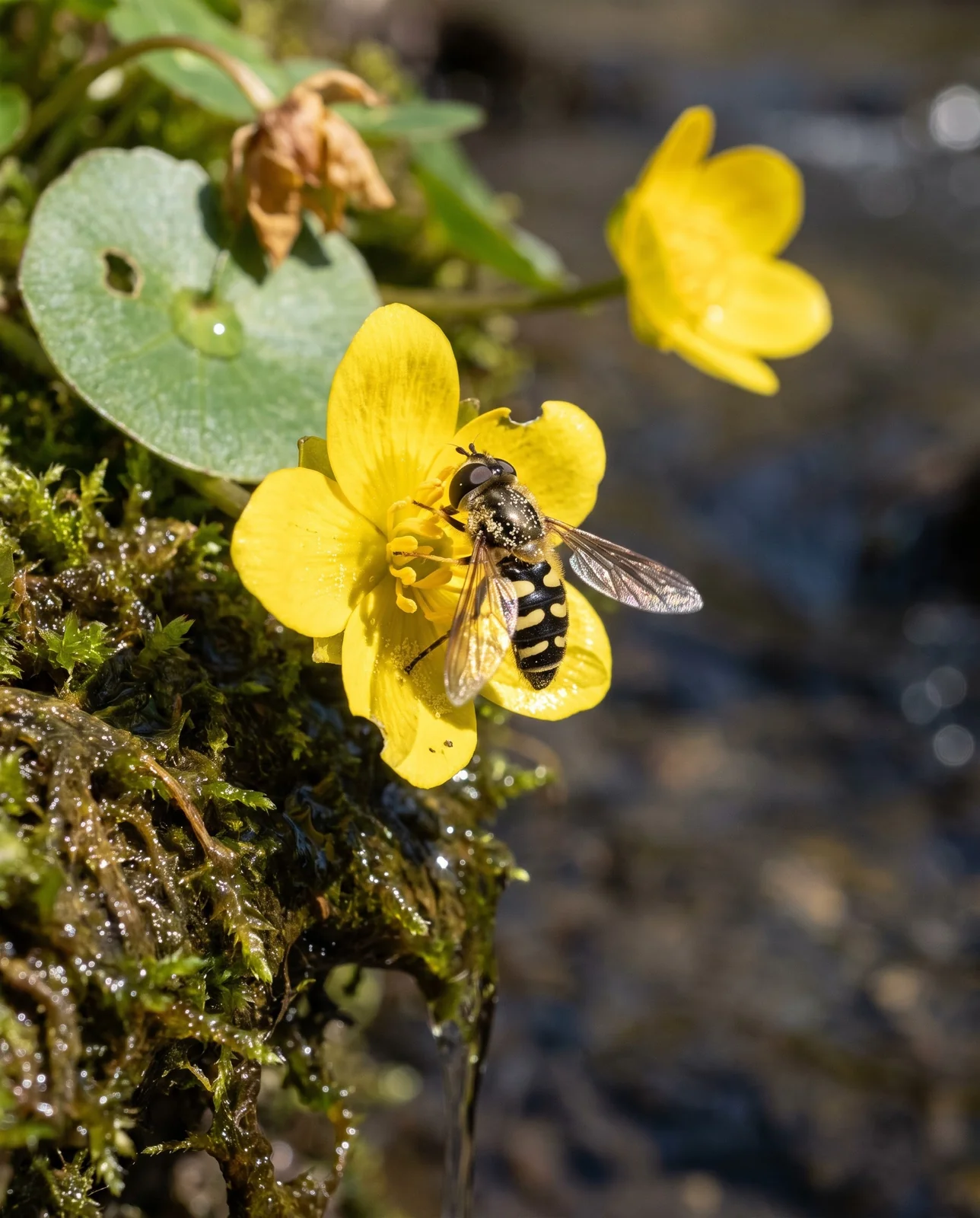
The main pollinators here are flies. Pollen seeking syrphid flies of the genera Neoascia, Xylota and Lejops work the flowers, with small bees, ants and cuckoo bees arriving for nectar. Hoverflies of the family Syrphidae are the commonest visitors, on a plant that produces nectar and copious pollen. It draws hummingbirds and bees as well. What the flower looks like depends on the eye, since what reads bright yellow to a person appears purple to a bee.
Almost everything with a mouth leaves the foliage alone. Mammal browsers avoid the leaves, which are acrid and somewhat toxic, and deer usually pass it by. Waterfowl and rodents will eat the seeds even though the foliage is somewhat toxic. Flowering has been creeping earlier as well, and in New York the species moved an average of 5.8 days earlier between 1986 and 2015.
Marsh marigold varieties and the species sold beside them
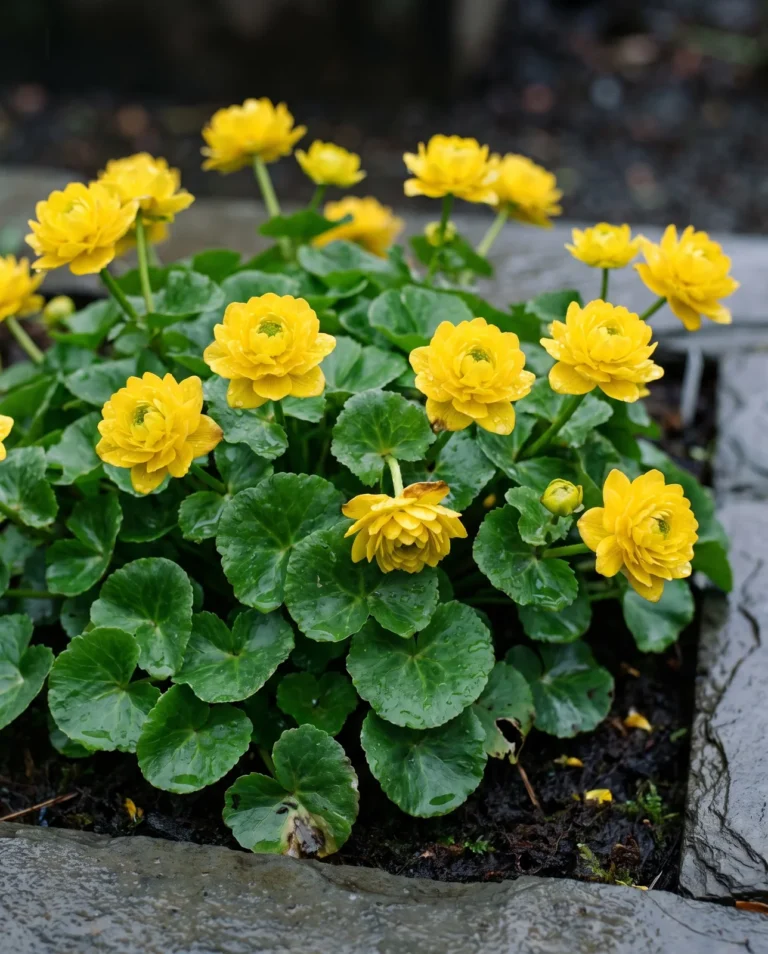
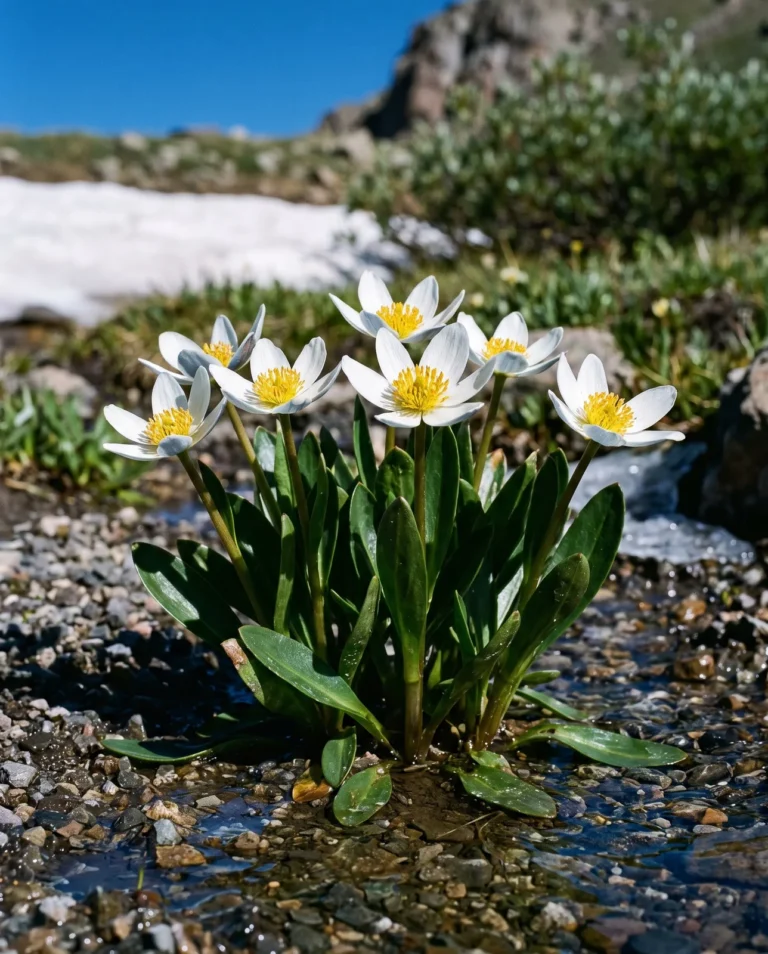
More than one plant is sold under this name, and two of the entries below belong to separate species.
Soil and water for marsh marigold
Water chemistry decides more here than soil texture does. The water it prefers runs pH 4.8 to 7.5, leaning acidic. Feeding is the one active mistake, since the plant dislikes fertilizer and avoids water high in phosphate and ammonium, along with brackish water. What it roots into is muddy, rich humus, the ground of wetlands, damp lowland woods and stream and pond edges. Nothing here asks for compost, lime or a feeding schedule, and flowering quality comes down to consistent moisture and sun exposure.
How big marsh marigold gets
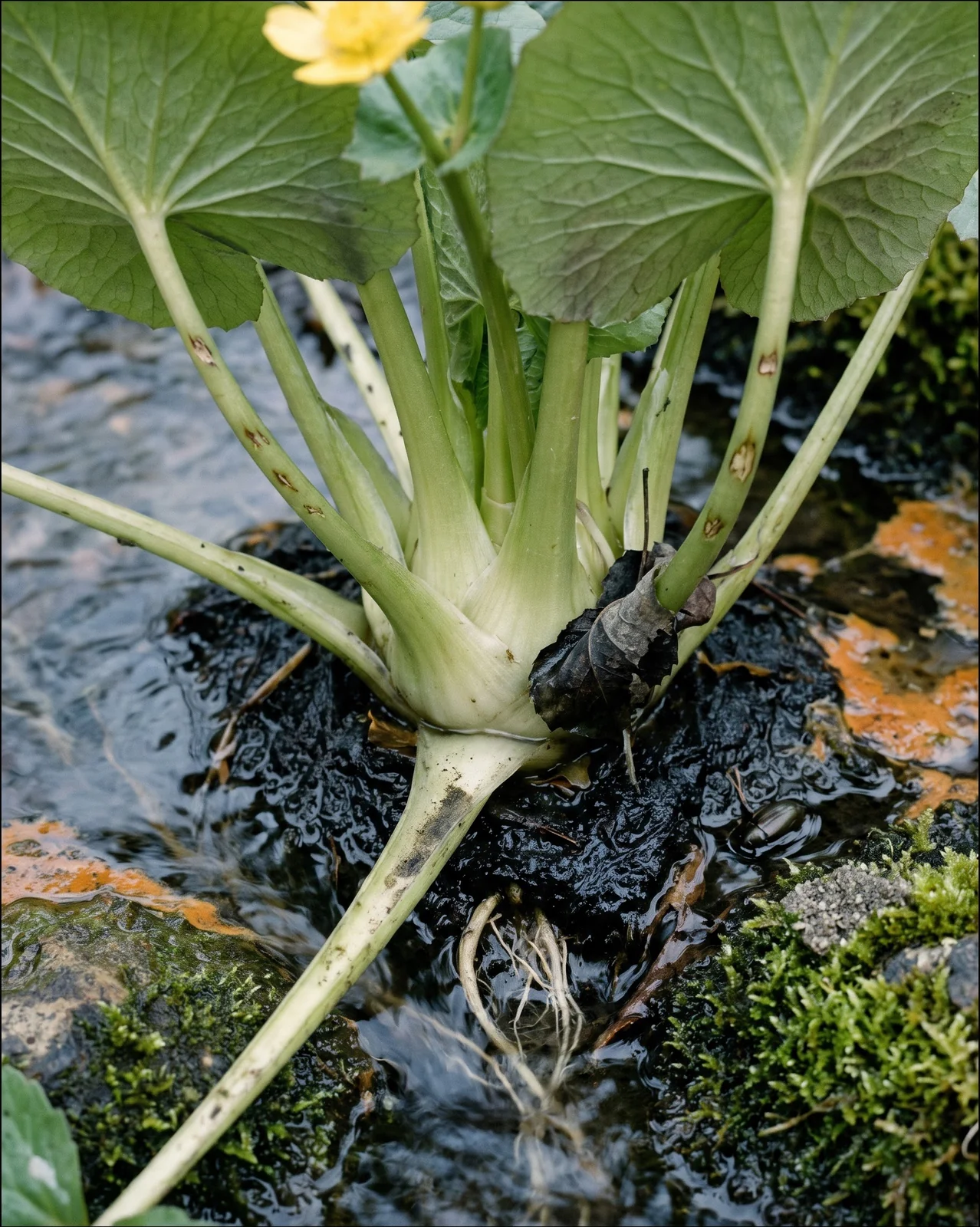
Call it 1 to 2 feet tall, and a plant in cultivation can stay at 8 to 12 inches. Width is the figure nobody publishes. What can be said about the footprint is the habit: a mound of shining rounded leaves with branching flower stems held above it, growing as distinct clumps, while the dense low mat belongs to the look alike.
Growing marsh marigold in a pond or a basket
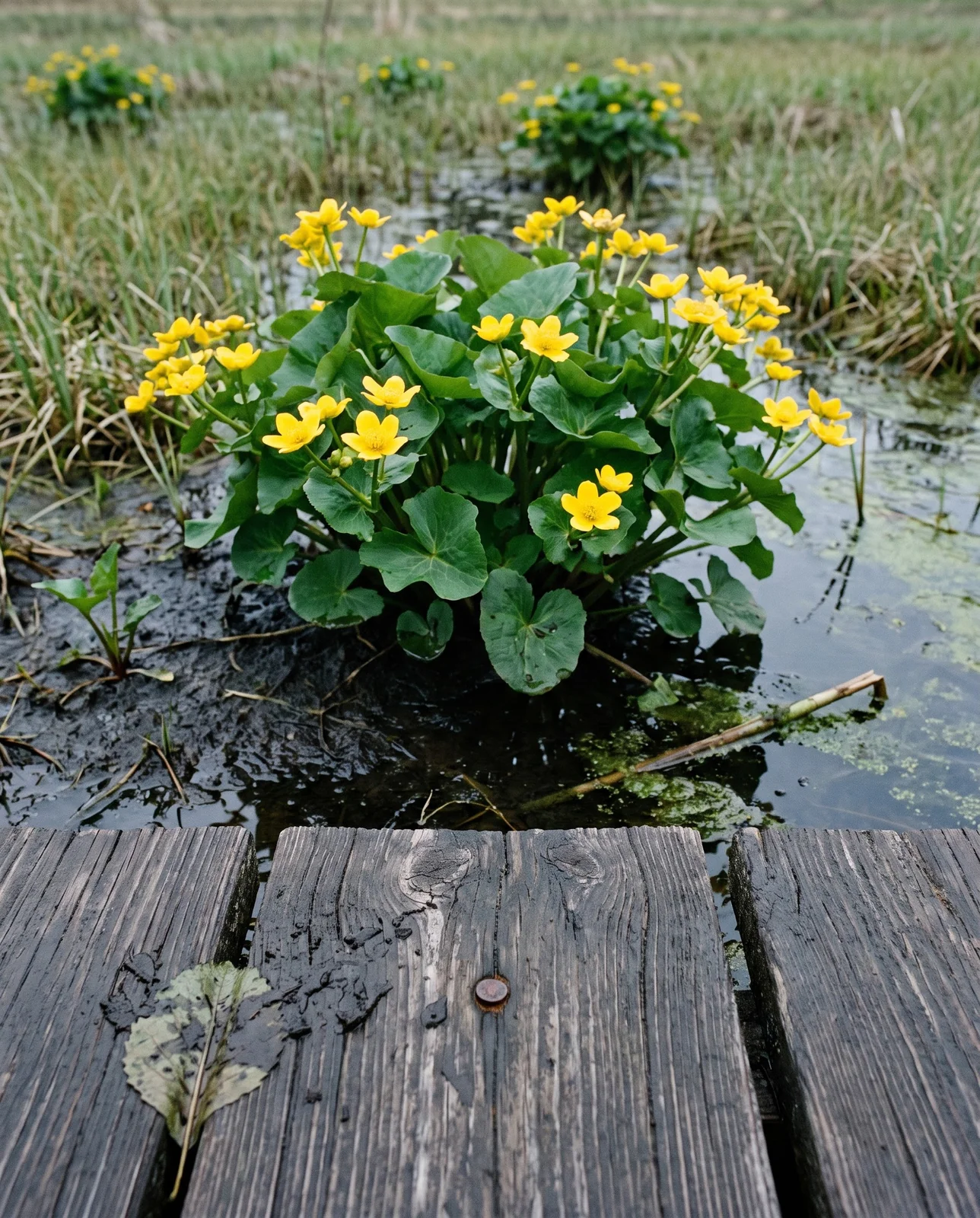
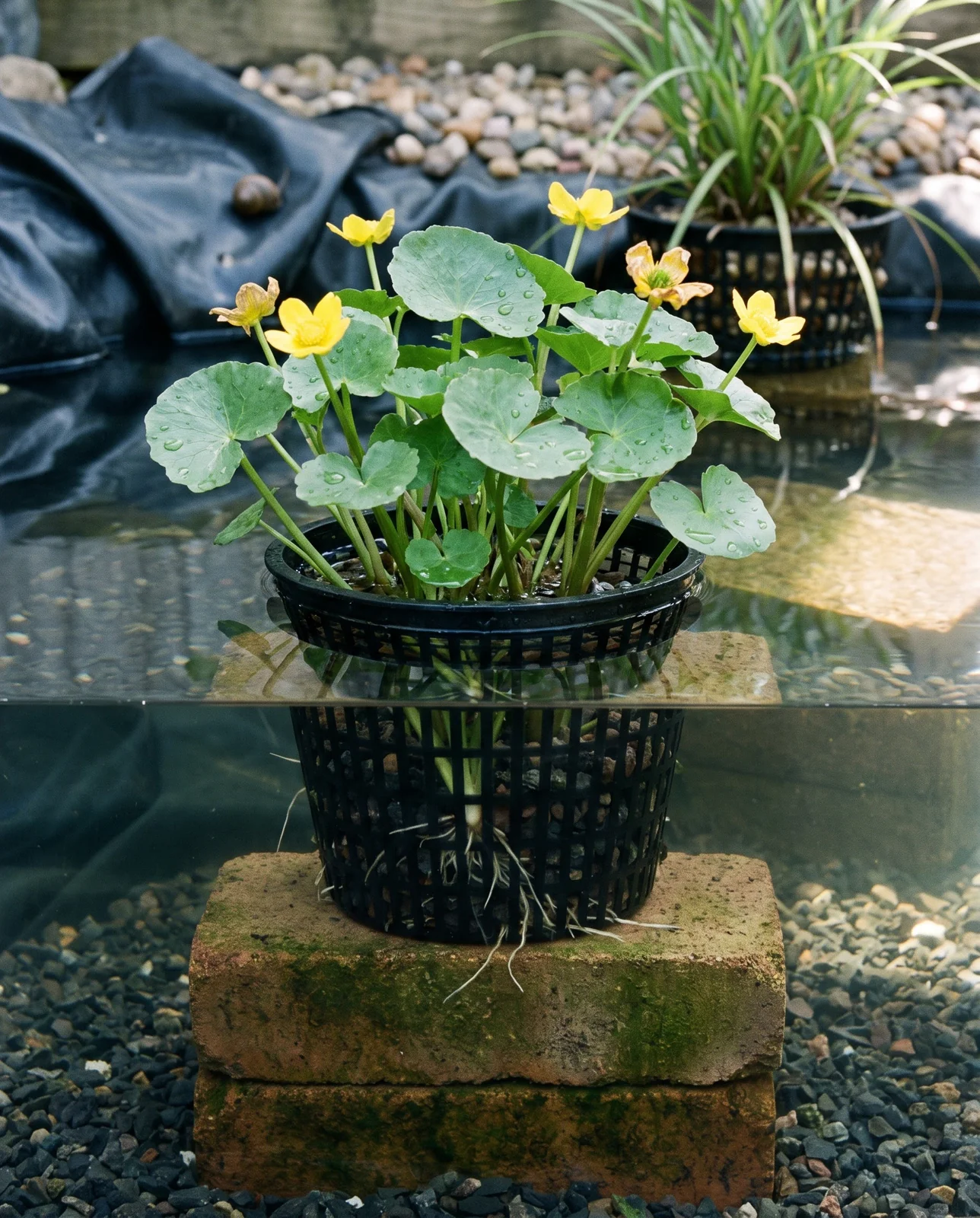
It belongs at the margin, and nobody publishes a planting depth for it. The specification given is soil deep enough to cover the roots, with the plant set marginally along the pond edge in consistently damp mucky soil or a small amount of standing water. Everything else about depth comes from people who tried it in their own ponds, and it goes both ways.
A basket held 1 to 2 inches under the water surface, with the depth moving as rain came and went, produced two very tiny leaves in a season. Plants grown beside the water did better, which suggests the species may dislike being kept below the level. Behavior can also vary with the individual plant, and marsh marigold grows both in standing water and simply near water. A floating basket is untested, though this adaptable native is expected to acclimate to one. Container culture itself is ordinary at a pond edge, in the same mesh baskets sold for a lotus. The difference is that this basket sits high on the shelf, in damp muck or a small amount of standing water.
What to plant with marsh marigold
Wet ground picks the neighbors before you do. Goat's beard (Aruncus dioicus), lizard's tail (Saururus cernuus) and the common blue violet (Viola sororia) fill the same wet niche. Geum is the native alternative where you want a similar effect without Caltha palustris in that spot. Keep beans, peas and clovers out of the same ground, since this one can be a greedy grower that inhibits nearby plants, especially legumes. The list stops at the water's edge, and a step up onto drier ground the question passes to spring woodland plants such as Virginia bluebells.
What to expect through the year
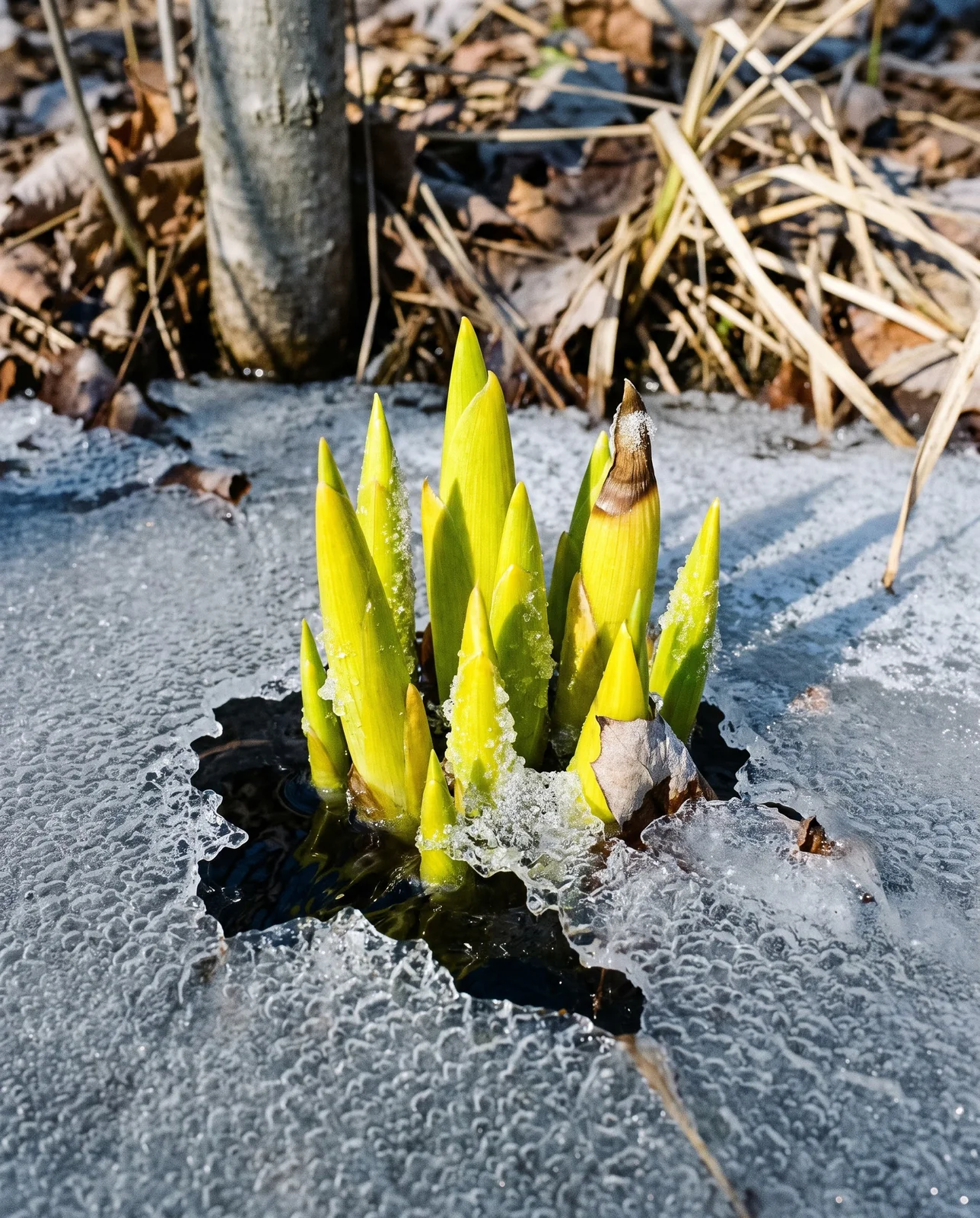
The plant runs a front loaded year: almost everything visible happens in spring, and then it goes.
First spring: flowers come before the plant is finished growing. A potted clump set out in March or April flowers on the ordinary spring schedule, April to June depending on the region, while the basal leaves keep enlarging behind them and only reach full size in summer.
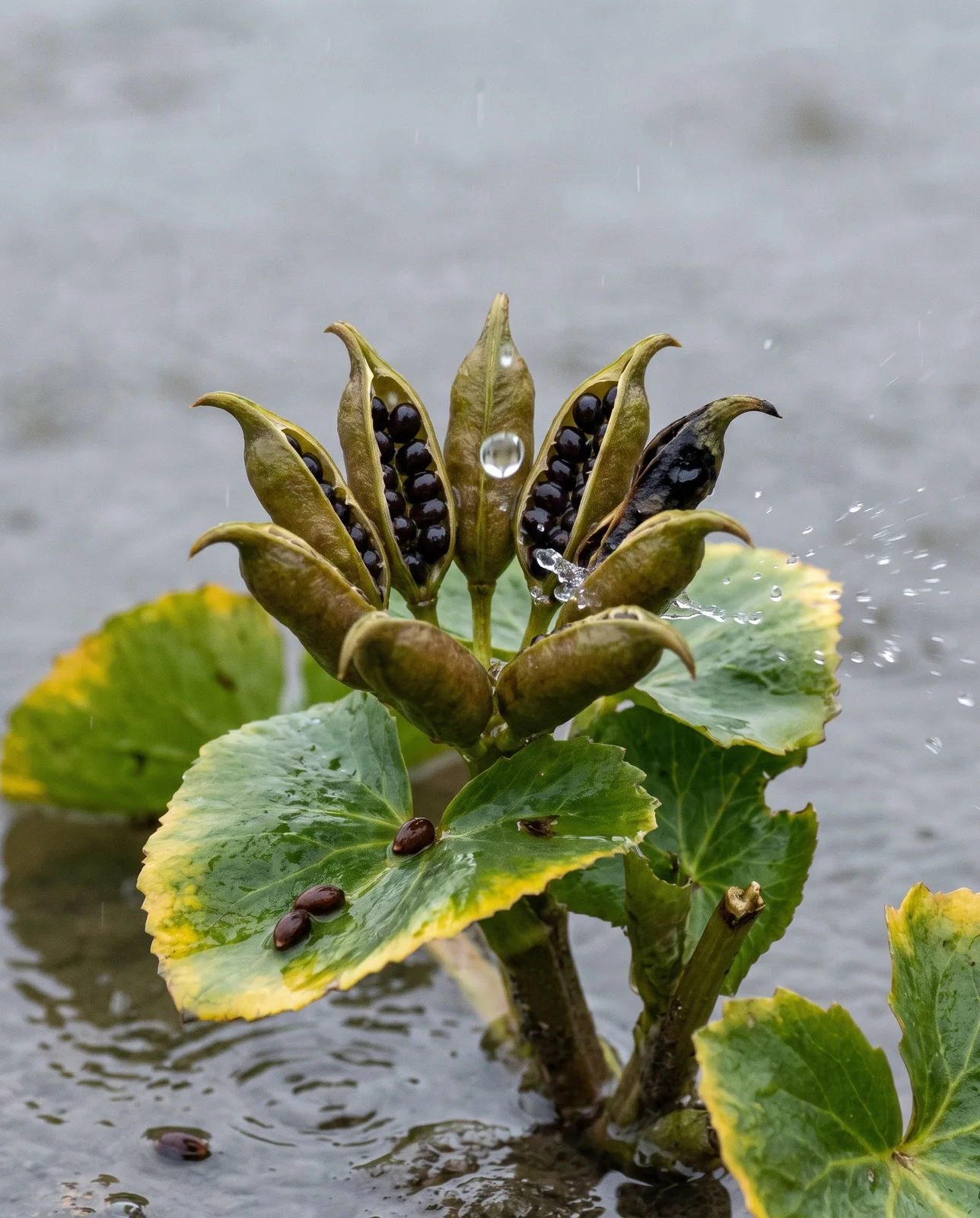
Summer: the seed leaves, and then the top growth may follow it. The pods split open when ripe, and raindrops striking the ripe follicle throw the seed clear in a splash cup mechanism, with up to two hundred seeds possible behind each flower. The seeds carry spongy tissue that lets them float until they wash up somewhere they can grow. Top growth may disappear in the same weeks, because the plant may go dormant if the soil dries out completely or gets too hot.
Next spring and after: the crown returns on its own, and what changes with age is size. The species is adaptable enough to be set out in small clumps or in large patches along a stream bank or in a water garden, so the scale of the patch is settled at planting.
Four things people get wrong about marsh marigold
Each of these sends you after the wrong plant or the wrong fix.
The myth: It is a kind of marigold, so marigold care applies to it.
The reality: It sits in the buttercup family and has no relation to the marigolds of the aster family. Its older American names carry none of the confusion: cowslip, cowflock and kingcup.
The myth: It died in July.
The reality: That is summer dormancy. The plant may go dormant if the soil dries out completely or gets too hot, and in a hot summer climate plants sited in full sun may go dormant on their own schedule. The crown comes back the next spring.
The myth: Foragers eat it, so a raw taste in the field is fine.
The reality: No part of the plant should ever be eaten raw. Cooking is what makes the early spring greens and buds edible.
The myth: It is invasive.
The reality: The state listings attach to the look alike, which reproduces rapidly through abundant tubers and above ground bulblets and is banned from sale in Ohio. This plant's own spread depends entirely on where it is growing.
FAQ
Is marsh marigold the same plant as a garden marigold?
No. It is Caltha palustris in the buttercup family, while the marigolds sold in flats are asters. The name describes the wet ground it grows in and nothing else about it.
Is marsh marigold invasive?
It is native to most of the United States, especially the north, and how far it runs depends entirely on the exact location. The invasive listings belong to lesser celandine, reported established in 25 states at a 2014 count.
Does marsh marigold like sun or shade?
Both, and heat decides which. Flowering is best in full sun, but full summer sun may push the plant into dormancy, which afternoon shade can correct.
Can marsh marigolds be submerged in water?
Only just. Give it soil deep enough to cover the roots at the margin, in damp mucky soil or a small amount of standing water. A basket about 1 to 2 inches under the surface gave two very tiny leaves in a season.
Do marsh marigolds spread quickly?
It depends on the spot. One pot on a pond shelf filled its space within the year, while the same plant in a Denmark garden did not spread as described. Anything running fast is worth checking against the look alike first.
Why did my marsh marigold turn yellow and die back in July?
That is usually summer dormancy. The plant may go dormant if the soil dries out completely or gets too hot, and in a hot summer climate plants sited in full sun may go dormant as well.
Is marsh marigold poisonous to dogs and cats?
There is no species specific entry for it on the national animal poison plant list, and every name variant returns the general poisonous plants page, scoped to systemic or intense gastrointestinal effects on animals. The leaves are separately named poisonous to livestock and humans through protoanemonin.
Can you eat marsh marigold?
Not raw, ever. The buds and young greens that get foraged are edible only after they have been cooked.
What zone does marsh marigold grow in?
Zones 3 to 7 is the most widely printed range. Zone 2 is claimed at the cold end and zone 8 at the warm end, and hot summers set the real limit.
How long does marsh marigold take to flower from seed?
4 to 5 years pass before a seed grown plant is large enough to bloom. The seed also wants 60 to 90 days of cold, moist stratification first, which late fall sowing supplies.
Interesting tips
- A clump that flowers every spring and never leaves seedlings is behaving normally. The species is infertile when self pollinated, a genetically regulated trait it shares with the buttercups, so seed needs a second, genetically different plant within reach of the same flies.
- The plant has a use history that has nothing to do with gardening. The Abnaki, Chippewa, Haudenosaunee, Menominee and others used marsh marigold as both a poison and a food, and the Haudenosaunee used it to induce vomiting and as a defense against love charms.
- Water carries its own hazard on top of the plant's. Any plant growing in untreated water may pick up toxic organisms that have nothing to do with protoanemonin.
Related Guides & Flowers

Types of flowers
A catalog of flower types by name, color and season.
Canna lily
Another perennial that takes a wet pond edge, in warmer zones.
Forget-me-nots
A spring flower for damp ground that self sows where the soil stays moist.
Calla lily
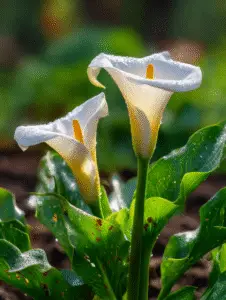
A pond edge perennial whose common name causes mix ups of its own.
Enjoying our flower guides? Add YourFlowersGuide as a preferred source on Google. It helps more readers find us.
Add to Preferred Sources