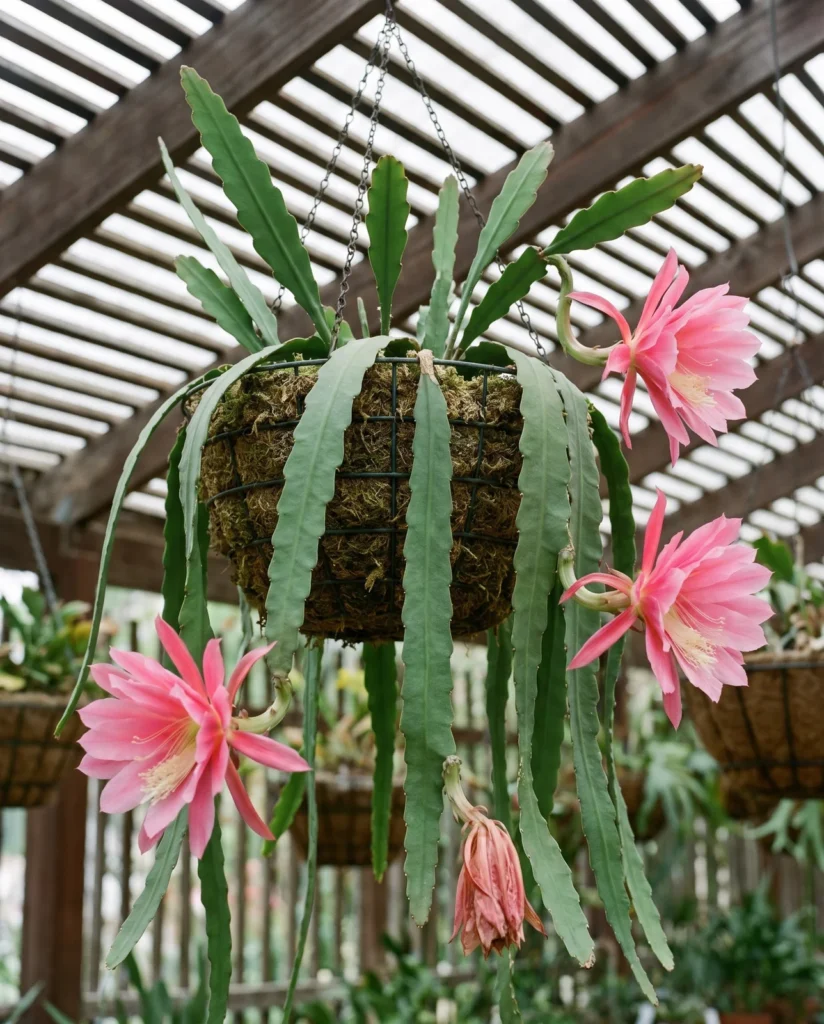
A jungle cactus that borrowed an orchid's name
An orchid cactus is a true cactus from tropical forest, and the name records the look of the flower and nothing else. These plants are epiphytes. They root in pockets of humus caught in bark and branch forks, the same perch orchids and bromeliads use. No desert sits anywhere in their history, and no orchid sits anywhere in their family. Anyone who came here for the plant with thick strap leaves and pale aerial roots wants the moth orchid, a different plant with different needs.
The botanical names have moved around, so one plant can turn up under two of them. The world plant list kept at Kew holds ten species in Epiphyllum. It treats the red orchid cactus as a separate species, Disocactus ackermannii, first published as an Epiphyllum by Haworth in 1829, and that plant has passed through five genera since. The night bloomer is the unsettled one. Kew keeps it as Epiphyllum oxypetalum, while the same plant travels under Selenicereus oxypetalum as well. Either label means the right thing arrived, and the group grows the same way whichever genus the tag prints.
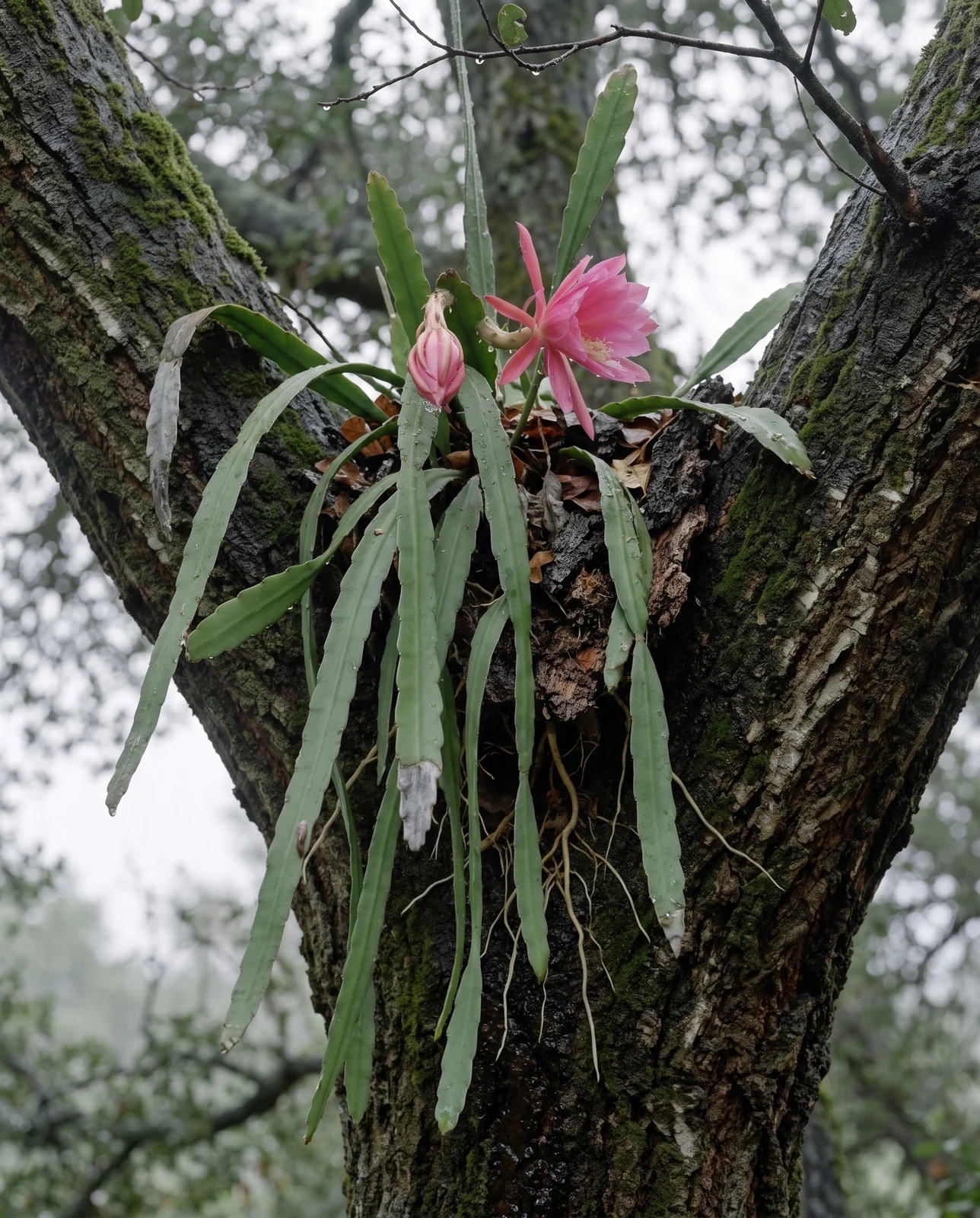
Flat wavy stems and flowers the size of a hand
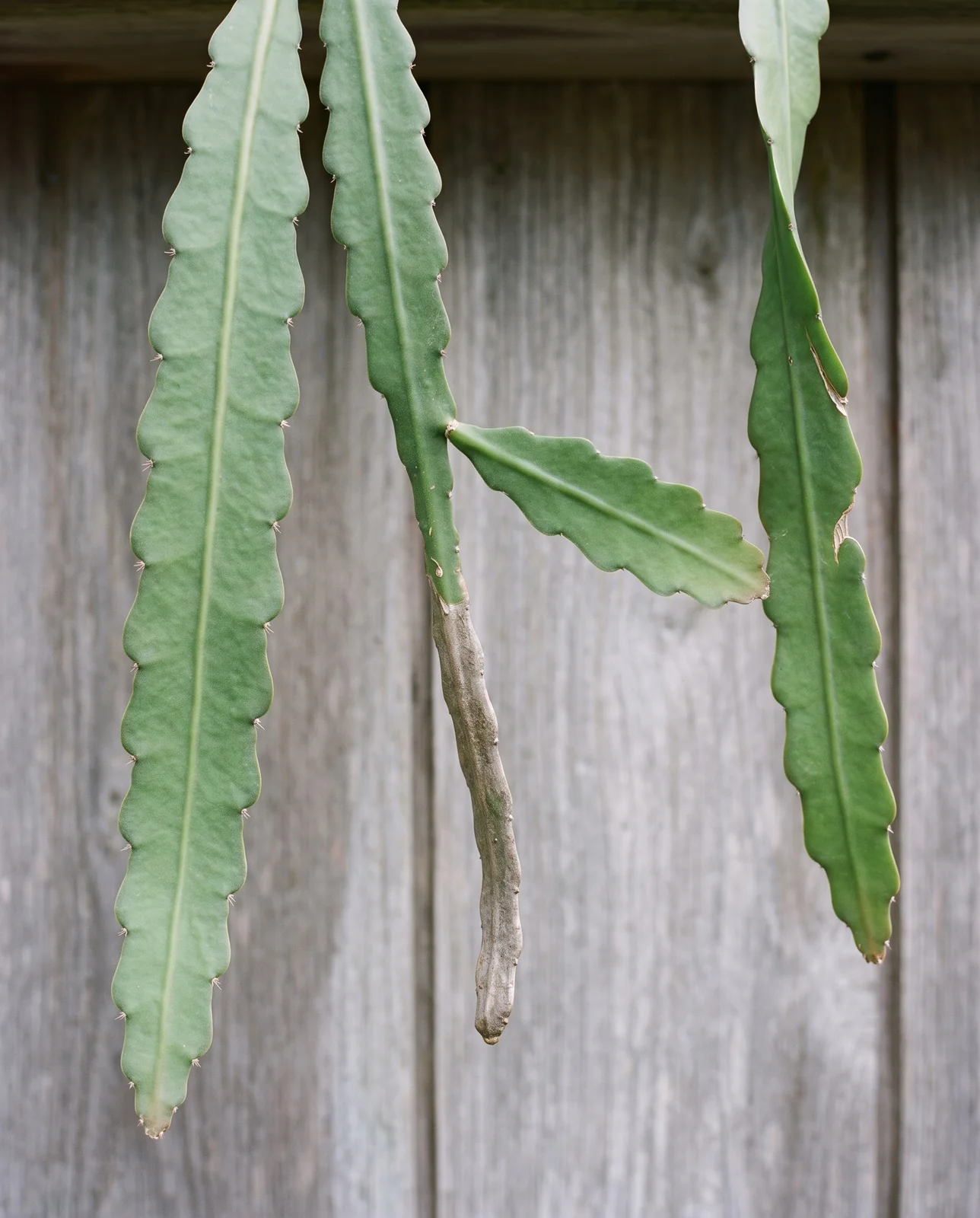
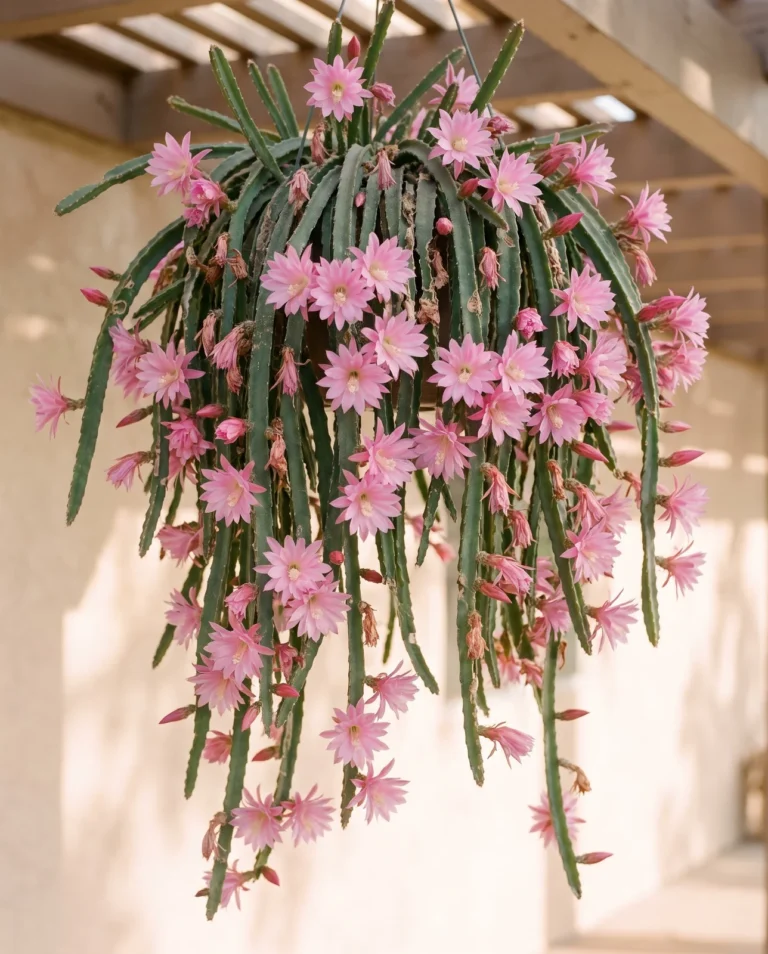
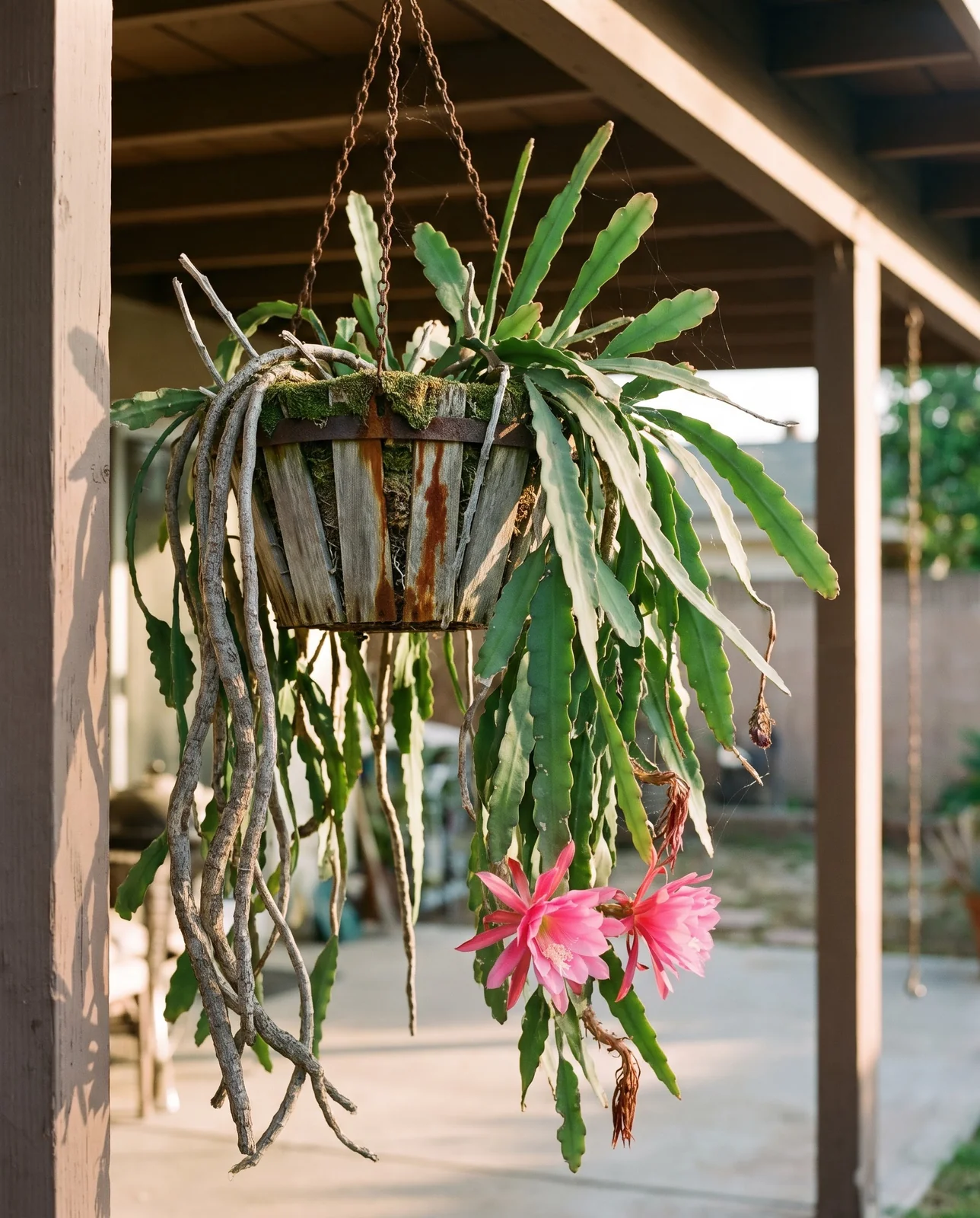
What look like leaves are stems. The flat, wavy-edged straps are phylloclades, flattened stems doing the work of leaves, and the plant carries no true leaves and none of the round pads of a prickly pear. They grow long and trail, so the plant is sold in baskets and hung high. Trailing stems run from about 2 ft to as much as 10 ft, spreading up to 3 ft, and the night bloomer carries stems up to 16 inches long.
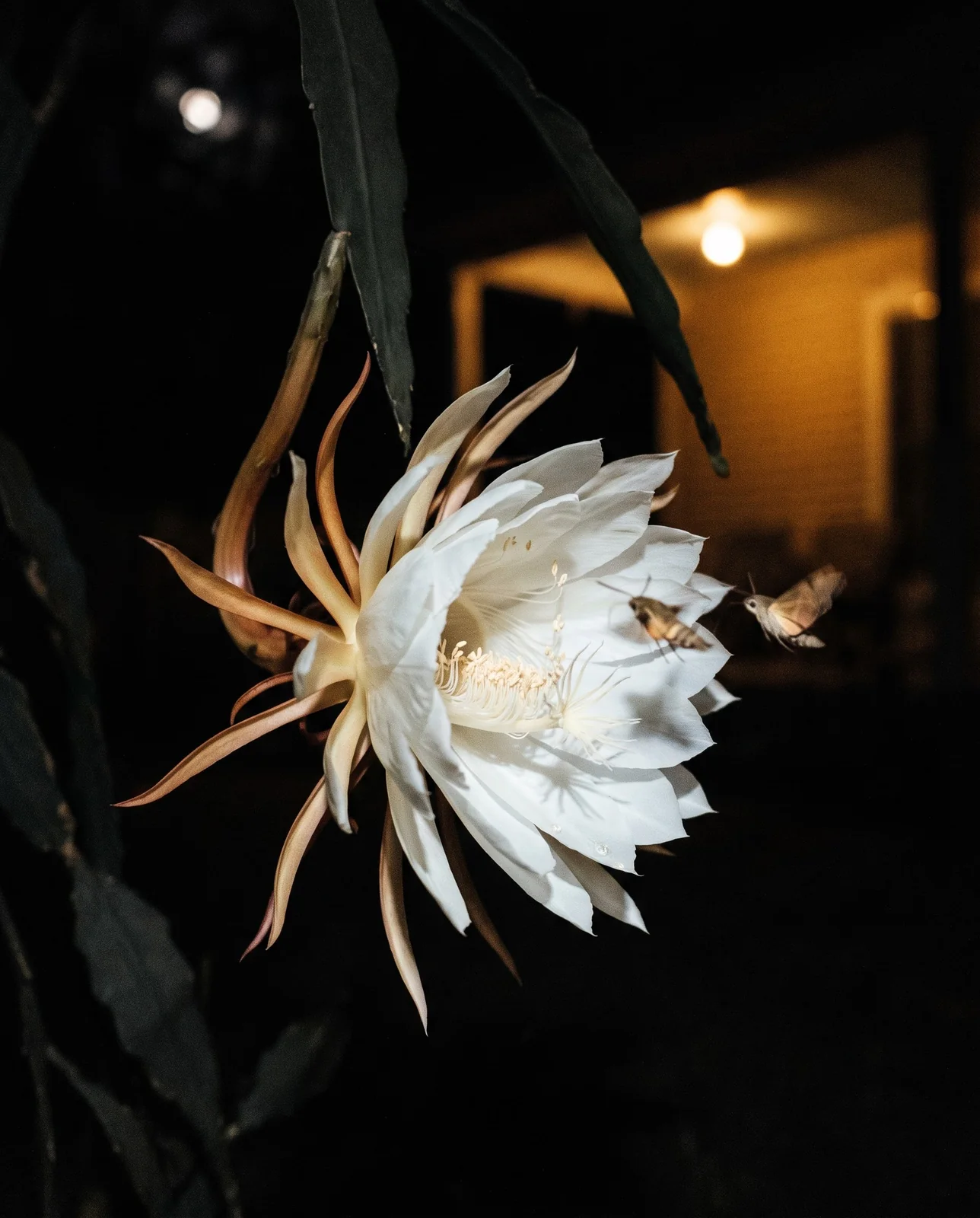
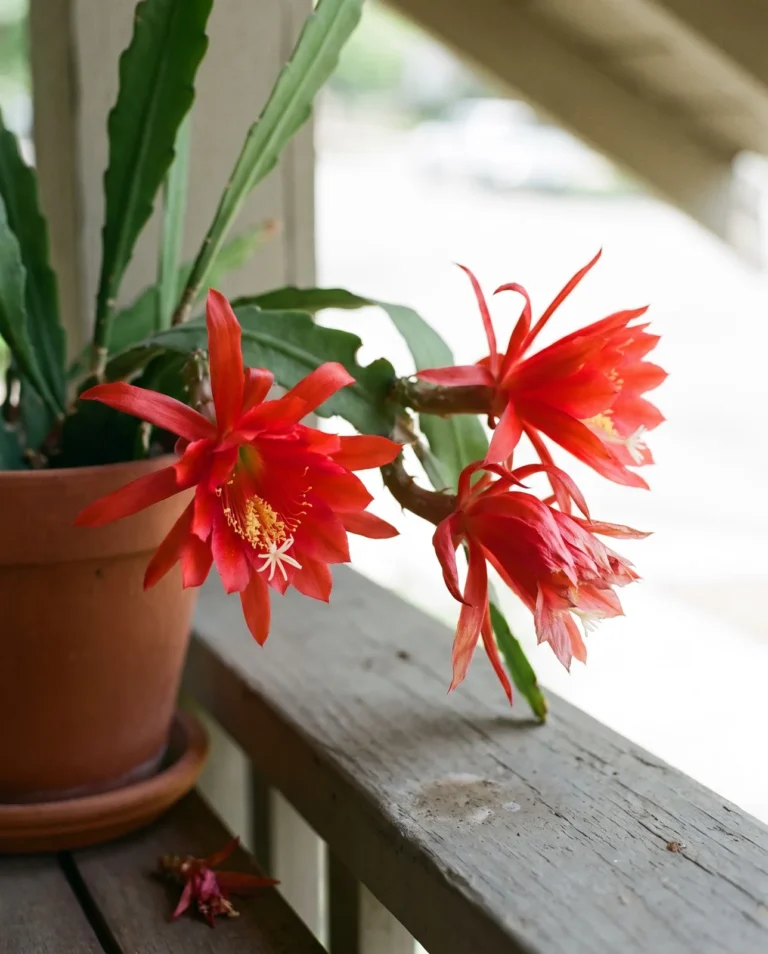
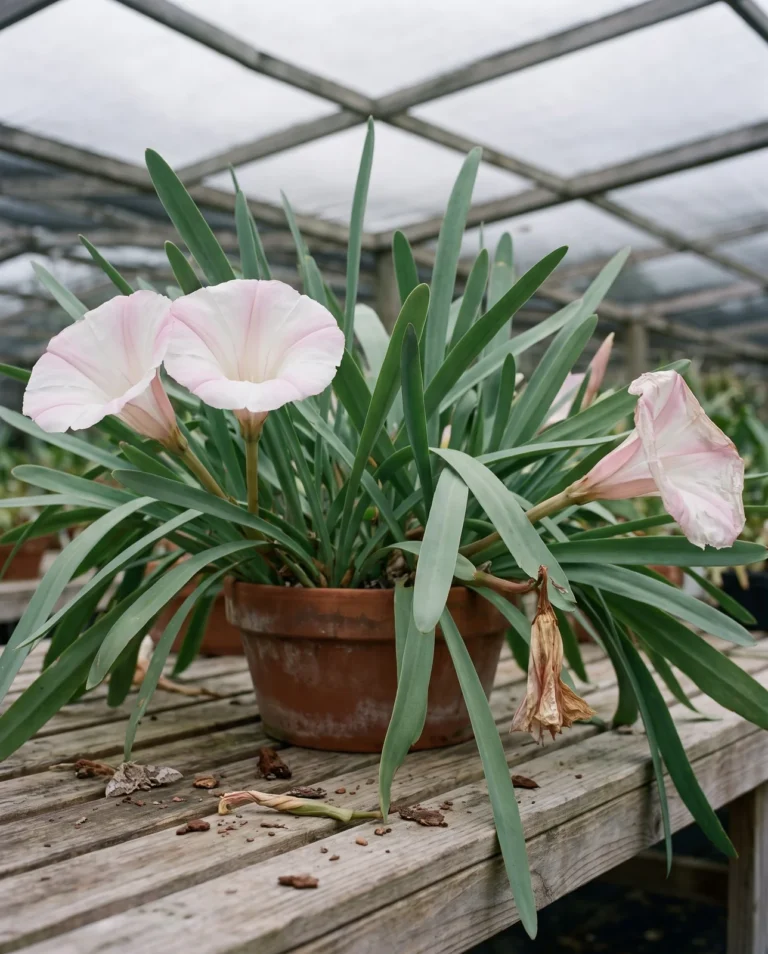
The flowers are what the name is about. They open as wide funnels, typically 4 to 8 inches across, and some hybrids can reach a foot, in scarlet, peachy orange and white. The queen of the night sits at the extreme, with a single flower up to 12 inches long and 8 inches across. It is white and fragrant, opens after dark and is withered by the next morning. Bats and moths work those night flowers in the wild, which accounts for both the scent and the hours. The plant most often mixed up with this one is the Christmas cactus. The parts tell them apart: the orchid cactus carries larger flowers on flat, leaf-like stems, and the Christmas cactus has smaller flowers on short, segmented, scalloped stems.
The cool dry winter that sets the buds
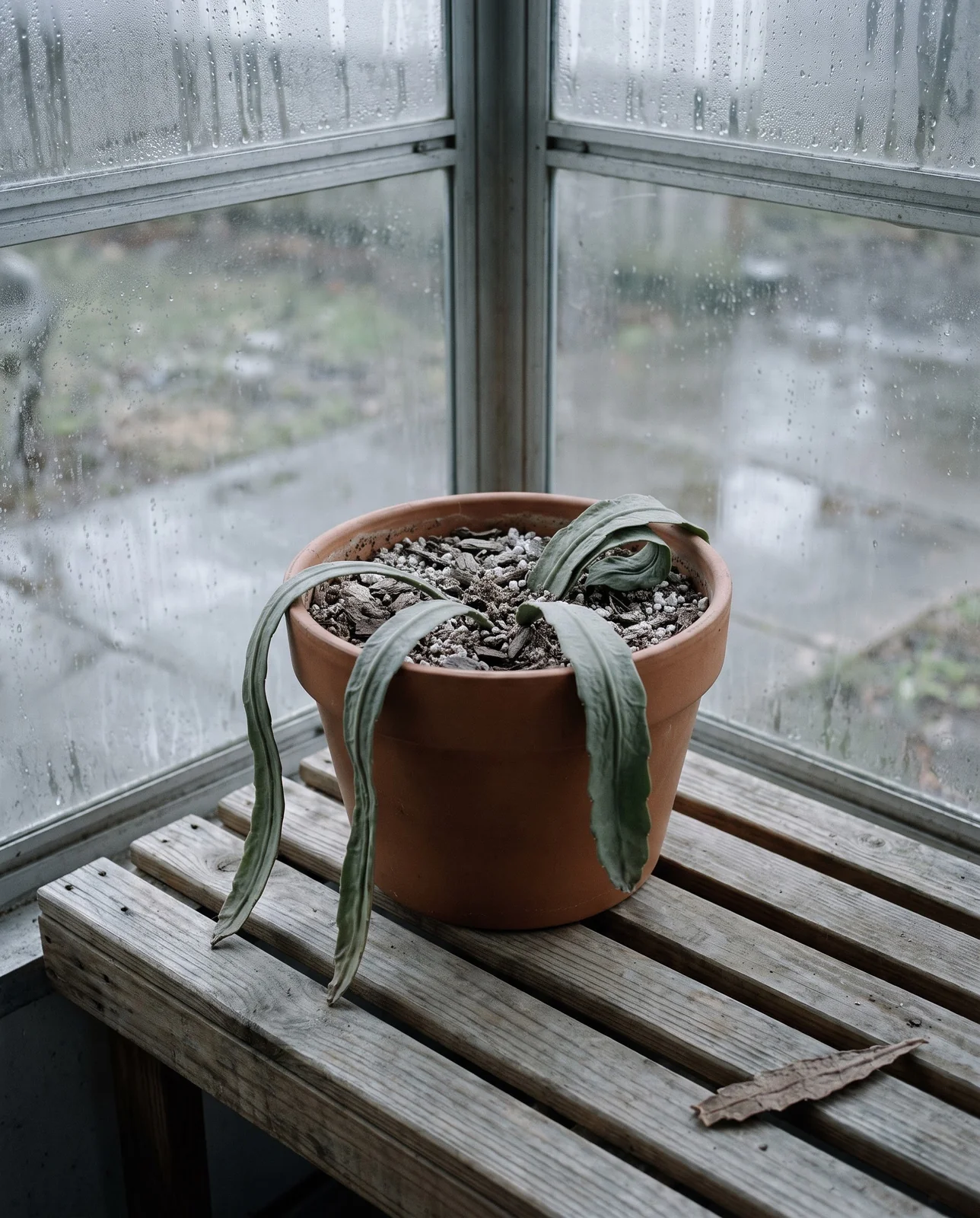
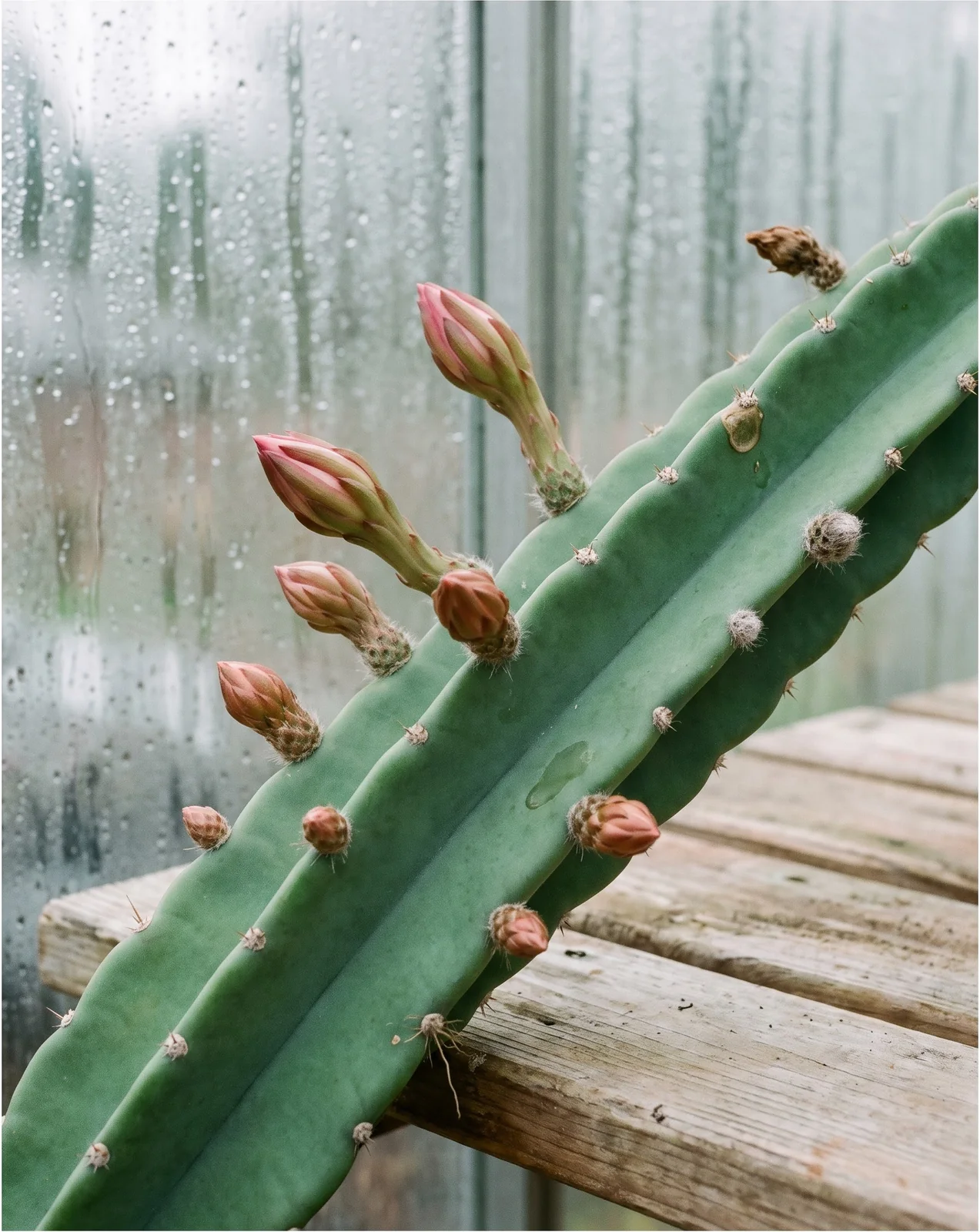
Flower buds form after a cool, dry rest in winter, and a plant held warm and watered all year has little reason to make any. Two regimes are in use and both bring flowers. The Royal Horticultural Society holds the plant at 11 to 14C, 52 to 57F, with the mix kept only just moist. Buds appearing is the signal to move it back to 15C, 60F, or warmer. The cold route runs nights in the mid 30s to mid 50s Fahrenheit and stops water completely from November or early December. Stems shrivel a little on that route, which is normal, and they fill out again once watering resumes; buds then come in late winter or early spring.
A third setting splits the difference. It asks for a drop of around 5C below summer levels and a daily swing between day and night. A night temperature of 12C, about 54F, is the trigger for bud development, and dry means at least three-quarters of the mix dried out. Length is unsettled too. Drying the plant off and resting it for 8 to 10 weeks is one instruction for bud set. A month-by-month calendar cuts water and feed from October through December, then again from January to March, closer to five months of restraint. Feeding stops with the water. Nitrogen comes out from autumn, nothing is fed through the winter itself, and a bloom-hardening 0-10-10 formula goes on in November and again in February.
Why a healthy orchid cactus never flowers
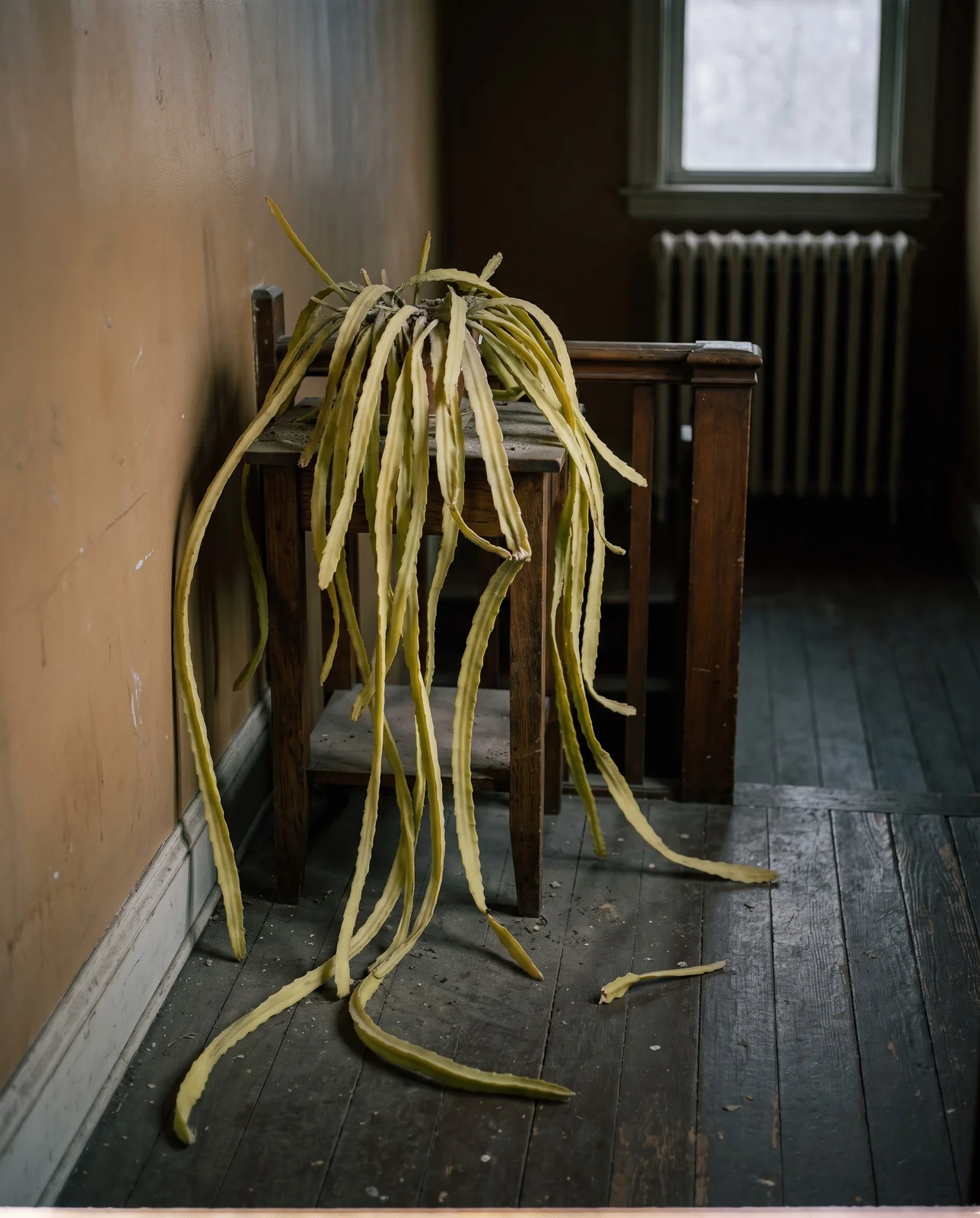
Start with last winter, because the commonest reason for a plant that grows well and never flowers is that it never rested. A missing cool, dry spell heads the list of causes, with too big a pot second, and a house held at one temperature all year prevents dormancy outright. Light is the failure that hides longest. Too little of it gives long, drawn stems, pale color and no flowers, while the plant carries on living for years. That is how a large, healthy, budless plant ends up in an interior room and stays there.
Age is the second gate: an unrooted cutting usually needs at least three years before it flowers at all. The pot is the third, and the instinct to help makes it worse. These cacti generally flower only once their roots have filled the container, so repot as little as possible, and a pot too large is a cause of no flowers on its own. A potbound plant has the better chance of blooming, and repotting waits until it is wholly necessary. Timing of the knife matters as well. Pruning late in the season can cut off buds that are already forming, so the safer window is right after flowering.
Work out why yours is not blooming
Take these in order. The first one that comes back wrong is usually the whole answer.
How much light it wants, and what sun does to it
Bright filtered light for most of the day, an hour or two of gentle sun early or late, and no strong midday sun in summer, which can scorch the stems. The exact version of that rule is no direct midday sun at all and roughly 75 percent shade, with early morning or late afternoon sun acceptable. Two hours of strong direct light is the published ceiling, and the reason given is how easily these stems scorch. The practical reading sits between them: a spot that stays bright all day and falls into shade when the sun is high.
Where the plant grows in the wild explains the rule. These are not sun-loving desert cacti: jungle cacti like shade, and too much sun can burn or even kill them. A plant raised under shade cloth or on a shop shelf has no tolerance built up, so increase its exposure gradually and watch for the red tinge that too much light puts into the stems. Tropical forest plants also dislike extremely dry conditions and strong summer sunshine, cacti or not.
What to pot an orchid cactus in
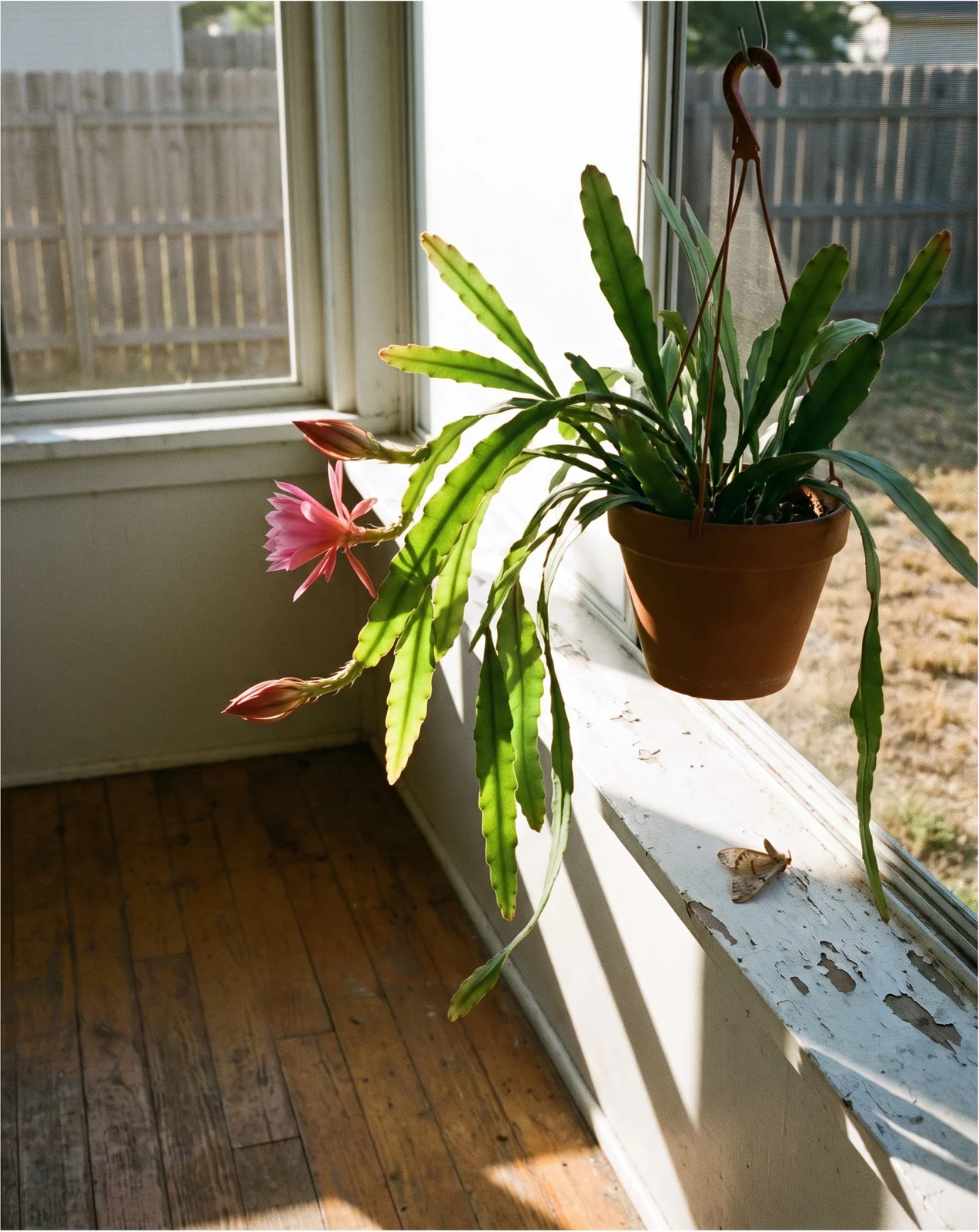
The mix wants to be loose, fast draining and slightly acid, with about a third of it coarse material so it cannot compact. A peat-free cactus compost with added grit works, and so does a blend of three parts loam-based compost, two parts grit and one part multipurpose compost. A camellia and azalea mix with perlite and chopped bark added is another good base. So is anything sold for orchids or bromeliads, or potting soil with perlite and orchid bark; heavy garden soil and pure cactus soil are both wrong. Garden soil fails because epiphyte roots are built for bark and litter, and it packs too tight around them.
Pot size follows the same logic as the bloom rule. Use a container only slightly bigger than the rootball, and move to a heavy terracotta pot or a wide, shallow pan as the plant grows larger and heavier. Both halves of that matter. A snug pot suits a plant that flowers only once its roots have filled the space, and the weight underneath counts because a mature plant hangs several feet of stem off one side.
Watering through the year
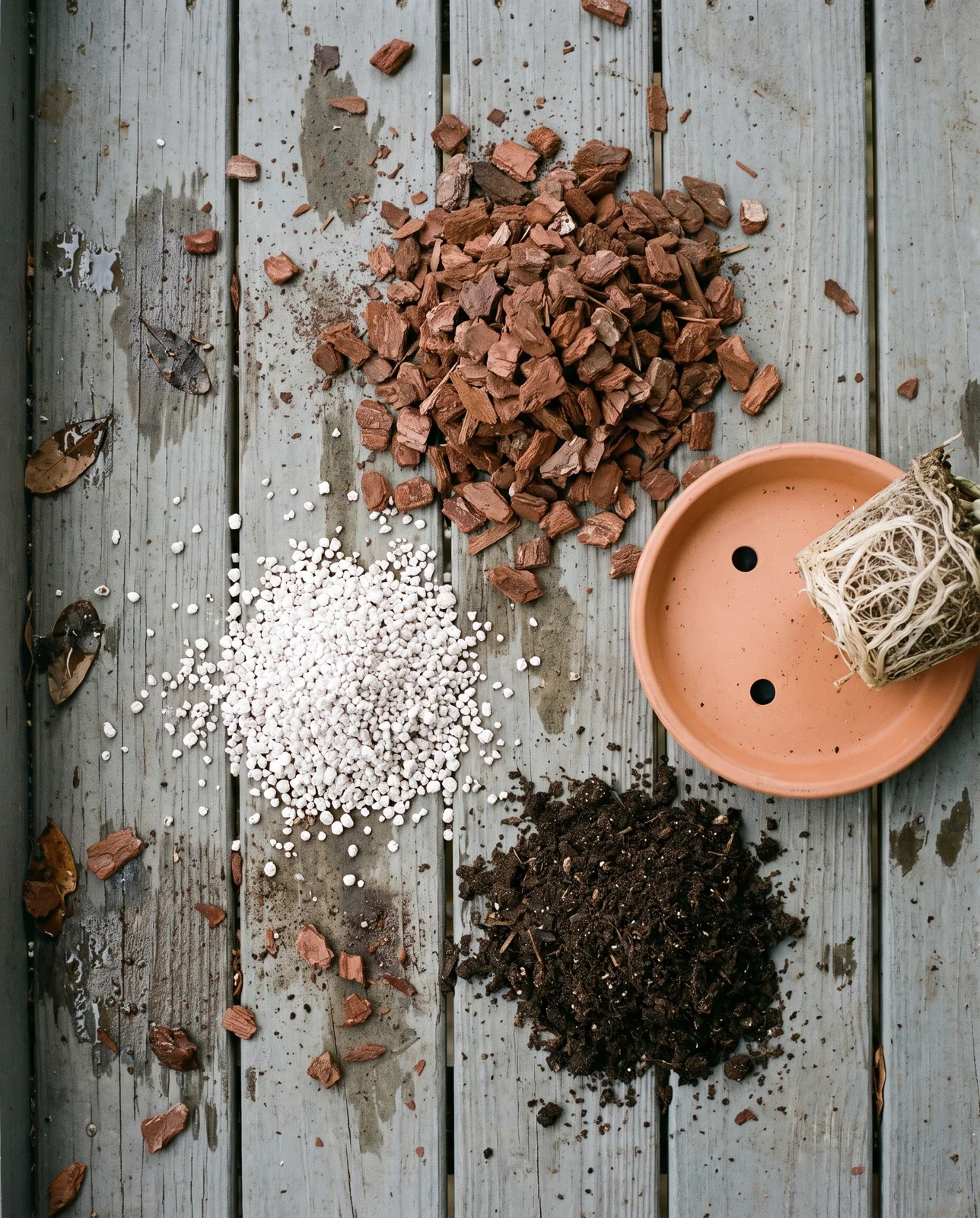
Watering follows the state of the mix and changes with the season. From mid spring to late summer the mix stays slightly moist and never soggy; let the excess drain, and never leave the pot standing in water. How dry it should get between drinks is where the advice splits. Water thoroughly once the top inch has dried, or let the top half of the pot dry out and stretch the interval further through autumn and winter. Either way it often works out at about once every 10 days, depending on conditions.
Two moments sit outside that rhythm. Through the winter rest the water drops to whatever regime you chose, from a mix kept only just moist to nothing at all for weeks on end. During bloom the roots turn sensitive to cold, so avoid cold water straight from the tap and let it stand for at least 24 hours first.
Yellow or red stems: sunburn or rot
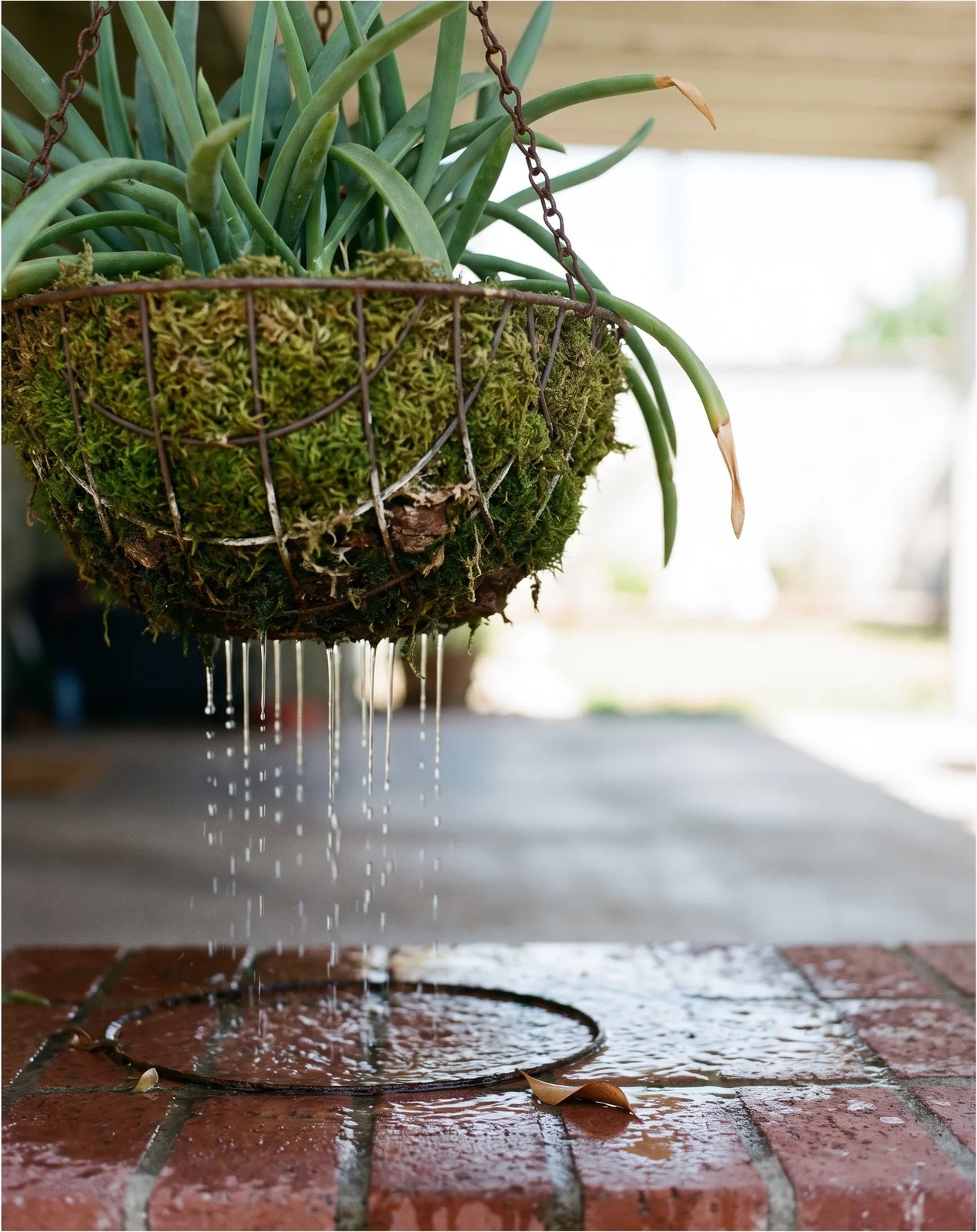
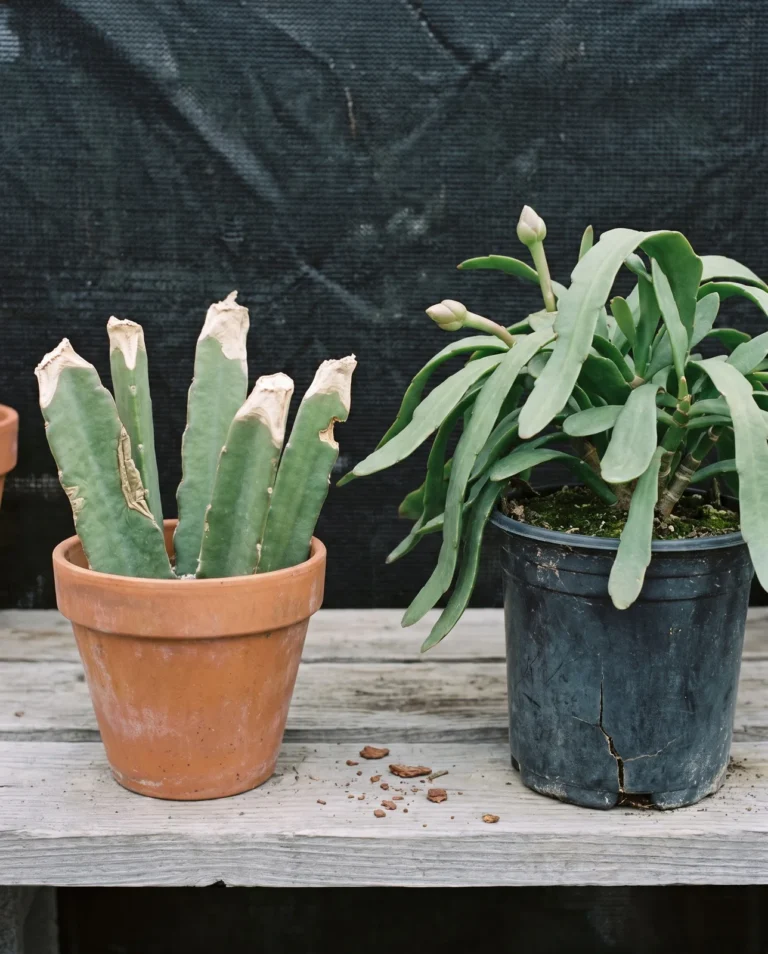
Two different problems discolor these stems and they call for opposite answers, so look at where the damage sits and what it feels like. Sun damage shows on the side that faces the light. It starts as a red tinge across the exposed surface, and bleaching can turn stems yellow where the light was strongest. On the queen of the night it appears as white or brown burnt patches. Brown crispy edges that break off easily are most likely strong sun with too little water behind it. Severe cases scar over with white, scabby material and branches may die outright, and a long spell below freezing leaves damage that looks much the same. Overwatering and fungal disease can print similar brown marks, so a brown patch alone does not settle it.
Rot works from the roots up and softens what it touches. The signs are yellowing low on the plant, growth that stalls or goes soft, and often collapse at the stem. To confirm it, slide the plant out of its pot and look. Healthy roots read yellow; rotted roots are brown and mushy, usually in soil that is still soggy. A brown, rotten base is the same problem further along, and once most of the base has gone the plant survives only as cuttings taken from what is still firm.
Not every brown patch is damage. Older stems on the queen of the night normally turn brown and hard as they age, which is called corking. Texture and position sort them: corking is firm and old, sun damage is dry and on the lit side, rot is soft and comes with wet soil.
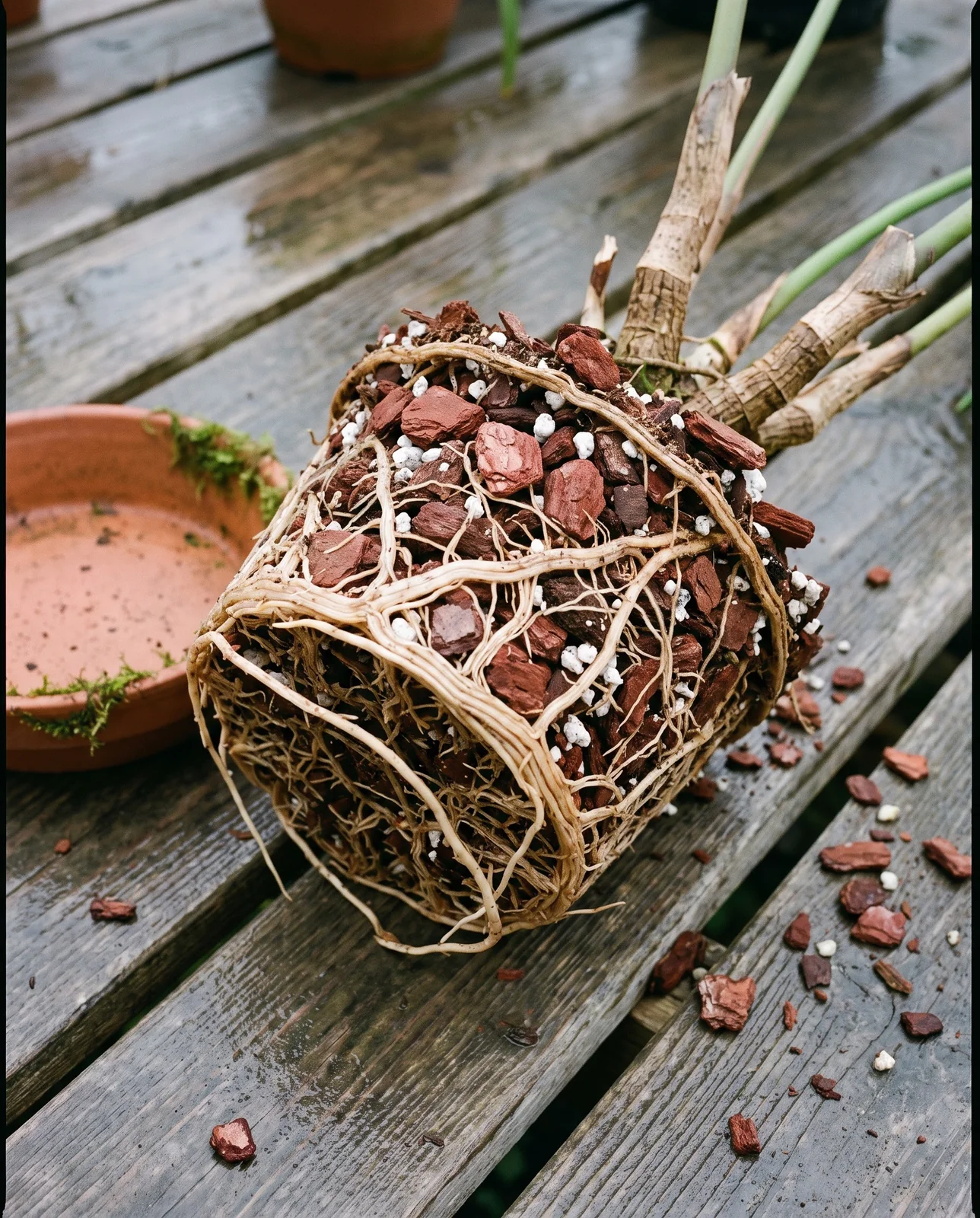
Pests, rot and disease on an orchid cactus
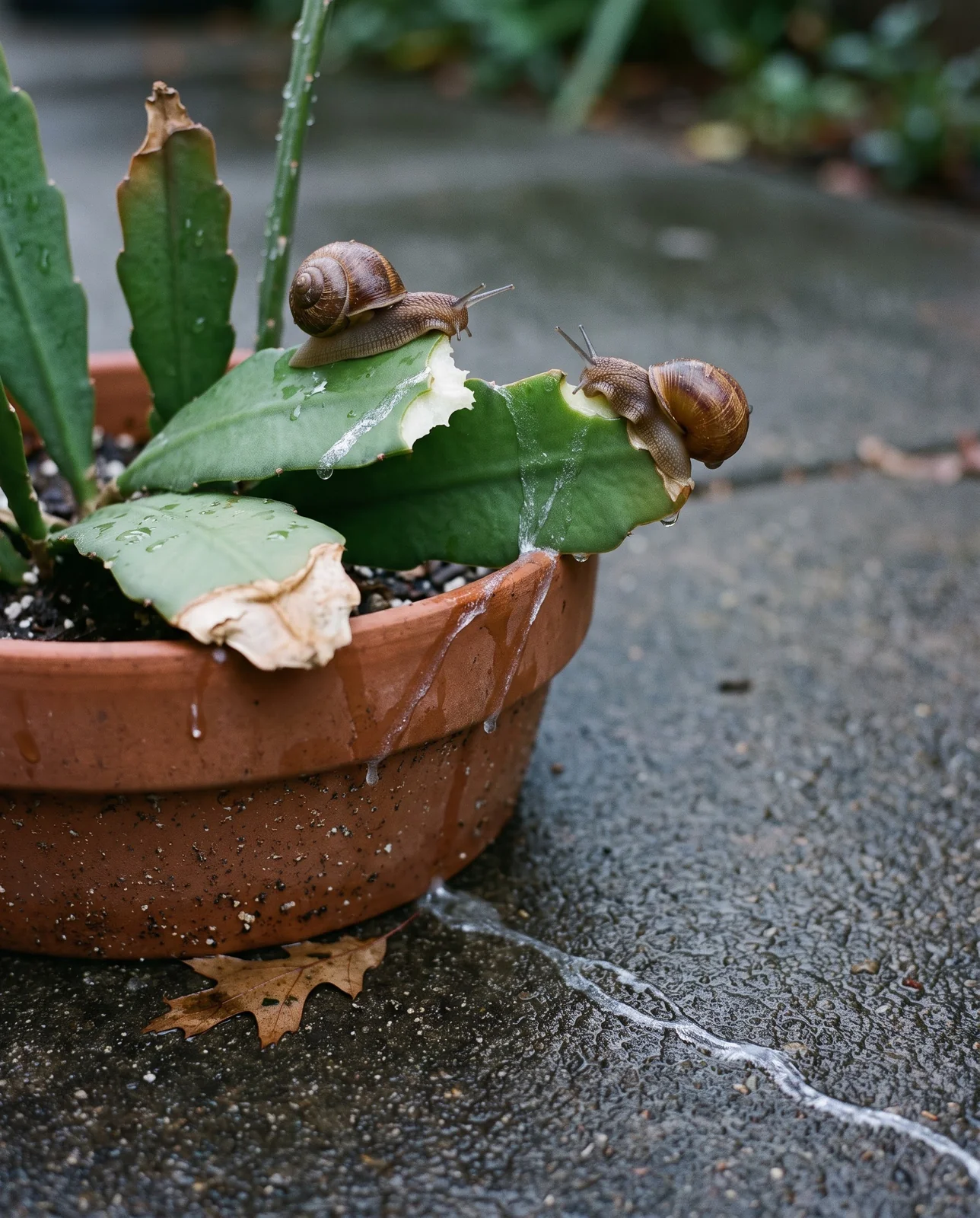
The insects on these plants are the ordinary indoor set, with snails added the moment a basket goes outside.
Both live on the flowers and foliage of the night bloomer, and mealybugs head the greenhouse pests named for this group. Look over stems and flower buds regularly.
Named alongside mealybugs as the greenhouse pests to watch for on epiphyllum cacti. The same regular check covers all three.
Snails join the list once a plant moves outdoors or lives in a heated greenhouse, and they love to eat epiphyllum branches. Keep pots off the ground or hang them in baskets.
Overwatering or poorly drained soil is what leaves the night bloomer open to root rot. The wet mix is the cause, so improve the drainage and lengthen the gap between waterings.
Poor air circulation is the condition named for powdery mildew on the night bloomer. Move it where air passes, and give a crowded basket room.
Flame-like color patterns in the flowers mark a plant as likely infected, and the virus travels on cutting tools that were not sterilized between plants. Sterilize the blade before every cut.
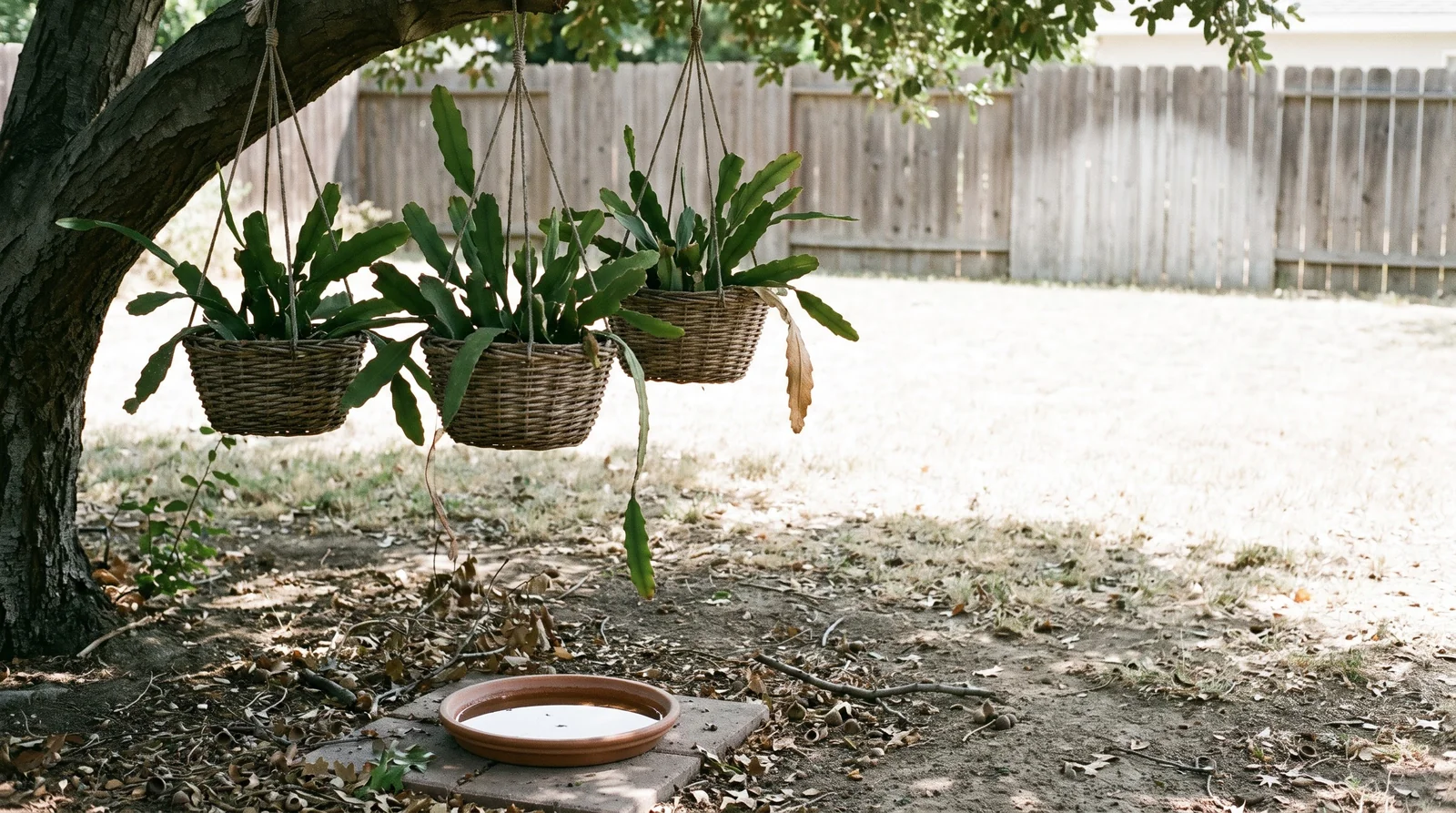
Zones, and taking an orchid cactus outside
Outdoors this is a warm-climate plant and nothing colder. Zones 10 to 12, where temperatures stay above 50F, is the usual band. The night bloomer is pinned a little tighter, at 10a through 11b or at 10b and 11. In Britain the whole group sits in the tenderest indoor class, H1a, which means under cover all year. The night bloomer gets H1b, which allows a sheltered spot outdoors in summer above 12C, about 54F.
The temperature that ends it is disputed, so work to the highest figure. Most of these cacti will not survive below 10C, 50F, and a plant summering outdoors comes back in by early autumn, before local nights reach that mark. A stricter line puts permanent damage below 15C, 59F, with flower loss, stunted growth and blackened or yellowed leaves. For the night bloomer the line drops again, since frost or temperatures below 40F can damage that plant. Indoors it belongs with the tender succulents that cannot take a cold night, the kalanchoe among them.
Varieties worth telling apart
Several species and a long list of hybrids sell under one trade name. What separates them is the flower, the hour it opens and the price.
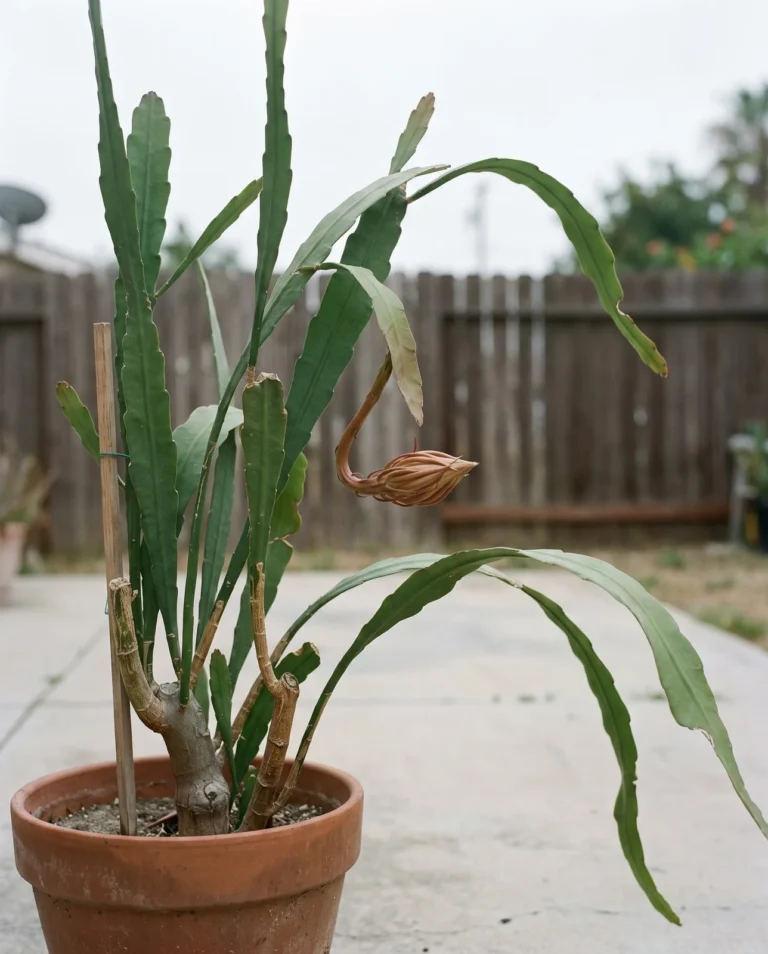
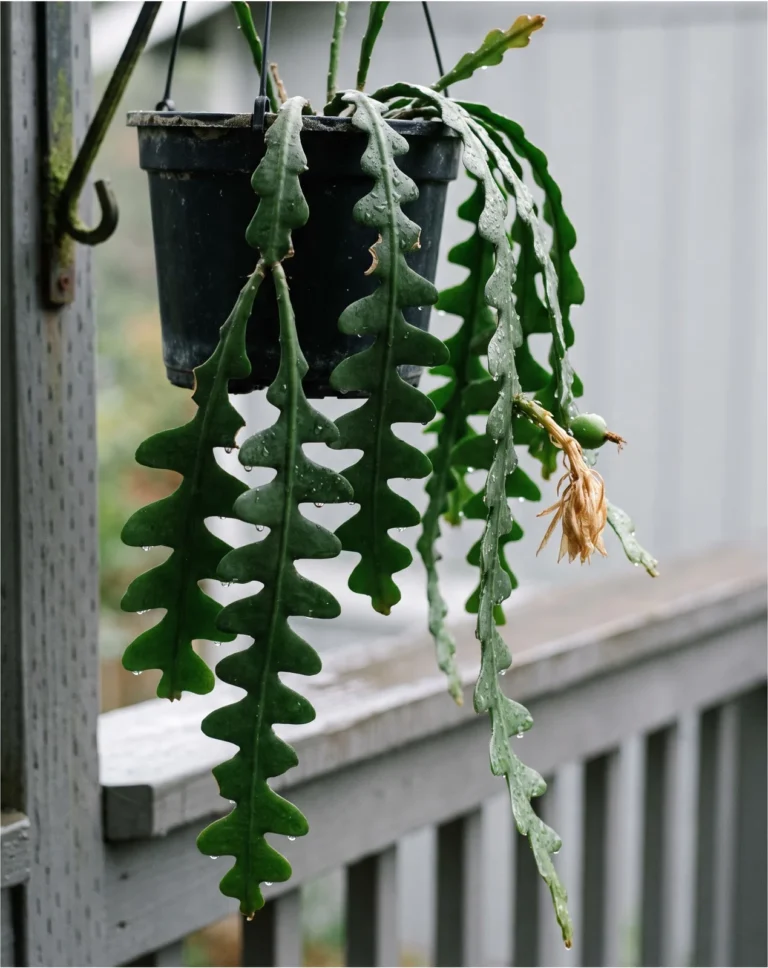
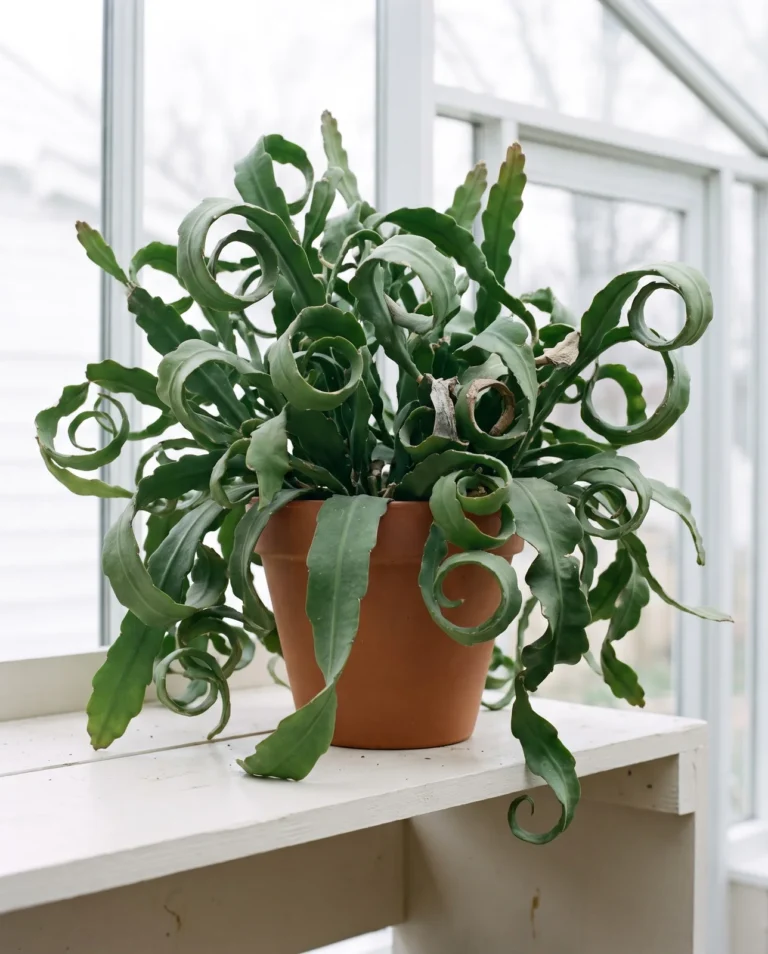
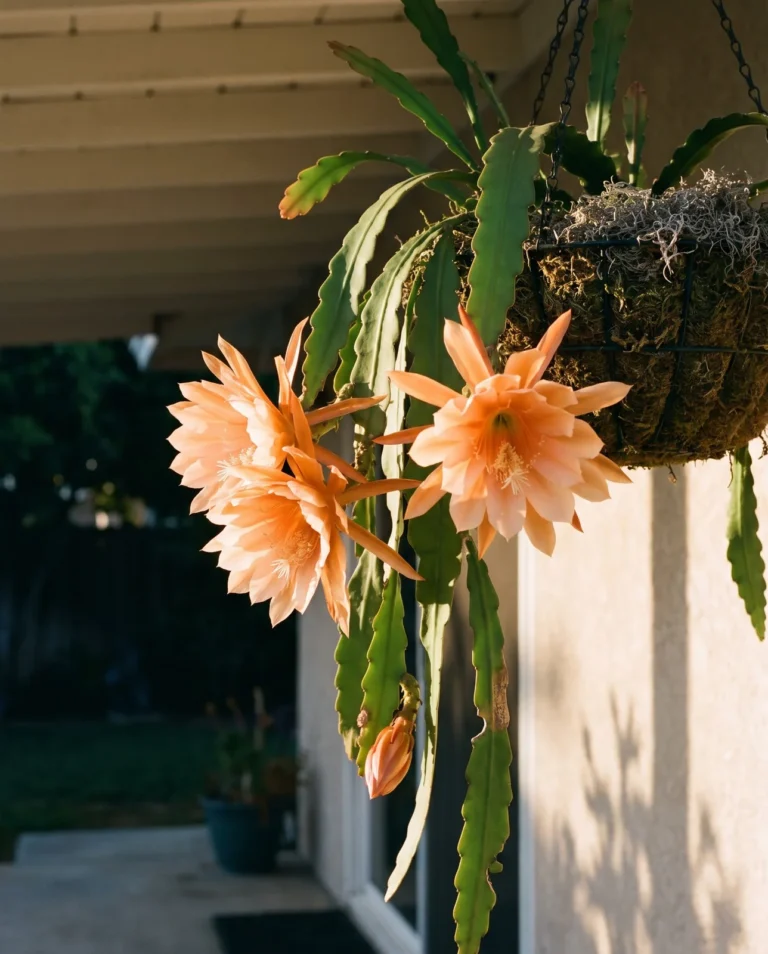
Growing a new plant from a cutting
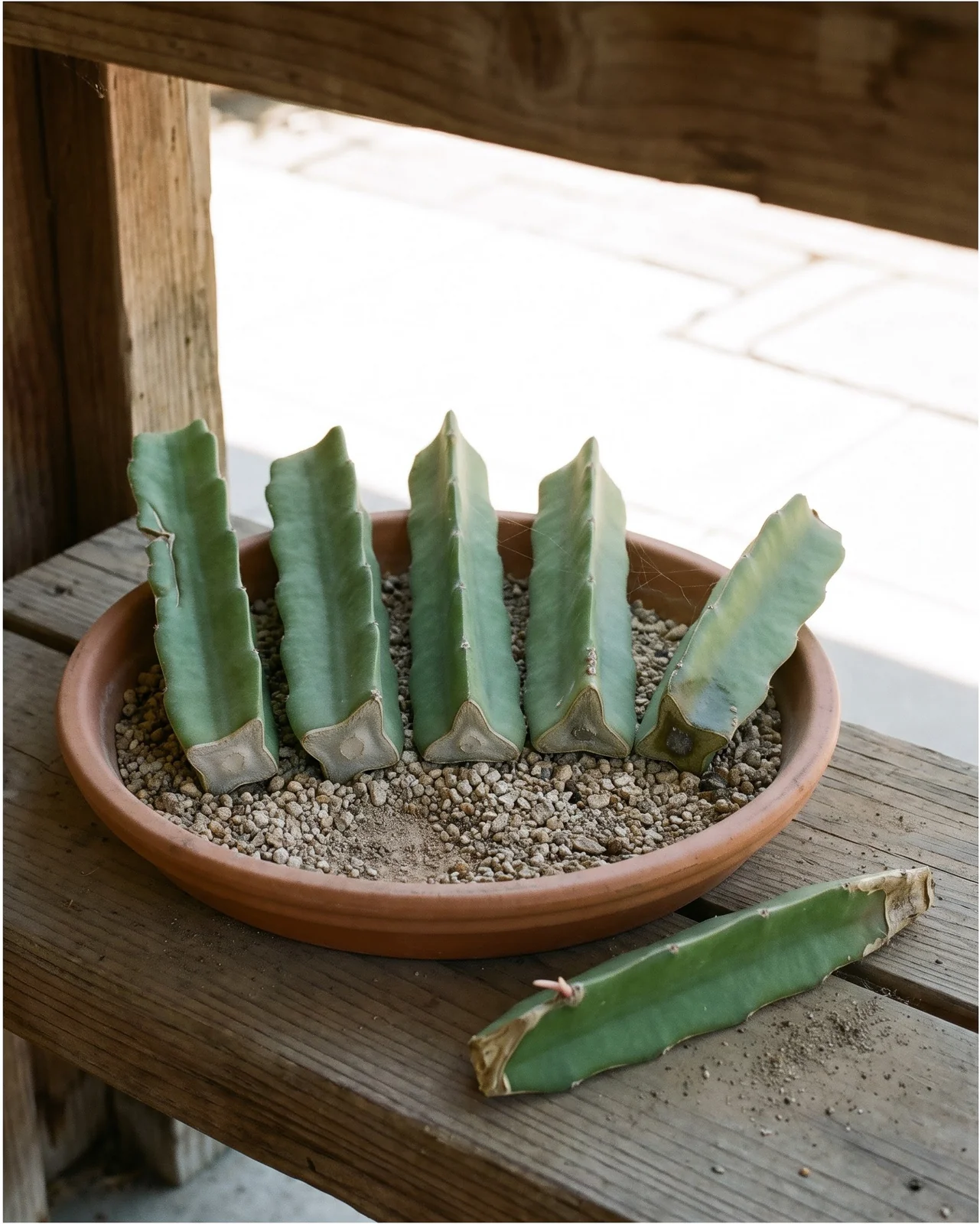
A cutting is a length of stem, dried until the wound seals, then potted. Take sections of 15 to 23cm, 6 to 9 inches, and let the cut ends dry and harden in a warm place for several days before they go into mix. Longer curing in colder conditions works too, at least ten days somewhere cool, dry and dark, and a 6 to 8 inch cutting callused for one to two weeks sits between the two. For the night bloomer, take a shorter piece, 4 to 6 inches, cut just after flowering, and callus it for a few days. The disagreement is only about days and warmth: every version waits for the cut to seal before planting.
Roots come next, and they are not quick. Rooting takes three to six weeks, new roots typically establish in two to six, and one cutting showed two tiny roots about six weeks after it was taken. All of that lands inside the same month and a half. A cutting that has not rooted after four weeks is still inside the normal window.
Repotting, and why it happens rarely
As rarely as the plant allows, and after the flowers are over when it cannot be avoided. These cacti flower best when slightly rootbound, they rarely need repotting at all, and a move that has to happen waits until after flowering and disturbs the roots as little as possible. Two calendars stand against that advice. One repots every two to three years, in spring, before growth starts, and only one pot size up. The other gives three years for the group and two years for the night bloomer, again in spring. They are different instructions: one waits for the roots to demand a move, the other works to a date.
Feeding an orchid cactus
Feed lightly, and only while the plant is growing. A cactus fertilizer every two weeks from early spring to autumn suits it, and these plants come from a low-nutrient place, so overly generous feeding can damage them. Keeping nitrogen down works as well: a balanced 10-10-10 at half strength, once a month from June. Counting waterings works too: every fourth watering in spring and summer, every sixth in the colder months, with a potassium-based tomato feed while the plant is budding or in bloom. One warning holds whichever schedule you follow: a ready-to-use feed poured onto dry soil can burn the roots and yellow the leaves, so the mix takes plain water first.
Humidity and room temperature
Ordinary indoor warmth suits it. The range the group wants is 10 to 26C, 50 to 78F, and the night bloomer takes 50 to 80F, which is most of what a heated house already provides. Humidity is the part that splits. One instruction stands the container on a tray of damp gravel with the water level below the base of the pot, so the mix does not become waterlogged while the air around it stays moist. The other says average room humidity is enough, and keeps the pebble tray for plants standing near a radiator or another heat source. On that second reading it can share a room with a peace lily or any other foliage houseplant without special equipment.
Baskets, weight and support
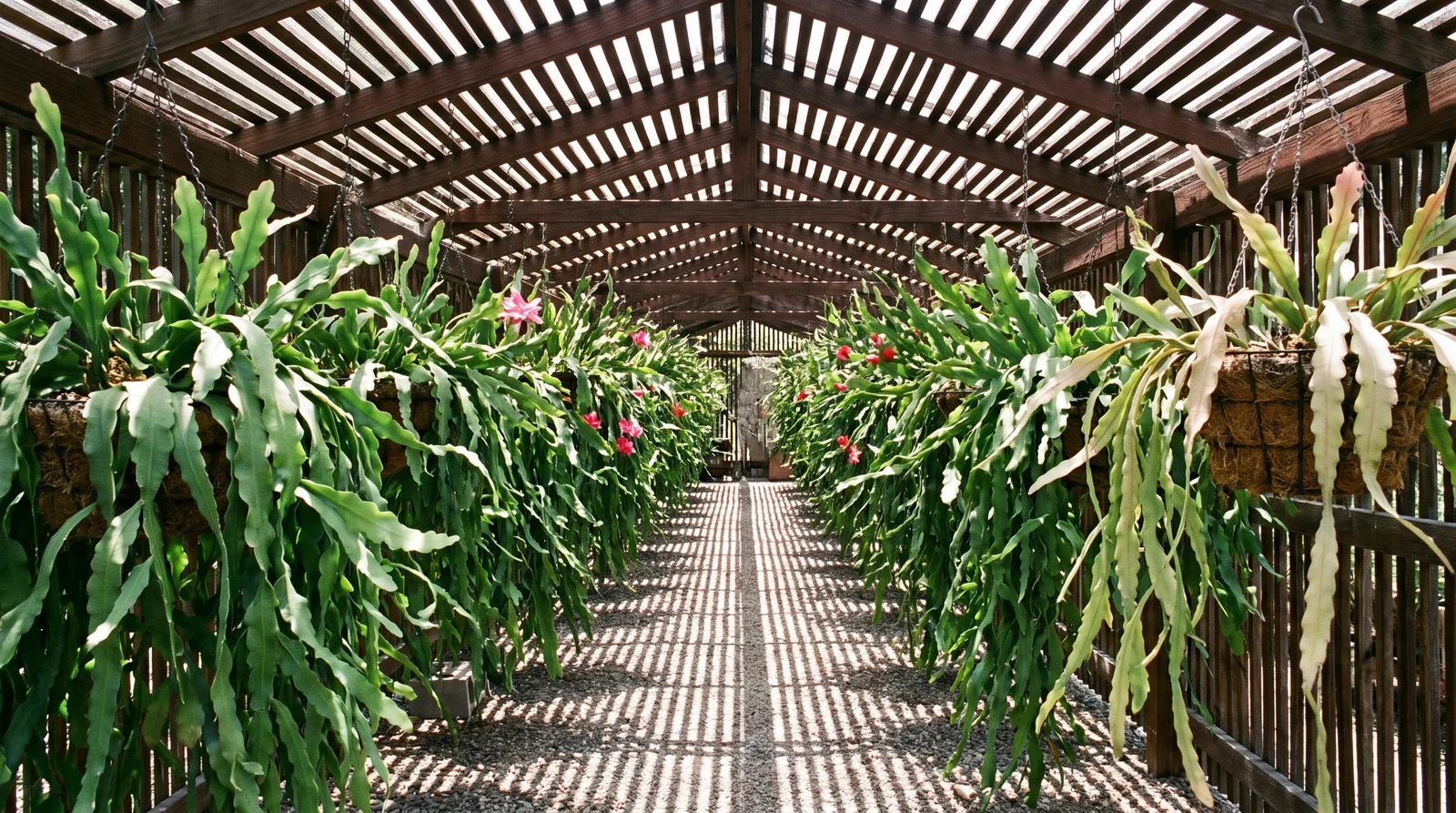
Height is the point of a basket here, because the stems are built to hang. These are tree-dwelling epiphytes whose habit is to hang, so specialist growers raise their orchid cacti in hanging baskets, and patios and hanging baskets are where trailing stems show to best effect. Larger plants can become unstable under the weight of those long stems. The answer is a heavier, shallower pot instead of canes and string, which look unsightly.
How long each flower lasts
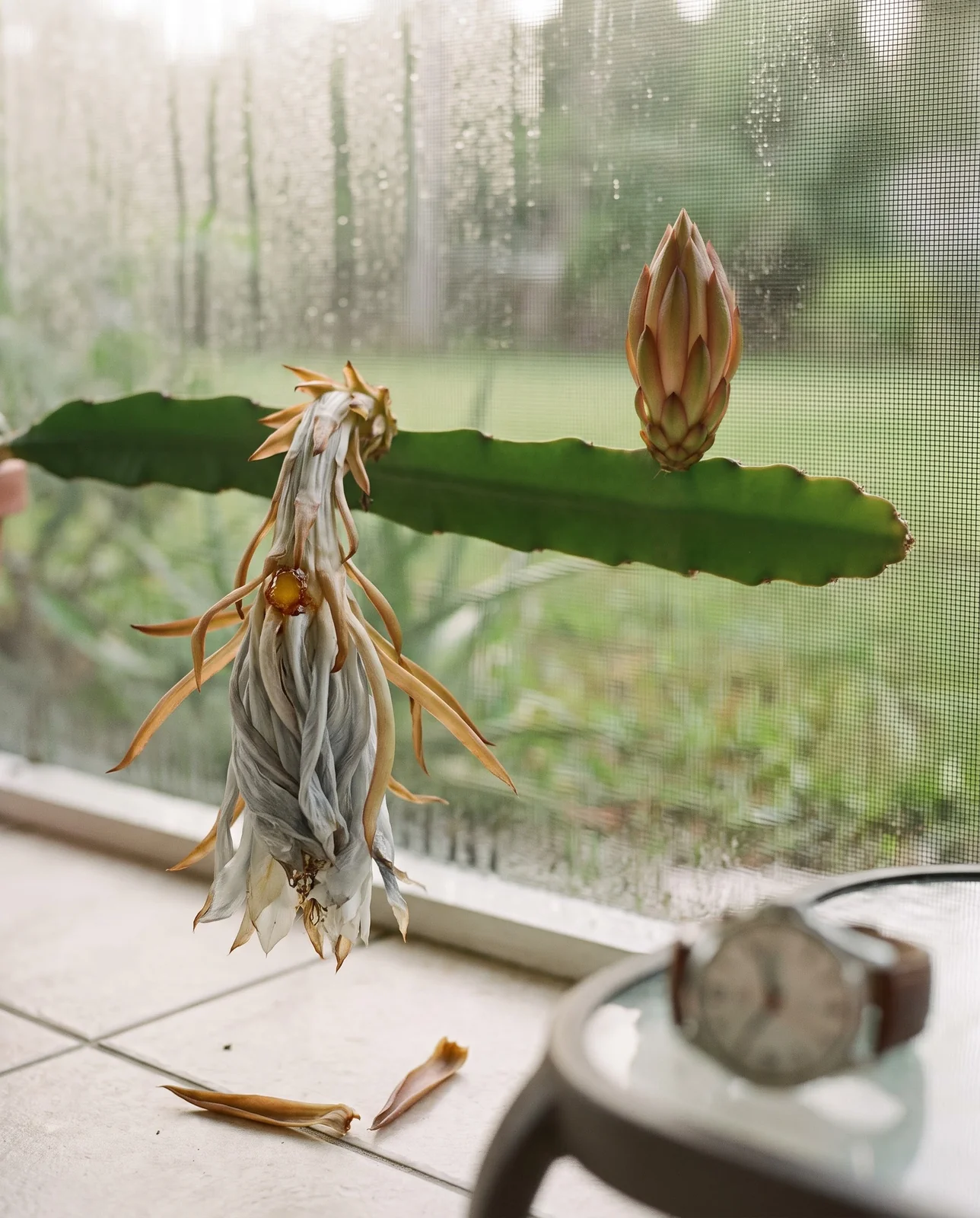
A day or two for most of them, and a single night for the famous one. Flowers of the night-blooming kinds are short-lived, often lasting just a day or two, while daytime bloomers tend to last a little longer. Buds take several weeks to develop and then last only a few days once they open. The red orchid cactus sits at the long end: its flowers open in the afternoon or evening and stay open day and night for several days, usually about three. The queen of the night is the other extreme. That flower opens after sunset, stays open through the night and is closed by morning, six hours at the outside before it wilts. Its bloom period still runs several weeks, because the flowers come in succession.
Two conditions stretch or shorten whatever the variety offers. Blooms tend to last longer in cool weather and to wilt more quickly in hot weather, and a flower lasts longer left on the plant than it does cut. That settles the vase question: cutting a bloom already measured in days shortens what is left of it.
Old plants and inherited ones
An orchid cactus can outlive the person who bought it. One inherited plant stood neglected and barely watered for years, then recovered and bloomed again once it was repotted into fresh succulent mix. Age brings size with it, and the figures are not modest. Some specimens of the night bloomer reach up to six feet despite being epiphytes, and one was photographed at seven to eight feet.
What to expect, year by year
Year one is roots and stems. A rooted cutting spends its first season making growth, and the wait for a first flower depends on what you started with: a stem cutting can reach flowering size in only a year, an unrooted cutting usually needs at least three, and a leaf cutting takes three to six.
A plant that arrives already rooted and growing usually blooms in under three years. Seed is the slow road, and seed-raised plants may take four or more years to flower, with seven at the far end.
Full maturity takes years as well, up to eight for the hybrid group and up to five for the night bloomer. A plant of that age fills its basket and hangs well below it.
Three things people get wrong
All three of these get repeated often, and all three are wrong.
The myth: It is a desert cactus, so it wants a sunny windowsill.
The reality: These succulents are epiphytes from tropical rainforest. They cling to bark or settle into the fork of a branch, well away from open ground and open sun.
The myth: Yellow stems mean the plant is thirsty.
The reality: Leaves that yellow and soon drop, little to no growth and root rot underneath all point to over-watering.
The myth: It flowers all summer.
The reality: The height of the flowering season is April through June, and blooms outside that window are only occasional.
FAQ
Is an orchid cactus poisonous to cats and dogs?
Nobody has ruled on it. The ASPCA database of toxic and non-toxic plants holds no entry for Epiphyllum, Disocactus, the queen of the night or orchid cactus. The red orchid cactus is called generally non-toxic to people and pets, and the queen of the night is not known to be toxic. Treat it as unlisted and keep it away from an animal that chews leaves.
Is an orchid cactus safe around children?
The same gap applies. Orchid cacti are called generally non-toxic and non-poisonous, with the warning that eating a large quantity could cause vomiting, nausea and loss of appetite. That is a stomach upset, and it still argues for a high shelf.
How often does an orchid cactus bloom?
Mostly in spring. The flowering season runs from February to June for most varieties, and its height falls between April and June, with the occasional bloom outside that.
Can I put my orchid cactus outside?
In summer, and in shade. A basket can hang in a window or move outdoors to a shaded spot for the summer, and these plants are happy to spend the summer outside.
Does an orchid cactus produce fruit?
The night bloomer does. Purplish-red edible fruit follows the flowers, though fruiting is rare in cultivation. The spent flower itself becomes edible once it begins to wilt.
Are orchid cacti hard to grow?
Not especially, with watering as the exception at both ends. These cacti can live for many years given the right conditions, and they are susceptible to over-watering and under-watering alike. Bright filtered light and fast-draining soil covers most of the routine.
Should I cut off browning stem tips?
Cut them, and cut on an angle above a node.
Why is it also called a fish bone plant?
That nickname belongs to Epiphyllum anguliger, one of the plants sold under the same trade name, and it comes from the deeply zigzag lobed stems. The drier the happier is the short version of its watering.
Where do you buy an orchid cactus?
From specialist nurseries and sellers of cuttings. Unrooted cuttings, established plants and rare cultivars sell side by side, and price follows the tier.
Interesting tips
- Take the longest cutting on offer. Shorter pieces still root, but the plants they make take longer to reach flowering size.
- A newly planted cutting gets no water for two weeks, and its first drink waits until it shows new growth.
- Brown flecks on a stem that scrape off under a fingernail are scale insects, which tells them apart from a disease.
Related Guides & Flowers
Orchid
The family this plant was named after and does not belong to.
Anthurium
Another tropical houseplant grown indoors for its flowers.

Flowers safe for cats and dogs
Which flowering plants carry a clear pet-safety listing, and which do not.

Types of flowers
The full guide to flower types, from houseplants to garden shrubs.
Enjoying our flower guides? Add YourFlowersGuide as a preferred source on Google. It helps more readers find us.
Add to Preferred Sources