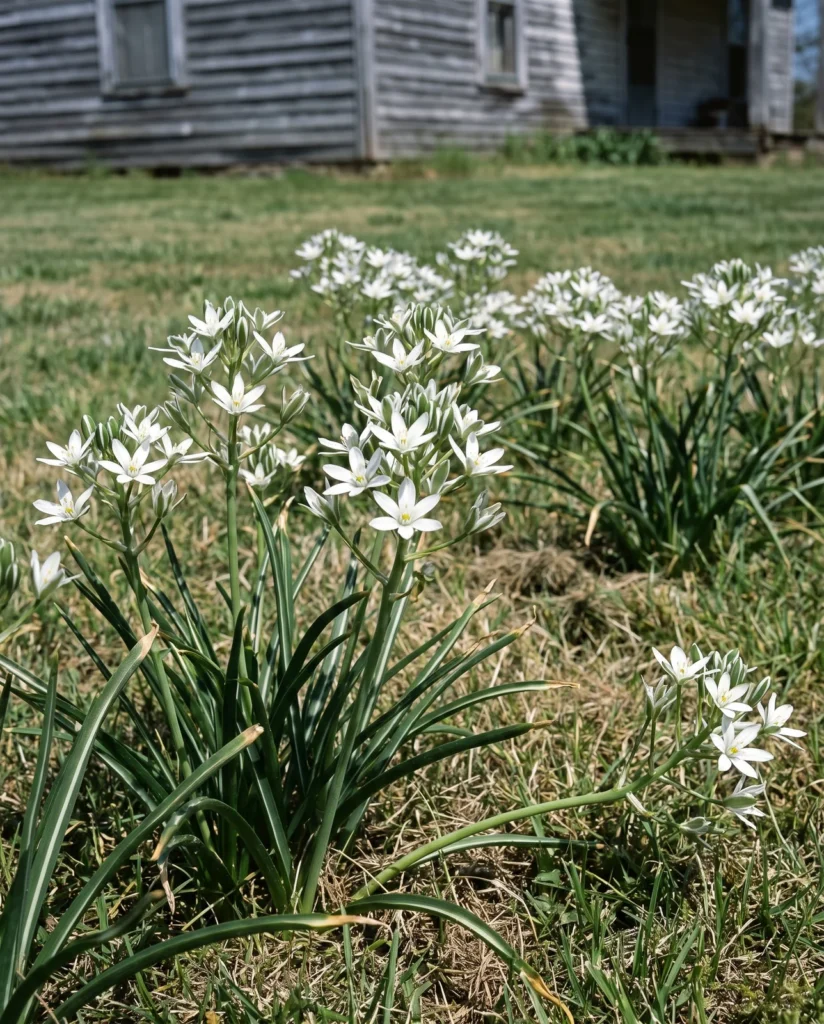
Two plants under one genus name
Ornithogalum is a genus, and the two plants sold under that one word want opposite handling. The hardy white star naturalizes outdoors on its own; the tender orange one has to come in before frost. How many species stand behind the name is unsettled: published counts run to about 150, about 180 and 220, and accepted totals have ranged from 50 to 300. Gardeners meet only a handful of them.
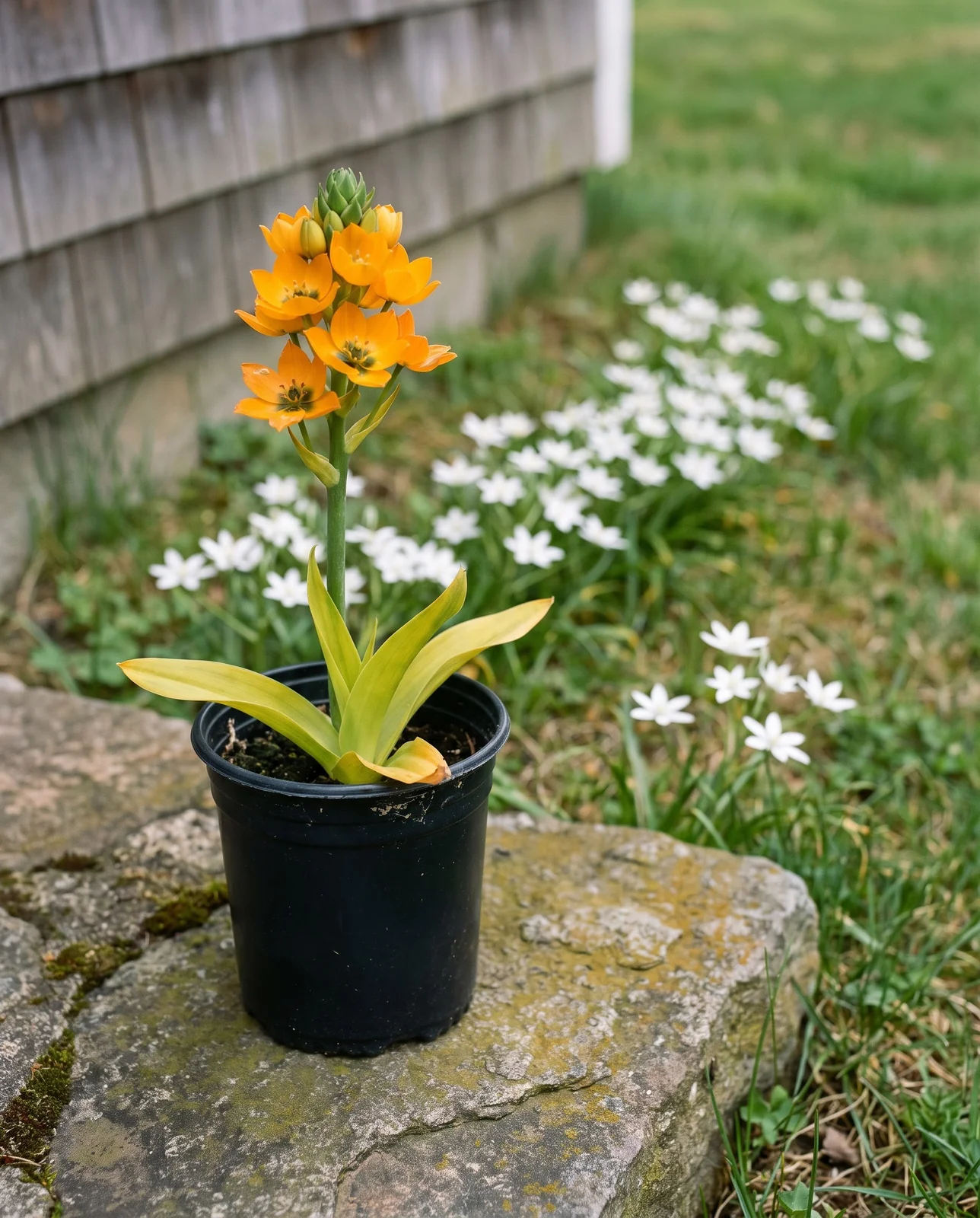
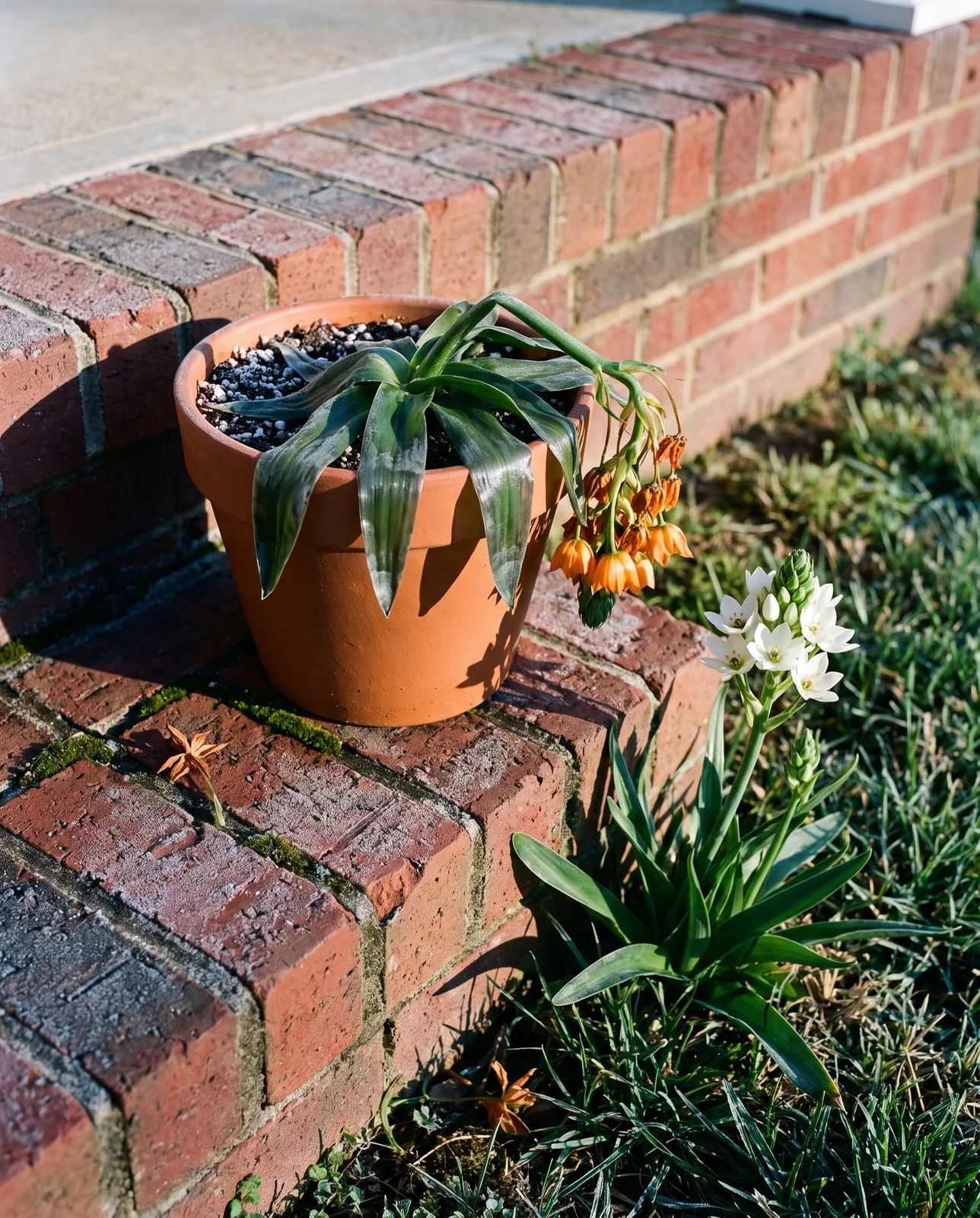
The names start the trouble. Star of Bethlehem belongs to the white species and is given as a common name of the orange one too, which also answers to sun star, orange star, yellow chincherinchee and orange star flower. Nothing on a supermarket label sorts that out, and buyers who pick up an orange star have to ask whether it can go outside at all. Kept in a pot it wants more water. Both are bulbs, both open star shaped flowers, and only one lives through a winter in open ground.
The split decides more than a watering schedule. The white species is flagged weedy and potentially invasive, with Midwestern gardeners told not to plant it at all. The orange one is sold the way a supermarket amaryllis is, potted and in flower. One bulb goes outdoors and is then left alone; the other is planted in spring, watered through growth, then lifted and overwintered frost free, or kept dry in its container and repotted in spring.
Which one did you buy
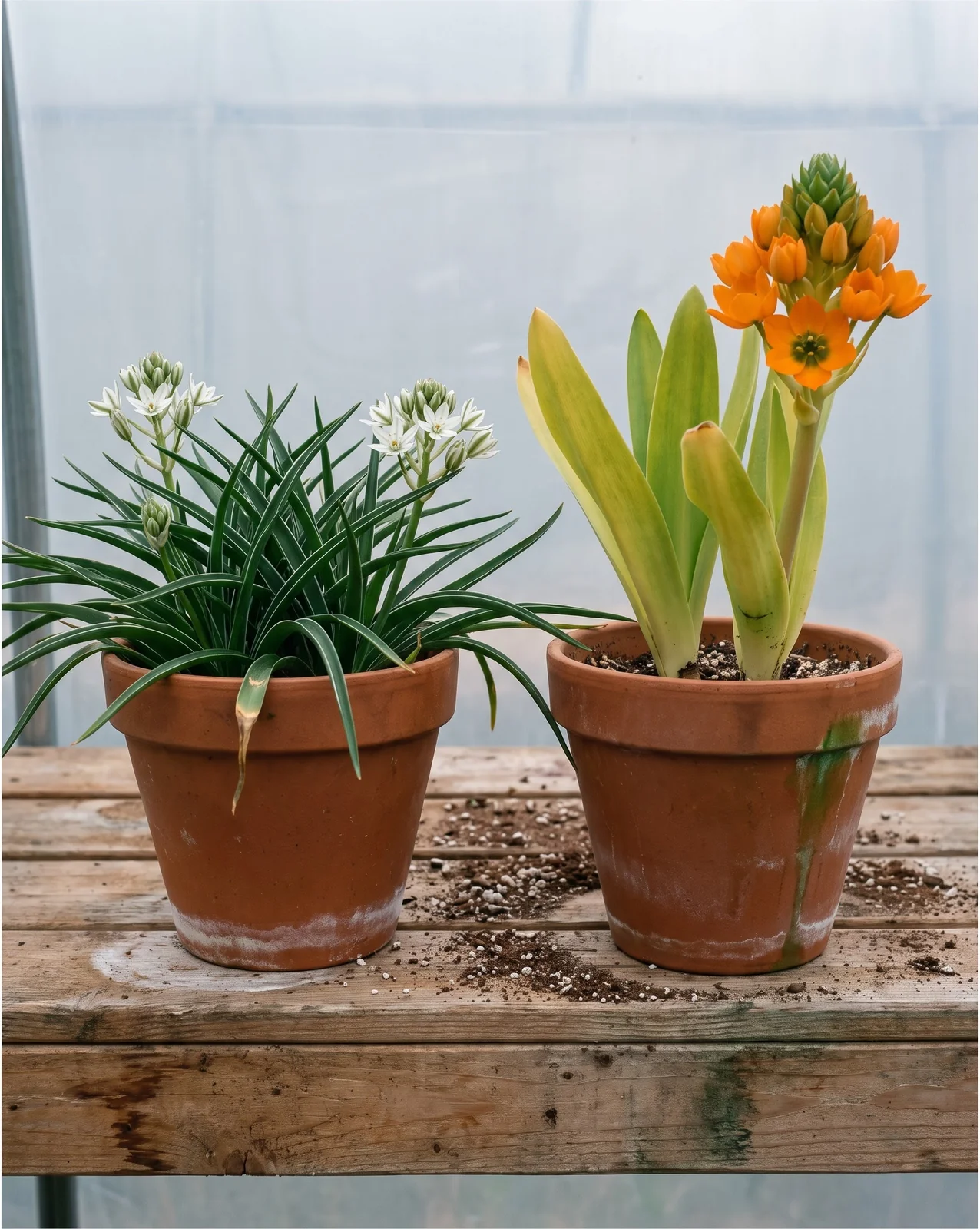
Flower color, leaves, where it was sold and what happens in winter separate the three kinds sold under this name. The tag rarely does.
What the plant is and how to know it on sight
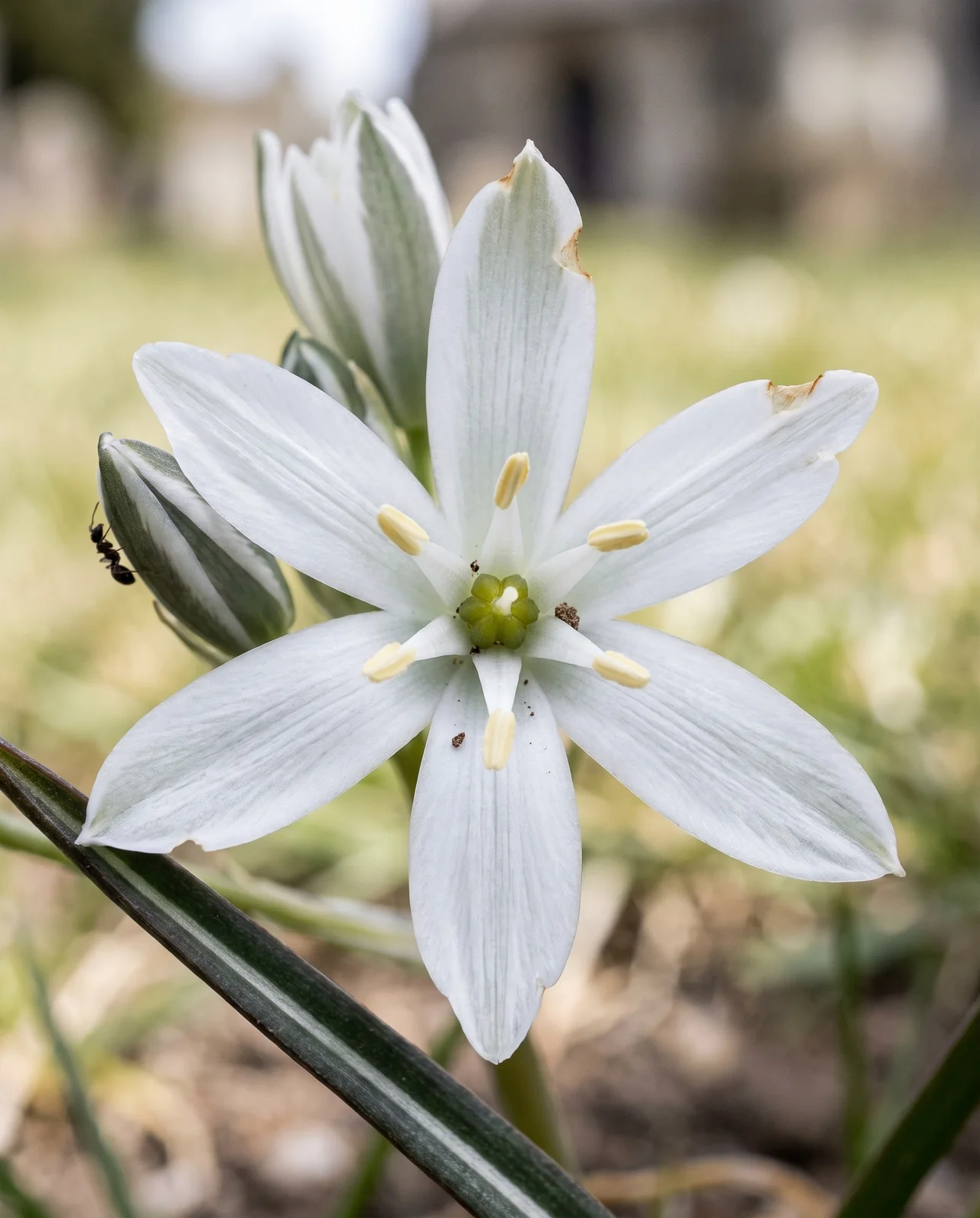
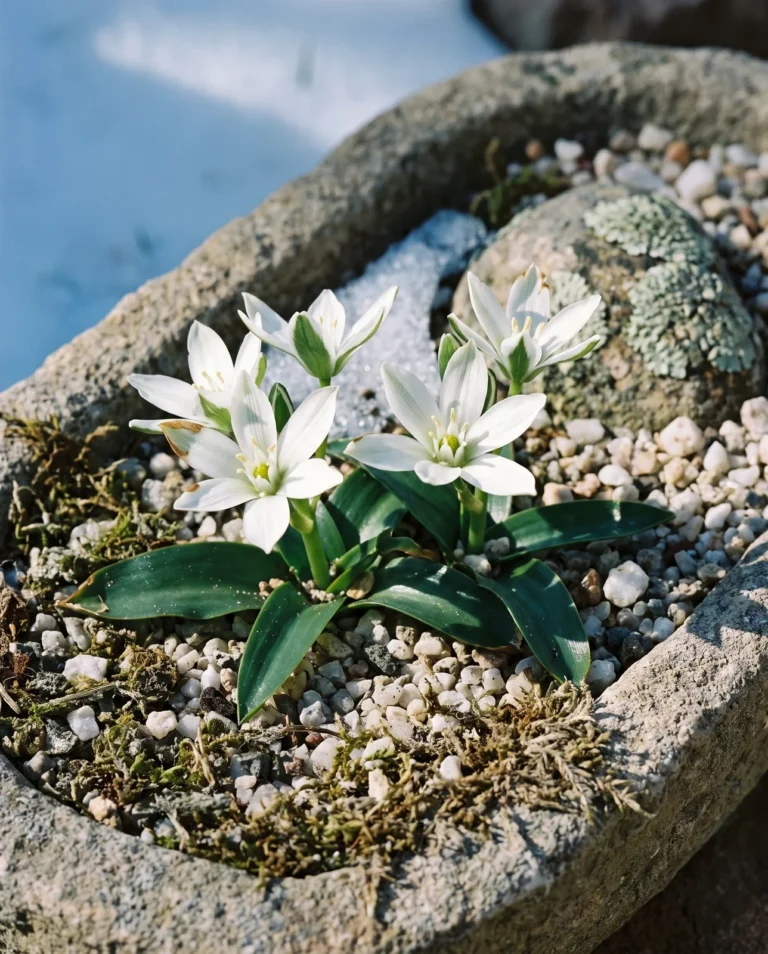
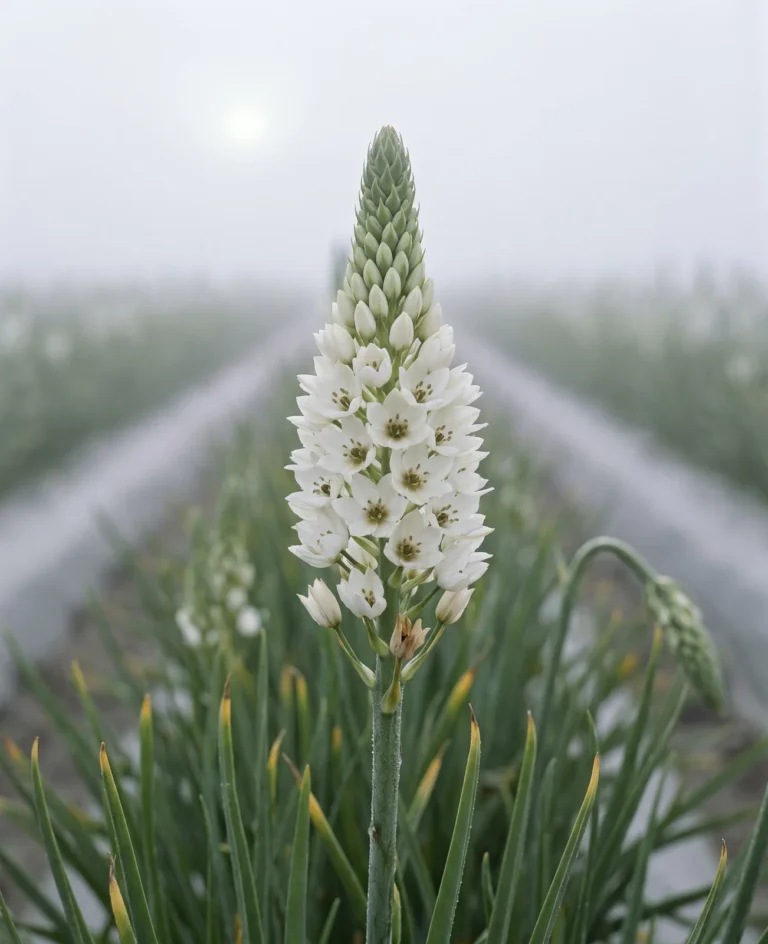
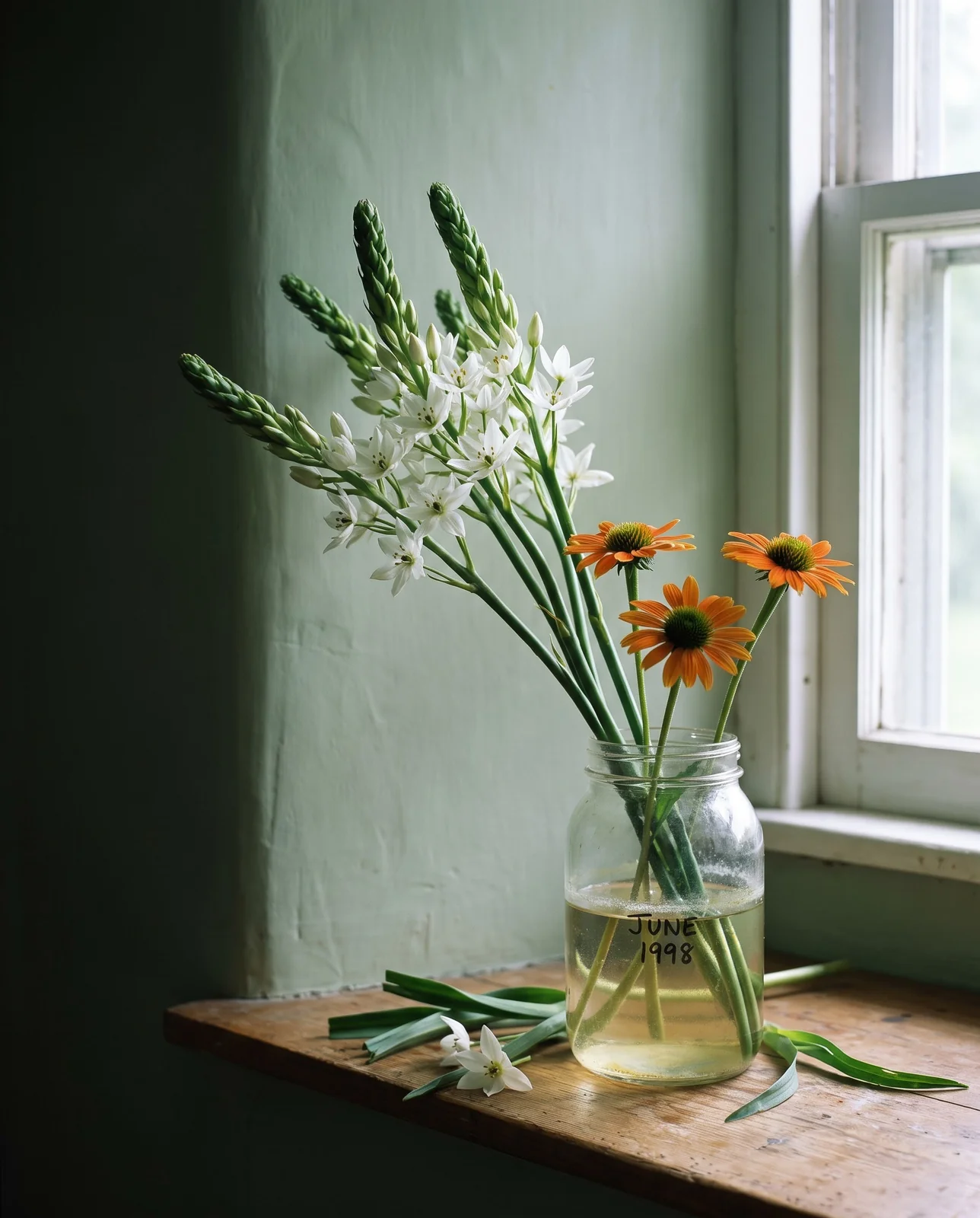
The flowers are white six pointed stars, and the green stripe down the outside of every tepal is the identification. Stalks stand 6 to 9 inches tall and carry 10 to 20 flowers about three quarters of an inch wide. They open near noon and close at sunset or in cloudy weather, and the folk names come from that habit: eleven o'clock lady, nap at noon, Jack go to bed at noon, sleepy Dick, dove's dung and summer snowflake. The genus name is built from the Greek for bird and milk, after the white flowers of the type species.
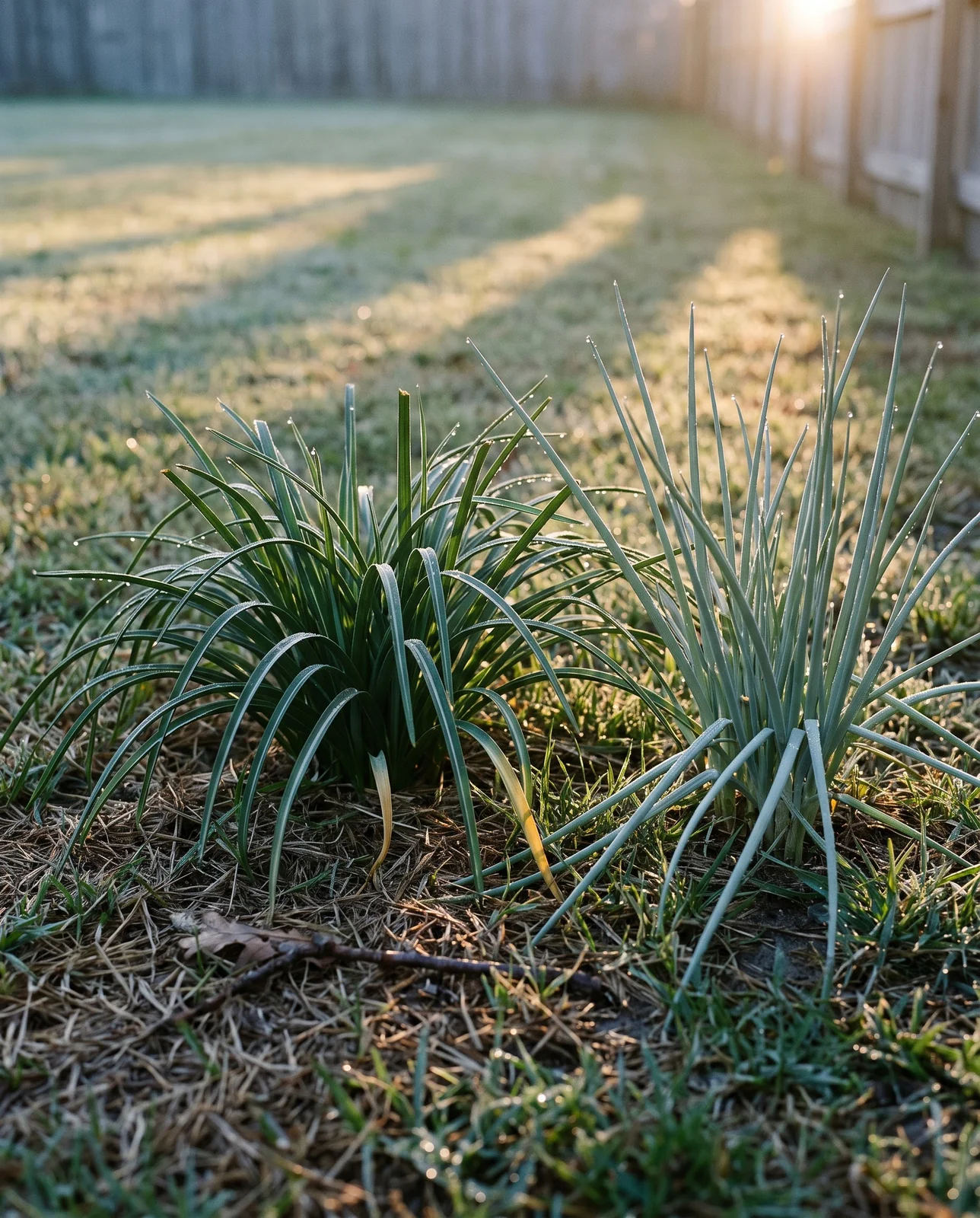
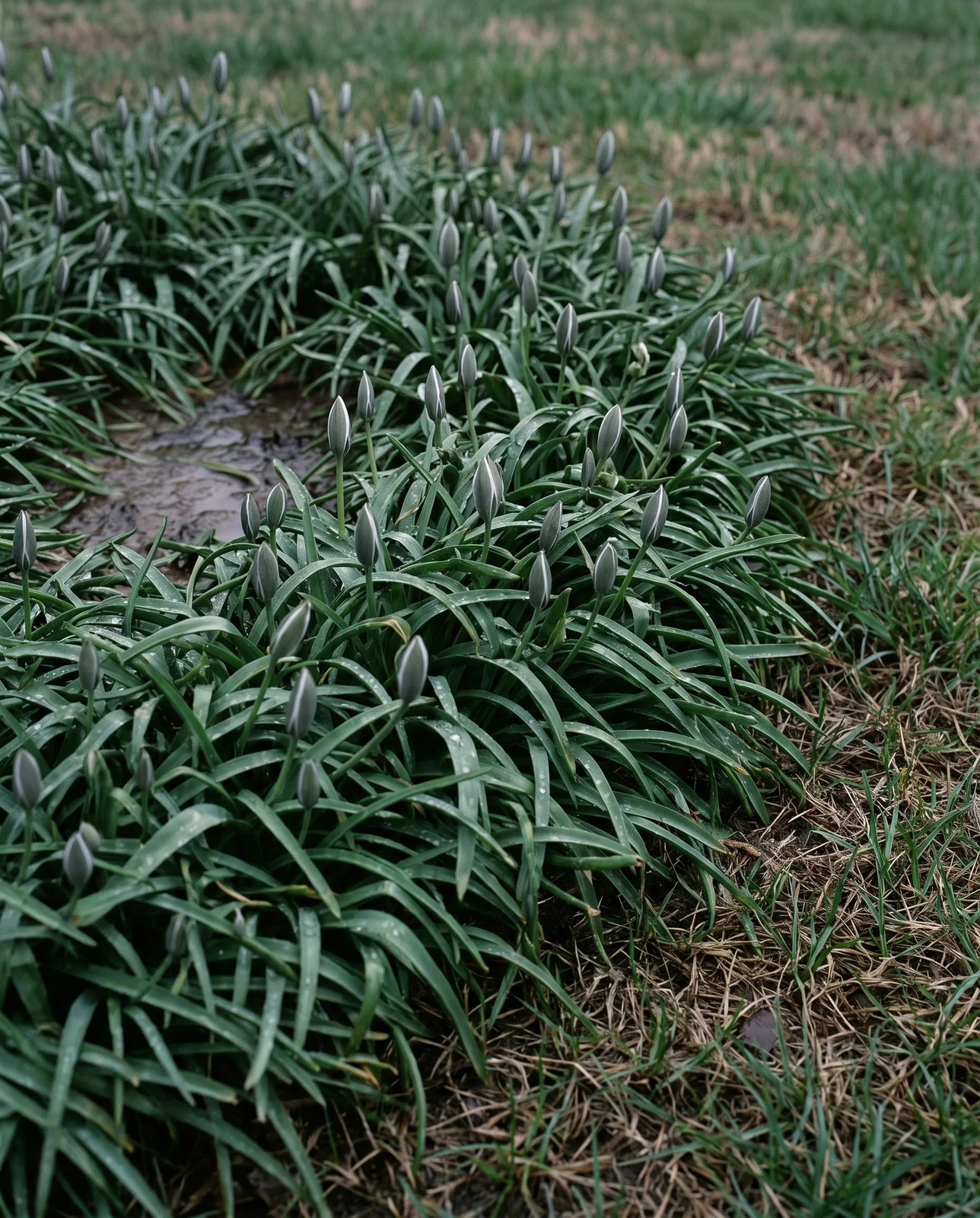
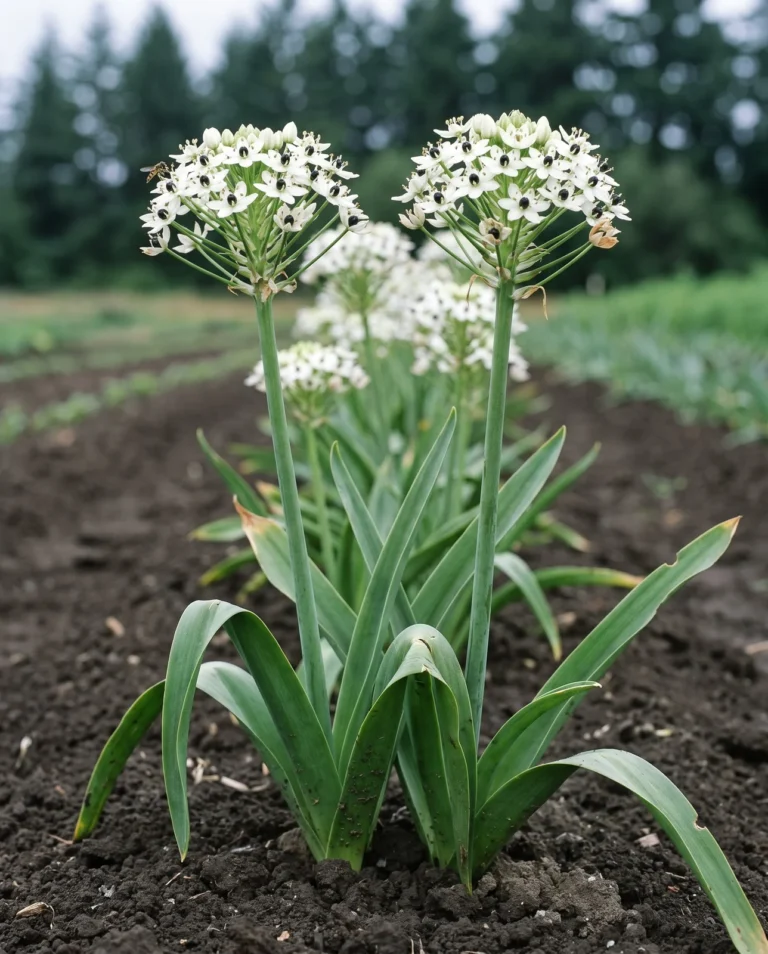
The leaves come up first, usually in a lawn in early spring. They are hollow and dark green with a waxy coating and a white mid-rib down the center, and they arch over the grass while wild garlic stands straight up. Crush one and there is no odor at all, which settles a mix-up common in home lawns: wild garlic and wild onion give themselves away by smell and this plant has none.
In English the name seems to date to the Middle Ages, possibly to the Crusades, when bulbs traveled home as pilgrimage souvenirs. The dove's dung sold for five pieces of silver during the famine in Samaria, in 2 Kings 6:25, has been read as the bulbs of this species. Leonardo drew the plant and put it in Leda's left hand.
How poisonous ornithogalum is
Star of Bethlehem is poisonous eaten, by people and by livestock, and handling it can irritate skin. Saponin is the toxic principle, the flowers, roots and stems are the poisonous parts, and contact dermatitis goes with it. The bulb and flowers also carry two cardiac glycosides, convallatoxin and convalloside. Poisoning brings nausea, vomiting, diarrhea and shortness of breath, with burning and swelling of the lips, tongue and throat. The bulbs have been eaten for 2,000 years, in traditional Turkish cooking and Indian traditional medicine, and medical advice is still to eat no part of the plant.
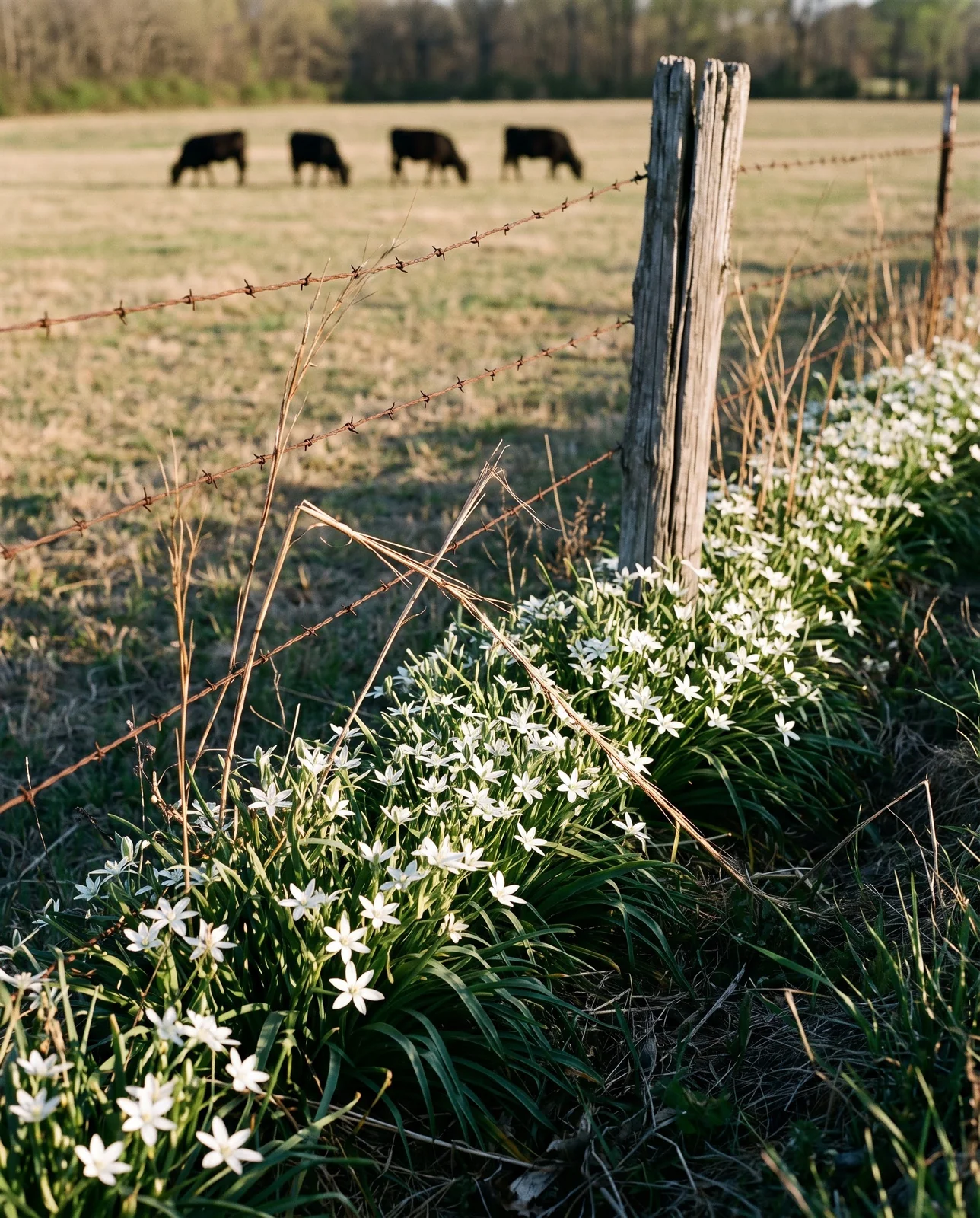
The entire plant is toxic to livestock, the highest concentrations in bulbs and flowers, and the foliage and bulbs hold alkaloids that can poison stock, though cooked bulbs are reportedly edible to people with caution. A colony flowering along a pasture fence in spring is the situation those warnings are written for.
Pet advice comes apart inside one organization. NC State Extension rates the white species medium in poison severity, saying the bulbs or flowers can cause gastric problems and the plant can cause dermatitis in sensitive people, while its genus overview tags Ornithogalum non toxic for cats, dogs and horses. Same body, opposite answers. The Royal Horticultural Society calls the white species harmful if eaten and toxic to dogs, cats, rabbits and rodents, and tells gardeners to wear gloves. The orange sun star gets the identical warning, and is separately reported toxic by ingestion.
The database most American pet owners check has nothing to give. The ASPCA plant list returns no result for star of Bethlehem, ornithogalum, chincherinchee, sun star, dove's dung, snake flower, wonder flower, sleepy dick, nap at noon, summer snowflake or Arabian starflower. Its orange star entry belongs to a bromeliad, Guzmania lingulata minor, rated non toxic to dogs, cats and horses. Read as an all clear for a pot of sun star, that is the wrong plant.
Planting the hardy white one outdoors
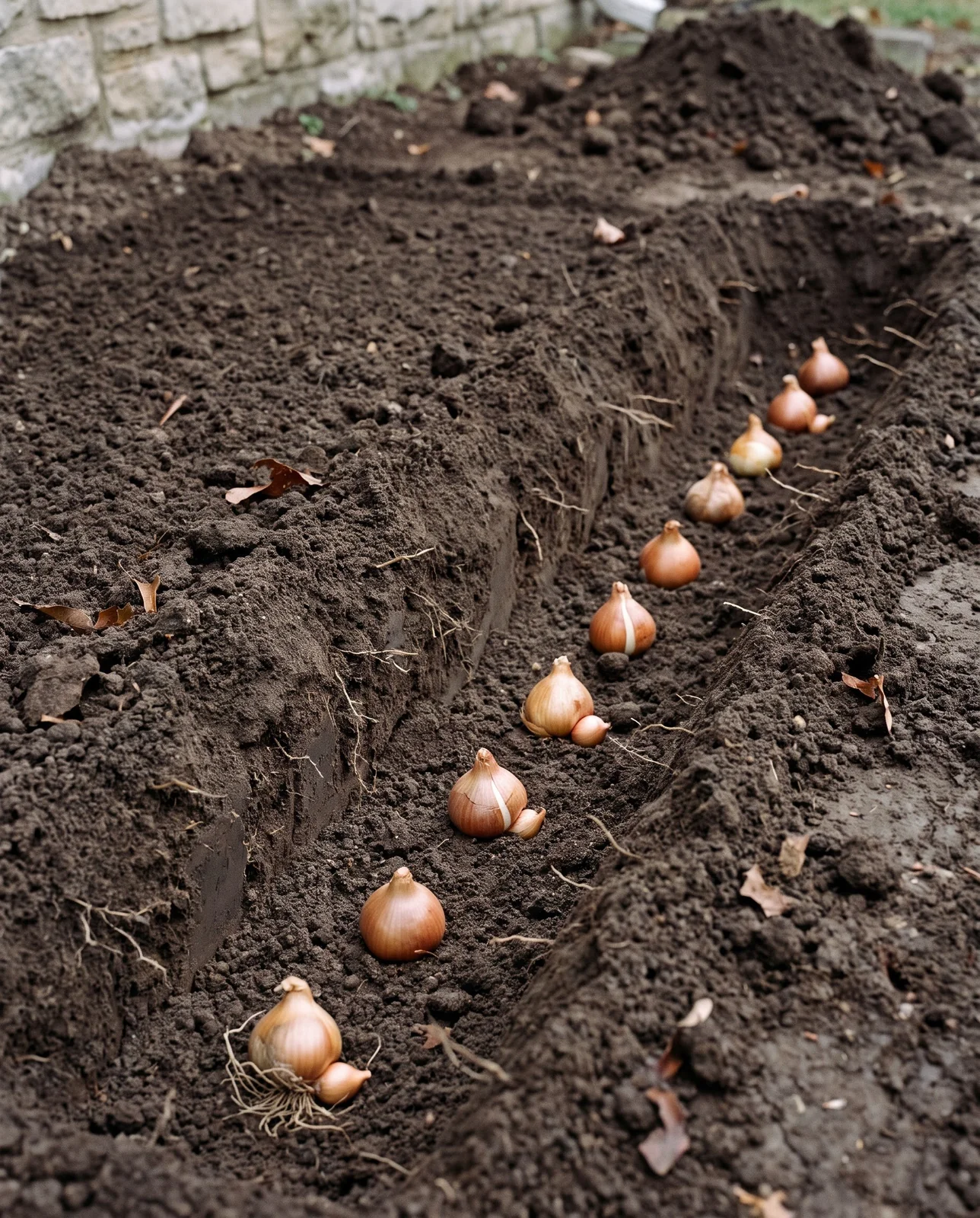
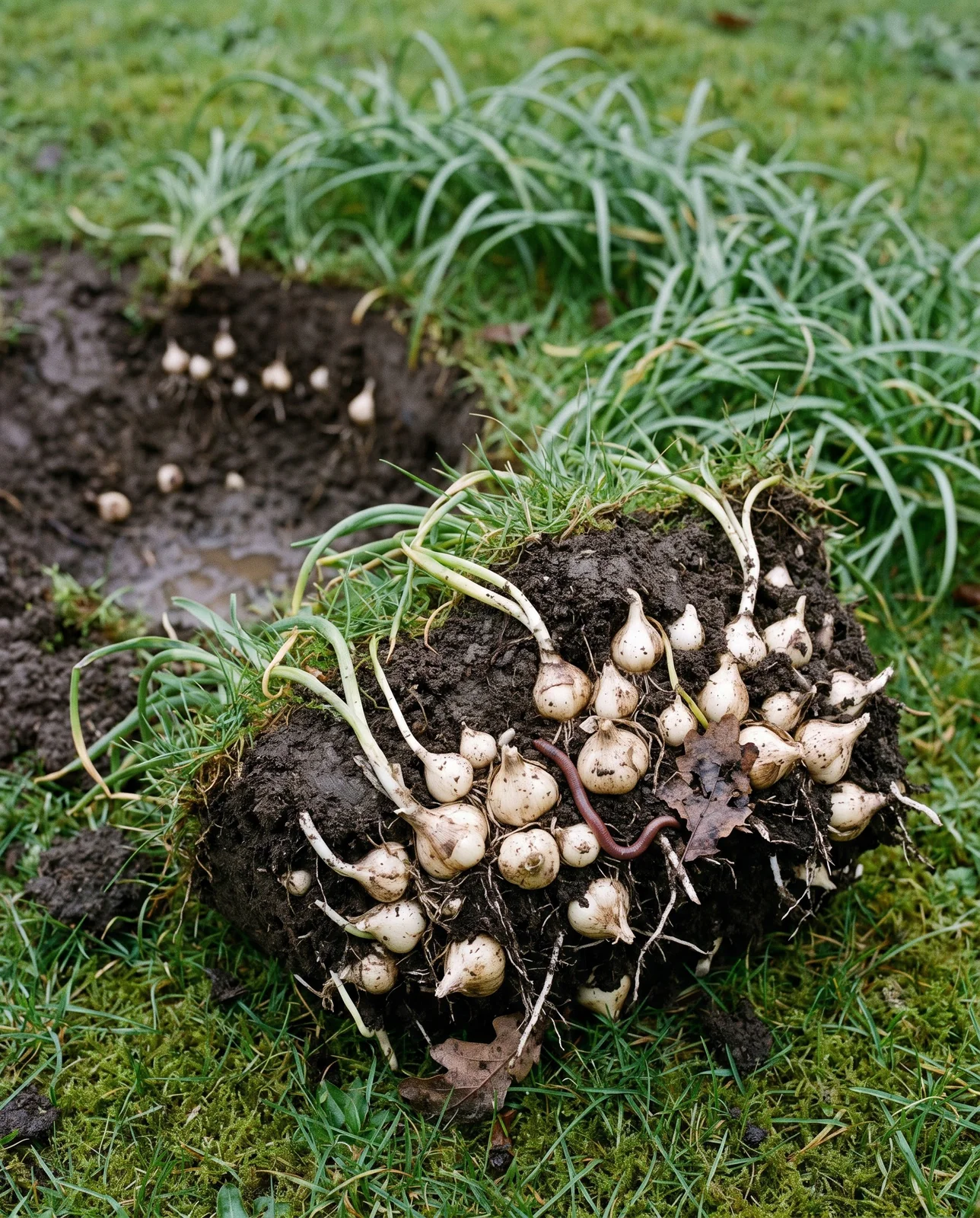
Hardy bulbs go into the ground in autumn, before the first frost, for bloom the following spring. Depth is the one instruction that will not settle, and the gap changes what you do with a trowel. North Carolina guidance sets the base of the bulb 5 inches down, 2 to 3 inches apart, or 20 to 25 bulbs to the square foot. Other published depths put the tips only 2 to 3 inches under, or call for about 4 inches in full sun and well drained soil. Density is the other half of it, because this bulb goes in as a drift in rough grass the way crocus does.
Some Ornithogalum open as early as March in zone 5 and some as late as June. The plant wants moisture through growth, tolerates summer drought once established, goes dormant after blooming, and dislikes heavy moisture from late summer rains while it rests. Deer and rodents are said to leave these bulbs alone, part of why a drift holds in rough grass with no attention at all.
Cold is rarely the limit for the white species. It comes through minimum temperatures of minus 20 to minus 15 degrees Celsius, hardy across Britain and northern Europe, though North Carolina guidance notes injury below 5 degrees Fahrenheit. Where winters run past that, lift the bulbs, dry them and store them in vermiculite at 63 to 72 degrees Fahrenheit until spring.
Is star of Bethlehem invasive
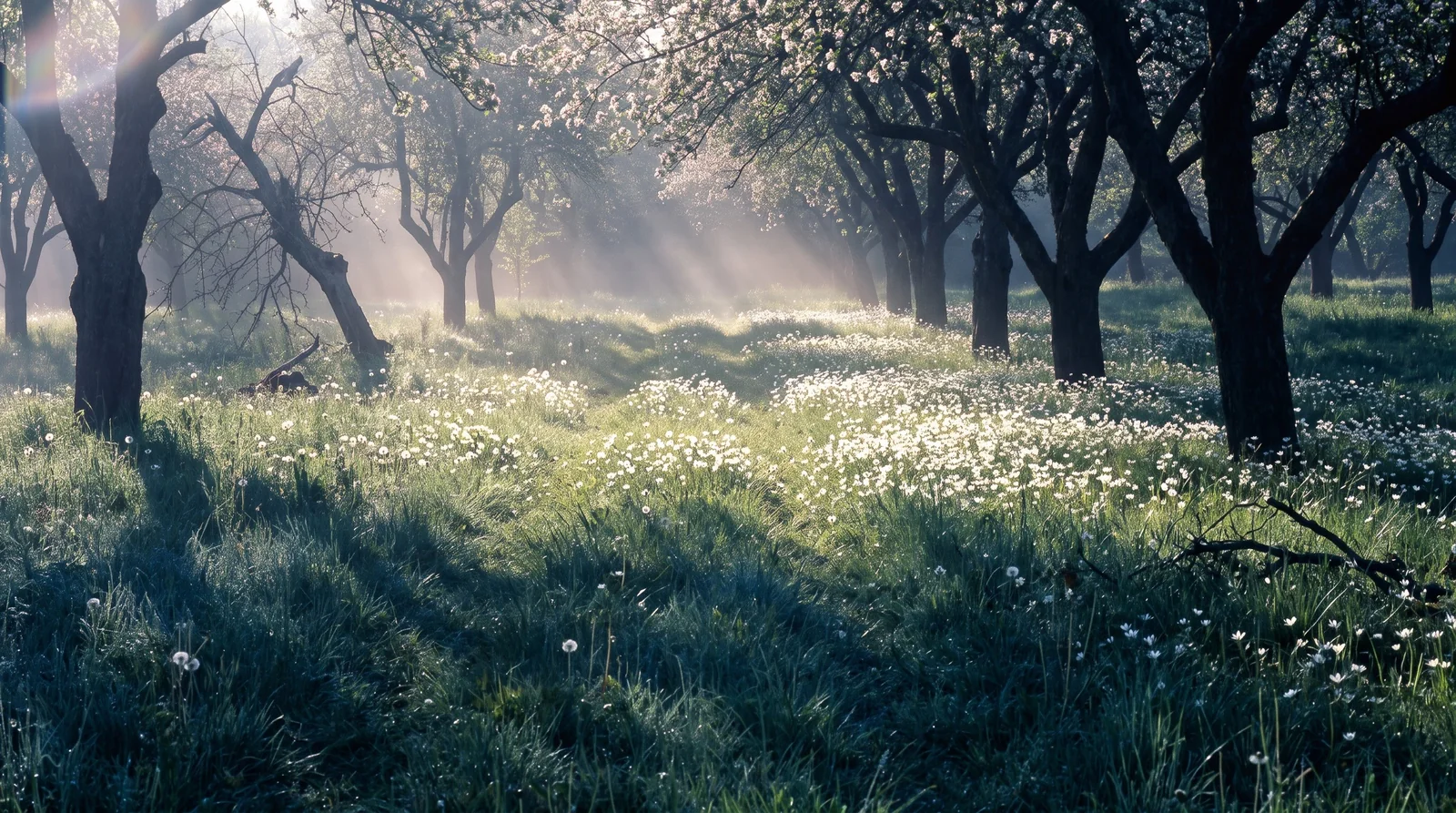
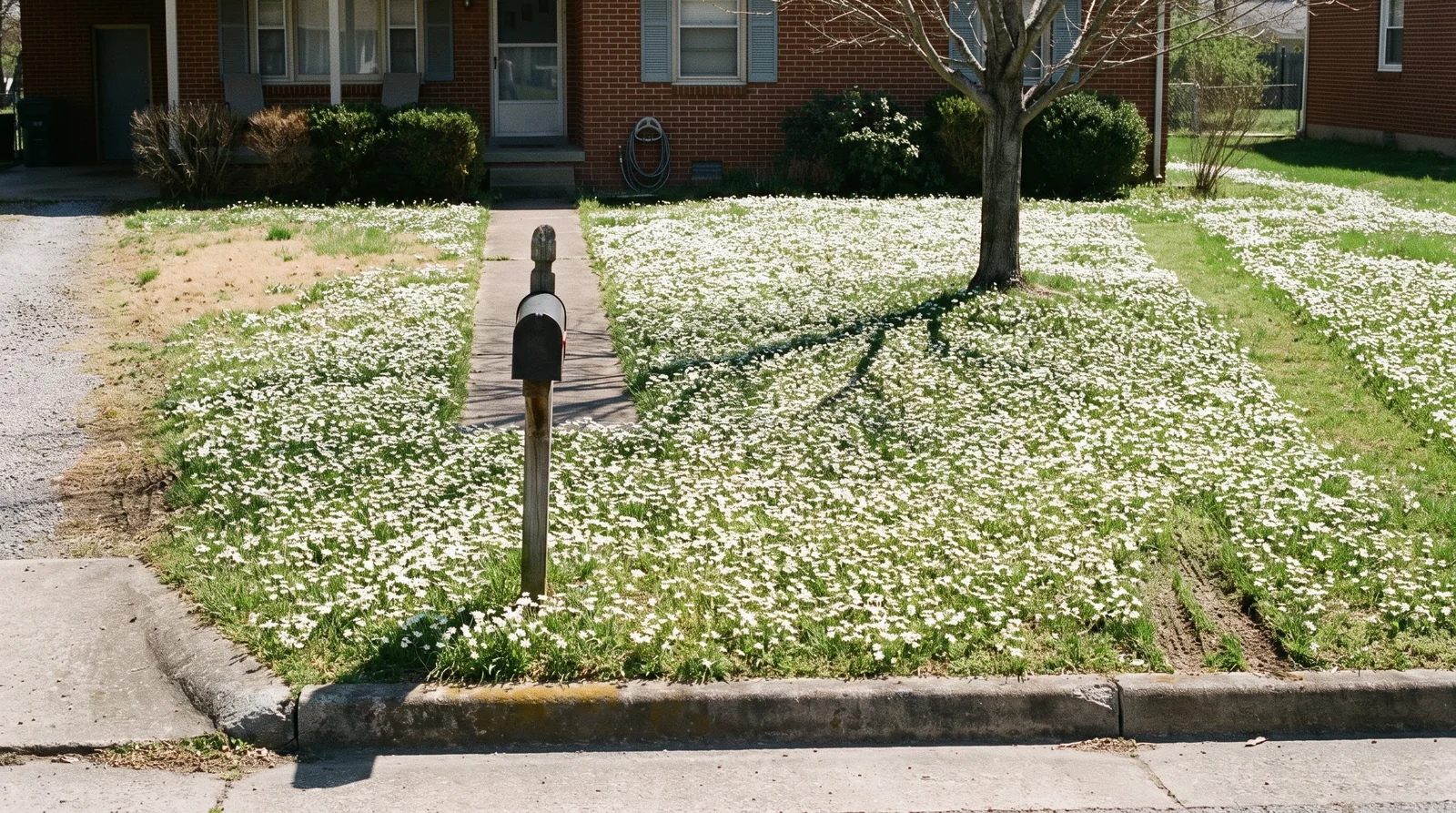
For the white species the answer is yes. It multiplies by bulbils, naturalizes garden areas quickly and often escapes into the wild, and it can form dense colonies that exclude other species through spring. It can invade high quality natural habitats and displace native spring blooming plants, though it usually turns up in degraded sites. In Tennessee this one is a troublesome weed on golf courses, athletic fields and home lawns, harder to control with herbicides than wild garlic or wild onion.
One state list names Ornithogalum umbellatum invasive in 41 states and the District of Columbia, and only two of them ban it by statute. Alabama classes Star of Bethlehem a Class C noxious weed under its quarantine rules. Connecticut carried it on its invasive plant list, not prohibited by statute, until Public Act 25-126 banned its sale outright, on the grounds that it has little economic value. Being on an invasive list and being illegal to sell are separate things, and this plant sits on both.
Getting it out of a lawn is the part the sellers leave out. Conventional broadleaf herbicides give only about 20 percent control, the newer products about 80 percent, and paraquat came in at 70 to 78 percent, still short of elimination. A single application of sulfentrazone, sold as Dismiss, can provide excellent control in established turf, with mowing delayed 10 to 14 days after it. Digging the bulbs out reduces a population over time, and you never compost what you dig up.
The genus does not spread as one plant, and the label does not say which you have. In northern Virginia the white species reproduces mainly by bulblets and keeps expanding its territory, with an emerging agricultural weed problem beyond the garden. Ornithogalum nutans rarely escapes, Ornithogalum arabicum is not an aggressive spreader, and the white species is winter hardy in St. Louis and prone to taking over gardens. The orange hybrids should not reseed like their pesky cousin.
The orange sun star indoors
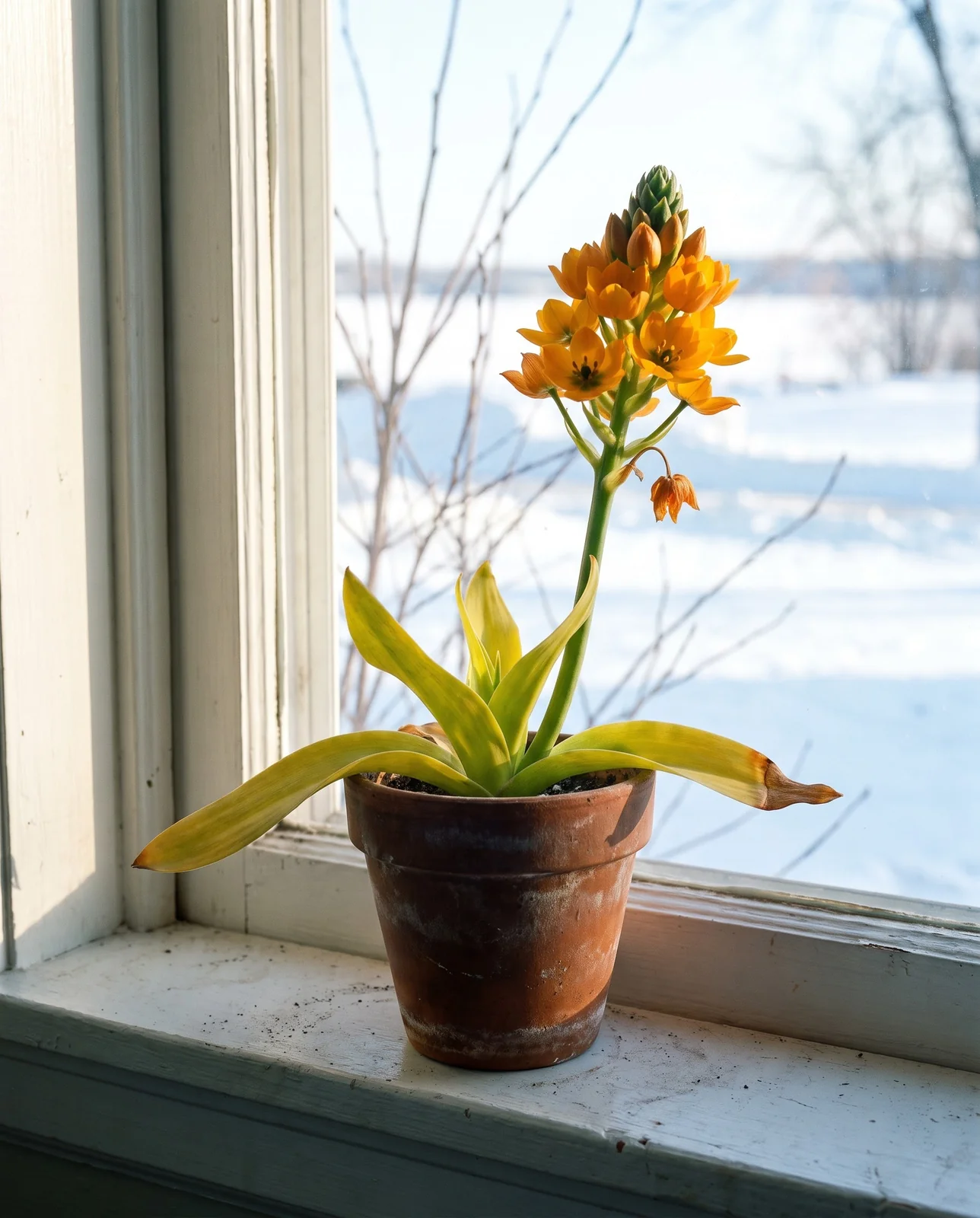
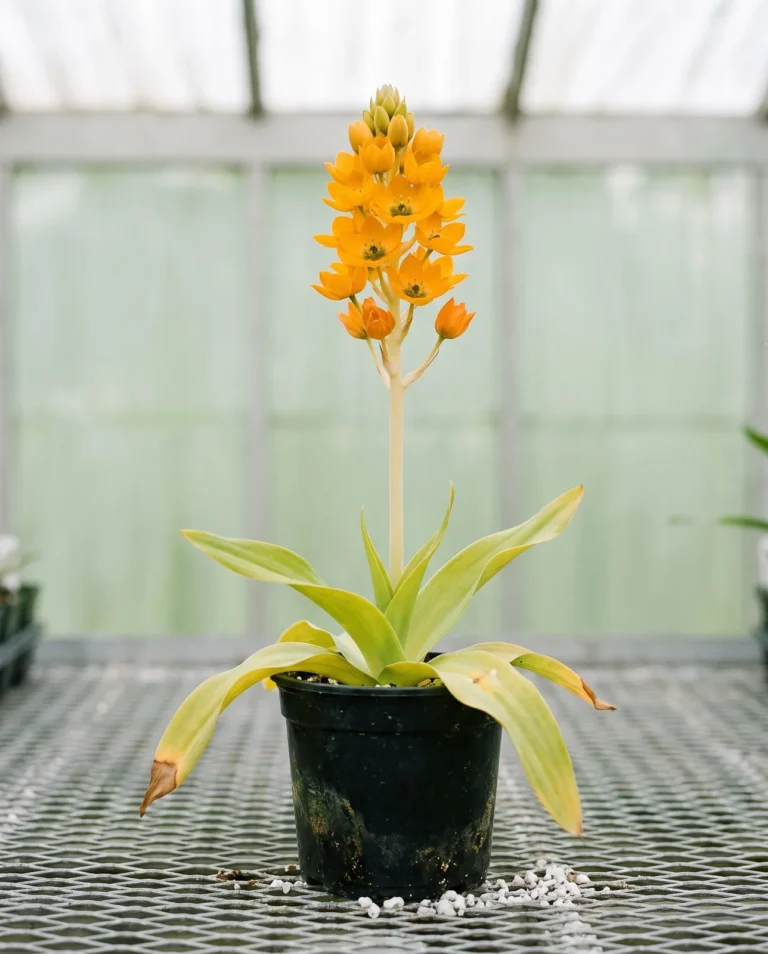
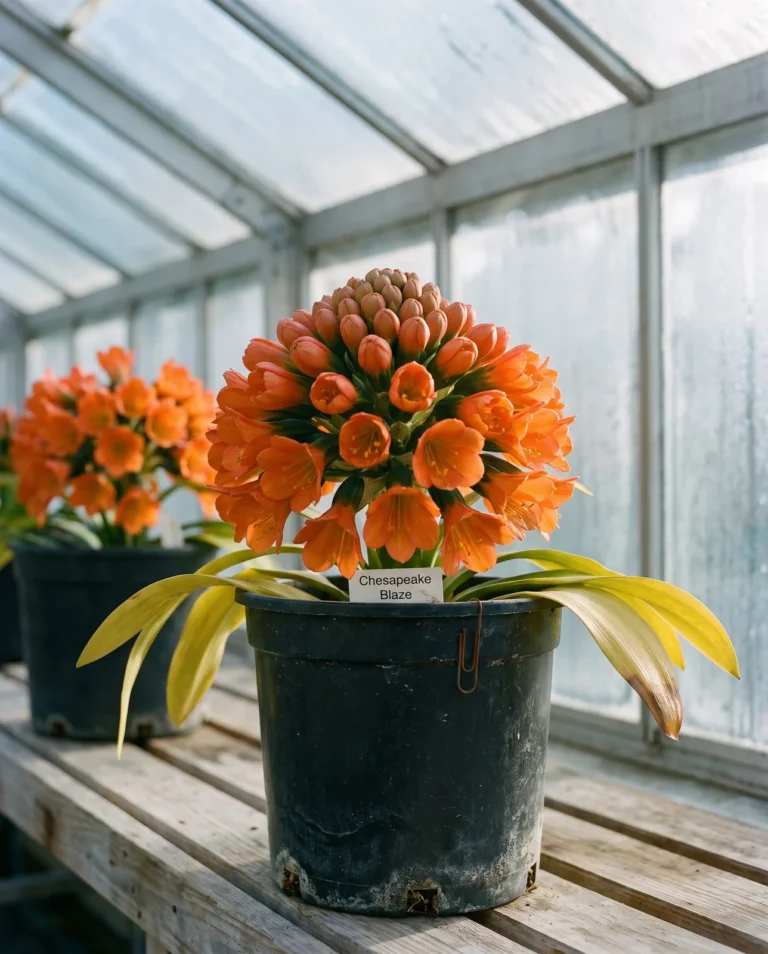
The orange sun star lives indoors in most of the country, in the pot it arrived in. It is a South African bulb from the Cape, and its species name, dubium, means dubious, or unlike the others. The scape grows to about a foot and carries up to 25 flowers, each one to two inches across, with a greenish black blotch at the base of the orange to yellow petals. Once every bloom on the first scape has opened, cut the scape back and a second one may follow.
What sits in the pot may not be the species on the label. Arkansas Extension traces the popular potted plant sold as Ornithogalum dubium to a sterile hybrid, Chesapeake Blaze, bred by the federal plant breeders R. J. Griesbach and F. Meyer and released for tissue culture licensing. A plant on sale as O. dubium may in fact be that unlabeled hybrid, promoted mainly as a tender forcing bulb.
Chesapeake Blaze is sterile, so there is no seed to raise a replacement from, and growing one on from an offset is slow: this species is estimated to take 2 to 5 years to reach maturity. That work was done before the pot reached the shelf, and it is the reason to keep the bulb once the month of bloom is over.
Dormancy, and why you stop watering
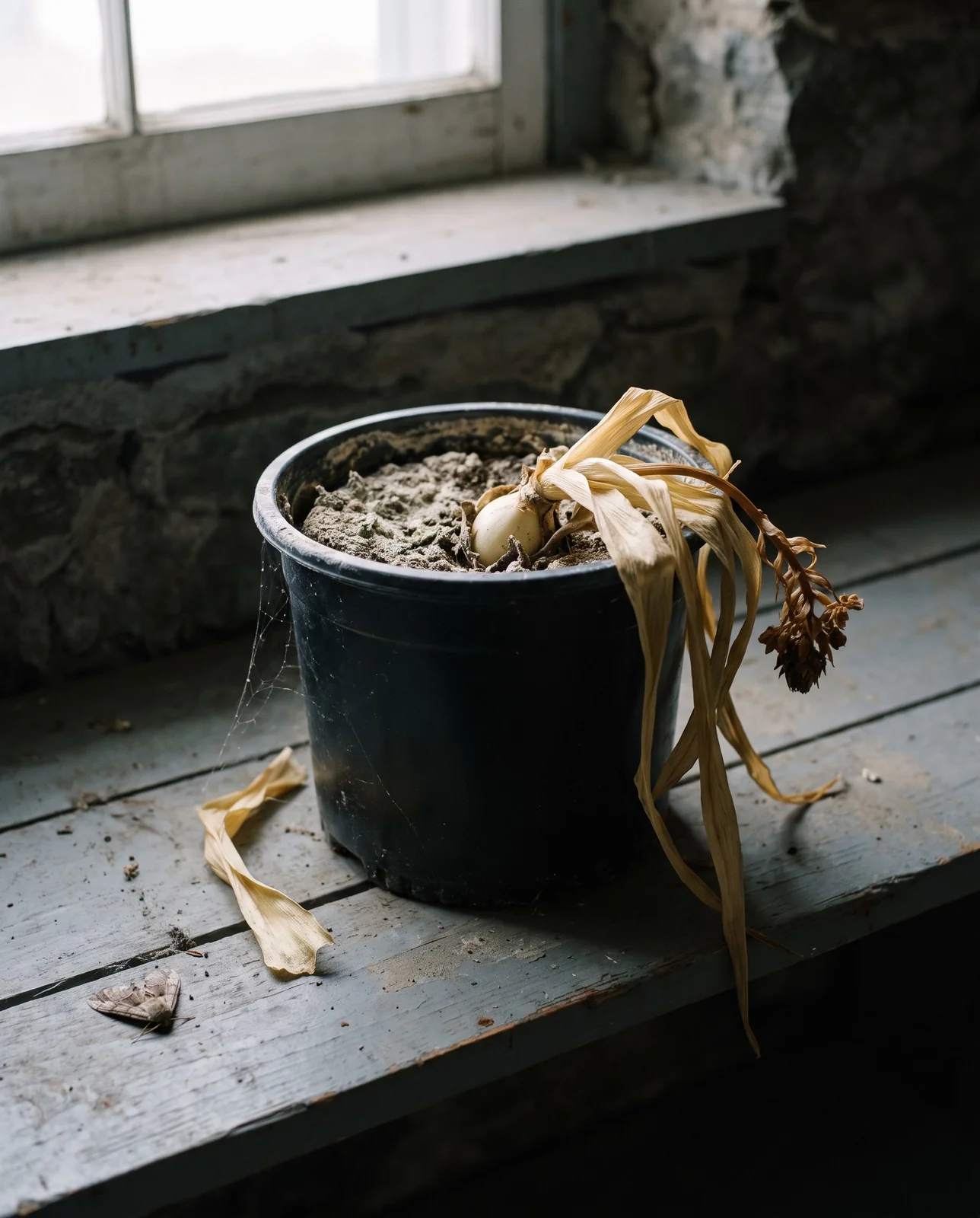
When the flowers are over, the watering stops. Water through growth and flowering, then withhold water as soon as the foliage begins dying back, and give none until the bulb is brought into growth again in autumn. The rest is cool and dry, and the foliage comes off only after it has turned yellow and died.
A bulb taken out of its pot for the summer is stored the same way: dark, low humidity, around 50 degrees F. The rest has no fixed length in weeks. Water goes when the leaves start to die and comes back in autumn.
The reason sits inside the bulb. While the leaves are still green they are refilling it for the next season, and after flowering they die back gradually. Leave the foliage in place until it has turned completely yellow and withered away. Cut it green and the bulb loses the part of the season it spends storing energy. The same rule governs daffodils in a lawn, and it breaks for the same reason: dying leaves look untidy.
Yellow leaves, and which kind you have
Yellow leaves mean two different things depending on when they show up. Leaves that yellow after the flowers are finished are the plant going to sleep: withhold water once they begin to yellow, and remove the foliage only after it has withered and died back on its own. Leaves that yellow while the plant is still growing point the other way, since yellowing is a sign of overwatering, which can leave a plant flowering poorly or not at all.
When to cut them off is where the advice splits. Most of it says wait: prune only after the foliage has turned yellow and died, or hold off until the leaves wither and die back by themselves. Succulent guidance says the opposite, that yellowing or dead leaves come off regularly to encourage new growth, and a middle position trims at the yellowing and feeds with a cacti or succulent food. For a bulb that has to refill itself before it can flower again, wait.
Why it will not bloom
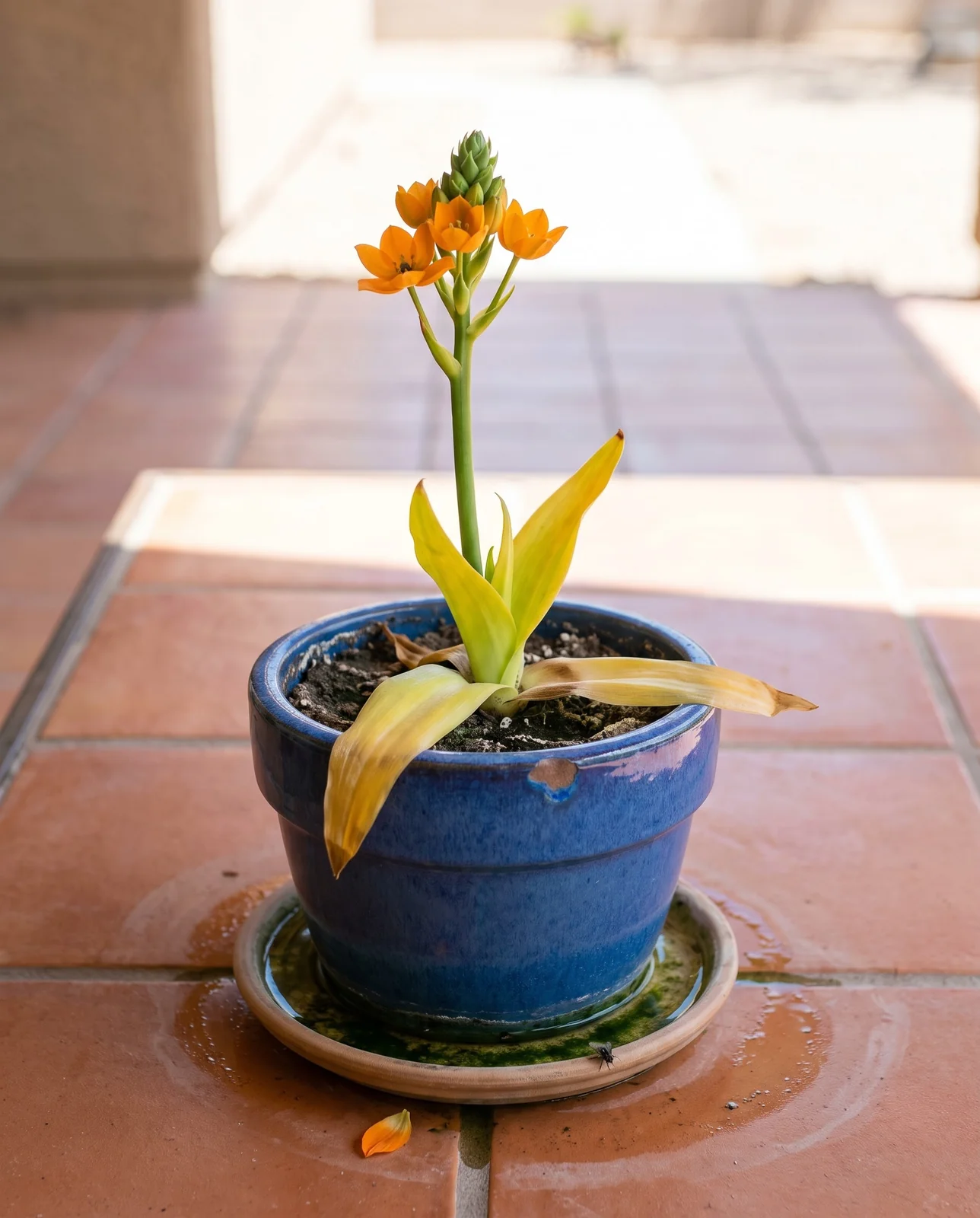
Light and feeding are the first two things to check on a sun star that makes leaves and no flower stalk. Orange star plants need full sun or very bright light to flower well, and a shaded position gives leaves and few blooms. Too much nitrogen compounds it, driving lush foliage and poor flowering.
The other half of the failures sits in the bulb. Plants sold in flower are forced stock, promoted as tender forcing bulbs, so the shop display came off a schedule a living room does not reproduce by accident. A bulb kept wet all year runs into the same wall, since overwatering can leave a plant flowering poorly or not at all. And a small bulb may be too young, since 2 to 5 years to maturity is the published estimate.
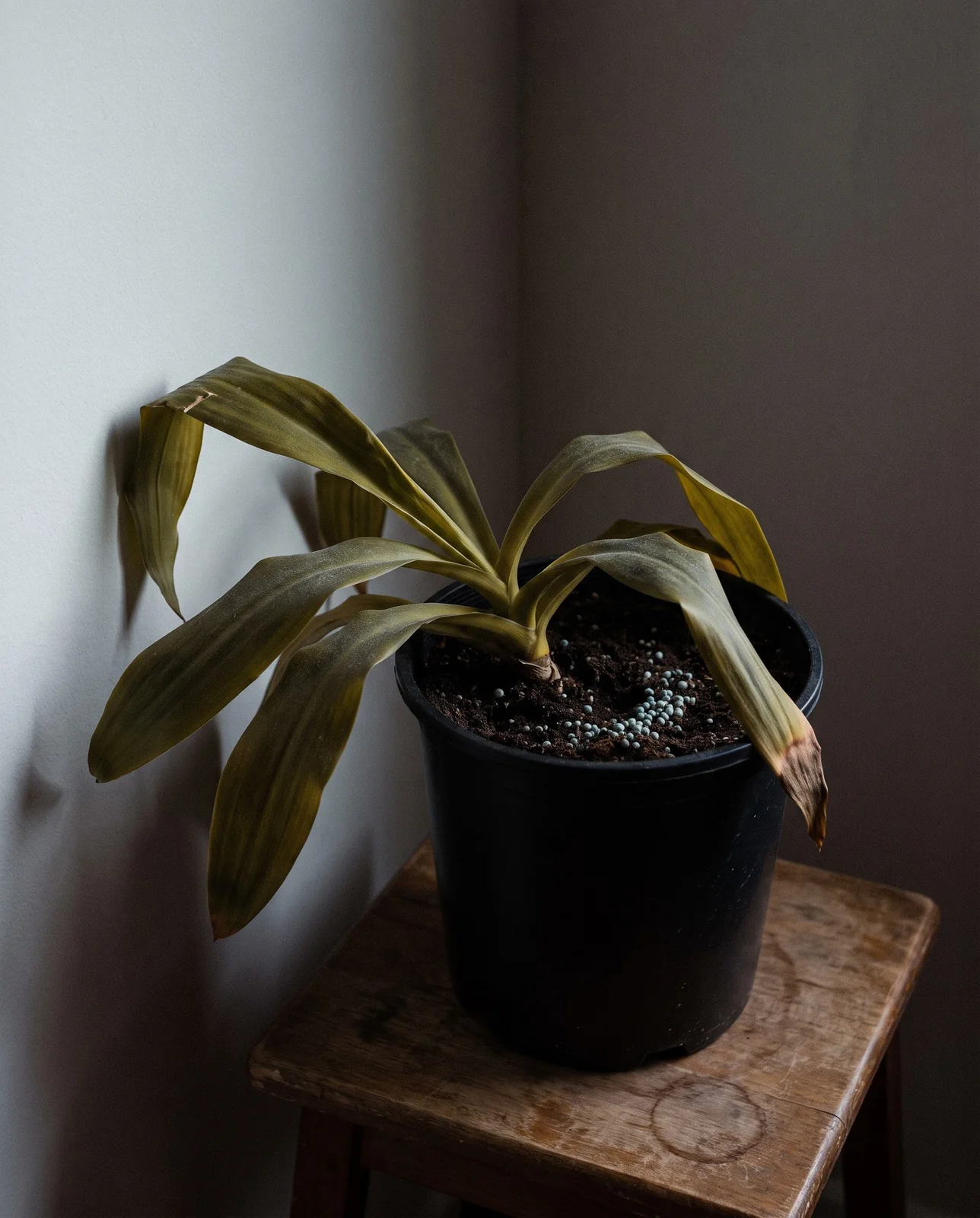
Working out why a sun star will not flower
Six checks in the order they are worth ruling out, starting with where the pot stands.
Species and hybrids worth telling apart
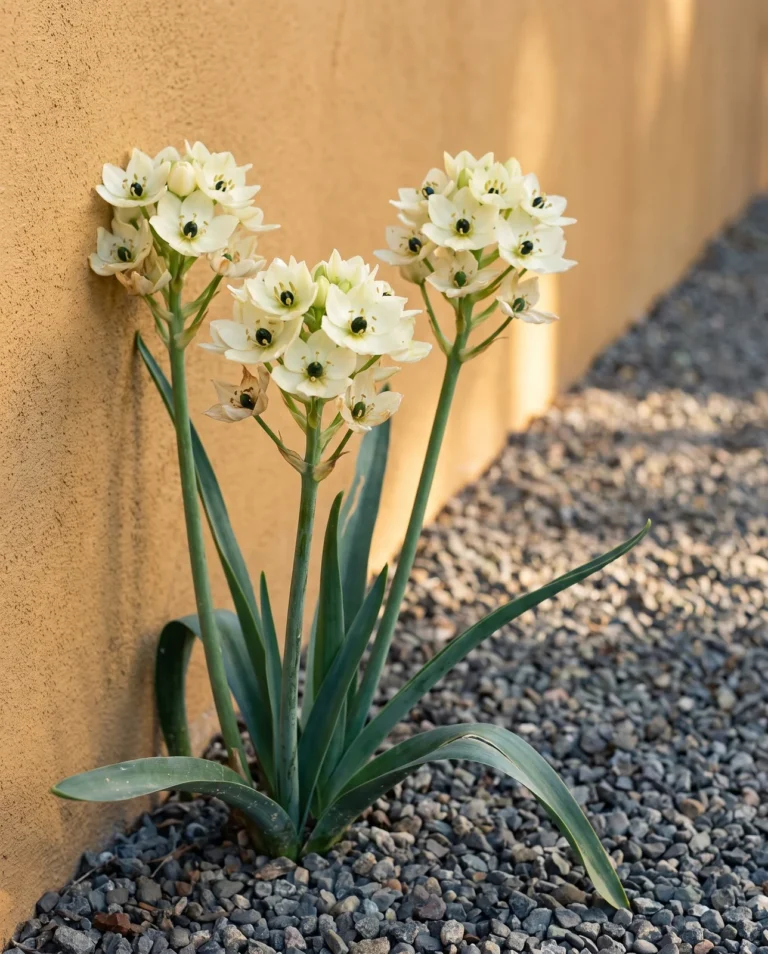
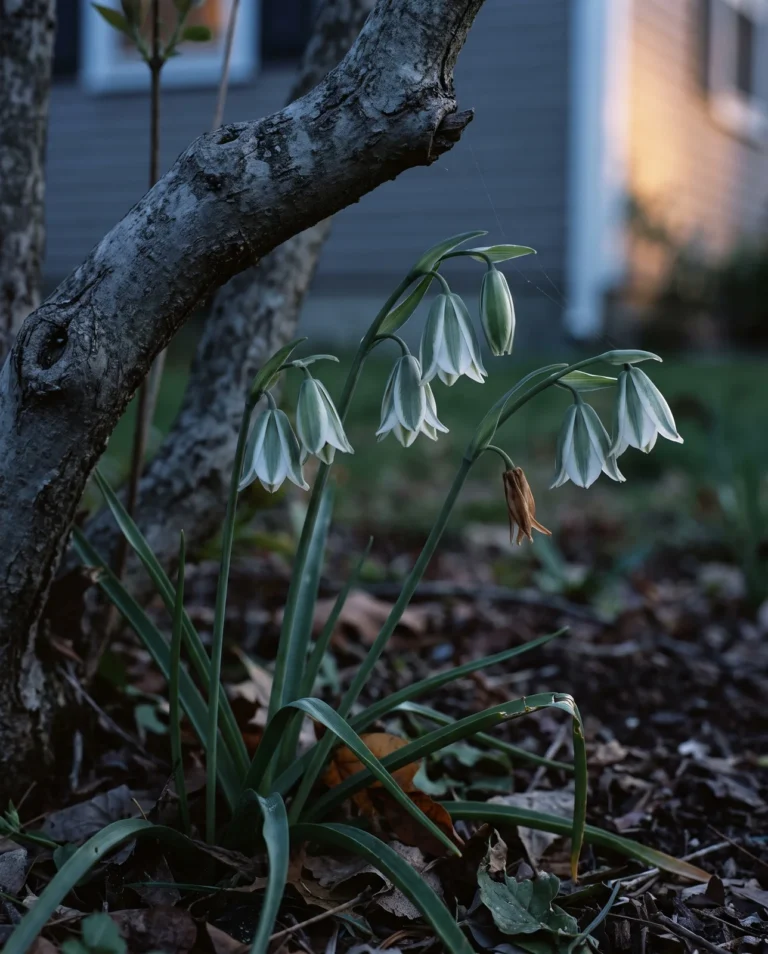
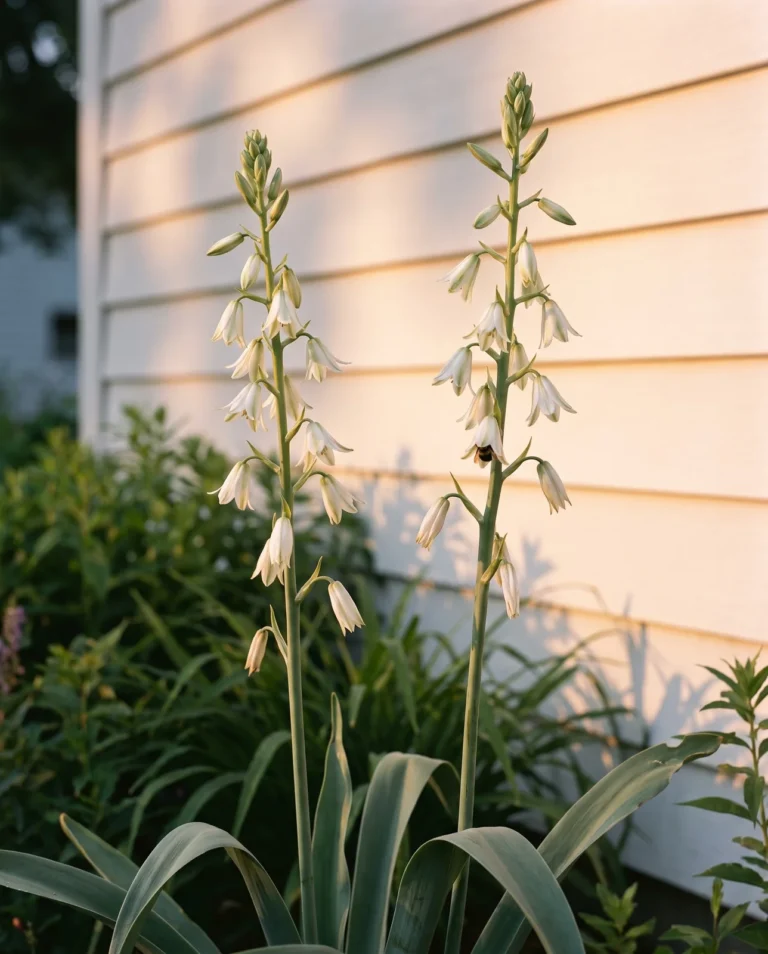
Four species are named as the best known of the genus: O. umbellatum, O. saundersiae, O. arabicum and O. thyrsoides.
Light and soil
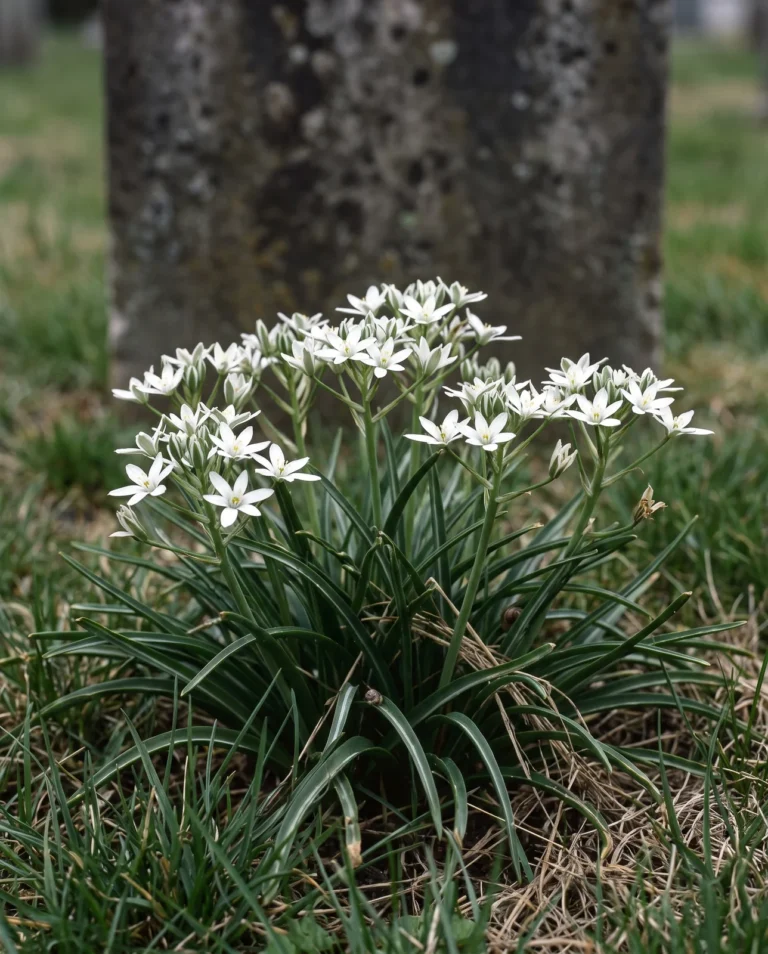
Full sun to partial shade suits the genus, and the soil has to be loose and sharply drained, because soggy ground rots the bulbs. The white star of Bethlehem is the easier of the two to place: full sun, partial sun, or as much as 25 percent shade, in moist, fertile, well drained ground. The orange one asks for a sheltered position, full sun and excellent drainage.
Water
Water follows the growth. Keep the soil moderately moist through active spring growth, then leave it dry once the plant has flowered and gone dormant. In the ground the hardy species asks for less than most gardeners give it, since these bulbs are drought resistant once established. Drainage does as much work as frequency here, because soggy ground is what rots the bulbs. In a pot the mistake runs the other way, and a saucer that never gets emptied keeps the mix wet.
Height and spread
Height depends on which species is in the pot or the bed, and across the genus it runs from 5 to 24 inches. The white star of Bethlehem sits at the bottom of that range, 6 inches to 1 foot tall and 1 to 2 feet wide. The spread is the figure worth reading twice, because a plant a foot tall covers twice that across.
Forcing bulbs and cut stems
These are florist bulbs, and the potted plants in supermarkets are the output of a forcing schedule. The orange one starts with four weeks of bulb pretreatment at 63 degrees F, then goes into any quality potting mix and is forced in a sunny position at around 75 degrees F by day, with flowering usually beginning 13 weeks after forcing starts. It is the same trade practice that puts a forced hyacinth into flower out of its season.
Cut stems hold 14 to 21 days in the vase and are available year round, in white, green, orange, pink and yellow. The species particularly cut for the trade are O. arabicum, O. dubium, O. saundersiae and O. thyrsoides. The white lawn species is not among them, though its own blooms are long lasting, fragrant and good in arrangements.
Choose stems with 2 or 3 flowers open at the base of the spike and the rest of the buds swelling and showing color, and pass over any that are turning yellow, because their remaining flowers may not open. Strip the foliage that would sit below the waterline, cut the ends with a sharp knife, and hydrate for two hours in water and commercial floral food before use. The flower is highly phototropic, so keep the stems upright and away from side light, or the blossoms bend toward it.
Pests and problems
Bulb rot is the main problem named for the genus, it may occur in poorly drained soils, and beyond it no serious insect or disease problems are named. The narcissus bulb fly is the one insect listed as a common problem. Indoors the failures are about light, feeding and water; outdoors the trouble is the white species spreading rapidly.
What goes wrong, in order
What actually goes wrong, and what to do about each.
Growth fails and the bulb turns soft in wet ground. Rot may follow poor drainage. Plant in loose, sharply drained soil.
Leaves every year and no scape: the bulb never got its dry rest. Withhold water once the foliage dies back, and start it again in autumn.
Long soft leaves and no bud. Move it to full sun or very bright light, since shade gives leaves and few blooms.
Thick green growth and nothing above it. Too much nitrogen drives lush foliage and poor flowering, so ease off the feed.
Foliage yellowing after the flowers finish is dormancy starting. Withhold water, and take the leaves off only after they die back on their own.
A plant that flowered once and has not since: green leaves came off too early. Prune only after the foliage has turned yellow and is dead.
A pot labeled O. dubium that does not match its description. Plants sold under that name may in fact be the unlabeled hybrid Chesapeake Blaze.
What to expect, season by season
Three seasons that behave differently, because two plants are involved and only one is kept alive on purpose.
The first spring outdoors asks for nothing. A hardy bulb set in the ground in autumn flowers, then the leaves die back gradually and the patch disappears into the grass until the following year.
Later springs are where the two species separate. The white star of Bethlehem spreads rapidly, and a drift set in one autumn multiplies by bulbils on its own. Not every relative does, and the drooping star of Bethlehem, O. nutans, rarely escapes.
The potted orange plant runs a different clock. It is estimated to need 2 to 5 years to reach maturity, and the hybrid that may be sitting in the pot is sterile, so there is no seed route to a replacement.
Myths about ornithogalum
Four beliefs that follow this plant home from the shelf.
The myth: The orange one is hardy, like the white one.
The reality: It takes low temperatures but not a freeze, and its rating puts that band at 1 to 5 degrees C.
The myth: Yellow leaves mean you did something wrong.
The reality: After flowering they are the plant going to sleep, and the leaves stay until they have turned completely yellow. Yellowing during growth is the one to act on, since it is a sign of overwatering.
The myth: A potted sun star comes back on its own.
The reality: It needs a cool, dry dormant period with very little water, and the commercial cycle begins with four weeks at 63 degrees F before the bulb is even potted.
The myth: Snake flower is just another name for the sun star.
The reality: Sun star care sheets do use the name for O. dubium, but within the genus snake flower belongs to a different plant, O. maculatum.
FAQ
Does ornithogalum come back every year?
The hardy white star of Bethlehem does, in zones 4 to 9. The potted orange sun star comes back only if the pot is dried off after the foliage dies and started again in autumn.
Is ornithogalum poisonous?
Yes, if eaten, to people and to cattle, and prolonged contact can irritate skin. The pet answer is contested, and the standard pet plant database holds no entry for it.
Is ornithogalum an indoor plant?
The orange sun star is, in most of the country. Give it a sheltered position in full sun with excellent drainage, and soil moderately moist through growth, dry once it has flowered.
How invasive is star of Bethlehem?
One state list names it invasive in 41 states and the District of Columbia. Alabama classes it a Class C noxious weed, and Connecticut prohibited its sale.
Is ornithogalum perennial or annual?
Perennial, wherever the species is hardy. The white one holds in zones 4 to 9, the orange one from zone 9 south, and sellers offer the genus for zones 5 to 11 depending on variety.
How deep do you plant ornithogalum bulbs?
Guidance differs: 5 inches to the base of the bulb, tips 2 to 3 inches deep, or about 4 inches. O. balansae goes 4 to 6 inches deep and the same distance apart.
Why do sun star leaves turn yellow?
After flowering it is normal, and the leaves stay until they have turned completely yellow and withered. During growth it is a watering signal, since yellowing is a sign of overwatering.
Should the yellow leaves be cut off?
Wait. Prune only after the foliage is yellow and dead, or once it withers and dies back by itself. The bulb needs those leaves to refill before it can flower again.
How long do cut ornithogalum stems last?
14 to 21 days, and the stems are sold year round. Buy them with 2 or 3 flowers open at the base of the spike, and keep them upright away from side light.
Can a supermarket orange star be planted outside?
In zone 9 and south, where it does best if summers are dry. North of that it stays a container plant, overwintered dry and frost free and repotted in spring.
Interesting tips
- The orange hybrids exist because their parents aborted their own seed. The breeders removed developing embryos 10 to 14 days after pollination and grew them on sterile media to get viable seed out of wide crosses.
- The usual forcing recipe puts three bulbs in a 6 inch pot. That is why a supermarket plant carries more stems than a single bulb could.
- Cut stems are ethylene sensitive, and the trade holds them at 36 to 38 degrees F.
Related Guides & Flowers
Snowdrops
The other small white bulb that turns up in late winter grass and widens its clump without help.
Lily of the valley
Another spreading spring bulb with a toxicity warning attached and a reputation for going further than planted.
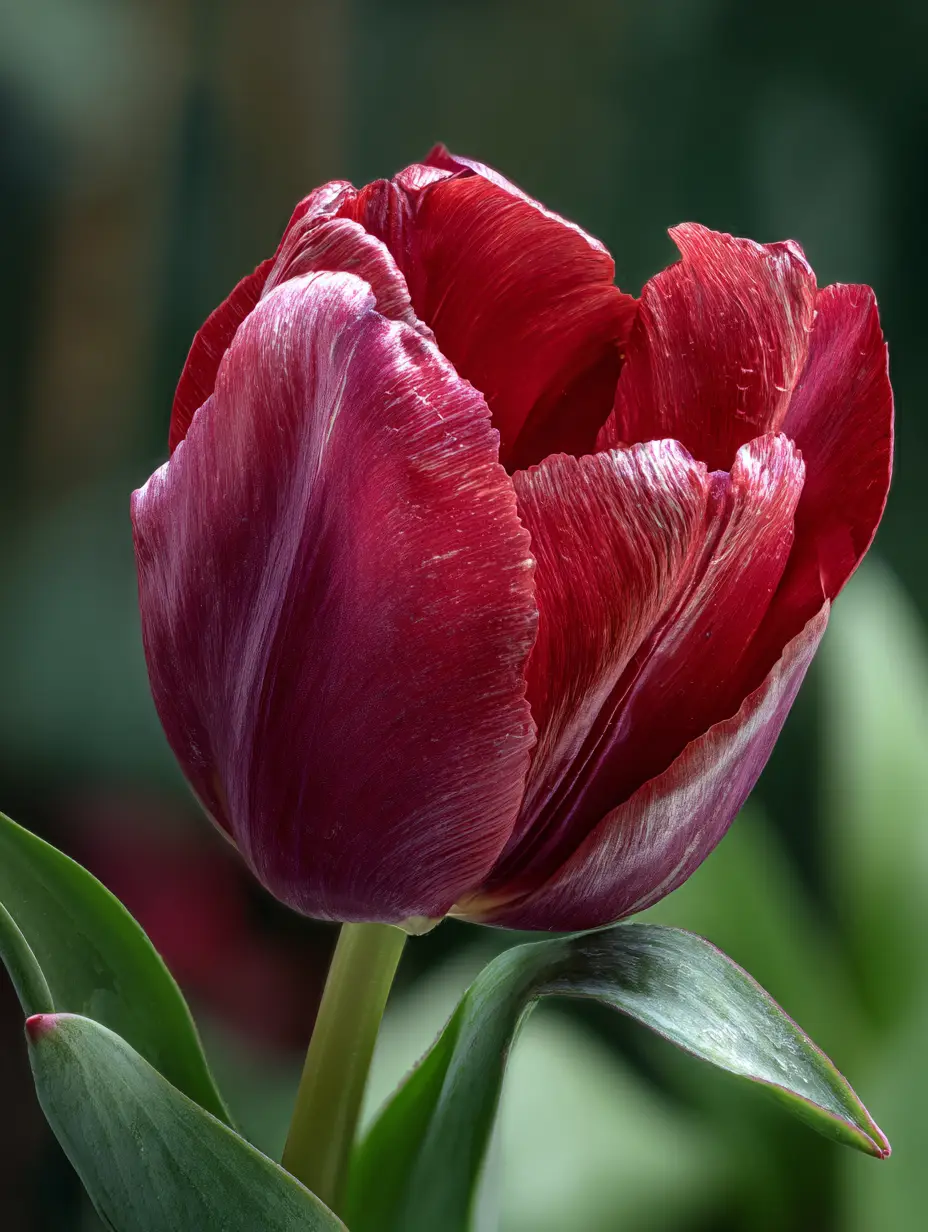
Tulips
The fall planted bulb most gardeners try first, and the clearest lesson in what a bulb owes to its leaves.

Types of flowers
The full index of flower guides on the site, grouped by type.
Enjoying our flower guides? Add YourFlowersGuide as a preferred source on Google. It helps more readers find us.
Add to Preferred Sources