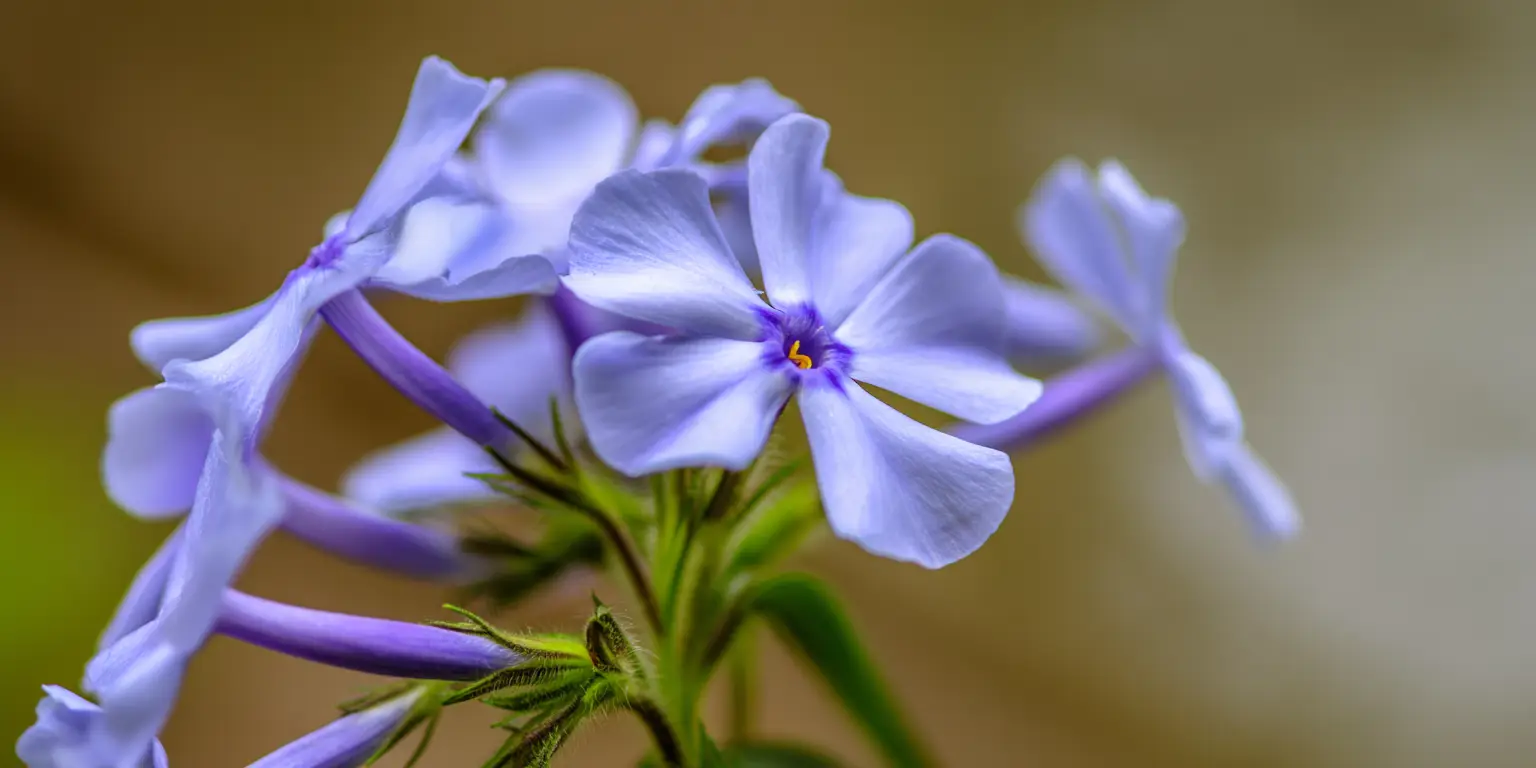
in bloom
now
through Sep
Bloom calendar
Phlox divaricata
Woodland perennial
At‑a‑glance
- Group/Class: Woodland perennial
- Height × spread: 12–15 in (30–38 cm) × 12–18 in (30–45 cm)
- Bloom window: April to May
- Color & flower form: Loose clusters of tubular flowers in pale blue to violet or white
- Fragrance: 2 noticeable
- USDA hardiness: zones 3–8
- Breeder / Year / Origin: unknown; native to eastern North America
- Pet safety: unknown
How it differs
- Prefers part shade and rich woodland soils rather than full sun.
- Early spring bloom versus midsummer for tall border phlox.
- Shorter, spreading habit from rhizomes.
- Sweet fragrance on cool spring days.
Strengths
- Shade tolerant.
- Early nectar for pollinators.
- Soft color that mixes easily.
- Good naturalizer along woodland edges.
Care in one minute
Plant in part shade with moist, well‑drained, humus‑rich soil.
Irrigate during spring dry spells; avoid waterlogged sites.
Lightly shear or deadhead after bloom to tidy plants.
Divide clumps when flowering declines or centers thin.
Watch‑outs
- Foliage can decline in summer heat and drought.
- Open soil invites seedlings where conditions suit.
Best uses (tags)
Provenance note
A widespread woodland native in eastern North America; many compact, deep‑blue forms have been selected for gardens.
References
- Missouri Botanical Garden – Phlox divaricata
- University of Wisconsin Extension – Woodland phlox
- NC State Extension – Phlox divaricata
- USDA PLANTS – Phlox divaricata
Similar Flowers
Enjoying our flower guides? Add YourFlowersGuide as a preferred source on Google. It helps more readers find us.
Add to Preferred Sources