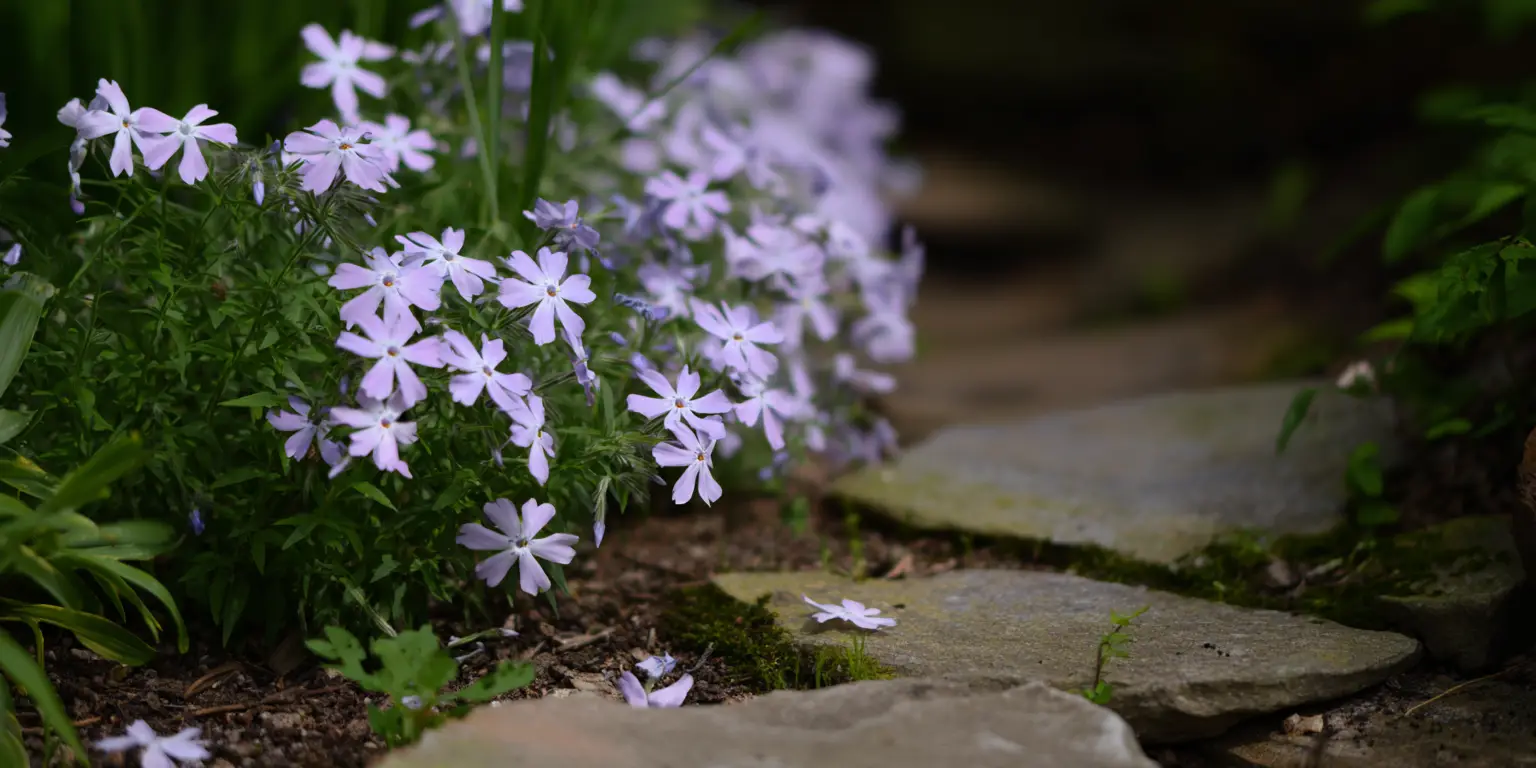
in bloom
now
through Sep
Bloom calendar
Phlox stolonifera
Creeping woodland perennial
At‑a‑glance
- Group/Class: Creeping woodland perennial
- Height × spread: 6–12 in (15–30 cm) × 9–18 in (23–46 cm)
- Bloom window: April to May
- Color & flower form: Short clusters of tubular flowers in lavender, pink, or white above a spreading mat
- Fragrance: 2 noticeable
- USDA hardiness: zones 5–9
- Breeder / Year / Origin: unknown; native to the Appalachian region
- Pet safety: unknown
How it differs
- Creeping habit from stolons rather than tight cushions.
- Prefers part shade and richer soil than moss phlox.
- Blooms in spring well before border phlox.
- Semi‑evergreen foliage for cover in mild winters.
Strengths
- Good shade ground cover.
- Erosion control on banks.
- Deer and rabbit tolerance reported by extensions.
- Handles short dry spells once established.
Care in one minute
Plant in part shade with humus‑rich, well‑drained, slightly acidic soil.
Keep evenly moist the first season; mulch to conserve moisture.
Shear lightly after bloom to refresh the mat and reduce mildew.
Allow room to spread; divide or redirect runners as needed.
Watch‑outs
- Powdery mildew in humid, stagnant air.
- Spider mites in hot, dry sites.
- Rabbits may browse new growth where populations are high.
Best uses (tags)
Provenance note
A creeping phlox native to the Appalachian Mountains; the epithet reflects its stolon‑forming habit.
References
- NC State Extension – Phlox stolonifera
- Missouri Botanical Garden – Phlox stolonifera
Similar Flowers
Enjoying our flower guides? Add YourFlowersGuide as a preferred source on Google. It helps more readers find us.
Add to Preferred Sources