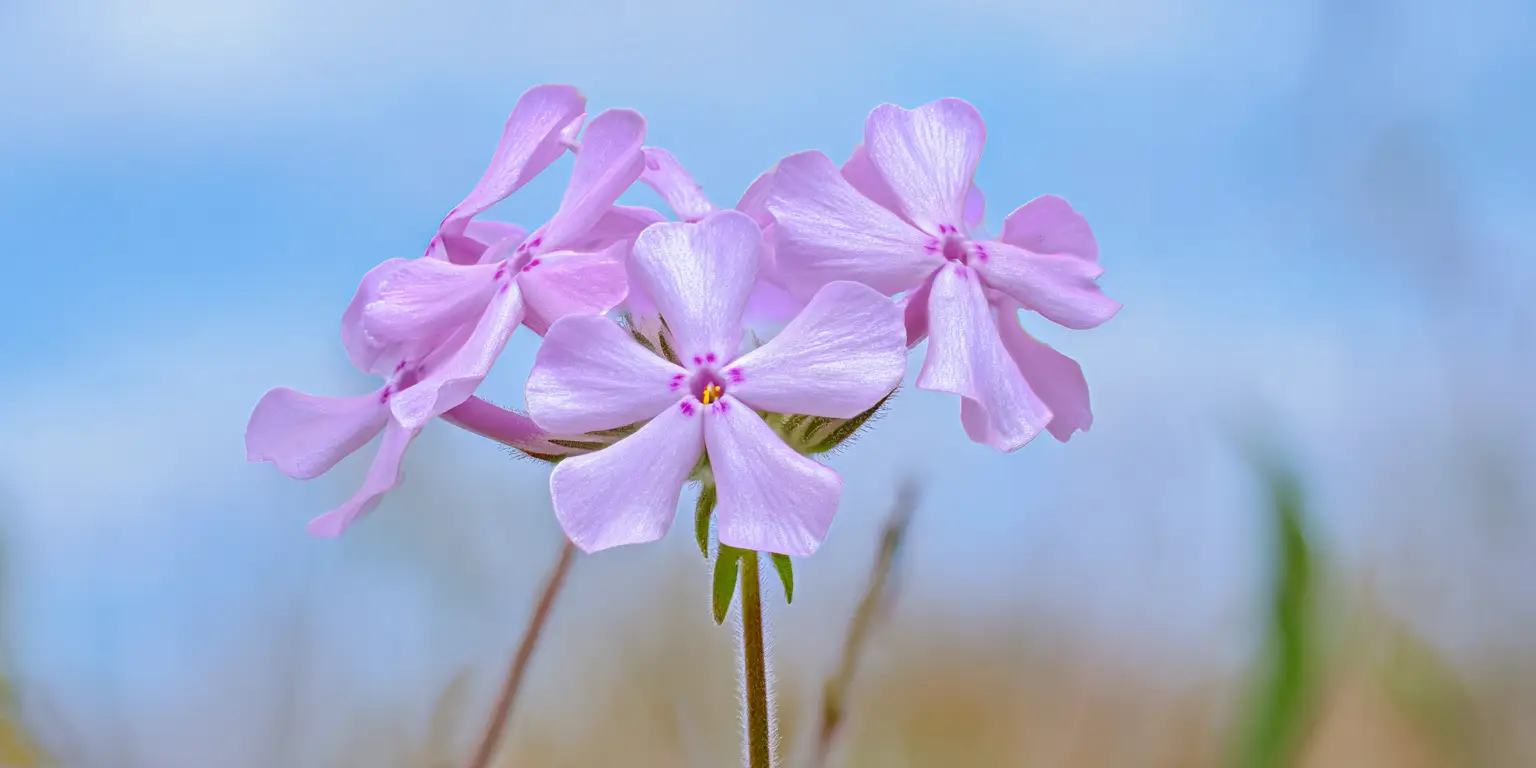
in bloom
now
through Sep
Bloom calendar
Phlox pilosa
Prairie perennial
At‑a‑glance
- Group/Class: Prairie perennial
- Height × spread: 12–24 in (30–60 cm) × 12–18 in (30–45 cm)
- Bloom window: May to July
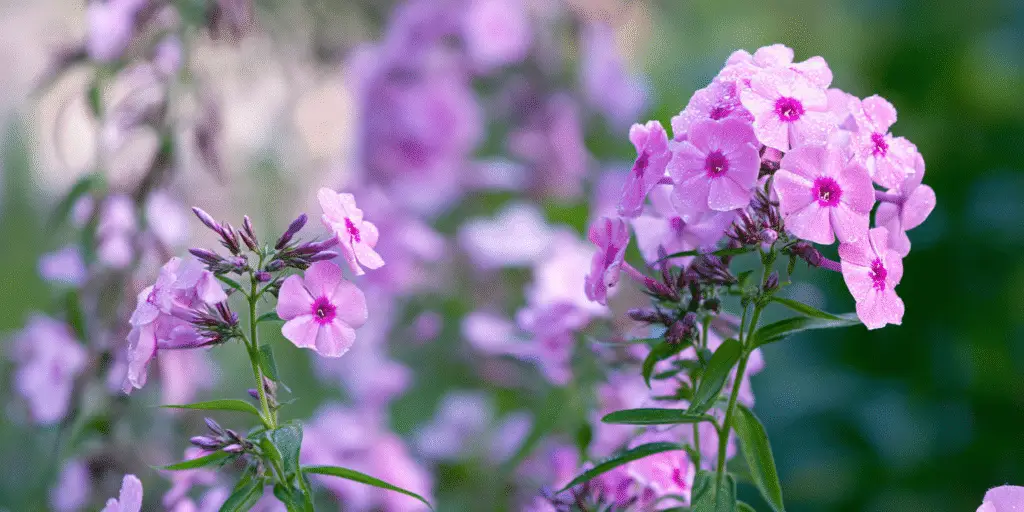
- Color & flower form: Rounded clusters of tubular flowers in pale pink to lavender
- Fragrance: 2 noticeable
- USDA hardiness: zones 4–9
- Breeder / Year / Origin: unknown; native to central and eastern North America
- Pet safety: unknown
How it differs
- Sun‑loving clump for meadows rather than a woodland spreader.
- Spring to early summer bloom ahead of garden phlox.
- Tolerates leaner, drier soils than most border phlox.
- Fine textured foliage compared with broader‑leaf tall phlox.
Strengths
- Fragrant flowers for wildlife gardens.
- Good drought tolerance once established.
- Useful in native meadow mixes.
- Compact size suits small spaces.
Care in one minute
Grow in full sun to light shade with well‑drained, average soil.
Water during establishment; afterward, water in extended drought only.
Deadhead to encourage light rebloom and limit self‑seeding.
Divide or replant when clumps thin in the center.
Watch‑outs
- Powdery mildew may appear with humidity and crowding.
- Declines in wet, poorly drained soils.
Best uses (tags)
Provenance note
A widespread native prairie phlox; subspecies occur across much of the central and eastern United States.
References
- Missouri Botanical Garden – Phlox pilosa
- Lady Bird Johnson Wildflower Center – Phlox pilosa
- USDA PLANTS – Phlox pilosa
- NC State Extension – Phlox pilosa
Similar Flowers
Enjoying our flower guides? Add YourFlowersGuide as a preferred source on Google. It helps more readers find us.
Add to Preferred Sources