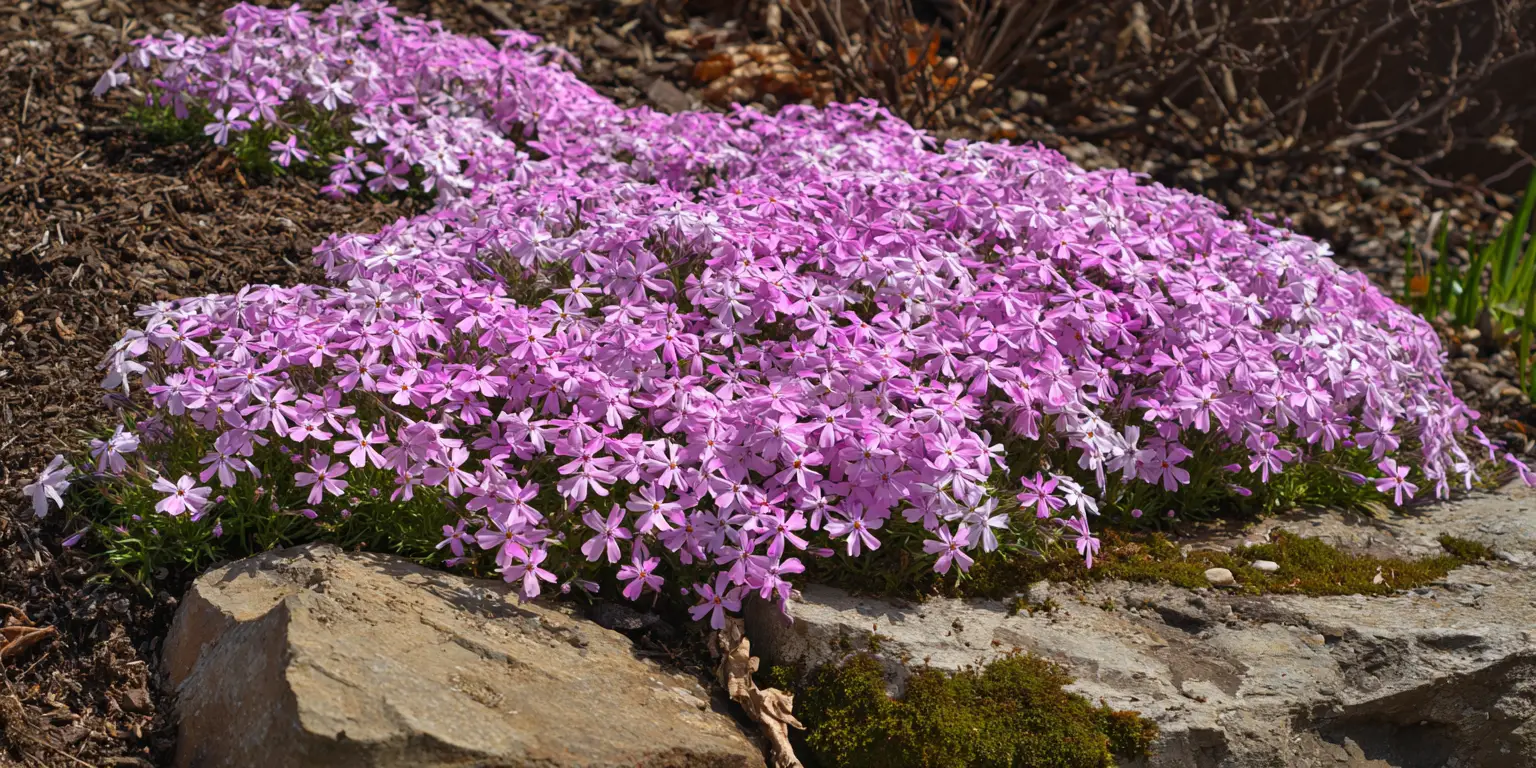
in bloom
now
through Sep
Bloom calendar
Phlox subulata
Herbaceous perennial ground cover (moss phlox)
At‑a‑glance
- Group/Class: Herbaceous perennial ground cover (moss phlox)
- Height × spread: 3–6 in (8–15 cm) × 12–24 in (30–60 cm)
- Bloom window: March to May
- Color & flower form: Loose clusters of small, notched, star‑shaped flowers in pink, purple, or white
- Fragrance: 1 trace
- USDA hardiness: zones 3–9
- Breeder / Year / Origin: unknown; native to eastern and central United States
- Pet safety: safe
How it differs
- Forms a tight evergreen mat rather than upright clumps.
- Very early spring bloom rather than midsummer.
- Better drought tolerance after establishment.
- Less susceptible to powdery mildew than tall garden phlox.
Strengths
- Early season color.
- Handles slopes and rocky sites.
- Low maintenance after establishment.
- Attracts pollinating insects.
Care in one minute
Plant in full sun with excellent drainage; sandy or gravelly soil is ideal.
Water to establish; afterward, water during prolonged drought only.
Shear lightly after bloom to keep a dense mat and encourage rebloom.
Fertilize sparingly; too much nitrogen reduces flowering.
Divide or replant edges when mats thin in the center.
Watch‑outs
- Spider mites may appear in hot, dry spells.
- Foliar nematodes can damage leaves in wet weather.
- Rabbits may nibble young growth.
Best uses (tags)
Provenance note
Native to dry, rocky sites of the eastern United States; widely planted in rock gardens for more than a century.
References
- Missouri Botanical Garden – Phlox subulata
- NC State Extension – Phlox subulata
- Morton Arboretum – Moss phlox
- ASPCA – Moss Phlox (non‑toxic)
Similar Flowers
Enjoying our flower guides? Add YourFlowersGuide as a preferred source on Google. It helps more readers find us.
Add to Preferred Sources