One name over hundreds of different plants
Saxifrage is the garden name for Saxifraga, the largest genus in the family Saxifragaceae. About 476 species carry it, native across temperate and subalpine America, Eurasia and northwest Africa. The word behaves like a category, one heading among the flower types gardeners run into, and the cultivar on the label tells you more than the genus name does.
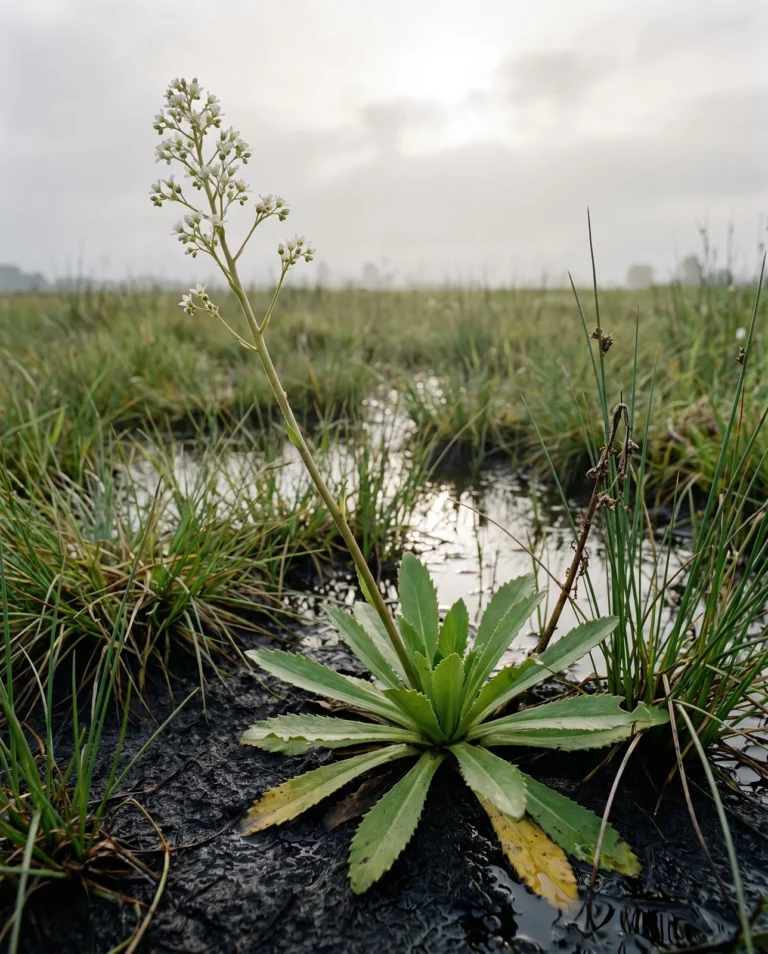
Names keep moving under it. Micranthes was pulled out of Saxifraga after DNA evidence in 1996 placed its members closer to Boykinia and Heuchera. Bog saxifrage now goes by Micranthes oregana, though some classifications still keep Micranthes as a section inside the genus. Saxifrage pink is a plainer trap: it is Petrorhagia saxifraga, a member of the pink family, and it shares nothing with this genus but the word. The useful split is narrower than the botany. Three groups cover almost everything grown under the name. There are the rock garden alpines and mossy hybrids, sold under cultivar names such as 'Alpino Early Carnival'. There are the wild northern species, one of them endangered or threatened in every state it grows in but Vermont. And there is the shade houseplant, which travels under a string of trade names. They want different ground, different light and different winters.
Which saxifrage do you have
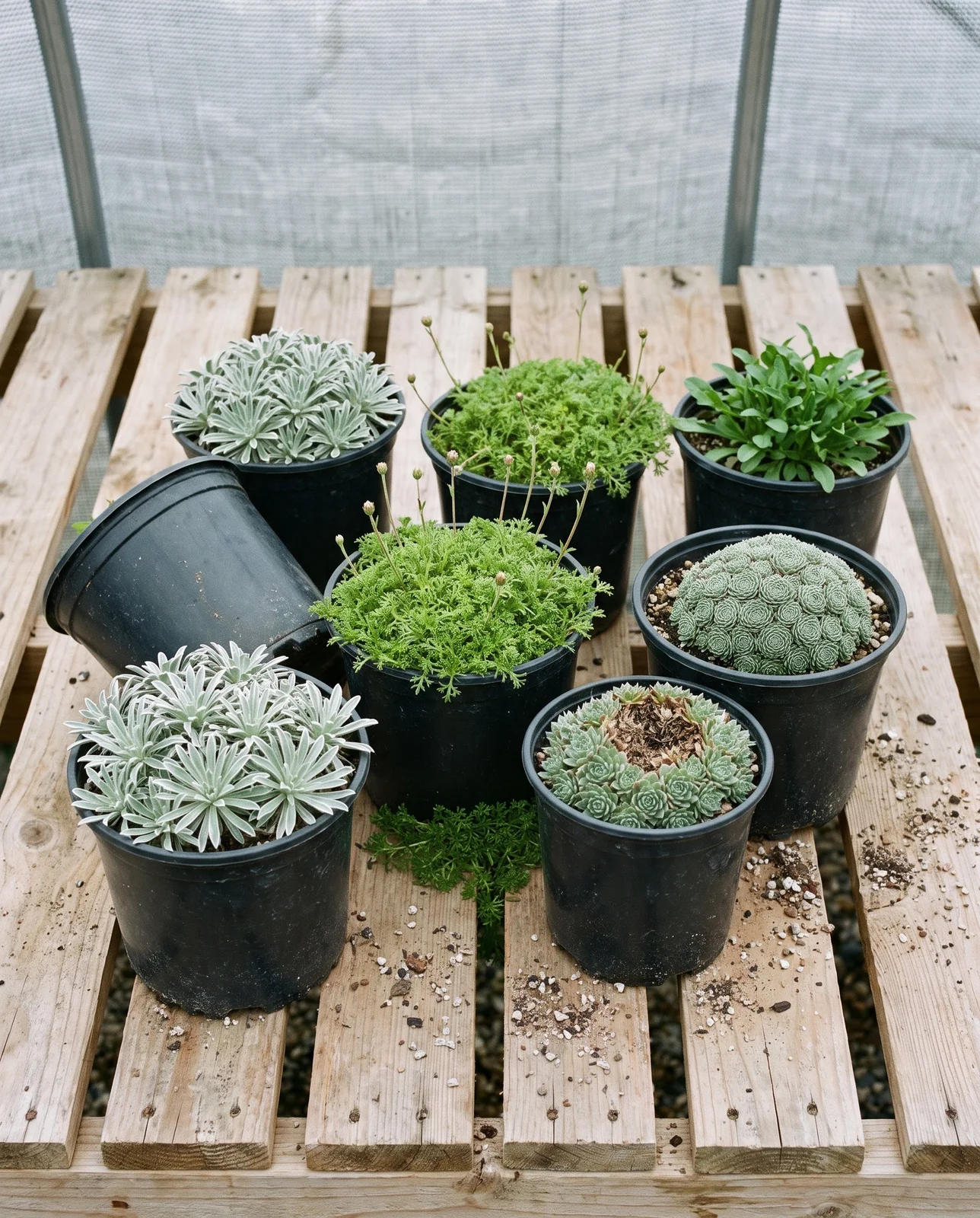
The three groups separate on leaf, habit, where you buy them and what they will put up with.
What the name means
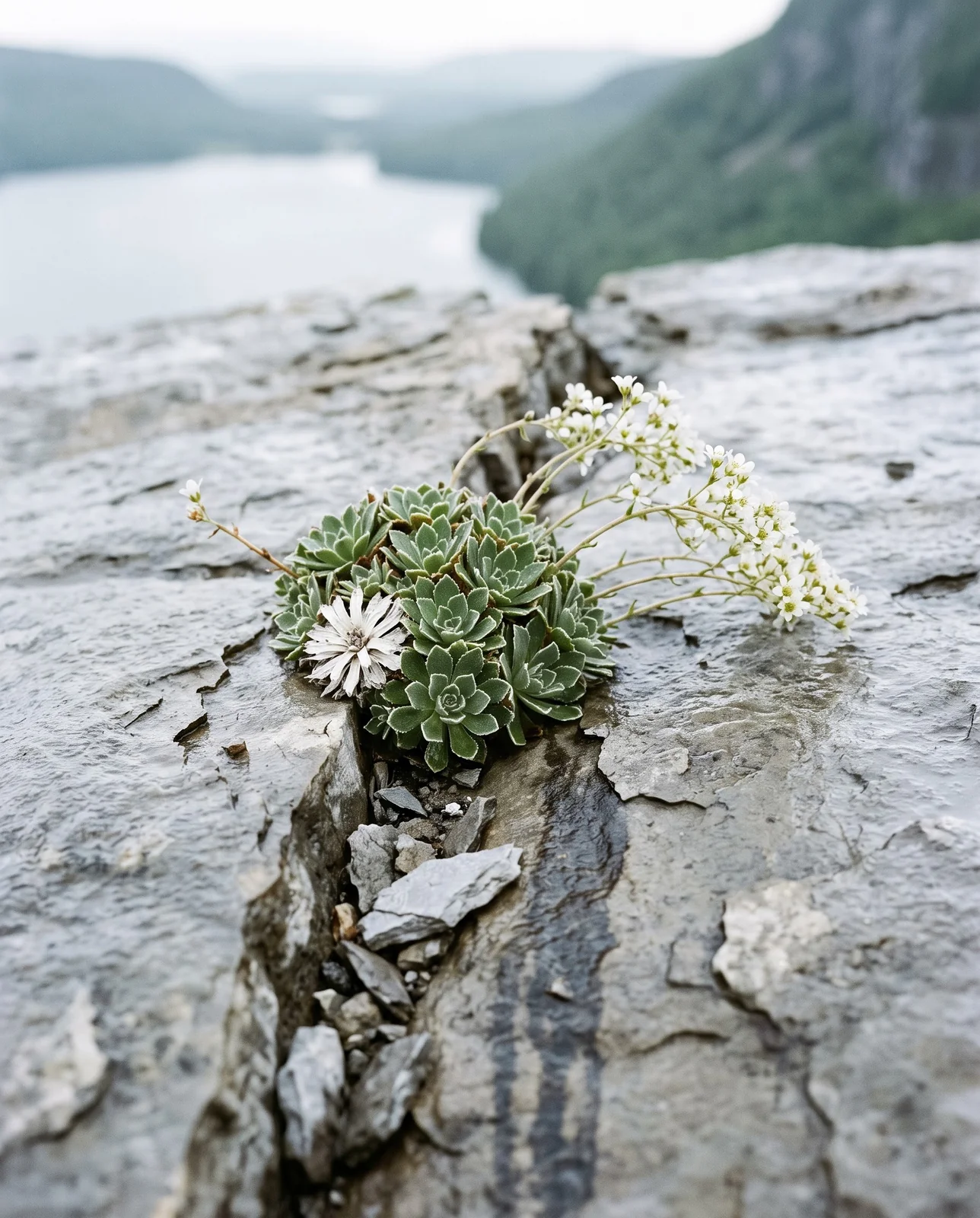
The name is literal Latin: saxifraga herba, a rock breaking herb, from saxum, a stone, plus the root of frangere, to break. The breaking is read two ways, and both readings are still in daily use. The plain one describes what the plant does: it grows in the fissures of rock and, over time, crumbles the rock away. The other is medicinal, a use against urinary calculi, carried by the old belief that these plants could dissolve kidney stones. Pliny stands behind that second reading, and in his account the plant was given to dissolve gallstones. The awkward part is that Latin used saxum for a rock and a different word, calculus, for a stone in the body.
What saxifrage looks like
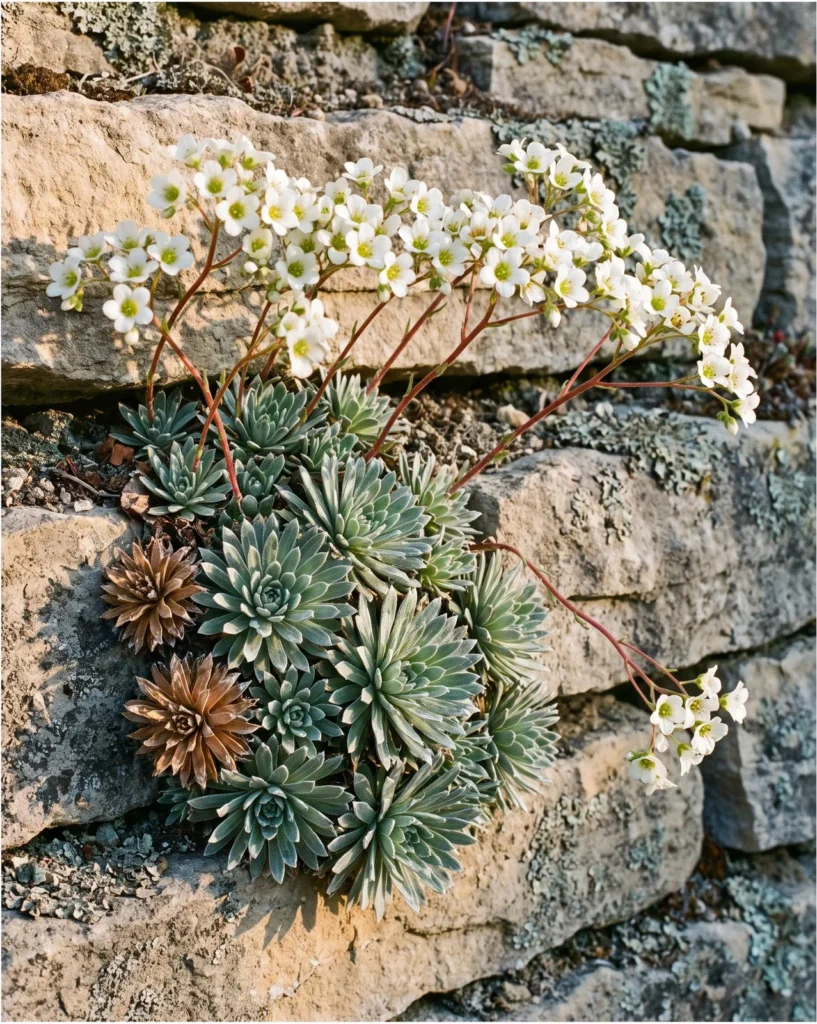
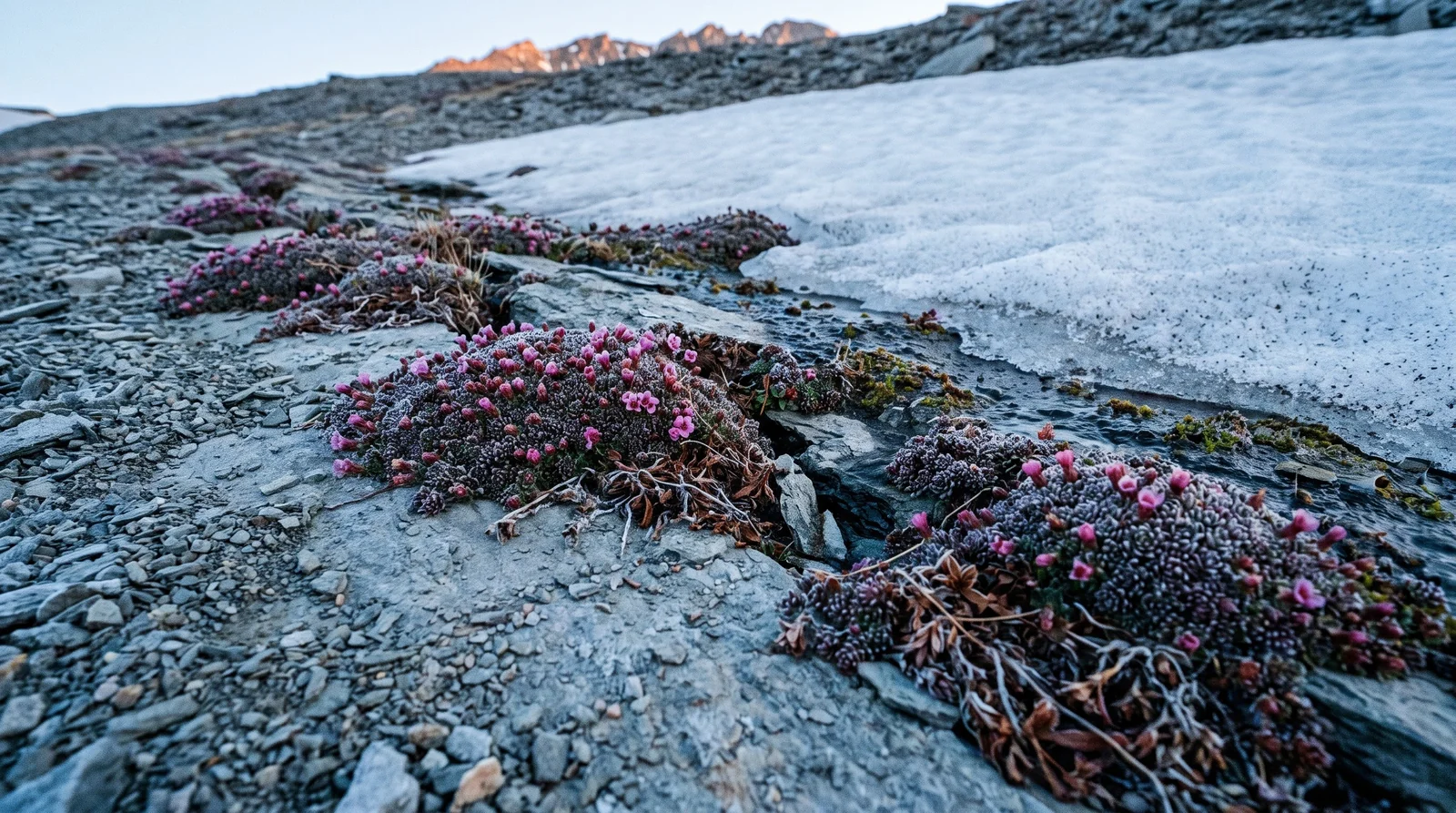
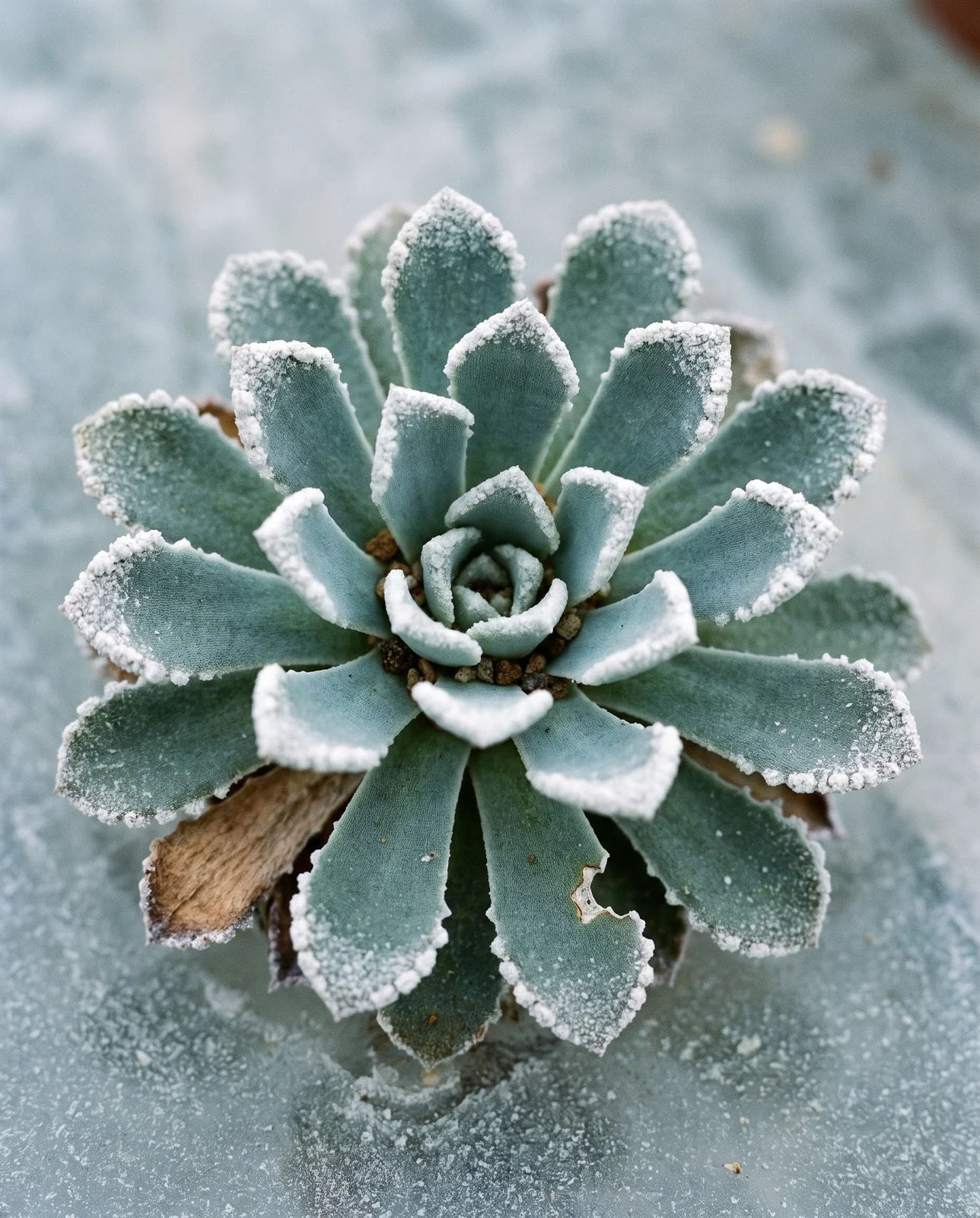
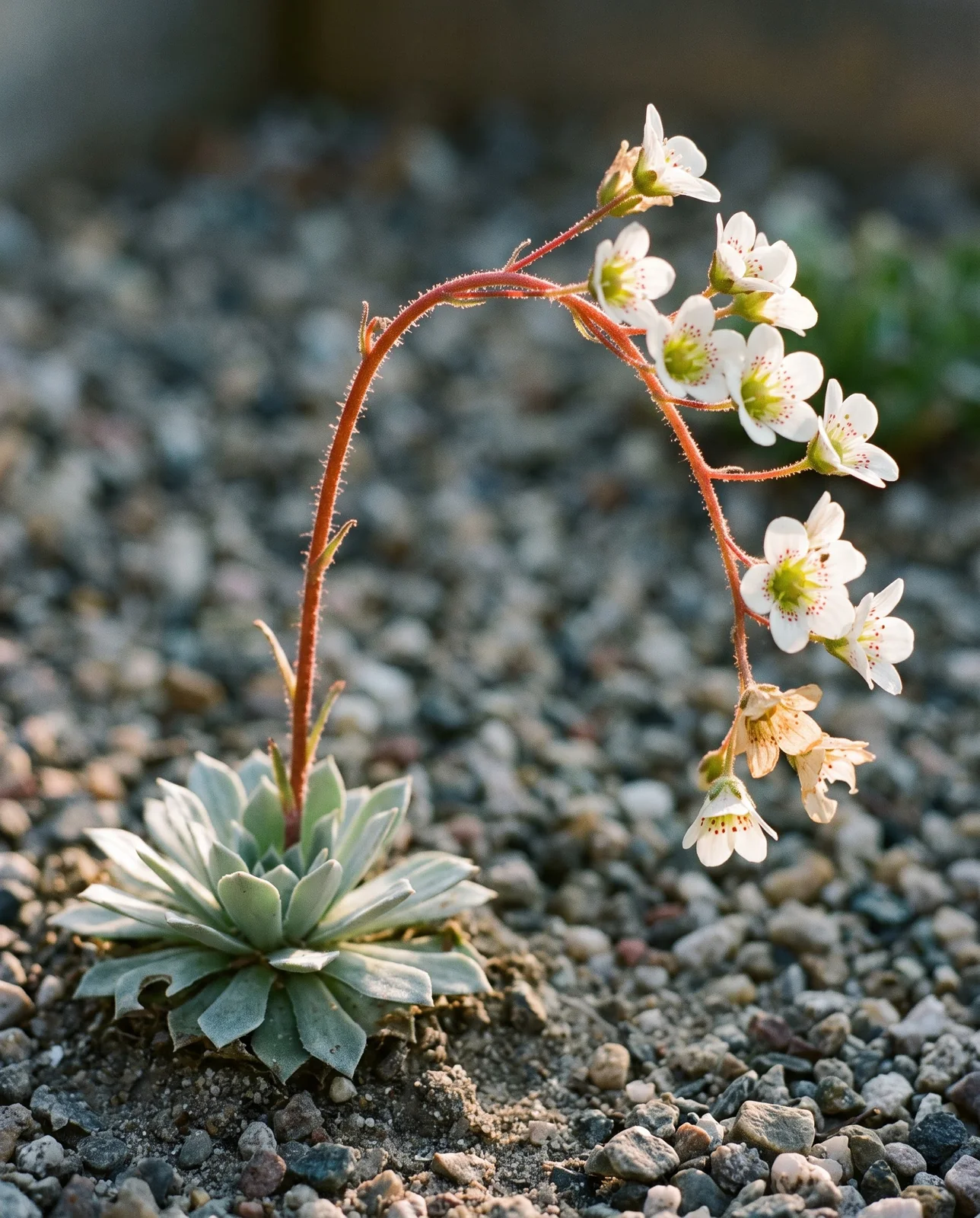
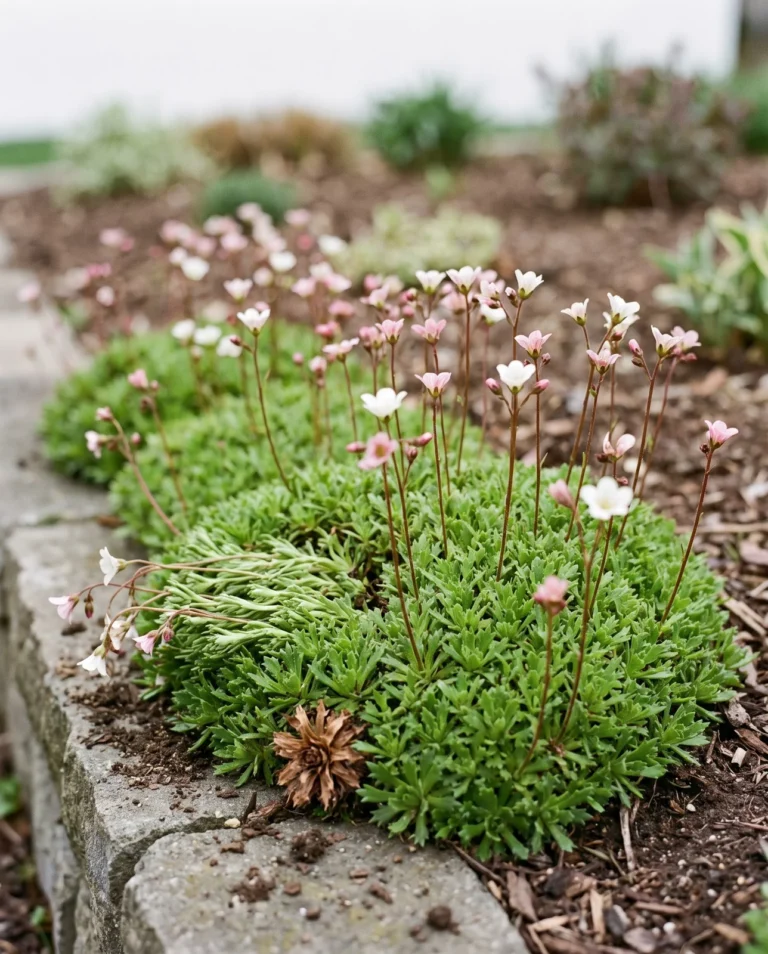
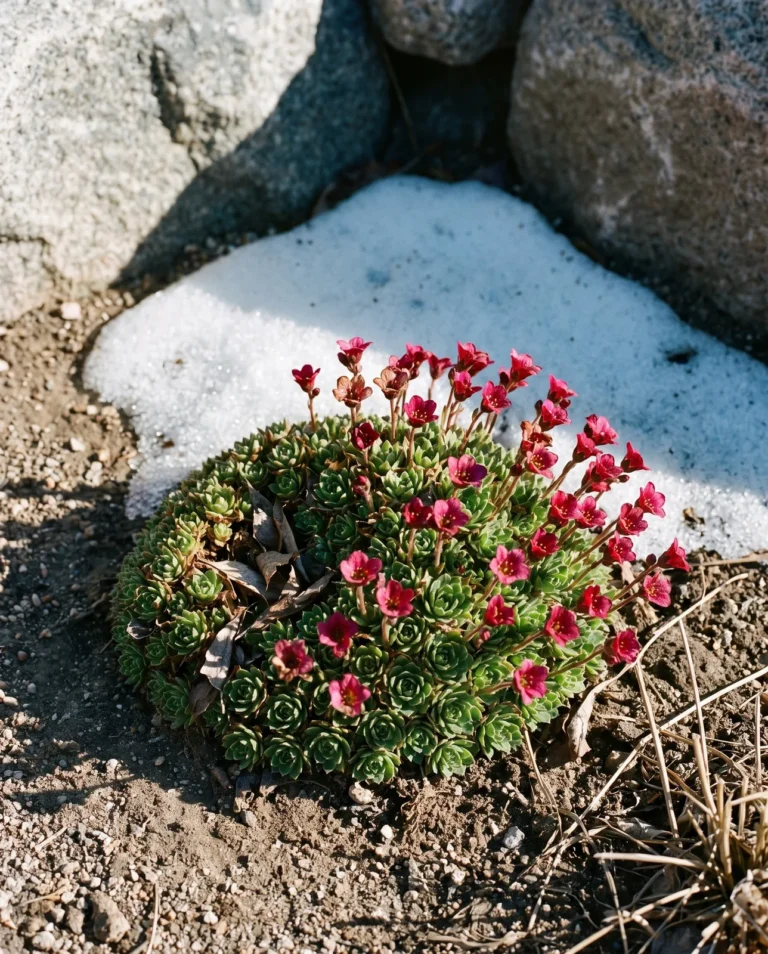
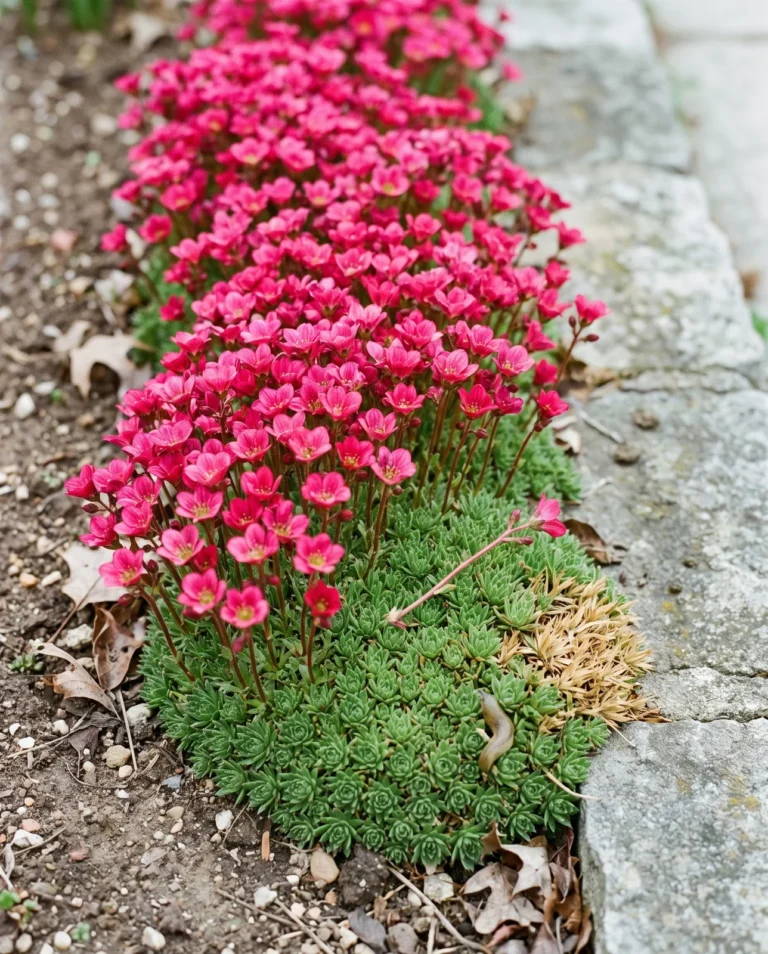
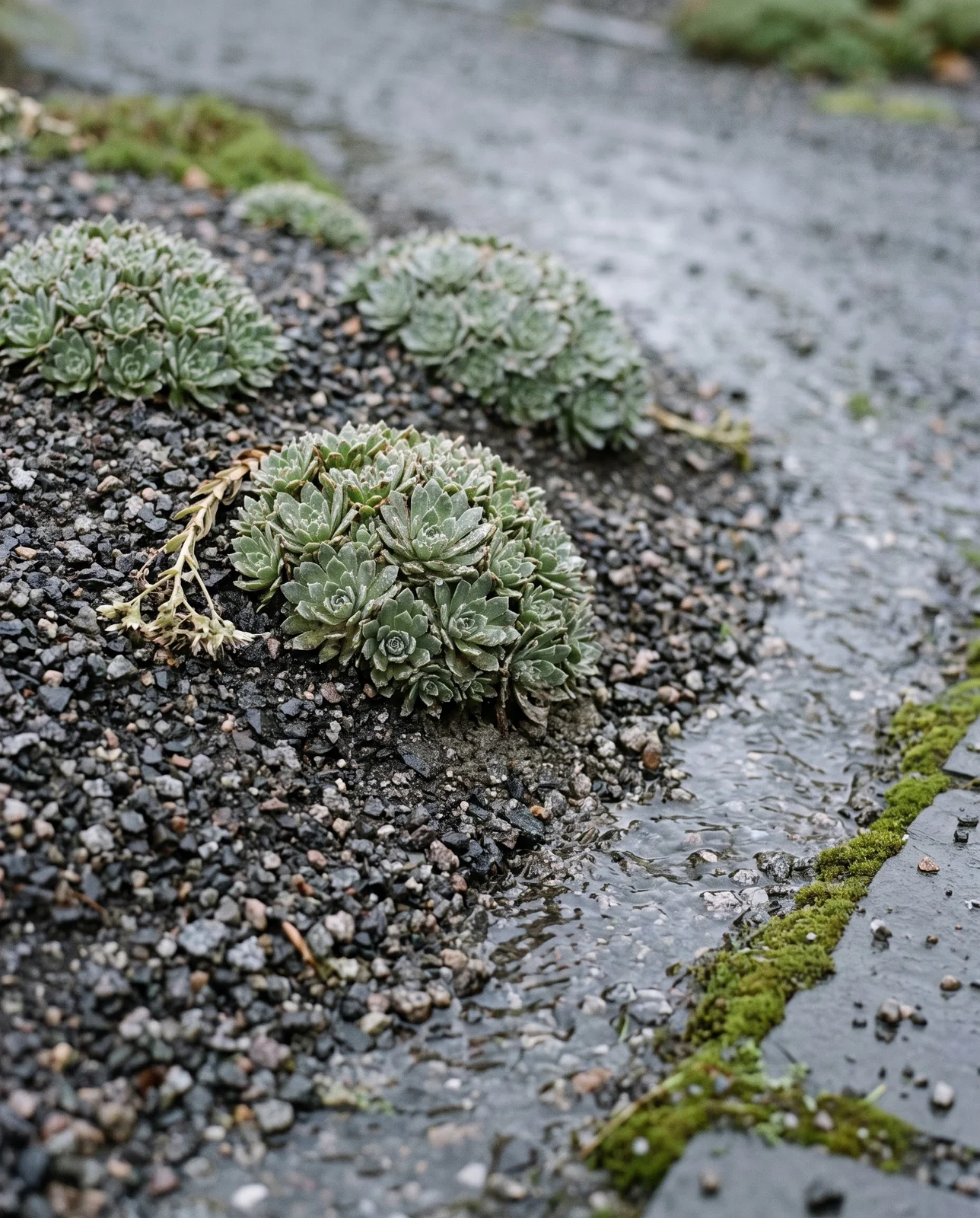
A saxifrage is a rosette that multiplies into a cushion or a mat, with small star shaped flowers held above it on thin stems. The mossy hybrids hold deeply cut evergreen leaves in dense rosettes that knit into low, moss like mats about 20 cm high. They take two to five years to spread 0.1 to 0.5 meters. Silver saxifrage is tighter and stiffer, with rosettes up to 9 cm across, made of narrow, incurved, gray green leaves crusted with lime along the margins. That crust is a working part of the leaf: glands at the leaf tips push out liquid, and as it evaporates it leaves a salt rime along the tips and edges. The whole encrusted section takes its name from those white limy deposits. Gray saxifrage goes smaller still, tiny rosettes of spoon shaped, blue green leaves with lime crusted edges, and purple saxifrage flattens the pattern into a mat up to 5 cm high.
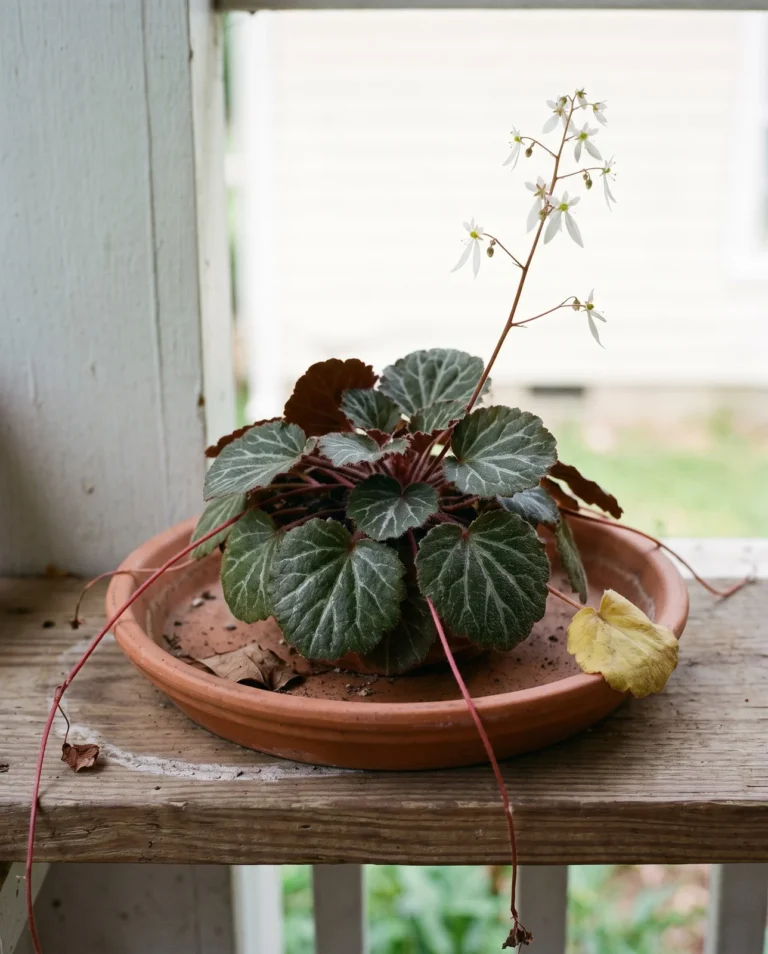
Flower color across the genus runs white, pink, yellow and purple, opening in spring or early summer. What that means on the ground depends on the group. The mossy hybrids carry small cup shaped flowers in white, pink or red on short stems just above the foliage, in late spring and early summer. Silver saxifrage sends up narrow, flat sprays up to 20 cm long of white, rarely pink, cup shaped flowers in early summer. Purple saxifrage flowers singly, about 1 cm across, in shades of pink to purple. One section adds the yellow and orange: the mat forming species of Ciliatae usually carry small panicles of yellow to orange flowers, and they want moist, acid soil and cool conditions. The houseplant is the odd one out, with asymmetrical white flowers an inch wide on wiry stems to 18 inches, in May and June.
Where to plant saxifrage
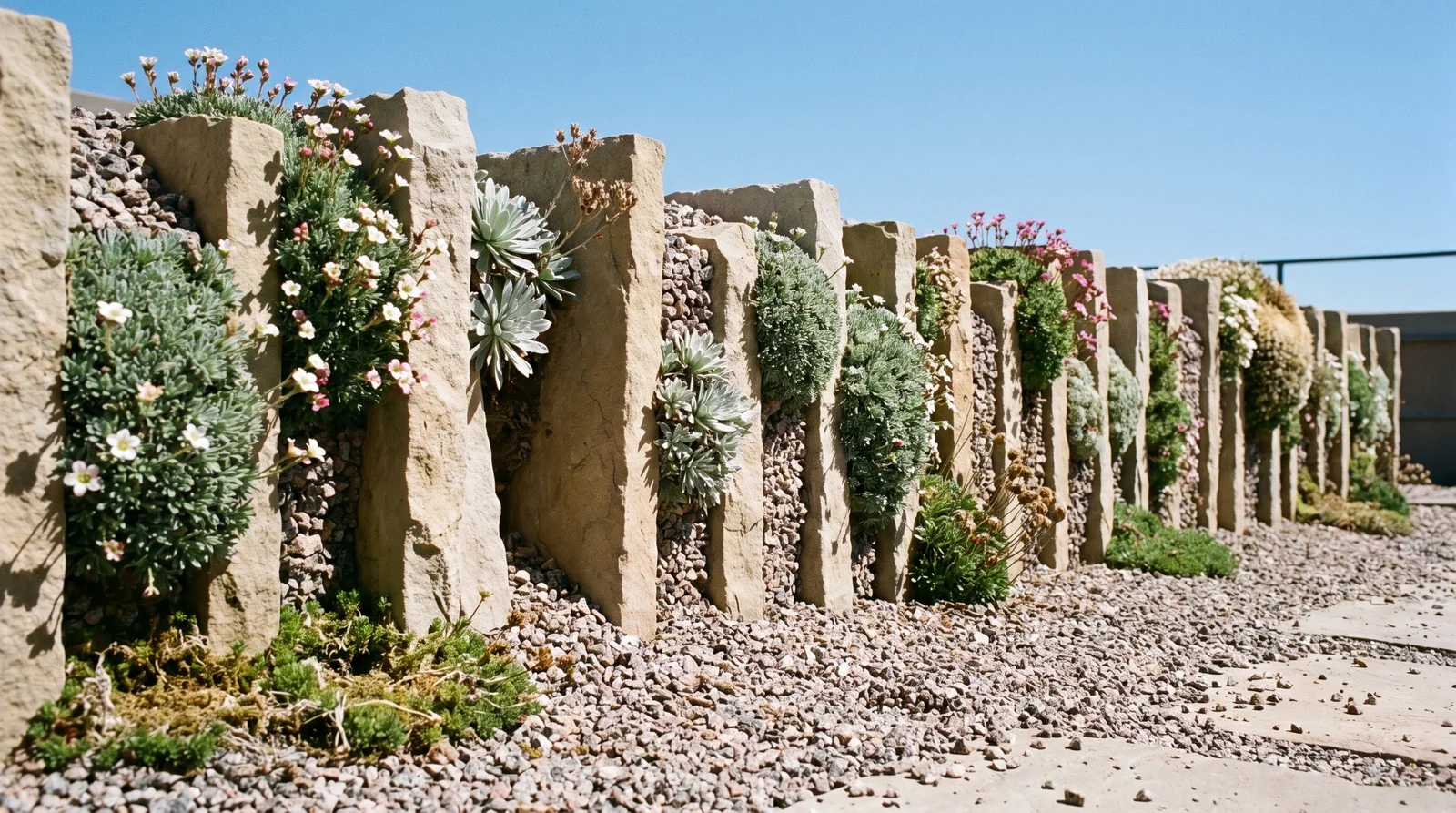
Plant saxifrage where water leaves fast: a crevice between stones, a raised bed of grit, a trough, a dry wall or the alpine house, which are where the best rock garden species in the genus belong. The cushion alpines of the Porphyrion section want gritty soil that is not dry. The encrusted kinds ask for the same thing in different words: soil that drains but does not dry out, ideally alkaline. Purple saxifrage marks where the line sits, since it needs excellent drainage in a medium that still holds moisture, and it is not particularly drought tolerant. A gritty crevice gives water that drains fast and comes back often; a flat bed of garden soil does not.
How much sun to give depends on how hot your summers are. Silver saxifrage is among the easiest of the encrusted kinds to grow. Give it full sun in cooler northern areas, afternoon shade in warmer regions, and gritty, well drained, alkaline leaning soil, since it dislikes high heat and humidity. The mossy section grows easily in moist but well drained soil and does best in partial shade. Gray saxifrage wants very well drained alkaline soil with protection from hot sun and from winter wet, so it goes in a rock garden, a trough or an alpine house. Purple saxifrage is grown in part shade, ideally with morning or late afternoon sun. Less sun as the summers get hotter, with shelter from winter wet on top. Saxifrage goes into the bed in spring, after the last of the late frosts, spaced 15 to 40 cm apart depending on the species.
Hardiness by type, with the plant each number belongs to
Hardiness runs from the high Arctic to the mild South, so each row names its own plant.
The houseplant branch, sold as strawberry begonia
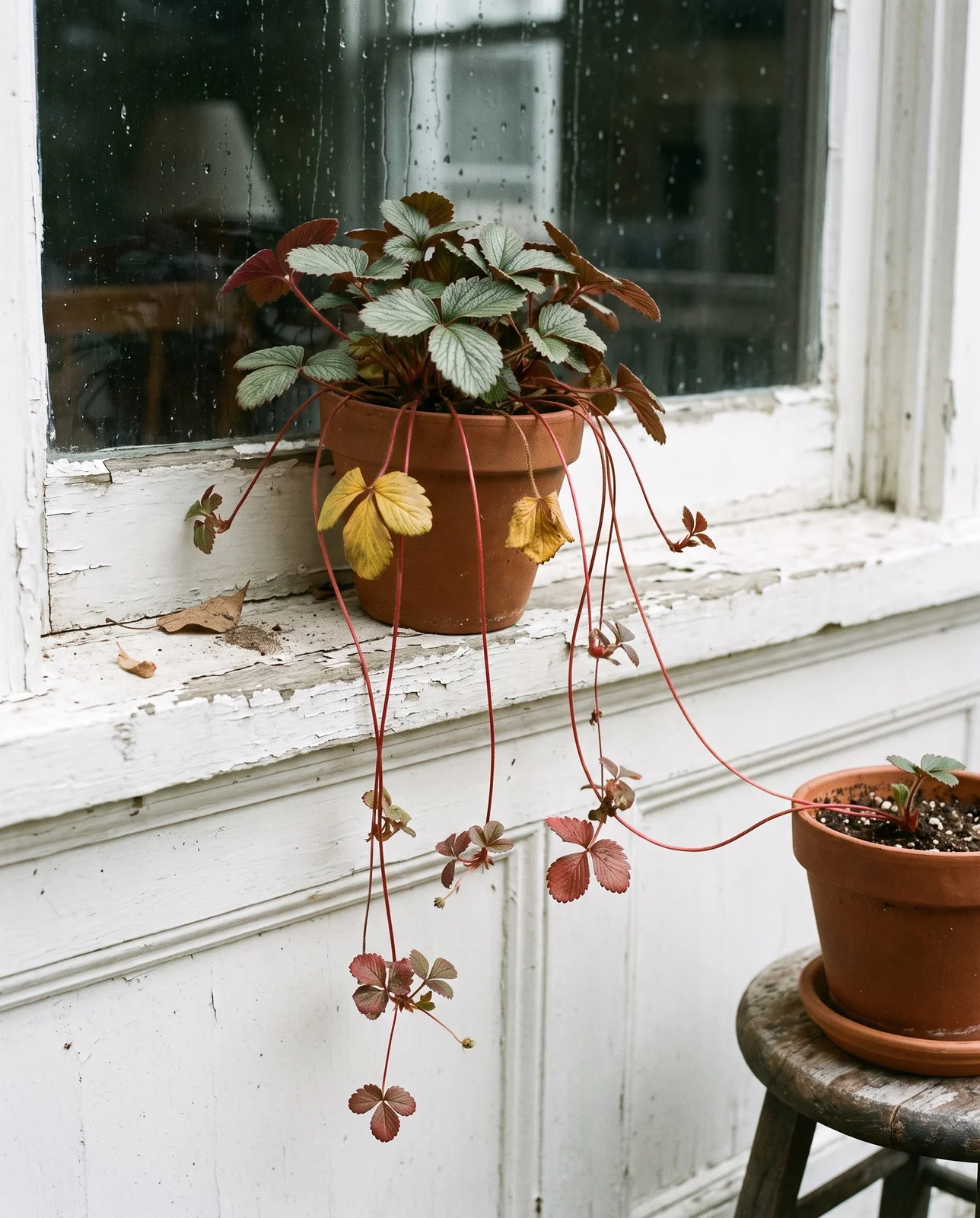
The plant sold as strawberry begonia is Saxifraga stolonifera, and it is neither a begonia nor a geranium. The common names are mostly borrowed: creeping saxifrage, strawberry saxifrage, creeping rockfoil, Aaron's beard, beefsteak plant, creeping sailor, roving sailor, old man's beard, mother of thousands and strawberry begonia. The borrowing matters. True begonias sit in a different genus and a different family, and they are toxic to dogs, cats and horses, with soluble calcium oxalates as the toxic principle. An unrelated succulent in the stonecrop family carries the near identical nickname mother of millions, and it is toxic to dogs and cats, with bufodienolides as the toxic principle. On the saxifrage the name points at its spread by red, strawberry like runners.
Indoors it wants bright indirect light, though some direct and not too intense sun brings out reddish leaf color. Outdoors, where it is hardy, it takes part shade to full shade in evenly moist, organically rich, light, well drained soil. The plant came from central and southern China, South Korea, Japan and Taiwan, and it has naturalized into temperate Europe and North America. In its home range it grows at altitudes of 400 to 4500 meters.
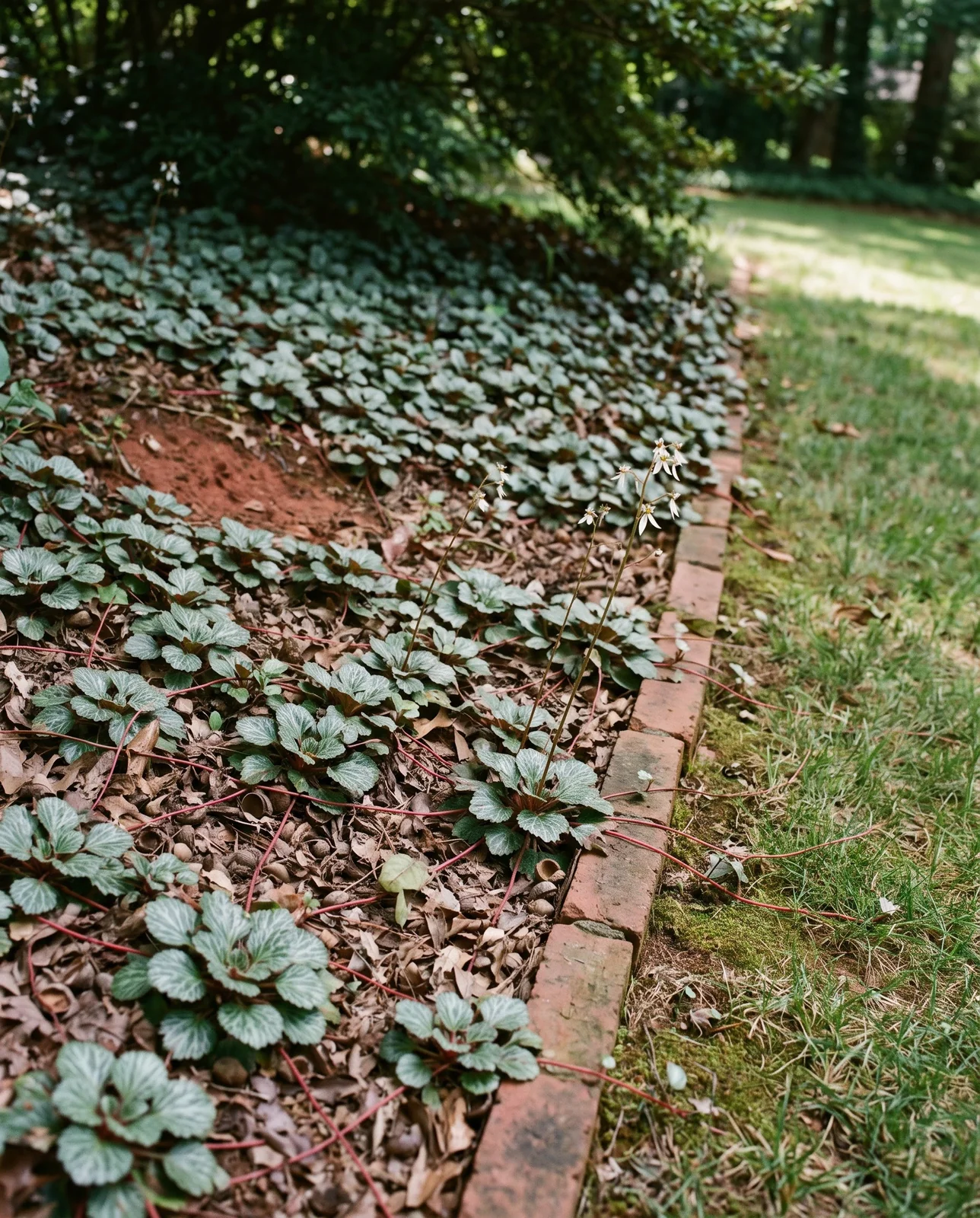
The runners are how you get more of it. Thread like stolons run out from the rosette and carry plantlets at their tips, and the plant grows fast. Division is how it is increased, and two named selections are on the books, 'Maroon Beauty' and 'Tricolor'. Where it is not winter hardy, all of that happens in a pot, in a hanging basket or indoors on a windowsill.
Why your saxifrage will not flower
Check the light and the calendar before you change anything. The cushion saxifrages of the Porphyrion section want a fair amount of sun to flower well, so a mat shaded out by a neighbor is the first thing to look at. The calendar catches more people than the light does. Purple saxifrage blooms within weeks of snowmelt in the wild, and from March to May in cultivation. One early mossy cultivar carries a bloom time of late winter to mid spring and a flowering window of up to ten weeks. A plant that looks healthy and carries no buds in June may simply have flowered in March.
Water and feeding come next. Watering trouble, in either direction, can impede blooming on the houseplant. On the mossy cultivars, feed in early spring and again after flowering, then prune lightly once the bloom period ends and take off the spent flower stems. Feed a potted plant a balanced, water soluble fertilizer every two to three weeks through the growing season, and nothing in winter.
Brown centers outdoors, crisp edges indoors
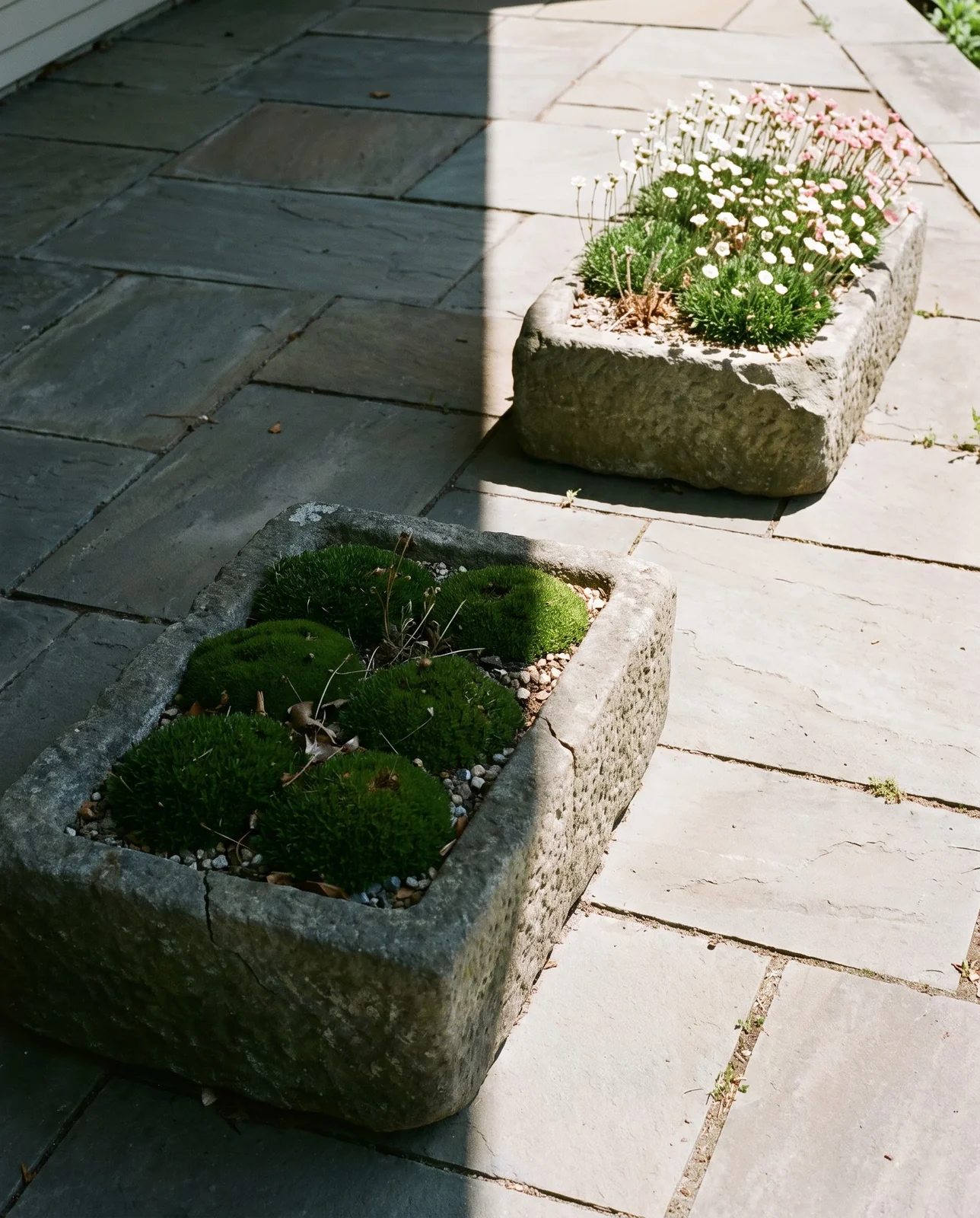
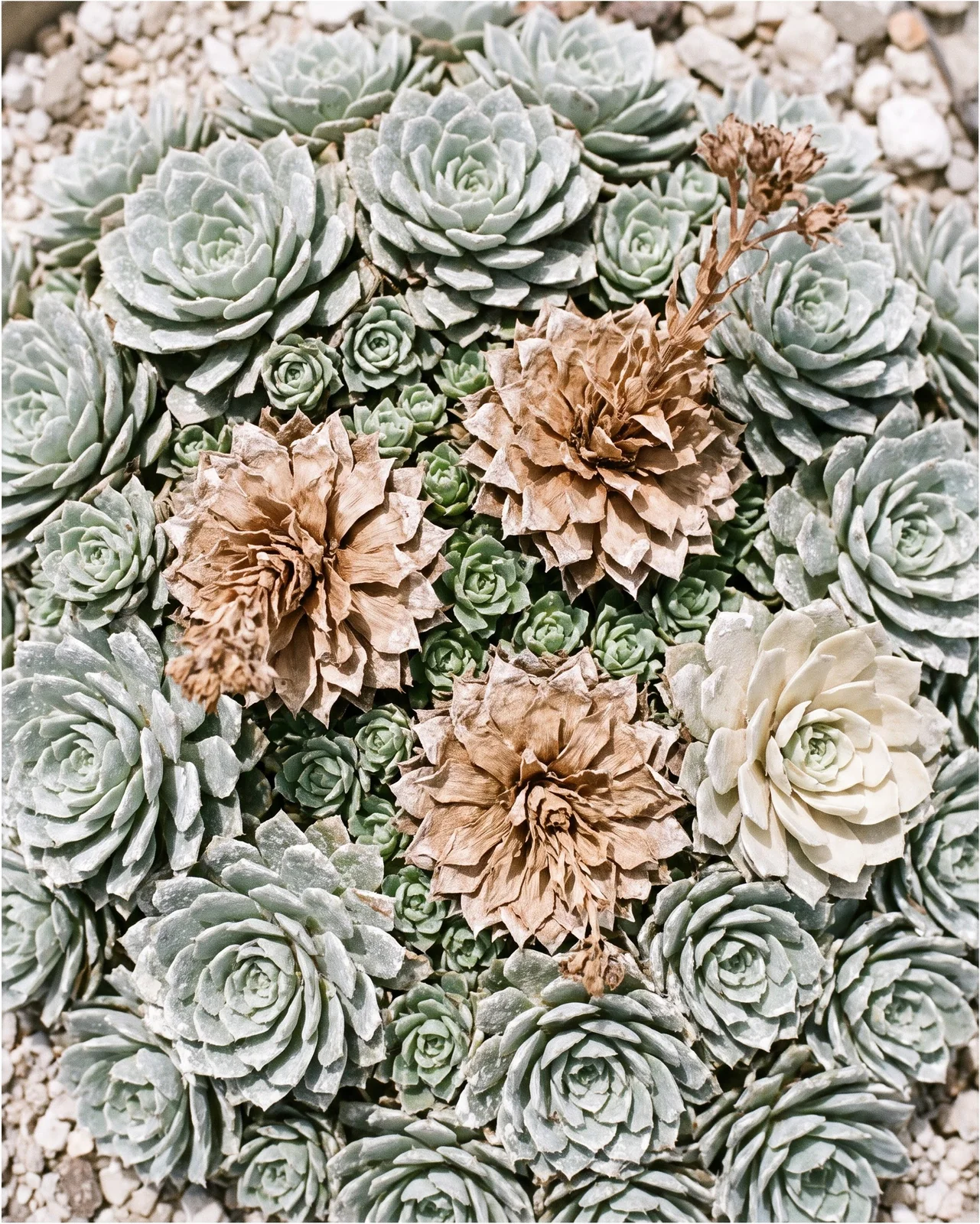
A brown patch in the middle of a silver cushion is often the plant finishing, not failing. The encrusted saxifrages form monocarpic rosettes: an individual rosette flowers once and then dies, inside a clump of strap shaped or oblong, lime encrusted tufts. The clump carries on, because the rosettes that did not flower keep growing around the dead one, so the gap opens where last season's flowers stood. Rule that out before you change watering or position.
What the cultivation notes guard against is wet ground paired with heat. Gray saxifrage says it outright: protection from hot sun and from winter wet, two opposite seasons and one instruction. On the houseplant the wet half has a name, since root rot can occur in poorly drained soil, though the plant is otherwise free of serious insect or disease problems. When a cushion browns in hot, wet weather, change the ground it sits in and the shade it gets. A spray fixes neither.
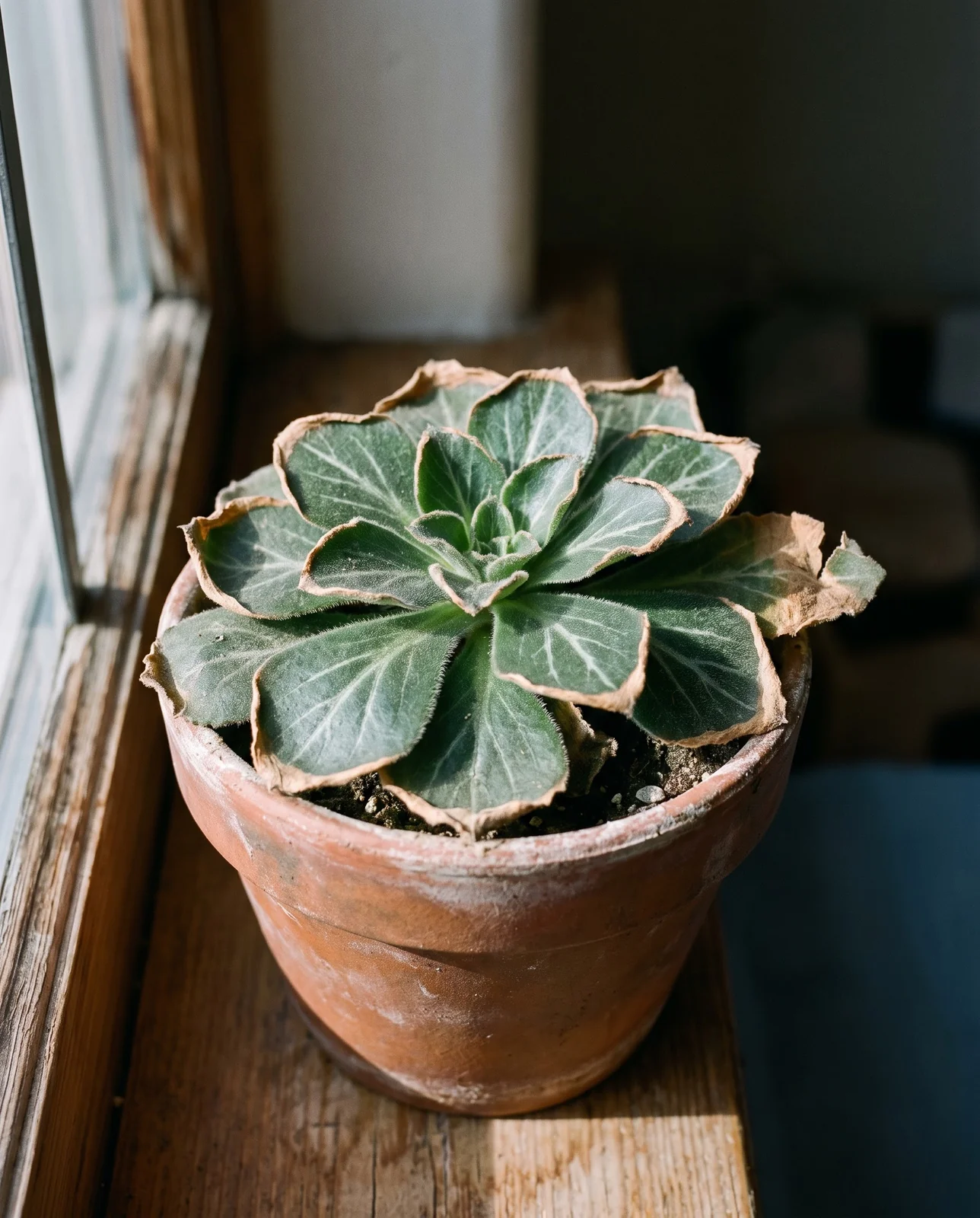
Indoors the same brown has the opposite cause. Crispy, shriveled leaves on strawberry begonia are often a sign that the air is too dry, and the remedy is a pebble tray or a room humidifier. Keeping Saxifraga moist and pruning off dead or damaged foliage encourages more vigorous growth. The two problems separate by where the damage sits: indoors on the leaf edges, outdoors in the middle of a mat, where a rosette has finished its one flowering.
Yellow leaves and what they mean
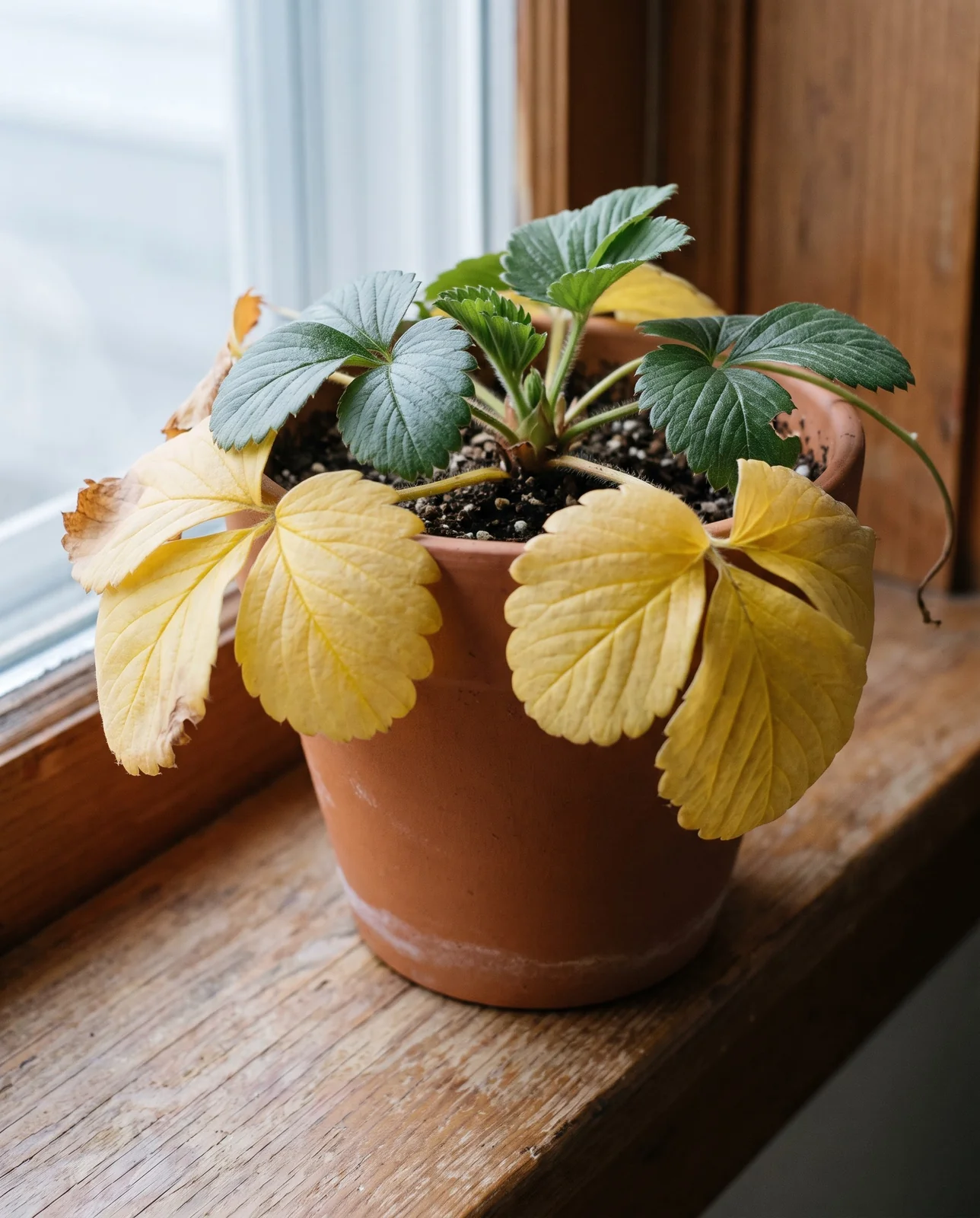
Yellow lower leaves on the houseplant have two ordinary causes: watering that has gone wrong in either direction, and plain maturity. Age is worth ruling out first, since the lowest leaves on any rosette are also the oldest ones. Check the pot next. The soil should be evenly moist, organically rich, light and well drained, in part shade to full shade. A plant yellowing at the base while skipping its flowers is telling you the same thing twice.
Actual disease is a short list. Root rot can occur in poorly drained soil, and the odd aphid, slug or spider mite may appear, but there are no serious insect or disease problems on this plant. A yellow leaf therefore points at water, light or age before it points at an organism. Light is the part people skip. Indoors the plant wants bright indirect light, with some direct and not too intense sun bringing out reddish leaf color.
What goes wrong, in the order gardeners ask about it
Identification first, then cold, then heat, then finding the plants at all.
The symptom is care that does not work: a plant that rots, burns or will not flower. The cause is one name over three plants, with hardiness published cultivar by cultivar. Keep the label the plant came with, and treat its zone number as belonging to that cultivar and nothing wider.
The symptom is a mat that goes into autumn looking fine and is gone by spring. The mossy hybrids are rated H5 on the British scale, hardy in most places there even in severe winters, at minimum temperatures of about minus 15 to minus 10 degrees Celsius. That rating covers the hybrid group and nothing else. Where winters run colder, buy a wild northern species and give it a gritty spot where meltwater cannot stand.
The symptom is a cushion that browns off in high summer and never comes back. Purple saxifrage is a popular alpine garden plant and difficult to grow in warm climates, and no temperature is fixed for where that difficulty begins. Position and drainage are the levers you have: afternoon shade, a north facing crevice, and grit under the crown.
The symptom is a wish list you cannot fill. The named silver selections are specialist stock: 'Monarch', 'Minima Glauca', 'St Johns', S. callosa 'Albert Albida' and S. farreri, several of them rare in Canada. Look for them through alpine plant specialists, and buy by cultivar name so the hardiness figure comes with the plant.
Dividing saxifrage and rooting rosettes
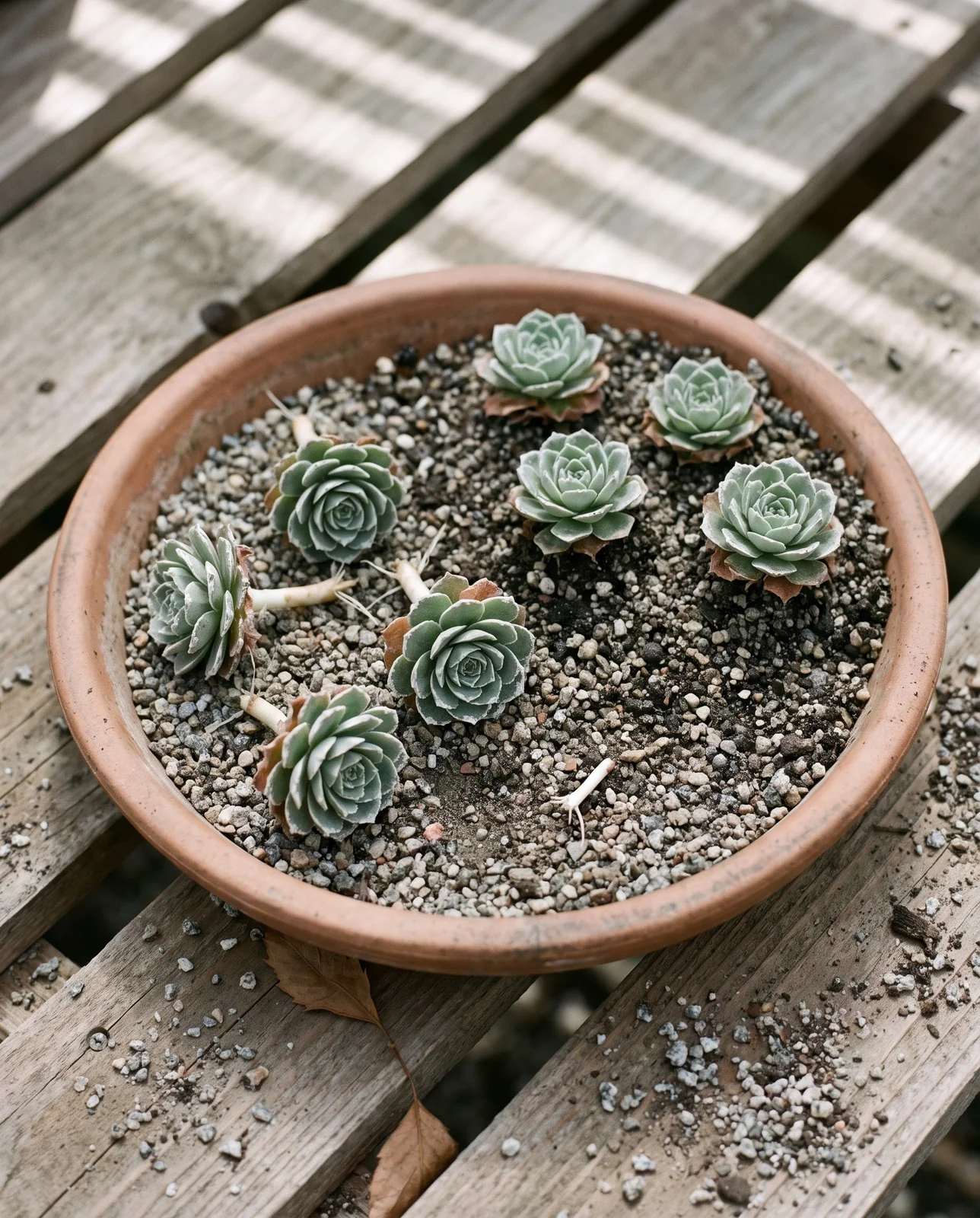
Take rosettes off the edge of a clump and root them like cuttings, and you have most of the method for this genus. The general instruction covers three windows: seed sown when ripe or in spring, division after flowering, or cuttings taken in late summer. For the mossy hybrids it narrows to one move, detaching individual rosettes and rooting them as cuttings. Silver saxifrage is increased the same way, its rosettes separated and rooted in late spring or early summer. It also takes plain division, with large clumps split in early spring or after flowering, and non flowering rosettes rooted on their own. That last detail carries the trick on the encrusted kinds: the rosette worth taking is one that has not carried a flower stem. Purple saxifrage stands apart here as it does in habitat, since its cuttings are taken in mid summer and rooted in pure sand. The houseplant sits outside all of this. Divide it, working with the plantlets its stolons already carry.
Varieties worth telling apart
Nine plants cover most of what is sold or photographed under this name, across all four groups.
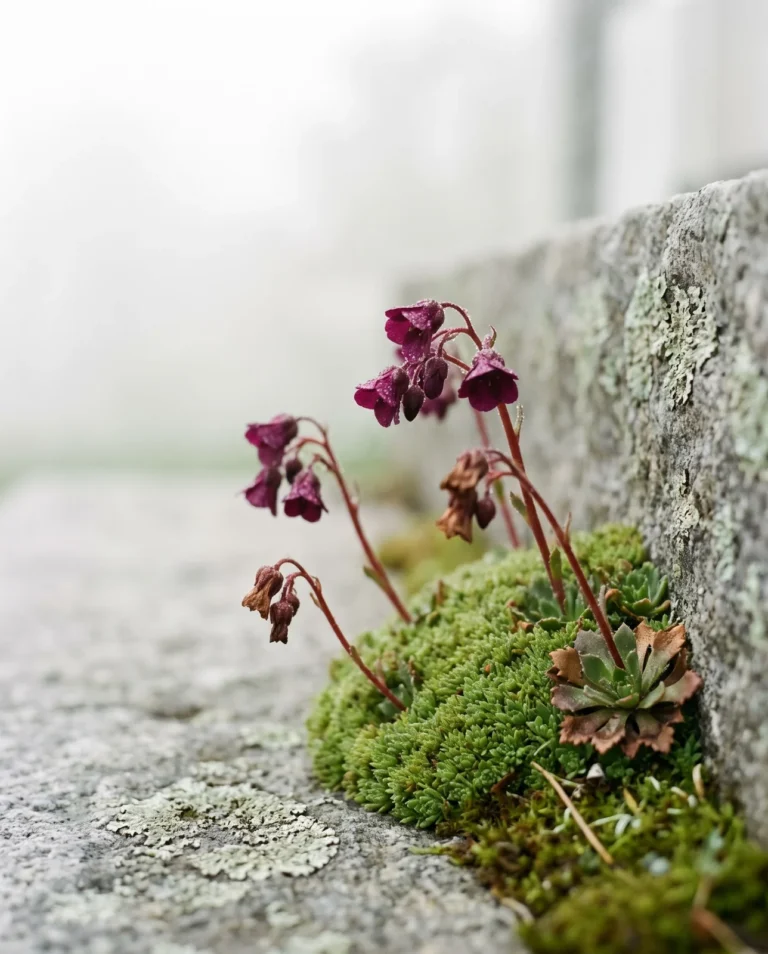
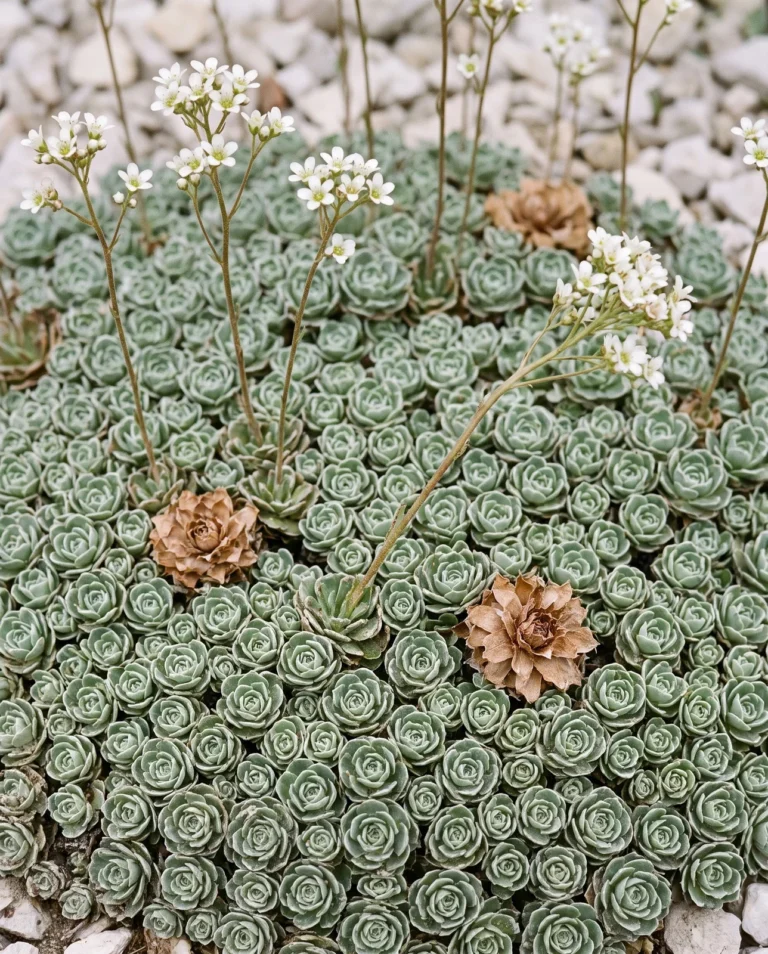
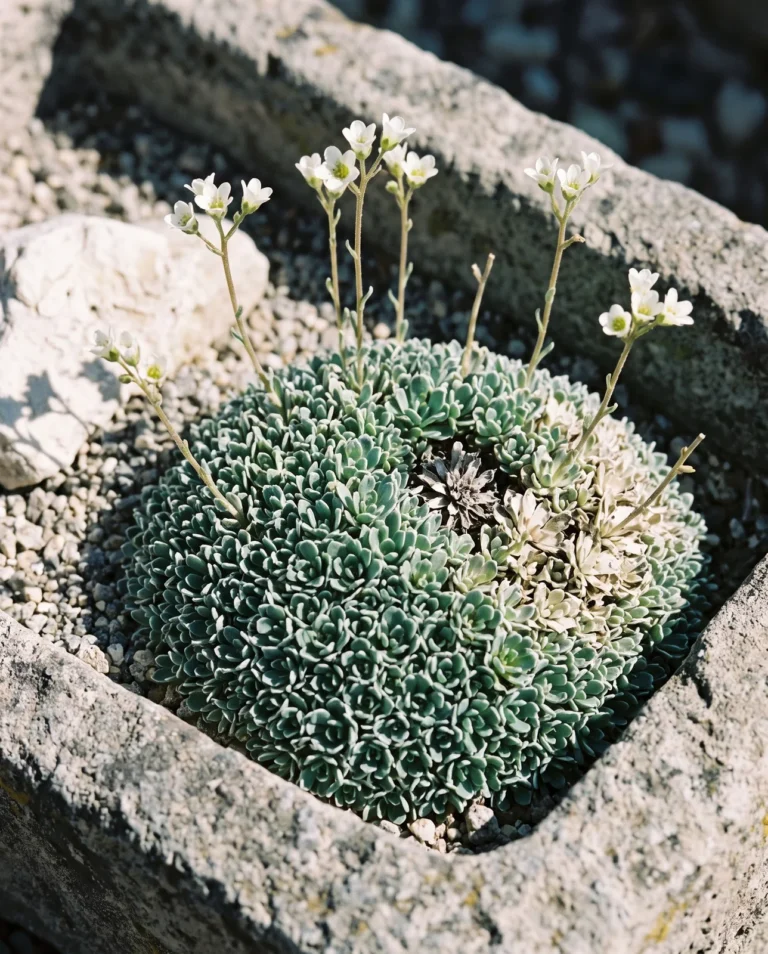
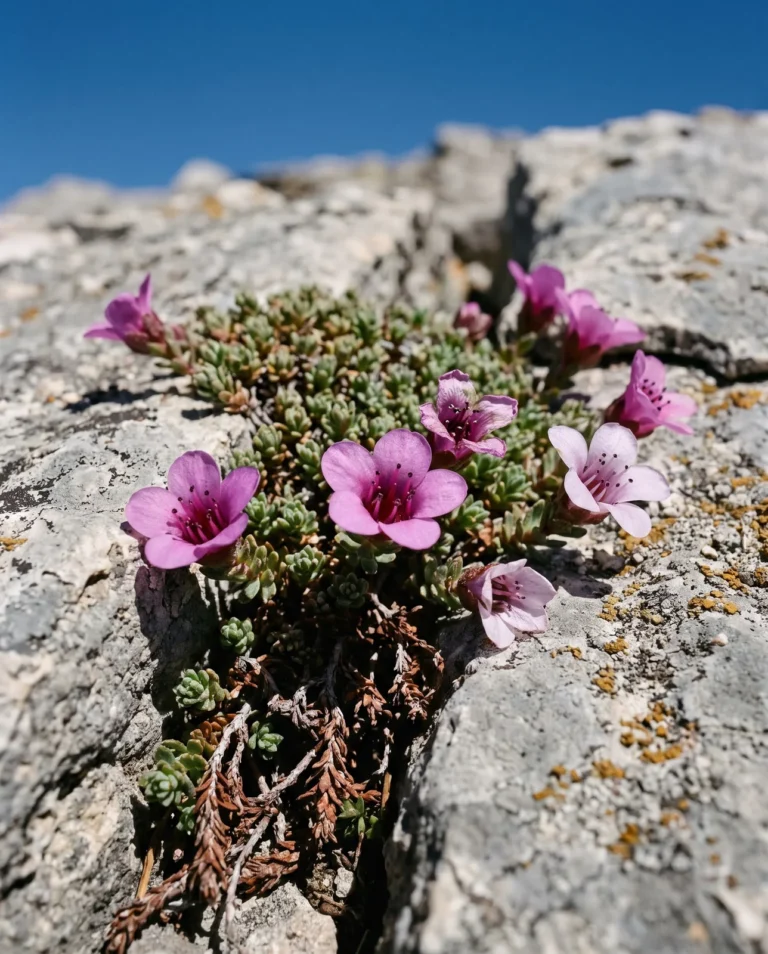
Soil, drainage and water
Sharp drainage comes first, and lime is the instruction that follows it most often. The mossy hybrids grow in humus rich, moist but very well drained soil, alkaline or neutral, in light shade. Silver saxifrage takes the leaner version of the same recipe: moderately fertile, very well drained, neutral or alkaline ground in full sun. Out in the wild the ground reads the same way. White mountain saxifrage sites repeatedly show calcareous, basalt, basic or anorthosite bedrock, which marks the plant as likely a calciphile, a plant of limy ground.
Water follows from the same rule, with one adjustment per group. The early mossy cultivars want average to enriched soil kept evenly moist, and that advice is pitched at cool summer areas. At the other end, purple saxifrage needs a medium with excellent drainage that still holds moisture, since it is not particularly drought tolerant. The houseplant is the one branch with a plain rating: its water need is medium.
How big saxifrage gets
Nothing in this genus is tall, and the differences are in width. The mossy hybrids stand around 20 cm high and take two to five years to fill 0.1 to 0.5 meters of ground. Silver saxifrage is smaller in leaf and taller in flower, with rosettes 1 to 9 cm across and flowering stems from 5 to 40 cm. Purple saxifrage is flatter still, a matted plant reaching up to 5 cm. The houseplant is the one measured in feet, 6 to 18 inches tall and 1 to 2 feet wide, with thread like stolons running out to 24 inches.
Does saxifrage spread
Spread here means a mat widening and a runner rooting, and the houseplant is the fastest of the three groups. It has naturalized in temperate Europe and North America, and it turns up on lists of ground covers for shaded slopes and of plants to mass in shade or woodland gardens. That is the job usually handed to hostas and hellebores. Among the wild kinds the question attaches mostly to bog saxifrage, which can spread a bit by rhizomes in favorable sites. The rock garden alpines measure their spread in years.
Saxifrage in troughs and containers
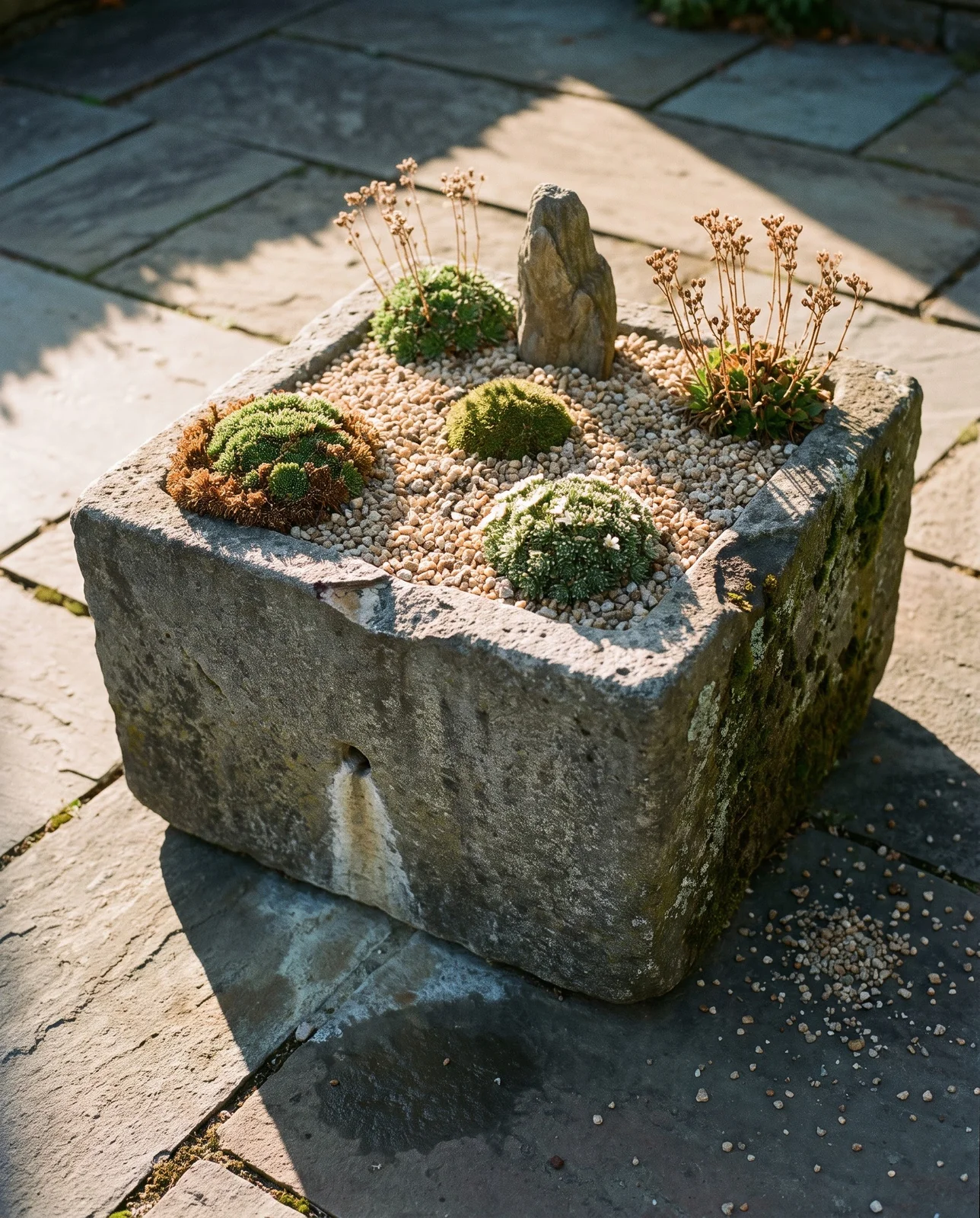
A trough is how most people actually grow the alpine kinds, and the reason is drainage you can build. Silver saxifrage goes either into open ground or into an alpine house pot filled with a 50:50 mix of peat free, loam based compost. Gray saxifrage is placed the same way, in a rock garden, a trough or an alpine house, with protection from hot sun and from winter wet. A container can be moved to suit that pairing. The houseplant reaches containers by a different road: where it is not winter hardy it lives in pots, in hanging baskets, or indoors on a windowsill.
Pests and diseases
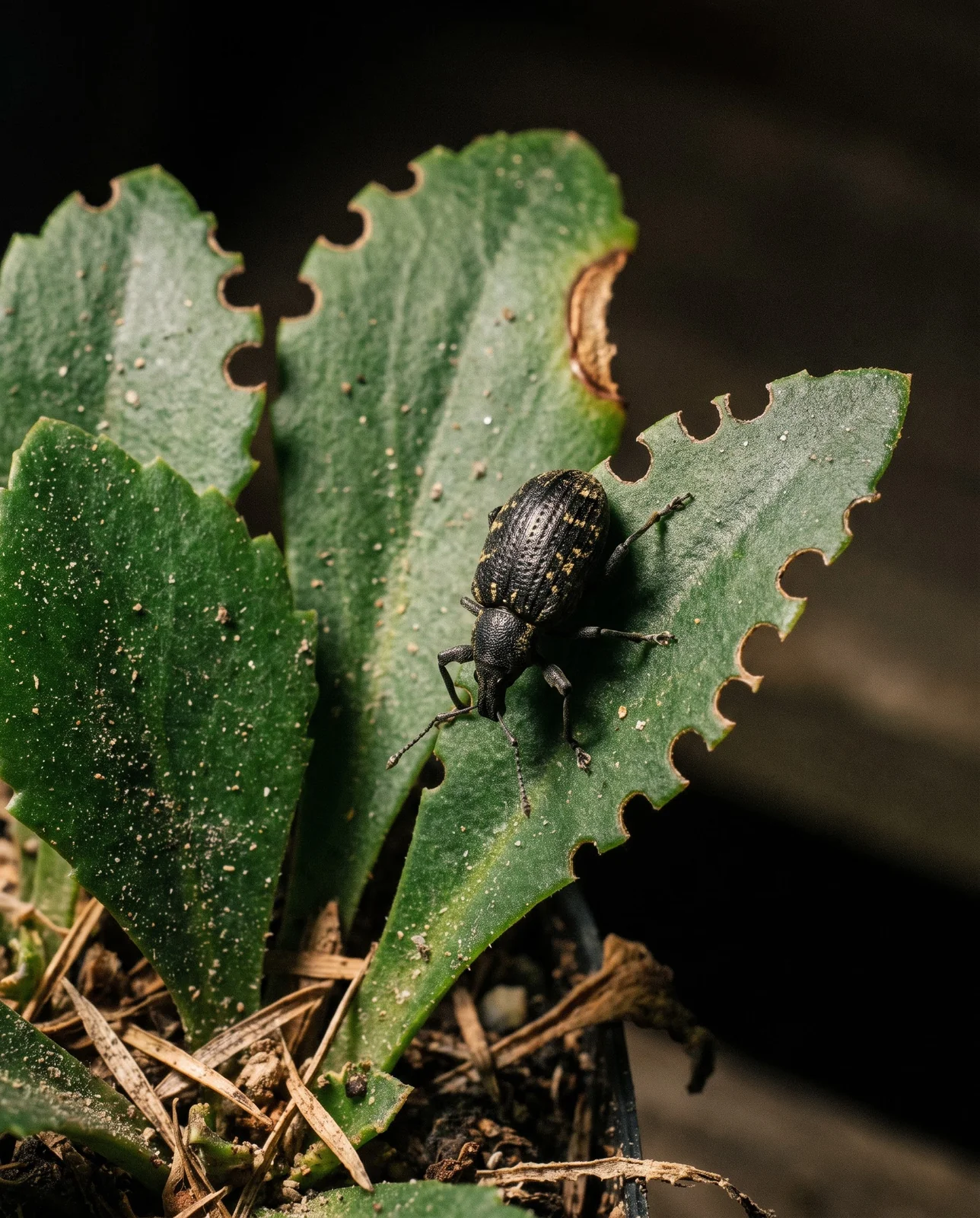
One pest on these plants is worth learning by sight, and it is vine weevil. The mossy hybrids are susceptible to aphids, slugs, vine weevil and glasshouse red spider mite, and generally disease free. The weevil is the one that does structural damage. It can feed on a wide range of ornamental plants and fruits, especially those grown in containers, with the adults eating leaves and the grubs eating roots. The grubs are plump, white and legless, with pale brown heads, up to 10 mm long. The adult is a dull black beetle roughly 9 mm long, with a dirty yellow mark on the wing cases. Adults are mainly active after dark and spend the day in leaf litter beneath the plants they feed on, so you find the chewed leaf edges long before you find the beetle.
The company a saxifrage keeps matters as much as the saxifrage. Heavy grub populations can build on strawberries, Primula, polyanthus, Sedum, Heuchera and young yew, a fair inventory of what shares a trough with these plants. Biological control is a question of timing. Apply nematodes in August or early September, while soil or potting media sits between 5 and 20 degrees Celsius for Steinernema species, or between 12 and 20 degrees for Heterorhabditis.
Four things people get wrong about saxifrage
Four beliefs that send gardeners wrong.
The myth: Strawberry begonia is a kind of begonia.
The reality: It is Saxifraga stolonifera, and it is neither a begonia nor a geranium. True begonias belong to a different family, Begoniaceae, and they are toxic to dogs, cats and horses.
The myth: White mountain saxifrage is named after the White Mountains.
The reality: The name has nothing to do with New Hampshire. It separates the plant from yellow mountain saxifrage by flower color.
The myth: Saxifrage wants rich soil, like most perennials.
The reality: The encrusted kinds grow in soil that drains but does not dry out, ideally alkaline. Silver saxifrage goes on gritty, alkaline leaning ground, in full sun where summers are cool and afternoon shade where they are hot.
The myth: Saxifrage is one plant, so the same care suits all of it.
The reality: The name covers a wild cushion hardy to zone 1 and a shade houseplant rated for zones 6 to 9. They share a family resemblance and almost nothing about their conditions.
FAQ
Does saxifrage come back every year?
The garden kinds are perennial, and the genus as a whole spans annuals, biennials, evergreen and herbaceous perennials. Individual plants are not permanent: 'Purple Robe' lives about 5 years in good conditions.
Can you grow saxifrage from seed?
Yes, with a cold spell first. Sow when ripe or in spring. Silver saxifrage seed needs 8 to 10 weeks below 4 degrees Celsius, and purple saxifrage seed takes about three months of stratification.
What is another name for saxifrage?
It depends which of the three plants you mean. The houseplant carries the longest list: creeping saxifrage, creeping rockfoil, Aaron's beard, roving sailor and strawberry begonia. Among the wild kinds, one species answers to both gray saxifrage and silver moss saxifrage.
Is saxifrage toxic to cats and dogs?
The ASPCA has no entry for Saxifraga, strawberry begonia, mother of thousands or rockfoil, so the plant is unrated. The two plants it gets confused with are both listed toxic: begonias to dogs, cats and horses, and the succulent that shares the mother of thousands nickname to dogs and cats.
Does Saxifraga bloom all summer?
No. The genus flowers in spring or early summer and the houseplant in May and June. One early mossy cultivar opens from late winter to mid spring, for a window of up to ten weeks.
When can I plant Saxifraga?
In spring, once the late frosts are done. Space the plants 15 to 40 cm apart, depending on the species.
Do deer eat saxifrage?
'Alpino Early Carnival' is sold as a low cushion of deer and rabbit resistant foliage. That covers one cultivar, and nothing extends it across the genus.
Can you eat saxifrage?
Parts of three species are eaten. The houseplant's foliage is taken fresh or cooked in Japanese cuisine. In parts of Nunavut the flower petals of purple saxifrage are eaten, bitter first and then sweet, with leaves and stems brewed for tea. White mountain saxifrage leaves were once fermented in a sealskin bag into something like sauerkraut.
Is the strawberry begonia houseplant hardy outdoors?
Zone 6 is the usual cold limit, with the warm end at 9 or 10b; zone 5 is the colder outlier. At the cold edge, give it a protected spot and plenty of winter mulch.
Interesting tips
- Purple saxifrage holds two extremes at once. It grows in the Alps at 4505 meters, the highest known elevation for a plant in Europe. It also reaches 83 degrees north at the top of Greenland, on Kaffeklubben Island at 83 degrees 40 minutes north.
- Companion planting for the early mossy cultivars means shade partners: coral bells, hosta, lungwort, ligularia and bleeding heart. That list belongs to the mossy group alone.
- Not every plant in the genus is a garden plant. The rare marsh saxifrage has flowered in cultivation for the first known time, while white mountain saxifrage carries a global rank of G5, meaning globally common.
Related Guides & Flowers
Gentians in rock gardens and troughs
The other alpine that ends up in the same stone trough, on the same gritty mix and the same watering rule.
Campanulas for rock gardens
Cushion and creeping bellflowers for the wall joints and crevices saxifrage leaves empty.
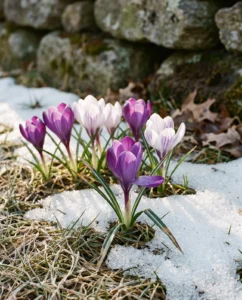
Crocus
An early bulb for the same troughs and gravel beds, planted where the ground drains fast.

Flowers safe for cats and dogs
Where the rest of the house gets checked against the pet safety records, one plant at a time.
Enjoying our flower guides? Add YourFlowersGuide as a preferred source on Google. It helps more readers find us.
Add to Preferred Sources