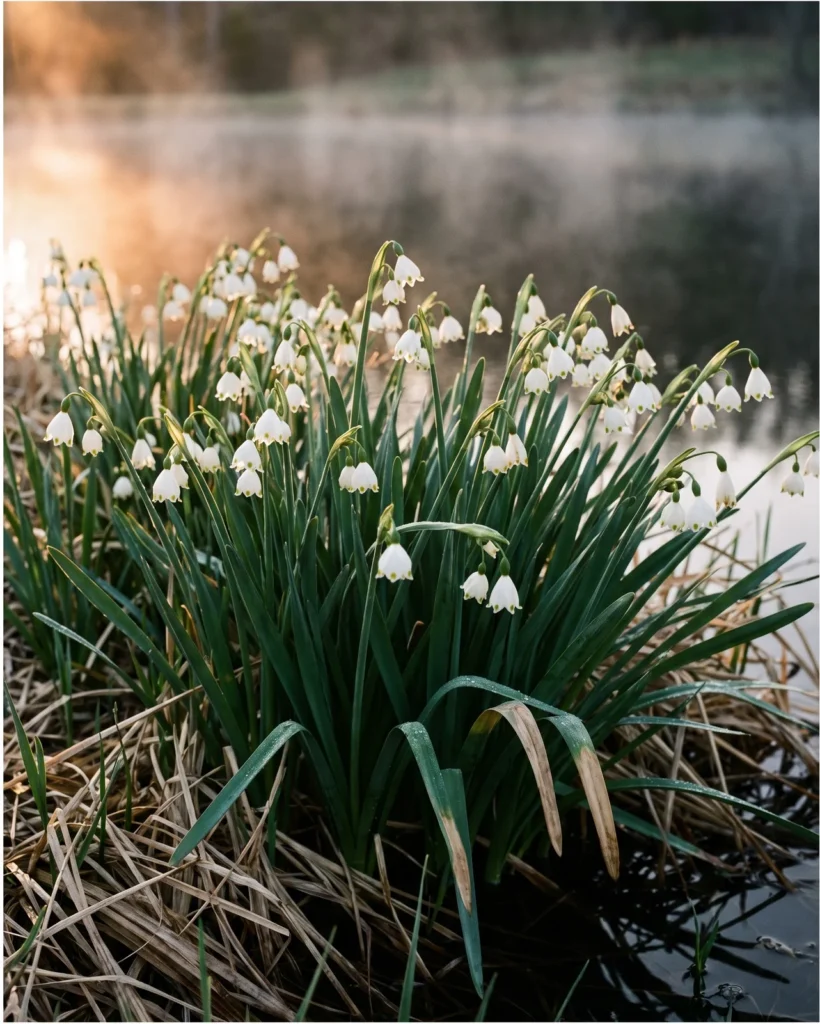
Which snowflake are you looking at
The true snowflake is a bulb in the genus Leucojum. Almost everything else the word turns up next to carries Snowflake as a cultivar name. The list runs to a snapdragon, a creeping phlox and a moss phlox, a catmint, a trailing bacopa sold as Snowstorm Giant Snowflake and an evergreen candytuft, none of them in the amaryllis family. Garden advice under the name usually belongs elsewhere too. A Minnesota Snowflake mock orange that will not bloom is a shrub. A snowflake hydrangea loses its flowers to pruning at the wrong time, and the snowflake tree is tropical foliage.
Snowflake or snowdrop
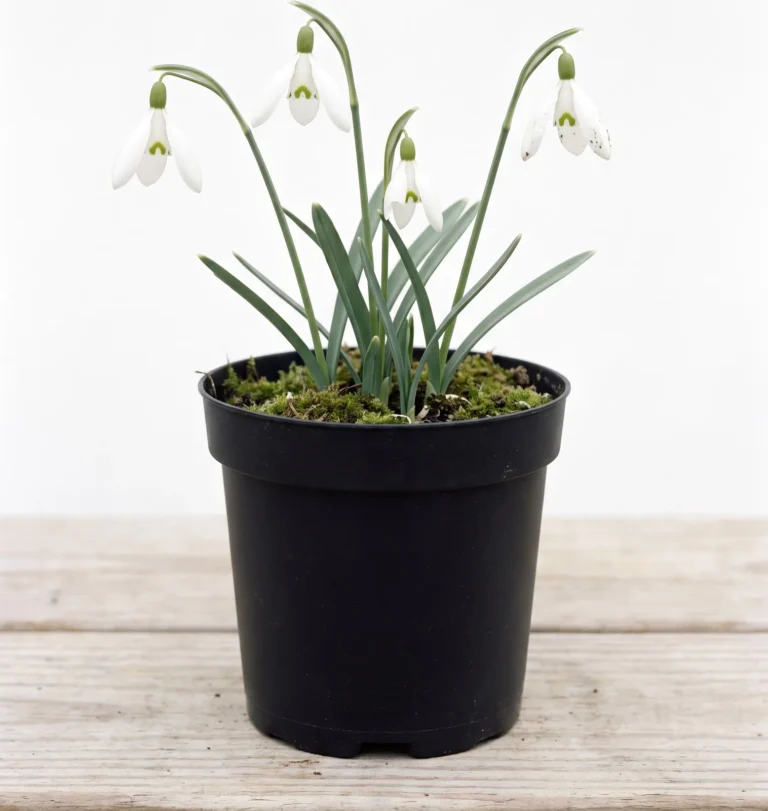
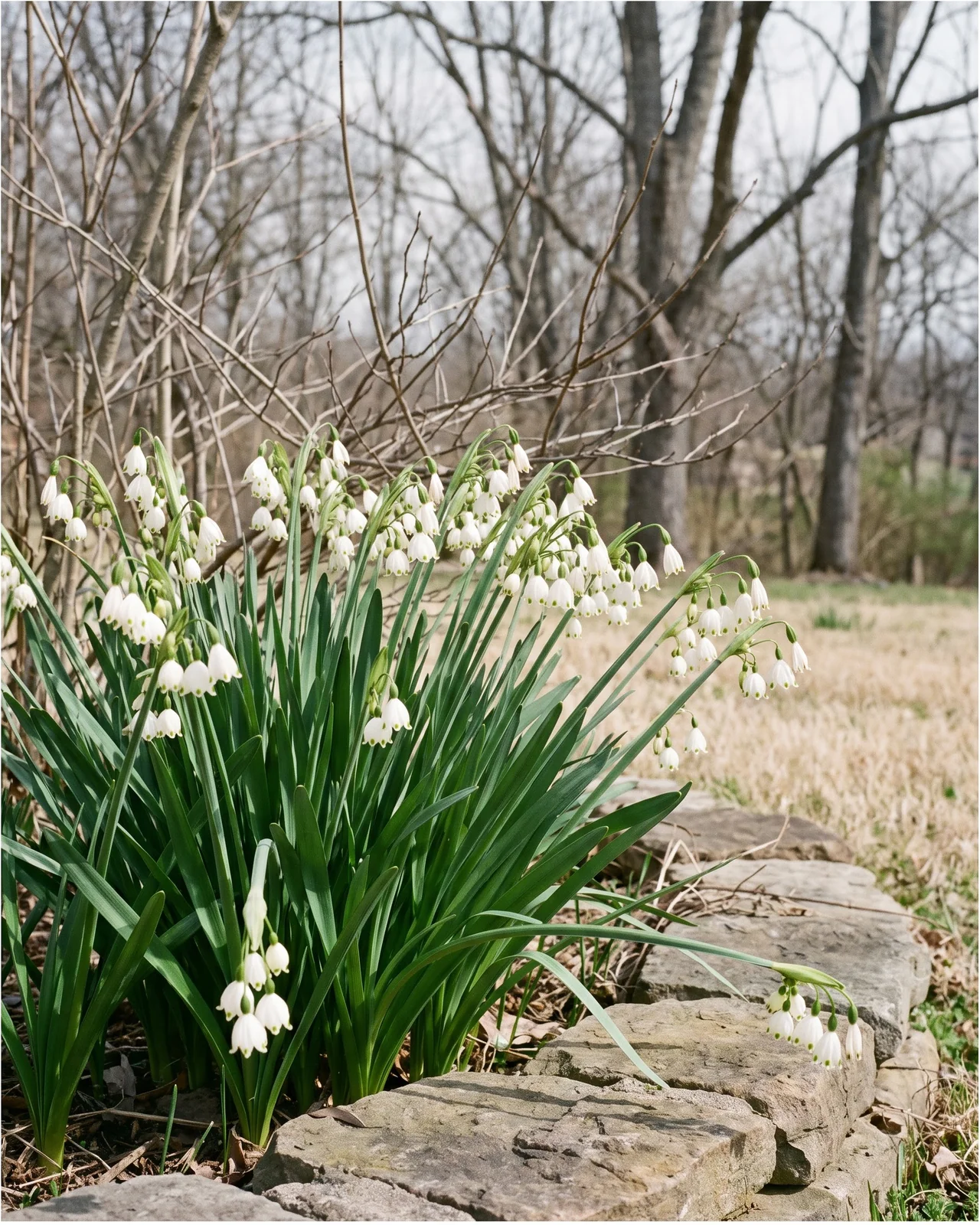
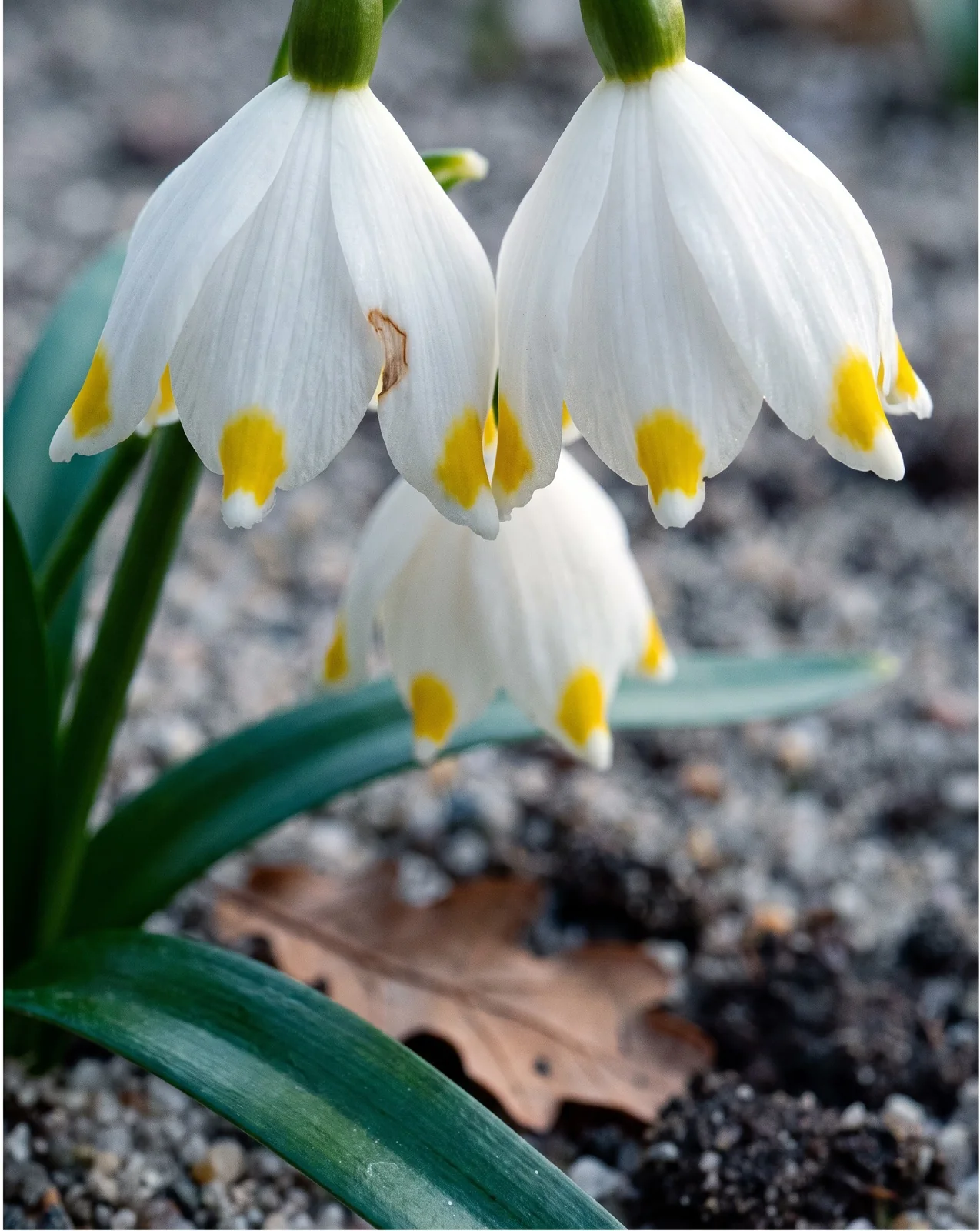
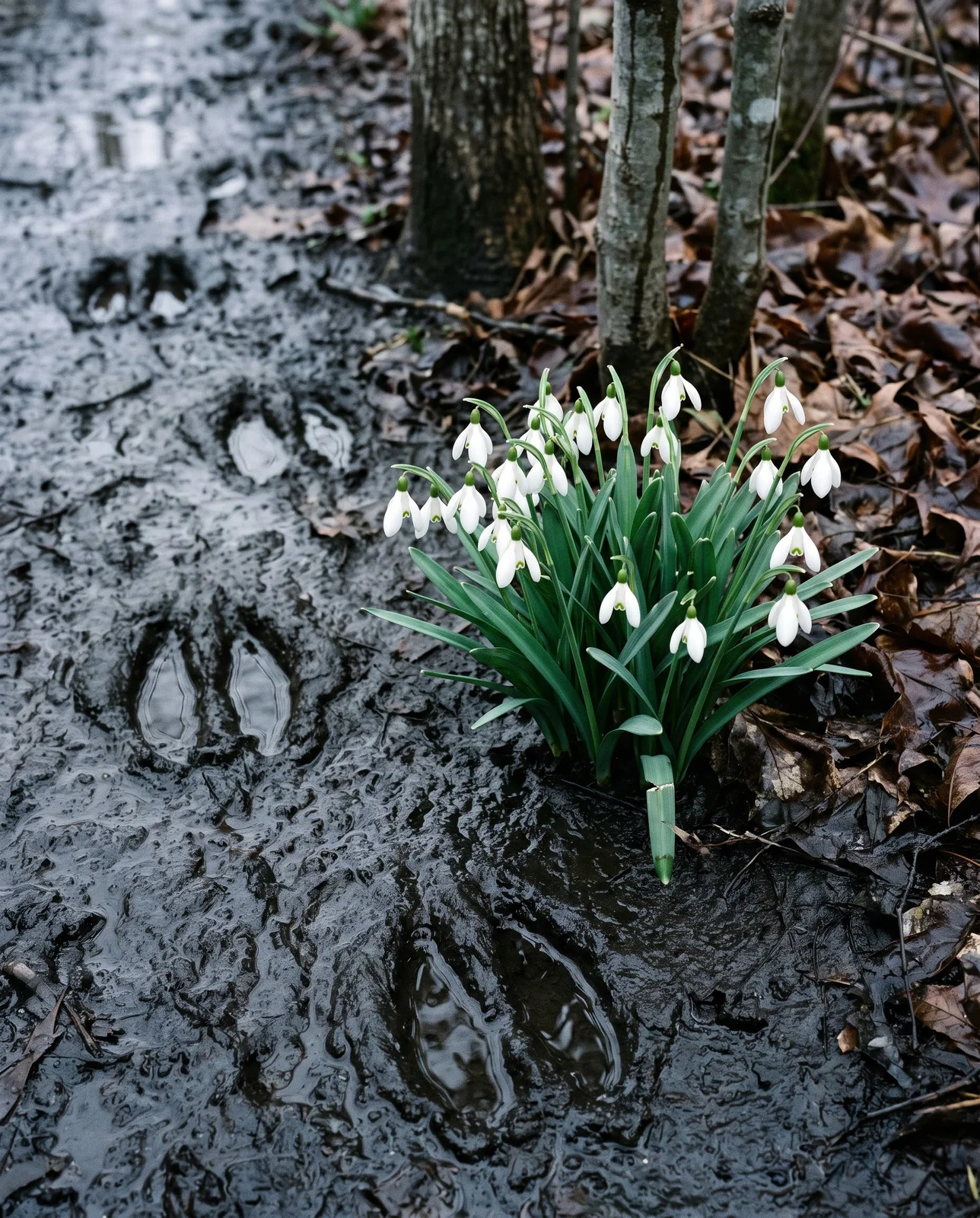
Snowdrop and snowflake are different plants in different genera, and the flower settles it in a second. A snowdrop hangs six tepals in two unequal sets, three long outer over three short inner. The inner ones usually carry a green or greenish yellow V or U mark. A snowflake hangs segments that all match in length, each spotted with green at the tip. Count the bells for the same answer: one to a snowdrop stem, several to a snowflake stem. The snowdrop is also the smaller of the two, at about half the height.
The calendar separates them as well. Snowdrop flowers first, spring snowflake opens alongside it, and summer snowflake waits several weeks longer. Heat divides them further: snowflakes grow well in hot areas where true snowdrops do not, and snowdrop tends to be short lived south of zone 7. In the wild, common snowdrop is rated Near Threatened and falls under CITES Appendix II, while summer snowflake counts as Least Concern. One of summer snowflake's own common names is summer snowdrop, alongside Loddon lily, St Agnes' flower and St George's violet.
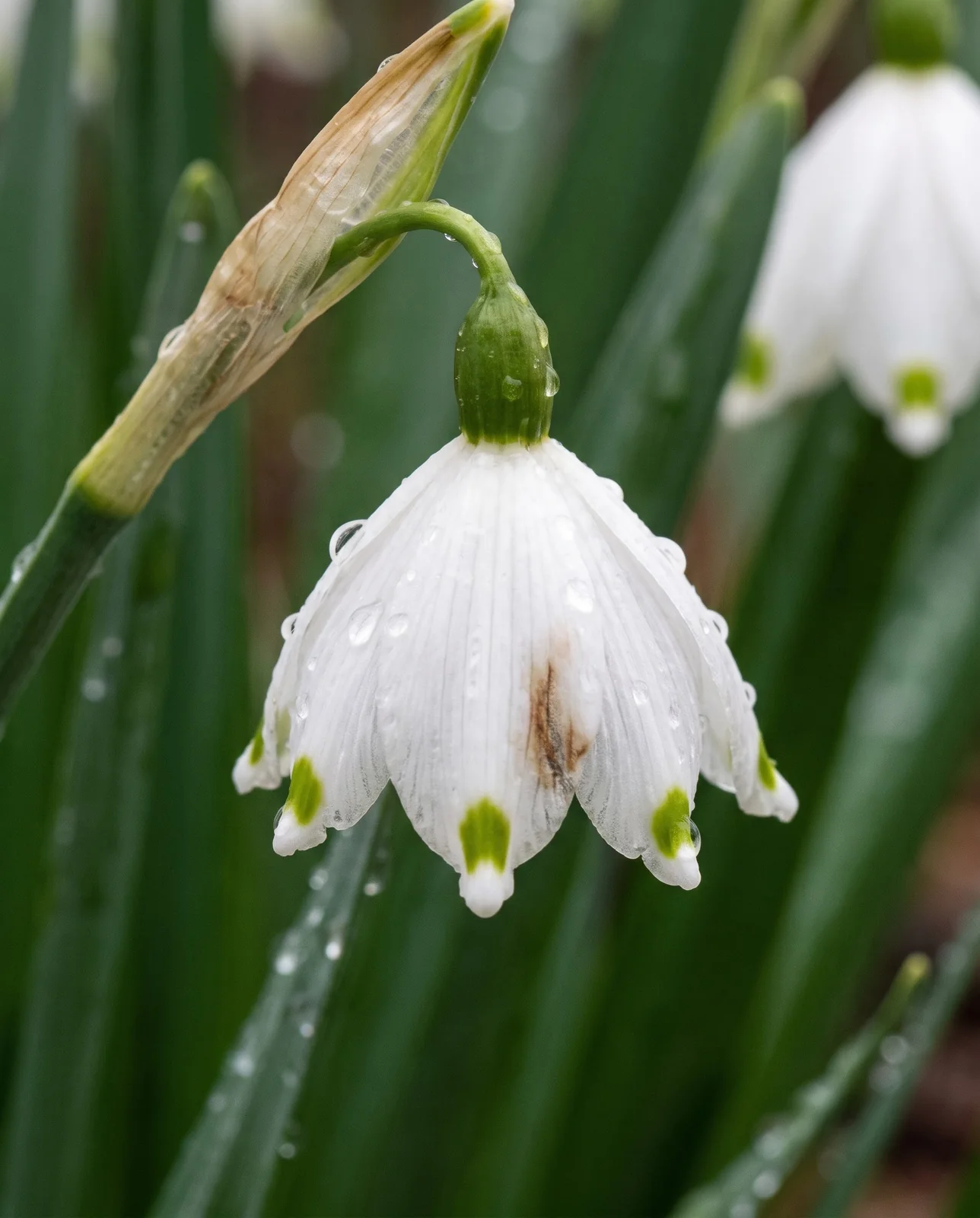
Snowdrop and snowflake side by side
Every figure here belongs to one plant only. Both sit in the same family, the root of the confusion.
What snowflake is
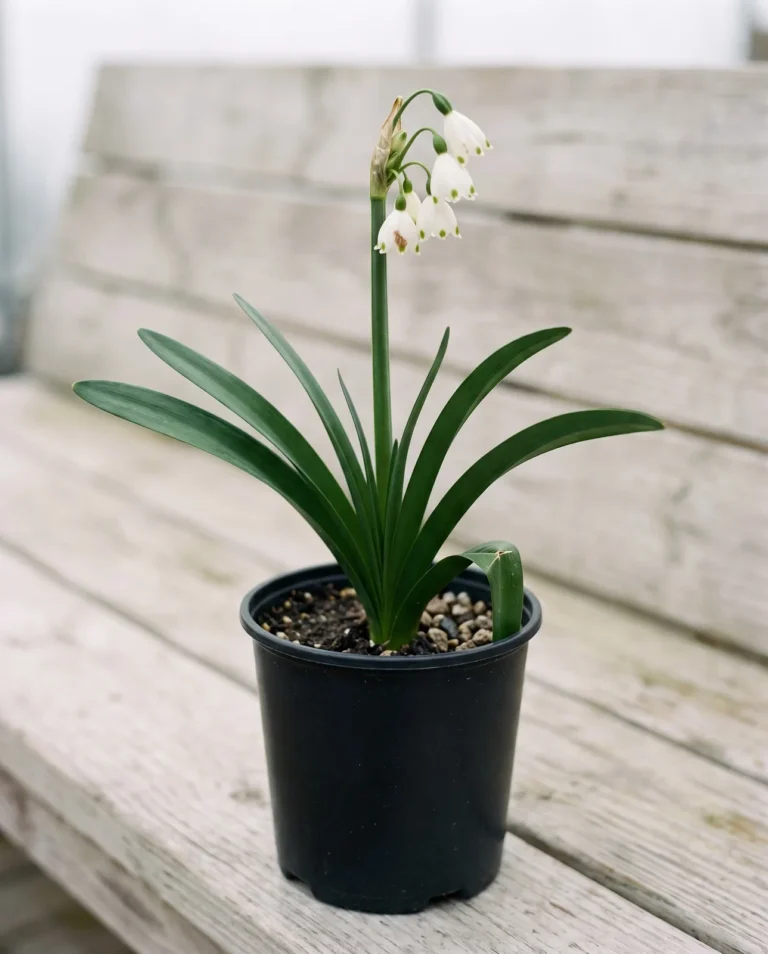
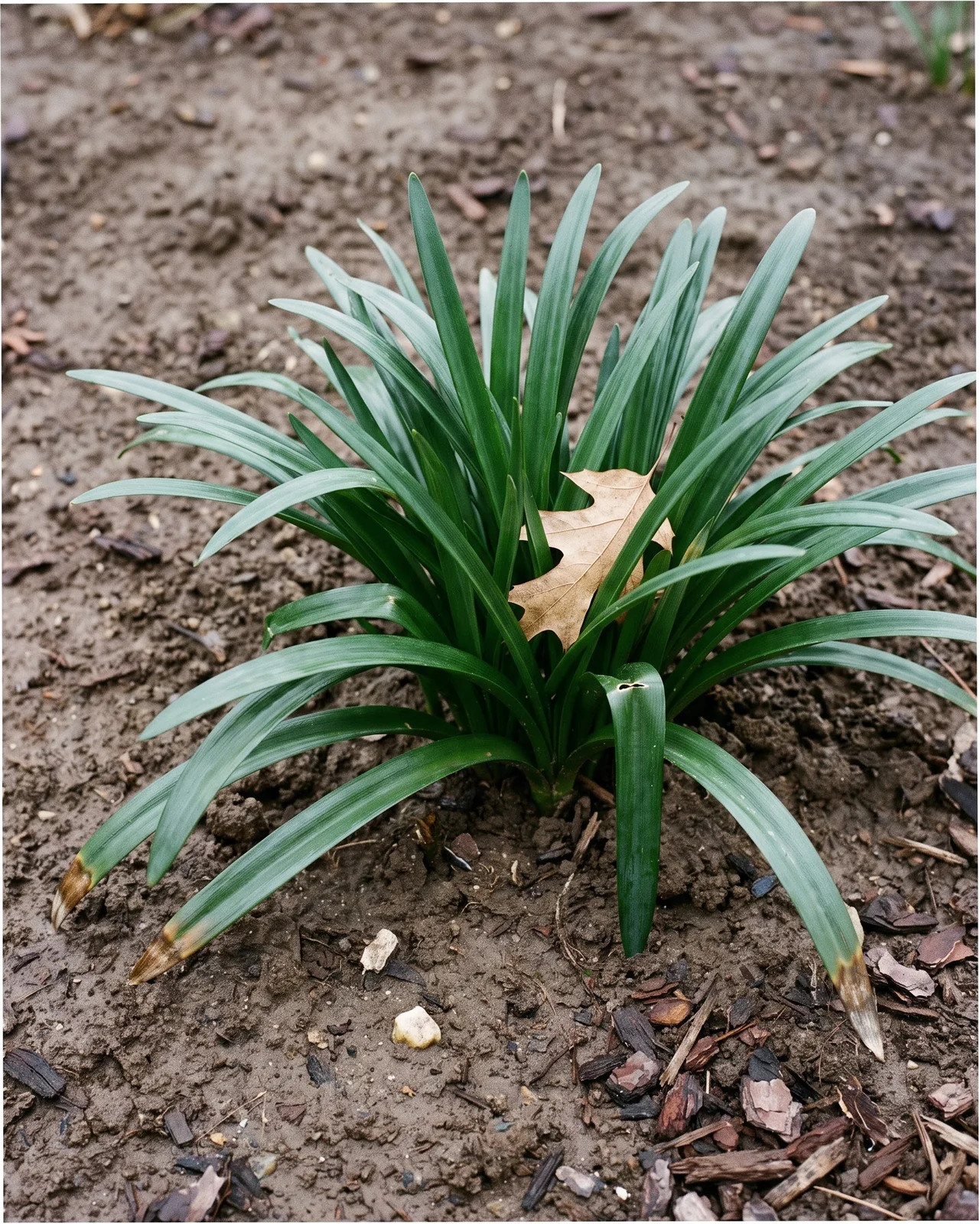
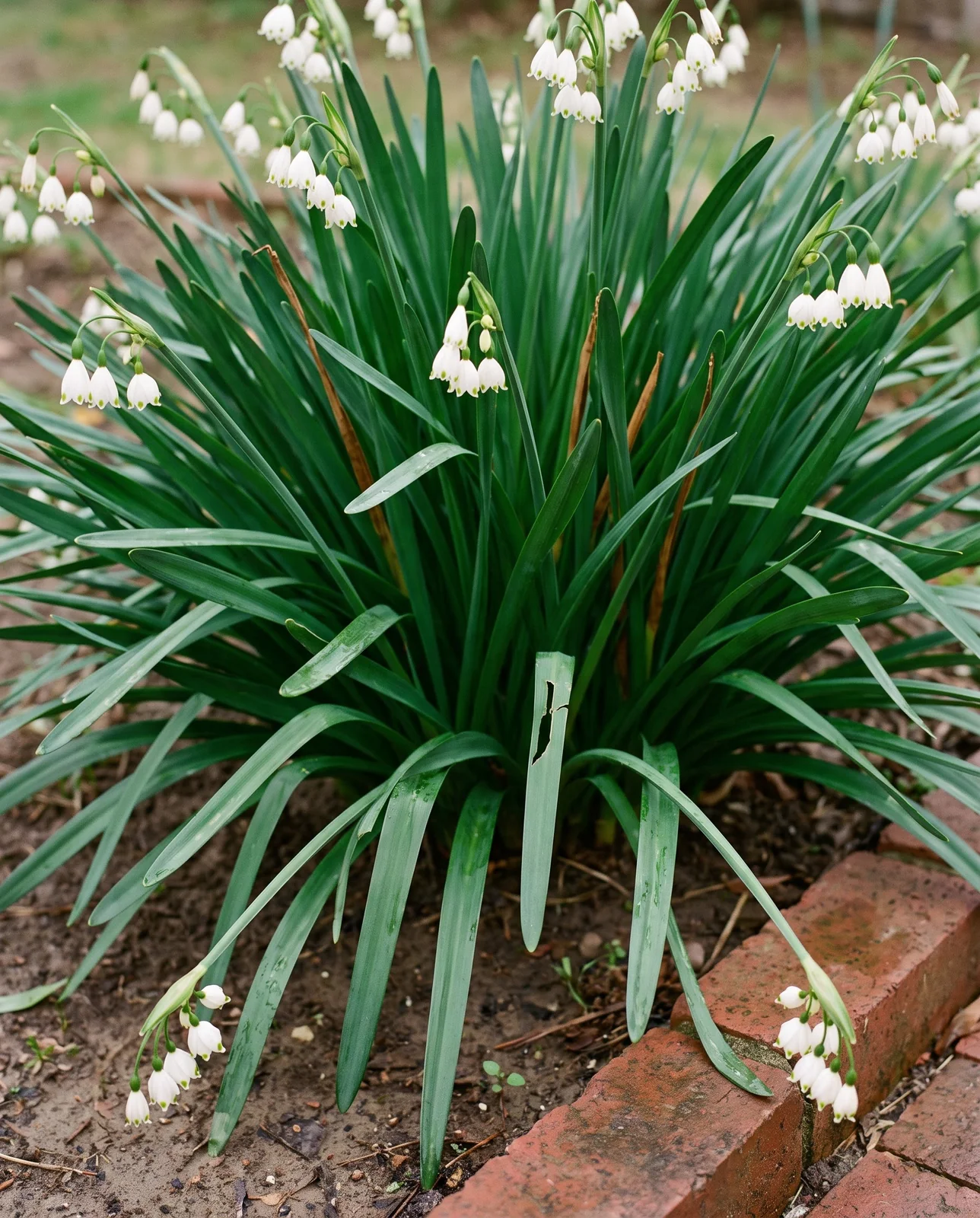
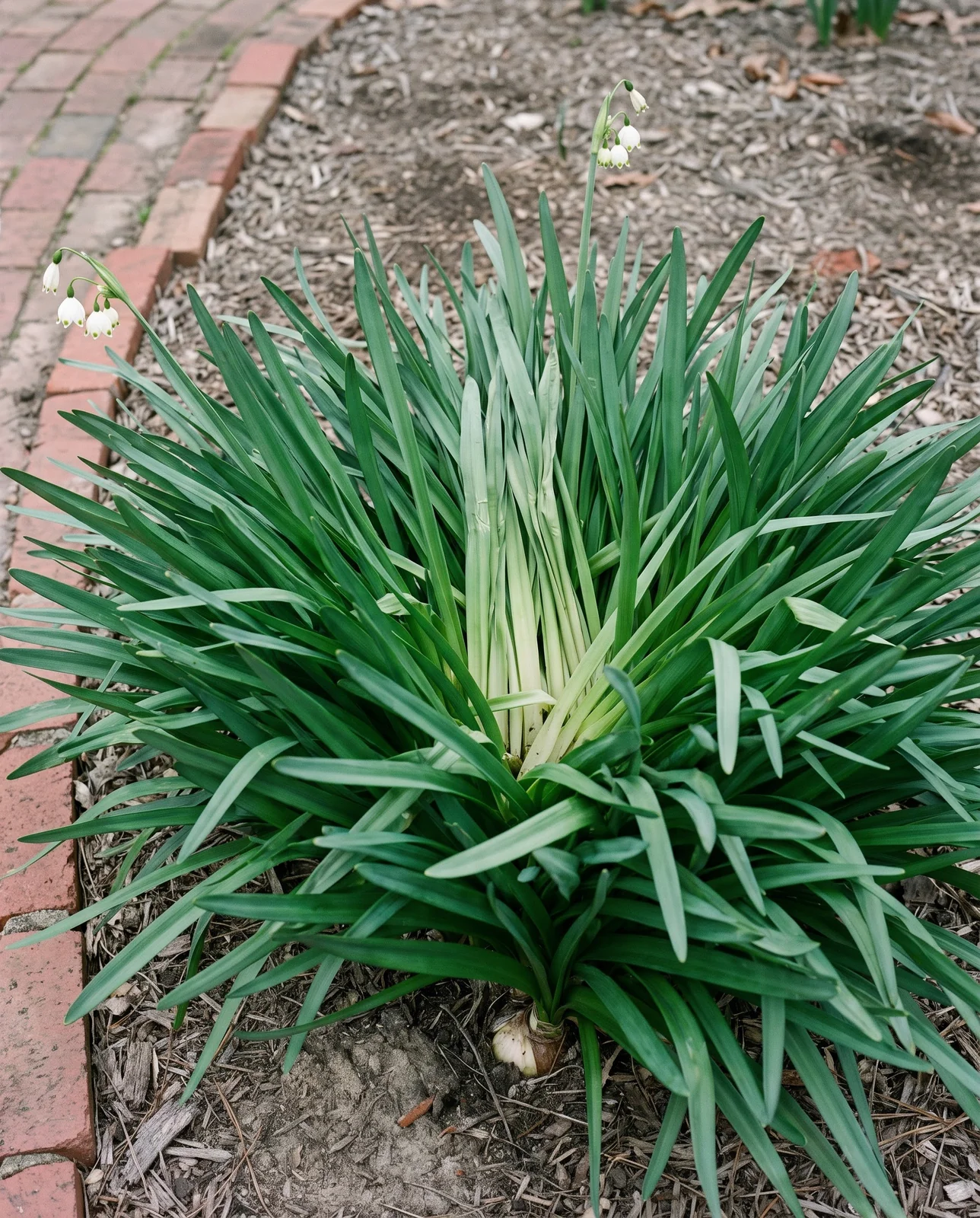
Snowflake is a bulb, and it comes up in two stages. A clump of strap shaped leaves rises first, glossy and emerald green, then a leafless flower stalk pushes up among them and carries the bells at its top. The genus name comes from a Greek name for scented white flowers. It is an old garden plant in Britain, where summer snowflake was voted the county flower of Berkshire in 2002.
It belongs to the amaryllis family, Amaryllidaceae. The onion family label that follows it around comes from a snowdrop entry printing the family as Amaryllidaceae (onion), the same family under a nickname, and the older lily family placement is still in print. How many species the genus holds is a live disagreement. Under the narrow definition in general use there are two, spring snowflake and summer snowflake, after nine former members moved into the genus Acis in 2004. Kew accepts a third, Leucojum pulchellum. Most garden sources treat that one as a subspecies of summer snowflake: smaller, with 1 to 5 flowers per stem against 3 to 8, and confined to swampy ground in the western Mediterranean.
Spring snowflake and summer snowflake
Two species reach gardens, and the common name on the more familiar one is wrong about the season. Summer snowflake blooms in mid spring, several weeks after spring snowflake. One horticulturist puts the gap at about two weeks. Further south the date moves earlier: in Tennessee it is often in full bloom in mid to late March, and in zone 5 the same plant waits for May and June. Spring snowflake's epithet means relating to spring, and it is the one that lives up to its name.
Where each species has escaped hints at which one is in American gardens. Summer snowflake is naturalized through much of the eastern United States, and beyond it in Denmark, Nova Scotia, South Australia and New South Wales. Spring snowflake's naturalized range stops at Georgia and Florida. Both hold a British garden merit award, spring snowflake itself and the Gravetye Giant cultivar of summer snowflake.
The two species, figure by figure
Every figure here belongs to one species only. Height and the number of bells on a stem separate them in the garden.
What snowflake looks like
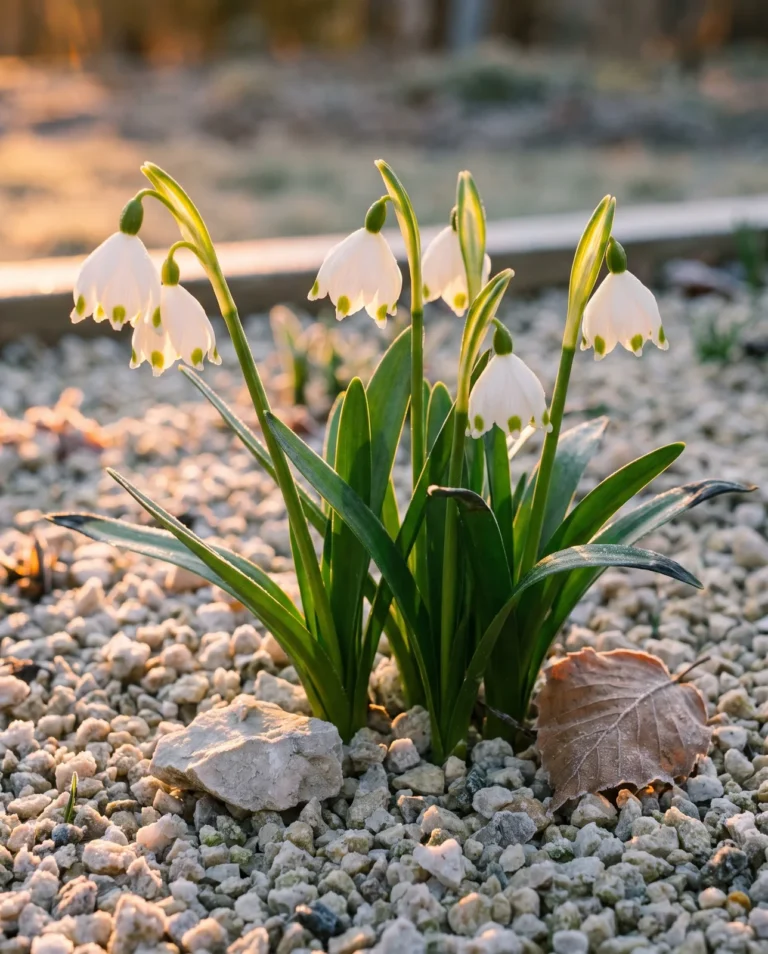
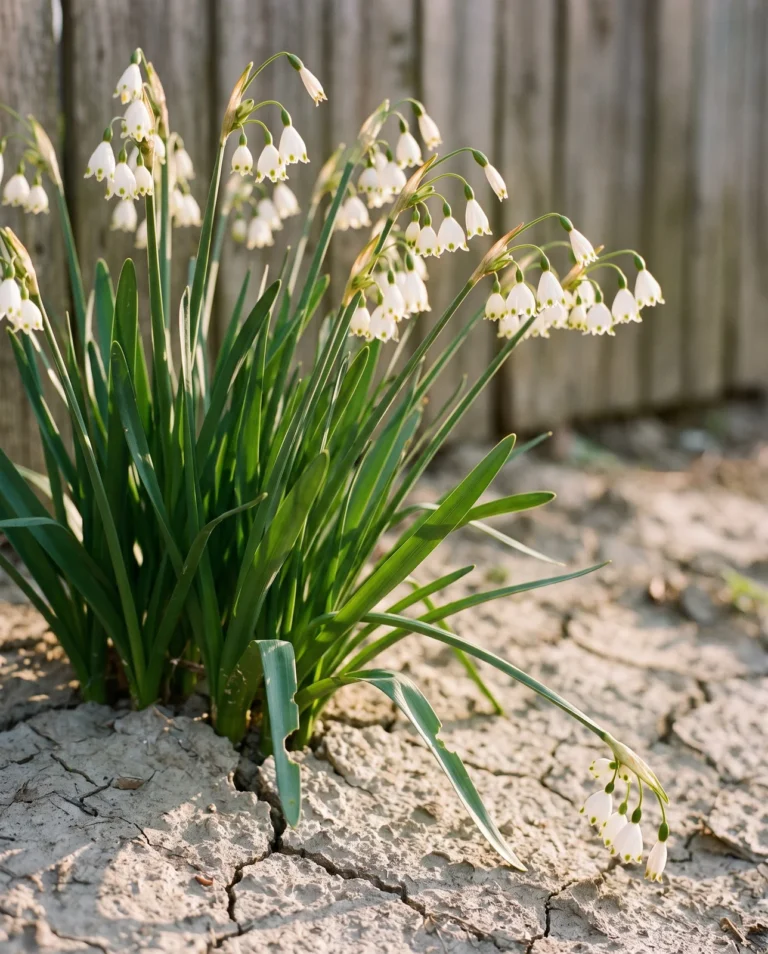
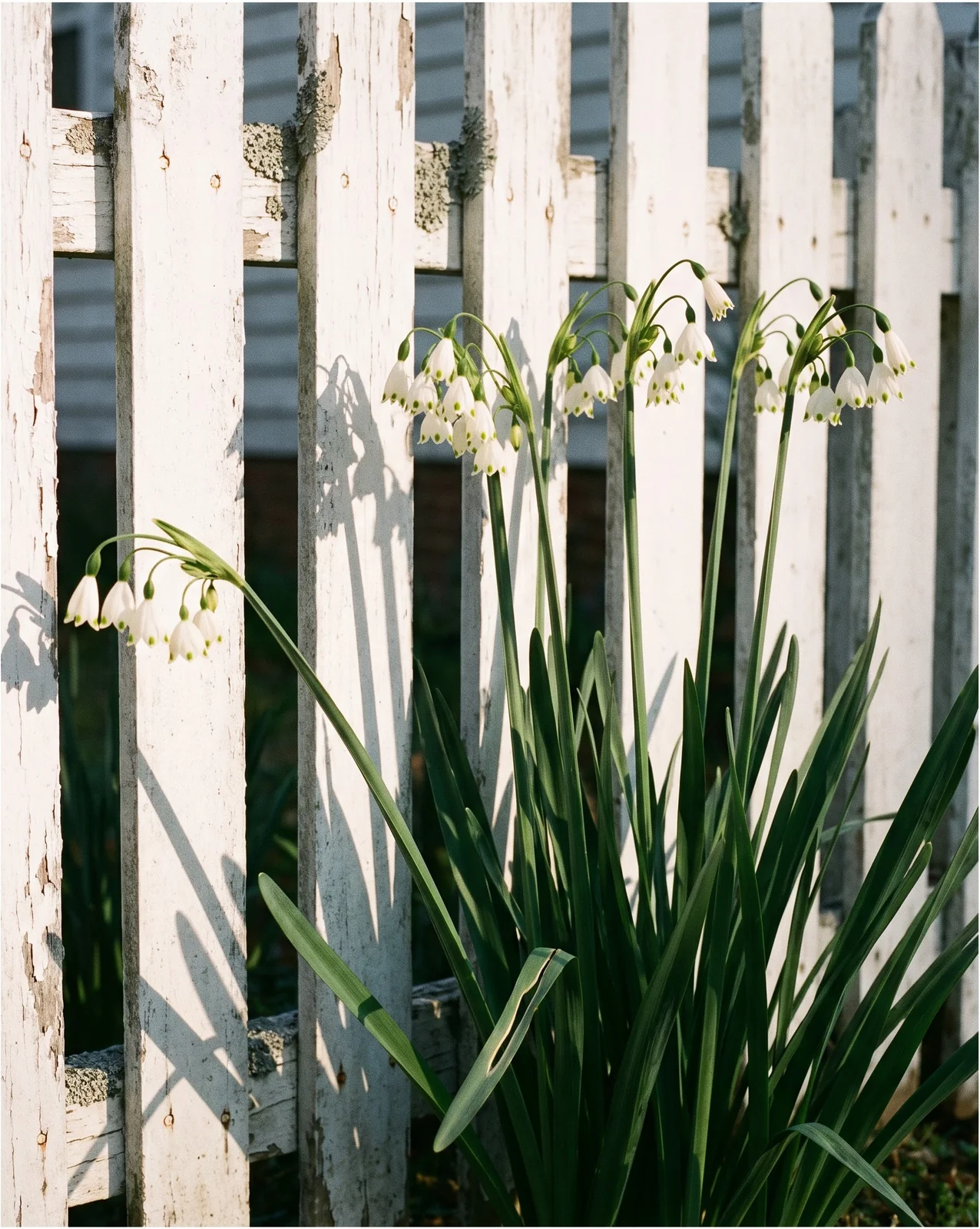
The flower is a nodding white bell hung from the top of a naked hollow stem, about 1 to 1.5 inches across, with six white segments. On summer snowflake five to seven bells hang from a single sheath at the stem's tip, each with six equal sized segments. The mark at the segment tips is the signature of the genus, and it is not always green: the marks run green or yellow on inner and outer segments alike. Spring snowflake's mark sits just below the tip, greenish or yellowish, and its variety carpathicum is picked out in yellow. In large drifts the plant can put on a spectacular display. The foliage under all that is glossy and emerald green on a plant reaching up to 2 feet, the leaves about 12 to 14 inches long and half an inch wide.
Where snowflake is hardy
Snowflake is hardy in zones 4 to 8. Sellers push the warm end out to 9 and even to 10, and the cool end down to 3. How much winter chill the bulb needs is undocumented, and so is the reason the warm limit falls where it does. The cold side is measured: dormant bulbs withstand soil temperatures down to at least minus 5 degrees Celsius. In a marginal garden, lay no more than a 2 inch layer of mulch over the bulbs, and put it on after the ground surface freezes in fall.
Where snowflake grows
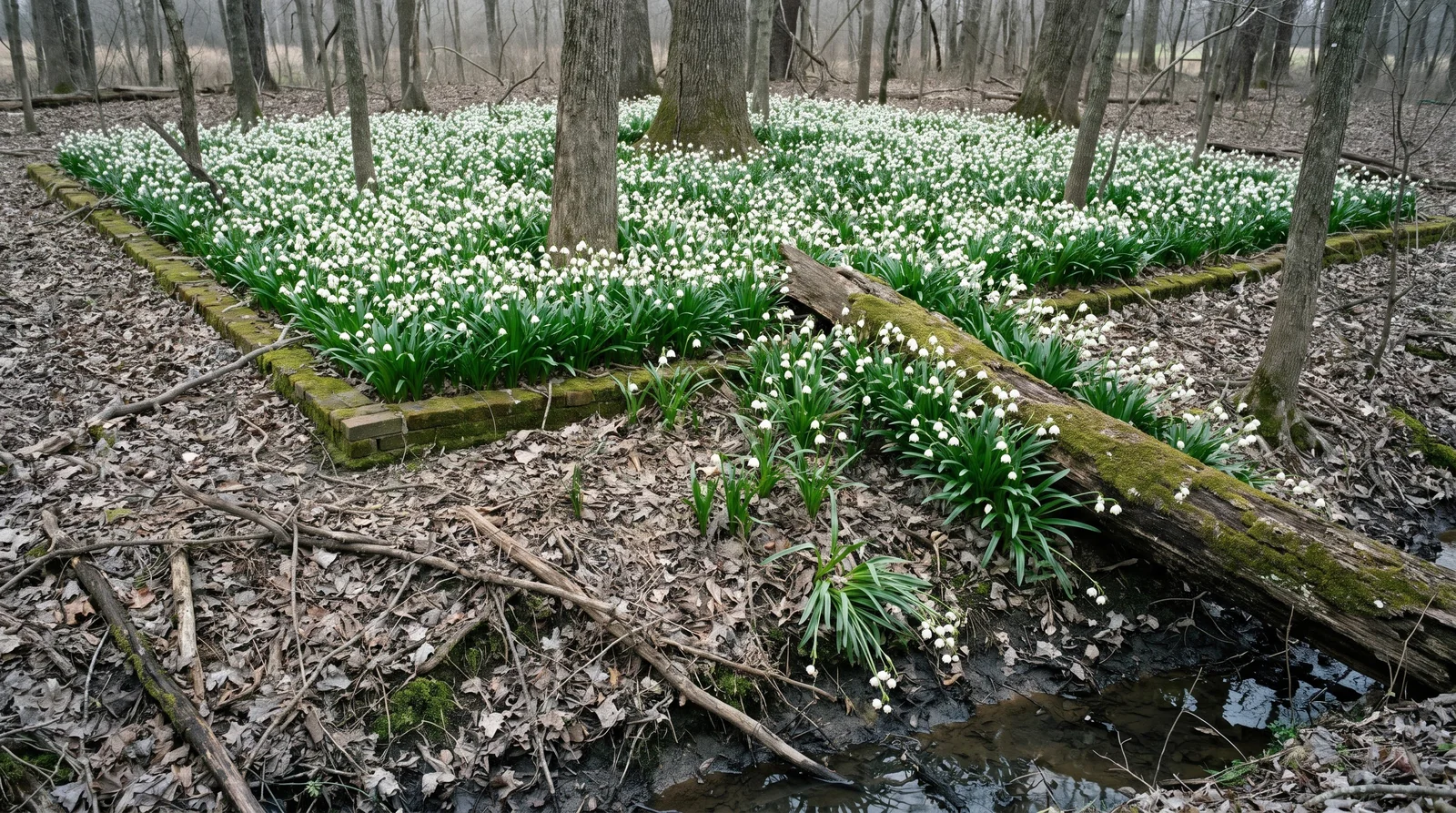
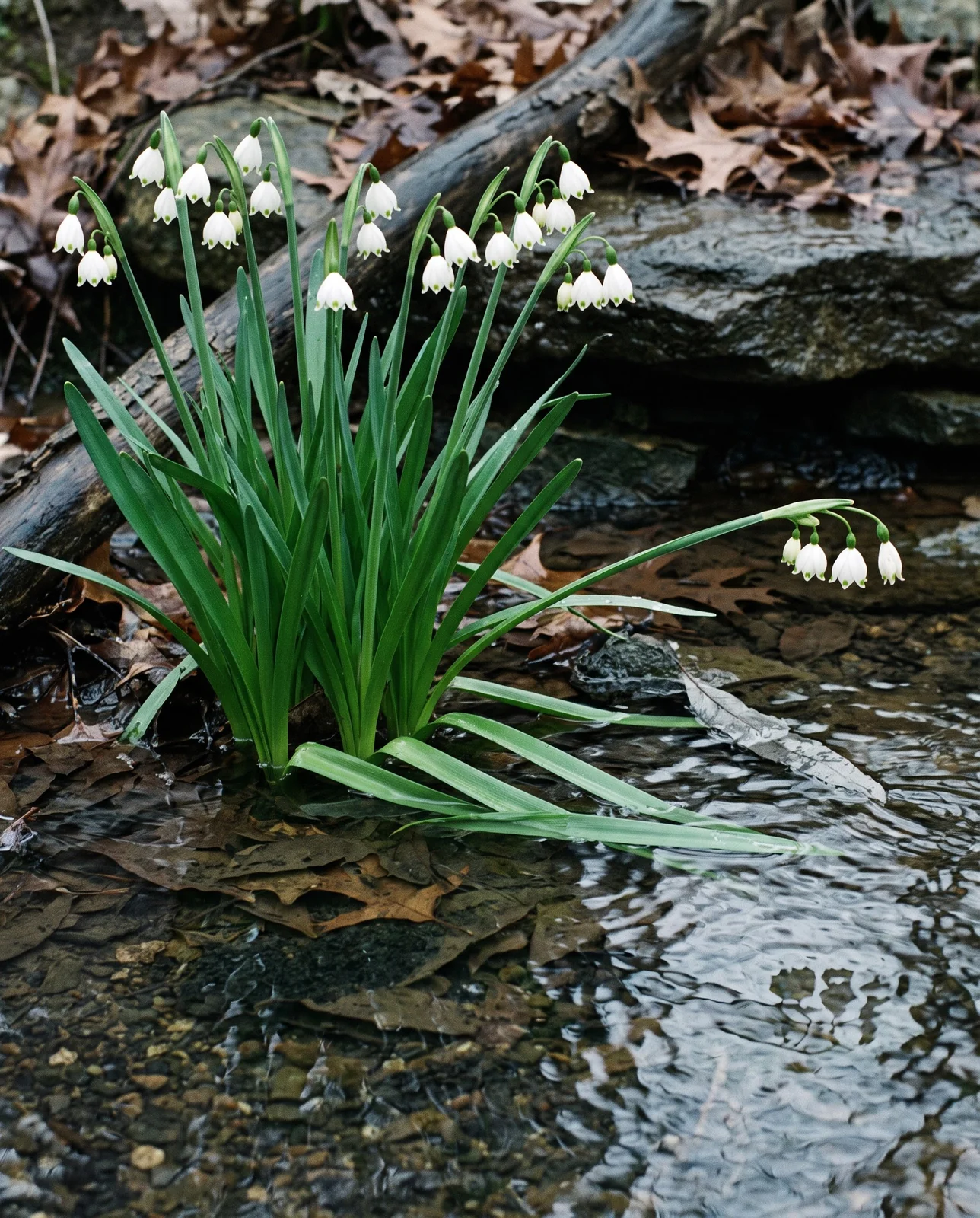
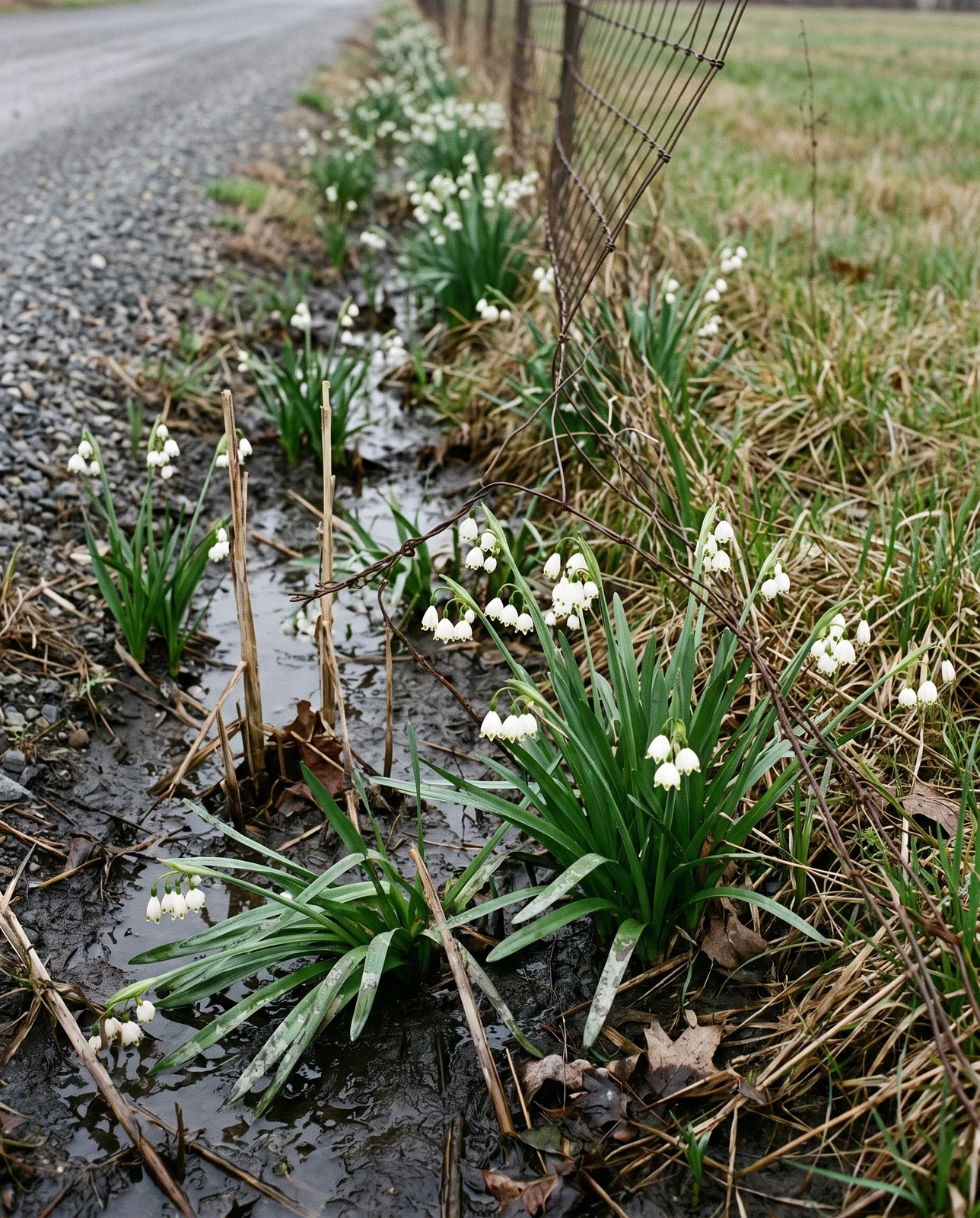
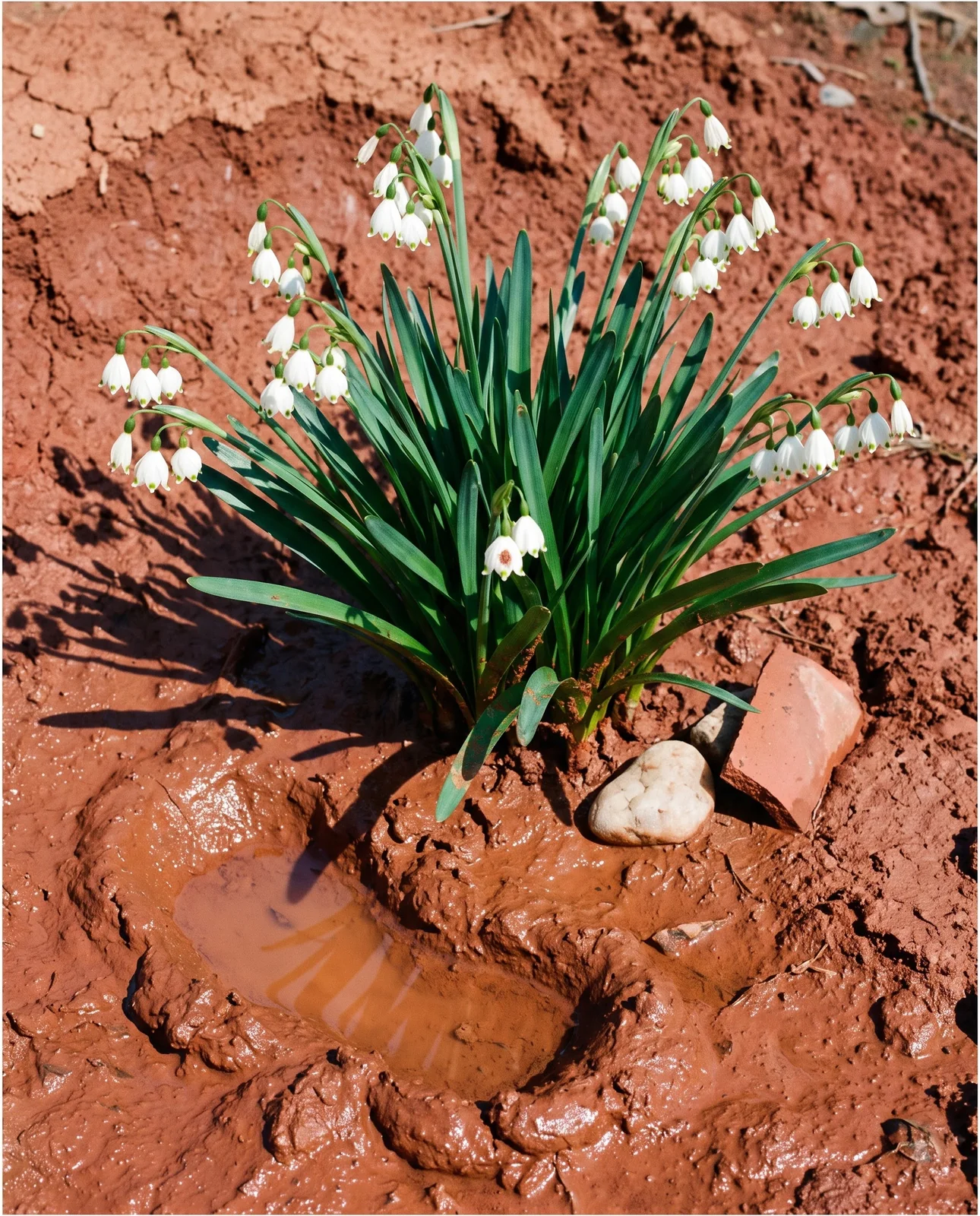
Snowflake takes ground that most bulbs refuse. It is one of the few bulbs that will grow in damp soil, and it is happy in water logged conditions. In the wild the genus keeps to wet meadows, ditches and woods, and it turns up in fields, at lawn edges, on roadsides and in willow thickets. Soil type barely matters: sand, loam or clay, with a preference for more neutral to alkaline ground, and heavy clay that would kill more timid bulbs suits it.
Wet ground has a limit, and the limit is the bulb itself. Even where the plant is used near water, set the bulbs above the high water mark. Moisture matters most while it is growing and flowering in spring; once summer dormancy sets in it will tolerate drier soil. Put it in borders, rock gardens, under trees and shrubs, or along a pond margin, in groups of at least 15 bulbs.
Planting snowflake bulbs
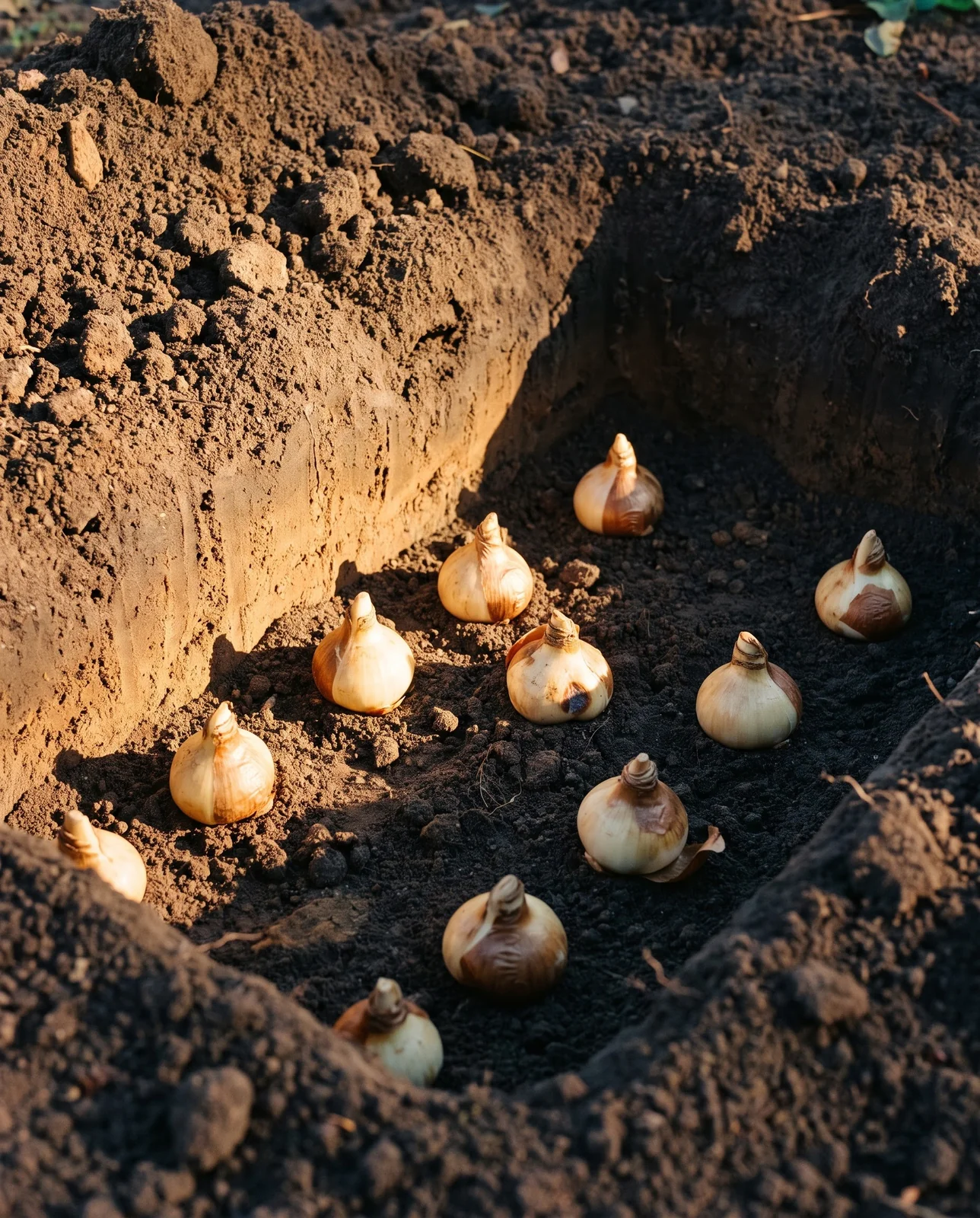
Snowflake bulbs go in during fall, 3 to 6 inches deep and 4 to 6 inches apart. The shallow end is the garden figure, the deep end is what specialist growers use, and either puts the bulb below the reach of a hoe. Plant on a hand's width and let the clump close the gaps itself.
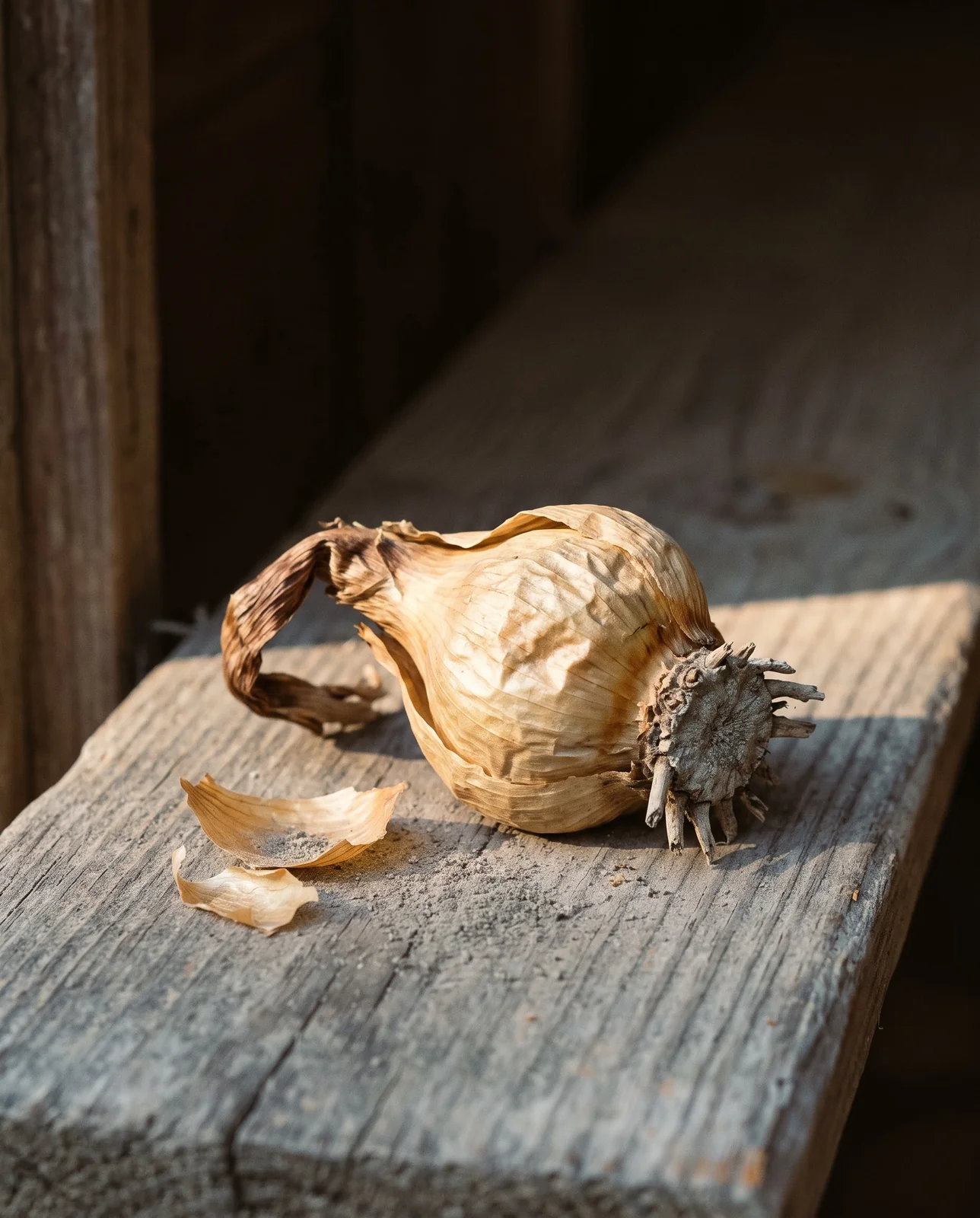
Soil temperature sets the planting window. For spring flowering bulbs other than daffodils, wait until the soil at planting depth stays below 60 degrees Fahrenheit. Bulbs ship and go in once the ground has chilled to about 55 degrees, after roughly two weeks of nights in the 40s. The bulb should arrive plump: dried out bulbs either fail to grow or take a long time to establish, so replant them soon after lifting. Size checks what came in the bag, since summer snowflake bulbs run about 10 cm in circumference and the larger Gravetye Giant about 14 cm.
Why snowflake will not bloom
The first thing to check is how long the clump has been in that spot. Snowflake flowers for five or more years with no need of division, and eventually the clump becomes too crowded to bloom well. Until it reaches that age the bulbs are best left undisturbed. Both halves hold, at different ages of the same planting: a young clump does the work by itself, an old one has to come up. Lifting is the only remedy for crowding.
Wet ground is the second cause, and it is where this bulb's tolerance runs out. Root rot in soil that stays too wet is the disease named for the plant. Spring bulbs as a group may rot in soils that stay wet for a long time, with good drainage called essential, and overcrowding and heavy shade are the other standard causes of a bulb that stops blooming. Nobody ties a bloom failure here to planting depth or to a late planting date, and a thin first spring has no published explanation.
Snowflake in leaf and not flowering
Leaves come up, flowers do not. Work down the causes in order.
Yellow leaves are the point
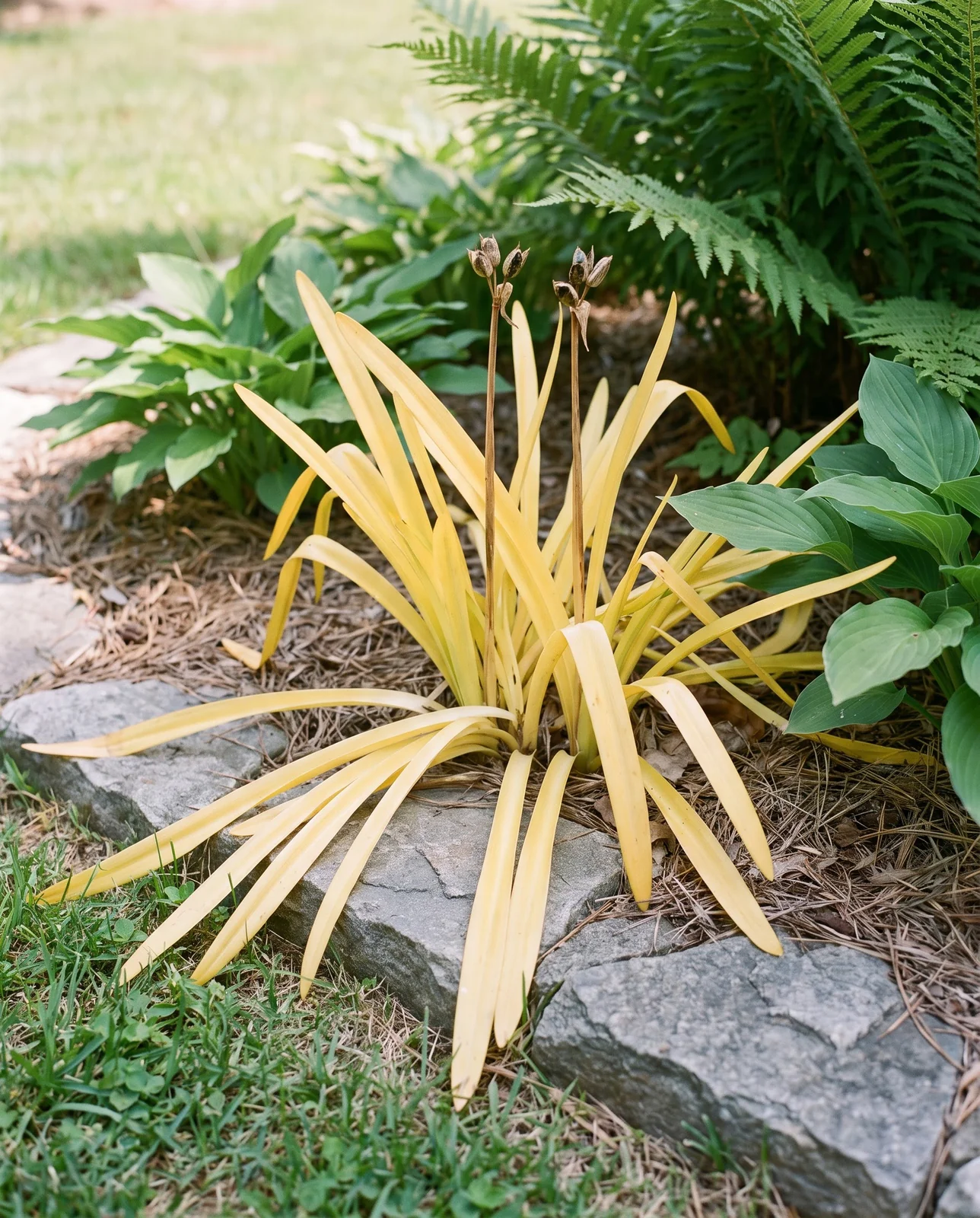
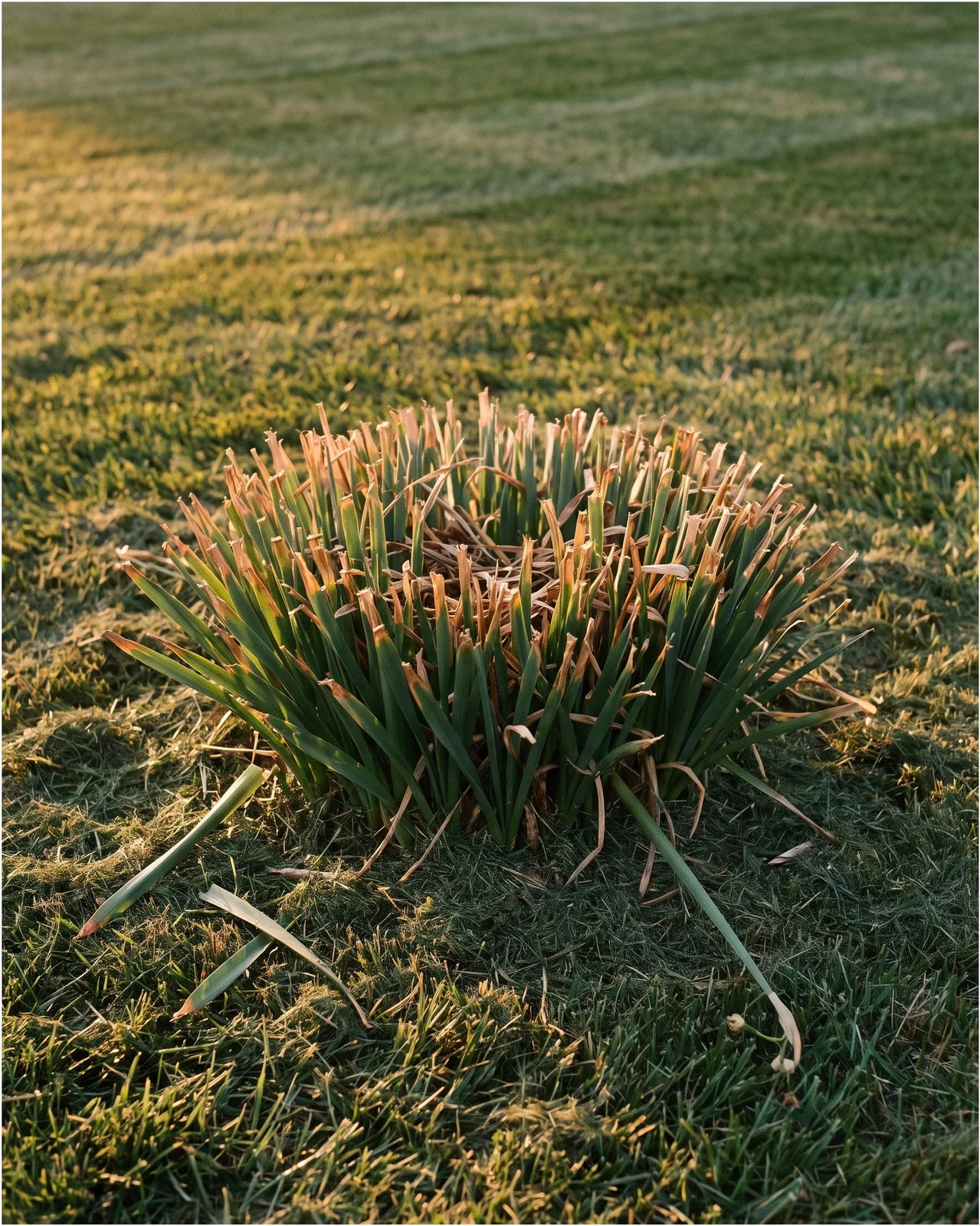
The leaves yellow after flowering because the bulb is feeding, and cutting them is the one piece of tidying that costs next spring's flowers. Clemson gives the rule without hedging: leave the foliage uncut once the flowers finish, and let it turn yellow and dry naturally before it comes off. That yellowing foliage manufactures the stored food the bulb needs to bloom the following year. Completely yellow and withered is the end point, and the foliage keeps going until then. The rule covers the whole bulb bed, so snowflake leaves stay for the same reason daffodil leaves do, and nothing gets dug up before its foliage is yellow and withered.
The second kind of yellowing is the one to act on. Root rot in soil that stays too wet is the disease named for this bulb. No source describes what that rot looks like in a snowflake: no color at the base, no smell, no lift test. Timing is the tell. Good yellowing arrives after the flowers have finished and works through the clump on its own schedule. Leaves going yellow while the plant is still in flower, in ground that has not drained since spring, are the ones the rot warnings fit.
Dividing and moving a clump
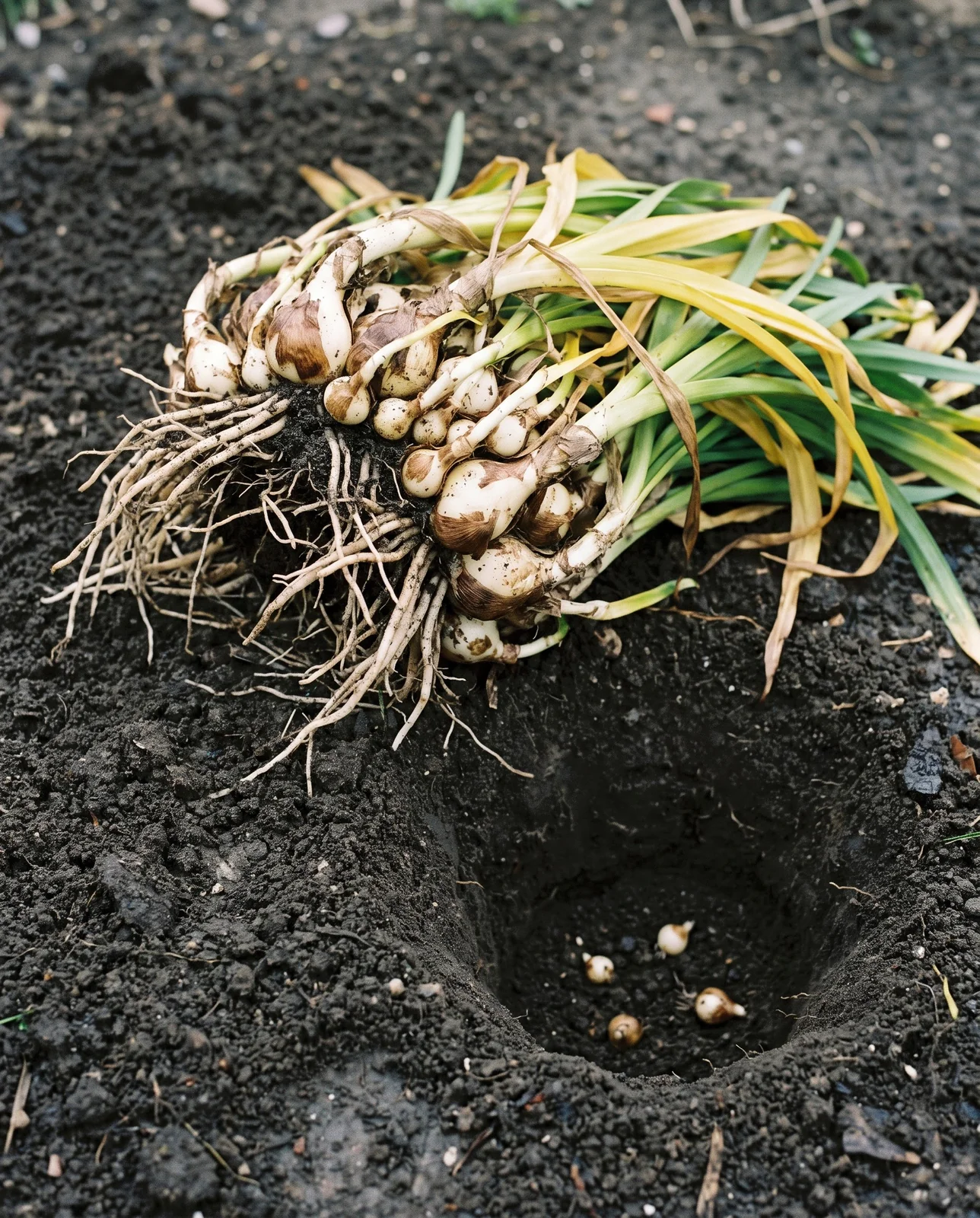
Lift a clump once it has stopped flowering well, and the only real argument is about the week. The plant carries on for years untouched, then wants lifting as the foliage begins to die down in early summer. Some divide and replant at that point, as the foliage starts to turn yellow. Others wait until the leaves have died down completely, which is also the threshold for digging in the bulb bed. Set against both is the instruction to leave the bulbs undisturbed once they are in the ground. One rule holds it together: lift a clump that has actually stopped performing, and leave every other clump alone.
Problems that belong to this bulb
Snowflake has no serious insect or disease problems, and the noisiest complaints under this name belong to a mock orange shrub and a hydrangea cultivar. Where no treatment is named below, none is published.
Symptoms: a thick mass of foliage with few flower stems, or none where the clump used to flower. Cause: it has been in place long enough to crowd itself out. Fix: lift and divide as the foliage begins to die down in early summer.
Symptoms: not described for snowflake anywhere, so take a clump collapsing in soaked ground as the sign. Cause: soil that stays too wet. Fix: drainage, and nothing else.
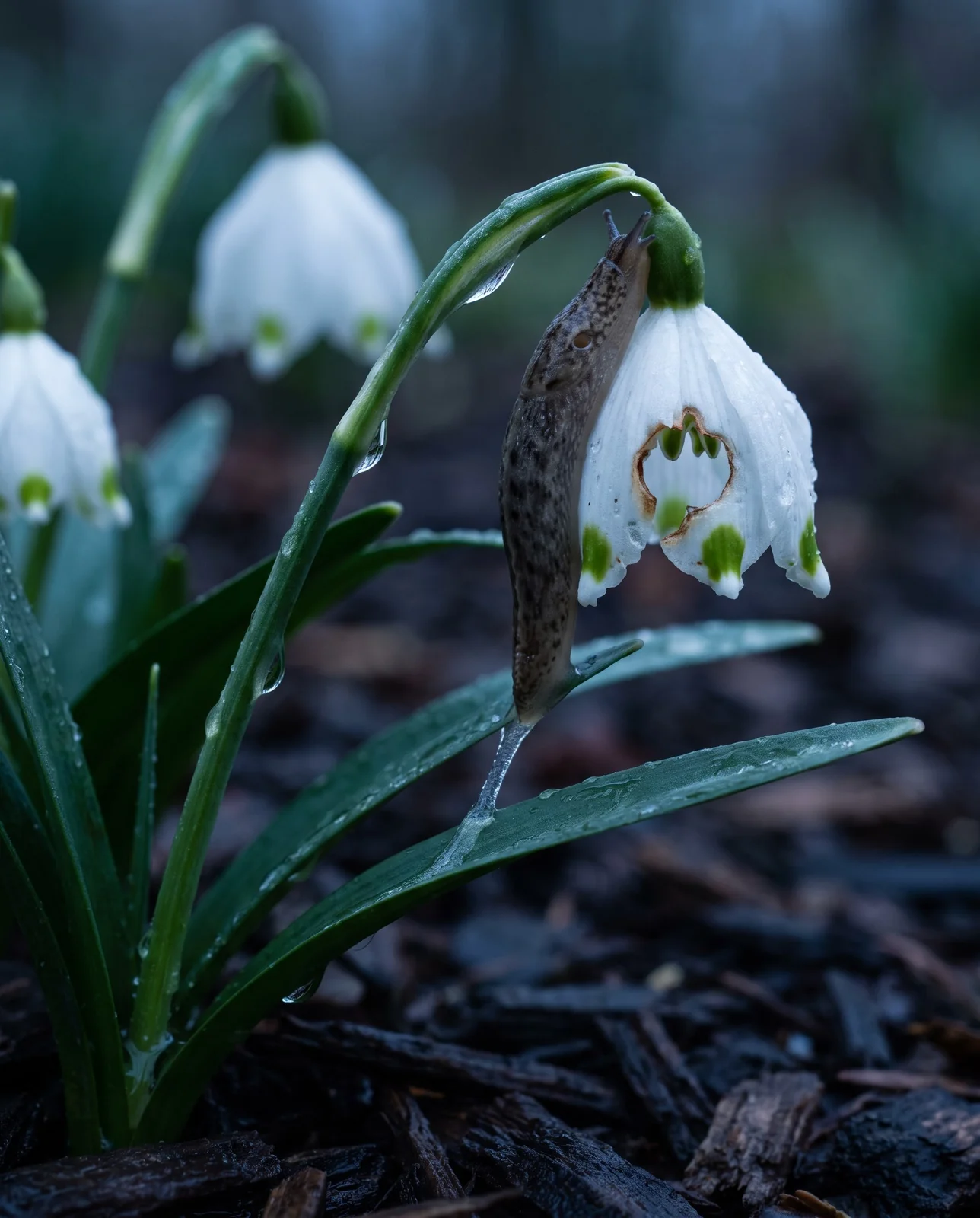
Symptoms: chewed flowers, where slugs and snails feed on this plant. Cause: both sit on the plant's pest list beside the bulb fly.
Symptoms: bulbs may be attacked underground. Cause: the fly Merodon equestris, named on the pest list for the species.
Symptoms: infection of the leaves. Cause: Peyronellaea curtisii, formerly Stagonospora curtisii, the only leaf disease named for the genus, and it can kill plants.
Does snowflake spread
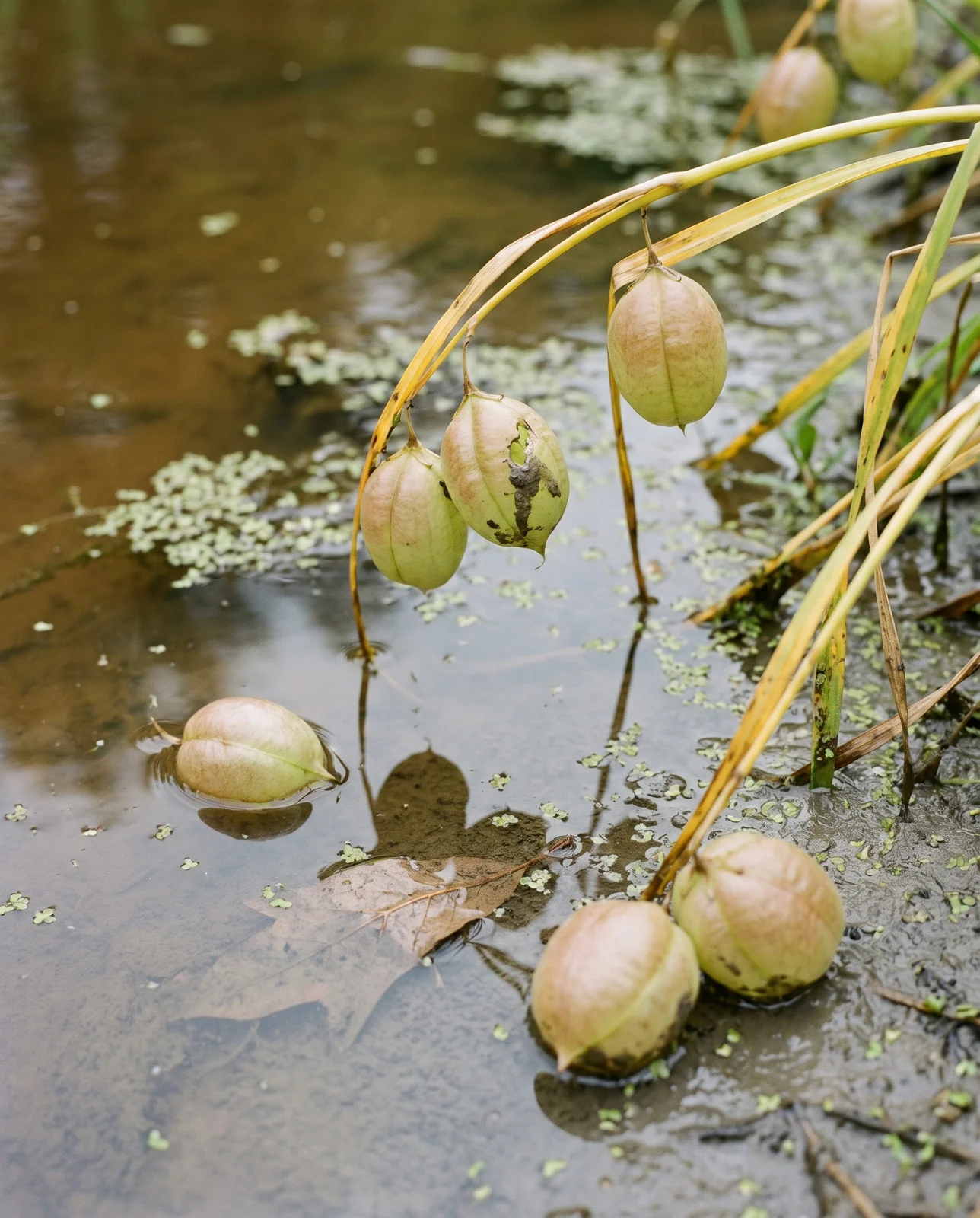
Snowflake spreads two ways, and both of them are slow. It naturalizes by bulb offsets, the baby bulbs that form on the sides of the mother bulb, and by self sown seed wherever the plant is happy. Seed is invisible from one year to the next: it needs a cold period to germinate and takes 4 to 5 years to reach flowering size. It travels on water too, since the pods are swollen and full of air and float, which suits a plant of ditches and wet meadows.
The listing stops short of invasive status. New Jersey's invasive species program keeps summer snowflake on a watch list, recording it as absent or very rare and flagging that it may become threatening to native communities. It escapes gardens from Maine to Illinois, south to Texas, and in California and Oregon, and carries a foliar spray control recommendation. In a garden that adds up to a clump widening quietly for years, with seedlings where the ground is damp and undisturbed.
Deer, rodents and slugs
Deer are the reason this bulb keeps its flowers where other spring bulbs lose theirs. Deer and rabbits usually leave it alone, deer will not eat the foliage, and rodents avoid it too, on the alkaloids the plant carries. Deer tolerance sits on its list beside clay soil and black walnut, and New Jersey files it as deer and rodent tolerant. Usually is the qualifier worth keeping: a hungry herd in a hard winter has not read the list. The animal that does feed on it works above ground: flowers may be eaten by slugs and snails, both named on the plant's pest list alongside the narcissus bulb fly.
Is snowflake poisonous
Treat the plant as poisonous, and know that the evidence is not unanimous. All species of Leucojum produce the alkaloids lycorine and galantamine and are poisonous on the species accounts, spring snowflake included. Against that, no records of poisoning have been found for summer snowflake, and a historical report has the cooked bulb being eaten. Both garden species are also classed as potentially harmful ornamental bulbs not to be eaten, with gloves advised. No dose, symptom list or treatment is published. Anyone who has swallowed part of a bulb belongs on the phone to a poison control center.
The pet question has no clean answer. ASPCA's list returns nothing for this plant under nine name variants, which leaves it unrated either way. Snowdrop chemistry cannot stand in for it: snowdrop rates low for poison severity, with nausea, vomiting and diarrhea in quantity, from phenanthridine alkaloids, and the compound of interest in that genus is a lectin, Galanthus nivalis agglutinin. Neither is the lycorine or galantamine cited for snowflake. History is clearer: the plant never seems to have had a medicinal use and was grown strictly for garden ornament.
How much sun snowflake needs
Full sun through partial shade is the band to plant in, with afternoon shade a help in the South. The shade half is real and not a concession. The genus grows in shady habitats such as woods in the wild, and spring snowflake is easy in moist sunny or semi shady places. Where the range ends is documented for spring bulbs as a group: they may stop blooming when shaded too heavily. Nobody puts a number of daily sun hours on a snowflake, so spring light before the canopy closes is inside the range, and permanent deep shade is untested.
Soil and water
Rich, moist, well drained soil is the standard description, and it comes with the two exceptions that make this bulb worth planting: heavy clay, and wet ground near ponds and streams. Clay tolerance is unusual company for a spring bulb. Water is a seasonal question here. Ground that goes waterlogged while the plant is in growth is inside what it takes. Ground that stays soaked for a long stretch is the condition the rot warnings attach to.
Height and spread
Height depends on which plant came in the bag more than on how it is grown, and it runs from 12 to 26 inches by variety. Spread is the steadier figure, at 9 to 12 inches. Gravetye Giant stretches the top of the range, with a size class of 18 to 30 inches against the 12 to 18 listed for the species and up to eight flowers on a scape. It is named for Gravetye Manor, the Sussex home of the garden writer William Robinson, who introduced the plant. Nancy Lindsay is the other named selection, shorter and more compact at 20 to 24 inches, carrying 5 to 6 flowers per stem on rounder, broader tepals.
In the lawn and in pots
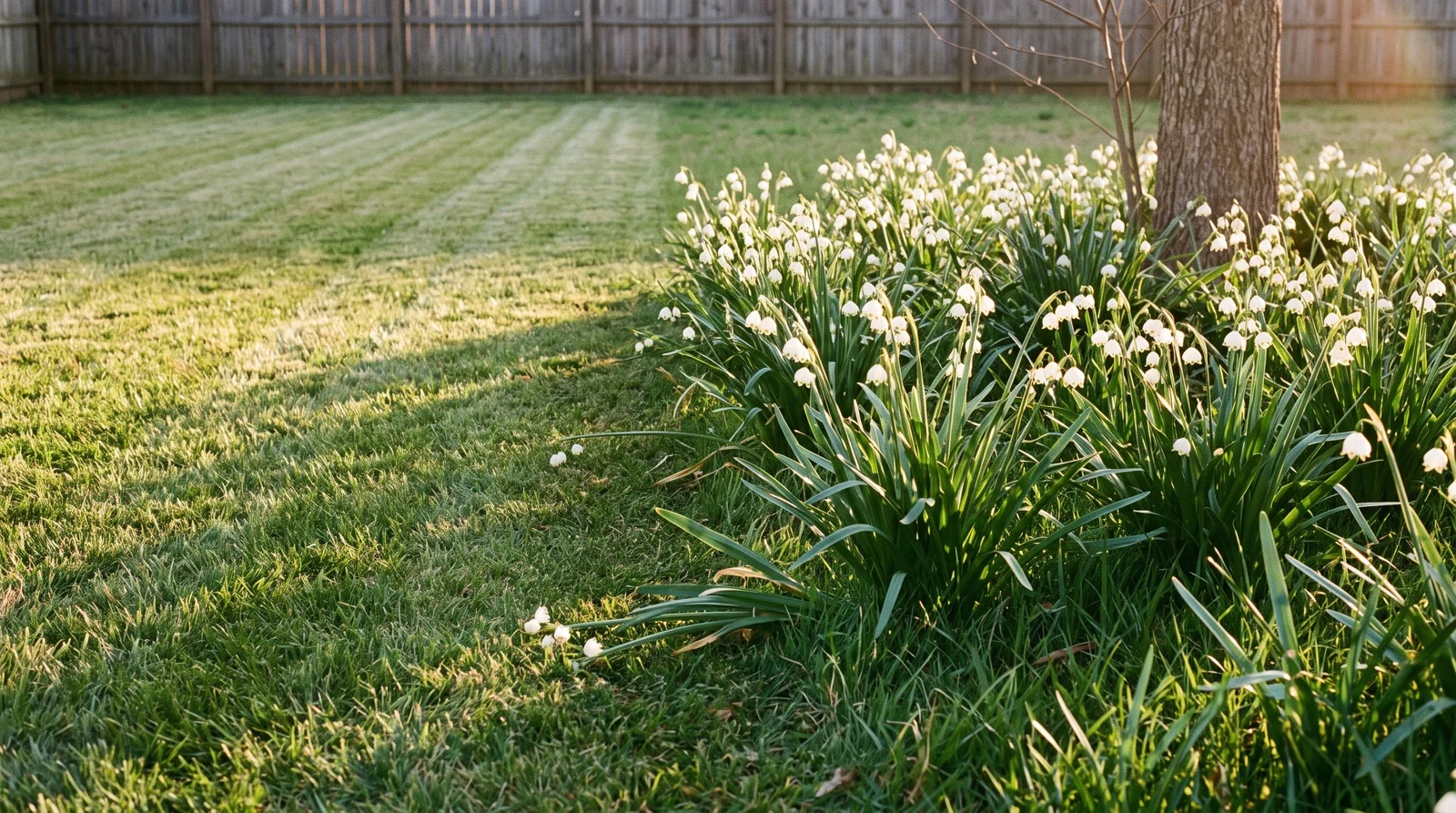
In a lawn the mower waits on the foliage. The leaves stay until they are completely yellow and withered, so the first cut over a colony comes after that, and the same threshold applies to digging. Turf is not among the plant's published uses, which run to borders, containers, foundations, massing, rock gardens, specimens and woodland gardens. What puts it in mown ground is where it grows wild, in fields, at lawn edges, on roadsides and in wet meadows. The bulbs go in during the same autumn stretch as crocus, and the colony that follows is a fixture the mowing plan works around.
Containers are the one place the advice contradicts itself. Container sits among the plant's landscape uses. Against that stands a flat rule for the genus: never plant Leucojum in exterior containers or raised beds. Bulbs there run through temperature spiking and repeated freezing and thawing, which can stop root growth, destroy the root system and rot the bulb. Neither side answers the other, and nothing follows a potted clump into a second spring.
What to expect, year by year
From the autumn the bulbs go in to the point where the clump outlives the gardener who planted it.
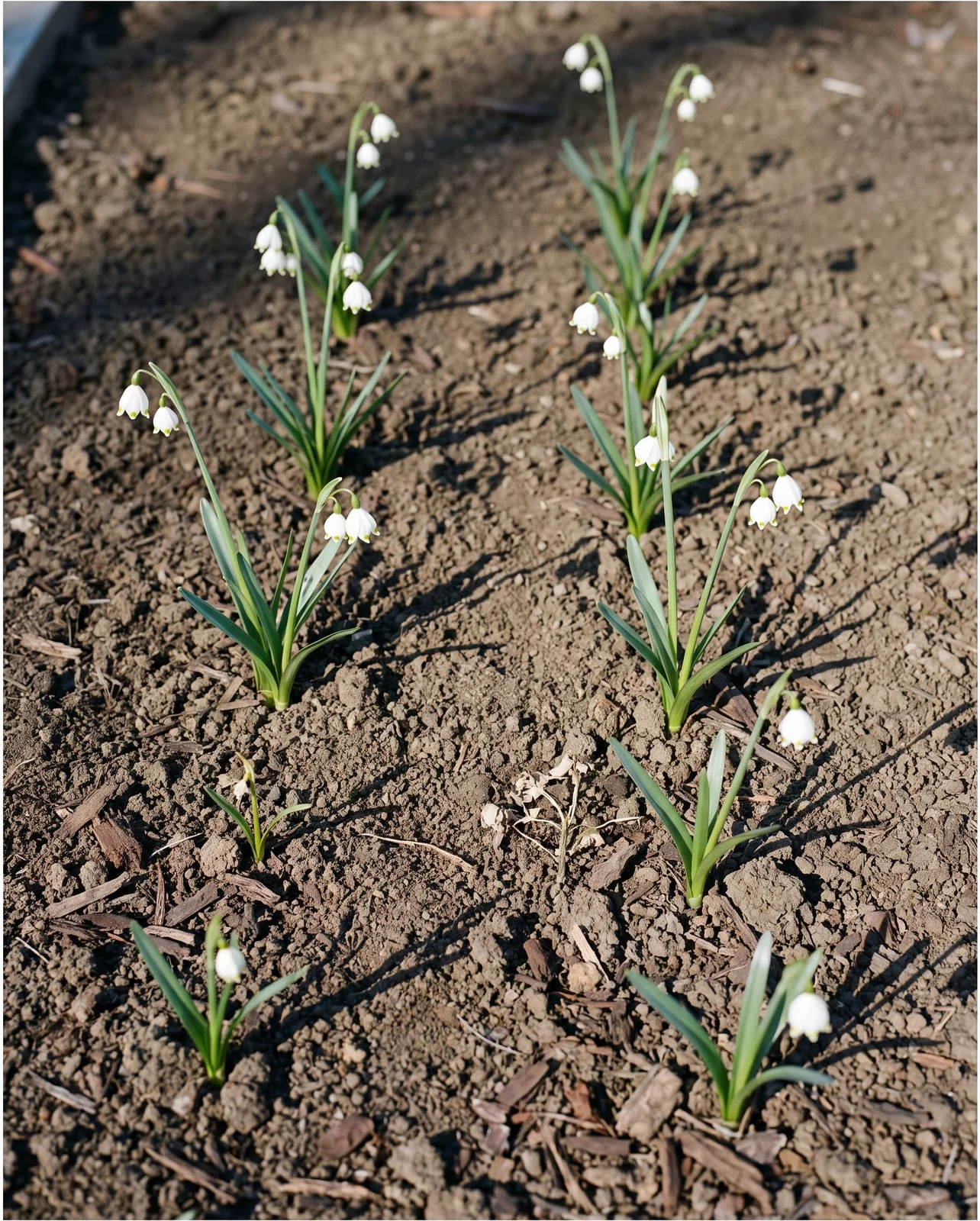
The first spring shows only what went into the ground the autumn before. The work that season is to stay out of the way: leave the bulbs undisturbed and keep the foliage going until it dies back naturally. A thin showing in that first spring has no published explanation.
Over the springs that follow the clump widens on two fronts, by bulb offsets on the sides of the mother bulb and by self sown seed. Flowering carries on through all of it with no division, for five or more years.
By that stage the clump is a different thing to manage. Crowding is what takes the flowers away, and the answer is lifting as the foliage begins to die down in early summer. Any self sown seedlings around the parents are still years short of flowering size. What is left afterward is a colony that carries itself.
Myths about snowflake
Four claims that follow this plant around.
The myth: Snowdrop and snowflake are two names for the same flower.
The reality: They are separate genera, and snowdrops are not to be confused with the snowflakes. Size sorts them in the garden too: common snowdrop stands 3 to 6 inches tall, around half the height of summer snowflake.
The myth: Summer snowflake blooms in summer.
The reality: It blooms in mid spring, several weeks after spring snowflake. The name follows the Latin epithet aestivum, which translates as summer blooming on a plant that is definitely spring blooming.
The myth: Tidy the leaves once the flowers have finished.
The reality: That is the one action that costs next year's flowers. Leaves cut too soon can leave the bulb without enough stored food for the following year. Let the foliage turn yellow and dry naturally before removing it.
The myth: It never needs dividing.
The reality: The plant flowers for five or more years without division, and eventually clumps become too crowded to bloom well. The first half is what gets repeated; the second half is what a leafy, flowerless clump is telling you.
FAQ
What is the difference between a snowdrop and a snowflake?
Different genera. A snowdrop stem carries one bell, three long outer tepals over three short inner ones marked in green. A snowflake stem carries several bells whose six segments match in length and end in a green dot.
Are snowflake flowers invasive?
Not as a formal status. Summer snowflake sits on a state watch list as absent or very rare, flagged because it may become threatening to native communities. It escapes gardens from Maine to Illinois, south to Texas, and in California and Oregon.
Does summer snowflake spread?
Yes, slowly, in two ways: bulb offsets on the sides of the mother bulb, and self sown seed. Seed needs a cold period to germinate and takes 4 to 5 years to reach flowering size.
Why is my snowflake not blooming?
Most often the clump is crowded: it flowers for five or more years without division, then stops blooming well. Heavy shade and rot in ground that stays wet are the other causes named, both given for spring bulbs as a group.
Should snowflake leaves be cut back after it flowers?
No. Let the foliage turn yellow and dry naturally before removing it, because it is manufacturing the stored food for next year's flowers. Completely yellow and withered is the end point.
When does summer snowflake bloom?
Mid spring, several weeks after spring snowflake. In Tennessee it is often in full bloom in mid to late March, while in zone 5 it can wait for May and June.
Is the snowflake flower poisonous?
Treat it as poisonous. All Leucojum species carry the alkaloids lycorine and galantamine, and both garden species count as potentially harmful bulbs not to be eaten. Against that, no records of poisoning have been found for the summer species.
Is snowflake poisonous to dogs and cats?
Unrated either way. Lookups under nine name variants return no entry on the main American pet plant list. With every Leucojum called poisonous, caution is the position to take.
Do deer eat snowflake?
Usually not. It is deer tolerant, deer and rabbit resistant, and deer will not eat the foliage. The resistance is put down to the alkaloids in the plant.
Can snowflake grow in pots?
The advice contradicts itself. Container sits among its landscape uses, while a flat rule for the genus says never to plant Leucojum in exterior containers or raised beds, where freezing and thawing can rot the bulb.
How deep do you plant snowflake bulbs?
3 to 6 inches deep and 4 to 6 inches apart, in fall. Wait until the soil at planting depth stays below 60 degrees Fahrenheit, the rule for spring flowering bulbs other than daffodils.
Interesting tips
- It cuts well, mixed with other flowers or used alone in a small arrangement. No vase life, water depth or conditioning step is published for it, so there is no figure to plan a wedding around.
- The bulbs travel between gardens more often than they are bought. One horticulture agent's own plants came from the ruins of her great grandmother's garden, and many southern gardeners got theirs from old home sites, handed down through generations.
- If a colony turns up in a field and the identification is not certain, three plants get mistaken for it: snowdrop, nodding star of Bethlehem and fairy lily.
Related Guides & Flowers
Lily of the valley
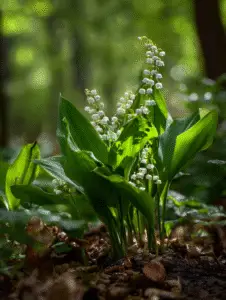
The other small white spring bell people hold up next to summer snowflake.
Virginia bluebells
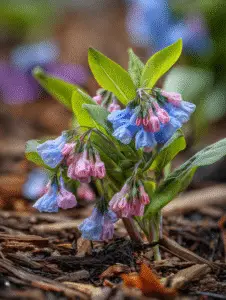
A woodland spring plant that drifts through the same damp, shaded ground.
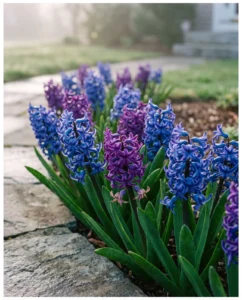
Hyacinth
A fall planted bulb for the same beds, grown for scent and heavier color.

Types of flowers
The full index of flower guides here, arranged by type and by name.
Enjoying our flower guides? Add YourFlowersGuide as a preferred source on Google. It helps more readers find us.
Add to Preferred Sources