What the stock flower actually is
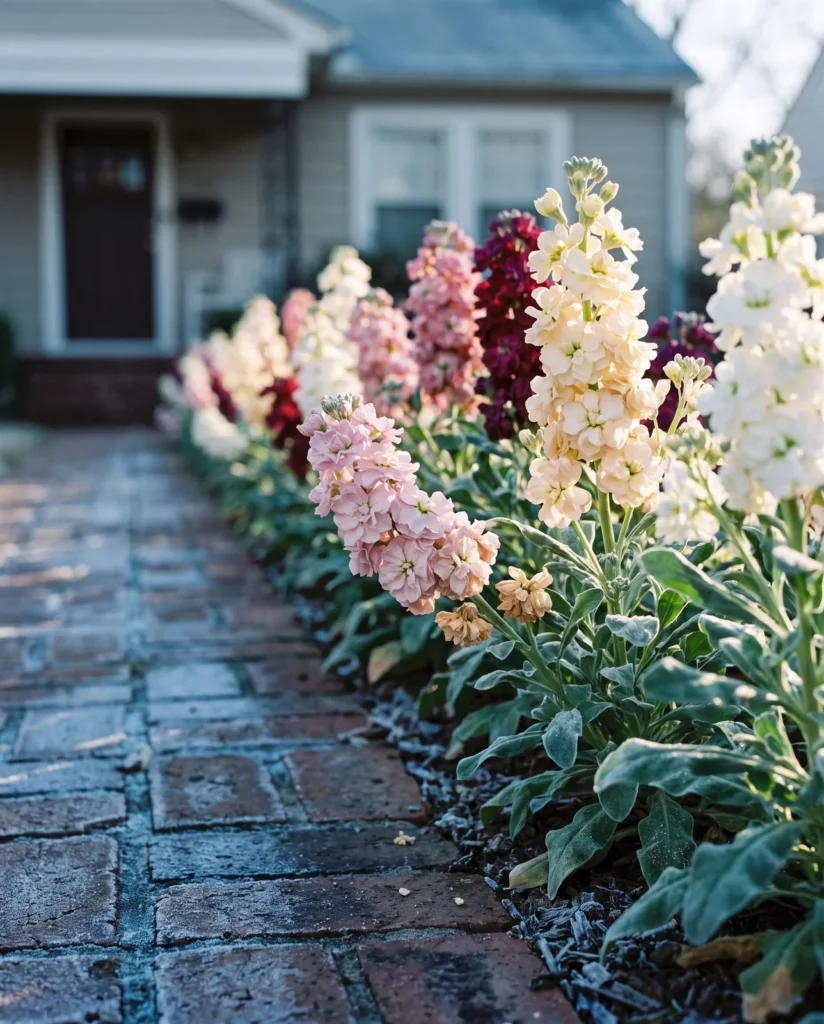
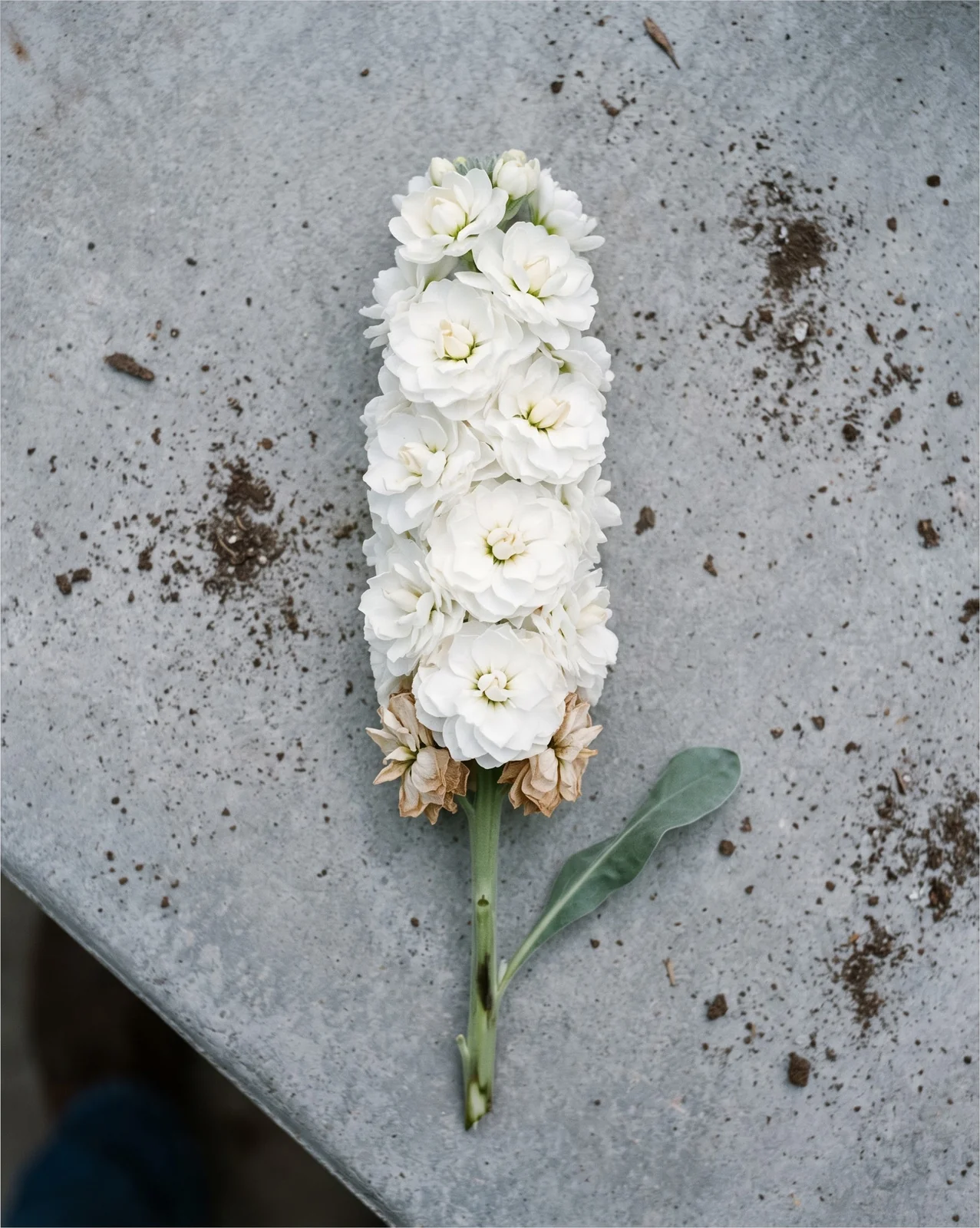
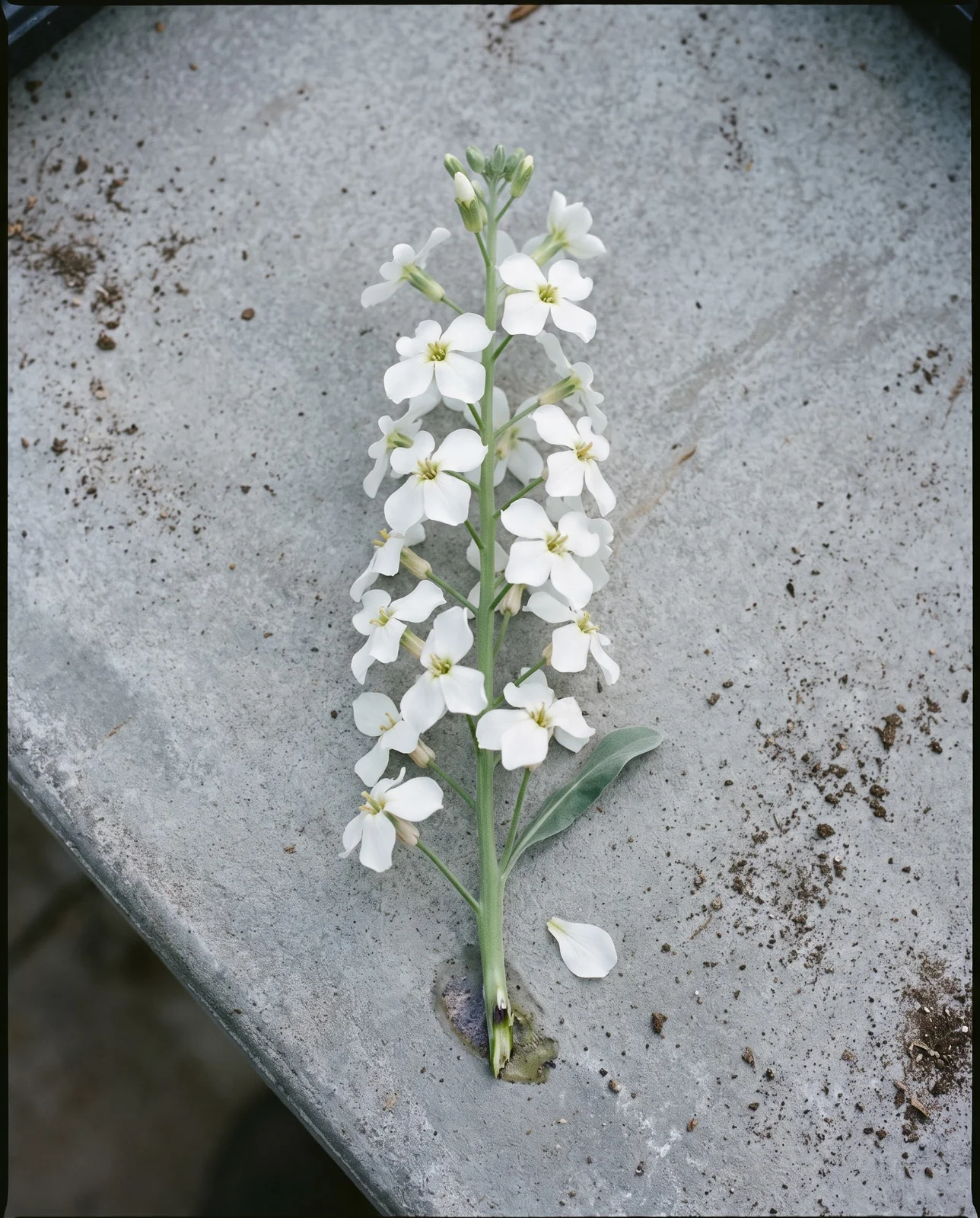
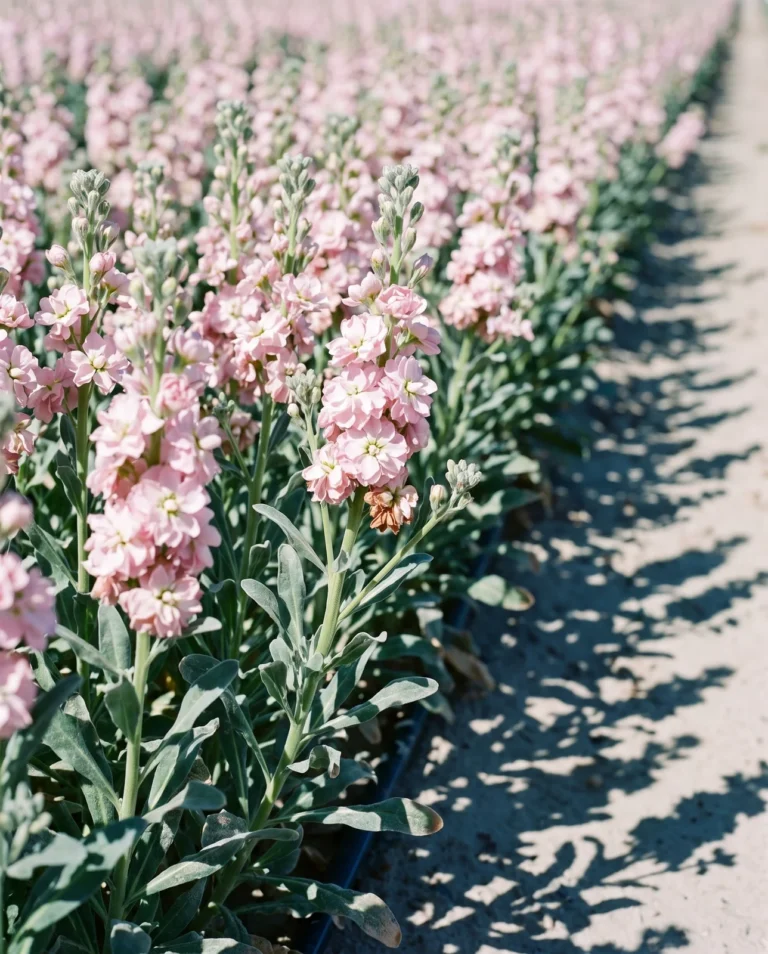
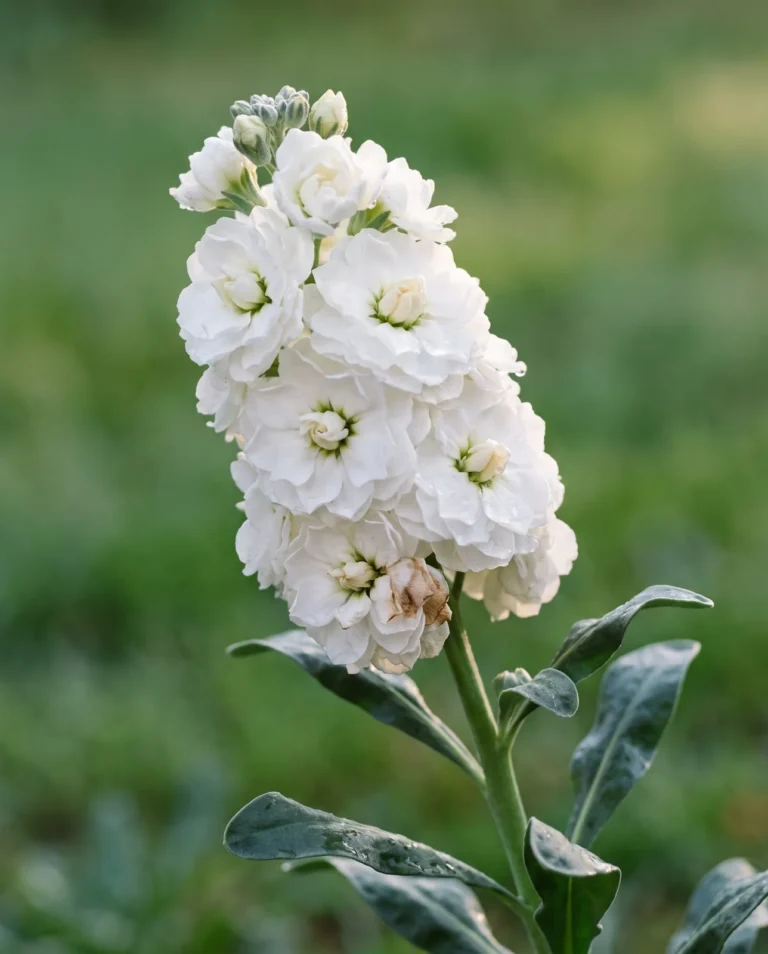
Stock is Matthiola incana, an upright garden and cut flower in the cabbage and mustard family, Brassicaceae. Its oblong, gray-green leaves grow up to 4 inches long, covered in fine hairs that give them a hoary look. The flowers open in dense clusters in both single and double forms. On double plants, florets about 1 1/4 inches wide pack along 6 to 8 inches of stem.
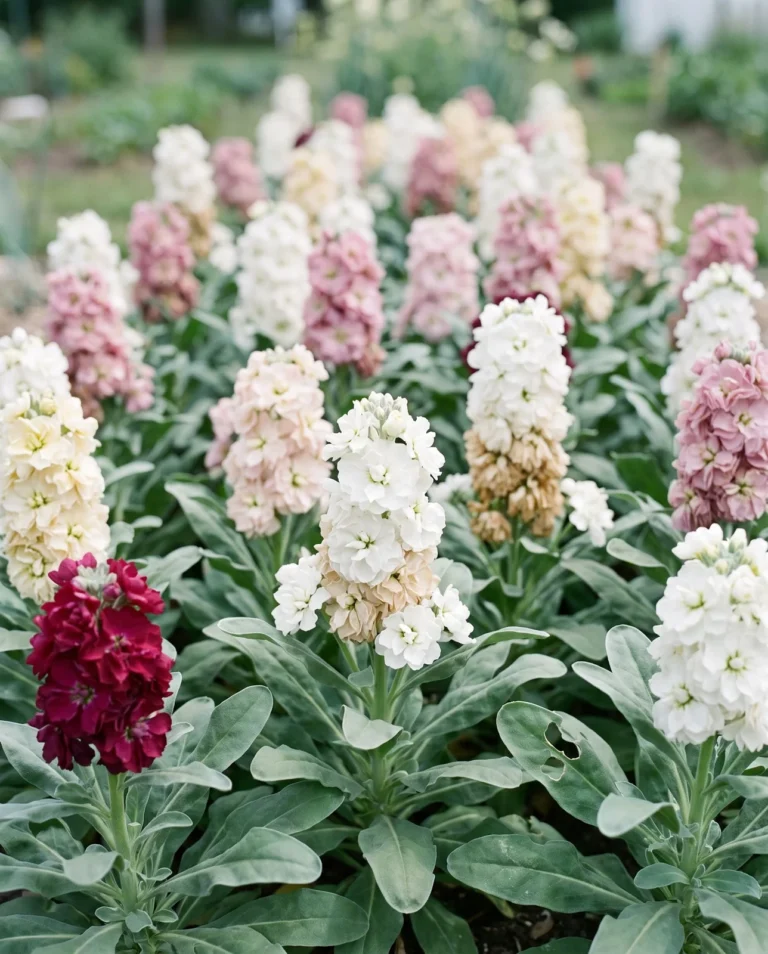
Garden plants typically grow 1 to 3 feet tall and 8 to 18 inches wide. Stems can reach 3 feet under ideal conditions, but they usually top out around 2 feet in garden beds. Stems grown for cutting run 24 to 28 inches long. The flowers bloom in white, cream, pink, red, lavender, purple, and yellow, as well as peach and burgundy.
The names on the seed packet
Seed packets sell Matthiola incana under several traditional names, including Brompton stock, common stock, hoary stock, ten-week stock, gillyflower, and plain stocks. Ten-week stocks are quick selections grown as annuals from a spring sowing. Brompton stocks are slower varieties grown as biennials, sown in summer to overwinter and bloom the next spring.
Modern seed packets also list series names that show what each line was bred to do. Katz provides uniform stems and timing with better heat tolerance than traditional field types, while Iron is bred with strong stems for cut flowers. For garden beds, Cinderella stays compact with sweetly scented double flowers. Quartet grows as a branching spray stock with strong stems and fragrant blooms, and Cheerful produces all double flowers with a low cold requirement. Whichever series you choose, the plant in the ground is still Matthiola incana.
Annual, biennial, or perennial
Stock is naturally a short-lived tender perennial, but local temperatures decide how it behaves in your garden. Across most regions it grows as a cool-season annual because summer heat ends flowering. Where summers get hot, treat it as a spring annual, but in mild-winter areas you can sow in fall and overwinter plants for early spring color.
Botanically, stock is a herbaceous or tender perennial often grown as a biennial or annual, winter-hardy in USDA zones 7 to 10. In warm-summer regions like the South and in continental climates like St. Louis, it is best grown as a cool-weather annual. As a biennial, it spends the first year establishing roots and leaves, then blooms and sets seed in its second season.
The perennial habit does show up in certain forms and climates. One subspecies, Maltese stock, is treated as a perennial and carries fleshier, fuzzy leaves. In mild areas, plants may produce no flowers the first year and bloom heavily the second spring. Some plants keep going for three years or more without dying back. In regions with cool summers and mild winters, stock can persist, though most gardens will treat it as an annual.
Will stock come back next year?
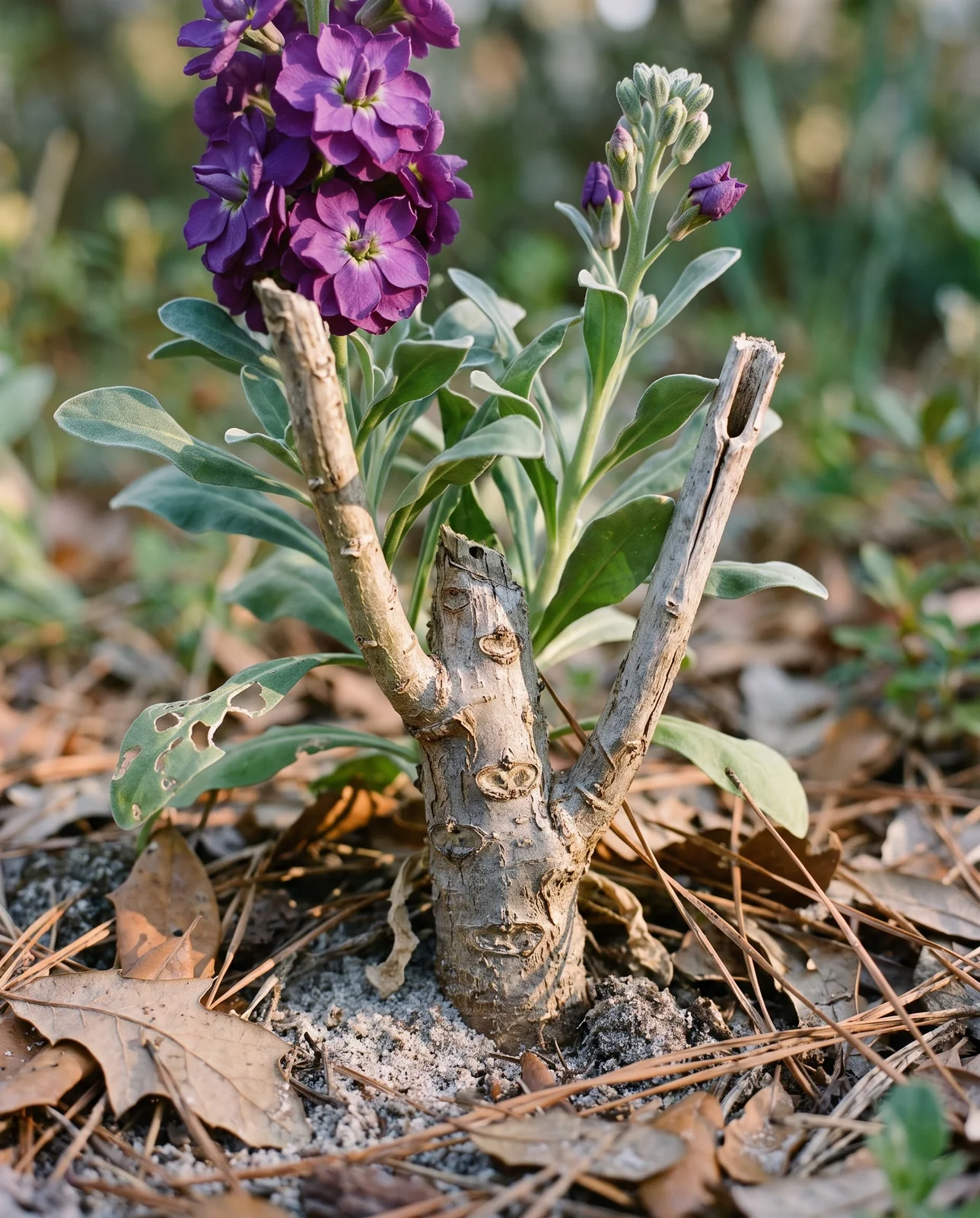
In most gardens, stock will not return next year. It survives winter only in mild climates, and even there it is short-lived, so plan to replant every season. The plant also offers only one harvest: once you cut it, the plant is finished, unlike snapdragons that rebloom. Do not pinch young stock plants, because damaging the growing tip stops them from flowering properly.
Whether stock self-sows is unsettled, so plan to sow fresh seed each season. Where winters are mild, the extra trouble of overwintering young plants is repaid by a showy spring floral display. That biennial cycle is the closest stock comes to returning, finishing a bloom cycle started the previous autumn.
Day scented or night scented
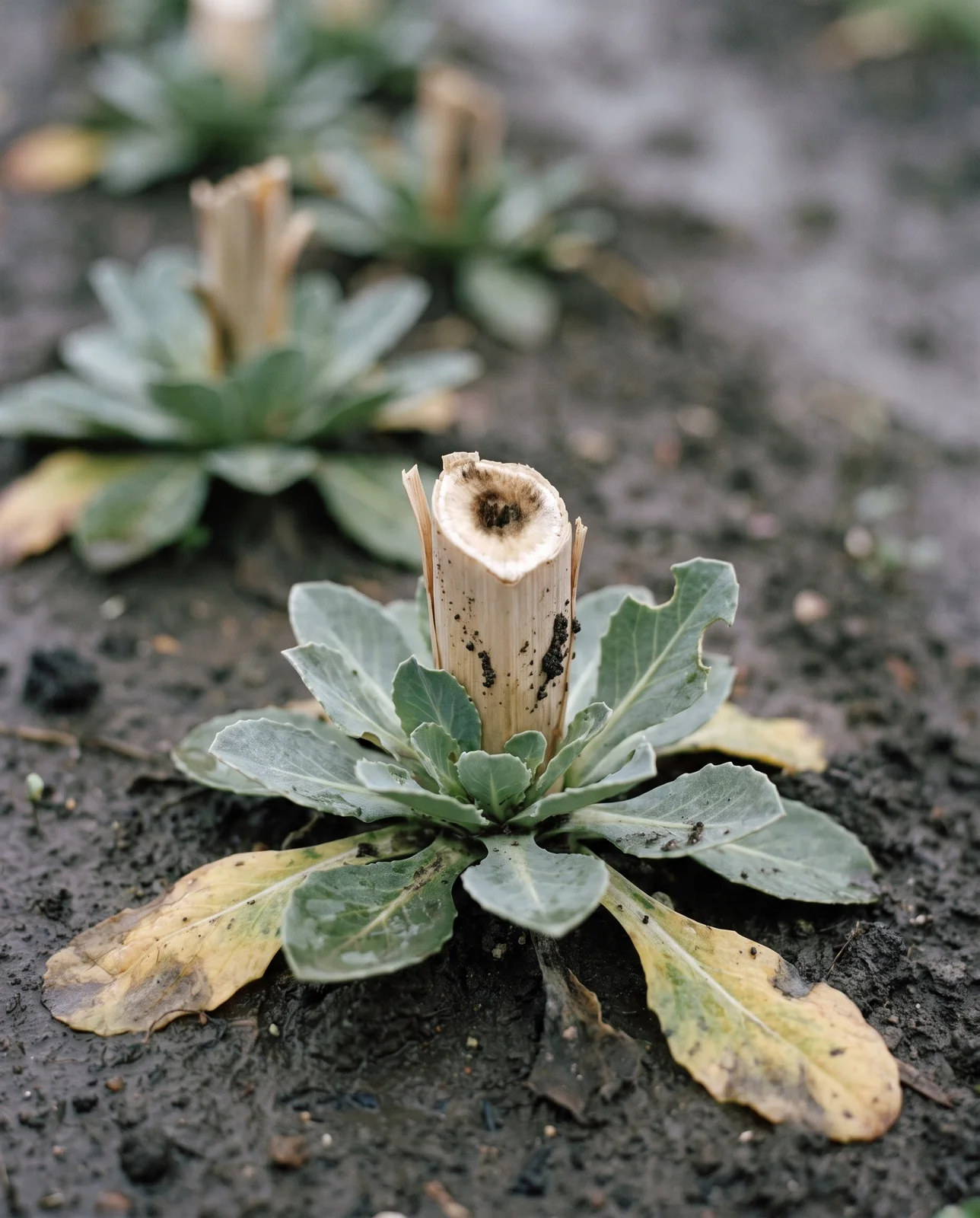
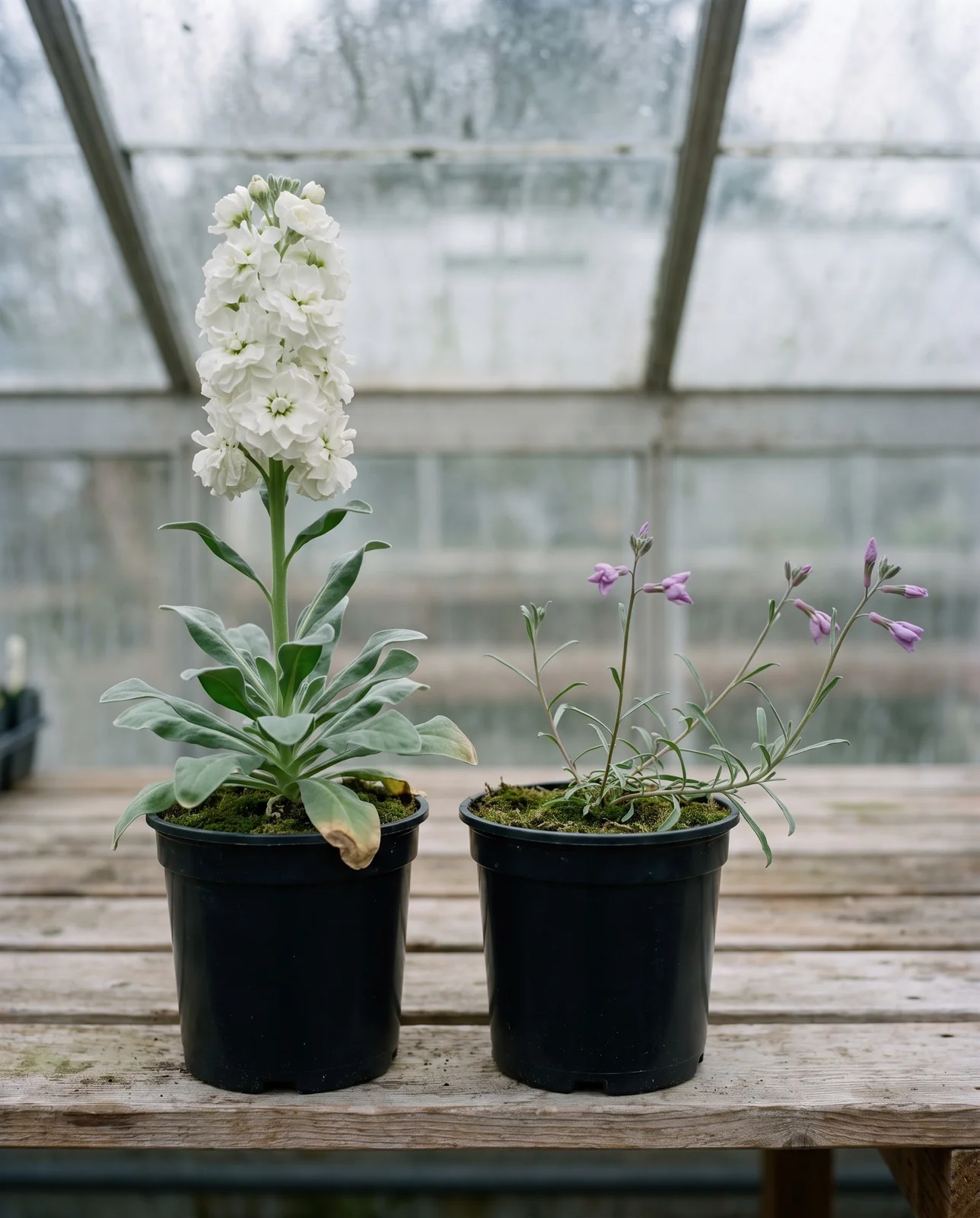
Two distinct plants share the name stock, and they release their fragrance at different hours. Matthiola incana produces upright spikes for garden beds and cutting, carrying its fragrance through the day. Evening-scented or night-scented stock belongs to a separate species, Matthiola longipetala subsp. bicornis. This night-scented plant is the one to grow near a patio or window for fragrance after dusk. Check the Latin name on the seed packet to make sure you buy the plant you want.
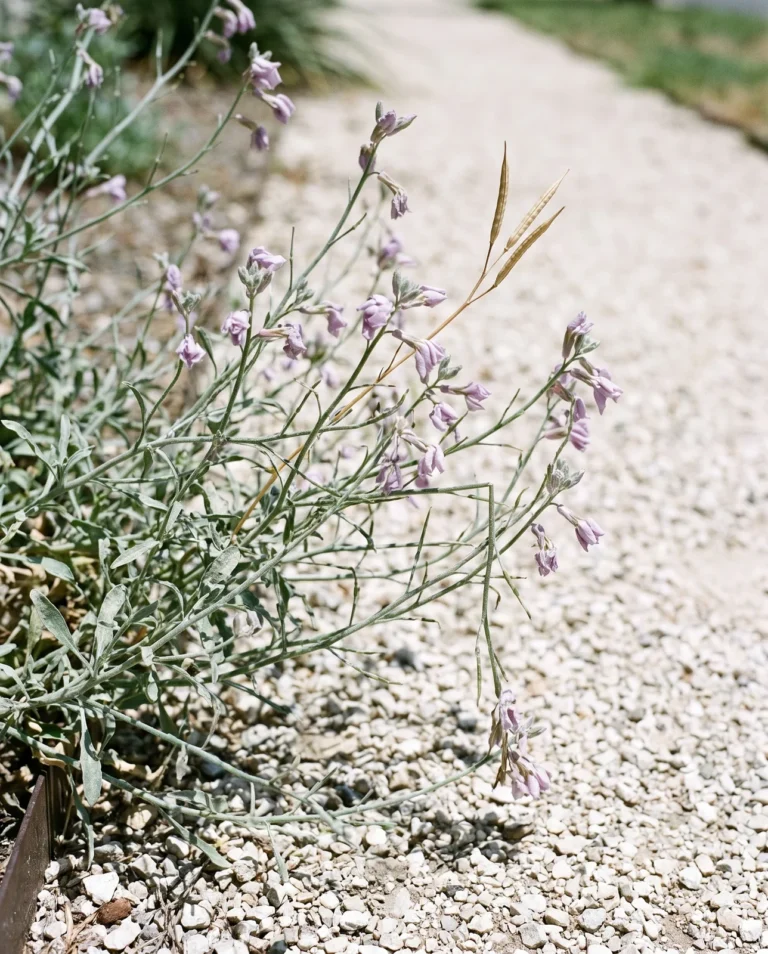
Night-scented stock is a sprawling annual with small gray-green leaves and nighttime fragrance, growing no more than 4 to 20 inches tall. Native from central and southern Greece to Sinai, it is also called evening stock, Grecian stock, night-scented violet, and perfume plant. The flowers close in bright sunlight and open fully from late afternoon onward. Because it looks plain through the day, past gardeners called it the Melancholy Gillyflower. It tolerates drier conditions than Matthiola incana and self-sows. Temperatures above 77 F can shorten flower life and reduce the scent.
The scent, and which flowers carry it
Stock carries a distinct, clove-like fragrance, so plant it along walkways or near patios where you can enjoy the scent. Plain single flowers, especially single white, are often the most fragrant, while fancier colors and double blooms generally carry less scent. If fragrance matters most to you, keeping a few single-flowered plants in the row gives you rich perfume alongside the full double spikes.
Singles, doubles, and what comes up
Most stock varieties produce a mix of full double blooms and plainer single flowers. Double flowers are sterile, so every seed has to come from single-flowered plants. Centuries of breeding produced ever-sporting strains where doubles make up half the crop or more, and most modern varieties yield at least 50 percent doubles. Older ever-sporting types produce 40 to 50 percent doubles, while many modern selections reach 60 or 80 percent. High-double strains can produce more than 80 percent, and aneuploid plants can reach 90 percent. Double rates also vary across specific garden series. The Quartet series yields 55 percent doubles without any sorting, while Cheerful produces all double flowers. The Katz series runs about 50 percent single and can be sorted. The selection 'Extra Early All Double White' yields all double blooms with no sorting needed, while 'Katz Cherry Blossom' can produce a high share of singles.
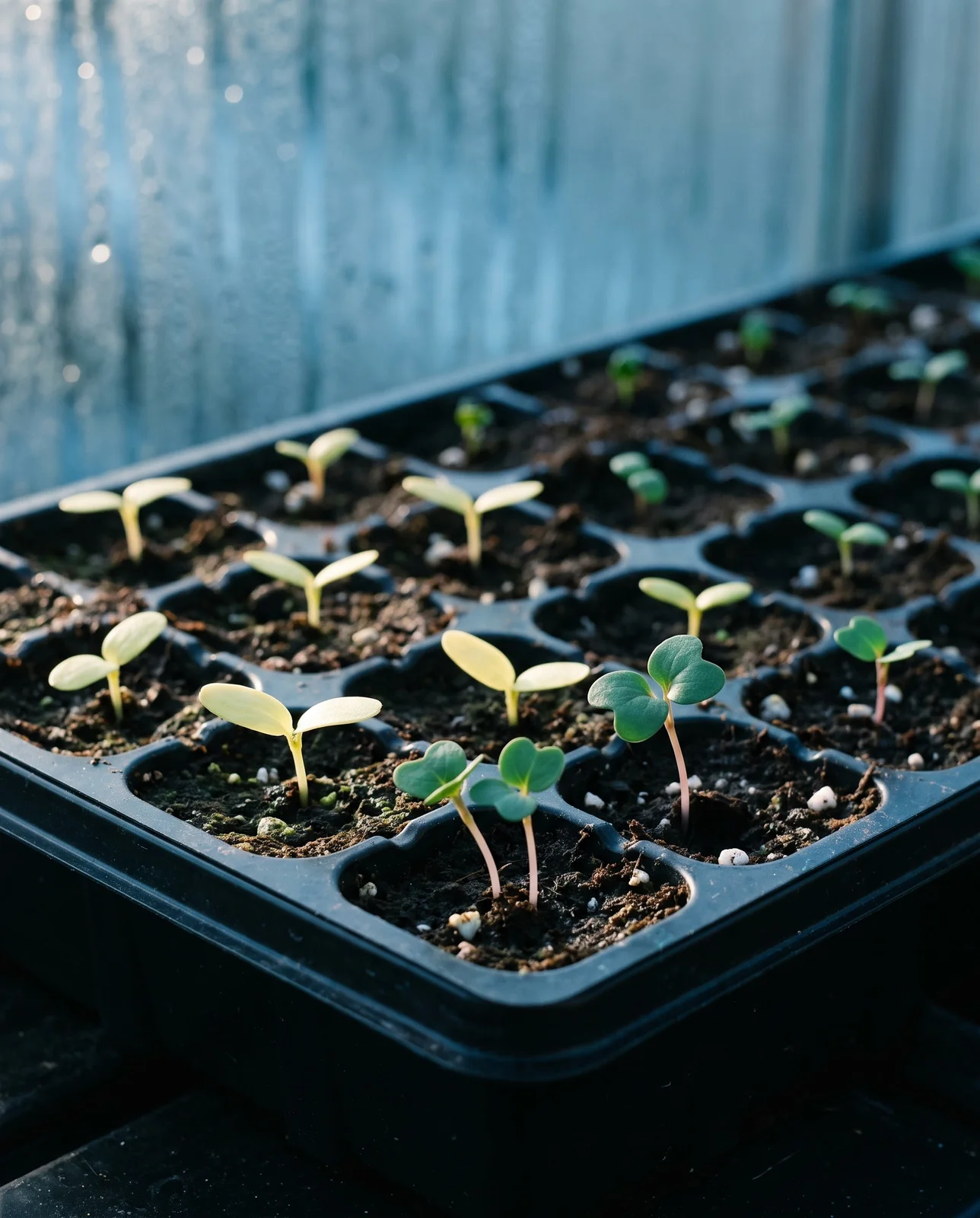
You can tell doubles from singles early by looking at the seed leaves, because leaf color is linked to the gene that controls flowering. A short cold period brings out the color: hold seedlings at 40 to 45 F for 3 to 4 days at the cotyledon stage. Lighter green seedlings with large oval seed leaves will produce double flowers, while darker green seedlings with round or fused leaves produce singles. Removing every dark-leafed seedling can yield an entirely double stand of flowers. Kept at about 40 F for a week, double seedlings turn yellow while single seedlings stay green. Sorting seedlings by hand is difficult and time consuming, so finding a purpose for the singles is often the practical choice. If you skip sorting and rely on naturally high-double varieties, sow 45 percent more seed to make up the difference.
When to sow and when to plant out
Sow stock early so that its fragrant spikes bloom before summer heat sets in, because it is a cool-season flower. Set plants out 2 to 4 weeks before the first fall frost in mild climates, or 4 to 6 weeks before the last spring frost in colder regions. The goal in every climate is getting the flower spikes open and cut before high temperatures arrive. Because young seedlings develop slowly, giving them a steady head start under cover is standard practice.
Start seed indoors 6 to 10 weeks before your last spring frost, or 8 to 10 weeks before transplanting. If you raise seedlings in plug trays, sow 5 to 6 weeks before moving them outside or into a protective structure.
Sowing calendar by situation
Sowing dates depend on your winter climate and how you choose to raise the plants. Use your local frost dates to find the right planting window below.
Sun, soil, and water
Stock does best in full sun, but it tolerates some light shade. Soil acidity is the main hazard to avoid, because stock will not do well in acidic soil. Aim for a moderately rich, well-drained soil with a pH of 6.0 to 7.0. Sharp drainage matters most through the cool, wet weeks of early spring, when roots sit in cold soil.
Feed lightly during active growth to keep the flower spikes sturdy. You can feed every week or two with a water-soluble fertilizer, or apply an organic vegetable fertilizer monthly. A modest feeding schedule is safest in garden beds, because high nitrogen levels can cause weak stems that buckle under heavy flowers. Steady, firm growth shows the feeding balance is right, while floppy foliage is a clear sign to cut back.
Why your stock stopped flowering
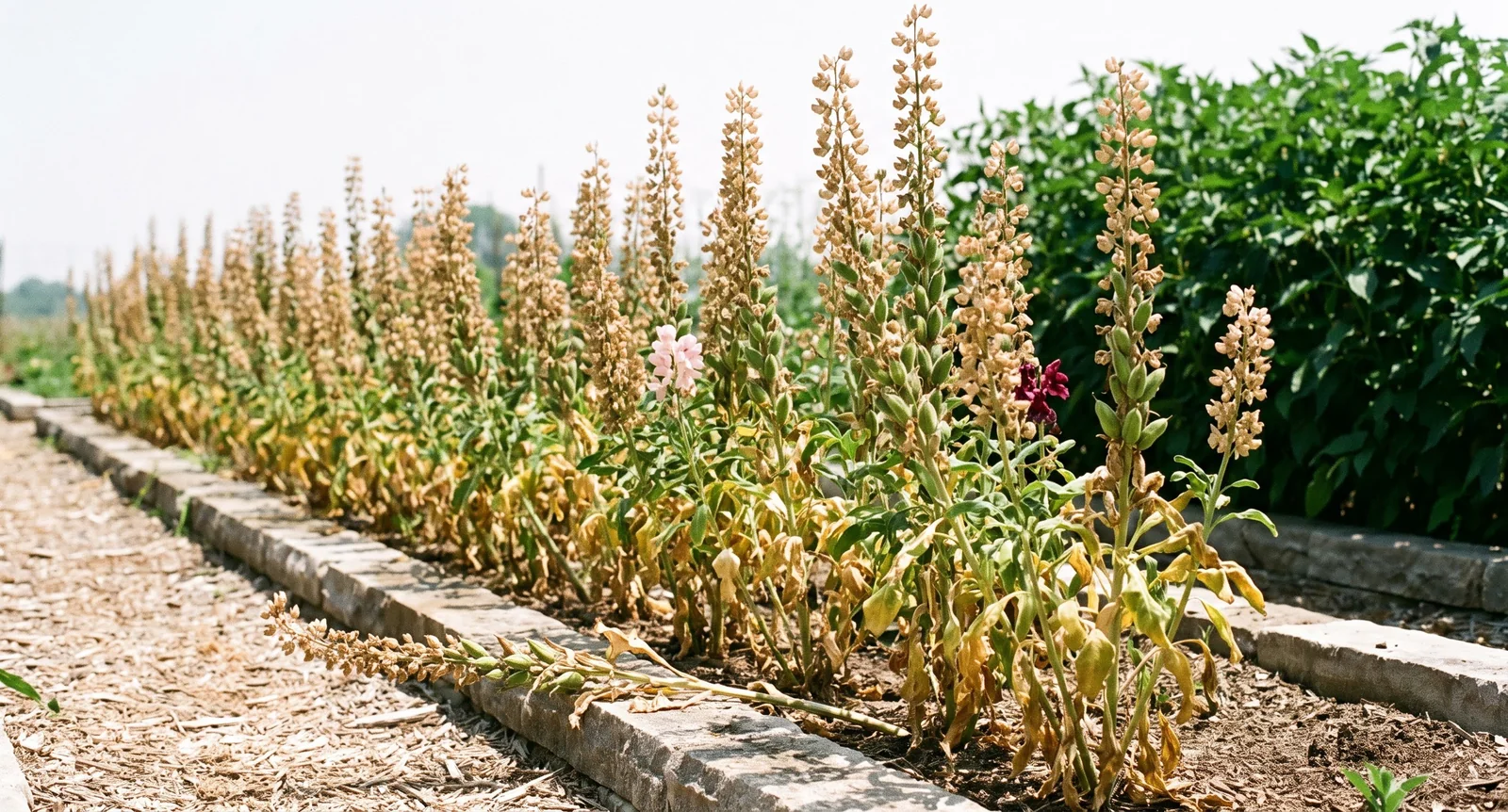
When stock never blooms or stops flowering early, missing cold or early heat is almost always the cause. Plants require cool temperatures of 50 to 55 F to initiate flower buds. Early varieties can begin this cold period at the two-leaf stage and need about 2 weeks of chill, while late varieties need 3 weeks or more. If late varieties are planted out late in spring without that chill, they may produce only leaves and fail to flower. What looks like a failure in June was often decided months earlier, and neither extra water nor fertilizer can make up for missing chill.
Summer heat sets a firm ceiling on how long the flowers can last. Stock sets flower buds only while nighttime temperatures stay under 60 F. Once daytime highs reach 80 F, existing blooms begin to fade, and the plants decline when temperatures stay above 80 F. A bed that bloomed through April and stopped in June simply finished its natural cycle in the heat. In mild-winter climates, fall planting gives a long, cool window where the display holds for weeks. Where spring warms quickly, the blooming run is naturally brief, so getting seed in early gives the longest show.
Deadheading, staking, and spacing
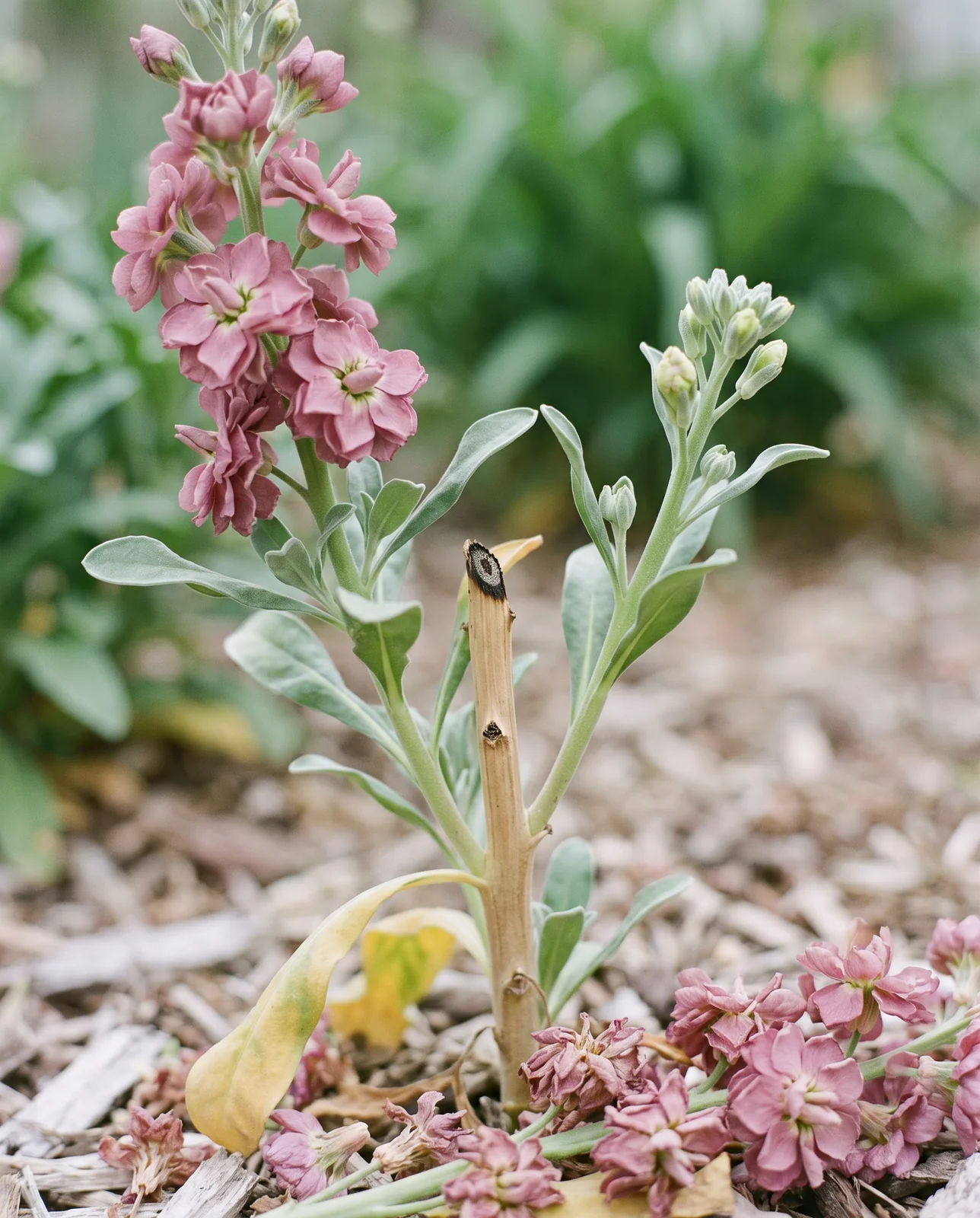
Deadheading will not bring a second flush of blooms on standard stock. Each plant typically produces a single stem and is not a cut-and-come-again flower, so removing a spent spike only tidies the bed. Branching selections are the exception, sending up side stems that reward prompt deadheading. On single-stemmed varieties, keeping that one heavy stalk upright until harvest is where your effort matters most.
Staking and close spacing keep the top-heavy flower spikes from snapping in late spring storms. Provide a 4 to 6 inch trellis support when temperatures stay consistently above 60 F or during frequent rain. Those warm, wet conditions push rapid, softer growth on a plant already carrying a heavy head of flowers. Close spacing also supports the crop: set plants on 6-inch centers, or plant clumps of 2 to 3 seedlings every 6 inches. Crowding the stems allows neighbors to brace each other when wind and rain sweep across the bed.
Types of stock worth telling apart
Stock varieties differ in how you grow them, when they flower, and how reliably they produce double blooms. The last entry is a separate night-flowering species sharing the common name.
Stock in the vase
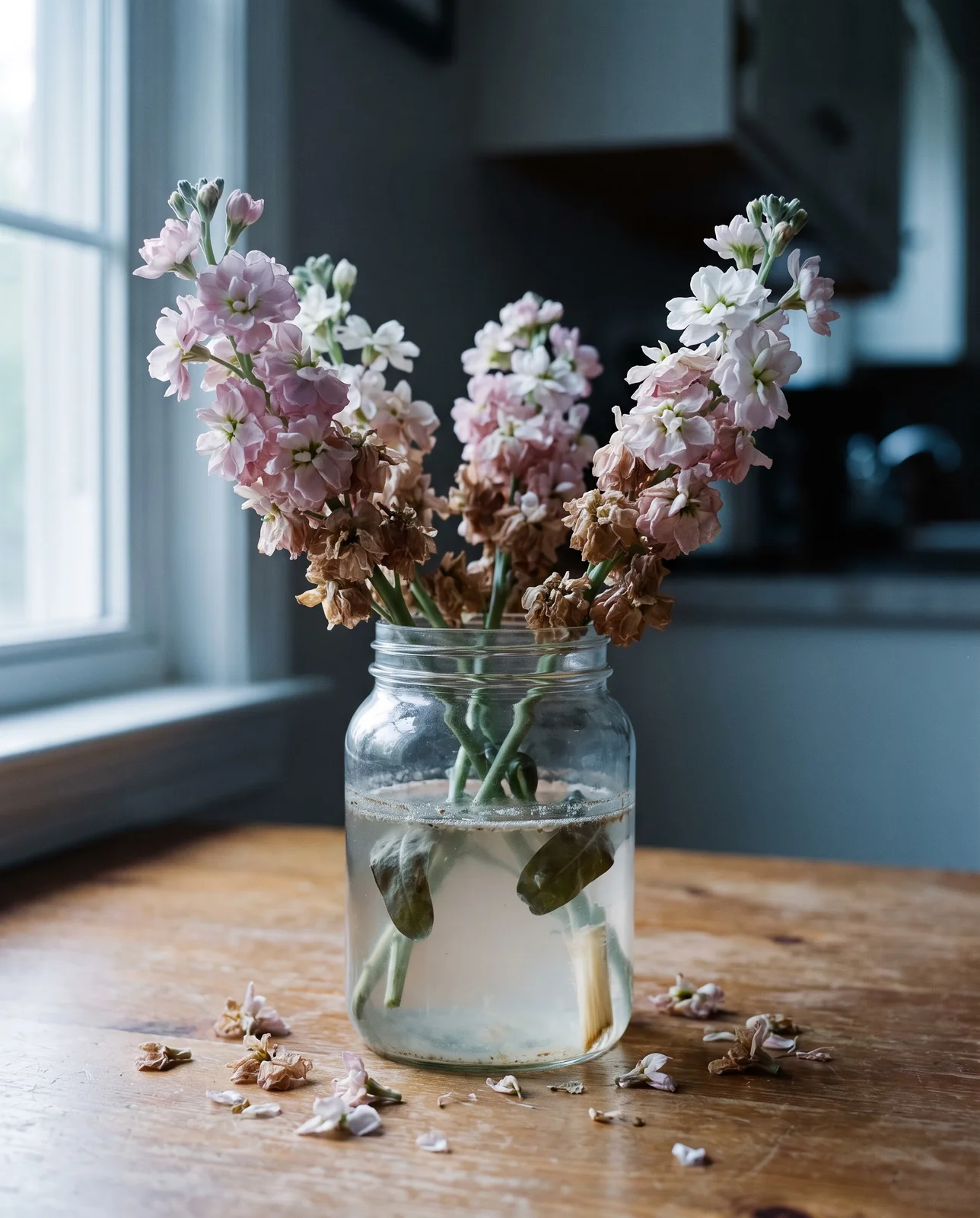
Stock usually lasts about 5 to 10 days in a vase at room temperature, with 7 to 10 days being typical. On 'Katz Cherry Blossom', stems average 8.1 days and hold between 6 and 12 days. Stems can hold for up to two weeks if you keep them cool, out of direct sun, and away from ethylene. Like ranunculus and the other cool-season cut flowers, stock repays careful handling with those extra days in the vase.
How open the spike should be at harvest depends on when you need the display. Harvest when 1/3 to 1/2 of the florets on the stem are open if the flowers will travel or sit in a cooler. For a vase filled the same day, wait until 2/3 of the florets are open, taking care not to cut too young. Cutting earlier gives stems more days in water, while cutting later brings full color into the room immediately.
Handling cut stock
A few simple postharvest steps keep cut stems fresh and protect their scent.
Pests, disease, and whether stock is poisonous
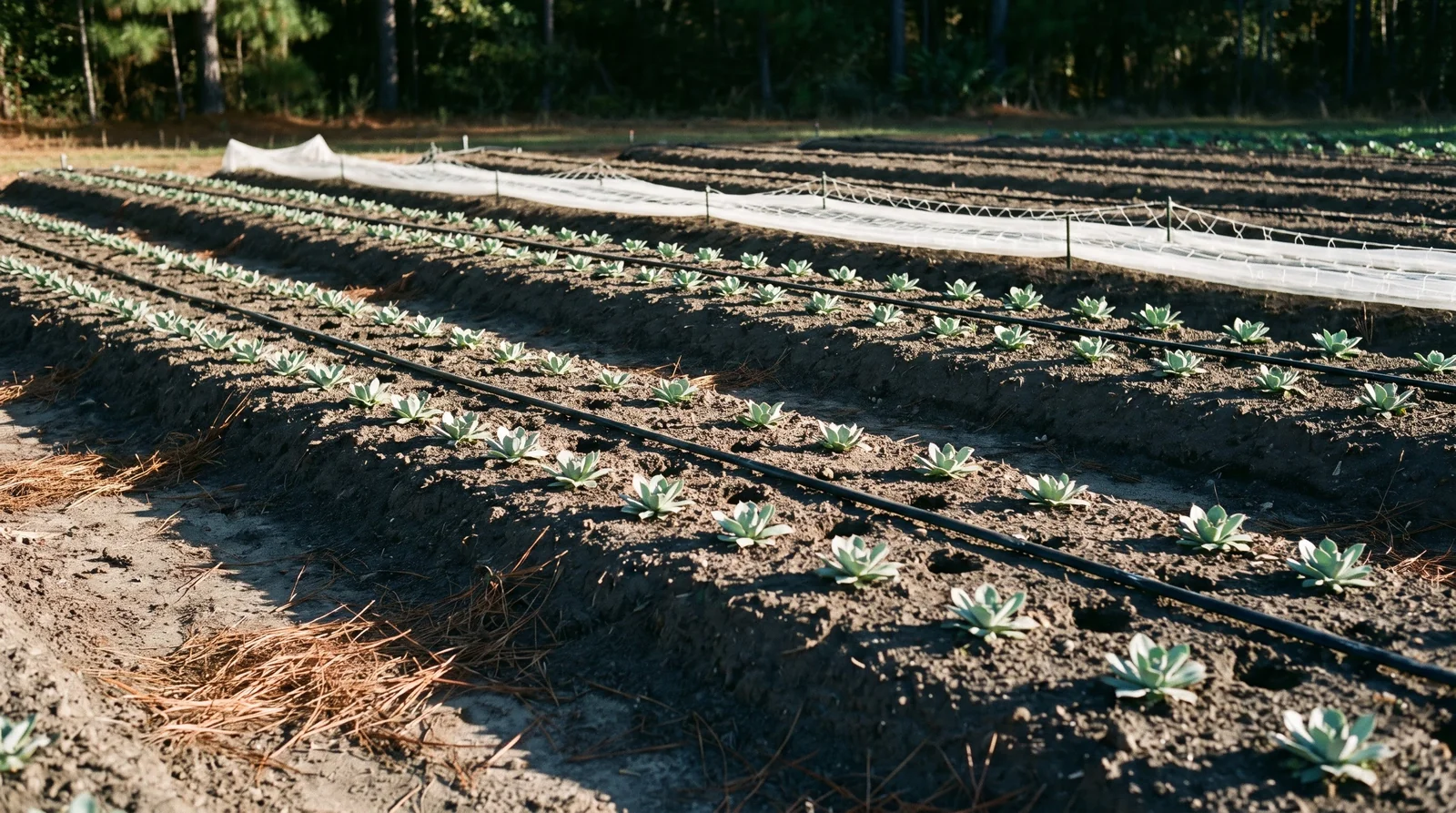
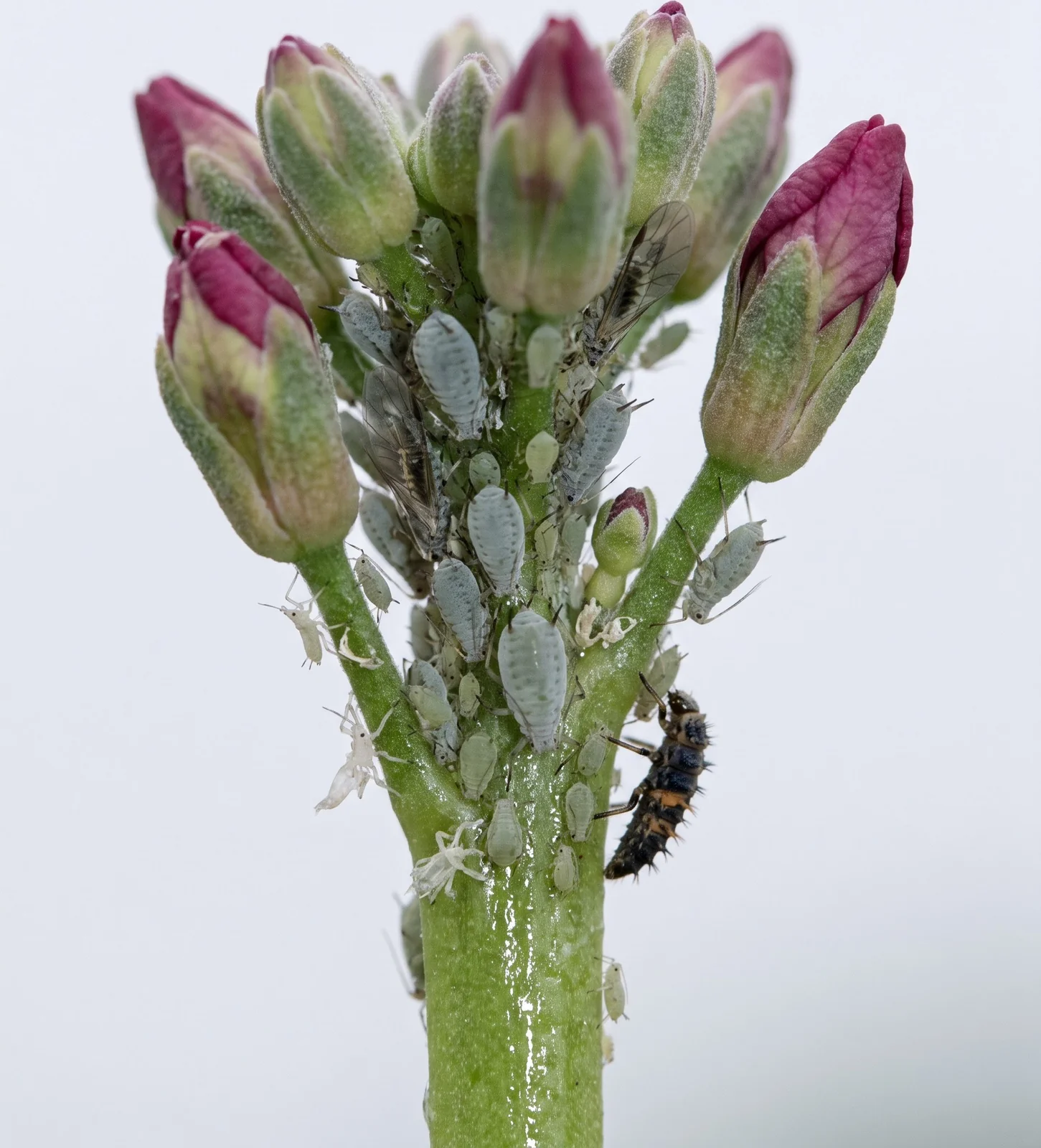
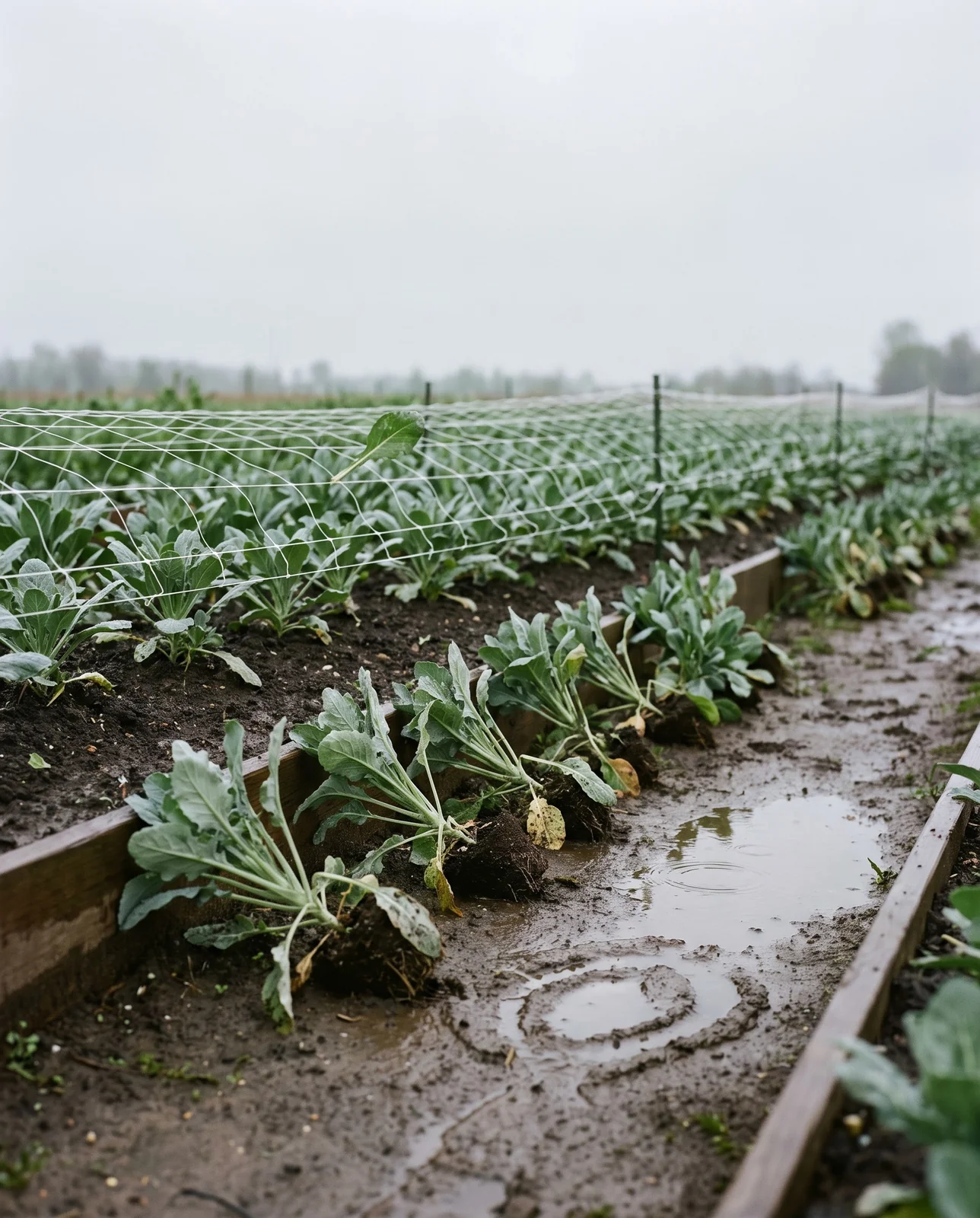
Stock has no serious insect or disease problems, though white mold can become an issue during mild, rainy winters. Aphids and thrips sometimes attack the plants, and diamondback moths, flea beetles, or springtails can also show up. Because stock belongs to the cabbage family, plants are susceptible to flea beetles, so draping row cover over new transplants protects them. Leaving the cover on for the first few weeks outdoors gives young seedlings time to settle in safely.
Stock has no formal safety clearance for pets, but neither is it recorded as poisonous. Stock, Matthiola, and gillyflower do not appear on the ASPCA toxic or non-toxic lists for cats or dogs. An unlisted plant is not a cleared plant, so treat it with ordinary garden caution. Keep pets from browsing the foliage, and call a veterinarian if an animal eats a large amount.
Problems growers actually hit
When stock runs into trouble after blooming starts, these are the issues growers hit most often.
Symptoms: the plants bloom with single flowers when fluffy doubles were expected. Cause: an unselected seed batch yields about 55 percent double blooms across a sowing. What to do: cull single seedlings at the seed-leaf stage, or sow extra seed and accept the natural blend.
Symptoms: young plants lean over or fall flat within days of going into the garden. Cause: stock tends to lodge soon after transplanting. What to do: support the bed with a layer of horizontal netting to keep stems upright.
Symptoms: leaf tips and edges turn brown just as flowering begins. Cause: potassium deficiency typically shows up at flowering time. What to do: adjust your fertilizer before flower buds swell, because damaged foliage will not recover.
Symptoms: soft rot and leaf spots spread after weeks of rainy weather. Cause: downy mildew and Botrytis can occasionally infect stock during stretches of extremely wet weather. What to do: space stems generously to keep air moving through the planting and help foliage dry.
Growing stock in pots
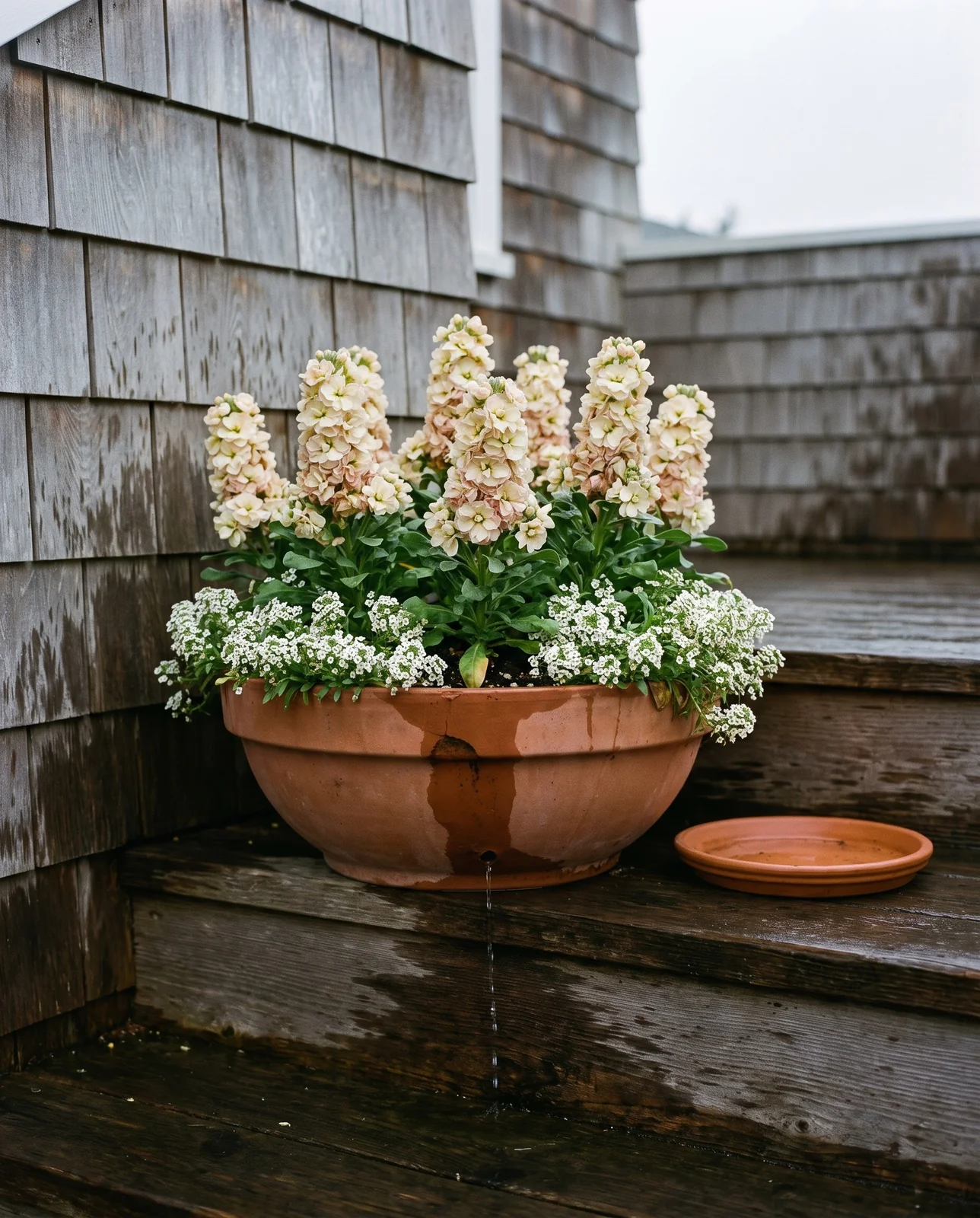
Stock thrives in containers as long as the soil drains freely. Use a potting mix that drains well and do not let pots sit in water, because cold soil in a damp saucer stays soggy for days. Compact selections suit patio pots best. In mild climates, potted stock can stay outdoors through winter. Under cover, plants can withstand cold down to 10 to 20 F. That hardiness lets northern gardeners start pots under shelter and move them outside as winter eases. Stock pairs easily with sweet alyssum around the rim on the same cool-season schedule.
The gillyflower name and the plant in old gardens
Gillyflower is one of the oldest garden names for stock. In the 1700s, a highly fragrant form was identified at the Brompton Park Nursery in London. Thomas Jefferson is believed to have brought Matthiola incana to Monticello in 1771. By Victorian times, the flower had become a garden favorite on both sides of the Atlantic.
What people get wrong about stock
Four common misunderstandings surround stock, each rooted in a small piece of truth.
The myth: Stock is a perennial, so it comes back on its own.
The reality: Stock is a biennial or tender perennial winter-hardy to zones 7 to 10. One subspecies, Maltese stock, has fleshier, fuzzy leaves and is treated as a perennial, but common garden stock usually acts as an annual in colder regions.
The myth: Night scented stock is the same plant under another name.
The reality: They are separate species, though stock is sometimes confused with its close relative, night-scented stock, Matthiola longipetala. Checking the botanical name on the packet confirms which plant you are buying.
The myth: It stopped flowering because it needed more water.
The reality: Nighttime temperatures must not rise above 60 F for stock plants to set buds. Once daytime highs reach 80 F, blooms begin to fade, and extra water cannot override the heat.
The myth: Stock can go in with the summer annuals.
The reality: Stock is a flower suited to cool-season growing. The plant has to go through cool weather, about 50 to 55 F, before it sets flowers. Sowing in late spring alongside summer annuals means young plants hit heat before chilling happens and produce foliage without blooms.
What to expect, season by season
Stock moves from seed to flower in three clear phases, ending with a choice about how to manage the bed.
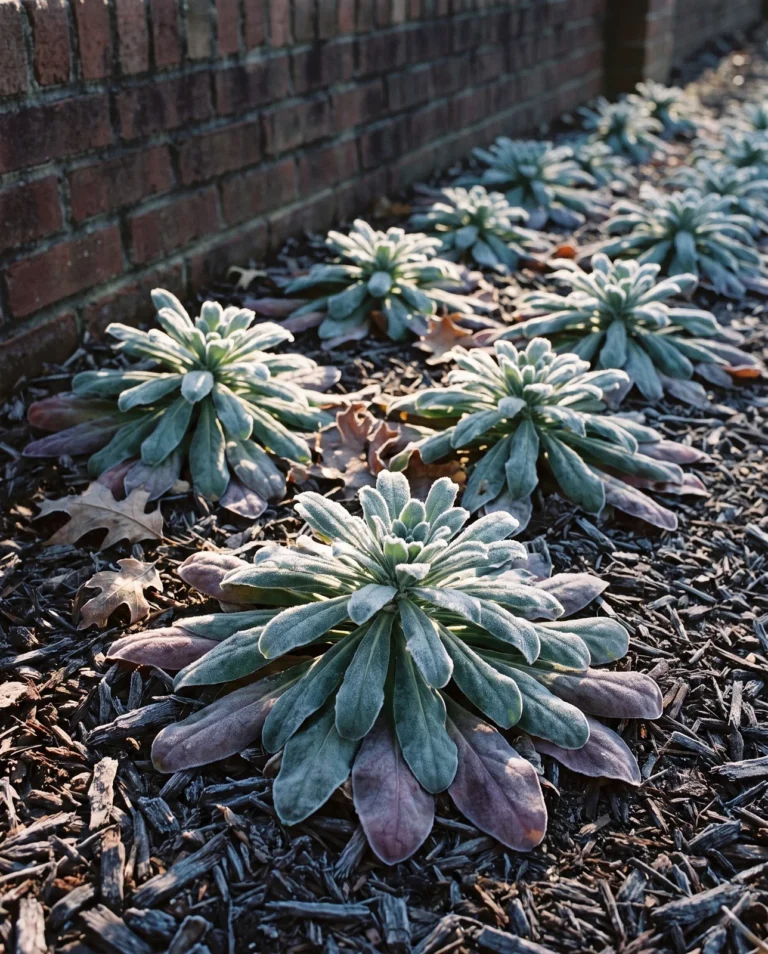
The early stretch is quiet and asks for a little patience. Seed germinates in 7 to 14 days when kept at 65 to 75 F. Young seedlings then take 30 to 50 days to reach transplant size. During these weeks, the plant simply builds a low rosette of gray-green foliage. Gardeners sometimes worry when no flower spikes appear, but this cool vegetative period prepares the crown to set buds.
Flowering is the dramatic stage, but it is relatively brief. Plants usually produce their first blooms in 60 to 75 days from seed. In some gardens, stems take about 90 days to reach flower. The reward is a dense spike of florets that holds fresh as long as the weather stays cool. Once daytime temperatures reach 80 F, the blooms begin to fade and plants decline in the summer heat. Sowing early places that flush of color squarely in spring, before hot weather sets in.
What happens after flowering depends on your local climate. In zones 7 to 10, you can sow seed in fall to overwinter outdoors for early spring blooms. In colder regions, plants wrap up once stems are cut, so the next display starts from fresh seed. Because stock rarely improves in a second year, planning your sowing schedule each season brings the most reliable flowers.
FAQ
Does stock flower come back every year?
In most gardens it does not. Stock survives winter outdoors only in zones 7 to 10, and even in mild climates it is short-lived. Most growers treat it as an annual and sow fresh seed each year.
Is Matthiola an annual or perennial?
Stock is a biennial or tender perennial. Because plants decline in summer heat once temperatures climb above 80 F, most gardeners grow them as cool-season annuals.
Does Matthiola prefer sun or shade?
Stock does best in full sun, though it tolerates some light shade. An open spot with direct sun gives the strongest display, but a bed that catches a little afternoon shade will still succeed.
Why are my stocks not flowering?
Stocks usually fail to flower when the weather stays too warm or planting happened too late. Plants require cool temperatures of 50 to 55 F to initiate flowers, and late varieties transplanted late in spring may fail to flower and produce only leaves. Rising heat ends the season early, as blooms begin to fade once daytime temperatures reach 80 F.
Do I need to deadhead stock flowers?
Deadheading will not bring more blooms on standard varieties. Each plant typically produces only one stem and is not a cut-and-come-again flower, so removing a faded spike simply keeps the garden tidy. Spray or branching kinds such as the Quartet series are the exception.
When can you plant stock flowers?
Plant stock during cool weather, either 2 to 4 weeks before the first fall frost or 4 to 6 weeks before the last spring frost. In zones 7 to 10, you can sow outdoors in the fall for early spring blooms.
Will stocks flower the first year?
It depends on the type you grow. Ten-week stocks are grown as annuals from a spring sowing. Slower Brompton stocks are sown in summer to overwinter and bloom the next spring, and in some gardens they produce no flowers the first year before blooming strongly the second.
Will stock flowers bloom all summer?
No, stock is a cool-season flower in most of the country. Buds set only while nighttime temperatures stay below 60 F. Blooms begin to fade once daytime highs reach 80 F, and plants decline when summer temperatures rise above 80 F.
Do stock flowers reseed themselves?
Whether common garden stock reseeds is unsettled, though evening scented stock self-sows. Sowing fresh seed each year is the most reliable plan for a steady display.
Is the stock flower poisonous?
Whether stock is poisonous is unsettled. The ASPCA does not list stock, Matthiola, or gillyflower as toxic or non-toxic for cats or dogs. To play it safe, keep pets from chewing on the plants.
Interesting tips
- Stock is deer resistant, so it works well in an unfenced bed in early spring when little else is green. Deer usually pass it by, though hungry animals in a hard season may still browse it.
- Cut stems can be held up to 2 days without water when kept cold. A bunch that traveled dry from the market will still open properly once you recut the stems and put them in water. Cool temperatures protect the blooms, while a warm car ride cuts that window short.
Related Guides & Flowers
Carnation
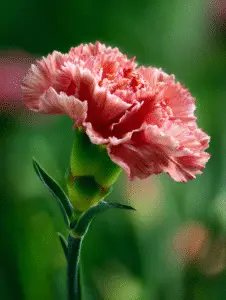
The other fragrant market flower people weigh against stock when they are buying for scent and vase life.
Flowers to sow in fall
Where a fall sowing pays off, which is the route mild-winter gardens use for stock.
Frost tolerant flowers
Other flowers that take cold the way stock does, for a bed that has to start before the last frost.

Types of flowers
The full index of flower guides, if the cool-season bed still has room in it.
Enjoying our flower guides? Add YourFlowersGuide as a preferred source on Google. It helps more readers find us.
Add to Preferred Sources