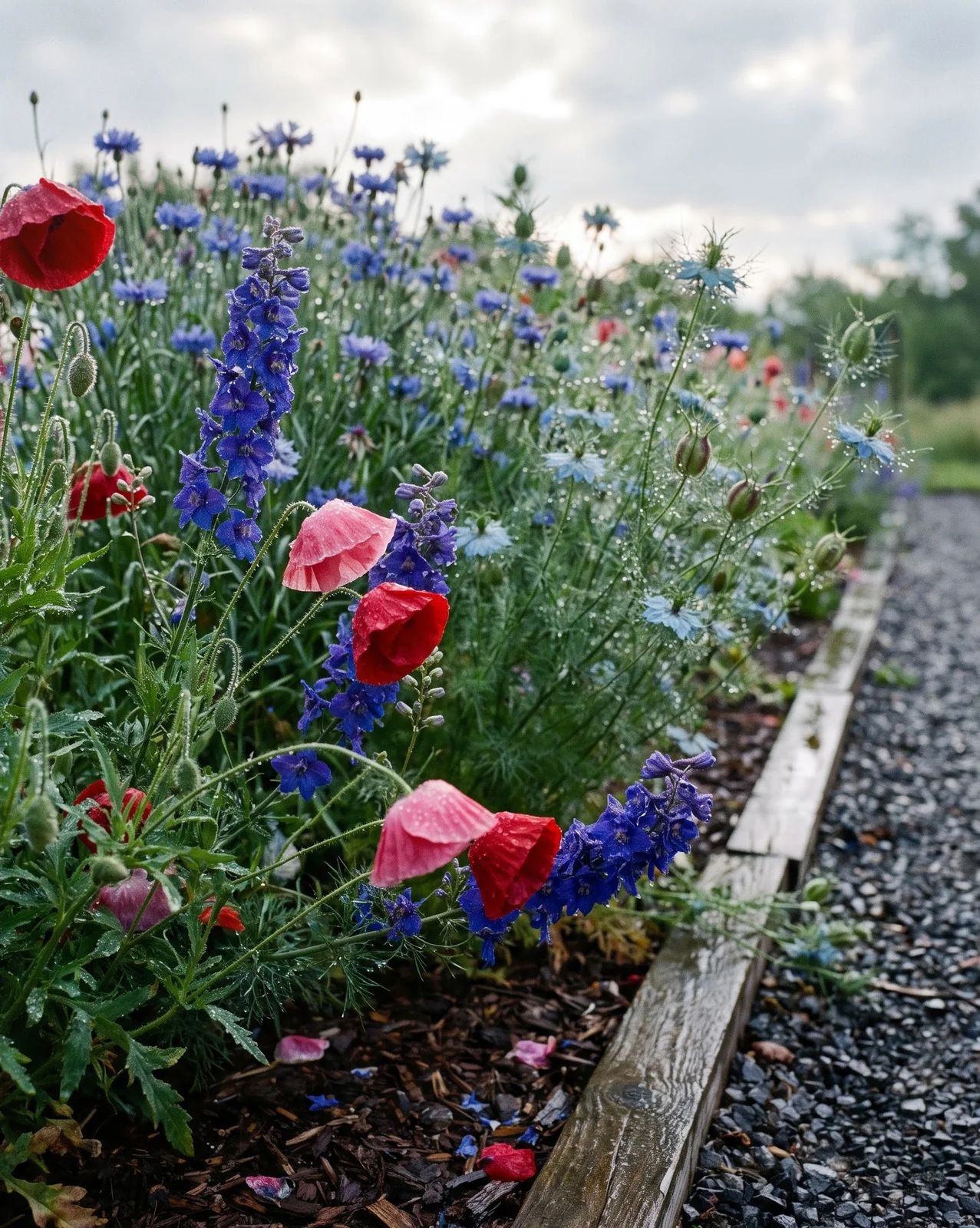
Larkspur, corn poppies, love-in-a-mist, bachelor’s buttons and sweet peas are hardy annuals: plants that run from seed to seed inside a single year, yet hold up to frost either as seed in cold ground or as a low green rosette. Sown outdoors in autumn, they take their chilling from the weather instead of a refrigerator, root while the soil is still workable, and open earlier and on taller stems than the same seed sown in spring. What they do not all share is a single sowing rule.
Two things decide how an autumn sowing goes: how hard the winter freezes where you garden, and which of the five is in the packet. Where soil stays workable and frosts stay light, seed goes straight into the border in October or November, germinates in cooling ground, and sits out winter as a compact rosette. Where the ground freezes deep and heaves, that same seed is lifted out of the bed or rots first, and a ventilated plastic jug standing outdoors does the job with far less loss. Sweet pea is the one that splits opinion, since the mild-winter tradition of autumn sowing runs against the early spring planting its extension profile recommends. What follows covers the five flowers and what each one asks for, the sowing window by zone, the jug method step by step, and the mistakes that cost a whole bed.
On this page 5 sections
What makes a flower “fall-sow”
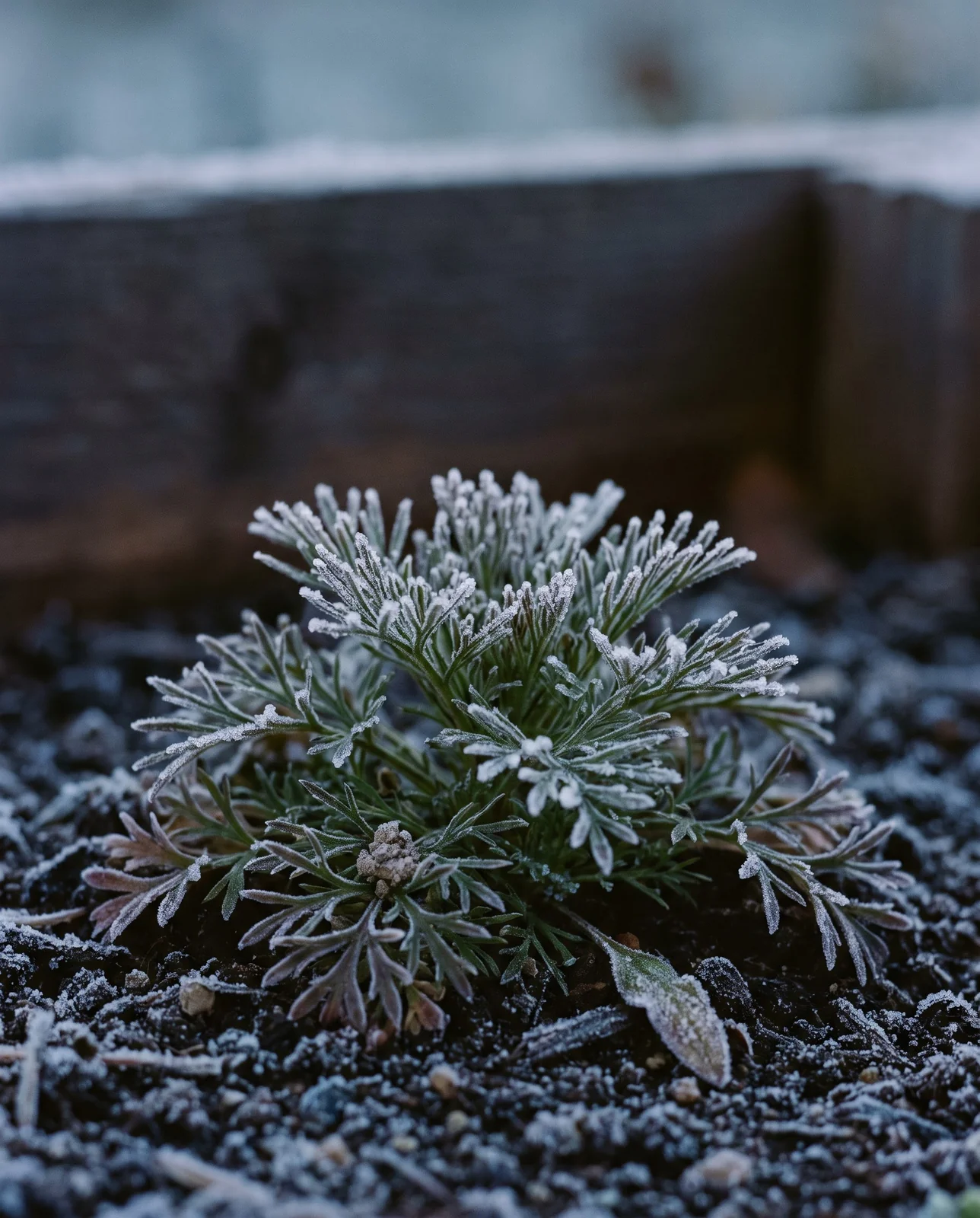
A fall-sown flower is nearly always a hardy annual, a plant that finishes its life cycle in one year while carrying enough cold tolerance to sit through winter. Tender annuals blacken and collapse the first night the air reaches 32 degrees Fahrenheit; hardy annual seedlings do not, and they hold on as low rosettes under snow cover. Others in the same group never sprout at all in autumn. They wait in cold soil, where weeks of chilling break the germination inhibitors inside the seed, so that sprouting comes fast and even at the first warm spell of spring. Sow a tender summer annual such as zinnia or marigold in autumn and the result is rotted seed or a bed of dead seedlings after the first hard frost. The hardy group evolved in temperate Mediterranean and Eurasian country, where seed drops in late summer, sprouts with autumn rain, and spends winter flat against the ground. Autumn sowing works with that rhythm: top growth pauses while the root system keeps extending in cool soil, and the plant that meets spring already has the foundation for a fast, heavy bloom.
5 flowers to fall-sow
The five below are the standard cool-season annuals for an autumn packet. Each has its own reason for wanting the fall slot rather than the spring one: a taproot that resents being moved, a seed coat that needs chilling, or a seedling that simply grows straight through winter.
Larkspur
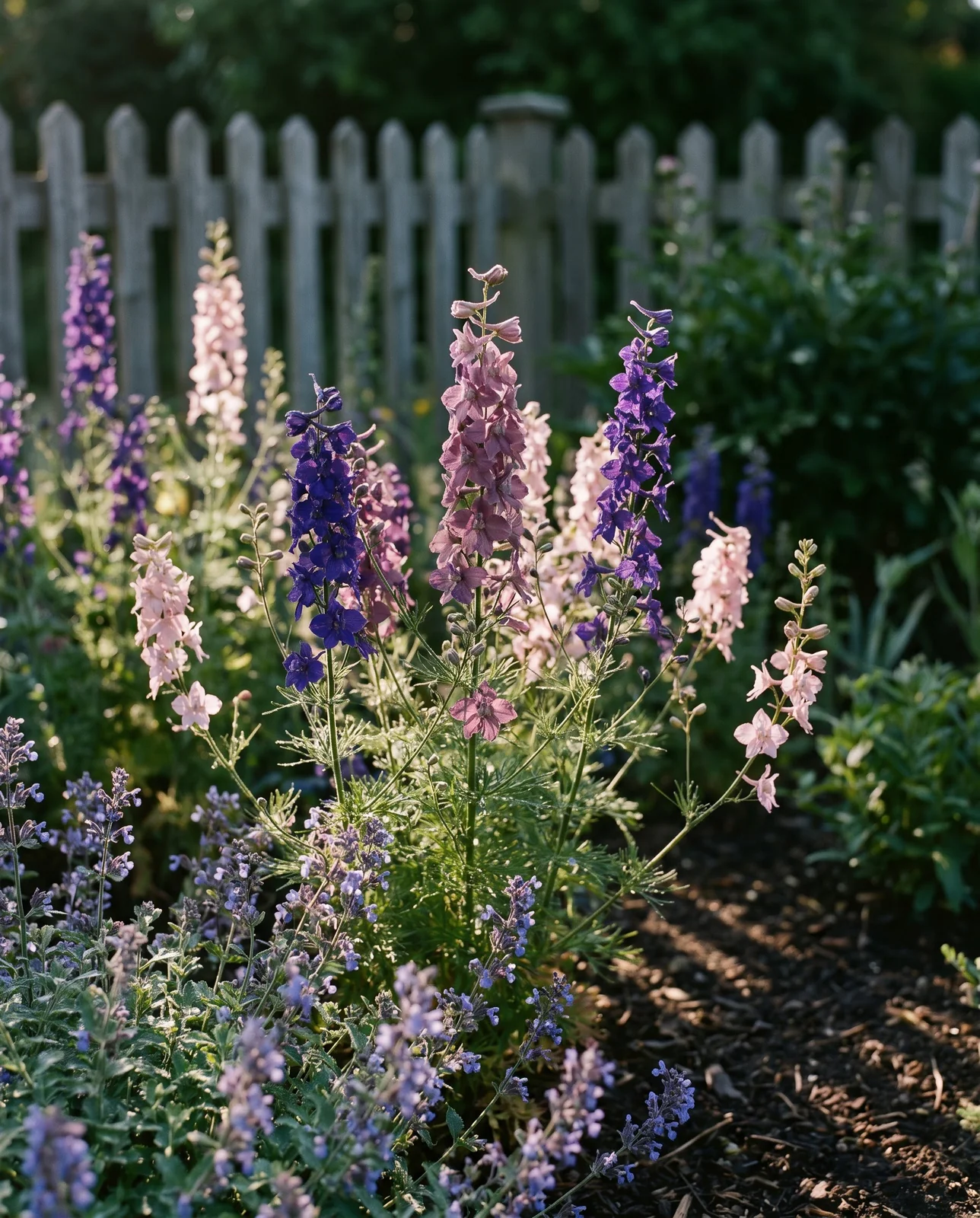
Larkspur is the upright cottage-garden reseeder of this group, a cool-season hardy annual that carries dense spires of blue, purple and pink over late spring and early summer in full sun and average, well-drained soil. It is also the one flower here without an extension profile of its own, so it is handled by the general hardy-annual pattern rather than by trial figures. Cold outdoor conditions soften its tough seed coat over winter and break dormancy naturally, which is what makes germination even once soil warms in early spring. The growth habit is upright over a taproot that resents disturbance, so seed goes straight into a settled autumn bed instead of into nursery flats, and there is no transplant shock to recover from. Scattered in autumn, larkspur builds an early root crown that stands up to rising late-spring temperatures far better than anything sown in March.
Poppies (Papaver rhoeas)
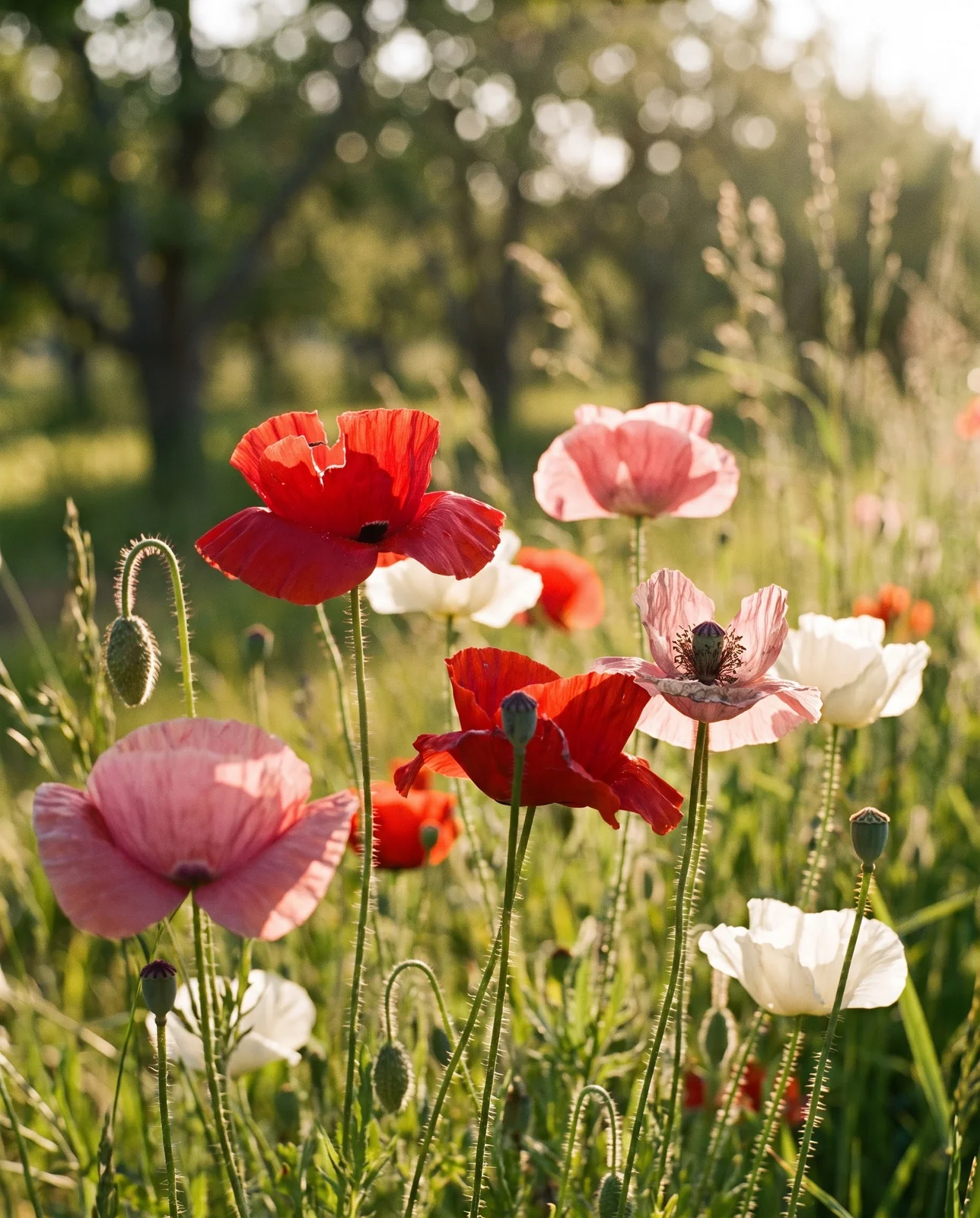
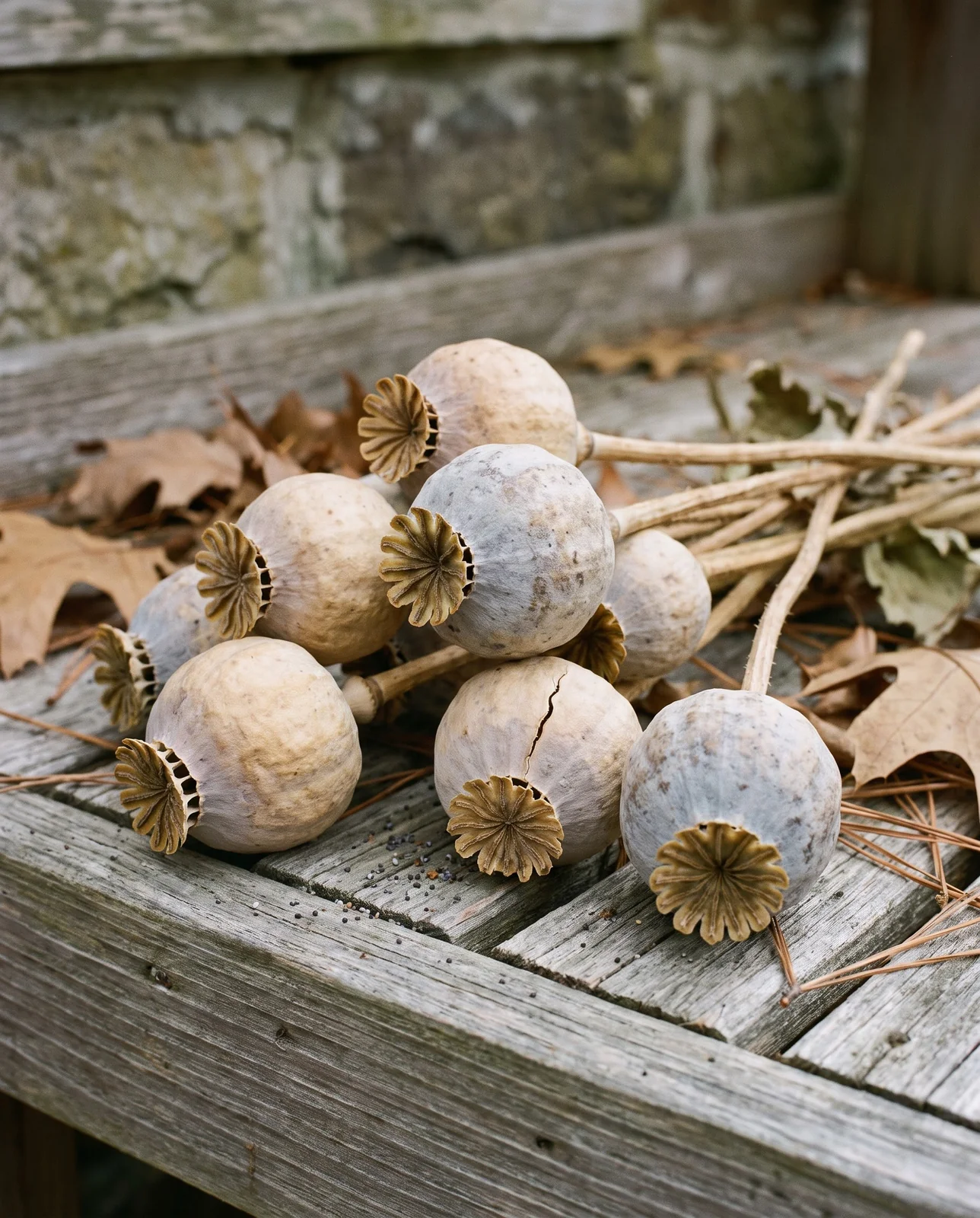
Corn poppy (Papaver rhoeas) is an annual native to Europe and Asia that wants full sun and fertile, medium moist, well-drained soil. Its seed is the most patient in this group: NC State Extension records corn poppy seed staying viable in soil for decades, with sprouting documented after 80 years of dormancy. Red flowers come through spring and summer and again in fall, though a single blossom lasts one day, so what looks like a long season is really a relay. When the capsule ripens it explodes and throws fine black seed across open ground, which is how an annual holds a bed year after year without being replanted. Poppy seedlings put down a delicate taproot and transplant badly, so autumn seed goes directly onto weed-free ground: rake the bed smooth, press the tiny seeds against the surface rather than burying them, and keep the site moist until cold weather settles in. Saturated winter ground is the one thing the roots will not take, since standing water rots them. Cut stems need their ends singed with a match immediately after cutting to seal the sap, a detail covered along with germination in how to grow and care for poppy. Corn poppies do best where summers stay cool, and light afternoon shade holds the late flowers where heat is fierce.
Love-in-a-mist (Nigella damascena)
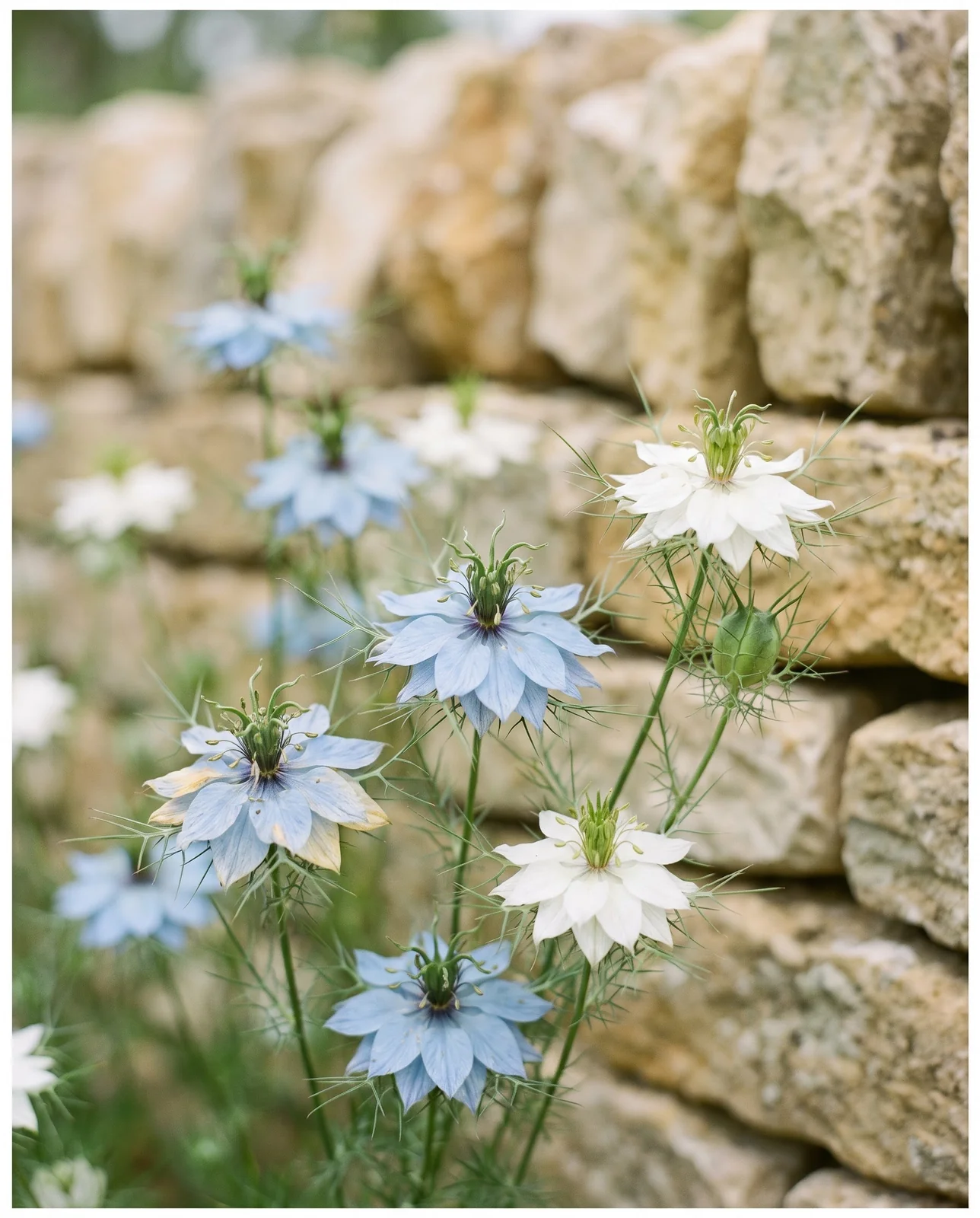
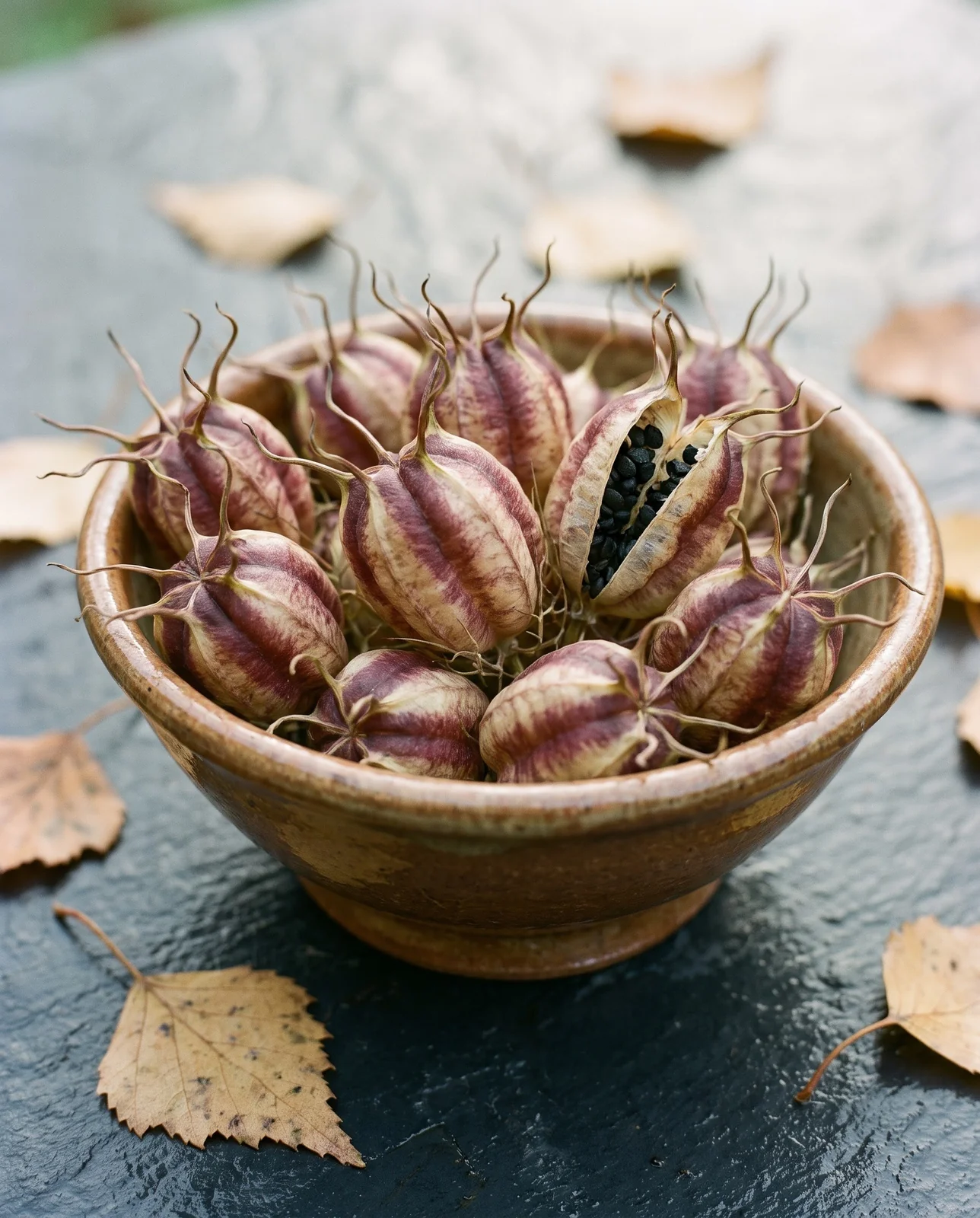
Nigella damascena, love-in-a-mist, matures at 2 feet tall with a 1.5-foot spread, carrying saucer-shaped pale blue flowers set in fine, feathery bright green foliage over full sun to light shade and well-drained garden soil. This is the flower that asks for autumn outright: NC State Extension puts fall sowing ahead of spring for it, because the plant behaves as a winter annual and its young seedlings are winter-hardy. It does not tolerate transplanting either, which leaves direct sowing as the only way to build a thick colony. Sown in fall, a stand of love-in-a-mist flowers from late spring into mid-summer, roughly 1 to 2 months for the colony as a whole. As the petals drop, the plants form egg-shaped, horned seed capsules up to 1 inch in diameter, covered in fine bristles; those pods dry, split, and reseed the border on their own. Miss the autumn window and seed still goes in during early spring as soon as the ground can be worked, an approach set out in how to grow and care for love in a mist. Where summers stay cool, repeat sowings every 3 to 4 weeks until mid-summer stretch the display further.
Bachelor’s buttons (Centaurea cyanus)
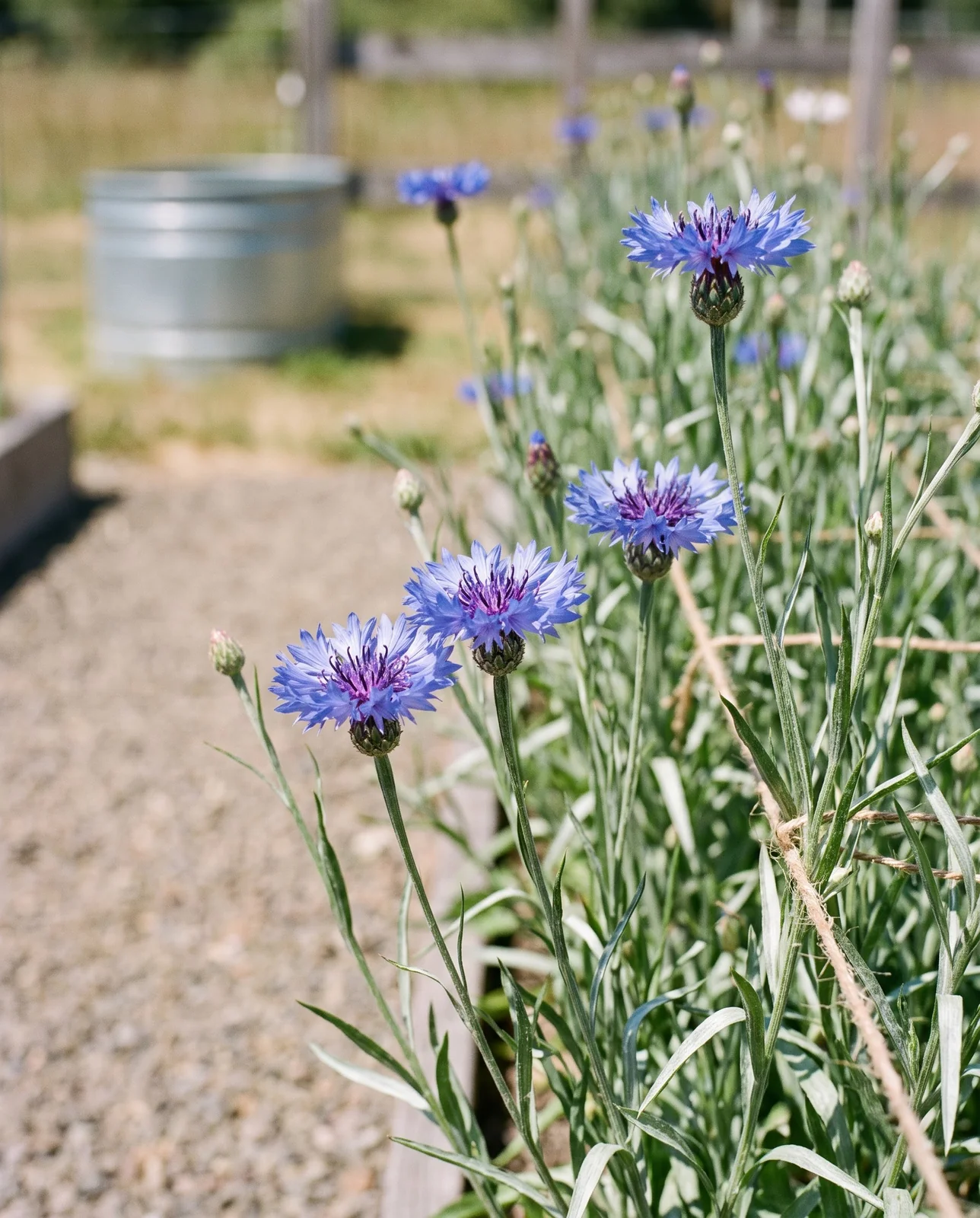
Cornflower (Centaurea cyanus) is a hardy, low-maintenance cool-season annual in the aster family that naturalizes in any sunny bed and flowers from late spring through summer. It is also the flower whose fall-sowing advice comes with a climate line drawn through it: NC State Extension has the seed sown in situ outdoors in fall in mild-winter climates, and started indoors 6 to 8 weeks before the last spring frost everywhere colder. The plant is adaptable enough to tolerate poor soil and no fertilizer at all, though it does better in medium-moisture, well-drained ground in full sun to light shade. Autumn-sown cornflowers come up on single stems that branch and carry a coat of woolly hairs, and those stems lodge once the flower heads gain weight, so they hold themselves up far better woven in among cottage-border companions than standing alone. Too much shade makes the flopping worse. The flowers cut and hold well in water, and the plants reseed hard enough that deadheading is what keeps them inside their allotted patch.
Sweet peas (Lathyrus odoratus)
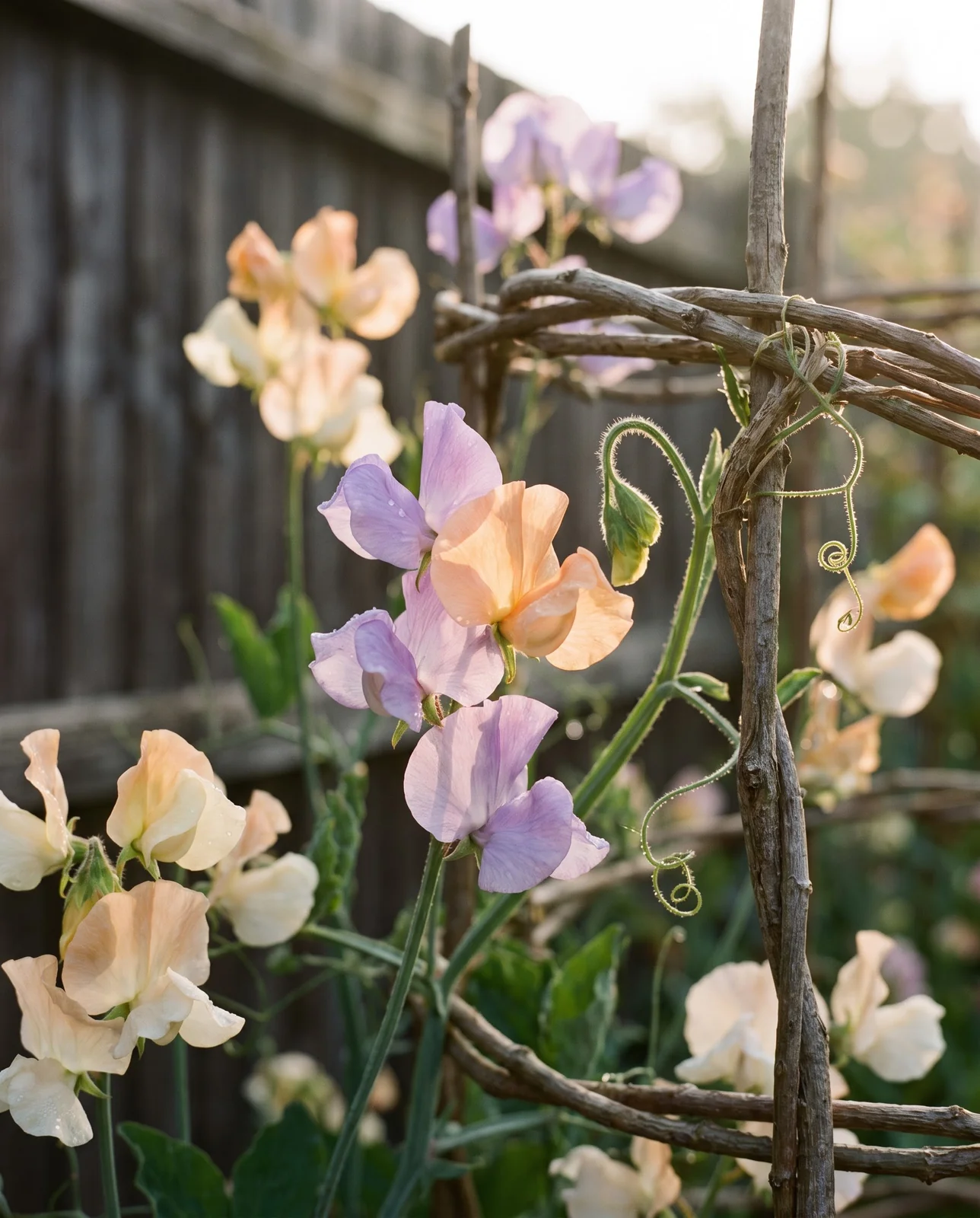
Sweet pea (Lathyrus odoratus) is a cool-weather annual in the legume family, native to the Mediterranean, climbing to 8 feet on support or standing as a 3-foot bush without it, and flowering from spring into early summer. It wants cool conditions, full sun, and rich, fertile, well-drained soil with plenty of organic matter in it, and it takes light frost and some shade in stride. It is also the one flower here where the sources do not line up. Mild-winter southern gardens have sown sweet peas in autumn for generations, letting the roots run through winter for flowers that beat the heat, while NC State Extension recommends planting in early spring with organic matter and mulch and the soil kept evenly moist. The zone line explains most of the gap: autumn seed in a soft winter gets a head start, while autumn seed in frozen northern mud rots before it roots. Whichever window you use, hot humid summers are hard on the plant, and flower production drops off fast once seed pods start to form, because pod development sends a hormonal signal that halts new blossoms, so deadhead steadily to keep the season running. Keep sweet peas well away from the vegetable rows, since the fruits and seeds are poisonous to people and should never grow beside edible peas, and move the planting each year rather than repeating the same spot, because rotation keeps soil-borne pathogens from building up in a bed of annual cut flowers.
5 Hardy Annuals for Autumn Sowing
Five hardy annuals suited to direct autumn sowing, matched to bloom habit, light and soil needs.
When to sow, by zone
The USDA Plant Hardiness Zone Map is the standard reference for judging cold suitability, dividing the country by average annual extreme minimum winter temperature into 10-degree Fahrenheit full zones and 5-degree half zones. That number decides whether autumn seed belongs in open ground or in a container. In warm-winter country, roughly Zones 7 through 10, hardy annual seed is direct-sown outdoors in October and November. Soil there stays workable and winter rarely drops far enough to kill a cold-adapted seedling. Seed takes up the late autumn rains, germinates in cooling soil, and holds through mild frosts as a root network or a compact rosette. Because those plants stay active below ground all winter, they resume top growth weeks earlier than spring plantings, as soon as March and April warm up.
Across Zones 3 through 6 the open ground works against you. Long freezes, heavy snow, and repeated freeze-thaw cycles heave the soil and lift shallow-rooted seedlings clean out of the bed, and autumn clay that stays waterlogged rots dormant seed before spring. Sowing too early is its own trap this far north: seed that sprouts in late summer warmth goes into a severe winter as soft growth and does not come out. Northern gardeners get far more surviving plants from winter sowing inside a protective plastic container, or from direct sowing in early spring the moment the soil can be worked, than from uncovered autumn seeding.
Autumn and Winter Sowing Calendar by USDA Zone
Sowing windows and methods by USDA hardiness zone, matched to how deep and how long the ground freezes.
Direct-sow vs. winter-sow (the jug method)
Direct sowing means putting seed straight into prepared ground where the plant will flower, with no move later. It suits everything in this list with a touchy root system, poppies, larkspur and love-in-a-mist above all, since a seedling lifted out of a nursery tray never fully recovers. The cost is exposure: birds work the surface, weeds start level with the flowers, a downpour can float seed into one corner of the bed, and saturated winter soil invites fungal rot. Preparation carries most of that risk. Clear the bed of weeds, rake the surface to a fine tilth so small seed has something to sit against, press fine seed firmly onto the soil for contact rather than burying it, and cover larger seed with the thinnest scatter of light compost to hold it in place.
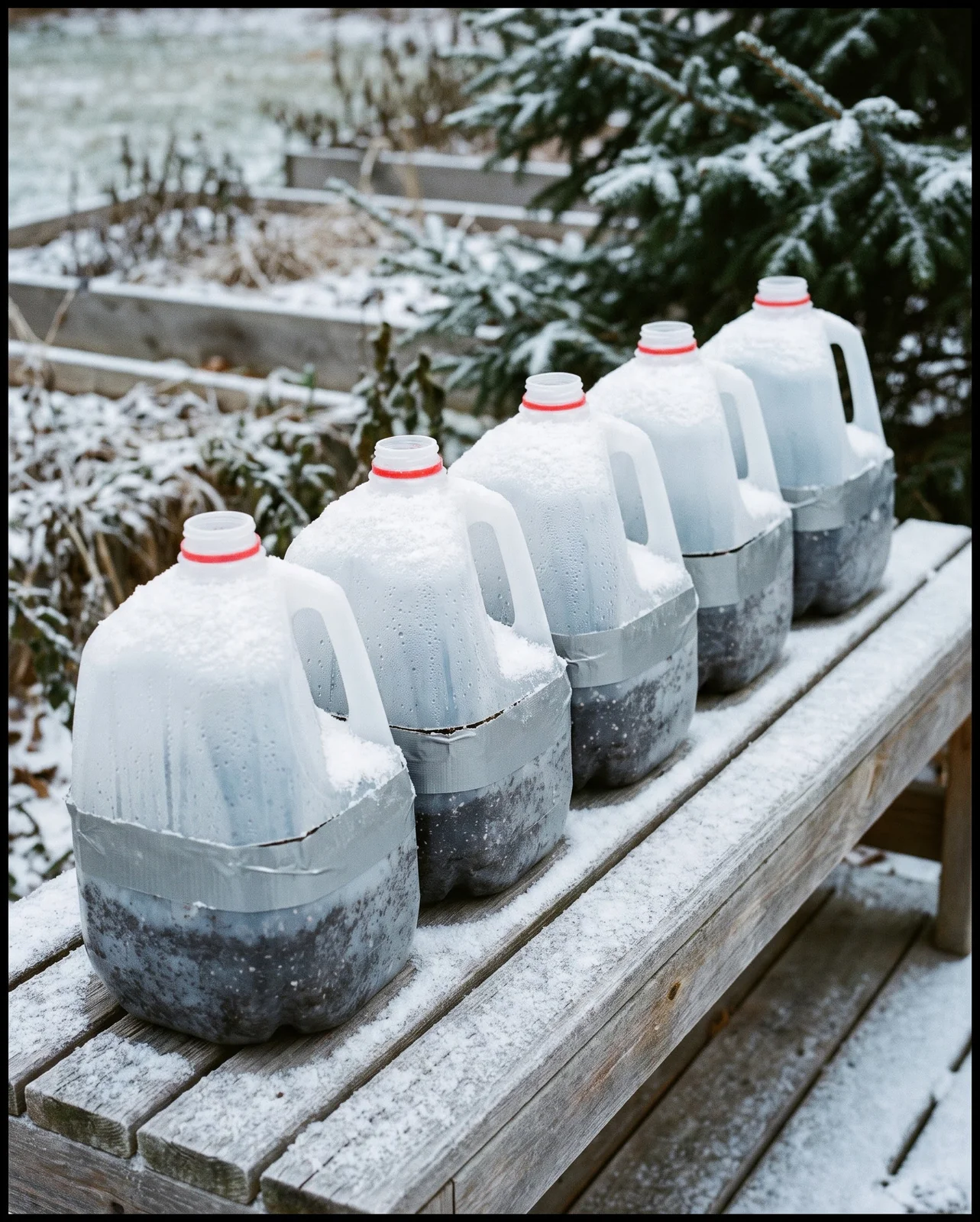
Winter sowing puts the same seed inside a clear or translucent plastic container, a recycled gallon milk jug being the usual choice, and stands it outside. The jug works as a small greenhouse: it supplies the same natural cold stratification as open ground with none of the heaving or washout. Cut drainage holes through the bottom of a clean jug, slice it horizontally around its midsection and leave a short hinge of plastic beneath the handle, then add 3 to 4 inches of pre-moistened, free-draining potting mix. Sow at the depth the seed calls for, close the cut seam with waterproof duct tape, and take the screw cap off for good so rain, snow and fresh air move through the opening. Set the finished containers in the open where they catch freezing temperatures, snow cover and natural sunlight rather than under an eave. When warm weather arrives in early spring, the jug holds humidity and warms its mix ahead of the surrounding beds, and the seedlings inside come up sheltered from wind, heavy rain and pests.
Choosing your autumn sowing method
Two paths from here, split first by hardiness zone.
Common mistakes
Sowing too early is the mistake gardeners make out of impatience with an empty border. Hardy annual seed dropped in August or early September, while soil temperatures are still high, germinates fast and pushes soft, leafy growth, and a warm late season can carry that growth all the way to flower buds before winter arrives. Those elongated, tender plants spend their stored reserves and then collapse in the first severe freeze. The sowing has to sit late enough in autumn that seedlings stay compact and ground-hugging, or stay unsprouted as seed until spring. Drainage is the other reliable way to lose a fall sowing. NC State Extension notes that wet soil rots corn poppy roots, and a heavy clay bed that pools through winter rain does the same to dormant seed, cutting off the oxygen and letting fungal decay take it before germination. Sow hardy annuals into light, well-drained soil in full sun, and where the ground puddles, raise the bed rather than arguing with it.
Skipping the thinning brings the third failure: a crowded stand that flops long before it flowers. Seedlings packed together race each other for light and come up spindly, with stems too thin to carry a flower head, and the crowding traps damp air where foliar disease starts. Thin fall-sown seedlings to their recommended spacing early in spring, before the roots knit together, and what is left grows stocky enough to hold itself up. Air movement matters most for sweet peas, where dense growth and humid weather bring powdery mildew, and for Centaurea cyanus, whose slender branching stems lodge readily even with room to spare.
Frequently asked questions
What flowers can I direct-sow in fall?
Hardy annuals whose seedlings take frost and whose taproots resent transplanting are the ones to sow straight into autumn ground: corn poppy (Papaver rhoeas), love-in-a-mist (Nigella damascena), larkspur, and bachelor’s buttons (Centaurea cyanus) where winters stay mild.
What is winter sowing in milk jugs?
Winter sowing is outdoor propagation in recycled plastic jugs with drainage holes cut in the bottom and the cap left off. The containers stand outside all winter, so seed gets natural cold stratification, while the plastic keeps heavy rain, pests and soil heaving off the seedlings.
Do hardy annual seeds need cold to germinate?
Many hardy annuals need a stretch of cold, moist conditions to break seed dormancy, which is what cold stratification means. Winter in open soil or inside an outdoor jug supplies it, and germination then comes up even and vigorous once the soil warms in early spring.
Why do some sources recommend planting sweet peas in spring rather than fall?
NC State Extension recommends early spring planting because wet, freezing northern soil rots the seed and the roots over winter. Mild-winter gardens, roughly zones 7 to 9, fall-sow successfully, while colder regions get higher survival from an early spring start.
How do I prevent winter-sowing containers from overheating on warm late-winter days?
Check the jugs during an unseasonably warm, sunny spell in late winter. The screw cap stays off for good, and if temperatures spike you can slice extra slits near the top of the jug for more airflow. Water the potting mix if it has started to dry out.
More About Best & Compare
Best flowering shrubs for full sun
Deer-resistant bulbs that hold up to squirrels too
Best flowers for drying, and how to keep their color
Frost-tolerant flowers: what survives a cold snap
Best fall flowers for pots and porches
Flowers that bloom all summer long
Perennials to plant in fall, and what to leave for spring
Fall planting by region: your zone-by-zone window
Fall flower bed ideas: 3 plans for sun and shade
Enjoying our flower guides? Add YourFlowersGuide as a preferred source on Google — it helps more readers find us.
Add to Preferred Sources