What sweet violet is, and the scent it is grown for
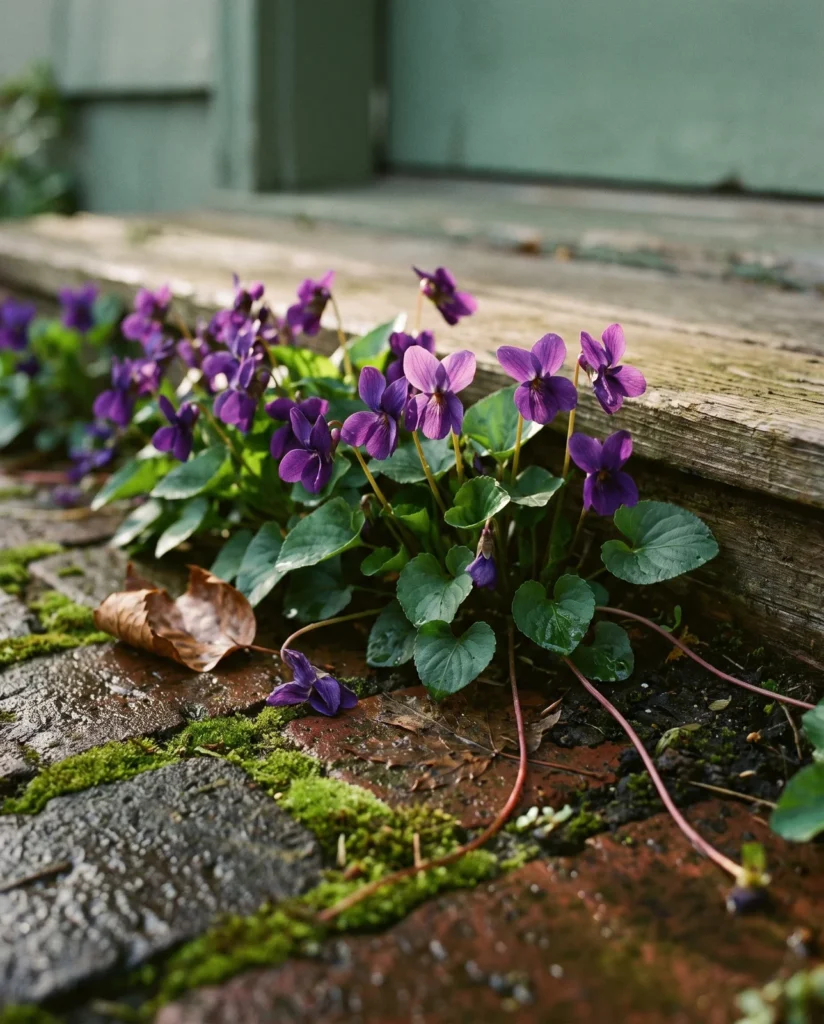
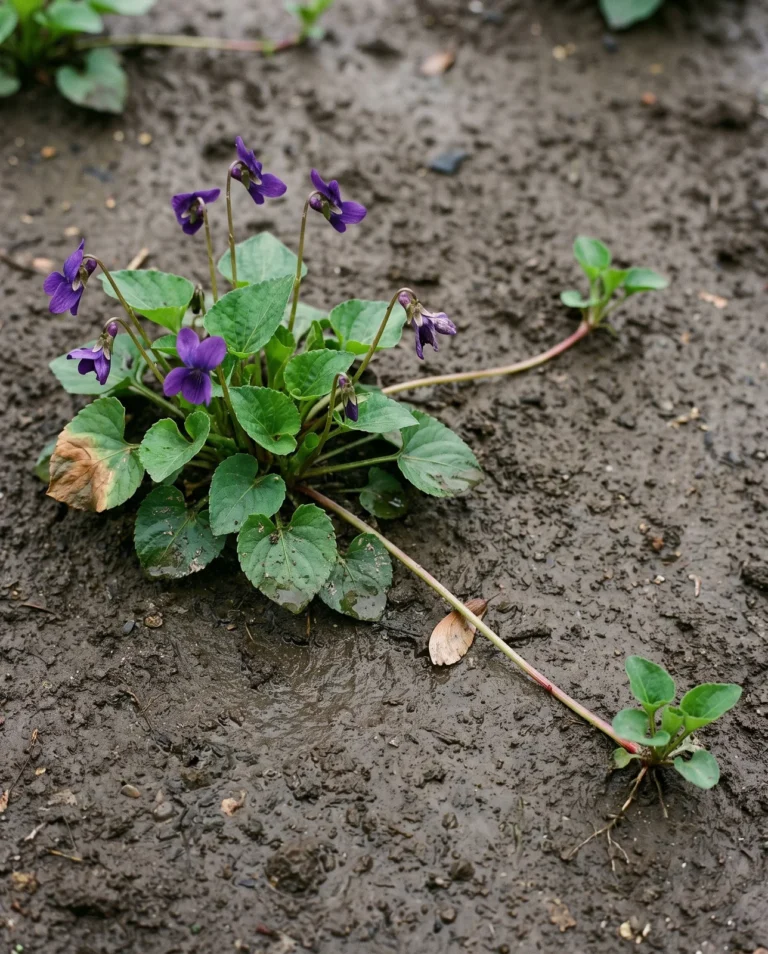
Sweet violet is a low, spreading perennial from Europe and western Asia, grown for centuries for a scent strong enough to build a trade on. It makes rosettes of heart-shaped leaves, stands 4 to 6 inches tall and about as wide, and takes new ground on long stolons that run across the soil surface. Flowers are usually dark blue or purple, with lilac, rose and white forms in cultivation. The species name odorata is Latin for scented. It is not native to North America, though it naturalized here long ago, and people have grown it in one culture or another for more than 2000 years.
The fragrance built a small industry and then priced itself out of one. Violet flowers were sold as nosegays on the streets of London, and the scent went into perfumes, candies and liqueurs. Extraction is the problem: more than a ton of blossoms yields a single ounce of essence, so violet-scented soap and perfume today is usually synthetic or built from orris root. A nineteenth century breeding boom left behind named violets that are still sold. The plant is now grown mostly for its edible flowers or as a historical curiosity.
Not everyone smells it the same way. The compound carrying the violet note is ionone, which takes its name from the Greek word for violet. A single genetic difference in the olfactory receptor OR5A1 decides how it lands. Some people get a pleasant floral note, while others, about a hundred times less sensitive, get something sour and pungent. A nose that finds violets faint or sharp is reading the same flower differently.
The violet in your lawn is probably a different species
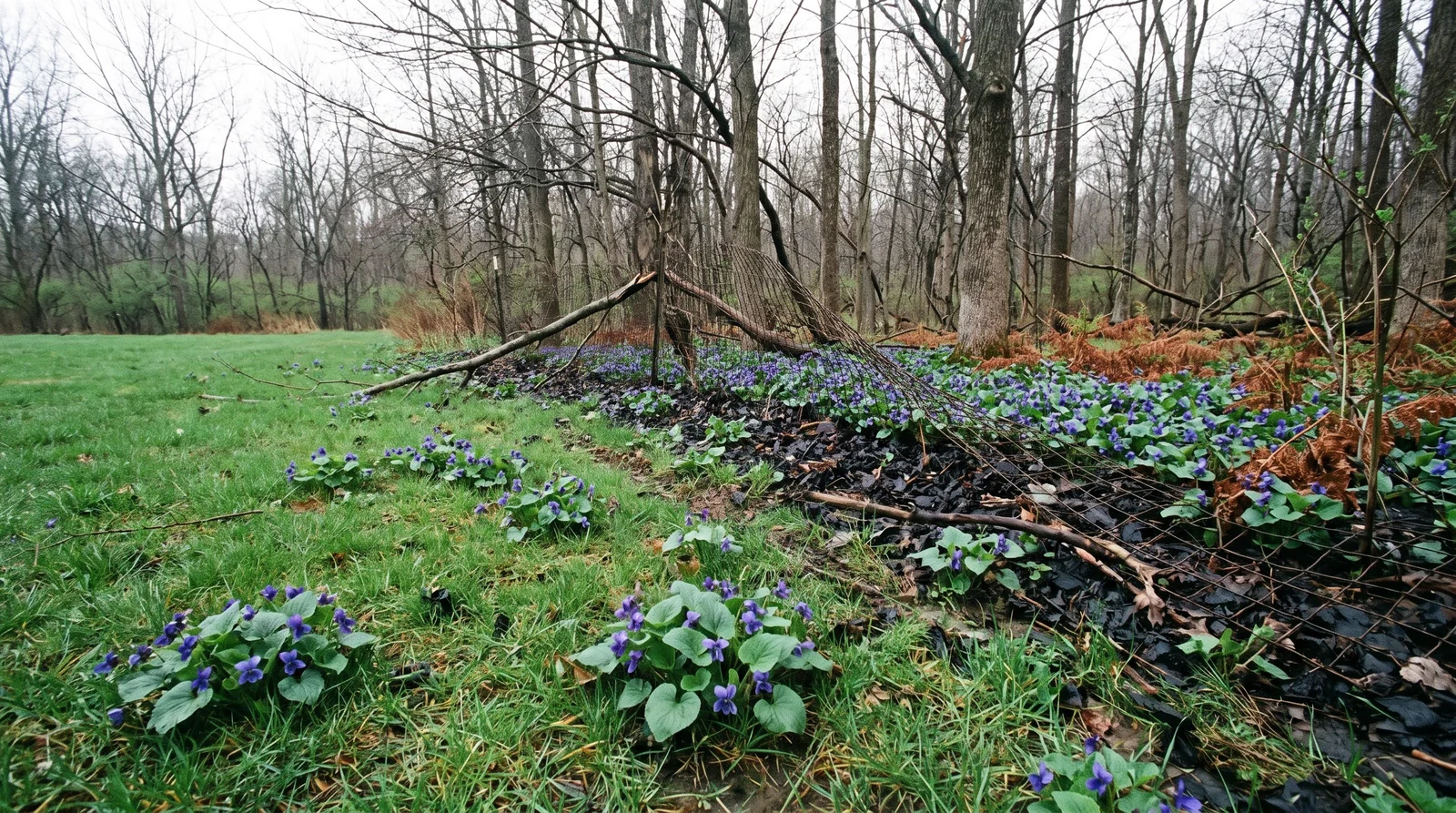
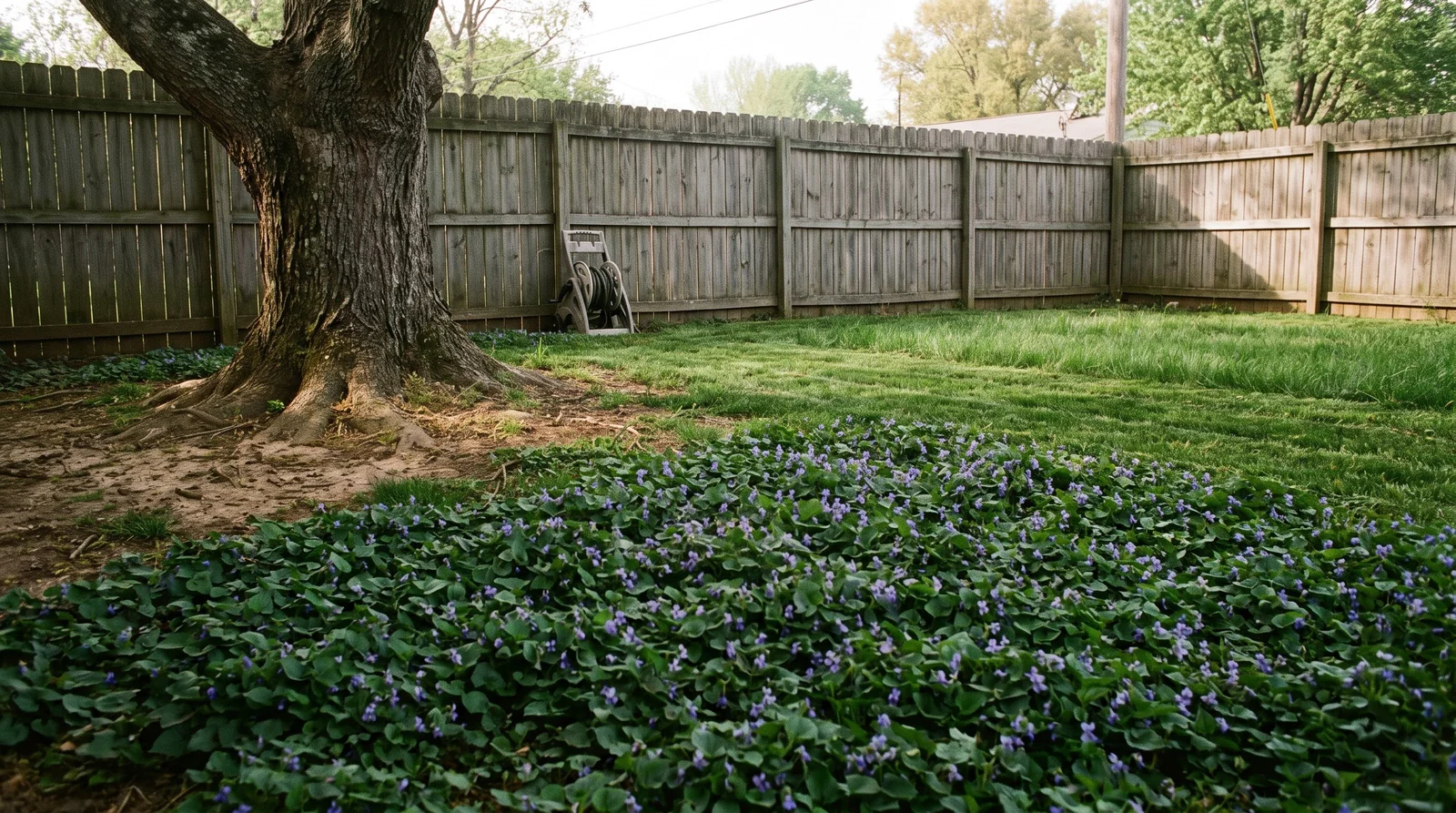
In most of the United States, the violet spreading through a lawn is common blue violet, a native species with no scent at all. It is a rhizomatous perennial of woods, thickets and streambanks, happiest in shade, with a range covering 38 states and districts. It turns up in lawns under trees because moist shade is what it wants. Several other natives keep it company and answer to the same name: downy yellow violet, Canada violet and prairie violet in Iowa, woolly blue violet and confederate violet across Indiana.
The two plants swapped places on the map. Sweet violet came from Europe as a garden plant and escaped, while common blue violet was here first and serves as the native substitute for it.
The quickest test is your nose. The weedy natives grow from thick rhizomes and carry no fragrance, so scent settles it, and even the spotted violet sold under old garden names is a form of the scentless native. A violet with no smell in a shaded lawn in the eastern half of the country is almost certainly the native one, and it is the harder of the two to remove.
Telling the violets apart
The violet name covers several different plants that show up in American gardens. Each card carries the one detail that settles which one is in front of you.
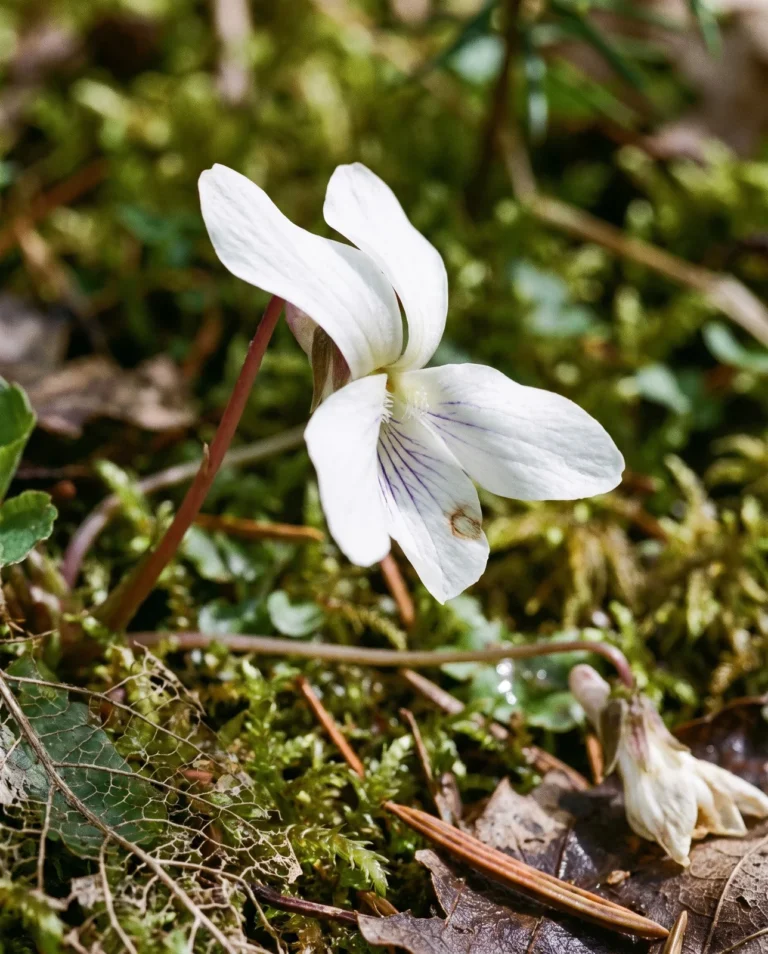
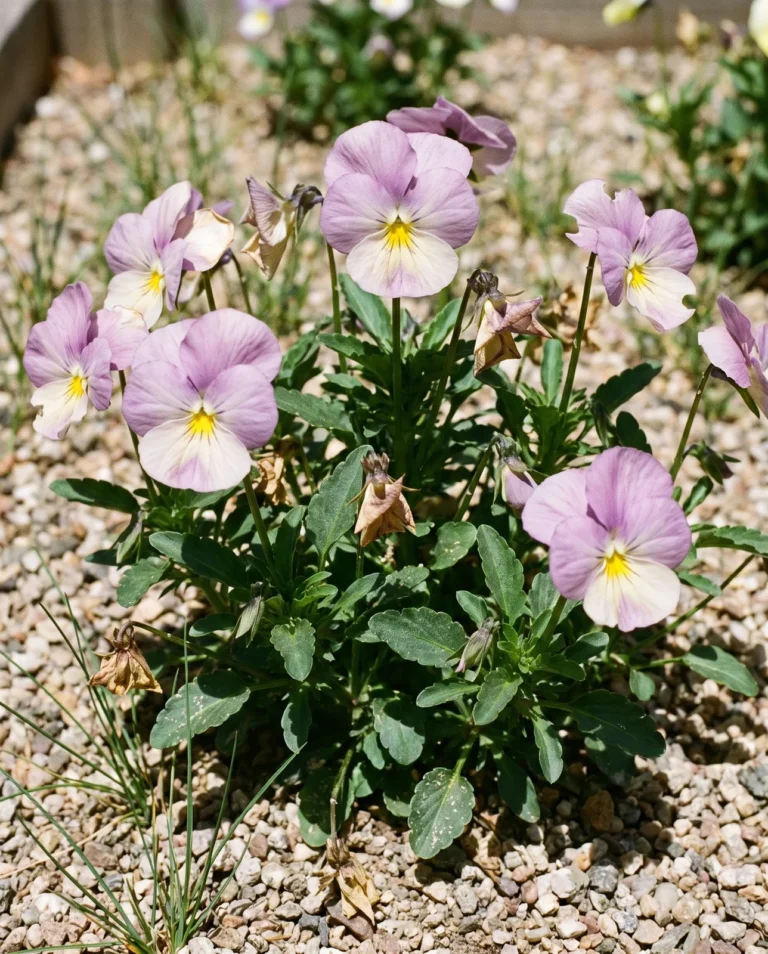
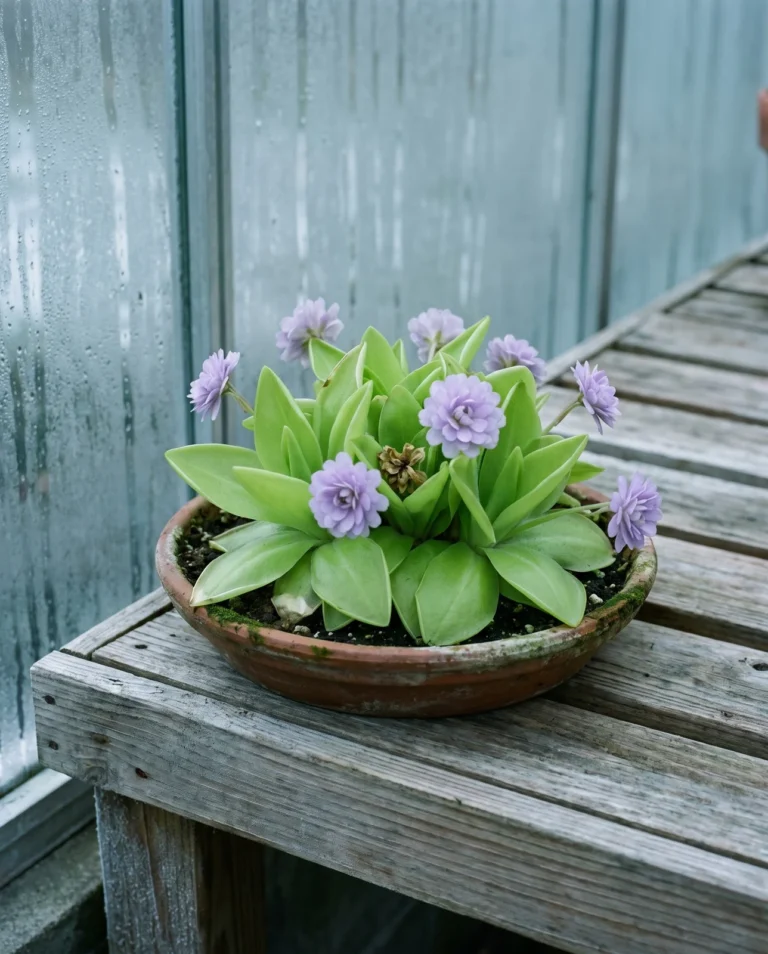
African violet is not a violet at all
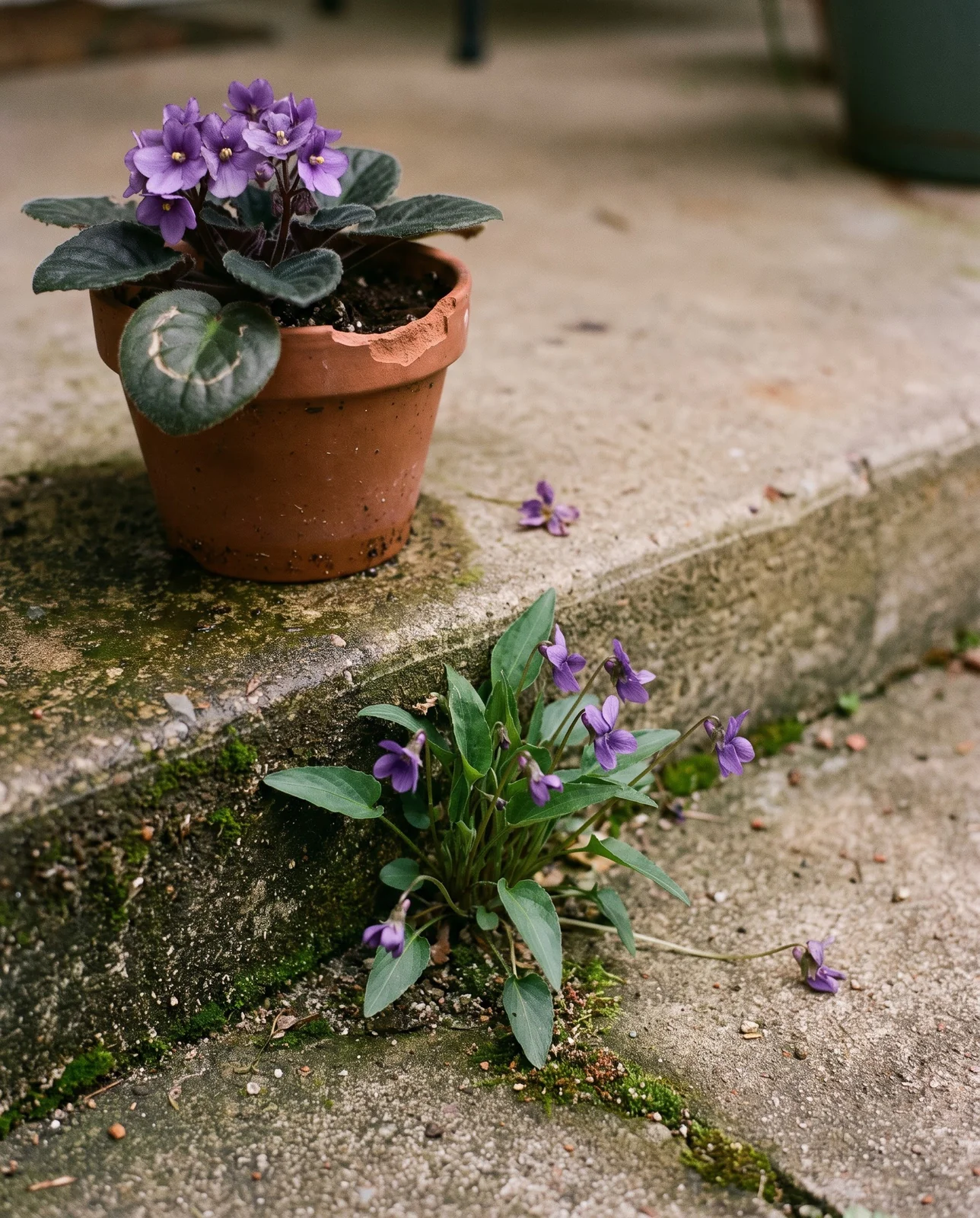
African violet belongs to a different plant family on a different continent. It is a gesneriad, about ten herbaceous perennials from Tanzania and adjacent southeastern Kenya, moved out of their own genus by molecular work into Streptocarpus section Saintpaulia, with horticultural naming following in 2015. True violets are Viola, in the family Violaceae. The difference has an edge you can taste: the common garden violet can be eaten, and African violet cannot. The plants genuinely related to sweet violet are the other violas, including garden pansies.
The name travels further than the family does. Violet is a color as well as a plant, and the word has attached itself to a long list of unrelated species. Red African Violet, German Violet, Persian Violet, Flame African Violet, Kenya Violet and Usambara Violet are all common names, and none of them belongs to Viola. Nothing that holds true for the violet family carries over to the plant on the windowsill.
Can you eat sweet violet, and which parts
The flowers and leaves are edible, and that goes for both of the violets most readers have in front of them. Young leaves of the lawn violet go into salads or cook down as greens, and the flowers go onto salads and desserts. Half a cup of violet leaves carries as much vitamin C as three oranges, and the taste ranges from nutty and pea-like to sweet and strongly aromatic.
The limits are narrower than the version that circulates online. Roots are out: on common blue violet the flowers and leaves are eaten and the roots are not. Sweet violet leaves carry vitamins A and C and work as a laxative in quantity, so a garnish is a different proposition from a bowlful. Seeds, rhizomes and the yellow-flowered violets come up in foraging writing with no university or poison-center source behind them, and those parts are best left alone.
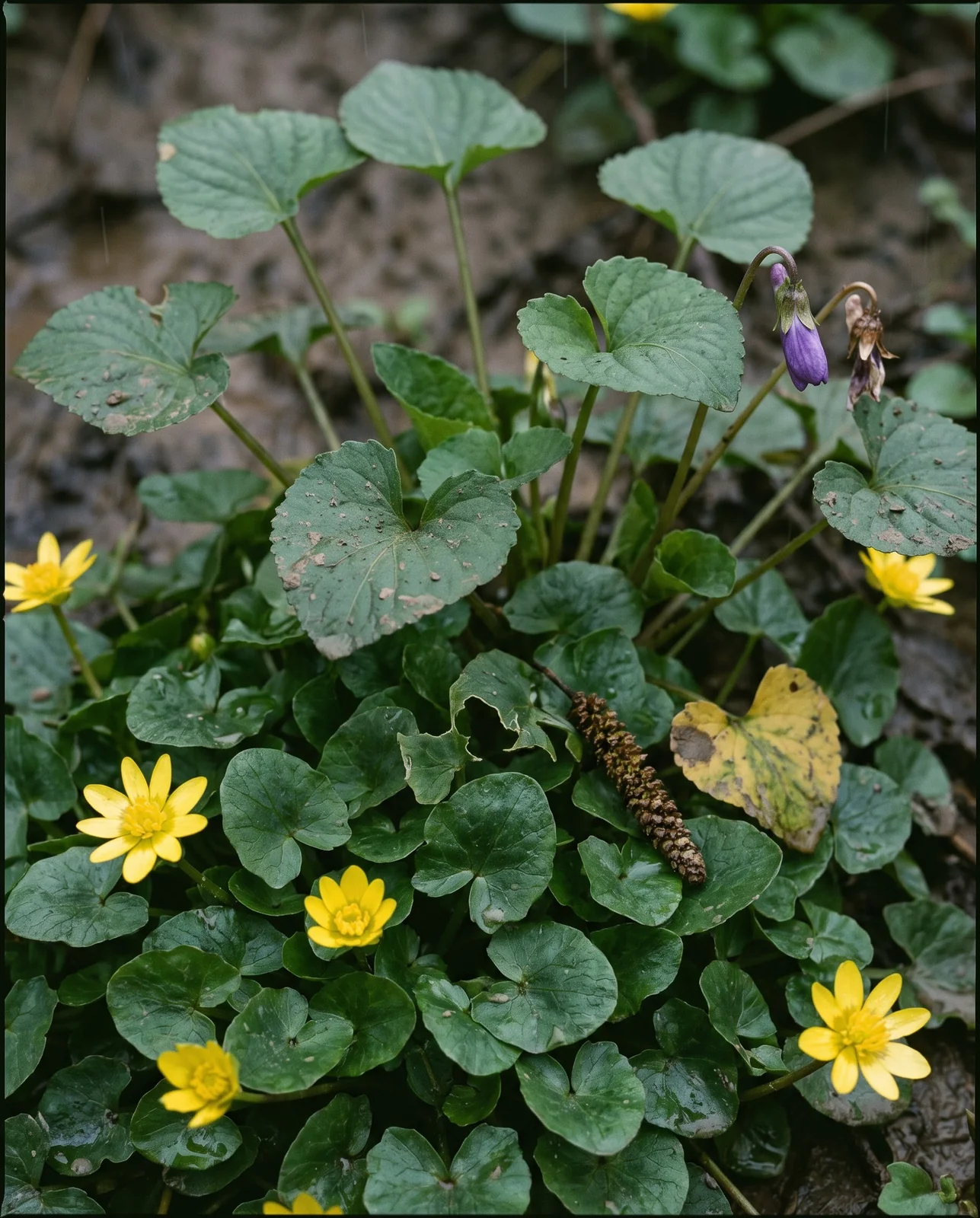
Identify before you pick anything. A sweet violet flower has five petals, the lowest one larger than the rest and carrying a spur, and the flower runs about half an inch across. Out of flower it is harder, since violet leaves can pass for lesser celandine, which is toxic; the unopened flower pods, new or spent, confirm the plant before you harvest. Wash what you pick, and never take violets from a lawn that has been treated or from a roadside verge, since violet control in turf runs on herbicides sprayed across the whole surface.
What violets were traditionally used for
Violets have a long history in household medicine, none of it tested. Leaf and flower syrup went to coughs, congestion and sore throats, and the plant was a remedy for whooping cough. Tea from the whole plant went to headaches, body aches and digestive upset, and the flowers went into a bath or skin wash. Claims that the plant treats cancer rest on no study at all.
Weed or garden flower, and why it spreads
Both descriptions fit. Sweet violet is planted for its fragrance and for the ground it covers in shade, and the same spreading habit turns weedy where the ground suits it. The native violet in American lawns is the harder case. Turf specialists in Pennsylvania rank it among the most difficult weeds in lawns and turf, and in Ohio it counts as one of the most notorious lawn weeds there is. It shrugs off many of the herbicides thrown at it, resists deer, grows through spring and fall, and fades out in the heat of summer.
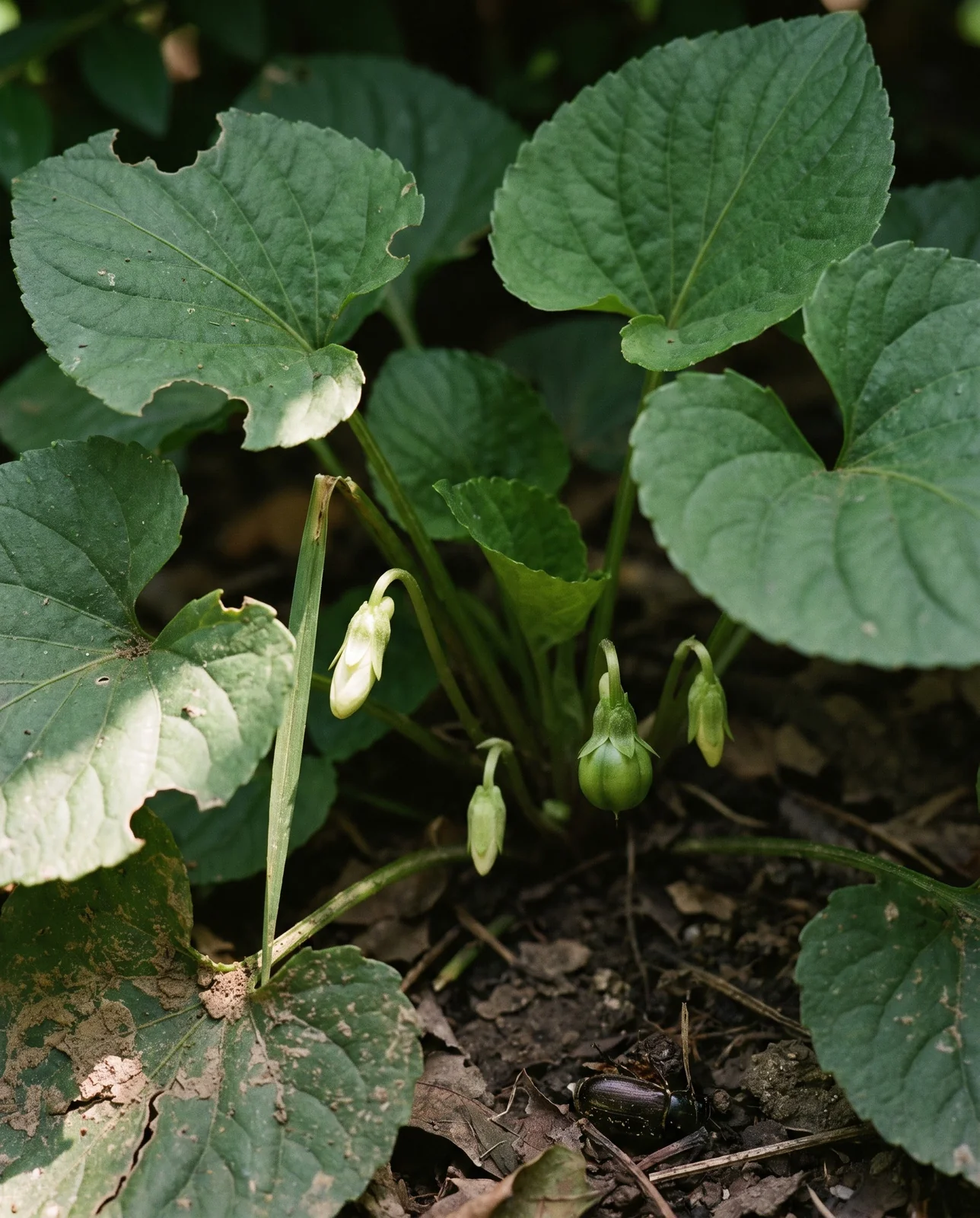
Removal fails partly because the plant keeps setting seed from flowers that never open. Viola is the largest genus of cleistogamous plants: one plant carries both open flowers built for cross-pollination and closed flowers that pollinate themselves without opening at all. The two kinds arrive in sequence through the season in most northern hemisphere violets, and in sweet violet short days bring the open flowers while long days bring the closed ones. The showy spring bloom is followed by small petal-less summer flowers that set seed in capsules shaped like tiny green globes. A patch that looks finished for the year is still making seed.
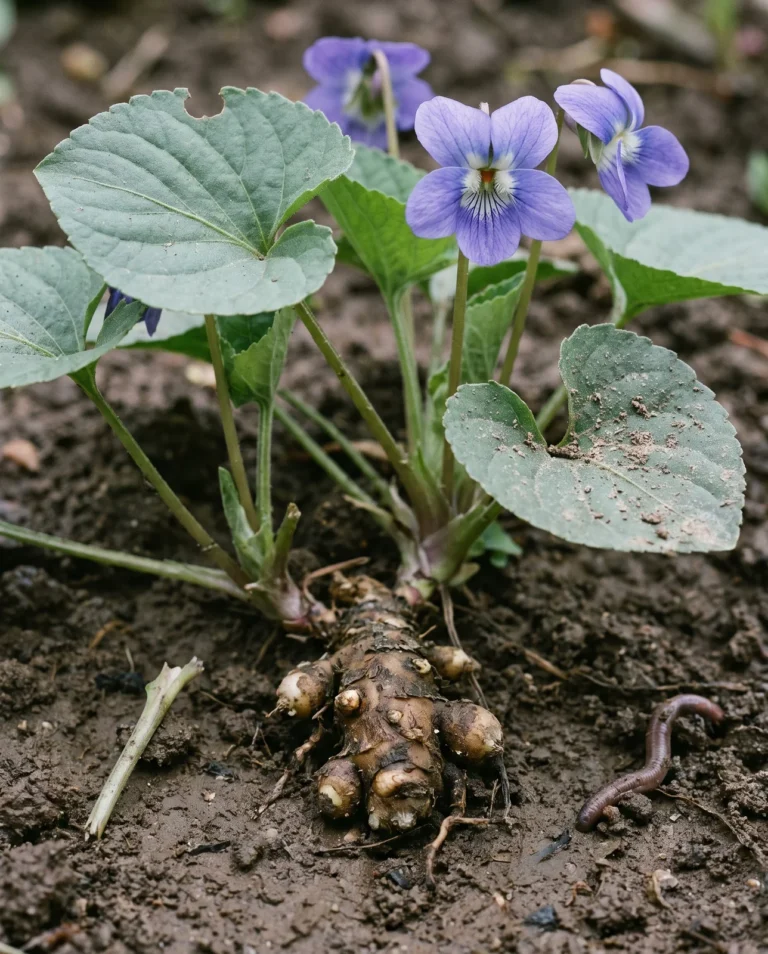
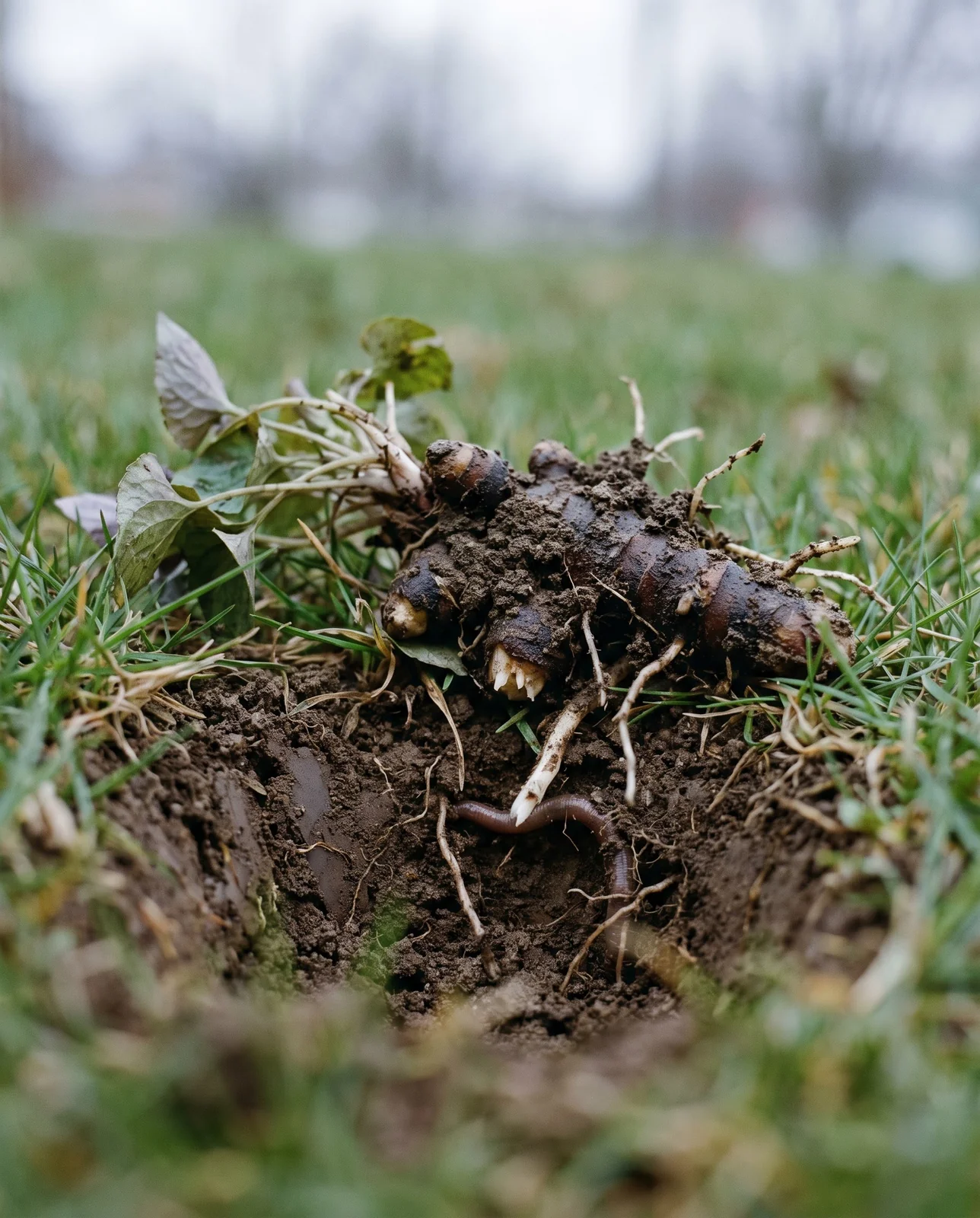
Underground, violets are built to survive being pulled. Fleshy rhizomes hold enough stored energy to regrow, and a thick waxy cuticle on the leaf blocks herbicide from getting in. The lawn species adds to that by seeding itself freely wherever the soil is fertile and moist, without running at all. Whether any of it adds up to invasive is a separate question. Sweet violet came in from Europe, and one state calls it invasive. That call traces to an Oregon native plant society in 2008 and to no agency or statute. Elsewhere it is non-aggressive and easy enough to contain. The case for leaving violets standing is the butterflies, since the leaves feed the great fritillaries.
How to get violets out of a lawn
Getting violets out of a lawn means taking the rhizome, and taking all of it. Hand removal works only when the rhizomes come out of the soil with the plant, so lift every root and stem, since anything left behind grows back. On a small patch, digging is the most effective thing you can do, and it takes out as much of the root system as the ground gives up. The rhizomes cooperate: they are short, about the size of a pinky finger, and they sit near the surface where they chop out one at a time. Scale is what defeats the approach, because across an established lawn hand weeding stops being realistic.
For a lawn full of them, the active ingredient matters more than the brand. Triclopyr works best, with dicamba, 2,4-D and MCPP also in use. Rate is where products fail: the recommendations land above half a pound per acre, and not every product containing triclopyr delivers that much at its label rate. Spray mid-spring to early summer, mid to late fall, or both, and only while the weeds are actively growing. A fall application followed by a spring one is the pairing to plan for, and two treatments spaced 3 to 4 weeks apart do the same job. Preemergence products do nothing here.
Plan on more than one season. Repeat the application across the growing season and across several years before wild violet gives way, since the plants are joined underground by rhizomes. Treated violets yellow and look sick for a few weeks and then recover, broad-spectrum products included. Mowing often reduces wild violet while fertilizing does not, and the plant moves into thin, shaded turf in the first place.
Keeping sweet violet where you planted it
Keeping sweet violet inside a border comes down to catching the seed and thinning the patch. Pick the capsules off after flowering, before they dry and scatter, and that one habit is the difference between a patch and a colony. The plant travels on long stolons across the soil surface and by self-seeding, and it stays easy enough to contain while someone is watching it. Low-growing violets naturalize into a lawn readily, while the longer-stemmed cultivars bred for cutting are damaged by the mower and do better in a border or a rock garden. Thinning is straightforward: lift and split the crowns, which shrinks the patch and gives you plants for somewhere else.
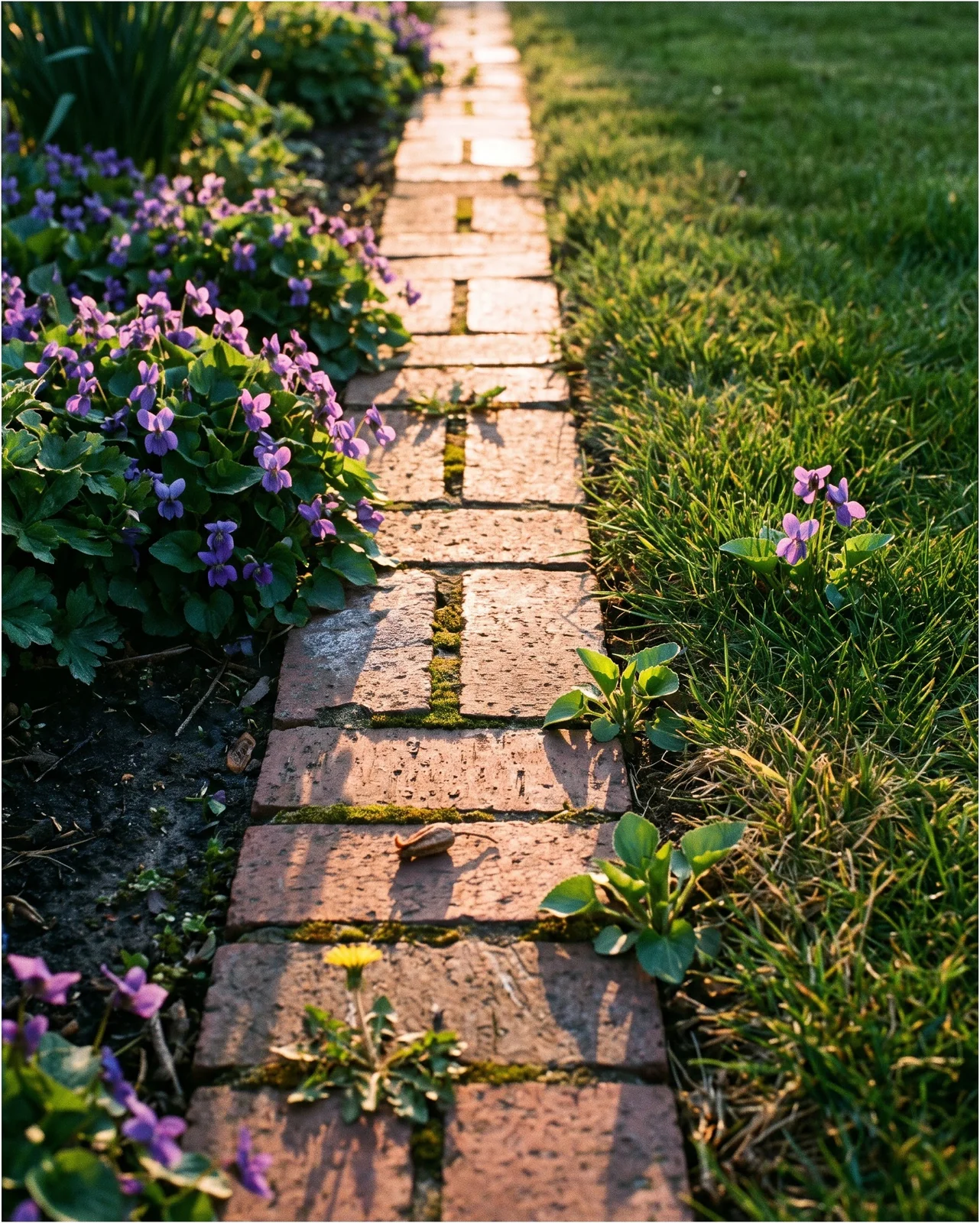
Where and how to grow sweet violet
Sweet violet wants cool, moist ground and shade for most of the day. Full sun suits it near the coast and in cool-summer areas; everywhere else give it part to light shade, and count it among the few perennials that will take dry shade. Water it regularly through the summer, and expect rabbits and deer to leave it alone. That tolerance puts it among the more dependable flowers for a shaded bed.
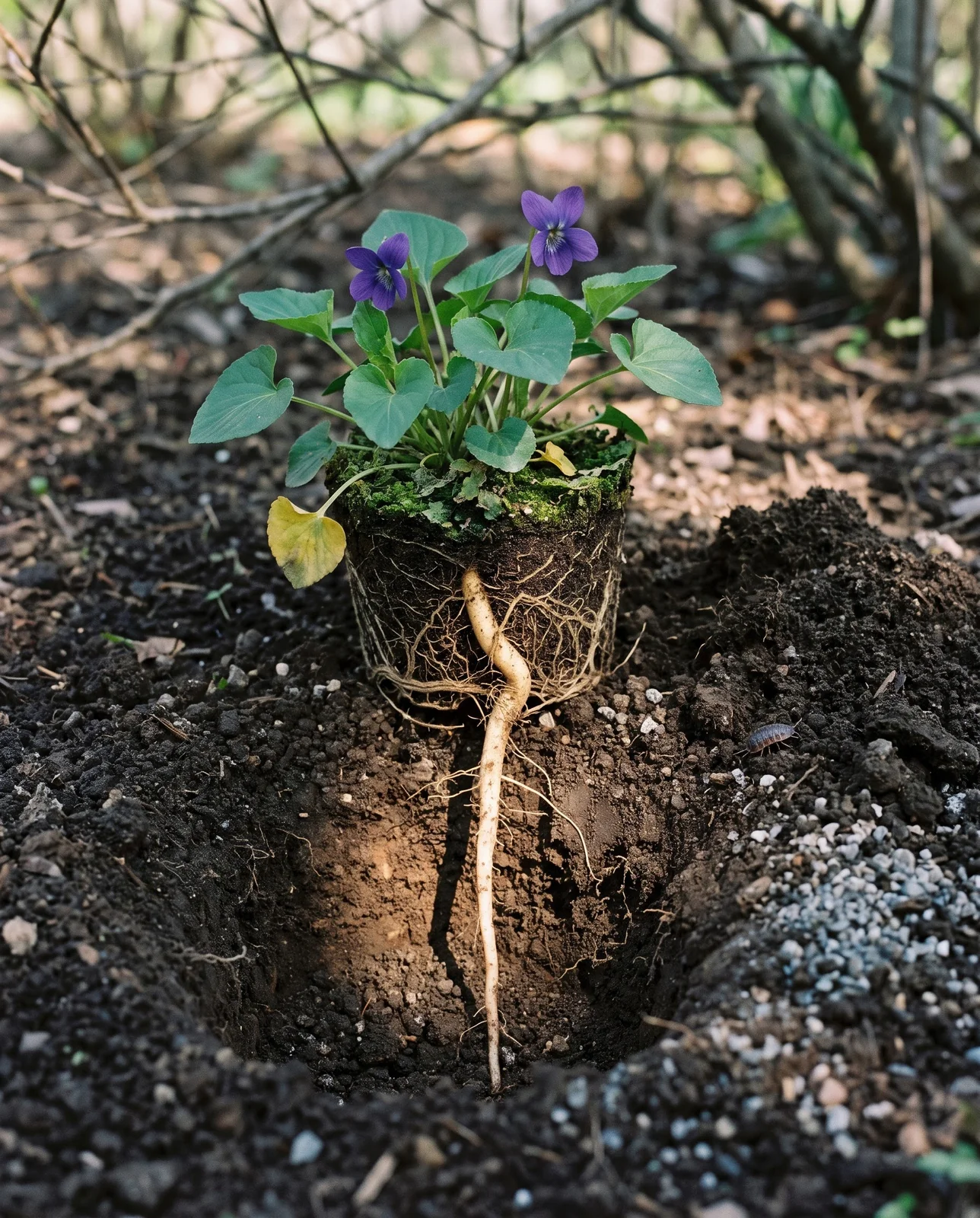
Prepare the ground deeper than the size of the plant suggests. Sweet violets run long taproots, so cultivate the soil well down; that same taproot is why potted plants are short-lived. Aim for a soil pH of 6.0 to 6.5, though the plant takes a wide range and strongly acid ground can be limed. Set plants in groups of three to five, spaced 4 to 6 inches apart. Go easy on feeding: unless the soil is genuinely lean, fertilizer gives lush foliage and few blooms. Cut the plants back in late fall and feed in earliest spring.
Propagation runs on division and seed, with seed sown in late summer. Divide in early spring or late fall, cutting the plants back before you lift them, or wait until late spring when flowering is over. The gentlest route is to peg a runner down until it roots and then cut it loose from the parent, since the new plant is established before it is separated.
Why the hardiness zones disagree
The published zone numbers for sweet violet disagree because they are not describing the same plant. NC State runs it from zone 4a through 9b, Cornell narrows it to 5 through 8, and commercial listings stretch it to 3 through 9. The species itself is hardy to zone 4, around 20 degrees below zero Fahrenheit. Many named cultivars will not survive winter lows below zero, and most will not bloom well where temperatures drop under 10 degrees.
That distinction changes what you buy. In a cold garden the species is the safer purchase, and a named cultivar may come through the winter and still refuse to flower. Parma violets sit at the tender end of the group and want winters that stay above 10 degrees Fahrenheit. Sweet violet needs no winter freeze and no dormant period, and inside its range a good cover of snow gives enough insulation. The native violet in the lawn is hardier at the cold end, at zones 3 to 7, so advice written for one plant does not fit the other.
When sweet violet blooms
Sweet violet flowers in spring, and the window is a short one. Bloom runs mid to late spring, with dark purple flowers opening on short stems in April or May in a zone 6 garden. Where the plant is genuinely happy it may flower again in fall, or even during a midwinter thaw. That second flush is a bonus of a settled planting rather than something to plan a season around.
The violet in the lawn keeps a different calendar, which matters in a yard that has both. Common blue violet opens from February to May in North Carolina, and its flowering carries as far as August, well past the spring window for the fragrant species. A violet still in flower through high summer in an eastern lawn is on the native plant's schedule.
Sweet violet varieties worth telling apart
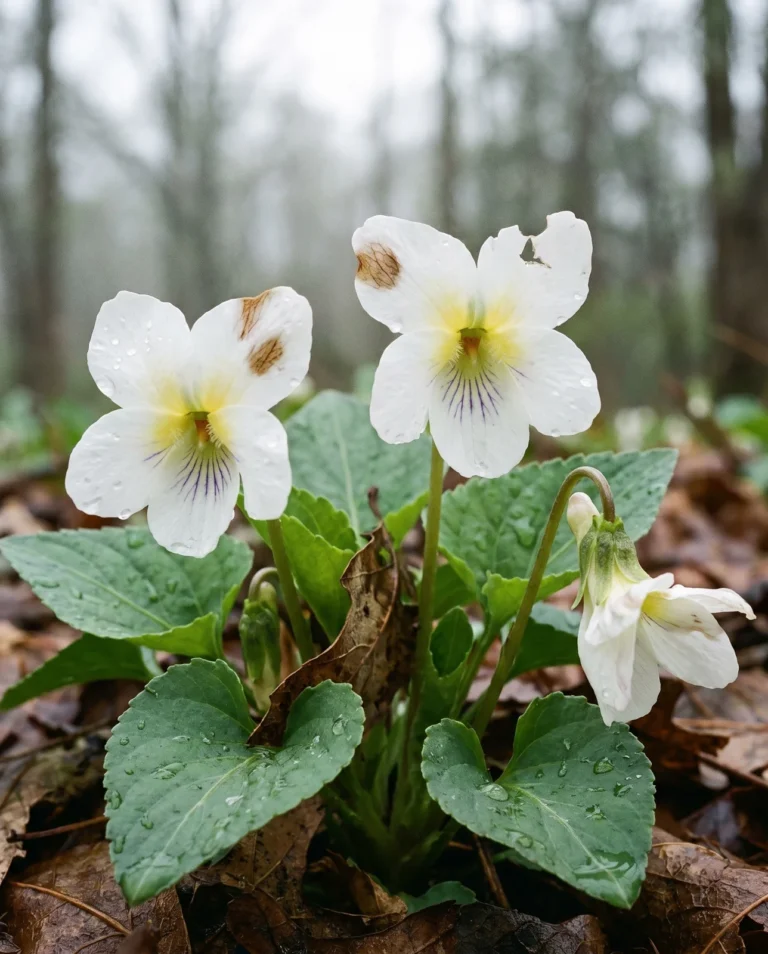
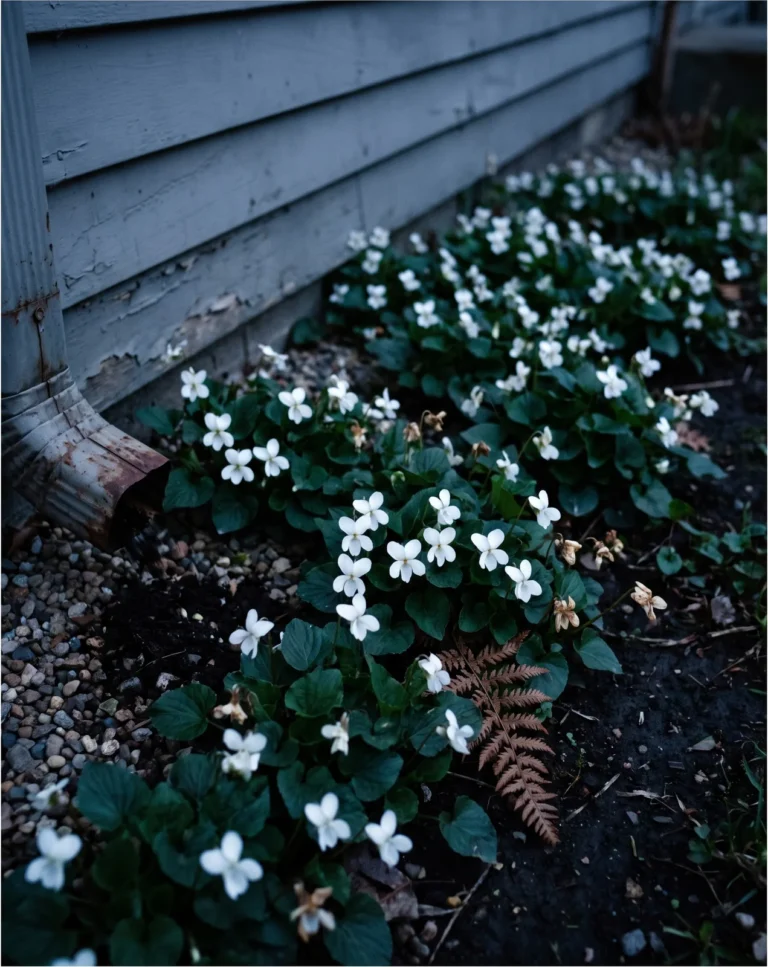
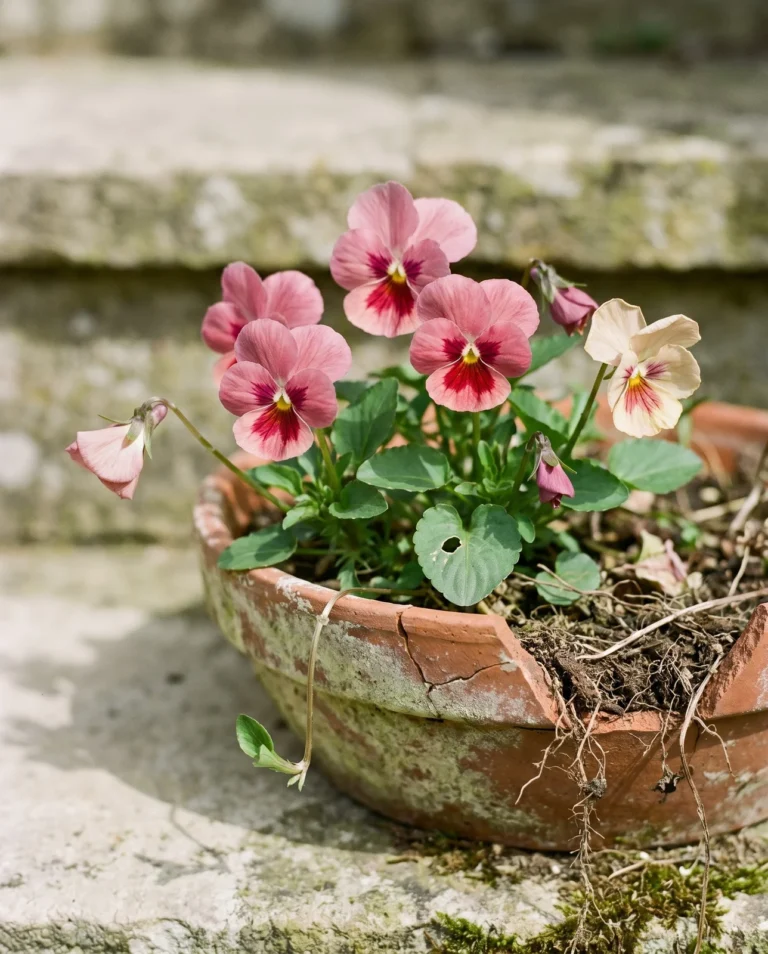
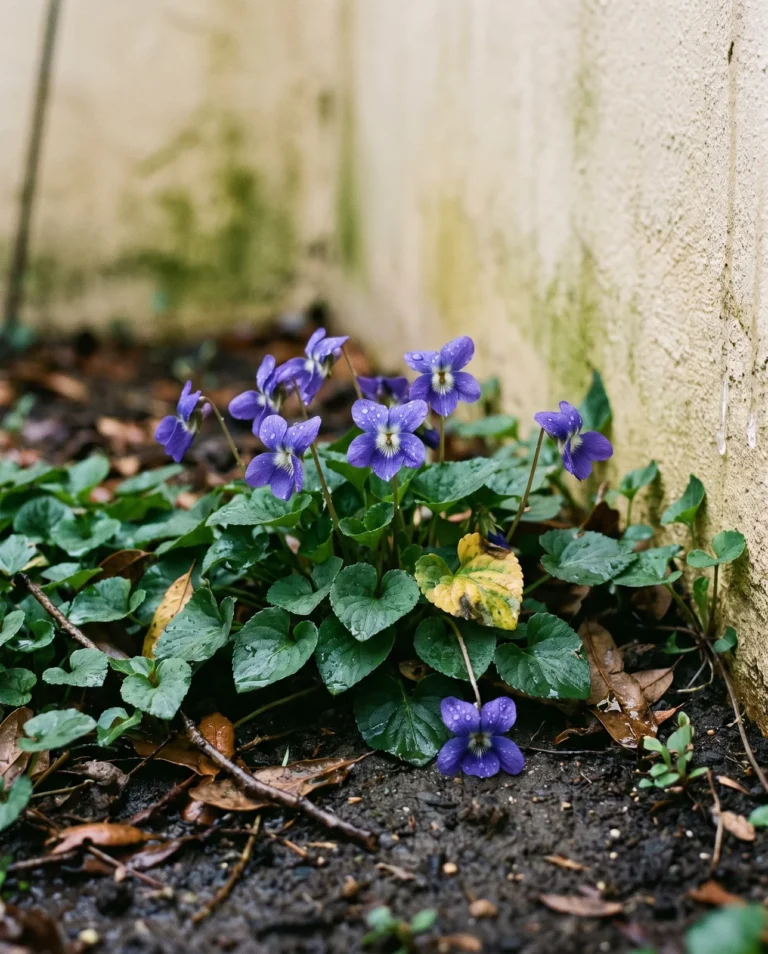
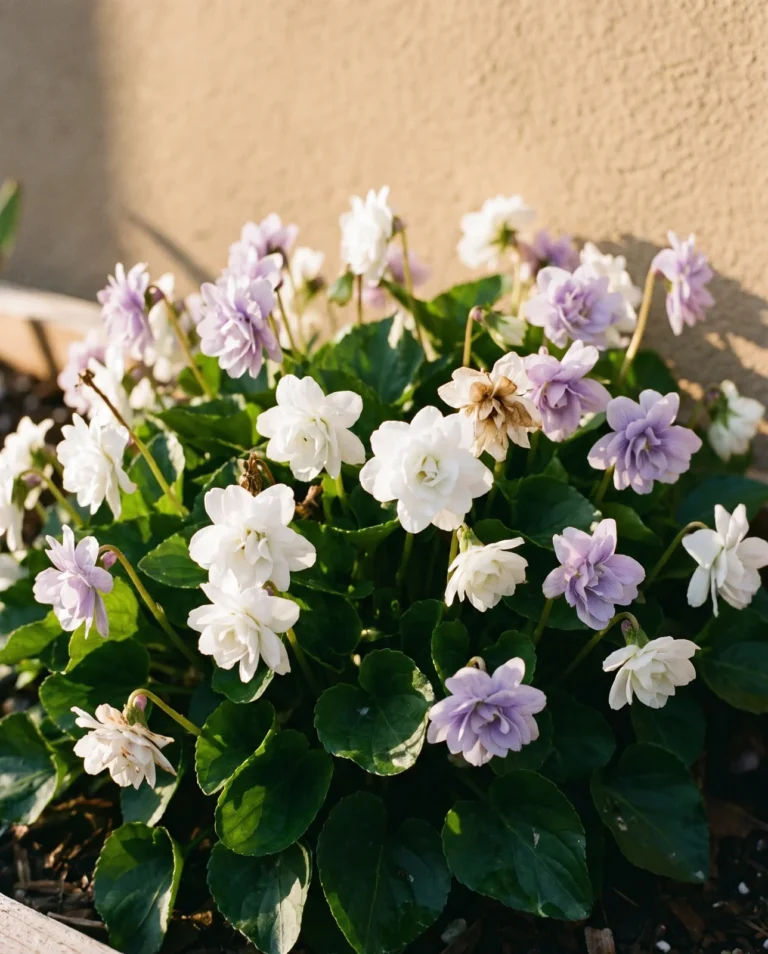
Every plant carded here is Viola odorata, so every one of them is the fragrant species. They differ in color, in whether the flower is single or double, and in the dates they carry, which run from the 1860s to the 1950s. Color across the species covers dark blue and purple, lilac, rose and white, which places them among the low purple flowers that open before a bed fills in.
What wildcrafted means on a violet label
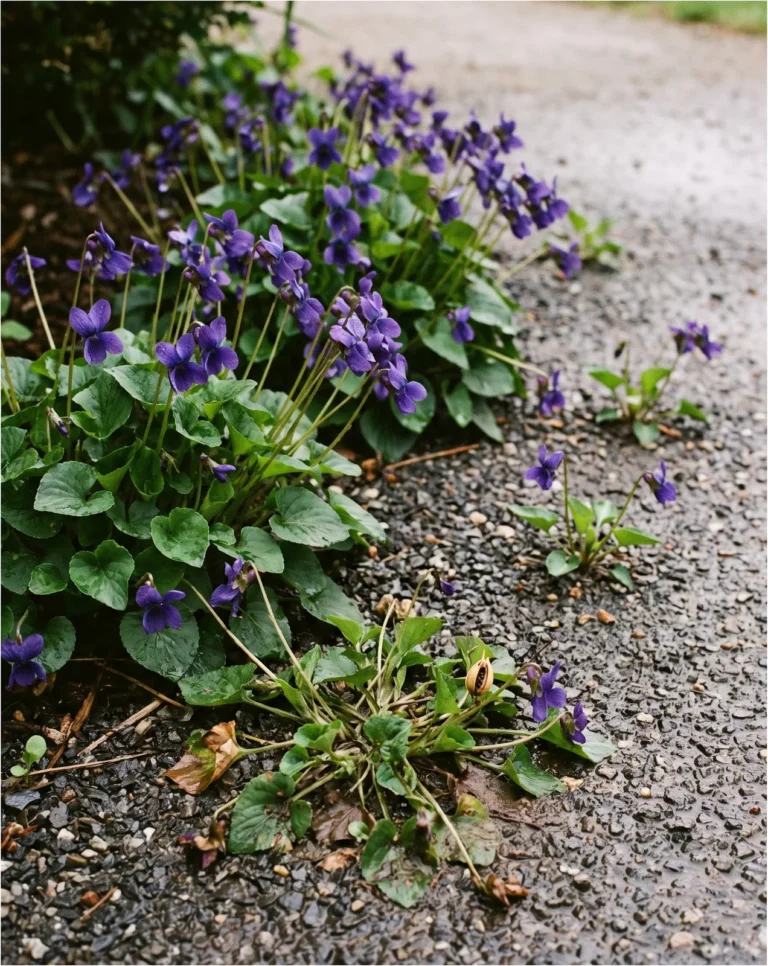
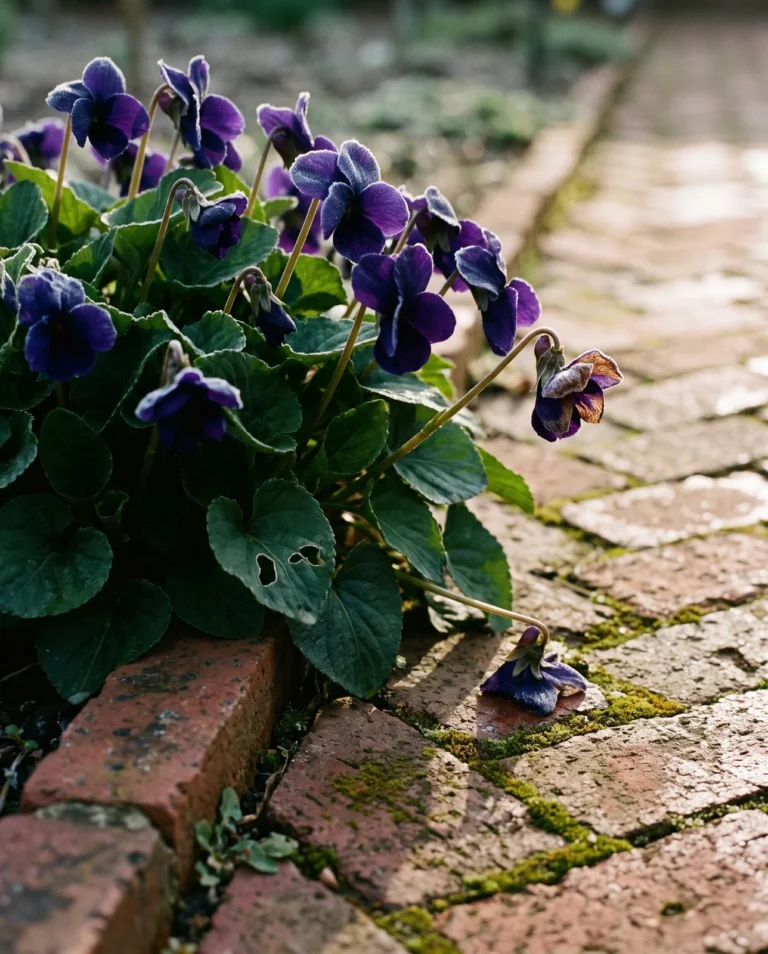
Wildcrafted on a plant label means the plant was dug out of the wild. Five sweet violet plants sell as Wildcrafted English Violet for $52.38, marked down from $78.57. The word appears only in that title, and nothing in the listing says where the plants were collected, on whose ground, or whether the collecting was legal. Nursery-propagated stock answers all three questions by default, and this species is easy to raise that way, from division and from seed. A wild-dug plant of something that divides this easily is the expensive way to buy it.
What violets feed
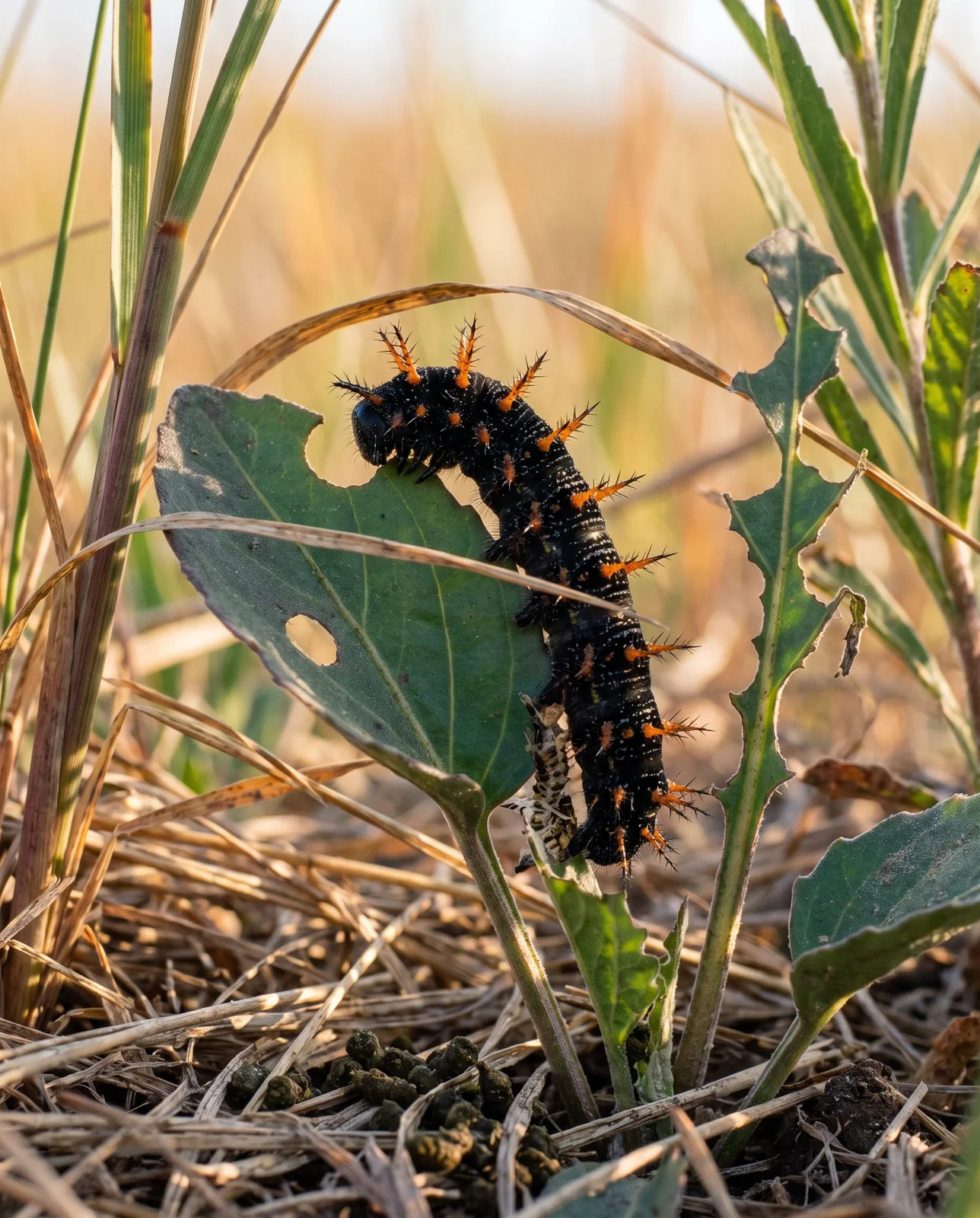
Violet leaves feed butterfly caterpillars, and for one butterfly they are the only food there is. Iowa State names violet leaves the exclusive host plant for the regal fritillary and several other native fritillaries, and the spring flowers feed pollinators early nectar. Ohio arrives at the same place from the weed side, naming violets the primary host for the fritillary caterpillars. The bees are the narrower story. The genus supports specialized ground-nesting Andrena bees. One of them, the mining bee Andrena violae, visits violets and nothing else, so a lawn cleared of violets loses that insect's whole food supply. Birds and small mammals take the seed fruits.
Pests and diseases of violets
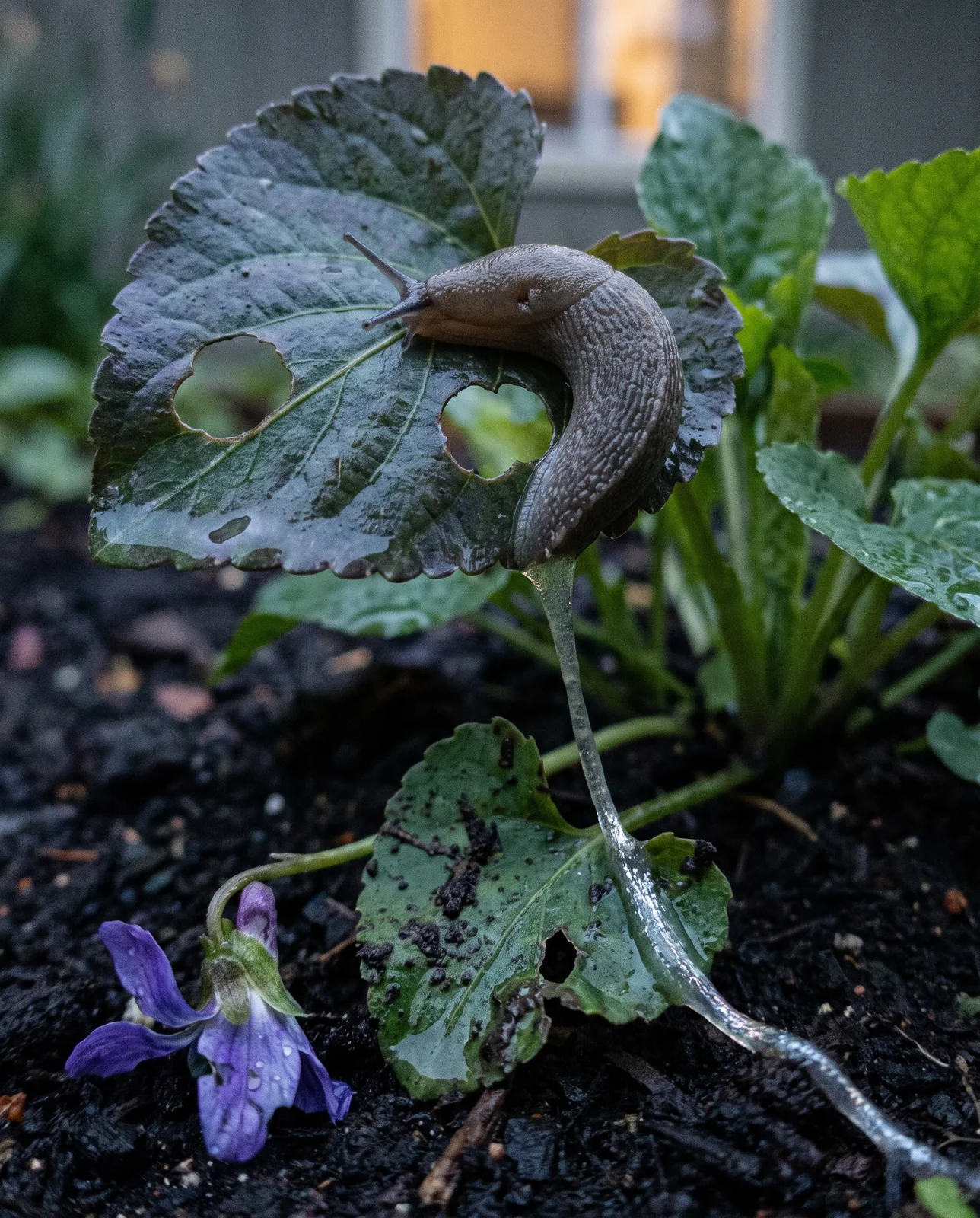
Slugs and snails are the problem that actually turns up, and the damage is easy to confirm. Slugs, snails and red spider mites head the pest list for sweet violet, and aphids join the same three on common blue violet. Slugs enjoy violet leaves and leave slime trails behind as evidence, and violets sit on Maryland's list of the plants slugs and snails trouble most, in company with hostas, lilies, cleome and lettuce. Green peach aphid, citrus mealybug, mites, celery leaftier and sawfly fill out the longer list.
The disease list is short and identical on both plants: violet gall midge, pansy leaf spot and powdery mildew. The trouble list barely changes between the fragrant species and the native one, so the same diagnosis works for either plant. A clear photograph of the affected leaf gets you further than a name does.
What people actually ask about violets
The questions violets generate most often, in roughly that order.
Treated plants yellow and look sick for a few weeks, then recover. The rhizome under the soil is what survives the spray, so plan on repeat applications across the season and across several years.
One product works where another does nothing, and the rate decides it, since a product can contain triclopyr and still deliver too little at its label rate. Read the active ingredient and the rate off the label before you buy.
Asked as a lawn design question: violets as a clover-lawn substitute, violets as green mulch, violets left standing in the beds. Left in a shaded bed they behave as ground cover; left in turf they take it over.
Flowers and leaves of both common violets are eaten, and the roots of the lawn violet are excluded. Confirm the plant by its unopened flower pods before picking anything.
It is not. The houseplant is a gesneriad from East Africa and is unsafe to eat, and no violet care advice carries across to it.
No smell means the native species, which is the cleanest test there is. Smell a flower before you buy a plant or dig one out.
Violets, cats and dogs
No pet-toxicity listing covers true violets at all. The ASPCA has nothing under violet, sweet violet, wild violet, common blue violet, garden violet or Viola. The plant has never been assessed there, so an animal that has eaten violet leaves is a question for a veterinarian. The one violet entry that does exist belongs to the houseplant. African violet, under the name Saintpaulia, is non-toxic to dogs, cats and horses. That entry is the likeliest root of the belief that violets are safe around animals, since the two plants share a word in their common names and nothing else.
What the violet has stood for
The violet stands for modesty in the language of flowers, and the reason given is the shape of the plant, which grows low to the ground with its head bowed. The same tradition makes it an emblem of love and faithfulness, carried in the small hand-held arrangements Victorian floriography used for coded messages. It has a political history too. Napoleon abdicated in April 1814 and left for Elba, telling his supporters he would come back with the violets, which bloom in spring. They wore violets and violet-colored ribbons after that, as a quiet Bonapartist signal. He reached Paris again on March 20, 1815, as the spring violets opened, and picked up the nickname Corporal Violet.
Four states name a violet as their state flower, and none of them names this one. Illinois adopted the violet in 1908, a year after its schoolchildren voted for it over the wild rose and goldenrod. Of the state's eight blue-flowering violet species the most common is the dooryard violet. Rhode Island's schoolchildren voted for the violet in 1897 and the legislature took until 1968 to agree, which made it the last state in the country to adopt an official flower. New Jersey adopted it in 1913, let the resolution lapse the following year, and passed it again in 1971 at the urging of garden clubs. Wisconsin named the wood violet on Arbor Day in 1909, on the vote of its schoolchildren the year before. Three of those statutes name Viola sororia, and Wisconsin's names Viola papilionacea.
Five things people get wrong about violets
Five claims that follow violets around, turning up in shopping listings, in foraging posts, and in the answers gardeners give each other.
The myth: African violets are violets.
The reality: They are gesneriads from East Africa, sitting in a different family from the violets, and nothing true of Viola transfers to them, edibility included.
The myth: All violets smell.
The reality: Fragrance runs by species. Sweet violet carries it in its name, odorata being Latin for scented, and 'The Czar' is magnificently fragrant. The weedy natives grow from thick rhizomes and carry no fragrance at all.
The myth: Every part of every violet is edible.
The reality: Flowers and leaves are. The roots of common blue violet are excluded, and sweet violet leaves act as a laxative in quantity. Leave the seeds, rhizomes and yellow-flowered violets alone.
The myth: The violets in my lawn are sweet violets.
The reality: In most of the country they are common blue violet, a native of eastern and central North America. Scent is the working test, and the spread mechanics differ too: sweet violet runs on stolons, while the lawn native makes no runners at all.
The myth: You can pull them out and be done with it.
The reality: Hand removal fails unless the rhizomes come out of the soil, and those rhizomes are the reason, being fleshy and full of stored energy. Guidance that works assumes repeated applications across a season and across several years.
What to expect from a sweet violet planting
Three stages, from the year the plants go in to the point where the patch starts making decisions for you.
The first spring is quiet. New plants come up as separate rosettes and flower low and early on short stems. The scent test happens here and settles what was actually bought. Feeding is the year-one mistake: unless the soil is genuinely lean, fertilizer gives lush foliage and few blooms.
The spreading starts once the plants have settled. Long stolons run out across the soil surface and root where they come to rest. The closed summer flowers have already dropped their seed by then, so seedlings appear at a distance from the parent plant. This is also the point at which the patch is worth dividing, and pegging a runner down until it roots gives a new plant without lifting the old one.
An established patch behaves like ground cover, and two things tend to surprise people. Containers give out, because every sweet violet develops a long taproot and potted plants are short-lived. And a plant that has come through several winters can still refuse to flower, since most named cultivars will not bloom well where temperatures fall under 10 degrees Fahrenheit. Left alone in open ground the spreading habit can turn weedy where the site suits it, which is the point at which a violet patch stops being a planting and becomes a decision.
FAQ
Will sweet violet spread?
Yes, and it does it two ways: long stolons running across the soil surface and self-seeding from the small closed flowers that follow the spring bloom. It is still non-aggressive and easy enough to contain.
What is sweet violet used for?
The scent, mostly. It has gone into perfumes, candies and liqueurs, and the flowers were sold as street posies. The flowers and leaves are also eaten.
Do sweet violets prefer sun or shade?
Part to light shade in most of the country, with full sun reserved for coastal and cool-summer gardens. It is one of the few perennials that will take dry shade.
Is sweet violet an invasive plant?
It came in from Europe, and one state calls it invasive. That call traces to a native plant society in Oregon in 2008 and to no agency or statute. Elsewhere it is non-aggressive.
Are the violets in my yard edible?
If they are common blue violet, the young leaves go into salads or cook as greens and the flowers go onto salads and desserts, while the roots are excluded. Never harvest from turf that has been treated.
Are there any poisonous violet look-alikes?
Out of flower the leaves can pass for lesser celandine, which is toxic, so confirm the plant by its unopened flower pods, new or spent, before picking. The African violet on a windowsill is a separate plant and is unsafe to eat.
Which types of violets are edible?
Sweet violet, in leaf and flower, and common blue violet, in young leaf and flower. Claims that stretch to every species and every part have no university or poison-center source behind them.
What part of violets are medicinal?
Traditional use covers leaf and flower syrup for coughs, congestion and sore throats, and tea from the whole plant for headaches and digestive upset. That is history, and no study is named for any of it.
Will violets come back every year?
Yes, both are herbaceous perennials. Sweet violet is hardy from zone 4a, though many named cultivars are less hardy than the species and some survive the winter without flowering.
What is the ideal location for sweet violets?
Cool, moist ground in part to light shade, cultivated deeply because the plant runs a long taproot, at a soil pH near 6.0 to 6.5.
Interesting tips
- Common blue violet is one of the plants that will grow under a black walnut, tolerating the tree's root exudates along with wet soil and clay.
- Heights for the lawn violet run anywhere from 3 to 10 inches, so do not plan an edging around a single figure.
- Sweet white violet, a North American native, is the cold-hardy one of the group, hardy to zone 2 and spreading by runners to about a foot across.
Related Guides & Flowers

Violet tattoo
The violet as a design, and the meanings people carry it for.
Lily of the valley
The other fragrant shade plant that spreads underground and takes a bed over.
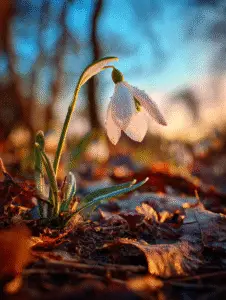
Snowdrops
The low early flowers that share the same shaded ground before the beds fill in.
Types of flowers
The full index of flower guides here, arranged by type and by name.
Enjoying our flower guides? Add YourFlowersGuide as a preferred source on Google. It helps more readers find us.
Add to Preferred Sources