What weigela is and where it comes from
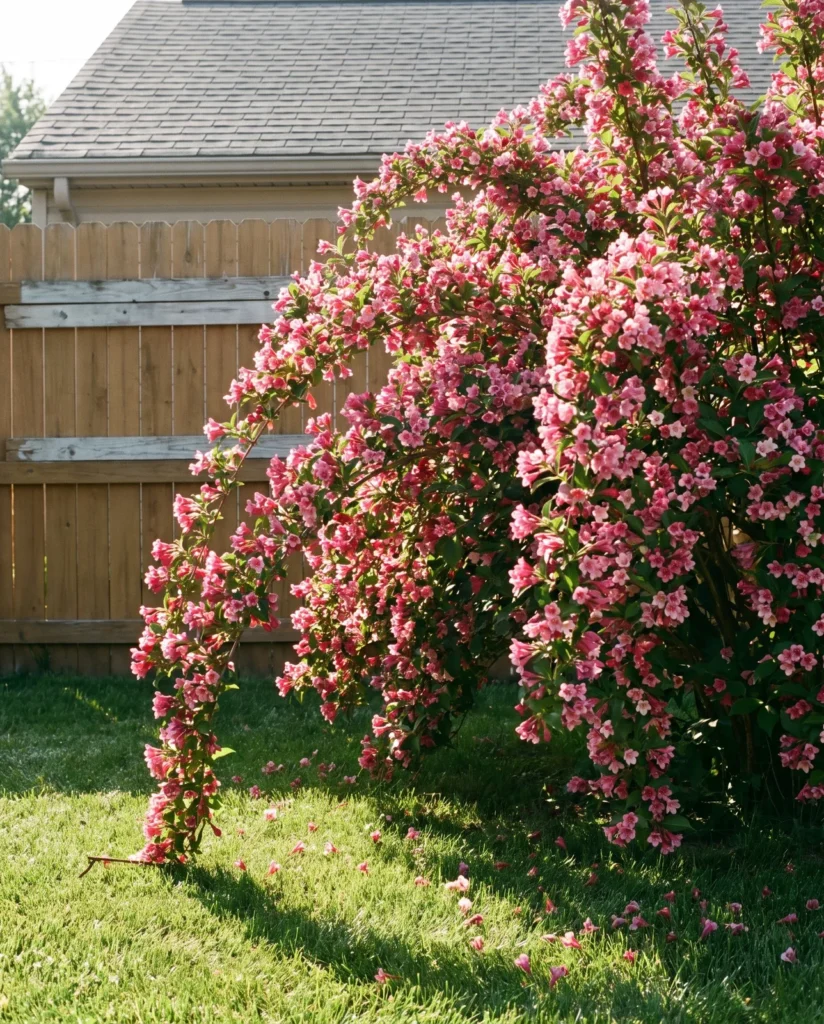
Weigela is a deciduous shrub in the honeysuckle family, native to northern China, Korea and Japan. Say it why-GEE-la, with the weight on the middle syllable. The species name florida means freely flowering; the plant has no connection with the state. Almost everything sold is a named selection of that one species, and there are over 150 of them. They run from white to rose red in flower, from green to purple to variegated in leaf, and from under 2 feet to 8 or 10 in height. Size, bloom and cold tolerance all move with the cultivar, so the name on the tag tells you more than the species name does.
What the flowers and the leaves look like
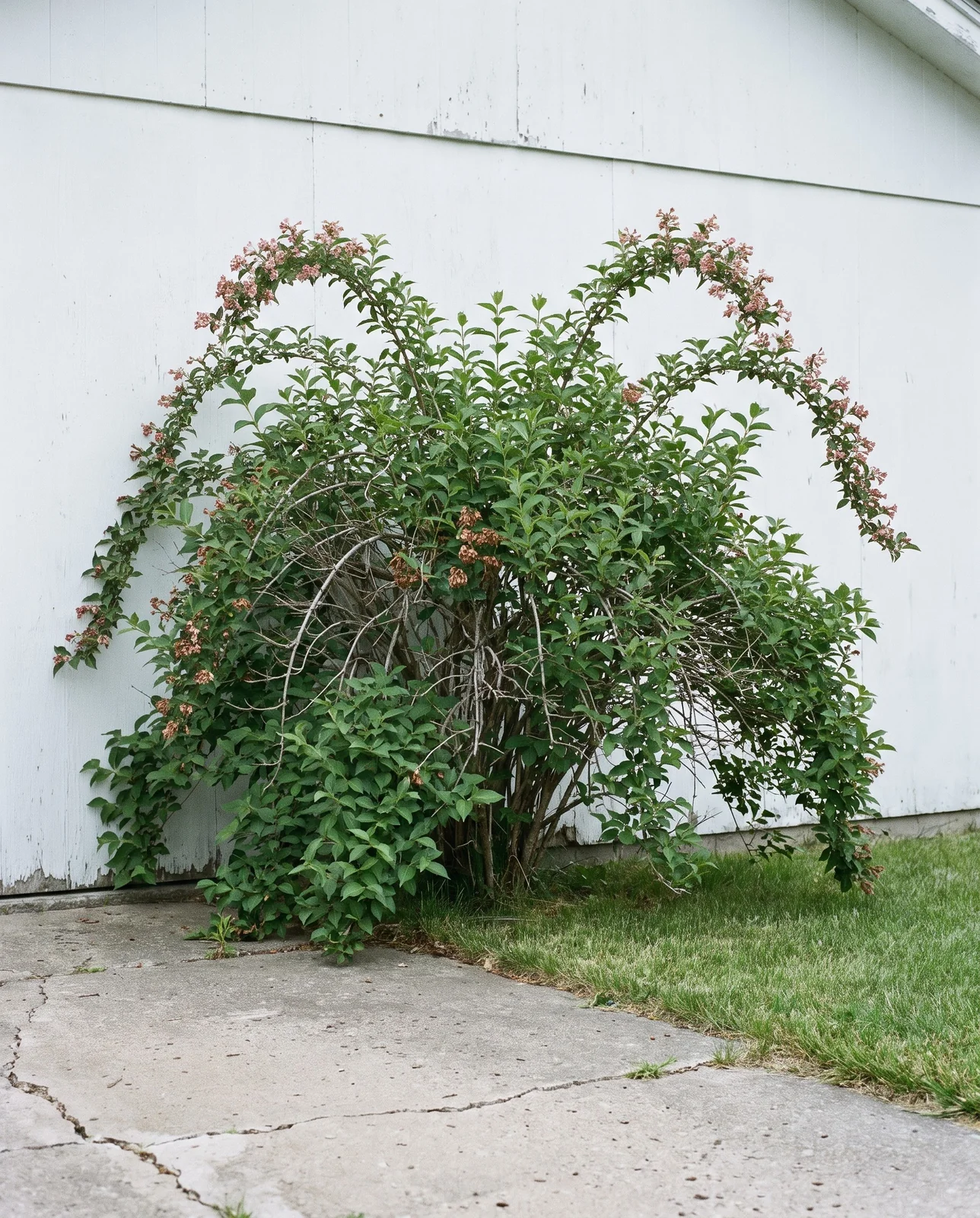
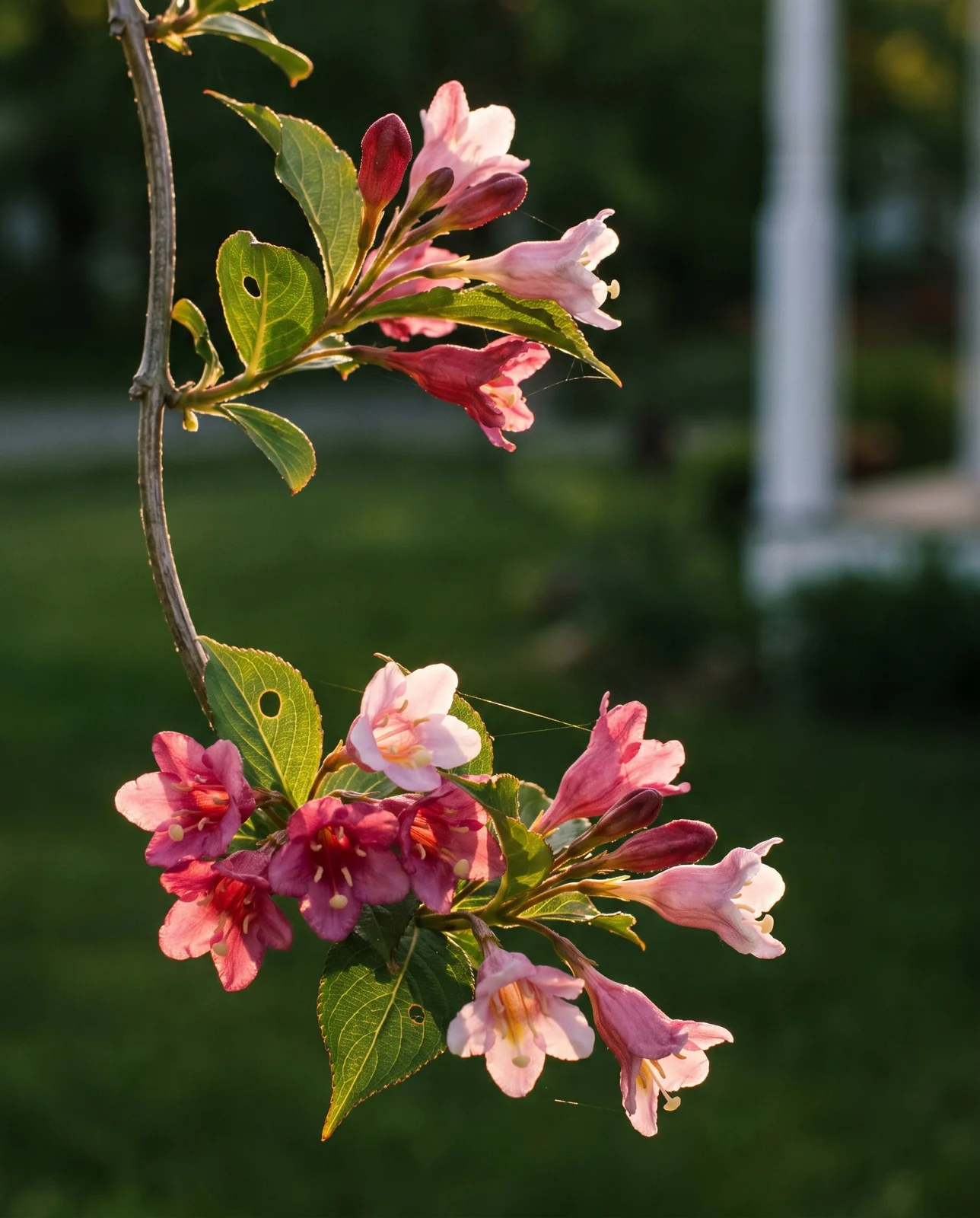
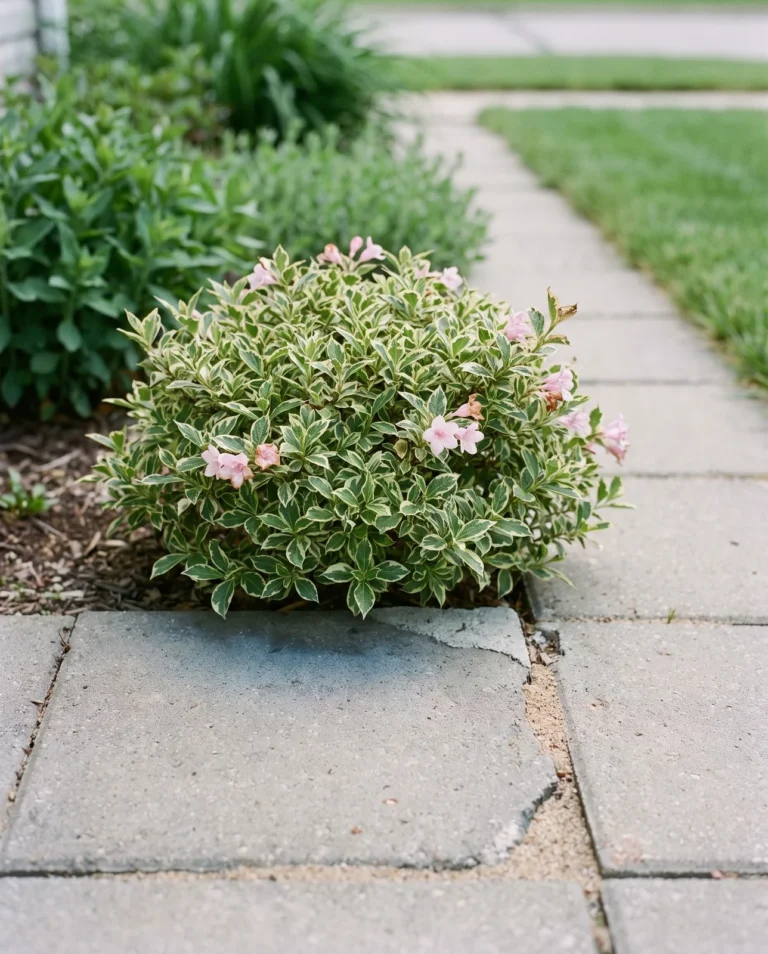
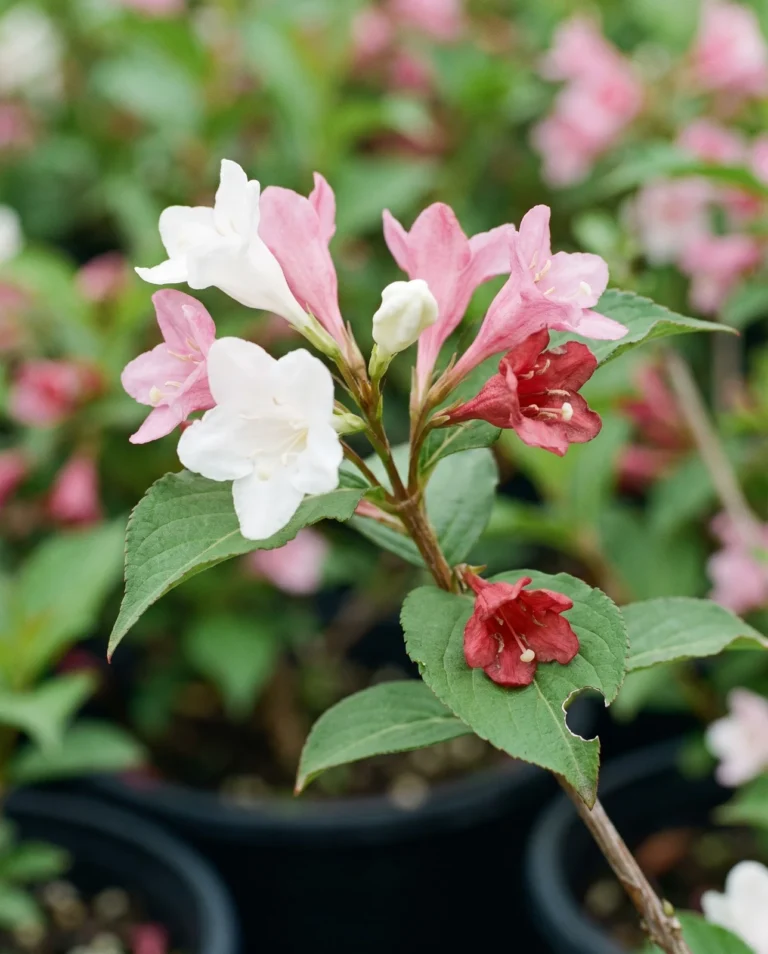
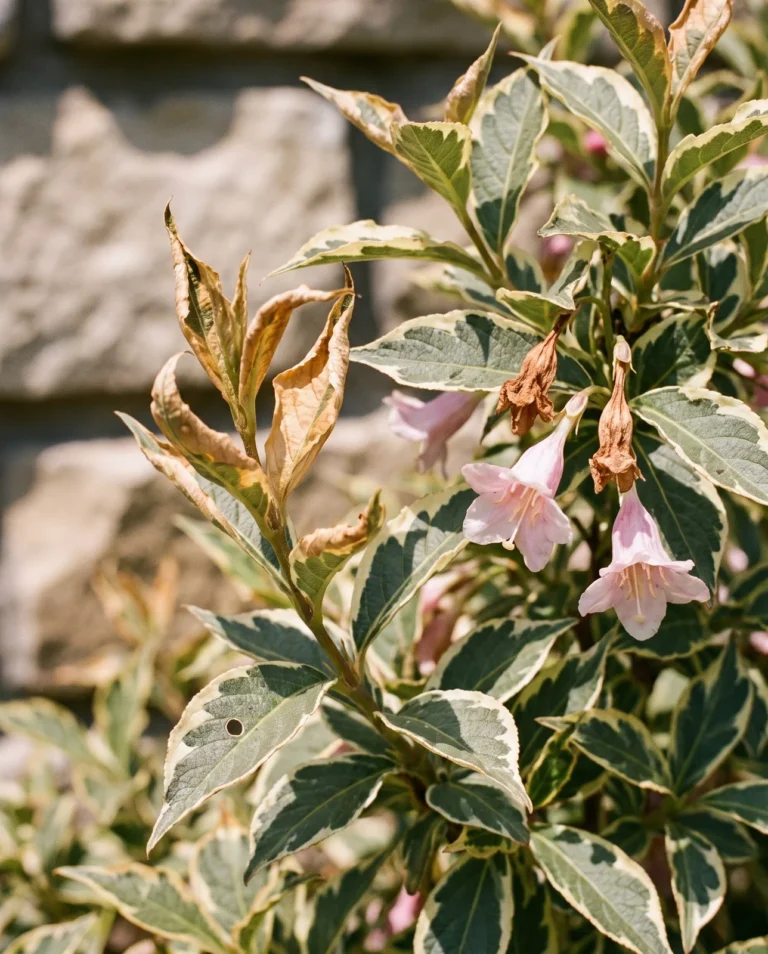
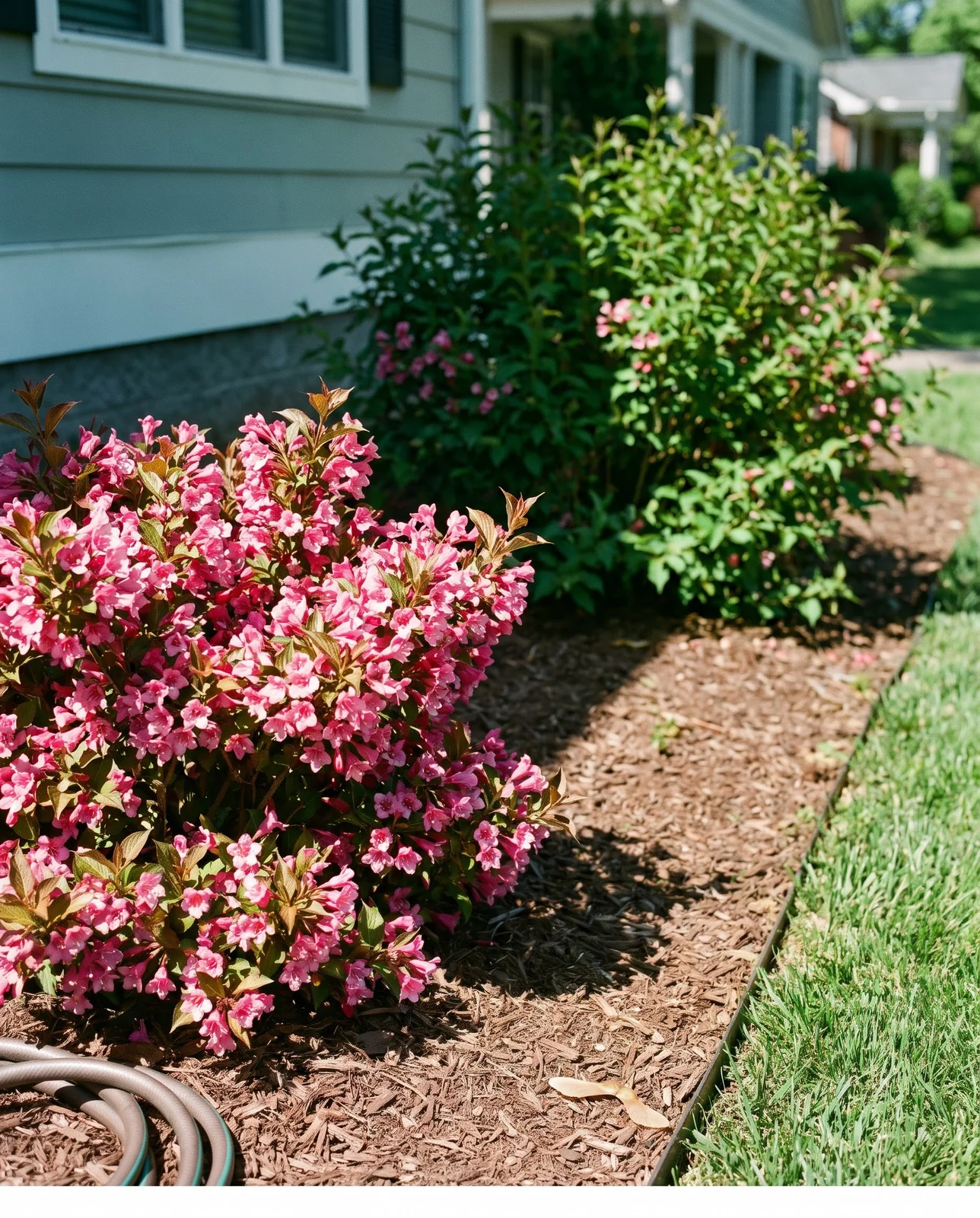
The flowers are small funnels, to 1.25 inches long on the species. They sit singly or a few together in the leaf axils along the arching stems, white through pink to rose red. Yellow and peach cultivars exist too, and on Czechmark Trilogy the flowers open white and age through pink to red. The leaves are elliptic and toothed, up to 4.5 inches long, and they hold their color all season. Autumn does nothing for them: fall color is insignificant.
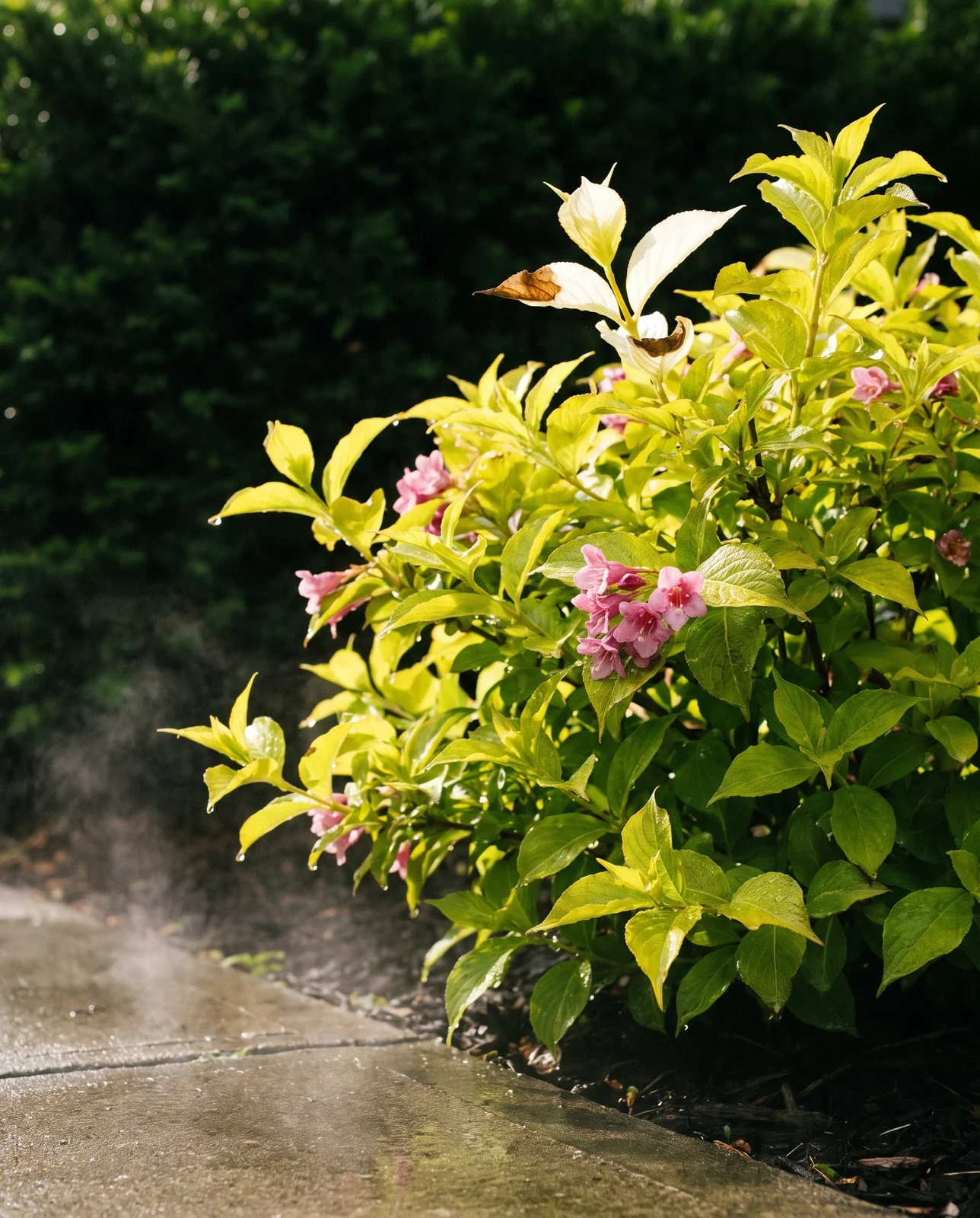
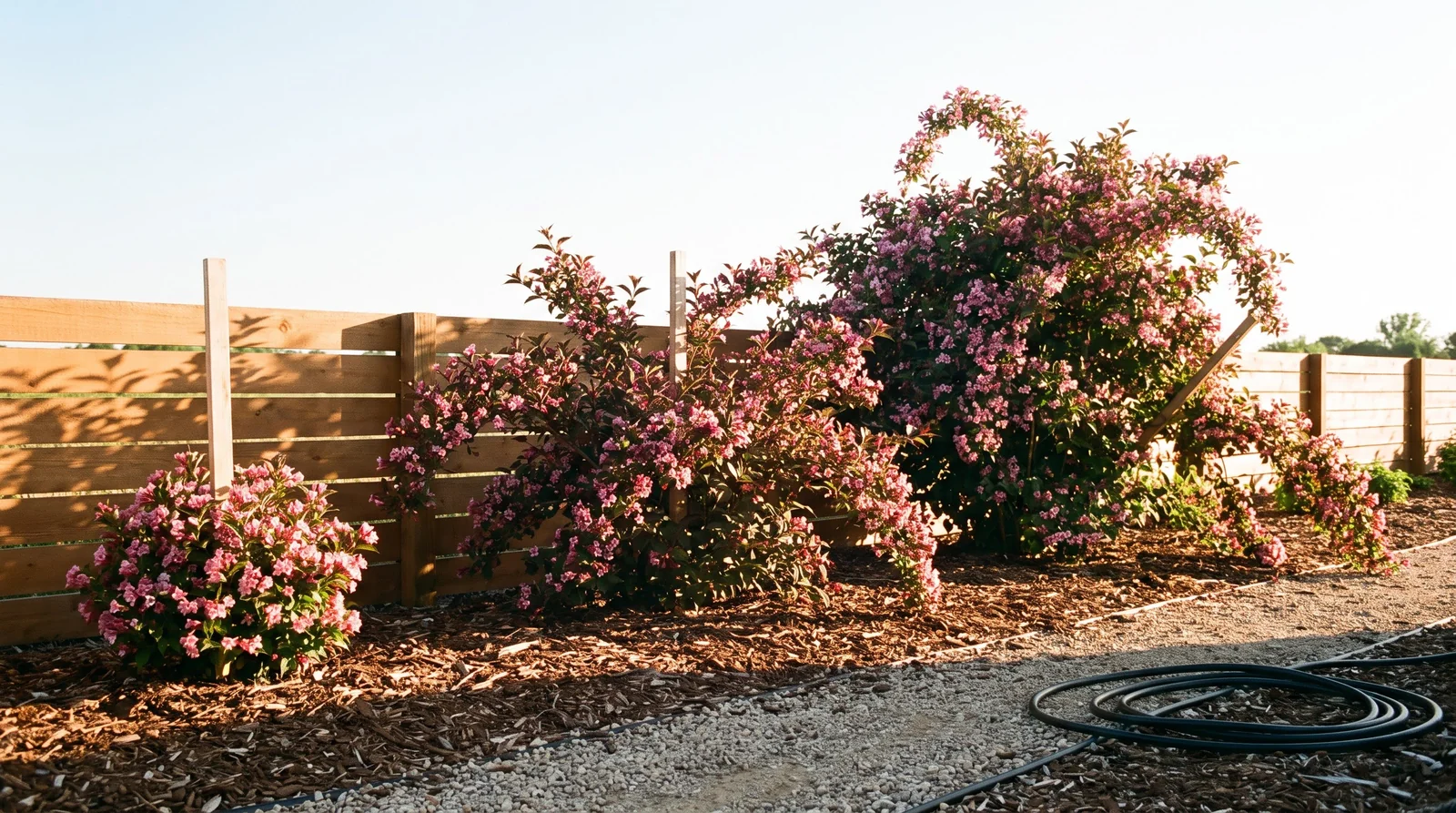
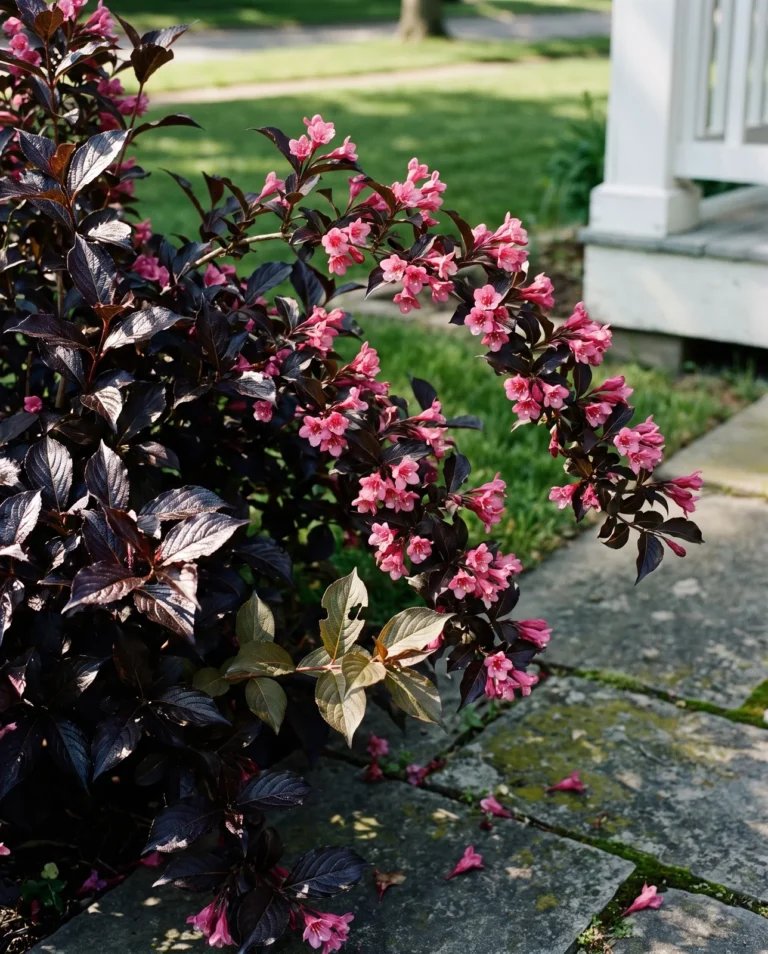
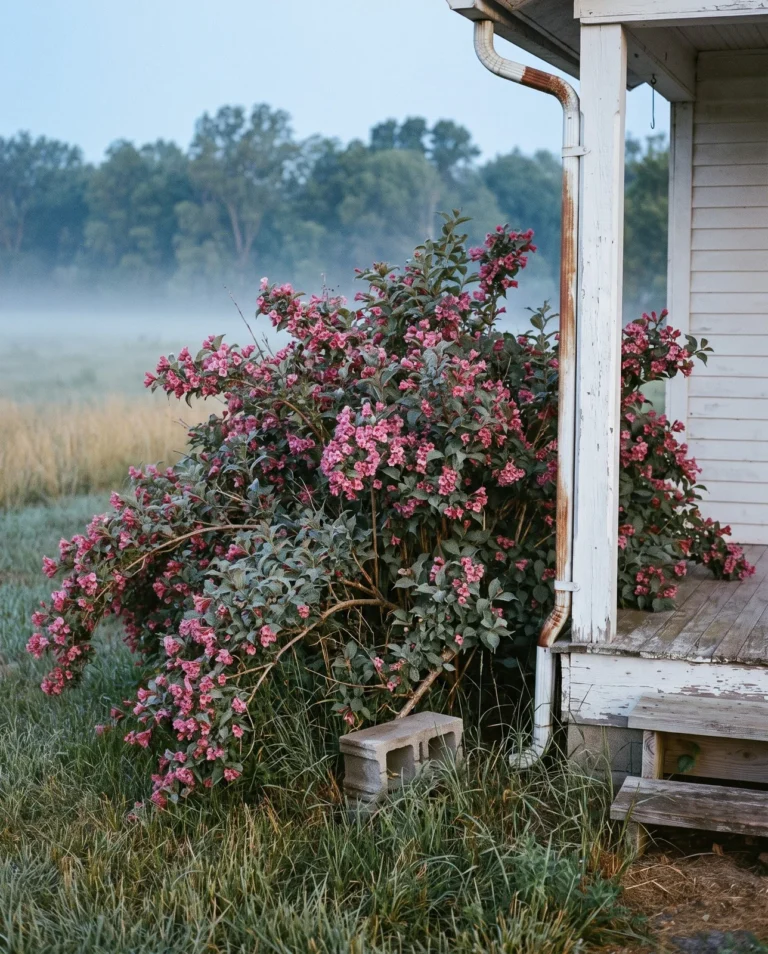
That is why weigela sells on purple, variegated and gold leaves as much as on flowers. Underneath, the habit is dense and arching, and it eventually sweeps the ground. The shrub goes rangy unless it is pruned. Rangy is the word that sends people out with shears at the wrong time of year.
Weigela flowers on old wood, and how to tell such shrubs apart
Weigela carries next spring's flower buds on wood that is already standing by the end of summer. A cut made after that takes the flowers off with the stems. The buds are set in the late summer to fall period, and late pruning reduces next year's flowers. The safe window opens as the flowers fade. Prune immediately after flowering, which gives the plant time to set plenty of flowers for the next year.
The rule is easiest to hold by telling two kinds of shrub apart. They stand in the same border and take opposite dates. Weigela sits with the spring shrubs cut after flowering, beside forsythia, because both flower on the previous season's growth. Crape myrtle and butterfly bush sit in the other group, cut before spring growth begins, because they flower on the current season's growth. Butterfly bush is the cleanest opposite: cut back by half or almost to the ground in late February to early March, it still blooms that summer on the new growth.
The rule softens at the edges. Weigela blooms mainly from buds formed on last year's growth, so winter dieback reduces flowering. It also blooms sporadically from the current season's growth, which pruning right after the spring flowers fade encourages. That does not move the date, because the heavy spring flush is what is at stake.
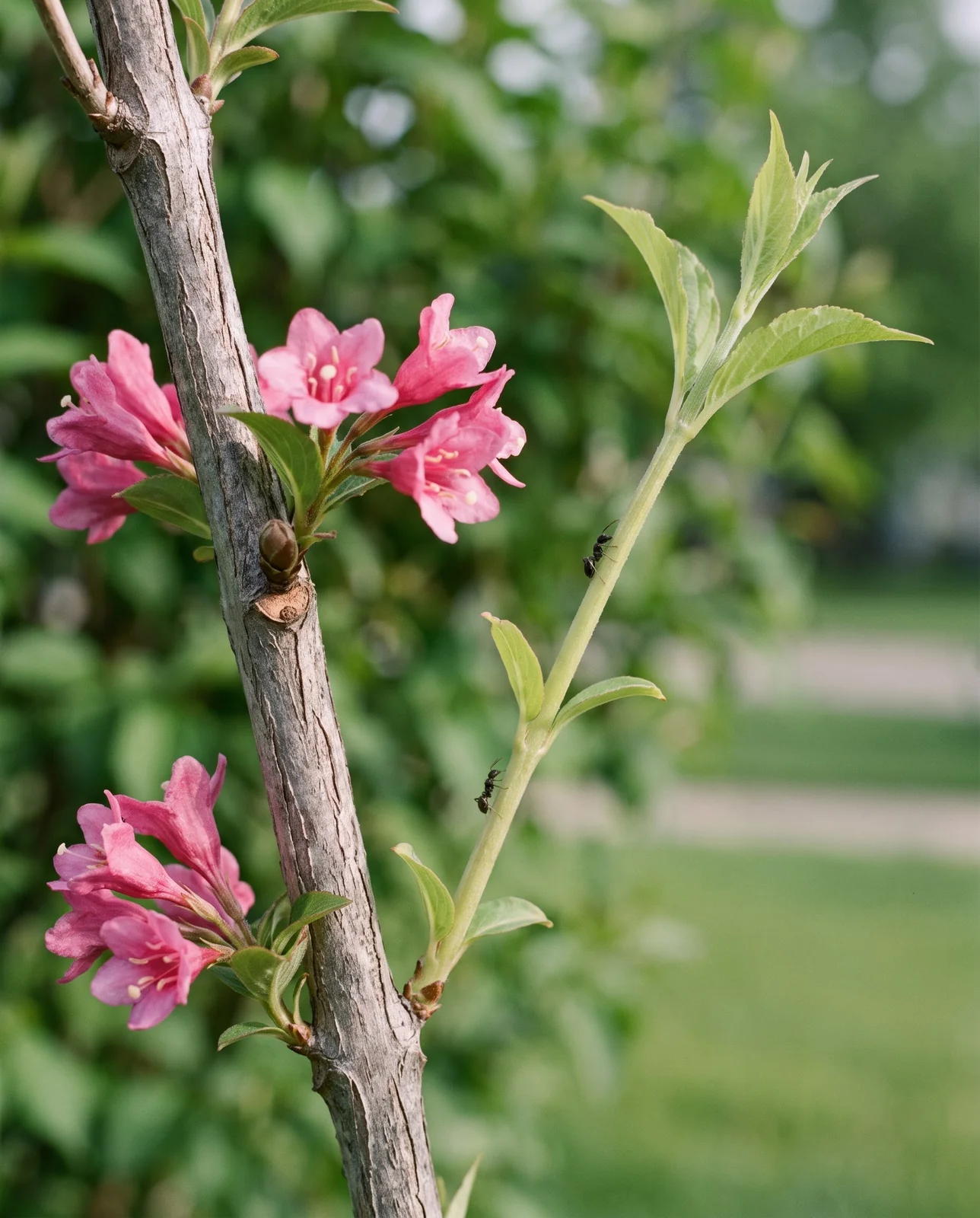
When to prune weigela and how hard it can be cut
Inside that window, the cut that does the work is a thinning cut at the base. Weigela is a cane plant, with branches coming up from the soil line. To bring the size down without losing the weeping form, take some of the older canes out at ground level, up to a third of them. Shearing the outside into a box or a ball ruins the shape the shrub is grown for. On an old plant, a third of the oldest and thickest stems taken to the ground each year brings new stems up from the roots.
A severe cut will not kill it. An overgrown shrub can be cut back to within 6 to 12 inches of ground level. Time it before spring growth begins, since the same cut in late fall or midwinter pushes growth the cold then injures. Taking every cane close to the ground in early spring is an accepted way to rescue a neglected cane shrub. The price is that season's flowers, paid against a plant returned to its normal size and shape. One weigela had its bark chewed almost to the ground by rabbits over a winter and came back from the roots.
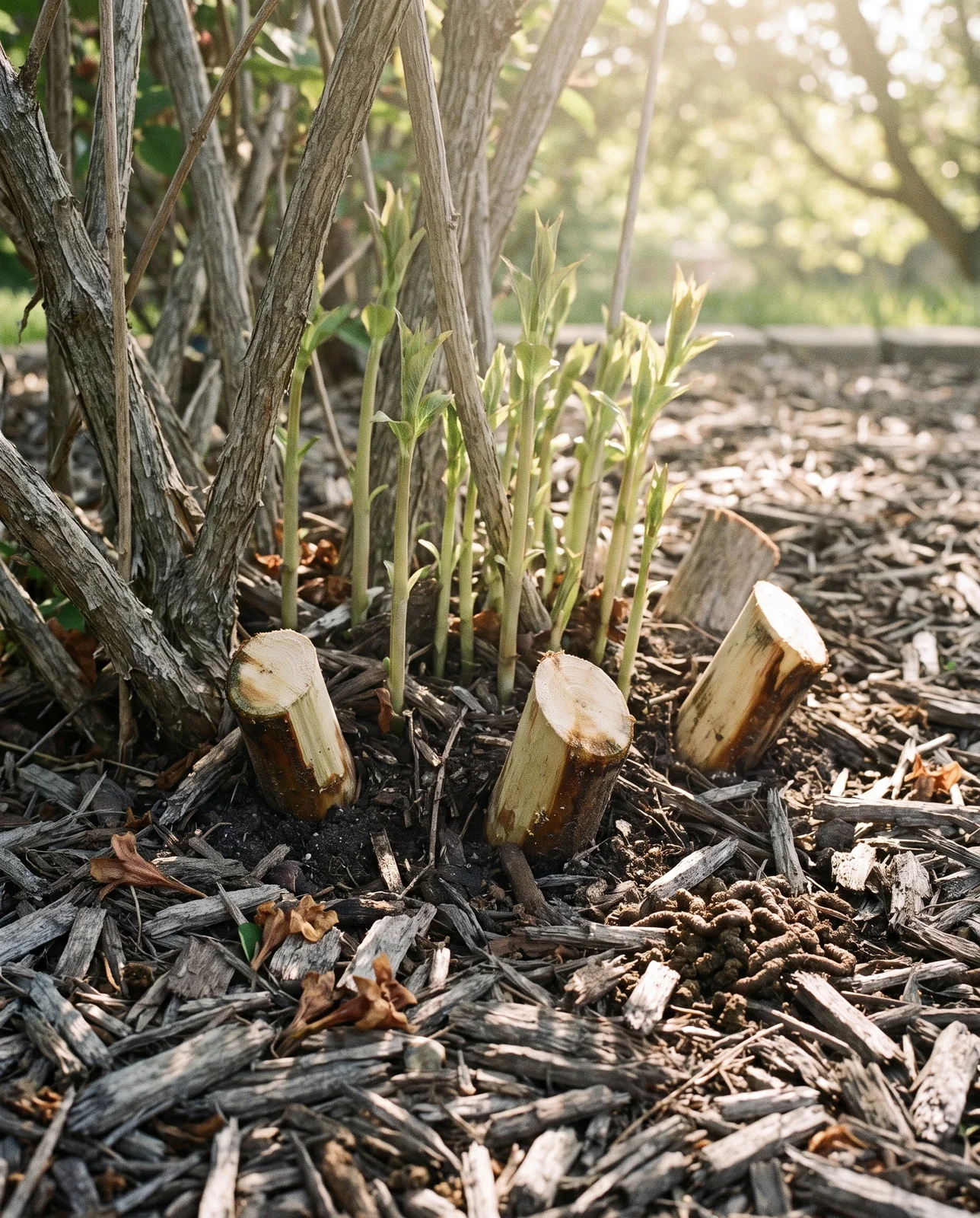
Why a healthy looking weigela carries no flowers
Check the calendar first, then the light, then last winter. A cut made after the buds were set is the commonest answer, because weigela blooms on old wood and late pruning reduces next year's flowers. Shade is second. Full sun gives the best flowering and leaf color, though light or dappled shade is tolerated, and full shade cuts the flowering. Third is a hard renewal cut, where that season's flowers go by design.
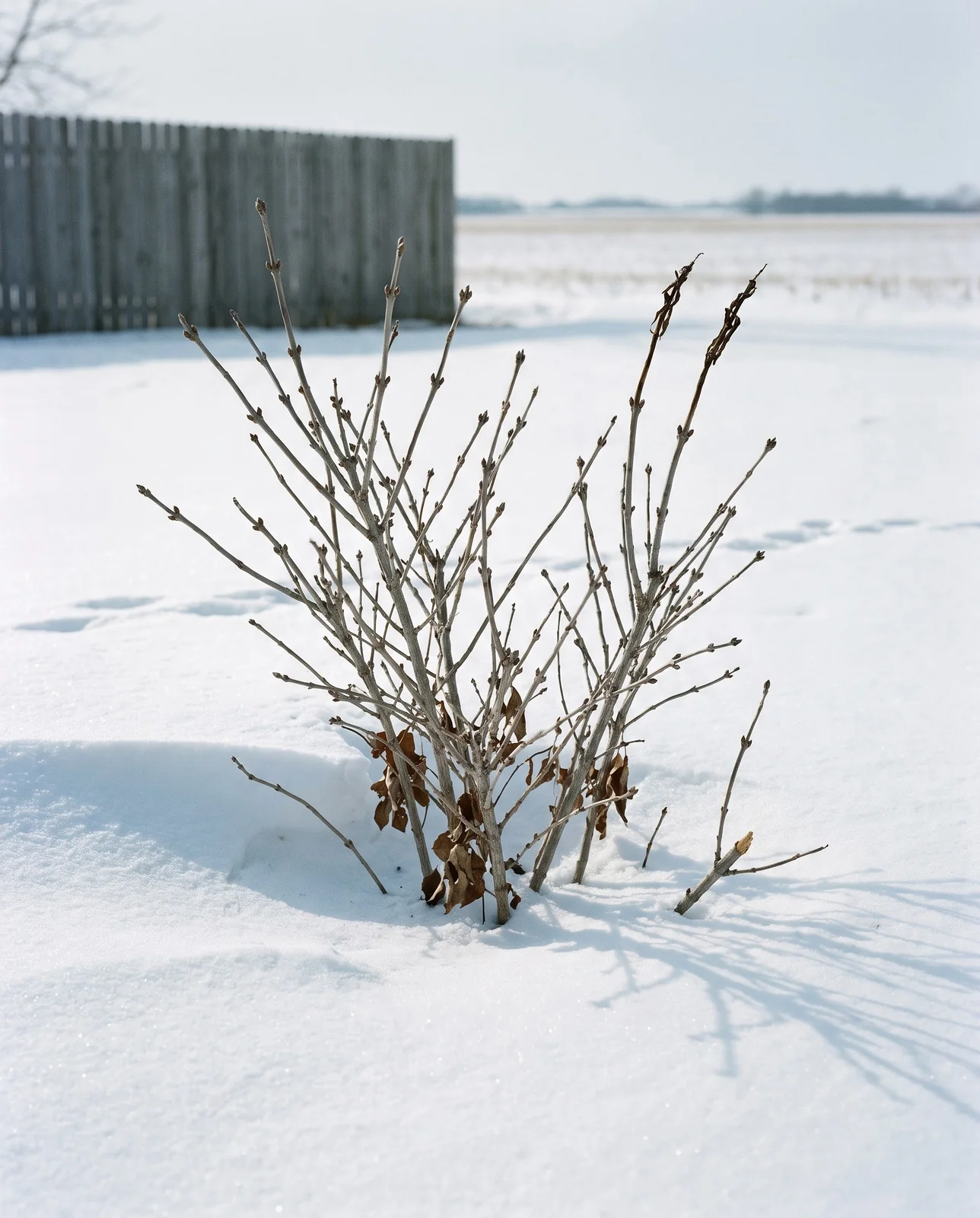
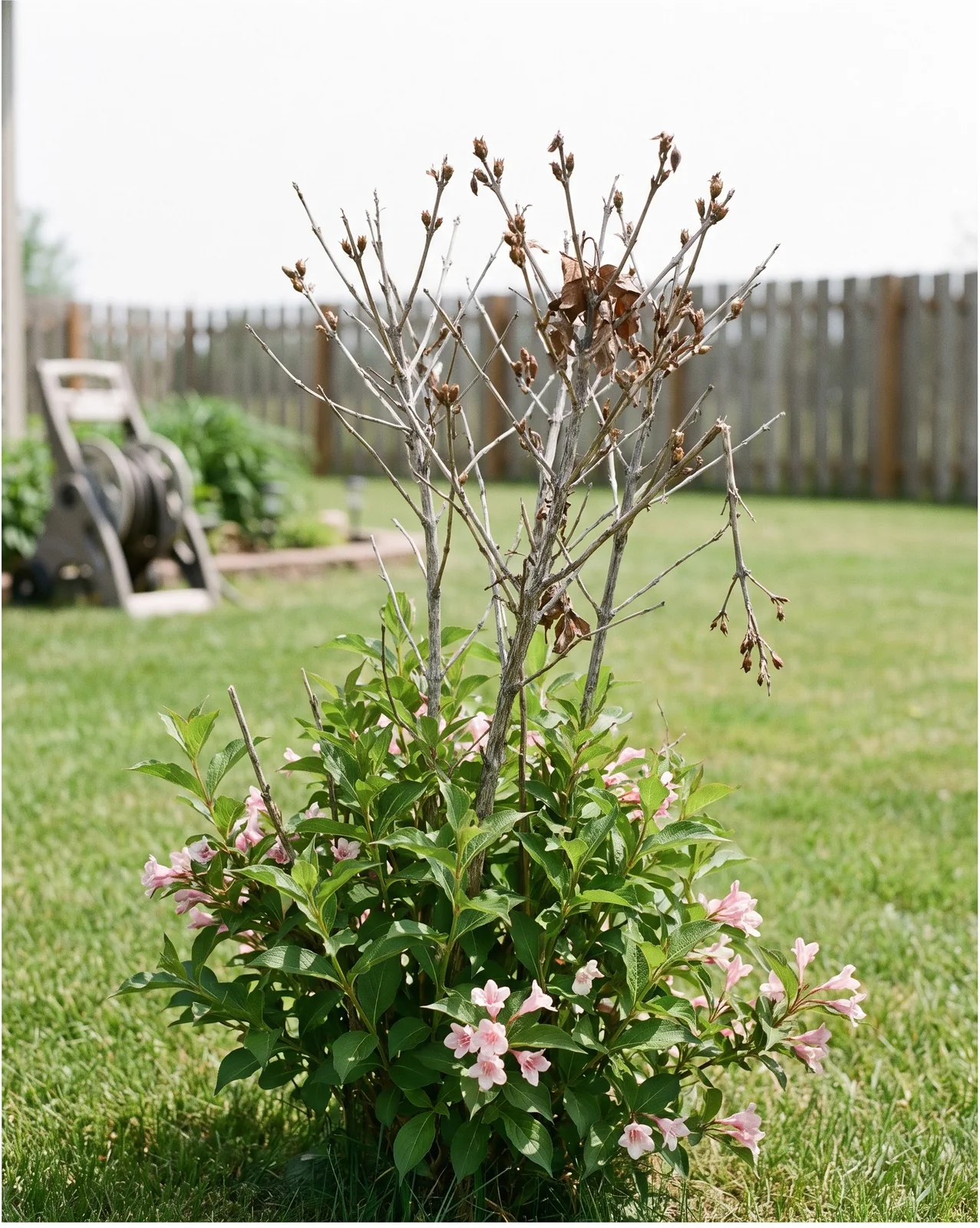
The cause that gets missed is the weather. The spring flush comes off buds formed on last year's growth, so winter dieback costs flowers. Tip dieback is common, and stems die back to the crown or at least to the snowline, depending on how hard the winter was. A hit shrub can put out leaves and even flower buds and then die back in June. A weigela that leafs out evenly and carries nothing points back at the calendar or the shade. One that browns and collapses in patches in early summer points at the cold. Cut dead branches back to a healthy leafy branch just above the bark collar, at any time of year.
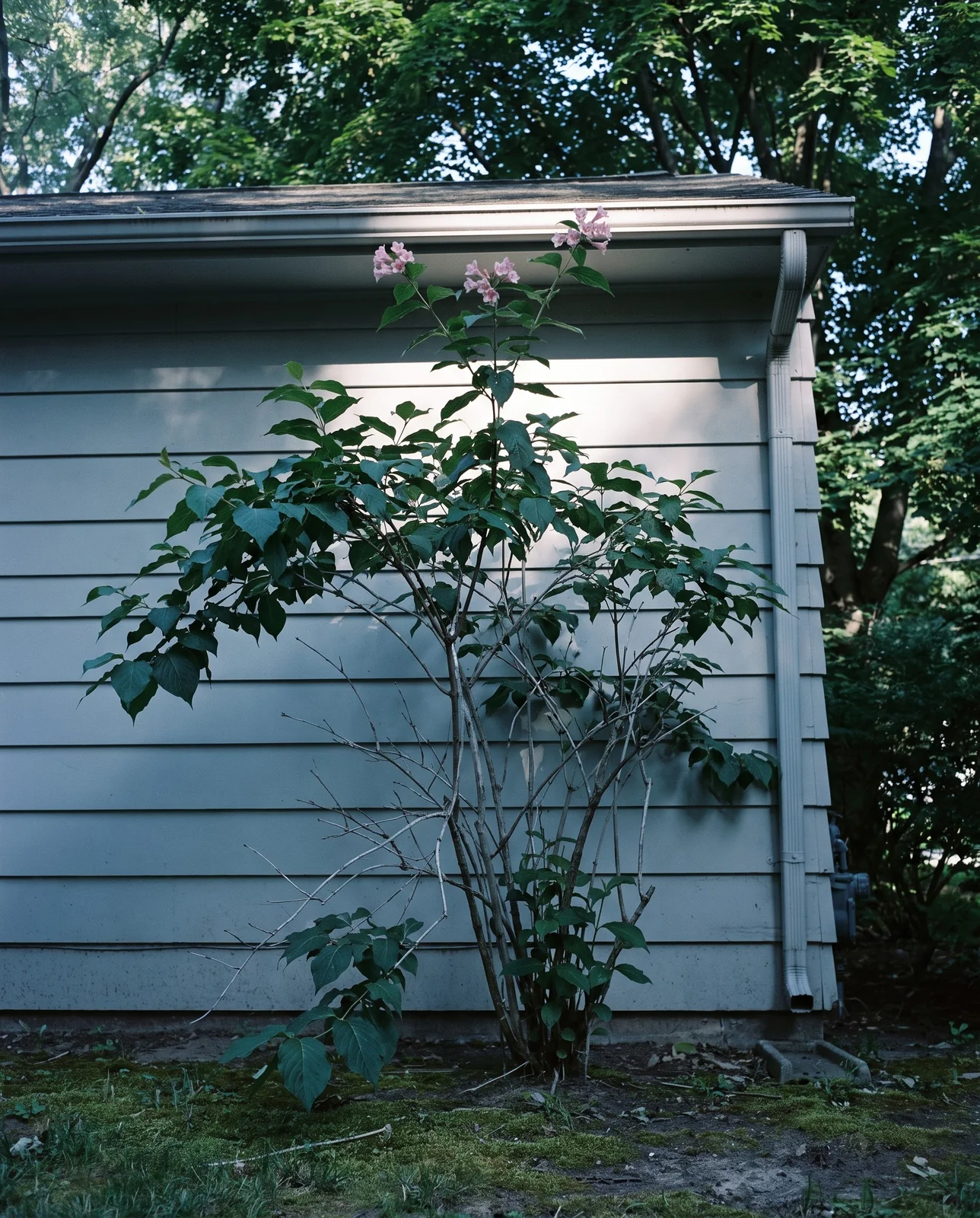
Work out which one it is
Five checks, in the order that settles most cases.
Once blooming or reblooming, and what the second flush is
A traditional weigela gives one heavy flush at the end of spring and a thin scatter afterward. The main flush comes at the end of spring, with often some rebloom in late summer, recorded as two windows, May to June and July to August. On the species that repeat is sparse and scattered, mostly mid to late summer. The mechanism is the one that fixes the pruning date. The spring flush comes off last year's wood and the later flowers come sporadically off the current season's growth.
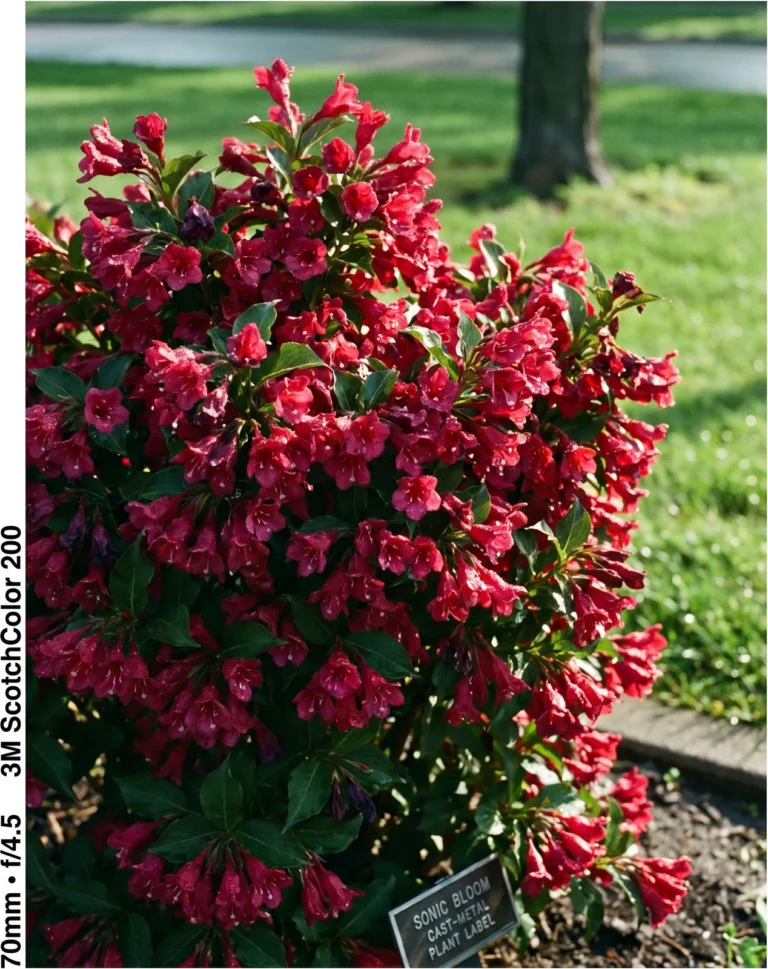
The reblooming series are sold on that second wave, and they do deliver more of it. Sonic Bloom opens a heavy flush of lipstick red in May, then repeats in waves from midsummer to frost. The older plants repeat in quieter language. Red Prince reblooms occasionally in late summer, lighter than the spring flush, Wine and Roses blooms sporadically through the summer, and My Monet scatters a few after its late spring flush. Both groups are bought for the same heavy flush at the end of spring.
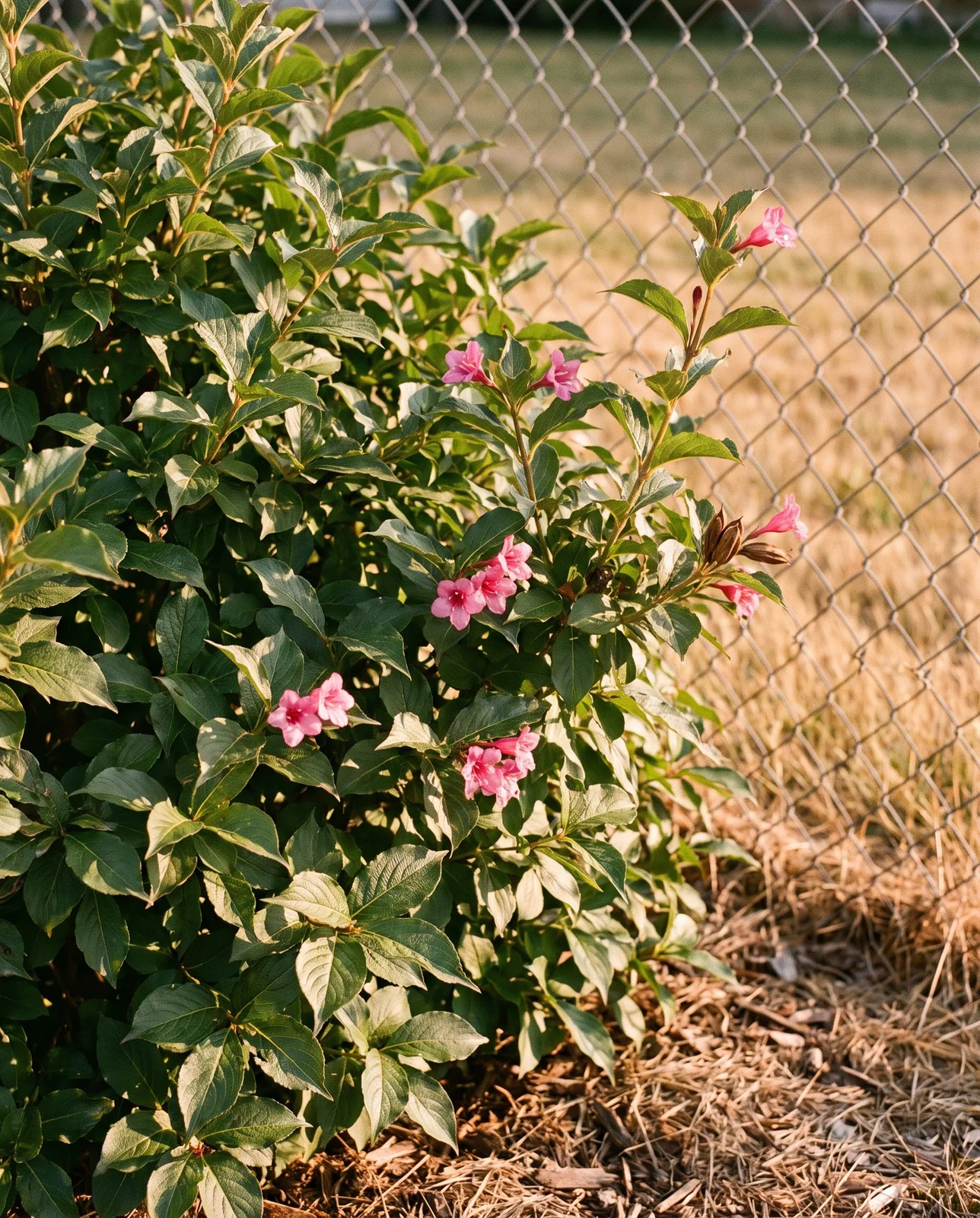
The three size classes, and the one that ends up under a window
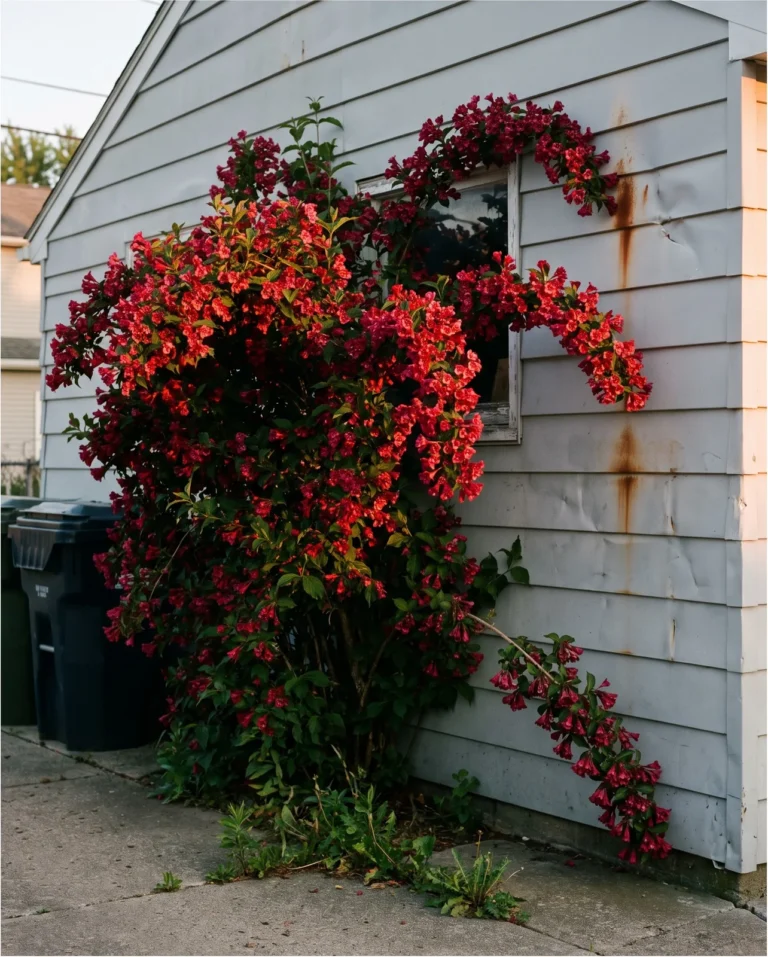
Weigela is sold in three size classes, and the class decides where the plant can go. Dwarf runs under 2 feet tall, medium 2 to 4 feet, large above 4 feet. The species itself sits past the top of that range, at 6 to 10 feet tall and 9 to 12 feet across. At the small end a dwarf stays 1 to 2 feet each way. Allow for the width before the height. A shrub bought at knee height and settling in at head height is the one that gets shortened every autumn to keep a window clear, and the buds for next spring are already on it by then.
Check a size on a tag twice, because the numbers published for one named cultivar can differ by half the plant. NC State gives Red Prince a height and width of 6 to 9 feet. The Royal Horticultural Society puts the same cultivar at 1 to 1.5 meters, roughly 3 to 5 feet. Buy on the smaller figure and you may be pruning a 9 foot shrub.
Seven weigelas told apart by size and bloom pattern
Seven selections that turn up on plant tags, with the size each is given and what its second bloom amounts to.
Where to plant weigela and what the ground has to do
Give it an open spot with six hours or more of direct sun and ground that drains. The soil type matters less than what that soil does with water. Clay, loam and sand are all plantable, with good drainage the condition attached to all three. Beyond that the shrub asks for nothing special, only drainage, reasonable moisture and plenty of sun.
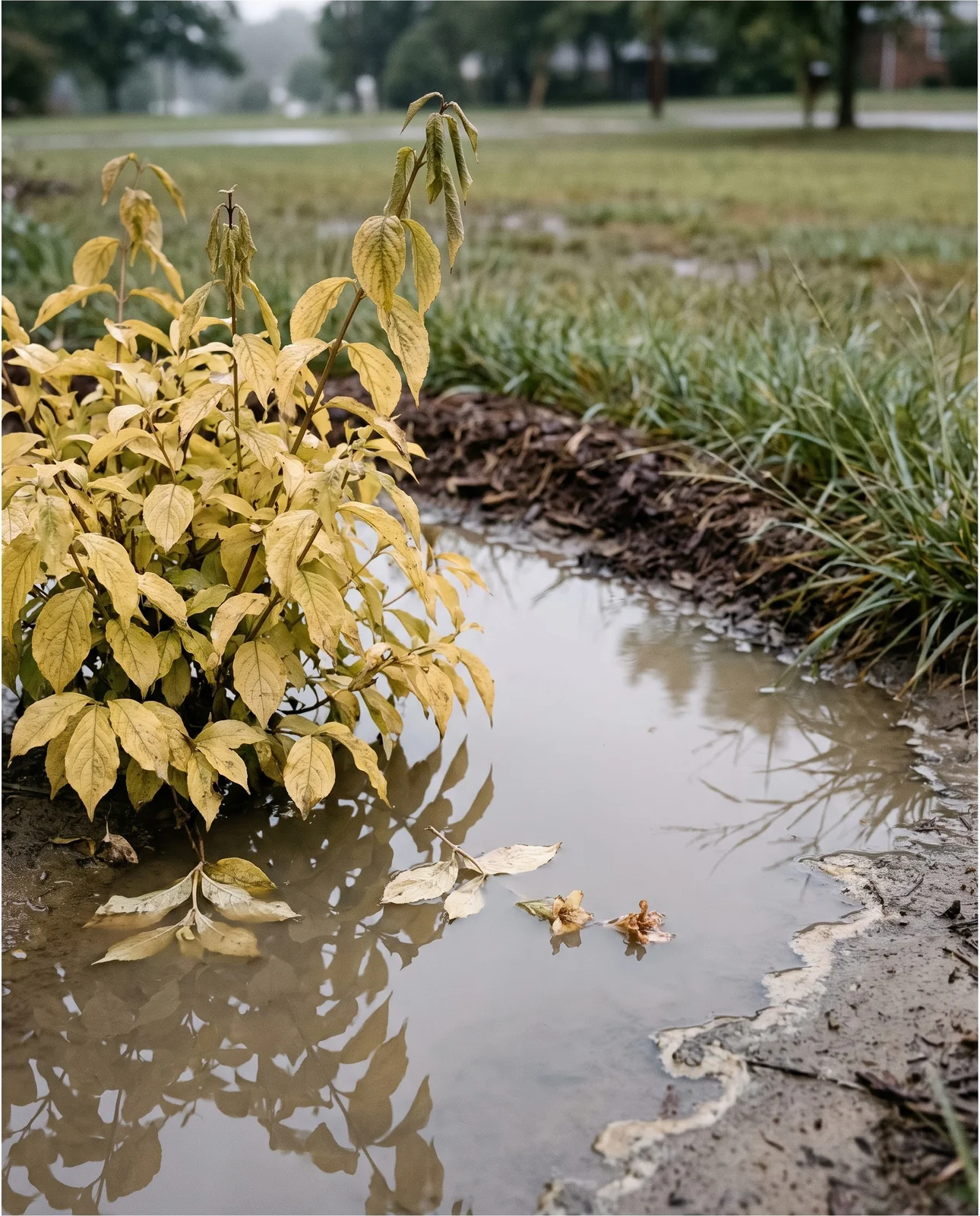
Tolerant of clay and happy in wet clay are two different things. A weigela that dies back and rots at the base points at the ground it stands in, because the shrub is normally tough. Poor drainage or heavy clay is the first thing to suspect. Broken up clay that drains is the ground the tolerance covers. A low corner that holds water after every storm is the ground that rots it. A raised bed or a slope answers that on planting day, the cheapest day to answer it.
The zone range, and the two selections that move it
Weigela is hardy from zone 4 through 8b. Two cultivars move an edge by one step. A dwarf starts at 5a, warmer at the cold end than the species, and a reblooming selection runs to zone 9 at the warm end. Both exceptions belong to cultivars, so read the number beside the cultivar name and treat the species figure as the shape of the kind. The cold end is where the range does real work. Weigela is only marginally hardy in parts of it, and one harsh winter can leave the same dieback on shrubs across a whole region. A northern spring of leaves and no flowers is a hardiness question before it is a pruning question. Zone 8b covers the majority of South Carolina.
Yellow and browning leaves, and the three things behind them
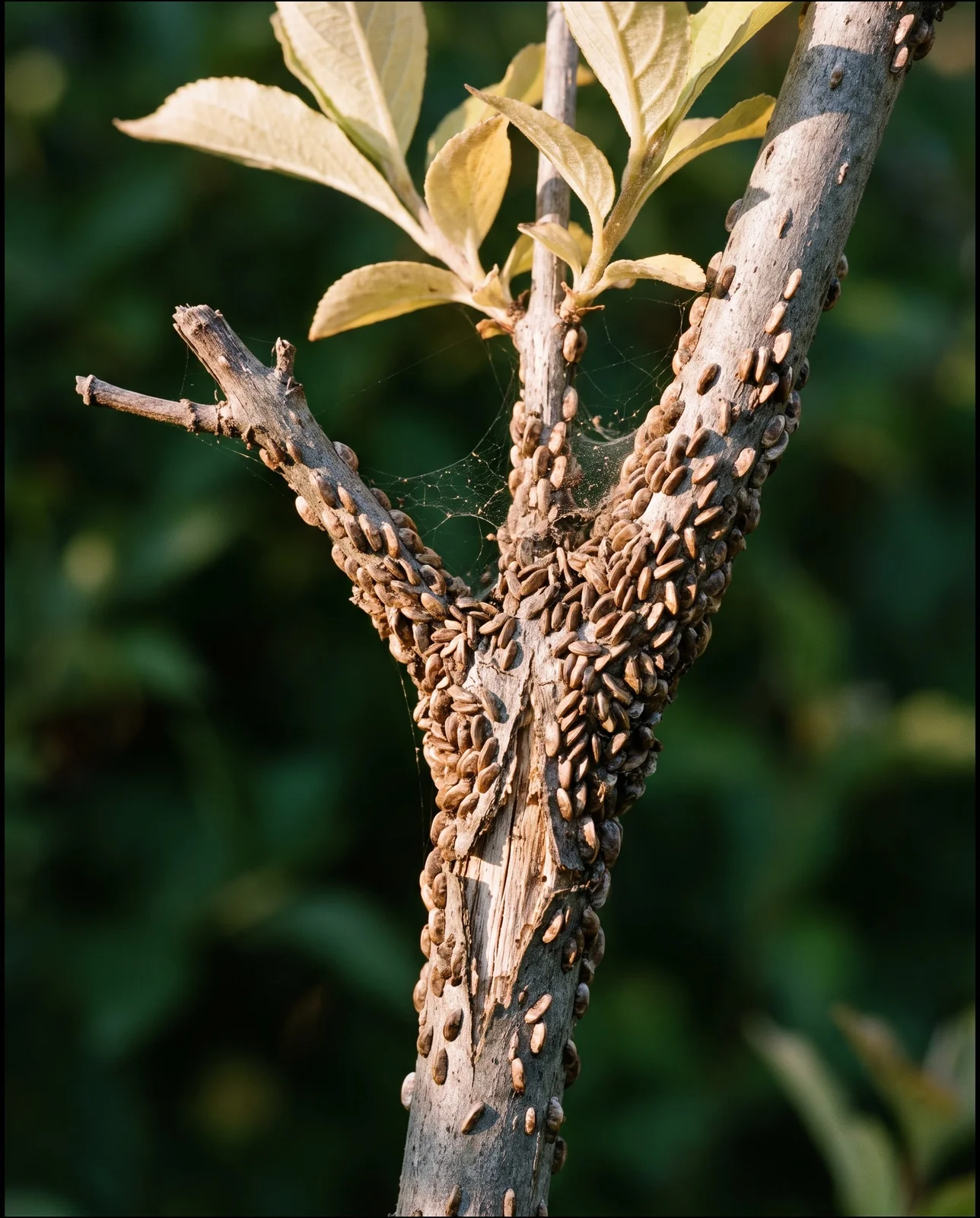
Three separate problems land on the same leaf, and up close they look quite different. Yellowing with an insect behind it means a heavy oystershell scale load. A light load shows little or no symptom; a severe one leaves the foliage chlorotic and stunted, and a heavy one brings dieback and cracked bark. The insect sits on the bark, elongated and oyster shell shaped, light to dark brown, 1/10 to 1/8 inch long. Running a thumb down an older cane settles it faster than studying the leaf.
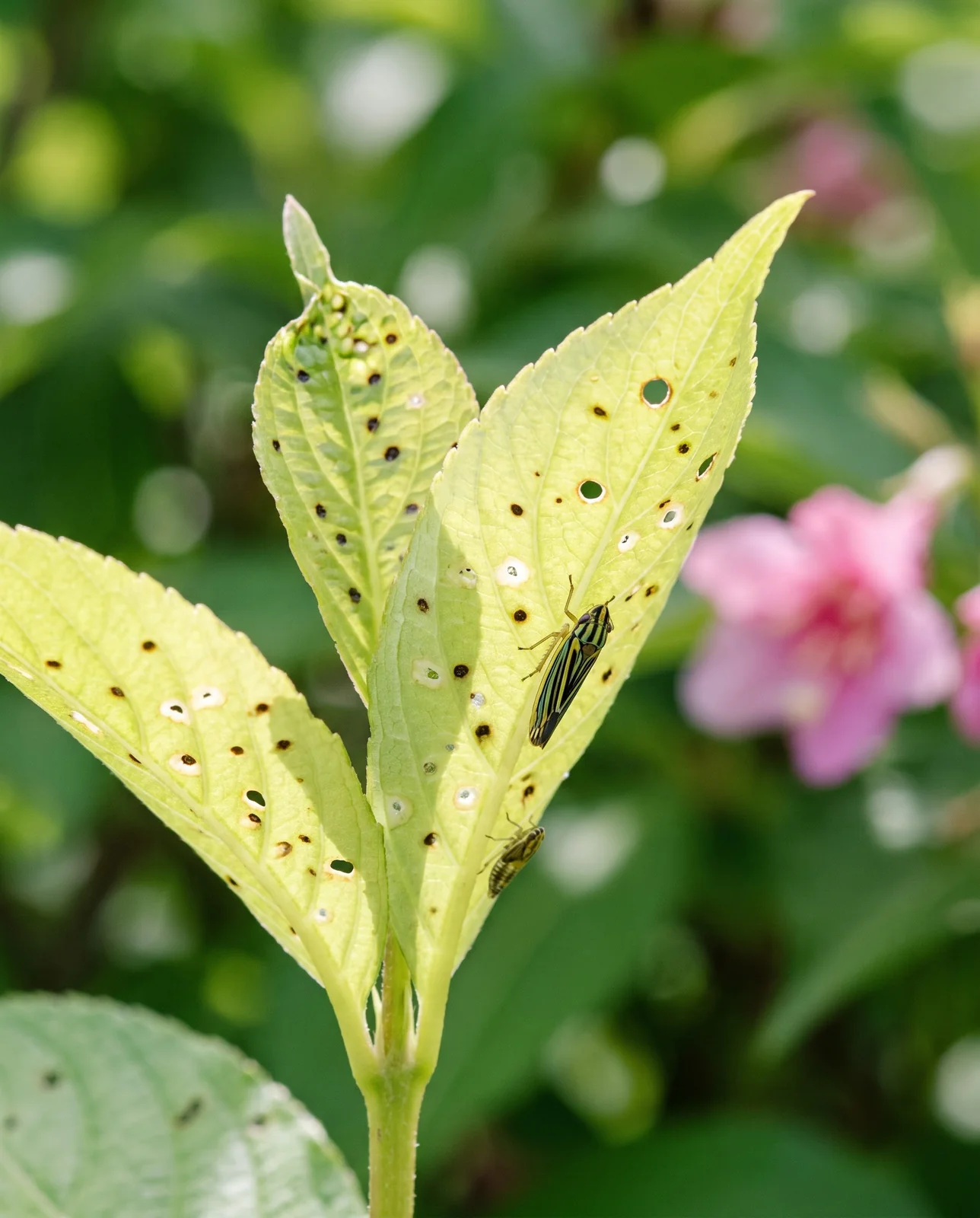
The second pattern is spotting: small, round, depressed spots, brown, black or translucent. The dead tissue drops out and leaves a shot hole. The third is scorch, and it belongs to the cultivars the market runs on. Colored and variegated leaves need enough light to develop that color and can scorch in hot sun. The browning shows at the edges of the brightest leaves while a plain green plant beside them stays clean. Browning that arrives in June on a shrub that leafed out normally points back at last winter: a hit weigela leafs out and even sets flower buds before dying back.
Weigela problems, most asked about first
Five problems cover most of what goes wrong with this shrub.
Symptom: full foliage, no buds, on a shrub that flowered last year. Cause: a cut made after the buds were set, since they form in the late summer to fall period. Fix: date the last cut, and move the next into the week the flowers fade.
Symptom: normal leafing, then branches browning and dying back weeks after the flowers were due. Cause: cold that killed the wood over winter. Fix: cut the dead back to a healthy leafy branch above the bark collar, at any time of year.
Symptom: pale leaves falling in quantity through summer. Cause: a heavy oystershell scale load, which turns foliage chlorotic and stunted. Fix: look at the older bark, because the insect is on the stems.
Symptom: small, round, depressed spots, then holes where the dead tissue fell out. Cause: fourlined plant bug, feeding from the hatch about the middle of May. Fix: ultrafine horticultural oil, insecticidal soap or malathion on the nymphs.
Symptom: elongated brown scales on the bark, 1/10 to 1/8 inch long. Cause: oystershell scale. Fix: count them, since a heavy load brings dieback and cracked bark while a light one shows little or no symptom.
The pests weigela actually gets
The insect with a full case file is the fourlined plant bug, Poecilocapsus lineatus. It goes for the tender terminal leaves and lays its eggs in the soft stems. The eggs hatch about the middle of May and the young bugs suck sap from the tender leaves. They molt five times and reach maturity about the middle of June, winged and nearly 1/3 inch long. The adult is yellow, with four black stripes down the body alternating with three green. There is one generation a year. Oystershell scale, flea beetles, mealybugs and leaf and bud eelworms fill out the list.
The damage runs on the same calendar. Feeding starts as sunken areas around the punctures, which later show as circular transparent spots and finally as circular holes. Holes found in July are the mark of feeding weeks earlier. Control aims at the nymphs: ultrafine horticultural oil, insecticidal soap or malathion, all registered for this pest in Connecticut. Disease is the quiet half of the picture. Once established, weigela generally is disease free, and no particular disease or pest problems attach to the species.
How much feeding weigela needs
Feeding comes down to one conditional line: slow release fertilizer for shrubs, when needed. Beyond that the plant asks the soil only for good drainage, reasonable moisture and plenty of sun. The two words doing the work are when needed, which leaves the decision to the ground a particular shrub stands in. No rate, no season and no formula come with the instruction, and that is a fair measure of how little an established weigela wants.
Hummingbirds, deer, and what a resistance rating means
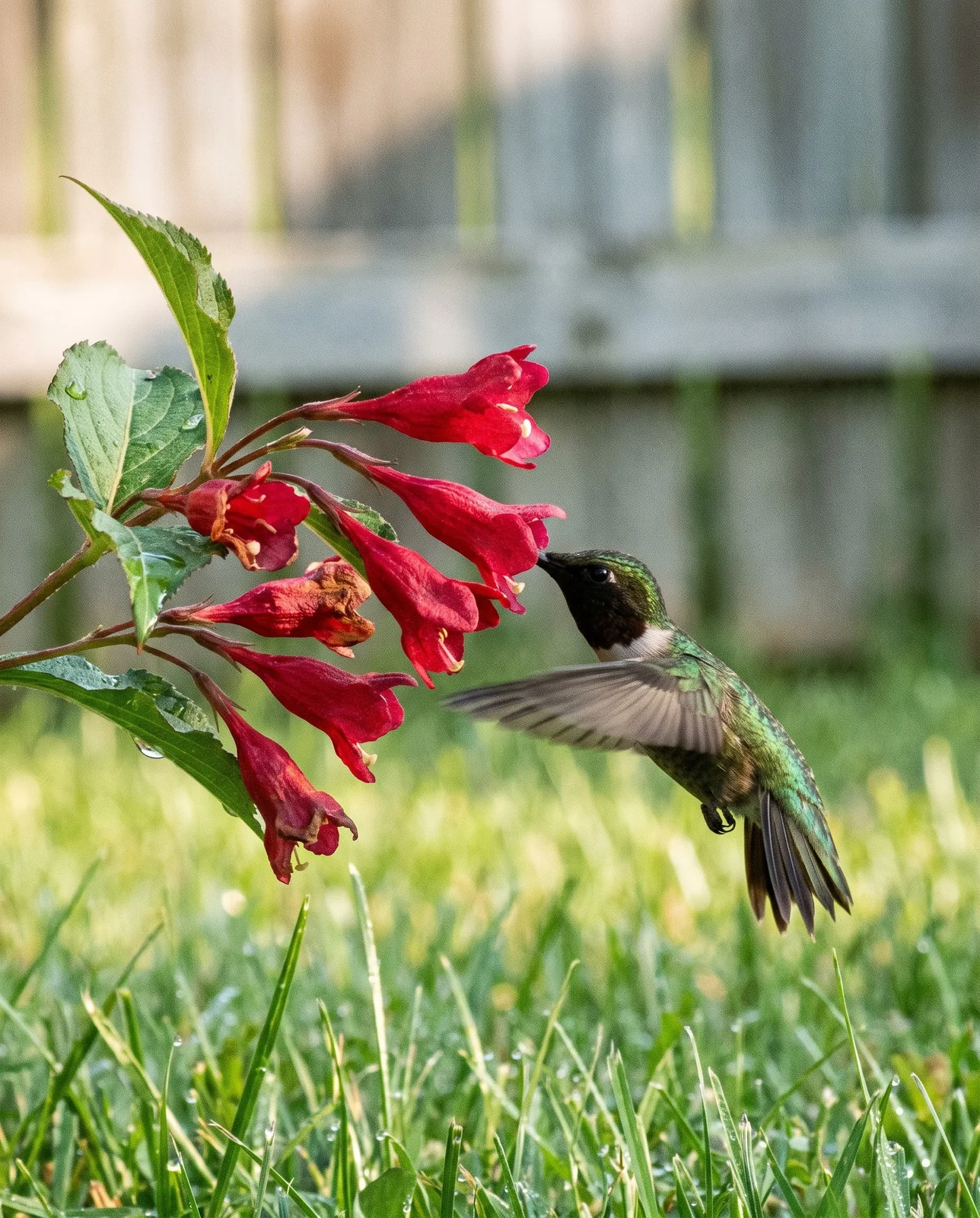
The flower shape is the reason the birds come. Weigela's flowers are tubular, and tubular flowers are what hummingbirds work, with butterflies on the same shrub. It is the same equipment honeysuckle carries, the family weigela belongs to.
Deer resistance is the one place the ratings contradict themselves. Weigela carries a deer resistant rating, and the cultivar pages that carry it also warn the shrub can be damaged by deer. Both lines are true. The rating describes what deer usually walk past while better food is standing. Put a weigela where a browsed shrub would not empty the bed.
Hedges, borders and the foundation bed
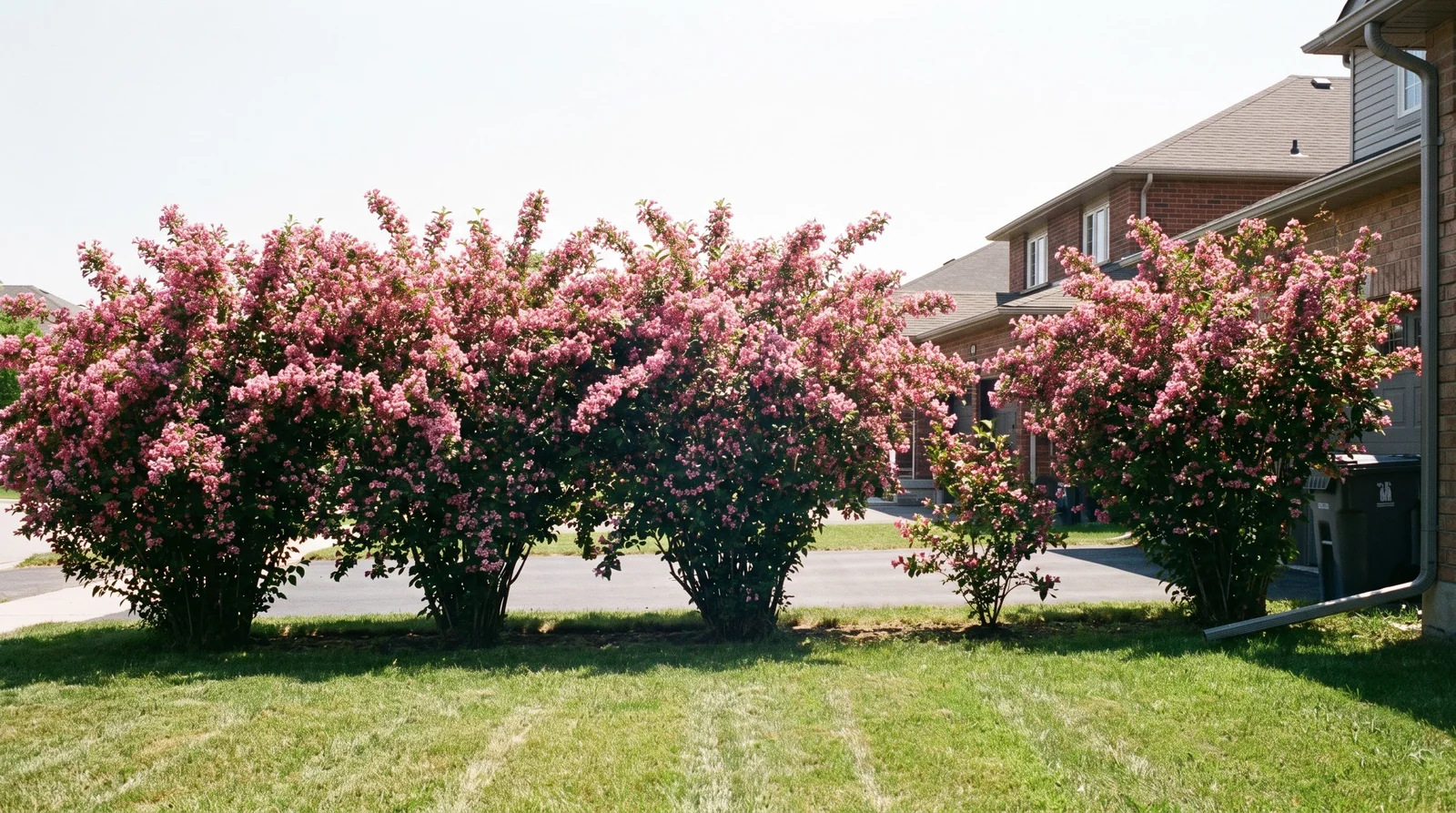
Weigela is grown for borders, property margins, foundations and informal screens. Screen is the use that suits the habit, and a large selection wants 6 to 12 feet of room. A row set at that spacing closes into one arching mass by maturity, which is a different object from a clipped hedge. The clipped version is the one that costs flowers. A formal flowering hedge should be sheared after it blooms, since more frequent shearing means fewer blooms. That puts a weigela hedge on one shearing a year if the flowers matter. The heavy flush lasts a few weeks at the end of spring and the rest of the year is foliage. Put the shrub where something beside it comes into flower as it finishes, the ordinary arithmetic of a border built from different flowering plants.
Weigela in a container
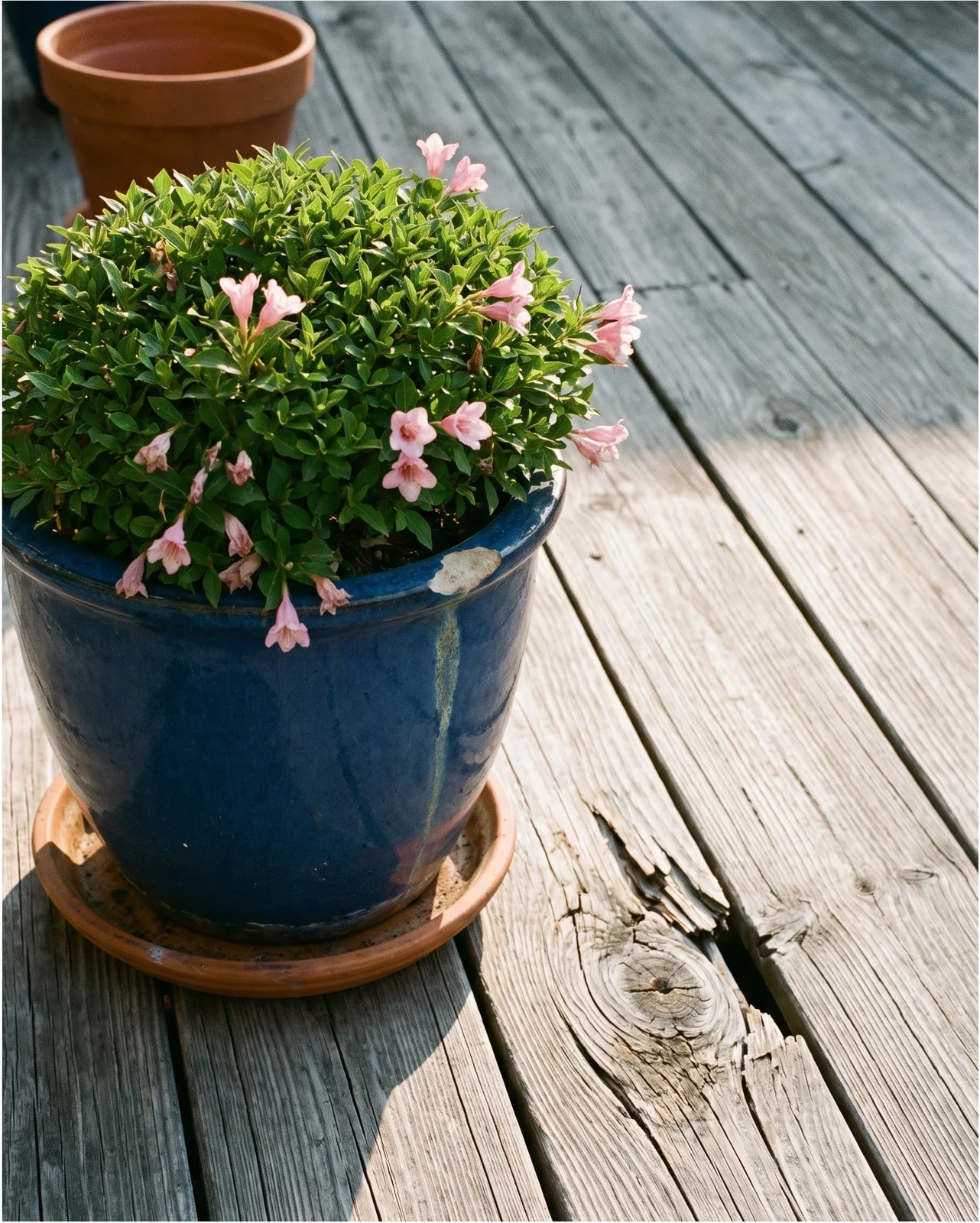
Only the dwarf class fits a pot. A dwarf weigela stands 1 to 1.5 feet tall and about as wide, and 12 inches to 3 feet is the space it needs. The same compact plants tolerate a range of soil types, air pollution and clay soil, the profile a deck or a paved yard asks for. Drainage does not relax in a pot, since well drained is the condition attached to every soil type on the list. Winter is the part to think through before buying. Weigela is deciduous, a pot holds a fraction of the soil a bed does, and the published hardiness figures describe plants standing in the ground.
Cuttings, and the patents on the named plants
Weigela roots readily from stem cuttings, taken in summer while the new growth is still soft. That is the whole method. The catch is that the plants most worth copying carry patents. My Monet's U.S. Plant Patent PP16,824 was issued on July 18, 2006, and Sonic Bloom went out with a plant patent applied for. The number is printed in the catalog entry, and it is the thing to read before taking cuttings from a named selection.

How much sun weigela needs
Weigela wants part to full sun, which means six hours or more of direct sun. It is also happy in light, dappled shade, so the line falls at an open position with the shade at its lightest. Light does a second job on the modern selections. Colored and variegated leaves need enough of it to develop that color, and they scorch in hot sun. A burgundy or cream edged plant is asking for a narrower band of light than a plain green one.
Watering a weigela
Water regularly until the plant is established, then water it through droughts. The rest of the instruction is just as short: well drained soil, full sun, water when the ground is dry, and no soil that stays too wet. Medium moisture is the level named for the species. A new plant is kept damp while its roots move out into the surrounding ground. An established one gets water when a dry spell earns it, because the same instructions that ask for moisture ask harder for drainage.
What to expect, season by season
The first year, a settled year, and the point where an old shrub needs renewing.
The first year is roots. Water regularly until the plant is established. Expect the buds for its first full spring to be set on the wood it makes in the late summer to fall period. The work is watering, and ground that drains.
A settled year runs on two calendars. The heavy flush comes at the end of spring and the pruning window opens as it fades. Fourlined plant bug eggs hatch about the middle of May and the bugs mature about the middle of June, one generation and no more. June is also the month a shrub hurt by the winter gives itself away, leafing out and even setting flower buds before dying back.
The mature shrub is a size problem before it is anything else. It gets dense and arching and eventually sweeps the ground. That is where renewal starts: a third of the oldest and thickest stems down to the ground each year. New stems come up from the roots, and the cycle repeats for as long as the shrub stands.
Four things people repeat about weigela
Each of these is common, and each has a plain answer.
The myth: A weigela that skips a year was pruned wrong.
The reality: Sometimes, and sometimes it was the winter. Some dieback is not unusual in some regions in any year, and cold injury leaves the plant more open to infectious disease. A shrub that leafs out and then dies back in June fits the winter pattern.
The myth: Feed it and the flowers come back.
The reality: Feeding is one conditional line: slow release shrub fertilizer when needed. What the plant asks for is drainage, moisture and sun. The lever on bloom is the pruning date.
The myth: Aphids are the pest to watch for.
The reality: Aphids are not among weigela's documented pests. The insect that is: the fourlined plant bug, one generation a year, hatching about the middle of May.
The myth: Deer leave weigela alone.
The reality: Weigela is one of the shrubs deer usually walk past. The cultivar pages that rate it resistant also warn it can be damaged. Resistant means low on the menu while better food stands.
FAQ
Do I cut back weigela in the fall?
No. The buds for next spring are set in the late summer to fall period, so an autumn cut carries them off. Prune right after the flowers fade.
Does weigela like sun or shade?
Sun. Part to full sun means six hours or more of direct sun, and full shade cuts the flowering.
Why isn't my weigela bush blooming?
Four common causes: a cut made after the buds were set, too much shade, a deliberate hard cut, and winter dieback.
Can a severe pruning kill a weigela shrub?
It survives one. Cutting every cane close to the ground in early spring is an accepted technique that costs that season's flowers. A shrub chewed to the ground by rabbits grew back from the roots.
How many times a year does weigela bloom?
Once heavily, then lightly. The main flush comes at the end of spring, with often some rebloom in late summer, recorded as May to June and July to August.
What are the downsides of weigela?
The shrub goes rangy unless it is pruned, fall color is insignificant, and the heavy flush occupies only a few weeks at the end of spring.
What type of fertilizer is best for weigela plants?
Slow release fertilizer for shrubs, used when needed. Weigela otherwise asks only for good drainage, reasonable moisture and plenty of sun.
Is weigela poisonous to cats and dogs?
Weigela does not appear on the ASPCA toxic and non toxic plant list. Treat an unlisted plant as unknown and keep it from a pet that chews.
Do weigela bushes spread?
They widen. The species reaches 9 to 12 feet across on a dense, arching habit that eventually touches the ground. A large cultivar wants 6 to 12 feet of space.
How do you propagate weigela?
By cuttings. Weigela roots readily from stem cuttings, taken in summer while the growth is still soft. Named selections carry plant patents.
Interesting tips
- The native range on a tag is a compression. The species runs from Inner Mongolia and Manchuria through northern and south central China to Primorsky Krai, the Korean Peninsula and Kyushu in Japan.
- Old labels and old catalogs file the same shrub under another name: Weigela florida is also classified under the synonym Weigela praecox, the old fashioned weigela.
- Weigela is generally disease free once established. A shrub that keeps losing leaves to fungus responds to housekeeping: clear the diseased leaves, prune for air movement, treat early in the season.
Related Guides & Flowers
Lilacs
The other spring shrub of the same borders, with its varieties, its scent and its own pruning question.

Why hydrangeas do not bloom
The same missing flowers on a different shrub, traced back to the buds a late cut takes off.
Flowers for hummingbirds
Other plants with the tubular flowers hummingbirds work, for a bed built around the same visitors.
Deer resistant flowers
What deer usually pass over, and how much weight a resistance rating carries in a hard winter.
Enjoying our flower guides? Add YourFlowersGuide as a preferred source on Google. It helps more readers find us.
Add to Preferred Sources