Orchid meaning, by colour and tradition, honestly explained
An orchid carries a quieter, more particular message than most gift flowers. Where a rose shouts love and a sunflower beams, an orchid says something closer to "you are rare, and I admire you." Its core meanings are love, luxury, beauty, and strength, with a long history of standing for refinement and exotic rarity, and in the ancient world for fertility. The colour then narrows the message: pink leans toward affection and grace, white toward elegance and reverence, purple toward admiration and dignity. Below you will find each colour read plainly, where these meanings actually come from, how the orchid shifted from a fertility symbol into a token of luxury, and a clear note on which parts are well attested and which are softer tradition.
Orchid meaning is, happily, about as stable as flower symbolism gets. There is no famous quarrel over what an orchid says, no reading that flipped to its opposite somewhere along the way; its associations with elegance, admiration, and refined beauty line up fairly consistently across the old lists and the modern ones. That makes it a low-risk flower to give with intent. It still is not official or universal, and saying so plainly is more useful than a chart that pretends every meaning is fixed.
What an orchid means
Before colour enters, an orchid stands for a cluster of related ideas: love, but a more refined and admiring love than the rose's open passion; luxury and rare beauty; and strength. That last one surprises people. The strength reading comes from the plant itself, which looks impossibly delicate and yet, as anyone who has kept one knows, is tough and long-lived, throwing out blooms that last for months. So the orchid became a flower for the person who is both elegant and resilient, beautiful and not fragile. It is the gift you give to say you find someone exceptional rather than simply that you love them.
The luxury and rarity note is worth knowing why it is there. For a long stretch of European history, tropical orchids were genuinely scarce and ruinously expensive, the kind of thing only the wealthy could grow in heated glasshouses, and a craze for collecting them ran through the eighteenth and nineteenth centuries. That scarcity stamped the flower with a sense of the costly and the exotic, and the meaning stuck long after orchids became a common supermarket plant. So when an orchid reads as luxury today, it is carrying the memory of an era when owning one really was one. The reading outlived the rarity that created it.
Orchid colour meanings, one by one
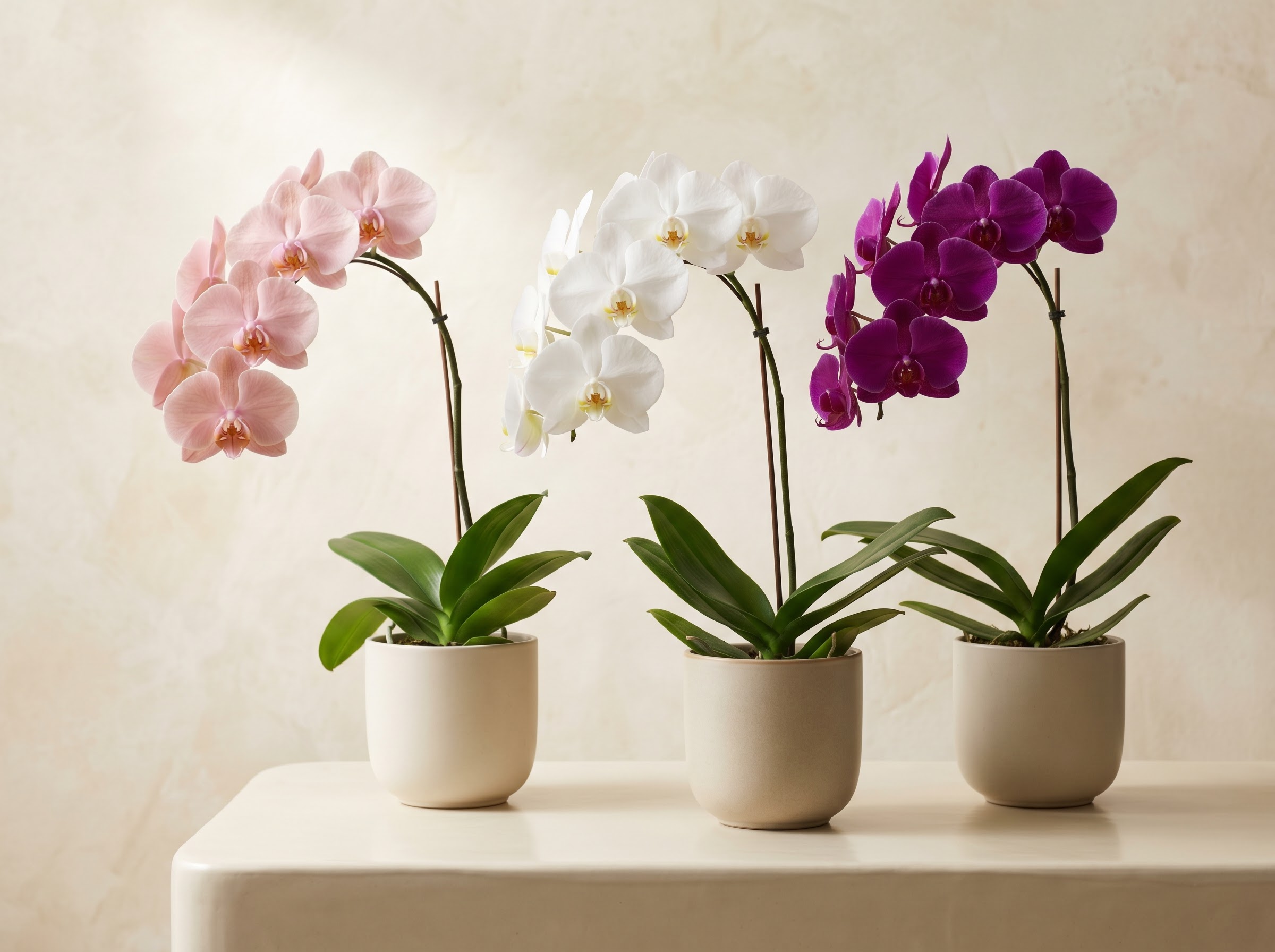
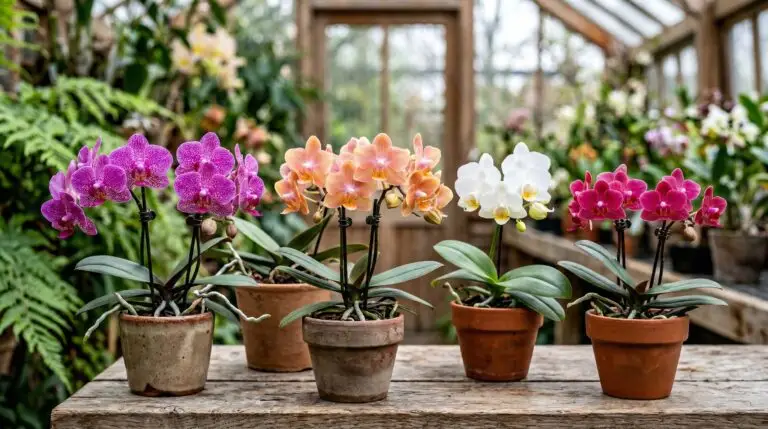
Colour does the fine-tuning. Pink orchids are the gentlest of the common colours, read as affection and grace, which makes them a warm and unfussy choice for someone you care about without wanting to make a grand romantic declaration. They suit a close friend, a mother, or a new and tender attraction. White orchids point toward elegance, reverence, and purity, and that combination is why they turn up so often at weddings and in formal, refined settings, and equally why they suit a moment that calls for dignity and calm rather than colour and noise. A white orchid is the one to send when you want the gesture to feel composed and serious.
Purple orchids carry admiration, respect, and dignity, which is a slightly more formal register than pink. Purple has long been the colour of rank and esteem, and the purple orchid inherits that, so it works beautifully for congratulating someone, honouring an achievement, or showing respect to a person you look up to rather than feel romantic toward. If pink says "I am fond of you" and white says "I hold this in high regard," purple says "I admire and respect you," a natural choice for a mentor or a graduate. The differences are real but gentle. Any of these orchid colours reads as tasteful and admiring; the colour simply decides whether the warmth tilts toward affection, reverence, or respect.
Here is the orchid-colour family in one place, with the meaning most people use today and a plain note on how solid each reading is. The note matters as much as the meaning, because it tells you which colours you can send with full confidence and which carry a little more local variation.
| Orchid colour | Common meaning today | How solid is it |
|---|---|---|
| Pink | Affection and grace | Well attested. A warm, non-romantic gift for a friend, mother, or gentle attraction. |
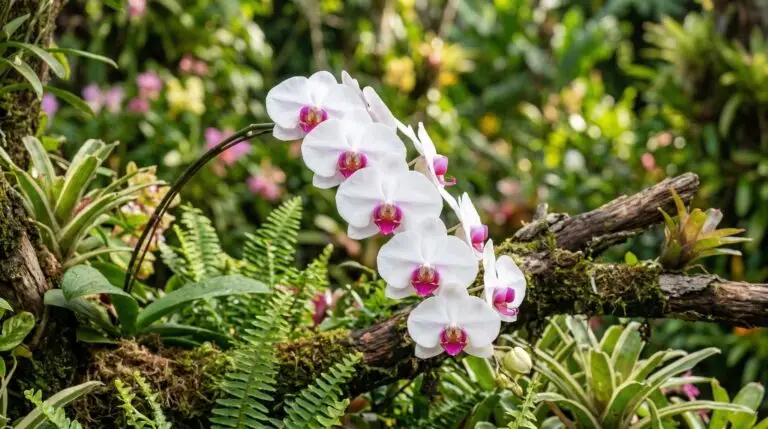
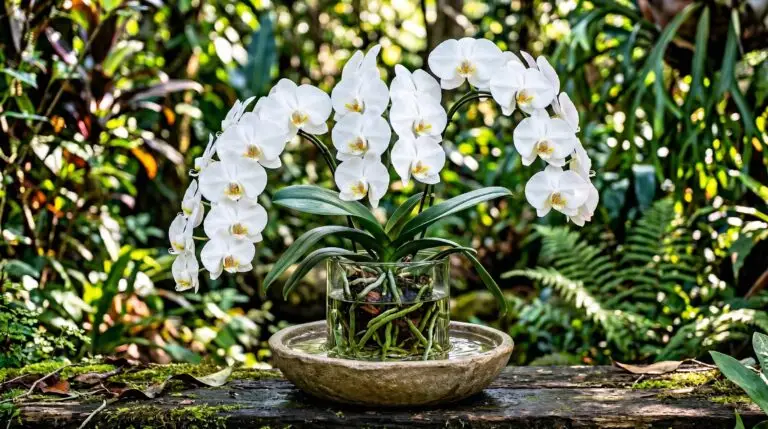
| White | Elegance, reverence, and purity | Well attested. The wedding and formal choice; reads as composed and dignified. |
| Purple | Admiration, respect, and dignity | Well attested. Suits a mentor, a graduate, or someone you esteem rather than love. |
| Any colour, overall | Love, luxury, beauty, and strength | The base orchid meaning under every colour; refined admiration more than open passion. |
You will see other orchid colours sold and occasionally assigned meanings of their own, since orchids come in yellow, orange, red, and near-blue. Those readings are far less settled than the three above, and most of them simply borrow the general colour associations rather than anything specific to the orchid. Yellow leans toward friendship and cheer, red toward passion and desire, the way those colours behave across most flowers. Our wider guide to flower colour meanings covers how each colour tends to read on its own, which is the safest way to interpret an orchid in a colour outside the classic three.
Giving an orchid, in romance and beyond
As a gift of love, the orchid says something more selective than the usual bouquet. It is love with admiration folded in, the message of someone who finds the other person not just dear but rare, rather than a plain unguarded declaration. Sending an orchid signals a little more thought and a little more taste. For a new relationship it can feel elegant rather than overwhelming, and for a long one it says you still find the person remarkable.
It is just as comfortable outside romance. Pink and purple orchids in particular make wonderful gifts for friends, family, and people you respect, because the orchid's core message of admiration travels well to any relationship. A potted orchid is a frequent choice for congratulations, for a thank-you that you want to feel a notch more refined than a standard bouquet, and for new beginnings, where its long bloom and quiet strength suit the occasion. If you are trying to match a flower to a particular emotion, our guide to what flowers mean by feeling sets the orchid alongside the other flowers for admiration, strength, and refined affection.
From a fertility charm to a noble scholar
The orchid's meanings have unusually deep and tangled roots, and the oldest one points in a direction most modern gifters would never guess: fertility. In ancient Greece the orchid was linked to virility and fertility, and the reason is hiding in the flower's own name. The word "orchid" descends from the Greek word for testicle, given to the plant because the paired underground tubers of the European wild orchids resemble them. From that resemblance grew a body of old belief that the orchid governed virility and could even influence the sex of a child, and that ancient fertility association is the first meaning the flower ever carried. It is a long way from a tasteful white orchid at a wedding, but it is the genuine origin, and it is the kind of history that gets quietly dropped from cheerful gifting guides.
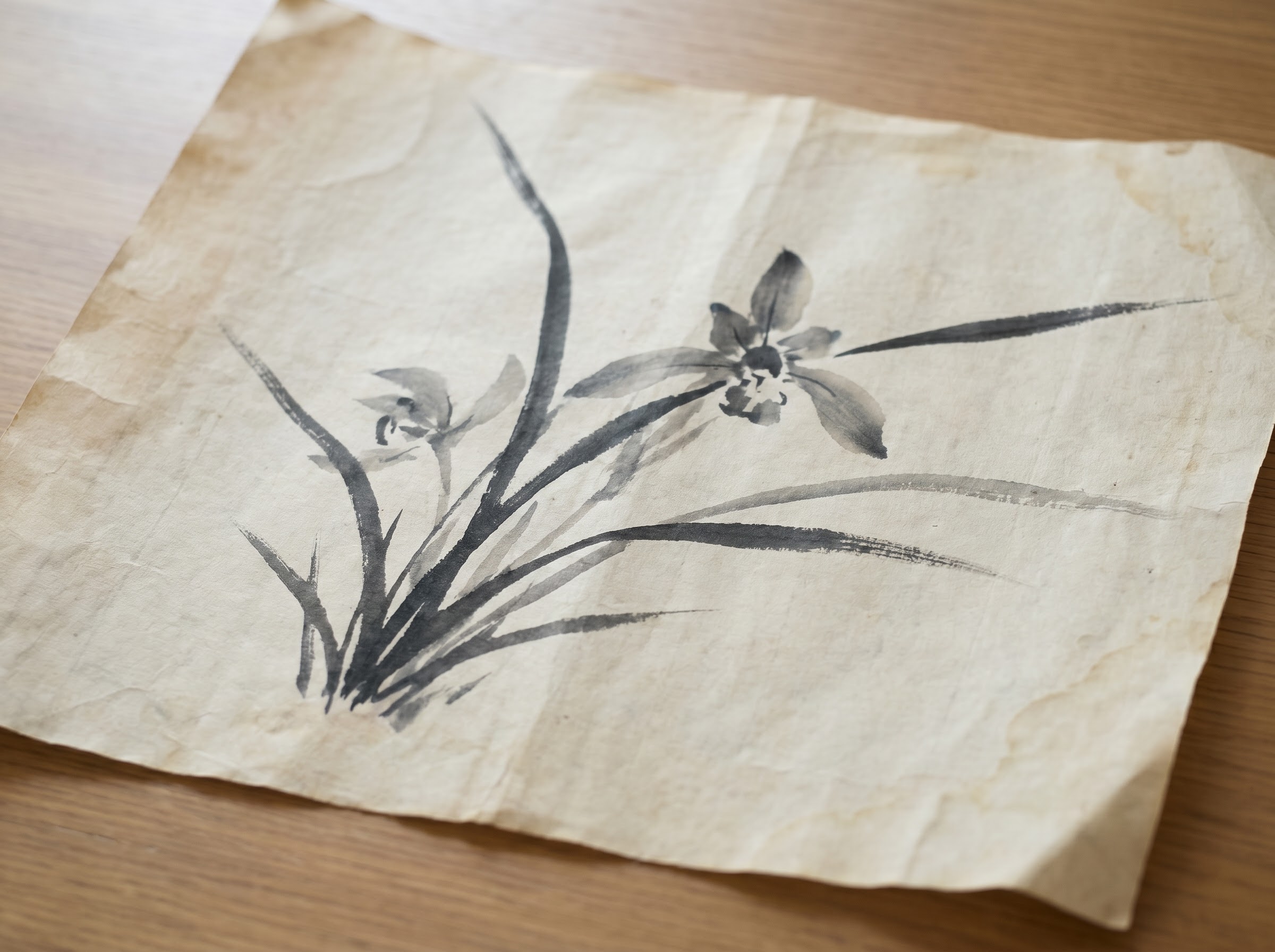
In China the orchid took a different and gentler path, standing for refinement, friendship, and the ideal of the noble scholar, a person of integrity and cultivation. The flower appears in classical Chinese painting and poetry as an emblem of moral and aesthetic excellence, which is its own elegant version of the "rare and admirable" idea that runs through the whole orchid tradition. These cultural readings sit alongside the European ones rather than replacing them, and a flower meaning genuinely changes depending on where in the world you are reading it. Our guide to flower meanings around the world follows that thread through other flowers and cultures, and the orchid is one of the clearest cases of a single bloom meaning quite different things in different places.
How the Victorians read it, and why it barely budged
By the time the Victorians built out their elaborate language of flowers, much of which actually came together in France before it became a British craze, the orchid had largely shed its earthy fertility past, at least in polite drawing-room use, and stood instead for luxury, refinement, and rare beauty. That is a striking shift in itself. The same flower that the ancient Greeks tied to virility became, a couple of thousand years later, a byword for tasteful wealth and exotic elegance, with the fertility meaning surviving mainly as a historical footnote rather than something anyone signalled with a gift. The change tracks the orchid collecting mania of the era, when an exotic orchid was a costly trophy, so the flower's meaning followed its market value into the realm of luxury.
What is reassuring for a modern reader is how little has shifted since. Unlike the yellow rose, whose Victorian "jealousy" reading flipped to a friendly modern one, the orchid's nineteenth-century meanings of luxury, refinement, and admiration are essentially the meanings it carries now. The fertility layer faded and the luxury layer hardened, and there it has stayed. So the orchid is one of the more stable flowers to give, because the gap between the old reading and the current one is small, and the small print is more about which ancient meaning has gone quiet than about any present-day disagreement.
Gifting an orchid, and the message to match
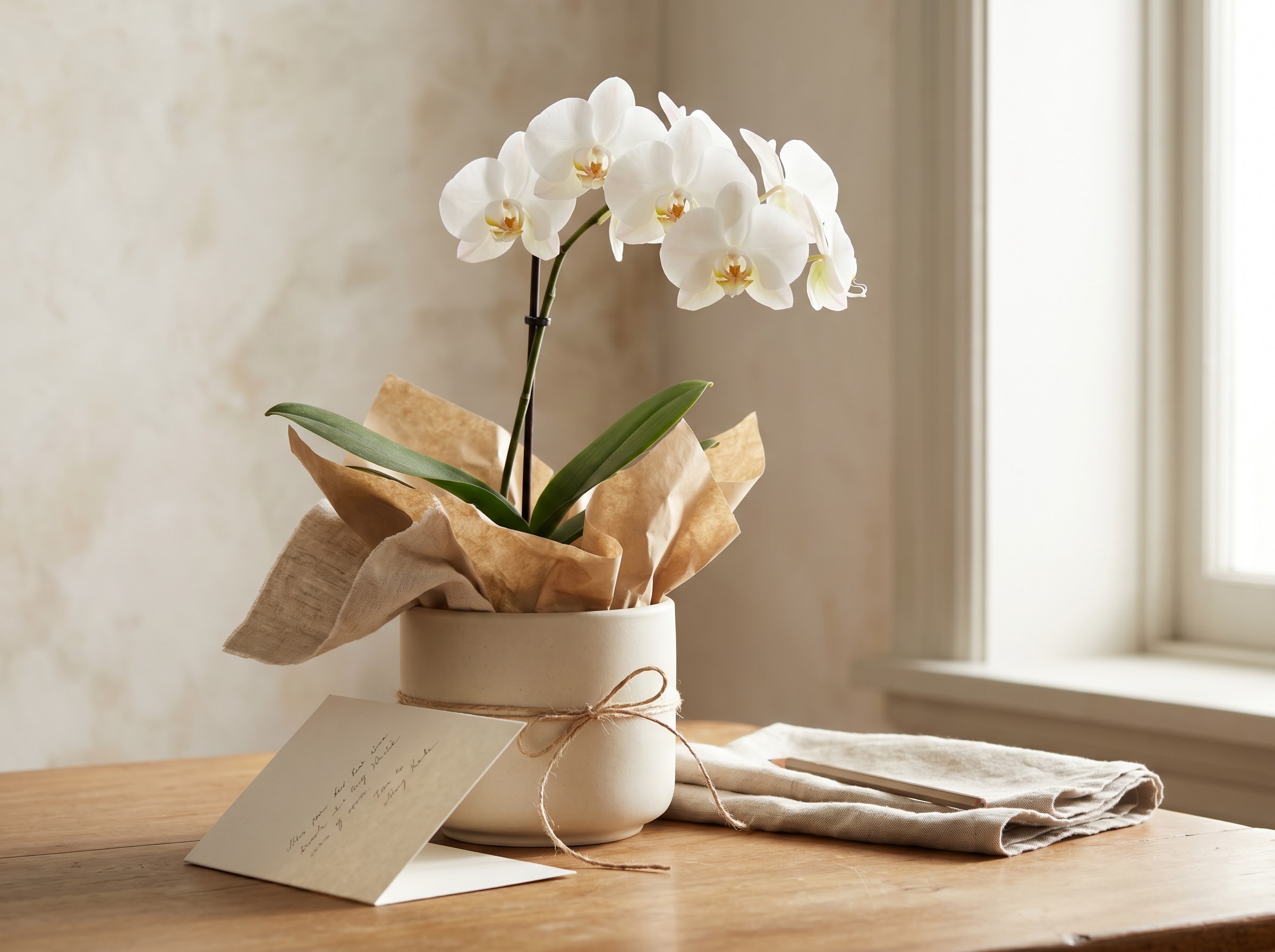
Pick the colour for the relationship and the orchid will say the right thing. Send pink for warm affection and grace, white for elegance and a reverent, formal moment such as a wedding, and purple for admiration and respect toward someone you esteem. The base message under all of them is the same compliment, that you find the person rare and remarkable, so it is hard to misfire as long as you are aiming at admiration rather than open passion. For a card, a line that suits almost any orchid is simply, "You are rare and remarkable," which says exactly what the flower has always meant.
One practical point sets the orchid apart from cut flowers. The kind most people give is a potted moth orchid, which is available year-round rather than seasonally and lasts for months, reblooming if it is looked after, so it is a gift that keeps standing for what you meant long after a bouquet would have wilted. That longevity is part of the message; an orchid is the gift that says your admiration has staying power. If your recipient wants to keep it alive and flowering, our guide on how to grow a moth orchid walks through the surprisingly simple care.
One caveat runs under every flower meaning, even this stable one. The orchid's readings are well attested, but no meaning here is official or universal. The horticulturists at Iowa State University Extension say as much in their own list of flowers and their meanings, pointing out that any one bloom can be read more than one way depending on the source; the orchid simply happens to be a flower where the sources agree closely. So lean on these readings with confidence, especially the well-worn ones like white for elegance and purple for respect, and treat the rarer colours and the ancient fertility lore as history and custom rather than rules. The orchid has stood for rare beauty for centuries not because any authority decreed it, but because so many people, for so long, kept treating it that way until the meaning simply held. To see how the rest of the language of flowers was assembled and why it keeps drifting, our hub on the meaning of flowers lays out the whole picture, and for the orchid's place among other admiring and reverent blooms, our guide to spiritual flower meanings sets it in context.
- Cornell University, Written in Petals: The Language of Flowers, on the history of floriography.
- Iowa State University Extension, Flowers and Their Meanings, on why sources disagree.
More About Moth Orchid
Growing orchids in bathrooms and why humidity-loving phalaenopsis thrive near showers
Why your orchid is not blooming and the simple temperature trick that triggers new flowers
Orchid arrangements and centerpieces that make any room feel luxurious and elegant
Repotting orchids step by step without killing the plant or damaging aerial roots
Best moth orchid varieties and the incredible range of phalaenopsis colors and patterns
How to care for moth orchids so they bloom again and again for years
Watering orchids correctly and the ice cube myth versus what actually works
Orchid roots growing out of the pot and why aerial roots are a sign of a healthy plant