Hyacinth meaning and hyacinth colour meanings, honestly explained
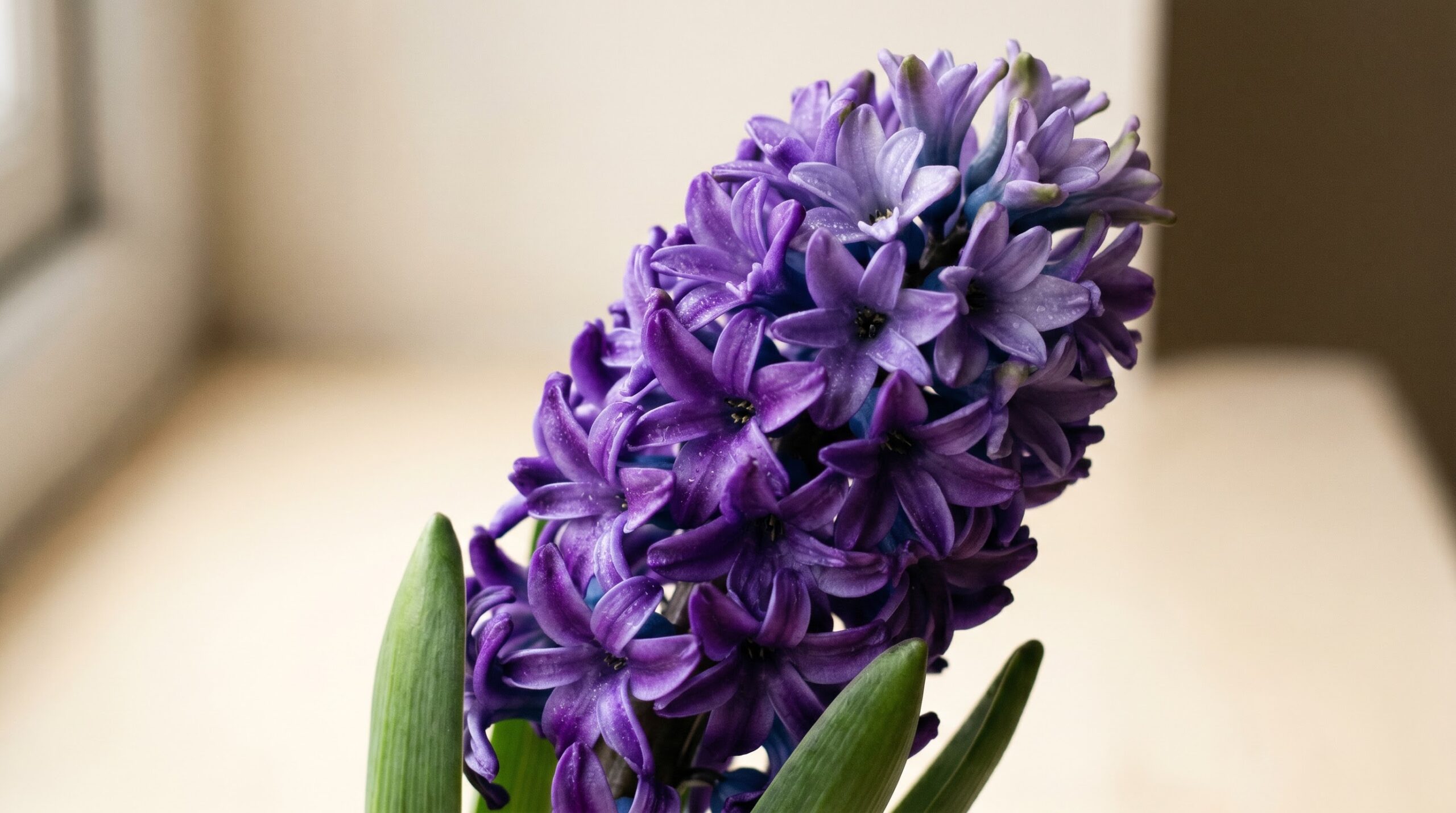
Few flowers run hot and cold the way the hyacinth does, playful on the surface and quietly mournful underneath, and that contradiction is the whole charm of it. At its core the flower means playfulness and sincerity, a lighthearted "sport and play" in the old lists. Yet the purple hyacinth is one of the most serious flowers you can give, the classic way to say "I am sorry, please forgive me," and the plant carries a Greek myth of accidental death that ties it to grief. So what a hyacinth means depends almost entirely on the colour, and one colour swings it from playful to sorrowful. Below you will find each hyacinth colour read plainly, the myth that gave the flower its sadder side, how the Victorian reading shifted, and a clear note on which parts are settled custom and which are softer.
Most of what makes the hyacinth interesting is that single split. A flower that means fun in pink and red can mean a full apology in purple and plain jealousy in yellow. That is unusual. Many flowers shade their meaning by colour, but few flip as hard as this one does, and knowing the flip is the difference between a thoughtful gift and an accidental insult.
What a hyacinth means
Underneath all the colour coding, a hyacinth is a playful, sincere flower. In the Victorian language of flowers it stood for sport and play, a cheerful note rather than a weighty one, and the modern reading keeps that lightness while adding a thread of sincerity. It is a spring flower, dense and powerfully fragrant, and a lot of its feeling comes from that: it arrives early, smells wonderful, and reads as a fresh, friendly, slightly exuberant gesture. That is the baseline the colours build on.
The complication is that the hyacinth also carries grief, and the grief is older than the playfulness. The flower is named for Hyacinthus, a beautiful youth in Greek myth whom the god Apollo loved and then killed by accident with a discus throw. The story says the flower sprang from his blood, which is why the hyacinth also stands for sorrow and mourning. Some classical accounts even claim the petals were marked with letters of grief, though the plant the ancient poets called hyakinthos may not have been our modern garden hyacinth at all, and some scholars suspect they meant a larkspur or an iris instead. So one flower holds two opposite moods at once, the bright spring fun on the surface and the old myth of loss underneath, and which one shows depends on the colour you choose.
Hyacinth colour meanings, one by one
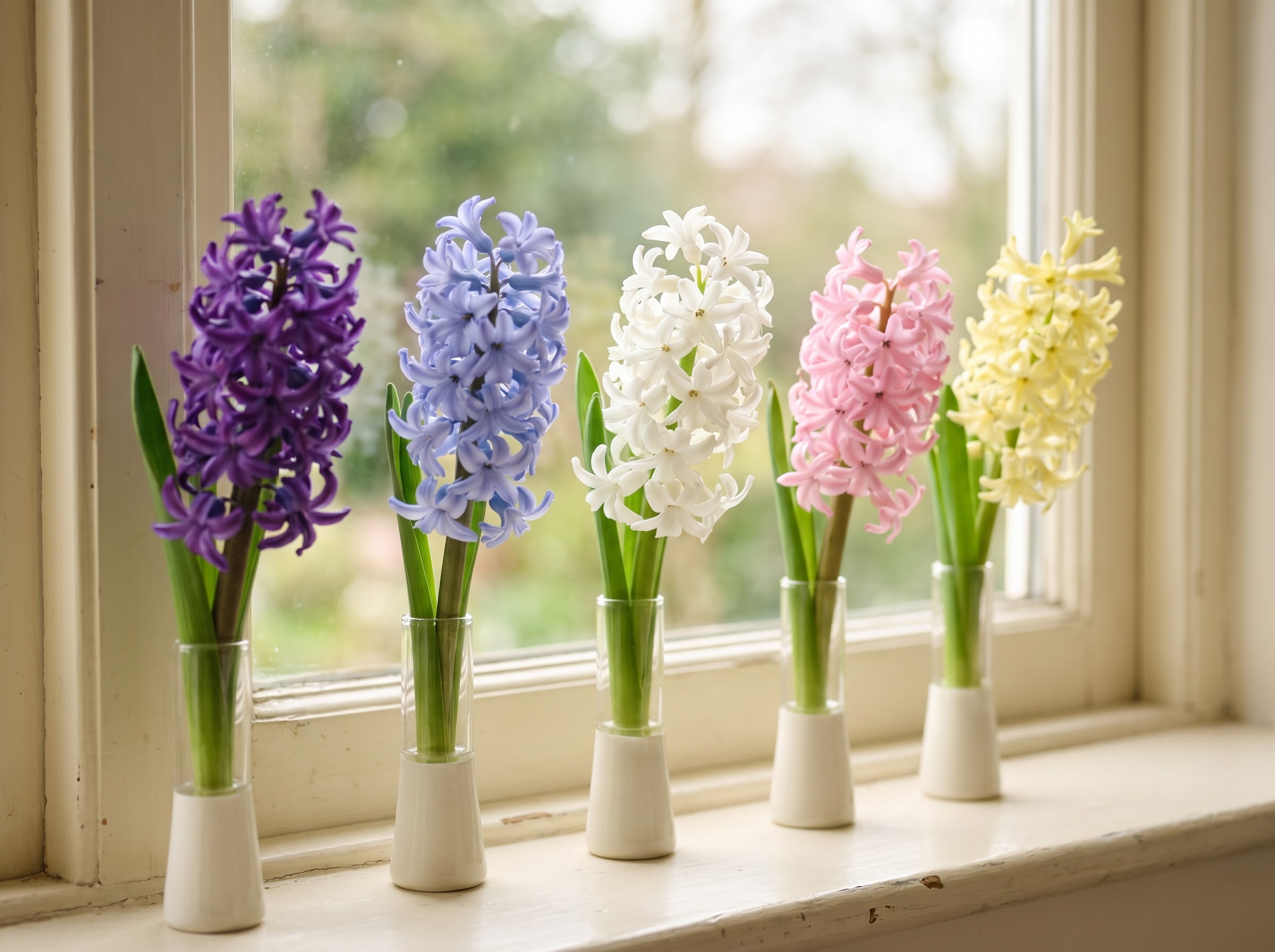
Purple is the hyacinth colour that matters most, because it is the one with a real job to do. A purple hyacinth means "I am sorry, please forgive me," and it carries genuine sorrow. This is the flower you send to apologize, and it is one of the few blooms with apology written so directly into its tradition. If you give purple hyacinths without meaning to say sorry, you may puzzle the person who receives them, so this is the colour to choose deliberately. Blue hyacinths sit close by in tone but read kindlier, standing for constancy and sincerity, a steady "I mean this" rather than an apology, which makes them a warm choice for someone you want to reassure of your loyalty.
White hyacinths turn gentle and a little quiet. They traditionally mean loveliness and quiet prayers, a soft and slightly prayerful note that suits sympathy, calm well-wishing, or a tender spring gift where you want grace without a loud message. The lighter, brighter colours are where the flower's playful core comes through. Pink hyacinths mean playfulness, plain and uncomplicated, and red hyacinths mean play and fun, the most carefree reading the flower offers. Those two are the ones that match the hyacinth's cheerful spring personality, and they make easy, happy gifts with no hidden weight.
Yellow is the colour to handle with care. In the traditional lists a yellow hyacinth means jealousy, a pointed and unflattering message that runs against the flower's otherwise friendly nature. It is the hyacinth equivalent of the old jealousy reading on a yellow rose in the Victorian lists, and like that one it comes from the period vocabulary rather than anything anyone tells you out loud today. Almost no recipient will read jealousy into a yellow hyacinth on sight, but it is worth knowing the tradition so the choice is yours and not an accident. One more practical wrinkle: the small clustered blue spikes often sold as "grape hyacinth" are actually a separate plant called Muscari, so their symbolism is not really tied to any of the readings here.
Here is the whole hyacinth colour family in one place, with the meaning most people use today and a plain note on how solid each reading is. The note matters as much as the meaning, because purple carries real weight and yellow carries a real risk, while the rest are gentle enough to send freely.
| Hyacinth colour | Common meaning | How solid is this |
|---|---|---|
| Purple | "I am sorry, please forgive me"; sorrow | The strongest and clearest hyacinth message. Choose it on purpose, as a real apology. |
| Blue | Constancy and sincerity | A steady, warm message of loyalty. Well attested and easy to give. |
| White | Loveliness and quiet prayers | Soft and slightly prayerful. Suits sympathy or a gentle spring gift. |
| Pink | Playfulness | Light and friendly, true to the flower's cheerful core. A safe, happy gift. |
| Red | Play and fun | The most carefree reading. No hidden weight. |
| Yellow | Jealousy | Victorian tradition, against the flower's friendly nature. Few read it today, but worth knowing. |
Hyacinth in love, apology, and play
The hyacinth is not really a love flower in the way a rose is, and that is useful to know before you give one. Its strongest emotional notes are apology and sincerity, not romance. For a relationship gesture, blue is the most fitting colour, since constancy and sincerity say "you can count on me" without claiming a passion the flower was never meant to carry. Purple is for the moment after a quarrel, when the message is an apology rather than a declaration. Pink and red lean toward friendship and simple fun, so they make good gifts for a friend or a cheerful spring surprise that asks nothing in return.
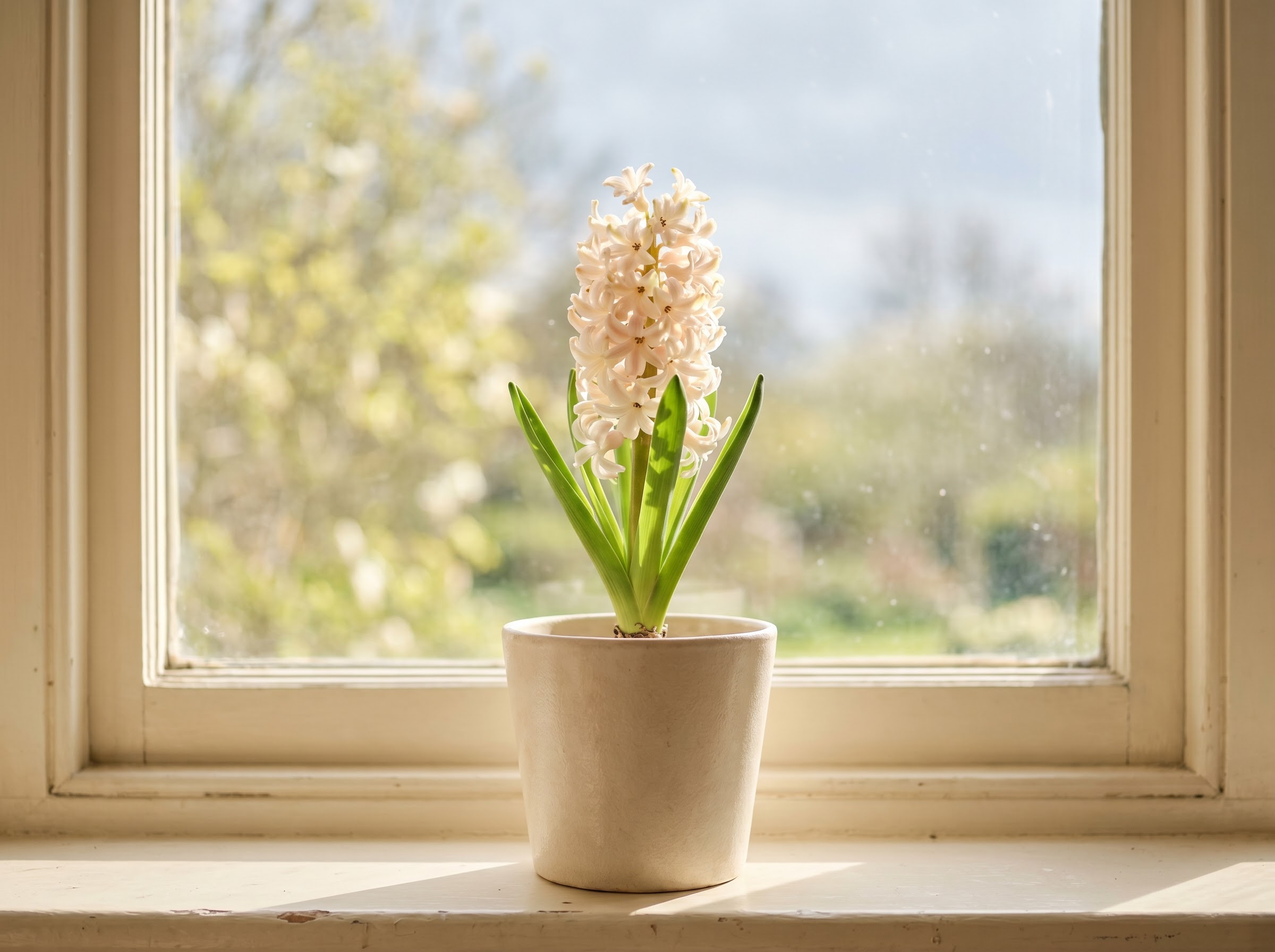
Because the flower blooms in early spring and fills a room with scent, it works beautifully as a seasonal gift even when you are not sending a coded message at all. A pot of fragrant hyacinths on a windowsill in March reads as warmth and the arrival of spring far more than as any single word from a meaning chart. If you do want the meaning to land, lean on the colour, and if you want to be sure it lands, say so on the card. For the bigger picture of how feelings map to flowers, and which blooms carry apology, sincerity, or sympathy more strongly, our guide to what flowers mean by feeling sets the hyacinth among its neighbours.
The Greek boy behind the flower
The hyacinth's sorrowful streak is the oldest part of its meaning, and it comes straight from the Greek myth of Hyacinthus. Apollo loved the youth, killed him by accident, and from his blood grew the flower that bears his name, which is why grief and remembrance cling to it despite its playful reputation. That myth is the source most people are half-remembering when they sense something bittersweet about the flower.
The colour-by-colour system, though, is much younger. It belongs to the elaborate language of flowers that flourished in the nineteenth century, the same tradition that gave the rose its colour code. Flower symbolism itself is ancient, with roots in China, Egypt, and Assyria, but the detailed European dictionaries that fixed a meaning to each bloom and each shade came together later, much of it built in France before it crossed into Britain as a Victorian craze. So the hyacinth carries two layers from two very different ages: a Greek myth thousands of years old that explains the grief, and a Victorian parlour fashion a couple of centuries old that explains why purple means sorry and yellow means jealousy. Most other hyacinth readings are simply variations on its playful core, sorted by colour the way the rest of flower colour meanings are.
The Victorian reading, and how it shifted
In the Victorian lists the hyacinth's headline meaning was sport and play, a light and slightly frivolous flower, with the colour deciding the finer message underneath. The modern reading has mostly kept that playfulness and quietly promoted the purple apology to the front, because saying sorry with flowers is something people still genuinely do, while sending a coded message of "sport" is not. The yellow jealousy meaning has faded the hardest. It survives in the old charts and on meaning sites, but it has almost no life in real gifting, and you can give yellow flowers today without anyone reaching for the Victorian reading.
What did not shift is the apology. The purple hyacinth as the flower of "please forgive me" has held steady, which is unusual, since most flower meanings drift over the decades. The reason is probably that it fills a real need. People look for a way to apologize without words, and a flower with apology baked into its tradition is genuinely useful, which is why the purple reading kept its place while the more decorative meanings faded.
The honest caveat: where sources disagree
For all that the hyacinth's meanings are unusually well documented, they are not official or universal, and a frank account serves you better than a tidy one. The flower contradicts itself by design, playful on the whole yet sorrowful in purple and jealous in yellow, and different lists weight those readings differently. As Iowa State University Extension notes in its own guide to flowers and their meanings, the same flower is read in more than one way by more than one source, and the hyacinth is a clear example of exactly that. There is no single authority that settles it, only a broad and fairly consistent tradition.
So treat the strong, well-worn readings with confidence and the rest as helpful custom. Purple for apology and blue for sincerity are solid, widely agreed, and safe to lean on. The yellow jealousy meaning is real but largely historical, more useful to know than to act on. And the grape hyacinth confusion is worth a second look before you buy, since the plant sold under that name is a different species entirely. None of this makes the meanings fake; it makes them human, agreed upon by people rather than handed down by rule. To see how that honest uncertainty runs under every flower in the tradition, the hub on the meaning of flowers explains how the whole language was invented and why it shifts.
Choosing a hyacinth, and what the card might say
Spring is the natural time for hyacinths, since that is when they bloom and when their scent is at its best, so they make an apt gift from roughly late winter into the middle of spring. Choose the colour for the message. Send purple when you mean to apologize, blue when you want to promise steadiness, white for a gentle or sympathetic occasion, and pink or red when you simply want to give someone a bright, fragrant lift with no strings attached. Keep yellow for the people who will enjoy the flower for itself and never open a meaning chart.
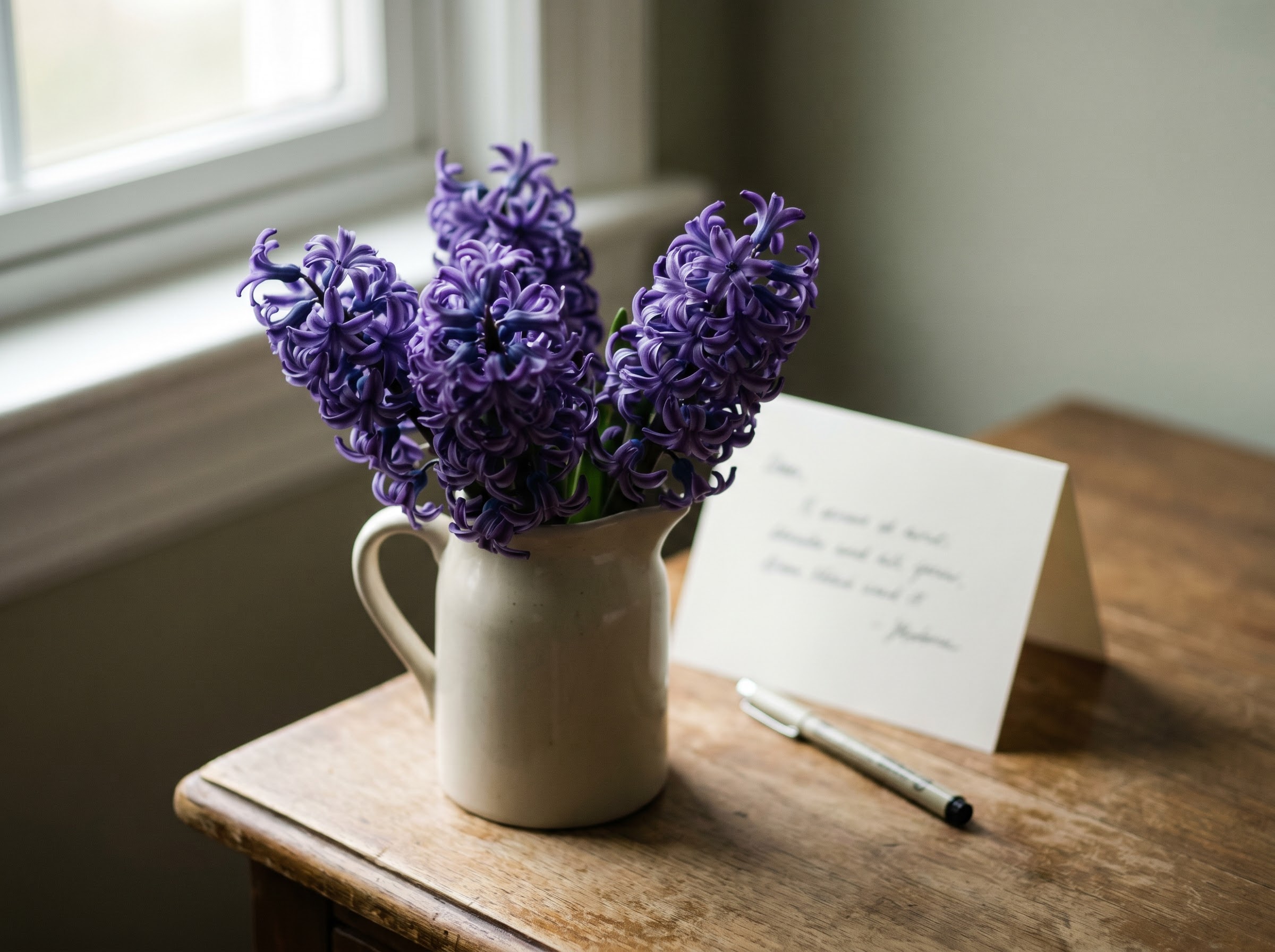
If the message is an apology, the card is where you make sure it lands, because a flower alone is a hint and a hint is easy to miss. A few plain words do the work: "I am sorry. Please forgive me." Say it simply and let the purple hyacinth underline it rather than carry it. The same goes for the gentler colours; a line as easy as "thinking of you, and happy spring" turns a pretty pot of flowers into a message the person actually receives. A clear word on the card is what carries the meaning the rest of the way. When you are choosing flowers for a specific moment like saying sorry, our guide to flower meanings by occasion lines up the blooms that fit each one.
- Cornell University, Written in Petals: The Language of Flowers, on the history of floriography.
- Iowa State University Extension, Flowers and Their Meanings, on why sources disagree.