Lotus flower meaning, by colour and across traditions
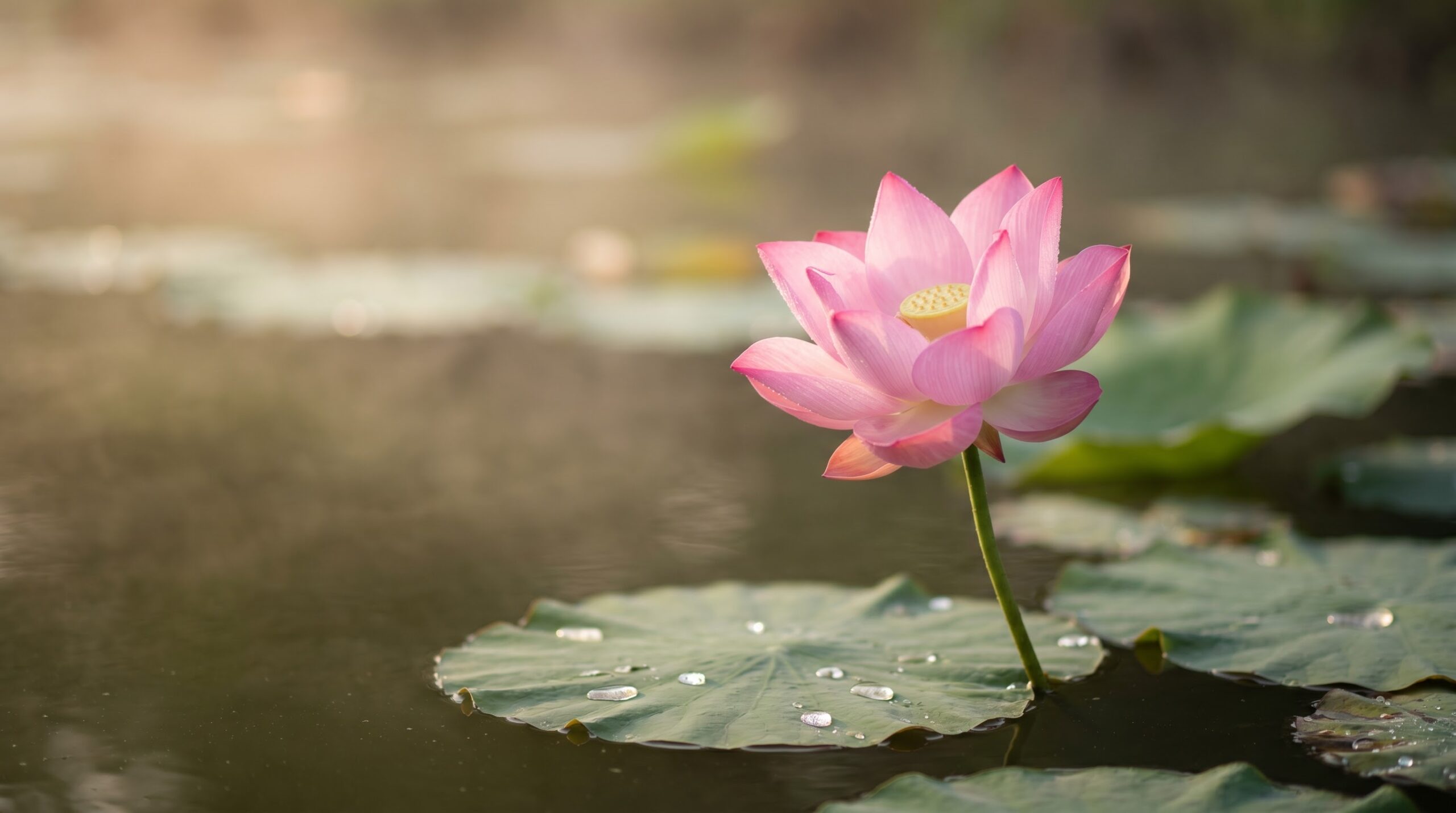
Picture the plant before you reach for the symbol. The lotus roots in pond mud, pushes a stem up through murky water, and opens a flawless bloom at the surface, untouched by the muck it grew from. That single habit is why people across very different cultures landed on the same handful of ideas: rebirth, purity, and a kind of spiritual waking up. When someone says the lotus stands for rising above hardship, they are reading the plant itself, the way it climbs out of the muck, and not repeating a line from some Victorian dictionary. What follows sorts out the parts that get tangled: what the lotus means today, what each colour signals, how Egypt, Buddhism, and Hinduism each read it, what it says as a tattoo, and where the meanings stop agreeing.
One botanical note clears up half the confusion before it starts. The Asian sacred lotus is Nelumbo nucifera, the plant behind almost every meaning in this guide, while the Egyptian blue lotus that opens at dawn is botanically a water lily, Nymphaea caerulea, a different plant that picked up the same name and much of the same symbolism. Keeping them apart matters, because the readings below run a little steadier than most flower meanings yet still shift by colour, by faith, and by the country you ask in. As plant scientists at Iowa State University Extension point out about the language of flowers in general, the same flower can carry more than one meaning depending on which source you trust, so hold these loosely and they make sense; hunt for one official answer and you will not find it.
What the lotus symbolizes today
Three meanings sit at the centre, and they are really three angles on the same image. The first is rebirth. The flower closes and sinks at night in some species and reopens with the light, so it became a natural emblem of renewal, of a day or a life starting over. The second is purity. The bloom stays spotless above water that would coat anything else, which is why it reads as a clean mind or an unstained spirit kept intact through messy circumstances. The third is enlightenment, the sense of waking up or seeing clearly, carried by those same opening petals.
Out of those grow the everyday feelings people attach to it: resilience, peace, healing, and fresh starts. Give a lotus to someone rebuilding after a hard stretch and the message lands without a card, because the plant has already said it. The reason the meaning feels so sturdy is that it was never assigned by a book. It was read straight off the flower, by people who watched a perfect bloom hold itself above water that should have ruined it. A symbol that obvious does not need anyone's permission to mean what it means. That is also why the lotus turns up in get-well and recovery bouquets and in our wider notes on spiritual flower meanings, where it is one of the few flowers whose spiritual reading is genuinely old rather than recently invented. A short line you could write alongside it: you are rising, and it is good to watch.
Lotus meaning by colour
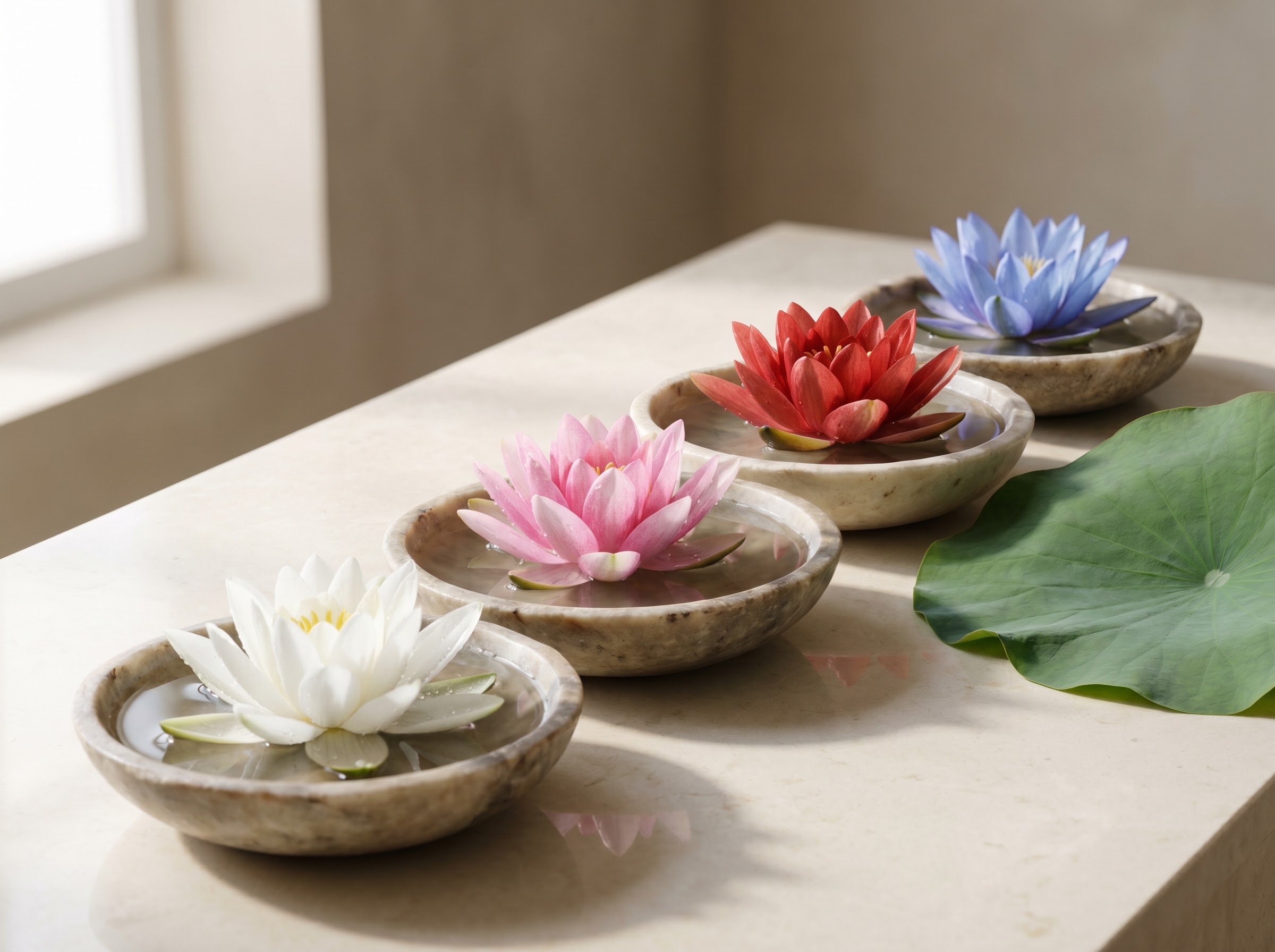
Colour shifts the lotus more than it shifts most flowers, because each shade picked up its own role inside the older Eastern traditions rather than just looking warmer or cooler. White is the plainest reading, purity of mind and spirit, the clean version of the whole symbol. Pink carries the most weight of all, often called the supreme lotus and tied most closely to the Buddha himself in the tradition. Red turns the meaning toward the heart, standing for love and compassion, the warmth of feeling more than the cool of the intellect. Blue points the other way, toward wisdom and the victory of spirit over the senses, which is why it reads as the cool, thinking lotus. Purple is the most esoteric of the set, linked to mysticism and spiritual awakening.
None of these colour readings is a rule. Treat them as traditional shorthand, and remember that in a real arrangement most people register the colour and the calm of a lotus long before any coded meaning reaches them. If you want the broader logic of how shade changes a flower's message, our guide to flower colour meanings works through every colour and the places a colour can flip a meaning entirely.
| Lotus | Common meaning | Where it comes from |
|---|---|---|
| White lotus | Purity of mind and spirit; the clean, complete symbol | The general Eastern reading; the "default" lotus |
| Pink lotus | The supreme lotus, tied most closely to the Buddha | Buddhist tradition |
| Red lotus | The heart, love, and compassion | Eastern tradition; the warm, feeling side of the symbol |
| Blue lotus | Wisdom and the victory of spirit over the senses | Eastern tradition; also the sacred flower of ancient Egypt |
| Purple lotus | Mysticism and spiritual awakening | The most esoteric reading in the set |
| In Buddhism | Spiritual enlightenment; unfolding petals as the opening of the soul | Buddhist tradition |
| In Hinduism | Beauty and prosperity; linked to the deities Lakshmi and Vishnu | Hindu tradition |
| In ancient Egypt | The sun and rebirth; the bloom that closes at night and reopens at dawn | Ancient Egyptian symbolism |
The lotus across traditions
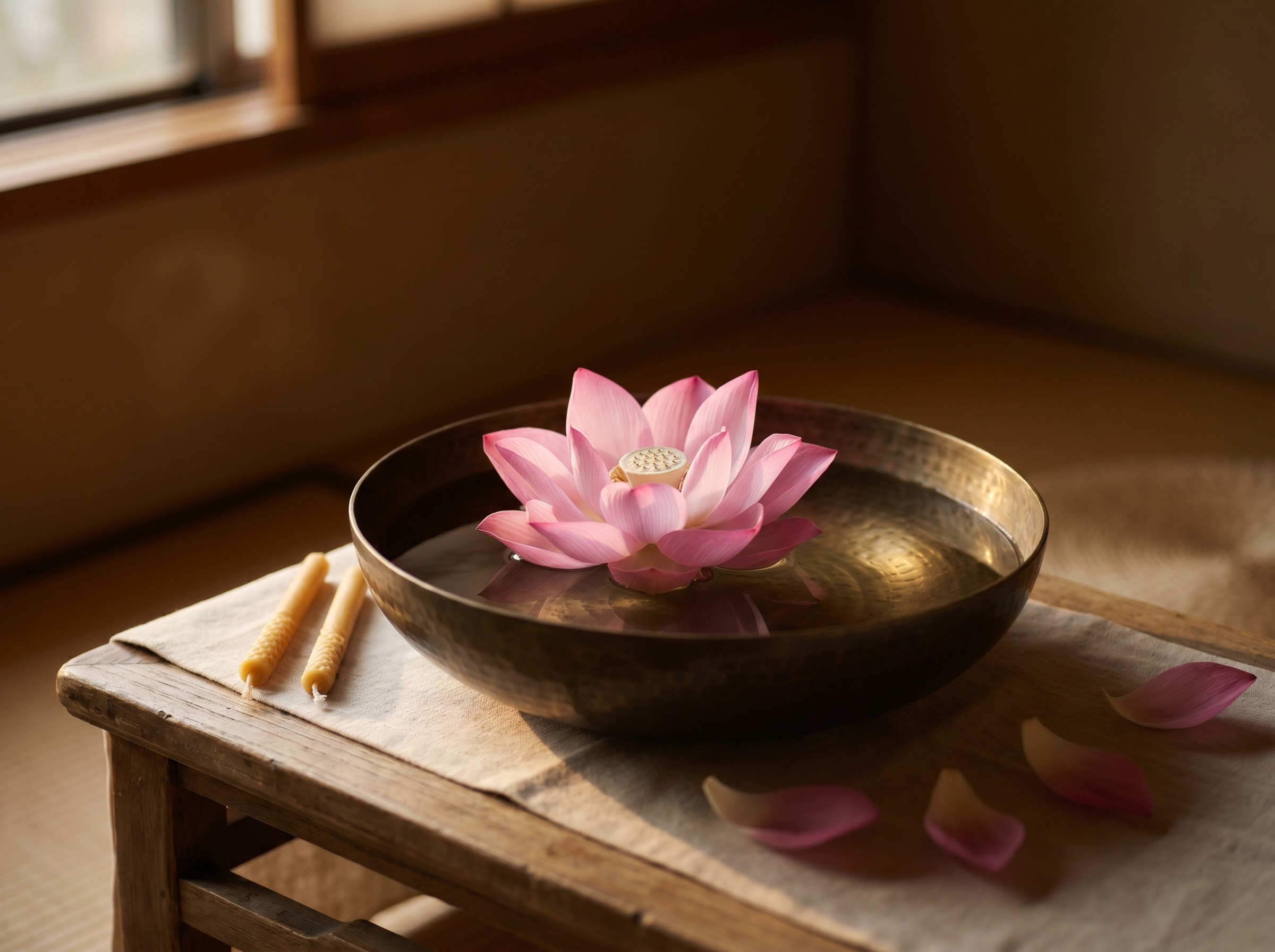
The lotus is one of the rare flowers whose symbolism is genuinely ancient rather than borrowed from a 19th century craze. Cornell University, in its exhibition on the history of flower meaning, notes that sending messages with flowers is "an ancient art, rooted in the symbolism of China, Egypt, and Assyria," and Egypt is exactly where the lotus first carried real weight. In ancient Egyptian symbolism the blue lotus was said to close at night and reopen with the morning, which made it an emblem of the sun and of rebirth, the flower that dies each evening and returns each dawn. That single observed habit gave the plant its first sacred meaning, long before any European list existed.
In Buddhism the same opening flower became a picture of the mind itself. The unfolding petals stand for the opening of the soul, the move from confusion toward clarity, so the lotus reads there as spiritual enlightenment and the path out of suffering, the very mud the flower rose through. Hinduism reads it warmer and more worldly, tying the lotus to beauty and prosperity and to the deities Lakshmi and Vishnu, so it carries grace and good fortune alongside the spiritual note. Three traditions, one plant, and meanings that rhyme without being identical, which is why our guide to flower meanings around the world keeps the lotus as a headline example of how the same flower travels. Because these specific tradition claims come from general reference works rather than the academic sources we cite at the foot of this page, treat them as well-established tradition and not as settled fact.
What a lotus tattoo means
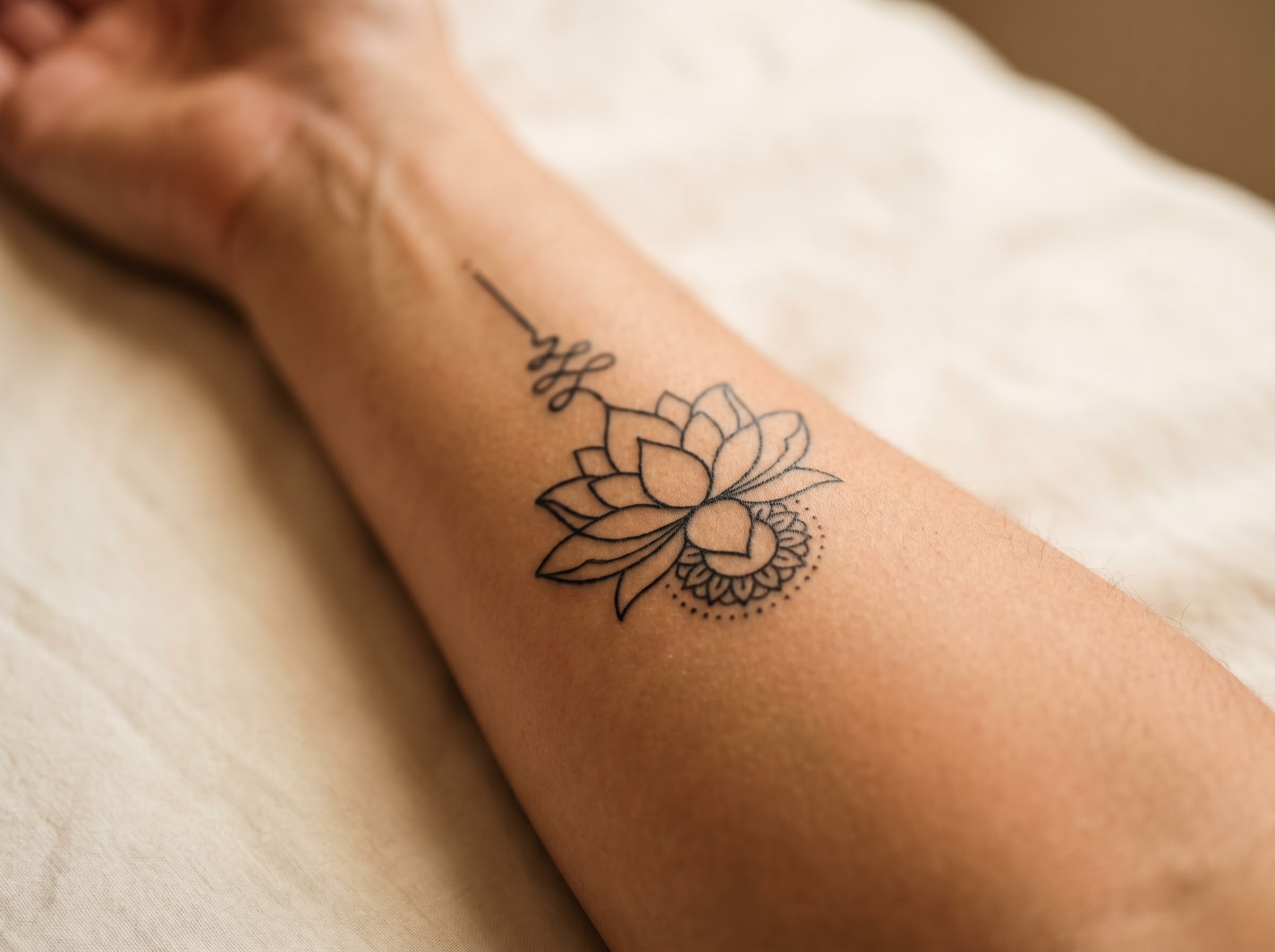
The lotus is one of the most chosen meaningful tattoos for a reason that the plant supplies directly. It reads as resilience and spiritual awakening, and the shorthand people use for it is almost always the same, grew through the mud. For anyone marking recovery, the end of a dark stretch, sobriety, grief survived, or simply a hard-won steadiness, the image does the work without explanation: beauty that came up through bad water and stayed clean. That recovery reading is now the most common one, ahead of any single religious meaning.
The design choices carry meaning too. A lotus is often paired with a mandala, the circular geometric pattern, which leans the tattoo toward balance and the spiritual side, or with an unalome, the looping line that traces a path from confusion to a steady point. Colour can follow the same logic the flowers do, with pink and white leaning spiritual and red leaning toward love. None of this is fixed, though, and that is part of why the lotus tattoo is so popular. The meaning is steady enough to be understood at a glance and open enough to make personal, so two people can wear the same flower for a sober anniversary and a religious milestone and both be right. If you are weighing a lotus against other meaningful designs, our roundup of flower tattoo meanings sets it next to the cherry blossom, the rose, and the birth-flower tattoos people often consider in the same breath.
Why the lotus is the most-searched flower meaning
Few flowers get looked up as often as the lotus, and the reason is that it answers several different questions at once. People reach for it as a tattoo, as a spiritual symbol, as a Buddhist and Hindu emblem, as a flower whose meaning changes by colour, and as a quiet way to say keep going to someone who is struggling. Most flowers serve one or two of those jobs. The lotus serves all of them, and it does so with a meaning that almost everyone agrees on, which is unusual in a subject built on contradiction.
That broad usefulness is also why its meaning has stayed so stable. A symbol drawn straight from how a plant behaves does not need a committee to agree on it, so the lotus dodged most of the disputes that tangle flowers like the rose or the chrysanthemum. The honest caveats are smaller here than elsewhere: some older Western dictionaries listed it as eloquence or even estranged love, but those readings are faint and rarely used, and the Eastern meanings have carried the day. When you give or wear a lotus, you are using one of the few flower meanings that travels well across cultures and holds steady across centuries.
- Cornell University, Written in Petals: The Language of Flowers, on the history of floriography.
- Iowa State University Extension, Flowers and Their Meanings, on why sources disagree.