Deer-resistant bulbs are the fall-planted bulbs that deer walk past, and the ones that hold up are protected by bitter alkaloids or a sharp onion smell rather than by anything printed on the bag. The catch is that deer are only half the problem. Squirrels open freshly planted beds in autumn, mice and voles work on buried bulbs all winter, and a bulb that survives browsing above ground can still disappear before it ever comes up.
Rutgers Cooperative Extension, which compiled its deer damage ratings with nursery professionals, Extension staff, and Master Gardeners in northern New Jersey, is blunt about the limit: no plant is deer proof, and how any of these perform in a given yard depends on local deer numbers and the weather. Rarely damaged is the honest ceiling. A short list of bulbs holds up against browsing and digging year after year even so, with daffodils, ornamental alliums, autumn crocus, and crown imperial fritillary at the top of it. What follows covers how to tell deer damage from digging damage, the bulbs ranked by how they handle each, the two popular bulbs worth skipping where pressure is heavy, and how to protect the ones you plant anyway.
On this page 5 sections
How to choose bulbs by animal pressure
Damage comes with two signatures, and they point at different animals. White-tailed deer feed at nose height: buds and bloom heads are bitten cleanly off overnight, right as they swell, while the lower foliage stands untouched. Digging animals leave the opposite evidence. Tree squirrels excavate freshly planted beds in autumn, while voles and mice work below the surface through winter and take the bulb itself, so the first sign of them is that nothing comes up in spring. The distinction decides what to buy. Against browsing, a bulb needs bitter alkaloids or a strong onion or garlic scent in its leaves and flowers. Against digging, the defense has to sit in the bulb, as a toxin in the part the animal bites or as wire mesh around it.
Bloom timing is the second filter. Spring takes nearly all the attention, which leaves borders empty from midsummer on. Colchicum autumnale runs the other way, pushing bare floral cups straight out of the soil from late summer into autumn with no foliage around them, and NC State Extension lists the species as resistant to deer, rabbits, and drought. Late-winter snowdrops and winter aconite, mid-spring narcissus, early-summer alliums, and fall corms together give a bed that carries color across most of the year and is defended at every stage of it.
Diagnose the damage, then choose bulbs by season
Work through each sign before deciding which bulbs to plant where.
Deer-resistant bulbs ranked by combined protection
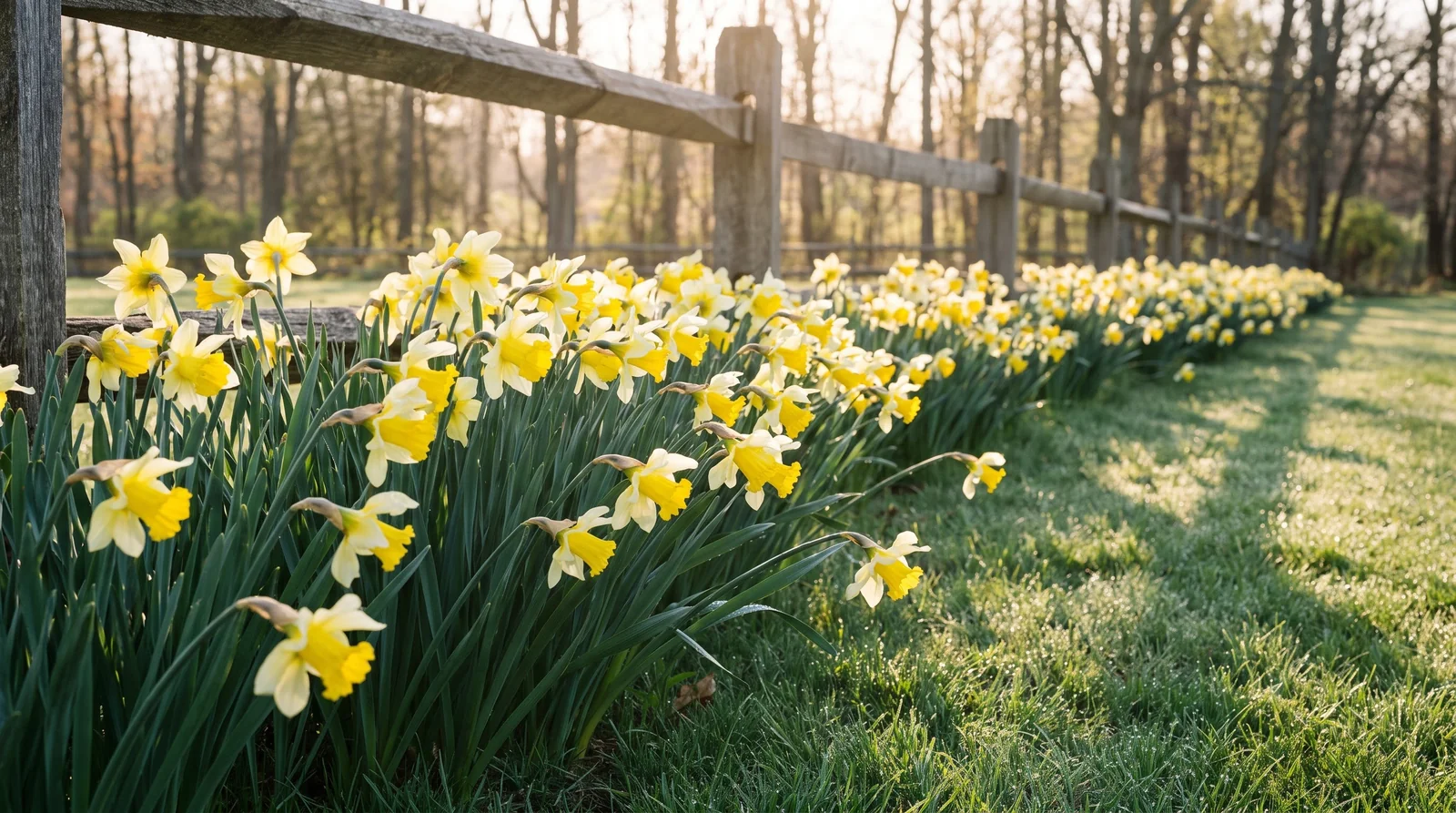
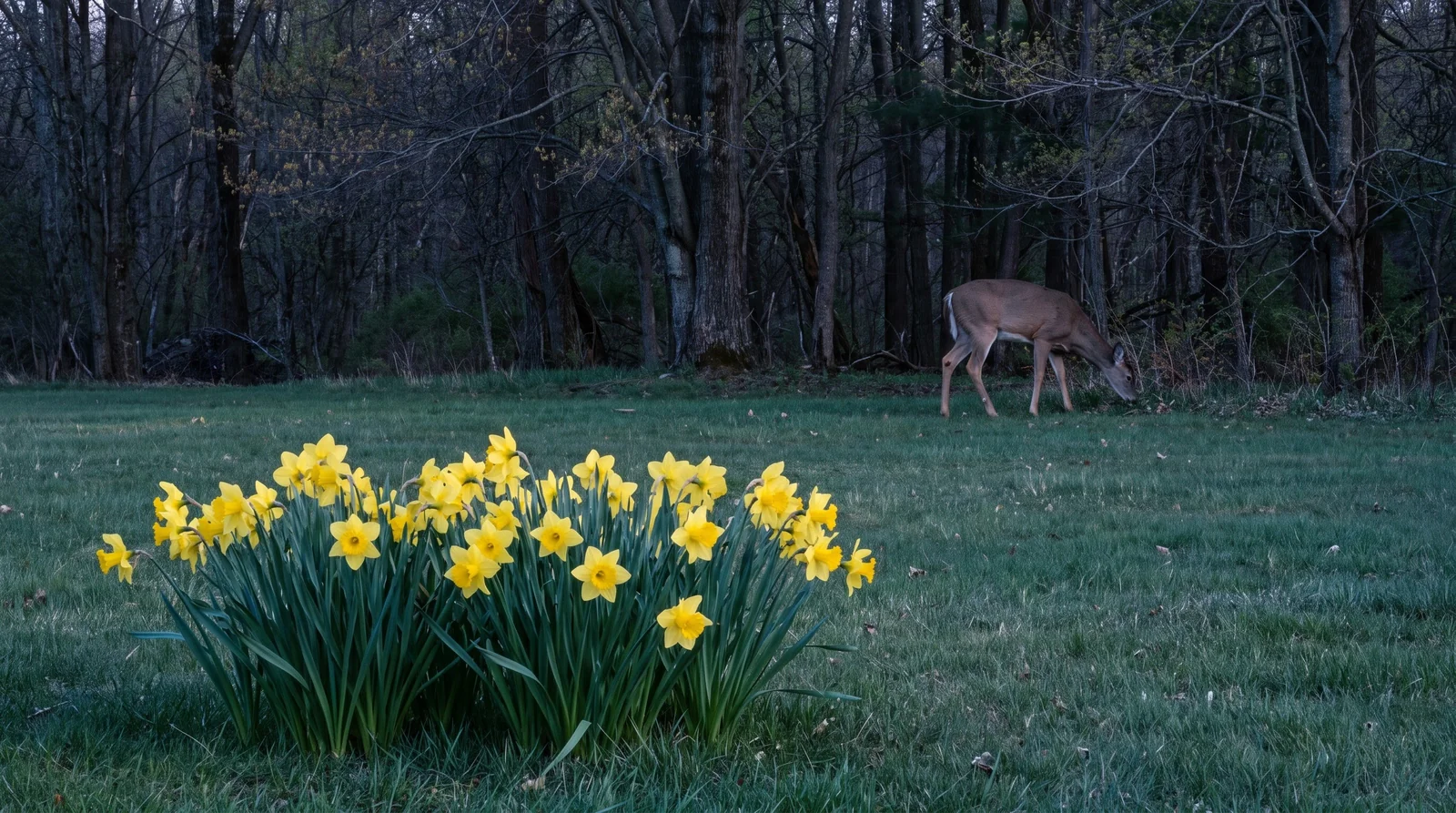
Daffodils (Narcissus spp.) stand up to both pressures better than any other spring bulb. Deer and rabbits leave them alone, they are salt resistant besides, and Clemson Cooperative Extension puts the underground half plainly: animals rarely eat daffodil bulbs. The defense is chemical. Every part of the plant carries bitter phenanthridine alkaloids, lycorine among them, plus microscopic calcium oxalate crystals, and the concentration runs highest in the bulb. Flowers hold two to three weeks somewhere between late winter and late spring, and the bulbs are hardy from zone 4a to 8b. Planting depth is the one place the sources split: NC State Extension says 8 inches, Clemson says 6 to 8 and less again for smaller species bulbs. Spaced 2 to 3 inches apart, that works out to 10 to 12 bulbs per square foot. Daffodils naturalize readily and can be left undisturbed in the soil for years.
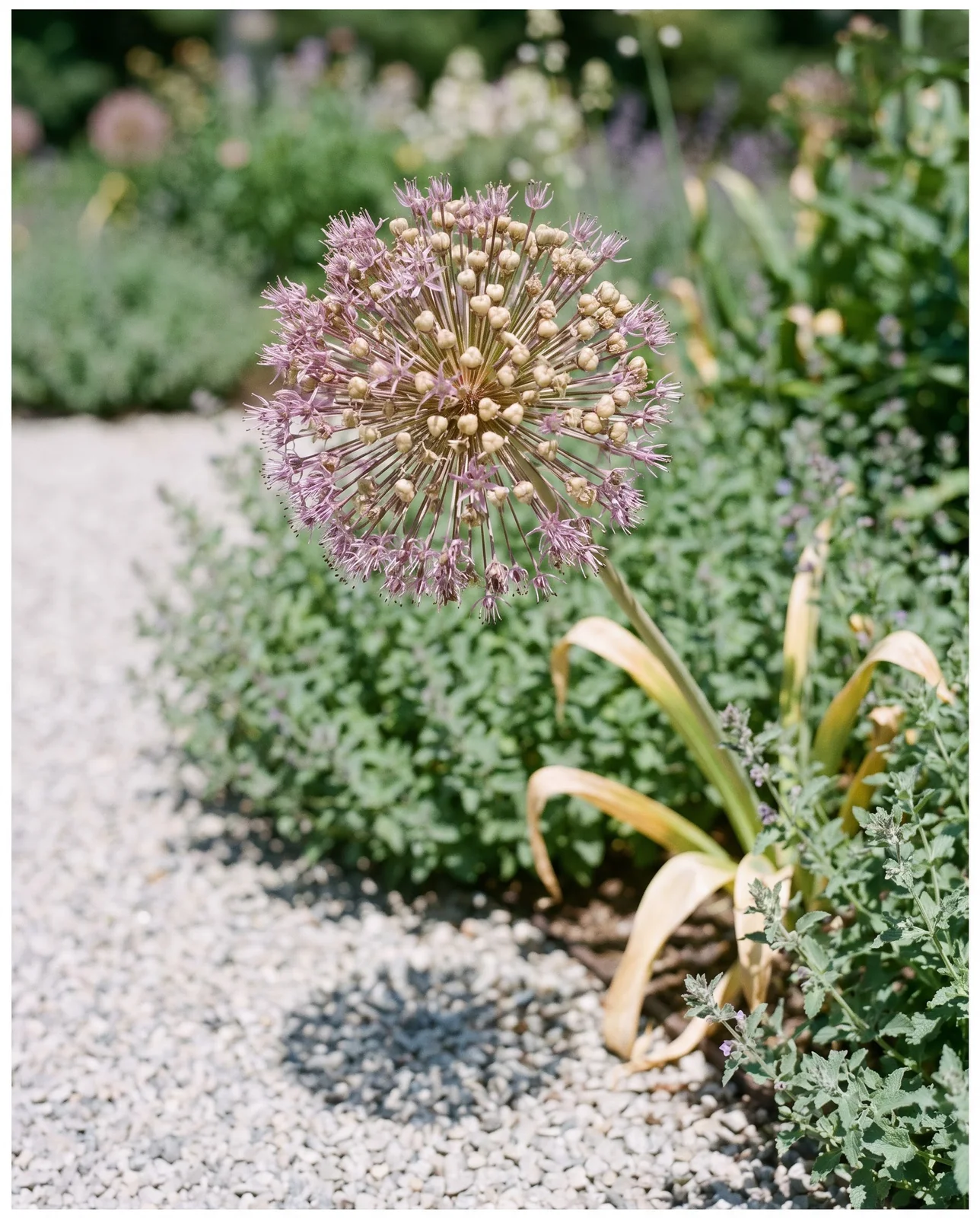
The genus Allium runs to roughly 700 species in the family Amaryllidaceae, and the ornamental ones carry their defense in the leaves and flowers: an onion or garlic scent strong enough that a browsing animal never gets as far as tasting. NC State Extension names that odor as the primary deterrent. Eaten in quantity the tissue makes an animal sick, with nausea, vomiting, and diarrhea, so a first bite tends to be the last. Ornamental alliums average one to three feet tall, hold their flowers in spherical heads, and are hardy through zones 4a to 9b. To expand a planting, dividing the bulb offsets in spring is the easiest method there is.
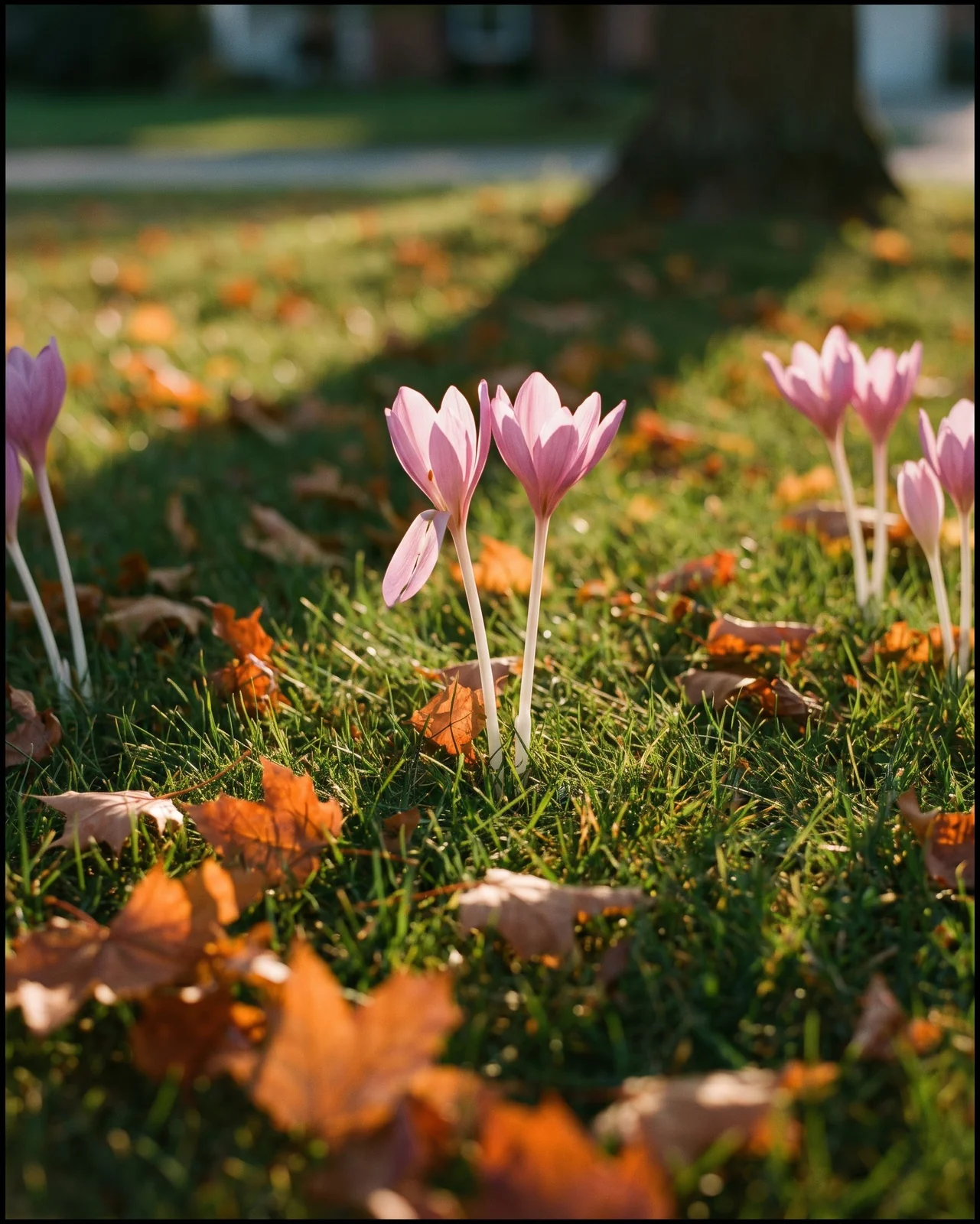
Colchicum autumnale, sold as autumn crocus or naked ladies, is the one bulb here that flowers when everything else is finishing. Rutgers places Colchicum in Category A, rarely damaged by deer, and NC State Extension lists the species as resistant to deer, rabbits, and drought, noting that the plants seem immune to rabbit damage altogether. The flowers come up in late summer and autumn with no foliage at all, which is where the naked ladies name comes from; the leaves, 5 to 8 dark green blades up to 10 inches long, arrive the following spring and yellow by early summer. Behind the resistance is colchicine, an alkaloid severe enough that every part of the plant is poisonous, the corm most of all. Corms go in 2 3/4 to 4 inches (7 to 10 cm) deep, are hardy from zone 4a to 9b, and can be divided in June or July once the leaves have died down. Seedlings take 4 to 5 years to reach flowering size.
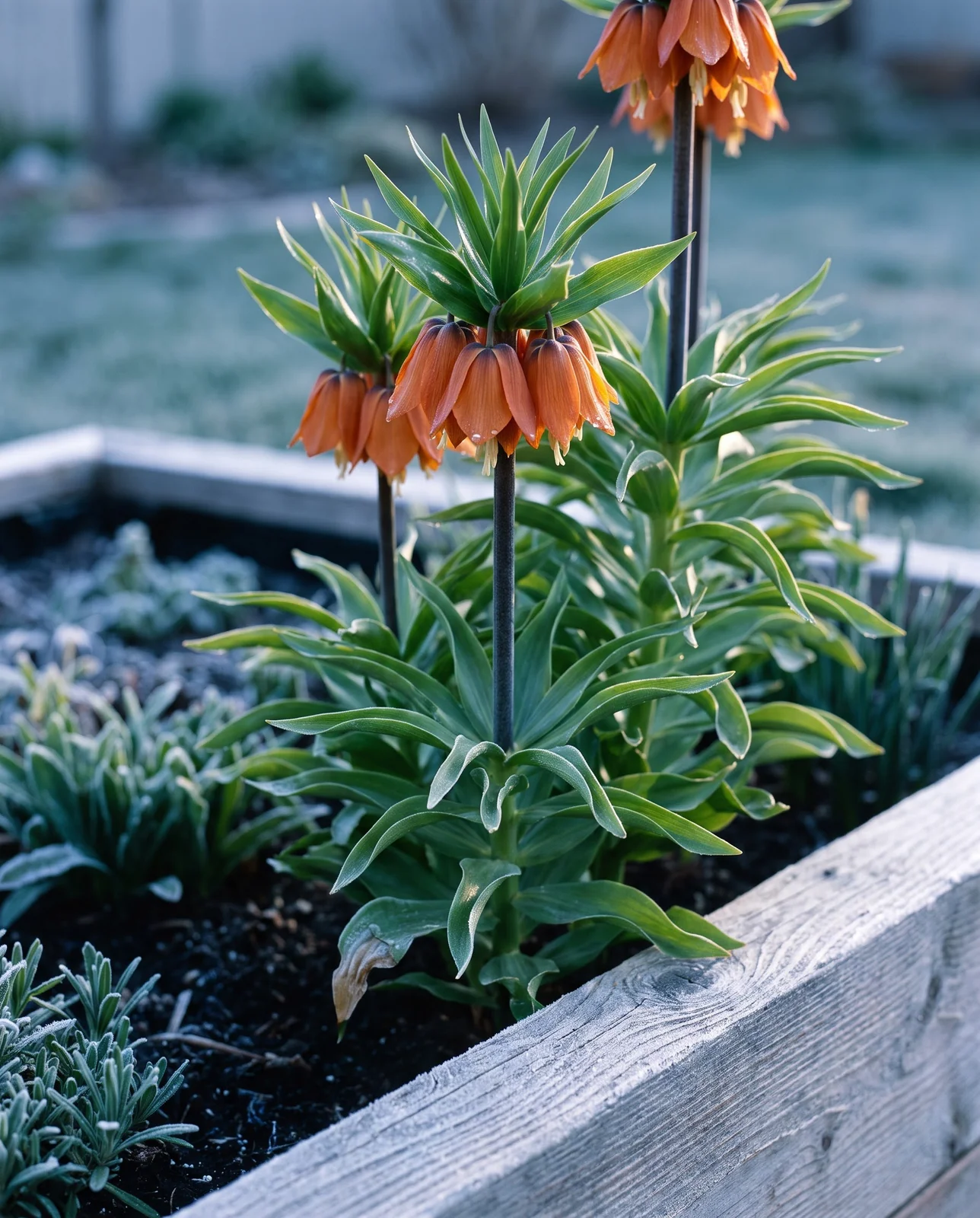
Crown imperial fritillary (Fritillaria imperialis) is the odd one here: its deterrent is smell rather than taste, and it works above ground and below. NC State Extension puts it carefully, saying the fragrance strikes some people as garlic and others as closer to a fox, and that the odor is said to repel wildlife from the area around it. The plant comes from rocky slopes and humus-rich soils in Western Asia and the Middle East, stands 3 to 4 feet tall, and is hardy from zone 5a to 8b. Fresh bulbs hold poisonous steroidal alkaloids, though historical records have them eaten after cooking. Plant in autumn, 6 inches deep to the base of the bulb and 9 to 12 inches apart, each bulb on its side so water cannot collect in the hollow stem socket and rot it.
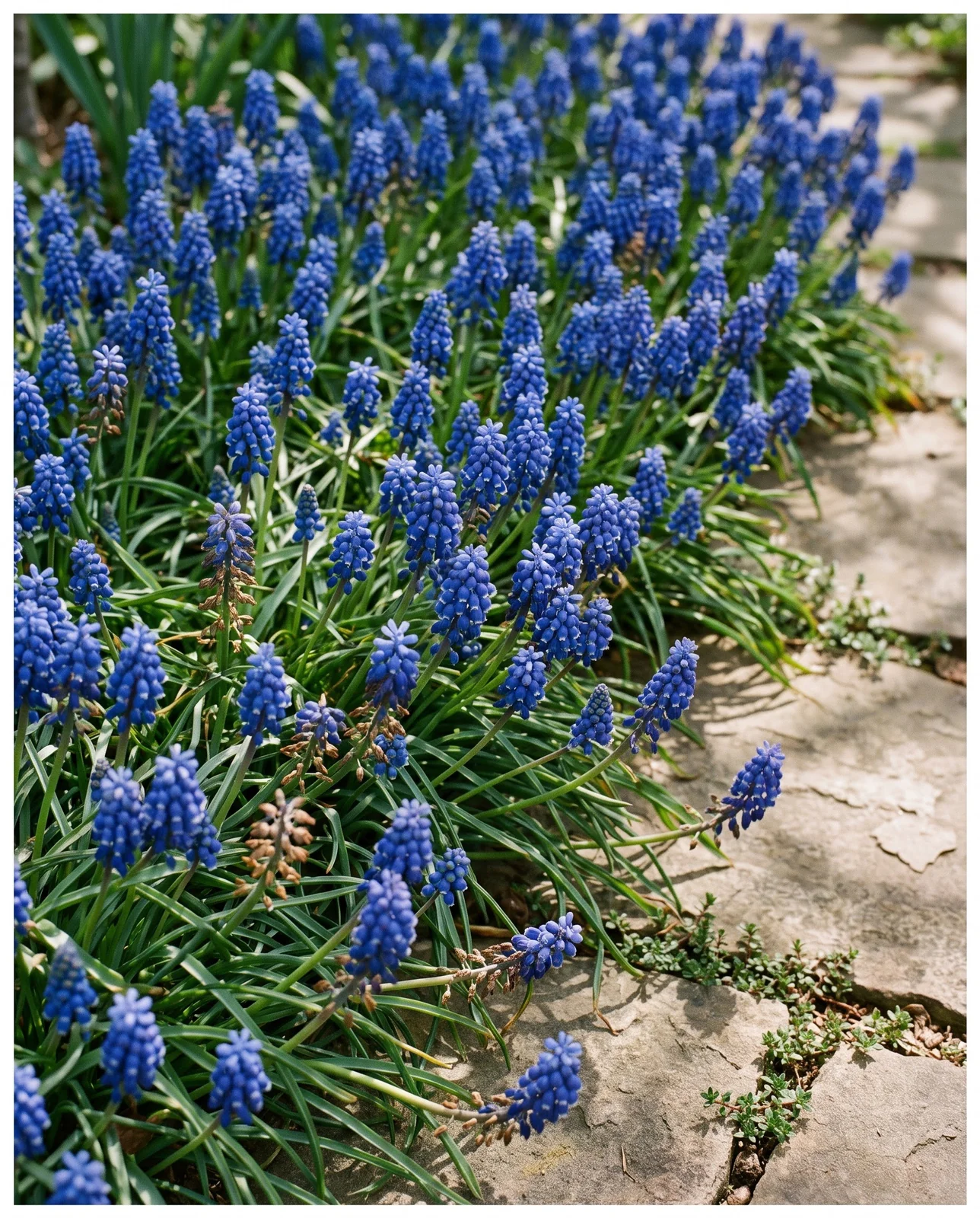
Grape hyacinth (Muscari armeniacum) gives dense clusters of blue spring flowers, and earns an honest middle rating rather than a top one. NC State Extension has it as occasionally damaged by deer, a step below bypassed altogether, and its deterrent is mild rather than toxic. That cuts both ways: unlike the highly toxic daffodil or autumn crocus, grape hyacinth is not poisonous to dogs and cats, which makes it the safer choice along a path where a dog wanders. The caution is spread. It seeds and offsets freely and turns weedy in a manicured border, so it belongs inside hard edging or in a naturalized woodland pocket where running is welcome.
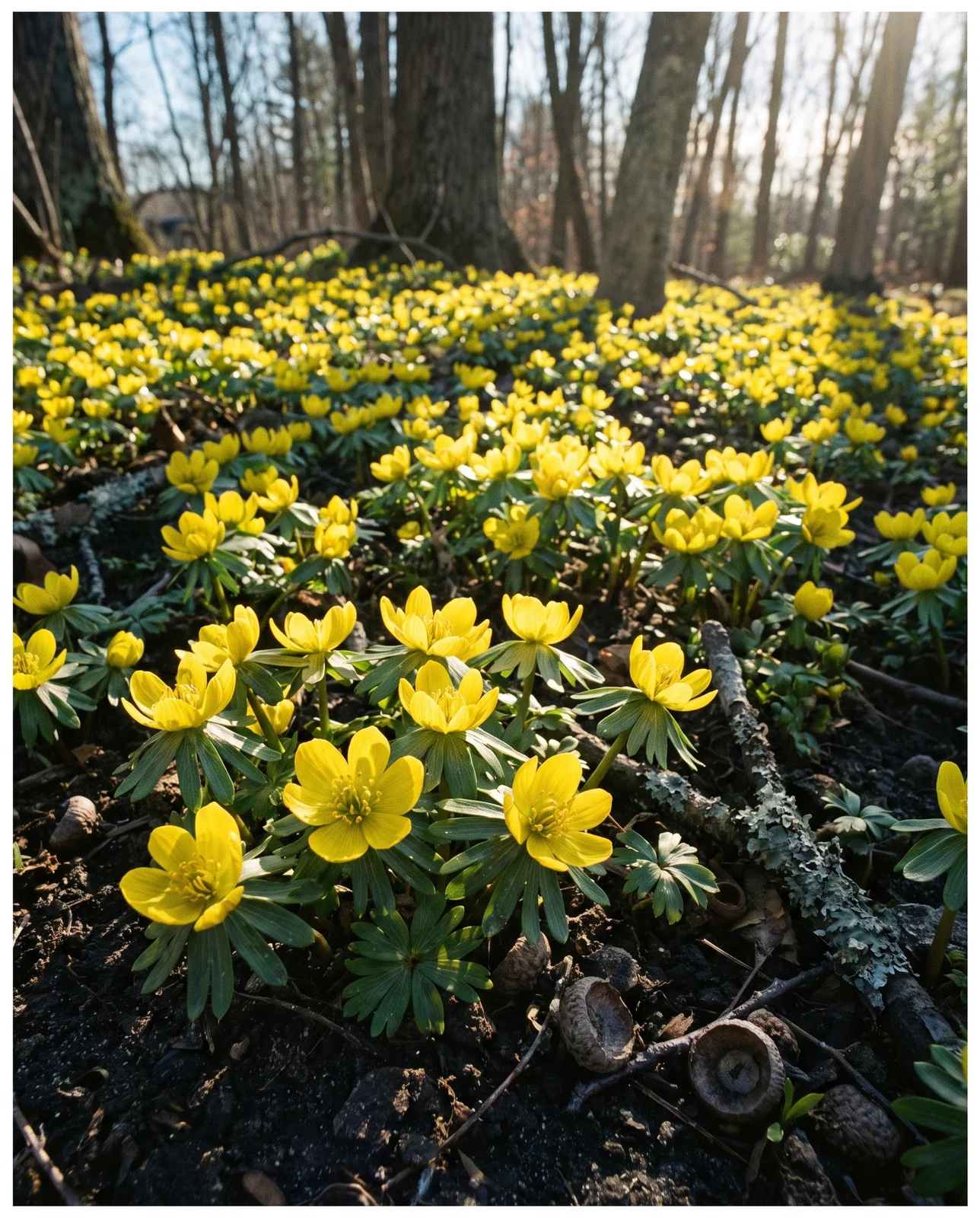
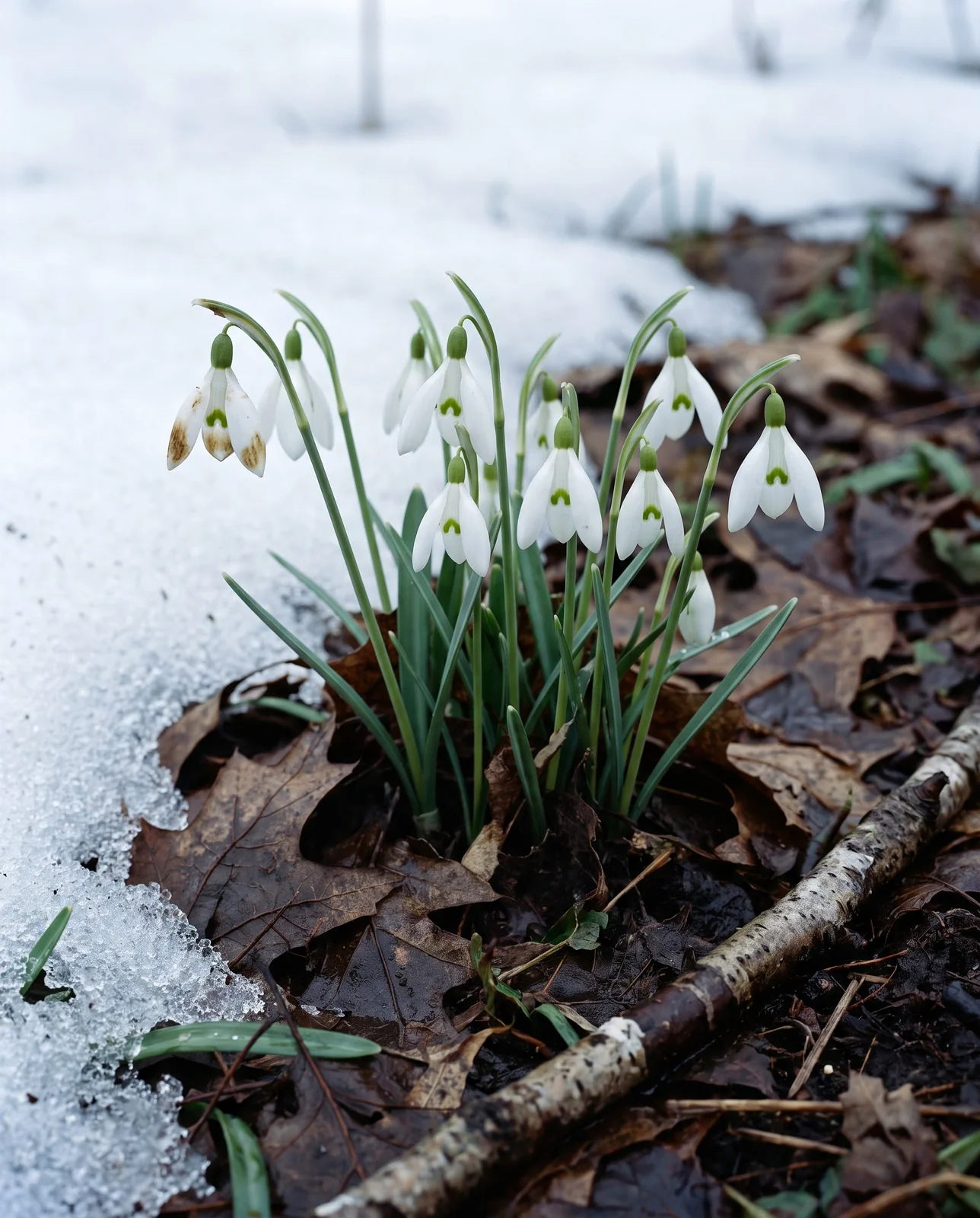
For color ahead of everything else, snowdrops (Galanthus nivalis) and winter aconite (Eranthis hyemalis) carpet the ground under bare trees while the beds around them are still empty. NC State Extension lists Galanthus nivalis as deer-resistant and only mildly toxic, and it self-seeds into wide colonies given time. Eranthis hyemalis resists browsing on much higher toxicity and opens bright yellow in February and March, before the canopy closes over it. That toxicity is the pattern behind most of this list, worth a thought in a yard with animals of your own: check which flowers are safe around cats and dogs before planting where a dog digs or a cat chews. Among the types of flowers sold for fall planting, these are the ones that come back untouched.
Wildlife resistance and growing profiles for recommended bulbs
Ratings restated from Rutgers Cooperative Extension, Clemson Cooperative Extension, and NC State Extension, each named next to the figure it supports.
Bulbs to avoid under heavy deer and rodent pressure
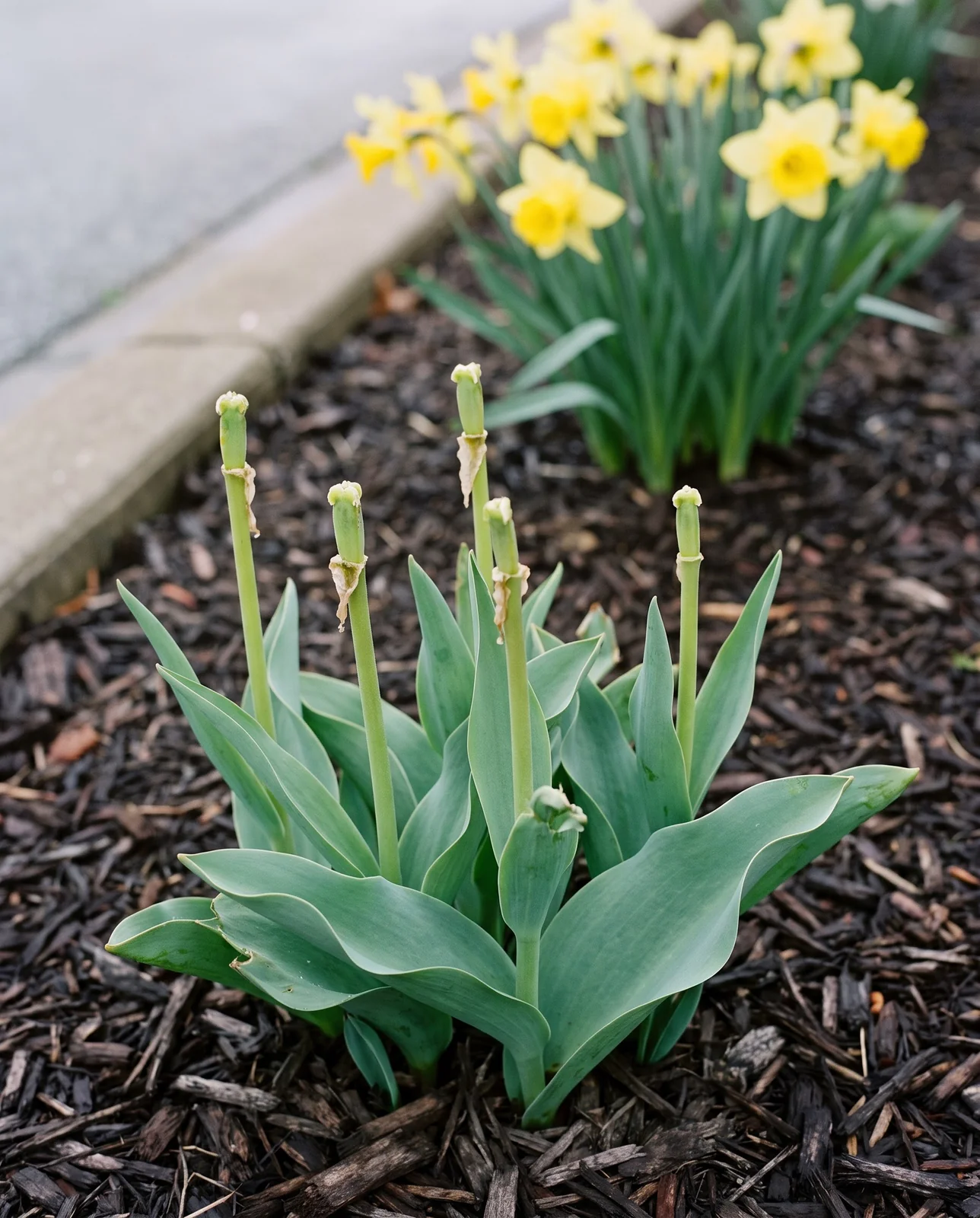
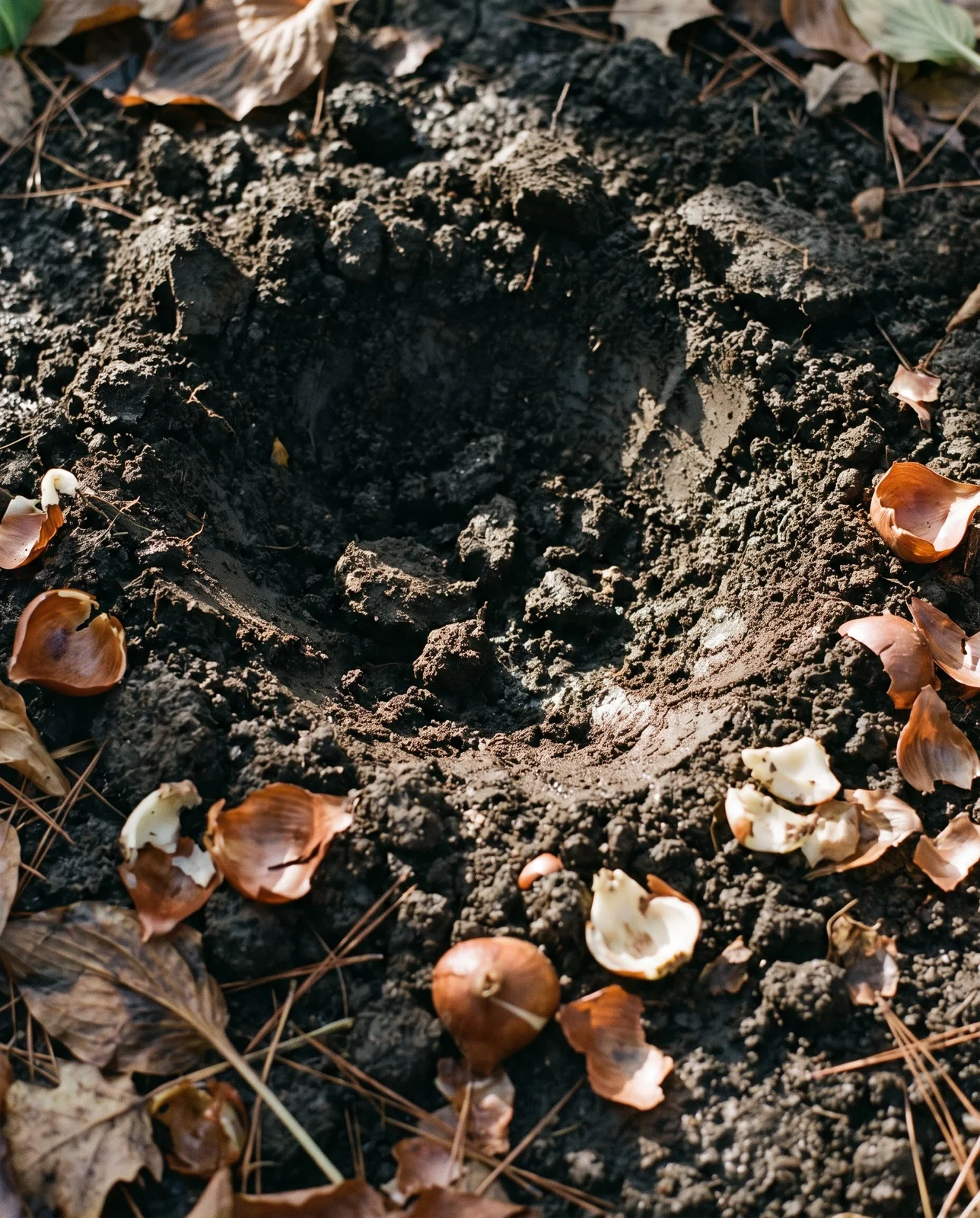
Hybrid tulips (Tulipa spp.) and ordinary spring crocus take the worst of it in suburban gardens, because neither has anything bitter or pungent to fall back on. NC State Extension describes the deer habit exactly: they eat the flowers, but not the leaves. A bed looks fine at dusk, and by morning the buds are gone while the foliage stands undamaged. Below ground two sets of animals work the same bulbs at different times: squirrels open newly planted beds in autumn, and mice and voles eat the bulbs where they sit through winter. Clemson Cooperative Extension pins the season down: animals often dig and eat tulip and crocus bulbs during the winter, and rarely touch daffodil bulbs.
Heat sets a second limit on the same plants. Tulips lose floral vigor once soil temperatures reach 70 degrees Fahrenheit, and flowering drops off sharply from the second year in the ground. A tulip carries its own toxins highest in the bulb, as a daffodil does, but nowhere near the concentration it takes to put a hungry vole off energy-rich tissue. Spring crocus corms have the same weakness, which makes them a poor bet wherever rodents are active unless they go in behind a barrier. Autumn-flowering Colchicum shares the common name and nothing else: colchicine keeps it off the menu.
How to protect vulnerable bulbs in the ground
Where you want tulips or spring crocus anyway, a barrier is the only thing that reliably works underground. Clemson Cooperative Extension is unambiguous about it: the only sure way to protect bulbs from animals is to enclose them in wire mesh at planting. That means either a mesh cage built around a cluster of bulbs before the hole is backfilled, or a sheet of mesh laid over a planting trench and covered with soil. Stems find their way up through the openings in spring, while squirrels, voles, and mice cannot reach the bulbs at any point in the season.
Depth and siting help at the margins. NC State Extension puts tulips at three times the depth of the bulb, in fertile, organically rich, well-drained soil in full sun, and a bulb set that deep is more work for a squirrel scratching at loose autumn ground. It does nothing about a burrowing vole, which needs wire mesh. Setting the vulnerable bulbs inside mesh enclosures and planting them among naturally unpalatable species such as daffodils or crown imperial fritillaries is what lets you keep tulips without falling back on chemical sprays.
Deer resistance and bulb protection facts
The myth: Bulbs labeled deer-resistant are completely immune to damage under all conditions.
The reality: Rutgers Cooperative Extension states that no plant is deer proof, and that how these plants perform depends on local deer numbers, food availability, and weather. Under enough hunger pressure, deer will sample plants they normally pass over.
The myth: Spray repellents give permanent protection to vulnerable spring tulips.
The reality: Sprays wash off in rain and reach nothing underground, where mice, voles, and tree squirrels do their damage. Clemson Cooperative Extension states that enclosing bulbs in wire mesh at planting is the only sure way to stop animals digging them up.
The myth: Autumn crocus and spring crocus share the same wildlife resistance.
The reality: Spring crocuses are dug up and eaten by rodents through winter. Autumn-flowering Colchicum autumnale carries toxic colchicine, holds a Category A rarely damaged rating from Rutgers, and is listed by NC State as resistant to deer and rabbits.
Frequently asked questions
Are daffodils completely deer proof?
Close to it, though no bulb earns the word proof. Every part of a daffodil carries bitter lycorine alkaloids and calcium oxalate crystals, with the most in the bulb, and Rutgers Cooperative Extension rates them Rarely Damaged. A deer hungry enough late in a hard winter will still test a plant it normally walks past.
Do deer eat tulip flowers or the whole plant?
The flowers. NC State Extension is specific that deer eat tulip blooms and leave the leaves, so a bed can lose all its color overnight and look otherwise healthy. The bulbs are a separate problem: mice, voles, and tree squirrels take those, in autumn and through winter.
What bulbs do squirrels refuse to dig up?
The bitter and the strong-smelling ones: daffodils, ornamental alliums, autumn crocus (Colchicum), crown imperial fritillaries (Fritillaria), snowdrops, and winter aconite.
How do you protect spring bulbs from digging animals?
Enclose them in wire mesh as you plant, which Clemson Extension calls the only sure way. A cage around the cluster, or a sheet of mesh laid over the trench before backfilling, lets stems through in spring and keeps squirrels, voles, and mice out.
Is autumn crocus safe to plant around dogs and cats?
No. Every part of Colchicum autumnale contains the alkaloid colchicine, most of it in the corm, and poisoning is severe. Keep it out of any bed where a dog digs or a cat chews.
More About Best & Compare
Best flowering shrubs for full sun
Flowers to sow in fall for spring blooms
Best flowers for drying, and how to keep their color
Frost-tolerant flowers: what survives a cold snap
Best fall flowers for pots and porches
Flowers that bloom all summer long
Perennials to plant in fall, and what to leave for spring
Fall planting by region: your zone-by-zone window
Fall flower bed ideas: 3 plans for sun and shade
Enjoying our flower guides? Add YourFlowersGuide as a preferred source on Google — it helps more readers find us.
Add to Preferred Sources