A fall flower bed comes down to one measurement taken before anything is bought: how many hours of direct sun the soil gets in a day. Six hours or more, and late perennials like Russian sage and black-eyed Susan hold a border upright and flowering into October. Four hours or less, and those same plants stretch, lean, and go over, while shade-adapted anemones and hellebores would have carried the same spot through the season. A cart of nursery pots in September rarely reflects that difference. Bare soil in mid-October does.
Three complete bed plans follow, each with a full plant roster, a layering order from the back line to the front edge, spacing in inches, and the bloom window each layer actually covers. Plan 1 is a tiered full-sun border of late perennials. Plan 2 is a part-shade bed built on evergreen structure, with Japanese anemone as its one real fall bloomer. Plan 3 is a frost-tolerant bed of hardy annuals that keeps flowering after the first light freeze, and its edging can be borrowed by either of the others. What follows covers how to read the light at your site, the three rosters with spacing and layering order, and a zone-by-zone frost calendar showing how far into fall each plan realistically carries color.
On this page 5 sections
How to pick your plan
Everything else in a fall bed follows from the number of hours of direct, unobstructed sun that land on the soil. Alabama Cooperative Extension puts the line for full-sun bedding plants at six hours a day, and shade-loving bedding plants at four hours or less, preferably in the morning. Clemson HGIC works from a looser figure: most flowering annuals need four to six hours to flower well. Six hours or more, plant Plan 1, where the stems get enough light to stand on their own. Four hours or less, mostly morning, plant Plan 2, whose plants hold their form instead of leaning toward the brightest gap in the canopy.
Bed preparation runs on the same numbers whichever plan you pick. Till to a depth of 8 to 10 inches and work in 4 inches of compost or soil conditioner, then get winter annuals in the ground at least six weeks before the average first fall frost so roots move while the soil is still warm. Aim for a soil pH of 6.0 to 6.5; without a soil test, 4 pounds of pelletized lime (3 pints) per 100 square feet corrects ordinary acidity, and a complete granular fertilizer such as 8-8-8 or 10-10-10 goes down at 2 pounds per 100 square feet. Finish with 2 to 3 inches of pine bark or pine straw. Leave the pre-emergence herbicide in the shed at planting time, because it works on the new roots of a transplant as readily as on weed seed. A new bed wants a moisture check two or three times a week and 1 to 1.5 inches of water weekly, from rain or irrigation, until the roots take hold.
Which fall bed plan fits your yard
Two questions sort a bed into one of three fall planting plans: how much direct sun it gets, and whether the goal is a tall perennial border, shade-tolerant foliage, or color that pushes past the first light freeze.
Plan 1: Full-sun front bed
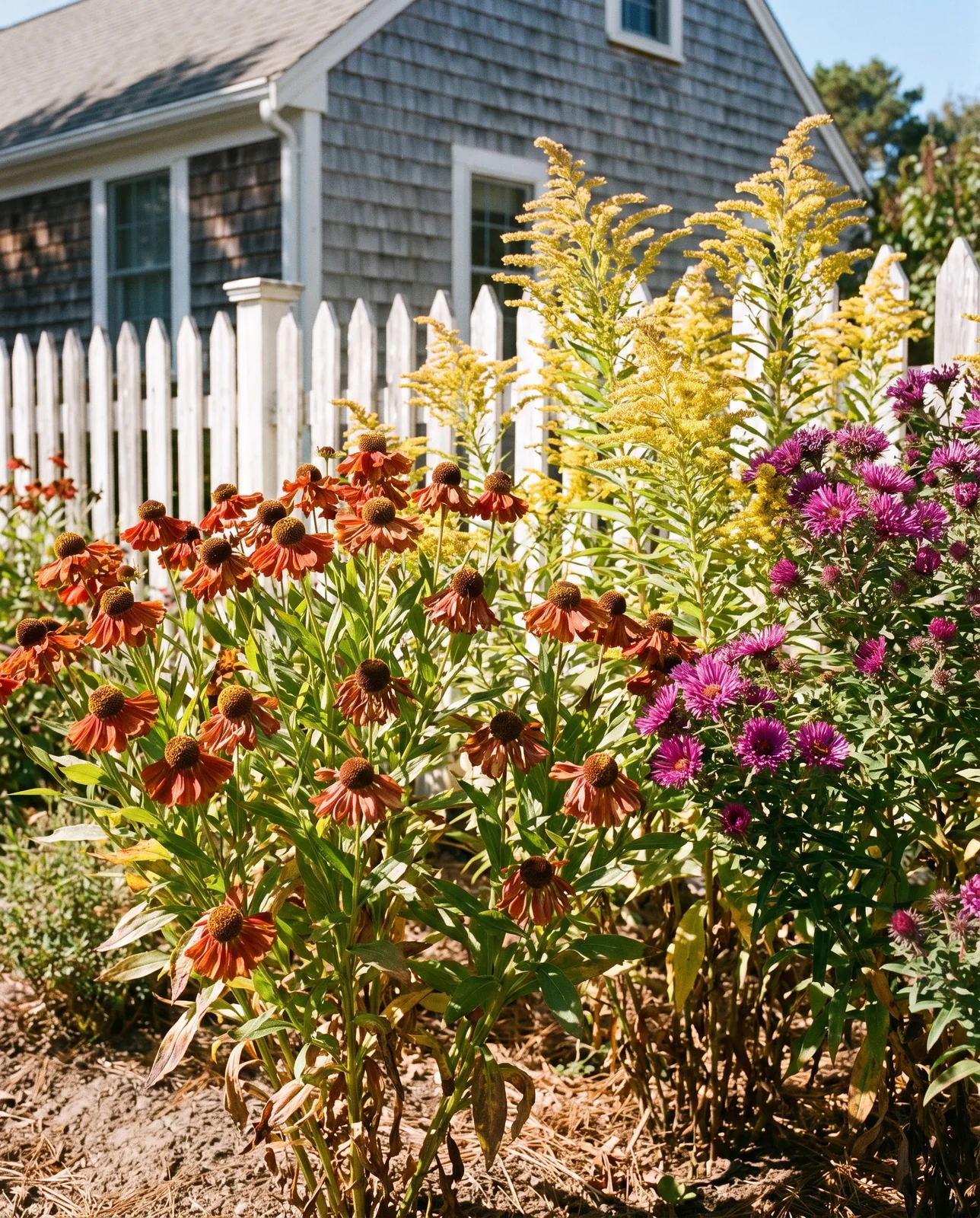
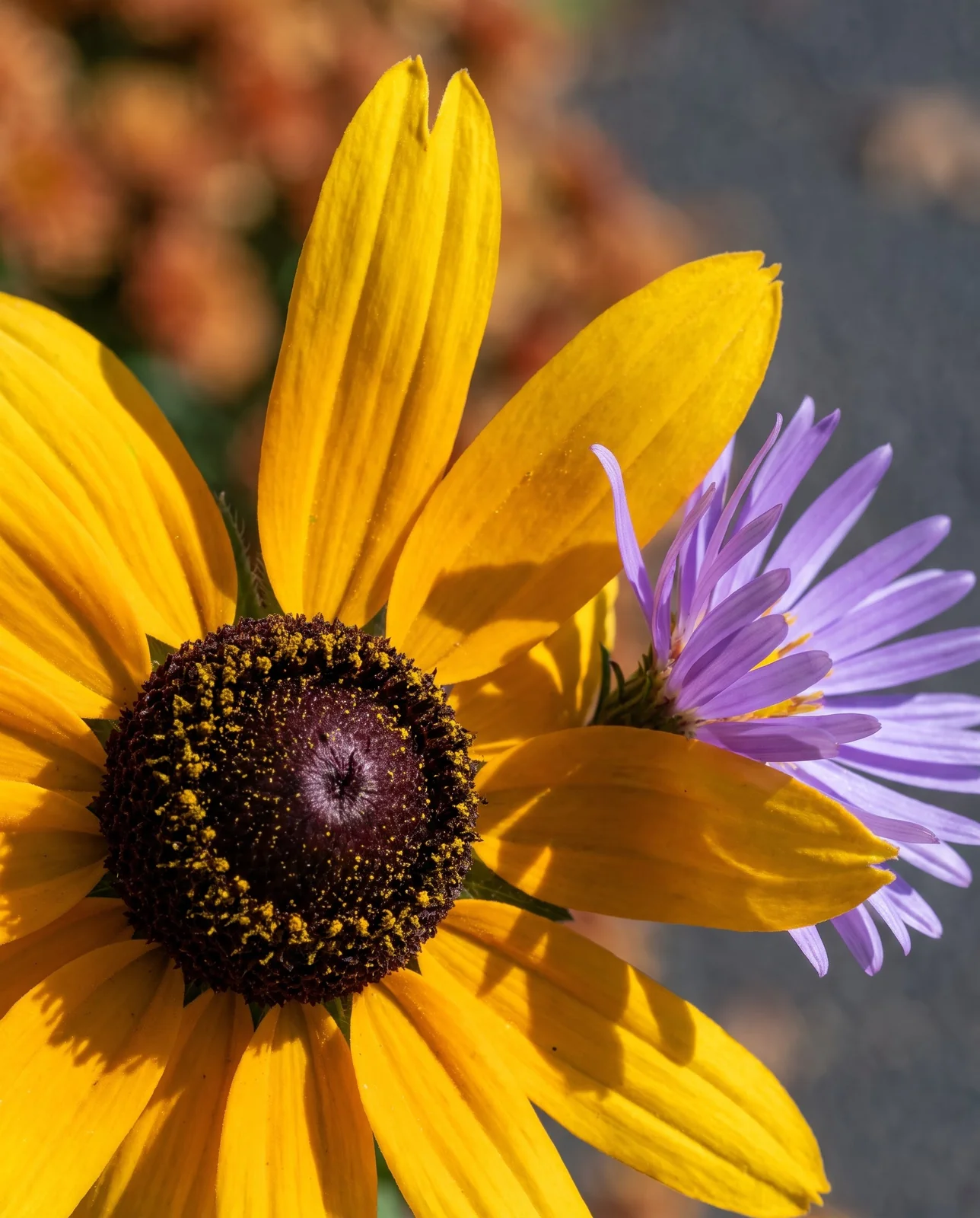
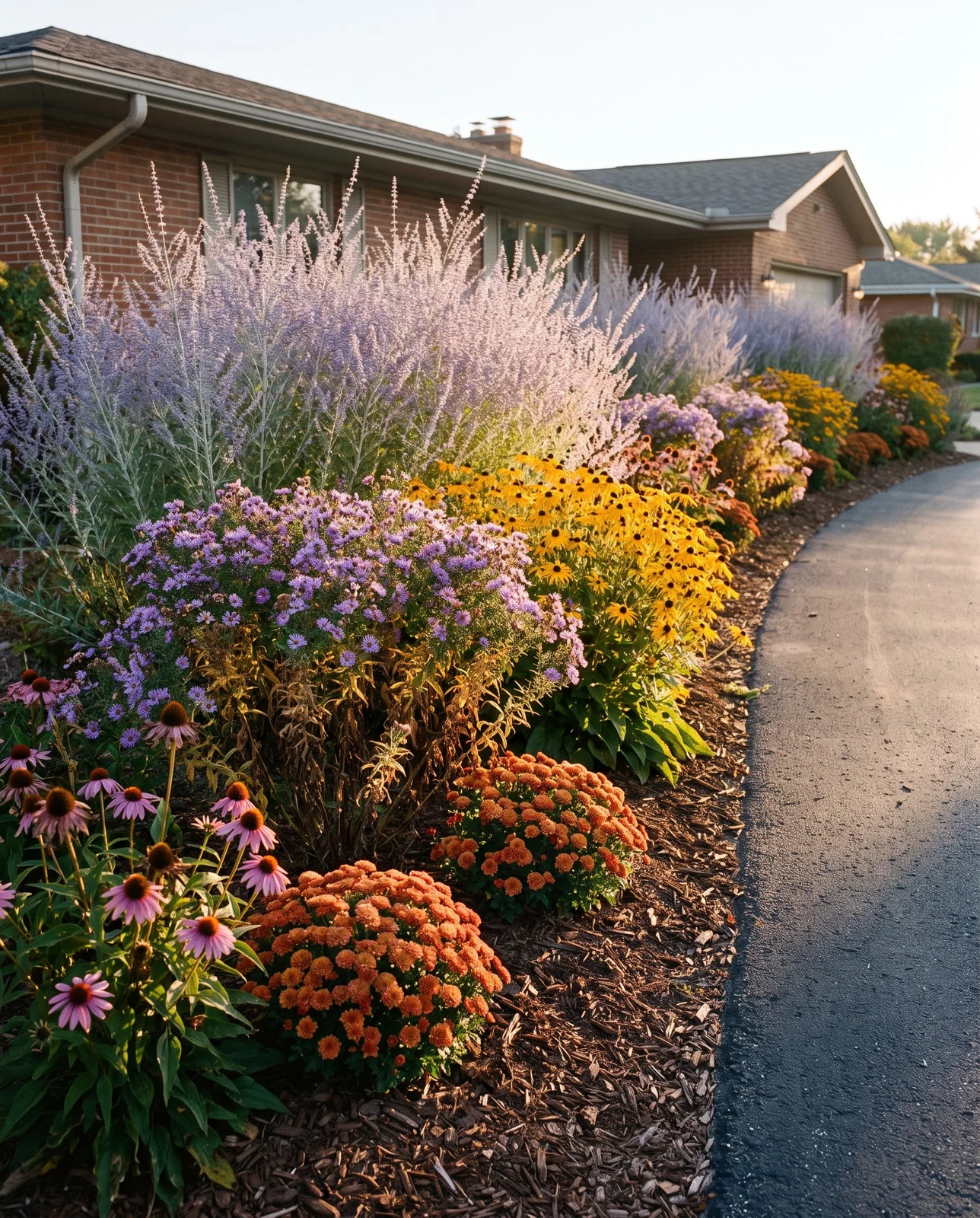
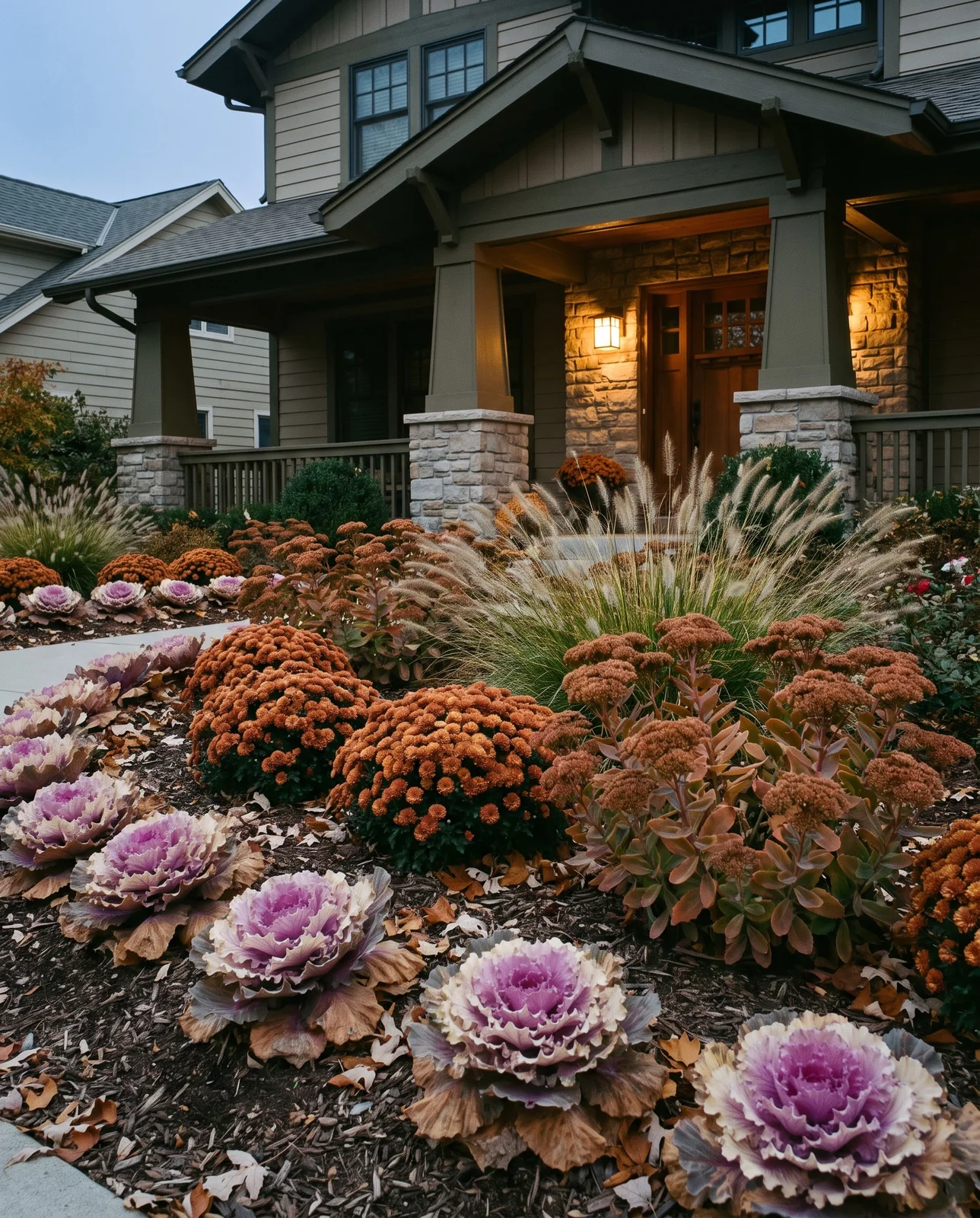
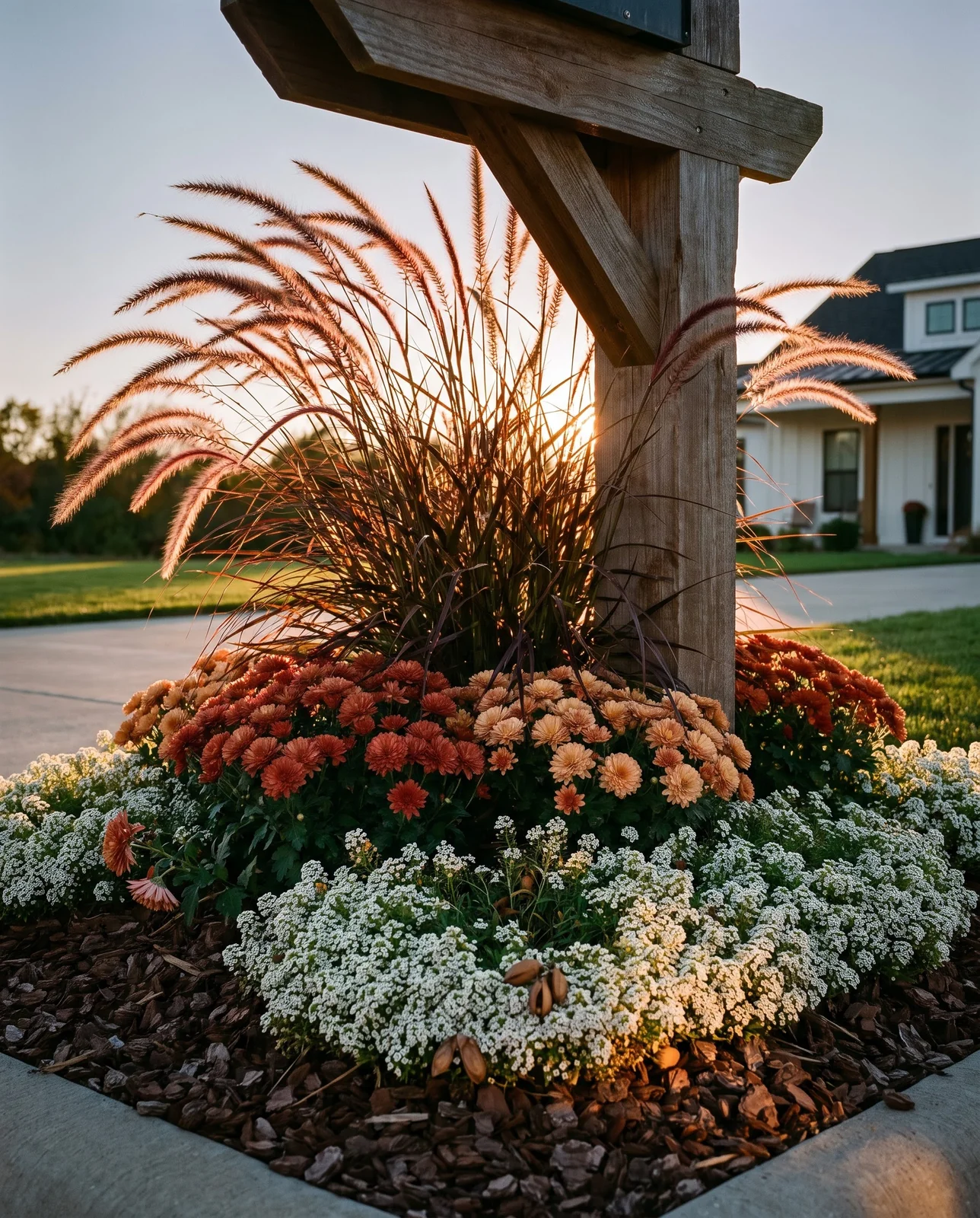
Plan 1 is a three-tier border for a bed at least 5 to 6 feet deep that gets six or more hours of direct sun. The back line is Russian sage (Salvia yangii), an upright woody perennial that matures at 3 to 4 feet tall and as wide and carries blue flower spikes from summer straight through fall, one of the late bloomers NC Cooperative Extension names for exactly this stretch of the season. Set the crowns 36 inches apart on center along the fence or foundation wall so mature branches meet without crowding. The middle tier starts 18 inches forward of that line. Black-eyed Susan (Rudbeckia) reaches 4 feet and opens yellow in mid-summer, holding into mid-fall as long as spent heads come off, and takes 18 to 24 inches between plants. Coneflower (Echinacea) runs 2 to 4 feet tall at 18-inch spacing. False sunflower (Helenium) fits naturally into the same middle tier in clumps 2 to 5 feet tall at 24 inches apart, and scarlet bee balm at 2 to 4 feet flowers for up to eight weeks at 18 to 24 inches apart.
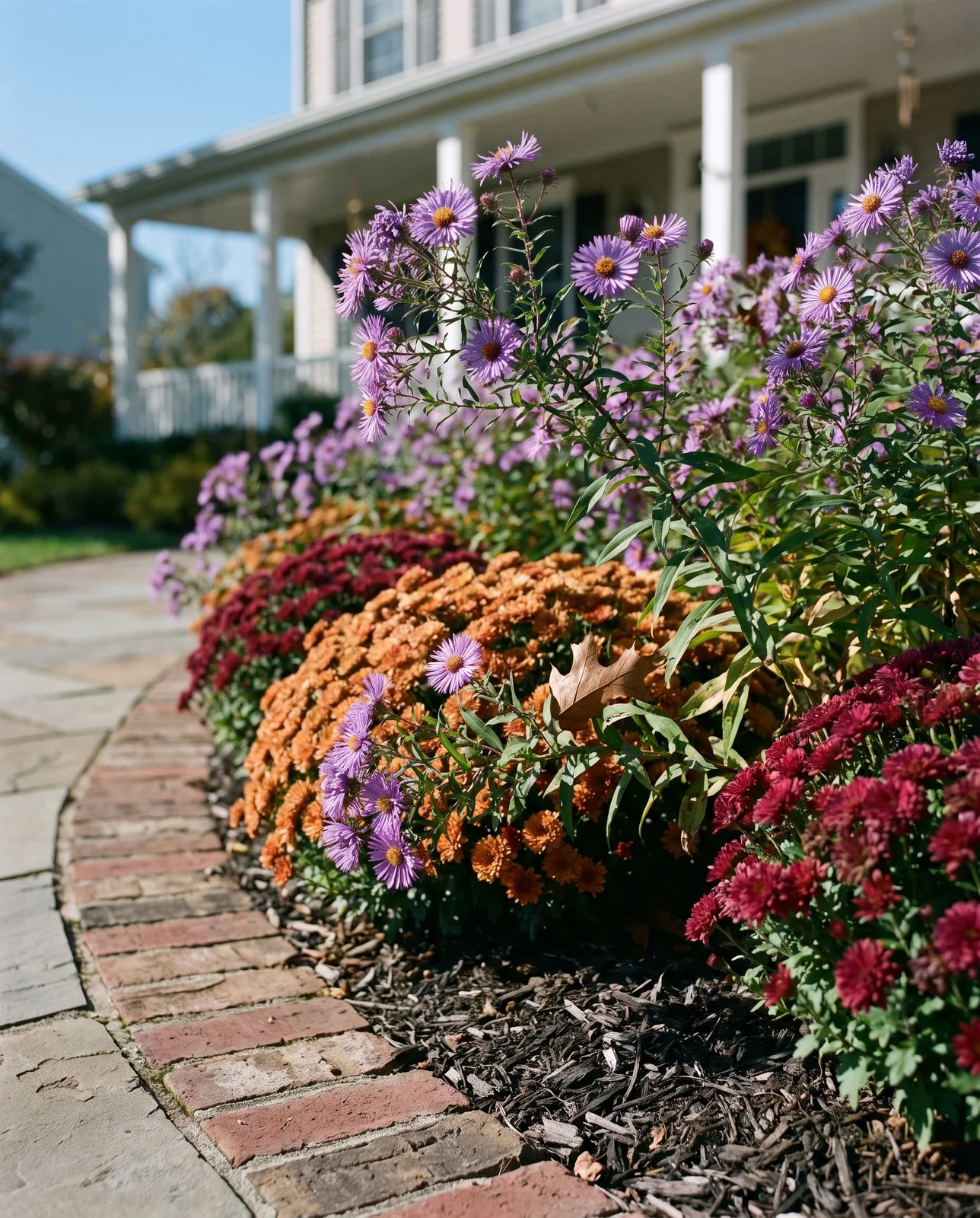
The front tier sits another 18 inches forward, hiding the bare lower stems behind it and sealing the bed’s edge. Native aster goes in at 18 inches apart alongside Autumn Joy sedum at 15 to 18 inches: its buds come up light pink in summer, open deep red in late summer and early fall, then dry to brown heads that stay standing and keep the shape of the bed through snow. Fill the remaining gaps along the edge with potted garden chrysanthemum mounds 12 to 15 inches apart. Resist closing those gaps tighter than the spacing calls for, because crowded annuals run to leggy, weak stems that go down in the first hard autumn wind or rain. When nursery transplants go in during early fall, Clemson HGIC advises pinching off every open flower and bud, which feels like throwing away the color you just paid for and buys branching and root growth instead. Cut Russian sage back to 4 inches in late winter or early spring and it returns dense and upright rather than splayed open at the base.
Plan 1 plant roster: full-sun front bed
Full sun, six or more hours a day, layered from the back line down to the front edge.
Plan 2: Part-shade front bed
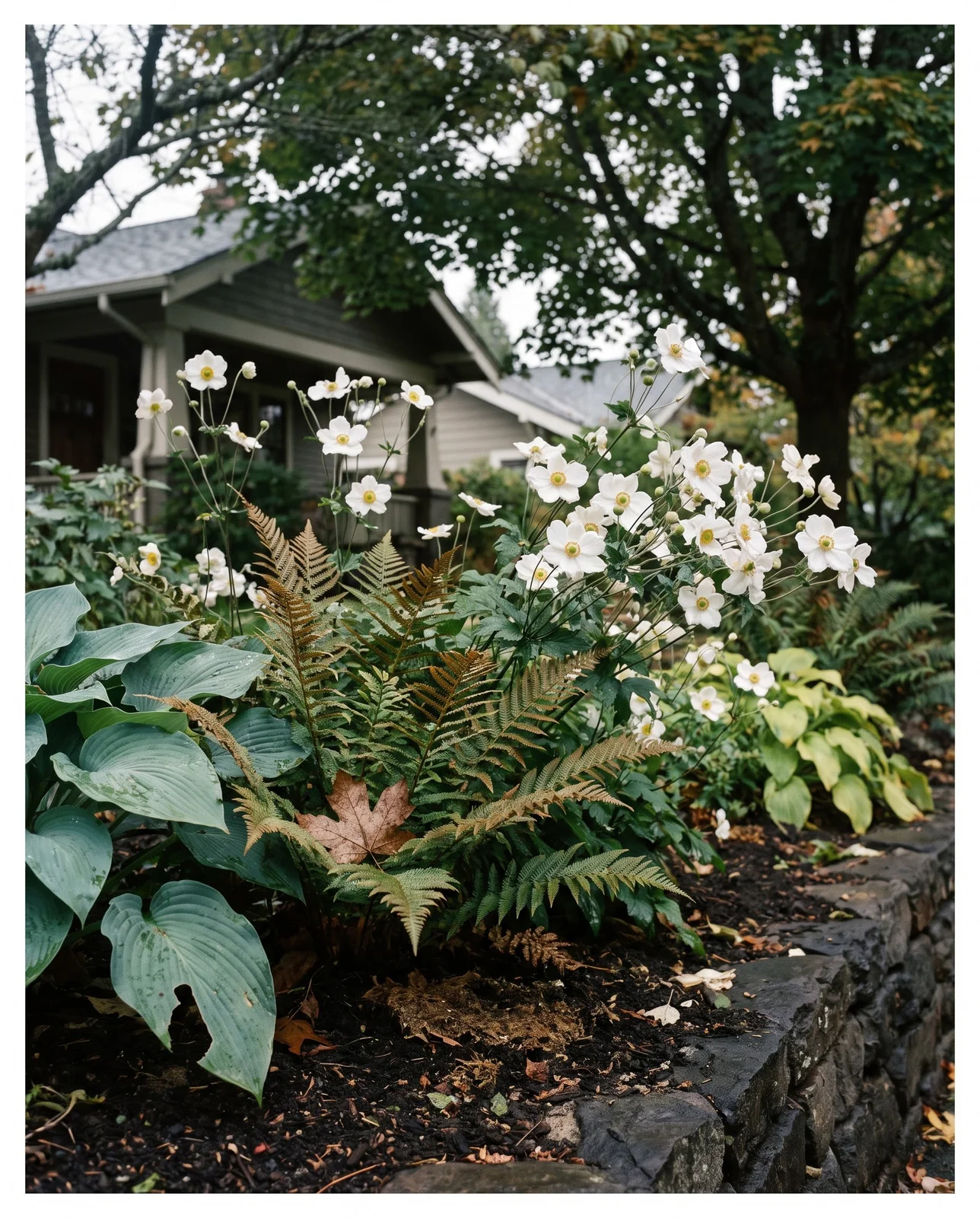
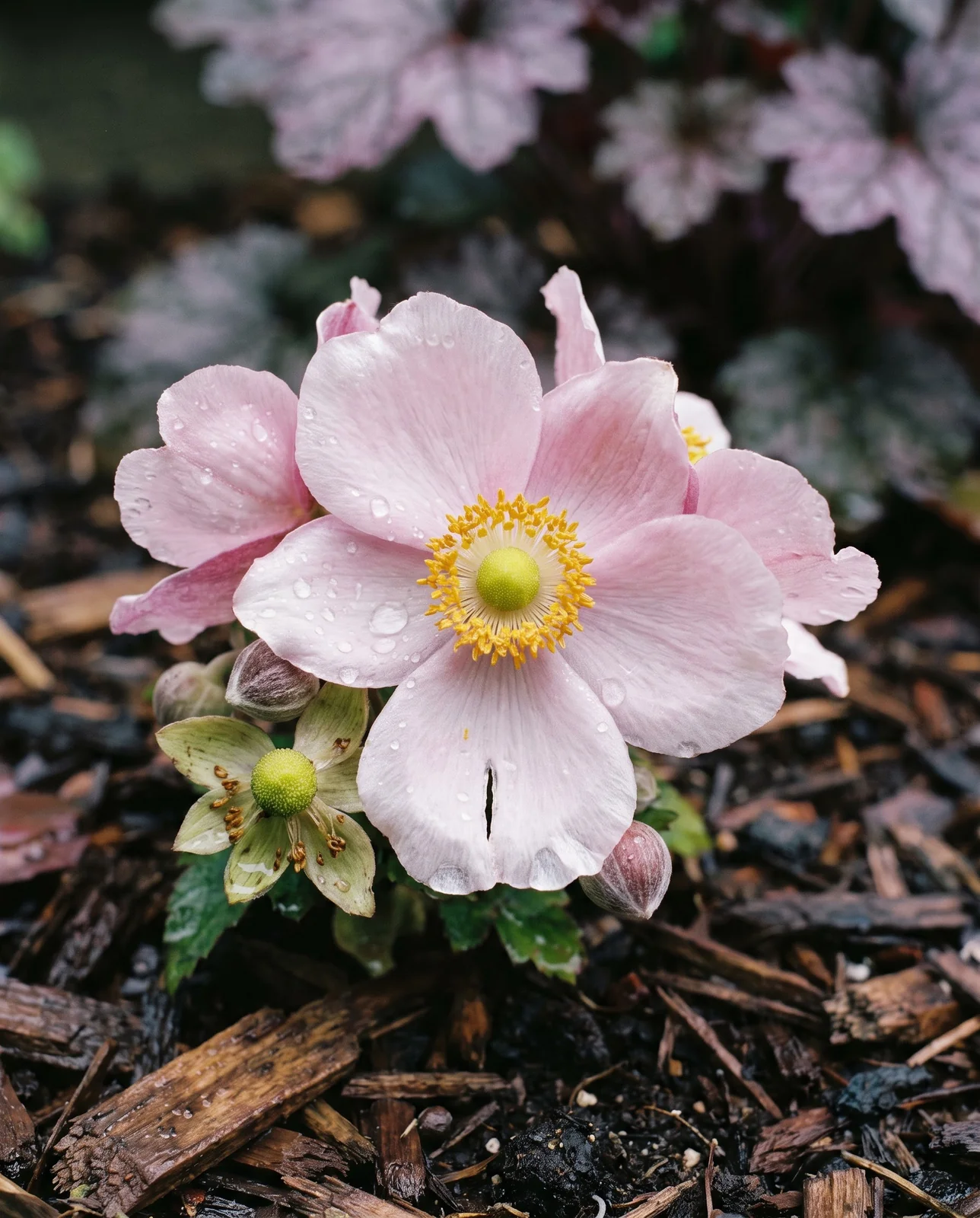
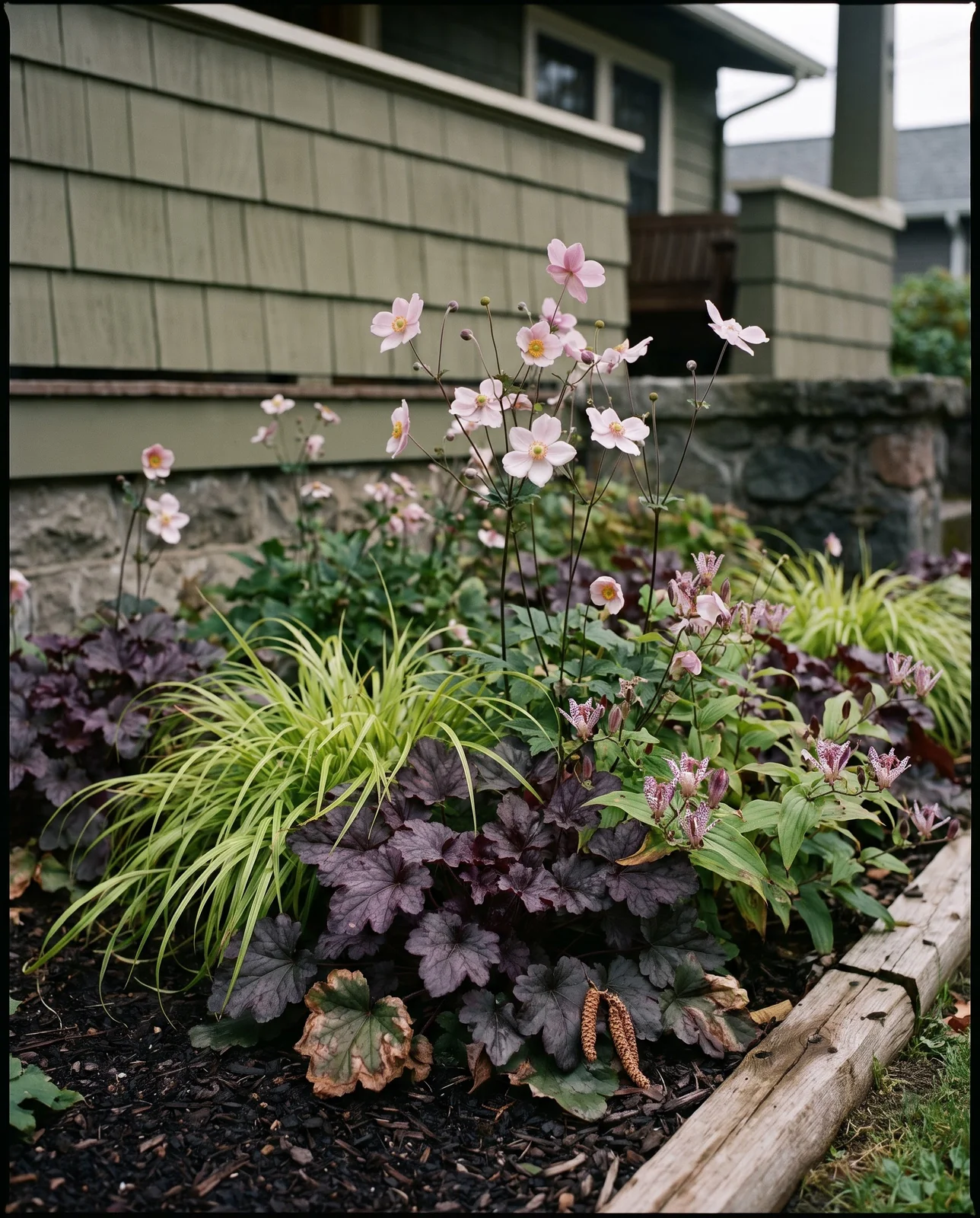
A shaded border is planned around structure that lasts rather than one short flush of bloom. NC State Extension notes that a landscaped shaded border can hold the ground in place and give something to look at in all four seasons. This is a plan for sites that get four hours of direct sun or less, preferably in the gentle morning hours. Give the bed 4 to 5 feet of total depth so the woodland layers have room. The one true fall bloomer here is Japanese anemone, saucer-shaped pink or white flowers on wiry stems 2 to 4 feet tall from late summer into October. Put it through the back and middle zones at 18 to 24 inches apart, room its fibrous roots fill quickly. Shaded ground dries slowly, so the 4 inches of organic matter worked into the top 8 to 10 inches does double duty here: it holds moisture where the roots are, and it keeps heavier soil from staying wet enough to rot crowns.
The rest of the bed leans on the durable evergreens NC State Extension names for shade: hellebores, Carex sedges, strawberry begonias, and Rohdea, all still furnished long after the anemone is done. Set hellebores 15 to 18 inches apart in the mid-tier, where leathery dark green leaves hold 12- to 18-inch mounds year-round and the flowers arrive in late winter, months after everything else has finished. Run Carex sedges along the front edge at 12 inches apart for a dense grassy cover 8 to 16 inches high. Tuck Arum italicum corms 8 to 12 inches apart beneath the sedge; it comes up in cold weather with glossy, green arrow-shaped leaves and vanishes underground all summer. Mulch 2 inches deep with pine straw or shredded bark, keeping it off the crowns of the strawberry begonias, which knit into an understory carpet at 10 inches apart. Water to about 1 inch a week and let the surface dry slightly between rounds, which protects roots in a bed that never dries as fast as one in open sun.
Plan 2 plant roster: part-shade front bed
Four hours of direct light or less, ideally morning sun, built around foliage and woodland bloom rather than a single flush.
Plan 3: Long-blooming, frost-tolerant bed
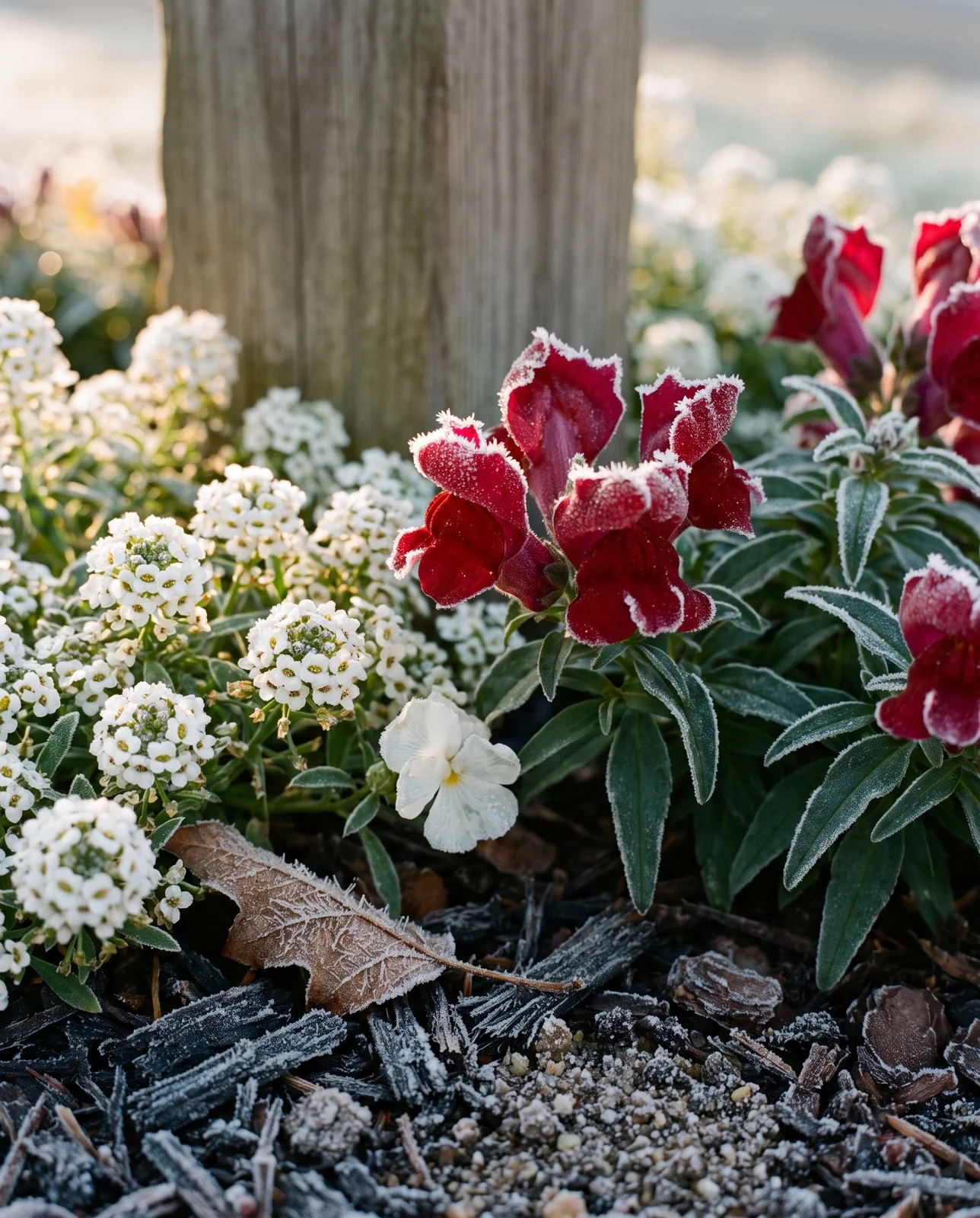
Plan 3 is for front beds where autumn freezes arrive early and the color has to keep going through them. Alabama Cooperative Extension splits fall bedding plants into two groups that behave very differently once the temperature drops. Semi-hardy annuals, the group holding standard snapdragons, chrysanthemums, ornamental cabbage, and kale, go in during September or early October as temperatures moderate, and they come through a light frost. Hardy annuals take considerable frost and freezing outright, and their planting window runs later, mid-October into November. Build the back and middle of this 4-foot-deep bed from upright snapdragons: tall Potomac at up to 60 inches, or Madame Butterfly at 24 to 36 inches with double azalea-type blooms, set in the rear row 10 to 12 inches apart. Clemson HGIC explains that snapdragons flower through fall, pause during severe mid-winter freezes, and resume blooming the following spring in zones below USDA zone 9. Cut the tall ones back to 6 inches once a flush finishes and they push a second, heavier set of stems.
The front two feet turn into a tight, cold-tolerant ribbon of color. Sweet alyssum anchors the edge, starter plugs 6 to 8 inches apart, spreading into honey-scented mounds that keep flowering through repeated autumn frosts. Weave the dwarf snapdragons through it at the same 6 to 8 inches: Snapshot at 6 to 10 inches tall, Floral Showers at 8 inches tall and wide, or trailing Candy Showers, 6 inches high and running out to 12. Twelve inches behind that edging comes the hardy row: pansies, Johnny-jump-ups, China pinks (Dianthus), and ornamental cabbage or kale at 10 to 12 inches apart. The Liberty and Sonnet snapdragon series belong in that row too: Alabama Cooperative Extension groups those particular cultivars with the pansies among the hardy annuals. All of it, edging and hardy row alike, wants to be in the ground at least six weeks before the local first fall frost date, so the roots are down before the cold arrives and the color runs unbroken through autumn.
Plan 3 plant roster: long-blooming, frost-tolerant bed
Full sun to part sun, four to six hours, built for the longest run of bloom past the first freeze.
First frost timing and fall bed bloom windows
Match your USDA hardiness zone to local frost dates to time planting, and to see how long each of the three plans above stays in active bloom.
FAQ
How many hours of sunlight qualify as full sun for fall flower beds?
Alabama Cooperative Extension puts full sun for bedding plants at a minimum of six hours of direct light a day, while Clemson HGIC says most flowering annuals bloom well on four to six. Both numbers are useful. Six hours or more and the full-sun perennials in Plan 1 will stand up on their own; under four hours, especially if that light comes in the morning, the site is a shade bed and the plants should come from Plan 2.
Will my fall flower bed survive a freeze or frost?
It depends which group the plants belong to. Semi-hardy plants, standard chrysanthemums among them, come through a light frost and then decline once hard freezes set in. Hardy annuals take considerable frost and freezing: pansies, Johnny-jump-ups, China pinks, ornamental cabbage, and the hardy snapdragon series Sonnet and Liberty. Alabama Cooperative Extension draws that line.
Can I mix plants from the sun and shade plans together?
Partly. Do not drop full-sun perennials like Russian sage or stonecrop under dense tree shade, because in low light their stems stretch, weaken, and collapse. The frost-hardy edging from Plan 3 travels in the other direction without trouble: sweet alyssum or pansies work along the front border of both the sun bed and a part-shade bed that gets at least four hours of morning light.
What should I do with my fall flower bed when spring arrives?
The perennials in Plans 1 and 2 come back on their own as the soil warms. Cut Russian sage to 4 inches in late winter or early spring, as NC Cooperative Extension advises, so it regrows compact instead of sprawling. Hardy snapdragons and pansies from Plan 3 pause through the coldest weeks and pick up blooming again in early spring. Ornamental kale is the one to pull: once it starts to bolt, replace it with summer annuals.
When should I plant fall bedding plants so they root before frost?
Winter annuals want at least six weeks in the ground before the average first fall frost date, which is what Clemson HGIC recommends and what roots need while the soil is still warm. Alabama Cooperative Extension times the two groups differently: semi-hardy annuals in September or early October as temperatures moderate, hardy annuals from mid-October through November.
More About Best & Compare
Fall planting by region: your zone-by-zone window
Best fall-blooming flowers
Best fall-planted bulbs for spring bloom
Best housewarming plant gifts
Best drought-tolerant flowers for full sun
Easiest flowers to grow for beginners
Best flowers to attract butterflies
Best flowers for containers
Best flowers for hanging baskets and window boxes