Flowers that dry well are the ones built to lose water without collapsing: papery bracts, stiff plumes, small florets strung along airy spikes. Hang one of those upside down in a dark corner and it hardens into something still worth a mantel in February. Hang a rose, a peony or a hydrangea head the same way and you get shriveled blooms, mold on the foliage, or stems gone brittle enough to shatter. How the petals are built is what decides which of the four working methods, air-drying, water-drying, desiccant burial or glycerin, belongs to the stems you just cut.
Petal thickness sets the pace. Thin, papery flowers give up their water through the surface in a few days and ask for nothing but darkness, low humidity and air moving around every stem. Dense, many-layered blooms hold moisture between overlapping petals, where it sits long enough for mold to start, and the petals pull inward as they dry unless something supports them. Large domed heads fall between the two, too heavy to hang cleanly and too full of water to bury. Color follows its own rules that no method fully overrides, and a few flowers change size whatever you do. What follows covers how to match a flower to a method, nine flowers worth drying and what each one wants, air-drying and silica gel step by step, a quick method matcher, and the changes in color and shape to expect rather than fight.
On this page 7 sections
How to choose a method for your flower
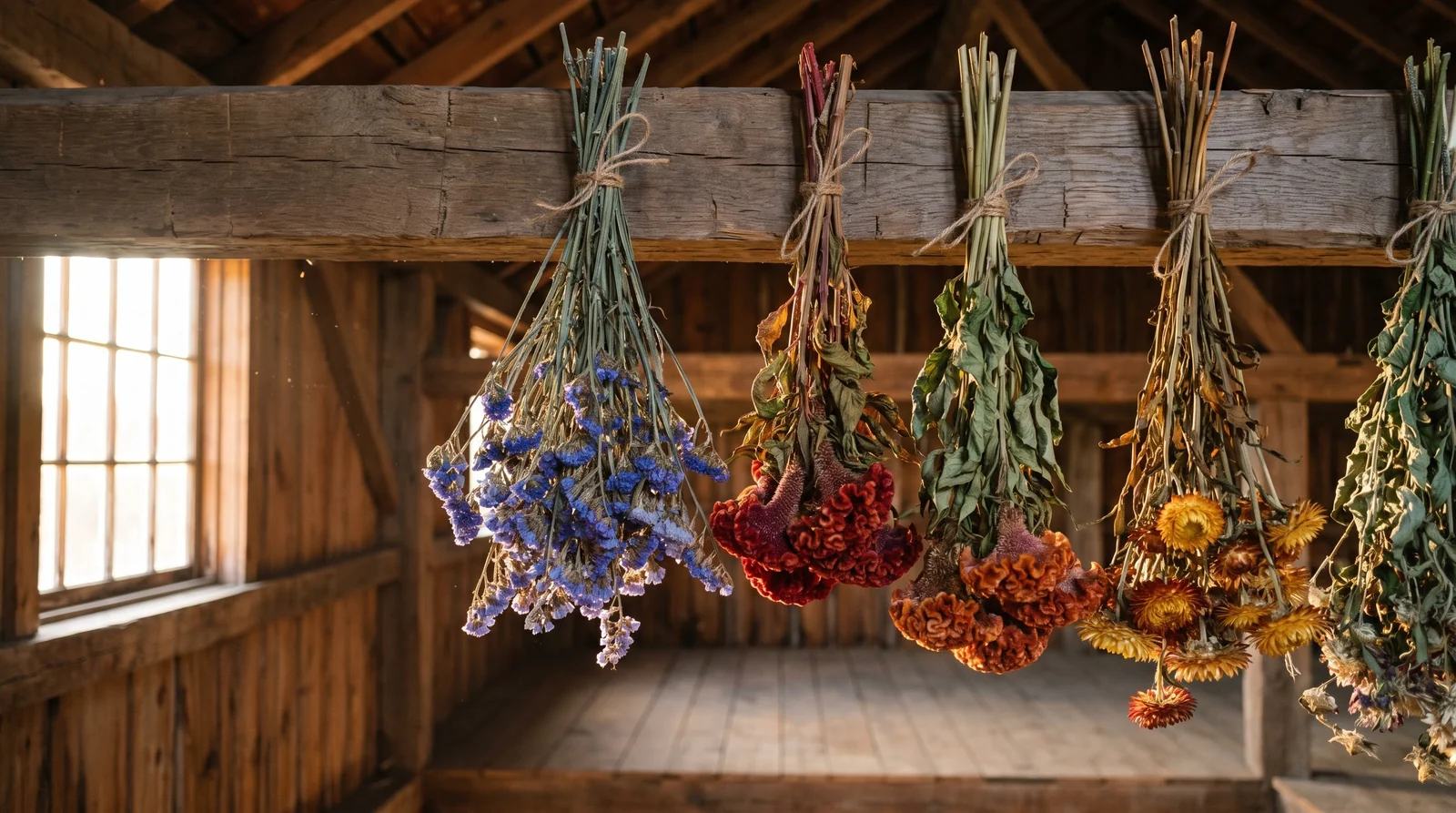
Start with the flower head. Blooms made of small individual florets along a spike, or of stiff papery bracts, carry little water and release it fast through their thin surfaces. Statice, baby’s breath and celosia plumes all sit in this group, and all of them take the standard treatment: hung upside down in moving air, the stems harden into rigid rods while gravity holds them straight. A thick, heavy head given the same treatment does the opposite: moisture stays trapped between overlapping petals long enough for mold to take hold, and the head sags under its own weight before the tissue stiffens.
Dense, many-petaled blooms need physical support while the water leaves. Roses and peonies shrink and lose their cupped shape hanging in open air, the petals contracting as they dry. A desiccant works on a different principle: silica gel crystals or a borax mixture surround each petal individually, drawing water out while propping the flower up, so it keeps its three-dimensional form instead of flattening. Foliage belongs in neither camp. Leafy branches dried in open air turn brittle and shatter when handled, so they go into a glycerin solution that replaces the water inside the leaf with an oily compound and leaves it flexible.
Best flowers for drying
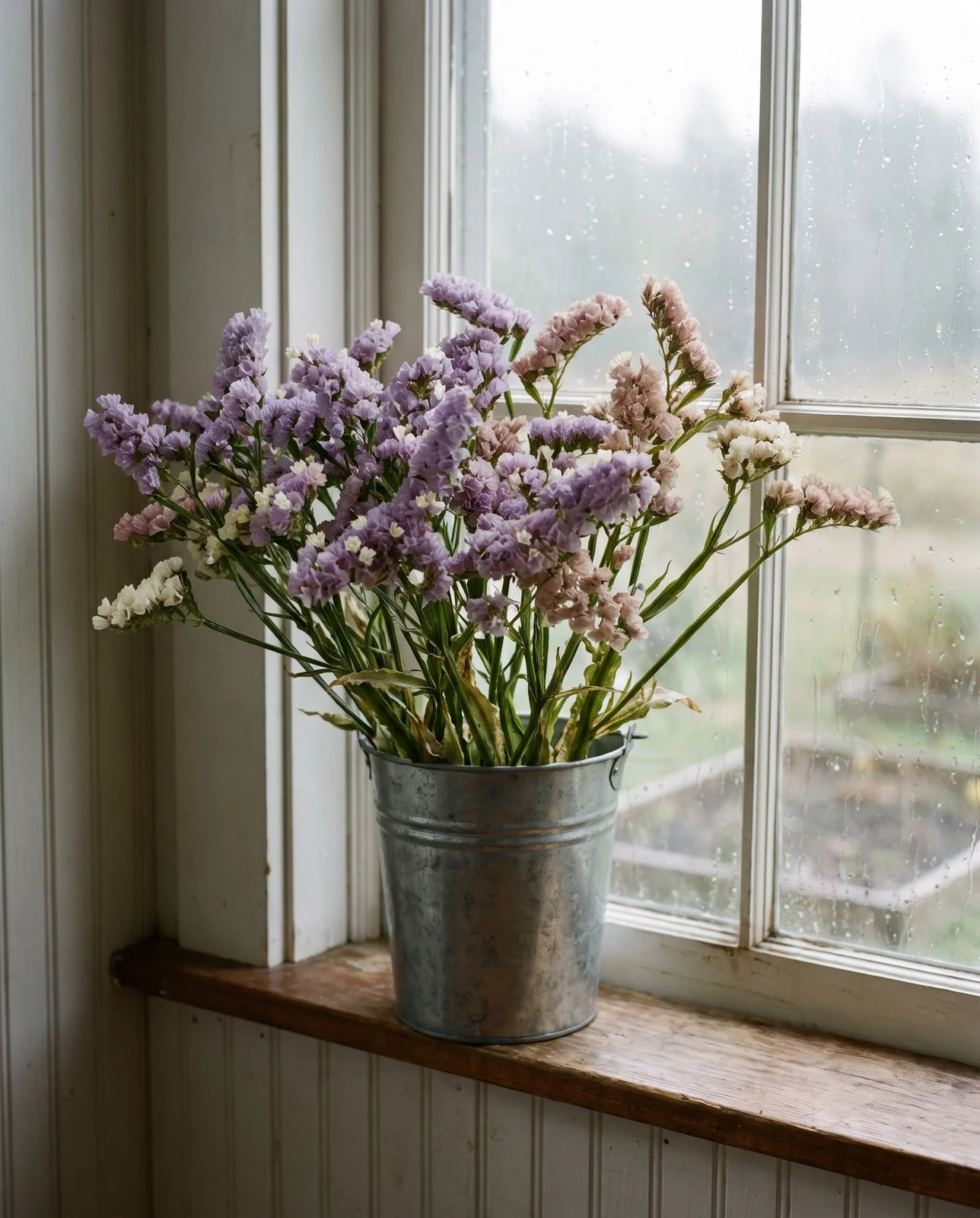
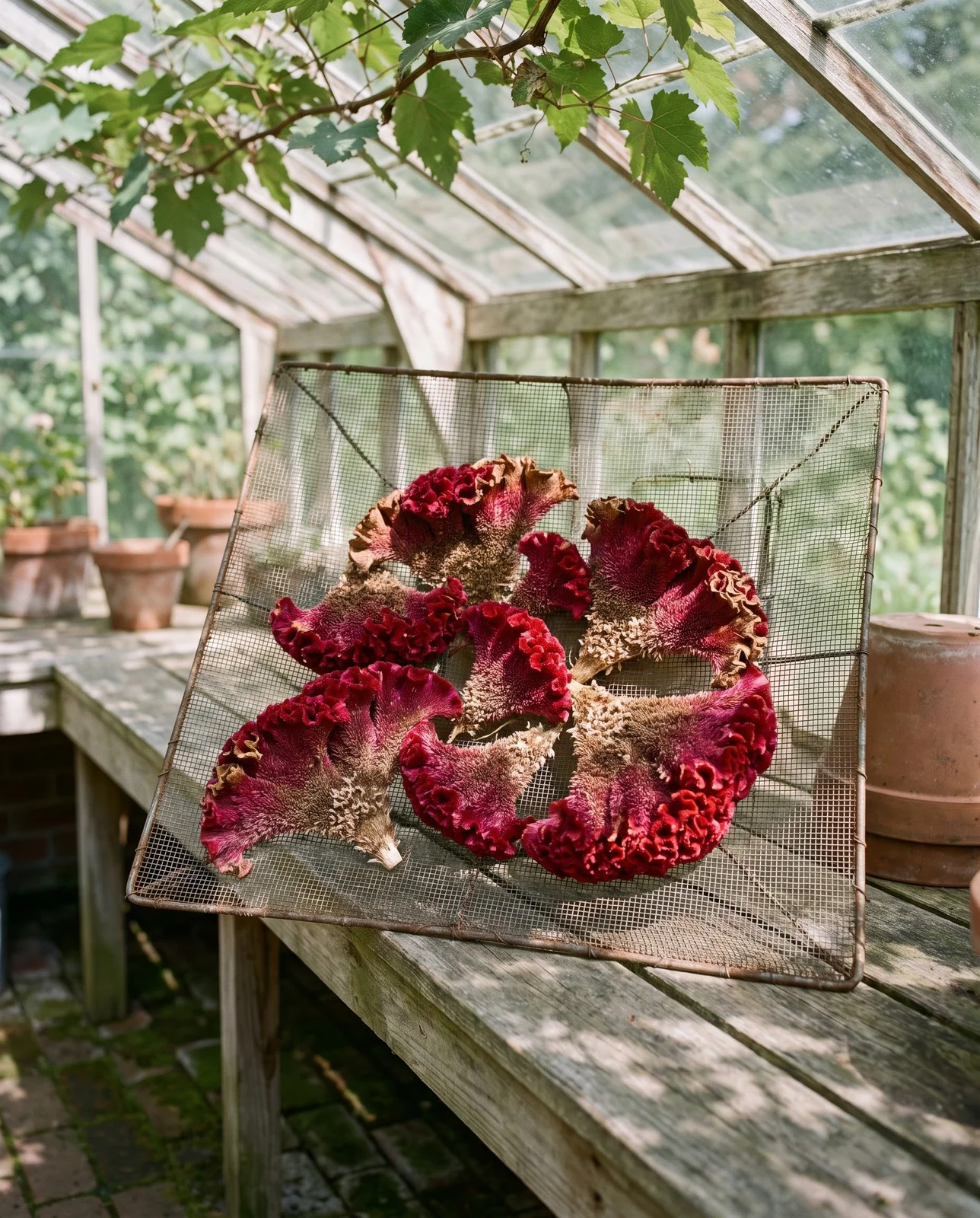
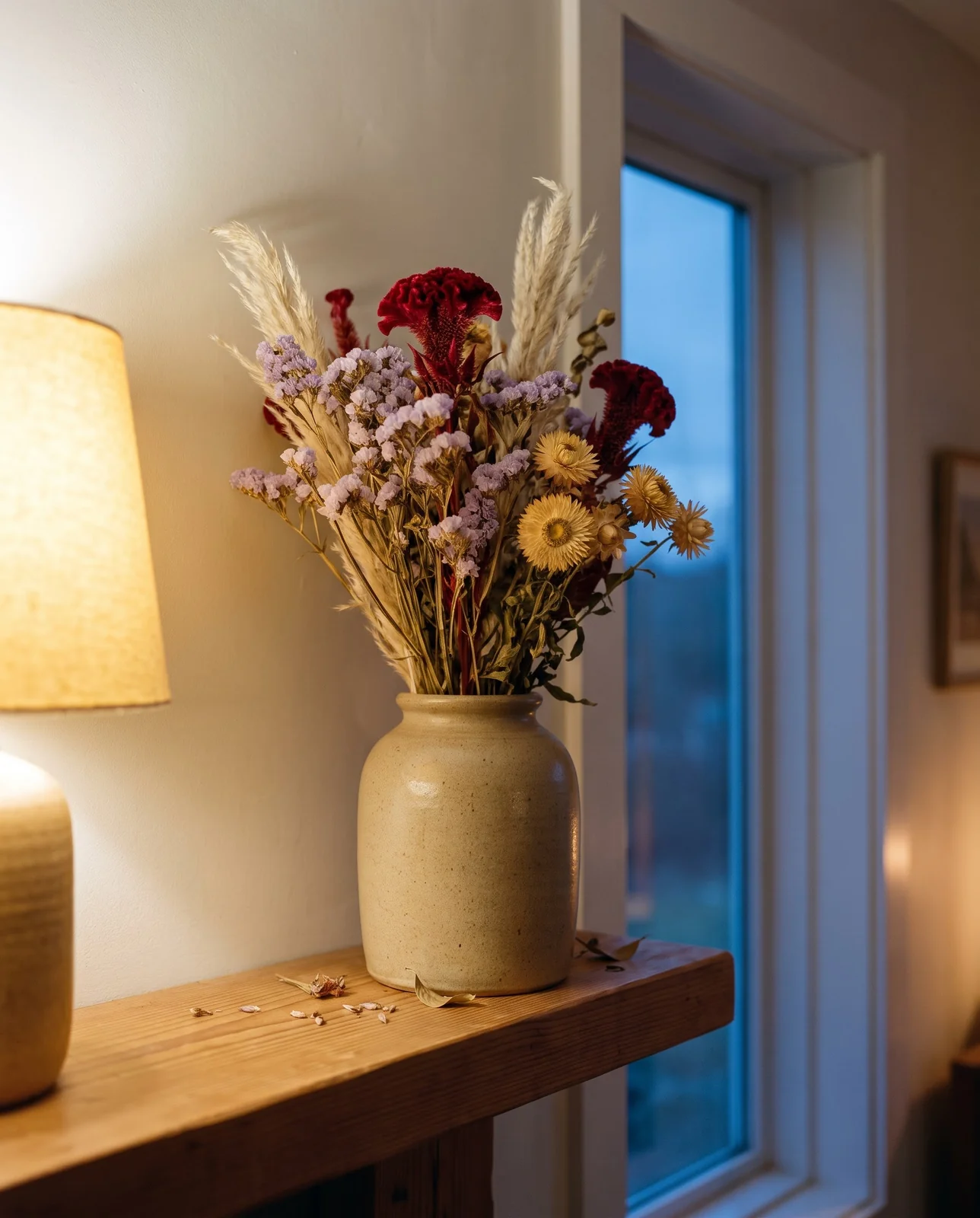
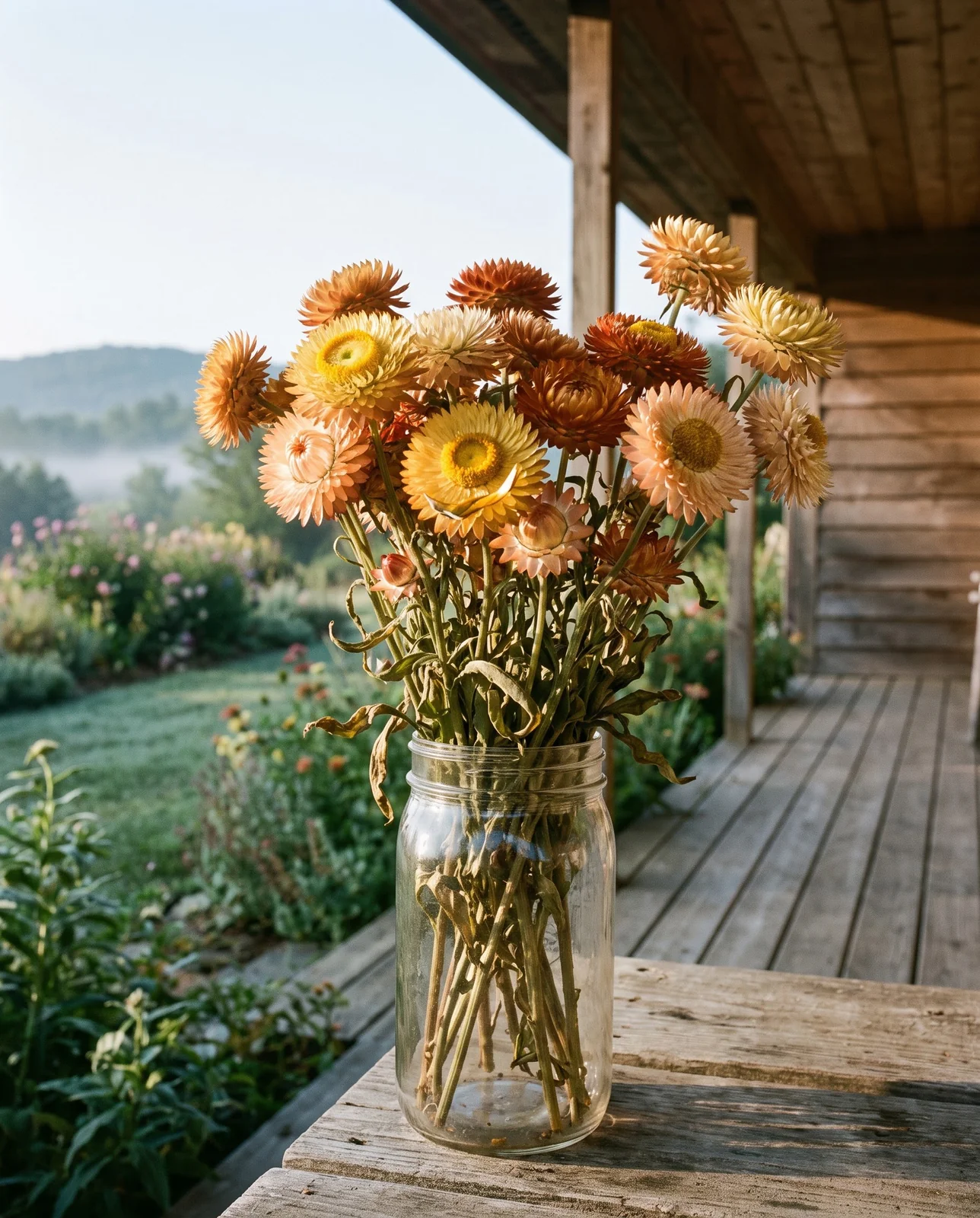
Strawflower (Xerochrysum bracteatum) is the plant most gardeners reach for first, and with reason: what look like petals are papery bracts holding almost no water, so the flowers dry crisp and keep their color with no special handling. University of Illinois Extension describes it as a half-hardy annual of 10 to 14 inches that blooms from June through October in full sun and does its best work in cool weather. What spoils a crop is a wet stretch before harvest, since high humidity or rain degrades petal quality while the flowers are still on the plant. Celosia (Celosia argentea) comes in three forms, cockscomb, feather and wheat, standing 8 to 24 inches tall in full sun and well-drained soil, and its densely packed orange, red and yellow plumes keep their saturation once cured.
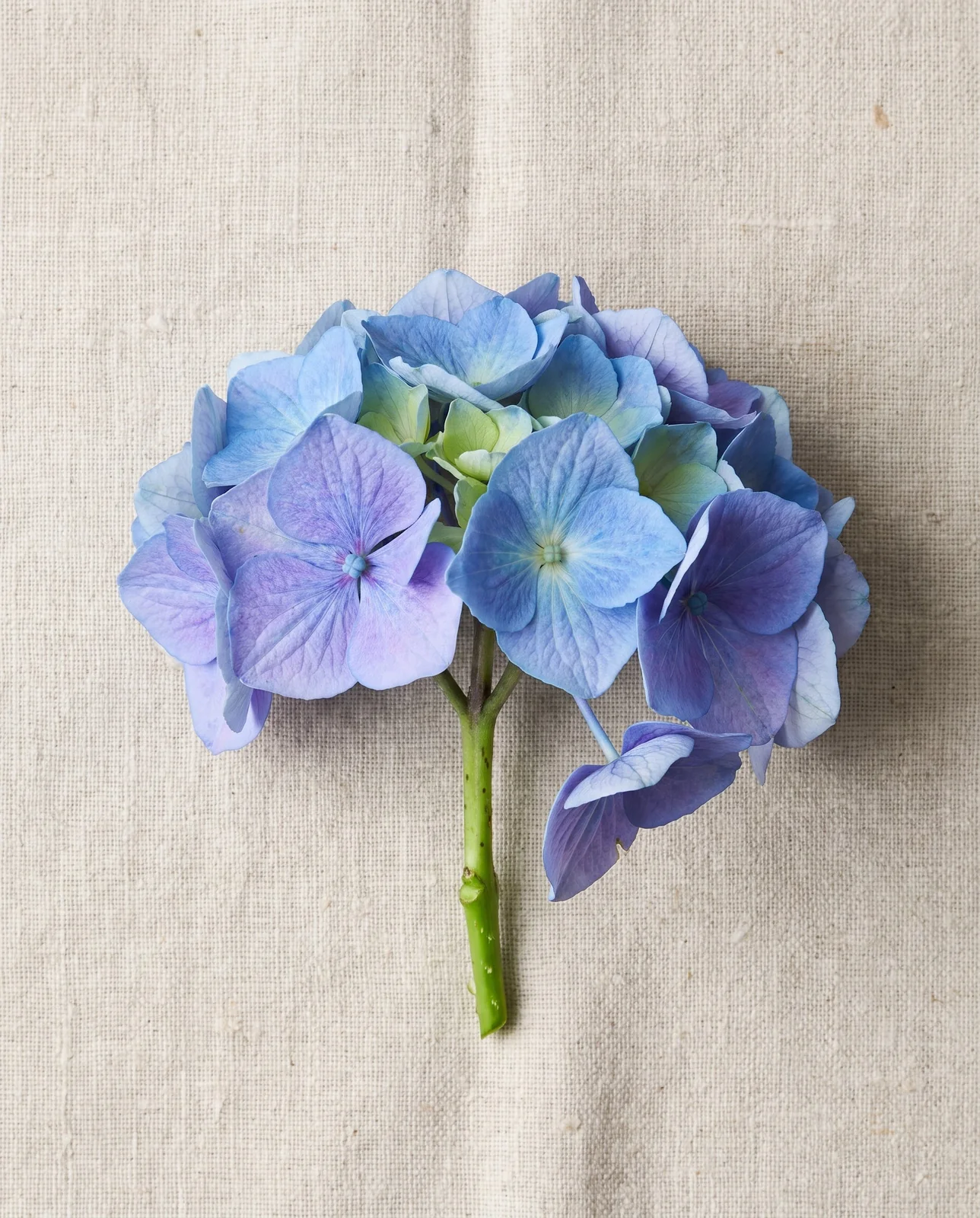
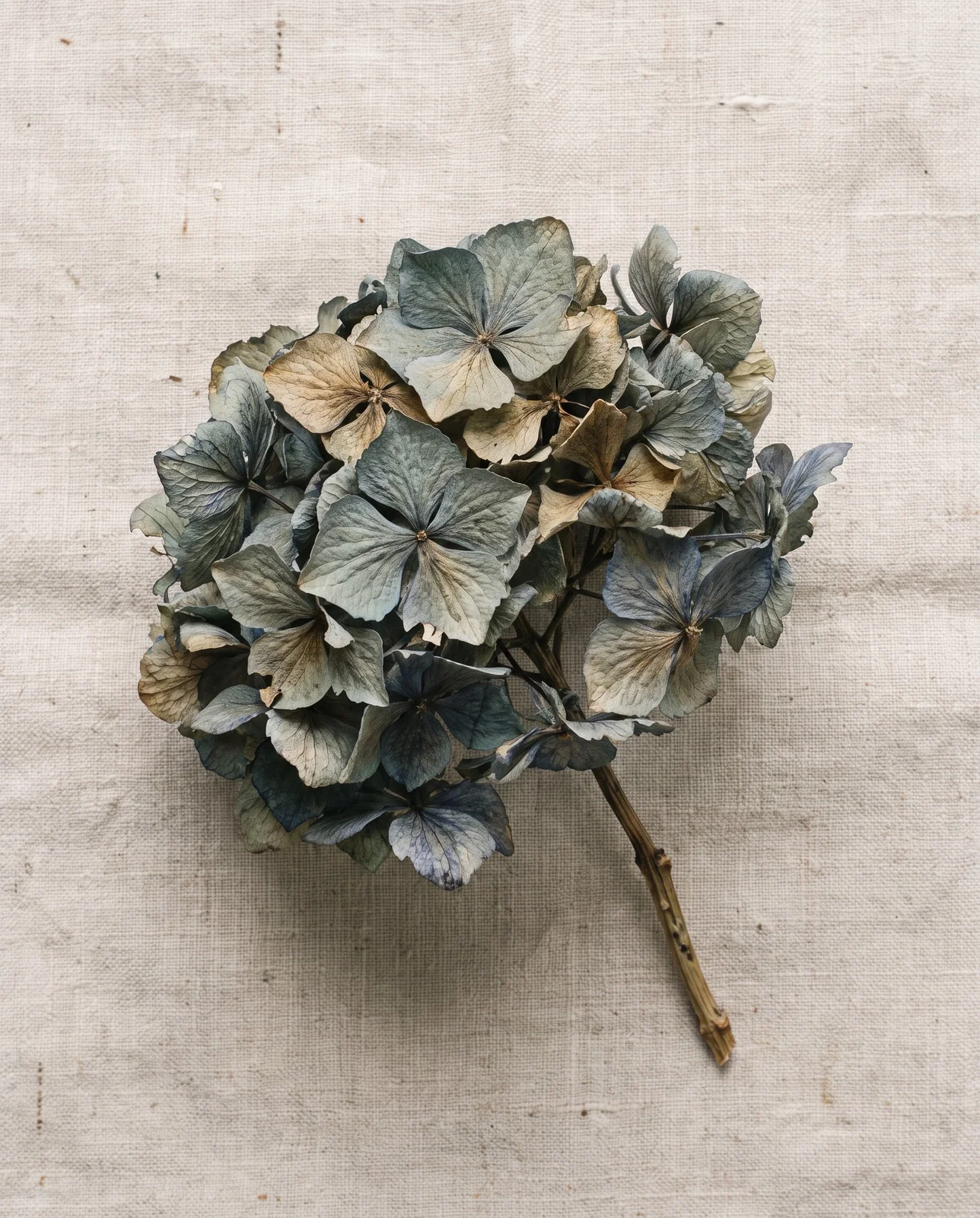
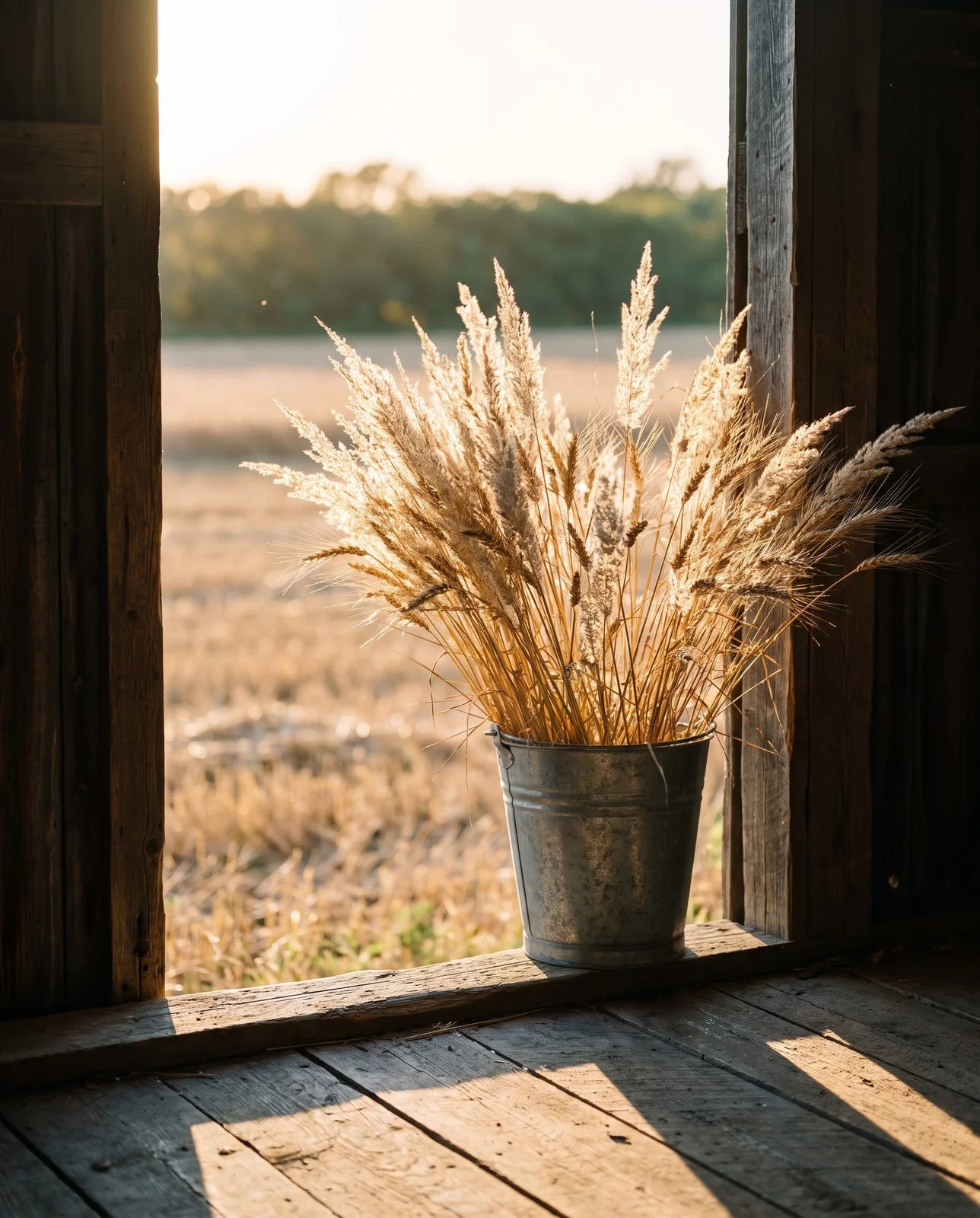
The rest of the reliable list runs to airy perennials, architectural spikes and texture. Ornamental grasses and cattails dry standing in circulating air, stiffening into stems that hold their shape indoors. Spikes of lavender air-dry readily when cut before full bloom, hardening to a muted blue-purple. The flat golden heads of yarrow dry stiff with very little color loss, which makes them the structural floor of most autumn arrangements. Spiky blue globe thistle keeps both its color and its round form if the heads are cut before they open fully. Big heads such as Hydrangea macrophylla want the water-drying method instead, which is what keeps them from shriveling, and annual cornflowers bring the true blue that pink flowers cannot hold.
Nine flowers worth drying, and the method each one wants
Method depends on how the petals are built. Papery bracts and stiff plumes take air-drying without complaint; large domed heads need to drink up water as it slowly disappears; dense multi-layered petals only hold their shape under a desiccant.
Air-drying, step by step
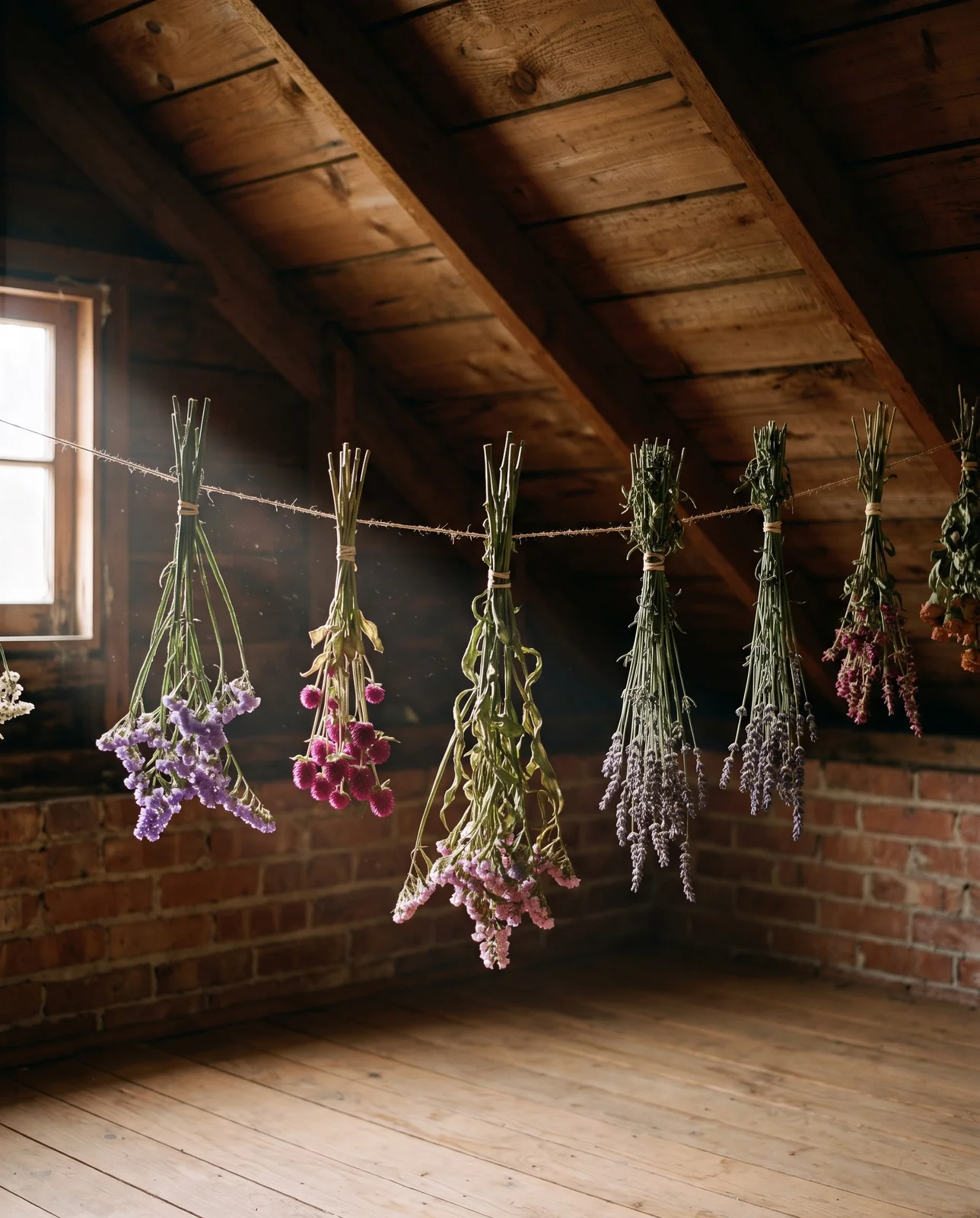
Air-drying is the simplest route and the least forgiving of sloppy timing. Cut the stems just before the flowers open fully; a stem cut wide open drops its petals as the tissue dehydrates. Strip every leaf from the lower stem as soon as the bundle comes indoors, because foliage carries far more water than the flower does and gives fungal spores somewhere to start. Group the stems into small bunches and band them with rubber bands, which tighten as the stems shrink and keep any stem from slipping loose.
Hang the bundles upside down in a warm, dark, well-ventilated space, an attic, a closet or a dry shed. Darkness matters more than most people expect, since ambient light breaks down petal pigment while the flower dehydrates. What color survives also depends on the pigment you started with, and Clemson Cooperative Extension draws a clean line: blue and yellow flowers retain their colors when air dried, while pink flowers fade. Keep several inches between bundles so air reaches every stem. Once the moisture is gone the stems are extremely stiff, rigid enough to stand in an arrangement without wire.
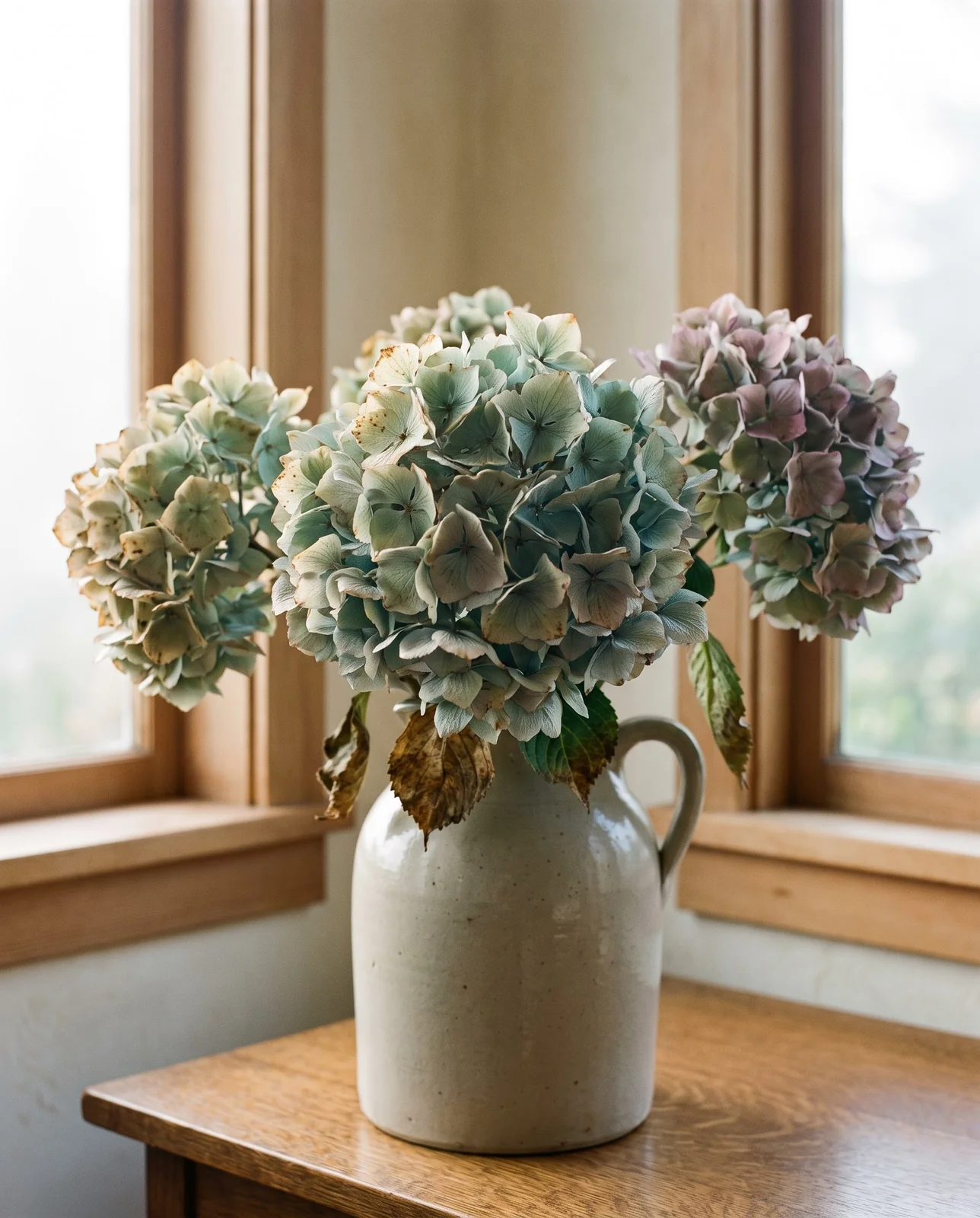
Large, water-heavy heads take a variation that sounds backward. Instead of hanging hydrangeas, yarrow, bells-of-Ireland or celosia upside down, stand the cut stems in a vase holding about two inches of fresh water in the same warm, dark room. The stems draw that water up as the room evaporates it, and the reservoir empties over several days while the heads dry in place. The dome keeps its round shape that way, without the crushed edges a hanging bundle presses into it.
Silica gel and desiccant drying, step by step
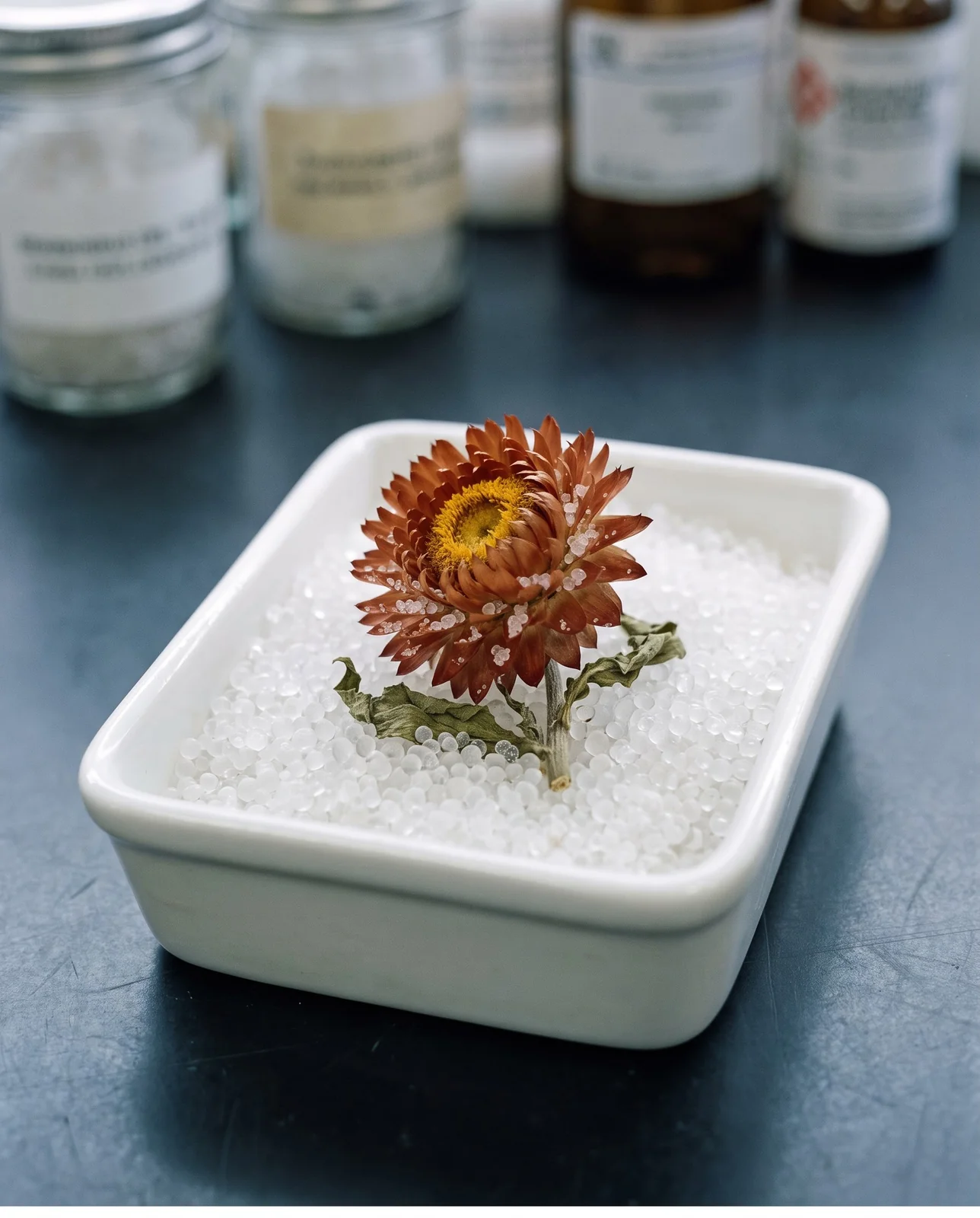
Silica gel is the desiccant to reach for first: it absorbs roughly 40 percent of its own weight in water and pulls a dense bloom dry in about a week. The kind sold for flower work carries indicator crystals that read bright blue when the gel is dry and pale pink once they have absorbed moisture, so a glance at the jar says whether it is ready to use. Pink gel is not spent, only full. Spread it on a baking sheet, heat it in an oven at 300°F until the blue comes back, and it goes straight back into service.
Layering is where the shape is won or lost. Pour about an inch of gel into an airtight container, cut the flower stem to roughly half an inch, and push that stub into the bed so the bloom stands upright. Then sprinkle more gel around the flower slowly, letting the crystals run down between the petal layers and fill the gaps without pushing any petal out of its natural curve, and finish with a full inch of gel over the top of the bloom. Seal the container tightly, or the gel spends the week pulling humidity out of the room instead of out of the flower. A rose needs about seven days in there to dry through.
Borax mixtures cost a fraction of silica gel and work slowly. Two parts borax to one part white cornmeal dries flowers in about 10 days; two parts borax to one part sand takes roughly 16. Among people who do this seriously the preferred medium is oolitic sand from the Great Salt Lake in Utah, whose smooth, rounded grains and naturally high pH hold color and slide between petals without crushing them. A one-pound coffee can holds four pounds of sand, and that is enough to bury a single large rose.
Method matcher
Two checks that route any cutting to the right method
Work down the checks in order. The first check only asks whether foliage or a flower head is in hand; the second sorts flower heads by how the petals are built.
What not to expect
Preserved flowers are not the objects that went into the box. Air-dried roses and peonies shrink and wrinkle as water leaves the cells, and that is simply what air-drying does to those two flowers. To keep the full cupped shape, bury them in a desiccant instead of hanging them. Color shifts on the same schedule. The pinks fade in open air, so a pastel bouquet comes out several shades lighter than the one you cut, while the blues and yellows in it hold. A stem of cornflower keeps its color far better than a pale pink rose ever will.
Microwave drying buys speed and gives up range. Clemson Cooperative Extension is blunt about the limit: flowers with thick petals, such as magnolia and hyacinth, do not dry well in a microwave, because the heat boils the moisture inside the petal and leaves mush behind. On flowers that suit the method, work with about half a pound of silica gel in the container and run roughly two and a half minutes, until the gel reaches about 160°F. Take it out, set the lid on slightly cracked, and leave it 24 hours before uncovering. Blooms that were already fully open going in shed their petals in the heat.
Foliage asks for different handling again. Dried in open air, leafy branches end up brittle and shatter at a touch. Mature branches under 18 inches in length get their cut ends mashed with a hammer and go into a warm mixture of one part glycerin to two parts water for two to three weeks. Young leaves go under completely in a 1:1 glycerin and water bath and get rinsed once they are done. For flat autumn leaves there is a shortcut that skips the solution entirely: press them between two sheets of waxed paper with a medium-hot iron, which holds both the color and the flex.
Frequently asked questions
Frequently asked questions
What is the fastest way to dry flowers?
Microwaving in silica gel. About two and a half minutes brings a half pound of gel to roughly 160°F, which is the finish point, and the container then rests under a slightly cracked lid for 24 hours before you uncover the flowers. Speed costs range, though: thick-petaled flowers come out of a microwave badly, and blooms that were already fully open tend to shed petals.
How do you dry flowers without them rotting or molding?
Cut the blooms just before they open fully, strip every leaf off the lower stem, and hang small bundles in a warm, dark spot where air keeps moving around them. Crowded bundles and still, humid air are what turn a batch moldy. Dense heads that trap water between their petals are safer in silica gel, which pulls them dry inside a week, faster than mold can get going.
Why do some dried flowers lose their color?
Light and pigment. Bundles hung in complete darkness hold their color far better, because ambient light breaks the pigment down while the flower dehydrates. The pigment itself sets the ceiling: Clemson Cooperative Extension reports that yellow and blue flowers retain their colors when air dried, while pink flowers fade.
How long does it take to dry flowers in silica gel?
About a week in a tightly sealed container, even for a dense bloom. The indicator crystals track the process for you: blue while the gel is dry, light pink once it has absorbed water.
How do you dry hydrangeas so they do not wilt?
Use the water-drying method rather than hanging them. Stand the cut stems in a vase with two inches of water in a warm, dark room and leave them alone. The flowers take the water up as it evaporates, and the heads dry upright and open instead of shriveling into a clump.
How do you reactivate silica gel for reuse?
Spread the pink, saturated crystals on a baking sheet and heat them in an oven set to 300°F until they turn blue again. Blue means the moisture is gone and the gel is ready for the next batch.
More About Best & Compare
Best flowering shrubs for full sun
Flowers to sow in fall for spring blooms
Deer-resistant bulbs that hold up to squirrels too
Frost-tolerant flowers: what survives a cold snap
Best fall flowers for pots and porches
Flowers that bloom all summer long
Perennials to plant in fall, and what to leave for spring
Fall planting by region: your zone-by-zone window
Fall flower bed ideas: 3 plans for sun and shade
Enjoying our flower guides? Add YourFlowersGuide as a preferred source on Google — it helps more readers find us.
Add to Preferred Sources