The pairing · pick a flower
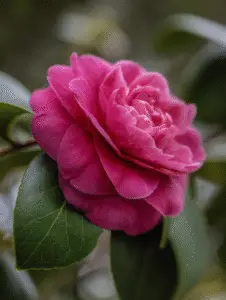 Camellia+
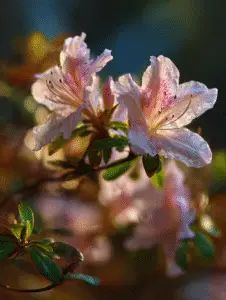 AzaleaProven
Same acid, shade, and moisture needs as camellia, with a comparably shallow root system that competes little rather than more, and a bloom window that overlaps or bridges camellia's own.
Camellia+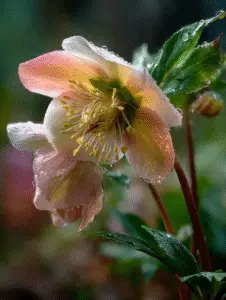 HelleborePartial
One of the few perennials that actually flowers on camellia's own winter-into-spring calendar, giving ground-level color while the shrub's glossy canopy stays evergreen but flowerless most of the year.
Camellia+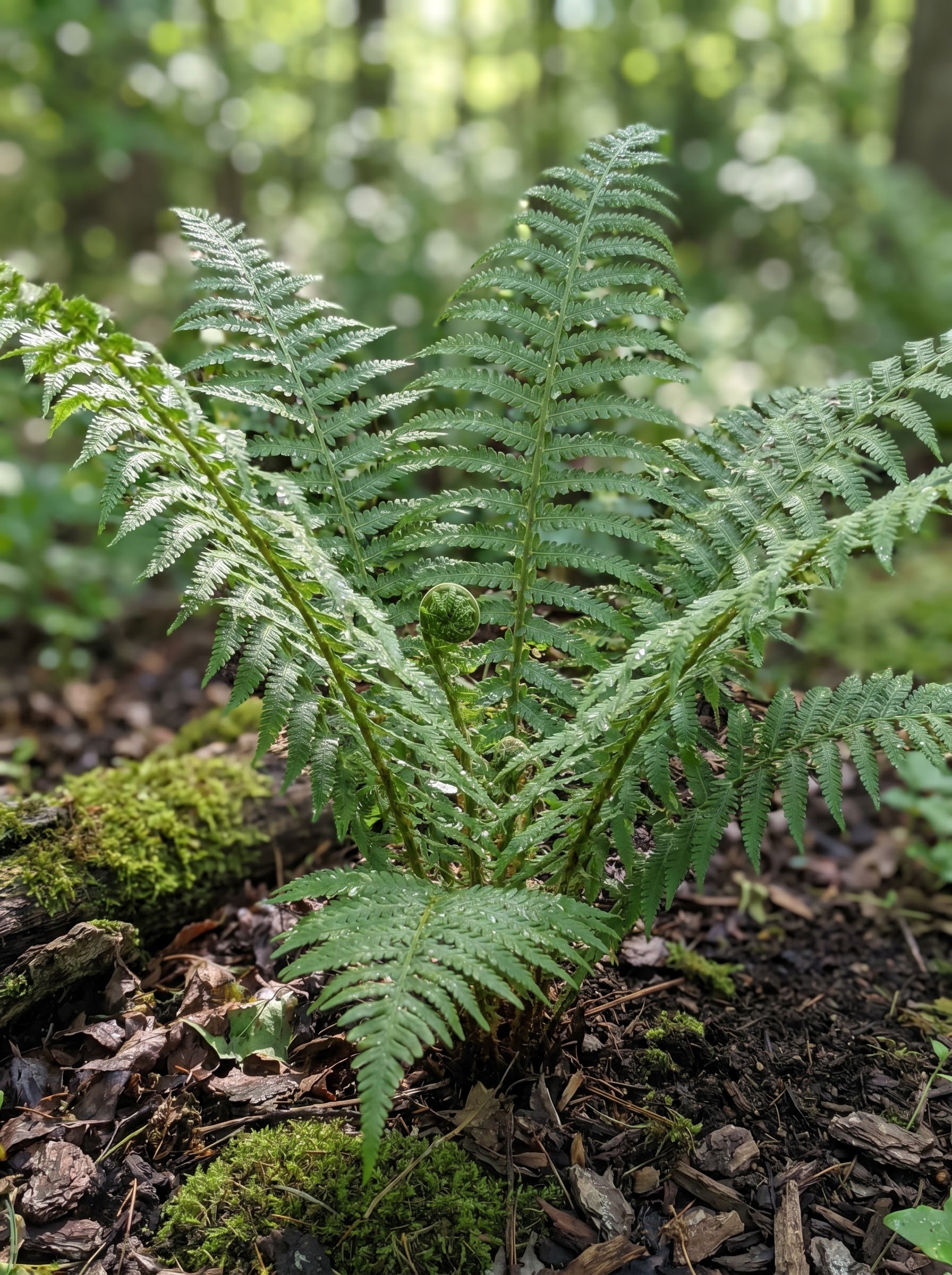 FernPartial
Shares camellia's shade and even moisture exactly, and fine, finely cut fronds are the strongest available foil to the shrub's coarse, glossy leaves, softening the base of an older, leggier plant.
Camellia+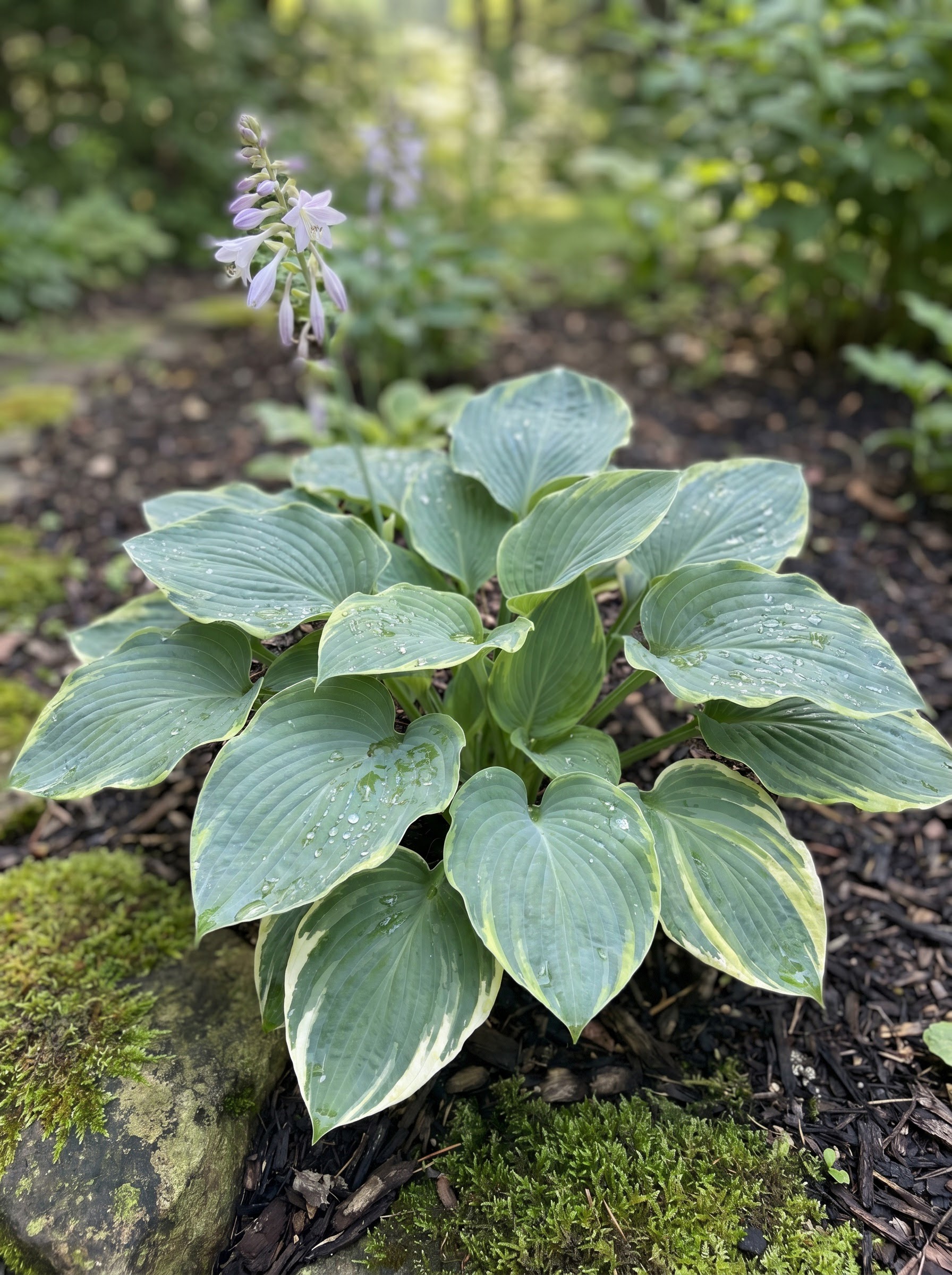 HostaProven
Wants the same part shade and consistent moisture as camellia, and its broad, often ribbed leaves echo the shrub's glossy foliage at a much lower, front-of-border scale.
Camellia+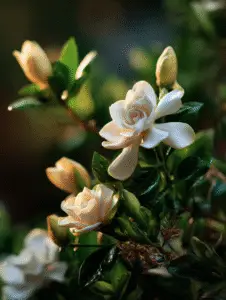 GardeniaPartial
Wants the same acidic, well-drained bed as camellia and offers the fragrance camellia's own blooms mostly lack, so the two read as complementary rather than redundant.
Camellia+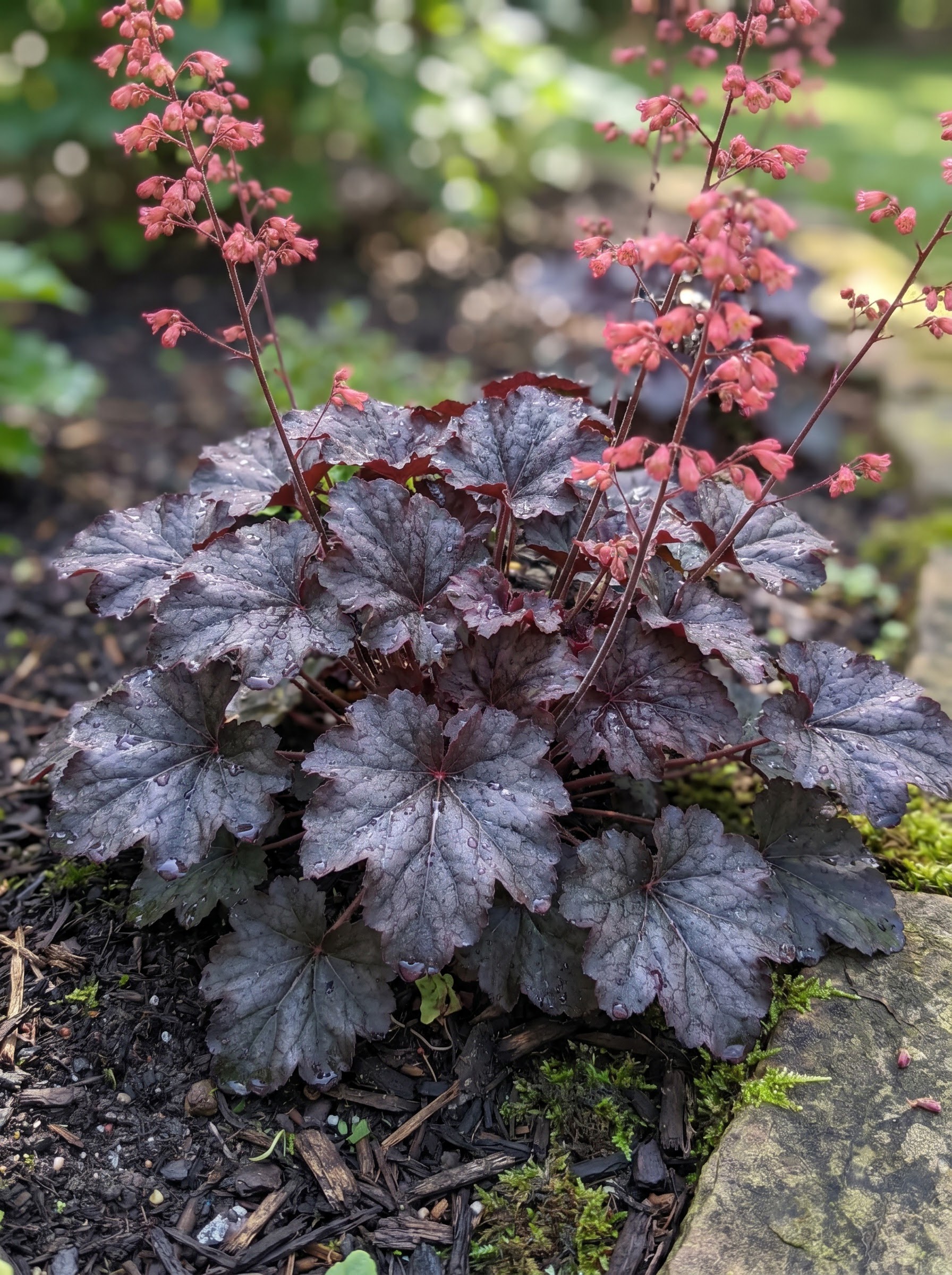 Coral bellsPartial
Tolerates the same part shade as camellia and offers colorful foliage that can echo or contrast camellia's white, pink, or red blooms, with a touch more drought flexibility than the shrub itself.
Camellia+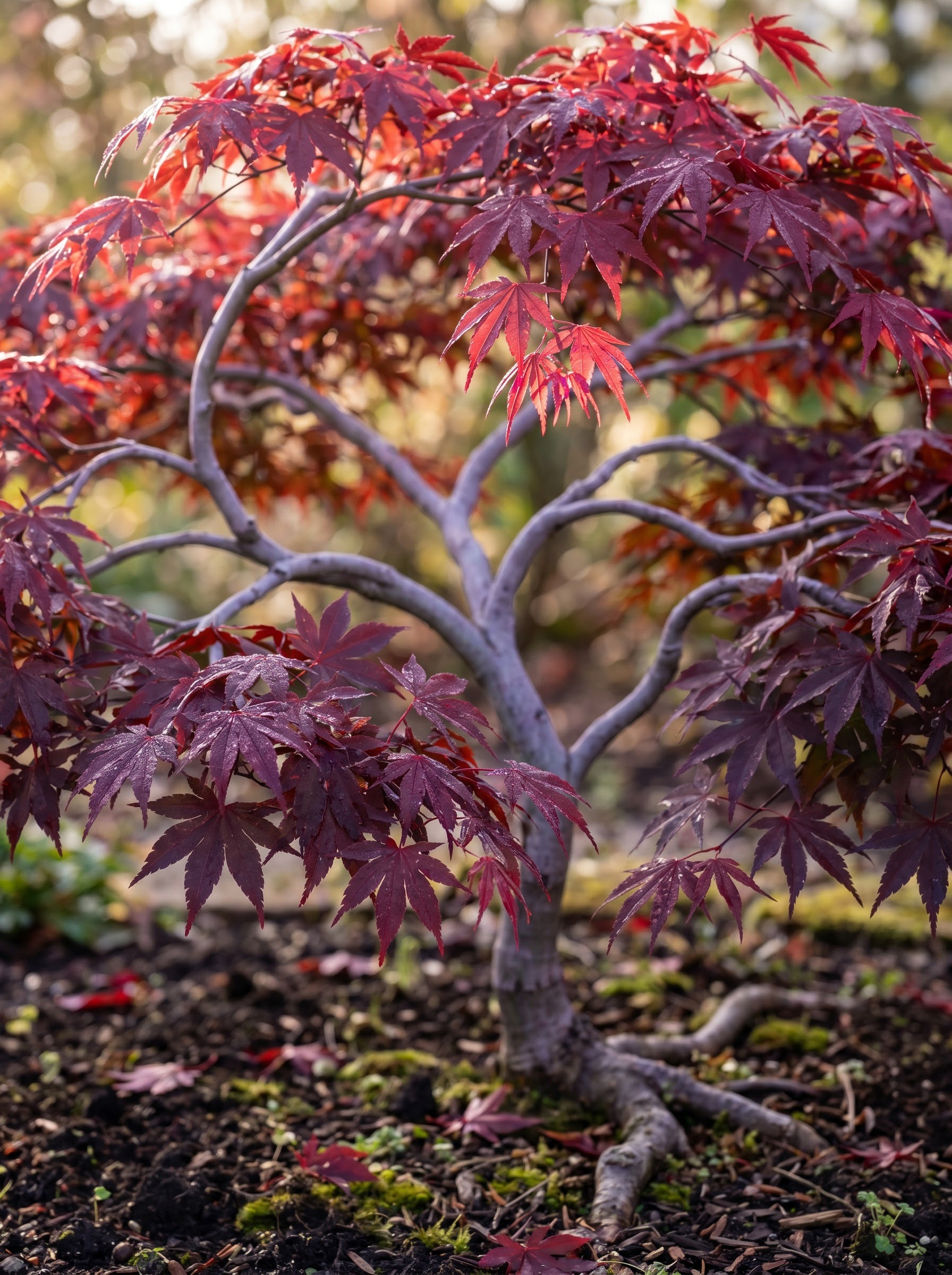 Japanese maplePartial
Fine, lacy foliage is a strong textural contrast to camellia's coarse evergreen leaves, and a mature specimen can provide filtered high shade, but it belongs to the same maple genus that extension sources flag as a shallow-rooted water competitor when sited too close, so this is a bed-edge pairing, not underplanting.
Camellia+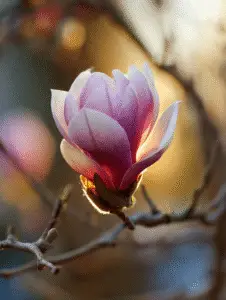 MagnoliaPartial
A tall, well-behaved-rooted tree that can supply the afternoon shade camellia's own site profile calls for, functioning as the canopy layer above rather than a peer sharing the same root zone.
Camellia+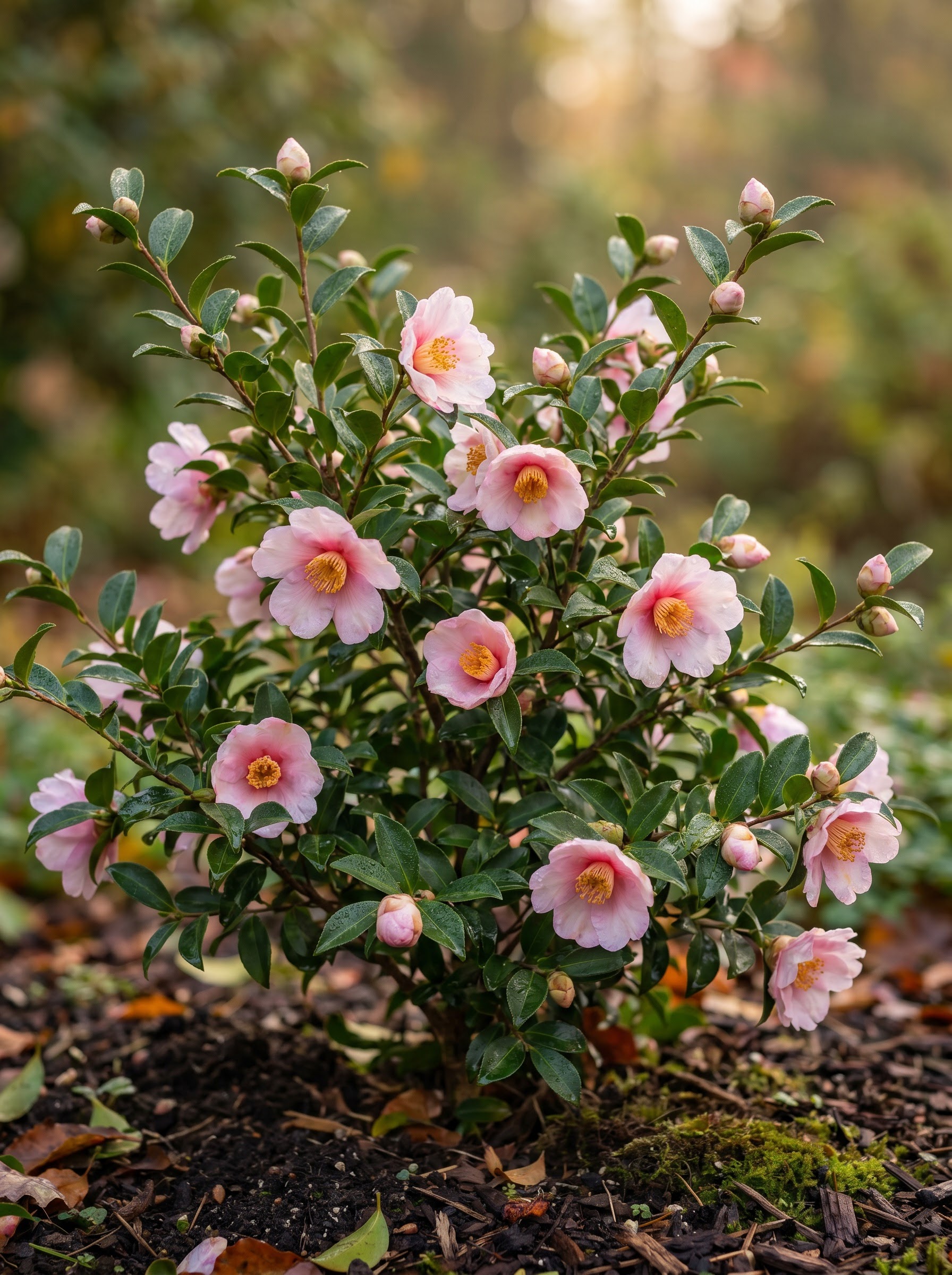 Camellia sasanquaProven
Same acid-shade profile as japonica but blooms fall into early winter instead of winter into spring, so the two species planted together carry an evergreen bed's color from October through April with almost no gap.
All Camellia companions
9 flower companions, best match first
What not to plant near Camellia
Most bad neighbours are not evil, they just want the opposite light, water or root run. Here is what to keep away, and what to do instead.
Shallow-rooted, moisture-competing shade trees (birch, beech, some maples, privet)
Camellia is shallow-rooted and slow to establish, and any shade tree carrying the same shallow, fibrous root habit, birch, beech, some maples, and privet among the commonly cited examples, competes hard enough for water to leave a young camellia stunted or chlorotic even when its own bed conditions are otherwise correct.
Any shade tree with a shallow, competing root system planted too close
University research is explicit on the mechanism, not just the species list: a camellia planting hole is dug three to four times wider than the root ball specifically to cut and set back the roots of neighboring trees and shrubs, because competition for water and nutrients is the single biggest threat during establishment.
Full-sun, low-water annuals and perennials (example: nemesia)
Nemesia needs at least six hours of direct sun to bloom well and simply cannot perform in the lower light a camellia needs or the shade its canopy casts, a straightforward light mismatch rather than anything specific to camellia.
True alkaline-requiring ornamentals (example: baby's breath)
Baby's breath genuinely needs neutral-to-alkaline soil to thrive, the opposite end of the pH scale from camellia's required 5.5 to 6.5, so the two will never both be happy in the same amended bed. Tolerant plants like lilac are a different story: they lean alkaline but adapt fine to acid-to-neutral soil next to a camellia.
Aggressive shallow-rooted spreaders and vines at the base (example: English ivy)
Camellia's own shallow root zone leaves little room for a mat-forming spreader competing directly at the surface; ivy in particular grows fast enough to shade out and choke smaller companions and can weaken a host plant's ability to feed itself over time.
The best companions for camellia, explained
A camellia is not a bed-mate looking for equals. It is a slow-growing, long-lived evergreen shrub that anchors a planting scheme for decades, glossy and structural whether or not anything around it is in flower. The real companion question is what fills the space beneath and in front of that permanent canopy, both for color echo during its winter-into-spring bloom and for the long stretch, roughly April through October in most zones, when the shrub itself is just handsome dark green foliage doing nothing in particular. Azalea answers that question best. It shares camellia’s acid soil, its part shade, and a comparably shallow root system that competes little rather than aggressively, and its own bloom often overlaps or bridges camellia’s, which is exactly why the site’s own care guide already names it as the classic pairing. Hellebore does something azalea cannot: it flowers on almost the same calendar, nodding cream or plum cups opening at ground level right as camellia is doing its own show overhead, so a bed built around both never goes visually quiet in the coldest months.
Beneath and around the shrub, the job shifts from bloom-time matching to texture and skirting. Fern and hosta both want exactly what camellia wants, part shade and even moisture, and both bring a leaf shape the shrub’s own glossy foliage lacks: fern’s finely cut fronds and hosta’s broad ribbed blades soften a mature camellia’s base, which can thin and self-shade lower down over decades the way most large evergreens eventually do. Gardenia earns its spot for a different reason. It needs the same acidic, well-drained bed, but its heavily scented flowers supply the fragrance most camellia varieties simply don’t have, so the two shrubs read as complements rather than repeats of the same idea. Heuchera and Japanese maple work at the design layer: coral bells for foliage color that can echo or contrast camellia’s white, pink, or red blooms, Japanese maple for a lacy textural foil and, once mature, a little filtered high shade of its own. A less obvious but genuinely useful pairing is camellia sasanqua planted alongside camellia japonica: same acid-shade profile, but sasanqua blooms fall into early winter while japonica takes over from midwinter into spring, so the two species together carry an evergreen bed’s color from October clear through April.
What not to plant near camellia
The dominant fear with camellia is not toxicity or pest attraction, it is starving the shrub. Every credible source agrees on the same mechanism: camellia is shallow-rooted and slow to establish, so anything that competes harder for water during those first few years will usually win, leaving the camellia stunted, chlorotic, or simply stalled. The American Camellia Society states the rule plainly: do not plant where shade trees with shallow root systems will compete with camellia for nutrients and water, and gardeners commonly cite birch, beech, some maples, and privet as the trees most likely to fit that description. This is not vague garden folklore. North Carolina State’s extension horticulture program explains the actual mechanism behind the standard planting instructions: a camellia’s planting hole is dug three to four times wider than the root ball, and not deeper, specifically to cut and set back the roots of any neighboring tree or shrub, because reducing that competition is the single biggest factor in whether a new camellia establishes well. The lesson generalizes past the named species. Any shade tree with a dense, shallow, fibrous root system sitting too close is a genuine risk, while deep-rooted, well-behaved trees like oak, elm, or crabapple tend to coexist with camellia far more comfortably as a high canopy.
Sun and soil mismatches round out the honest avoid list, and both are simpler than the root question. Nemesia is a clean, named example of the sun problem: North Carolina State’s plant toolbox lists it as a full-sun plant needing six or more hours of direct light daily, and it cannot perform in the low light camellia requires or the shade its canopy throws, a straightforward mismatch rather than anything unique to camellia. On the soil side, camellia’s required pH of 5.5 to 6.5 genuinely conflicts with plants that need alkaline conditions to thrive, baby’s breath being the clearest example, since North Carolina State’s own plant toolbox lists its tolerance as neutral to alkaline soil, not the acidic range camellia demands. That is a different case from a plant that merely leans alkaline but tolerates acid soil fine, lilac being the standard example gardeners cite for that distinction, so tolerance is the real test here, not a demand for a perfect pH match. A softer, less independently confirmed caution rounds out the list: aggressive shallow-rooted spreaders like English ivy planted directly at the trunk likely compete in the same thin root zone that makes the tree case so clear, though no single source names ivy for camellia specifically, so it is flagged honestly as a plausible extension of the root-competition mechanism rather than a separately proven claim.
Do they like the same conditions?
Camellia’s growing profile is specific enough that it is worth stating plainly before matching anything to it. Light wants to be part shade, morning sun with afternoon shade being the textbook ideal; older camellias with roots shaded by their own canopy tolerate more sun than young, newly planted ones can. Water needs to stay evenly moist and well-drained, never fully dried out while the plant is establishing and never left standing, since camellia is a poor drought-tolerator with a documented risk of Phytophthora root rot in soggy soil. Soil has to sit acidic, pH 5.5 to 6.5, and this is where camellia genuinely differs from a flower like hydrangea macrophylla, where pH mostly just steers flower color. For camellia, alkaline soil causes real nutritional decline: high pH locks up iron, and the yellowing that follows is a genuine deficiency, not a cosmetic issue. The honest rule that falls out of this is not that every companion needs to match camellia’s preference for acid soil, only that it needs to tolerate that range. A plant that actually requires alkaline conditions is a real conflict; a plant that simply prefers it but adapts, the way lilac does, is not.
One popular belief is worth correcting directly, because the site’s own past guidance has repeated it: pine needle mulch does not meaningfully acidify soil. University extension research is clear on this. Pine needles are acidic when they fall, but decomposing organisms neutralize that acidity as the needles break down, and even a substantial layer produces no measurable change in soil pH. The correlation gardeners notice, acidic soil under pine trees, exists because pines grow where acidic soil already exists, not because the trees created it. That does not make pine trees a bad companion choice. Their filtered, thinly clad canopy genuinely suits camellia’s light needs, and pine straw mulch genuinely conserves moisture and keeps roots cool, both real benefits camellia needs. It just means the acidifying claim specifically is a myth, and sulfur, not pine straw, is the correct tool if a bed’s pH actually needs to come down.
How to plant them together
Treat camellia as the tallest, most permanent layer and build outward and downward from it. Deep-rooted trees like magnolia or oak belong well outside the root zone, generally 20 feet or more for a large evergreen magnolia at maturity, functioning as a high canopy that supplies afternoon shade rather than a plant sharing camellia’s own thin root layer. Shrub-scale companions like azalea and gardenia get their own footprint nearby, azalea close enough to carpet the ground at the drip line since its root competition is genuinely mild, gardenia given three to four feet of its own space since it is a full shrub in its own right, not an underplanting. The low layer, hellebore, hosta, fern, and heuchera, goes directly beneath and in front of the camellia, typically 12 to 18 inches from the trunk, close enough to skirt any bare lower growth on an older plant but not so close that a shovel disturbs the camellia’s own shallow roots while digging them in.
Timing matters more here than with most flowers, because camellia’s slow establishment period is the vulnerable window. Plant companions after the camellia itself has had at least one full growing season to settle in, rather than crowding a young, still-establishing shrub with root competition from day one. In containers, camellia pairs well with hosta specifically, since both tolerate similar watering schedules and neither minds sharing a large pot as long as drainage stays sharp. Whatever the layout, keep mulch, pine bark or pine straw both work fine for moisture and temperature, pulled back a few inches from the camellia’s own trunk and any companion’s crown, since a mat of mulch against the base traps moisture against the stem and invites the same rot risk as poor drainage.
Does companion planting actually work for camellia?
Some of this is genuinely proven, and it is worth being specific about which parts. The root-competition avoid list is the strongest, best-documented claim on this entire page: a specialist society and a state extension program independently describe the same planting-hole mechanism, and it is basic root physiology, not folklore dressed up as science. The shared-conditions matches, azalea, hellebore, hosta, and sasanqua paired with japonica, hold up the same way: each candidate genuinely wants camellia’s exact light, water, and pH, and the bloom-time overlaps are real rather than a marketing flourish. Where the evidence gets softer is the design-benefit language, color echo from heuchera, textural contrast from Japanese maple, fragrance complement from gardenia. Those pairings are horticulturally sound because the growing conditions genuinely match, but the specific aesthetic payoff is a design judgment, not a controlled finding, so it is labeled Partial rather than Proven.
The clearest folklore on this page is the pine needle acidification claim, which turns out to be actively wrong rather than merely unproven, and the English ivy caution, which is a plausible extension of a real mechanism rather than an independently confirmed pairing for camellia specifically. None of that undermines the page’s central, load-bearing fact: camellia’s single biggest companion-planting risk is a documented, named, physiologically explained one, thirsty shallow-rooted trees outcompeting a slow-establishing shrub for water, and that fact alone is worth more than a long list of unverified aesthetic pairings.
Frequently asked questions
What can I plant under a camellia?
Shade perennials that share its part-shade, even-moisture profile work best: hellebore for winter bloom at ground level, hosta and fern for texture and to skirt a bare lower trunk on an older plant.
What should you not plant near camellia?
Avoid shallow-rooted, thirsty trees like birch, beech, some maples, and privet, since they compete hard for water during camellia’s slow establishment period and usually win. Also skip true full-sun plants and anything that genuinely requires alkaline soil.
Do camellias and azaleas grow well together?
Yes. They share the same acid soil, part shade, and moisture needs, and their comparably shallow root systems compete little rather than aggressively, which is why azalea is the most consistently recommended camellia companion across horticultural sources.
Does camellia companion planting need acidic soil for everything nearby?
No. Camellia itself requires pH 5.5 to 6.5, but companions only need to tolerate that range, not prefer it. A plant like lilac that leans alkaline but adapts well is fine; a plant that genuinely requires alkaline soil, like baby’s breath, is not.
Can I grow camellia japonica and camellia sasanqua together?
Yes, and it is a genuinely useful pairing. Both want the same conditions, but sasanqua blooms fall into early winter while japonica picks up from midwinter into spring, so planting both extends an evergreen bed’s color across most of the cold season.
Sources
- American Camellia Society: Planting Camellias
- North Carolina Extension Gardener Plant Toolbox: Camellia japonica
- North Carolina Extension Gardener Plant Toolbox: Camellia sasanqua
- North Carolina Extension Gardener Plant Toolbox: Nemesia strumosa
- North Carolina Extension Gardener Plant Toolbox: Gypsophila paniculata
- Clemson Cooperative Extension HGIC: Camellia
- Clemson Cooperative Extension HGIC: Azalea Care
- Clemson Cooperative Extension HGIC: Gardenia
- Clemson Cooperative Extension HGIC: Hosta
- UNH Extension: Do Pine Trees and Pine Needles Make Soil More Acidic?