Which plant you actually bought
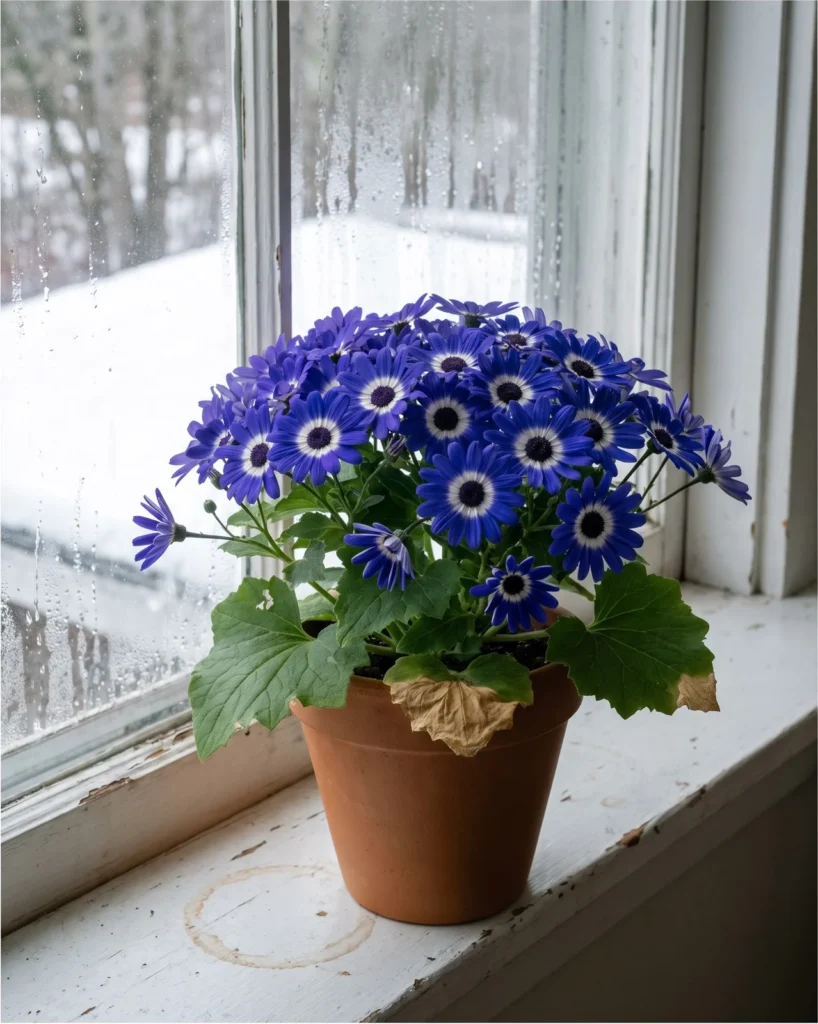
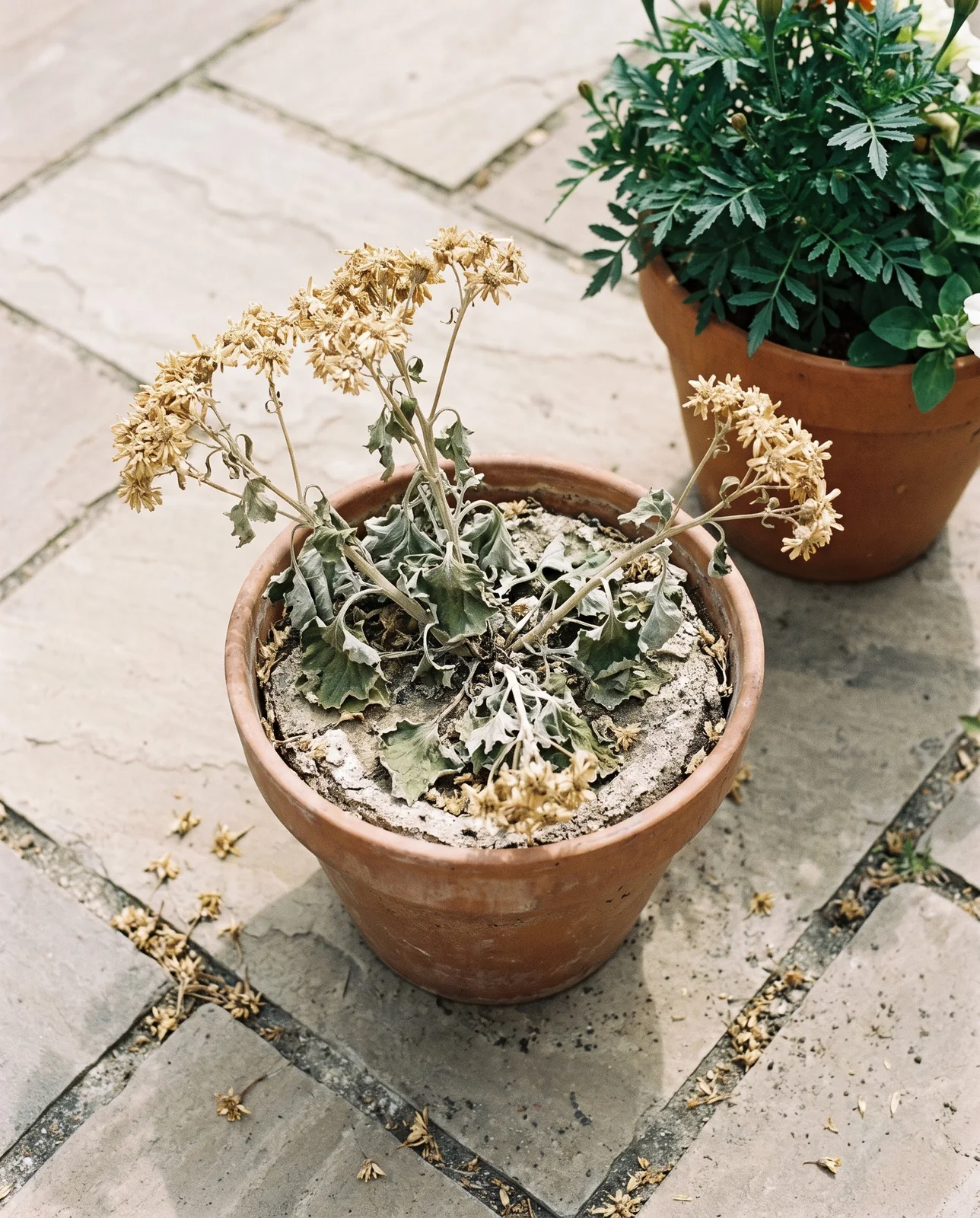
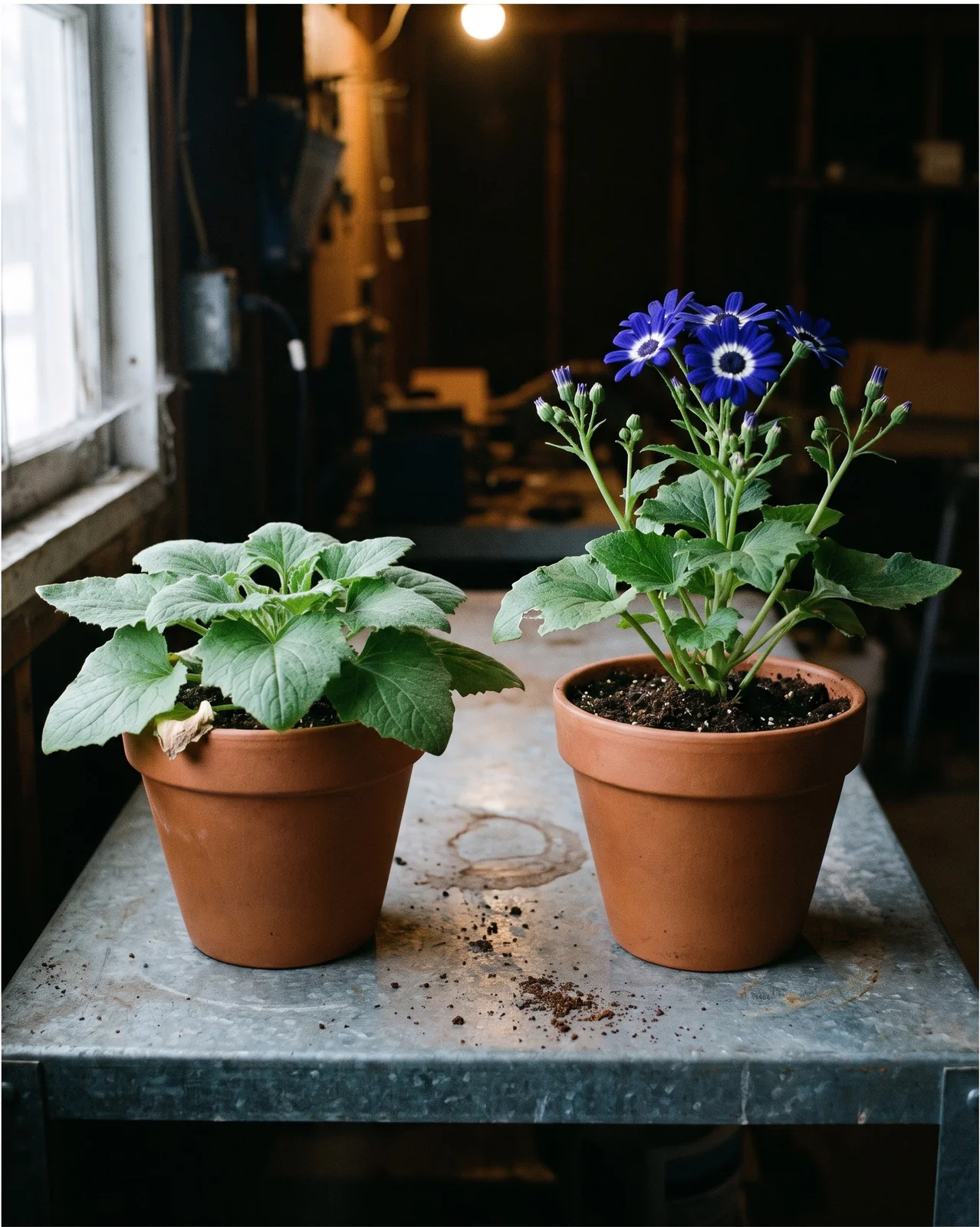
Three plants answer to the name cineraria, and only one of them is the pot of daisies. That one is Pericallis x hybrida, a garden hybrid of two Canary Island species, Pericallis cruenta and P. lanata. It wore the name Cineraria x hybrida until the genus Cineraria was narrowed to a group of South African species and the Canary Island plants moved into Pericallis. A fourth name still travels with it, since some botanists keep the hybrid inside the very large genus Senecio. The second plant is dusty miller, the silver bedding plant, once Senecio cineraria and now Jacobaea maritima, though suppliers still sell it under the old name. It is grown for leaves covered in fine matted hairs that read as felted white. It comes from the Mediterranean and takes heat, drought and full sun, and it survives winters several zones colder, down to zone 7a or 8a. Cold hardiness is the quickest way to tell the two apart.
The three plants side by side
What each one is grown for, and how much cold it takes, tells them apart at a glance.
Annual or perennial, and why both answers are right
Botanically it is a tender perennial, and almost nobody grows it as one. Taxonomy classes the hybrid as perennial, and it is a tender, clump-forming perennial usually grown as an annual. In cool regions it goes in as a summer annual outdoors or as a winter-flowering plant indoors. Most buyers meet it that way, much as pansies arrive by the flat for one season and are then replaced.
The plant rarely gets the chance to prove either side. Even where winters are mild enough for it to persist, it does not readily rebloom, so it is pulled once flowering finishes. Greenhouse stock is worse: raised under ideal glasshouse conditions, those plants are hard to grow on and hard to rebloom, and most are thrown away after they flower. In the warmest zones it can be kept as a tender perennial, and even there it usually flowers once a year. What looks like a return is often a seedling, since cineraria self-seeds prolifically.
What a cineraria looks like, and how big it gets
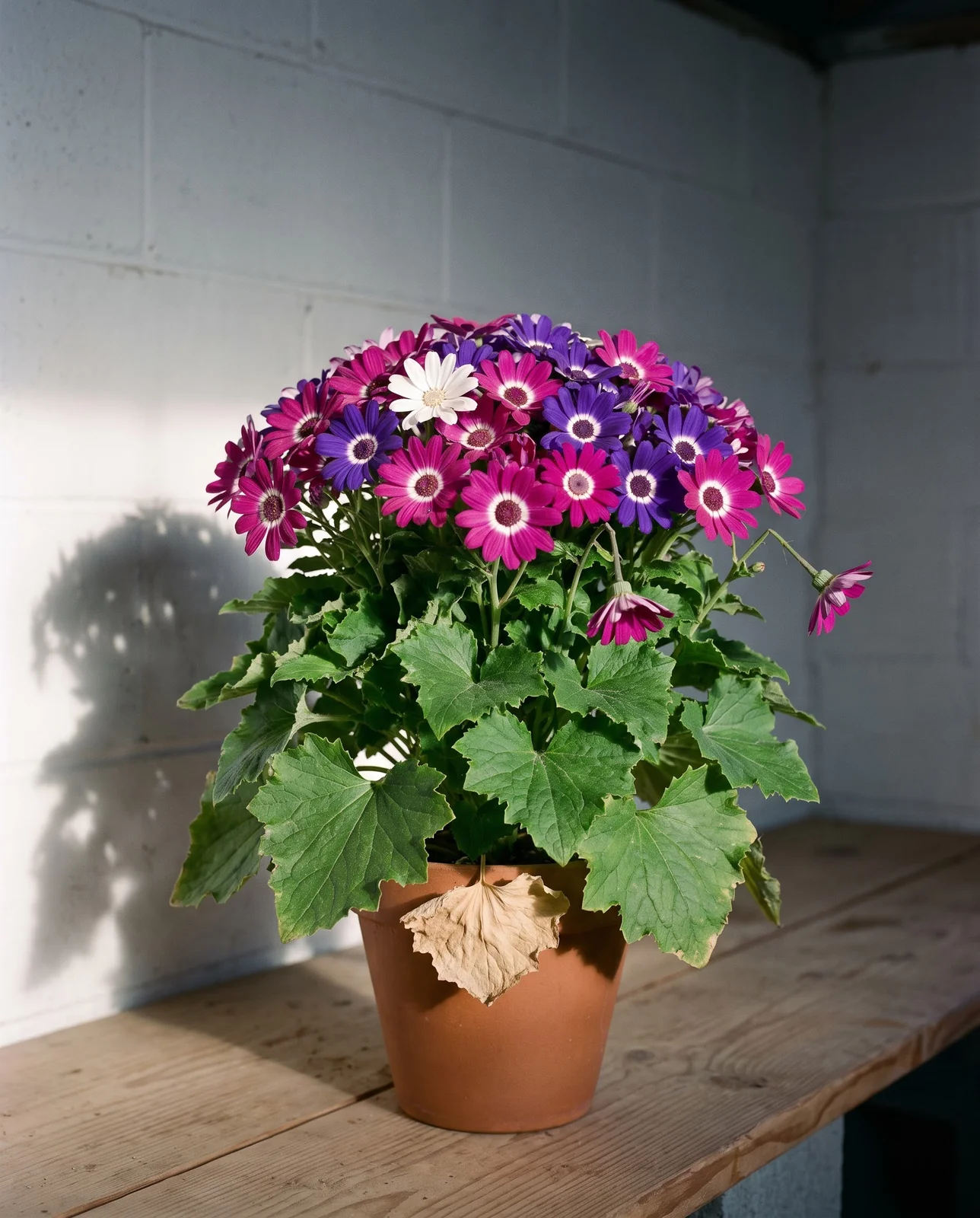
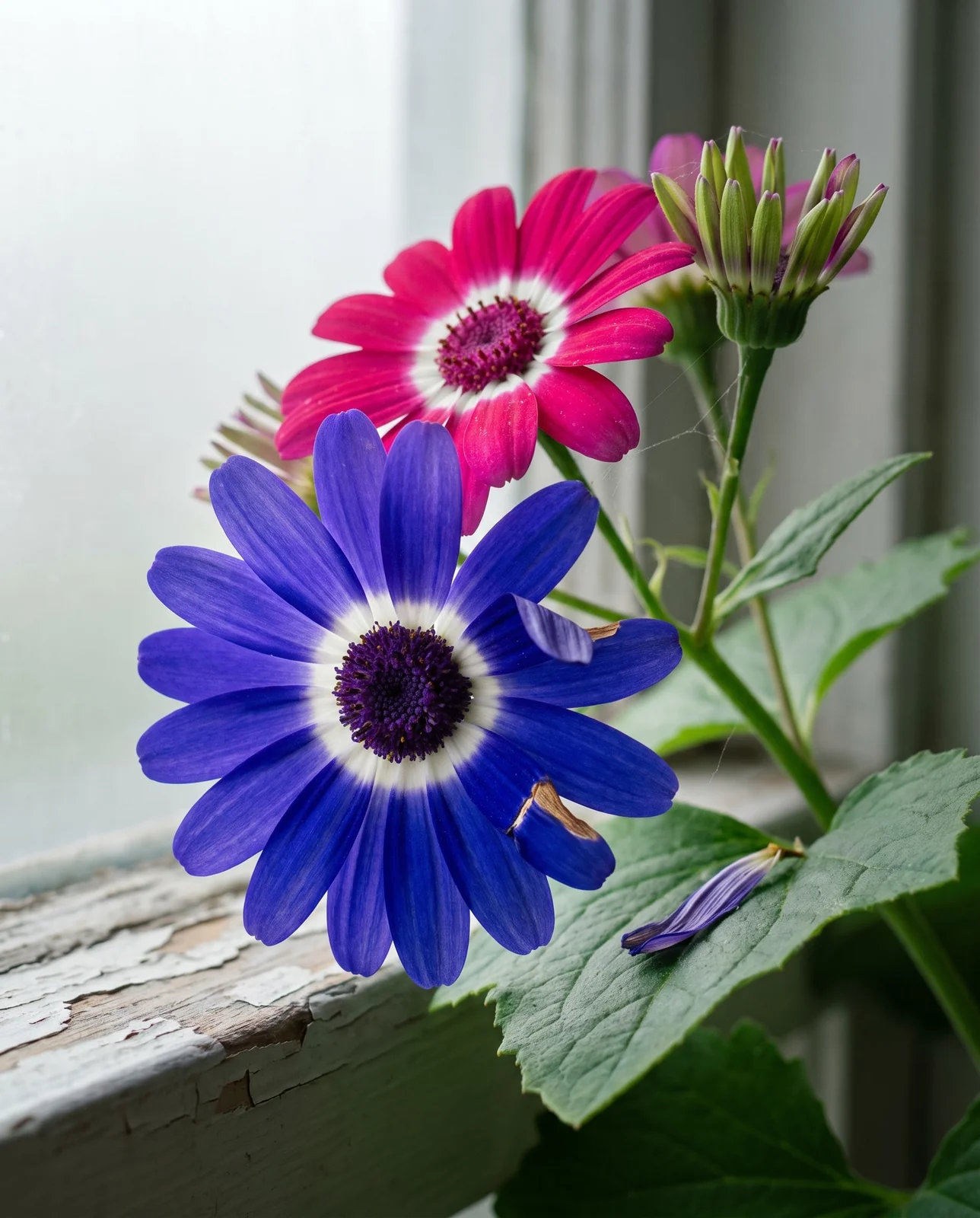
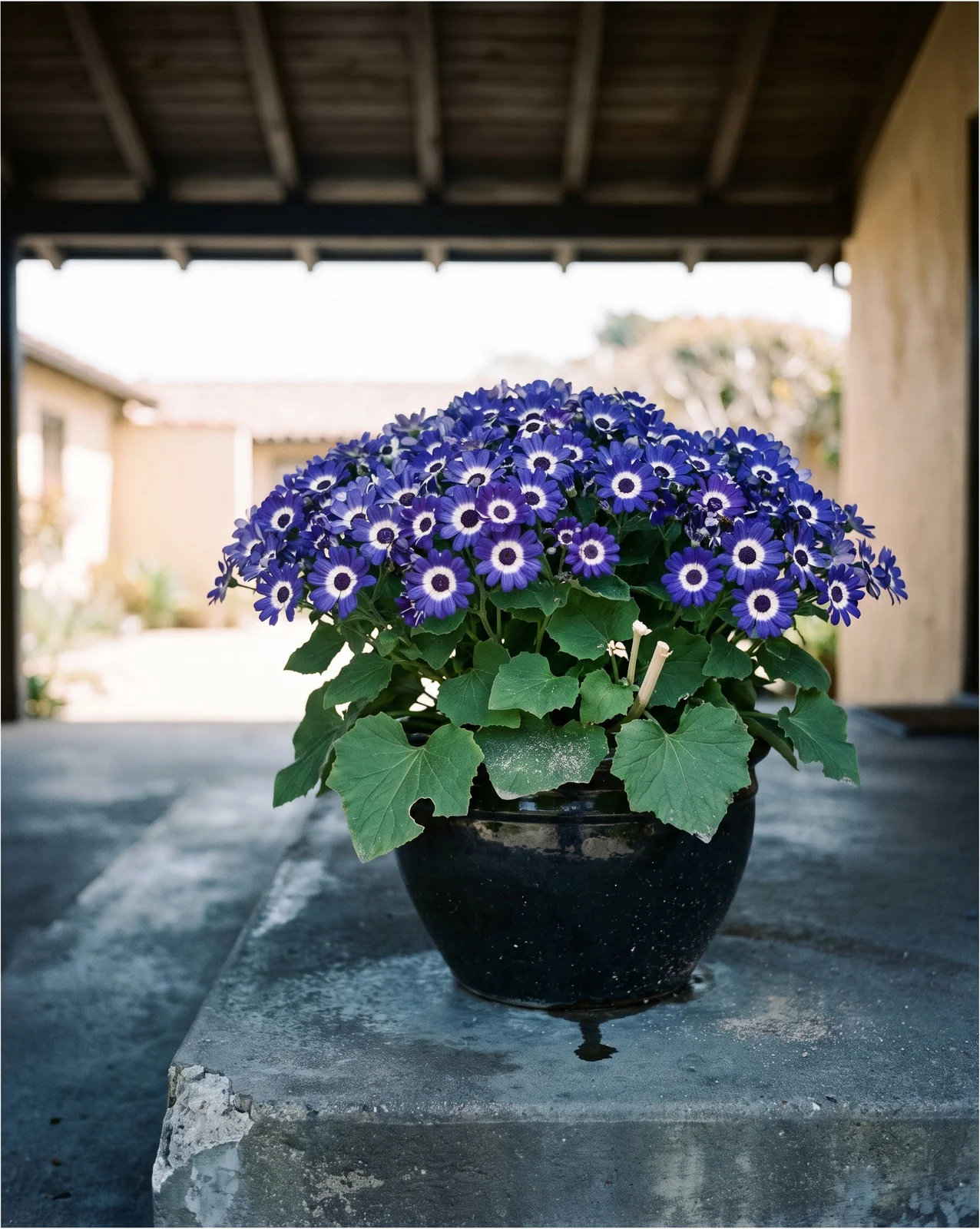
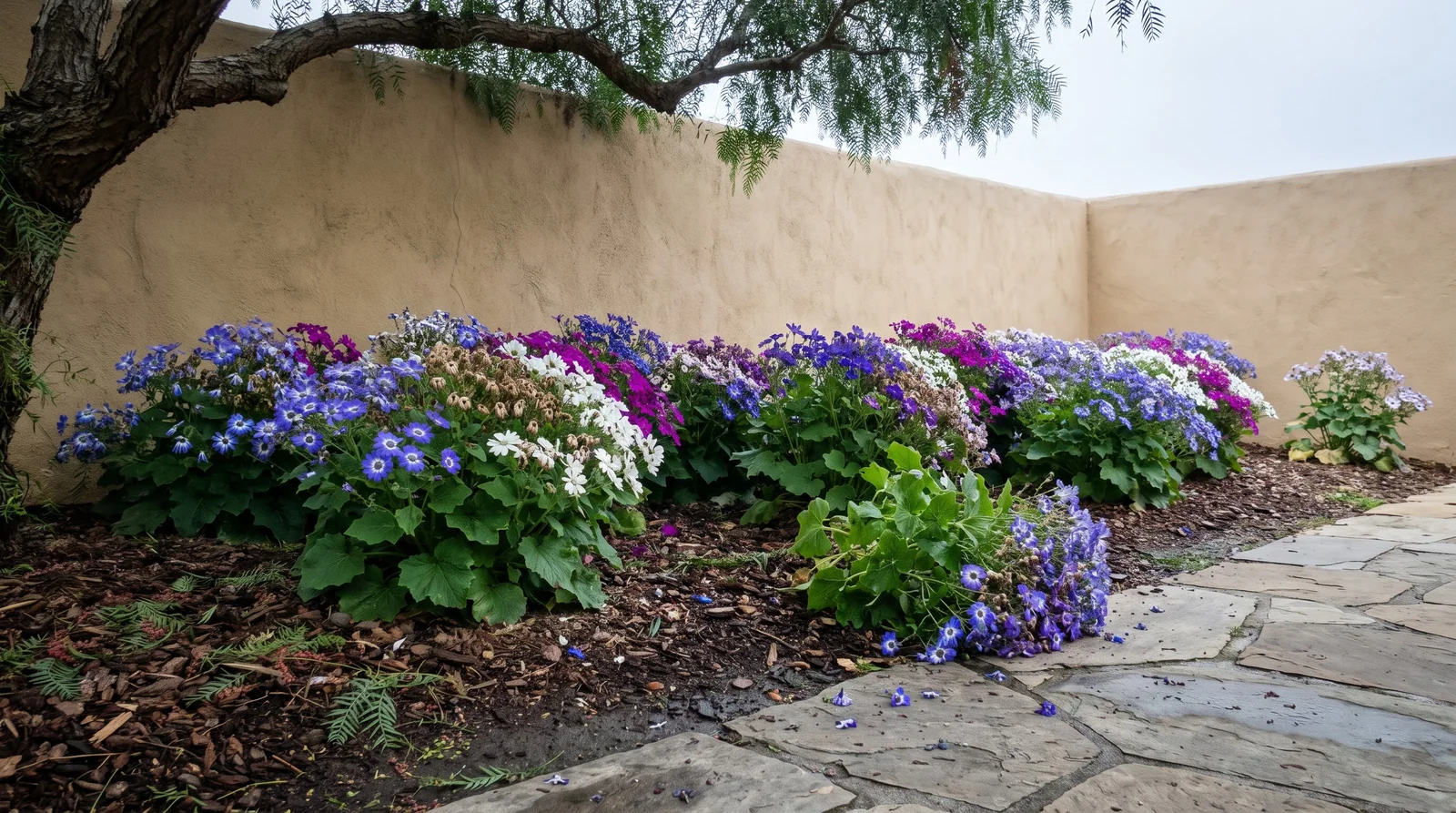
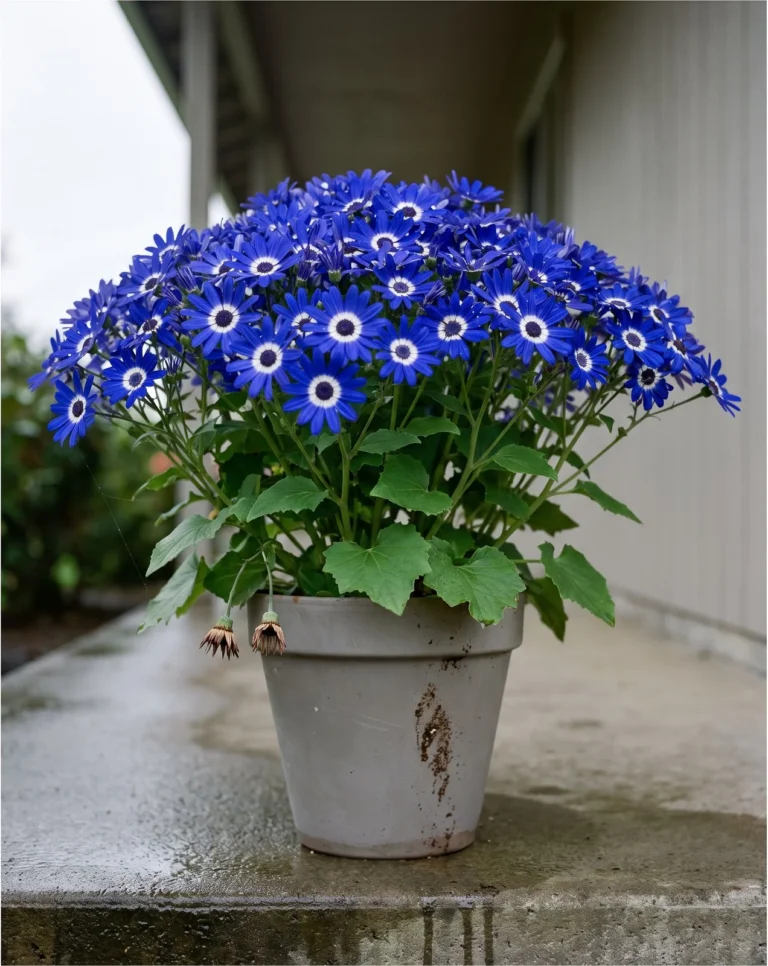
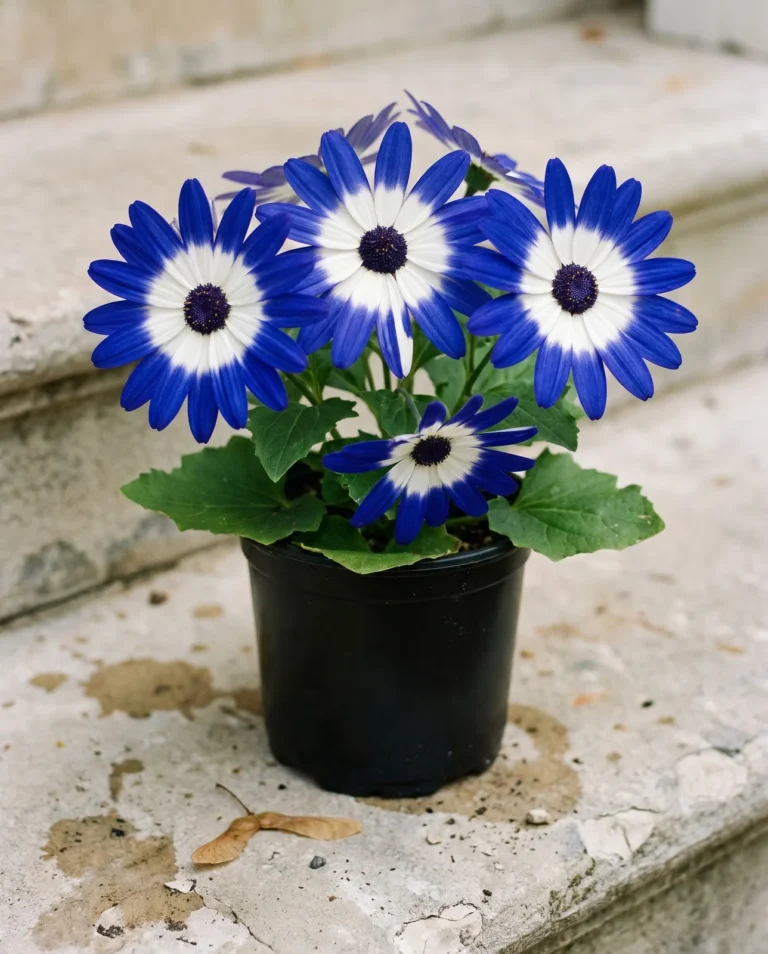
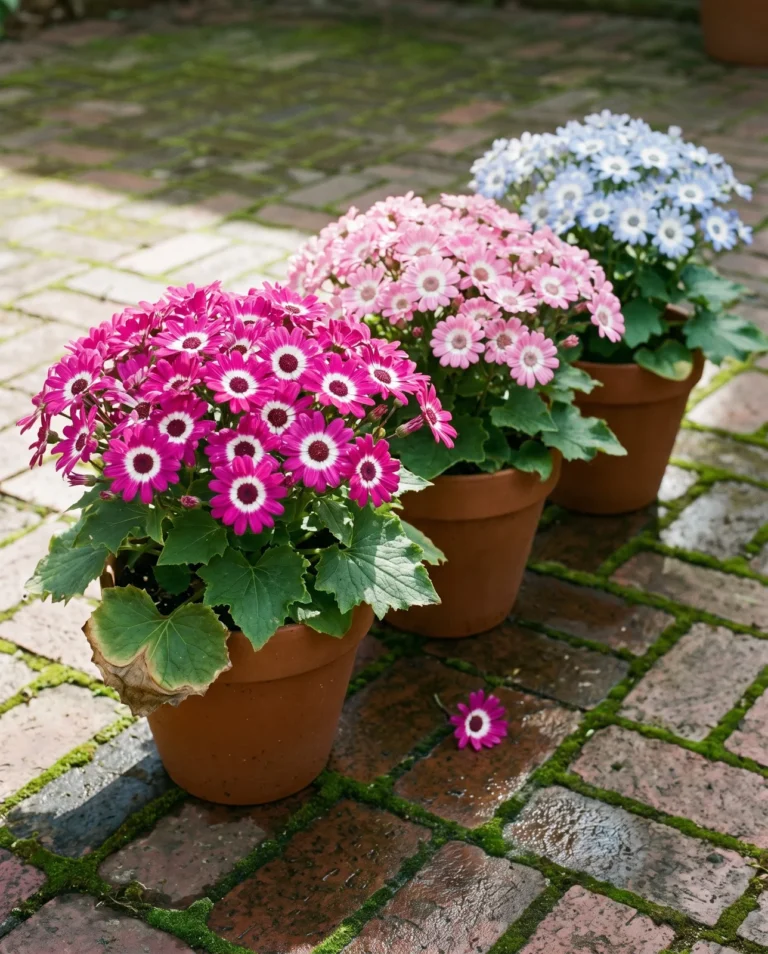
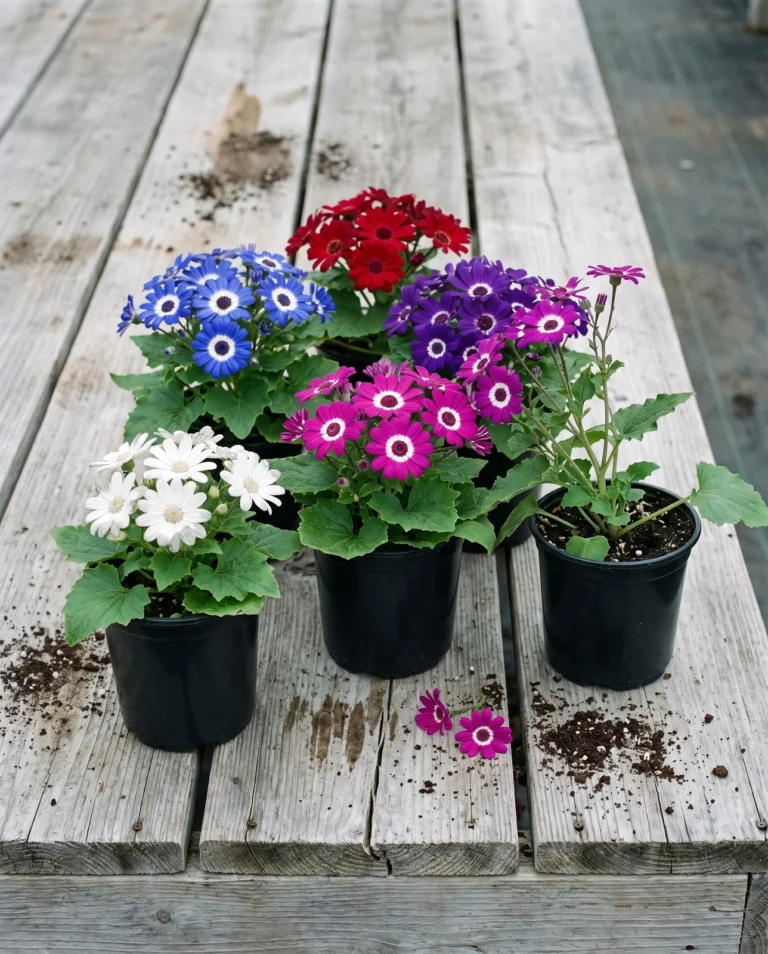
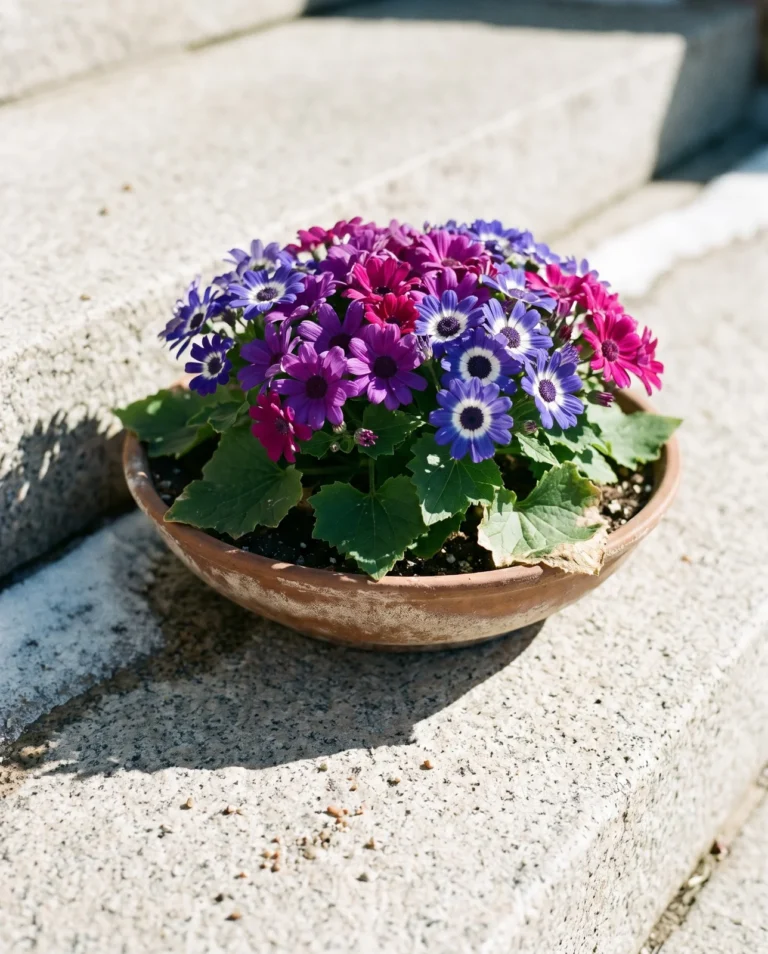
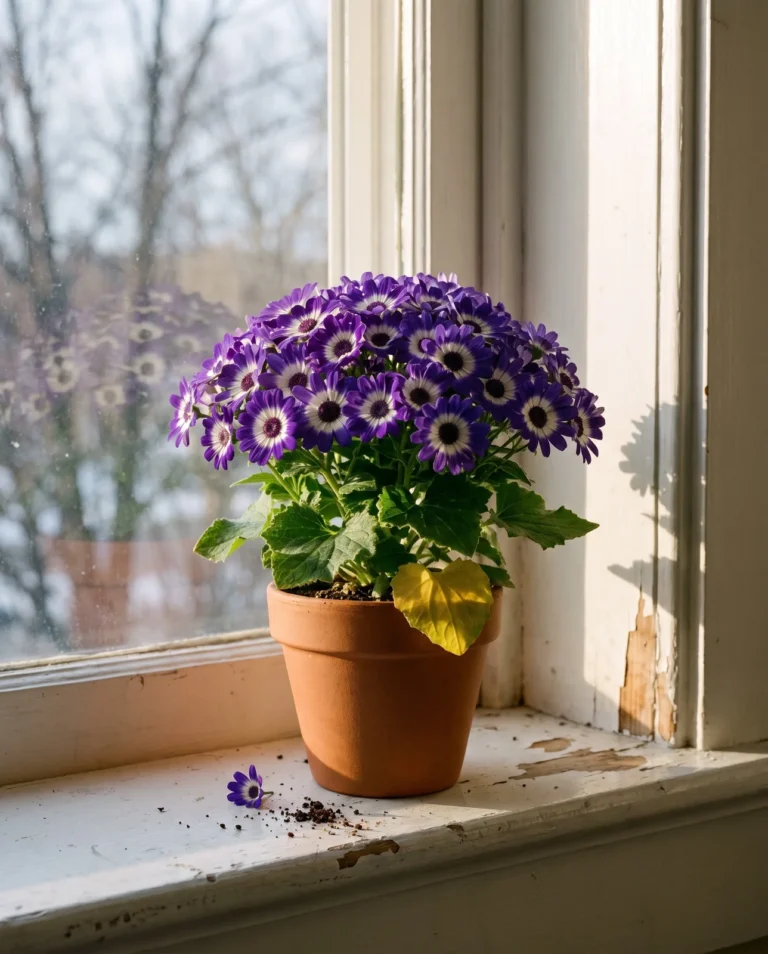
The flowers are daisies 1 to 3 inches across, packed into a mound above the leaves, and most carry a white or contrasting eye at the center. They come in blue, purple, red, pink and white, and flowering runs from winter into spring. The leaves are irregularly toothed, velvety to the touch, shaped like an elongated teardrop and medium to dark green. They build the low mound the flowers sit on. A florist's cineraria stands 12 to 18 inches tall and spreads about as wide, a dome as broad as it is high. It brightens a container and edges a patio well, and the pot it arrives in is usually the pot it should stay in.
Sun or shade, and how much direct sun is too much
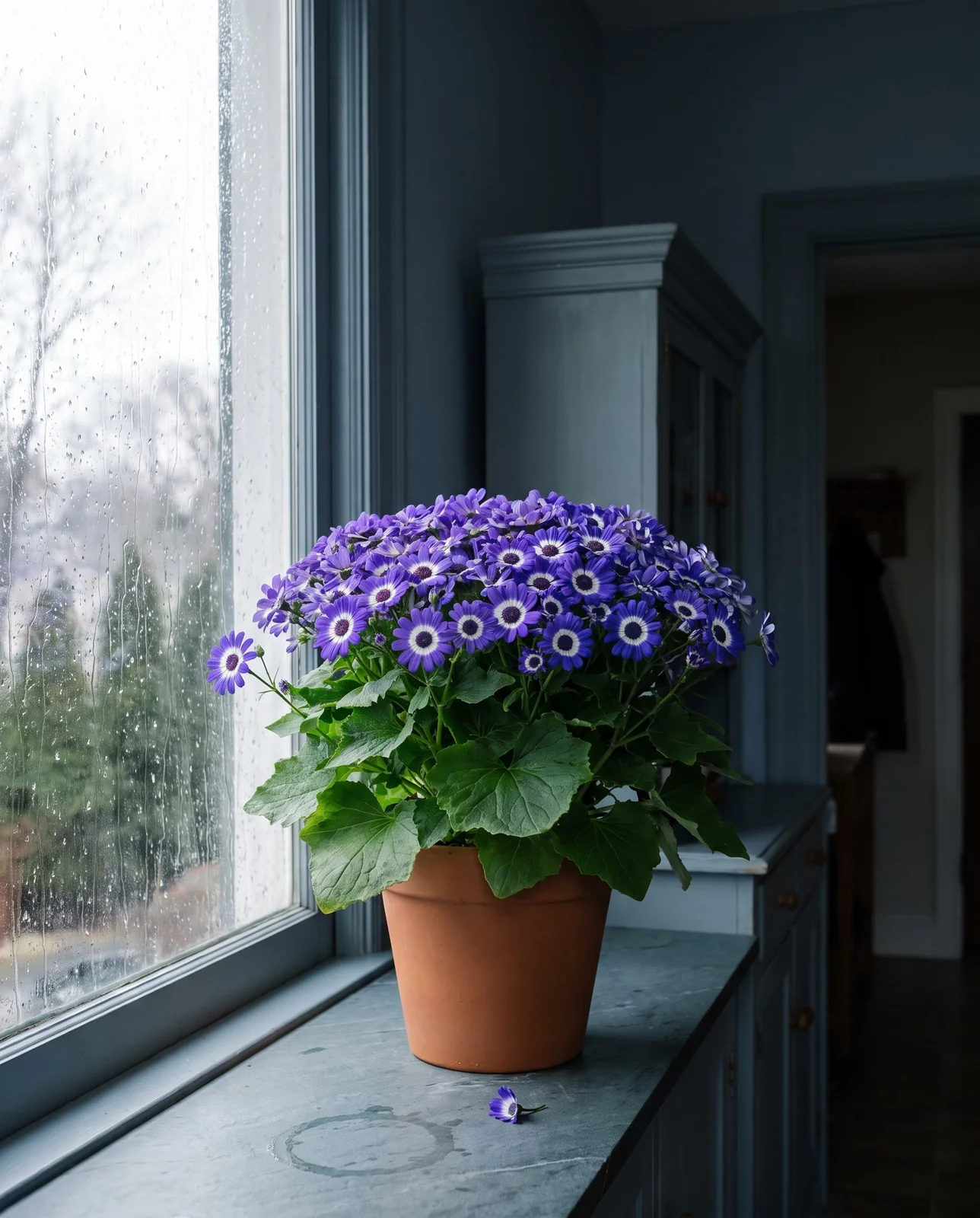
Bright light with no hot sun on the leaves. In practice that means partial shade, direct sunlight for only part of the day, 2 to 6 hours of it. Early or late sun is fine, a full day of it is not, and harsh direct sun scorches the leaves. Outdoors the plant does best in filtered sunlight or partial shade, and it resents full sun. Indoors it wants a bright spot with indirect light at a north or east facing window, with a lamp added where the room stays dim.
Where you grow it decides how much sun it can take. In frost-free climates it goes outside in sun with midday or part shade. In colder ones it lives as a houseplant, or in a container carried indoors for winter. A windowsill in a northern winter and an open border in a mild spring are not the same exposure. Indoors is the harder of the two settings, since the plant wants cool air and steady humidity, and a pot inside needs more light than the same plant outdoors.
The temperature band that decides everything
Cineraria wants a room most people would call cold: 50 to 65 degrees Fahrenheit by day, cooler at night. Indoors the flowers last longest at about 65 degrees by day with nights of 50 to 55. That describes a spare bedroom, an unheated porch or a cool conservatory, not a heated living room. Old glasshouse practice ran colder still, at 5 to 7 degrees Celsius at night for a Christmas crop. Flowering stops above 80 degrees, and a pot that looked settled on a cool sill in late winter meets a warm, sunlit room a few weeks later. Most of them are lost there.
The cold edge is sharper than it looks. The plant takes light cold to about 35 degrees and short spells there, and it dies at a hard freeze or a night below 35. Its hardiness class is the tender one, a plant that needs a minimum of 5 to 10 degrees Celsius and can stand outside only in summer. It belongs with the cool-room pot plants sold in midwinter, cyclamen among them, and it asks for the same unfashionably cold corner.
How to water it, and what wilting means
Keep the mix evenly moist and never saturated. Start it in a soil that is fertile, well drained and constantly moist. A plant in flower stays consistently moist, and a plant still building toward flower is kept slightly drier. The mix is what you check, because the plant gives almost no warning before it goes over.
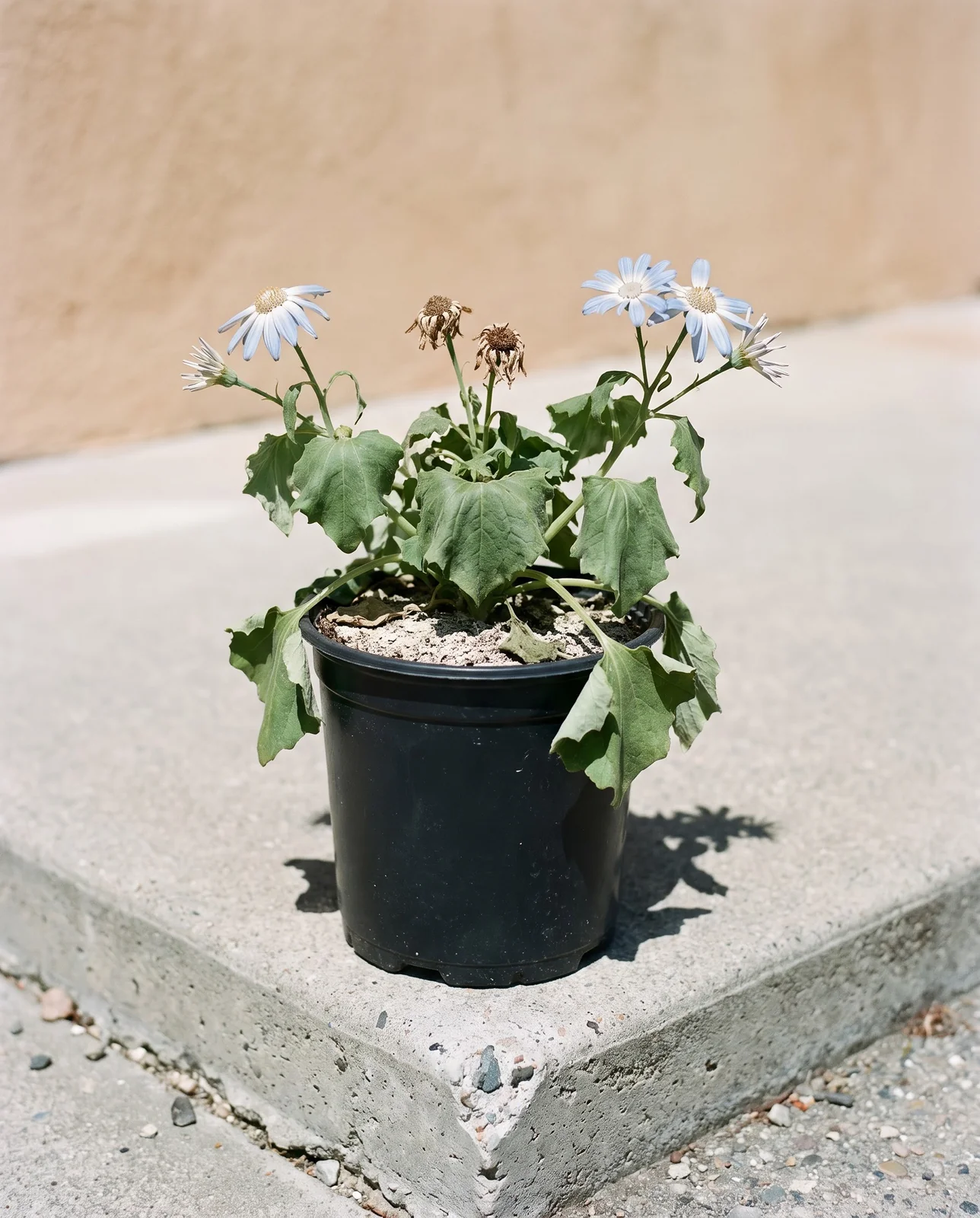
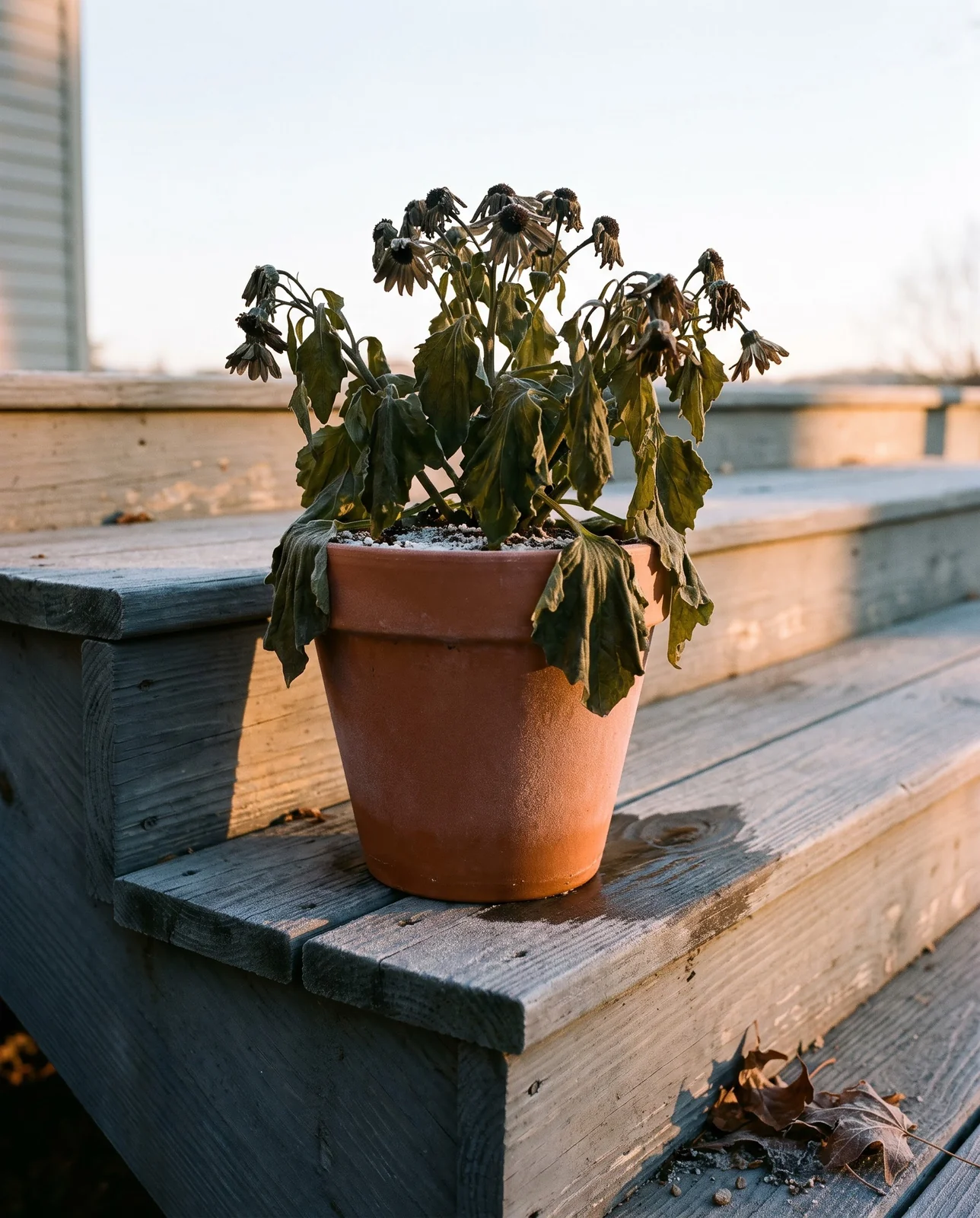
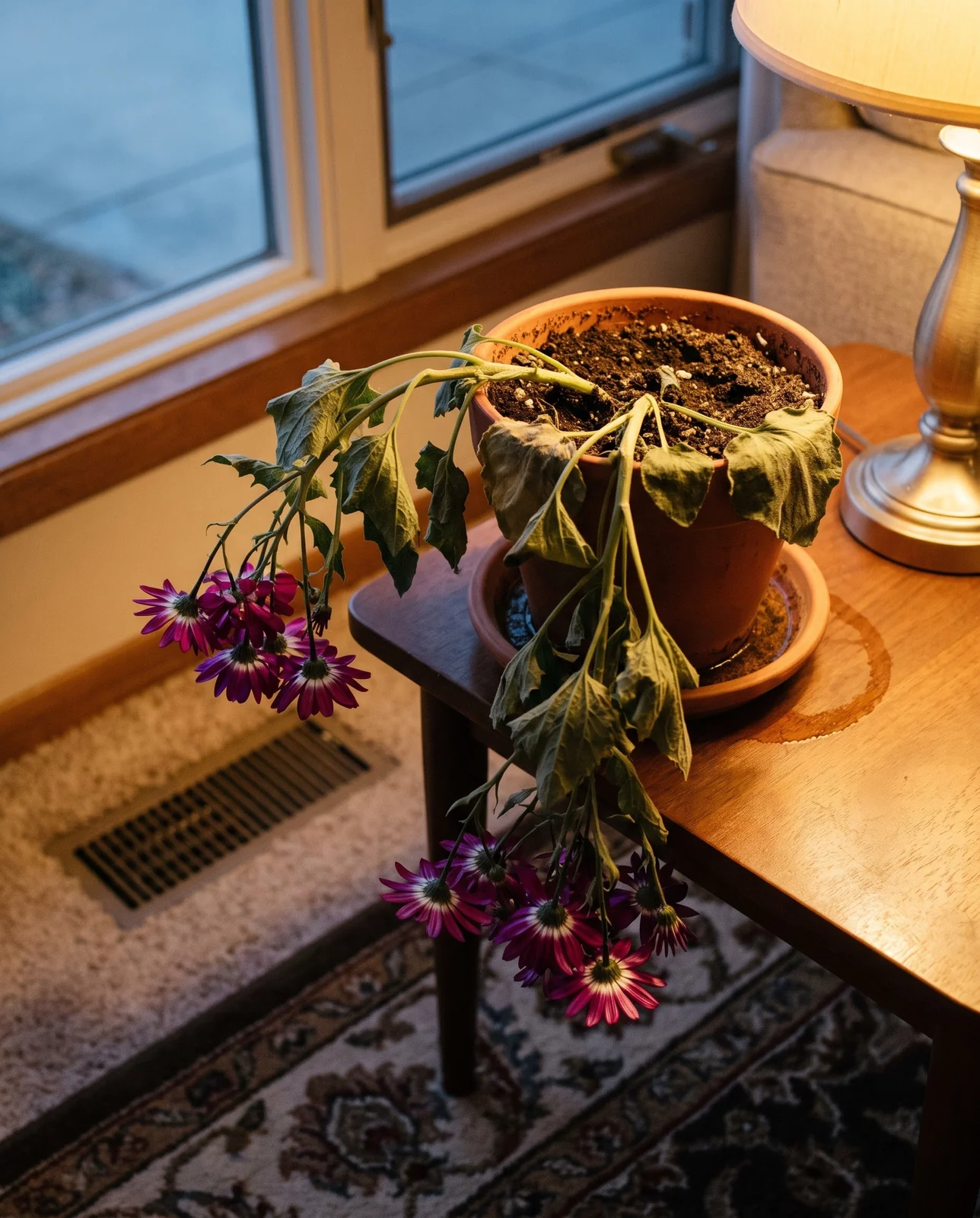
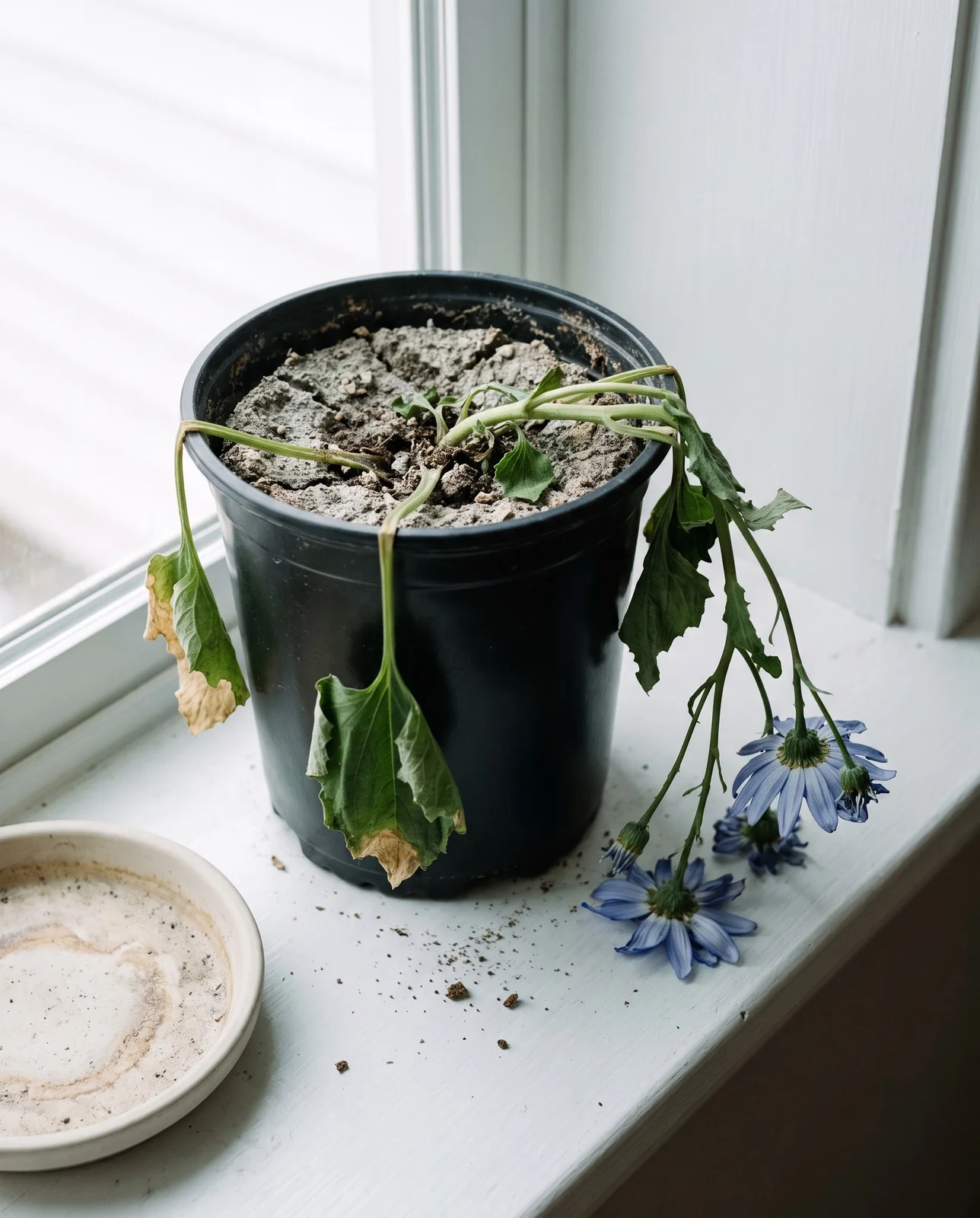
Wilting is not proof of thirst. A pot that has gone dry collapses fast. Whether it recovers depends on how quickly you catch it, and a plant left dry too long may not come back. Soil that stays soggy fails the other way, since constant wetness can bring on rot at the crown and the roots. Root and collar rot makes plants wilt too. Feel the mix before you reach for the watering can.
Why it stops blooming
A cineraria that stops flowering is short of light, too warm, underfed, or simply finished. Too little light is the common cause, and the answer is more indirect light. Heat is the second, and flowering shuts down once the room passes the plant's ceiling. Thin feeding and irregular water come third, and half-strength feeding every two weeks is tied to good flowering. The fourth possibility is that nothing has gone wrong and the single flush the plant is grown for is over.
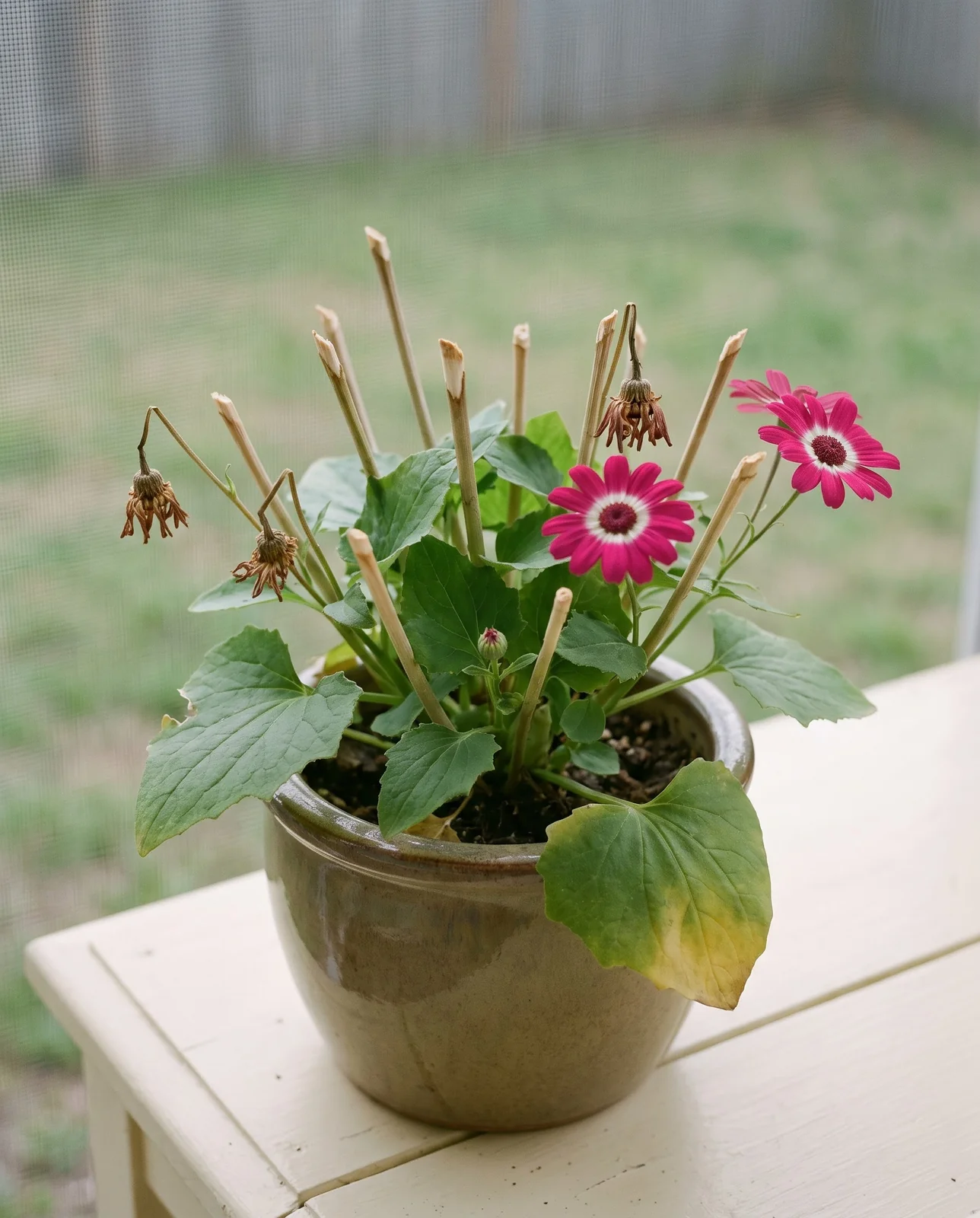
Deadheading is worth doing and comes with no promise. Snip spent flowers off at the base of the stem. Cutting the spent stems and feeding once more can bring a second flush, and often will not. What deadheading cannot change is the light or the temperature, so a plant kept dim or kept warm goes on refusing whatever you cut off it.
Why the leaves turn yellow
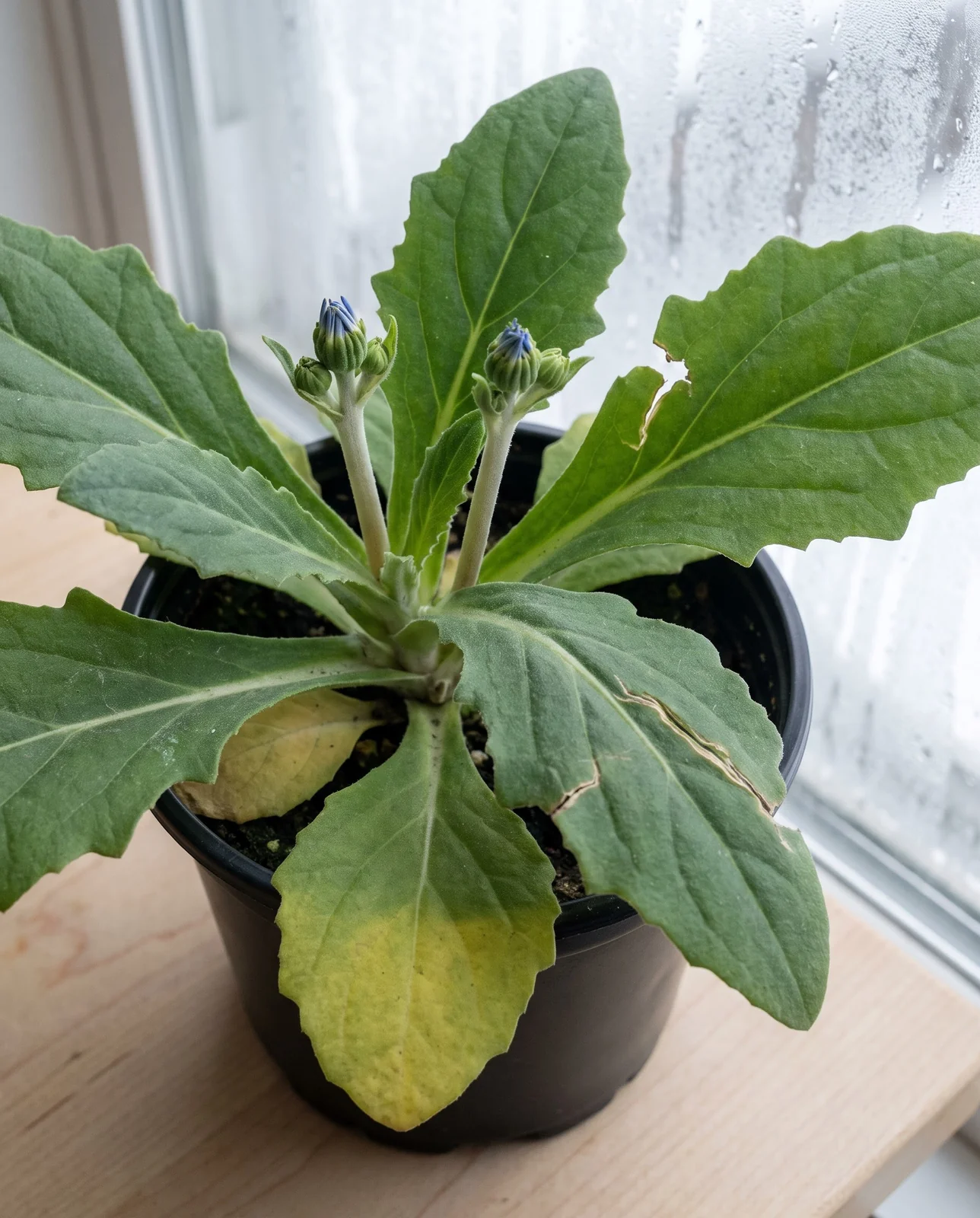
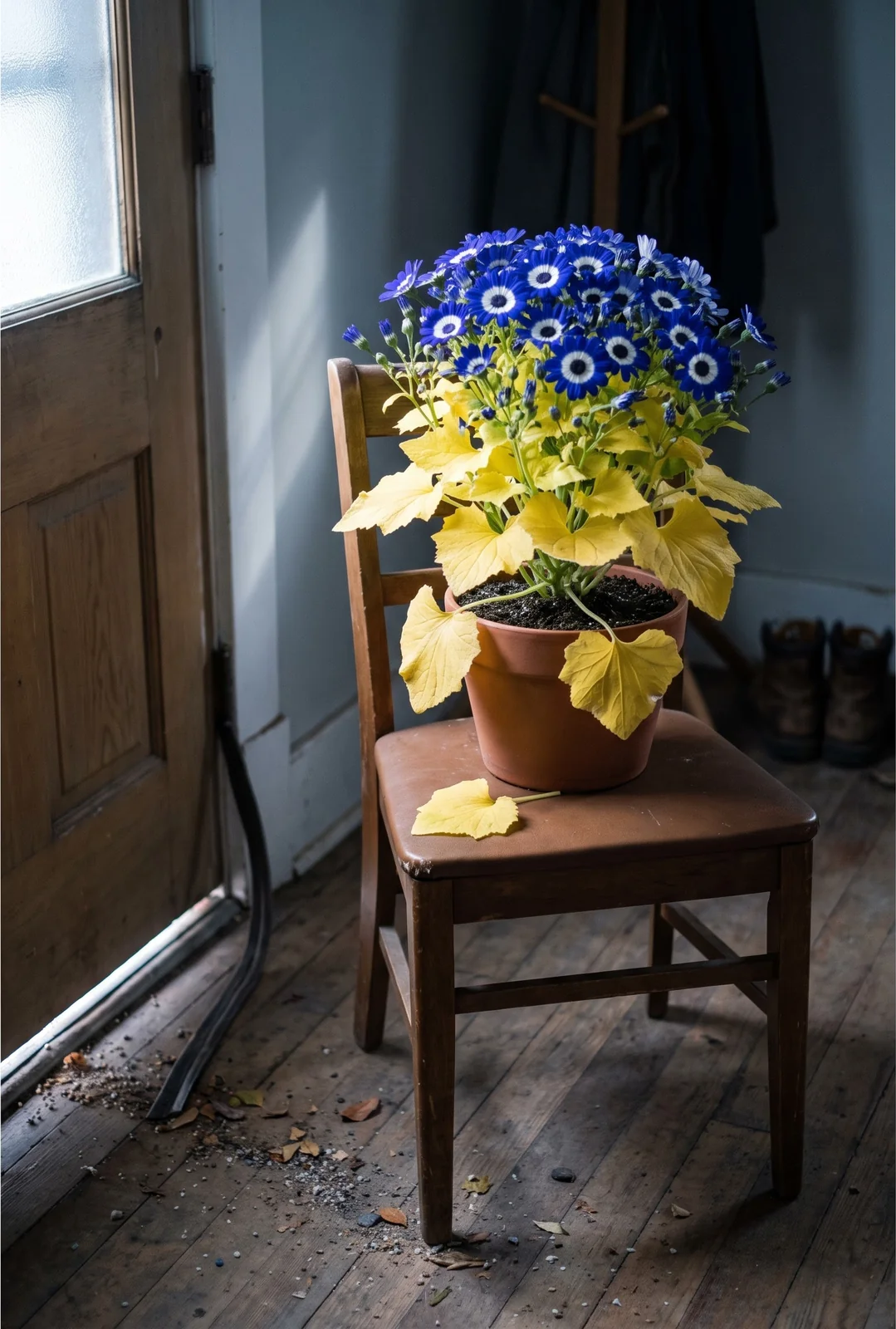
Move the pot before you change anything else. A cold draft can bring on wilting and yellow leaves. The two handiest indoor spots are the two worst: the ledge over a heating vent and the sill beside a leaky window. Temperature extremes and direct sun do the same damage. Watering plays in either direction, too little or too much, though it shows itself first as withering and weak flowering. Much of what turns up for yellow leaves was written about long-lived houseplants, and a pot bought in flower and finished within weeks is a different case.
The diseases it gets, and what to do about each
The diseases recorded on cineraria are mostly fungal.
Symptoms: white fungal growth on the leaf surface. What to do: warm the air and ventilate to hold humidity down at night.
Symptoms: gray mold on the leaves, the fungus Botrytis cinerea. What to do: neem oil for mild cases, liquid copper fungicide where it has gone further.
Symptoms: roots and stems rot at the soil line and the plant wilts. What to do: repot into pasteurized potting mix and treat with a fungicide.
Symptoms: dark leaf spots, or downy mildew on the foliage. What to do: the same answer as powdery mildew, warmth and ventilation to keep the night air dry.
Symptoms: leaves may be mottled or carry yellow spotting, plants may be distorted and flower color may break. Cause: impatiens necrotic spot, streak or mosaic virus.
How long the flowers last, and what to do after
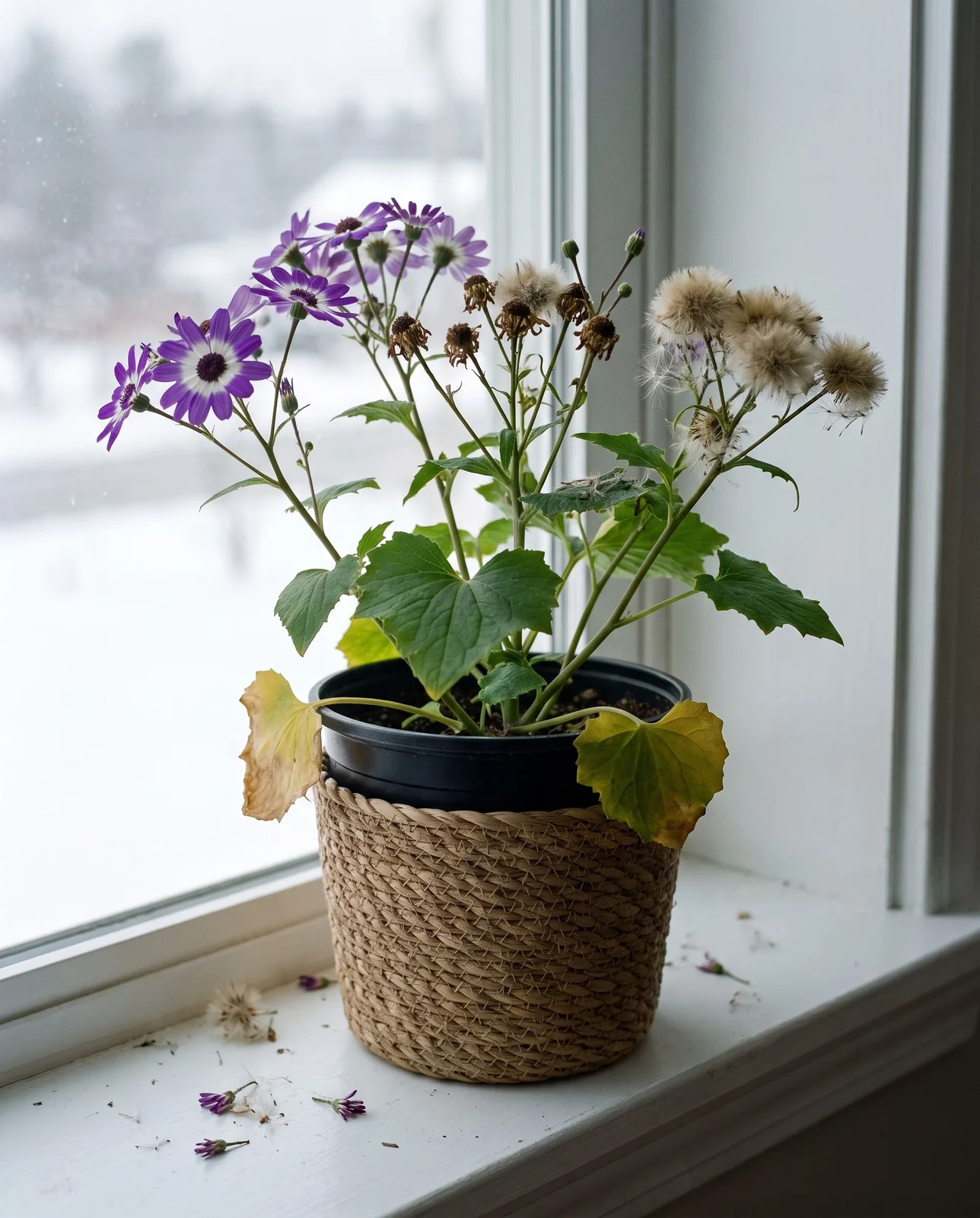
The flowers hold for two to six weeks. Where a pot lands in that range depends on how far along it was when it left the greenhouse. One bought in tight bud has more of its run left than one bought at full color. After that it is finished: cineraria is a temporary, seasonal plant, and once the heads dry and shrivel it goes out. The compost heap is the ordinary end of a plant carrying one flush of flowers. In that it keeps company with poinsettia and the other pot plants that arrive in flower and leave with the season.
Growing cineraria from seed, and when to sow
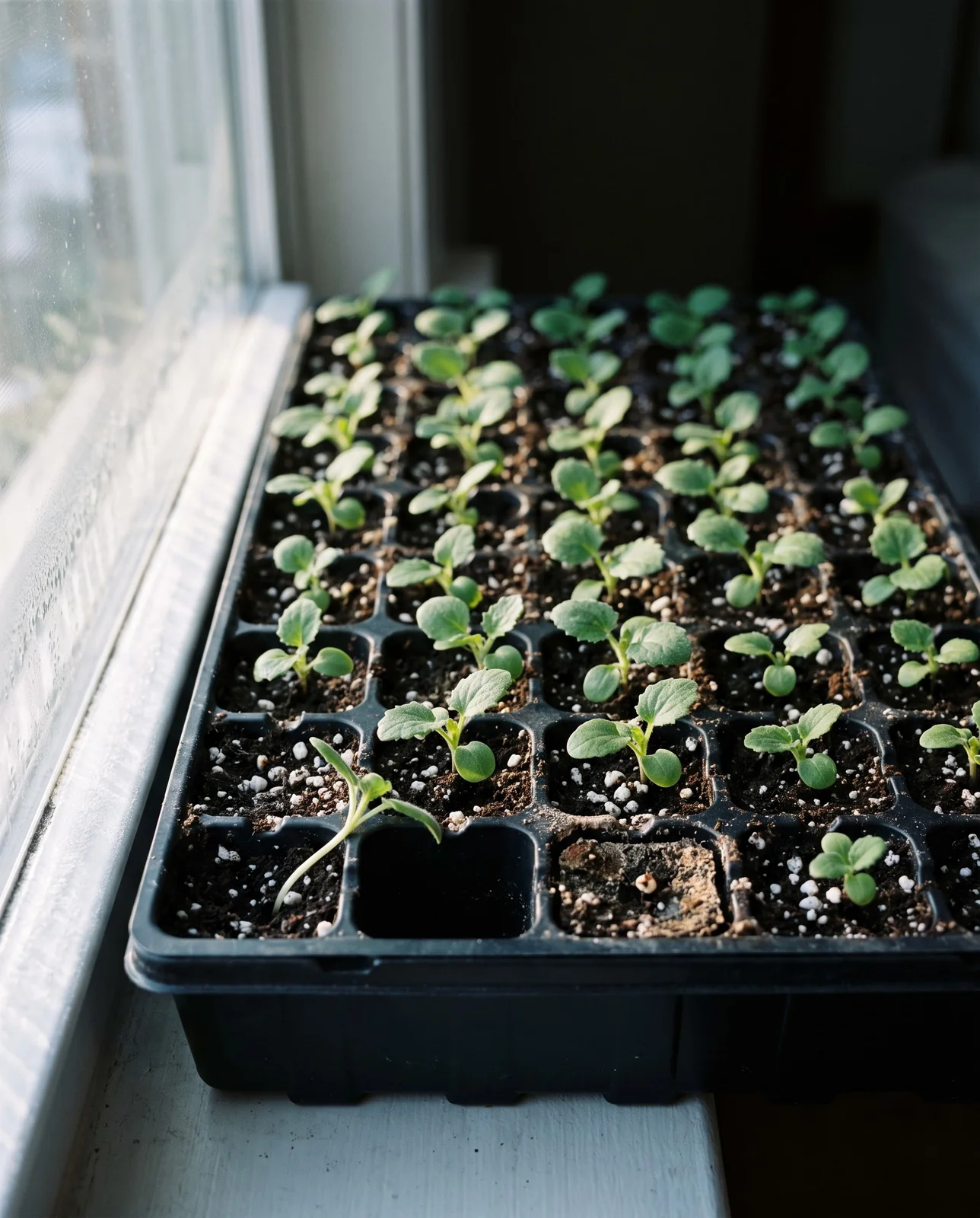
Count back 16 to 18 weeks from the date you want flowers. Germination takes 2 to 3 weeks at 65 to 75 degrees Fahrenheit, or roughly 14 to 21 days, and that wait sits inside the longer one. The sowing date carries more weight here than anything you do later in the pot, because the plant flowers once and the calendar decides when.
Sowing dates differ because they aim at different flowering seasons. For flowers at Christmas, sow from late August to early September. For a spring pot, start seed indoors about 12 to 14 weeks before your last expected frost date. Each figure counts back from a different target, so decide which month you want flowers in and the sowing date follows from that.
Zones, and where it lives outdoors
Zones 9 to 11 outdoors. It behaves as a perennial only in the warmer half of that band, zones 9b, 10a and 10b. The rating covers winter survival and nothing else, so in a cold state it answers only half the question. Outside those zones cineraria still grows perfectly well as an annual, or as a pot kept indoors.
Pot size, mix, and where the pot goes
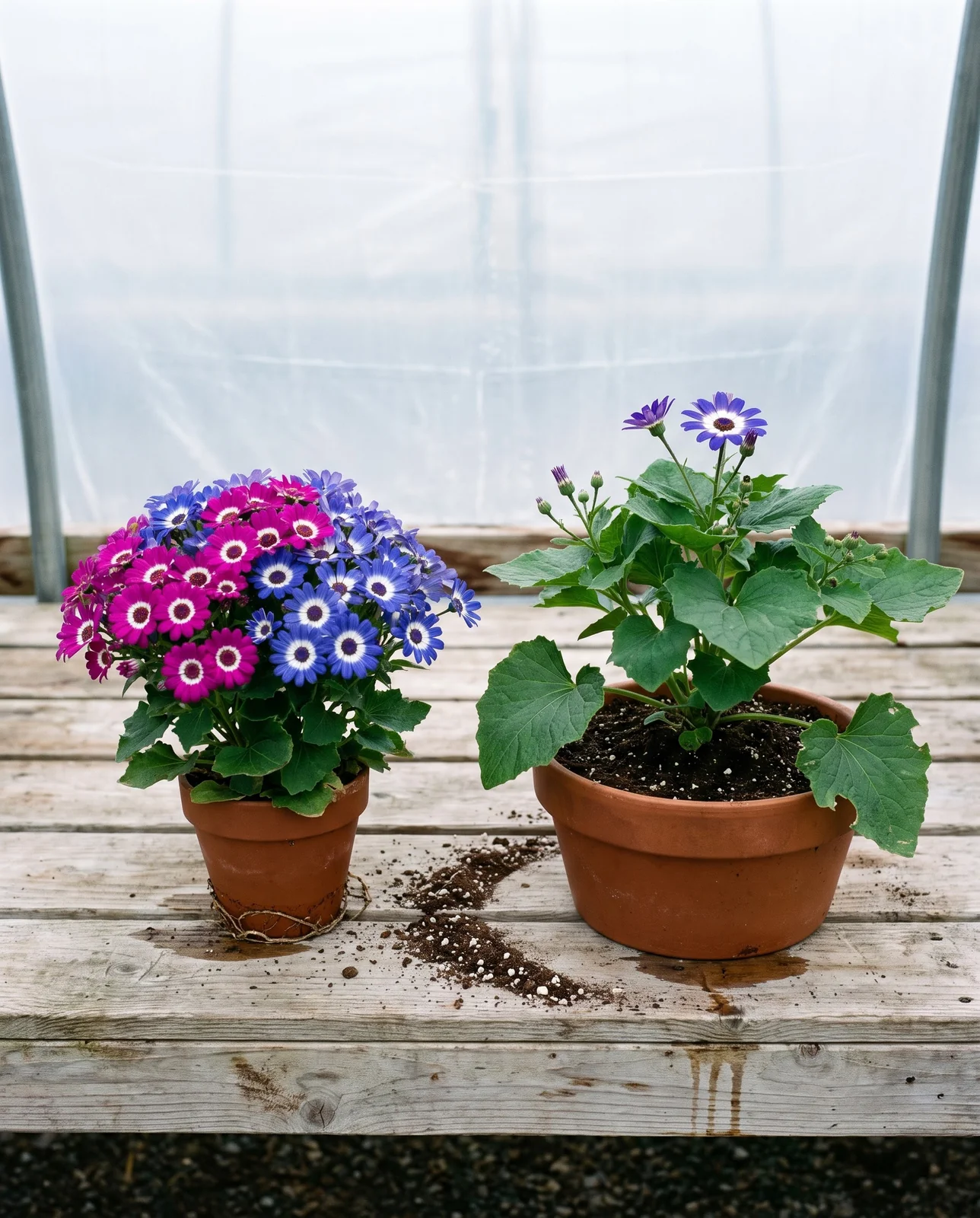
Keep the pot small. Cineraria flowers best somewhat root-bound, in a small container with good drainage and an ordinary commercial mix with a high peat content. Indoors it tends to give its best blooms in a smaller pot for the same reason. That cuts against the reflex to move a gift plant into something roomier the day it comes home. The trade is that a small pot of peat-heavy mix dries out sooner and wants checking more often. This plant wilts fast, and it may not come back if the water is late. It is sold in a tight pot for the same reason kalanchoe and the other flowering gift plants are, and it does better left in one.
Feeding, and how little it needs
Feed it lightly, if at all. A half-strength balanced fertilizer every two weeks from the time flower buds show suits it. A balanced water-soluble feed every 2 to 4 weeks does the same work. Fertilizing is not strictly necessary on a plant this short-lived, and one weak liquid feeding before bloom, with none from the moment flowers form until bloom ends, is enough. Whichever you follow, keep the strength down.
Aphids first, and how much disease to expect
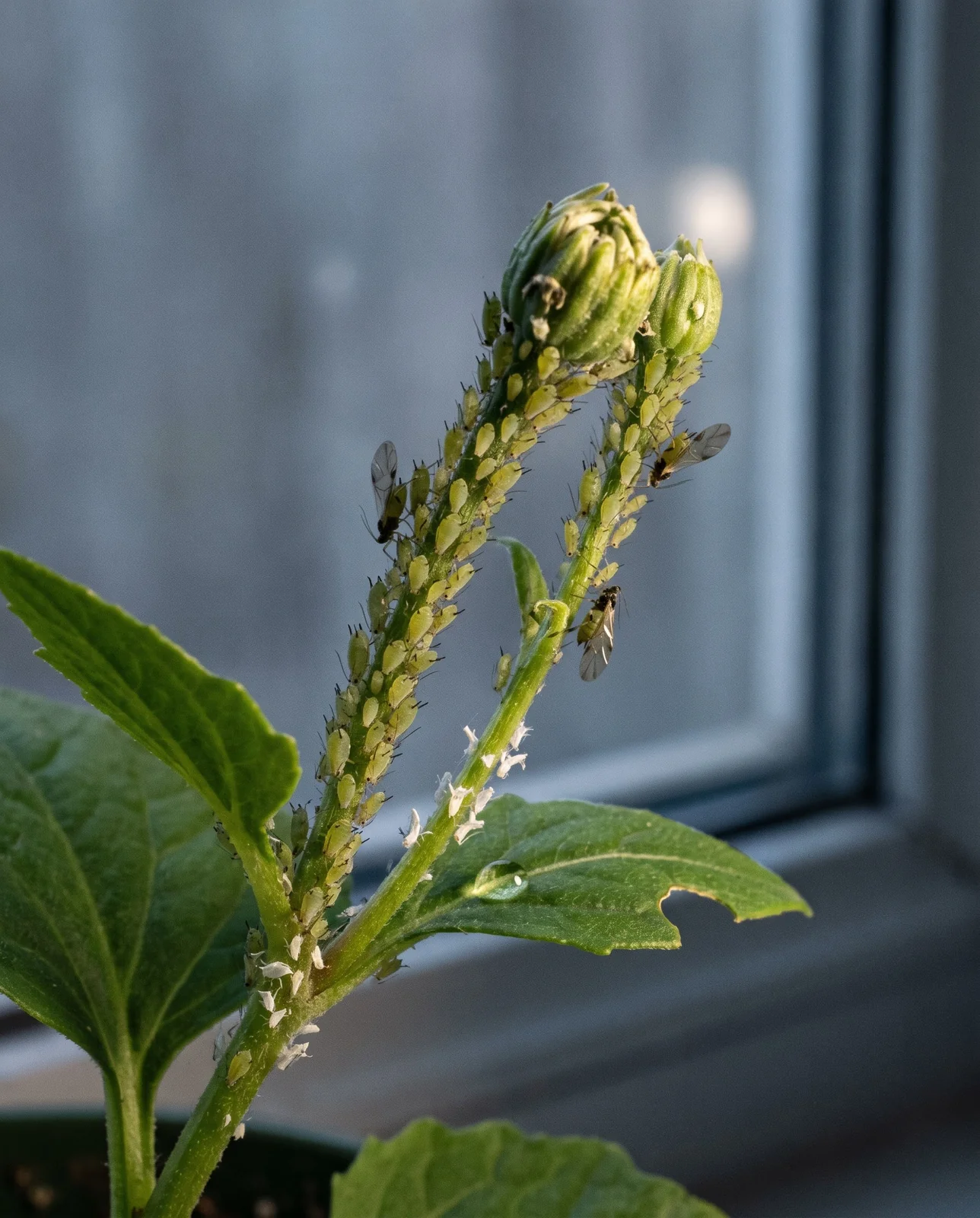
Aphids are the pest to expect, the worst and commonest this plant gets. Thrips, spider mites, whitefly and the chrysanthemum leaf miner sit behind them. A plant overwintered indoors can turn into an aphid magnet. Those indoor months are the months it is in flower, so a colony lands on soft stems and open heads while you are looking at the plant most closely. Disease is the lesser worry. Cineraria is generally disease-free, though it may pick up red spider mite or glasshouse whitefly. A pot on a windowsill can go its whole short life without meeting any of the fungal problems above.
Series and mixes worth telling apart
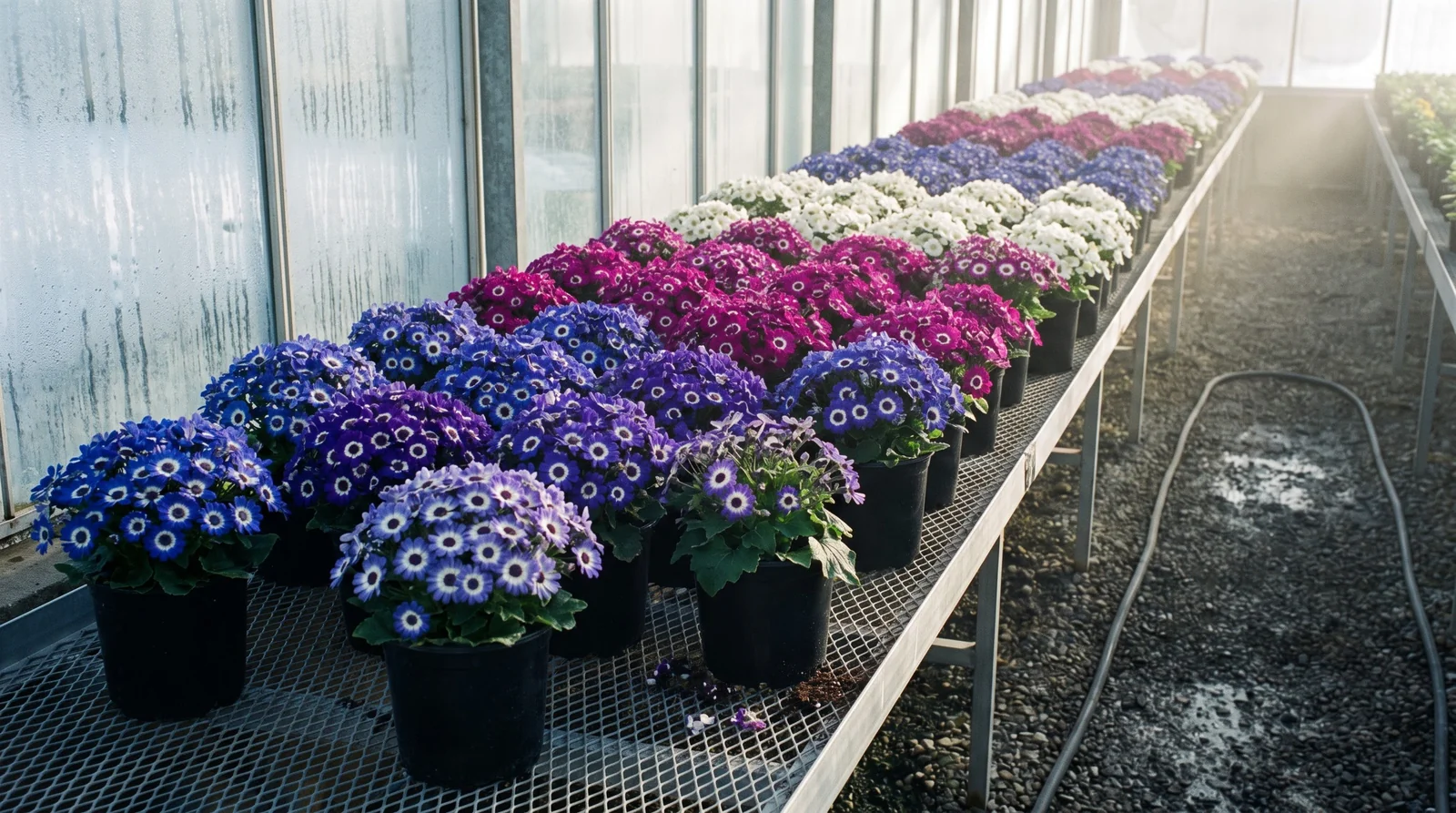
Cinerarias reach shops as series and color mixes, and two blue selections are the ones to ask for if blue is what you came for. The silver 'Candicans', 'Cirrus', 'New Look', 'Quicksilver' and 'Silverdust' sold under the same shelf name are dusty miller, a different plant grown for its foliage.
Toxicity, and how careful to be around pets
Caution, because no pet poison list has an entry for this plant. The ASPCA has nothing under cineraria, pericallis or dusty miller, and the two entries that do exist, groundsel and golden ragwort, sit under the blanket name Senecio species. Both are toxic to dogs, cats and horses, with pyrrolizidine alkaloids as the toxic principle. Those alkaloids can cause liver failure, called walking disease or sleepy staggers. The signs are weight loss, weakness, sleepiness, yawning, incoordination and a yellowish cast to the mucous membranes. Horses have to eat a large amount, or eat it over a long time.
This plant's own share of that family history looks small. A Colorado State University veterinary text files cineraria under the old name Senecio cruentus in its chapter on pyrrolizidine alkaloids. The species of that group most often grown as garden or house plants, cineraria among them, do not generally contain significant quantities of them. It adds that household pets are unlikely to eat enough to bring on liver toxicity. The alkaloids that were isolated by name came from dusty miller, and horses and cattle are the animals most at risk.
You will find florist's cineraria called toxic to pets if it is eaten, and you will find it called not known to be toxic to humans or pets. Caution is the working answer, since the family it sits in carries the alkaloids and the plant has no listing of its own. Keep the pot up where a cat cannot chew it and the question stays theoretical.
Myths worth dropping
Each of these sends a new owner to advice written for a different plant.
The myth: Cineraria is another name for dusty miller.
The reality: They are two plants, and the mix-up reaches the people filing photographs in plant databases. Dusty miller is the silver, felted bedding plant, hardy several zones colder, and depending on the winter it runs as an annual, a biennial or a short-lived perennial. The one that came home in flower is the other plant.
The myth: Care instructions filed under Senecio will do.
The reality: They were written for the rest of that genus. The Senecio sowing routine puts seed on the surface uncovered and germinates it at 68 to 77 degrees, which is dusty miller's routine. The genus entry asks for full sun outdoors. Neither line was written about the plant in your pot.
The myth: Senetti is a different plant from cineraria.
The reality: Senetti is a trade name. Some varieties of this same hybrid are sold under it, so a Senetti label and a cineraria label can sit over the same daisies on one bench.
FAQ
Do cineraria come back every year?
Rarely. It is a tender perennial hardy in zones 9 to 11, and even there it seldom flowers twice, so almost everyone treats it as a one-season plant.
Is cineraria the same plant as dusty miller?
No. Dusty miller is the silver-leaved bedding plant, once called Senecio cineraria and now Jacobaea maritima. The pot of daisies is Pericallis x hybrida.
Does cineraria need full sun?
No. It wants partial shade with limited direct sunlight, which on this plant means direct sun for only part of the day, 2 to 6 hours of it.
How long does cineraria bloom?
Two to six weeks, depending on how far along the pot was when you bought it.
How long does it take for cineraria seeds to germinate?
Two to three weeks at 65 to 75 degrees Fahrenheit, or roughly 14 to 21 days.
Do cineraria bloom all summer?
No. Flowering runs from winter into spring, and the plant is a temporary, seasonal one that is done by summer.
Is cineraria toxic to cats and dogs?
Treat it as a caution. The main pet poison list has no entry for this plant, and its Senecio relatives there are toxic to dogs, cats and horses. A veterinary text finds the garden species of that group low in the alkaloids involved.
Where is the best place to keep a cineraria indoors?
A bright north or east facing window with no direct sun on the leaves, away from heat vents, cold drafts and temperature extremes.
Can leaves recover from turning yellow?
Move the pot first. A cold draft can bring on wilting and yellow leaves, so change the position before you change anything about the watering.
When do you sow cineraria seed for winter flowers?
Late August to early September for flowers at Christmas, since bloom waits 16 to 18 weeks from germination.
Interesting tips
- Keep a second pot coming. One plant lasts up to about a month in flower, so starting a new one every two to three weeks keeps color on the sill.
- Seed is not the only route. Semi-ripe cuttings taken in summer work too.
- Animals do not seek these plants out. Groundsel, the listed relative, is not very palatable and gets eaten by animals with no other forage, and poisonings usually follow green plant material or contaminated hay.
Related Guides & Flowers
Chrysanthemum
The other daisy sold by the pot in full flower, with the same question hanging over it about next year.
Gerbera daisy
A florist daisy with its own indoor weakness, and the series bred to get past it.
Christmas cactus
A pot plant that flowers in the dark half of the year and wants a cool room to do it.
Types of flowers
The wider catalog, for when the label on the pot still is not telling you what came home.
Enjoying our flower guides? Add YourFlowersGuide as a preferred source on Google. It helps more readers find us.
Add to Preferred Sources