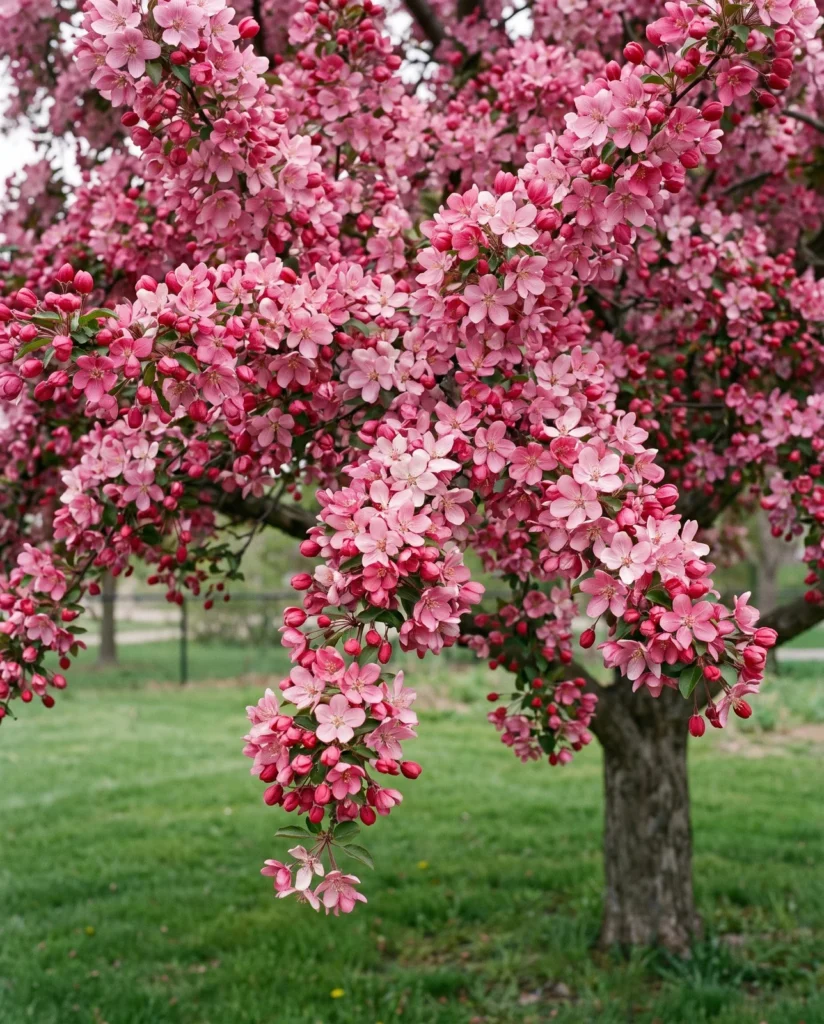
What a crabapple is, and where the line with an apple falls
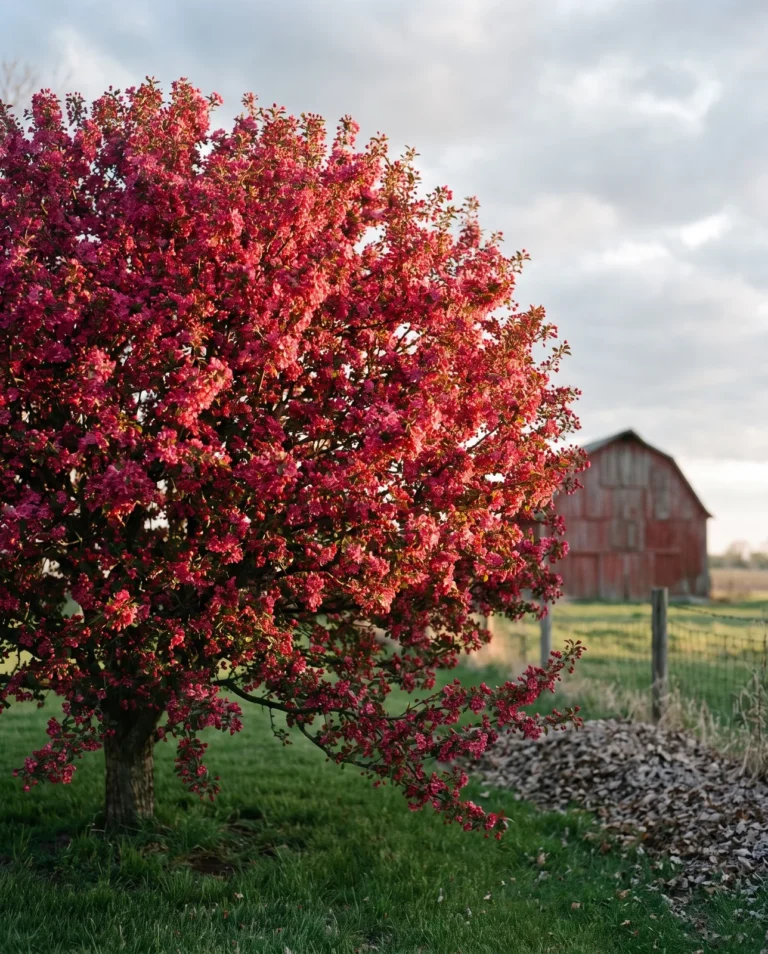
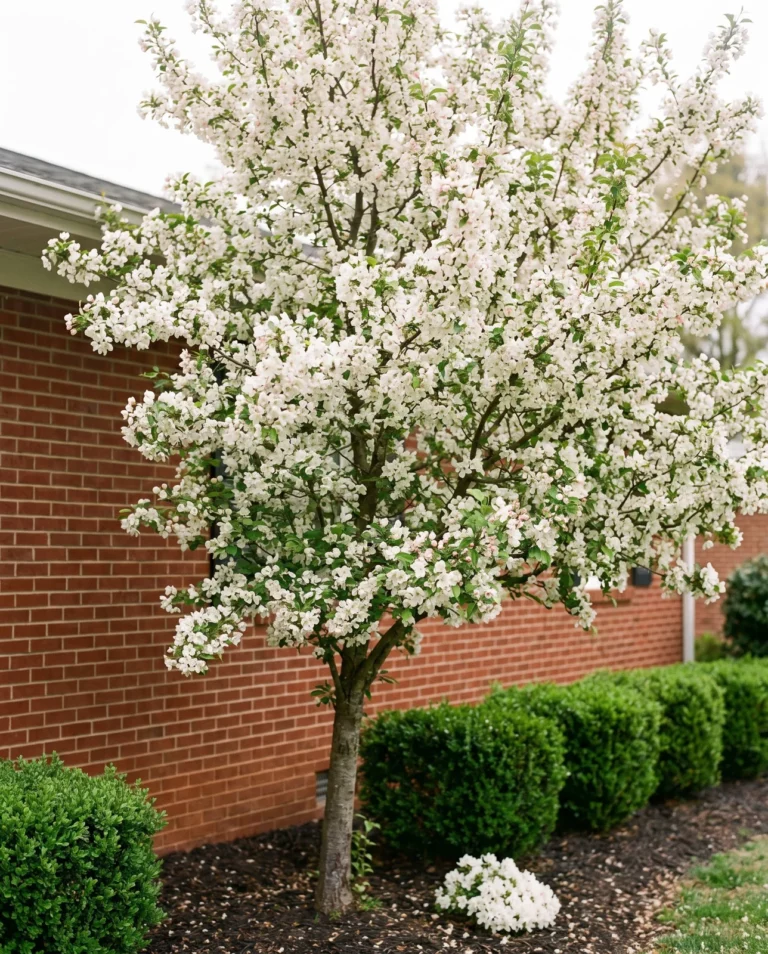
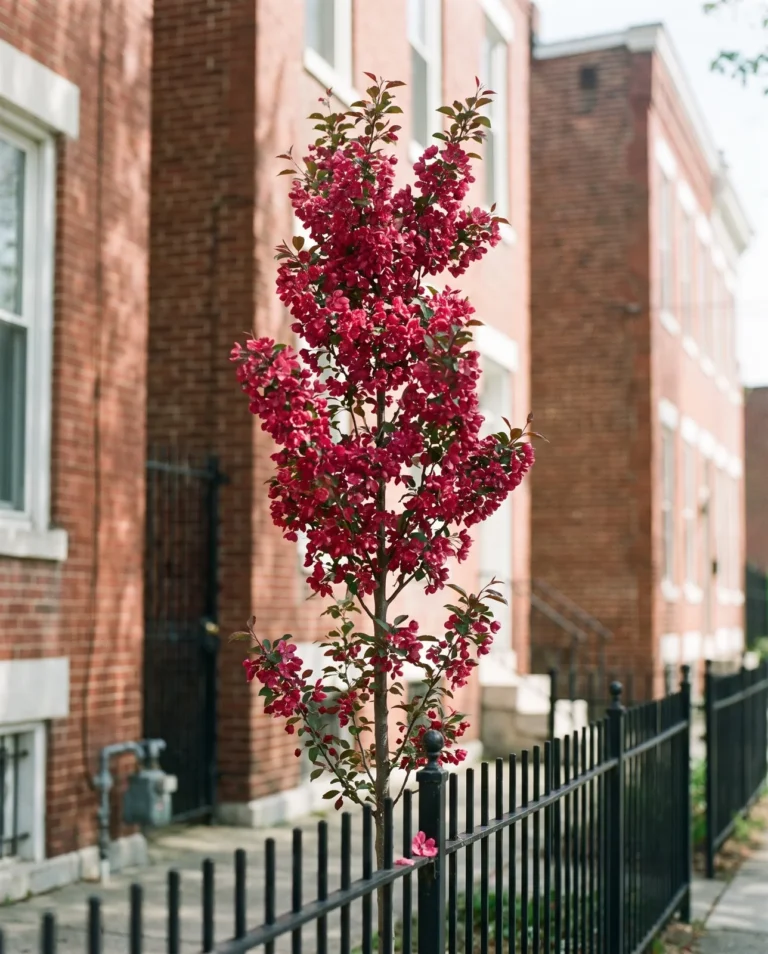
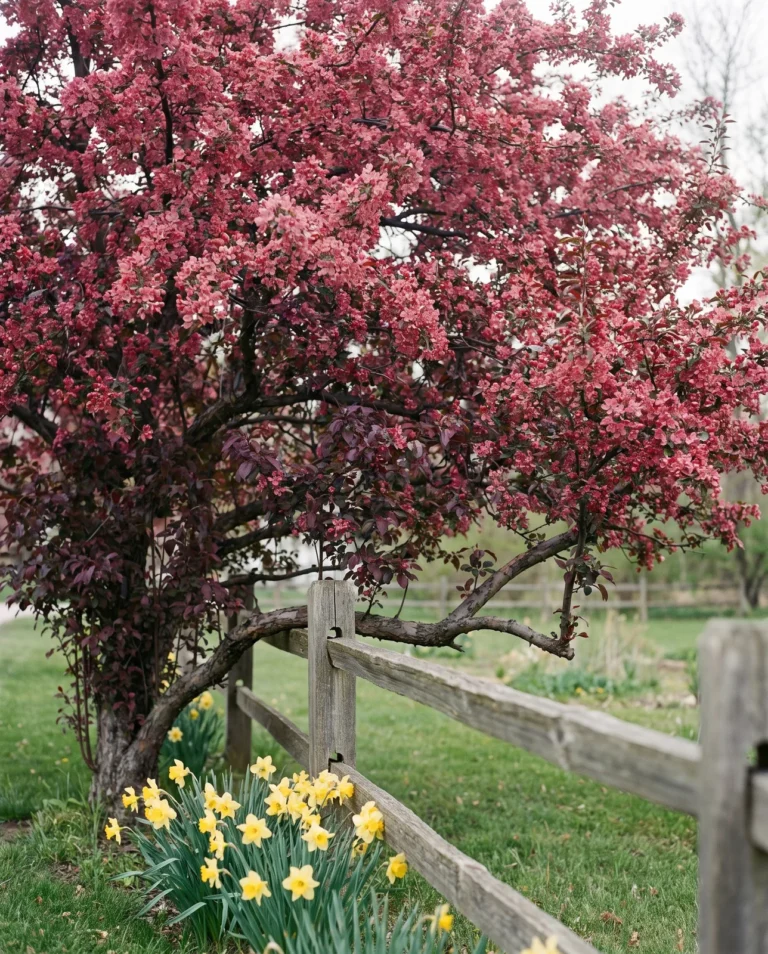
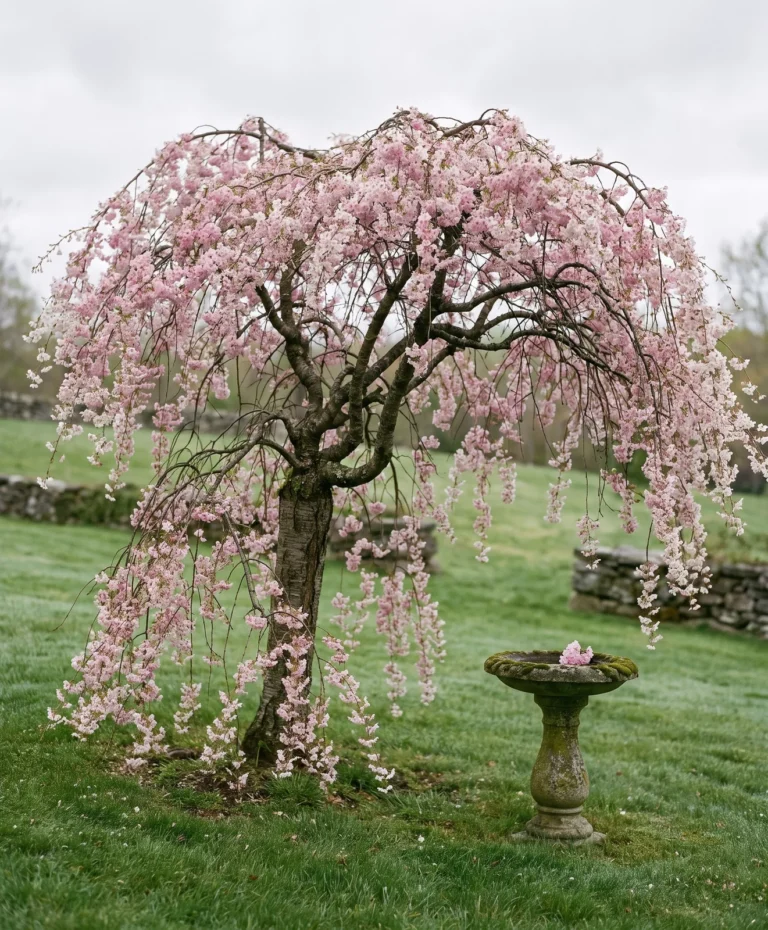
A crabapple is a small tree in the genus Malus, and fruit size draws the only line with an apple: two inches or less across and the tree is a crabapple. The genus runs to between 32 and 57 species, the orchard apple and the wild apples among them. They are deciduous trees and shrubs in the rose family. Size runs from a five foot shrub to a 40 foot tree, in forms from dwarf and weeping through mounding to upright. Flower color goes from the white spring flowers most people picture through pink to the rose red of 'Centurion'.
Flowering crabapples have stood in American landscapes since the late 1700s, and the named selections now run somewhere between 500 and 1,000, of which about 100 are commonly planted. In orchards crabapples serve as rootstocks that give grafted apple trees what the apple lacks, cold hardiness among them, and Malus baccata supplies it for northern plantings.
Choose the cultivar for disease resistance first
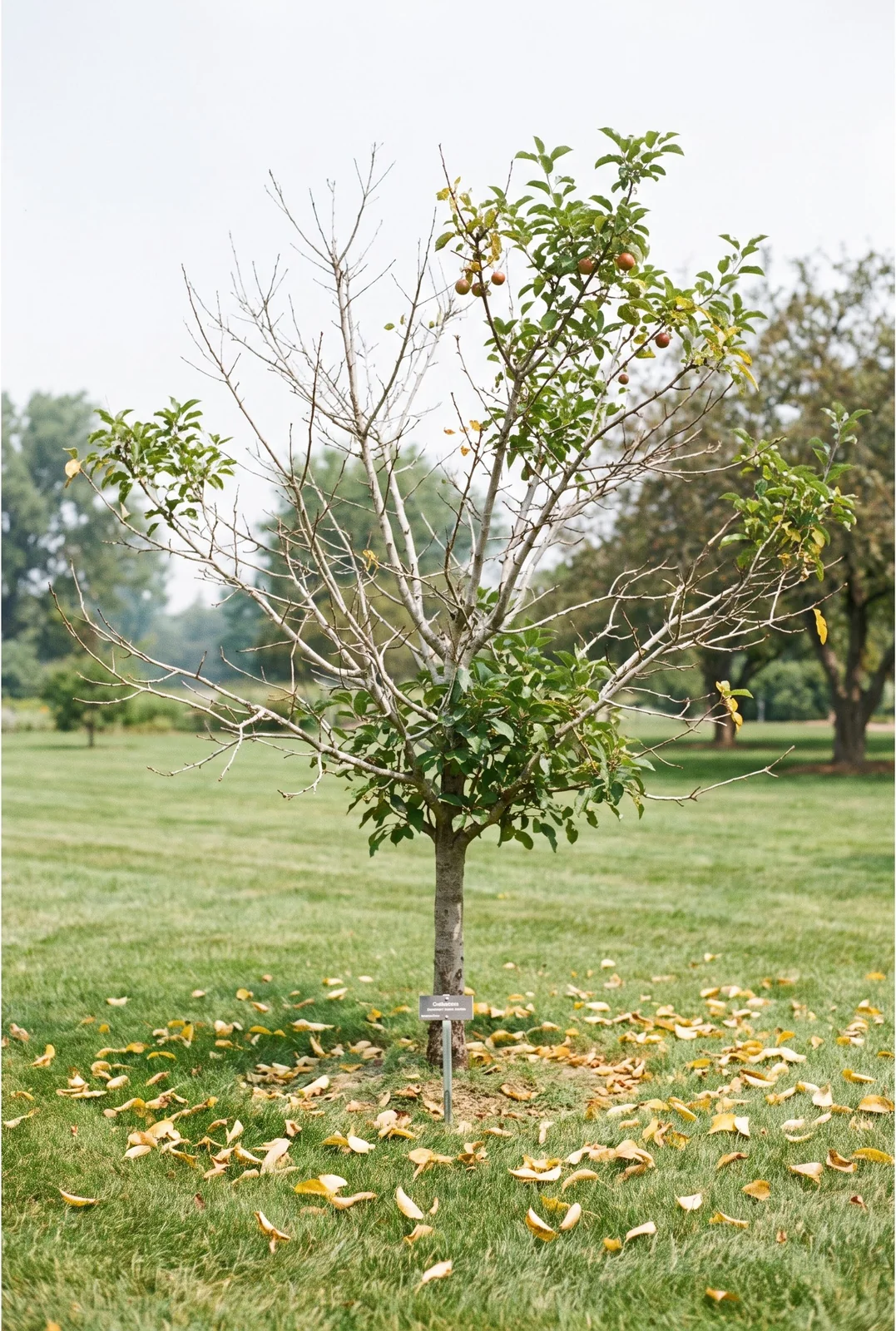
The cultivar decides whether your crabapple still has leaves in July, so disease resistance belongs above flower color on the choosing list. A susceptible tree in a bad scab year can stand close to bare by the end of June. A resistant tree in the same yard keeps its leaves and needs no spray. Cultivars have been sorted into three classes by scab susceptibility, and the most susceptible class carries a plain instruction: do not plant it again.
Ratings travel badly, though. Morton Arboretum, rating trees in Illinois, puts 'Snowdrift' at poor for scab, while the Maine list calls the same tree good. 'Centurion' splits the same way, fair in Illinois and good in Maine and South Carolina. Neither reading is careless. Disease pressure shifts from region to region and from year to year, and a cultivar that performs well in one area can do poorly somewhere else. Humidity drives it: scab is worse across the wetter eastern half of North Dakota. Plant a cultivar proven resistant where the tree will actually stand.
Three more filters come after disease. Fruit size decides how much of the tree ends up on the pavement, and cultivars carrying fruit two-thirds of an inch or larger are discouraged near a walk. Flower color comes last, and it is the first thing most tags lead with.
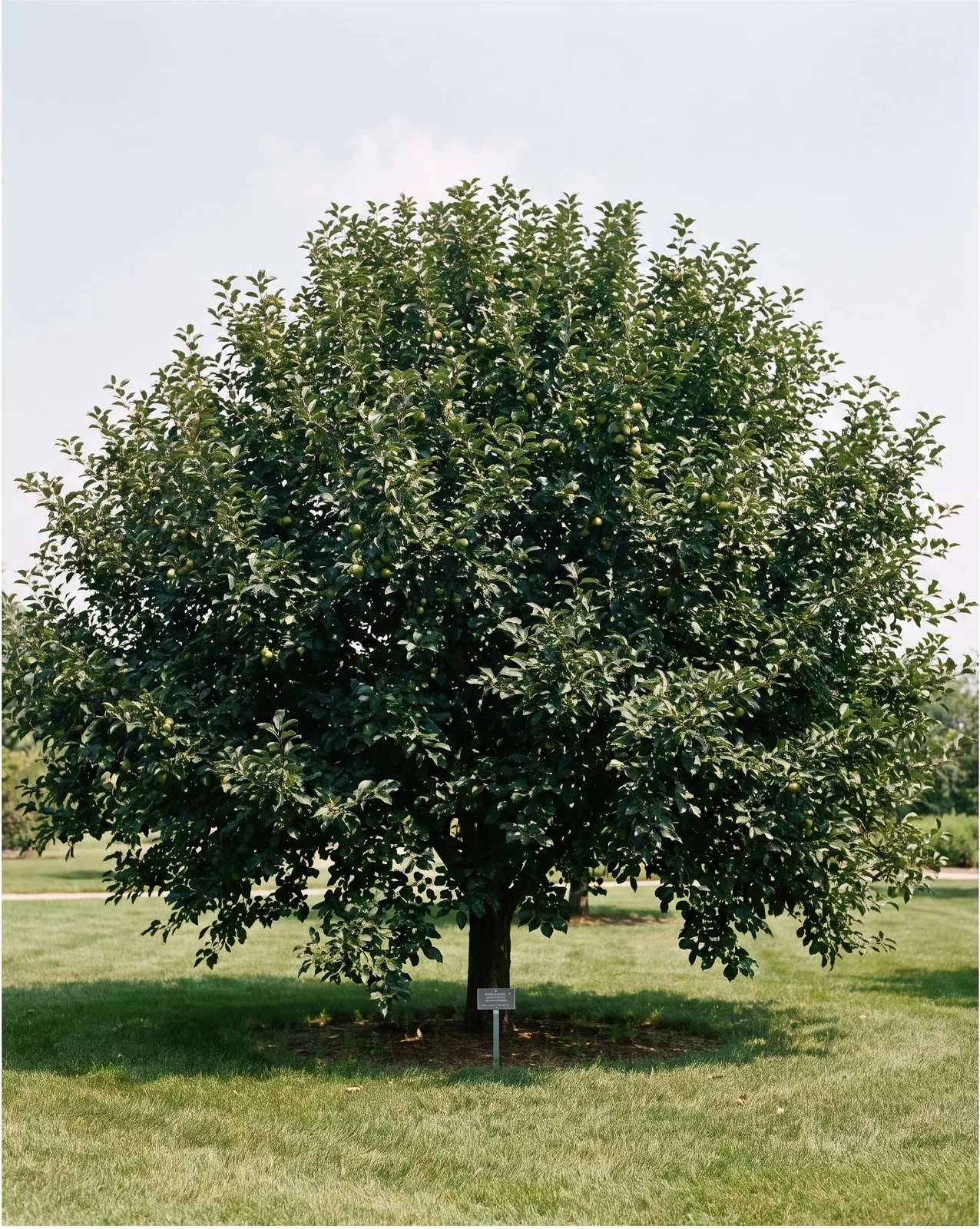
Named crabapples, with the scab rating in front
Every card leads with scab, because that rating decides how the tree looks in July. Where two regions disagree, both readings stand.
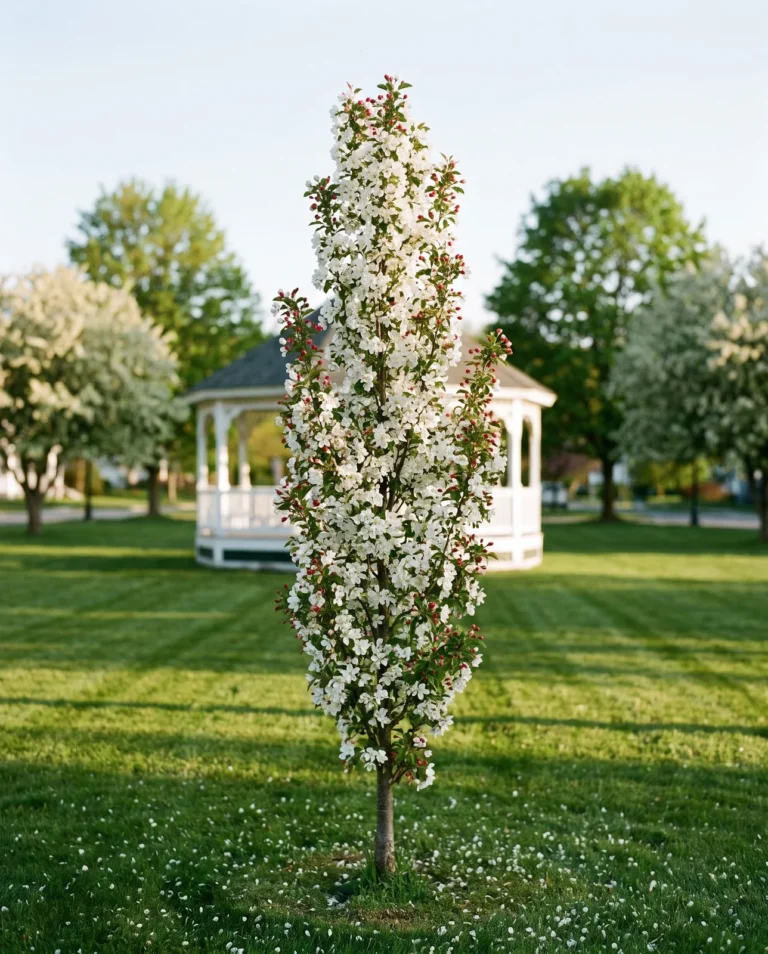
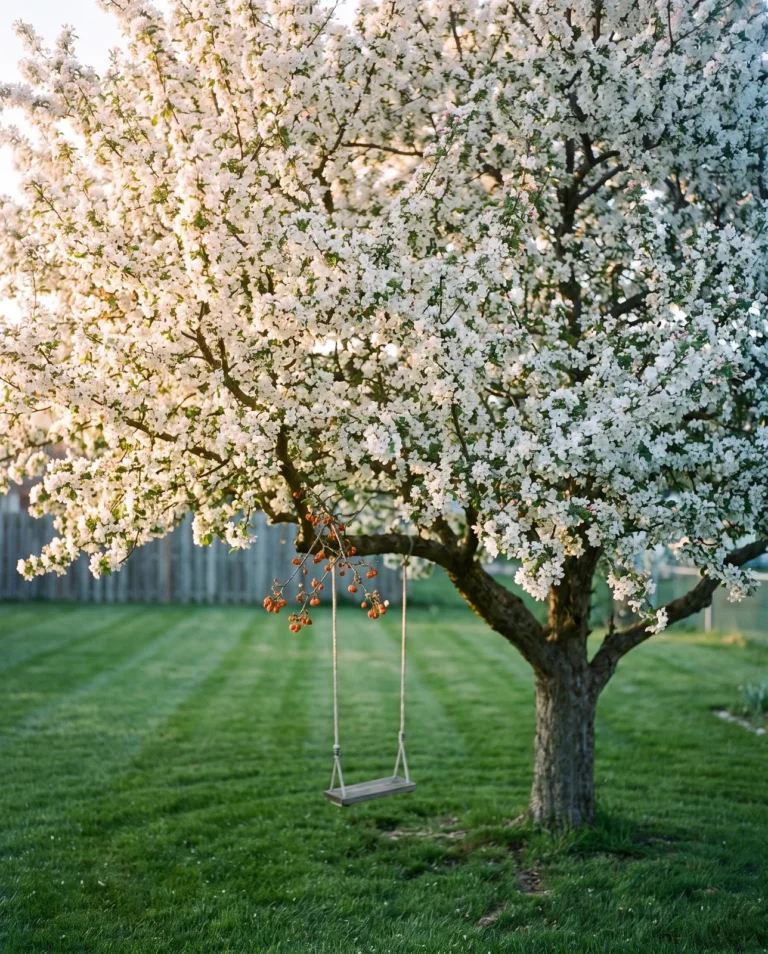
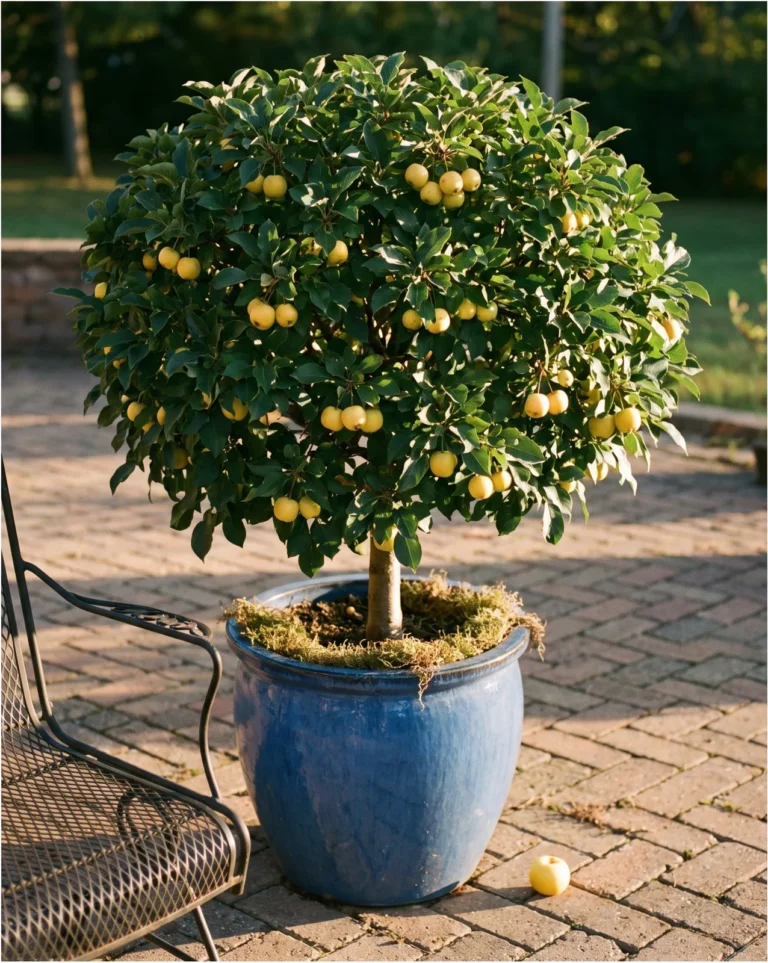
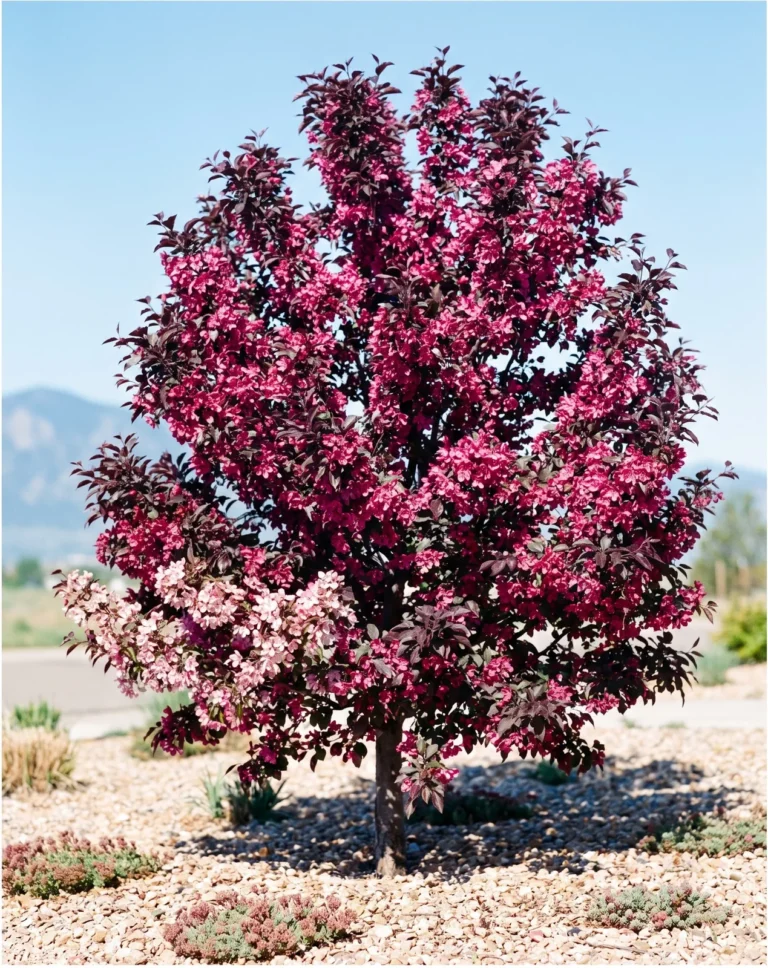
Where to plant it, and how deep the hole should be
Give a crabapple full sun, sharp drainage and soil on the acid side of neutral, and plant in spring or fall while temperatures are mild. It wants at least eight full hours of direct sun a day. The pH it wants is 5.5 to 6.5, with tolerance out to 5.0 and 7.5 in soil rich in organic matter.
How deep to dig is the one place where the instructions openly conflict. Most put the root ball on undug soil with its top an inch or two above grade, in a saucer-shaped hole two to three times the width of the ball. Maine's organic growers' handbook says the opposite, calling for a hole twice as wide and a half foot deeper than the root system. Crabapples are prone to roots that circle the trunk, so the top structural root belongs within the top inch of the root ball. A tree set too deep can decline and die twelve to twenty years after planting.
At planting keep the pruners nearly idle: take out damaged branches and the suckers at the base, and save every shaping cut for the following spring. After establishment a crabapple handles drought well on 0.3 to 0.4 inch of water a week. Skip manure and every other high-nitrogen source at planting, because a tree pushed to grow too fast takes winter damage for it.
How far apart to plant them, and how far from anything else
Space crabapples by the spread the cultivar actually reaches. Sargent crabapple finishes about 25 feet wide on a 10 foot frame, and 'Donald Wyman' about 30 feet wide on a 15 foot frame. Growth is slow to moderate, about 8 to 10 inches a year, and most crowns finish 10 to 25 feet.
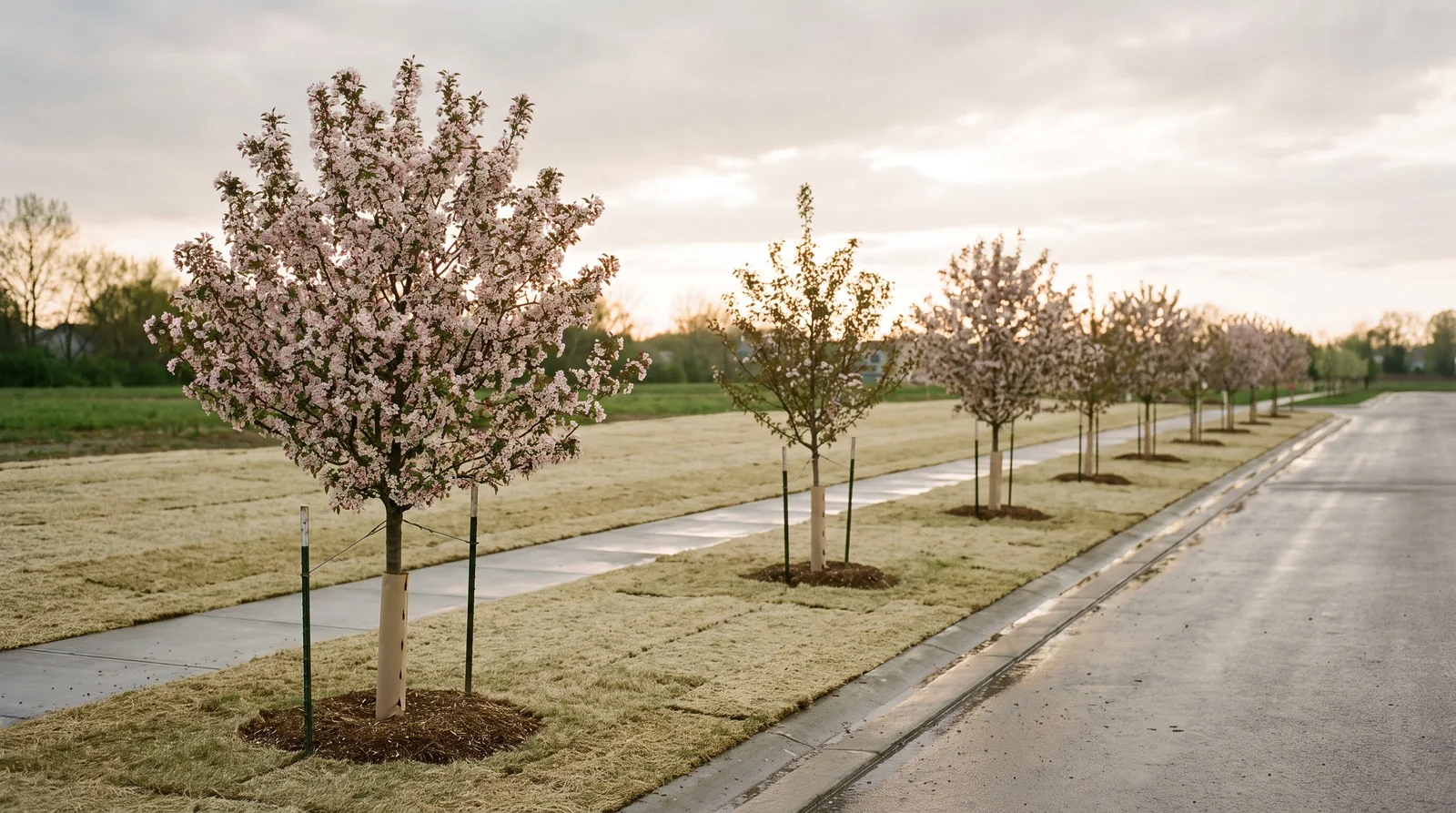
Distances from hard structures come from a different set of numbers. Crabapple belongs to the small street-tree group with redbud and Japanese tree lilac, trees under 30 feet at maturity that suit a rooting strip four to ten feet wide. Keep 4 to 6 feet between a walk and a small tree, against 10 feet or more for a large one. A strip narrower than four feet takes no tree at all. A septic field asks for much more room: at least 25 feet from the nearest drain line, and 50 to 75 feet is better.
Why a healthy crabapple skips a spring
A crabapple that skipped its bloom is usually not sick. The likeliest cause is a late hard frost after warm weather had already started the buds moving. Buds that far along can be damaged past opening, and nothing shows on the tree afterward except the missing flowers.
Alternate bearing, a heavy crop one year and a light one the next, is common in apple and pear. A large fruit crop takes the energy that would have gone into initiating next year's flowers, and some crabapples run on that two-year cycle by nature. The documented alternate bearers include 'Centurion', 'Beverly', 'David', 'Dolgo', 'Harvest Gold', 'Silver Moon' and 'Scheideckeri'. Thinning a heavy fruit set is the lever against it.
Pruning is the cause gardeners create themselves, and the date decides it. Chicago Botanic Garden gives the window plainly. Most crabapples initiate the flower buds for the following year in mid-June to early July, so a cut after that carries next spring's flowers away. Excess nitrogen works the same way, usually arriving as lawn feed spread near the tree: the tree builds shoots and foliage while bud development stalls.
Flower buds form ten or eleven months ahead of bloom, in roughly the first 50 days after the previous flowering. A season weakened by drought, standing water or disease can leave the tree with nothing to open, and a water shortage during establishment reduces fruit set the year after. That work was done on apple, in the same genus. A tree stripped of its leaves in midsummer also has less to spend on the next set of flowers.
Work out which spring you lost
Run these in order the year the flowers fail to appear. The first two answer most cases.
Apple scab, the disease that decides how the tree looks in July
Apple scab is a fungal disease caused by Venturia inaequalis, and on a susceptible crabapple it turns a full green tree into a bare one by midsummer. It shows first in spring as velvety olive-green leaf spots with fringed borders, from pinhead size up to half an inch across. Leaves carrying many spots turn yellow and fall from mid-summer on. On the fruit it leaves sunken, corky, dark olive patches. Across Minnesota it is the most common disease of apple and crabapple.
The cycle runs through the leaf litter, which is why the disease returns to the same tree every year. The fungus overwinters on fallen diseased leaves. Once those leaves are wet in early spring, spores shoot into the air and infect the new foliage, and an established spot makes more within 9 to 17 days. It also infects apple, mountain ash, pear and Cotoneaster, and moves from an ornamental crab to fruiting apple trees nearby.
Two things work against it, and one is free. The first is the cultivar. Fungicide has no job on a variety already resistant or immune to scab, and the lasting fix is a cultivar proven resistant in your own area. The second is a spray program keyed to bud stages. Sprays begin at half-inch green tip, when about half an inch of leaf tissue shows, or at first pink just before bloom. They repeat every seven to ten days until most of the petals have fallen. Adequate control takes three to four sprays in spring, and nothing goes on during bloom, to protect bees.
The other diseases, the pests, and the drawbacks people complain about
Three other diseases are worth recognizing on sight. Cedar-apple rust cannot complete its cycle without a juniper or an Eastern red cedar nearby, and its spores blow half a mile to reach an apple or crabapple. Fire blight is bacterial and enters fresh wounds, which is why late winter is the pruning time and spring cuts are discouraged. High-nitrogen feeding is discouraged too: it produces the succulent growth the bacterium infects most easily. Black rot, also called frogeye leaf spot, can strip most of the leaves off a susceptible variety and reduce its flowering the next year.
The insect list is short and familiar. Tent caterpillars, aphids, Japanese beetles, borers and scale are the pests named for the genus, and the caterpillars leave webbed nests in the branch forks. Borers are the serious one in New England, where every apple and crabapple counts as highly susceptible to the roundheaded appletree borer. The winter threat is quieter: mice girdle a young trunk at ground level under snow, and a trunk stripped of bark all the way around dies.
Suckers from the base are a recurring chore on many crabapples and want cutting as close to the ground as possible every season. Heavy pruning invites the same trouble higher up, since cuts of an inch or more induce excessive water-sprout growth.
What actually goes wrong, ordered by how often owners ask
Ordered by how often owners raise each one, with the move that answers it.
A tree full and green in May, bare by midsummer. Three diseases strip leaves and they separate by sight. Scab spots are round and olive-green with velvet-like fringed borders. Cedar-apple rust cannot run without a juniper in range. Black rot takes most of the leaves off a susceptible variety.
Dead branches and thin growth with no obvious cause. Look at where the trunk meets the soil first. The top structural root belongs within the top inch of the root ball, and a tree set too deep dies twelve to twenty years later.
Identification and shopping are one question: what will this tree do in July. Match the name against a rating published for your own region, since a cultivar good in one area can do poorly somewhere else.
An empty tree read as failing health, before the weather or last year's crop is considered. Check a late frost first, then last year's fruit load, then the month of the last pruning.
Fruit on a walk every autumn, and a tree that came back wrong from a hard cut. The fruit half is settled at the nursery, since some crabapples shed soon after ripening and others hold until spring. Keep every cut small.
A chore that returns each season, worst on a tree with several trunks or damage low down. Cut them as close to the ground as possible.
When to prune, and why the month decides next spring
Prune a crabapple in late winter, before growth starts, or in the short window just after it finishes flowering. Late winter is the safer of the two. It leaves an open canopy that dries faster after rain, and it keeps the saw out of spring, when fresh cuts give fire blight an open door. Most crabapples set the flower buds for the following year in mid-June to early July, so any cut after that carries flowers away with the wood. A tidy August trim shows up as a blank April.
The cutting itself is a short list. Take the suckers at the base as close to the ground as possible, and expect to repeat that every season. Keep individual cuts small, because removing a limb an inch or more across brings a flush of water sprouts. Overly aggressive pruning pushes the whole tree into vegetative growth and away from flowering.
Are crab apples edible, and what the seeds mean for pets
People do eat crabapples, and acid is why most do not eat them raw. The sour taste comes from high levels of malic acid. It works in a jar too: crabapple supplies pectin, and its juice sets into a ruby-colored jelly with sugar and spices. 'Dolgo' carries 1-inch fruit rated good for jelly, ripening in July and dropping soon after.
The caution belongs to the seeds and the foliage. The ASPCA has no crabapple entry: crabapples are filed under its apple entry, which says in as many words that it includes them. That entry is toxic to dogs, cats and horses, with cyanogenic glycosides as the toxic principle. The stems, leaves and seeds contain cyanide and are worst while wilting, with brick red mucous membranes, dilated pupils, difficulty breathing, panting and shock as the signs. Wilting is the word to hold on to: it puts fresh prunings left on the lawn in the same category as the tree.
What the fruit does in fall and winter
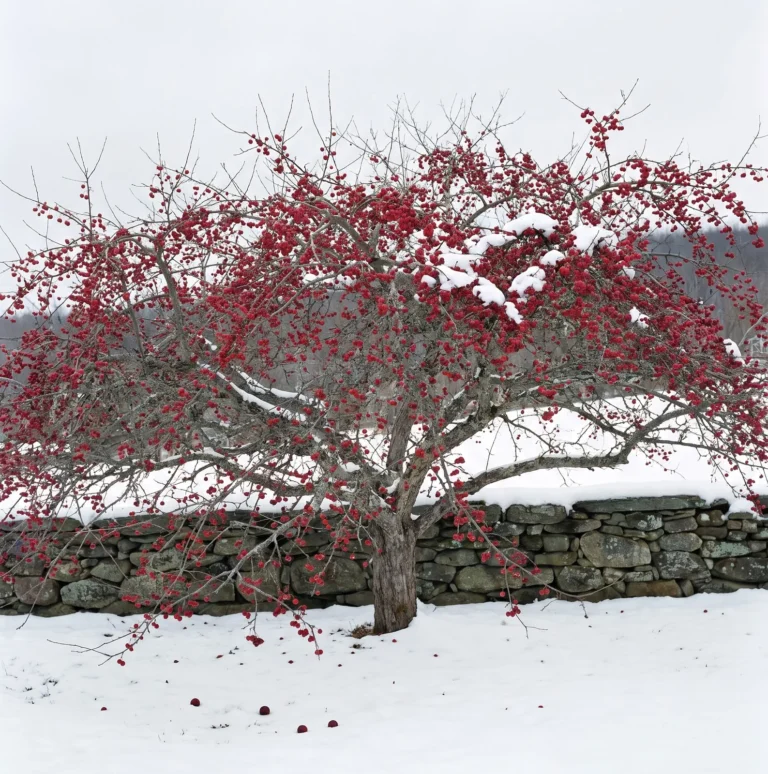
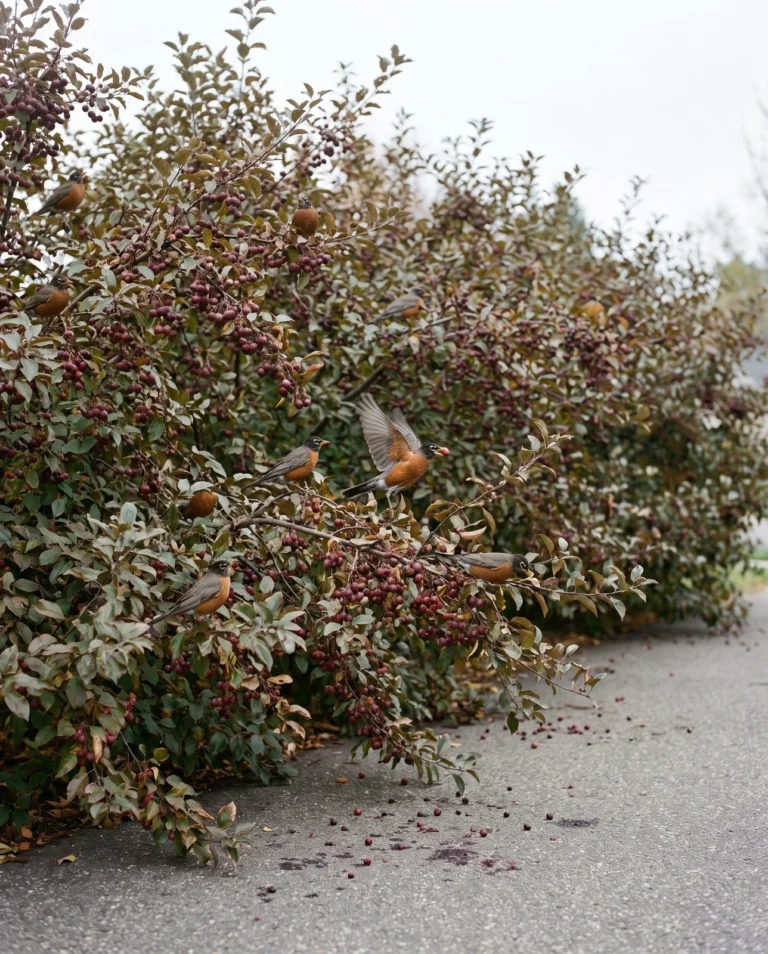
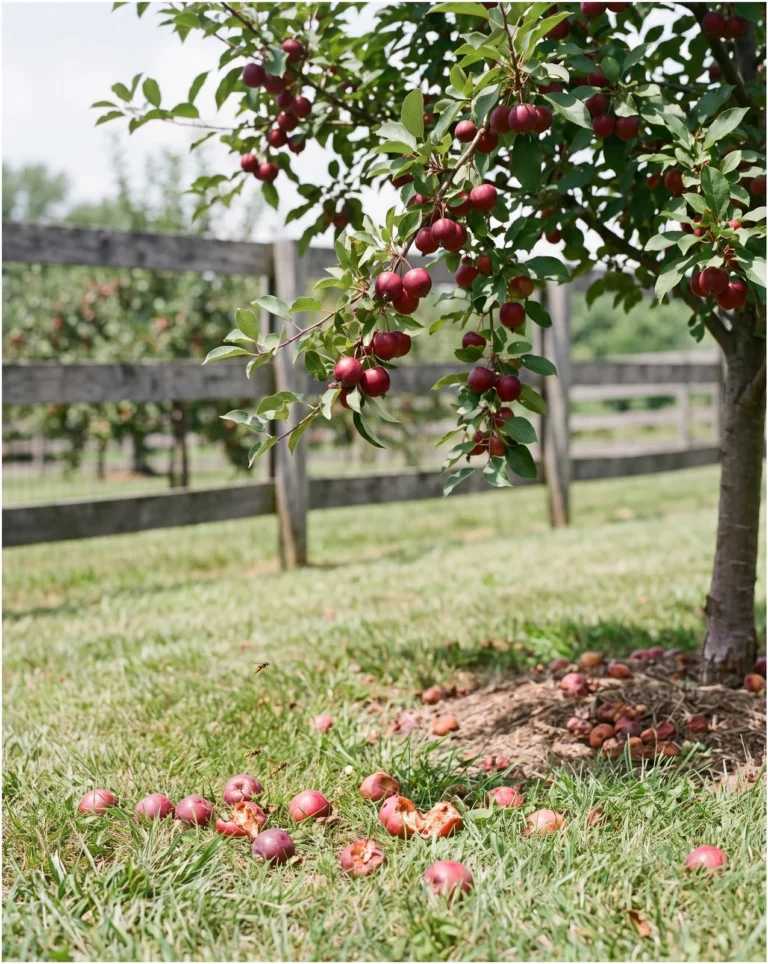
Whether the little apples hang on through winter or lie on the pavement in October is a cultivar trait, settled before the tree goes in the ground. Some types drop soon after ripening, while others hold their fruit until the following spring. The persistent-fruit names include 'Adams', 'Adirondack', 'Donald Wyman', Harvest Gold, 'Prairifire', 'Profusion', Red Jewel, 'Red Splendor', Royal Raindrops, 'Sargent' and Sugar Tyme. Fruit that stays puts color into the early winter garden, and birds work it there, taking some types in fall and the sour ones by spring. A tree that sheds gives you one heavy raking and a bare silhouette; a tree that holds gives you red or yellow fruit against snow.
How big a crabapple gets, and what shape it takes
Mature size is set by the cultivar name, and the named trees land in very different footprints. 'Prairifire' is dense and rounded, 15 to 20 feet tall with a similar spread. 'Donald Wyman' is wide spreading, about 15 feet tall by 30 feet across. Sargent crabapple runs wider still against its height, roughly 10 feet by 25, and reads in a border as a hedge. Weeping selections stay low and broad, with 'Red Jade' about 12 feet high and 20 feet wide. Buyers usually weigh these numbers against a flowering cherry or a crape myrtle for the same spot, and spread is the figure that settles it.
Hardiness by region, and what a zone number on the tag covers
Hardiness is published two ways. The North Dakota list rates it cultivar by cultivar, while the South Carolina factsheet puts it at the species level. The rows below follow regions.
What the tree feeds, from bees to winter birds
Crabapple flowers attract pollinators, and some blossoms carry a light, spicy scent. Orchards put that to work. A crab tree goes in every sixth or seventh tree in an apple block, or crab limbs are grafted onto the apple trees themselves, so the crab's bloom overlaps the variety it pollinates. Smaller-fruited crabapples are prized as bird food.
Five things people repeat about crabapples
Five things people repeat about crabapples, with the correction beside each.
The myth: Crabapples and apples are different trees.
The reality: They share one genus, Malus. The only line between them is fruit size: two inches or less across and the tree is a crabapple.
The myth: Crab apples are poisonous.
The reality: The fruit is sour from malic acid and rarely eaten raw, and the juice sets into jelly. The caution sits in the stems, leaves and seeds, which contain cyanide and are worst while wilting.
The myth: All crabapples get scab.
The reality: 'Adirondack', 'Prairifire' and the dwarf Sargent crabapple each rate excellent for scab, and a variety that already resists it has no use for fungicide.
The myth: Prune it in summer to keep it small.
The reality: Most crabapples set the following year's flower buds in mid-June to early July, so a summer cut removes flowers that already exist. Heavy cutting works against the goal too, since a limb an inch or more across brings a flush of water sprouts.
The myth: It did not bloom, so it needs feeding.
The reality: Excess nitrogen tells a crabapple to spend on shoots and foliage while flower bud development stalls, and lawn feed reaching the root zone is the usual delivery. A young, overly vigorous tree spends its energy the same way on its own.
What to expect, year by year
How a young crabapple behaves from planting to the first real bloom, and what a settled tree repeats.
Years one and two are establishment. Plant in spring or fall while temperatures are mild, which in Maine means late April or early May. Prune almost nothing that first season: damaged branches and the suckers at the base, with shaping saved for the following spring. Water is the job that matters, because a shortage during establishment reduces growth and can cut fruit set the year after.
Years three to five are when the bloom builds and the cultivar shows its hand. A tree only beginning to become reproductive should flower more the following year. Disease declares itself in the same years, and a resistant cultivar carries its leaves and needs no spray.
A settled tree then runs a fixed calendar. Flowers open in spring, and the buds for the next spring are set in mid-June to early July. Scab, on a cultivar that carries it, restarts every spring from spores on last year's fallen leaves, and suckers return at the base each season. Some cultivars bloom heavily only every other year.
FAQ
Are crab apples safe to eat?
Yes, though most are too sour raw, since the fruit is high in malic acid. Cooked it supplies pectin and makes a ruby jelly, and the seeds are left out because they carry cyanide.
What are the drawbacks to crabapple trees?
A susceptible cultivar can stand close to bare by the end of June in a bad scab year, dropped fruit lands wherever the tree stands, and suckers want cutting every season.
Is a crabapple tree good for the front yard?
It fits the space: crabapple stays under 30 feet at maturity and wants at least 8 full hours of direct sun a day.
How far apart should crab apple trees be planted?
Space them by mature spread, about 25 feet on Sargent crabapple and 30 feet on 'Donald Wyman'. Keep 4 to 6 feet from a sidewalk and 25 feet or more from a septic drain line.
How do you treat apple scab on crabapple trees?
On a resistant variety you treat nothing, since fungicide has no job there. A susceptible tree takes a spray program timed to bud stages, and the durable answer is a resistant cultivar.
Can apple scab be cured?
No. The fungus overwinters on fallen diseased leaves and fires fresh spores into the new foliage each wet spring, so control means preventing infection season after season.
What is the best fungicide for apple scab?
Timing decides more than the product. Sprays start at half-inch green tip or first pink, repeat every 7 to 10 days until most petals have fallen, and take three to four rounds. None during bloom, to protect bees.
Why is my crabapple not blooming?
A late hard frost after a warm spell is the most likely culprit. After that, a heavy crop last year leaves little energy for flower initiation, and pruning after mid-June to early July removes buds already formed.
How many years does it take for a crab apple tree to produce fruit?
A tree that is only beginning to become reproductive is expected to flower more the following year.
What is the prettiest flowering crabapple tree?
That is taste, so start with the ones that keep their leaves. 'Prairifire' opens deep pink-red flowers about 1.5 inches across, 'Adirondack' carries a heavy display on an upright form, and Sargent crabapple blooms fragrant white.
Are crabapples poisonous to dogs?
Yes. Crabapples fall under the apple entry on the toxic plant list, toxic to dogs, cats and horses on cyanogenic glycosides. Stems, leaves and seeds carry cyanide, worst while wilting.
Interesting tips
- Most crabapples are partially self-fruitful, and they set a better crop with a second cultivar standing within range.
- If dropped fruit is the deal breaker, plant a sterile cultivar. Marilee and 'Spring Snow' are the two named, useful in patios and courtyards.
- One crabapple is grown to be eaten fresh: 'Centennial', a cross of 'Dolgo' and 'Wealthy', carrying fruit 1.75 to 2 inches across.
Related Guides & Flowers
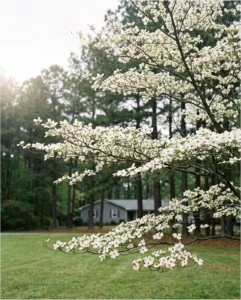
Dogwood
The other small spring tree for a front yard, with flat bracts where a crabapple has petals.
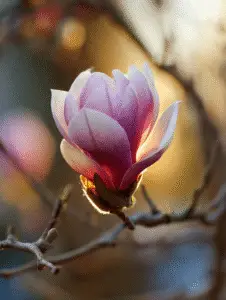
Magnolia
A larger spring tree for the same wish, opening its flowers before the leaves arrive.
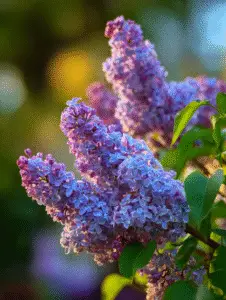
Lilacs
The scented spring shrub for the open sunny ground beside a crabapple.
Pink flowers
More pink-flowered plants to set against the rose-pink crabapple cultivars.
Enjoying our flower guides? Add YourFlowersGuide as a preferred source on Google. It helps more readers find us.
Add to Preferred Sources