Annual larkspur (Consolida ambigua, also listed as Consolida ajacis) goes straight into the ground in autumn, because its seed will not germinate until it has spent weeks cold and damp, and winter supplies that for nothing. It is a hardy annual, not the perennial delphinium the name so often gets attached to, and it resents having its roots moved, so the bed you scatter it across in autumn is the bed it flowers in. Seed sown in fall lies dormant through the cold months, takes up ground moisture, and comes up as soon as spring soil begins to warm.
The free chilling only works where winter runs cold enough for long enough, and that line is the one seed packets never draw. Where the ground locks up hard for months, or freeze-thaw swings run through the bed all winter, the window narrows to the last days before the soil goes solid, or the chilling moves indoors to a refrigerator and the sowing waits for late winter. Where winters stay moderate, the same seed does far better broadcast outdoors than it ever would in a tray. What follows covers how to tell annual larkspur from perennial delphinium before you buy seed, what the cold actually does inside the seed, which zones can sow outdoors and which should chill seed indoors first, the bed preparation and sowing steps in order, why a fall sowing sometimes produces nothing in spring, and how the plant behaves around pets and livestock.
On this page 5 sections
Larkspur vs. delphinium, so you sow the right seed
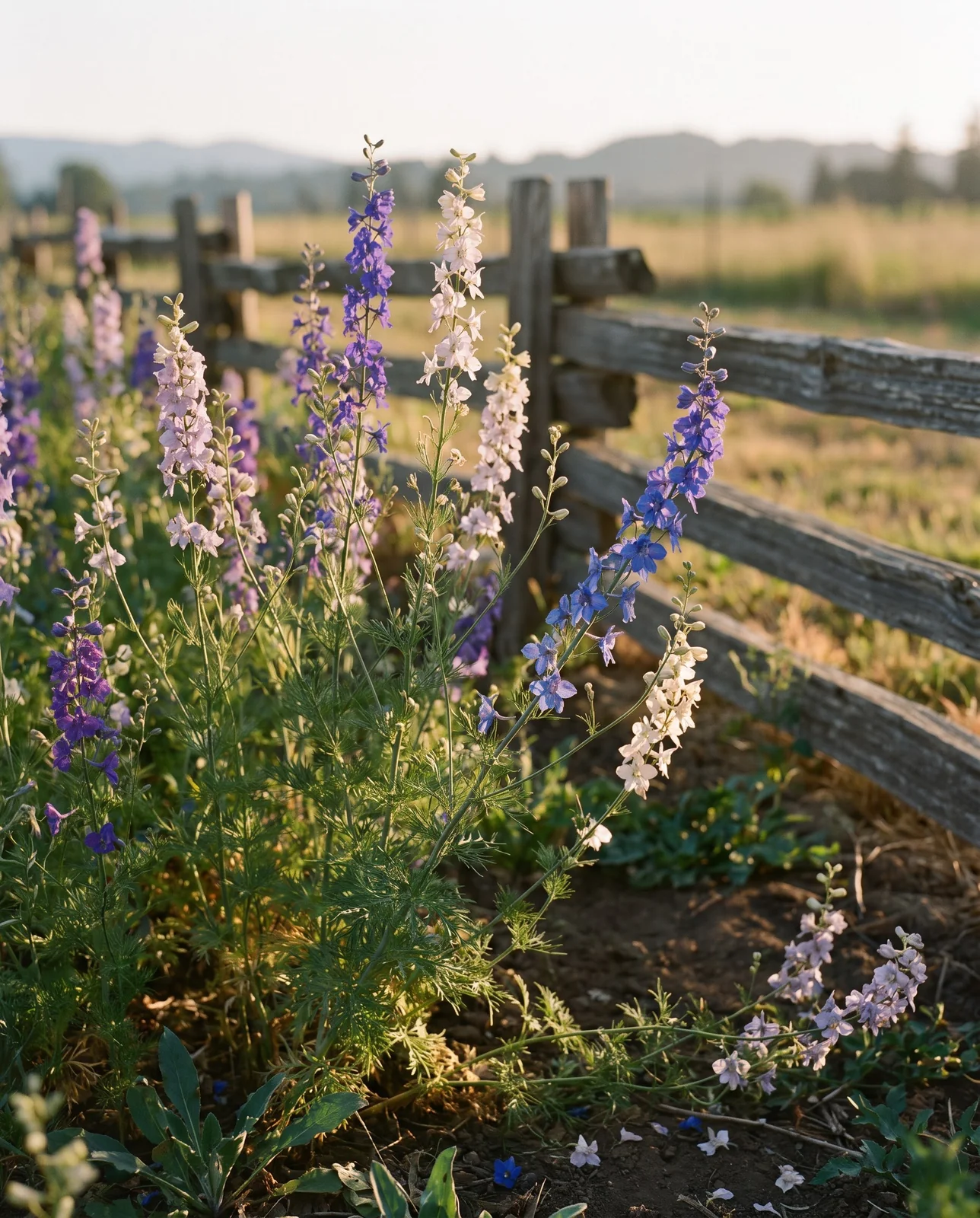
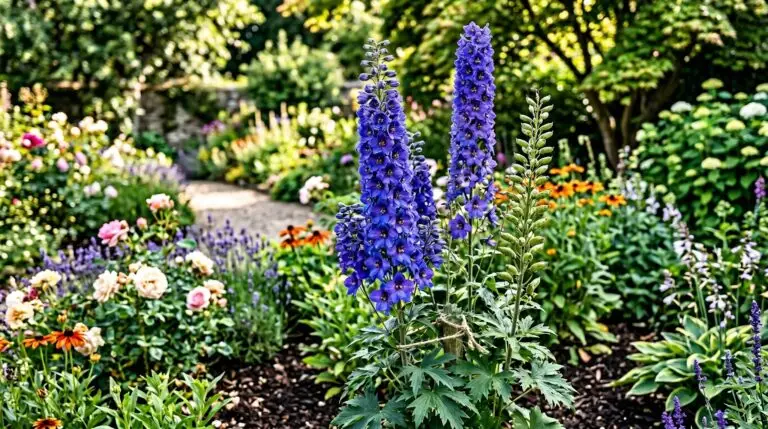
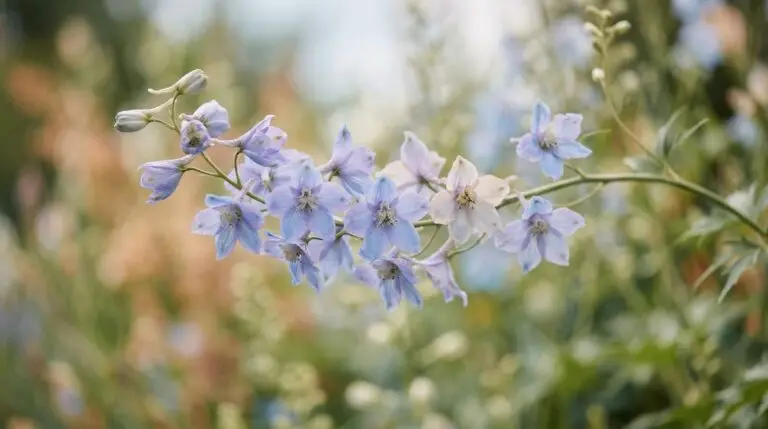
Rocket larkspur (Consolida ambigua, also listed as Consolida ajacis) is an annual: slender, airy flower spikes 2 to 4 feet tall in blue, purple, pink, and white, the whole life cycle run and finished inside one season. University of Georgia Cooperative Extension Bulletin B944 describes the garden larkspur types as reseeding annuals, which is the practical half of the definition. The parent plants die, and the seed they drop renews the border the following spring. True delphinium (Delphinium elatum) is a different genus on a different schedule. NC State Extension calls it a short-lived perennial with a lifespan of 3 to 5 years, native to woodlands, meadows, and river banks from Europe to Mongolia, carrying dense columnar racemes of up to 100 florets above a broad basal mound of blue-green leaves cut into 5 to 7 lobes each. Those stems stand 4 to 5 feet tall. Sow one the way you would sow the other and the season is gone: annual larkspur wants to be scattered on autumn soil and left alone, while perennial delphinium is grown on as a plant and its crown looked after year to year.
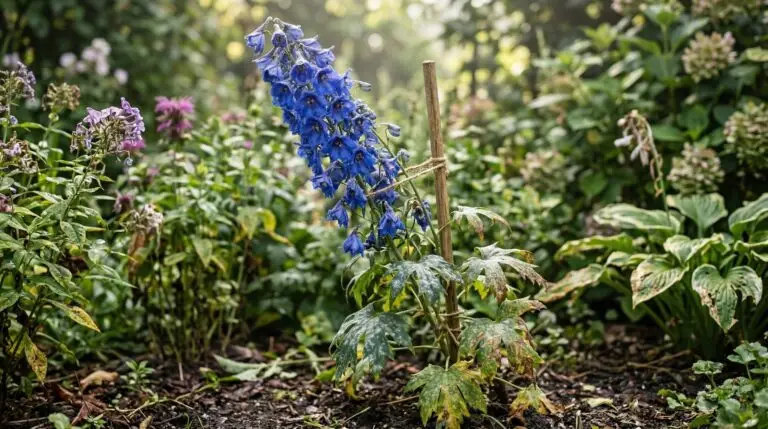
Climate is where the split gets expensive. NC State puts Delphinium elatum in USDA zones 3a through 7b, wants 6 or more hours of direct sun on it, and notes that high humidity works against the plant. The Georgia bulletin is blunter still, listing the tall D. elatum selections as seldom worth planting there, since southern summers punish the root crown. Hollow stems make the perennial harder again, because a delphinium in an open bed needs staking or the shelter of a wall or fence to come through wind and heavy rain standing up. Annual larkspur sidesteps most of that by running its whole cycle in cool weather, in flower and finished before the worst of summer arrives. Gardeners reading up on larkspur flower meaning as the July birth flower are almost always looking at this annual form, the one gardeners keep for its steady presence in a cottage border and for how simply it goes into the ground.
Why fall sowing works: nature’s cold stratification
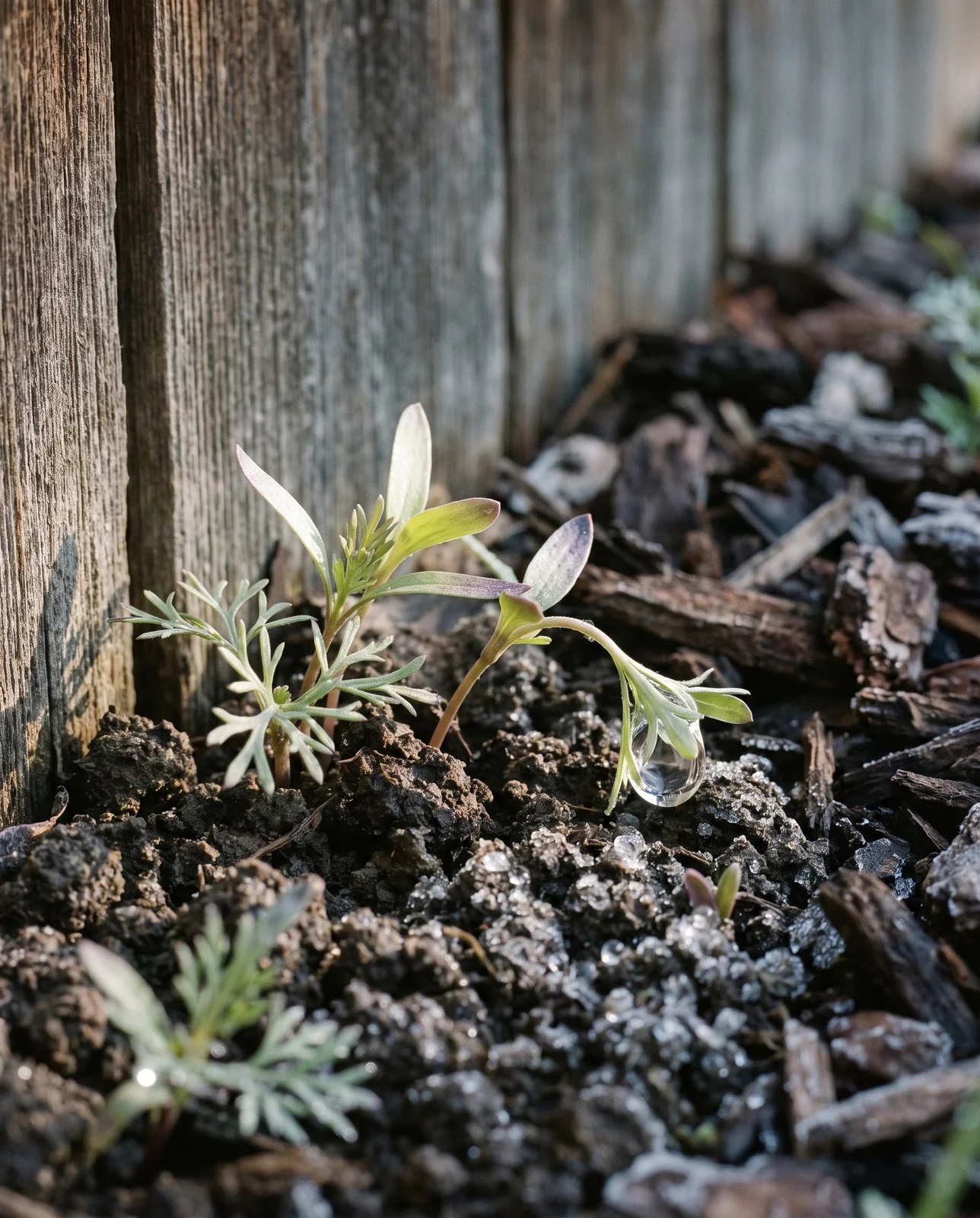
Larkspur seed does not sprout the moment it lands on warm ground, and that is a survival feature rather than a fault. Seed shed in late summer has to sit through the warm spells of early autumn without pushing out soft green growth that the first hard frost would kill. University of Georgia Extension puts the general rule plainly: seeds of many cool-season plants require exposure to cold chilling before germination can occur. When seed goes down on a cooling autumn bed, the falling soil temperature starts the internal changes that break down the dormancy inhibitors inside the embryo, and winter cold with steady ground moisture carries that chilling through to the end. By the time the soil warms a little in early spring, the seed is primed to sprout at the first opening the season gives it, so the whole stand comes up together rather than straggling.
That head start is the whole argument for autumn over spring. The same Georgia bulletin makes the general case for fall planting: it gives the plant more time to become established before active growth begins above ground. A spring sowing has to buy the cold with refrigerator space, damp medium, and weeks of waiting, while an autumn sowing gets it from the weather. Fall-sown seedlings root through the cool weeks of late winter, taking up the moisture and nutrients available to them well before summer heat arrives. The same cold-stratified routine sits under the other classic cottage annuals, poppies and love-in-a-mist among them, which also lean on winter cold for sturdy stems, healthy foliage, and a full crop of bloom.
Fall direct-sow decision tree for larkspur
Which method applies comes down to how hard winter runs where the seed goes in. Find the line that matches your ground before you scatter anything.
Step-by-step fall-sowing protocol
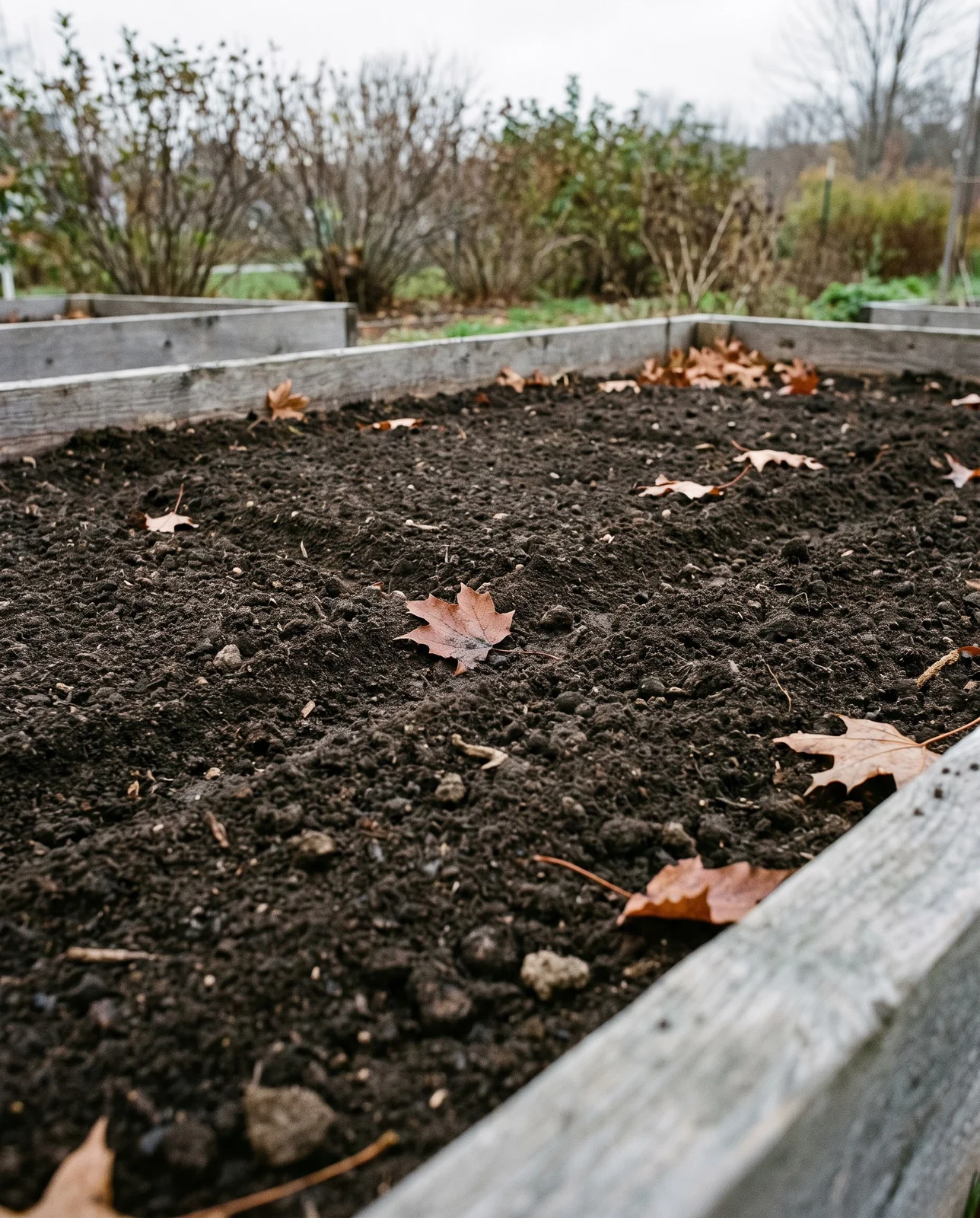
Start with the bed, because seed dropped on compacted ground has nowhere to root. University of Georgia Extension recommends spading planting beds at least 8 to 10 inches deep, and heavy clay wants sand, perlite, or coarse bark worked through it to open the drainage. There is a plain test for whether that worked: water poured into a 10-inch hole should drain away within 8 to 10 hours. Aim for a soil pH between 6.0 and 6.5. With no soil test to work from, a complete fertilizer such as 8-8-8 or 10-10-10 at 1.5 pounds per 100 square feet, raked into the top few inches, covers what the bed needs. All of this is aimed at winter more than spring, since loose, well-drained ground is what keeps seed and crown from decaying through the wet months.
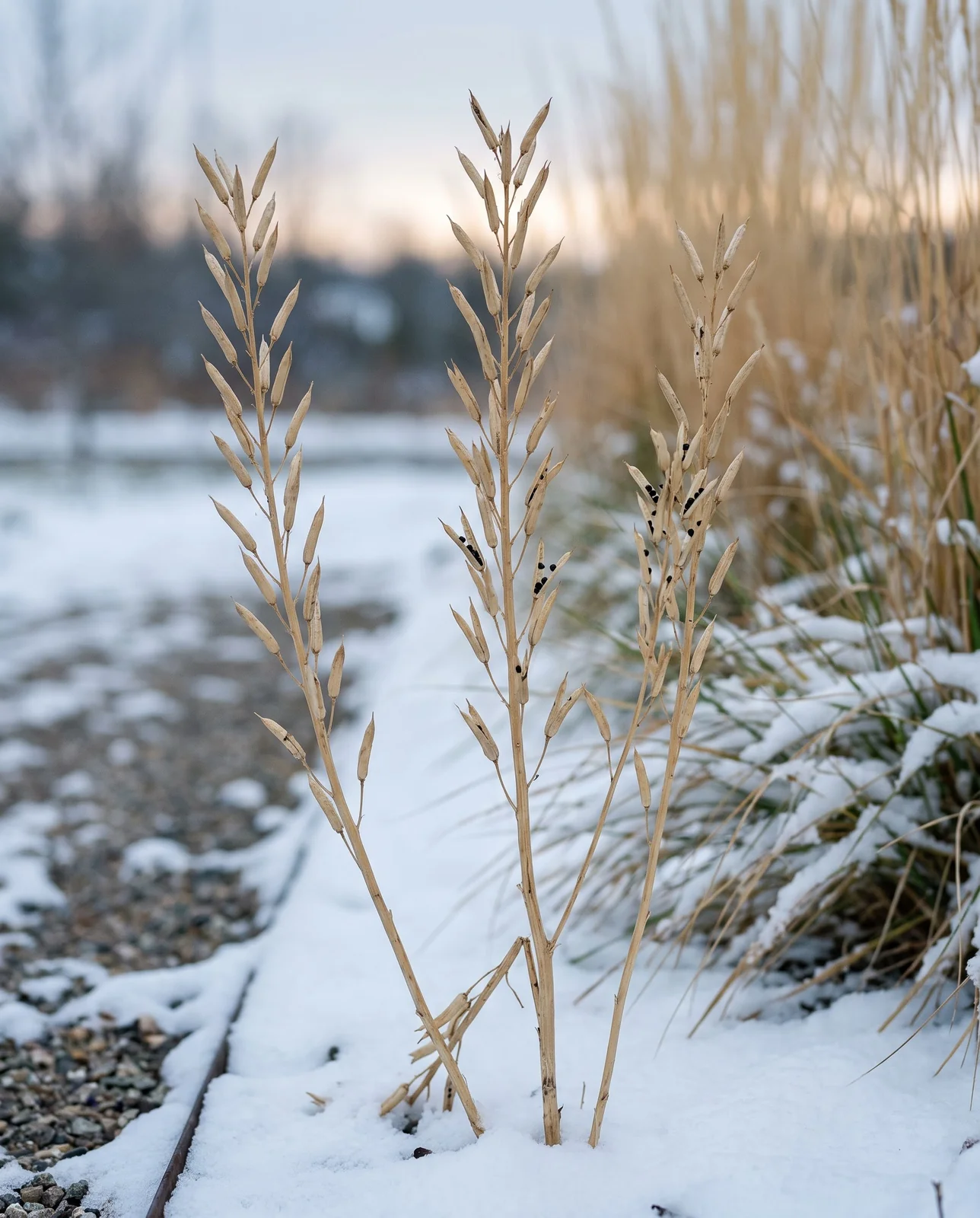
Timing is the part that goes wrong most often. Scatter the seed several weeks before the ground freezes solid, once autumn air has cooled and stayed cool, rather than during a mild spell with summer heat still in the soil. Broadcast it evenly across the raked surface, or work it in drifts among other hardy annuals such as cornflowers. Press it into contact with the damp earth using the flat of a hand, or rake the surface very lightly to settle it in, and take care not to bury it. Then water once, deeply, with a gentle spray rather than a jet. Frequent light watering wets only the upper layer of soil and leaves roots shallow, while one thorough soaking beds the seed against the earth and leaves it settled there for the winter.
Larkspur fall sowing calendar by USDA hardiness zone
Sowing window, temperature signal and field notes for each hardiness band.
Troubleshooting: germination failure and volunteer seedlings
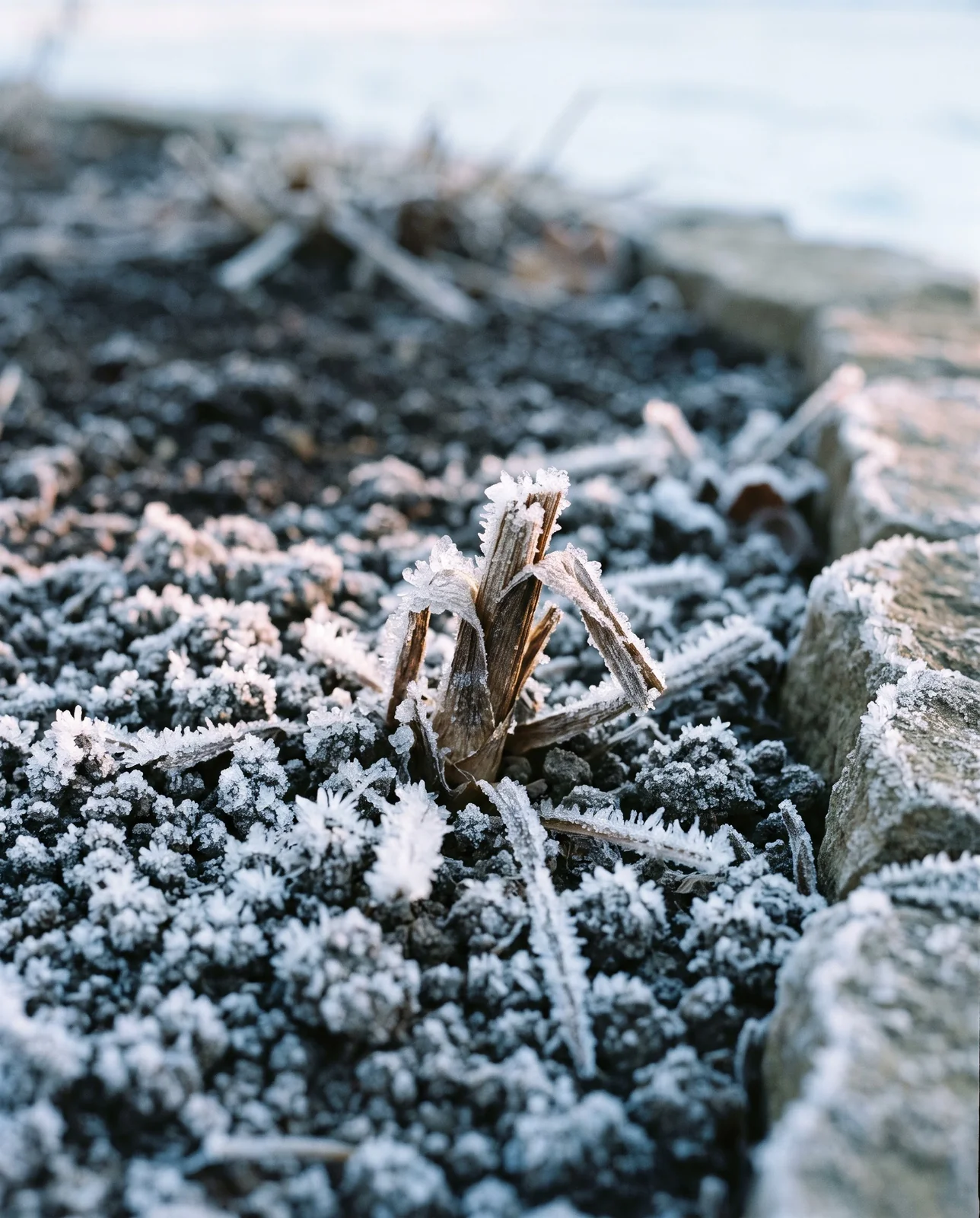
When a fall sowing produces nothing in spring, the cause is usually one of two things: the seed went down too early, into soil still holding summer heat, or it went down too deep. Seed scattered on warm ground either sinks into a prolonged dormancy or decays before winter chilling starts. Seed buried under a dense, compacted layer cannot push its shoot through to the surface when spring arrives. Ground that holds standing water suffocates the dormant embryo outright, which is the reason the bed gets spaded 8 to 10 inches deep and opened up with coarse bark or perlite before any seed touches it. A third cause arrives later, in spring: deep cultivation around the young plants injures their tender roots and turns up buried weed seed that then germinates. Weeds among young larkspur come out by hand, not with a hoe.
Larkspur pays its own way forward. A mature stand drops seed capsules across the bed through summer, and left to itself for a few seasons the volunteers thicken until they crowd whatever is planted beside them. The control is a pair of scissors: cut spikes for the vase, or deadhead them before the pods ripen, which holds the plants in vigorous growth, pushes out side shoots, and stretches the display. If you want the volunteers, let a few strong central stems ripen their pods, then thin the spring seedlings so the ones you keep have room and moving air around them. The one thing to skip in autumn is a thick blanket of moisture-holding mulch over the bed, since heavy mulch that stays wet can cause fatal crown rot in the plants sitting under it.
Toxicity and pet safety
Every part of a larkspur plant carries diterpene alkaloids, and the ASPCA lists larkspur as toxic to dogs, cats, and horses on that basis. The alkaloids act on the neuromuscular system, and the signs run from constipation, colic, heavy salivation, muscle tremors, stiffness, and weakness to recumbency and convulsions, with cardiac failure or death from respiratory paralysis at the severe end. Two qualifiers come with that. Toxicity shifts with season and field conditions and generally falls as the plant matures, and horses rarely eat a harmful quantity unless there is nothing else worth grazing. The rating on the perennial cousin reads much milder: NC State Extension puts Delphinium elatum at medium severity, with flowers, leaves, and stems all poisonous if eaten and contact dermatitis from handling. That gap is one of vantage rather than chemistry, since the ASPCA is describing an animal that has eaten the plant while NC State is describing a person who gardens around it. For a bed a dog will actually walk through, the list of types of flowers safe for cats and dogs is the better place to start.
Frequently asked questions about larkspur
Is larkspur the same plant as delphinium?
No. Annual larkspur (Consolida ambigua, also listed as Consolida ajacis) is a hardy annual that runs 2 to 4 feet tall and reseeds itself. True delphinium (Delphinium elatum) is a short-lived perennial that lives 3 to 5 years and carries heavier spikes 4 to 5 feet tall. Larkspur is scattered on the ground where it will flower; delphinium is set out as a plant and tended.
When is the best time to sow larkspur seeds in fall?
Sow in mid to late autumn, once the air has cooled and stayed cool, and several weeks before the ground freezes solid. Going earlier, while the soil still holds summer warmth, is how seed either sprouts in a mild spell and dies at the first hard frost or rots before it has chilled at all.
Does larkspur require cold stratification before germinating?
Yes. The seed needs a stretch of cold, damp conditions before the embryo will move. Sowing in fall hands that job to winter and the ground itself, which is why no refrigerator is involved in the zones where the method works.
Does larkspur come back every year?
Not as the same plant. Larkspur behaves as a reseeding annual: the parent dies after setting seed in summer, and what returns each spring is a fresh crop of volunteers grown from the seed it dropped.
Can I start larkspur seeds in trays and transplant them into the garden?
Better not to. Larkspur seedlings make a taproot that resents disturbance, and lifting one out of a cell usually means a stunted plant or a dead one. Sow the seed where the plants are meant to flower.
Is larkspur toxic to dogs and cats?
Yes. All parts contain diterpene alkaloids, and the ASPCA lists larkspur as toxic to dogs, cats, and horses. Signs of poisoning include heavy salivation, muscle tremors, weakness, and colic, with fatal respiratory paralysis possible in severe cases.
More About Delphinium elatum
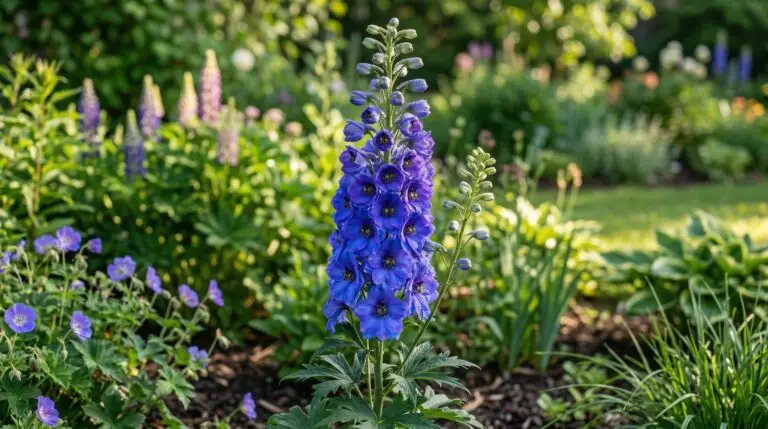
Delphiniums as show-stopping cut flowers for dramatic tall arrangements
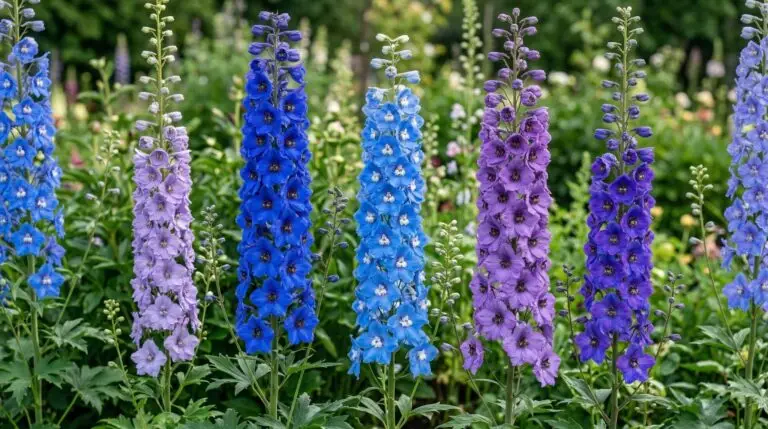
Best delphinium varieties from towering Pacific Giants to compact Magic Fountains
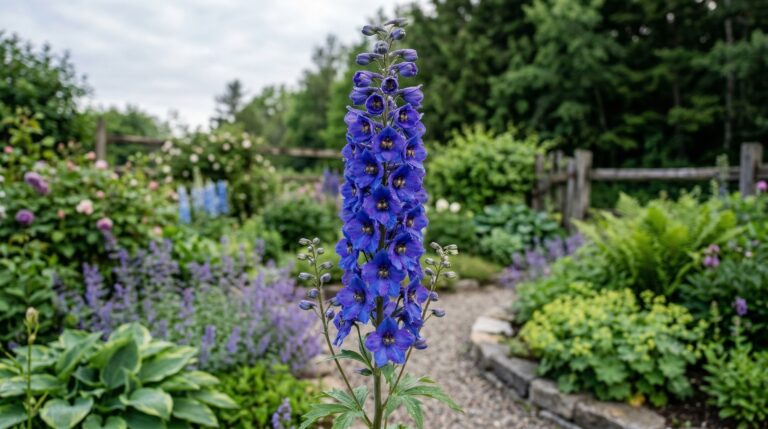
How to grow tall delphinium spires that tower above the garden like living architecture
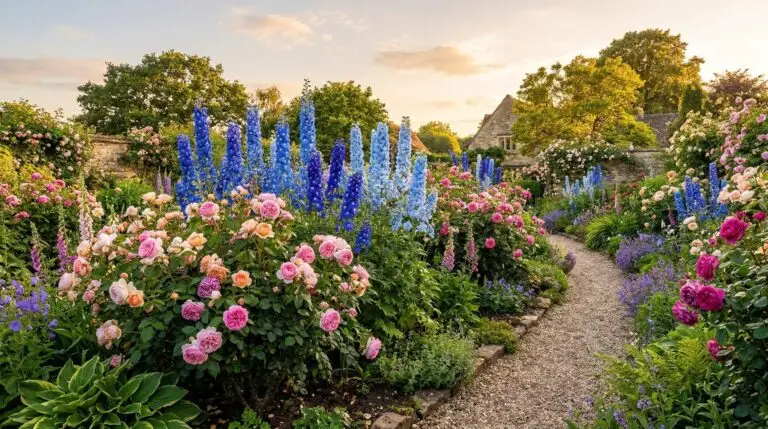
Delphinium companion plants: what to grow, what to avoid
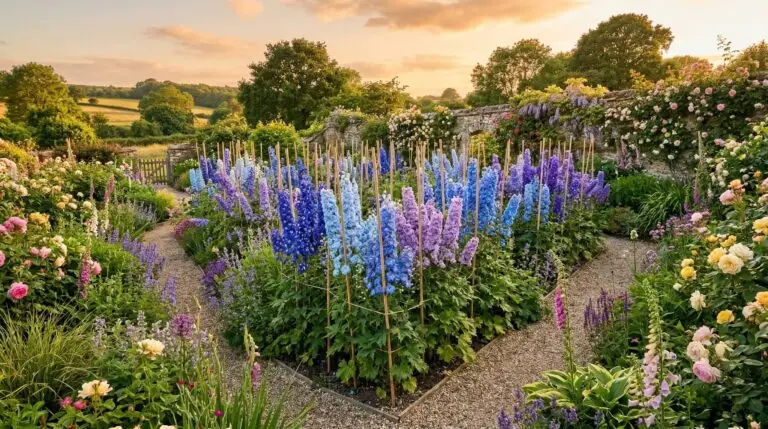
Staking delphiniums properly so tall flower spikes survive wind and rain storms
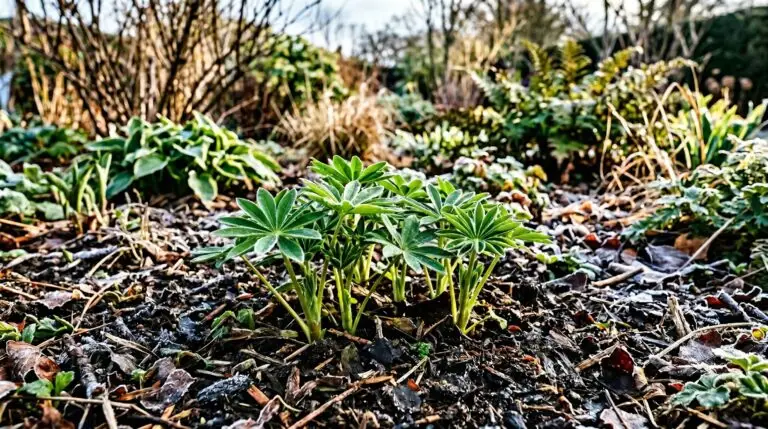
Growing delphiniums from seed and the patience required for first-year blooms
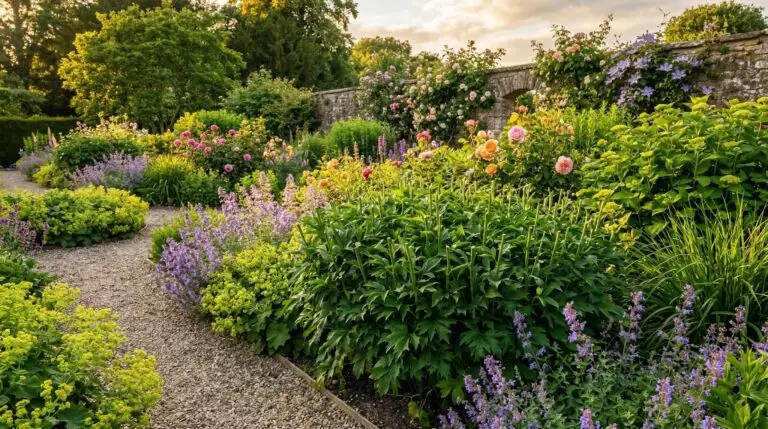
How to get delphiniums to rebloom by cutting back spent flower spikes
Why delphiniums are short-lived perennials and how to keep them coming back
Delphinium flower meaning and the symbolism of true blue in the garden
Delphiniums in hot climates and alternatives for gardeners south of zone 7
Enjoying our flower guides? Add YourFlowersGuide as a preferred source on Google. It helps more readers find us.
Add to Preferred Sources