Bedding geraniums (Pelargonium x hortorum) are tender perennials with South African parents, not annuals, so they die at the first hard freeze outdoors but carry over indoors with no special equipment. Three methods work: keep the potted plant growing on a bright, cool windowsill, root short stem cuttings and winter those instead of the parent, or shake the soil off the roots and store the bare stems dormant in a cool basement. Which one fits comes down to how much light and space you can give up until spring.
The first thing to settle is which plant you own, since the name is shared and only one of the two needs rescuing at all. After that the calendar takes over: the plant has to come in ahead of a hard freeze, and it has to come in clean, because patio-pot soil can carry a pest indoors with it. Each of the three methods then has its own temperature band, its own watering rule, and its own way of looking half dead by midwinter without being dead. What follows covers the hardy-versus-tender check, the timing and temperature thresholds, the three methods step by step with the setup each one demands, and what to do when the stored plants come back out in spring.
On this page 5 sections
Which geranium needs rescuing
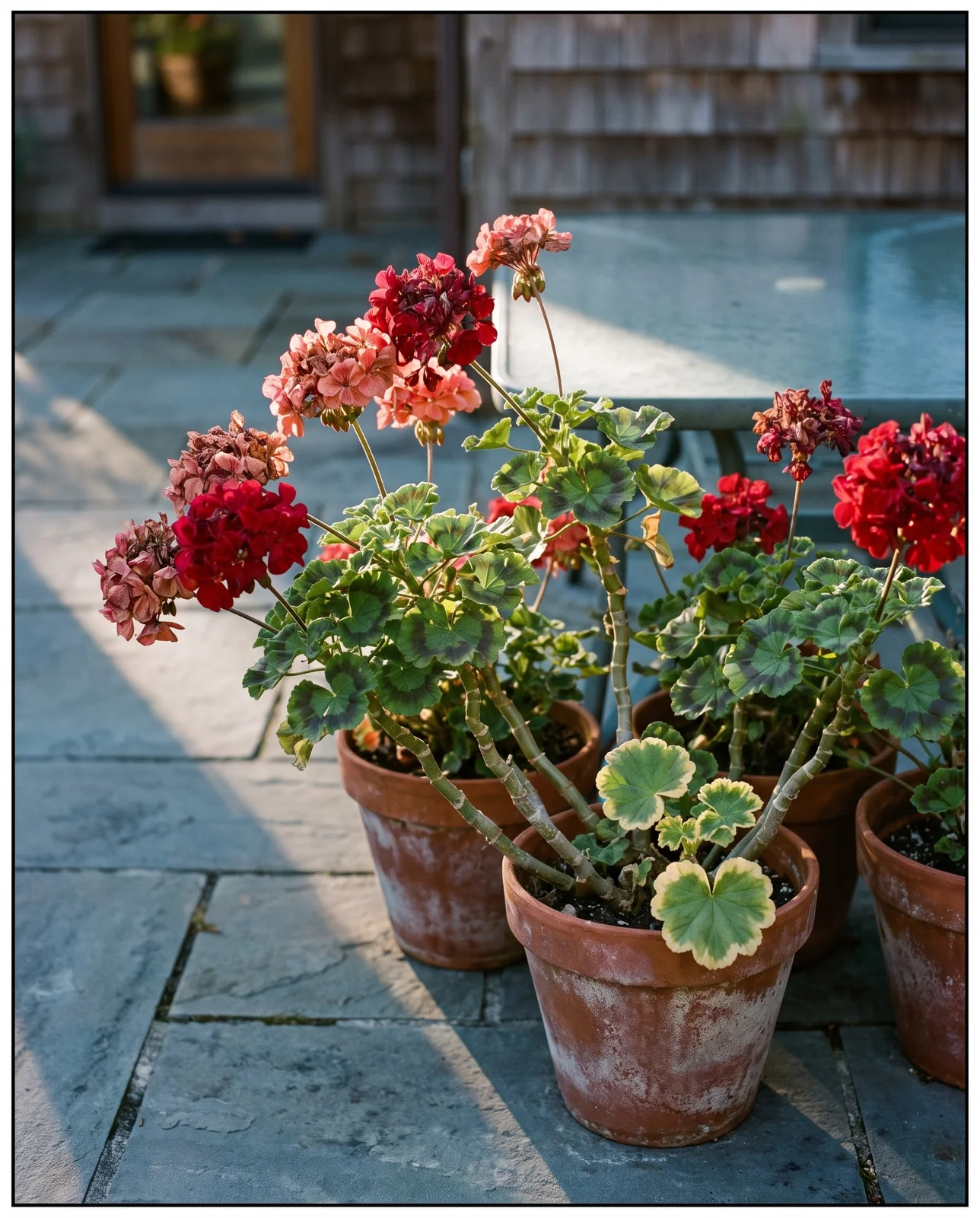
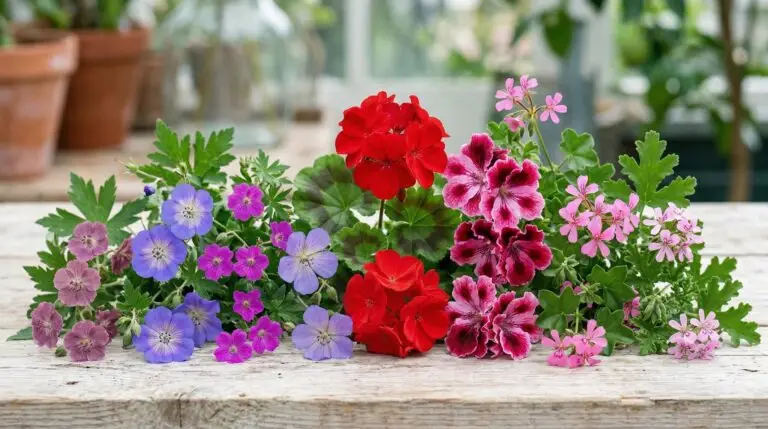
The name covers two unrelated plants, and the split decides whether you do anything at all. True cranesbills sit in the genus Geranium and are cold-hardy perennials that stay in the bed through a subfreezing winter with no help at all; the Royal Horticultural Society treats almost every species as hardy in open soil, the exceptions being island plants such as Geranium maderense and Geranium palmatum. The plants sold for patio pots, window boxes, and summer bedding are Pelargonium, out of the frost-free Cape region of South Africa, and frozen soil finishes them. If your geraniums spent the summer in a container or a mixed border, they are almost certainly tender zonal or scented pelargoniums, and their thick, water-filled stems do not survive a hard freeze without help. The hardy geranium versus pelargonium split is worth settling first if you are not sure which one is in the bed.
When to act: reading the frost clock
There is no special geranium number to watch on the forecast; the deadline is the first hard freeze, and University of Wisconsin Extension puts both jobs ahead of it. Plants growing in a bed get dug carefully and potted before the cold damages their stems, and plants already in containers come inside with enough margin to settle in before dry, heated indoor air hits them. Before any pot crosses the threshold, look the foliage and stems over for hitchhiking pests. Container soil carries passengers as well: Colorado State University Extension notes that tobacco budworm pupae ride out the winter in the soil of potted plants kept in protected spaces such as garages, where the cold that kills them outdoors, anything below 20°F, never reaches. Knocking off the old garden soil and repotting into fresh mix takes care of them. Overwinter only healthy, vigorous plants; a struggling one rarely comes through months of low light or dormancy.
Temperature and timing thresholds for overwintering
Four thresholds decide whether an overwintered geranium survives, roots, or brings a soil pest indoors with it. The first three come from University of Wisconsin Extension, the last from Colorado State University Extension.
Three ways to carry a geranium through winter
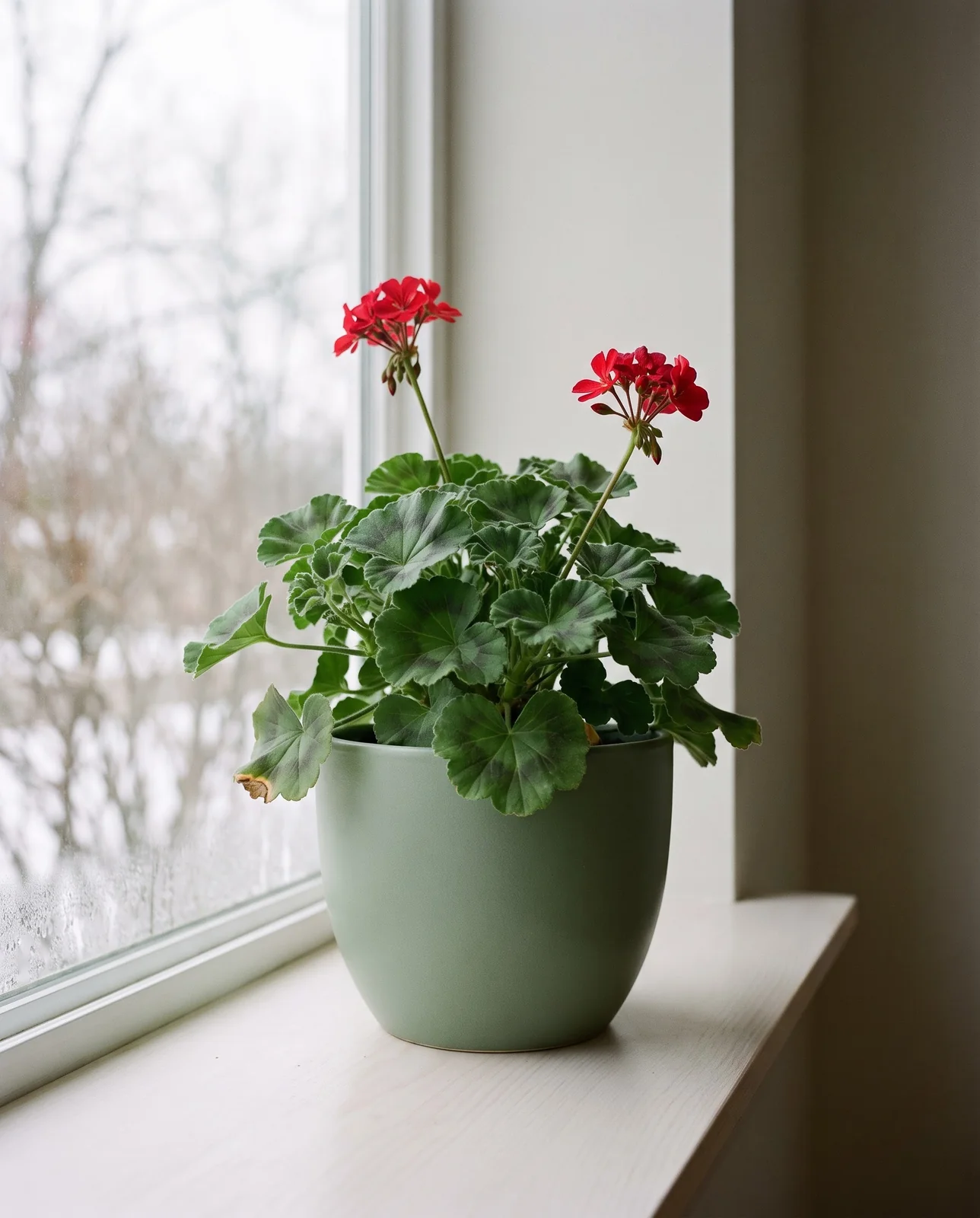
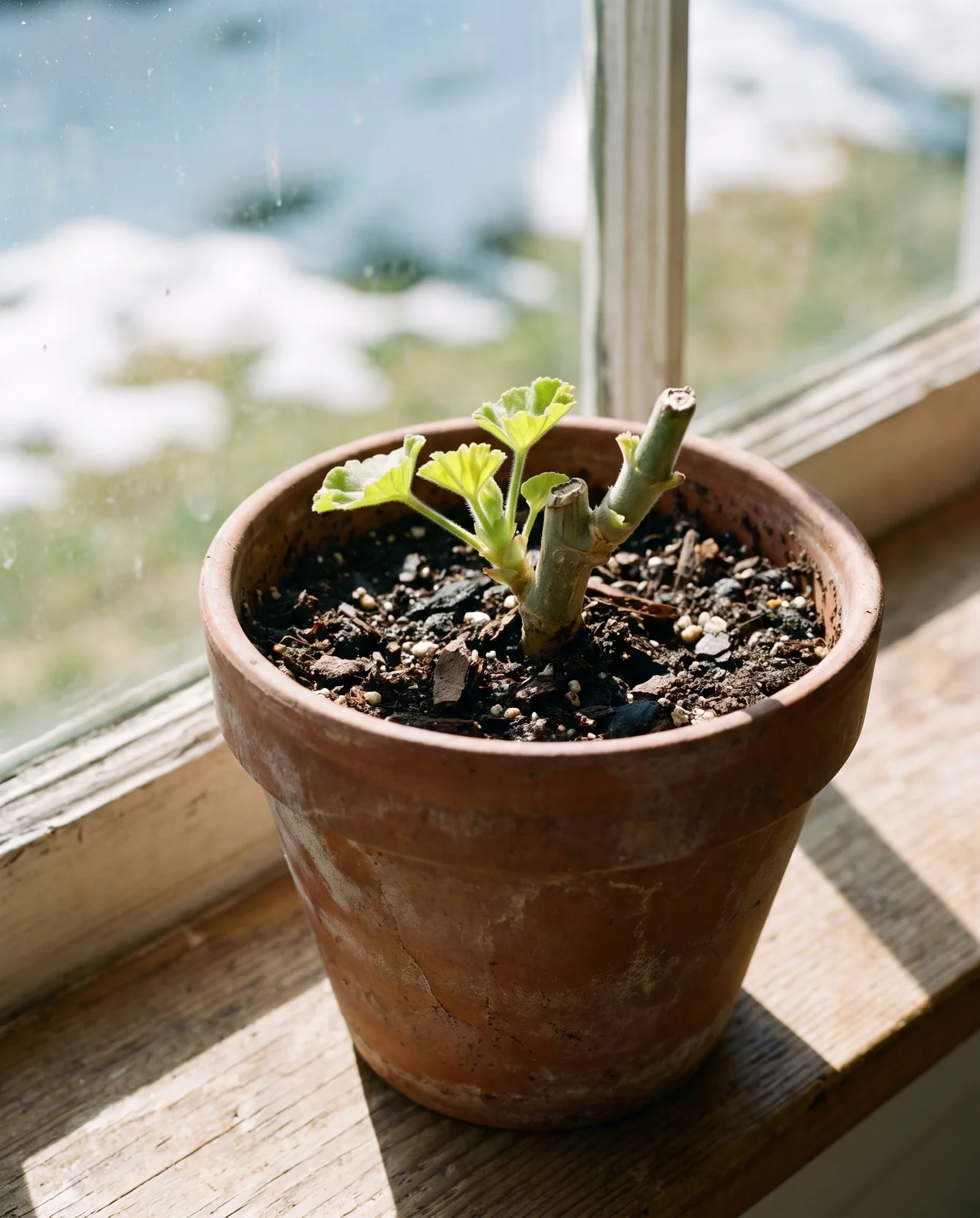
Keeping the plant growing as a houseplant is the most direct route and the only one that asks for real window space. University of Wisconsin Extension sets out the sequence: lift a bed-grown plant before a hard freeze into a properly sized pot, cut the stems back by a third to a half, water the pot through, and set it in the sunniest spot the house has. The warmest room is the wrong choice: geraniums hold up better between 60°F and 65°F, so keep the pot well away from drying heat vents and fireplaces. Water only when the soil surface feels dry to the touch. Short winter days will stretch the stems anyway, and NC State Extension and University of Wisconsin Extension give the same fix: pinch or prune just above a leaf node and the plant branches sideways instead of reaching. Where no window is bright enough, fluorescent or LED light, on its own or added to daylight, holds the growth compact.
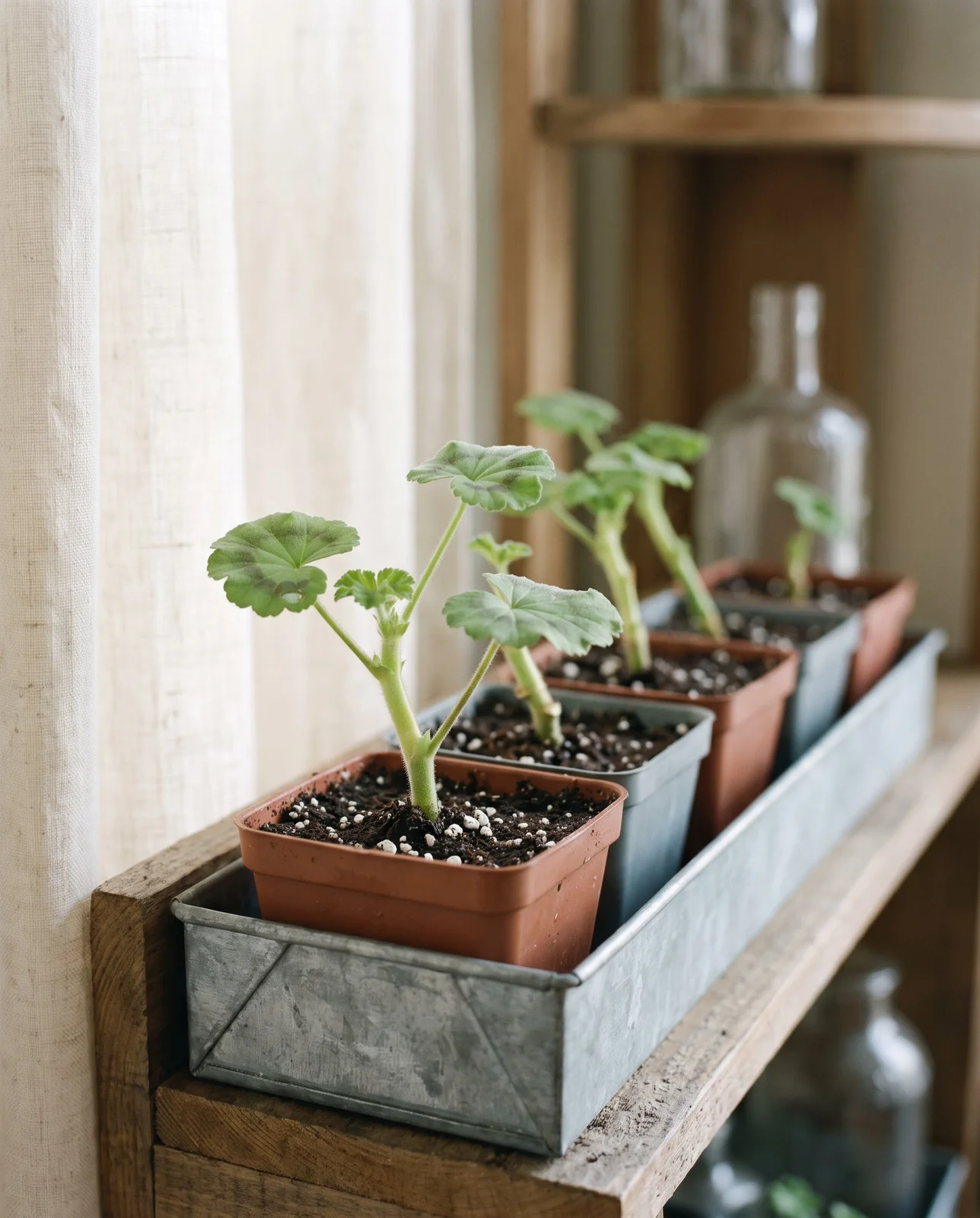
Cuttings are the answer when a windowsill cannot take a full-sized pot; a mature geranium mounds 1 to 3 feet tall, and a tray of rooted cuttings takes a fraction of that. University of Wisconsin Extension starts the job in late summer or early autumn. Snip terminal shoots 3 to 4 inches long, strip the lower leaves, dip the cut end in rooting hormone powder, and push each one into a container with drainage holes filled with damp peat moss, coarse sand, or perlite. Keep the medium evenly moist and the tray in a bright room but out of direct sun, which scorches a cutting that has no roots yet. Roots are usually established after about 6 weeks. Pot each rooted cutting on its own into standard potting soil, put it back in bright light, and water it whenever the soil dries.
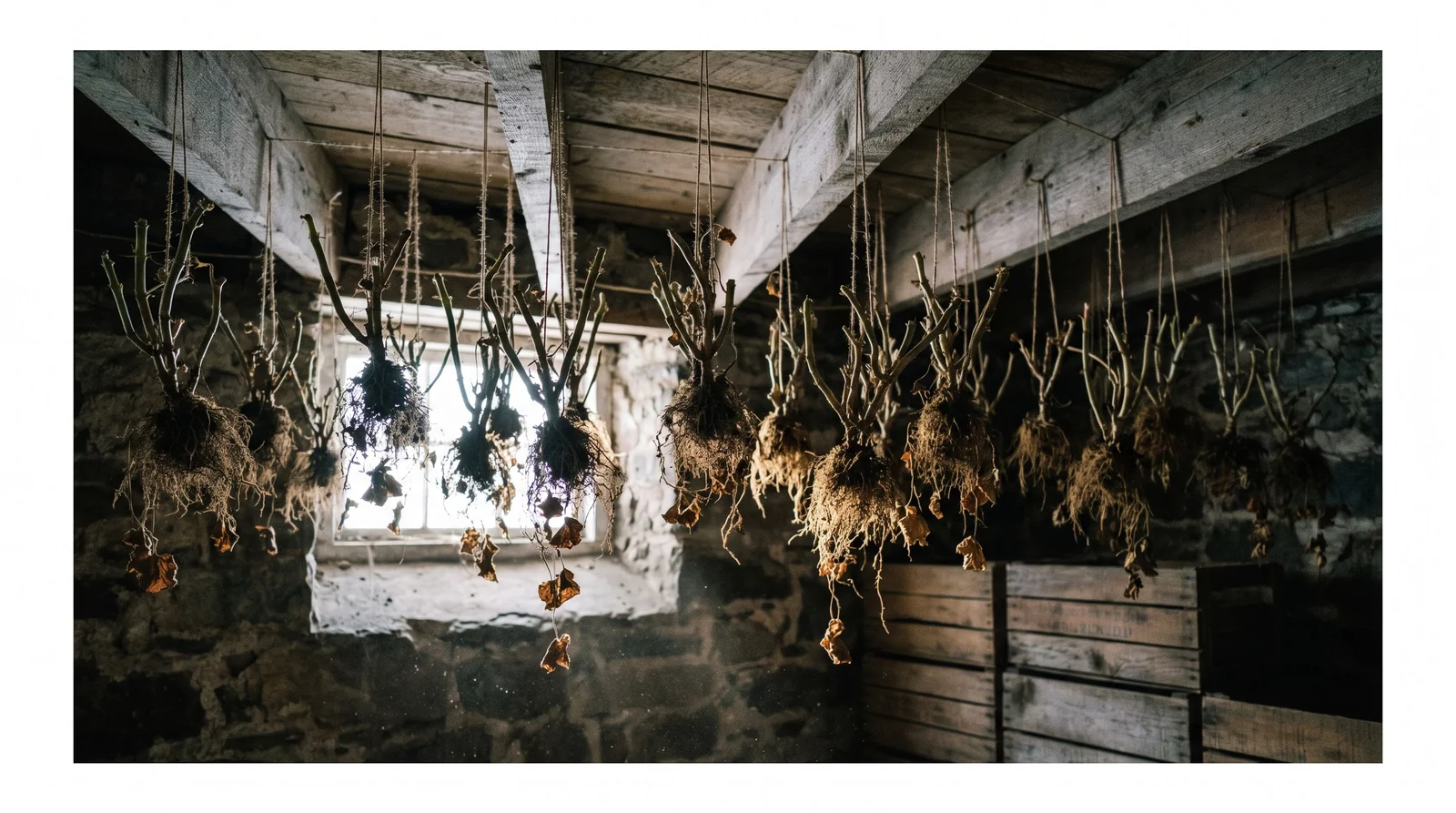
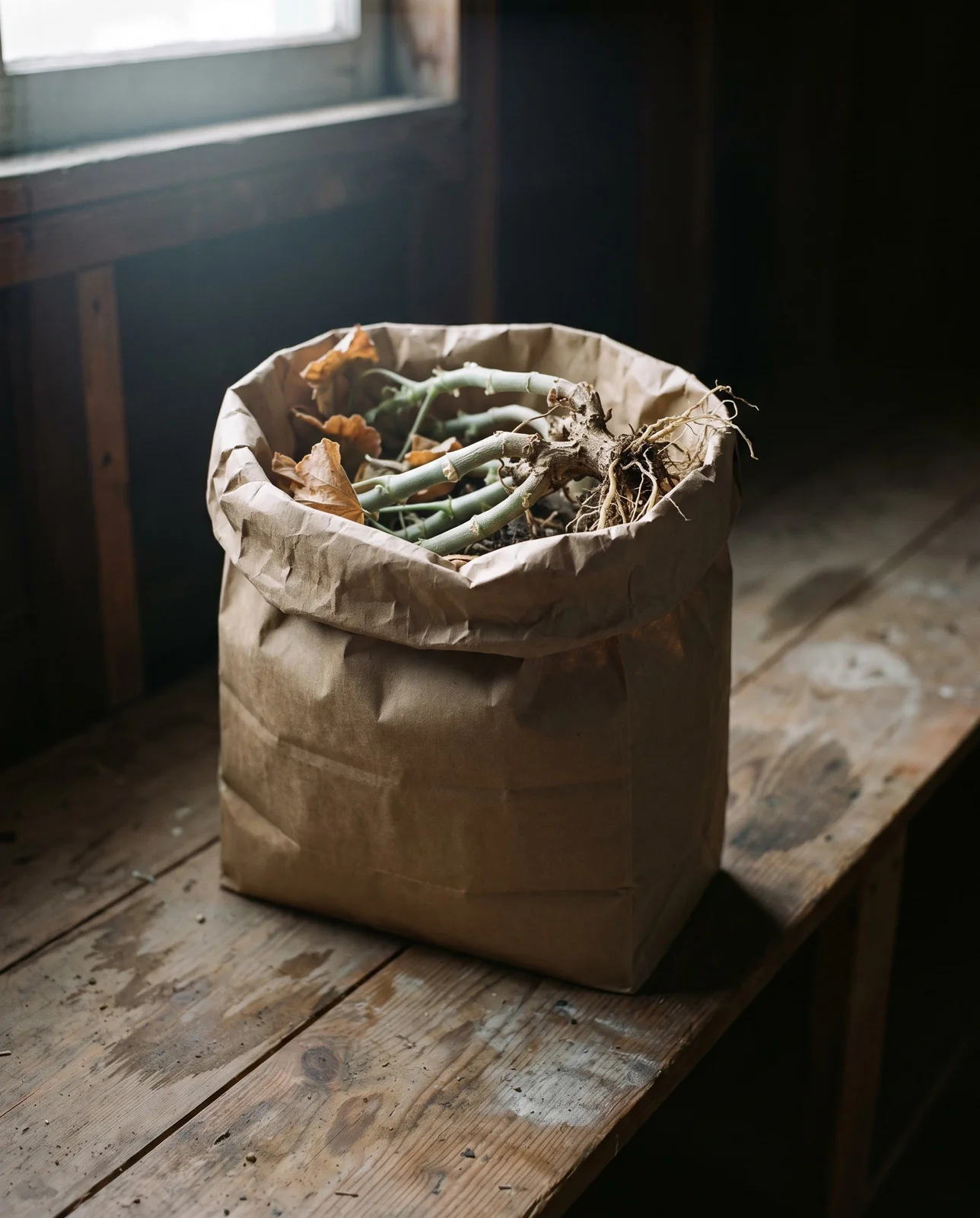
Bare-root storage is the old method, and it suits a gardener with a cool basement or garage and no sunny window to give up. University of Wisconsin Extension keeps the steps short: lift the plant before a hard freeze, shake the garden soil off the root ball, then hang it upside down from a rafter, or lay it loosely in a brown paper bag left open so air keeps moving through it. The room has to stay cool, dark, and dry, holding between 45°F and 55°F: an unheated room, an indoor porch, a basement, or an attached garage. Somewhere in the middle of winter the leaves dry, shrivel, and drop, leaving a set of bare stems that looks exactly like a dead plant in a bag. That leaf drop is normal and does not mean the plant has died.
Choosing your overwintering strategy
Available light and space decide which method fits. A bare-root plant kept too warm and a windowsill houseplant kept too dark both fail for predictable reasons, so match the method to the room you can give it rather than to the plant.
Reviving and troubleshooting
Stored bare-root plants ask for one thing in midwinter and one in early spring. University of Wisconsin Extension notes that some gardeners take the plants down several times over the winter, soak the roots in water for a few hours, and put them back into storage, which keeps the roots from drying out completely. In March, bring the plants out of their bags or off the rafters and cut them back to roughly a third of their original height, working down to firm, green, living wood; discard any stem that feels hollow, brittle, or shriveled black. Pot the cut-back plants into fresh potting soil, water them through, and set them at a warm, sunny window. Growth can be slow to appear after this kind of storage, so several weeks of nothing is not a failure. The pots stay indoors until the last spring frost has passed.
Potted plants kept indoors follow one of two paths, and NC State Extension divides them by light rather than by preference. Where the light is good, keep the zonal pelargonium growing and water it on a regular schedule. Where the light is poor, stop fighting it: let the plant go dormant, hold the soil very dry, and water sparingly, only when the leaves show a visible wilt. Either path needs air moving through the room: still air over dense foliage is what starts fungal leaf spots. Once frost danger has passed, watering goes back to normal and the containers move outdoors a little at a time rather than all at once. One thing to settle before any pot comes inside: geraniums are not safe around animals. ASPCA Animal Poison Control names geraniol and linalool as the toxic compounds in pelargonium foliage, and lists vomiting, loss of appetite, lethargy, and contact dermatitis as the signs in dogs, cats, and horses. Winter pots belong out of reach of any pet that chews, along with the other flowers that are unsafe for cats and dogs.
Bare-root dormancy: myth versus reality
The myth: A bare-root geranium that drops all its leaves in a paper bag is dead and should be thrown out.
The reality: Leaf loss is part of bare-root dormancy. University of Wisconsin Extension expects it: the foliage dries up and falls off while the thick stems and the root crown stay alive.
The myth: Overwintering potted geraniums need the warmest room in the house, next to a radiator.
The reality: Warm air and heat vents dry plant tissue fast. University of Wisconsin Extension puts indoor geraniums in the cooler 60°F to 65°F range instead.
The myth: Dormant potted geraniums sitting in dark corners need weekly watering to stay healthy.
The reality: Watering a low-light dormant plant on a schedule rots the roots. NC State Extension keeps dormant plants very dry, with water only when the leaves visibly wilt.
FAQ
Do I need to overwinter geraniums, or can I just buy new ones every spring?
It is optional, and plenty of gardeners treat tender pelargoniums as annuals and start over with new plants each spring. Carrying one through winter keeps a flower color you already picked out, costs nothing, and hands you a larger multi-year plant next summer instead of a small fresh one.
Is it normal for a bare-root geranium to lose all its leaves in storage?
Yes, and it is what the method looks like partway through. University of Wisconsin Extension expects the foliage to dry up and drop during bare-root storage. Nick a main stem: if it is firm and green underneath, the plant is alive and will leaf out again once it is potted up in spring.
Can I keep a geranium blooming all winter indoors?
Yes, if the light is strong enough. A potted pelargonium keeps flowering indoors at a bright window or under supplemental lighting. NC State Extension notes that too little light turns the stems leggy and cuts flowering back, so winter bloom takes a bright window that also stays cool, around 60°F to 65°F.
When do I cut back an overwintered geranium in spring?
In March, before the stored plants go into pots. University of Wisconsin Extension puts the cut at roughly one-third of the original height, or lower if you have to reach firm green tissue. That cut is what pushes new branching, and the potted plant then goes to a sunny window.
Are geraniums poisonous to cats and dogs?
Yes. ASPCA Animal Poison Control lists geraniums (Pelargonium species) as toxic to dogs, cats, and horses, because of the essential oils geraniol and linalool. Ingestion can cause vomiting, decreased appetite, depression, and skin irritation.
More About Geranium
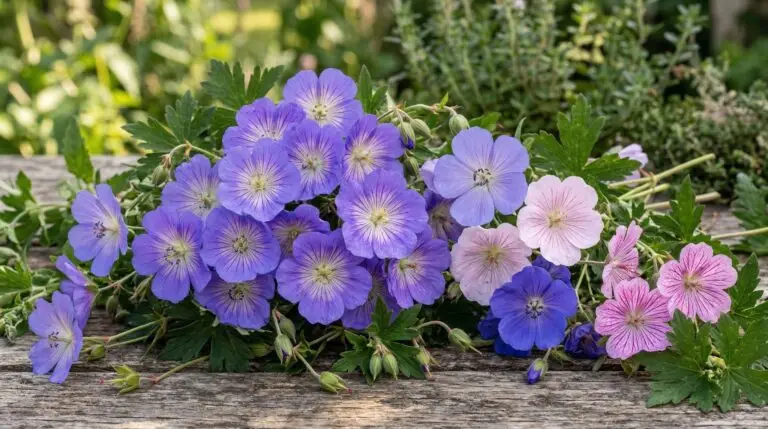
Best hardy geranium varieties from the legendary Rozanne to shade-loving types
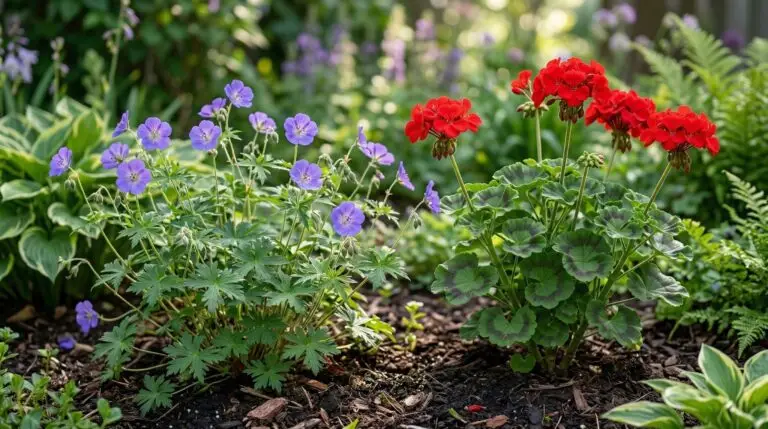
How to grow hardy geraniums for carefree ground cover that blooms for months
Geranium Rozanne and why one plant became the most popular perennial in the world

How to cut back hardy geraniums in midsummer for fresh foliage and a second flush
Geranium flower meaning and the Victorian message of comfort and true friendship

Using hardy geraniums as weed-suppressing ground cover under roses and shrubs
Hardy geraniums versus pelargoniums and why the garden world confuses them
Hardy geraniums for deep shade that bring flowers to the darkest garden corners

Companion plants for geraniums: what to grow and avoid
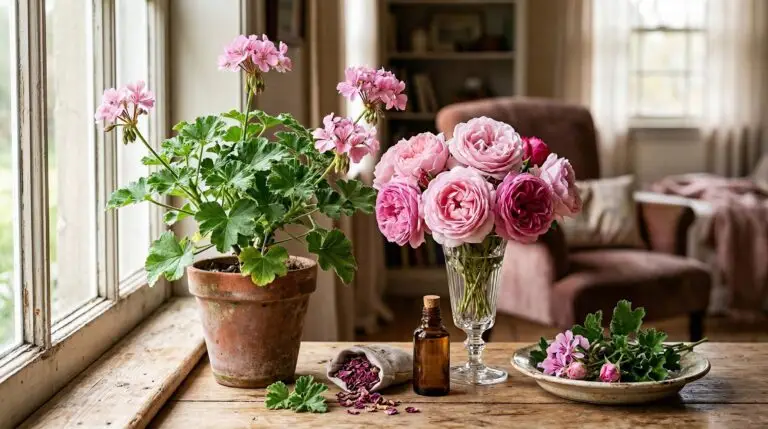
Growing scented pelargoniums for fragrant leaves that smell like roses and lemons
Enjoying our flower guides? Add YourFlowersGuide as a preferred source on Google. It helps more readers find us.
Add to Preferred Sources