Cempasúchil, the tall orange marigold of Día de los Muertos, is Tagetes erecta, and growing your own for November 1 comes down to counting backward from that date instead of following a spring planting calendar. The plant carries fully double pompom heads on stems long enough to cut, and it takes most of a summer to get there. Start too late and you are looking at green buds on October 31; start too early and the heads have browned out weeks before the altar goes up.
Native to Mexico and Guatemala, Tagetes erecta was gathered by the Aztecs for ceremonial and decorative use long before botany gave the species a name, and families still scatter its fragrant petals to lay a path that brings visiting souls to the ofrenda. Getting a home crop to that point means sowing against midsummer heat, giving the plants full sun, and knowing the date after which seed stops working and budded nursery plants take over. What follows covers the backward count from November 1 and the late-start fallback, how to tell true cempasúchil from the French marigolds sold beside it, sun and spacing and the pests that can still cost you the crop, pinching for more stems per plant, and cutting and stringing the flowers for garlands and petal paths.
On this page 7 sections
Timing: when to start for a November 1 bloom
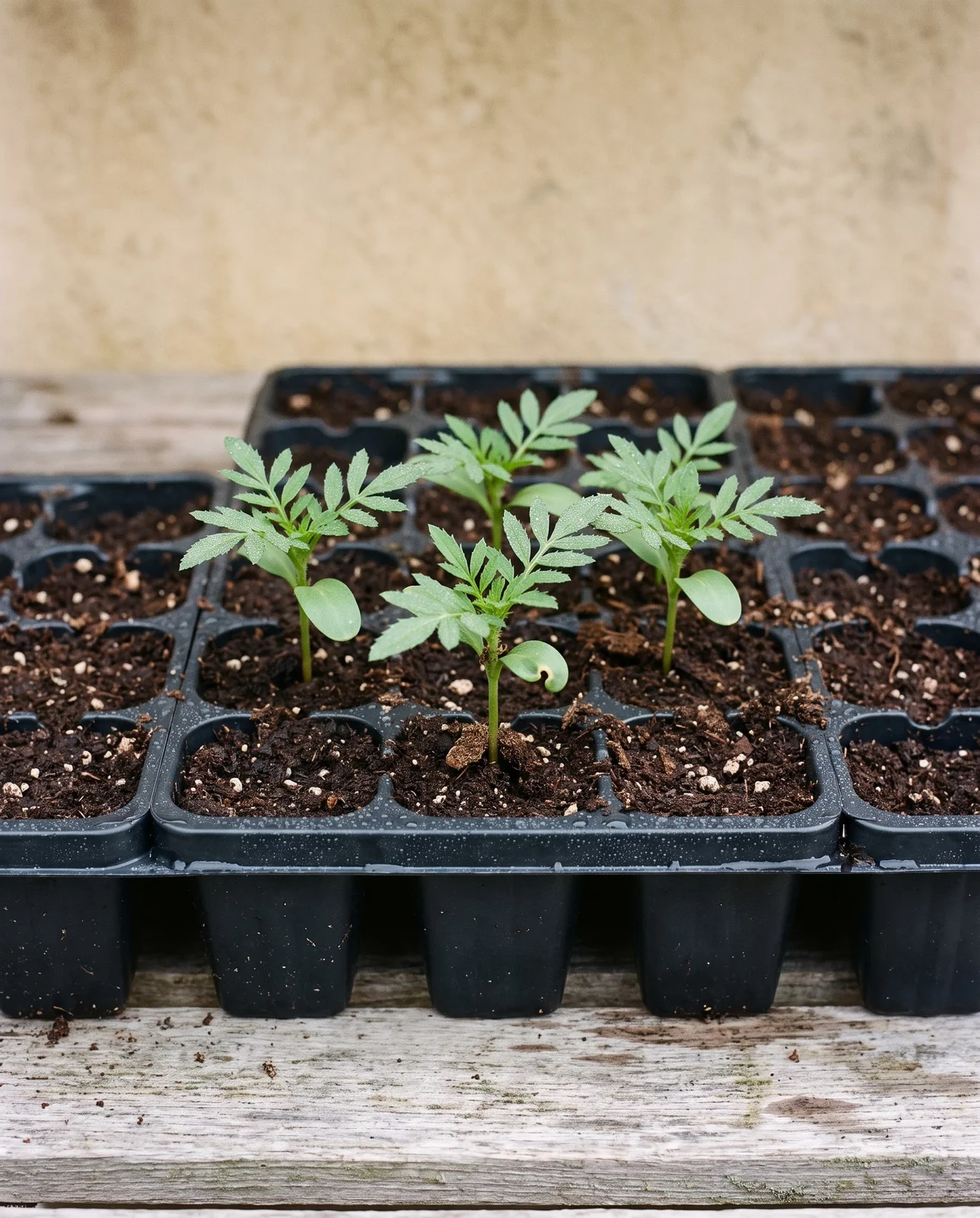
In central Mexico the cempasúchil crop traditionally goes in on June 24, the Feast of St. John the Baptist, which is also when the summer rains arrive. Outside that climate the date has to be worked out from how long the plant actually takes, and the published figures disagree. Mississippi State University Extension puts large cut-flower cultivars such as the Giant Series at 70 to 90 days from seed to maturity, while standard production references cite 60 to 70 days to full bloom. Germination is the fast part: seed sown directly into ground at 75 to 80°F, covered lightly with coarse vermiculite, comes up in four to seven days. The two to three months after that are what decide whether you have open flowers on November 1.
To hit peak bloom between October 28 and November 1, count back from the date. A 70 to 90 day cultivar wants its seed in the soil between August 1 and August 20. The University of Florida IFAS horticultural sciences department worked to the same rhythm for its Día de los Muertos ofrenda, seeding marigolds in July and moving them into field rows in August. Indoor plug-tray timing is where the extension sheets differ: Mississippi State says sow four weeks before transplanting, while NC State Extension says six to eight weeks, a figure set against the last frost date for a spring crop. Whichever start you use, leave room for the weather. High temperatures through July and August stall young marigolds for a stretch, which slows vegetative growth and pushes bloom one to two weeks later.
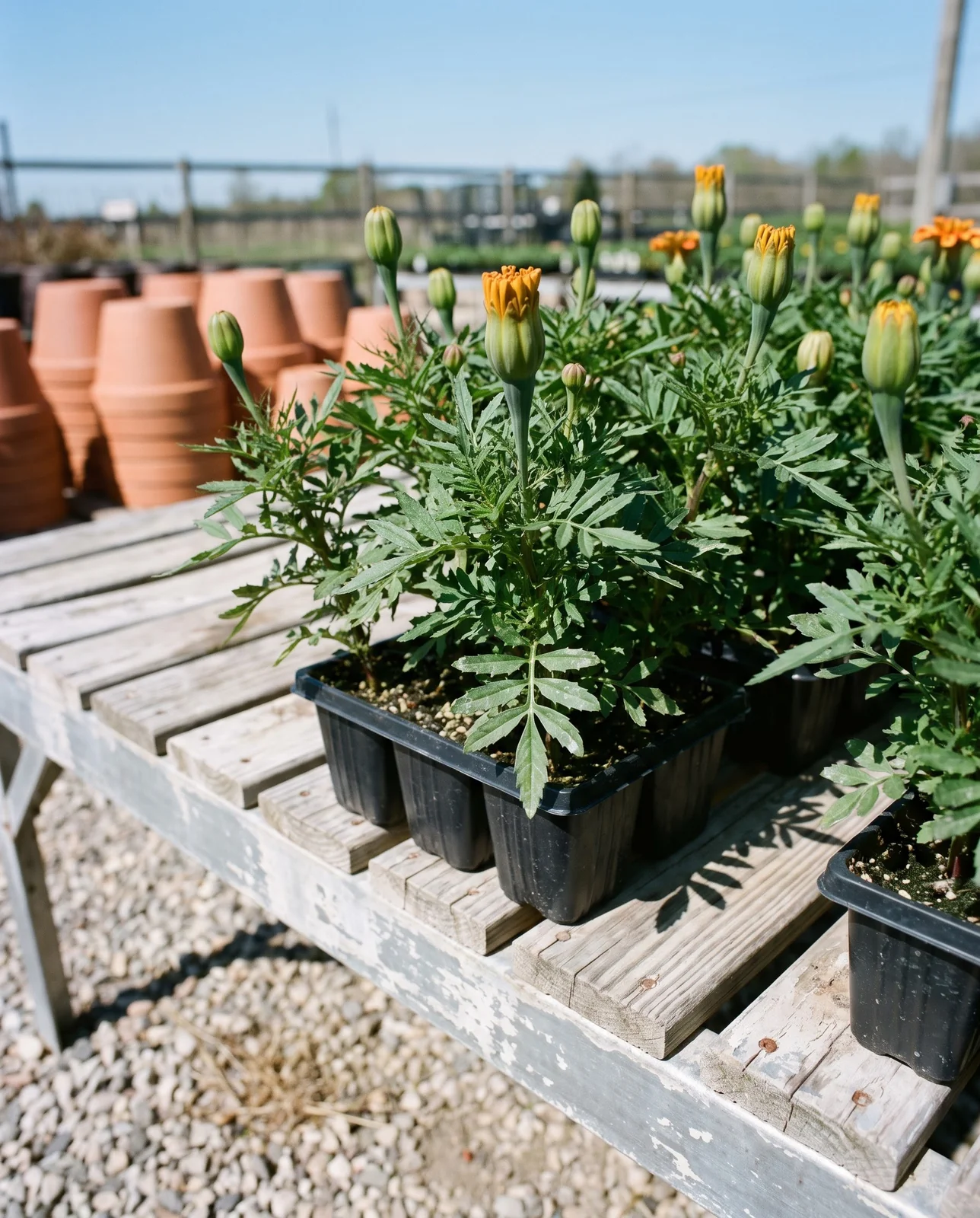
If you are standing in front of the seed rack in mid-August or September, direct seeding will not produce flowering stems in time. Tagetes erecta cannot compress three months of vegetative growth into six weeks, and no amount of feeding or heat persuades it to try. What works instead is buying plants that already have that growth behind them: budded nursery six-packs or four-inch pots picked up in September, showing color at purchase. Those open their first full heads through late October, without unbudded stems or a race against the first frost.
Cempasúchil planting countdown for a November 1 bloom
Four windows count back from a November 1 bloom, and what you can still do narrows as the calendar runs out. The later windows call for buying budded plants rather than starting seed.
True cempasuchil vs. look-alike marigolds
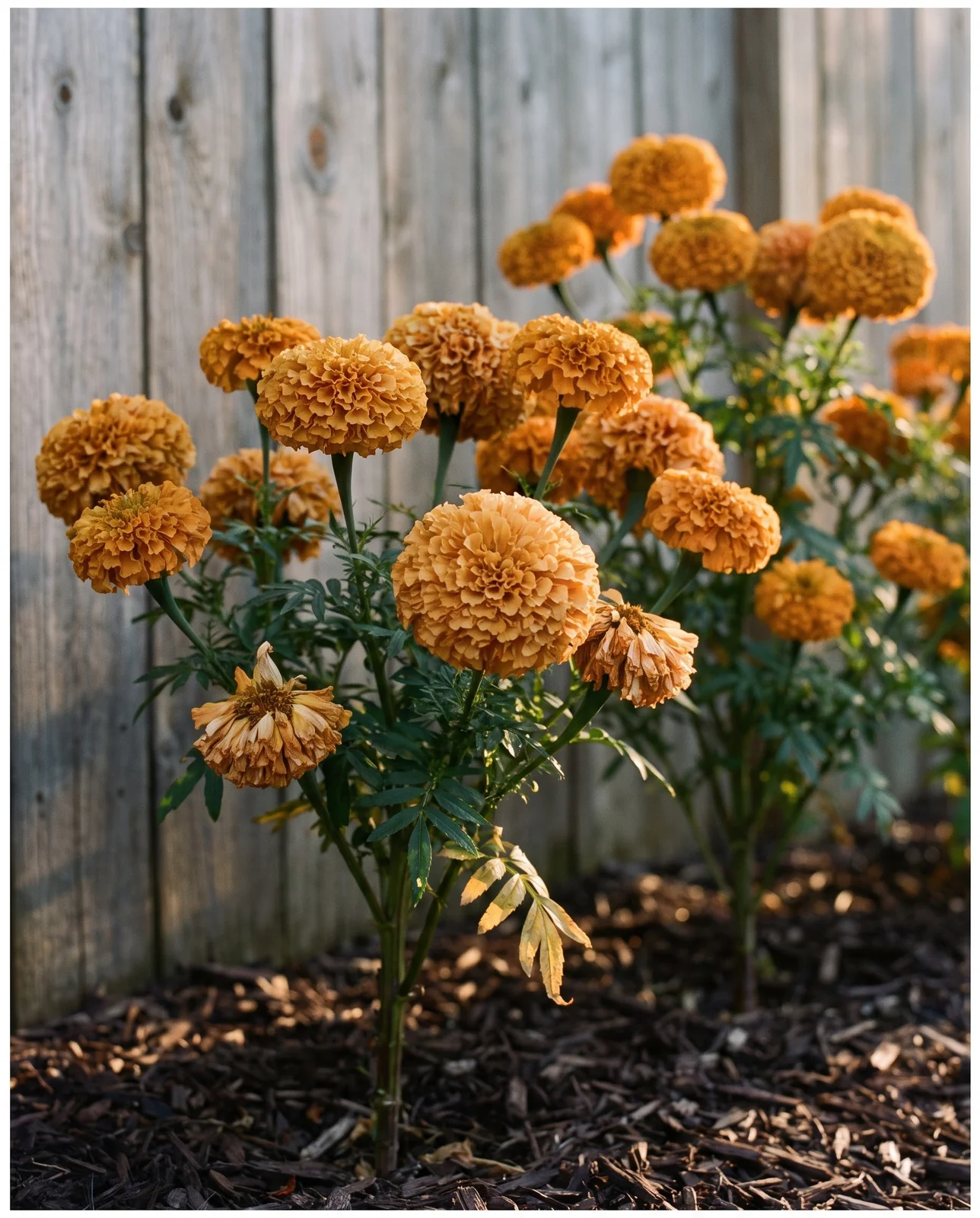
True cempasúchil is one species, Tagetes erecta, listed in commercial catalogs as African or Aztec marigold. The African name is a trade accident: NC State Extension places the plant’s native range in Mexico and Guatemala. It grows as an upright annual, 1 to 4 feet tall and 1 to 2 feet wide, and its flower heads are solitary and fully double, 2 to 5 inches across and sometimes 6, which is the dense ruffled pompom that traditional altar work is built around. The same flower carries different weight in different places, a contrast laid out in flower meanings around the world. It is also the October birth flower, and that pompom shape turns up again in marigold tattoo work.
Garden centers stock French marigolds (Tagetes patula) on the same bench, which is where a late-summer purchase goes wrong. French marigolds are dwarf and compact, topping out at 6 to 12 inches, with single or semi-double flowers 1 to 2 inches across. They bloom fast, but they have neither the long rigid stems nor the flower volume a hanging garland or a tall vase needs. For the real thing, Mississippi State University Extension points to two cultivars: the Giant Series, 36 to 40 inches tall with 3-inch heads in 70 to 90 days, and the Jubilee Mix, 5-inch fully double blooms in yellow, gold and orange on 24 to 36 inch stems. Beyond the November 1 job, the full plant profile lives in the marigold guide.
Telling true cempasúchil from French marigold
Four traits separate Tagetes erecta, the true altar marigold, from Tagetes patula, the smaller French marigold sold alongside it. Check them in this order.
Growing conditions
Tagetes erecta sets the most buds in full sun and will take light afternoon shade in hot southern gardens, but NC State Extension is blunt about deep shade: weak stems, fewer flowers, and stretched internodes. The plant tolerates clay and dry ground while growing best where the soil stays evenly moist and drains. Set transplants 12 to 18 inches apart within and between rows, which keeps air moving and stops the lower foliage from being shaded out. Seed goes under a light cover of coarse vermiculite and stays moist until it emerges, then dries slightly between waterings. Once the true leaves are out, Mississippi State University Extension recommends feeding weekly at 100 to 150 ppm of a 14-0-14 formulation.
Tall cultivars carry heavy heads on stems that snap, so stake them or site them out of strong wind and driving rain, and deadhead early spent flowers before the top of the plant outweighs what the stem can hold. Below ground the plant is quietly working for the bed. Zack Black, farm manager for the horticultural sciences department at the University of Florida IFAS, describes marigold roots as excreting a compound that repels plant-eating root-knot nematodes.
Disease and insect pressures require closer monitoring as autumn approaches. NC State Extension lists botrytis, leaf spot, phytophthora, powdery mildew and other rots as risks in dense plantings, along with thrips, slugs and spider mites. Deer, at least, seldom touch these plants. The problem most likely to cost you a Día de los Muertos harvest is aster yellows, carried plant to plant by the aster leafhopper (Macrosteles quadrilineatus). Mississippi State University Extension describes it starting as discolored veins that spread into yellowing across the new foliage, then throwing deformed shoots out of the flower head, a witch’s broom where a pompom should be. There is no cure for it. Pull infected plants as soon as you spot the pattern.
Pinching for bushier, more flowers
An unpinched marigold pours its early energy into one central shoot and one large terminal flower head. That first bloom can be a good one, but it holds down the buds below it, and you arrive in late October with a single cut stem per plant. Pinching breaks the central shoot’s dominance and turns that one stem into several. NC State Extension confirms that pinching back stems on young plants promotes bushy growth, the whole difference between a plant that decorates a bed and a plant that supplies an altar.
Wait until the young transplant has three to four sets of true leaves and stands six to eight inches tall. With clean shears or a fingernail, take the top one to two inches of the central growing tip off just above a strong leaf node. The plant answers by waking the dormant buds in the leaf axils, and four to six lateral branches come up in place of the one. Each carries its own long stem and terminal head, so the harvest multiplies without the stems losing the rigidity that garland work and tall vases depend on.
Cutting and building a garland for the ofrenda
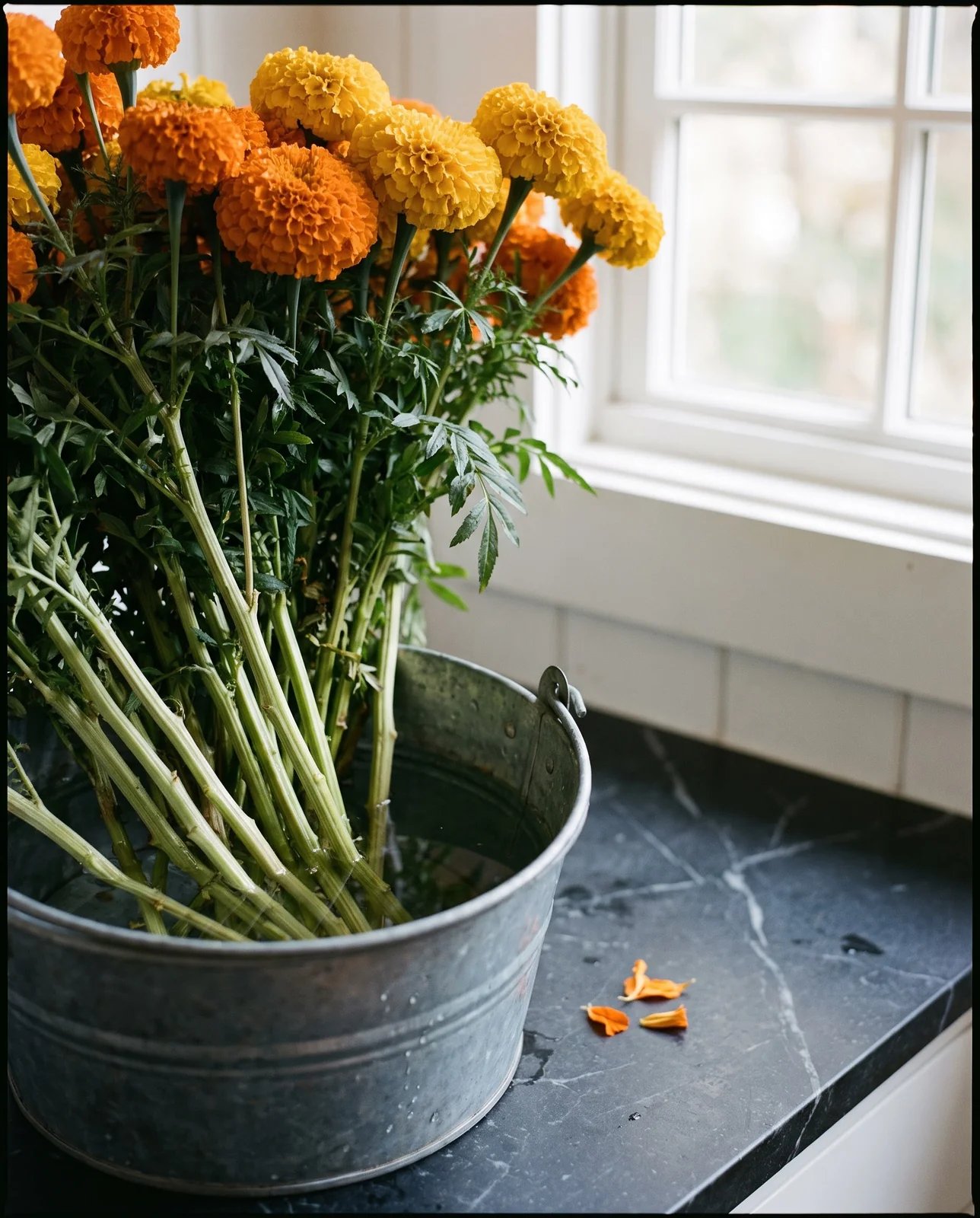
Cut cempasúchil when the heads are just starting to open, which is the harvest stage Mississippi State University Extension specifies for cut marigolds. Take stems 24 to 32 inches long with sharp, sanitized shears, and get them into clean buckets of water at once, held at 36 to 41°F in a cold room or a spare refrigerator. Mississippi State University Extension recommends no floral preservative and no conditioning solution for cut marigolds. On plain water the stems hold a vase life of a week or more.
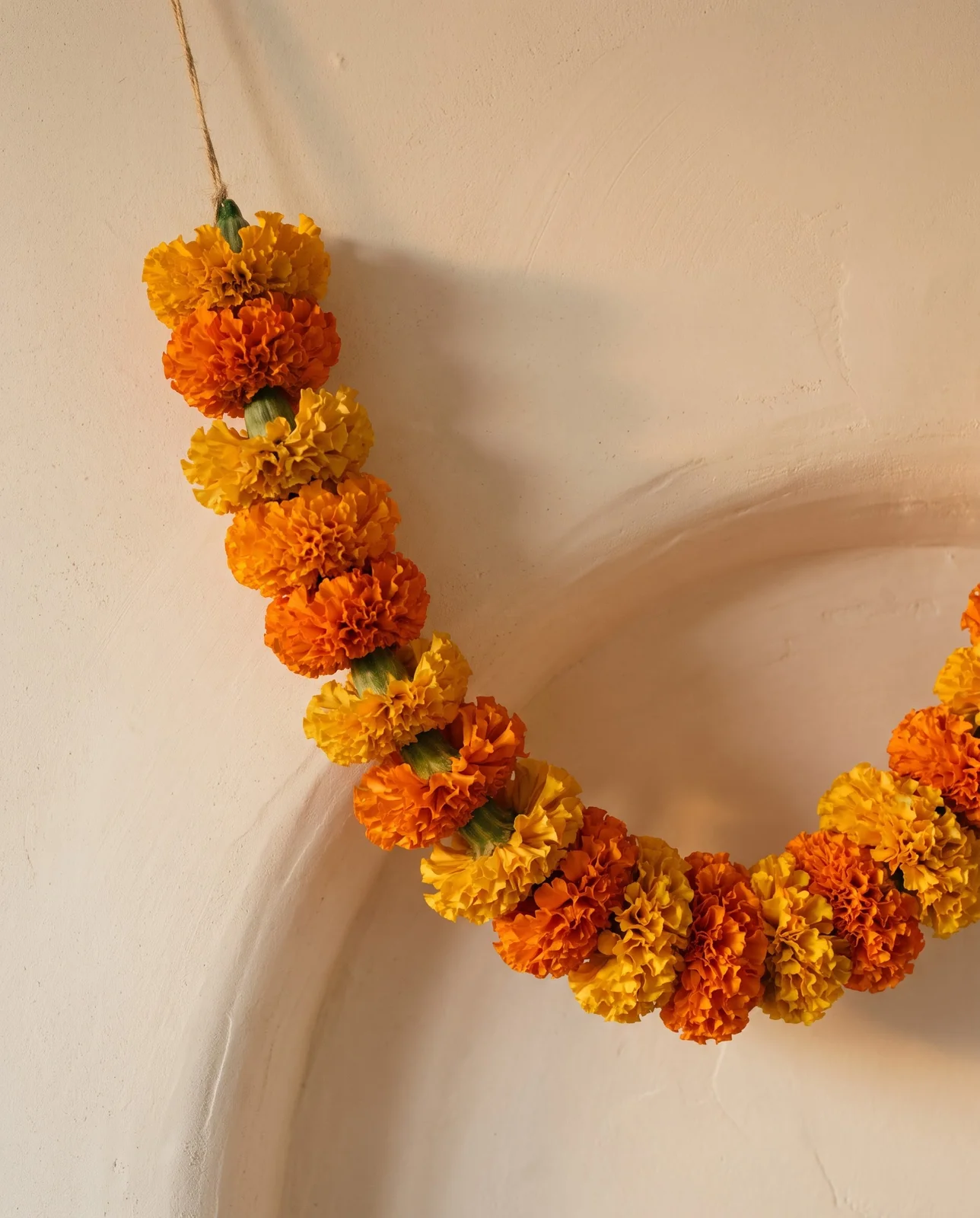
Garlands depend on uniform heads. Mississippi State University Extension outlines the standard garland assembly method: select flowers about 3 inches across, thread a 2-inch needle with heavy thread, and push it straight through the thick green receptacle at the base of each calyx to lock the petals in place without crushing the bloom. Five to eight heads per linear foot gives a dense continuous rope that drapes across altar tiers, doorways and archways without gapping.
Nothing from the harvest is wasted. Loose petals and spent heads go to the floor as the fragrant orange carpet that runs from the street to the ofrenda, the path the University of Florida IFAS describes as guiding spirits straight to the offerings. Once the holiday is over, let the mature seed heads dry, strip them, and store the seed in paper envelopes for next year’s crop.
A safety note
Handling cempasúchil in quantity is where skin trouble starts. NC State Extension warns that contact with marigold cell sap, combined with subsequent exposure to natural sunlight, sets off phototoxic dermatitis: redness, burning pain, and blistering where the sap landed. The scent of the flowers on its own irritates some people’s nose and eyes. Gloves, long sleeves and eye protection are worth the bother on any day spent cutting stems, pinching shoots, or stringing wet heads outdoors.
Pets are the other thing to plan around. Marigolds are not deadly, but a cat or dog that chews foliage or sap can end up with mild mouth irritation and an upset stomach. The wider list of flowers that are safe around cats and dogs covers the rest of the house.
FAQ
What should I do if it is too late to start cempasúchil from seed?
Once the mid-July window has passed, skip the seed packets. Buy budded transplants in September, six-packs or four-inch pots already showing color, and they will open in time for November 1.
How do I tell true cempasúchil apart from French marigolds?
By height and flower size. True cempasúchil, Tagetes erecta, stands 1 to 4 feet tall with double pompom heads 2 to 5 inches across. French marigold, Tagetes patula, stays dwarf at 6 to 12 inches with flowers 1 to 2 inches wide.
How many marigold flowers do I need per foot of garland?
Plan on 5 to 8 uniform 3-inch heads per linear foot of heavy thread for a dense, full garland. Pass the needle through the thick green calyx base of each flower so it holds without crushing.
Are cempasúchil marigolds safe around cats and dogs?
Marigolds are low in toxicity, but the sap can cause mild mouth irritation, drooling or stomach upset if a pet chews on the plant. Keep garlands and cut arrangements out of direct reach.
Can I save cempasúchil seeds for next year?
Yes. After the holiday, let the mature flower heads dry completely, pull the slender black seeds from the base of each dried head, and store them in a dry paper envelope until next season.
More About Marigolds
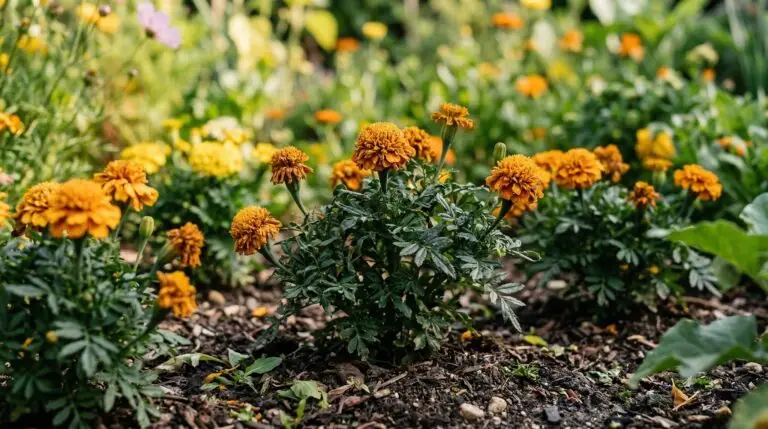
Why marigolds stop blooming in midsummer heat and how to get them flowering again
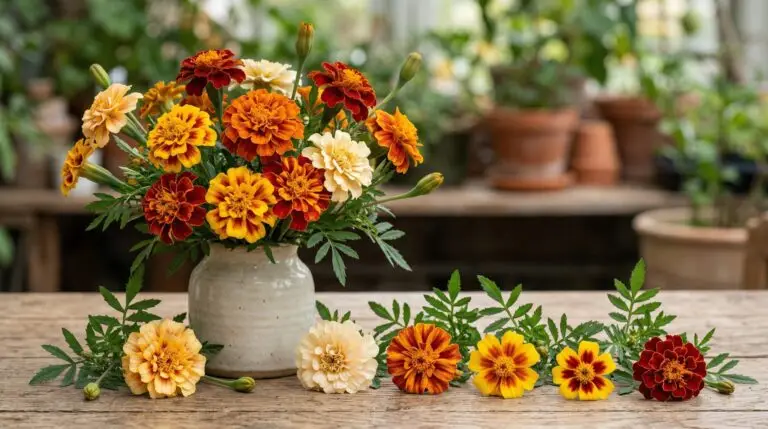
Best marigold varieties from tiny French Bonanza to towering African Antigua
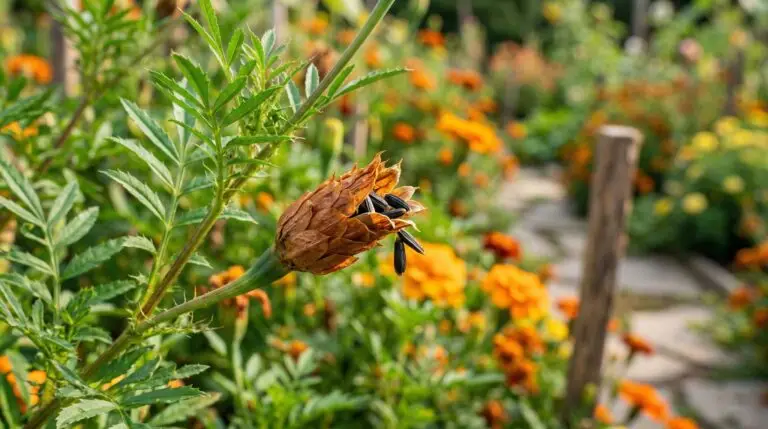
Growing marigolds from seed so easily that children can do it on their first try

Marigold meaning, from the sun and celebration to Victorian grief
Signet marigolds for edible flowers that taste like citrus in salads and cocktails
Marigolds in containers and window boxes for instant summer curb appeal
How to grow marigolds for bulletproof color from planting day to first frost

Marigold companion plants: what works, and what’s folklore
Marigolds in the vegetable garden and the pest-repelling companion planting tradition
Enjoying our flower guides? Add YourFlowersGuide as a preferred source on Google. It helps more readers find us.
Add to Preferred Sources