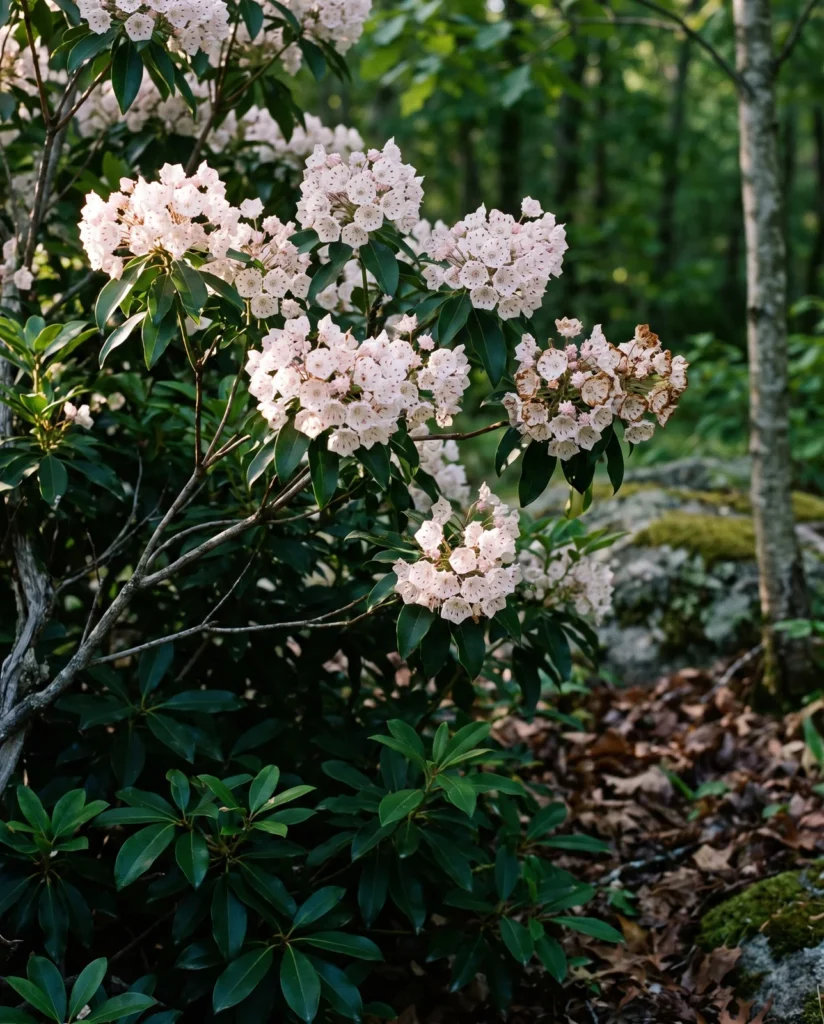
Which mountain laurel do you actually have
Three very different plants share the name mountain laurel. True mountain laurel, Kalmia latifolia, is an eastern North American evergreen shrub or small tree in the blueberry family, native from New England south to southern Indiana, Louisiana and the Florida panhandle. Texas mountain laurel, Dermatophyllum secundiflorum (once classified as Sophora secundiflora), belongs to the pea family and grows commonly in Austin and Central Texas gardens. The third is rhododendron, which looks very similar and shares the heath family, but blooms in different months. Care advice written for a Texas legume will do nothing for a Kalmia growing in an eastern garden.
Trouble with yellow leaves or poor flowering often brings the two plants into confusion, with advice for a yellowing Texas shrub easily mixed in. Looking for the botanical name Kalmia separates them right away. That simple check keeps you from treating an eastern woodland shrub with remedies meant for an Austin legume.
With rhododendron, the calendar tells them apart first. Mountain laurel typically blooms in late May, peaks in late May and early June, and fades by late June. Rhododendron usually opens in late June, peaks from July 4 to 10, and winds down by early August. Winter brings another clear sign, because rhododendron leaves curl in the cold once temperatures drop below about 28 degrees Fahrenheit. Their home ground differs as well: mountain laurel favors sunnier, drier slopes, while rhododendron settles into cool, damp stream banks, though you will sometimes find them growing side by side.
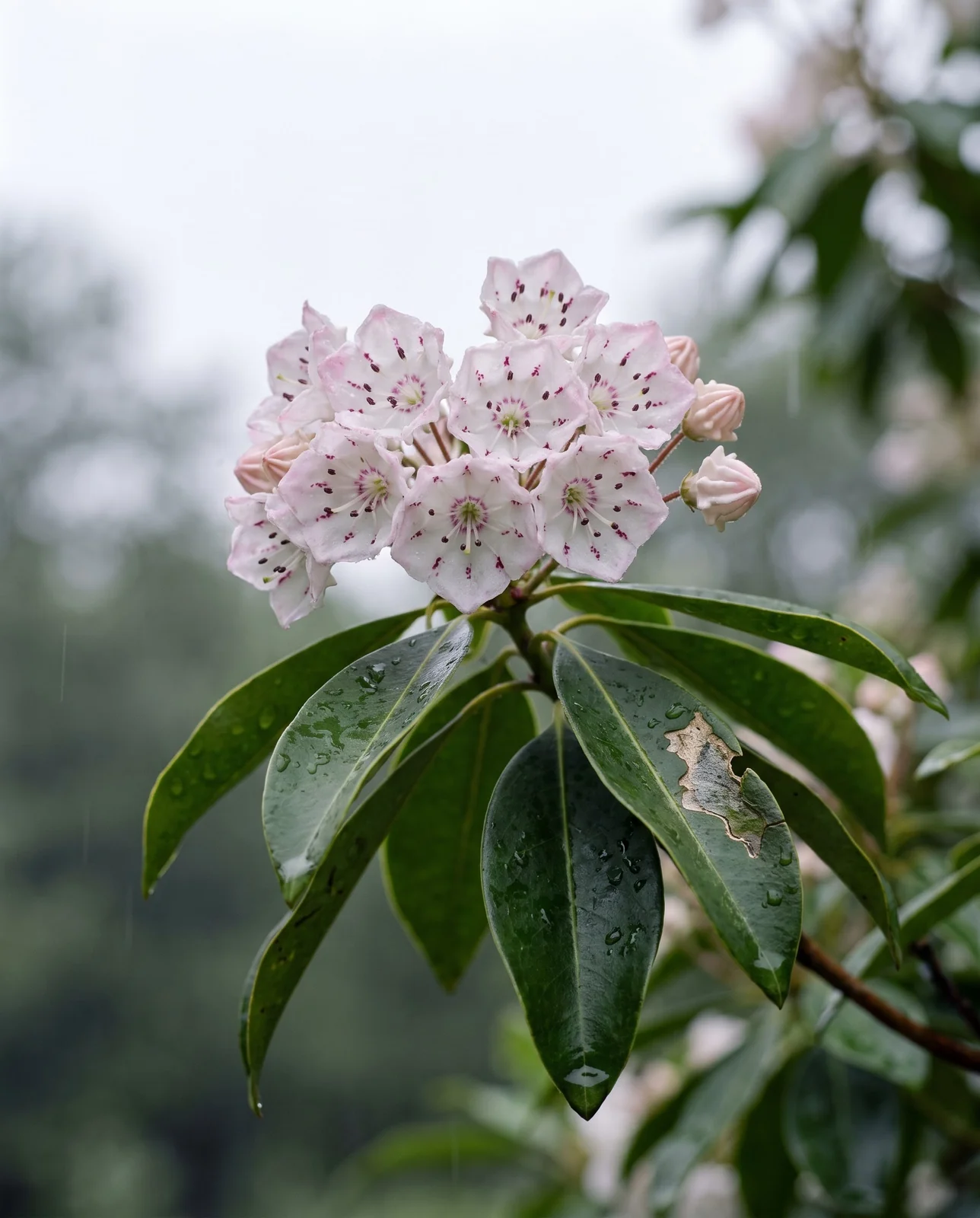
Three plants, one name
How family, native range, foliage, flowers and toxicity compare across the three plants called mountain laurel.
What mountain laurel is
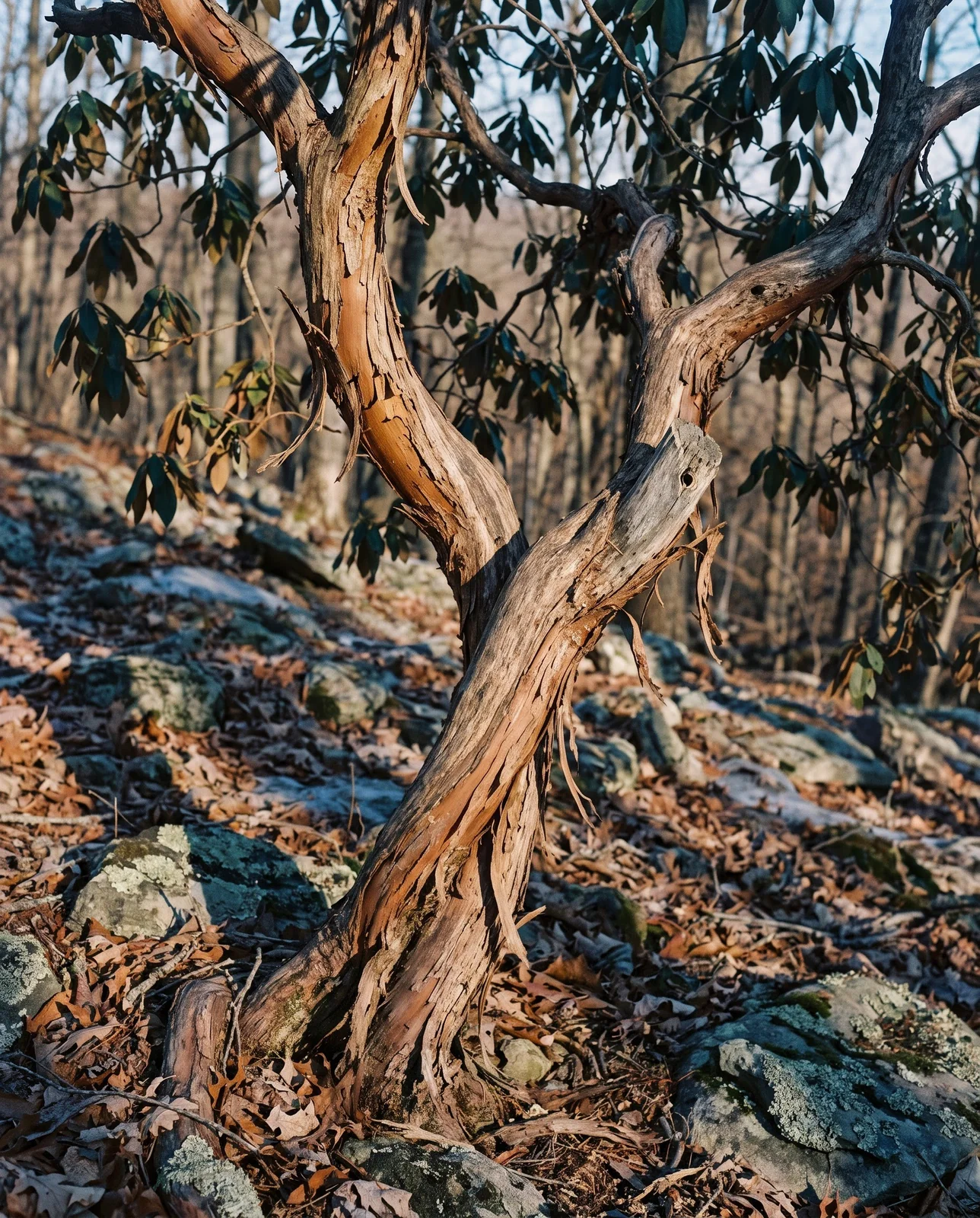
Mountain laurel belongs to the heath family alongside blueberries, azaleas, and rhododendrons. It shares their need for acid soil. Because its growing needs match rhododendron and azalea so closely, the three can be grown together. In garden soil, it can grow slowly to 6 to 10 feet tall as a dense, rounded shrub, developing gnarly branches with age. Given good conditions, the healthiest plants can slowly take on the shape of a small tree. The bark follows that same slow aging. Young stems start thin, smooth, and dark red-brown. Over the decades, they split and shred into a twisted trunk.
Over the years, the plant collected many old names, including calico bush, spoonwood, ivy bush, mountain ivy, American laurel, clamoun, and sheepkill. Two names often mixed in, sheep laurel and lambkill, actually belong to Kalmia angustifolia. That is a narrow-leaved sister plant, named in contrast to latifolia, which means broad-leaved. The name spoonwood came straight from early woodcarving. Native Americans also made salves and infusions from the leaves to treat cuts, bruises, and rheumatism. The plant left its name across the American map, too. Towns and places named for it include Laurel County in Kentucky, Laurel in Mississippi, Mount Laurel in New Jersey, and the Laurel Highlands of Pennsylvania.
Two states claim mountain laurel as their state flower. Connecticut chose it in 1907, and Pennsylvania followed in 1933. Its written history in America goes back even further. It appeared in John Smith's General History in 1624, and the explorer Peter Kalm sent plant samples to Linnaeus in 1750. Linnaeus named the genus Kalmia to honor Kalm, adding latifolia for its broad leaves and noting old names like calico bush and spoonwood. Being the state flower gives the shrub honor, but no legal shelter. The plant has no legal protection there.
How poisonous mountain laurel is
Every part of mountain laurel is poisonous, from the roots, bark and stems to the leaves, flowers, fruit and seeds. It is highly toxic to people and causes serious problems for dogs, cats and horses. The poisons are grayanotoxins, along with andromedotoxin and arbutin. Symptoms usually begin about 6 hours after eating any part of the plant: stomach upset, heavy drooling, loss of appetite, colic, diarrhea, depression, weakness and loss of coordination.
The ASPCA's own listings disagree about pets. Its entries for Mountain Laurel and Sheepkill give toxicity for horses only, while its Laurel entry, which also covers mountain laurel, names dogs, cats and horses. That Laurel entry warns of vomiting (except in horses), diarrhea, weakness and heart failure. For a home garden, the safe course is to treat the shrub as a danger to cats and dogs too.
Farm animals face the greatest danger. Horses usually leave the foliage alone unless nothing else is left to eat, but sheep and goats may browse it readily. Cattle are poisoned most often, with cases also reported in sheep, goats and donkeys. A cow needs to eat only about 0.4 percent of its body weight to be poisoned, compared with 0.2 percent for rhododendron. Symptoms in cattle usually appear 3 to 14 hours after eating and last for two days. The poisoning is often fatal to livestock, though rarely to people, so farmers warn that mountain laurel can kill a cow.
Honey brings its own risk. The nectar does not harm bees, but hives that feed heavily on mountain laurel can make honey that may be toxic to people. One North Carolina honey sample, most likely made from mountain laurel, held 100 ppm of grayanotoxin, far above the 3 and 7 ppm of two grayanotoxins found in a sample from British Columbia. Many plants in the heath family carry these toxins, including rhododendron, pieris, agarista and mountain laurel itself. Eating more than a small amount of tainted honey can bring on nervous and digestive symptoms.
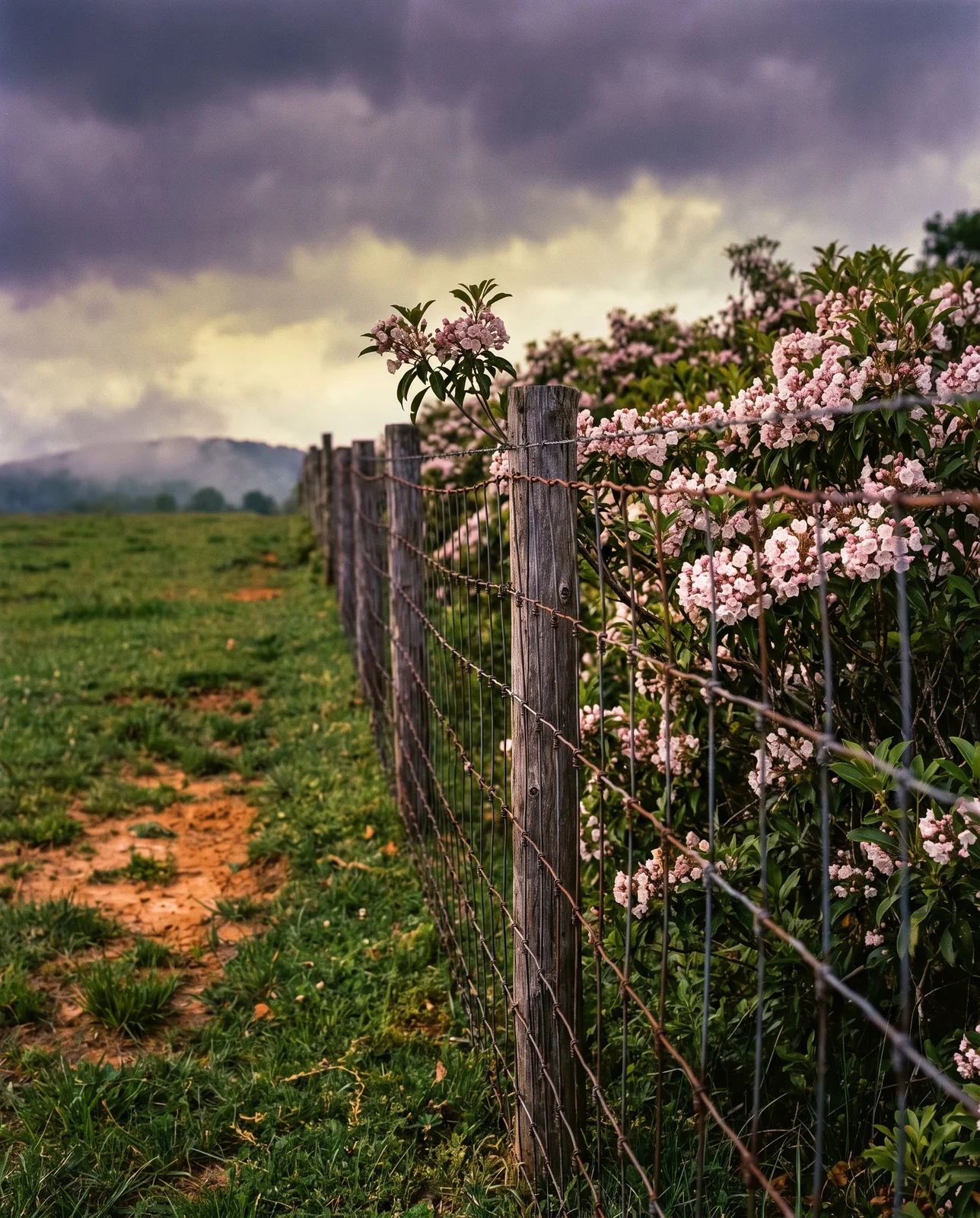
What it looks like, and what the flower does
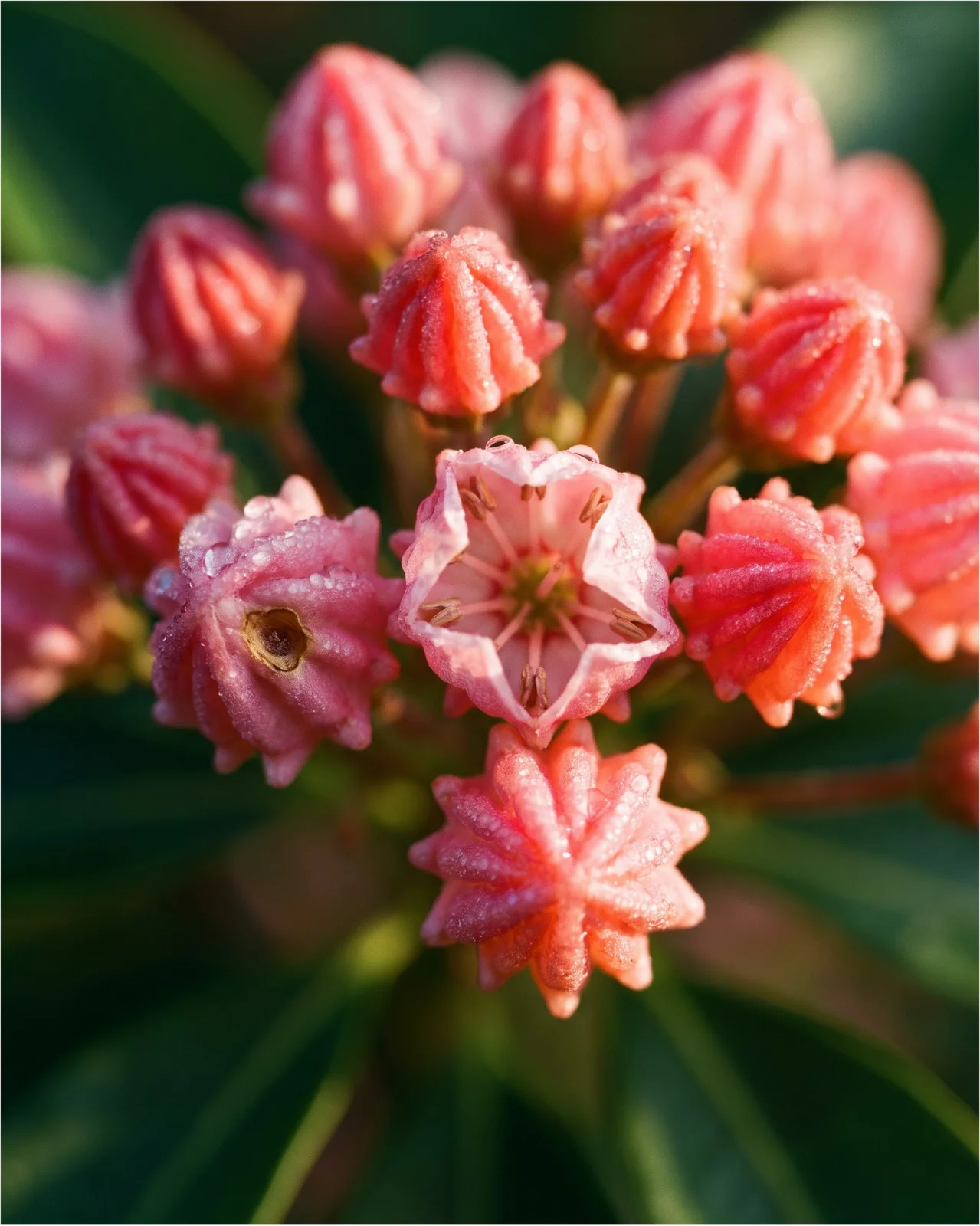
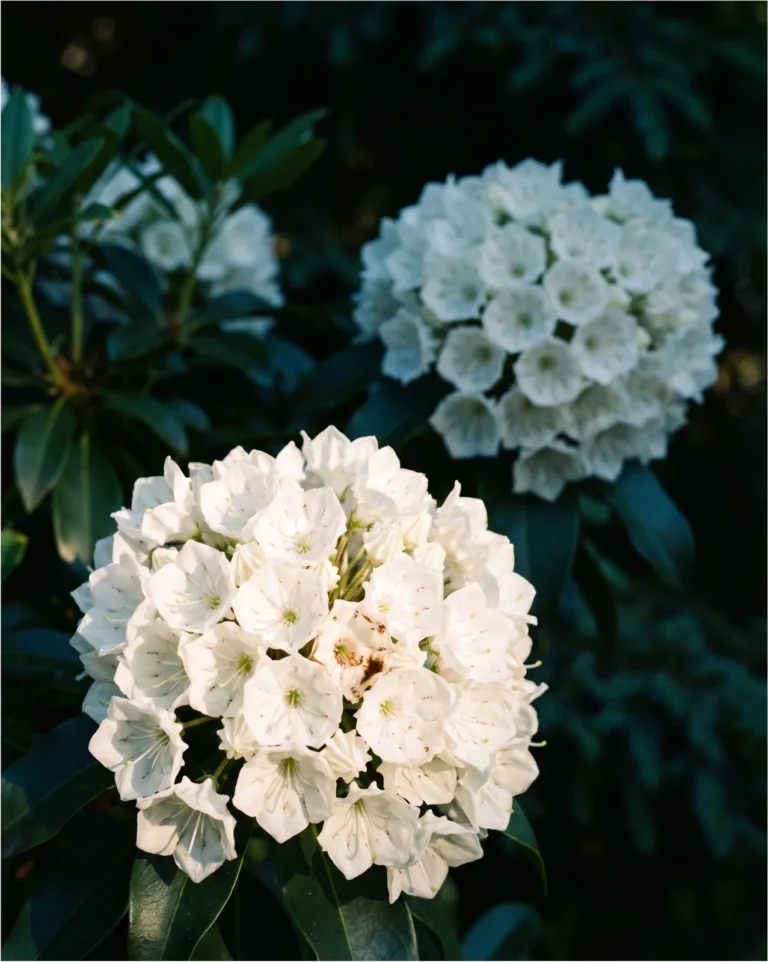
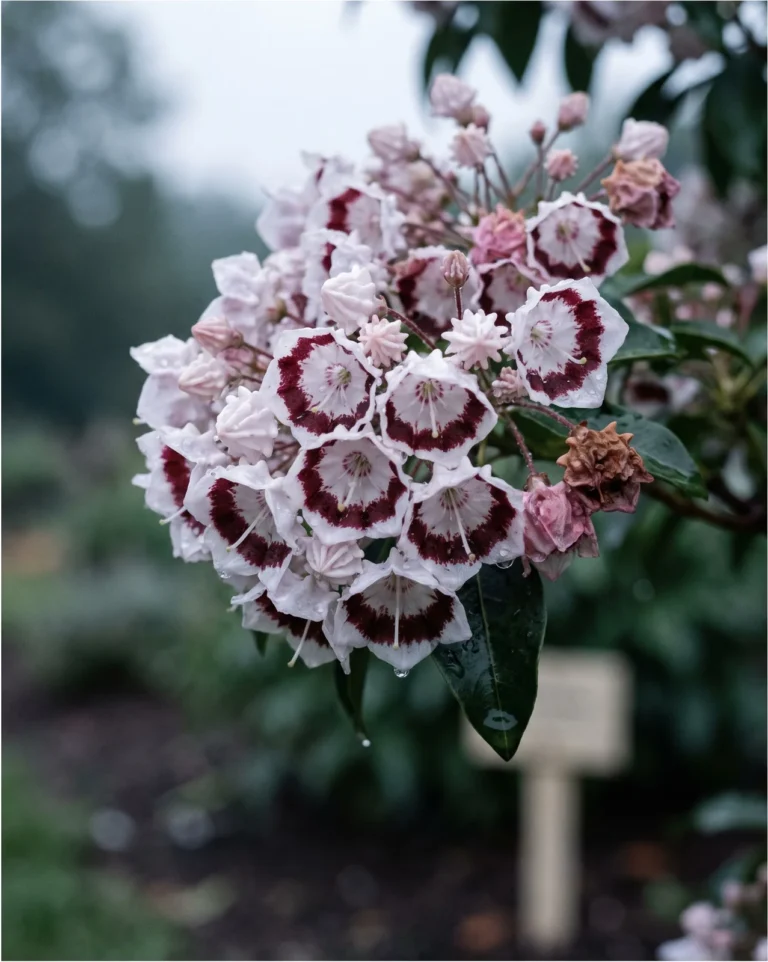
Each flower works like a loaded catapult. The anthers are touch-sensitive and rest inside little pockets in the corolla. When a visiting bee trips a stamen, the filaments spring free and dust the insect with pollen. You can trigger that same spring with a small twig and watch the pollen fly through the air, though once fired, the blossom cannot trigger again. Botanist William J. Beal recorded how the stamens suddenly straighten, throwing jets of pollen often a foot or more, a motion Asa Gray compared to a boy's pea-shooter. Physicist Lyman J. Briggs investigated this catapult action in the 1950s, and that fraction-of-a-second movement remains rare among flowering plants.
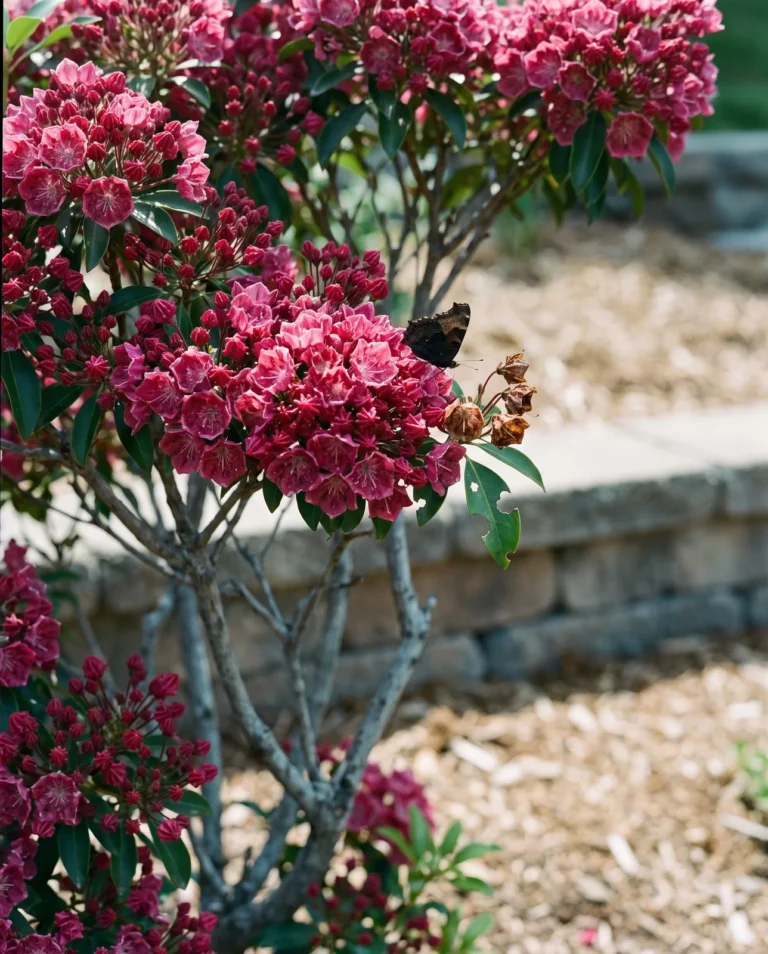
The rest of the shrub presents a gentler picture. The flowers open in May, forming clusters 4 to 6 inches across where each five-sided, cup-shaped bloom ranges from rose to white with purple-red markings inside. The leaves are 2 to 5 inches long, dark green on top and yellow-green beneath, similar enough to rhododendron foliage to cause easy confusion.
Where to plant it
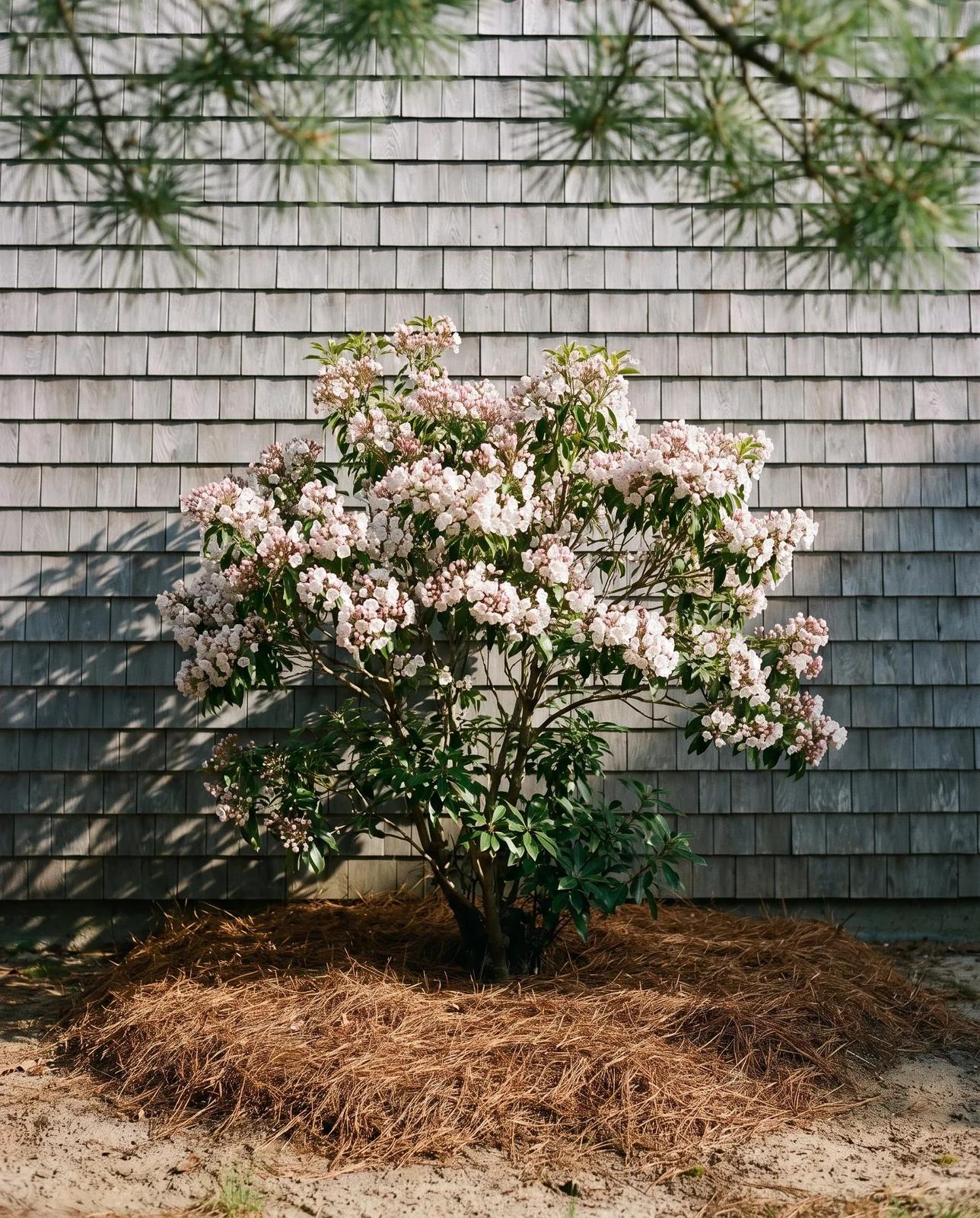
Plant mountain laurel where it gets morning sun and early to mid-afternoon shade, in cool, moist, acidic, humus-rich soil that drains well. In the South, afternoon shade is required. The shrub does not grow well in heavy clay or wet ground, so consider raised plantings to promote better drainage.
A natural slope sheds water quickly, while a flat bed dug into clay easily holds moisture around the roots. That trapped moisture is often what turns the foliage yellow later on, even when every other part of your care is right.
If you garden in wildfire country, place it with care. Mountain laurel has a high flammability rating and should not be planted within the defensible space of a home.
Soil acidity is the whole game
Mountain laurel needs acidic ground with a pH below 6.0 to grow well. It prefers a soil pH in the 4.5 to 5.5 range. When the soil rises above pH 6.0 to 6.5, the shrub develops iron chlorosis and micronutrient deficiencies. Keeping the bed in that acidic band matters more than any feed you apply.
A pale shrub is rarely starving for fertilizer. In high-pH soil, iron is not necessarily deficient in the ground; it may be present, but the roots cannot absorb it because of the pH. Adding garden fertilizer leaves that iron locked away and will not fix the yellow foliage. The nutrient is already there, but the plant cannot touch it until the soil turns acidic.
Testing the soil before planting helps you determine the proper amendment rates for pH correction. Without that test, adjusting the bed is pure guesswork. When ground tests too sweet, you can correct the yellowing with chelated iron or work sulfur, iron sulfate, or ammonium sulfate into the dirt to bring the pH down to 5.5 or lower. Shifting the pH around an established shrub takes several seasons, so getting the soil right beforehand saves years of worry.
Zones, and where the sources stop agreeing
Hardiness ratings for mountain laurel generally span zones 4 to 9, with differences at both ends of the map. Some ratings cover zones 4a through 9b. Others run narrower, giving zones 4 to 8, 5 to 8, or 5 to 9. At the warm southern limit, the boundary ranges from zone 7 to 9 depending on the variety.
Sun and heat tolerance vary by variety: 'Richard Jaynes' is shade tolerant and a heavy bloomer, while 'Sarah' has better sun tolerance than the parent shrub. Individual cultivars have their own hardiness boundaries as well. 'Sarah' covers zones 4a through 8b except 7b, while 'Elf' stays hardy in zones 4 to 8 and 'Minuet' reaches across zones 4 to 9.
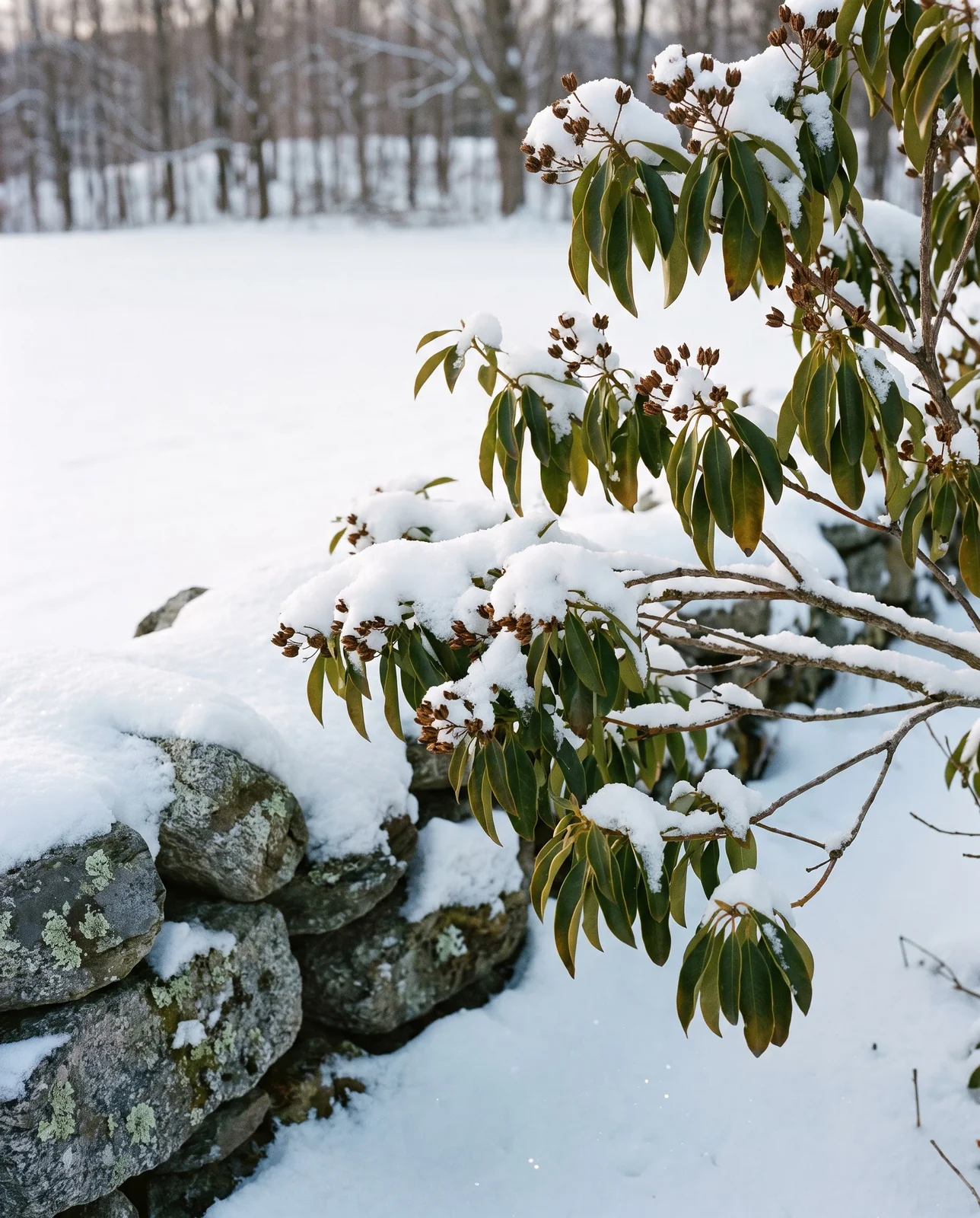
At the cold end, winter cold by itself is rarely the main threat. The most common winter injury is excessive drying, caused by drying winds, sudden temperature swings, lack of snow cover, late spring frosts, or late-season fertilization. Late-season feeding is something you can directly avoid.
Why it will not bloom
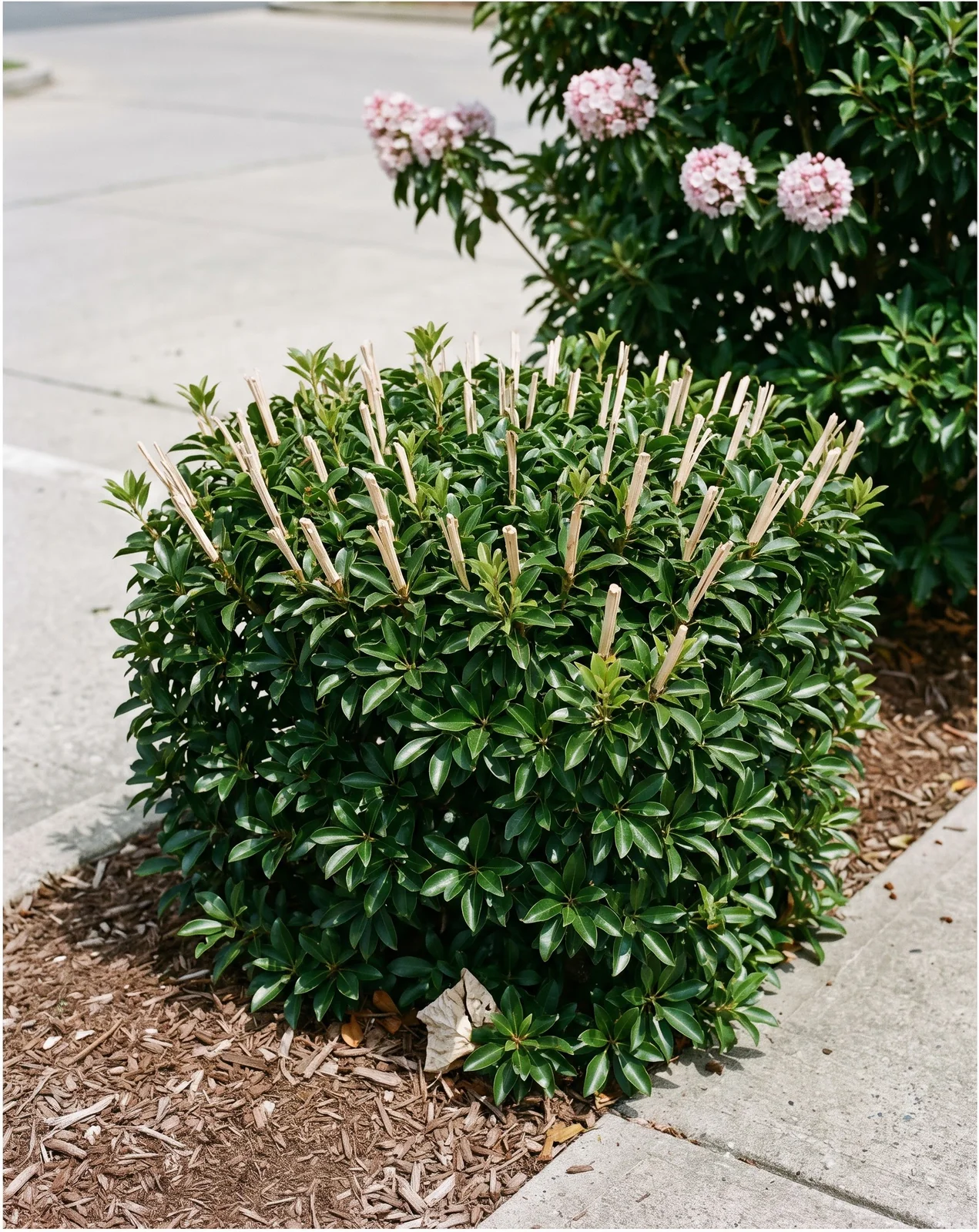
The most common reason a healthy mountain laurel fails to flower is pruning at the wrong time. Next year's blossoms appear on old growth, so cutting wood late in the season removes next year's flowers before they can open. A shrub sheared in late summer may look green and healthy the following spring, but it will carry no flowers at all.
Deadheading and light pruning are about shape more than flower count. Leaving old flower heads on the shrub through winter does not cost you a season of blooms. The cut that carries real penalties is taking wood off later in summer, when next year's flower buds are already set.
Where pruning is not the cause, shade and damp air may be working together. Cercospora leaf spot occurs on almost all mountain laurels. Bad infections seem to hold back growth and prevent flower buds from setting, especially where shrubs sit in damp, shaded beds. A plant in a dark, humid corner can lose its flowers to fungus while you watch the canopy, so check the foliage for spots before blaming light levels alone.
Yellow leaves on a true Kalmia
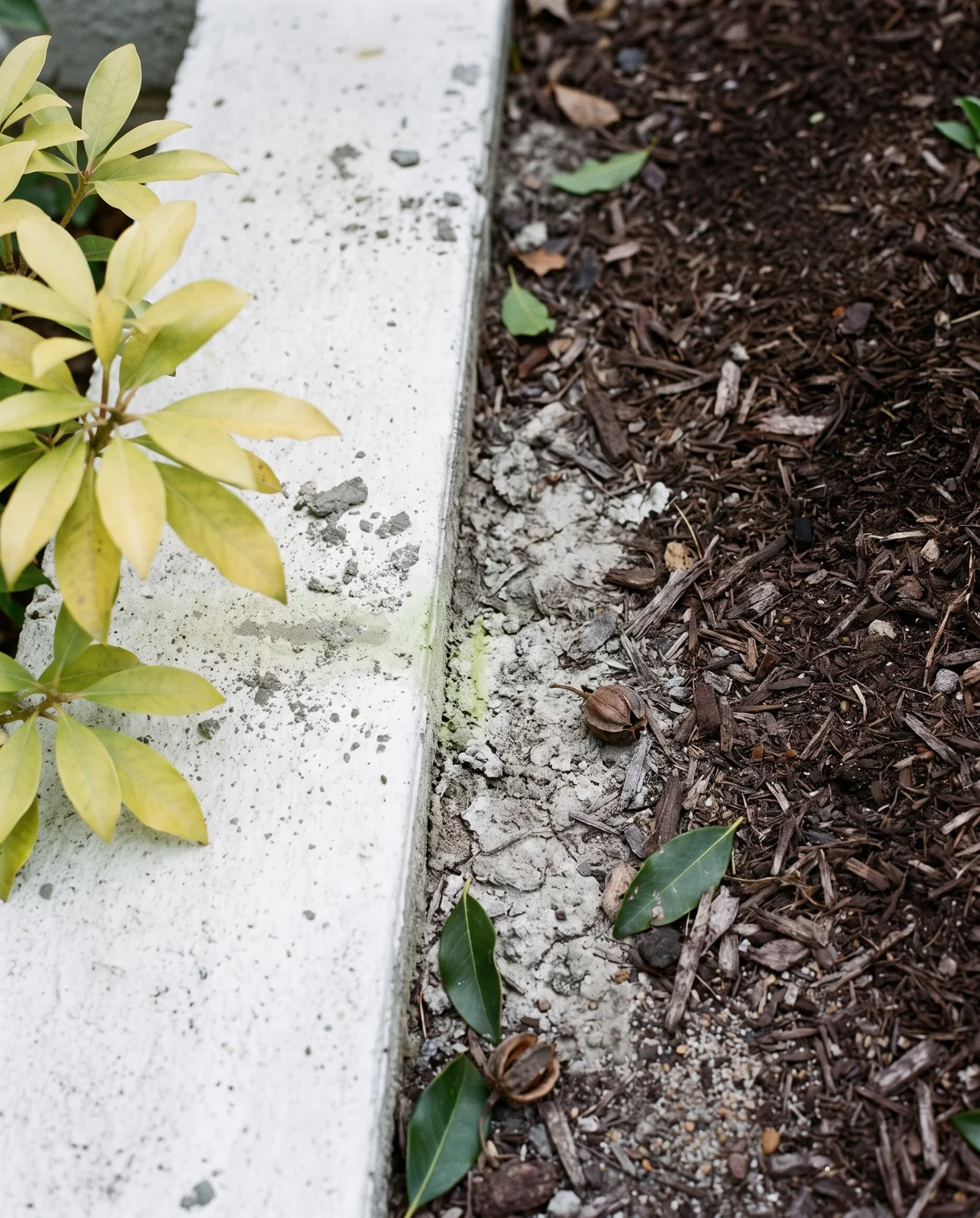
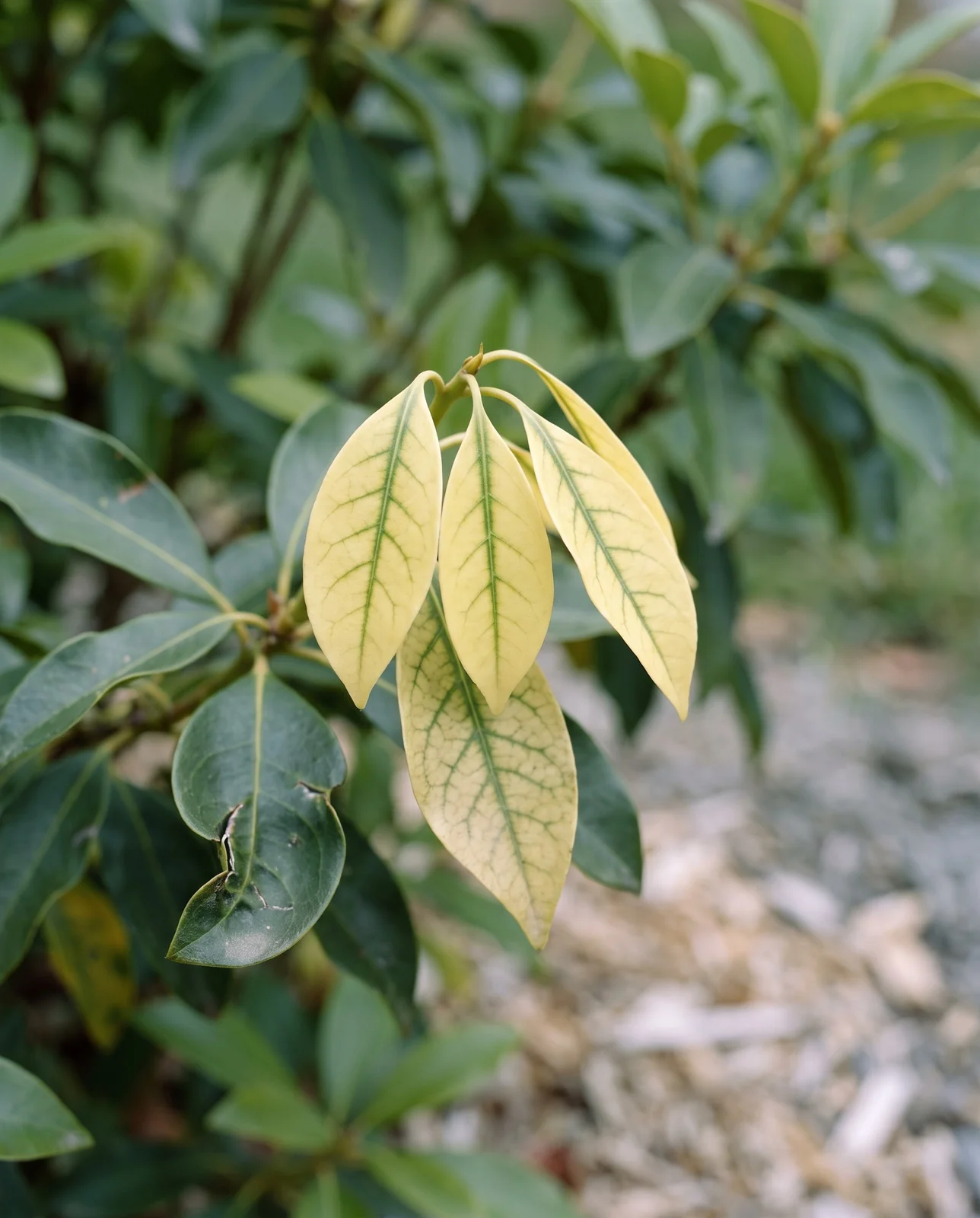
Yellow leaves on mountain laurel usually point to three soil problems. The pattern on the leaves tells them apart quickly. The clearest sign is yellowing between the veins, known as chlorosis. The leaf veins stay green while the tissue between them turns yellow, usually on the youngest leaves first. This happens in sweet, alkaline soil, near new cement foundations, or in heavy ground where roots cannot take up iron.
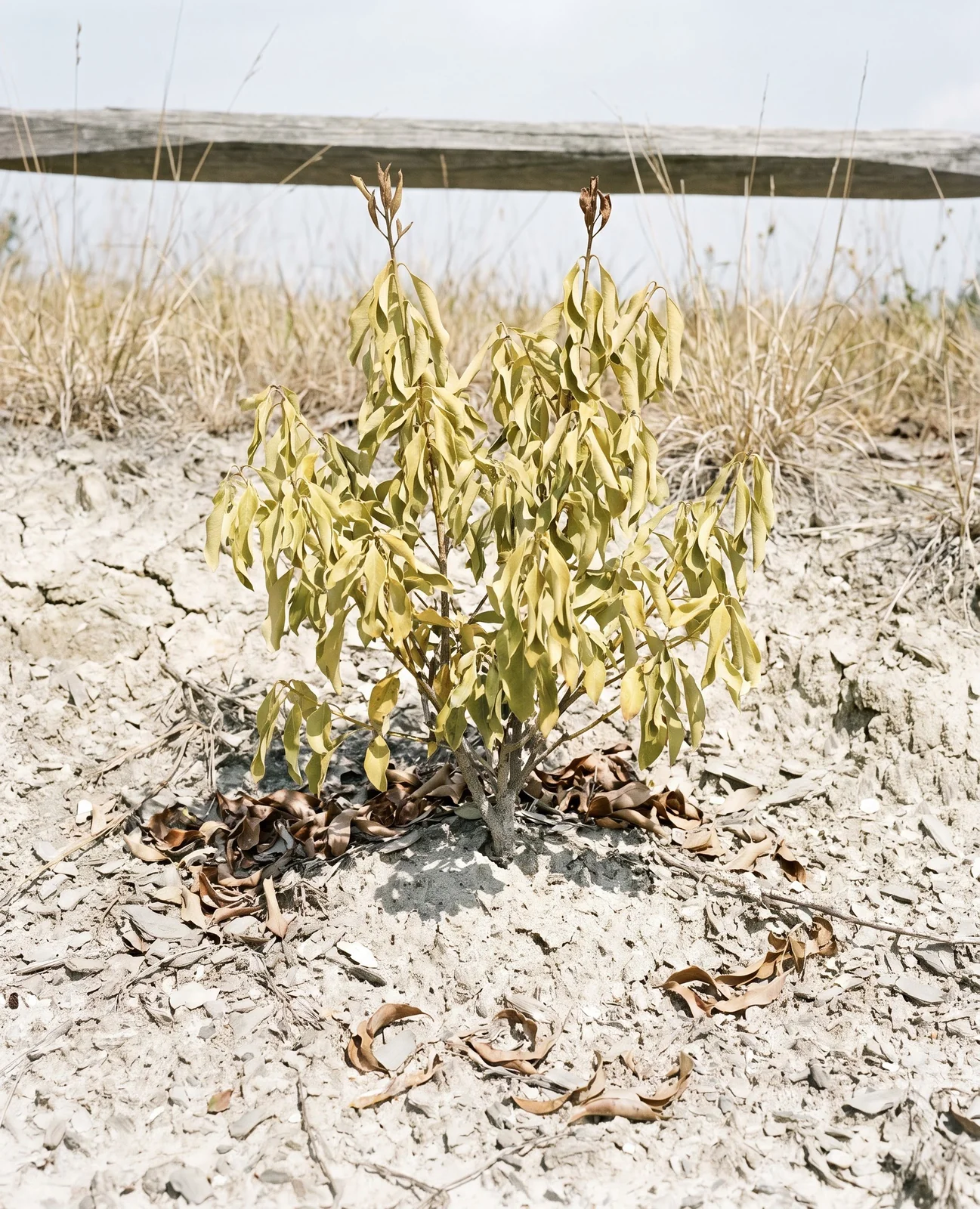
The second pattern turns the whole leaf yellow, with no green left in the veins. In waterlogged ground, leaves turn yellow because wet, airless soil harms the feeder roots until they cannot absorb nutrients, and widespread damage is often permanent. The third pattern comes from dry soil. People sometimes call mountain laurel drought tolerant, but dry weather often harms it. In thin dirt with little organic matter, drought brings wilting, yellow leaves, and dying branches.
To tell wet ground from dry ground, check the soil with a trowel a day after rain or watering. If the bed is dry, give the roots a slow, deep soak, and avoid frequent light watering. If the ground stays soggy, fix the drainage right away, though damaged feeder roots may already be past saving. Fertilizer cannot fix these problems. Yellow leaves on this plant point back to trouble in the soil.
Work down the list
Work through these checks in order, and stop at the first one that matches what you see on your shrub.
What goes wrong with mountain laurel
Four common problems turn up on mountain laurel: fungal leaf spots and blights, winter injury, drought injury, and chlorosis. Three of them depend on the planting site itself, and only one arrives with a fungus.
Symptoms: leaf tissue turns yellow while the veins stay green, usually on the youngest foliage first. Cause: high soil pH, which locks up iron so the roots cannot absorb it. What to do: lower the soil pH, because feeding fertilizer will not help when the roots cannot take up the iron in the ground.
Symptoms: leaf browning and dieback that only show as spring warms up, because winter injury symptoms often take months to appear after the damage happens. Cause: winter cold, which ranks among the common problems for this shrub. What to do: wait for late spring to see where healthy green growth starts before pruning.
Symptoms: leaves wilting, yellowing, and branches dying back. Cause: dry conditions. Mountain laurel is sometimes called drought tolerant, but drought often injures it, especially in thin soil with little organic matter. What to do: keep a generous ring of organic mulch over the root zone and soak the soil during dry spells.
Symptoms: patches of dead tissue scattered across the leaves, usually visible on both surfaces, with distinct dark edges around brown, black, tan, or reddish centers. Cause: leaf spot fungi. What to do: rake away fallen leaves in autumn and avoid wetting the foliage when you water.
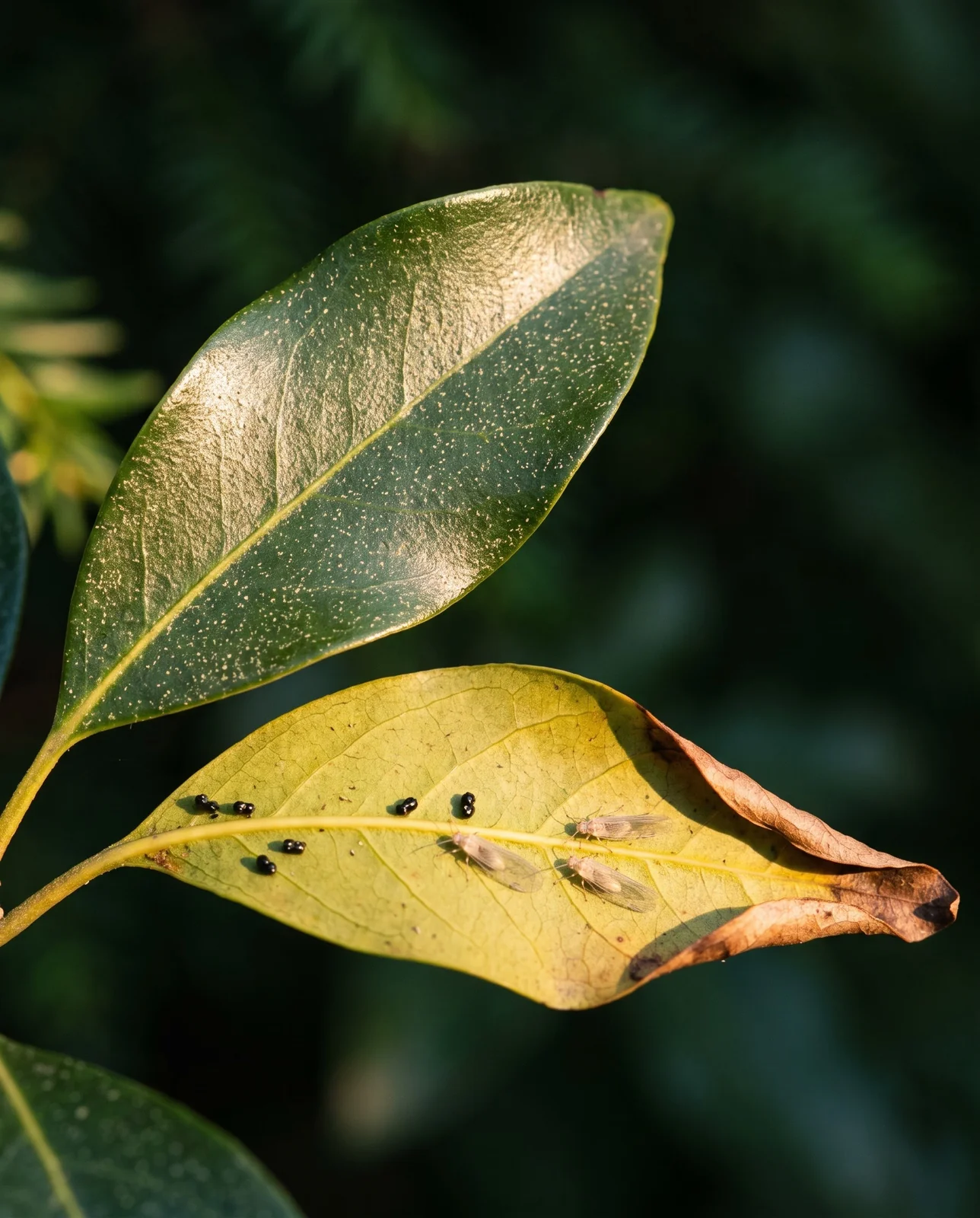
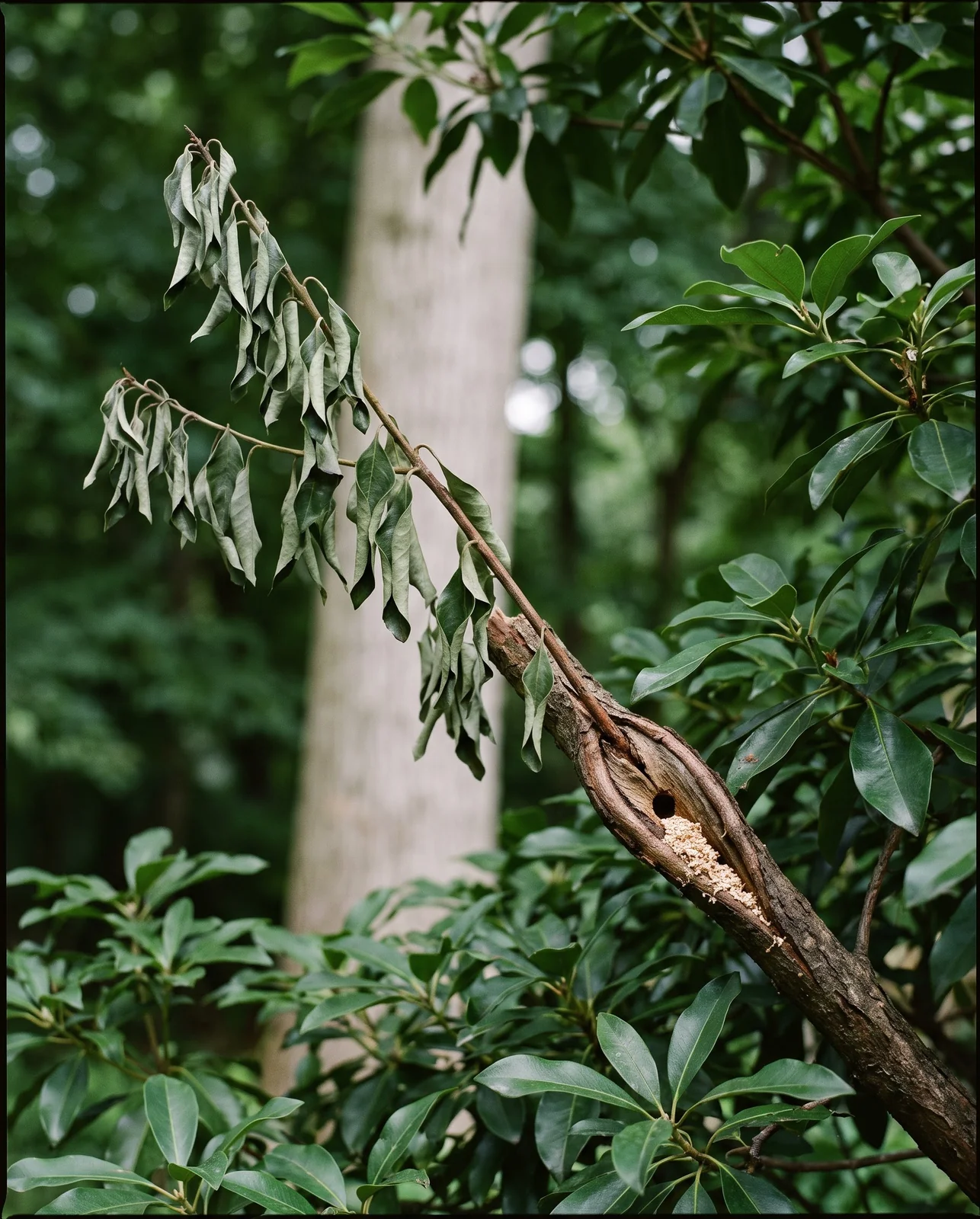
Symptoms: speckled leaves, sticky foliage, or wilting branch tips. Cause: lace bugs, scale, whiteflies, or borers, which are the main insects that trouble mountain laurel. What to do: check the undersides of leaves and along older stems to catch any outbreak early.
The wild plant and the garden plant
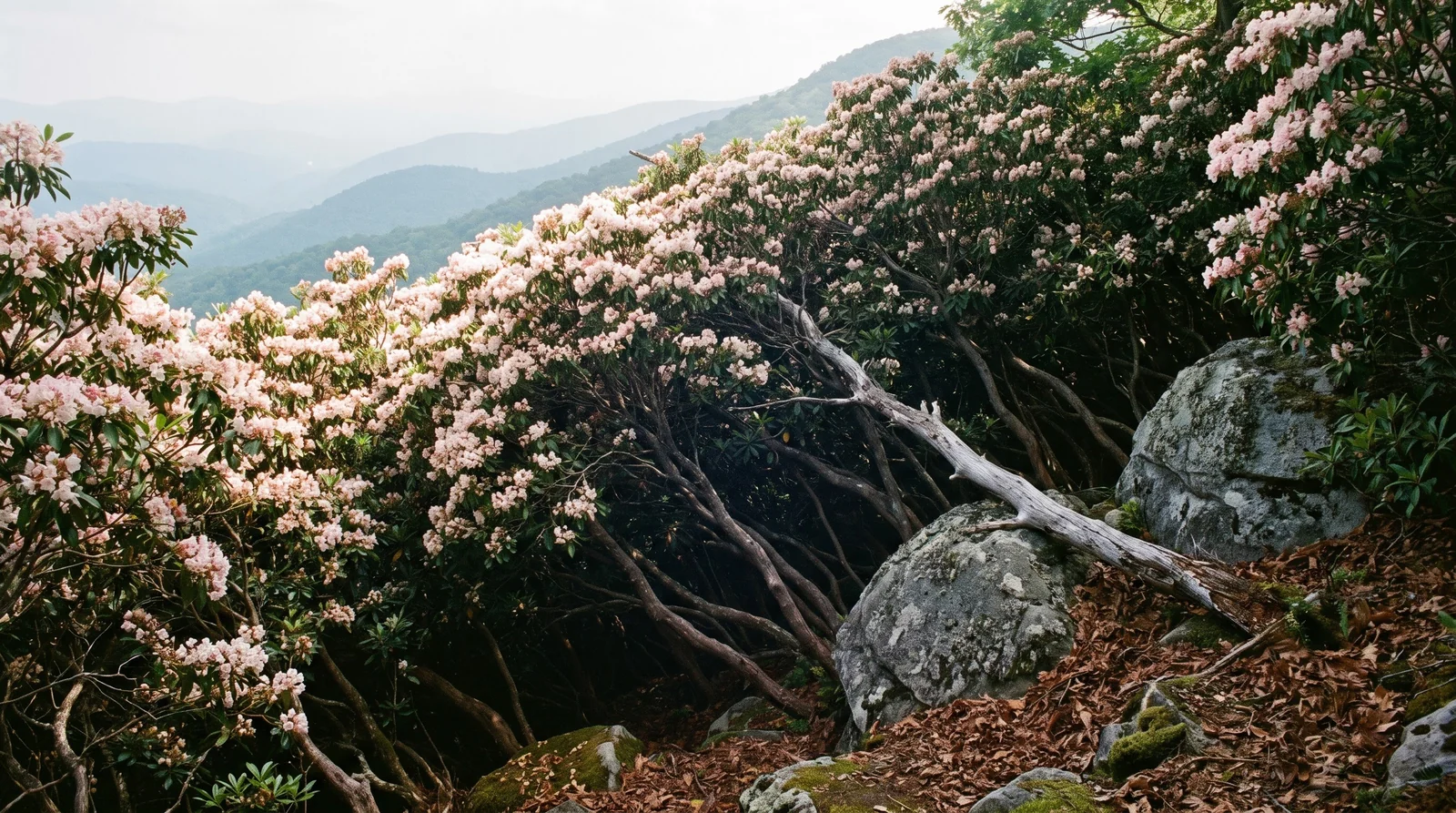
In the wild, mountain laurel grows on dry rocky woodlands, slopes, and streambanks from Florida to Canada. On Appalachian hillsides, these thickets grow so dense that locals call them laurel hells or laurel slicks, because it is nearly impossible to pass through one. Those steep slopes provide three things the shrub loves: sharp drainage, dappled shade under taller trees, and naturally acidic ground. Rain drains away almost as soon as it falls, the woodland canopy softens harsh sun, and leaf mold cushions the shallow roots. No one feeds that wild ground on a timer, waters it in August, or alters its pH.
A garden bed beside a house often reverses every one of those conditions. Heavy soil, alkaline foundations, and late-season feeding all work against the shrub. Mountain laurel thrives when you give it back its native woodland setting. Plant it where a dogwood or another woodland native does well, in soil that drains freely and tests acidic, and most of these troubles fade away.
Pests and diseases
Mountain laurel is sometimes sold as pest-resistant, but lace bugs, scale, whiteflies, borers, and leaf spot fungi can all attack it. In garden settings, leaf spots, blights, scale, whiteflies, borers, and lace bugs are usually only occasional problems. Good growing conditions keep most of these pests from becoming serious threats.
Leaf spots on the foliage come from several fungi, including Cercospora, Phyllosticta, and Septoria, while Phomopsis causes leaf blights. These fungal spots and blights are rarely serious enough to warrant chemical sprays, and simple sanitation like raking and removing fallen leaves in autumn usually keeps them in check. Clearing that fallen foliage removes the spores that winter on plant debris before they can reach new spring growth.
Pruning and deadheading
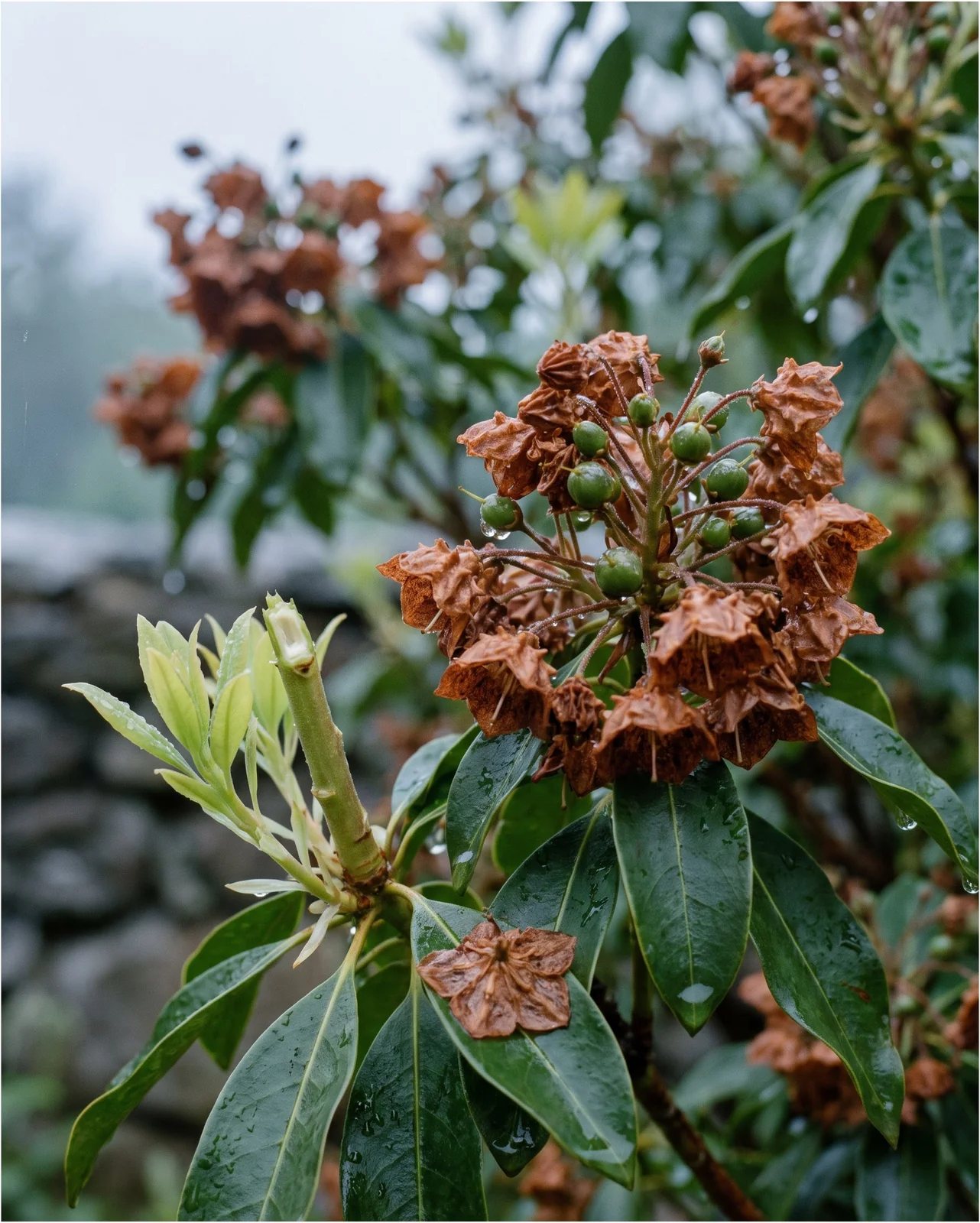
Deadheading is easy hand work done in the weeks right after the petals fade. Remove spent flower clusters immediately after bloom, and prune branches back lightly at the same time to promote bushy growth. Snapped off at the base, each spent truss comes away cleanly without damaging new shoots. If left on the shrub, they turn into brown, non-showy 5-valved capsules about 3/16 inch across that ripen from September to October and hang on into winter. Leaving those seed heads on the plant is only a cosmetic matter.
When to plant, and the first year
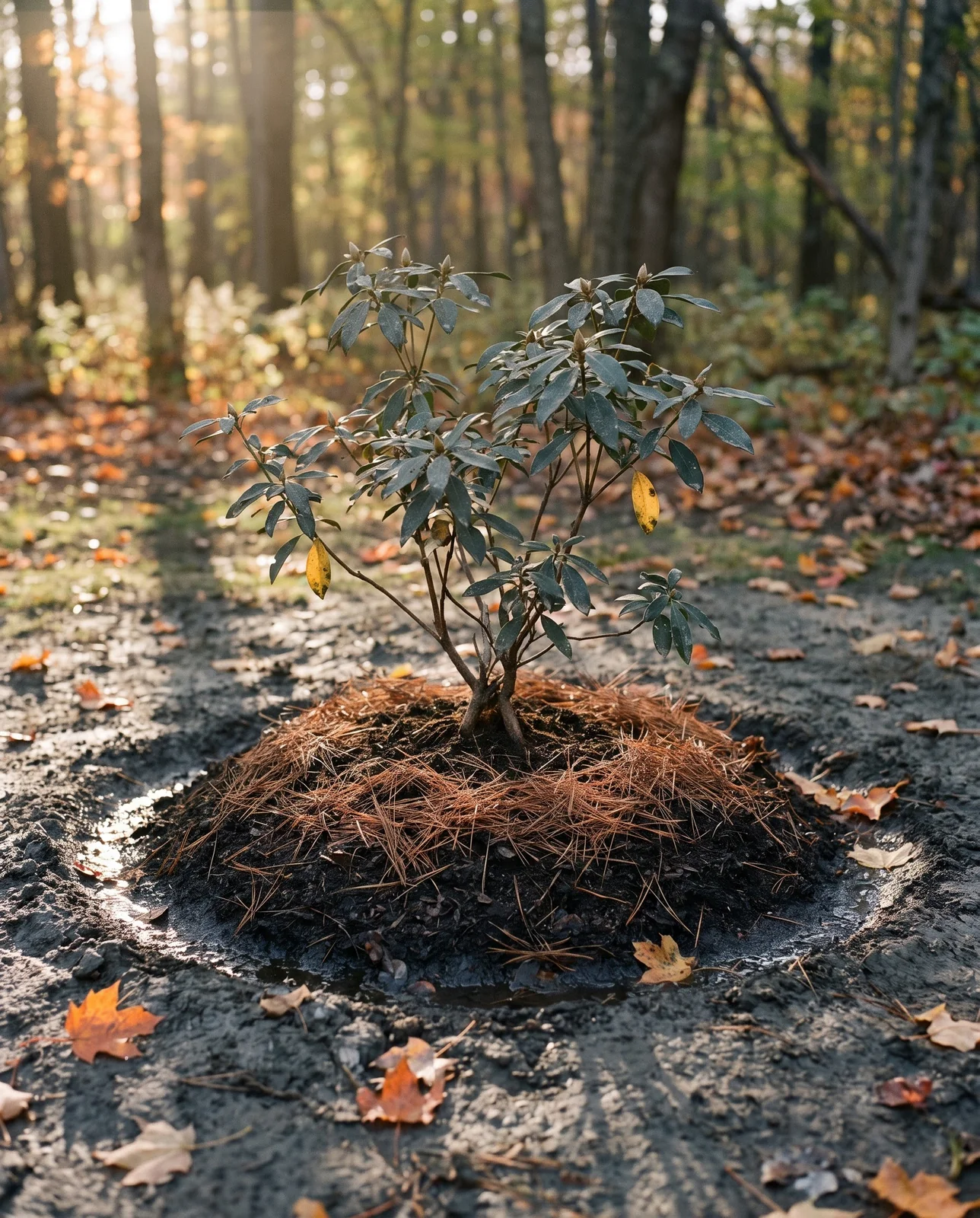
Plant mountain laurel in late spring once frost danger passes, or in fall about 4 to 6 weeks before the first frost. Both windows offer the shrub cool, workable soil while severe weather is still months away. Fall planting lets roots settle in warm ground before winter, while spring planting gives the shrub all summer to establish.
The most important decisions happen before the shrub ever leaves its pot. Test and adjust the pH well before planting, and improve drainage where the soil is heavy. Fixing soil or water problems later is difficult around established roots, so the shrub's first year reflects the care you take on planting day.
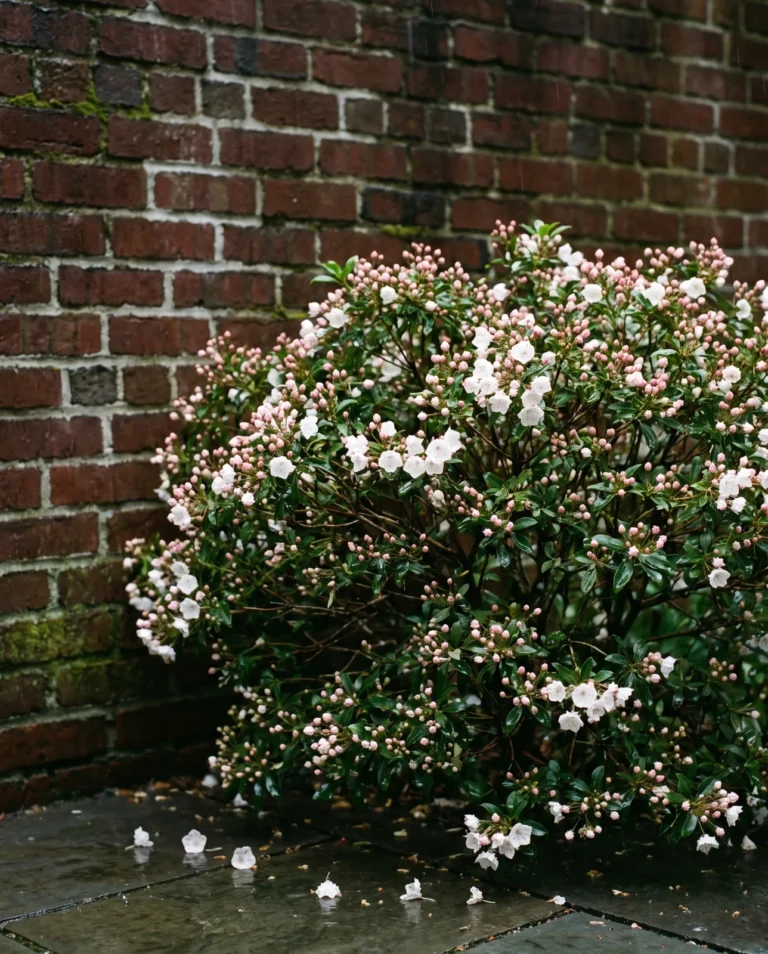
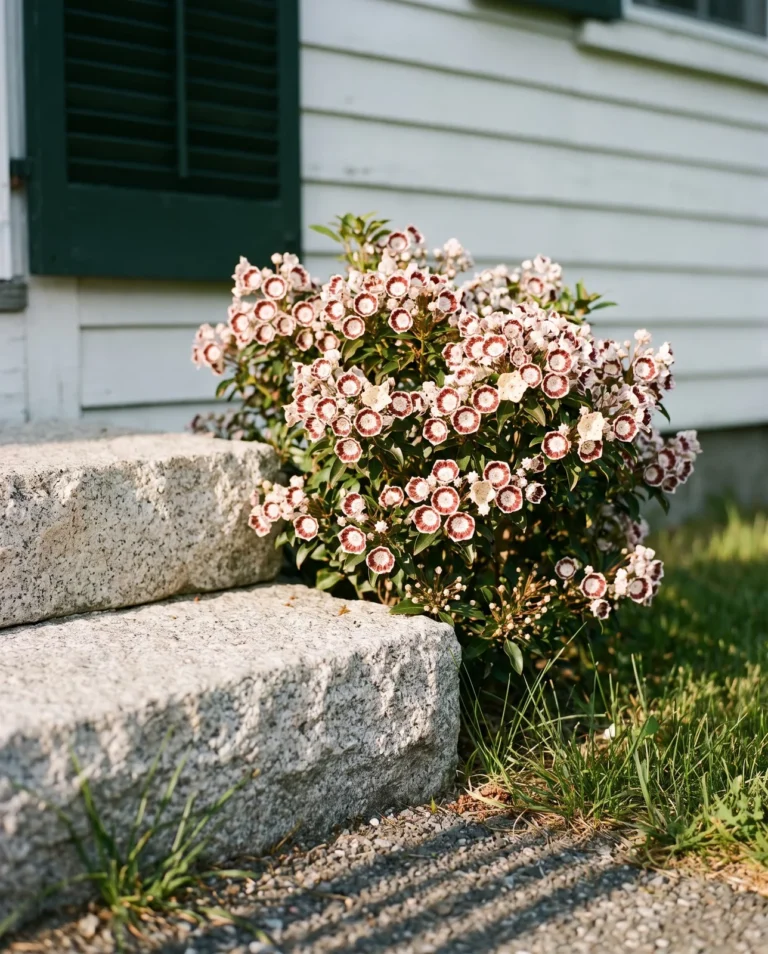
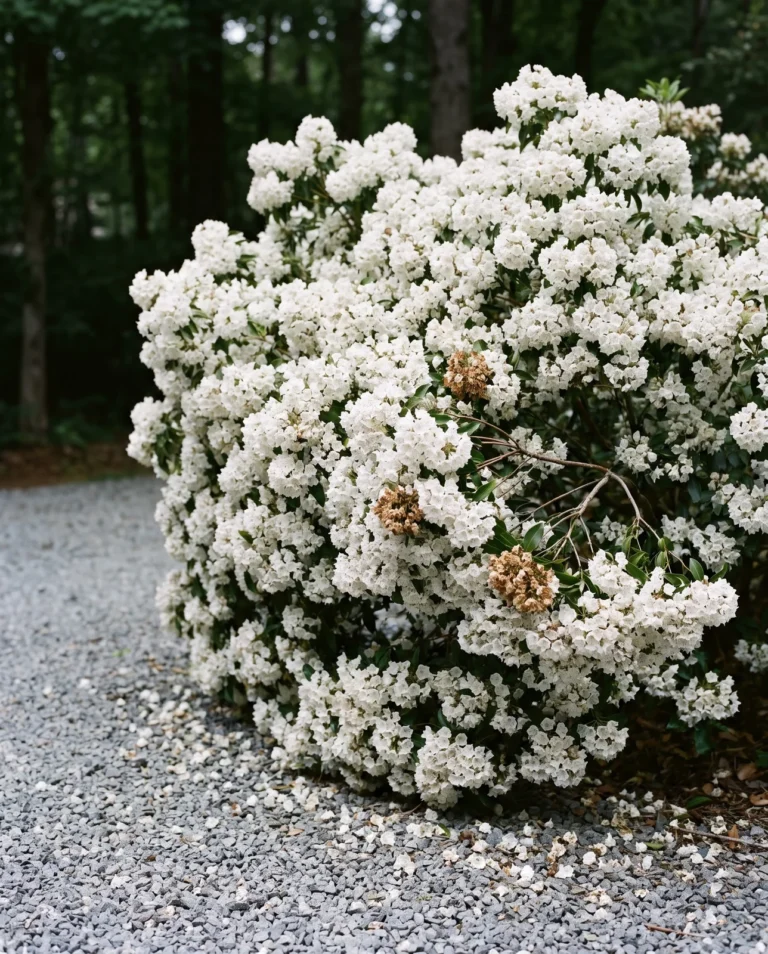
Ten mountain laurels worth telling apart
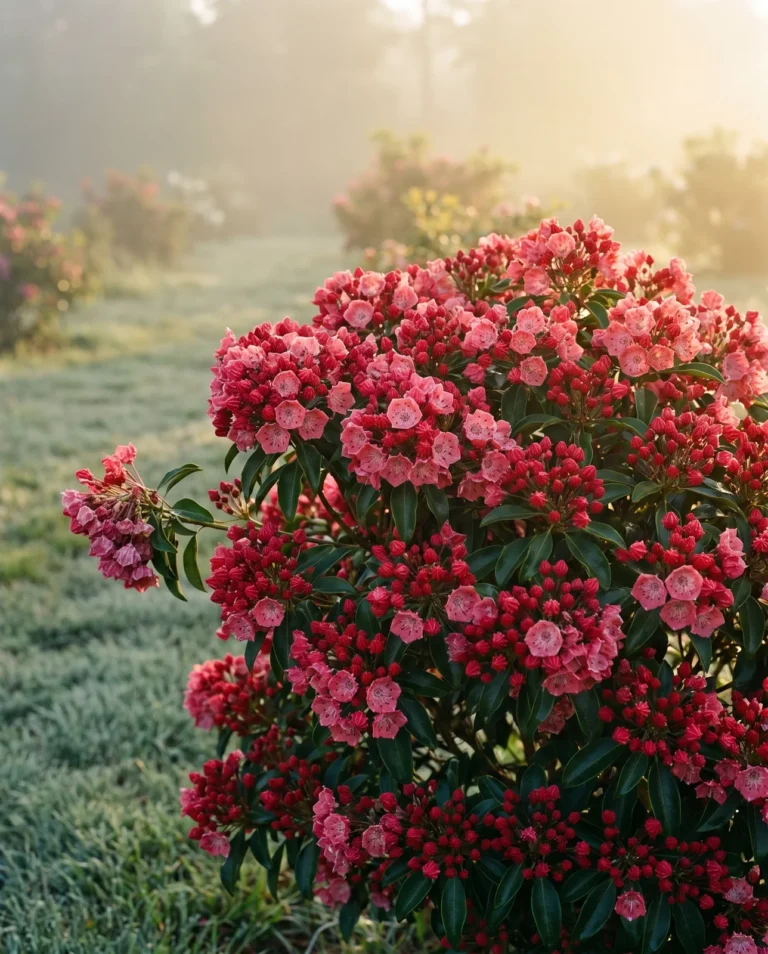
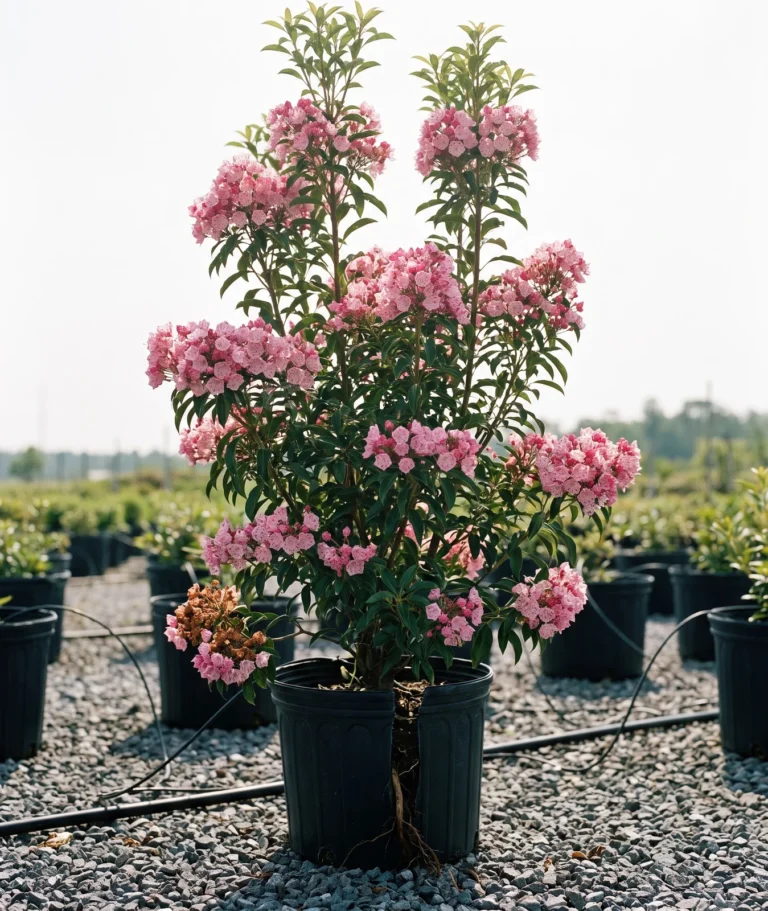
Named cultivars carry the differences that matter most in the garden: mature size, bud color, and the detailed patterns inside the bloom. Many of these selections trace back to the breeding work of Richard Jaynes, considered the leading authority on the species.
The other Kalmia that gets called mountain laurel
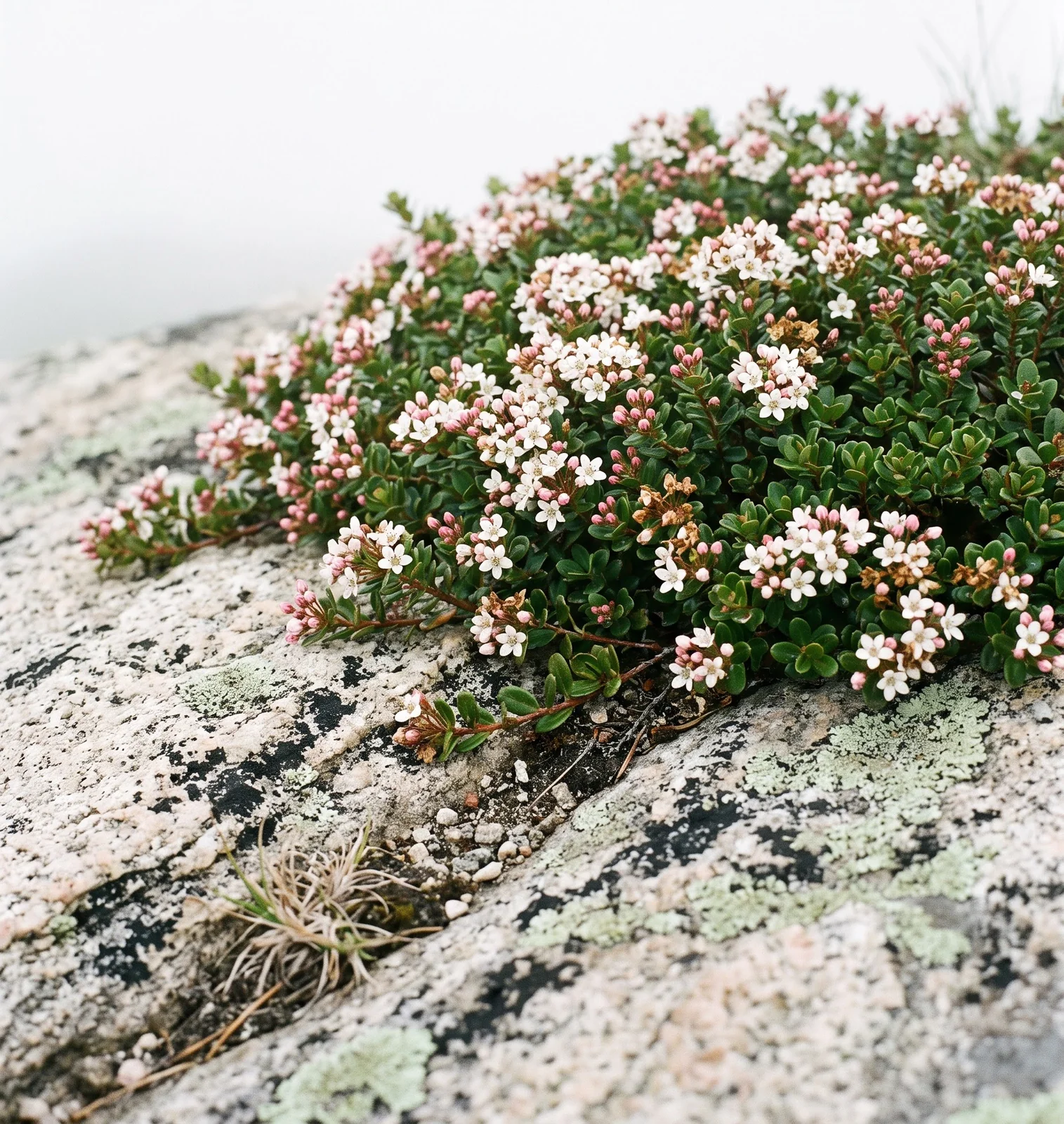
One other shrub in the genus shares the common name, though it is a much smaller plant. Sand myrtle, Kalmia buxifolia, was previously named Leiophyllum buxifolium and also goes by mountain myrtle. Native to the southeast, this low evergreen reaches 18 inches to 3 feet tall and 4 to 6 feet wide in the wild. Thick glossy leaves provide a backdrop for rosy pink buds that burst into white flowers from early spring to early summer. Hikers at high elevations often mistake it for mountain laurel, even though its leaves look like boxwood and its blooms resemble spiraea. Sand myrtle is hardy in zones 6a through 8b. The shrub is also easy to keep, with no serious insect, disease, or other problems.
How much light it needs
Partial shade is the best spot, and mountain laurel handles deeper shade than most flowering shrubs will tolerate. It thrives alongside rhododendrons and azaleas, and can even take the shady north side of a two-story house. Compact selections like 'Keepsake' do especially well in partial shade. The main limit in deep shade is bloom color, because red and pink cultivars need some sun exposure to develop their proper color. A white-flowered shrub blooms reliably in a darker spot, while pink and red varieties need sunlight to reach their full intensity.
How much water it needs
Mountain laurel does best with a slow, deep soak of the root zone to a depth of about 12 to 18 inches. Drainage matters just as much, because the plant does not grow well in heavy clay or wet ground. When ground stays waterlogged, excess moisture and a lack of oxygen damage the feeder roots so the plant cannot absorb nutrients, and extensive damage is often irreversible. Checking how quickly water drains away tells you far more than reaching for the hose.
Height and growth rate
Mountain laurel grows slowly, adding less than 12 inches a year. In the garden it usually reaches 4 to 15 feet tall and spreads 4 to 15 feet wide. On slopes in the Appalachian Mountains it will rarely grow to 32 feet tall as a small tree. That modest pace means a hedge or privacy planting takes several seasons to fill out.
Where it works in a planting, and what deer do to it
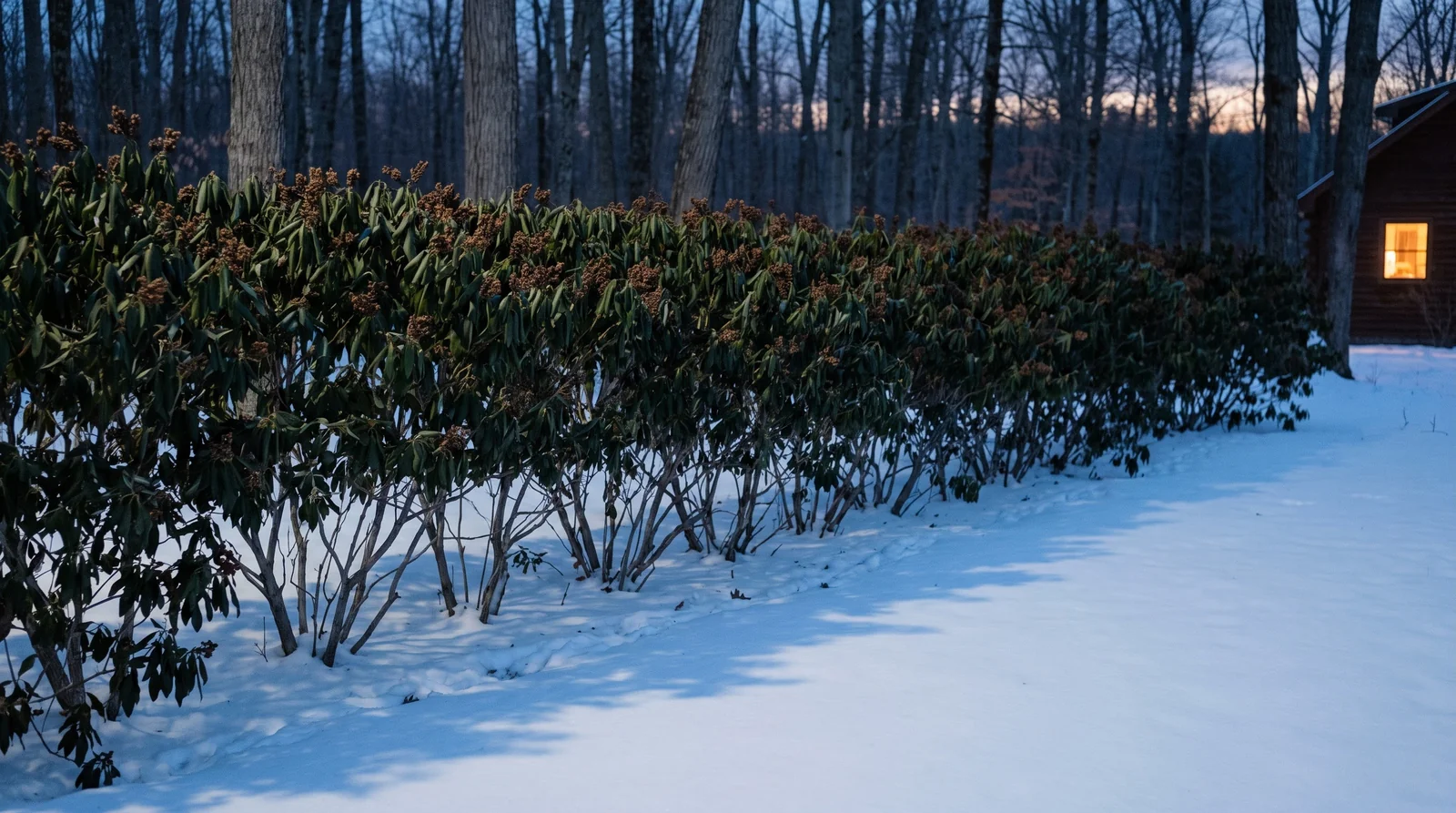
Mountain laurel works well in hedges, foundation plantings, and woodland gardens, where it shares shady, acid soil with camellia, azaleas, and rhododendrons. Its dense evergreen outline holds its shape without shearing. Because it keeps its leaves all winter, it fills property lines and driveways where deciduous shrubs leave bare branches.
Mountain laurel is highly resistant to deer damage, though white-tailed deer browse the leaves and twigs during winter and early spring. The shrub tolerates browsing by deer and rabbits, bouncing back once warm weather returns. The plant is poisonous to deer, cattle, horses, goats, monkeys, and humans. Even so, winter hunger drives animals to chew evergreen foliage when snow hides other food. Putting wire around young shrubs in late fall keeps them safe until they grow tall.
Three things people repeat about mountain laurel
Similar leaves, shared common names, and old assumptions keep these three misunderstandings in circulation.
The myth: Mountain laurel is a rhododendron under another name.
The reality: They are separate shrubs that simply share a similar look. Mountain laurel produces clusters of symmetrical, cup-shaped pink and white flowers. Its leaves are shorter, glossier, and lighter green, while rhododendron leaves are longer, darker green, and less glossy.
The myth: A state flower is a protected plant.
The reality: Mountain laurel is the state flower of Connecticut and Pennsylvania. That title carries no special legal shields, and in Pennsylvania it is not a legally protected plant. Any protection a wild stand receives comes from whoever owns the land where it grows.
The myth: Animals leave a poisonous plant alone.
The reality: Livestock do not instinctively avoid harmful plants. Sheep and goats may graze readily on mountain laurel, and necropsies of animals that died from poisoning show gastrointestinal hemorrhage. Grazing animals do not sense toxicity, so keep livestock away from the shrubs.
FAQ
Is it safe to touch mountain laurel?
Touching mountain laurel is safe, but all parts are toxic if ingested. That includes the bark, flowers, fruit, leaves, roots, seeds and stems, and the poison severity to humans is high. Keep clippings away from animals and out of reach of children.
Why are the leaves on my mountain laurel turning yellow?
The pattern on the leaf tells you what is wrong. When tissue turns yellow between green veins, usually on the youngest growth first, high soil pH is the cause. Wilting, yellowing and dieback in thin, dry ground come from drought. In soggy soil, yellow leaves mean waterlogged ground has damaged the feeder roots and cut off their oxygen.
How do I get my mountain laurel to bloom?
Check your pruning calendar first. Next year's blossoms appear on old growth, so prune lightly and remove spent flower clusters right after bloom, since pruning later cuts off next year's flowers. Then check where the shrub sits, because severe Cercospora infection seems to stunt growth and suppress flowering, particularly on plants in moist, shady places.
What zones does mountain laurel grow in?
Mountain laurel grows across zones 4 to 9, with the widest range running from zone 4a through 9b. Narrower limits put it in zones 4 to 8, 5 to 8, or 5 to 9. In the South, it requires afternoon shade.
How long does mountain laurel bloom?
Mountain laurel blooms for about a month. Flowering typically starts in late May, peaks in late May and early June, and fades by late June. Some shrubs bloom in May, while selections like 'Minuet' flower from May into June.
Where is the best place to plant mountain laurel?
Plant it where it gets morning sun and early to mid-afternoon shade, in cool, moist, acidic, humus-rich soil that drains well. In the South, it requires afternoon shade. The shrub does not grow well in heavy clay or wet ground.
Will mountain laurel survive a freeze?
Yes, mountain laurel is cold hardy down to zone 4a. Its main winter risk is excessive drying, the most common type of winter injury, caused by drying winds, sudden temperature fluctuations, a lack of snow cover and late spring frosts. Symptoms often do not show immediately after the damage occurs, but may appear months later.
Is mountain laurel poisonous to dogs?
Yes, treat mountain laurel as toxic to dogs. The ASPCA classifies Kalmia latifolia as toxic to dogs, cats and horses, even though two entries for the plant name horses alone. It is poisonous to humans and a problem for dogs, cats and horses, so keep pets safely away from it.
How fast does mountain laurel grow?
Mountain laurel grows slowly, adding less than 12 inches a year. A slow, dense, rounded cultivar like 'Sarah' reaches four or five feet tall in ten years.
What is the difference between mountain laurel and Texas mountain laurel?
The two plants are unrelated. True mountain laurel is Kalmia latifolia, a broadleaf evergreen in the heath family native to eastern North America. Texas mountain laurel is Dermatophyllum secundiflorum, formerly Sophora secundiflora, an unrelated legume shrub grown in Austin and Central Texas. Using the botanical name Kalmia separates the eastern shrub from the Texas plant.
Interesting tips
- The genus honors Swedish botanist Peter Kalm (1715 or 1716 to 1779), who explored eastern North America from 1747 to 1751, or was sent by the Swedish government in 1748.
- Mountain laurel is one of just 7 to 10 species in the genus Kalmia.
Related Guides & Flowers
Gardenia
The other acid-soil evergreen that answers alkaline ground with yellow leaves.
Oleander
An evergreen shrub with the same warning on every part of it, grown across the Sun Belt.

Viburnum
A shrub for the same woodland edge, grown for spring flower and fruit the birds take.

Types of flowers
The full index of flowers on the site, sorted by type, season, and color.
Enjoying our flower guides? Add YourFlowersGuide as a preferred source on Google. It helps more readers find us.
Add to Preferred Sources