What a tea olive is, and the three plants it is not
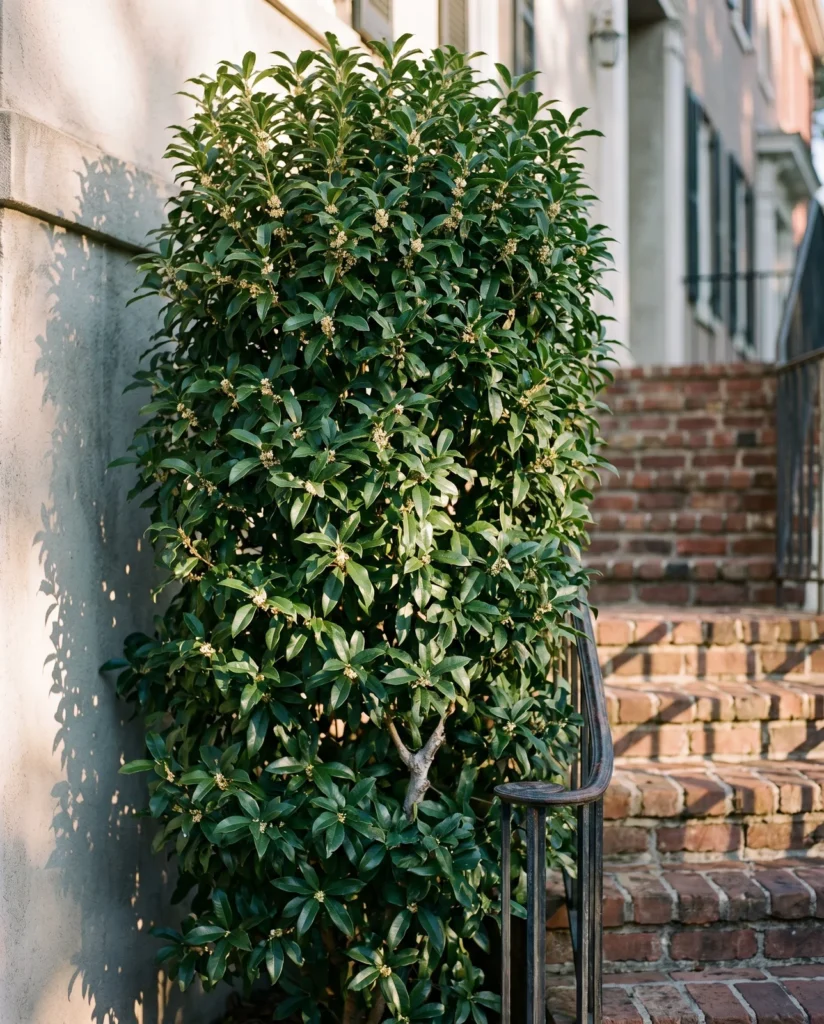
Tea olive belongs to the genus Osmanthus, an evergreen shrub or small tree in the olive family, Oleaceae. The botanical name comes from the Greek words for fragrant flower, osme and anthos. In English, the plant goes by sweet osmanthus, sweet olive, tea olive, and fragrant olive. It is native to China, Japan, and Southeast Asia. Wider records add the Himalayas, Assam, Hainan, Myanmar, Nepal, Thailand, Cambodia, and Vietnam. Four kinds of tea olive grow in American gardens. The first two are fragrant tea olive (Osmanthus fragrans) and holly tea olive or false holly (Osmanthus heterophyllus). The others are hybrids: Fortune's tea olive (Osmanthus x fortunei), thought to be a cross of those two, and Osmanthus x burkwoodii, bred from different parents. Depending on the kind, mature shrubs grow from 6 to 30 feet tall, with about the same spread across.
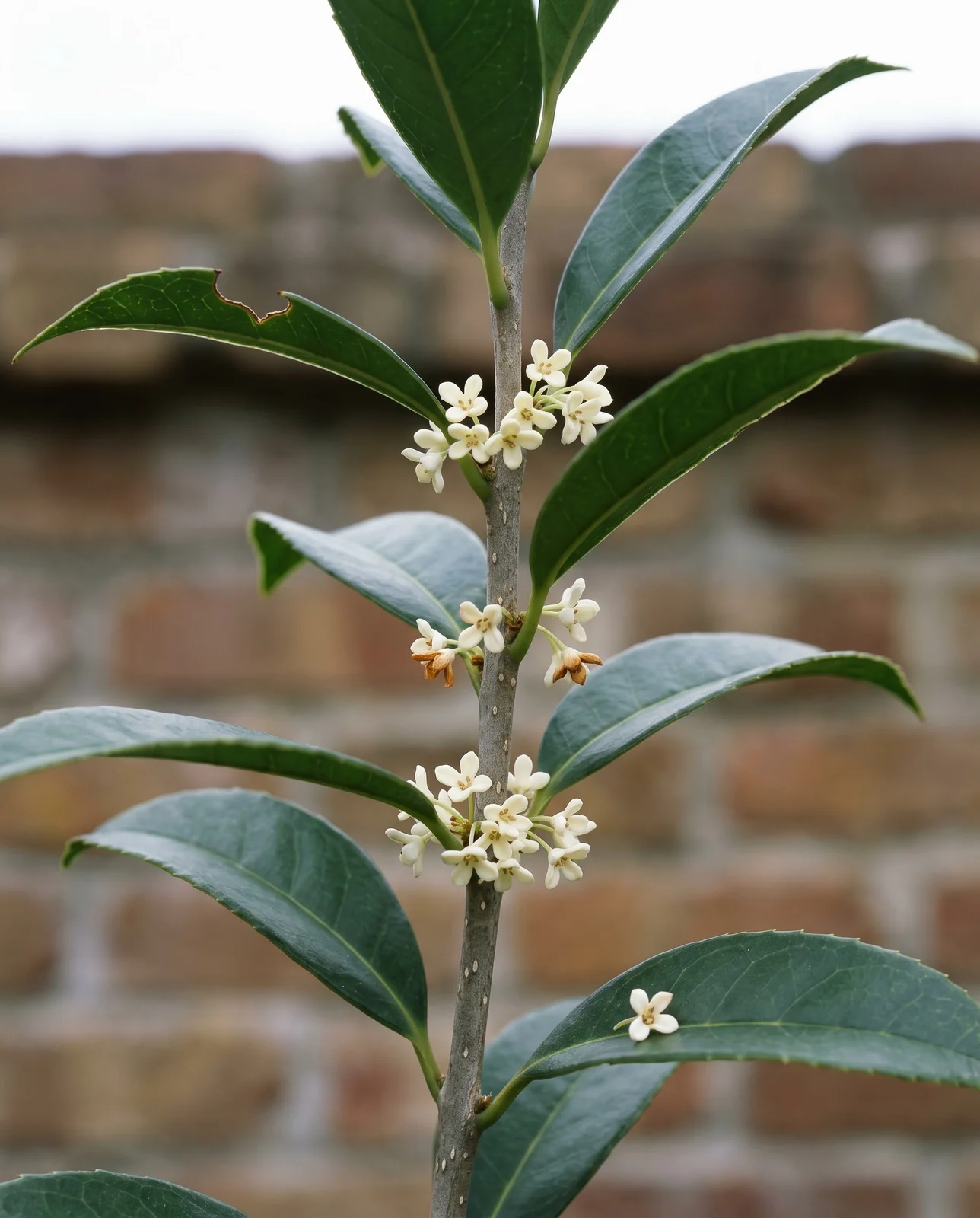
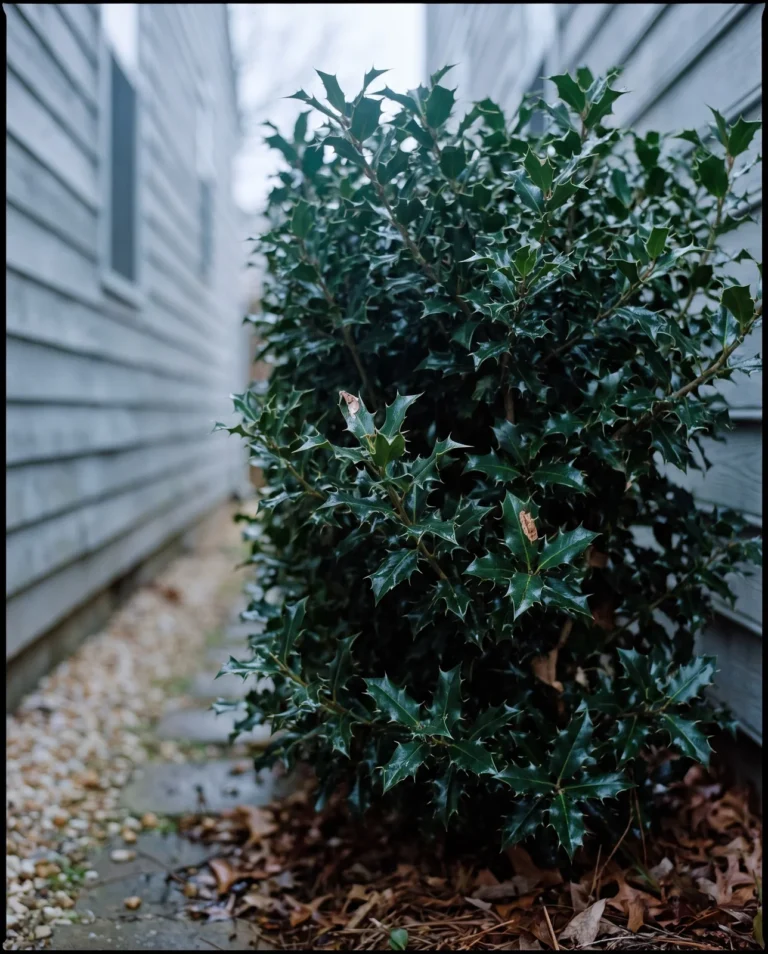
The olive family also includes the true olive. That tree belongs to a separate genus, Olea, unrelated to Osmanthus. True tea brings another point of confusion. Common tea comes from the leaves of a camellia. Osmanthus tea blends dried Osmanthus fragrans blooms into green or black tea leaves for scent. The third mix-up is holly. Holly tea olive has spiny leaves that look like holly at first glance. But false holly holds its leaves in opposite pairs down the stem, while true hollies alternate.
Plant tags cause confusion when two shrubs share the name sweet olive. In everyday garden use, sweet olive refers to Osmanthus fragrans. Some research trials, however, use sweet olive for Osmanthus armatus, calling Osmanthus fragrans fragrant tea olive. When two plants share a common name, a hardiness number for one can easily end up on the tag of the other.
The flowers, and the scent that arrives first
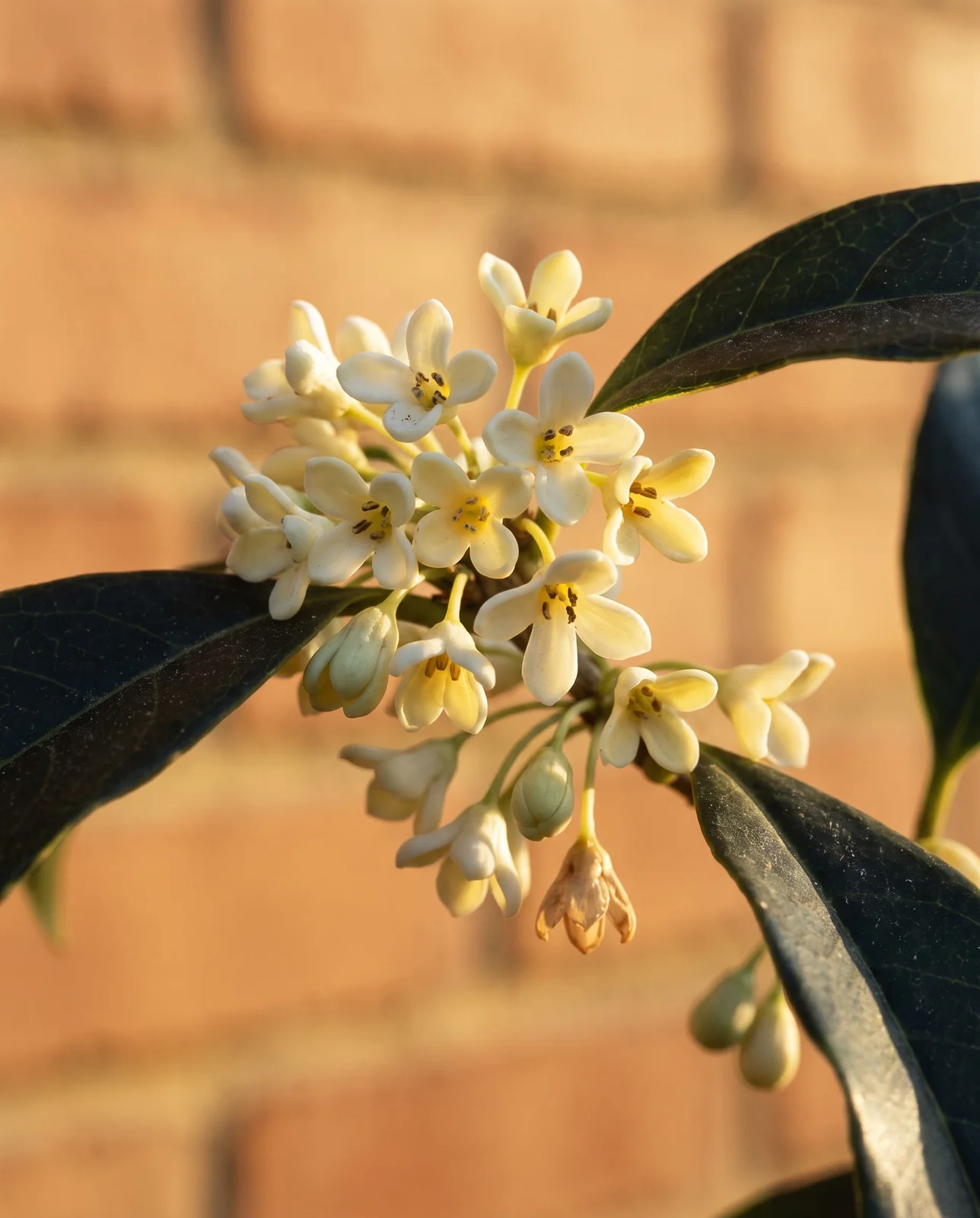
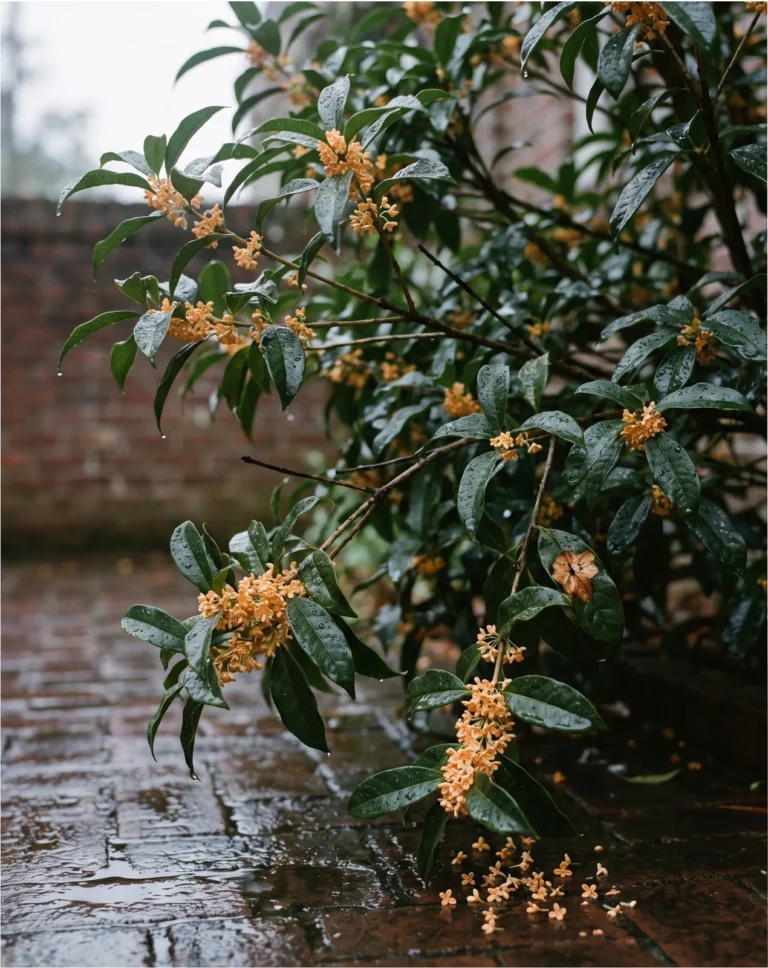
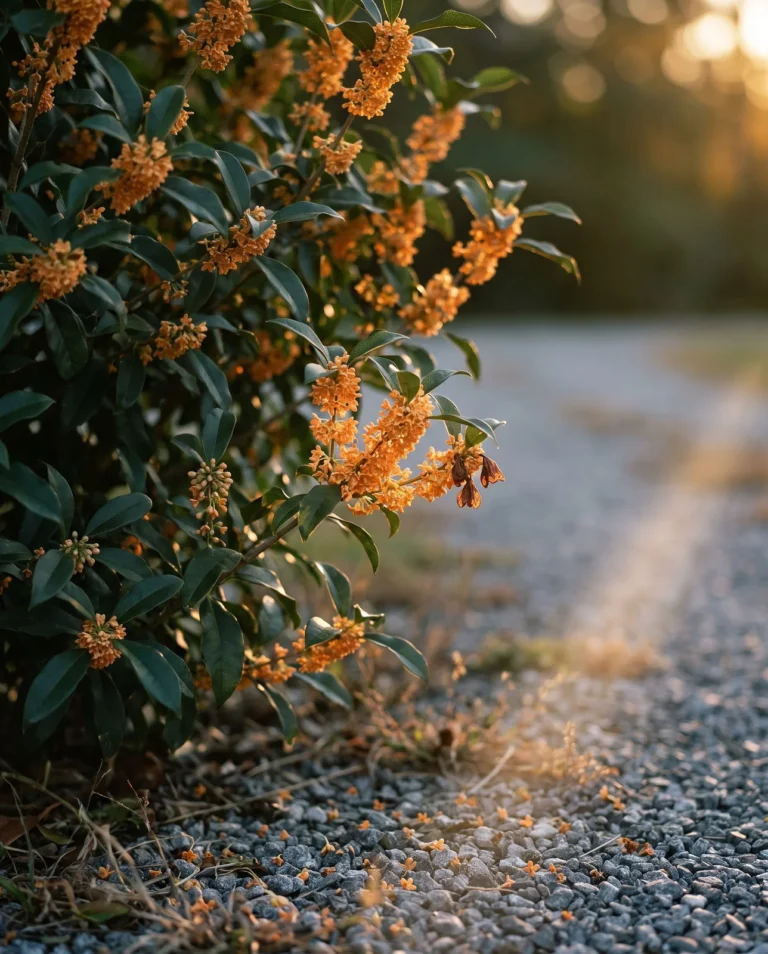
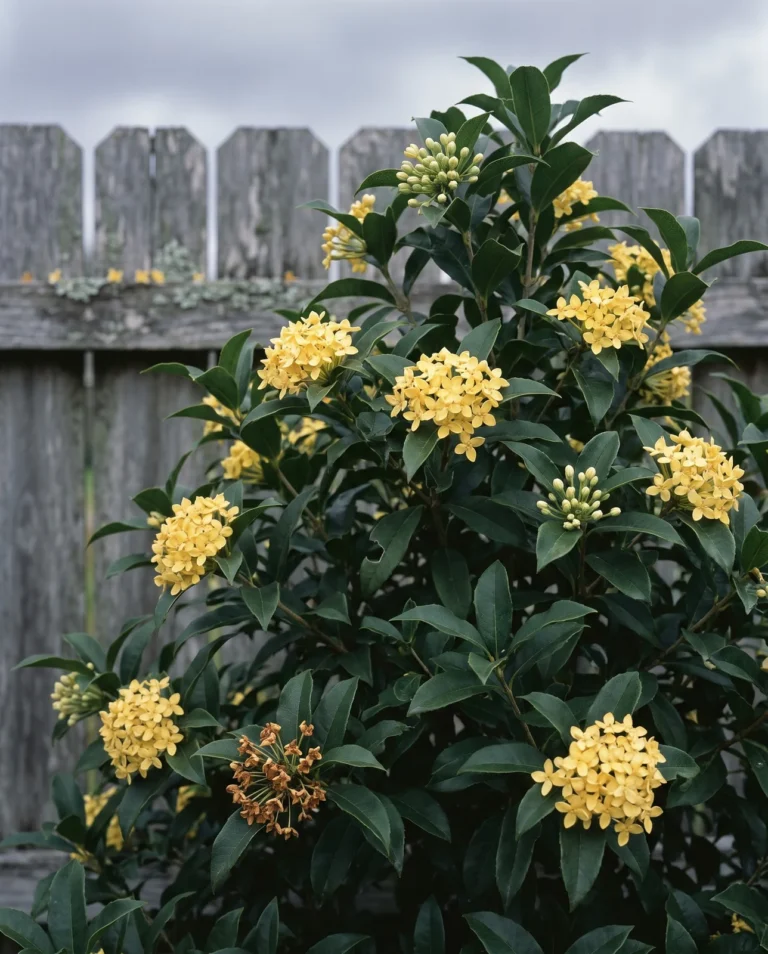
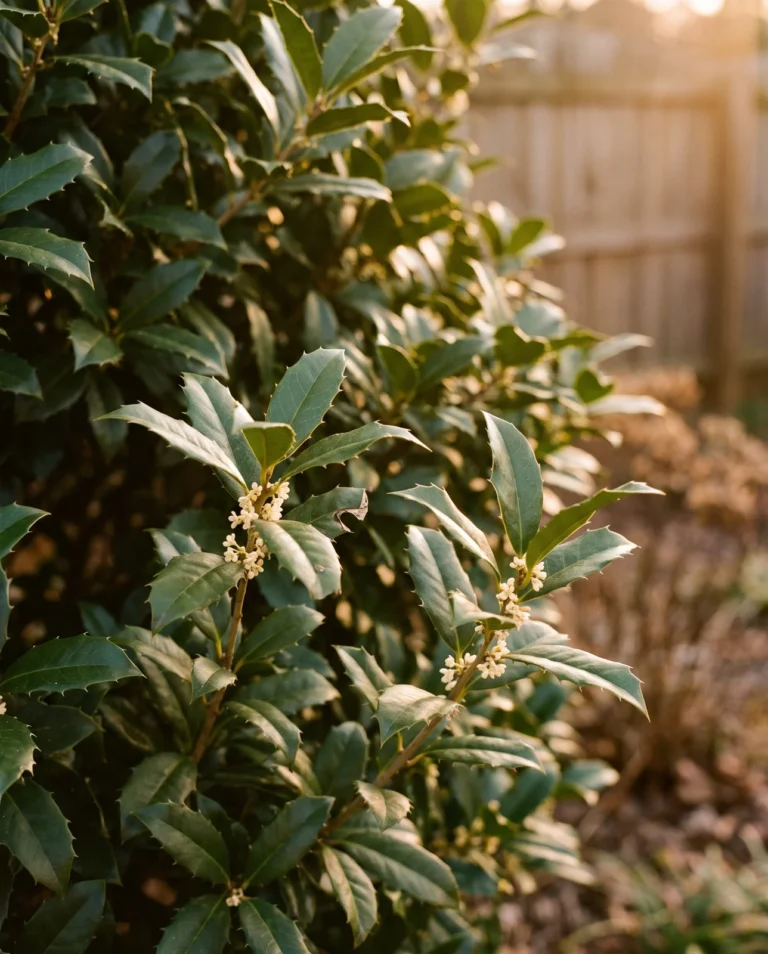
The tiny flowers cluster quietly in the leaf axils along the stems. Each blossom measures under 1 inch across with four or five petals, reaching about half an inch long. Color ranges from pure white and cream to gray, pale yellow, and orange. The warmest shades belong mostly to named selections such as 'Butter Yellow' and 'Apricot Gold', alongside the orange-flowered form aurantiacus, though varieties of the species can also carry orange, gold, and reddish hues.
The scent is the main reason to grow it, a sweet fragrance usually compared to ripe apricots, peaches, orange blossoms, or jasmine. How far that scent travels across a garden has no fixed distance, but the blooms perfume a wide area, and you will probably smell the shrub well before you notice the flowers.
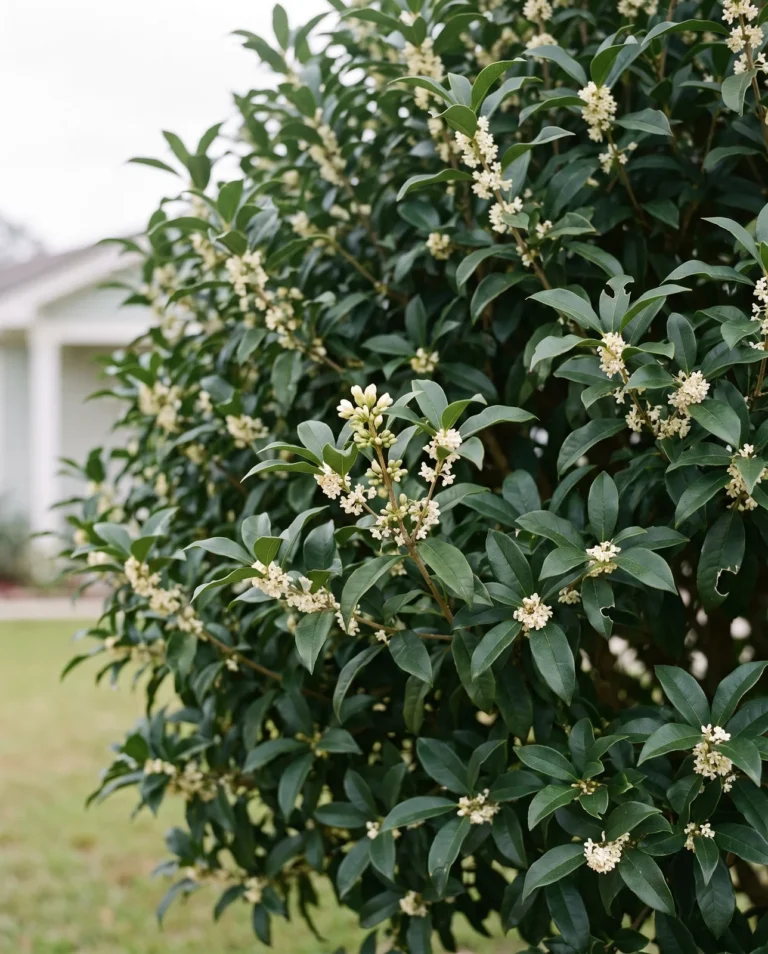
A few steps away, a tea olive in full bloom often looks like an ordinary green shrub. The blossoms are not particularly showy, leaving people to wander the yard wondering where that sweet fragrance comes from. While heavy flushes can look showy in certain years, the scent is what makes the impression.
When it blooms, and how many times a year
How often a tea olive flowers depends on which variety you grow, but for three out of four cultivar groups, the answer is once, in autumn. More than 160 cultivars of Osmanthus fragrans are grouped into four main classes based on traits like flower color and bloom season. The Yingui, Jingui, and Dangui groups bloom only in autumn, while the Sijigui group flowers repeatedly from fall through spring. Plants in the Yingui group produce white to pale yellow flowers, while the Dangui group carries orange blooms. That variety split decides whether your shrub gives one autumn show or keeps blooming into spring.
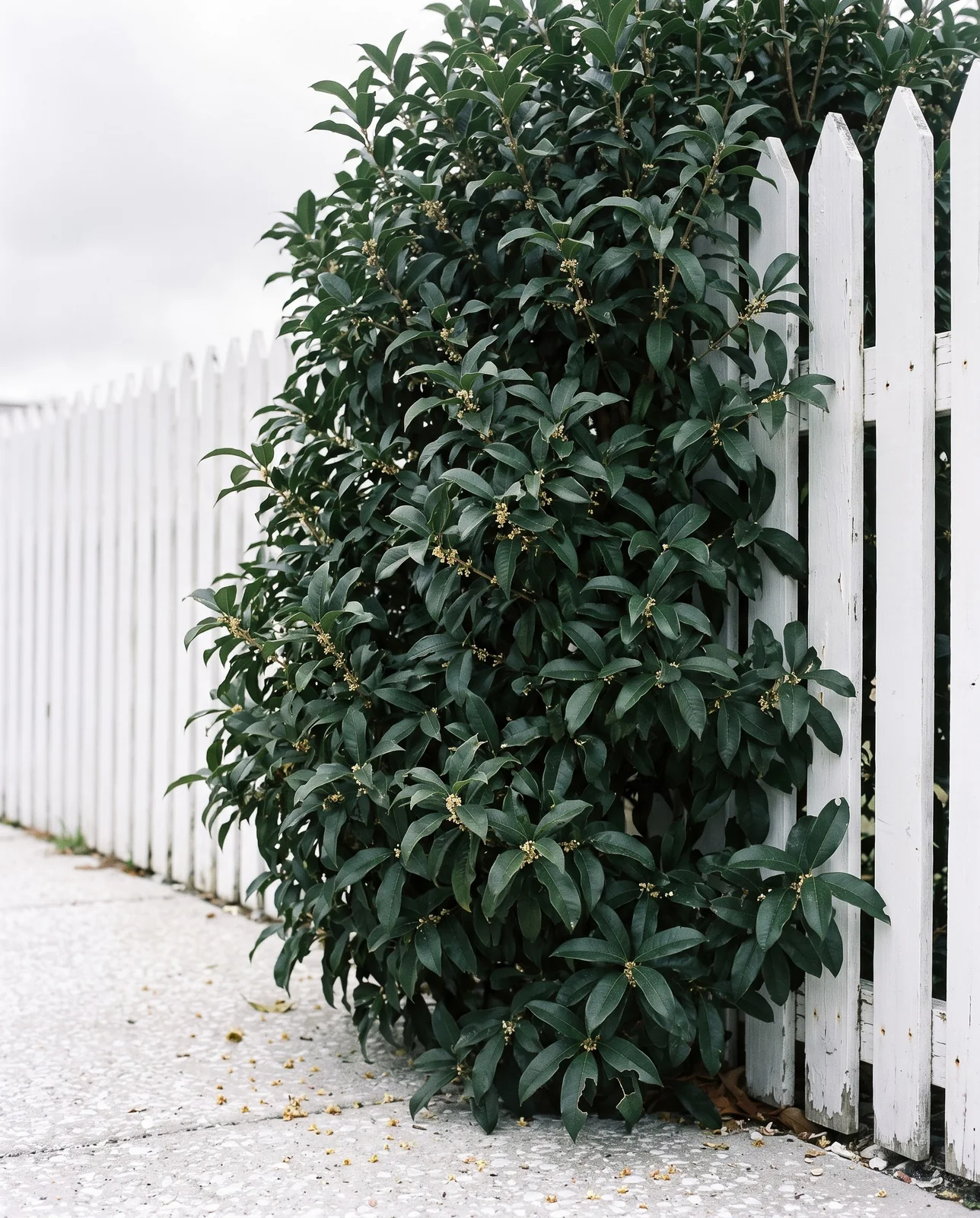
Even for fragrant tea olive itself, bloom windows vary with local climate. Some shrubs produce flowers in early spring and again in fall, while others start in April and continue blooming sporadically through summer into autumn. In mild southern gardens, the fragrant blossoms often appear from October through March. Main flushes typically arrive in October and November, often lasting for 2 months in the fall with scattered blooms continuing through winter and into spring. An established shrub frequently flowers several times across the year, with some bloom cycles noticeably heavier than others.
Other tea olive species keep their own distinct flowering schedules. Holly tea olive opens its tiny, intensely fragrant flowers in the fall, beginning in September or October and continuing into November or even winter. Fortune's tea olive blooms in late summer and fall, its white flowers lasting for several weeks from October to November. Because each species follows its own schedule, pairing different types can keep the garden fragrant for months.
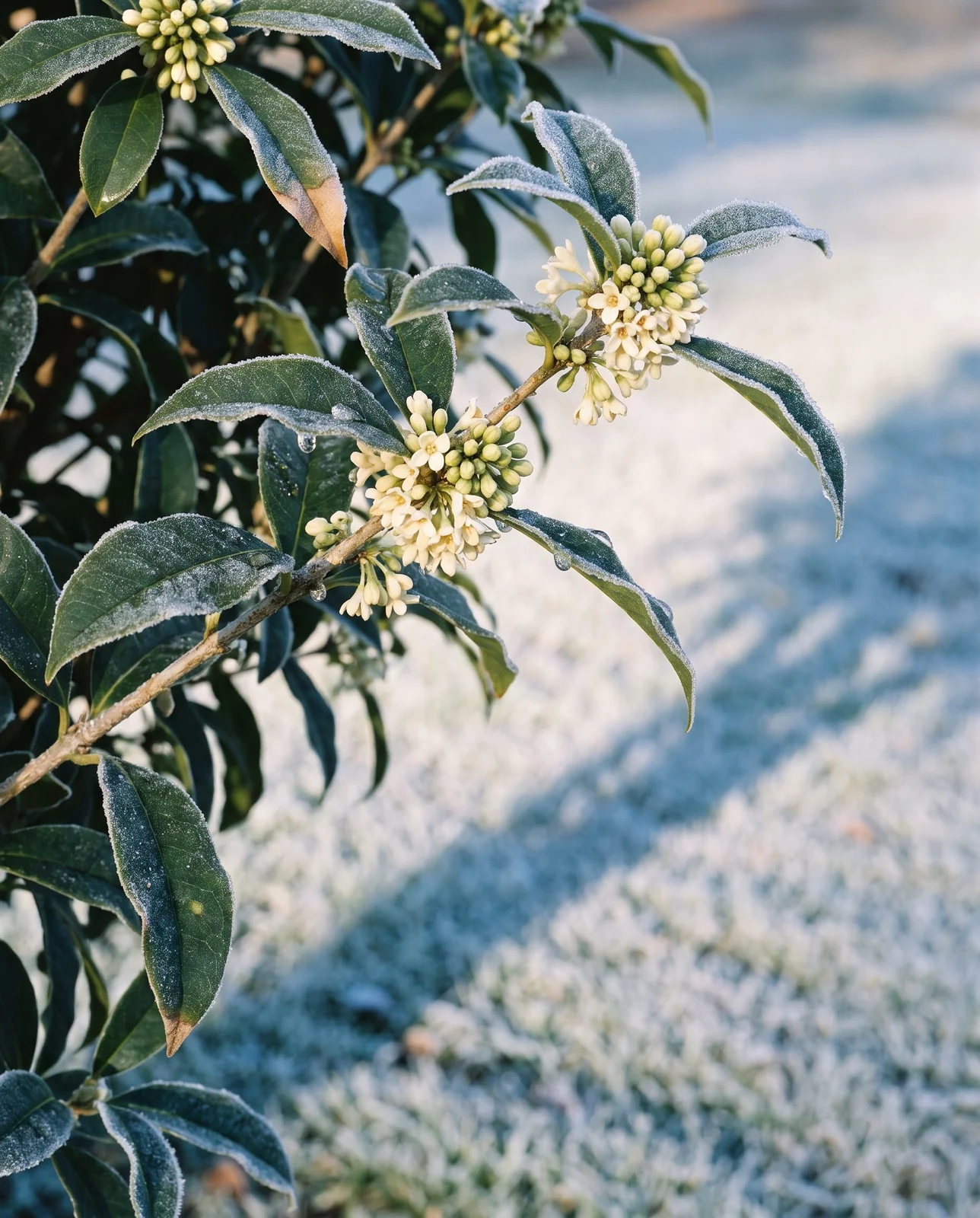
Cold hardiness by named type
A single hardiness range cannot describe tea olive because several distinct plants share the name. Here is how each named type performs in cold weather.
Where to put one so you can smell it
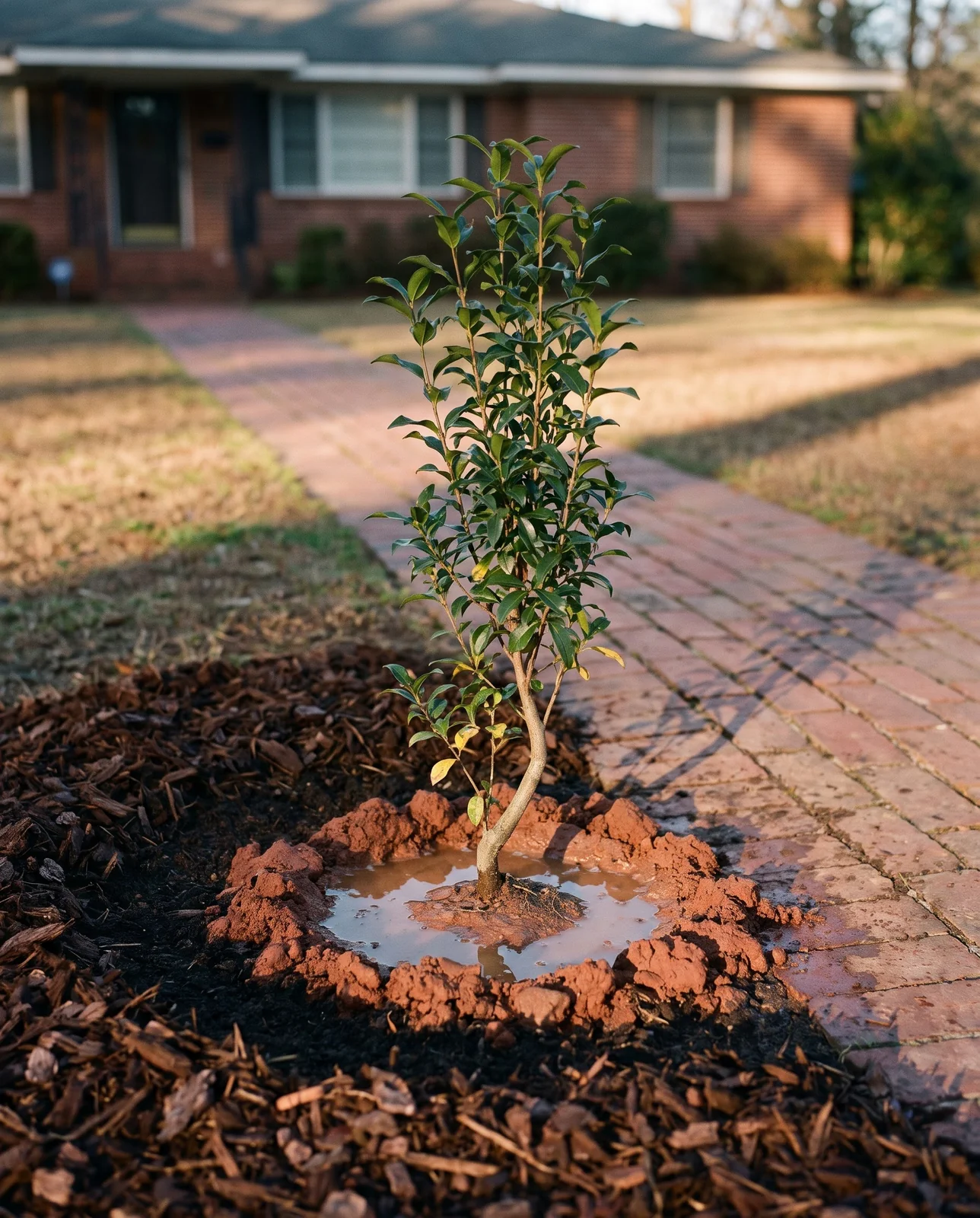
Plant a tea olive where people walk every day, because the flowers are tiny and the fragrance is the real reward. Set it along a pathway, patio, or entrance so you catch the scent in passing. It also works as a standalone lawn specimen, a screen, or the backdrop for a perennial bed, needing 6 to 12 feet of space to spread. Sun requirements depend on where you live. It does well in full sun to partial shade in moist, well-drained soil, but afternoon shade is a must in hot southern climates. In Florida, it thrives through the north and central regions, and can also grow in South Florida if given partial shade.
The soil beneath it matters just as much. The roots need moist ground with good drainage, though they tolerate heavy clay. Established shrubs tolerate drought, but they still need supplemental watering during hot, dry spells. Spacing them 4 to 6 feet apart from center to center creates a wall of fragrance through fall, winter, and spring.
Why a healthy tea olive stops flowering
When a healthy shrub refuses to bloom, pruning shears are usually to blame. Most tea olives need their pruning done before spring growth begins, because they flower on the current season's wood. The exceptions are spring-blooming species like Osmanthus delavayi and Devilwood (Osmanthus americanus), which should be pruned immediately after they finish flowering. On fall-blooming types, next season's buds form on the growth the shrub puts on through the year, so late pruning can easily diminish the flower display. Light clipping is fine to encourage a denser canopy, but heavy cutting takes away flowering wood and costs you blossoms. Shearing stems after that summer growth has set simply trims off the buds before they ever have a chance to open.
Descriptions sometimes call this blooming on new growth and sometimes on old wood, but both refer to the same cycle: the stems put on during spring and summer carry the autumn flowers. Osmanthus x burkwoodii is the one true exception among the common types, flowering on last season's wood and needing its pruning directly after it finishes blooming in spring. A blanket rule of heavy shaping right after early spring flowers fits those spring-blooming species perfectly. Applied to a fall-blooming shrub, however, hard cutting at that time removes the wood where next season's flowers need to form.

Working out why yours has no flowers
Work through these checks in order and stop at the first one that fits your shrub. Pruning sits first because a bad cut can cost more than one season of flowers.
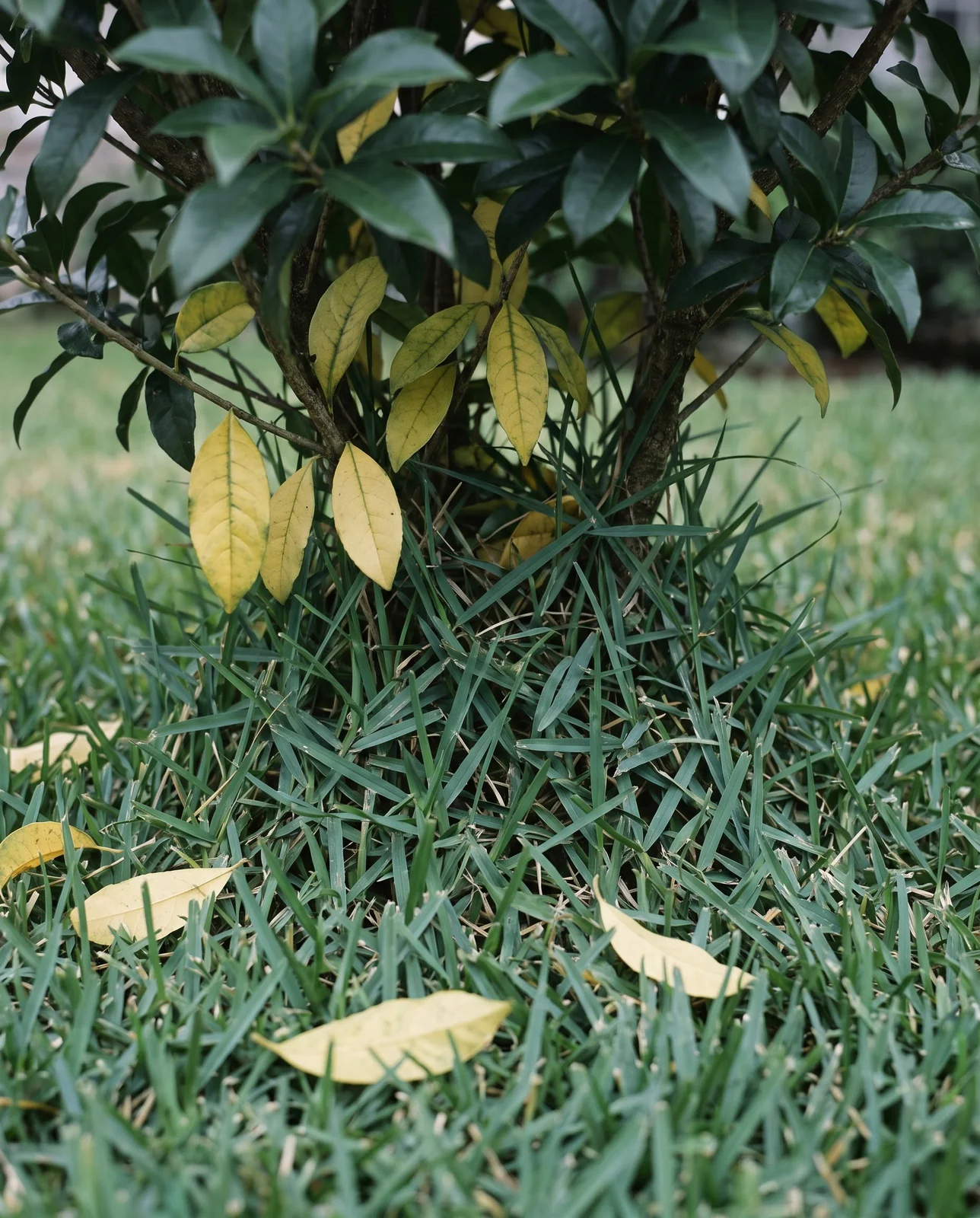
Yellow leaves, scorched margins, and leaf drop
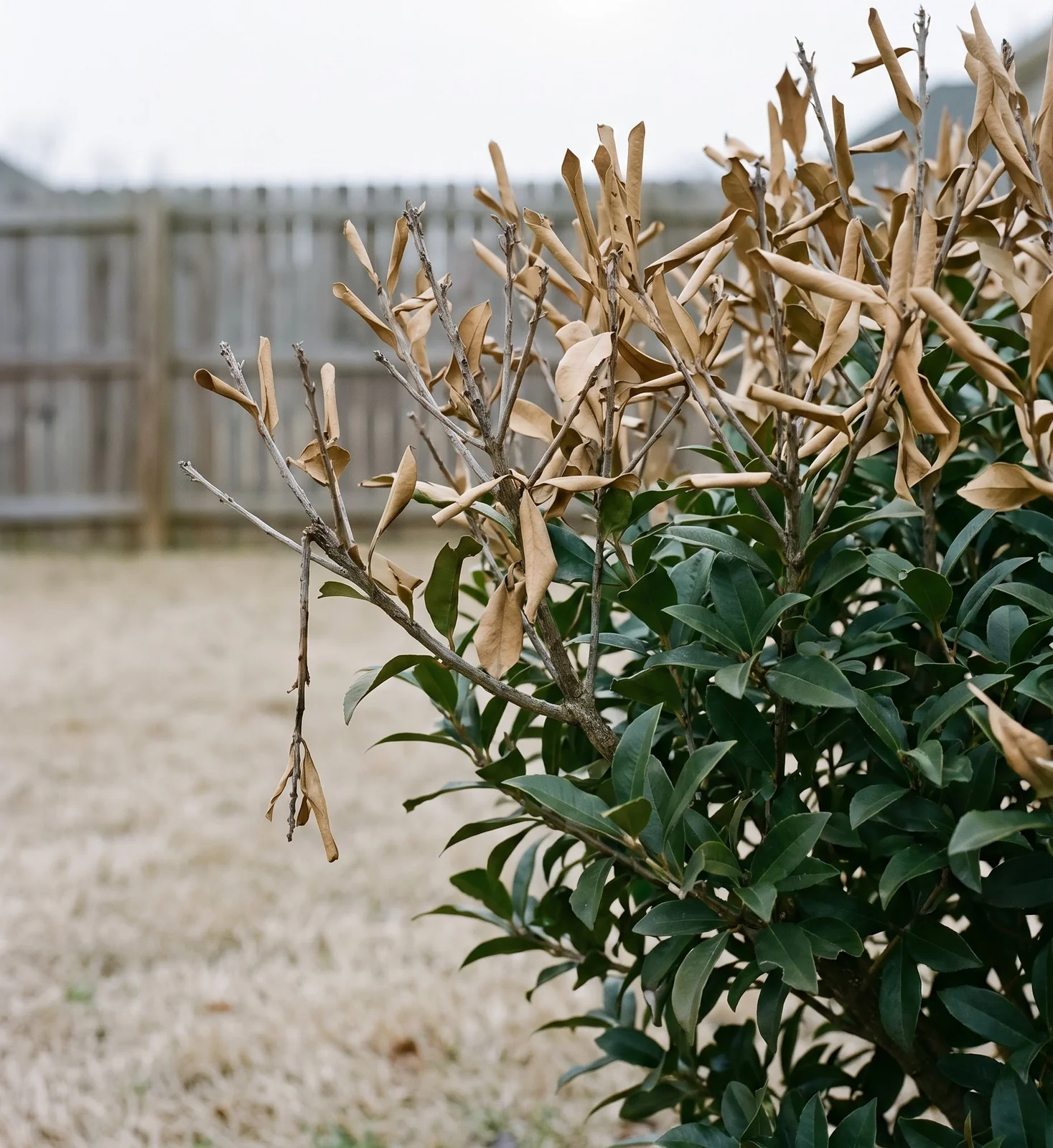
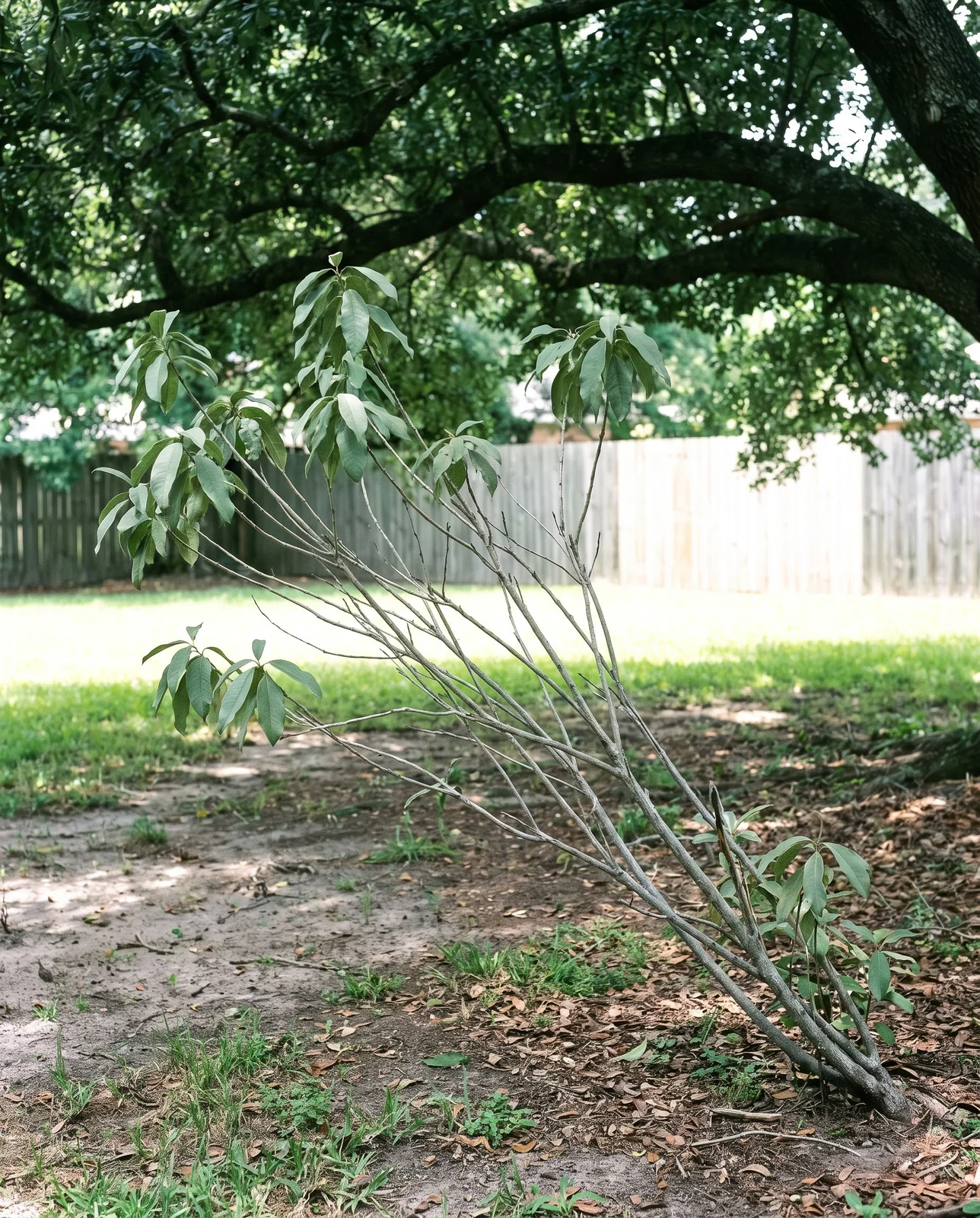
Yellow leaves on a tea olive come from a few distinct causes, and one serious disease has no cure. Sweet olive leaf scorch is a bacterial disease caused by Xylella fastidiosa. It begins as pale, mottled yellowing at the leaf tips and margins that creeps inward toward the midrib, before the edges brown and die. No chemicals are available to manage it, and severely infected plants drop their leaves and die. Because symptoms of marginal leaf scorch are often attributed to salt injury or water and heat stress, a positive diagnosis requires specialized laboratory testing.
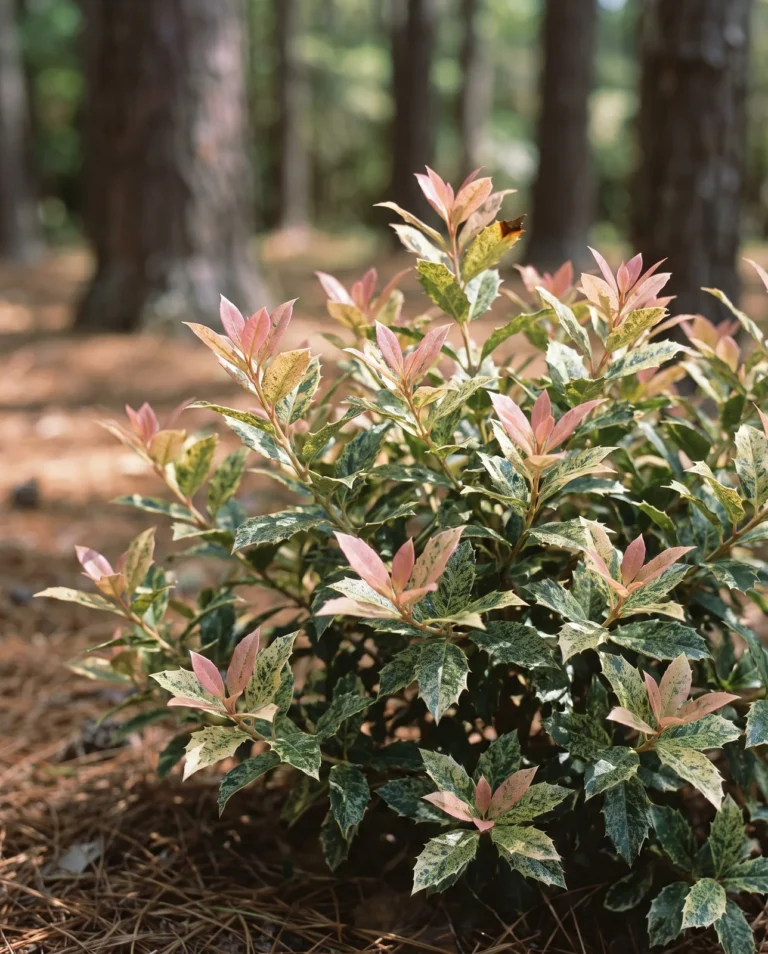
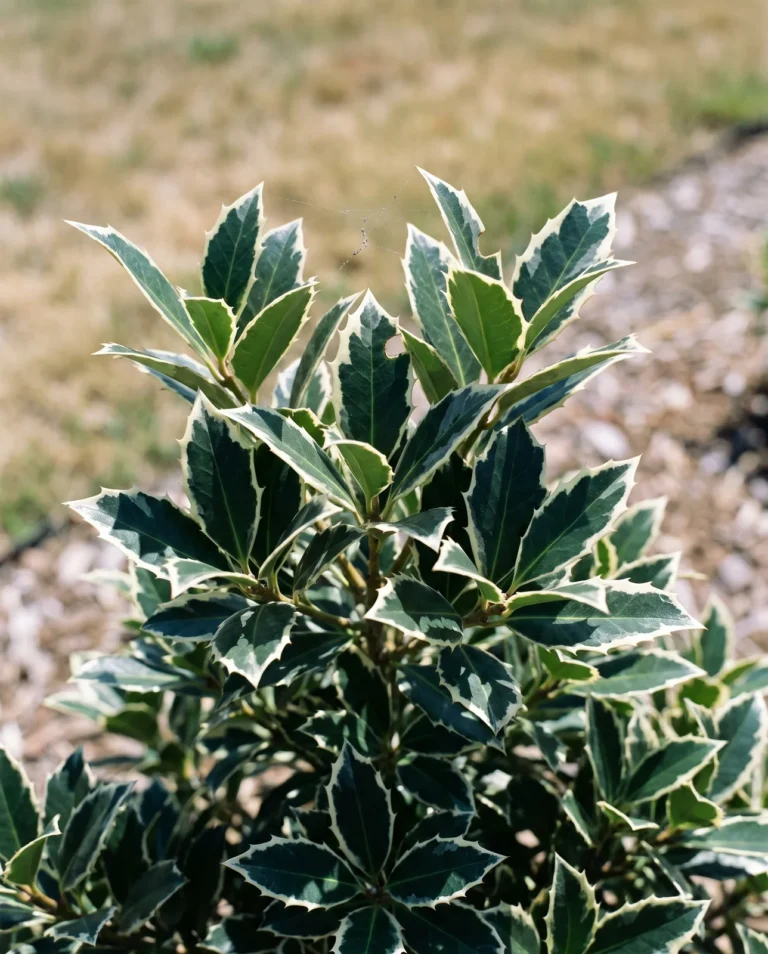
Most yellow foliage has a simpler explanation, and soil moisture is the first place to look. Prolonged drought during dry months yellows leaves, while soggy ground invites root rot. Sunlight can also scorch variegated foliage. Holly tea olive 'Goshiki' may show leaf discoloration in full sun, while 'Variegatus' holds dark green leaves with creamy white edges that do not discolor there. Because tea olives do not create a litter problem from fallen leaves or fruit, heavy leaf drop is a clear sign that the shrub is stressed.
Pruning, shearing, and shaping it into a tree
Left to itself, a tea olive needs very little pruning. Its natural columnar shape keeps it neat, though you can prune to encourage fuller branching. Nipping off the growing tips maintains a compact size and pushes the shrub to bush out. Save heavy cutting for late winter while the plant is dormant to reduce size or train a small tree. If you shear hedges, stop about two months before your average first autumn frost to protect late growth.
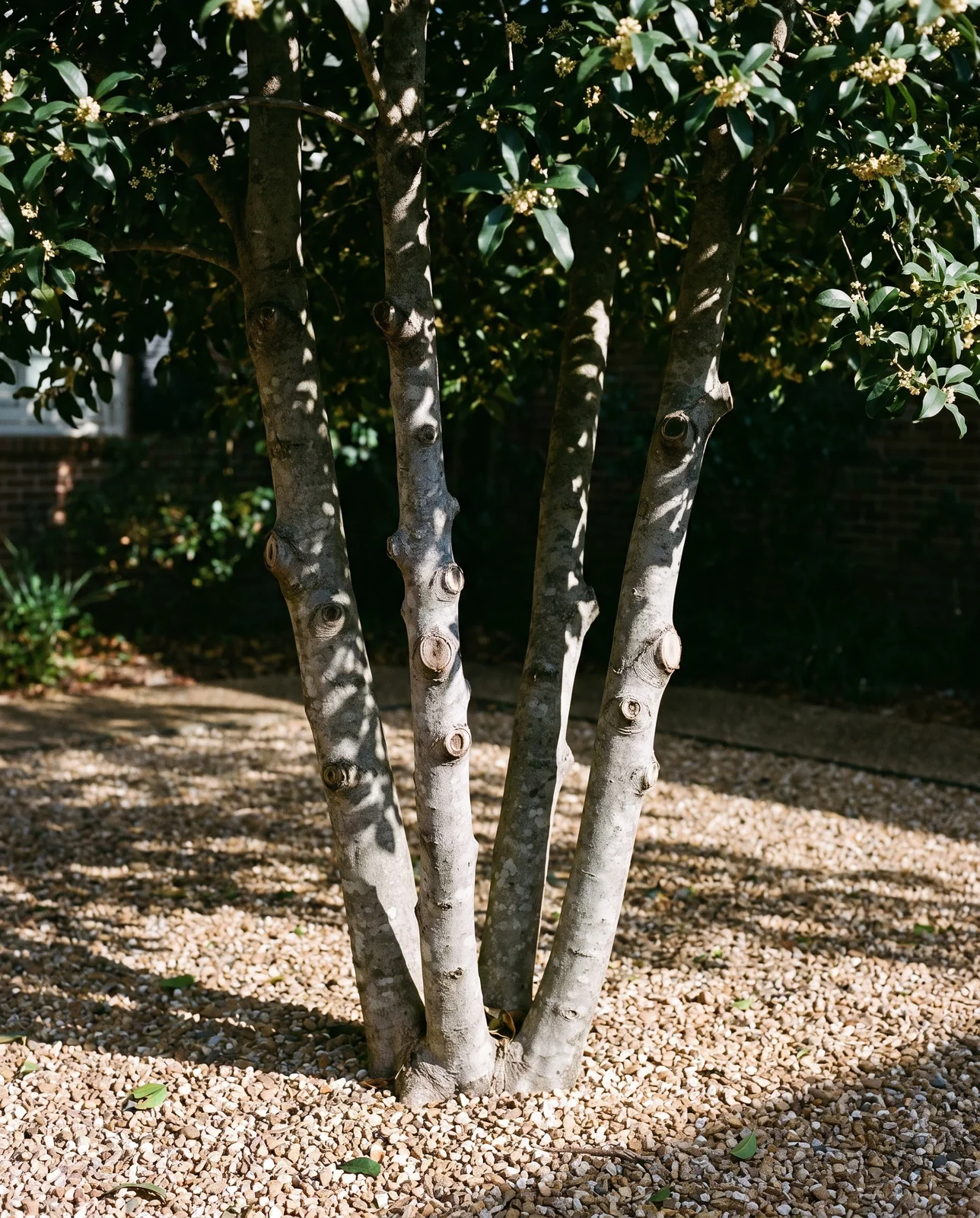
Those pruning methods create three distinct shapes in the garden. For a clipped hedge, smaller-leafed selections of holly tea olive, Fortune's tea olive, and Delavay tea olive can be held as low as 4 feet. Fortune's tea olive also trains well into a multi-stemmed small tree, or you can leave it unpruned as a standalone specimen. If you renovate an overgrown shrub, cut carefully, because severe pruning can prevent the plant from blooming for several years.
The named tea olives, side by side
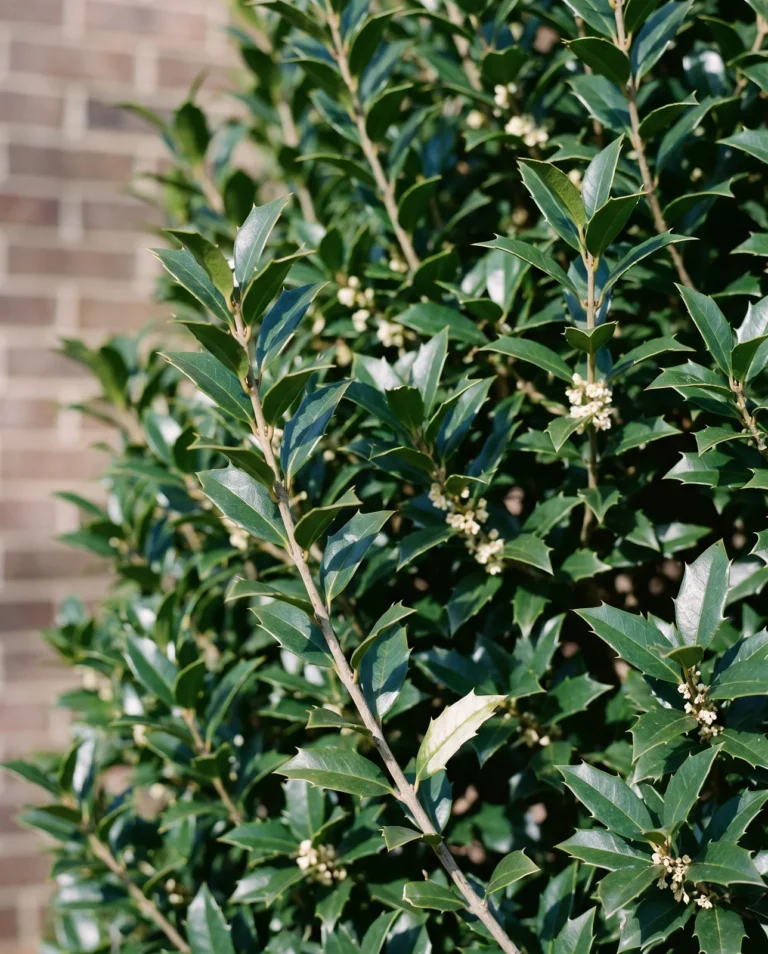
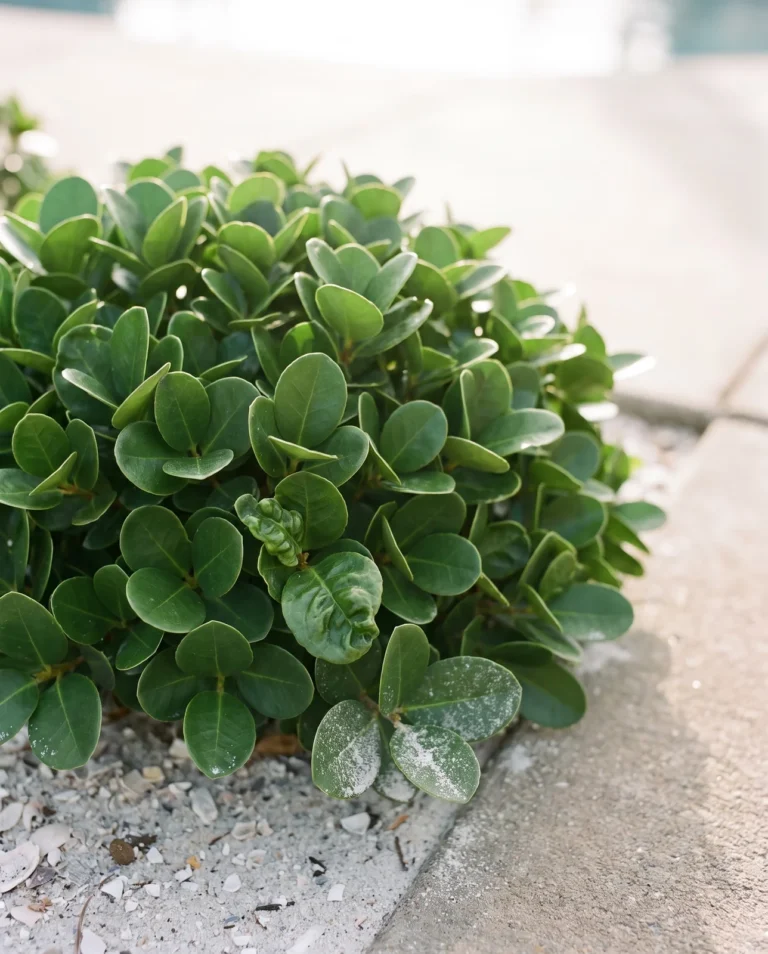
These ten tea olives differ mainly in foliage, flower color, and the winter cold they tolerate, with improved selections offering warm yellow or orange flowers. Botanical names are included on each card because common names often overlap.
How much sun it actually needs
Most tea olives grow well in anything from full sun to medium shade. Different species lean toward different parts of that range. False holly prefers partial shade to full sun. Burkwood tea olive tolerates partial shade as well, but it produces its best flower display in full sun. Gold and variegated selections need more shelter from harsh afternoon sun. Both 'Goshiki' and 'Ogon' grow best in partial shade, making them good companions planted near azaleas in protected garden beds.
Soil, pH, and the one feeding instruction
Tea olives grow best in fertile, moist, well-drained soil with a slightly acidic pH, though they readily adapt to clay, sand, and loam. Formal research does not set a single target number for pH, but general garden guidance spans from 5.0 to 7.5. Most average garden soils fall between 6.0 and 7.0, fitting comfortably within what the shrub accepts. That rich, acidic, well-drained soil also makes a natural border to share with gardenia.
Several tea olives tolerate difficult conditions well beyond their preferred ground. False holly handles alkaline soil along with pollution, heat, drought, and urban grime. Fortune's tea olive prefers acidic soil, but it tolerates alkaline soil and city pollution as well. Burkwood tea olive withstands heavy clay, alkaline soils, shade, pollution, and drought. For feeding, apply a complete fertilizer in early spring, choosing a mix with slow-release nitrogen to encourage steady growth.
Watering, before and after it settles in
Once settled into the ground, a tea olive is moderately to fairly drought tolerant. Young plants need steady moisture while they build their root systems. Water newly planted shrubs consistently through their first seasons, because growth rate is greatly influenced by soil quality, water, and nutrient availability.
How big it gets, and how fast
Fragrant tea olive is most often seen in gardens at 10 to 12 feet high with an 8-foot spread. In cultivation, it typically grows 10 to 15 feet tall and wide. Older shrubs can grow larger depending on conditions, from 10 to 20 feet tall and 10 to 14 feet wide to 15 to 30 feet tall and 15 to 20 feet wide. Individual plants can reach 20 to 25 feet, and in their native Asian habitat they reach 20 to 30 feet tall.
Growth is slow to moderate, adding about 4 to 12 inches a year. Fragrant tea olive grows at a slow or medium pace, while holly tea olive, Fortune's tea olive and Osmanthus x burkwoodii grow slowly. Across the genus, shrubs range from 6 to 30 feet tall depending on the cultivar, with the width usually matching the height. Nursery plants often give an expected size of 10 to 15 feet tall and wide, matching what a cultivated shrub typically reaches.
Growing one in a pot, and what zone 4 really means
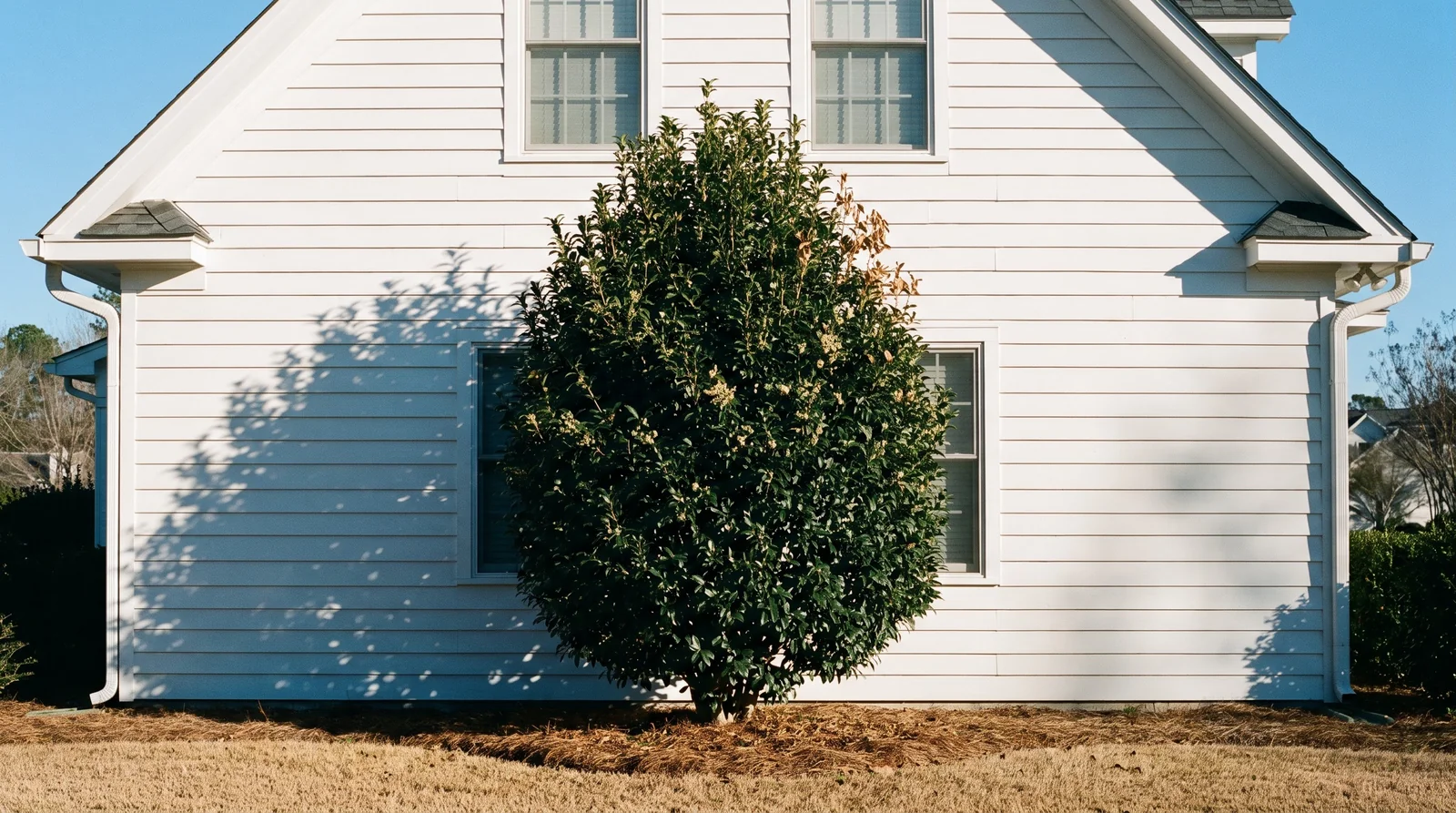
A tea olive grows well in a pot, making it easy to enjoy on a deck or patio. Where winters are too cold for the ground, fragrant tea olive can overwinter indoors in a bright, cool spot, or stay inside year-round as a houseplant. Holly tea olive handles cold climates like St. Louis the same way in a pot indoors. Tags sometimes give hardiness as zones 8 to 10 in the ground but zones 4 through 11 in a container. In zone 4, that simply means the plant spends winter indoors, staying inside through cold days and nights until warm weather returns.
Screens, hedges, and where it belongs in a yard
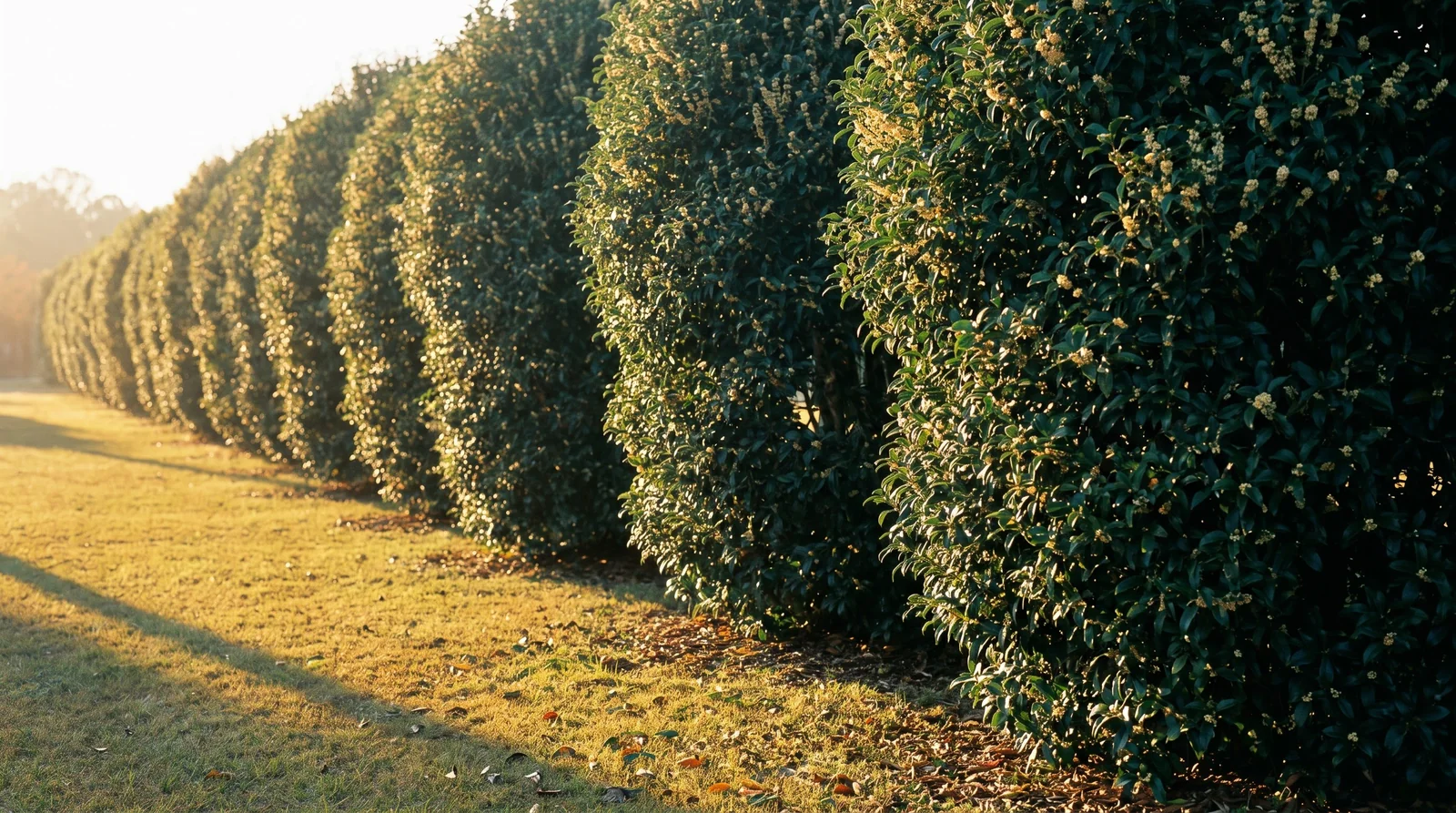
Both fragrant tea olive and false holly work well as privacy screens, hedges, barriers, or specimen plantings. In Southern gardens, false holly shares screening duty with viburnum. Keep it away from house foundations, however, where its eventual size becomes a problem unless you choose a dwarf cultivar. Deer rarely bother the shrubs. Fragrant tea olive resists deer browsing and drought, false holly resists deer, Fortune's tea olive resists both deer and rabbits, and browsing on Osmanthus x burkwoodii is almost nonexistent. How much salt tea olives tolerate is unsettled. Fragrant tea olive is credited with salt resistance, yet it has low aerosol salt tolerance. Tea olives generally do not tolerate salt spray, leaving native Devilwood as the lone exception. Close to open water, that difference decides where you plant.
Scale, root rot, and the rest of the trouble list
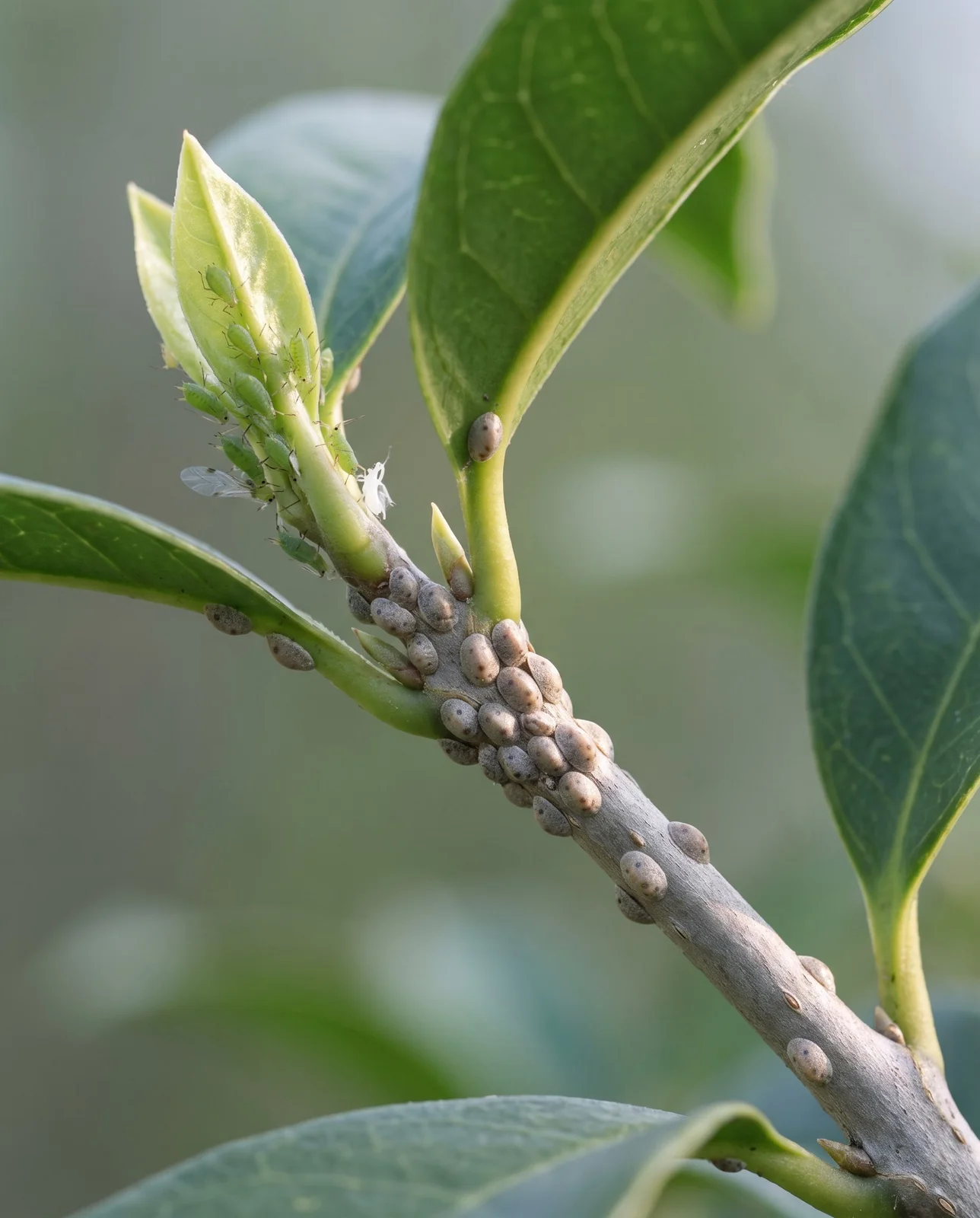
Tea olives are long-lived plants that remain virtually pest free in ordinary garden soil. Neither false holly nor Sweet Osmanthus has serious pest or disease problems, though scale, aphids, and nematodes can appear. Fortune's tea olive is similarly trouble free, though scales and nematodes can occur, and mushroom root rot may develop if soil stays too wet. Aphids and scale are the insects to watch for on fragrant tea olive, along with armored scale, bifasciculate scale, red-headed flea beetle in container nurseries, sooty molds, and borers shared with lilac and ash.
When scale appears, a spray of 2 percent horticultural oil at 5 tablespoons per gallon of water controls it. Scale usually turns up when growing conditions are poor, and diseases are otherwise uncommon. Most serious diseases follow watering extremes. Drought stress is most commonly behind Botryosphaeria canker, with Cercospora leaf spot and anthracnose appearing as occasional problems. At the wet end, Phytophthora and Pythium root rots develop in poorly drained or excessively wet soil.
Osmanthus tea, and what is actually edible
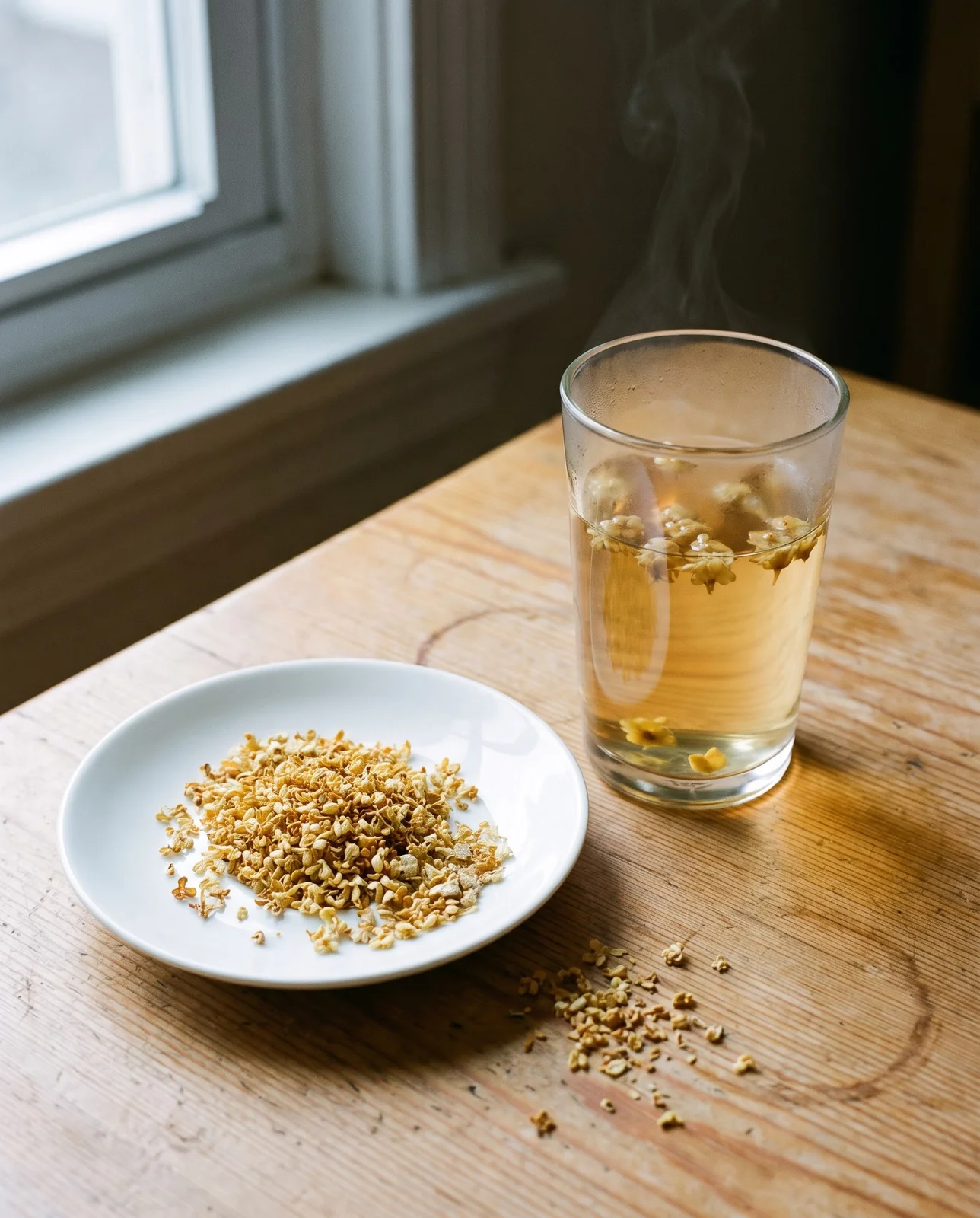
The flowers are the edible part of tea olive, used across East Asia in teas and other beverages. Flower extracts also go into some of the most expensive perfumes. In the kitchen, the blossoms flavor jams, cakes, dumplings, soups, and osmanthus liquor. Traditional Chinese medicine has used osmanthus tea for irregular menstruation, and dried-flower extract has shown neuroprotective, free-radical scavenging, and antioxidative effects in laboratory tests. These culinary traditions center on the blossoms, and the leaves are not brewed for tea.
Mosquitoes, natives, and other claims on the tag
Plant tags often make bold claims about tea olive. Here is how three common promises hold up in the garden.
The myth: Plant a tea olive and it keeps mosquitoes off the patio.
The reality: In northern India, especially in Uttarakhand, the sweet flowers are traditionally used to protect stored clothes from insects, a practice recorded in 1922. Certain plants do contain mosquito-repelling compounds, but they do little just sitting in the garden unless their oils are extracted and applied like a spray. Plants like eucalyptus, citronella, mint, basil, lavender, and marigolds have oils that can deter mosquitoes, and tea olive is not among them.
The myth: Tea olive is an American native.
The reality: Fragrant tea olive is native to Asia, growing naturally in China, Japan, and Southeast Asia. Its wild range also covers Assam, Cambodia, the Himalayas, Hainan, Myanmar, Nepal, Thailand, and Vietnam. One member of the group is native to North America: Devilwood, Osmanthus americanus.
The myth: Any osmanthus takes the same winter, so the zone on one tag fits them all.
The reality: Cold hardiness differs substantially among the species. Osmanthus x burkwoodii handles winters in zones 6a through 8b, while fragrant tea olive thrives in zones 8a through 11b. In hardiness trials testing four types, fragrant tea olive proved the least cold-hardy, with several winter-exposed plants dying.
Taking cuttings, and when they root
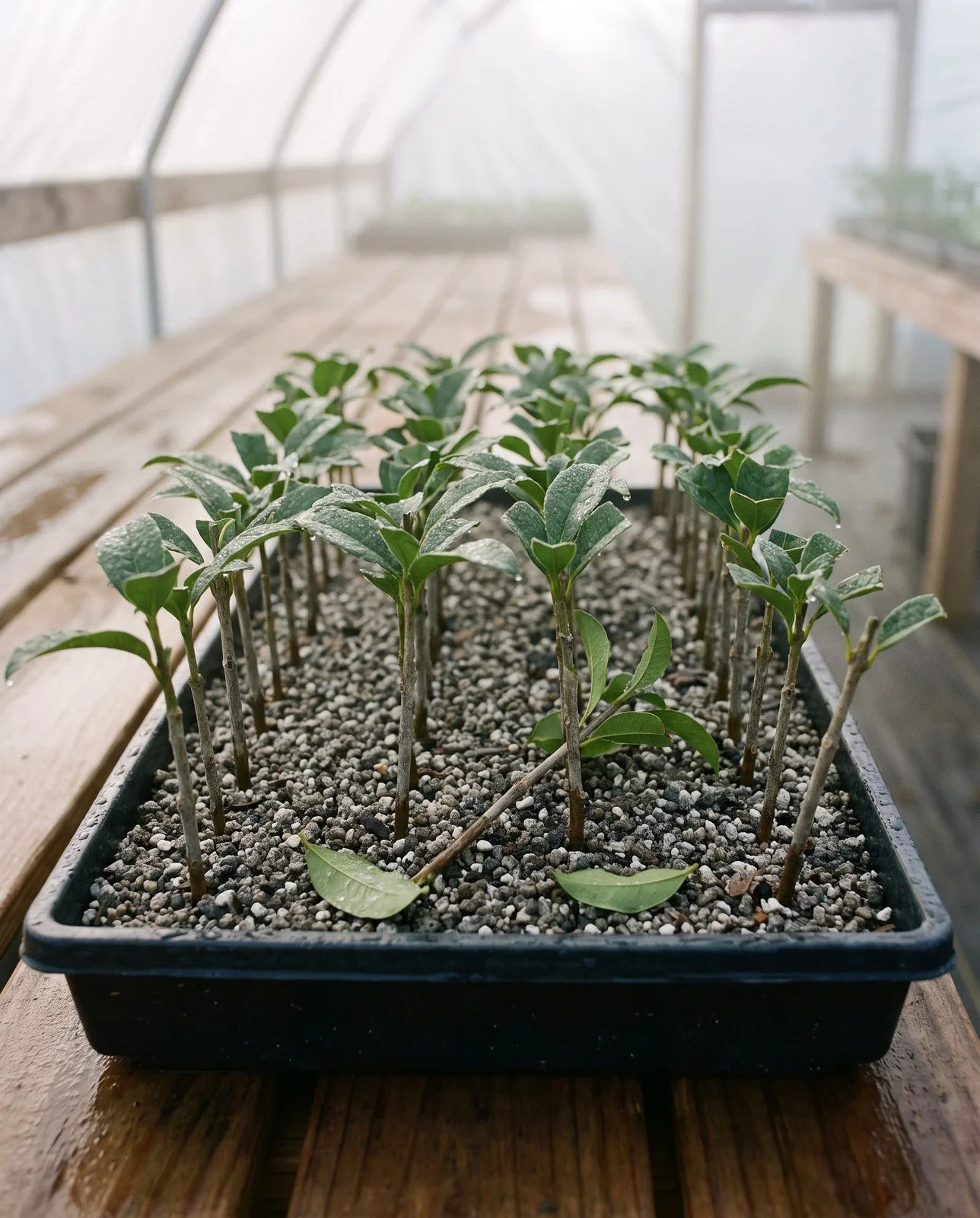
Cuttings are the standard way to propagate tea olive, rooting readily enough that grafting is rarely used and air layering remains uncommon. Take softwood cuttings in late spring to early summer from flexible, nonwoody new growth 4 to 6 inches long. Rooting hormone helps significantly: softwood stems treated with 100 mg/L NAA reached rooting rates of 90.2 and 91.7 percent, compared with 27.9 and 26.1 percent for untreated cuttings. Semi-hardwood cuttings follow in late summer to early autumn using firming stems that are turning brown, kept under mist at 85 to 95 percent humidity. Hardwood cuttings are normally taken from August to November from fully matured shoots that are hard to bend. These firm stems root slowly and need a higher concentration of rooting hormone.
FAQ
How many times a year does a tea olive bloom?
It depends on the cultivar group you grow. Three of the four groups of Osmanthus fragrans bloom once in autumn, while selections in the Sijigui group flower several times from fall to spring.
How cold can a tea olive take?
Hardiness depends on the species you plant. Fragrant tea olive is winter hardy to about 10 degrees F in zones 8a to 11b. Holly tea olive and Fortune's tea olive grow in zones 7a to 9b, while Osmanthus x burkwoodii takes colder winters in zones 6a to 8b.
Why is my tea olive not blooming?
Pruning at the wrong time is usually why. Next season's blossoms form on the growth the plant put on that season, so pruning can diminish the following display. A plant cut back severely may take several years to come back into bloom.
When should you prune a tea olive?
Prune most tea olives before new growth starts in spring. Spring-blooming types are pruned right after they finish flowering, which includes Osmanthus x burkwoodii because its blossoms form on last season's wood.
Is a tea olive the same thing as an olive tree?
No. Both plants belong to the olive family, but the true olive is in the genus Olea, a separate genus from Osmanthus.
Can you make tea from a tea olive?
Yes, using the flowers. Dried blossoms go into teas and other beverages in the Far East, and they are also made into jam, cakes, dumplings, soups and liquor. Culinary uses center on the flowers, as the plant does not yield a leaf tea.
Does tea olive repel mosquitoes?
No. In some regions of northern India, especially in Uttarakhand, the flowers are used to protect clothes from insects. Plants with repellent compounds do little just sitting in a garden unless their oils are extracted and applied like a spray.
How fast does a tea olive grow?
Growth is slow to moderate, usually about 4 to 12 inches a year. Fragrant tea olive grows at a medium pace, while holly tea olive, Fortune's tea olive and Osmanthus x burkwoodii are slow growers.
Is tea olive poisonous to dogs and cats?
The ASPCA has no confirmed listing for tea olive as either toxic or non-toxic. Treat the plant with caution around dogs and cats until its safety is officially documented.
Will a tea olive grow in a container?
Yes, and growing in containers is common where winters are cold. Fragrant tea olive can be grown in pots brought indoors to a bright, cool spot for winter, or kept year-round as a houseplant. Holly tea olive can also be grown in a container and brought inside for winter in cold climates.
Interesting tips
- Devilwood is the native species in the group. While it prefers moist, well-drained, acidic soil, it adapts to different soil types and tolerates both salt spray and extended flooding.
- Fortune's tea olive sits between its two parents in most traits. It inherits the numerous, evenly spaced spines along its leaf edges from false holly.
- Tea olive is not documented in any undisturbed natural areas in Florida, so it is not considered a problem species there.
Related Guides & Flowers
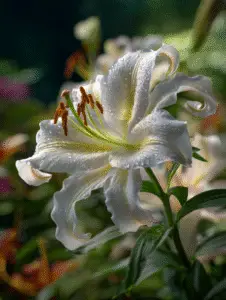
Most fragrant flowers
Where tea olive sits among the garden plants people grow for scent alone.
Camellia sinensis
The actual tea plant, whose leaves make green and black tea.
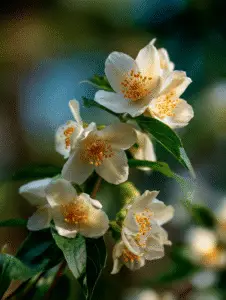
Mock orange
Another shrub grown almost entirely for the smell of its flowers.
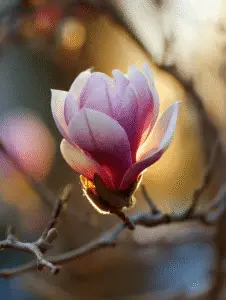
Magnolia
The other Southern evergreen with a scent that carries, on a far larger frame.
Enjoying our flower guides? Add YourFlowersGuide as a preferred source on Google. It helps more readers find us.
Add to Preferred Sources