Poppy meaning and poppy colour meanings, honestly explained
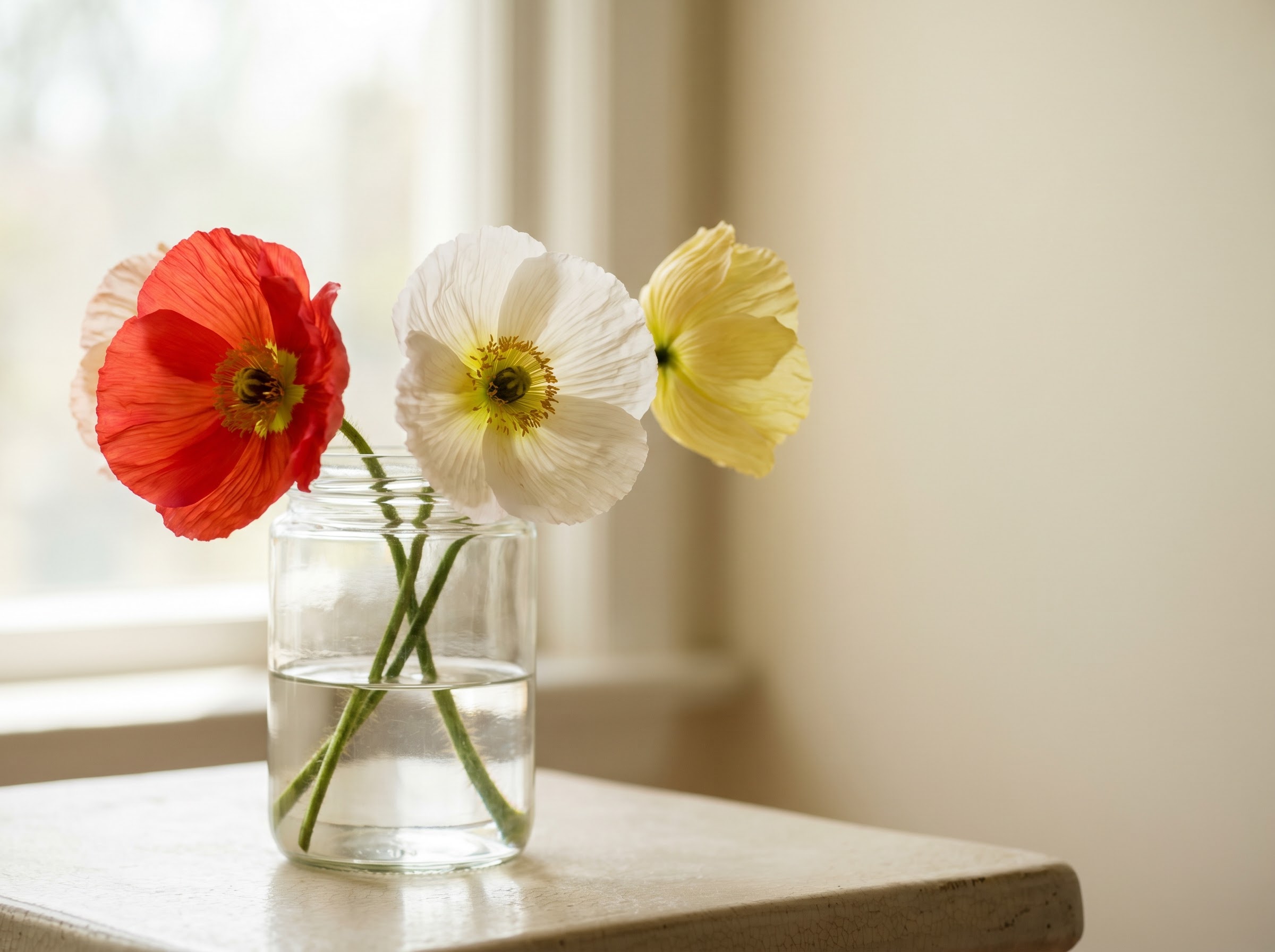
A poppy means remembrance and consolation, and the red poppy in particular has become the flower we wear and lay down to honor people who died at war. That is its main meaning today, and it is a steady one. The poppy also carries a softer, older sense of restful sleep, dreams, and imagination, which is where a lot of the confusion comes from. People reach for the word death, and that is the one thing a poppy does not quite mean. It means the rest after, the memory kept, the grief carried gently. Below you will find each poppy colour read honestly, the real story of how the red poppy became a memorial, what it says as a tattoo, and a clear note on which parts of all this are solid and which are softer custom.
For its main reading, the poppy gives you something rare: a meaning almost everyone will catch without being told. The red remembrance poppy is so widely understood that you can hand one over, or wear one, and trust the meaning will land. The edges are where it gets interesting, because the same flower has meant eternal sleep, imagination, and consolation for far longer than it has meant fallen soldiers, and those older senses still hum underneath the modern one.
What a poppy means
At its core a poppy stands for remembrance and consolation. It is the flower of memory and of comfort in loss, the bloom you reach for when you want to honor someone who is gone rather than celebrate someone who is here. That is the modern reading, and it is well attested across the lists. Sitting just behind it is an older and quieter meaning: restful sleep, dreams, and imagination. The Victorian language of flowers read the poppy as eternal sleep, consolation, and imagination, and you can feel how naturally the one slides into the other. Sleep is the gentle cousin of death, rest is the gentle cousin of grief, and the poppy has always lived in that soft borderland between them.
This is also where the single most common mistake creeps in. People often say a poppy means death, full stop, and that is not quite right. It means remembrance, restful sleep, and consolation, the things that surround a loss rather than the loss itself. The distinction matters when you are choosing flowers for someone grieving, because a poppy is a gesture of comfort and memory, not a blunt reminder of mortality. Keep that older sense of sleep and dreams in mind and the whole flower makes more sense, since the modern memorial meaning grew straight out of it. The poppy is traditionally tied to sleep and dreams, an association often connected to the opium poppy and its drowsy reputation, and that thread of rest runs through every reading the flower has ever carried.
What each poppy colour says
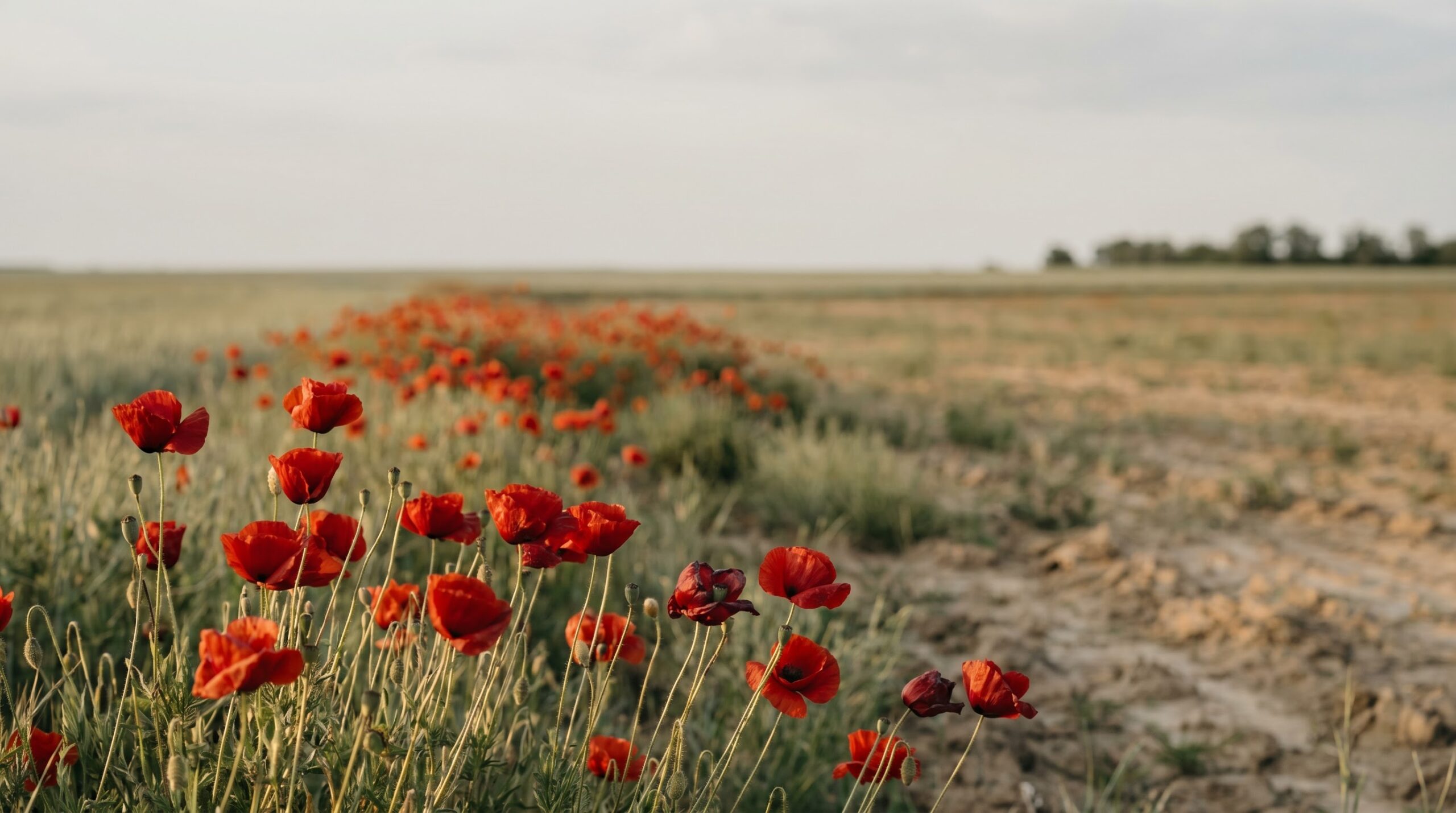
The red poppy is the one that carries the full weight of the modern meaning. It reads as remembrance and sacrifice, the memorial flower in its clearest form, and it is the colour worn at remembrance ceremonies and laid at war memorials. When most people picture a poppy and its meaning, this is the poppy they are picturing, and the reading is solid enough to lean on completely. A white poppy points somewhere gentler. It traditionally means consolation and peace, a quieter note of comfort and a deliberate emphasis on peace rather than on the soldiers themselves, which is why some people choose white specifically to mourn loss without glorifying the war that caused it. A yellow poppy steps fully outside the memorial family and reads, in the older flower lists, as success and wealth, a sunny and unrelated meaning that has nothing to do with grief at all.
Be a little careful with the white and yellow readings. They are real and they appear in the traditional lists, but they are far less universally understood than the red poppy, which almost everyone reads correctly on sight. Hand someone a white poppy and you may well need to explain it; hand them a red one and you will not. That colour flip, where a softer shade pulls a flower away from its boldest meaning, is exactly the pattern our guide to flower colour meanings traces across the blooms. The table below pairs each colour with how firmly it is understood, since with the poppy the gap between the red everyone reads and the white most people do not is the whole practical question.
| Poppy colour | Common meaning | Note |
|---|---|---|
| Red | Remembrance and sacrifice | The memorial poppy. Widely and clearly understood, the firmest reading of all. |
| White | Consolation and peace | Gentler comfort, a deliberate emphasis on peace. Real but less universally recognized. |
| Yellow | Success and wealth | Outside the memorial family entirely. A traditional list meaning, softer and less commonly known. |
The two histories behind the flower
The modern memorial poppy has a specific and documented origin, and it is more recent than most flower meanings. During the First World War, poppies bloomed in extraordinary numbers across the churned battlefields of Flanders, the disturbed soil throwing up sheets of red where men had died. That image, of bright poppies returning over the graves and the wreckage, is what fixed the red poppy as a memorial in the public mind. A wartime poem describing those fields is widely credited with carrying the symbol around the world, and the poppy went on to become the flower worn at the remembrance ceremonies many countries hold each year. The whole memorial tradition is barely a century old, which is young for a flower meaning, and it is unusual in being traceable to a real event rather than to old custom.
The older layer underneath is the sleep and dream meaning, and that one stretches back much further. The habit of sending messages through flowers is genuinely old, with roots Cornell University traces to the symbolism of China, Egypt, and Assyria, while the elaborate Victorian system that handed us most of these English meanings was assembled largely in France before it crossed into Britain. The poppy's tie to sleep, dreams, and eternal rest belongs to that older symbolic world, and is commonly traced to the opium poppy and, in Greek tradition, to the gods of sleep and dreams. That sense of rest as something beyond ordinary sleep is why the poppy turns up alongside the blooms we gather in our guide to spiritual flower meanings. So the flower carries two histories at once: a deep one about rest and imagination, and a recent one about remembering the dead, with the second growing naturally out of the first.
When to give a poppy, and to whom
The poppy is not really a romance flower, and this is worth saying plainly because people sometimes look for a love meaning that is not there. Its meanings cluster around memory, comfort, peace, and rest, which makes it a flower for sympathy and remembrance far more than for courtship. That does not make it cold. Given to a friend who is grieving, or to someone marking the anniversary of a loss, a poppy says I remember too, and I am with you, which is its own kind of tenderness. For a friend who simply needs calm, the sleep and rest association makes it a quiet wish for peace.
What you mostly would not do is hand a bunch of red poppies to a new romantic interest expecting them to read as passion, because they will not. A flower that points toward memory and rest pulls against a courtship message rather than helping it, so for anything to do with love you are on safer ground with the blooms in our guide to rose meaning, which lays out how colour shapes that kind of message. The poppy's gift is consolation and memory, so save it for the moments that call for those. One practical note on the flower itself: poppies bloom in late spring and early summer and their petals are famously short-lived and papery, so a living poppy is a fleeting, delicate gift rather than a long-lasting bouquet. If you want the plant rather than the symbol, our guide on how to grow poppies covers the growing side.
Poppy tattoo meaning
As a tattoo, the poppy almost always means remembrance, and very often a specific one. People choose it to carry a lost loved one with them, or to honor a veteran or a fallen soldier, which keeps it close to the red memorial poppy and its weight. The flower's other reading shows up here too, the calm and rest side, so a poppy tattoo can equally mark a wish for peace, recovery, or a quieter mind. That double meaning is part of why it works so well as ink, because a single poppy can hold both grief and the gentle rest that follows it. The colour and the styling usually tip which way a given tattoo leans, with a bold red poppy reading as memorial and a softer, dreamier rendering leaning toward calm and sleep. For how other flowers read in ink, our guide to flower tattoo meanings covers the popular choices and what they signal.
The honest caveat, and what to write
Even the poppy, settled as it is, was never set down in any official register, because no such register exists. The horticulturists at Iowa State University Extension, working through their own list of flower meanings, note that a single bloom turns up read differently depending on which source you consult, and that those meanings can stack and conflict. The red remembrance poppy is about as firm as flower symbolism gets, so you can rely on it. The white and yellow readings are genuine but softer, and the deep sleep-and-dream sense is real but quieter than the memorial one most people now reach for first. Treat the firm parts as firm and the soft parts as helpful custom, and you will read the flower the way the people around you actually read it. It is also worth a passing note that poppy is a common given name and an everyday word in its own right, so the context around it, rather than the flower alone, tells you which poppy someone means.
When you are giving poppies for remembrance, the words can stay simple, because the flower already says most of it. A line like "Held in memory, always" suits a memorial or a card of sympathy, plain and unhurried, and matched to the poppy's tone. For a friend who needs calm rather than mourning, something quieter still works, a wish for peace and rest that leans on the flower's gentler meaning. If you want to understand why a meaning like this one can be firm in places and soft in others, our hub on the meaning of flowers walks through how the whole language was assembled and why it keeps drifting.
- Cornell University, Written in Petals: The Language of Flowers, on the history of floriography.
- Iowa State University Extension, Flowers and Their Meanings, on why sources disagree.