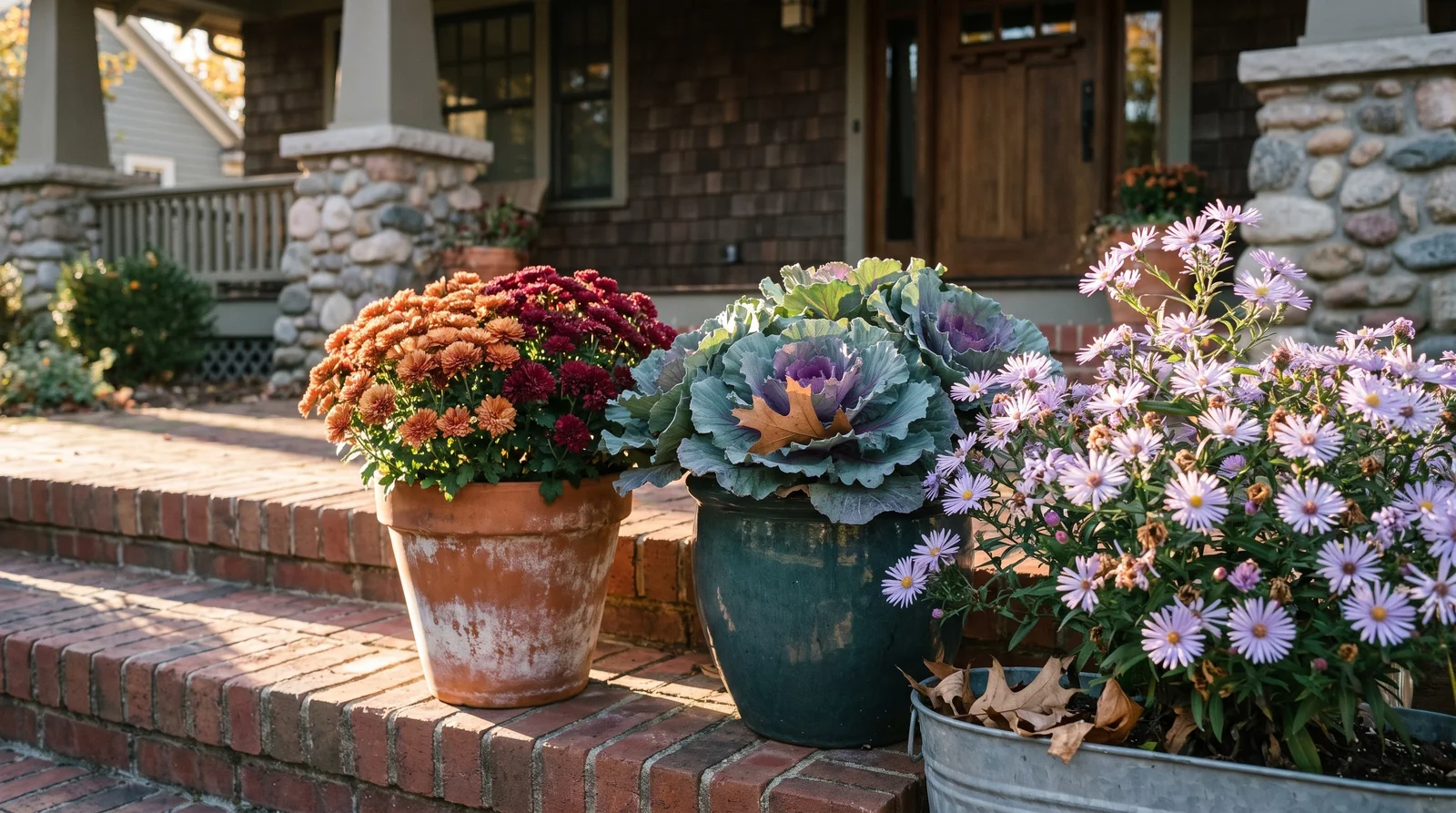
Fall flowers for pots and porches split into two groups that garden centers stack side by side without ever separating them: plants that keep flowering through a frosty morning, and plants that turn black overnight. Mums, ornamental kale, pansies, asters, celosia, coral bells, and cyclamen all sell as autumn container plants, and they behave nothing alike once the temperature drops. Cool autumn air is on your side in all of this, holding each flower open longer than summer heat ever did. What sorts the picks beyond cold is light, because a south-facing brick step and a covered north porch are not the same growing site in October.
The two questions worth settling before you buy are how much direct sun that spot still gets this late in the year, and how far past the first frost you want the pot to hold up. Neither gets asked at the garden-center endcap, where everything is in full bloom and every tag says the same vague thing about cold. Skip the light question and the pot tells you within weeks: stems stretch out thin and weak, and mildew settles on leaves that stay wet. What follows covers how to read your own porch and your own pot before you shop, twelve picks split into a full-sun group and a shade group, each with its frost limit, its role in a container, and a note on pets, three recipes with pot sizes and plant lists, and a plant-by-plant account of what a light frost does compared with a hard freeze.
On this page 6 sections
How to choose fall flowers for pots
Start by counting the direct sun that actually lands on the spot in autumn. Between September and November the sun sits lower and the roof overhang throws a longer shadow, so a step that took six hours of light in midsummer can be down to under three by October. Nothing has moved, but the site is now part shade, and a plant bought for full sun will stretch and lean there. Next, look up the average first frost date where you live, because that date sets the calendar for everything tender below. Then look at the pot. Container roots have none of the thermal buffer that in-ground soil gives a bed, and a small pot can freeze through weeks before the ground hardens. Give the roots enough soil volume, keep the drainage holes open, and use a mix that drains fast. Autumn evaporation is slow and cool plants drink less, so potting soil that stays saturated through a week of cold rain goes airless and takes the fine roots with it.
Best fall flowers for pots in full sun
Chrysanthemum
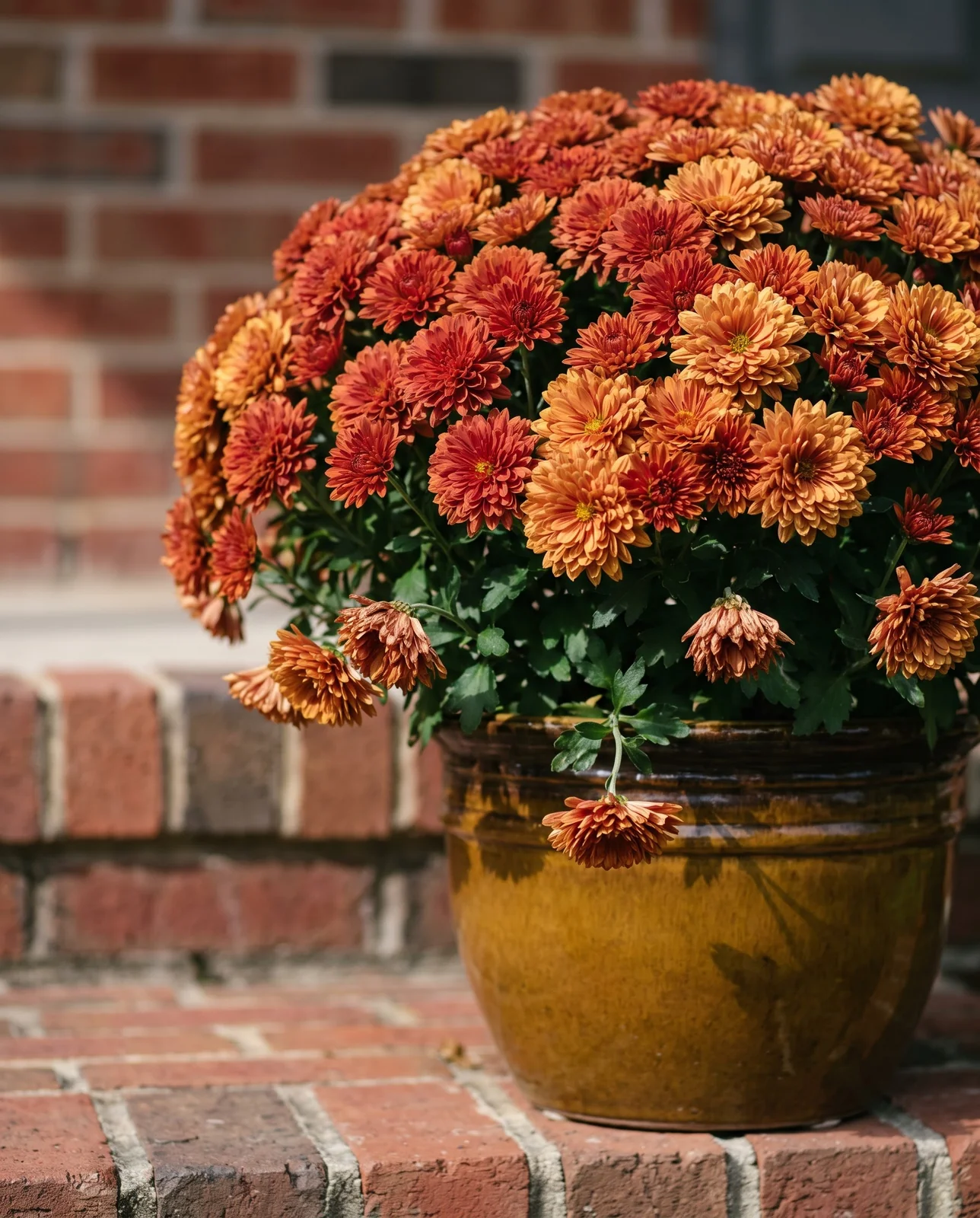
Chrysanthemums (Chrysanthemum x morifolium) are perennials that anchor a sunny porch with dense flower coverage, and NC State Extension puts the plant at 1 to 3 feet tall and 1 to 2 feet wide in an erect mound, which is worth knowing before one goes into a small porch pot. They want full sun and soil that drains, with shelter from afternoon sun in warmer southern zones. The tight bushy shape on the nursery bench is manufactured: growers cut the plants back three times through spring and summer, the last cut around mid-August, which keeps growth compact and prevents premature flowering the following spring. The failure comes after you carry one home. A mum in tight bud is a dense root ball in a small plastic pot under a canopy that sheds light rain off the sides instead of letting it reach the soil, so the pot dries out fast and closed buds brown and drop before they open. Water at the base whenever the top inch is dry, thoroughly enough that it runs from the drainage holes. In the South that same plant overwinters outdoors in its container without help; farther north the root ball needs protection or a sheltered spot. Two cautions: handling the foliage raises a mild rash on some people, and eaten plant parts cause stomach upset and vomiting in cats and dogs.
Aster
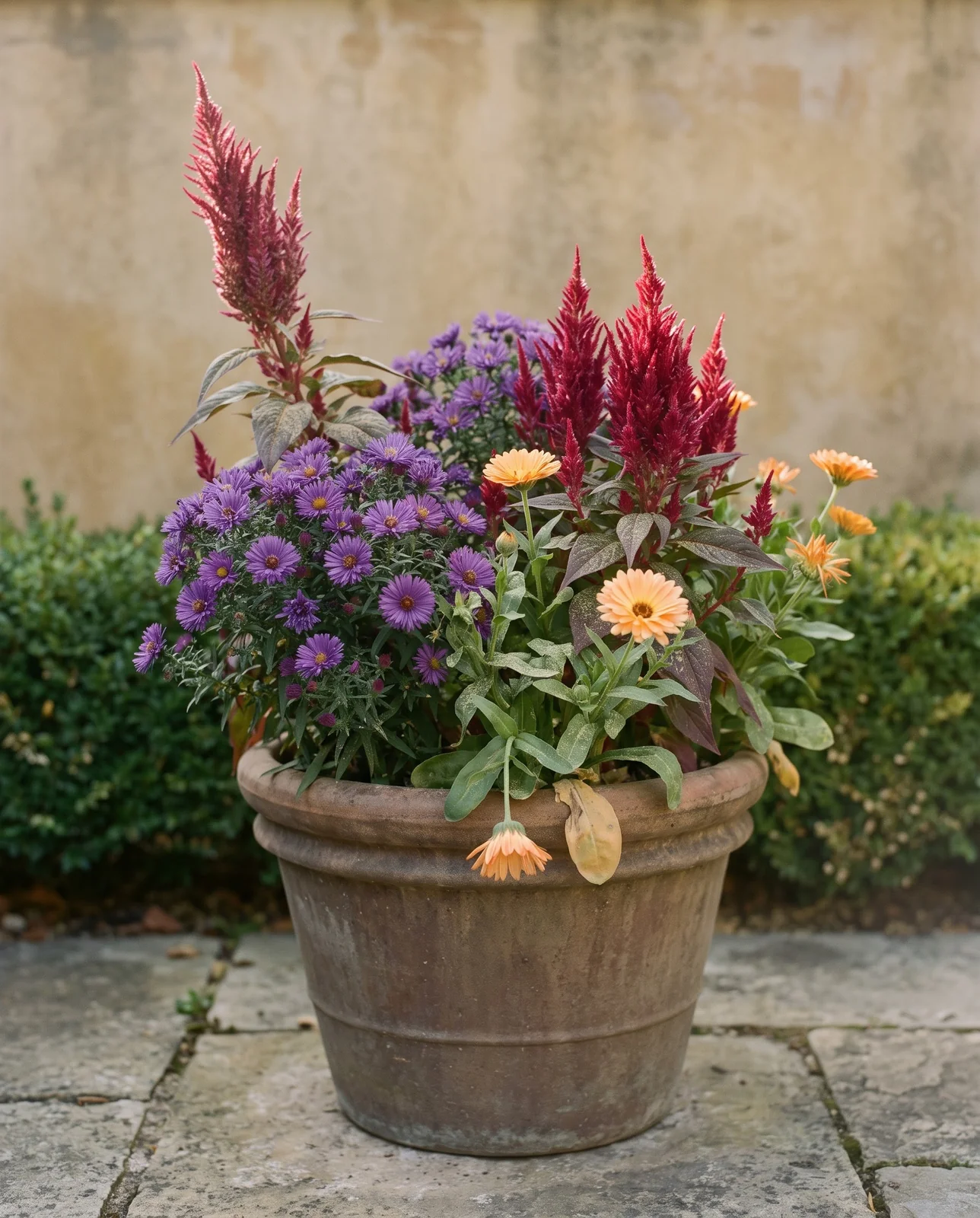
Native asters stand in for mums or grow alongside them, opening starry flowers from late summer into fall, and they carry a common buying trap for anyone shopping for a container. The standard New York aster (Symphyotrichum novi-belgii) is a vigorous native perennial that NC State Extension lists at 3 to 5 feet tall and 1 to 2 feet wide. That plant swamps a modest porch pot and goes top-heavy in the first windy night. For a container, look for a compact dwarf cultivar bred to stay under 15 inches. Beyond that, asters are undemanding: they need drainage, take sandy, loamy, or clay-based mixes, and flower on lean fertility. Light semi-shade is tolerated, but the densest coverage comes in full sun with six hours or more of direct light. Insects leave them alone. Powdery mildew is the one weakness, so water at the soil rather than over the leaves and leave air space around the pot.
Celosia
Celosia argentea supplies the vertical line in a sun pot, either as feathery plumes or as dense crested heads. It takes full sun, tolerates dry, porous potting mixes, and thrives on heat and humidity. Bloom runs from late spring to the first frost, and that is the hard limit. Celosia is a tender annual, and a single freezing night collapses it. Crowding, steady rain, and heavy humidity rot the flower heads, so give the pot an open, sunny position with air moving through it. The spikes dry well for indoor arrangements, which makes the end of the season a reason to cut them rather than compost them, and the young leaves and tender shoots are cooked into soups and stews. For a household with animals on the porch steps, celosia is non-toxic to cats, dogs, and horses.
Ornamental kale and cabbage
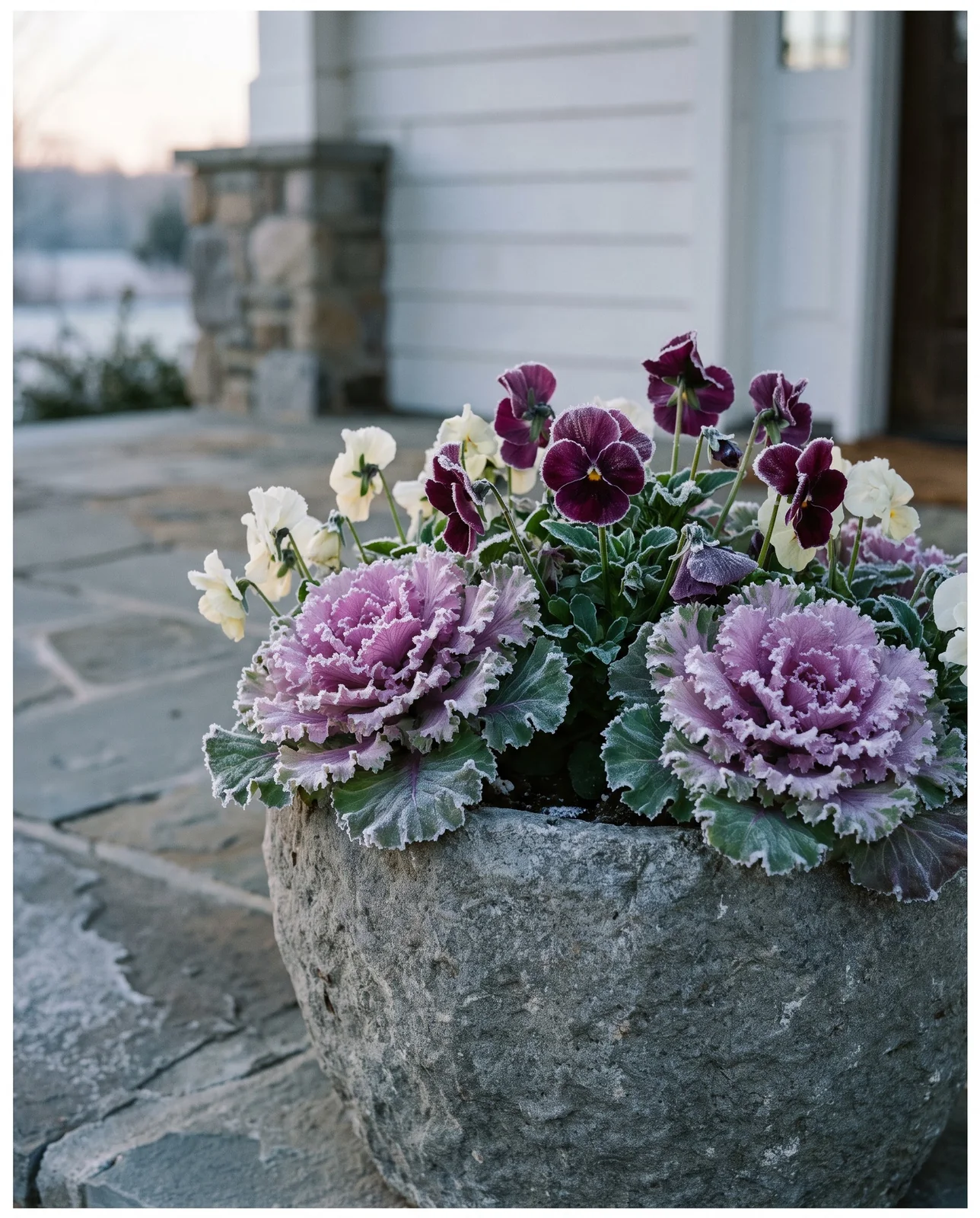
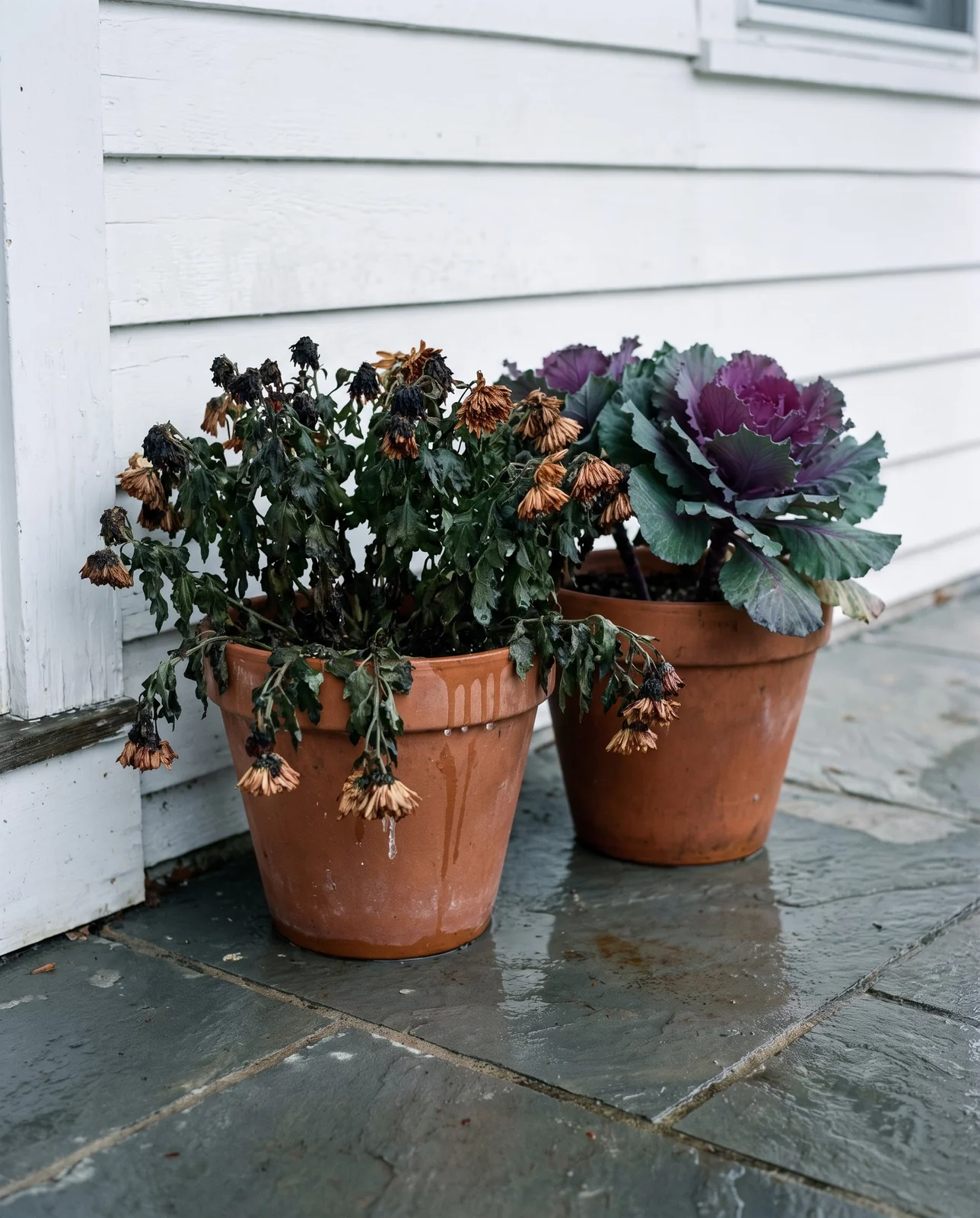
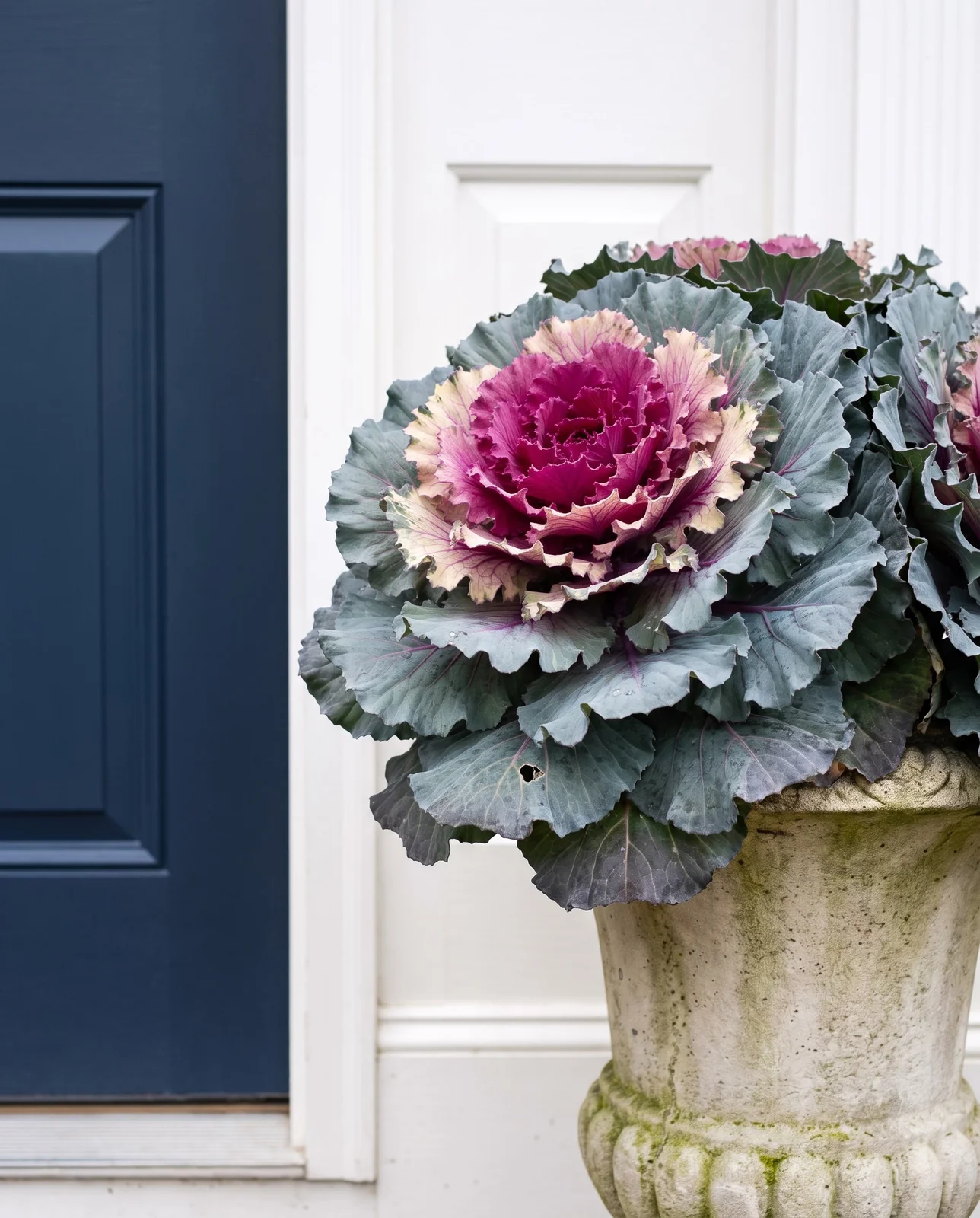
Ornamental cabbage and kale (Brassica oleracea) hold the structure in a fall pot: tight rosettes whose purple, magenta, and cream centers deepen as the nights get colder. The thick, fleshy leaves store water and nutrients, and that is a large part of why an established rosette takes cold so easily. Give them full sun and a nitrogen-rich mix that drains. In a dim porch corner without direct light, downy mildew shows up on the lower leaves and the plant yellows and sheds from the bottom up. Keep the soil damp but never sodden, and water at soil level rather than into the middle of the rosette, where water stands. The leaves are edible raw or cooked, though cooking them fills a kitchen with an unpleasant smell, so treat that as trivia rather than a reason to grow them. Repeated light frosts do nothing to a kale pot. It is still crisp and upright long after the tender flowering annuals beside it have gone.
Calendula
Pot marigold, or calendula (Calendula officinalis), opens yellow, apricot, and orange daisy flowers, and it prefers exactly the weather that finishes summer annuals. Where a warm-season bedding plant stalls once the nights turn cool, calendula puts on growth and sets more buds. Give it full sun, at least six hours of direct light, in a loose mix that drains, and pull the spent heads regularly so the plant spends itself on the next flush instead of on seed. Light frost passes over the foliage without marking it, and in moderate zones it keeps opening fresh buds well into late fall. In a mixed container it takes the mid-height filler role, dense green under the taller pieces, still in color long after the summer annuals are out of the pot.
Marigold
French and African marigolds (Tagetes species) bring the gold, orange, and mahogany that read as autumn without any arranging. Set into a container in late August or September while the potting soil is still warm, they root fast and keep throwing their tight flower domes until freezing weather ends it. They want full sunlight and a moderately fertile mix that drains quickly. Water at the base, since moisture trapped inside those packed petals invites fungal blight in damp autumn weather. Cool days suit them, but a freeze blackens the foliage and stops the flowering for good, which makes a marigold pot an early and mid-autumn display. Use them as the bright filler under a taller centerpiece, next to something trailing and evergreen that holds up after they go.
Best fall flowers for pots in shade or part shade
Coral bells
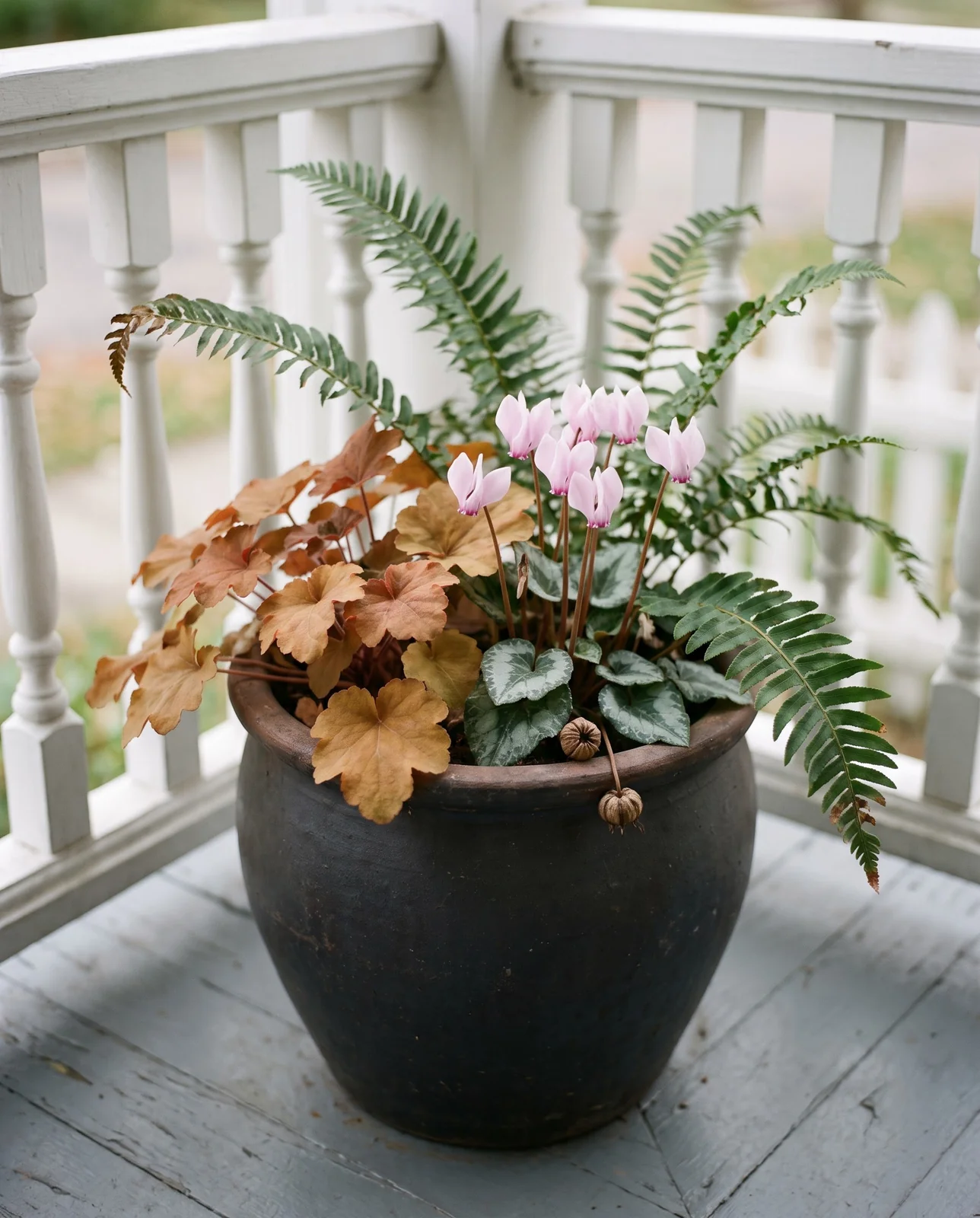
Coral bells (Heuchera) are grown for leaves rather than flowers: mounds of amber, deep plum, chartreuse, and burgundy that hold their color with no bloom cycle to maintain. That makes them the anchor of a shade pot, and because they are genuinely hardy perennials, a potted one keeps its rosette intact on a covered porch long after the flowering annuals around it have gone down. Plant in a humus-rich mix that drains and keep the crown level with the soil surface rather than buried, which is what starts crown rot. At the end of the season the container can sit out the winter in a sheltered corner, or the plant can move into a border before the ground freezes solid.
Cyclamen
Florist cyclamen (Cyclamen persicum) throws its petals backward above silver-marbled, heart-shaped leaves, in crimson, pink, violet, and white. It is a Mediterranean plant that wants cool conditions, which suits a covered north-facing porch or a shaded entry. Give it bright indirect light or dappled shade and a porous mix that drains freely. Water around the inner rim of the pot rather than onto the tuber sitting in the middle, which rots if it stays wet. Light autumn chill and a brief touch of frost leave it alone, but a sustained hard freeze does not, so the pot comes indoors or gets covered when the forecast turns.
Pansy and viola
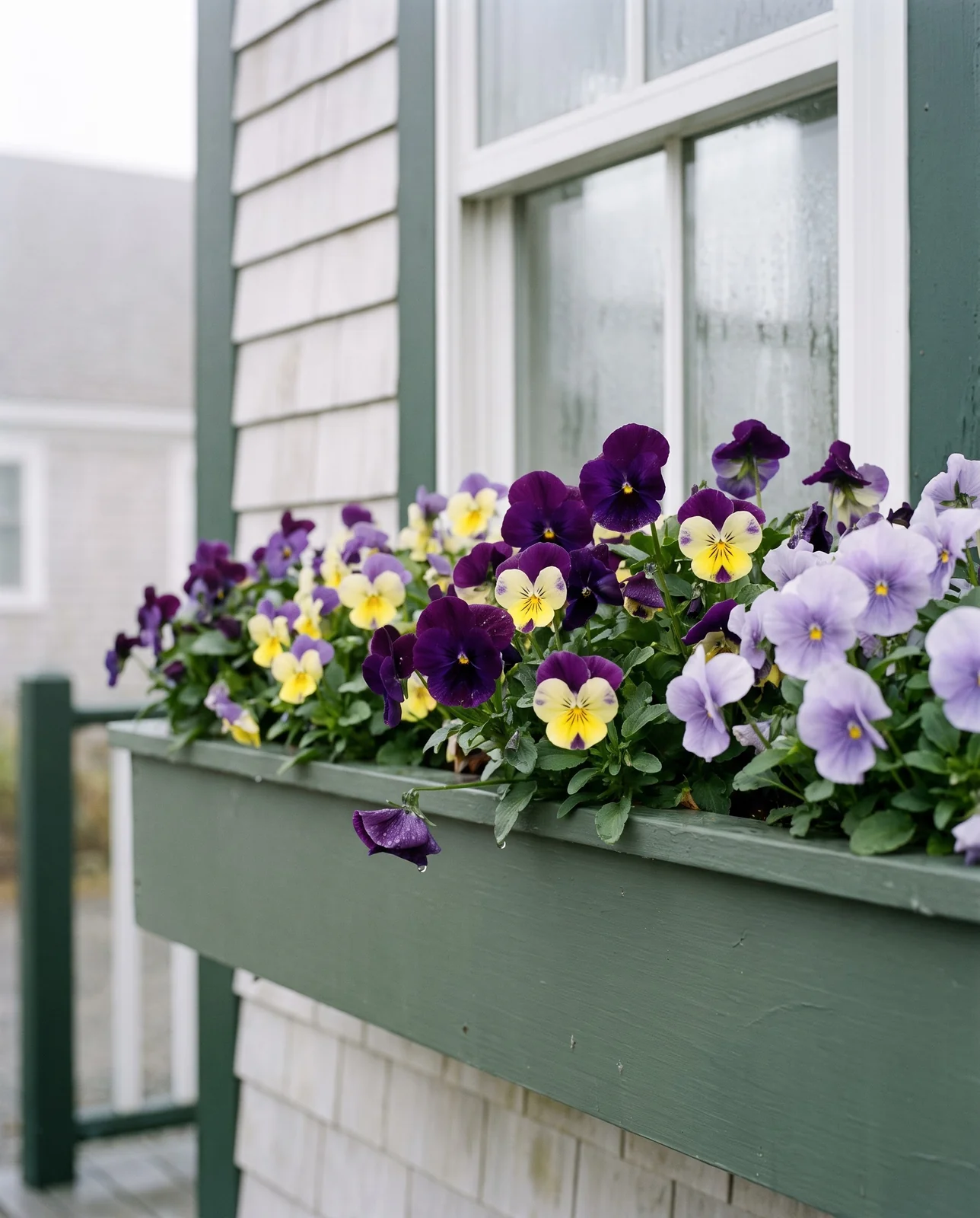
Pansies (Viola x wittrockiana) and the smaller violas are the low, dependable color that keeps going after everything else has stopped. NC State Extension puts a mature plant at 6 to 9 inches tall and 9 to 12 inches wide, a compact mound sized for containers, window boxes, and hanging baskets. They take full sun to part shade in a humus-rich mix kept consistently moist and draining. Planted in fall, they can flower for four to six months, through winter and into early spring, pausing only in a deep freeze and picking up again as soon as temperatures moderate. Heat is what finally kills a pansy, not cold: they shrug off repeated light frosts and come back up from under snow. Pull the spent blooms as they go over, which stops seed setting and stretches the display further.
Sweet alyssum
Sweet alyssum (Lobularia maritima) spreads into a low cascade of tiny four-petaled flowers, white, lavender, or purple, with a honey scent that carries on a still afternoon. It is sold as a spring plant but is at its best in cool autumn weather. It runs from partial shade to full sun, which makes it an adaptable trailing spiller for a sun pot or a shade pot, and once rooted in a moist, well-drained mix it asks for only moderate water. The light frosts that finish tender summer trailers leave it flowering. Cut the leggy stems back in early autumn and it answers with a compact flush that tumbles over the rim through late fall.
Sedum
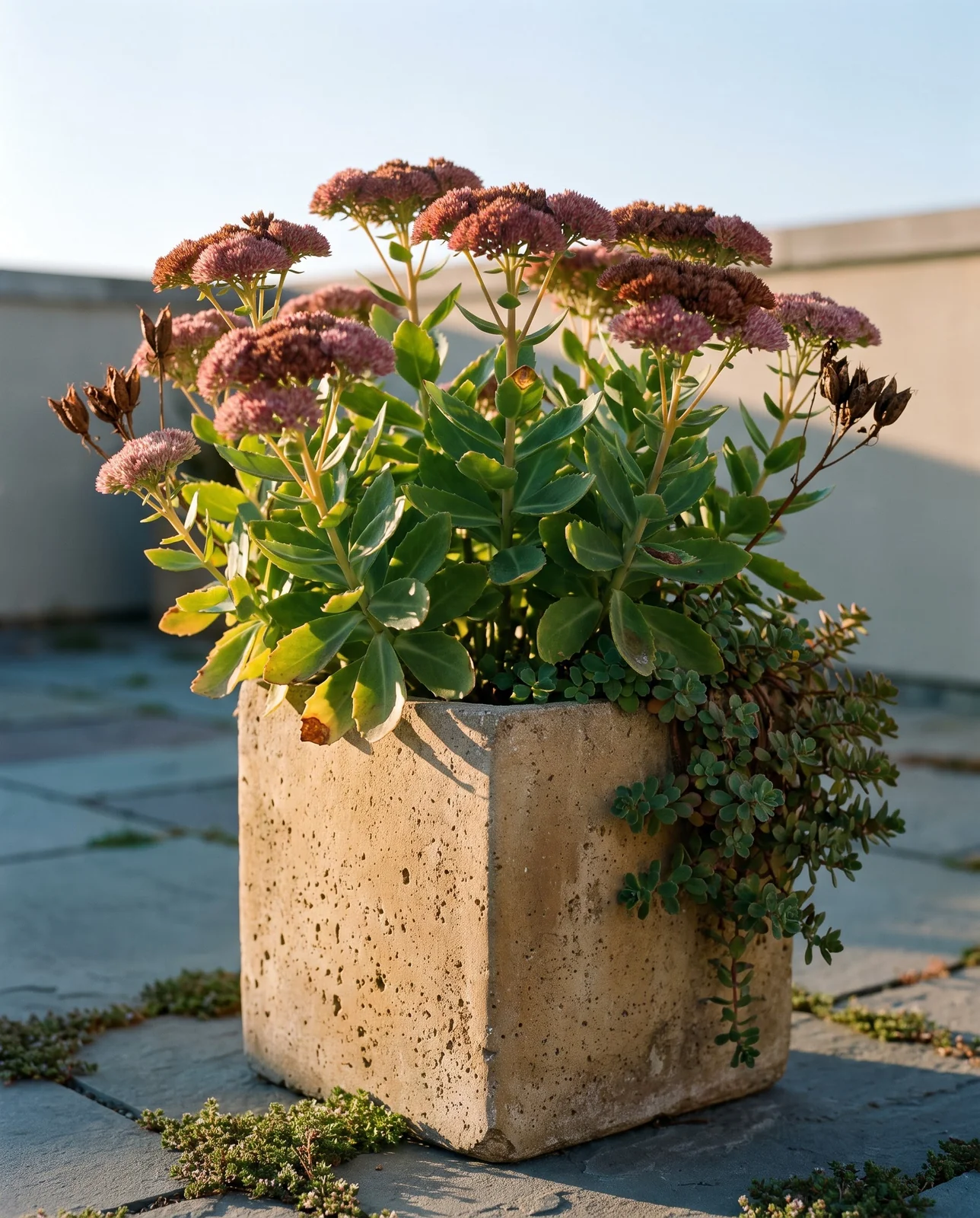
The sedum genus runs to more than 300 succulent perennial species, which is why it can supply both a full-sun choice and something for a partly shaded corner. The thick succulent leaves store their own water, so a stonecrop tolerates dry soil and a forgotten watering week. Low trailing kinds pour over a container rim as spillers; upright kinds carry broad flower heads that age from pink through deep copper. Most outdoor species want full sun to part sun and root fast in a lean, gritty mix. The tall ones with heavy flower heads flop, and shade makes it worse, so keep them in the light and pinch the stems back in spring to force thicker growth that holds itself up. Sedum takes autumn freezes without damage and holds its dried seed heads as standing structure through winter.
Japanese painted fern
Japanese painted fern (Athyrium niponicum) gives a shade pot its lace, fronds washed with silvery gray, burgundy, and soft sage green. On a sheltered porch in full shade or gentle morning light it reads as pure texture against broad-leaved company like coral bells and ornamental kale. Pot it in an organic, moisture-holding mix with compost worked in and keep the soil evenly damp without letting it sit wet. It is deciduous, so it holds its coloring through cool autumn weather and only goes down once sustained hard freezes arrive. The dormant crown can stay in the container over winter in mild regions, or move into a shaded bed to come back the following spring.
Twelve plants that actually go into fall pots and porches
Exposure, frost tolerance, pet safety, and the role each of the twelve plays in a container.
Thriller, filler, spiller recipes for a fall pot
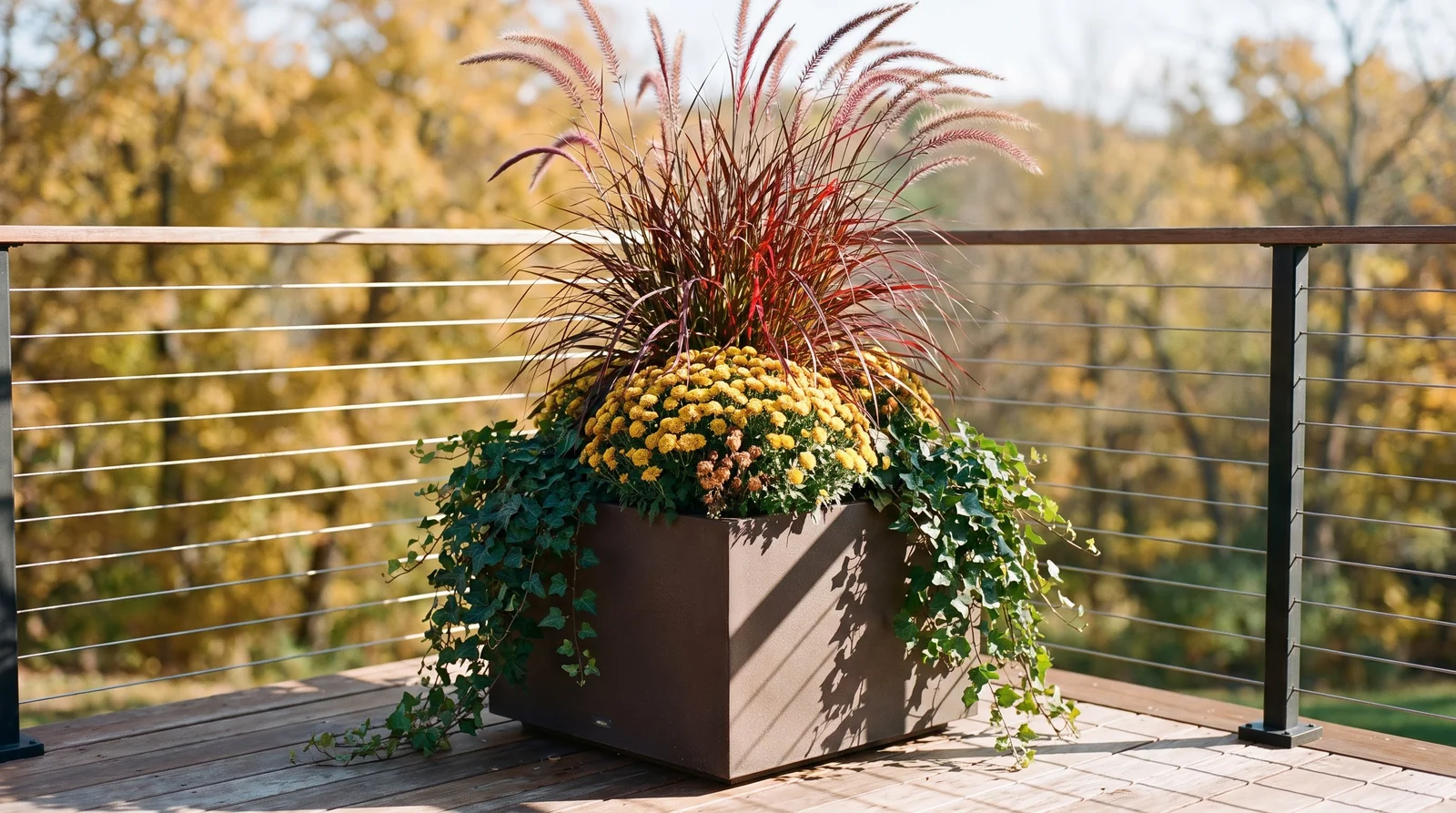
The thriller, filler, spiller formula is one upright plant at the center, mounding plants around it, and something trailing over the rim. It matters more in a fall pot than a summer one because nothing is going to grow into the gaps: short days and cool soil slow everything down, so an autumn container has to go in at close to finished density on the first day. Give it enough soil to insulate the roots, which for a mixed planting usually means 14 to 18 inches across. In sun, that is purple fountain grass as the thriller, compact garden mums and cool-tolerant snapdragons as fillers, and sweet alyssum trailing over the edge. On a shaded porch, a dark-leaved coral bell at the center, pansies and cyclamen around it, variegated ivy or a creeping stonecrop over the rim. The cheapest version drops the formula: three ornamental cabbages packed into a 12-inch pot, or one good mum standing alone, both of which take a late-season cold snap without attention.
Three container recipes, thriller, filler and spiller
Pot size and light for each recipe, then the plants that fill the three roles.
Pack tightly for immediate coverage; water whenever top inch of soil feels dry.
Water container edges to protect the central cyclamen tuber from crown rot.
Endures freezing conditions; pigmentation deepens after light frosts.
How long fall pot flowers last before frost
A light frost and a killing freeze are two different events, and the difference decides which pots you keep. A light frost comes on calm, clear nights when the air at plant level reaches the freezing point: ice crystals settle on leaf surfaces, but the tissue underneath and the soil in the pot never freeze. A hard or killing freeze is temperatures well below freezing held for several hours together, long enough to freeze container soil solid and rupture cell walls. Tender plants like celosia and marigolds blacken and collapse at the first touch of frost. Chrysanthemums and asters come through a light frost undamaged where the blooms sit sheltered under porch eaves. Ornamental cabbage and kale, coral bells, sedums, and pansies go through a hard freeze intact, keeping their leaf color into early winter, and in the case of kale the color only gets deeper.
How each plant reacts to light frost and a hard freeze
Cold tier, what a light frost does, what a hard freeze does, and the one action to take, plant by plant.
FAQ
Are fall mums annuals or perennials, and will they come back next year?
Both, depending on which mum you bought and when it goes in the ground. Garden chrysanthemums are true perennials, but one bought in full bloom late in the season spends what it has on holding those flowers instead of building roots, and a shallow root ball that never anchored before the ground froze usually does not come back. In southern zones a potted mum overwinters outdoors with nothing more than watering. Farther north, treat a container mum as a one-season plant unless it goes into a bed by early September and gets a heavy mulch before winter.
Why are my potted mums drying out and dying so fast?
Two reasons, and both come down to water. The root ball is packed tight in a small nursery pot at a plant density you would never use yourself, so it dries out fast. On top of that the canopy works like an umbrella, throwing light rain off the sides instead of into the soil, which is why closed buds brown and drop before they open. Water at the base until it runs freely from the bottom holes, every time the top inch of soil is dry. A spot with morning sun and afternoon shade slows the drying on warm autumn afternoons.
What flowers grow best in shady fall pots?
On a covered porch with little or no direct sun, coral bells, florist cyclamen, sweet alyssum, Japanese painted fern, and pansies all hold up. Coral bells carry purple, amber, and lime-green foliage right through winter without any direct sun at all. Cyclamen flowers in cool shade, and pansies bloom reliably in bright indirect light. Leave ornamental kale out of a deep-shade pot: low light and still air bring downy mildew onto the leaves.
What is the difference between a light frost and a killing freeze?
A light frost is a night when the air hovers at the freezing point and ice forms on the leaf surfaces while the soil in the pot stays unfrozen. That alone finishes celosia; pansies and ornamental kale are untouched by it. A killing freeze is well below freezing for several hours together, cold enough to freeze the potting soil solid and destroy the tissue of everything except the hardiest perennial roots.
How many plants should you put in a fall container?
More than feels right, because nothing fills in. In short days and cool soil autumn plants barely grow, so plant at close to mature density from the start. A 14 to 16 inch container takes one thriller in the middle, three mid-sized fillers, and two or three trailers at the rim. In a 10 to 12 inch pot, use one specimen mum on its own, or three compact pansies with a single trailer. Keep everything in one pot on the same light and water needs, or one half sits wet and rots while the other stretches for light.
More About Best & Compare
Flowers that bloom all summer long
Perennials to plant in fall, and what to leave for spring
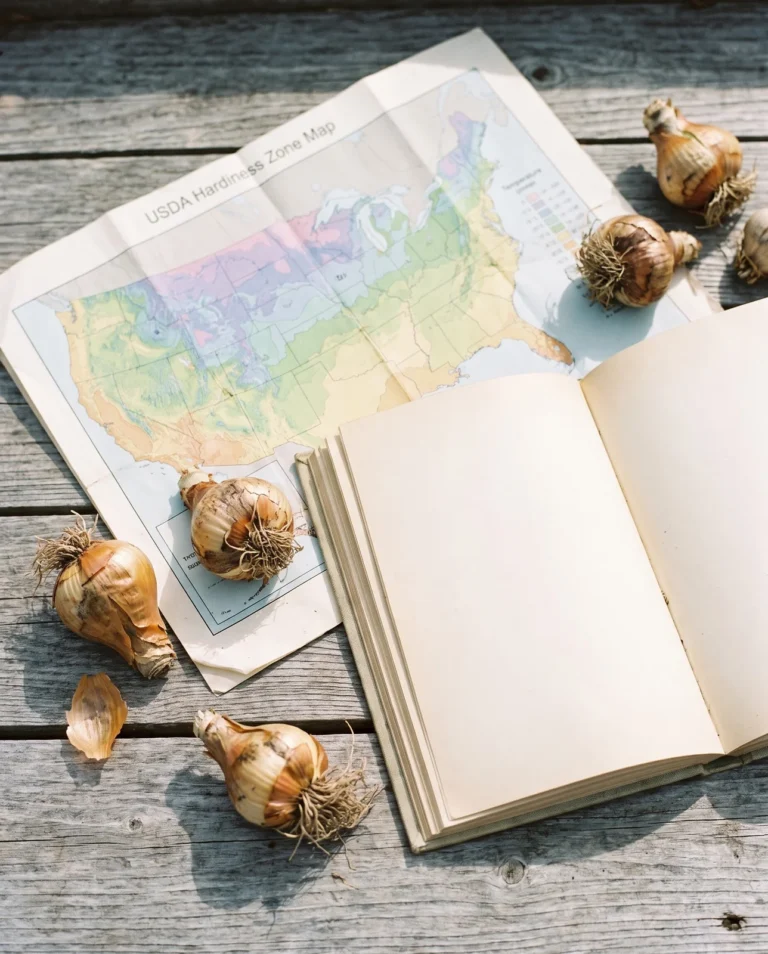
Fall planting by region: your zone-by-zone window
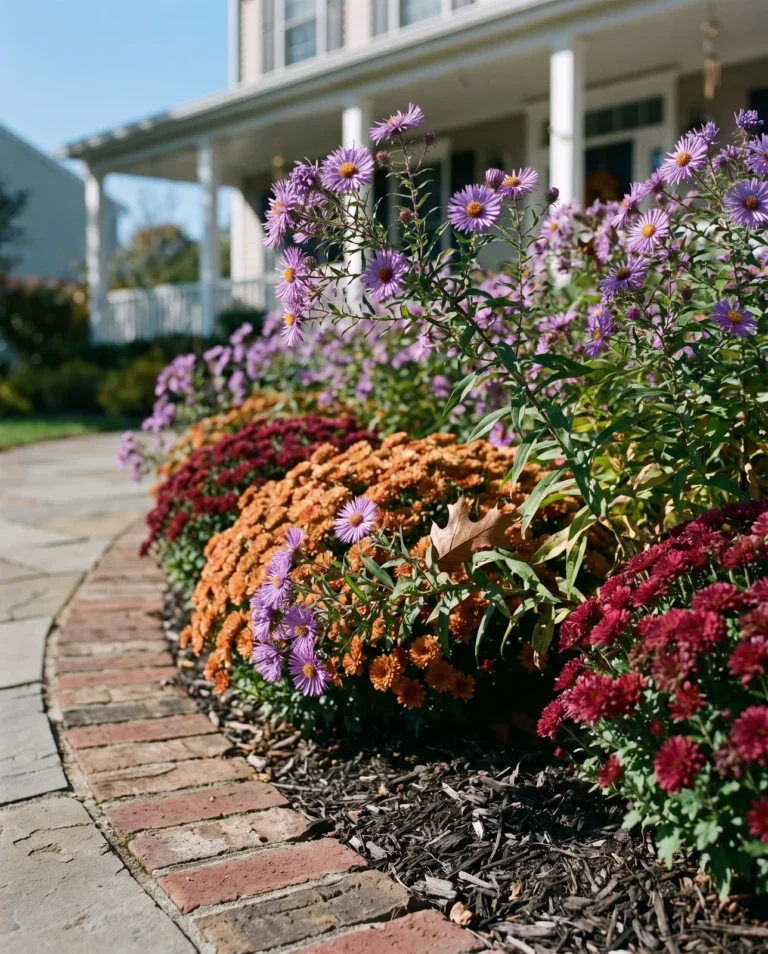
Fall flower bed ideas: 3 plans for sun and shade
Best fall-blooming flowers
Best fall-planted bulbs for spring bloom
Best housewarming plant gifts
Easiest flowers to grow for beginners
Best flowers to attract butterflies
Enjoying our flower guides? Add YourFlowersGuide as a preferred source on Google — it helps more readers find us.
Add to Preferred Sources