Perennials planted in late summer and early fall go into warm soil under cooling air, and that combination pushes them to build roots rather than top growth. A crown that anchors itself before the ground freezes comes through its first summer with less drought stress and flowers earlier in its first full season. That is the whole argument for planting now, and it holds better in some regions than others. It does not hold at all for plants that cannot survive a frozen winter outdoors.
Two things make autumn shopping harder than it looks. The first is timing: soil warmth decides how long roots have to take hold, and the safe end of the season falls weeks apart from one part of the country to another. The second is the display table, where a nursery stacks bare-root crowns, potted perennials, and boxes of spring bulbs together in September even though the three want different things from the same week. What follows covers how to read your own planting window, six perennials that reward an autumn start, the ones to leave until spring, what separates a bulb from a perennial crown, planting dates by zone, dividing against buying new, and the watering and mulching that carry a new plant into winter.
On this page 8 sections
How to tell if it’s still your fall planting window
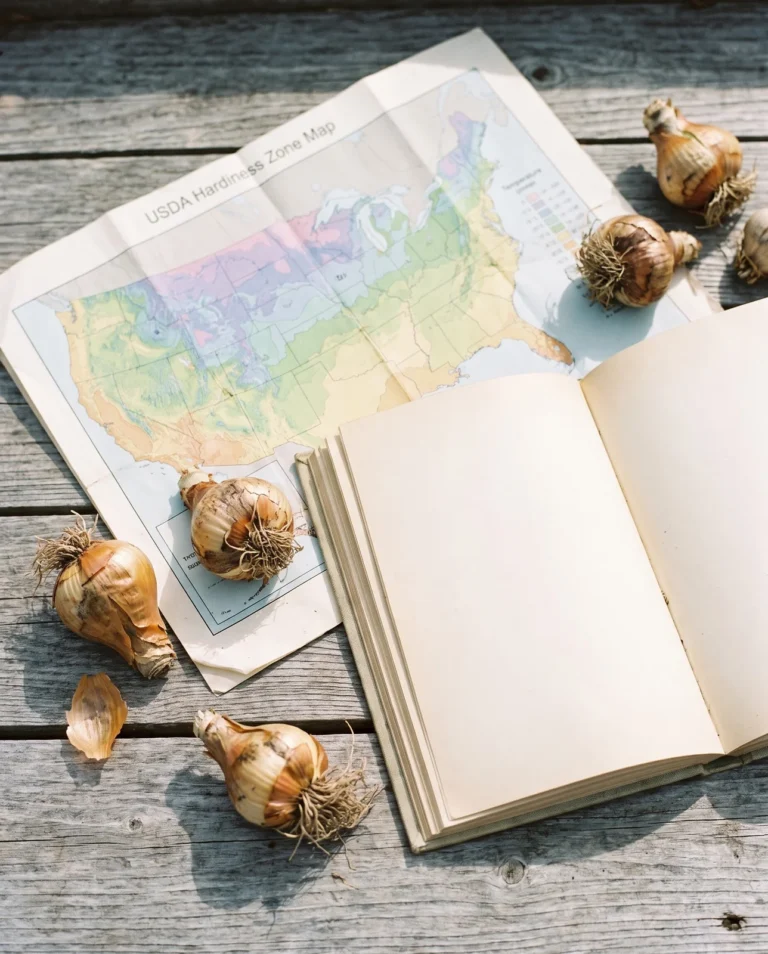
Soil warmth sets the cutoff, not the calendar and not the first light frost. Roots keep dividing and extending in warm earth for weeks after a frost has blackened the tops, so a plant can look finished aboveground while the half that matters is still working. Hardiness zones answer a different question. The USDA Plant Hardiness Zone Map is the standard for deciding which perennials are likely to thrive in a given location, built from average annual extreme minimum winter temperatures and drawn as 10-degree zones and 5-degree half zones. It measures how cold your winter gets. How fast your soil cools in October is a separate matter.
How much room that leaves you depends on where you garden. In the Southeast, UGA Extension treats fall as the better planting season outright: mild winters let roots keep working all season, and a perennial set out now has that much more time to become established before active spring growth begins. In the upper Midwest, University of Illinois Extension draws its line at the first of October and says plainly that late fall plantings can end in frost heaving and dead perennials: the earlier a perennial goes in, the better the root system it carries into winter. Heaving is a mechanical failure rather than a cold-tolerance one. Soil freezes and thaws, and a crown with no fine root hairs gripping the soil gets levered out of the ground, roots snapped, growing point left in freezing wind. If the ground is close to closing where you are, a containerized perennial is safer in a cold frame, or left in its pot until spring.
Work through this before you plant a fall perennial
Three questions, in this order, because each answer changes what the next one has to check.
Perennials to plant now
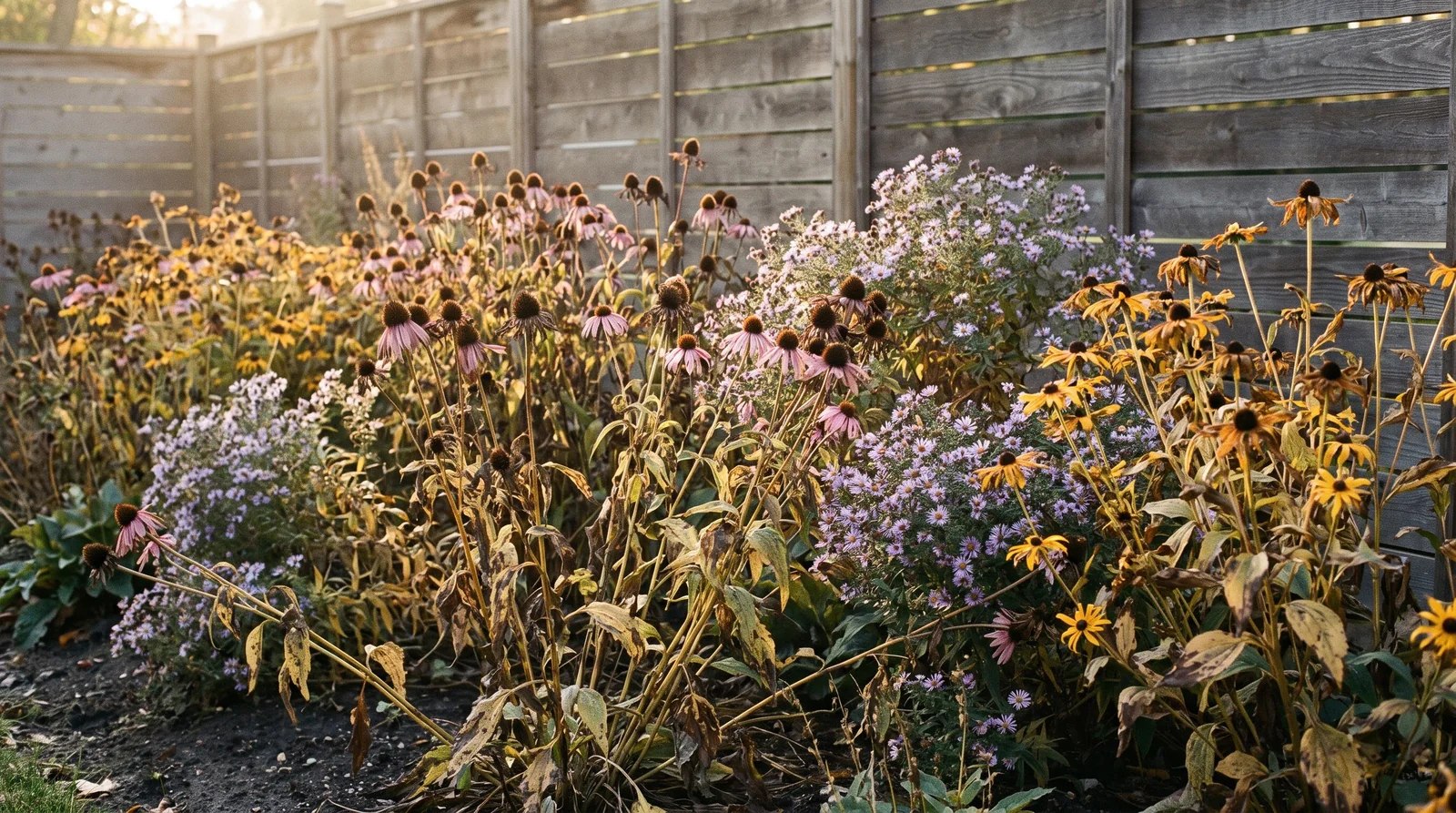
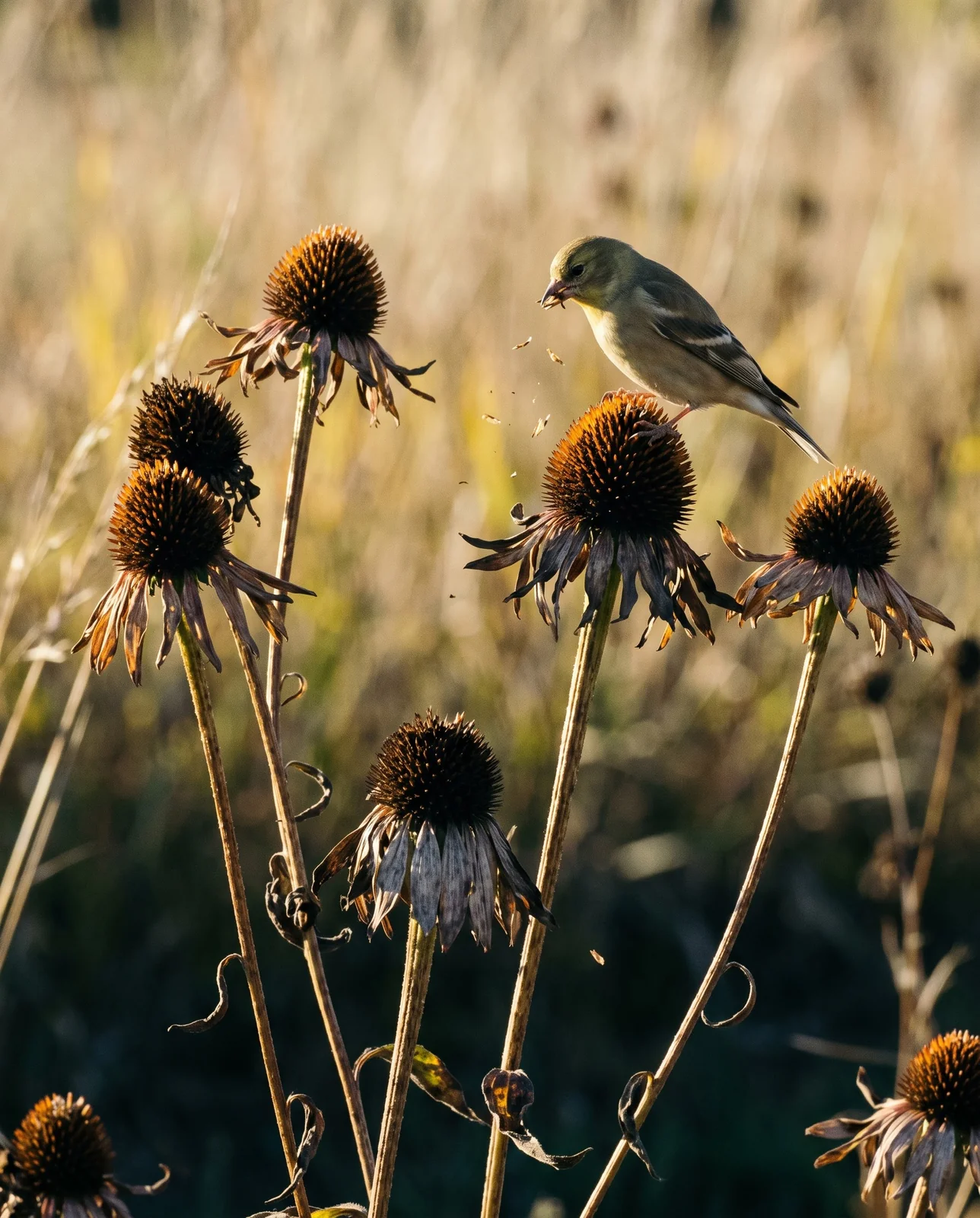
Native prairie perennials take an early autumn planting well: deep-rooted species keep pushing into cooling soil, and getting them in now means the insects that depend on them find them next spring. Penn State Extension cites research showing that ninety percent of native insects are specialists, feeding on plants from three or fewer families, which is what makes a native like coneflower (Echinacea purpurea) worth the space in a garden meant to support them. Coneflower is hardy from zone 3a to 8b and flowers June through August. Leave the dead, hollow stems standing over winter and they become nesting sites for native bees, while the seed heads hold food for birds. Natives also ask for less: many prefer lean soil and want little or no fertilizer, since extra nitrogen buys floppy growth instead of flowers.
Six perennials worth planting this fall
Each of these puts down roots in cool autumn soil instead of waiting for spring, given the site conditions listed.
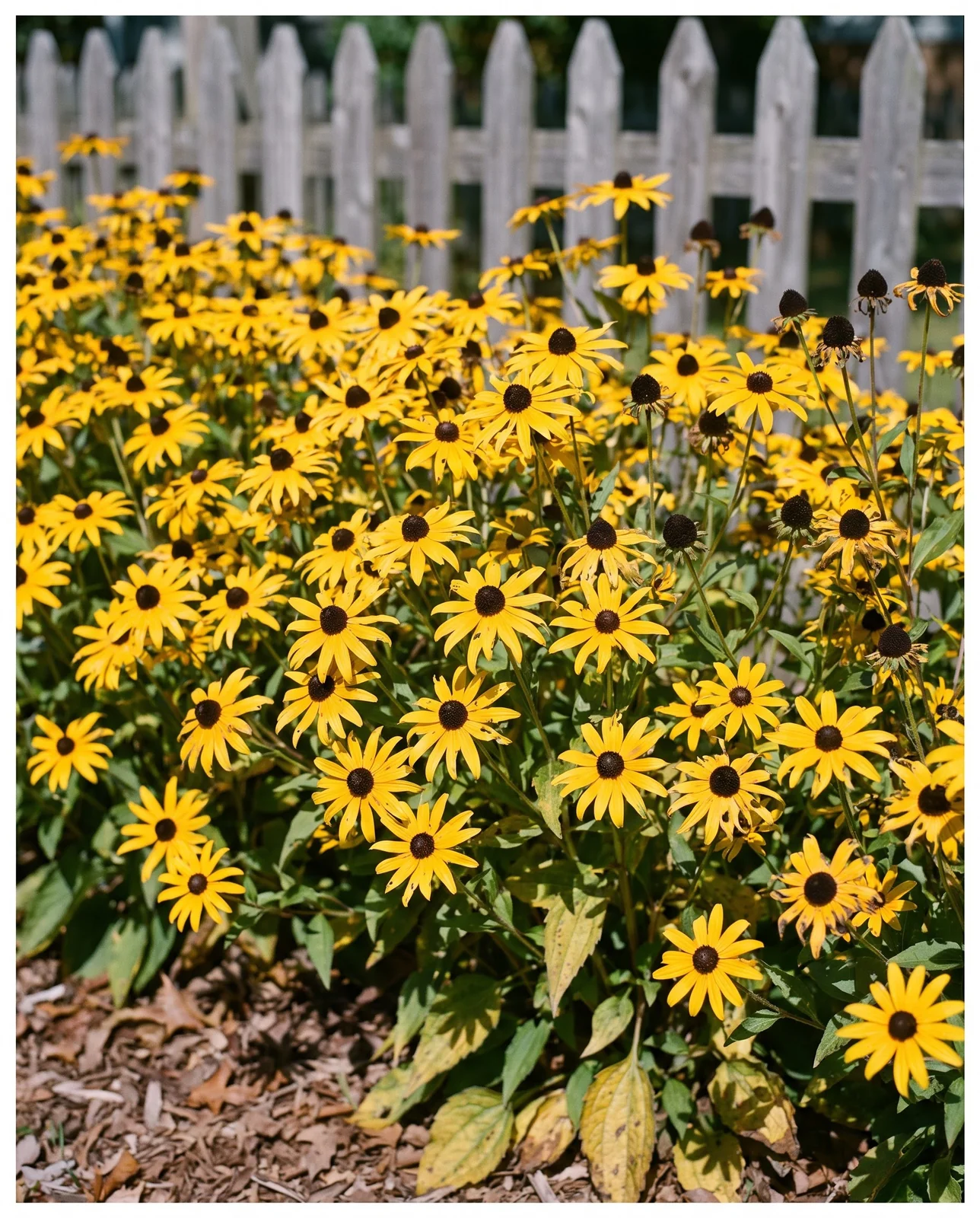
Black-eyed Susan (Rudbeckia fulgida) carries the same border after the coneflowers fade, gold from August into October, hardy from zone 3a to 9b. It spreads on rhizomes rather than sitting in a tight clump, which is part of why it knits into an autumn bed quickly. Neither of these two needs a load of compost, and both anchor themselves before the first hard freeze if they go in early enough.
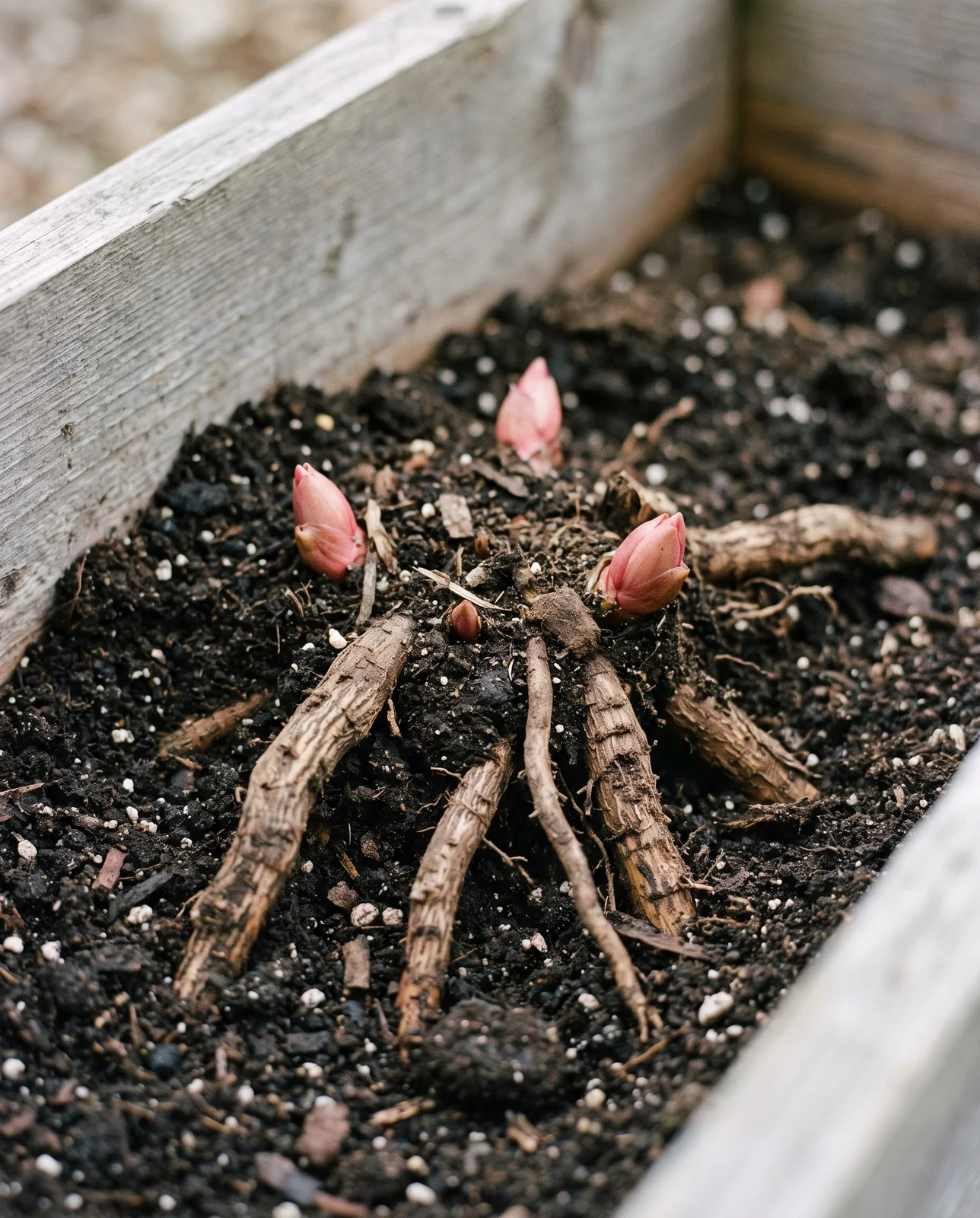
Fleshy-rooted perennials have the strongest claim of all on an autumn slot. Garden peonies take hold far better from bare-root divisions set in early fall than from a spring container, and a well-placed clump is long-lived. Two things decide whether it works. One is climate: UGA Extension calls peonies marginal in central Georgia and does not recommend them for the south of the state, where winter never delivers enough chilling. The other is depth. A peony crown has to sit at or just below the soil surface to flower; buried deeper it makes healthy foliage year after year and never sets a flower bud.
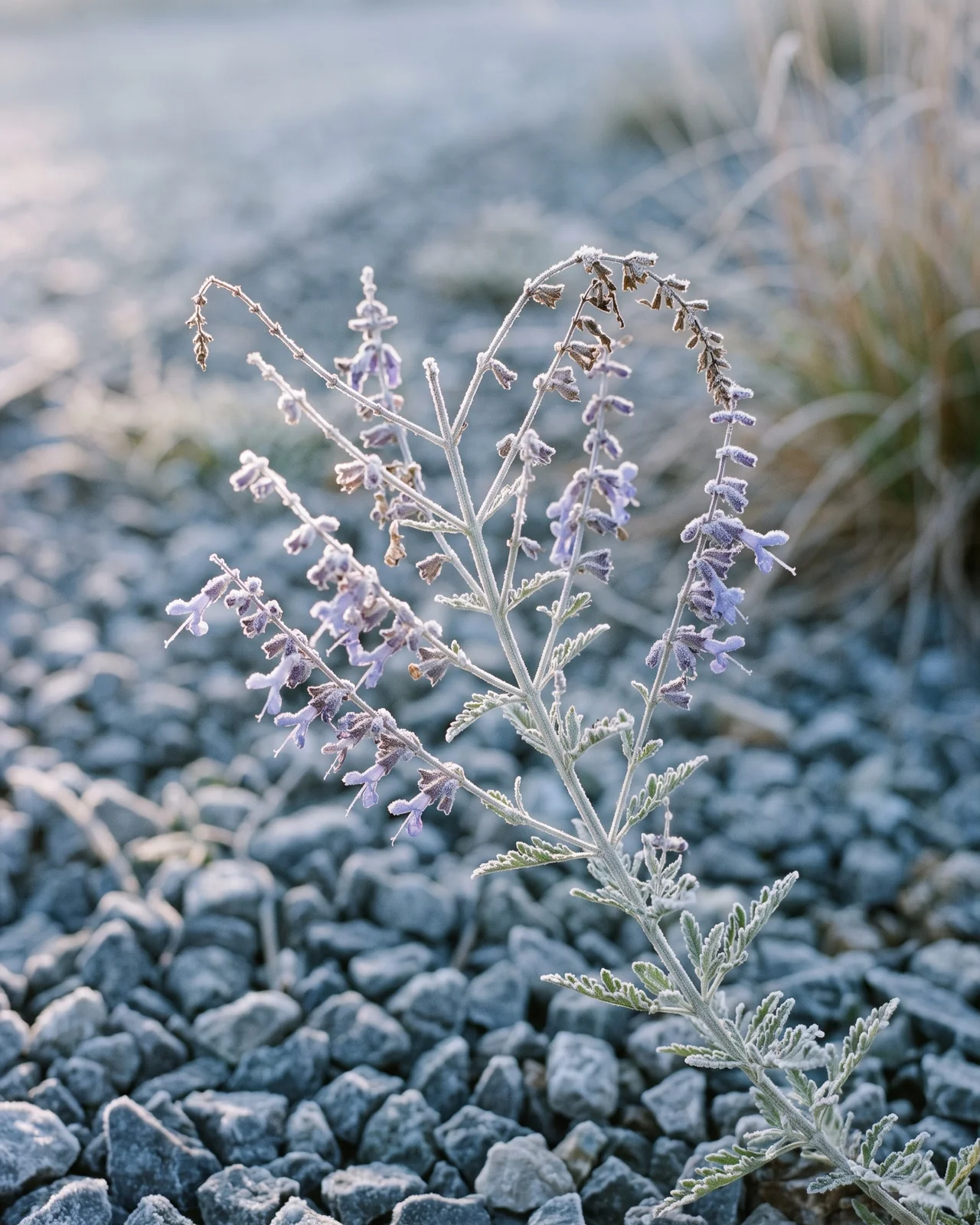
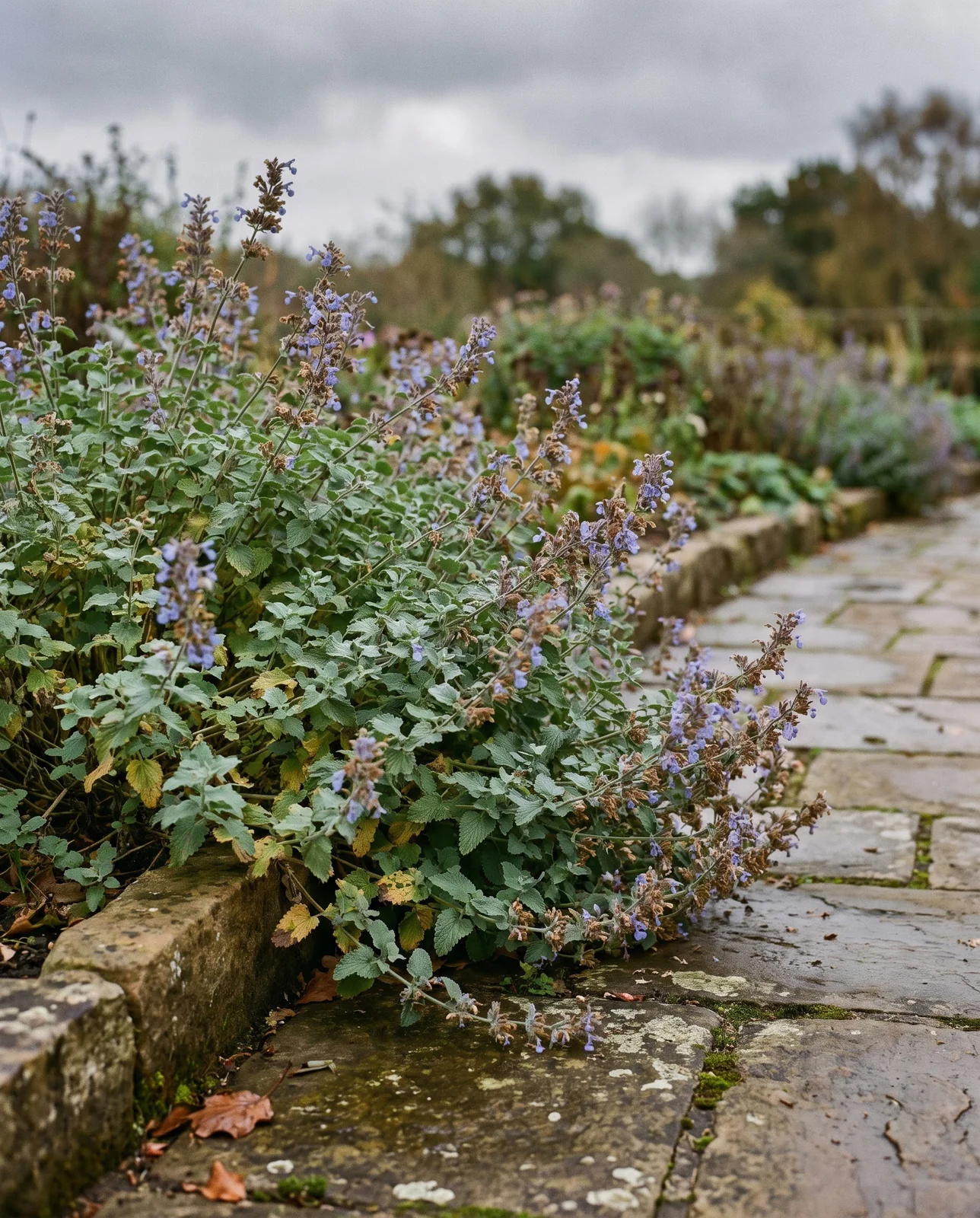
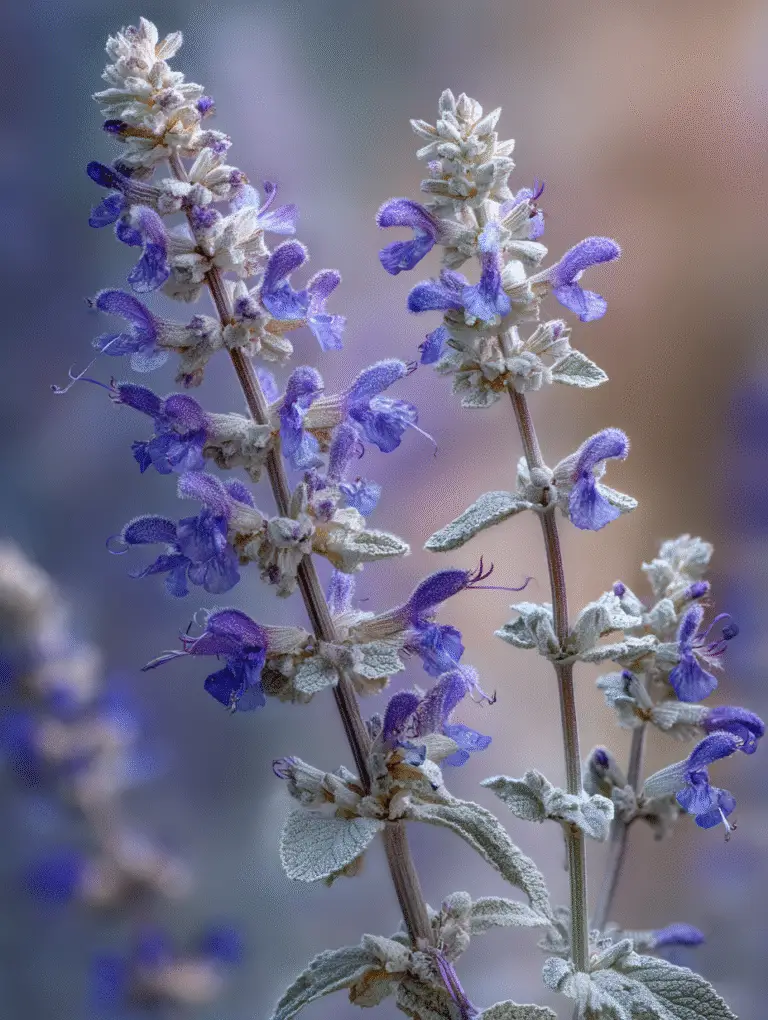
Two structural, drought-tolerant perennials finish the list. Russian sage, catalogued now as Salvia yangii after a reclassification from its older trade name Perovskia atriplicifolia, is hardy from zone 5a to 9b and flowers June into October. Its woody crown wants full sun and sharp drainage and will not forgive a site that stays wet in winter. Catmint (Nepeta x faassenii) covers the same zones and conditions in a lower, softer shape, and the two together make a long-flowering border that deer walk past.
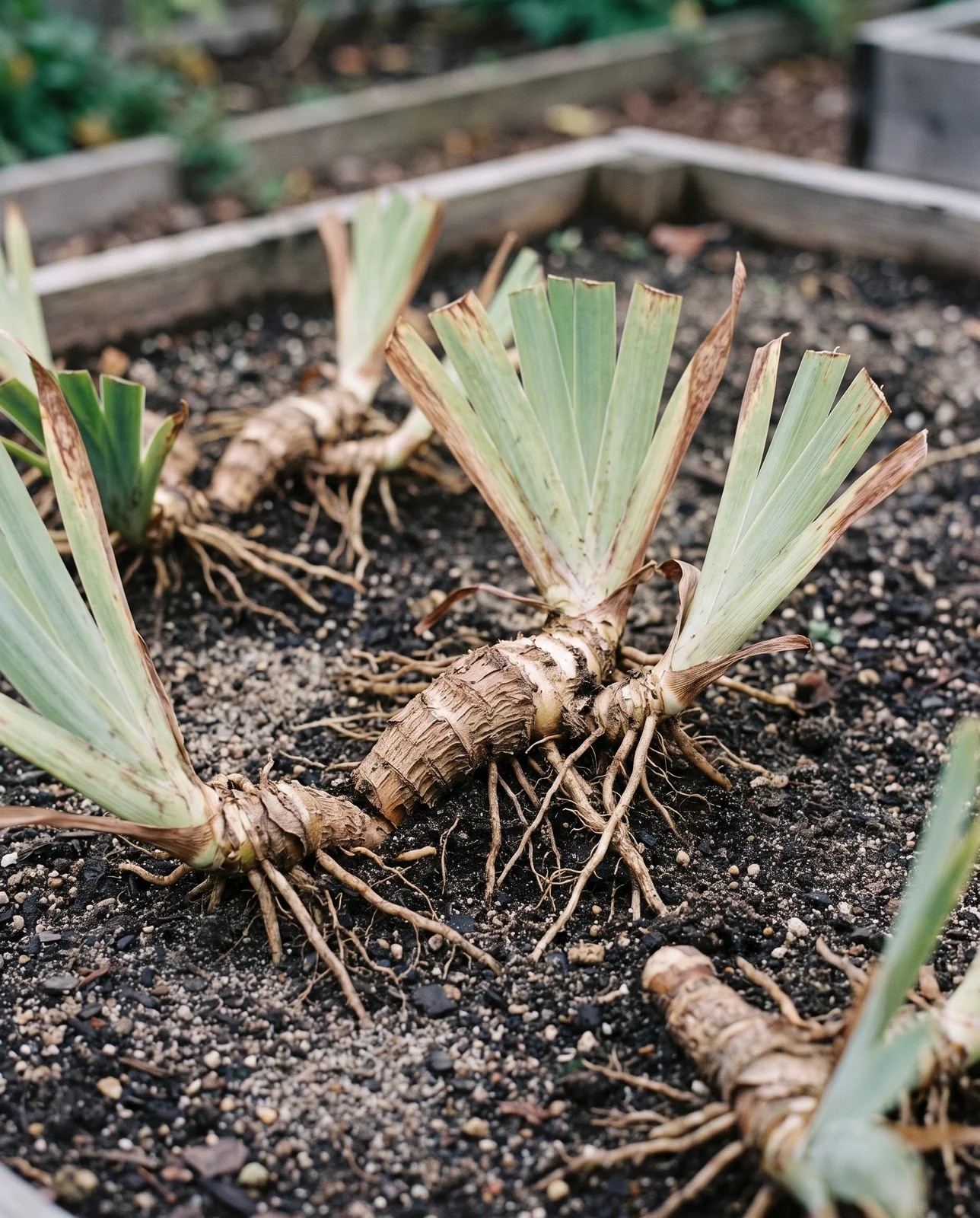
Bearded iris (Iris x germanica) belongs here too, planted in a way that contradicts almost everything else on this page. Hardy from zone 3a to 9b and standing 1 to 4 feet, it wants full sun and excellent drainage, unlike the Siberian and Japanese irises, which take light shade and tolerate moist soil. NC State Extension is exact about the rhizome: set it at soil level or barely covered, and never mulch over it. The top of that fleshy rhizome has to stay open to sun and air, because a rhizome kept covered and damp is where fungal and bacterial rot starts.
What not to plant in fall, honestly
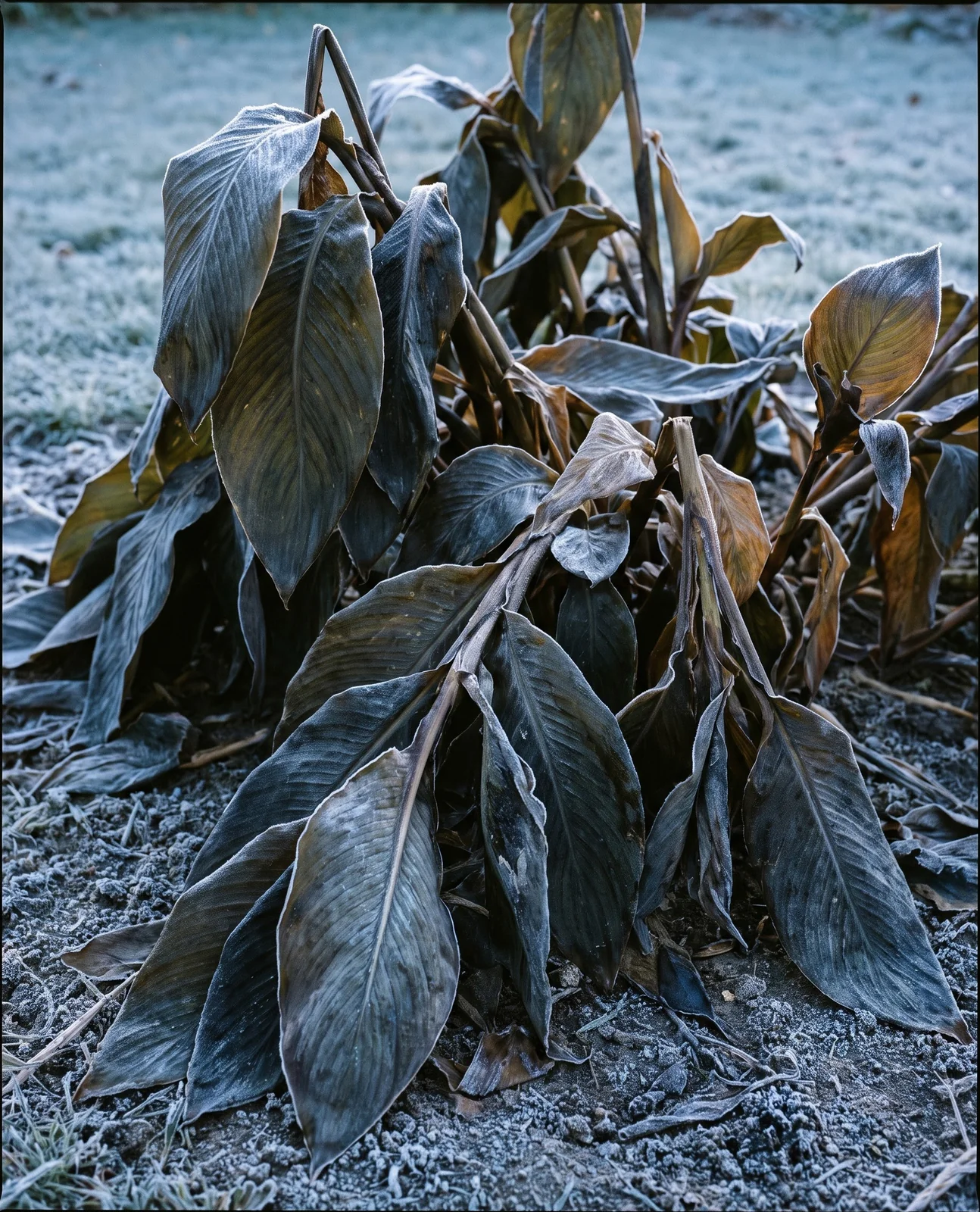
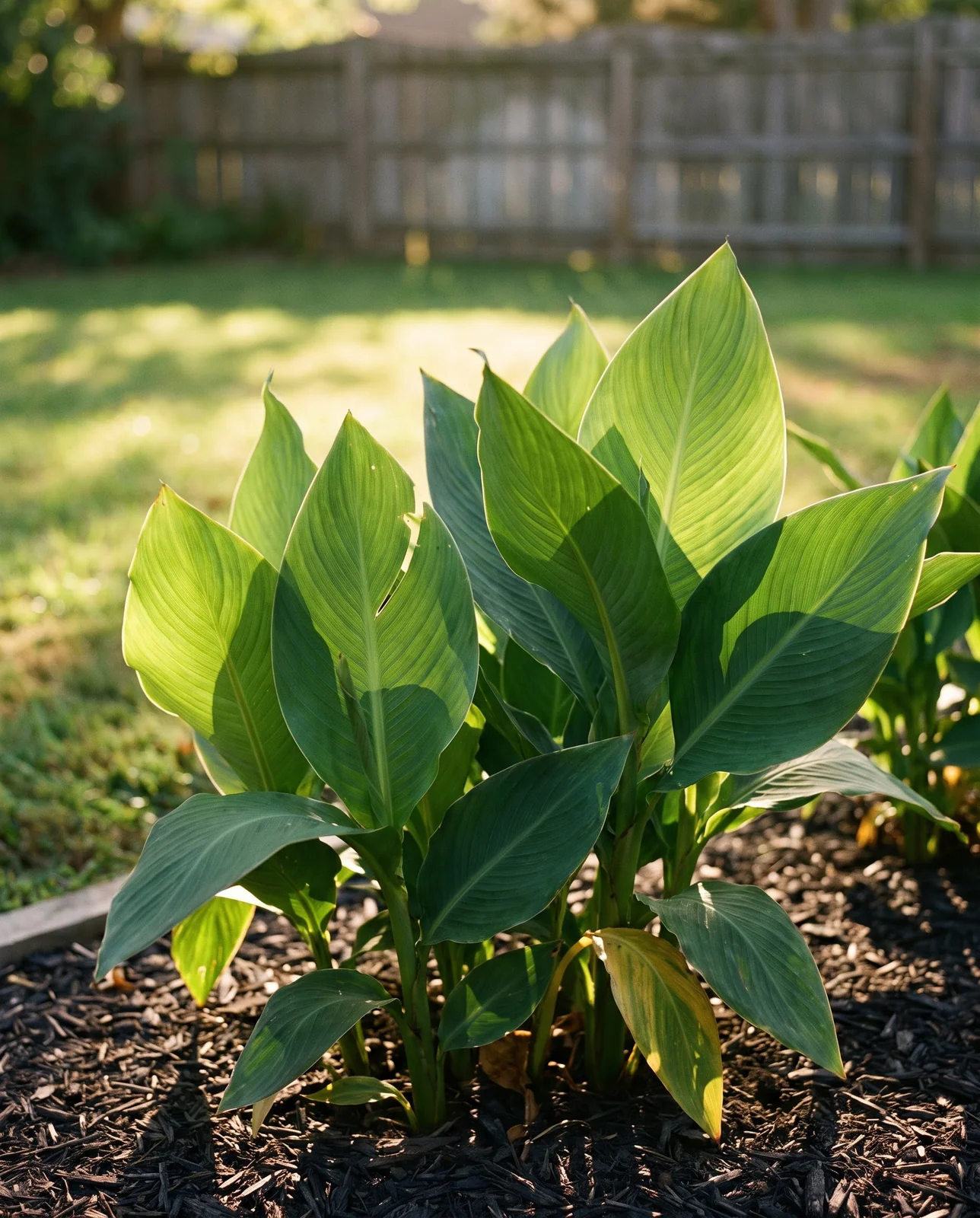
Not everything on the autumn bench belongs in the ground. Tender and tropical perennials with no cold hardiness in northern zones, cannas, dahlias, and elephant ears among them, come out of the soil in fall rather than going into it: sub-freezing soil turns their storage tissue to mush, so in cold-winter regions those tubers and rhizomes are lifted and stored indoors before frost. Buying one potted late in the season only pays off if you intend to overwinter it indoors under conditions you control.
Hardy perennials get into trouble by timing rather than by species. Put one in a week before the ground closes and it never gets the warm-soil time it needs to grow the fine root hairs that grip the surrounding soil particles. The first freeze-thaw cycle then lifts the whole root ball, snaps roots, and leaves the crown sitting in sub-freezing air. That is frost heaving, and it kills plants that are perfectly hardy on paper.
Two more things are worth holding back. Freshly divided perennials carrying a lot of foliage on fibrous, moisture-sensitive crowns, woodland species in particular, need a full season to rebuild a root system and do badly when saturated autumn soil is followed straight away by frozen ground; the rugged prairie natives shrug this off. The other is fertilizer. Nitrogen applied in autumn pushes soft growth that has no time to harden off, and the first hard frost burns it. The standard perennial rate, one pound of nitrogen per 1,000 square feet, belongs in spring or early summer, not on a bed you are planting in October.
Bulbs vs. perennials: what’s actually different
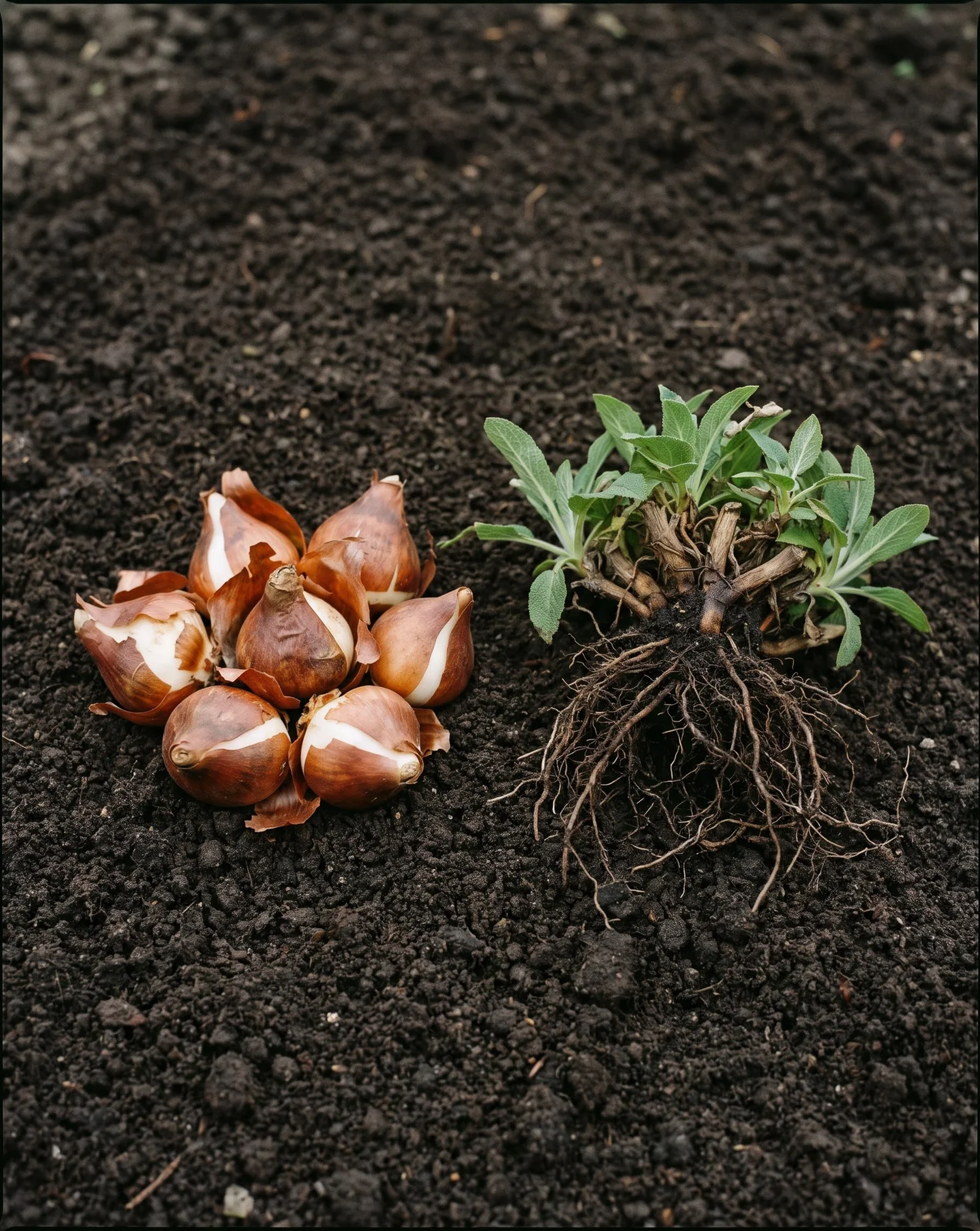
The confusion starts on the sales floor. In September a nursery sets crates of loose spring bulbs beside containers of flowering perennials and boxes of dormant bare-root crowns, and the arrangement implies all three follow the same rules. Their internal anatomy and their strategies for getting through winter have almost nothing in common.
University of Illinois Extension puts the botany plainly: bulbs sit inside the perennial category, defined by an underground storage structure that holds the complete life cycle and by a required dormancy each year. Herbaceous perennials get through the off season on a whole range of such structures, true bulbs and corms among them, along with tubers, tuberous stems, tuberous roots, and plain crowns.
What that means with a spade in your hand: a true spring-flowering bulb, a tulip or a daffodil, comes to you as a sealed capsule. Inside the tunic sit next spring’s leaves, stem, and flower bud, already formed and paid for by starch banked the previous summer. It needs cold to break dormancy and asks nothing of autumn photosynthesis. A perennial crown comes to you alive: growing points on a working root system, fibrous or fleshy, carrying a fraction of that stored starch. It has to draw water and make real root-to-soil contact before the soil freezes, or it spends winter drying out with nothing to fall back on.
Fall planting windows, by zone
Because root establishment runs on soil warmth, the safe end of the planting season moves with latitude. Zone is the shorthand for where you sit; regional extension guidance is what turns it into a date.
Regional autumn planting guidelines by USDA zone
Illinois Extension anchors the zone 5 to 6 cutoff and University of Georgia Extension the zone 7 to 8 window; the temperature ranges are the USDA definition of each band.
The two ends of that table give opposite advice about the same plant, and both are right for the ground they were written for. A gardener in Illinois plants early and watches October close the door; a gardener in Georgia plants in October on purpose, because the soil is still warm and summer heat is months away. Anyone in between is reading their own soil rather than either rule.
Should you divide or plant new this fall?
Autumn is a good window for expanding what you already have, though splitting an established clump follows different rules from setting out a new container plant. University of Illinois Extension puts most garden perennials in the spring division camp and names the exception: the fleshy-rooted species, poppy, peony, and iris, divide best in late summer to very early fall. The reason is the cut surface. Divided early enough it calluses over and pushes out anchoring rootlets before dormancy; divided late it goes into winter as an open wound on a crown nothing is holding down.
A division has to be big enough to be worth making: three to five shoots or growing points is the usual minimum for a piece that comes up strongly in spring. Lift the whole clump, cut through the crown tissue with a clean sharp spade or knife, throw away the old woody or rotted center, and keep only the vigorous outer growth.
Root preparation is where a division is won or lost. Water containerized nursery plants thoroughly before they come out of their pots, and soak bare-root divisions and lifted fleshy roots for a full hour so the tissue rehydrates. Then set them at the depth they want, crowns at or just below the soil surface. A buried crown is the leading cause of both rot and a plant that leafs out and refuses to bloom.
After you plant: water and mulch until the ground freezes
Bed preparation carries most of the odds on winter survival. Spade the bed deeply, 8 to 10 inches where the soil allows it, working in organic amendments where they are needed; a pH between 6.0 and 6.5 suits most perennials. Set a containerized plant at the depth it sat in its nursery pot and no lower, so the crown does not end up below the surrounding grade once the soil settles.
Water deeply and seldom rather than lightly and often. An established perennial bed runs on about an inch of water a week. Frequent light watering wets only the top crust, trains roots to stay shallow, and leaves foliage and flowers damp, an open door for fungal disease. A long soak drives roots down through the profile instead. New fall plantings keep needing water until the ground freezes solid, and through a dry autumn especially.
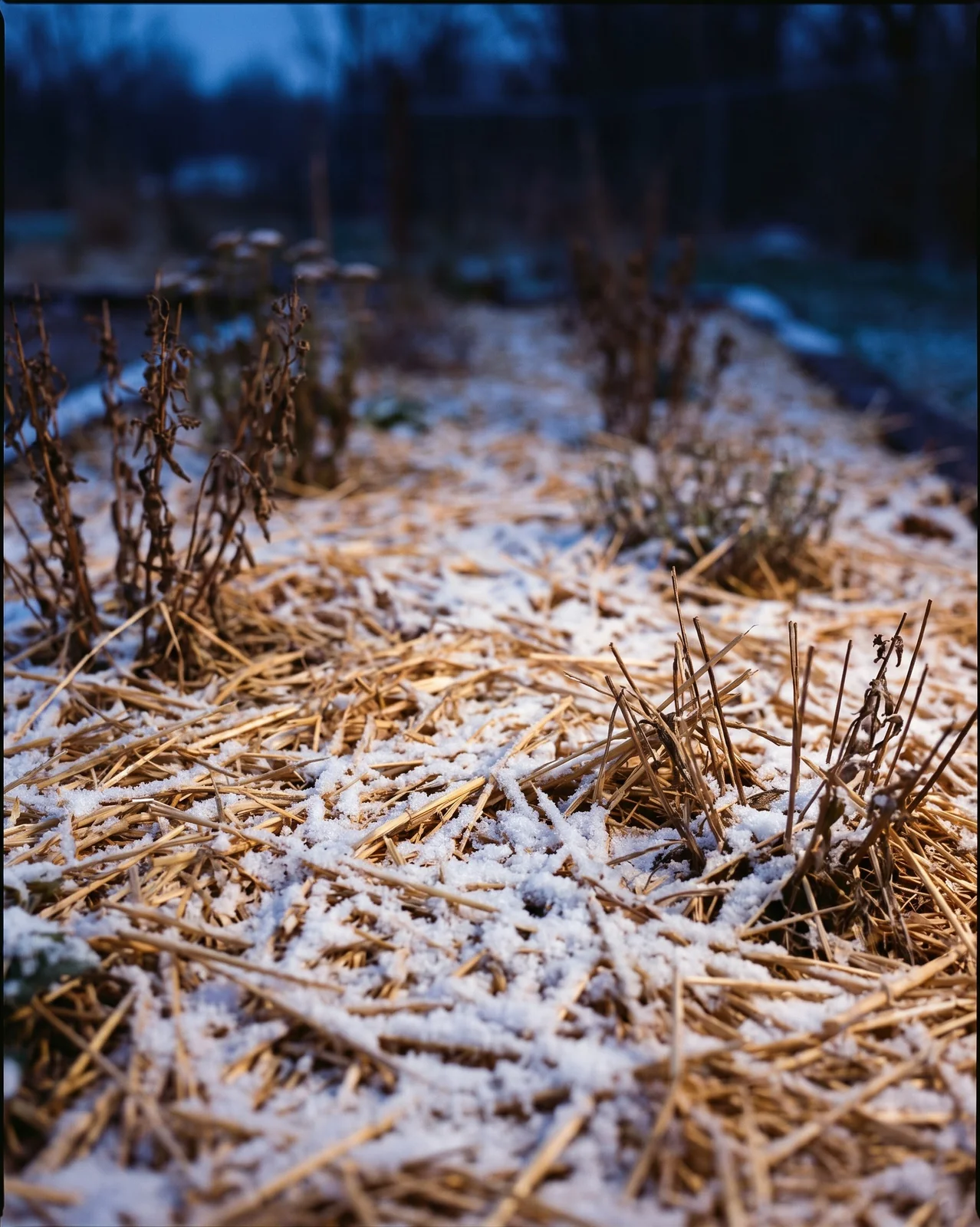
Mulch is a question of timing and placement more than quantity. Two inches of shredded leaves, shredded bark, or compost holds moisture and steadies soil temperature, but it stays off the stems and off the crowns, since heavy moisture-holding mulch on a crown brings on rot. The cold-climate move for late plantings is a different job at a different time: once the soil has frozen solid, lay 3 to 4 inches of loose straw or evergreen boughs over the bed to hold it frozen and stop freeze-thaw cycles from heaving crowns out. One exception runs against everything else in this paragraph: no mulch over bearded iris rhizomes, at any point in the year.
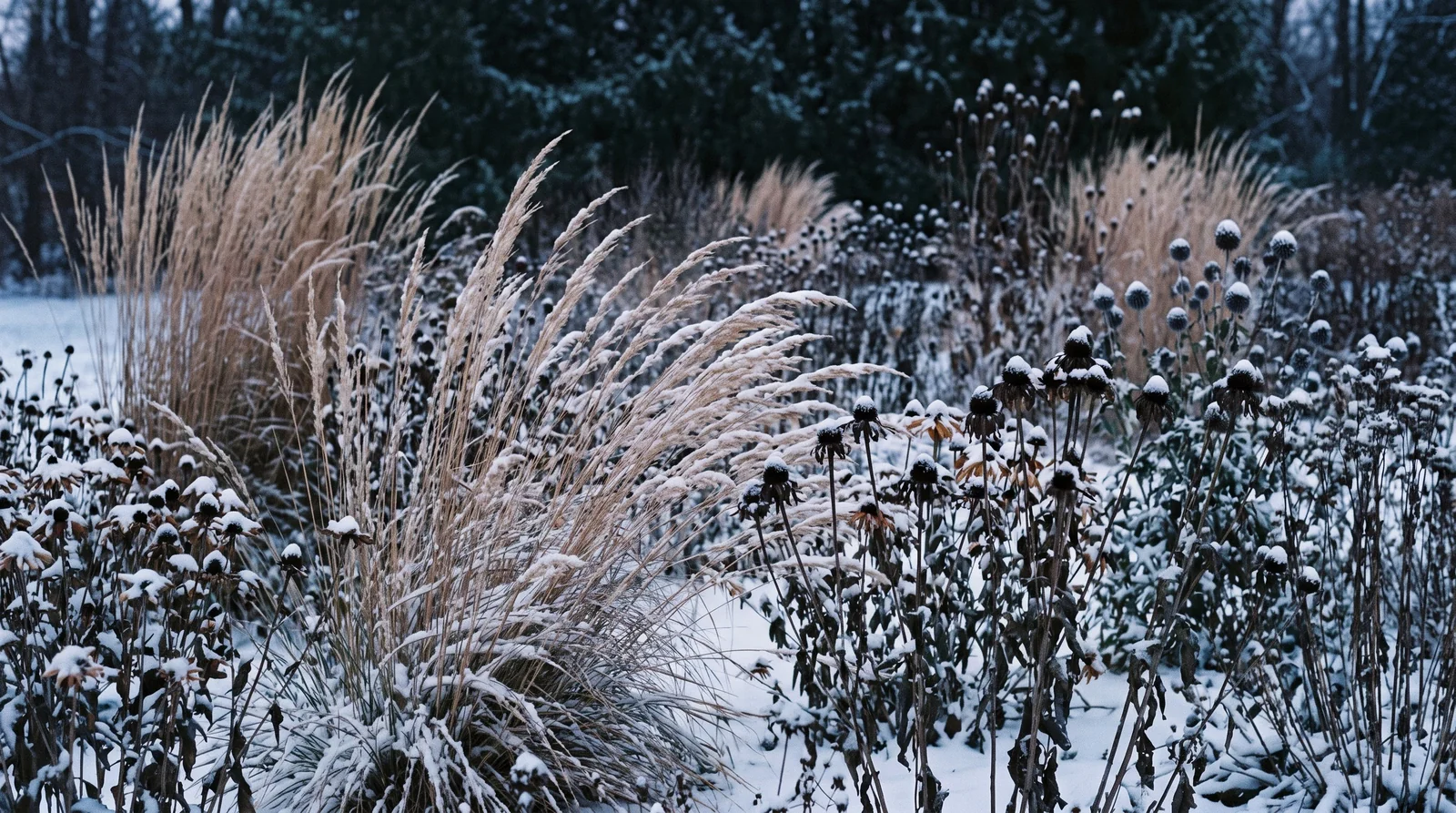
Cleanup can wait, and waiting usually pays. Cut perennials back only once several hard frosts have put them fully dormant, and stop 2 to 3 inches above the crown. The buds for next year’s growth sit at or slightly above the soil line, so a flush cut takes them off and opens the plant to winter injury. Stems and seed heads left standing shelter the crown through the freeze-thaw weeks and feed birds while little else is available.
FAQ
Is it too late to plant perennials in late fall?
If the soil is still workable and the ground has not frozen solid, hardy perennials can still go in. In the North, University of Illinois Extension draws the line at October 1, early enough for roots to take hold before the freeze-thaw cycles start. Farther south, mild winters keep the window open through late autumn.
What perennials should not be planted in fall?
Tender tropicals, dahlias, cannas, and elephant ears among them, should not go into cold-climate ground in autumn at all: freezing soil destroys the storage tissue they overwinter on. Past that it is a timing question rather than a plant list. Any hardy perennial planted after your regional cutoff, or into ground already freezing, has no time to anchor and becomes a candidate for frost heaving.
What is the difference between a bulb and a perennial?
A bulb is a perennial, one that keeps its whole life cycle and its food reserves inside an underground storage organ and goes dormant on a fixed schedule. A standard herbaceous perennial has a vegetative crown and working roots instead, so it needs soil moisture and warm soil contact in autumn to establish itself before winter.
Can you plant perennials after the first frost?
Yes. A light frost burns tender top growth while the soil underneath stays warm enough for roots to keep extending. The season ends when the ground freezes solid, so finish planting before that point and before your region’s hard freeze cutoff.
Is fall or spring better for planting perennial flowers?
It depends on where you garden, and the extension services genuinely disagree. UGA Extension recommends fall in the South, where cooling air over warm soil lets roots establish without summer heat stress. University of Illinois Extension calls spring the better window for most perennials in the North, because of freeze-thaw cycles, while allowing early autumn planting up to October 1. Penn State Extension, writing about native perennials, treats spring, early summer, and fall as three suitable establishment periods and does not rank them.
How deep should perennial crowns be planted in fall?
Set containerized perennials at the exact depth they sat in the pot, with the crown at or just below the soil surface; anything deeper invites crown rot. Peony crowns go shallow for the same reason, or the plant makes foliage and no flowers. Bearded iris is the outlier, its rhizome left sitting exposed at the surface, uncovered and unmulched.
More About Best & Compare
Flowers that bloom all summer long
Fall planting by region: your zone-by-zone window
Fall flower bed ideas: 3 plans for sun and shade
Best fall-blooming flowers
Best fall-planted bulbs for spring bloom
Best housewarming plant gifts
Easiest flowers to grow for beginners
Best flowers to attract butterflies
Best flowers for hanging baskets and window boxes