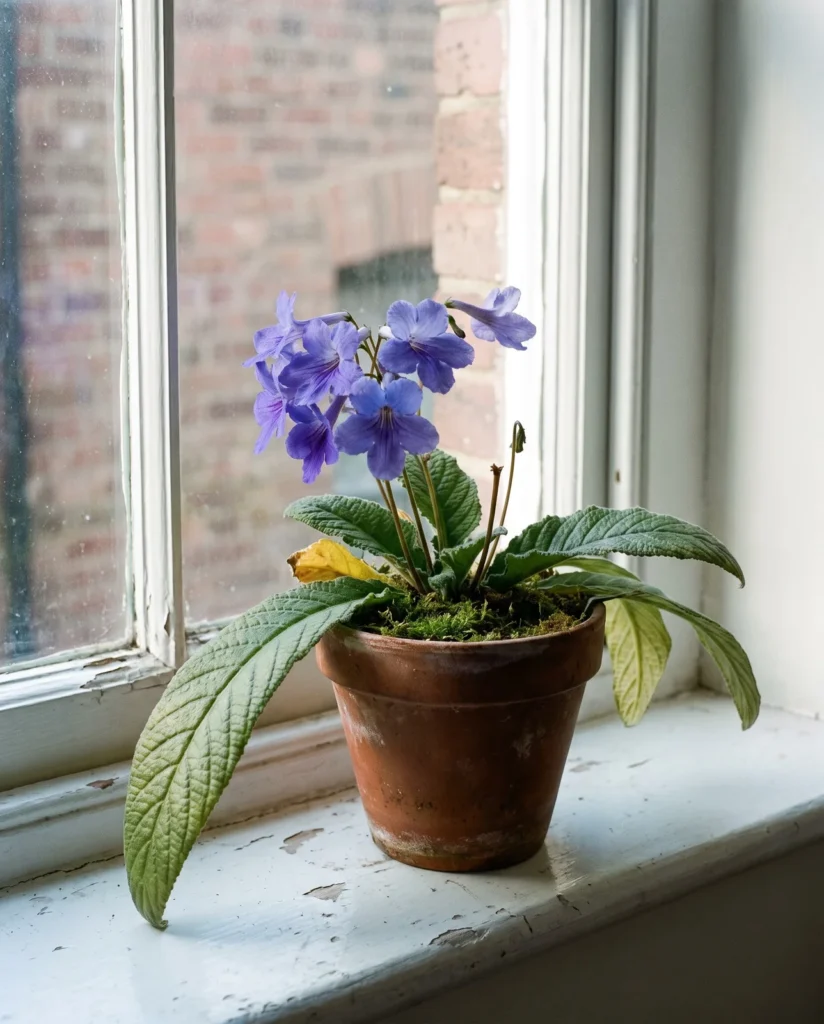
Not a primrose, and not one plant
Cape primrose is not a primrose: the name records a South African plant with a passing resemblance to Primula and nothing more. It belongs to the African violet family, Gesneriaceae, and the genus runs to 184 species. They grow wild in the mountain forests of central, eastern and southern Africa, Madagascar and the Comoro Islands. The common name is narrower than the genus. It covers the stemless plants that build a flat rosette of strap leaves, while the soft-stemmed, trailing half goes by nodding violet. Between them the two halves cover three growth forms: rosettes, single-leaved plants, and shrubby plants with soft stems.
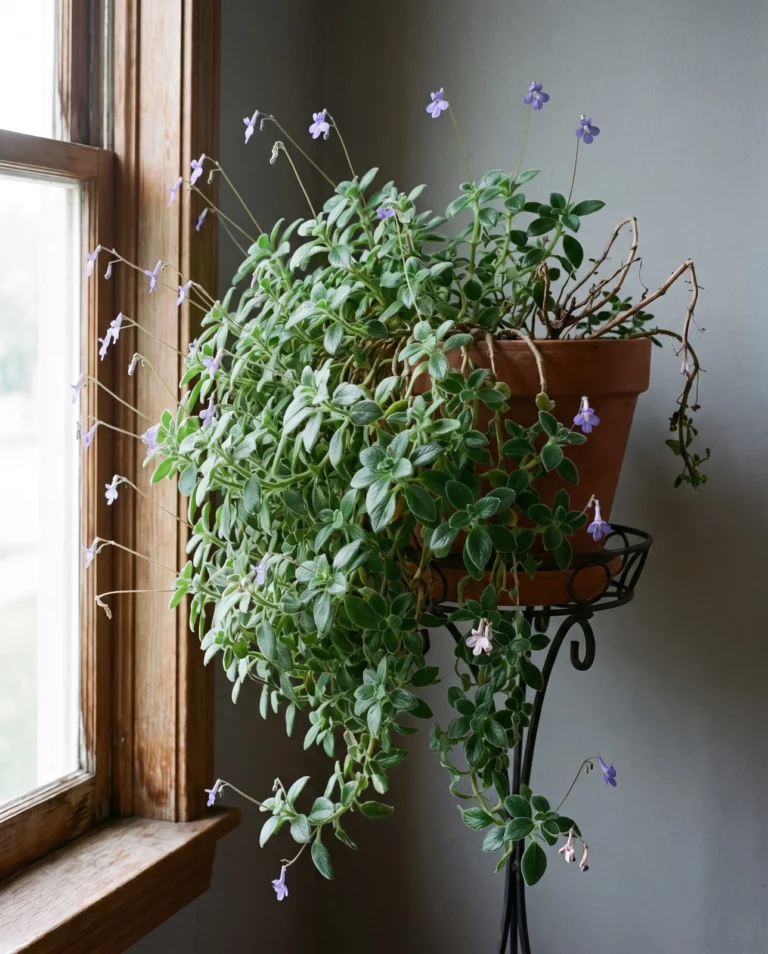
The African violet now sits inside the same genus. Molecular work moved the old genus Saintpaulia into Streptocarpus, and the retired name survives as a synonym. Care did not merge with the names, and an African violet differs slightly in what it wants. A third plant reaches the shelves under the same label. Streptocarpella, the trailing, soft-stemmed half of the genus, has picked up nodding violet, false violet, Cape violet and cape primrose itself. The two halves are confused constantly, although their form differs sharply. Whatever comes home under either name wants filtered light and soil kept moist without being wet, because sellers rarely specify the species.
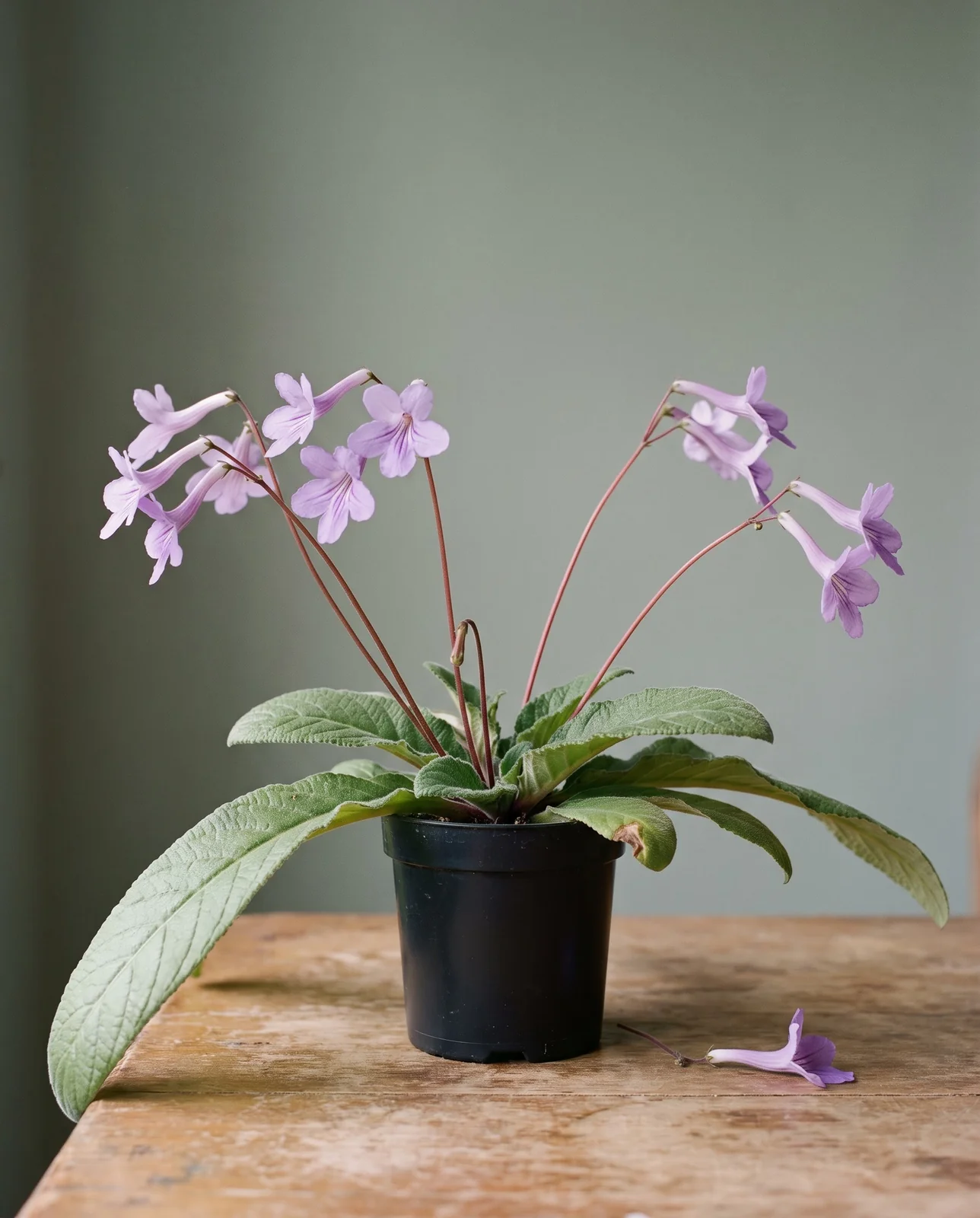
The three plants side by side
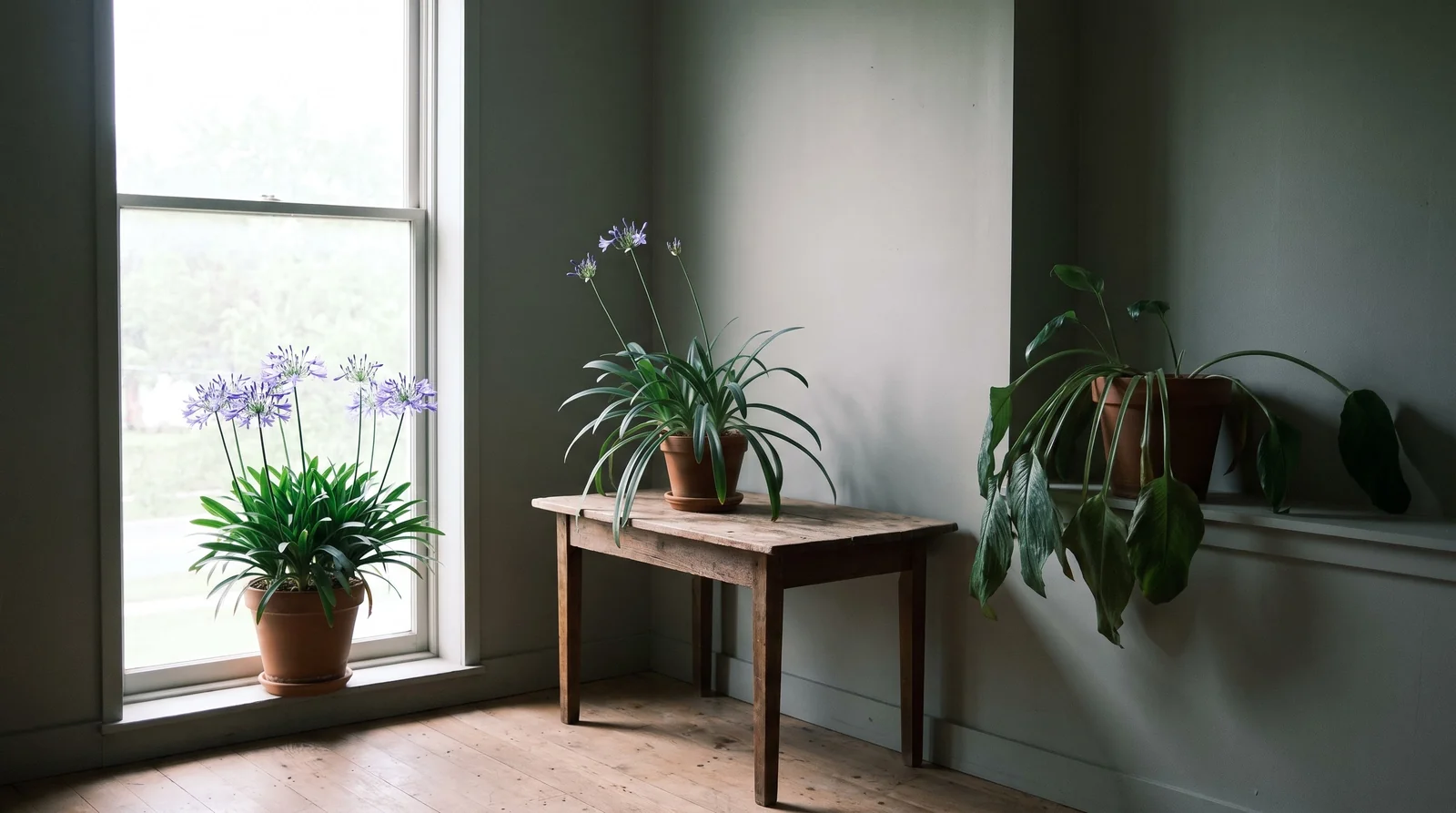
The leaf, the habit and the size of the flower separate the three. Check those before trusting the label on the pot.
What a cape primrose looks like
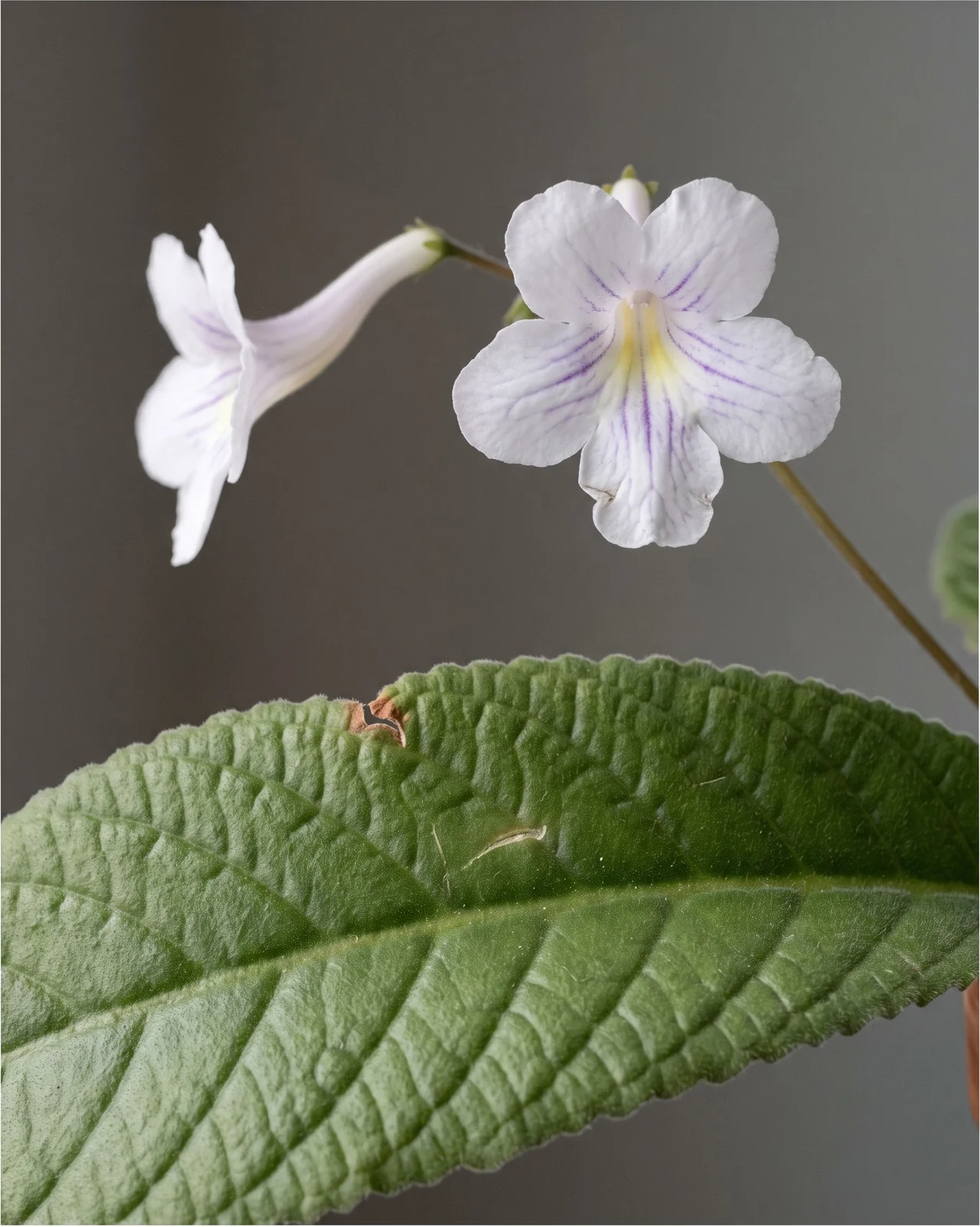
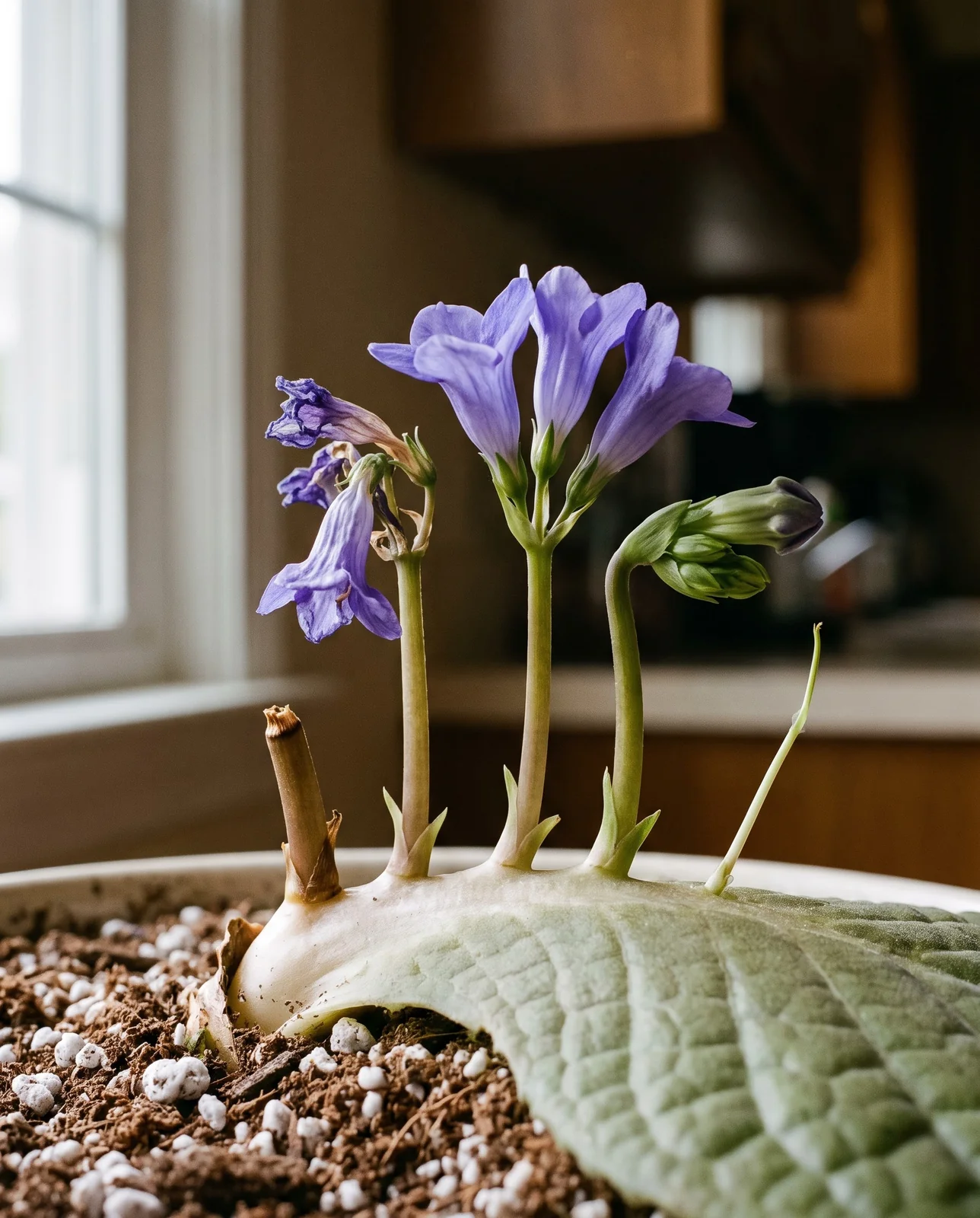
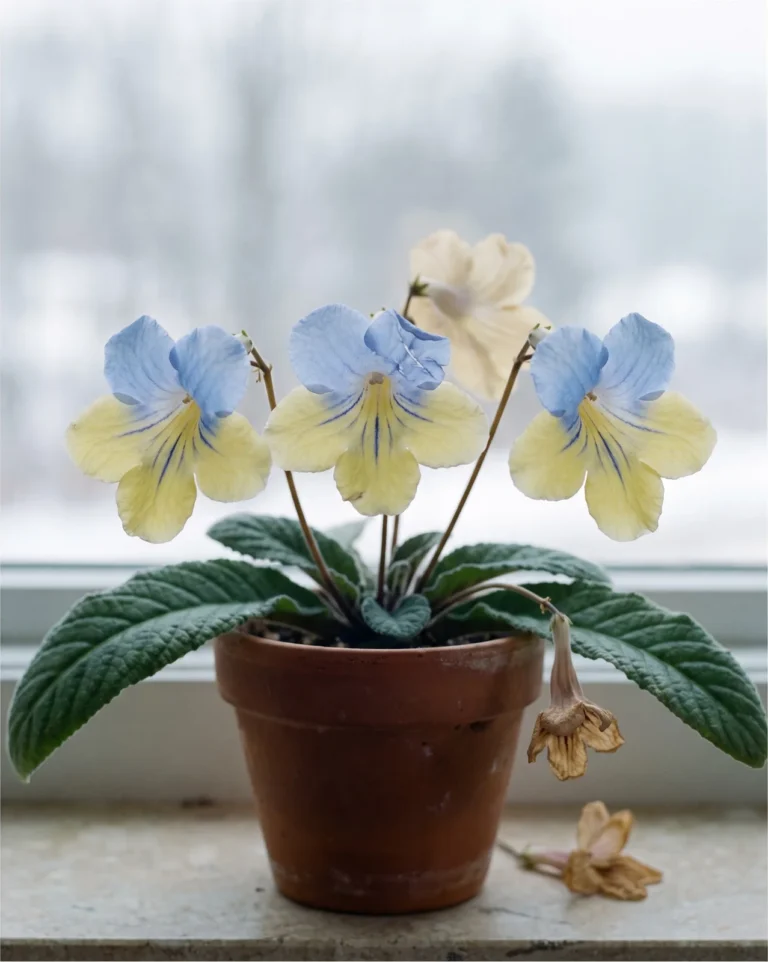
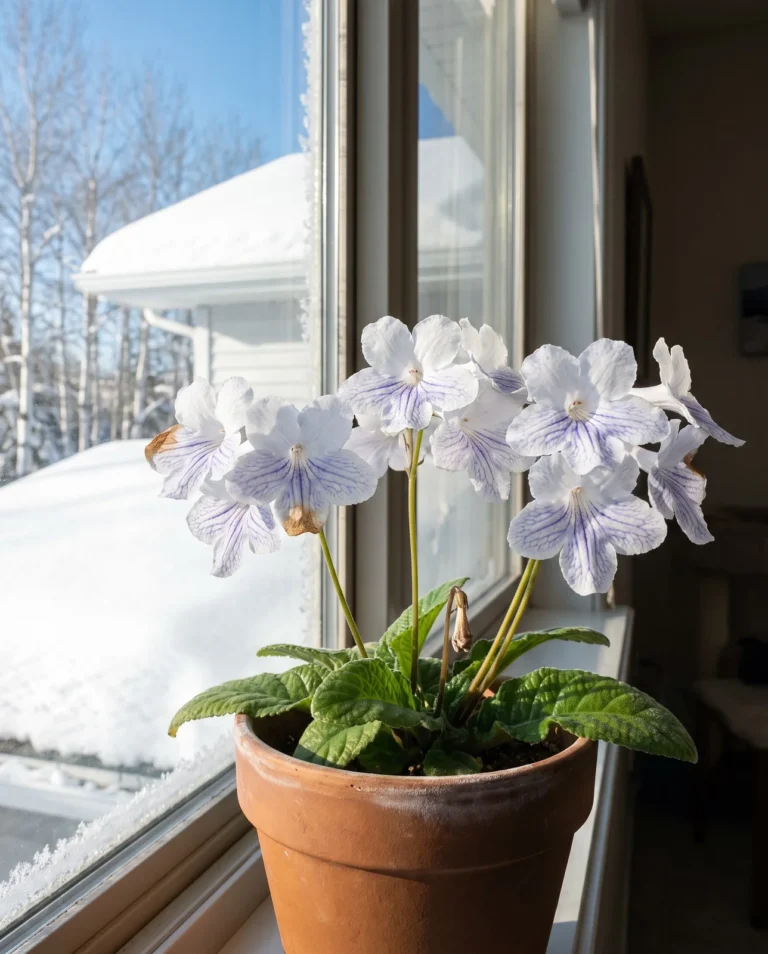
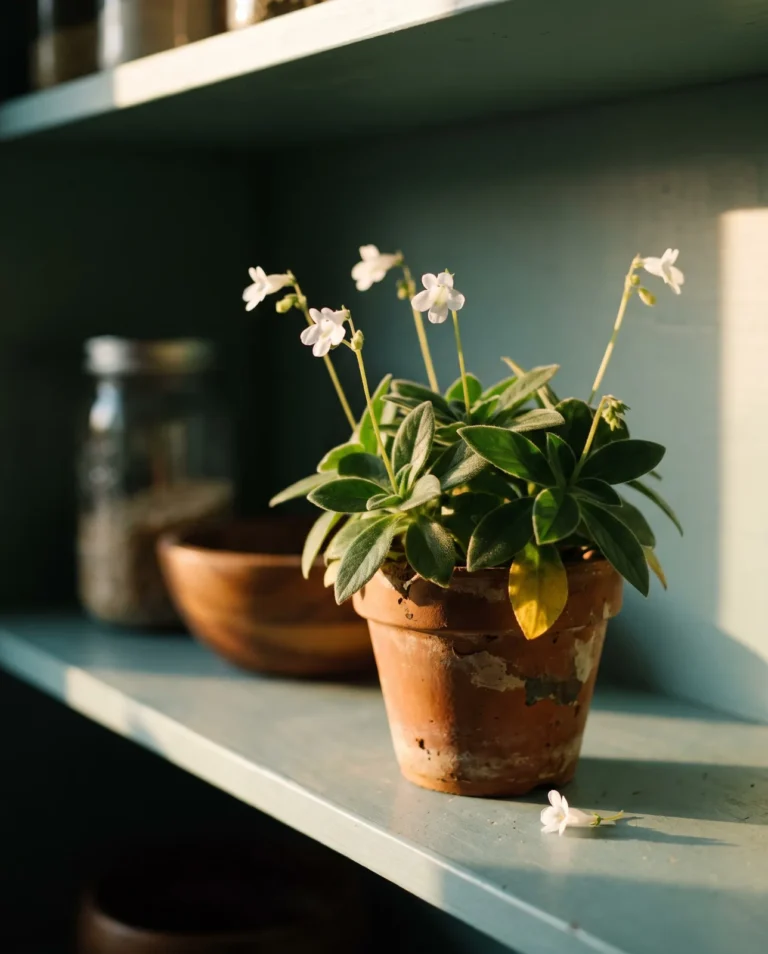
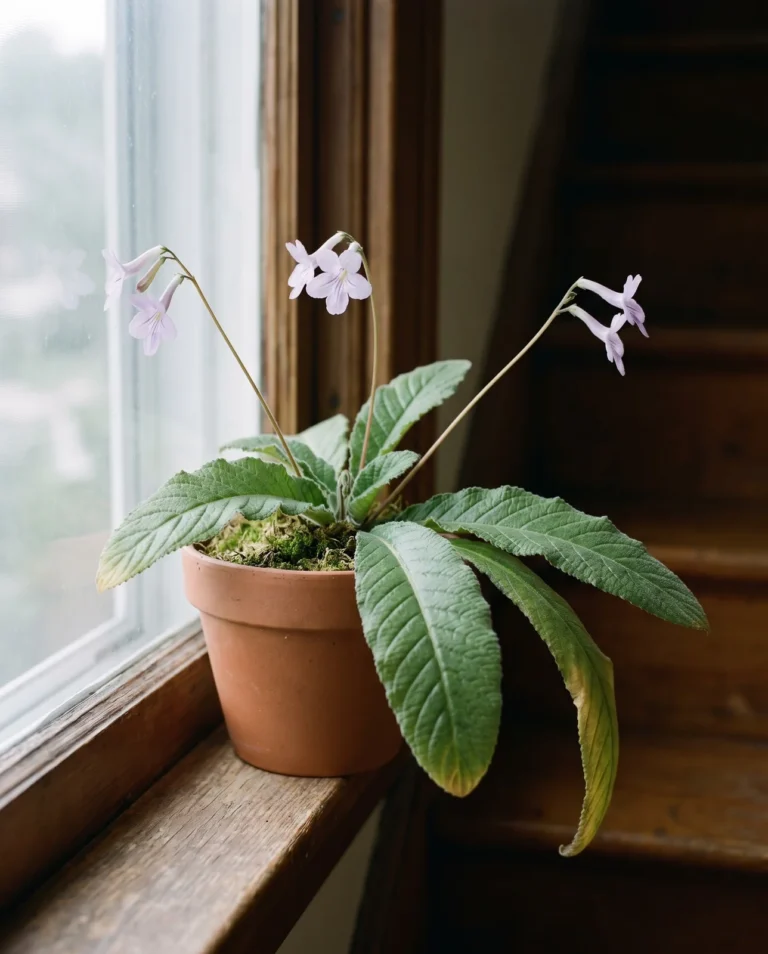
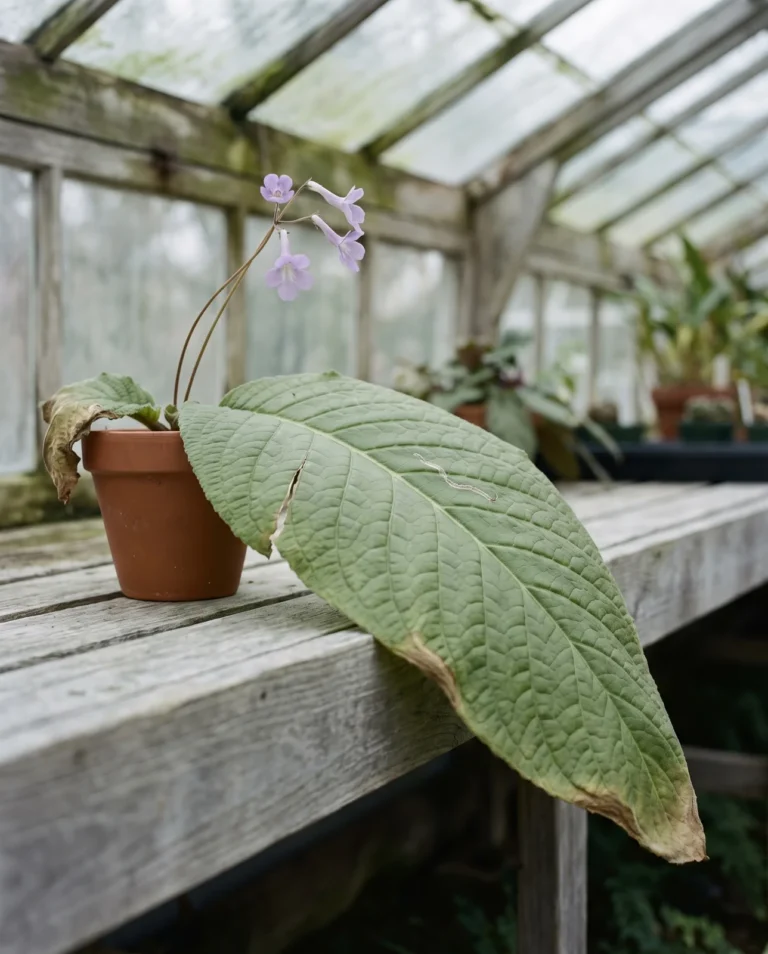
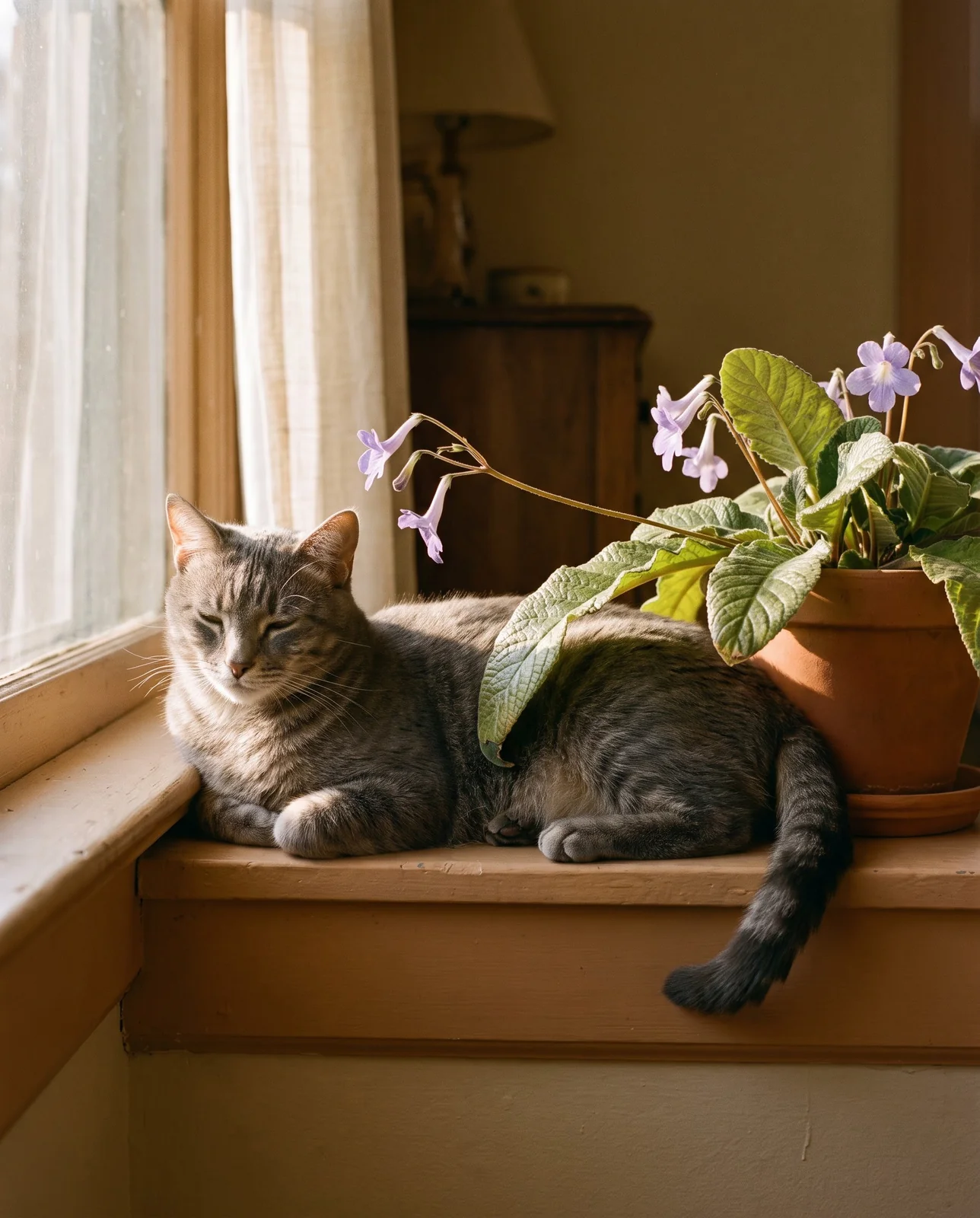
A cape primrose is a rosette of quilted leaves carrying tubular flowers above the foliage on thin stalks. The leaves are linear, rounded or heart-shaped, deeply veined and wrinkled, and the flowers open five petals in colors from red through purple, often with white markings. Each flower is salverform, a narrow tube opening into a flat face, and close enough to an orchid that people take a plant in bloom for one. Breeding has stretched the color range to reds, pinks, purples, blues, yellows, whites and near-blacks, and a true orange is still missing.
Flowering runs from spring to autumn, and on a plant in good condition it barely stops. Each leaf sends up eight to ten or more bloom stalks in sequence, so the plant holds heavy bloom for long stretches. Light intensity is what starts the flowering, and in natural light on a north or east window a plant can flower ten months of the year. Individual flowers are long-lived.
Light: bright, indirect, and out of hot sun
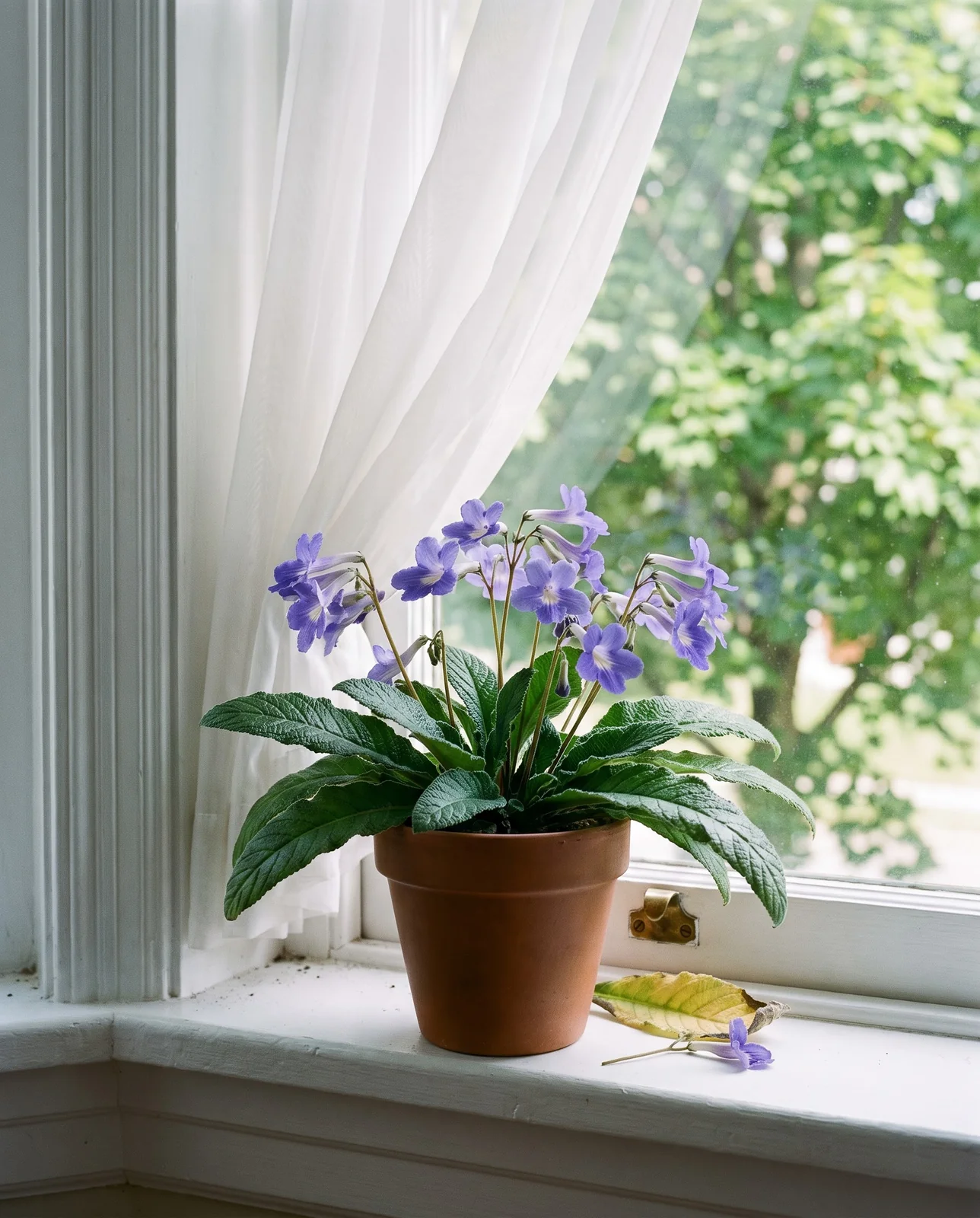
Bright indirect light out of hot sun is the whole instruction. In spring and summer an east or west sill suits it, in good light but away from hot sun. In autumn and winter move it to a south-facing sill for maximum light, and back from the glass at night if the room turns very cold. Low light is no compromise here. This is a forest-floor plant that blooms in low light and does well there. Bright shade to partial sun near a window works, and direct southern sunlight does not.
Wrong light shows in the leaves before it shows in the flowers. Oversized leaves mean poor light, too much feeding, or both. Color separates the two directions: leaves grown in low light stay deep green, while leaves taking too much light turn yellowish green. Real burn is unmistakable, brown dead tissue where the sun has scorched the leaf. On the African violet side of the genus, too little light stops bloom outright.
Watering, and the water left in the pot cover
Water once the mix has almost dried, water thoroughly, and never let the pot stand in what drains through. Water from above or below, and step it up from March as growth picks up. A peace lily collapses when it is thirsty. Cape primrose gives a quieter signal: the leaves have only just begun to wilt, and it recovers well from that mild dehydration. Keep water off the foliage. Wet soil and heat are the two conditions this genus objects to.
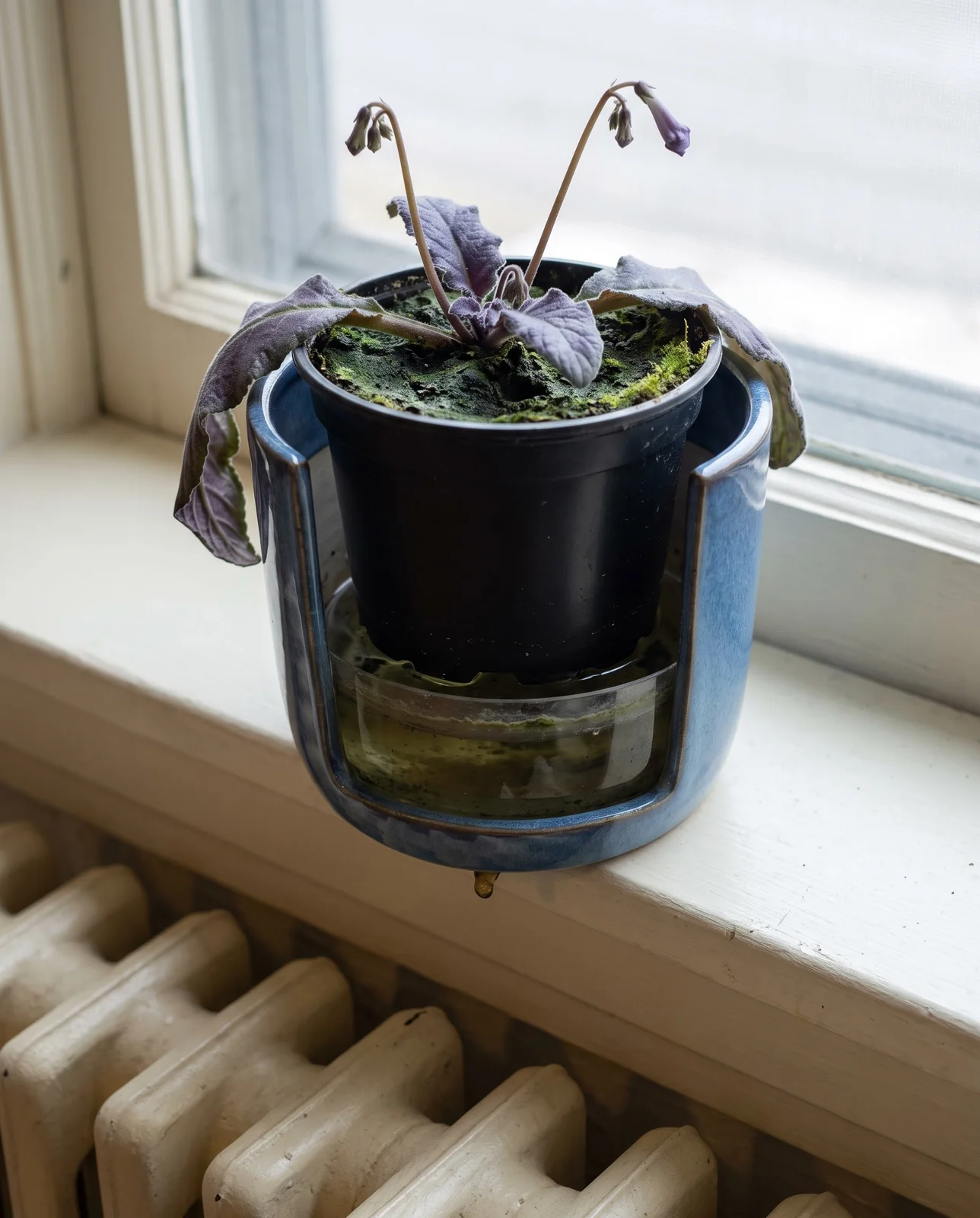
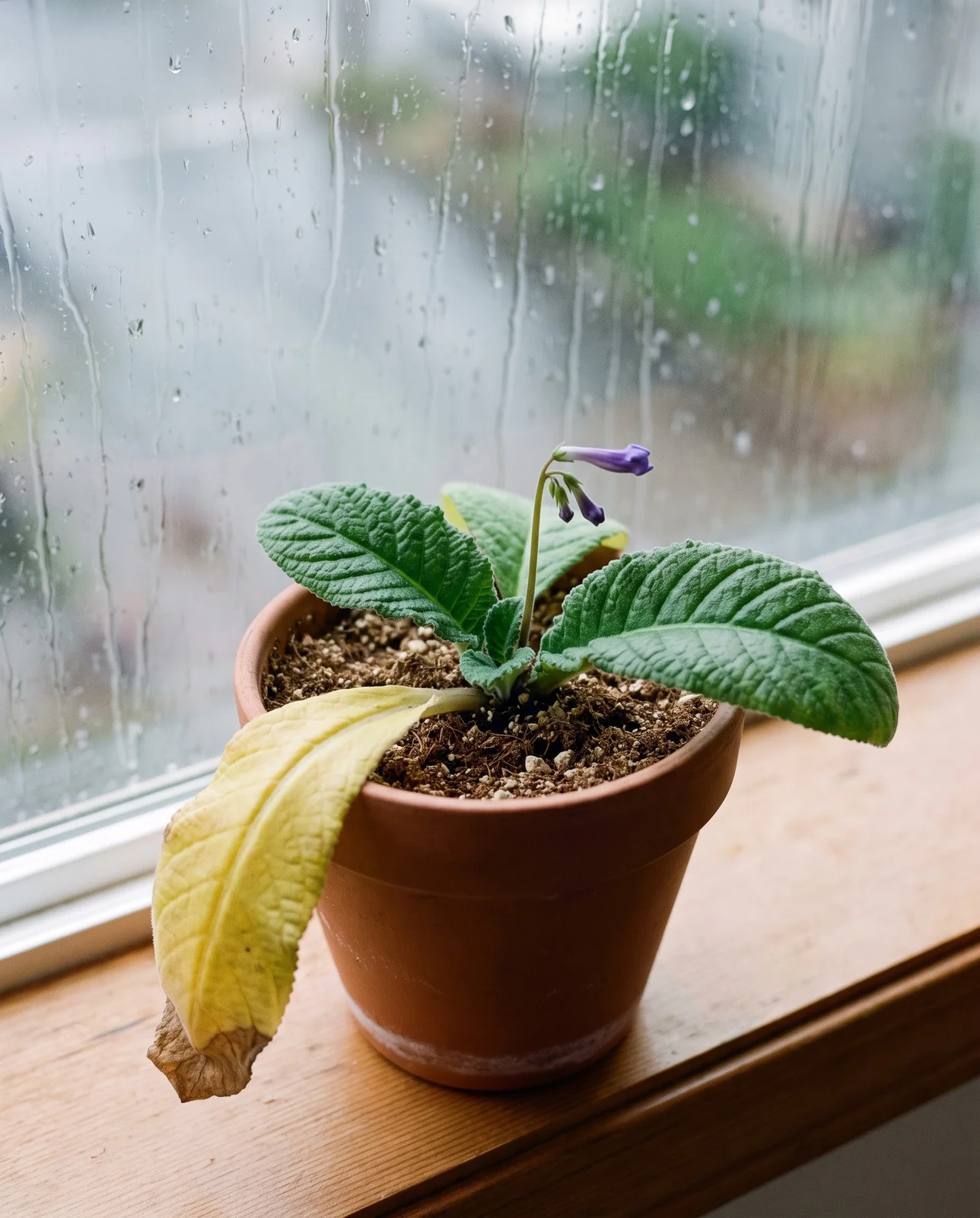
Too much water is the commonest way to lose one. Leaves rotting at the base point at wet conditions most often: poor drainage, over-watering, or a pot standing in the water that collects in a decorative holder. Brown leaf edges are an earlier version of the same message, and the answer is to stop watering and let the plant dry out completely. Roots kept too wet can bring root or crown rot. Overwatering is the number one problem of the African violet as well, and the trailing relative, which roots very shallowly, can pick up fungal disease from it.
Pot size, and the plant that wants to be crowded
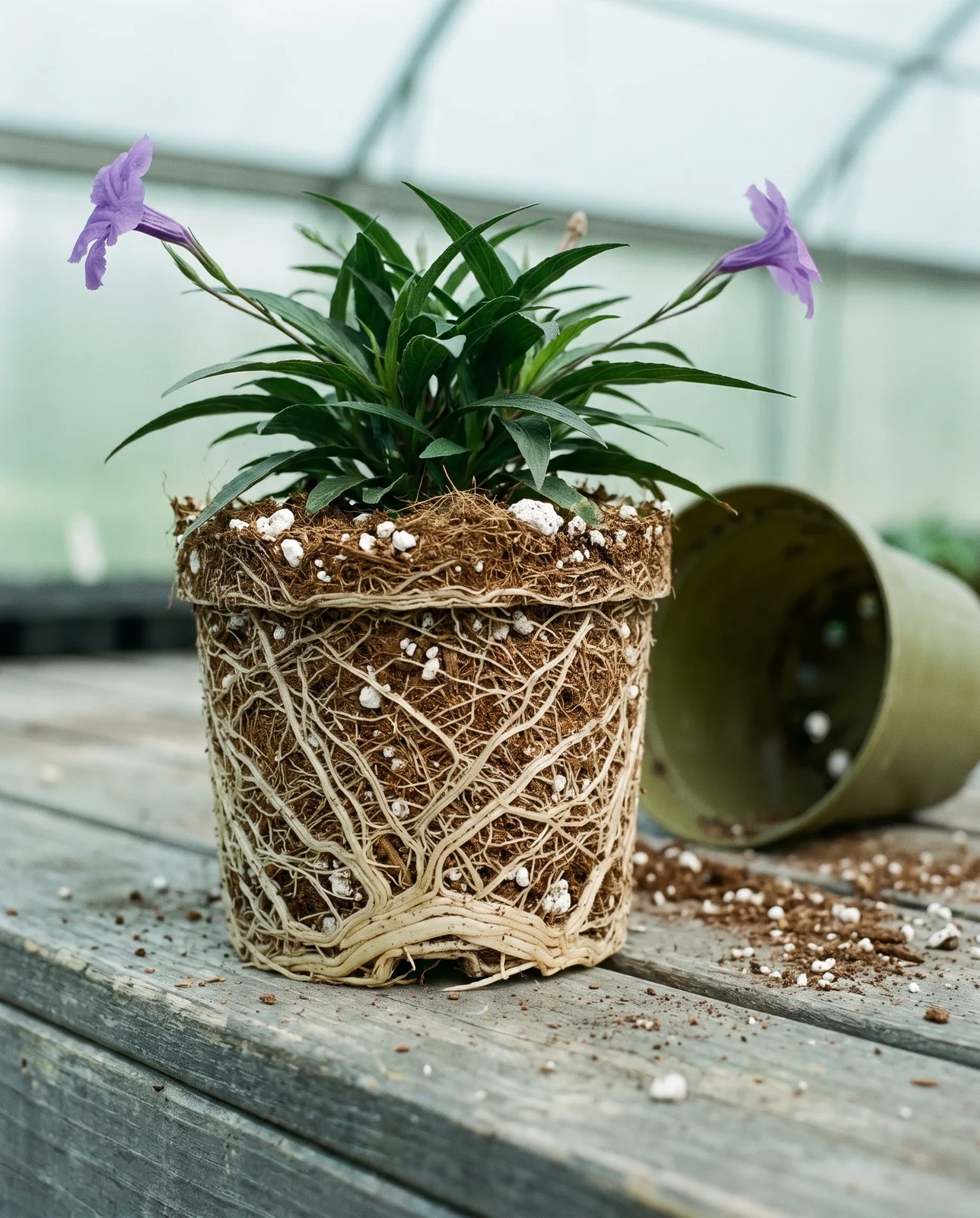
A pot that is too large is one of the commonest reasons a healthy plant makes leaves and no flowers. The African violet side of the genus flowers well when it is somewhat root-bound, and a recent move into too large a pot is a common explanation for poor flowering. Size the pot to the plant: no wider than one third of the plant's own diameter. A plant that does need attention can be lifted, its pot cleaned, and put back at the same size in fresh mix. Hold the feed after any move until the roots have filled the new pot and show at its base.
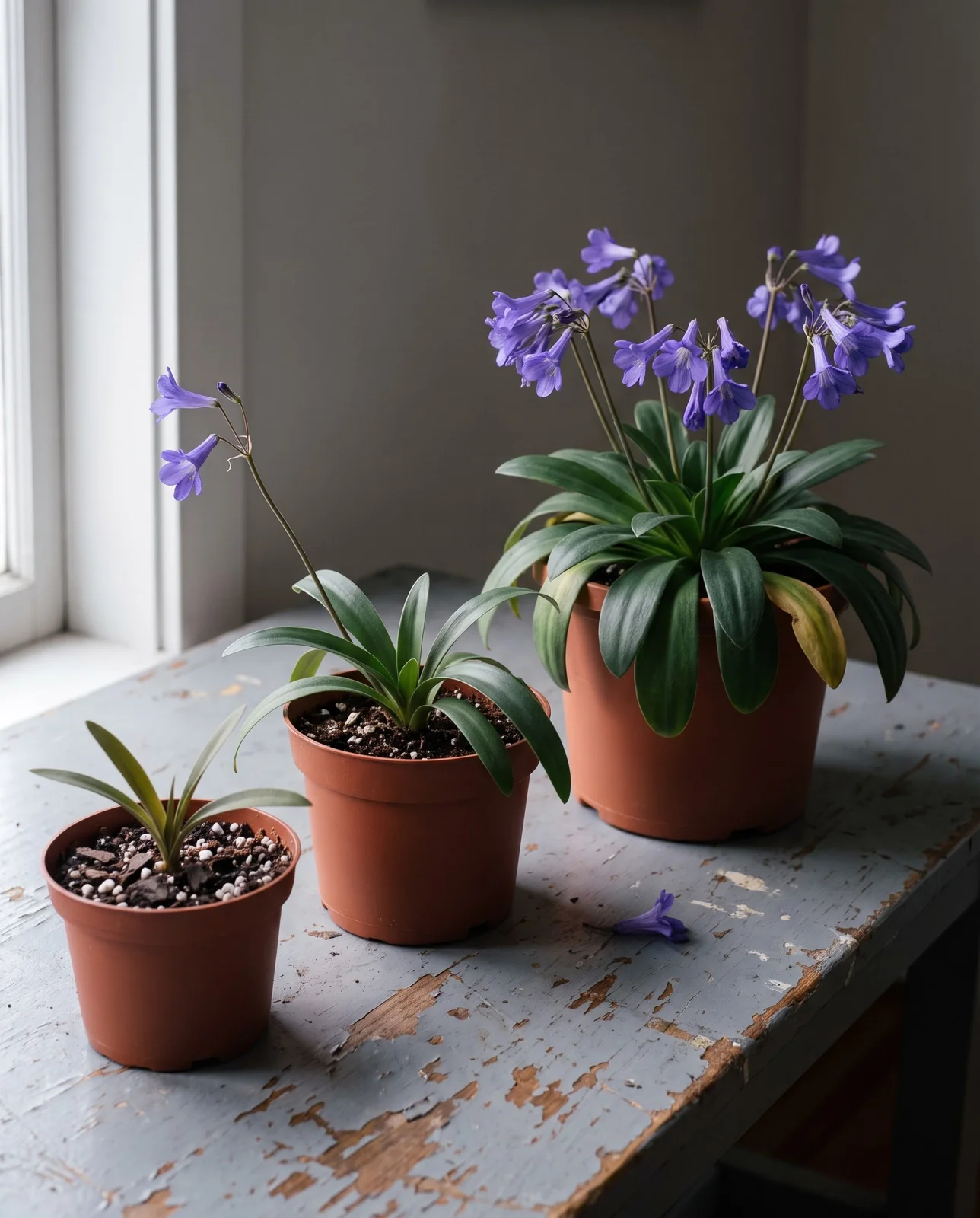
Working sizes are small. Most cape primrose do best in a 5-inch pot when mature, 6 inches for a very large plant, while compact varieties stay in 3- or 4-inch pots. Starter plants ship in 2-inch pots and move up to 3 inches at first bloom. When a pot does have to change, the step is about a thumb's width wider in diameter, and a wide shallow pot beats a deep one. Depth counts as much as width: a pot too big and too deep costs the flowers and can bring on root rot.
Why a cape primrose will not flower
Three things stop the flowers on the African violet side of the genus: too little light, a pot too large for the plant, and too much fertilizer. Feeding is the trap, because the instinct when a plant refuses to bloom is to feed it more. Fertilizer high in nitrogen pushes lush foliage at the expense of flowers, while too little starves the small reserve a small pot holds and cuts the flowering from the other side. Watering that is wrong in either direction, too wet or dried out completely, and nights that never get dark enough for the flowering hormone florigen belong on the same list.
Some plants are not failing but resting. Certain species in this genus go dormant over winter, and the answer then is to cut the watering and stop feeding until new growth starts in spring. A mature plant cut back after flowering can stay dormant for as long as three months. When growth returns, the flowers come stalk by stalk out of the leaves.
A plant that will not bloom, in order
Change one thing at a time and give the plant a few weeks before changing the next. The order starts at the window and ends at the shears.
Yellow and brown leaves, cause by cause
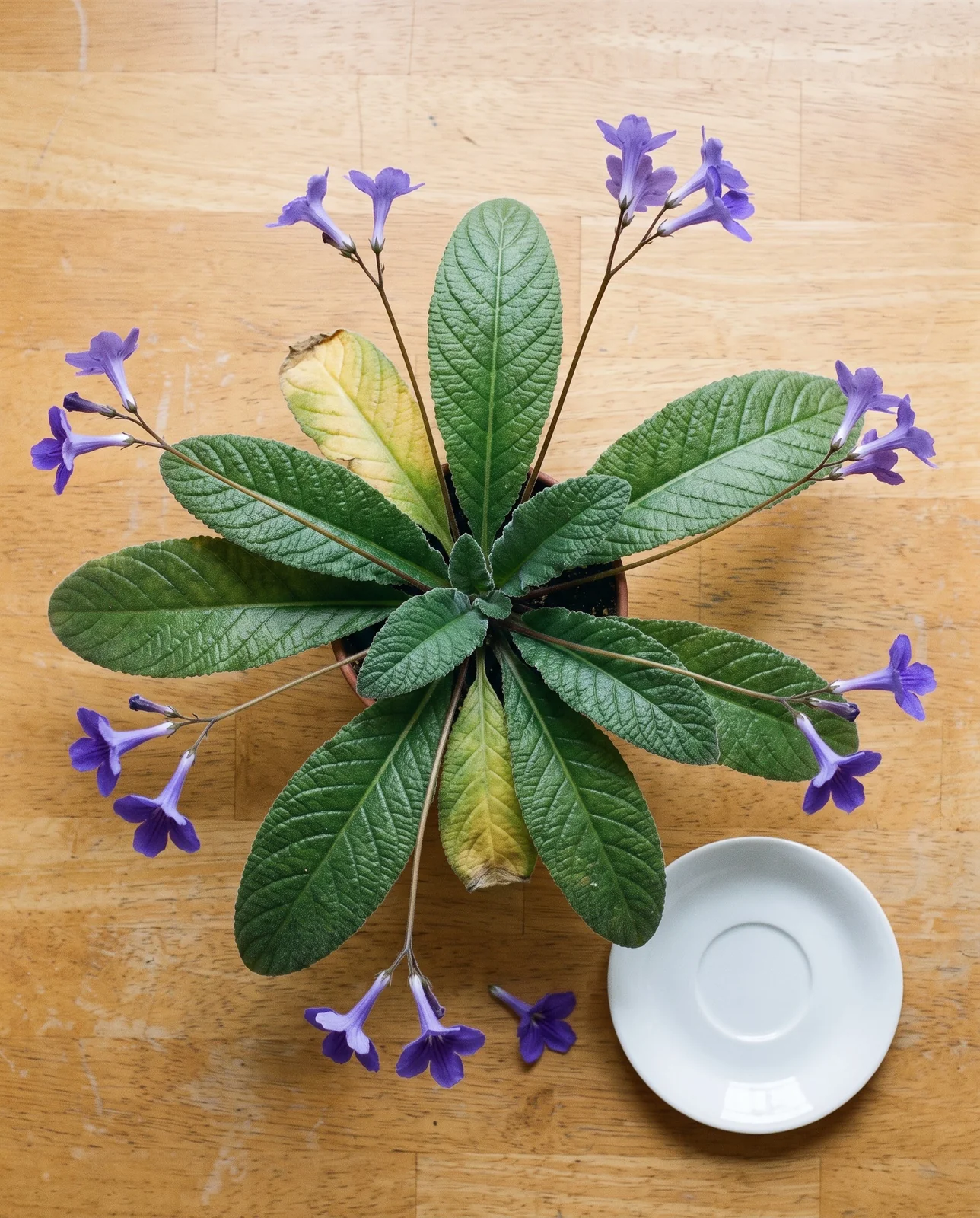
Which leaf changed narrows the cause before anything else does. Yellowing comes most often from overwatering and root stress, with the natural aging of the older lower leaves as the ordinary second cause. Age takes the outermost leaves one at a time while the center of the rosette keeps growing; water damage takes leaves that had years left. Heat, strong sun and a forgotten watering discolor leaves as well. Feeding pulls the other way, since these are relatively heavy feeders and no fertilizer at all can yellow them, as can too much light.
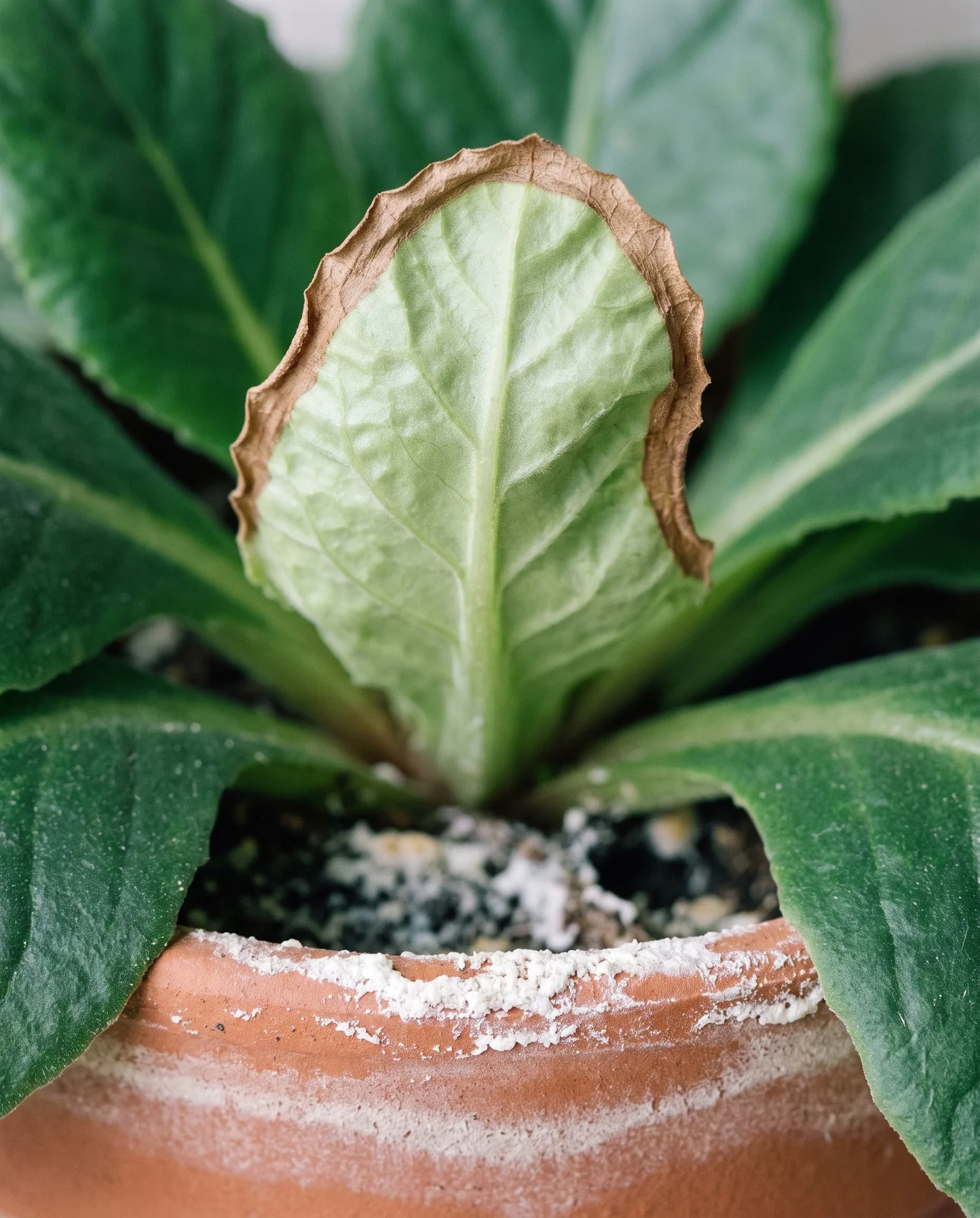
Brown separates by where it sits on the leaf. A dry brown rim on the youngest emerging leaves is the mark of too much fertilizer. Brown at the base of a leaf, or a leaf gone soft where it meets the crown, is the wet-soil version of the same complaint. Name the leaf first. An oldest outer leaf going yellow can be ordinary turnover. A young leaf browning along its edge is a feeding question. New growth that comes out puckered and browned points at cyclamen mites, which work on the youngest leaves and distort them. An anthurium is read the same way, from the age and the position of the leaf that changed.
Thrips, mites and aphids
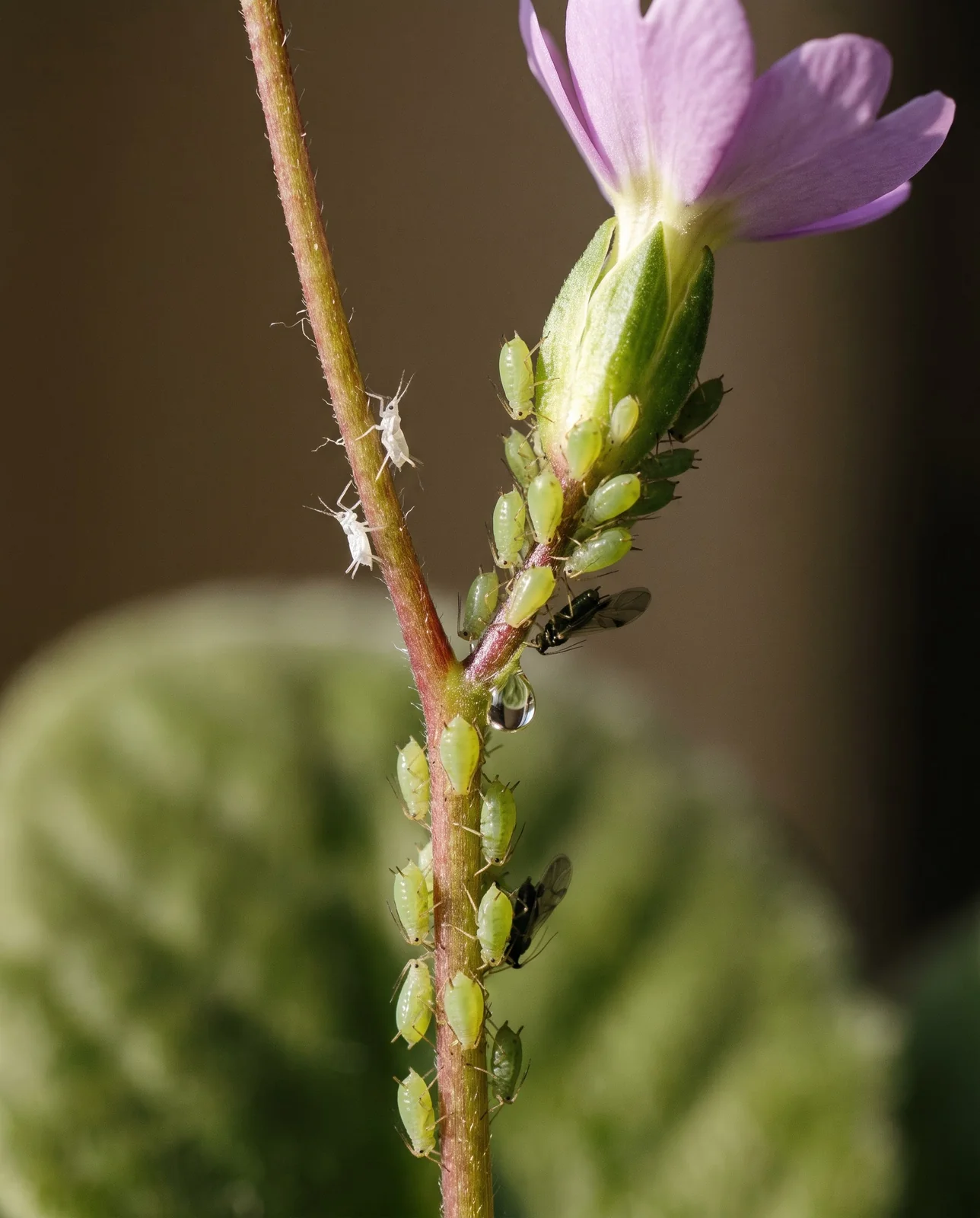
Mites, aphids and thrips are the insects named for this plant, and where the damage sits tells them apart. Cyclamen mites attack the youngest leaves and leave the new growth browned or distorted, while aphids go for the flowers and arrive only when another infected plant stands nearby. Flower thrips, aphids and mealybugs are the common insect problems of the genus, with spider mites, botrytis gray mold and root or crown rot filling out the list. On the trailing relative sold under the same name, watch for caterpillars and mealybugs.
One spray covers two of them. Neem oil at two tablespoons per gallon of water, with four teaspoons of dishwashing detergent added, applied several times about a week apart, treats cyclamen mites and aphids alike. Keep the infected plant away from the rest while you do it. Air circulation belongs in the same routine, since it holds fungal infection off the trailing relative.
Feeding, and how easily it is overdone
Feed at reduced strength through the growing season and stop for the winter. A high-potash feed at half strength every two weeks from March to September works, and so does a quarter-strength tomato fertilizer at every watering. Under-feeding is the safer error, because too much will brown the leaves. Feeding stops in autumn and winter, which is where the rest period begins.
Overfeeding writes itself on the newest leaves. The first sign is a browning along the edge of young emerging leaves, which matures into a burned edge with a constricted area where the leaf stopped expanding. That leaf does not repair itself, so a plant fed hard carries the mark for months while it grows past the damage. The mistake is common because a plant that has stopped flowering looks hungry.
The winter rest, and how cold the room can get
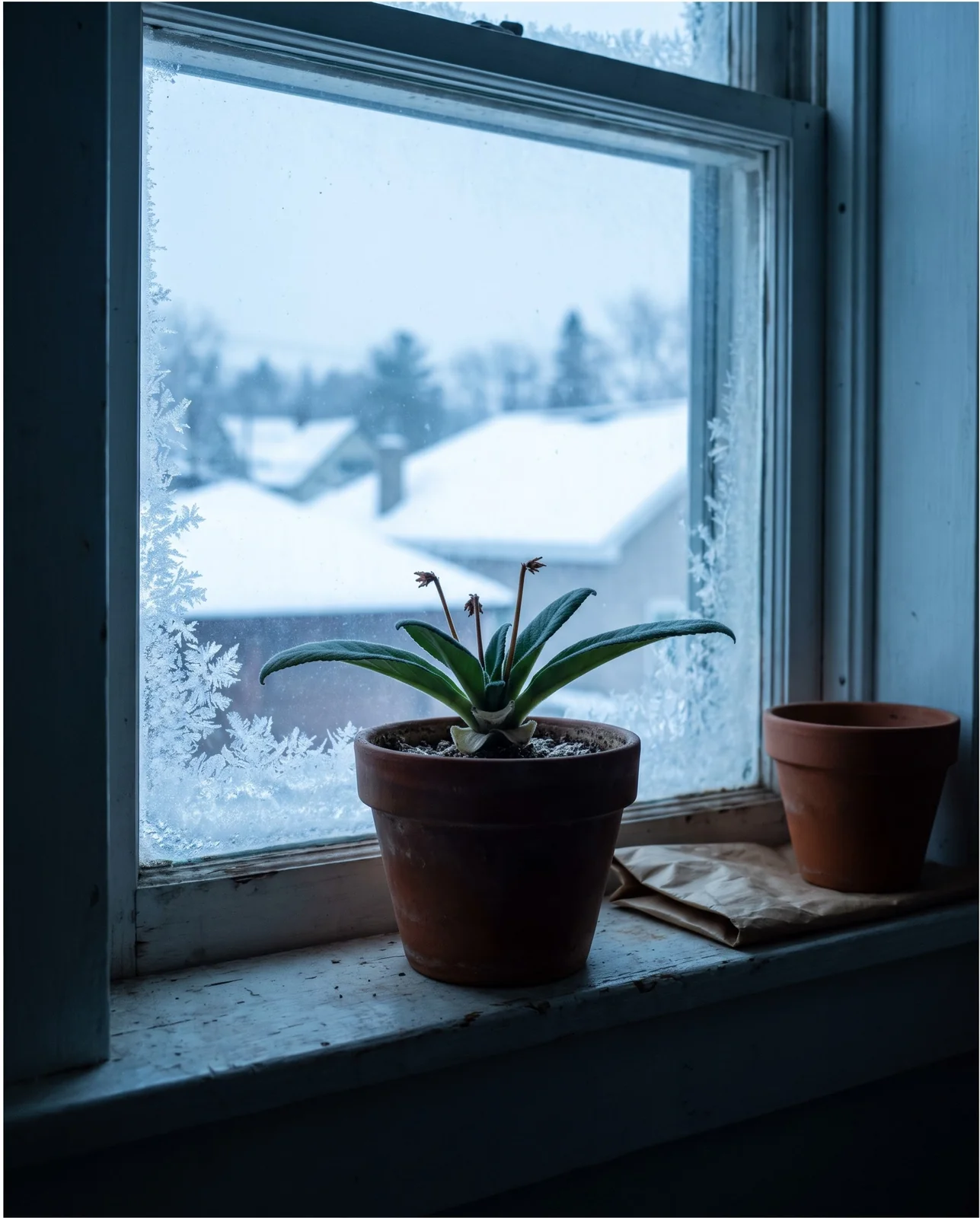
From late autumn the plant takes less water and no feed, and there is a floor under how cold the room can get. Normal room temperatures suit it through the rest, with a minimum of 45 to 50 degrees F. Under glass the floor sits lower, at 40 F. An unheated windowsill behind a drawn curtain sits colder at night than the room around it.
Water is what costs plants during the rest. Water only once the compost has dried, since compost that stays too wet can rot the plant. Not every plant is rested at all. The Crystal series can carry on flowering through the winter in a very well-lit spot on a quarter-strength feed. Check the label before a plant bred to flower through winter is put away in a cold room and left dry.
Soil, and when to move it up a pot
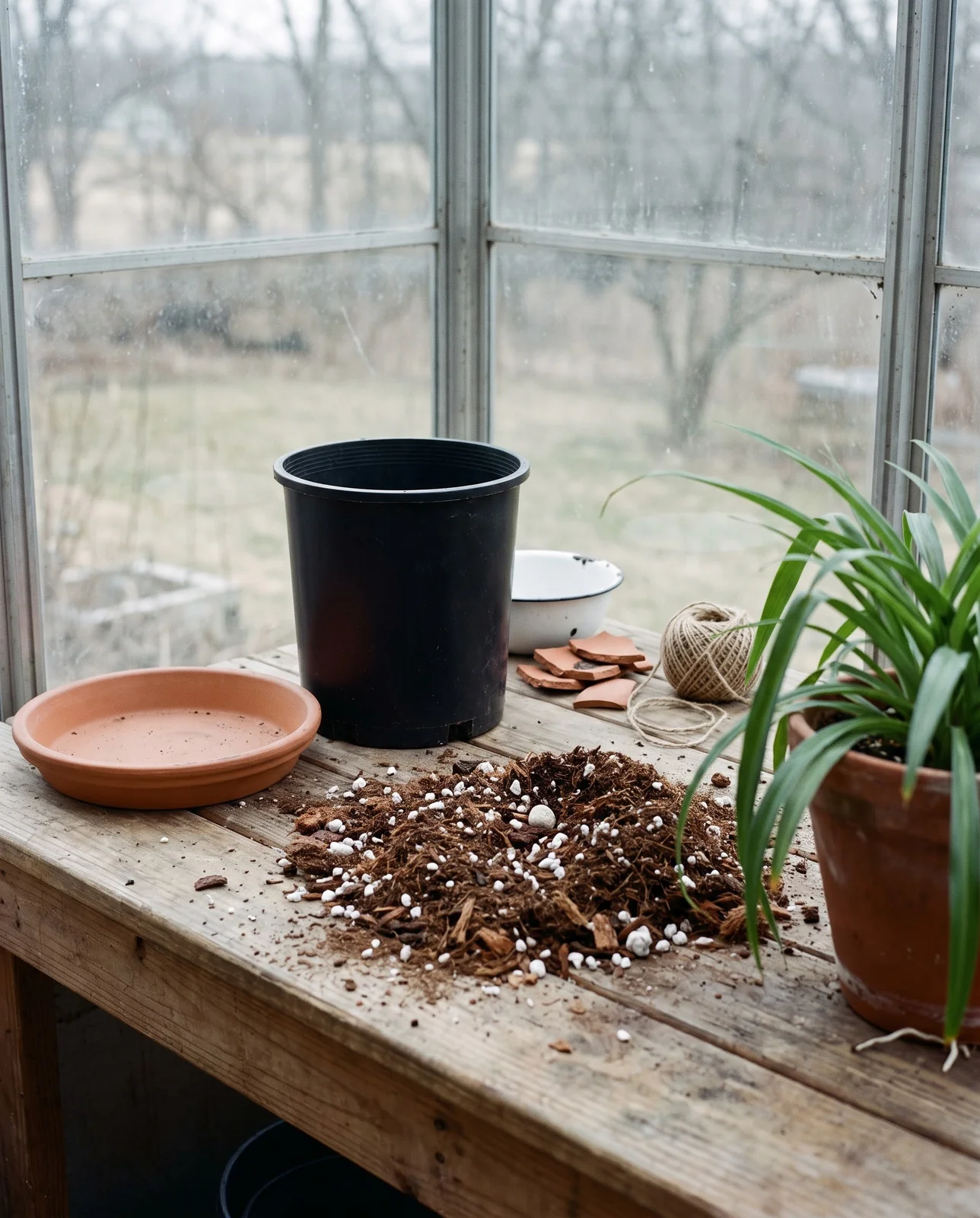
The mix is chosen for how fast water leaves it, and an African violet mix is the usual answer. The standard recipe runs two or three parts sphagnum peat moss to two parts vermiculite and one part perlite, with lime to balance the acidity of the peat. Coir can stand in for the peat. It is built around a target of about 50 percent medium, 25 percent air and 25 percent water. That air fraction is the argument against a rich compost. Roots in a mix that holds every drop have no air around them.
Pot on into a peat-free mix, a specialist houseplant or multi-purpose compost, in a pot only slightly larger than the root ball. Timing is narrow: pot on in spring, and only if it is necessary at all. Humidity is the part people forget once the mix is right. Standing the pot on a tray of pebbles and water raises the moisture around the leaves, as long as the pot itself never sits in the water.
One leaf into several plants
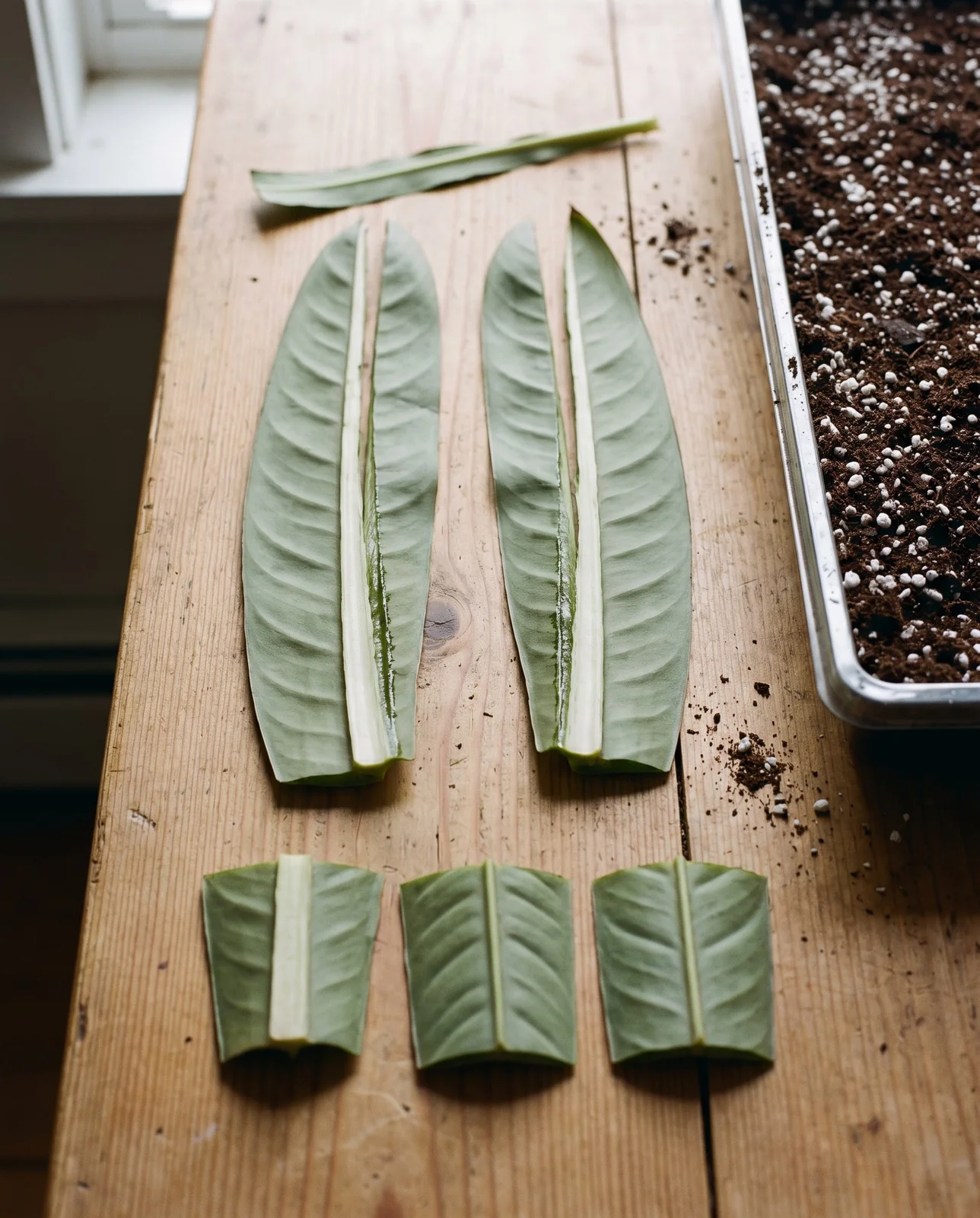
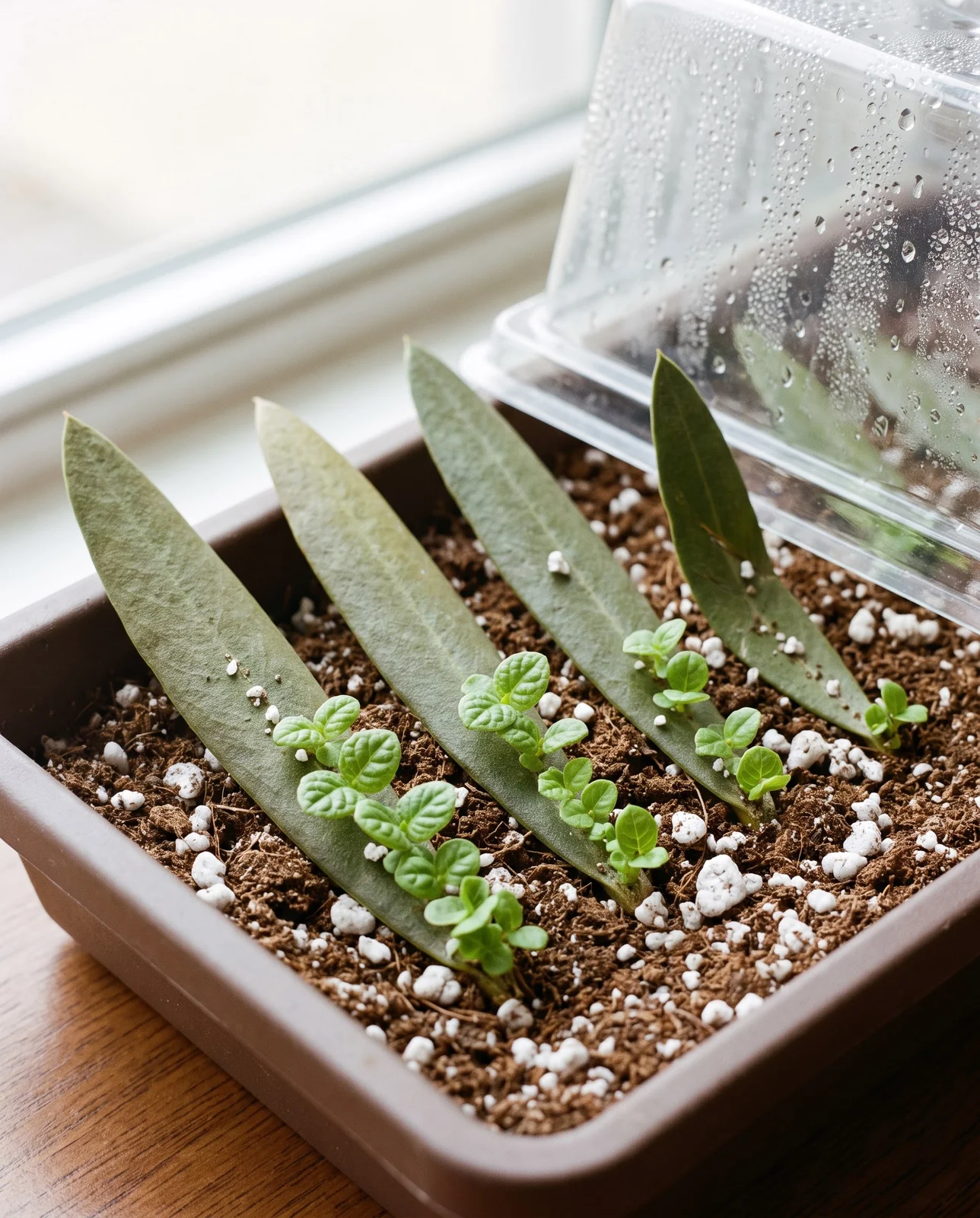
A full-grown leaf, cut into pieces and half buried, is how this plant is multiplied at home. Two cuts work. The first splits a full-grown leaf in half along the midrib, with the midrib strip itself thrown away. The second cuts the same leaf across at 2-inch intervals to give several sections, and new plantlets should develop along the cut edges within four to six weeks. Either way, bury the freshly cut edges about a quarter inch deep in a half-and-half mix of potting soil and sand. Tiny new leaves appear along that buried edge after five or six weeks, and one mother leaf can produce as many as six plantlets.
Two things limit the method. It has to be done before the plant flowers, and it is less successful, though not impossible, on the unifoliate types that make only a single leaf. The other limit is fungal: cuttings of this genus are susceptible to botrytis gray mold, so watch them and pull a moldy one at the first sign.
Varieties worth telling apart
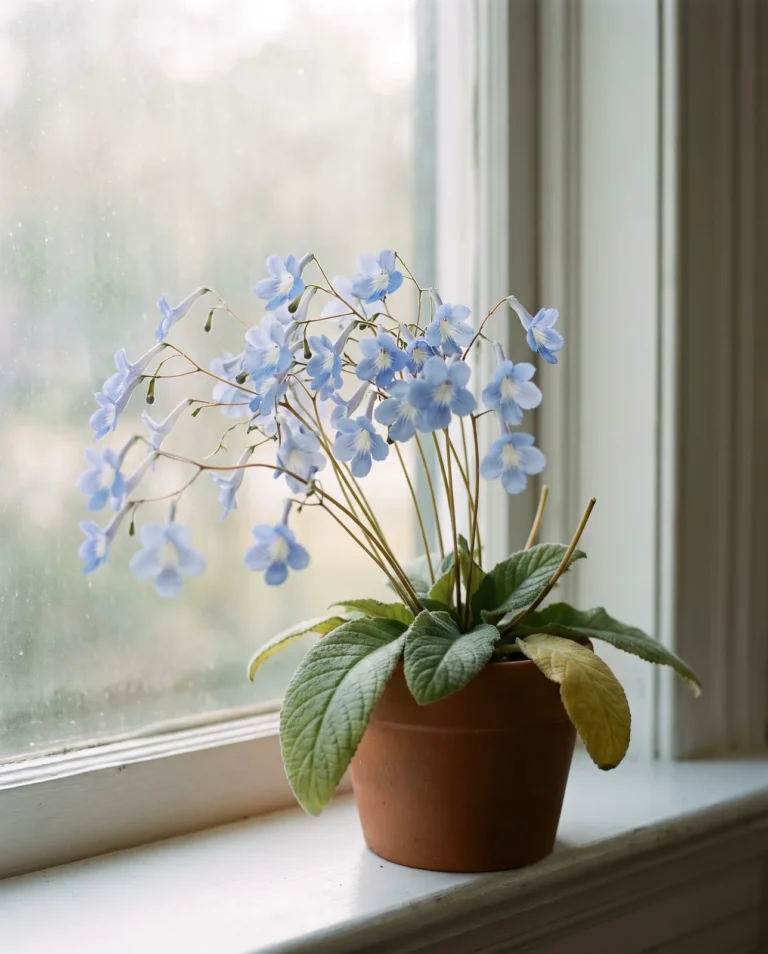
Flower shape and color separate these, and so does whether the plant takes a winter off. Two of the seven are the trailing relative sold under the same name, and the last two are not hybrids.
How big a cape primrose gets
A mature plant stands about a foot high and spreads wider than it is tall, near 18 inches across. The spread catches people out: the leaves reach past the rim of the pot while the plant stays low. Trailing varieties run much longer. The other two plants sold under the name are smaller. The trailing relative reaches about 8 inches tall and 12 inches wide, and the African violet 6 to 9 inches. Violets come in five size classes, from micro-miniature through miniature, semi-miniature and standard to large, in rosette and trailing forms.
Temperature, and what heat does
Ordinary room temperature suits it, and the trouble comes at the top of the range. The comfortable band runs from 60 F into the high 70s, and the plants do not tolerate high temperatures. When a room reaches the 90s they wilt, the leaves are damaged, or the plant collapses, because the leaves transpire faster than the roots can take water up. Northern summers are not exempt: heat waves damage these plants, and root disease can follow when a stressed root system cannot take up enough water. The cold end costs growth instead. Below 60 F at night the African violet side of the genus is left stunted and slow to recover, with an optimum of 60 to 80 F. A closed room behind glass in July is hotter than the house around it.
Cape primrose and pets
Cape primrose is non-toxic to dogs, cats and horses. The ASPCA files it under Streptocarpus, with Twisted Fruit and Bavarian Belle as other selling names, and marks it non-toxic for all three animals. The African violet beside it carries the same three lines under Saintpaulia. The same tags follow the genus and the trailing species sold under the cape primrose name. The naming lag is the one practical wrinkle. The toxicity entry still files the African violet under Saintpaulia while botanical references have moved it, so search the old name. This is one of the safer flowering plants to keep indoors where cats and dogs live.
Outdoors for the summer
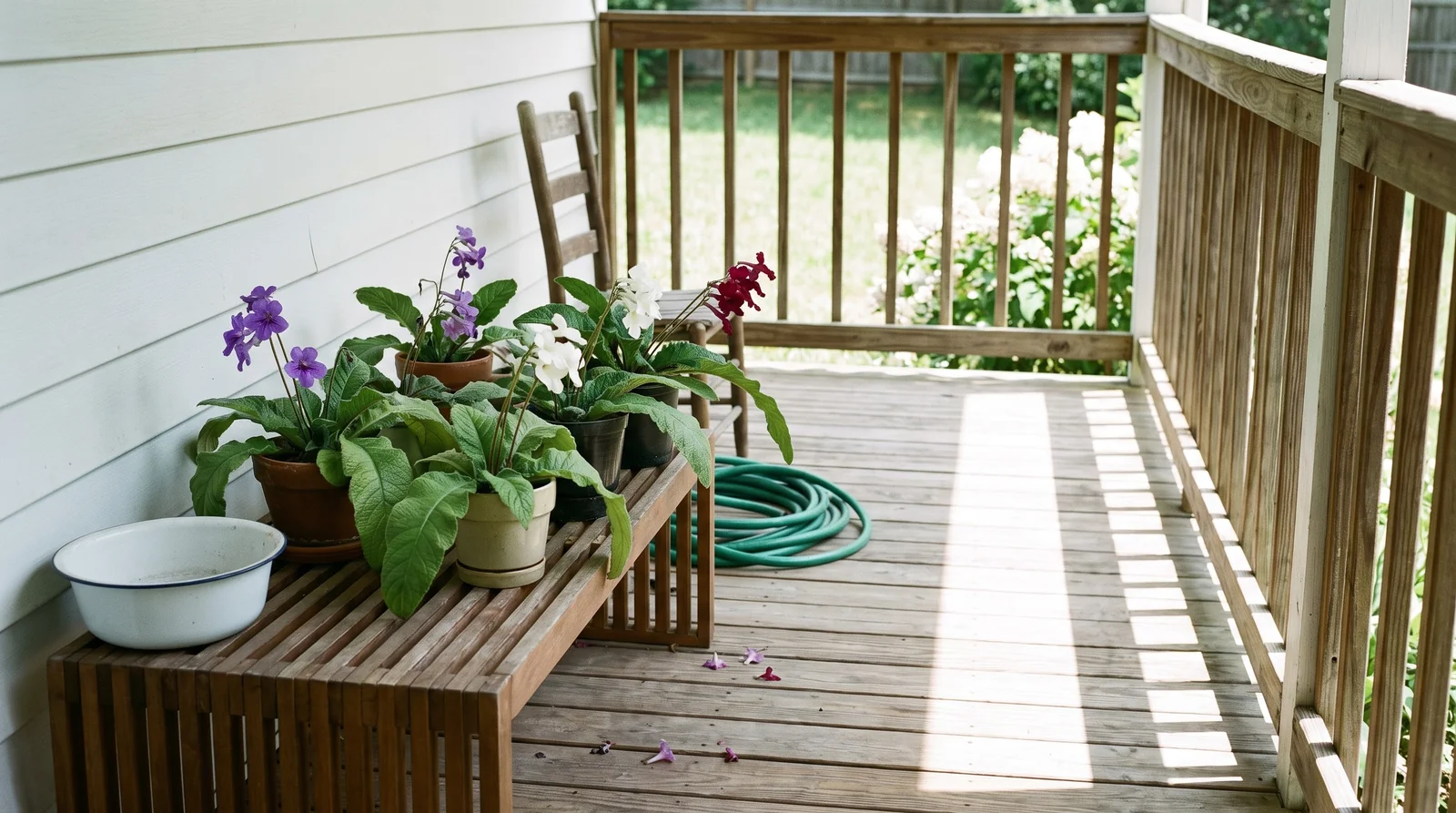
It can spend the summer outdoors in shade where the climate is warm enough. The trailing relative takes a container indoors or outdoors in a warm, sheltered spot. The move waits until late spring, after all danger of frost has passed. In the ground it is hardy only in the frost-free south, zones 10 to 11. For anyone else the numbers are academic: it goes out after frost and comes back in before the nights turn cold, since it is frost tender.
What actually goes wrong
Symptom first, then the cause it points at, then the thing to change.
Symptoms: leaf after leaf and no stalks. Cause: a pot too big and too deep costs the blooms and can bring on root rot; overfeeding gives lush foliage and no blooms. Do: move it to a brighter windowsill, leave the pot crowded, and halve the feed.
Symptoms: outer leaves yellow while the center of the rosette grows on. Cause: overwatering and root stress first, ordinary aging of the lower leaves second. Do: check the drainage and the watering, and if the plant is dry-side and the leaf is an outer one, let it go.
Symptoms: dry brown rims, worst on the newest leaves. Cause: too much fertilizer, which burns the edge and constricts the leaf; heat, sunlight or a forgotten watering do it too. Do: halve the dose and move the pot out of hot sun.
Symptoms: distorted new growth, or specks on the undersides of the leaves. Cause: cyclamen mites work on the youngest leaves, and aphids come in on another infected plant standing nearby. Do: isolate the plant and spray neem oil with a little detergent, several times about a week apart.
Symptoms: leaf trouble that follows no watering pattern. Cause: soil pH knocked out of balance by over-fertilization, or simply too few nutrients. Do: drop back to a quarter-strength feed and change nothing else for a few weeks.
What to expect
One plant, bought in flower, through its first year and a half on a windowsill.
The first months. A plant bought in bloom is usually in a small pot and stays in it. On the African violet side of the genus, plants kept in good condition flower almost continuously, with no seasonal flush to wait for. The opening stretch asks for light, careful watering and very little else.
The first winter. Growth slows, the feed stops and the watering drops back to almost nothing. Dormancy after a cut-back can run to three months, long enough that a first-time owner reads it as failure. Some people skip that stretch and buy fresh plants each spring, treating them as annuals.
The second year. This is where one plant becomes several. Leaf cuttings have to be taken before the plant flowers, and a rooted cutting needs about three months before it comes into flower, with blooms just like the mother plant. A windowsill that started with one plant is a row of them by the following season.
Myths worth dropping
Five things get repeated about this plant that send the owner the wrong way at the moment it matters most.
The myth: They share a genus now, so they take the same care.
The reality: Culture is close enough that cape primrose is recommended as the best second blooming houseplant to keep beside violets. Care still differs slightly between the two, so a violet routine is only a starting point.
The myth: A bigger pot makes a bigger, better plant.
The reality: The rule of thumb runs the other way, sizing the pot at no larger than one third of the plant's own diameter. Room the roots cannot fill goes into foliage, and so does a feed high in nitrogen.
The myth: Feed it more and it will flower.
The reality: Under-feeding is the safer error, since too much will brown the leaves. Feeds sold for bloom carry more phosphorus than nitrogen for that reason, 8-14-9 being one example analysis.
The myth: Yellow leaves always mean too much water.
The reality: These plants are relatively heavy feeders, so no fertilizer at all can yellow them, and too much light produces the same color. Brown tips with yellowing can also mean thrips on the undersides of the leaves.
The myth: Leaf cuttings need rooting hormone.
The reality: The leaves carry a high concentration of cytokinin, a rooting hormone of their own, which makes an artificial one unnecessary. Powder on the freshly cut edge does no harm.
FAQ
Is cape primrose an indoor or an outdoor plant?
A houseplant that can go outside for the summer where the climate is warm enough. The trailing species sold under the same name takes a container in a warm, sheltered, shady spot.
Do cape primroses like to be root bound?
Yes. The African violet side of the genus flowers better somewhat root-bound, and a recent move into too large a pot is a common cause of poor flowering.
Can you reverse yellowing leaves?
No. A yellowed leaf does not turn green again, so slice a dying old leaf off at its base, and trim only the blemished part of a leaf that is otherwise healthy.
How big do cape primroses get?
About a foot tall and up to 18 inches across. Trailing varieties can grow much longer.
What type of soil mix is best for cape primrose?
A porous one that drains fast. Ordinary potting mix with an eighth to a quarter perlite worked through it holds about the right amount of moisture, in a pot with enough drainage holes.
Is cape primrose safe for cats and dogs?
Yes. Both entries that carry the name are non-toxic to dogs, cats and horses.
Are cape primroses hard to grow?
Easy to moderate. They flower from spring to autumn and can be planted in any season.
How often should you water a cape primrose?
Only once the soil is almost dry. You can wait until the leaves have just started to wilt, since the plants recover well from mild dehydration.
Can you root cape primrose in water?
The trailing type sold under the same name roots easily that way. Take stem cuttings of 2 to 4 inches beneath a leaf node, stand them in clean water at about 65 F, and pot them once the roots are 2 inches long.
What fertilizer is best for a cape primrose?
One aimed at bloom, which carries more phosphorus than nitrogen; 8-14-9 is one example analysis. Give it at reduced strength while the plant is in growth.
Interesting tips
- The nitrogen source on the label matters as much as the three numbers beside it. Avoid urea: the African violet side of the genus is sensitive to it, and it can burn the roots.
- A whole leaf works too. Sever it at the base with some stalk attached, pot it base down in mix, and cover the pot with a clear plastic bag while it roots.
- The wild plants behind the houseplant are under pressure. Streptocarpus ionanthus is classed near-threatened, and species and subspecies of its section are endangered as cloud forest is cleared for agriculture.
Related Guides & Flowers
Kalanchoe
Another flowering houseplant for a bright sill, with a very different appetite for water.
Begonia
The other indoor genus grown from leaf pieces, with its own upright and trailing halves.
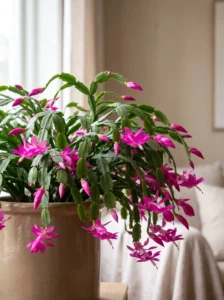
Christmas cactus
A pot plant that flowers in the dark half of the year and asks for a rest to do it.
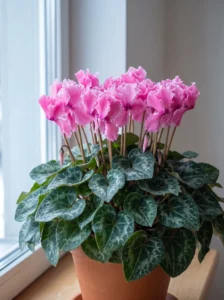
Cyclamen
A houseplant that goes quiet for months, then flowers again on a cool windowsill.
Enjoying our flower guides? Add YourFlowersGuide as a preferred source on Google. It helps more readers find us.
Add to Preferred Sources