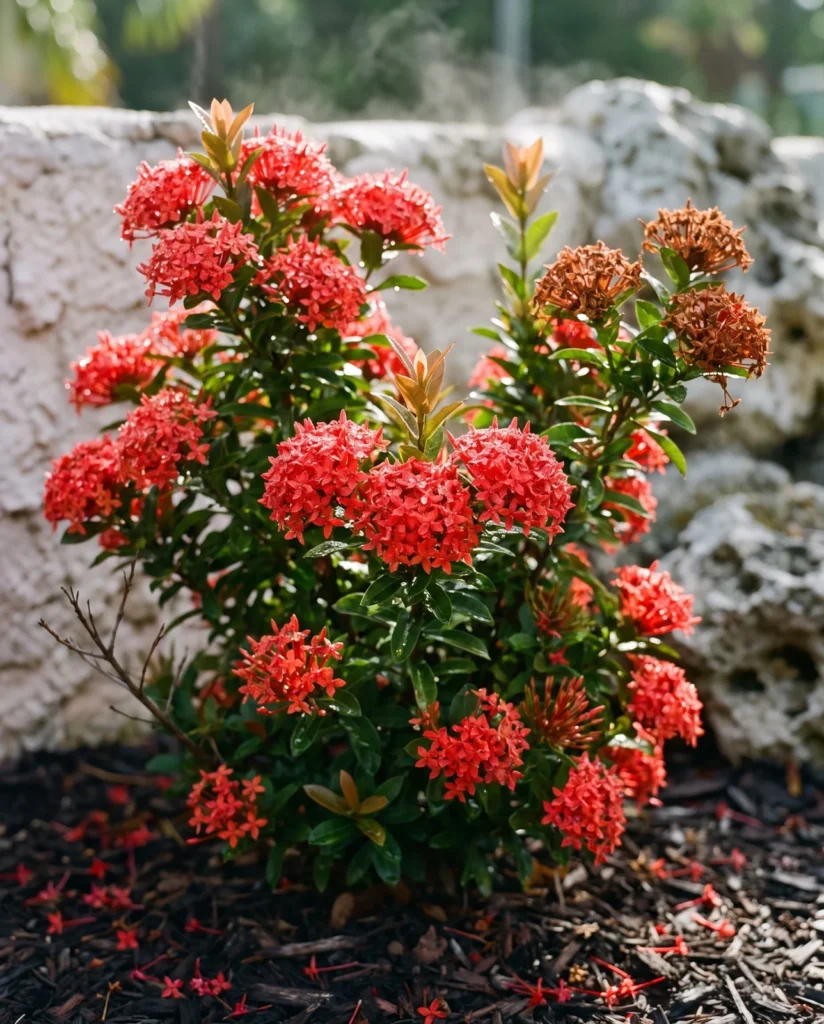
What ixora is and where it comes from
Ixora is a tropical evergreen shrub grown for rounded clusters of small tubular flowers held above stiff, glossy foliage. It belongs to the Rubiaceae family alongside coffee, gardenia, firecracker vine and pentas. The genus stands alone in its own botanical tribe, holding around 544 species of evergreen shrubs and trees. Only a few of those species reach American gardens, arriving under cultivar names far more often than under species names. Garden selections have moved so far from wild forms that assigning a cultivar to a single species is considered a reckless undertaking.
The shrub goes by many names, including jungle geranium, flame of the woods, jungle flame, pendkuli, burning love, and red ixora. The botanical name traces through Portuguese to the Sanskrit Isvara, meaning lord, referring to Shiva. Another tradition links it to Iswari, a name for the goddess Parvati, to whom the plant is sacred. In South America, Ixora coccinea is the national flower of Suriname. Across the world, the genus is native to tropical and subtropical regions, centering its greatest diversity in tropical Asia. For this species, the wild range spans India, Sri Lanka, and Bangladesh, extending eastward across Indochina. The plant is not native to North America.
West Indian jasmine is two different plants
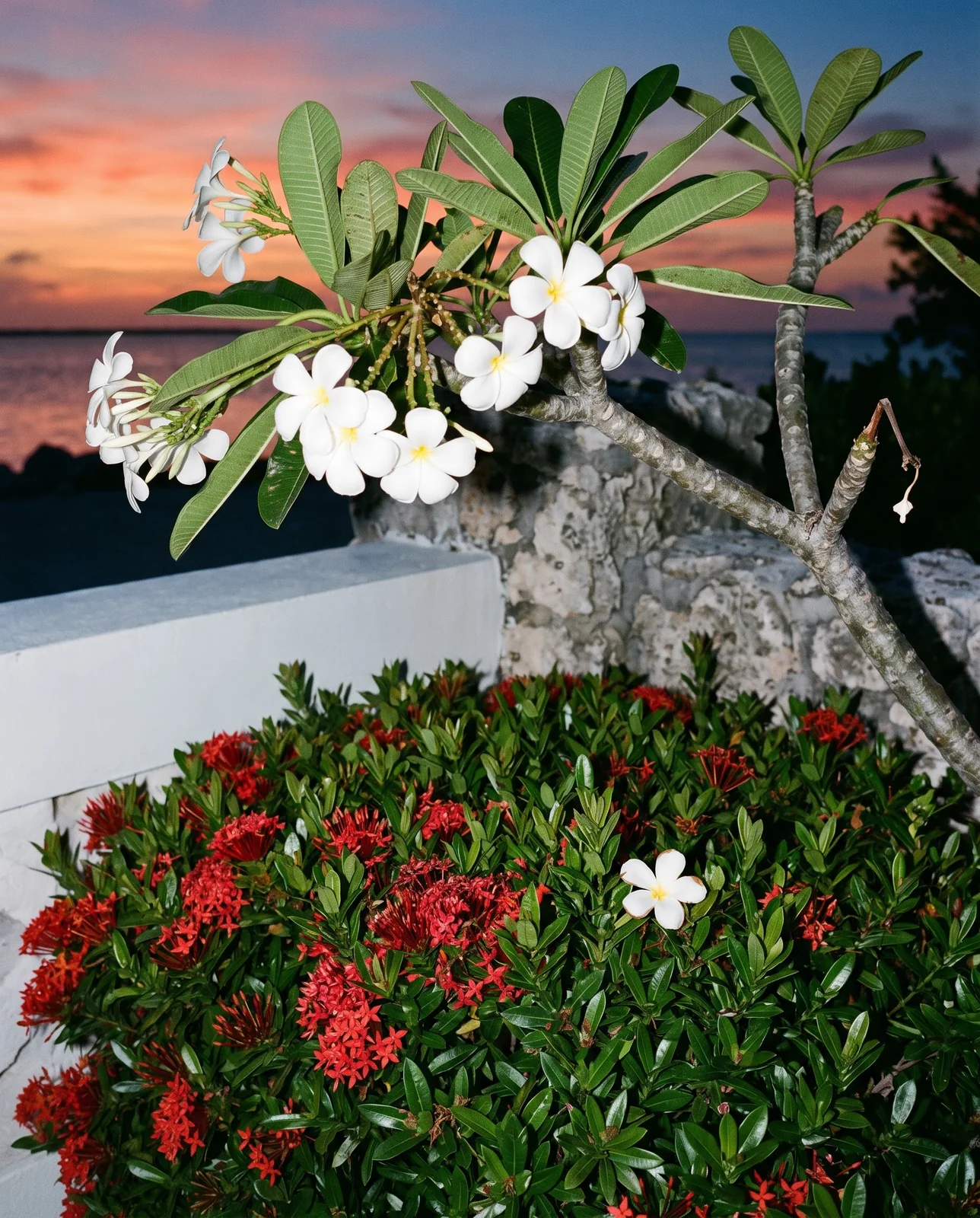
The name West Indian jasmine belongs to two different plants, and knowing which one is in the pot saves trouble later. Most often the name refers to Ixora coccinea, particularly in Florida, where it also goes by flame of the woods, iron tree, and jungle flame. The name sometimes stretches across both Ixora coccinea and Ixora chinensis. At the same time, the name is also occasionally used for Plumeria alba, the white frangipani.
Telling the two plants apart is simple once you look at their size and flowers. Plumeria alba is a small tree reaching 15 to 25 feet tall and wide in USDA zones 10 to 12. It bears loose heads of sweetly fragrant white flowers with yellow throats. Ixora stays much smaller, forming a dense shrub with domed clusters of small tubular florets. Plumeria is also mildly poisonous, with sap that can irritate eyes and skin, and foliage that upsets digestion if eaten, while ixora is harmless. The small blooms are rarely cut for flower arrangements, though people often ask about the name. You will occasionally see ixora grown as a houseplant, while in mild areas like Florida it makes an outdoor garden shrub.
What an ixora looks like and how big it really gets
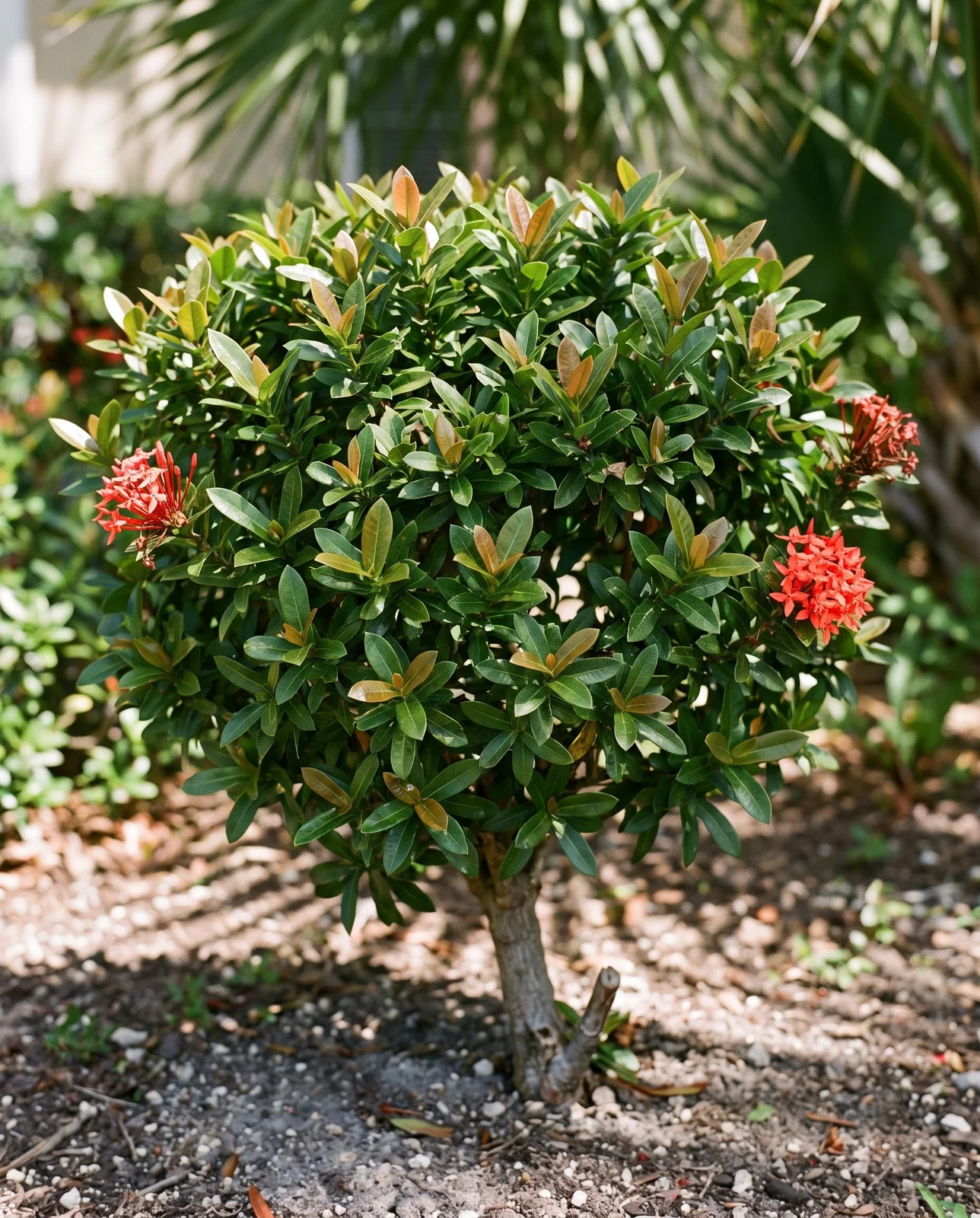
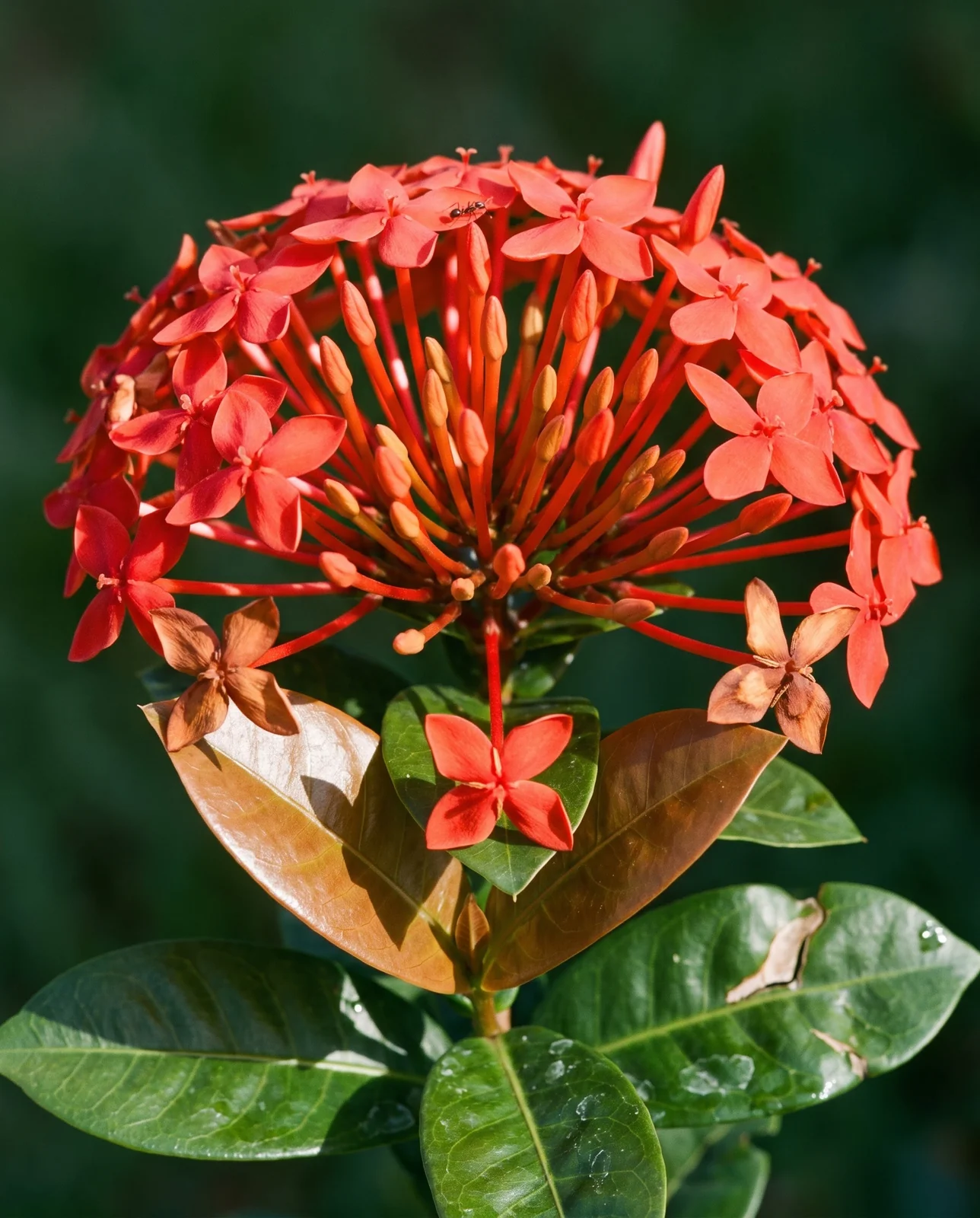
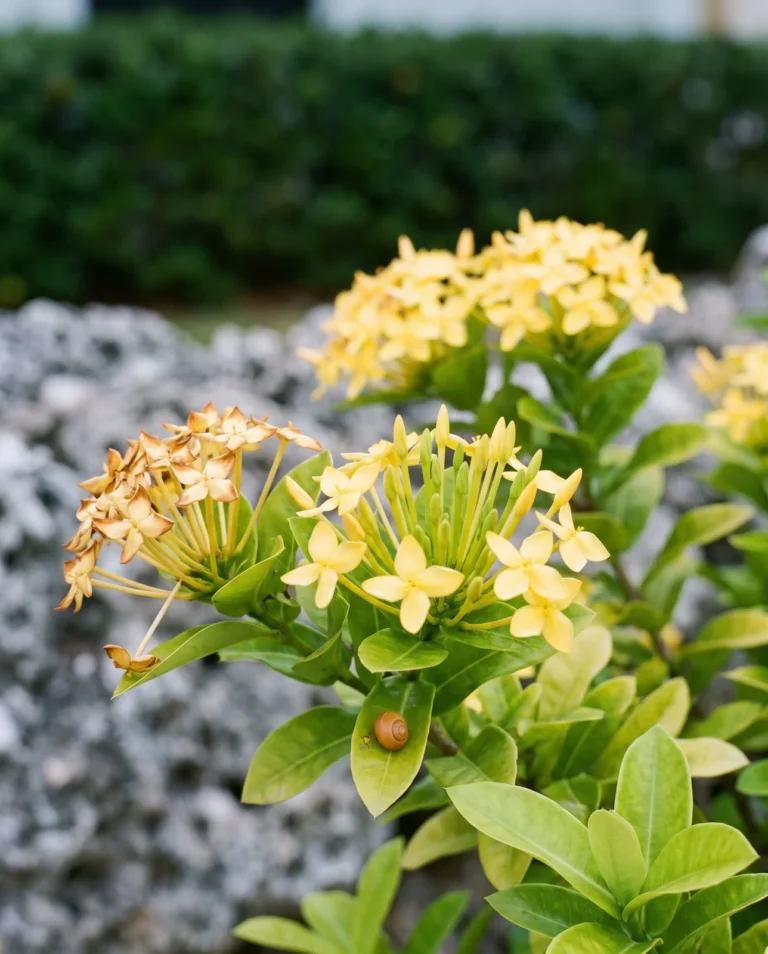
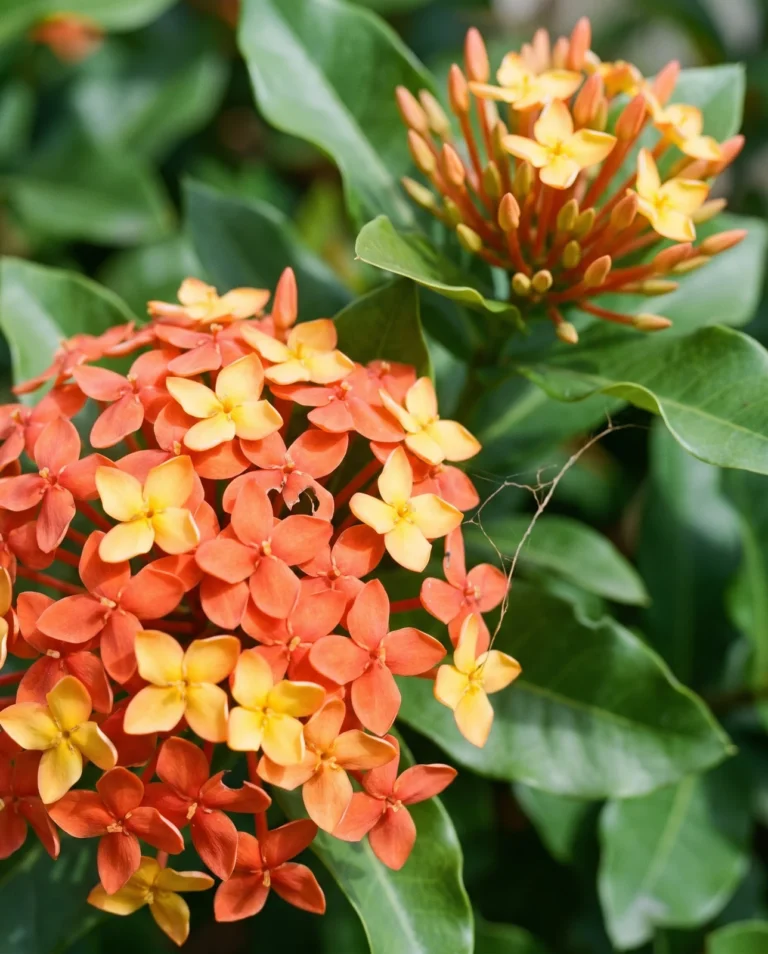
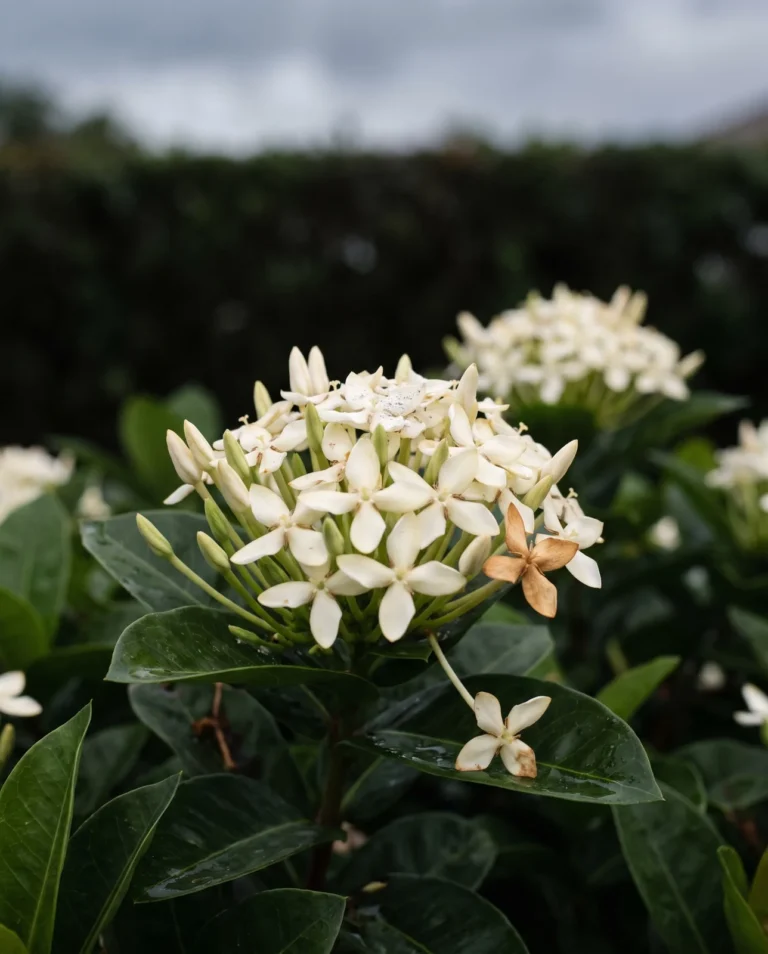
Ixora blooms in flat-topped, rounded clusters 4 to 6 inches across, packed with small tubular florets in red, orange, yellow, pink, or white. The leaves are leathery and glossy, measuring 1.5 to 3 inches long and about half an inch to 2.25 inches wide. New growth opens with a coppery bronze tint before deepening to glistening dark green.
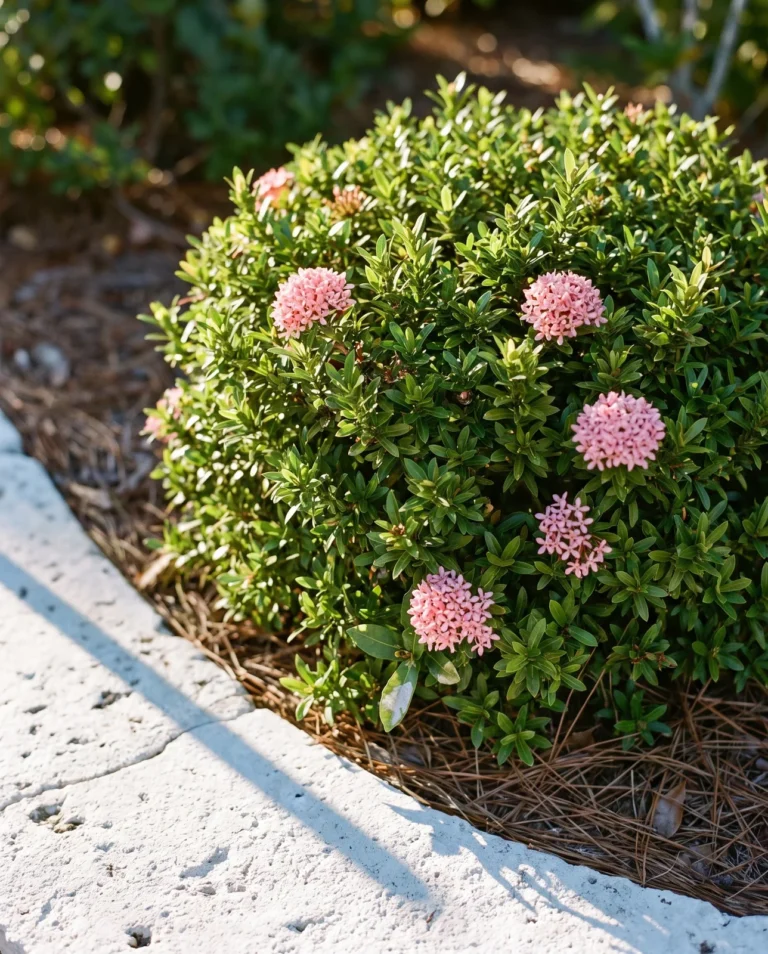
How tall an ixora grows depends on the variety and how you prune it. Most garden shrubs stand 4 to 6 feet tall with a 3 to 5 foot spread, though cultivars range from 3 to 8 feet. Left unpruned in warm climates, plants can reach 10 to 12 feet, and some selections can reach 10 to 15 feet. In its native range, the plant can become a small tree of 6 to 20 feet, occasionally reaching up to 40 feet. Growth is naturally slow and the habit stays dense. That tight branching suits hedges, privacy screens, and borders, especially with smaller types that top out at 4 to 6 feet.
Yellow leaves with green veins
Yellow leaves with green veins point to an iron or manganese shortage, a common trouble for ixora growing in alkaline ground. The problem begins on new branch tips, where young leaves turn yellow between the green veins, stay small, and may lose their flower buds before opening. In severe cases, the yellow leaf tissue develops brown edges. Plants spend their stored iron as they form fresh foliage, so symptoms appear first and most sharply on new growth. While high soil pH is the usual cause, excessive moisture around the roots can also bring on yellow chlorotic leaves.
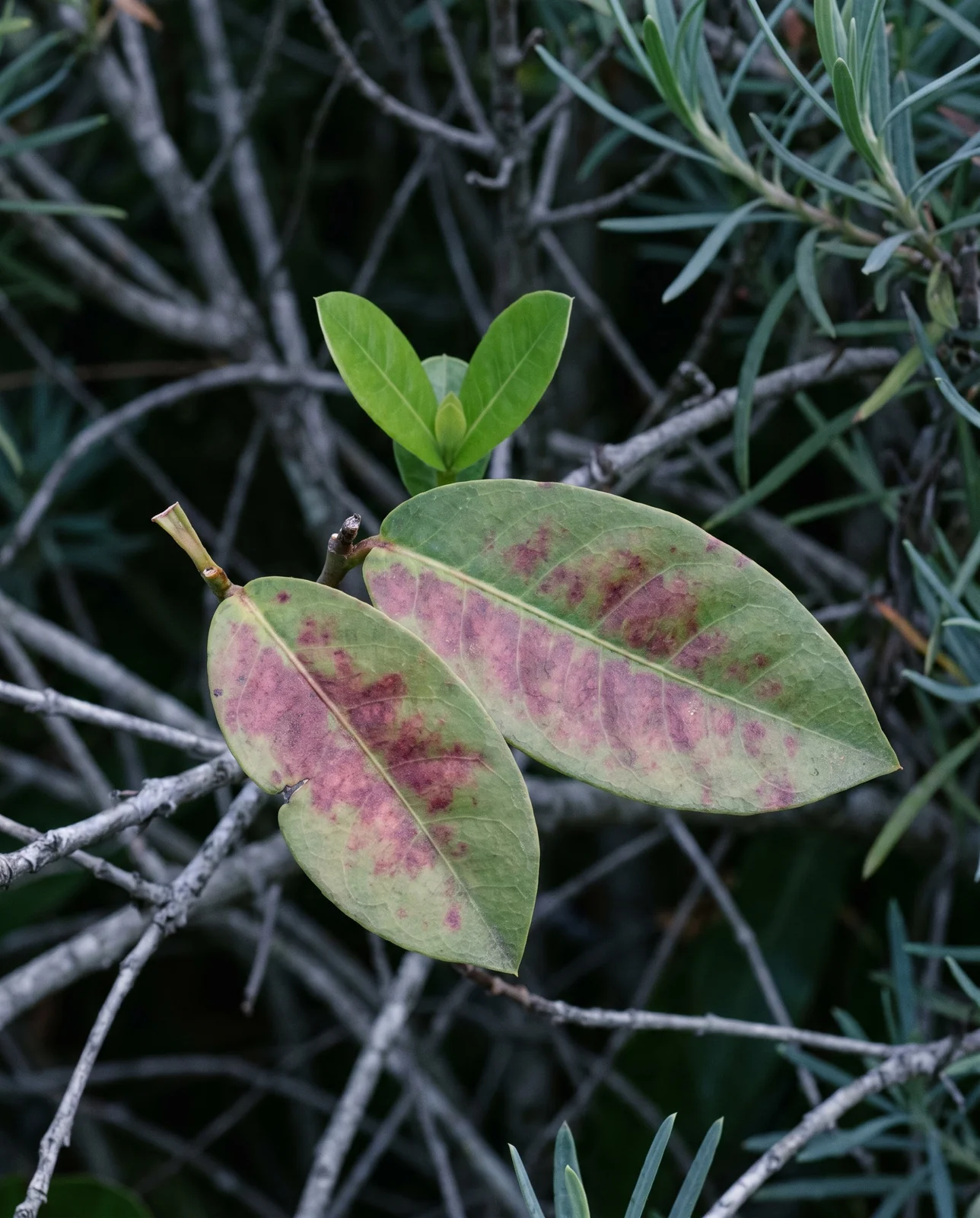
Checking the age of the yellowing leaves shows which nutrient the shrub is missing. Pale new growth points to low iron and manganese, while reddish-purple spots on older leaves show that phosphorus and potassium are missing together. That combined shortage also causes premature leaf drop, sparse branches, and a sharp reduction in bloom. Both conditions are common on ixora, and both typically stem from alkaline soil. Telling iron from manganese deficiency apart by sight is often unreliable. A manganese deficit can turn young leaves yellow or whitish with green veins, though it can also develop on older interior leaves first. Dark leaf spots are sometimes attributed to missing iron or manganese, though on ixora they usually reflect low potassium and phosphorus.
Fixing yellow leaves takes the right micronutrients delivered the right way. In alkaline soil, granular iron and manganese applied to the ground are mostly locked away from roots, making foliar sprays of liquid micronutrients much more effective. Standard iron chelates lose their power above pH 7.2, leaving formulas with FeEDDHA as the only reliable choice in high-pH earth. Look for EDDHA or EDDHMA chelating agents for alkaline garden beds, reserving EDTA, DTPA, and HEDTA for slightly acidic soils. If you do apply treatments to the soil, stick to soluble iron and manganese, because oxide and sucrate forms are ineffective. Apply chelated micronutrients on a regular schedule following the package directions. Avoid pushing new growth with soluble nitrogen fertilizer: forcing new shoots while micronutrients remain locked away only deepens the yellowing and spotting.
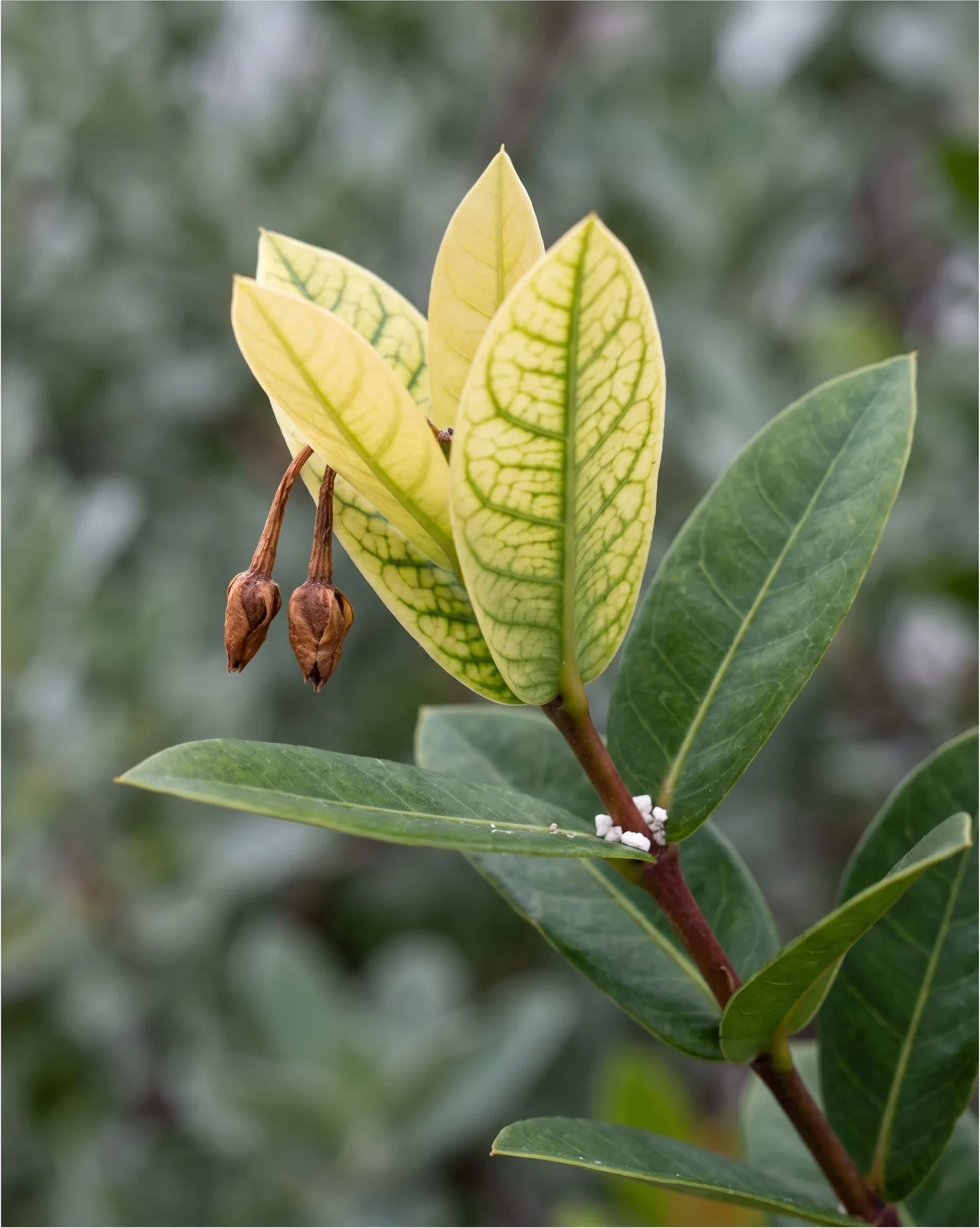
Reading a yellow ixora leaf
The leaf tells you what is wrong before you buy any fertilizer. Work through these checks in order and stop at the first one that matches your plant.
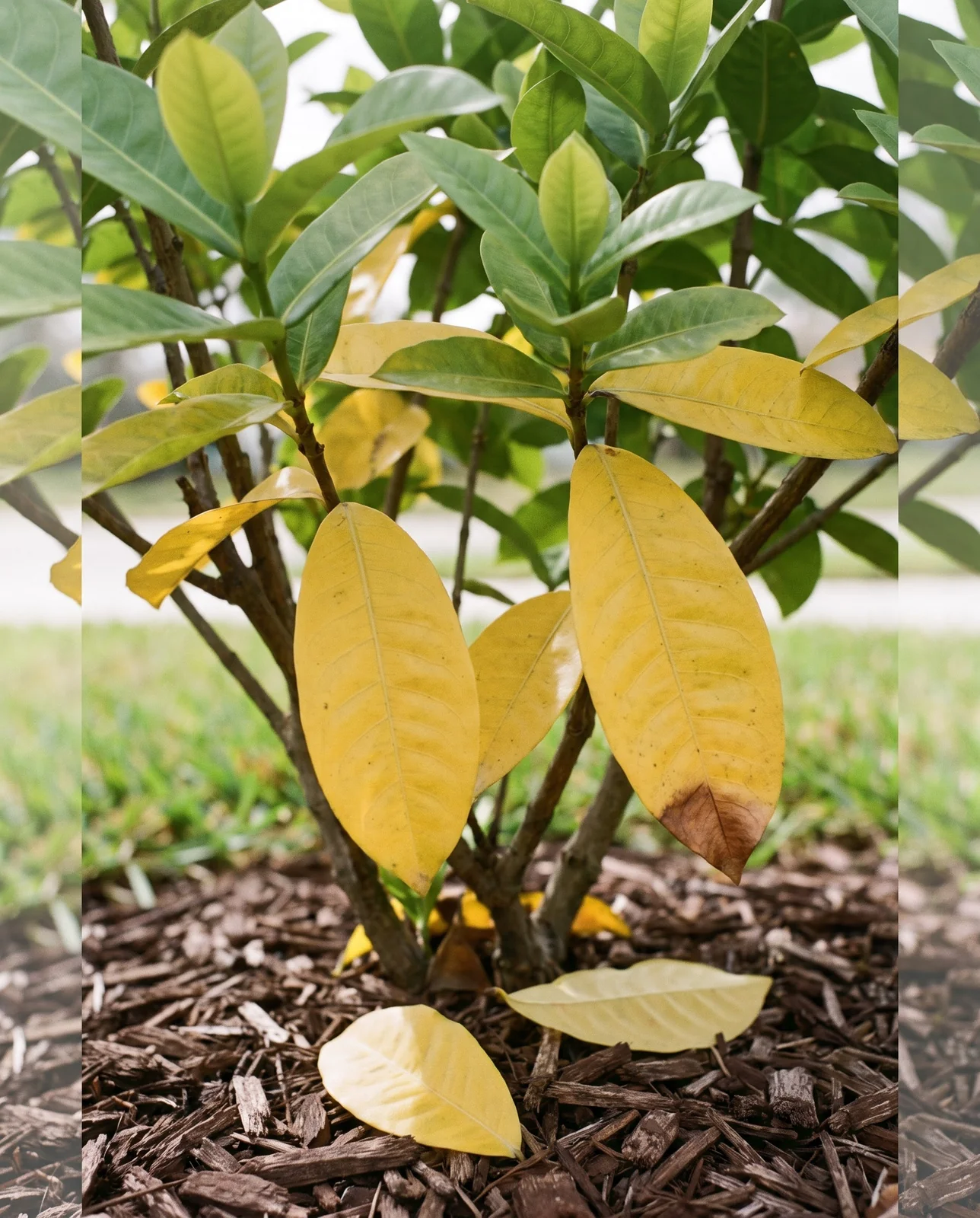
The problems that actually come up
Listed from the most common complaint down. Each one covers the symptoms, the cause, and what to do.
Symptoms: new leaves turn yellow between veins that stay green, with undersized foliage and buds that die before opening. Cause: high soil pH that stops roots from taking up iron and manganese. What to do: spray liquid micronutrients onto the foliage on a regular schedule following label directions, because high-pH soil wastes granular chelates.
Symptoms: dense, dark green growth that carries no flower clusters and no developing buds. Cause: too much shade, or repeated shearing that cuts away emerging flower buds at the branch tips. What to do: give the plant full sun for maximum flower production, though large-leaved varieties can grow in partial shade. Stop shearing branch tips, which removes the emerging buds before they can open.
Symptoms: reddish-purple patches on older leaves, early leaf drop that leaves hedges looking thin, and a significant drop in flowering. Cause: a joint deficiency where both phosphorus and potassium are missing together. What to do: apply a slow-release 8N-2P-12K-4Mg fertilizer containing water-soluble micronutrients 2 to 4 times a year.
Symptoms: flower buds shrivel and drop from their stalks before opening as the nutrient shortage advances, sometimes accompanied by small, pale new leaves. Cause: an iron and manganese chlorosis that frequently develops when soil containing lime rises above pH 7.0. What to do: test the soil pH to confirm alkalinity, then apply foliar micronutrients to help the shrub hold its buds.
Symptoms: leaf edges turn bright yellow before browning inward, with tiny black hair-like structures in circular clusters visible under a magnifying glass. Cause: anthracnose fungal infection, which takes hold when foliage stays wet for 4 or more hours. What to do: water in the morning after dew dries and switch to drip irrigation to keep leaves dry.
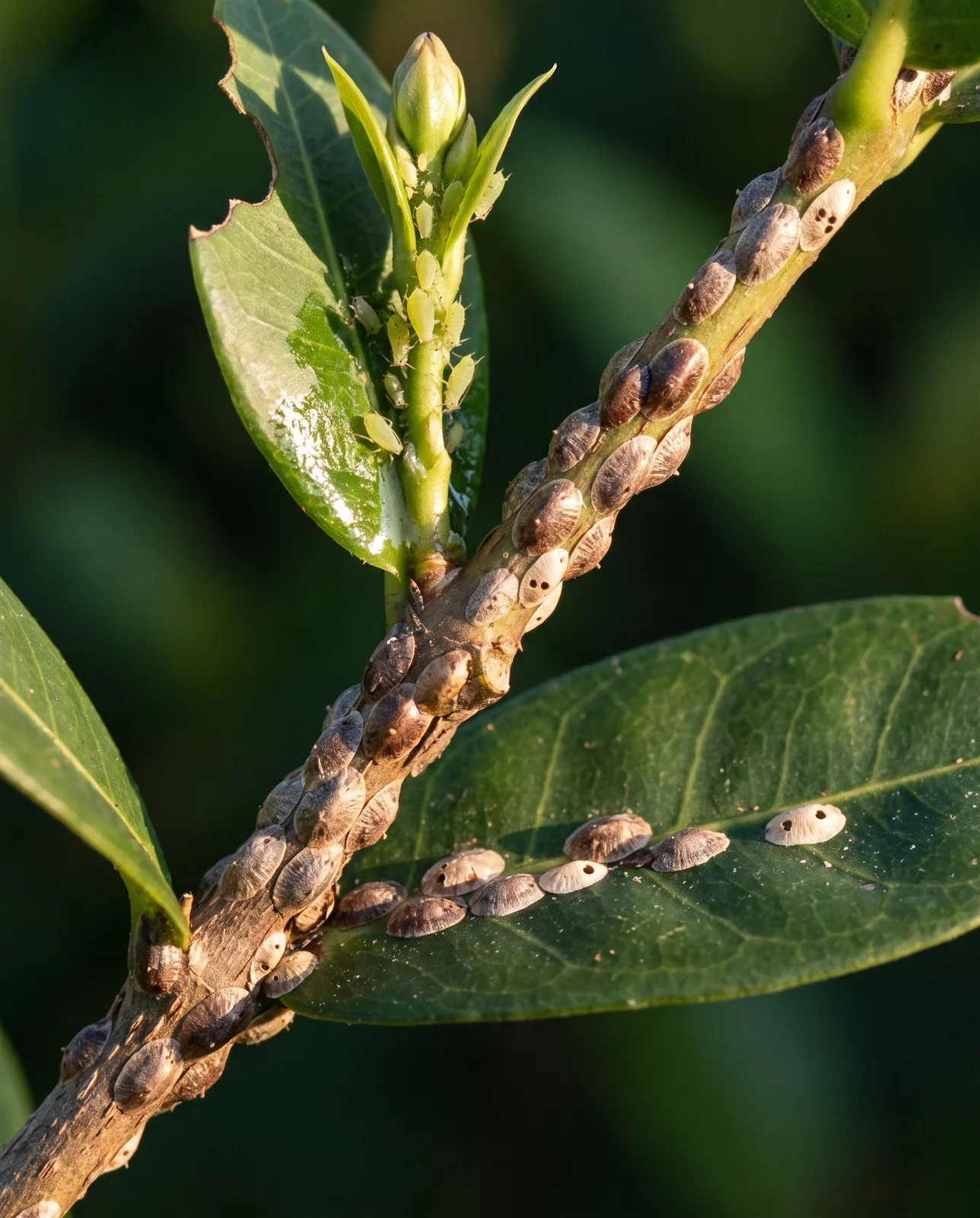
Symptoms: aphids or scale clustering on stems and fresh shoots, coated in sticky honeydew that turns black with sooty mold. Cause: sap-sucking pests feeding on tender growth. What to do: spray horticultural oil once a week for 5 weeks, applying it late in the day to avoid leaf sunburn.
Soil pH decides everything
Ixora needs acidic soil to thrive, and its ideal range runs around pH 5 to 6.0, slightly lower than most garden shrubs prefer. Trouble begins as the ground approaches neutral. Iron turns insoluble once soil pH climbs above 6.5 to 6.7, staying freely absorbable only between 5.0 and 6.5. Once the pH rises above 7.0 to 7.5, leaves turn dull and yellow as iron chlorosis sets in, especially where the soil contains lime. In lime-rich soils above pH 7.5, chlorosis is common, and iron added to the ground quickly reverts into solid forms roots cannot use.
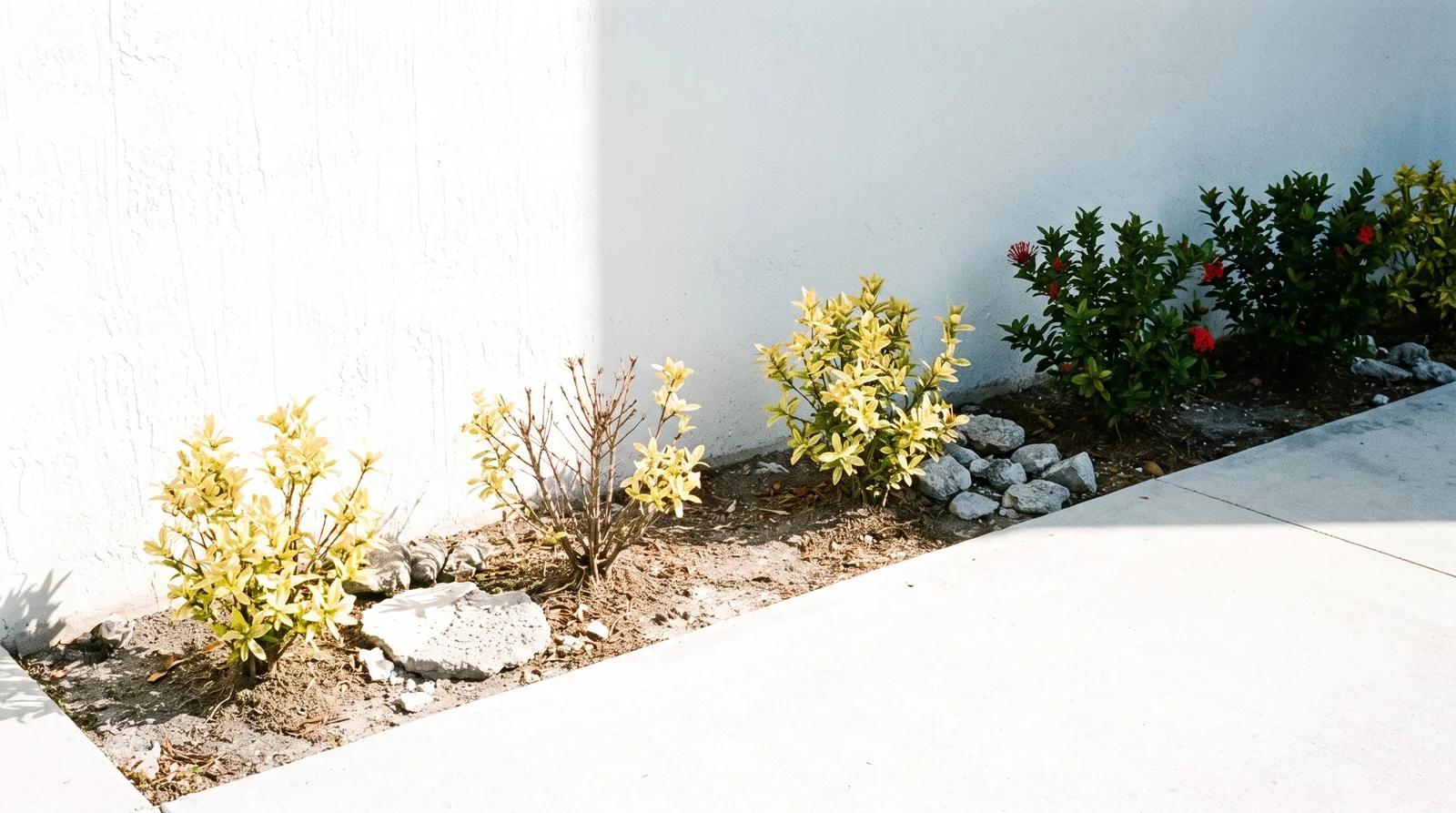
Alkaline conditions catch new plantings in two common places. First is the ground itself: coastal soils and south Florida mineral soils are frequently alkaline because they formed from limestone, marl, or seashells. Second is the home itself, where alkaline conditions also commonly result from calcium-rich building materials such as concrete and stucco left in the soil after construction. Foliage turns yellow in alkaline soil, such as next to sidewalks and foundations where the shrub is often planted, and it needs a continuing micronutrient program to stay green. Concrete has a very high pH that causes growth and flowering problems, so avoid planting ixora next to concrete walkways or foundations. Test your soil first, and if the ground comes back alkaline and mostly sand, do not plant ixora there at all.
Lowering the pH of strongly alkaline soil is much more difficult if not impossible, and there is no way to permanently lower the pH of soil formed from marl or limestone. Elemental sulfur can lower the pH temporarily, spread at 4 to 19 pounds per 1,000 square feet depending on the starting and desired pH, though dropping below pH 5.0 risks aluminum toxicity. The effect is localized and temporary: soil bacteria exhaust the sulfur and the pH rises again, requiring repeated applications. Mixing up to one-third organic matter into native soil at planting helps lower the pH. There is no easy, inexpensive, or long-term fix for iron chlorosis, and lowering pH is impractical to impossible when the ground contains free lime. Pots offer an easy way around stubborn soil, because a container holds a small volume of potting mix that is simple to keep acidic. Even in alkaline ground, ixoras can thrive on regular fertilizer that includes chelated iron.
Leaf spots and fungal damage
Fungal leaf damage leaves marks with clear edges, making it easy to tell apart from a nutrient shortage. Anthracnose infects ixora foliage, causing leaf burn that starts as bright yellow along the margins and moves inward as tissue dies. The most distinct sign takes a magnifying glass to spot: tiny, black, hair-like setae grouped in circular spore clusters. Other fungi cause spots too, including Pseudocercospora ixoricola in Brazil and two Pseudopestalotiopsis species found on ixoras in Taiwan.
Keeping foliage dry is the best defense against fungal trouble. Leaves that stay wet for 4 or more hours encourage anthracnose, so water in the morning after dew dries and use drip irrigation to limit wet time. Raking up fallen leaves and trimming away damaged foliage also clears out lingering spores. Below ground, mushroom root rot can also become a problem for ixora.
All leaves and no flowers
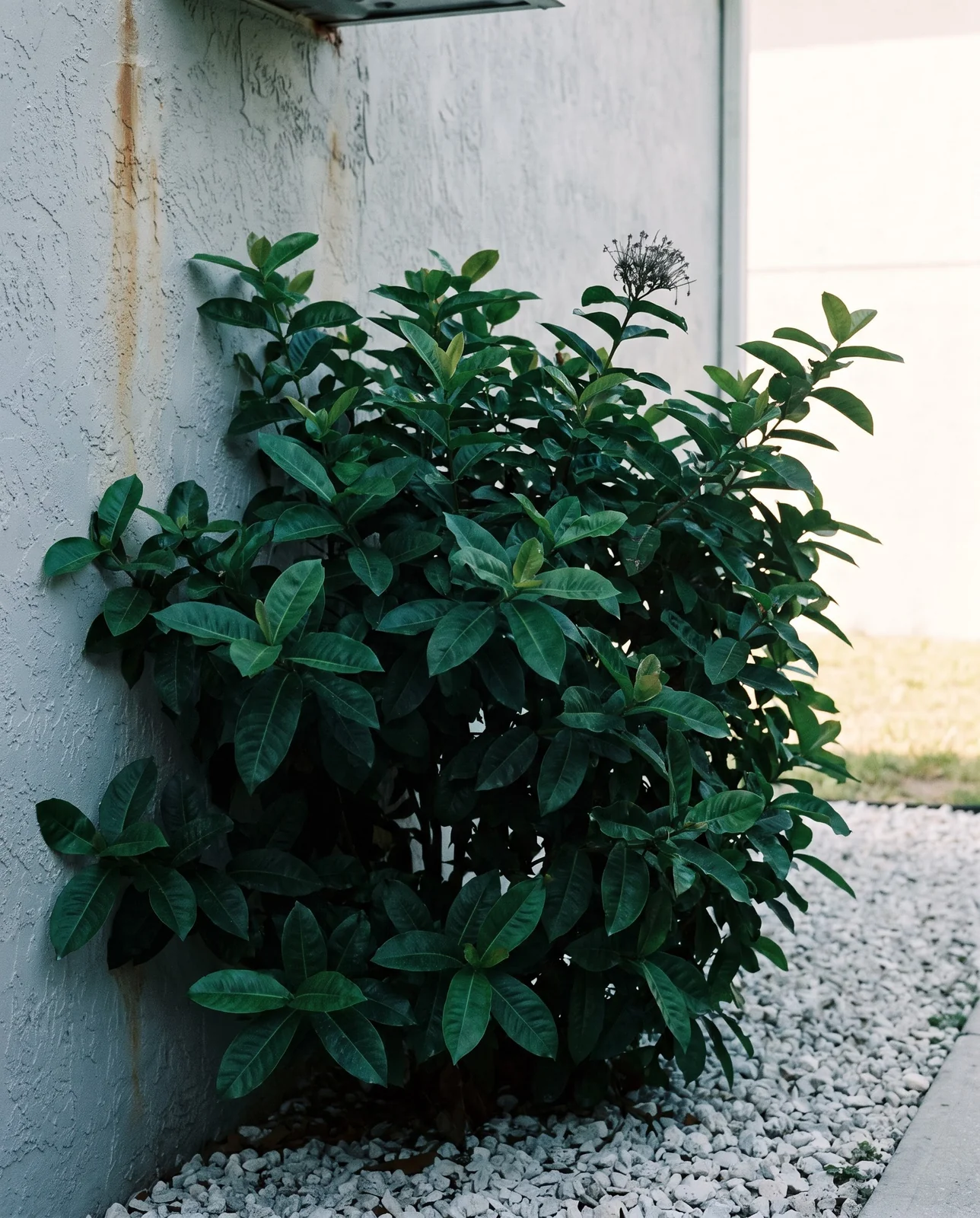
Sunlight is the first thing to check when an ixora produces lush foliage but few flowers. Heavy blooming can happen with 4 to 6 hours of direct sun or partial shade daily. Plants generally bloom best with 6 or more hours of sunlight each day, welcoming afternoon shade in the hottest exposures. In hotter regions, shrubs often prefer 8 to 10 hours of light daily, or even a full day of sun, with afternoon shade through harsh summer heat. A bush tucked into heavy shade against a north wall simply lacks the light to make blooms.
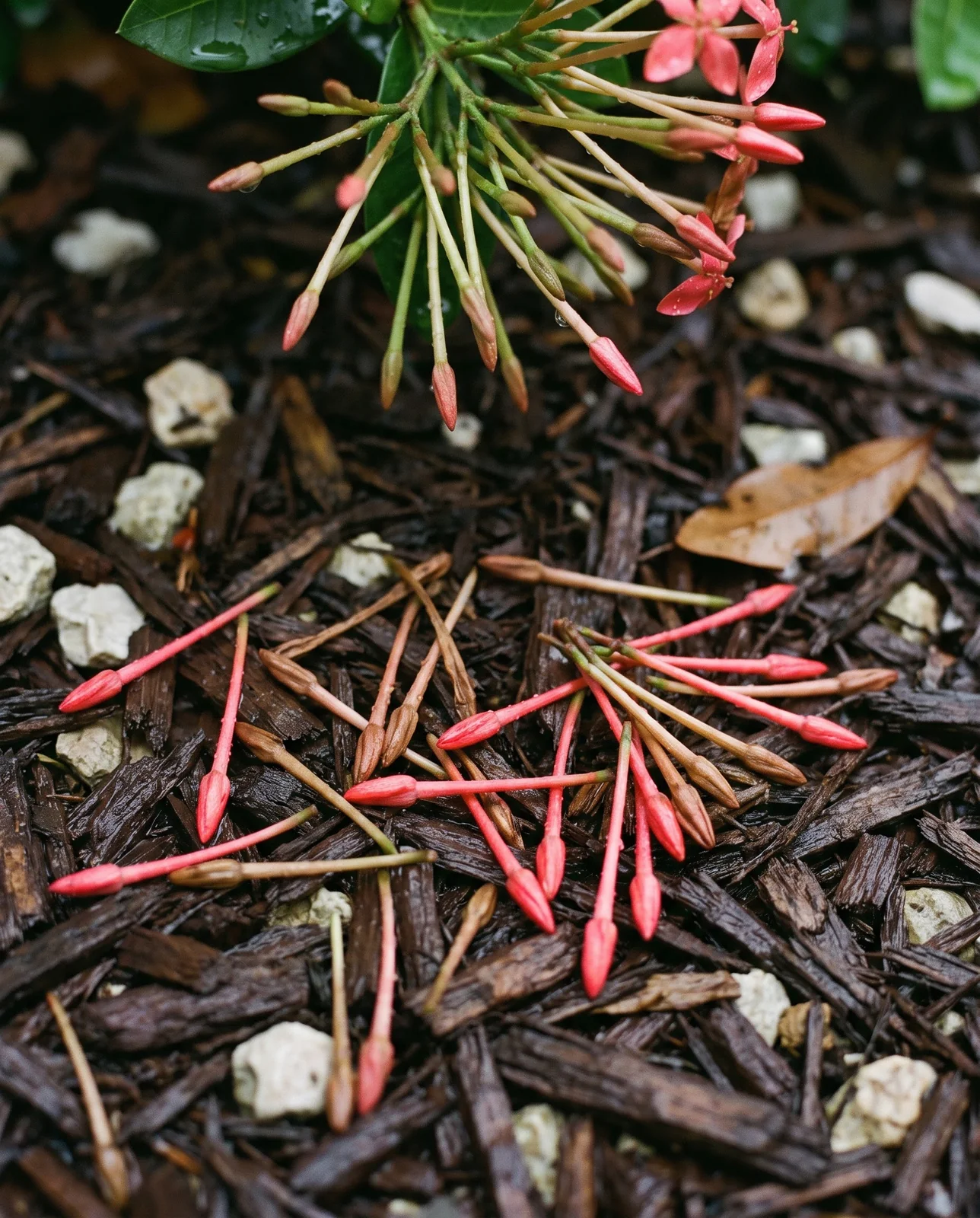
Three other mistakes often explain missing flowers. Alkaline soil is the first, because the nutrient shortage that yellows new foliage also causes flower buds to die before opening. Pushing growth with soluble nitrogen makes matters worse when essential nutrients are missing, since that fresh flush only demands more minerals the soil cannot deliver. The third culprit is the hedge trimmer, because repeatedly shearing branch tips cuts away emerging flower buds. A large-leaved variety in partial shade can still make an attractive shrub, but regular shearing in shade strips away both the light and the buds needed to bloom.
Working out why it is not blooming
Work through these four checks in order on your plant. The first three cover sunlight, soil pH, and fertilizer; the fourth covers pruning.
Why a sheared hedge stops flowering
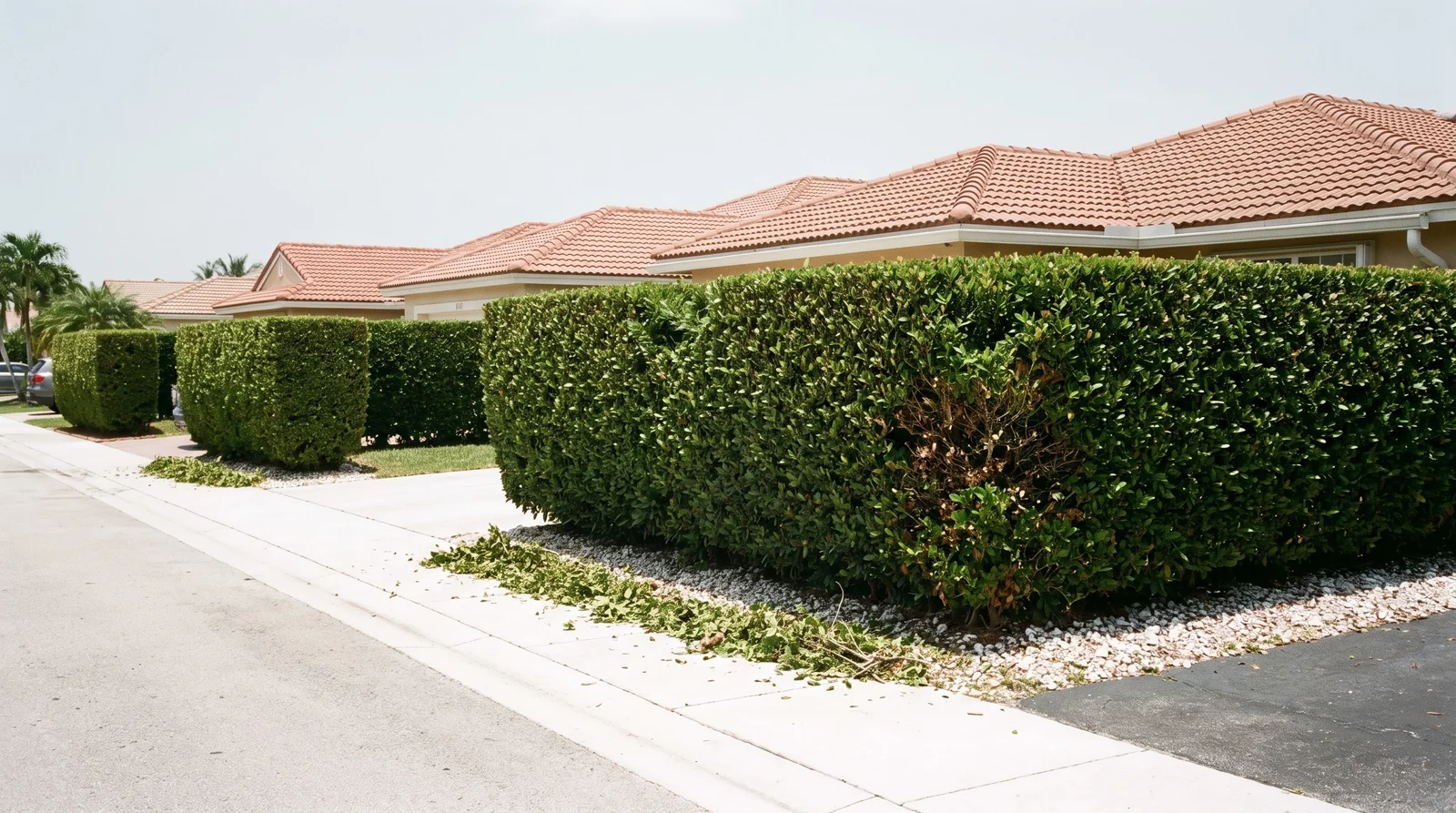
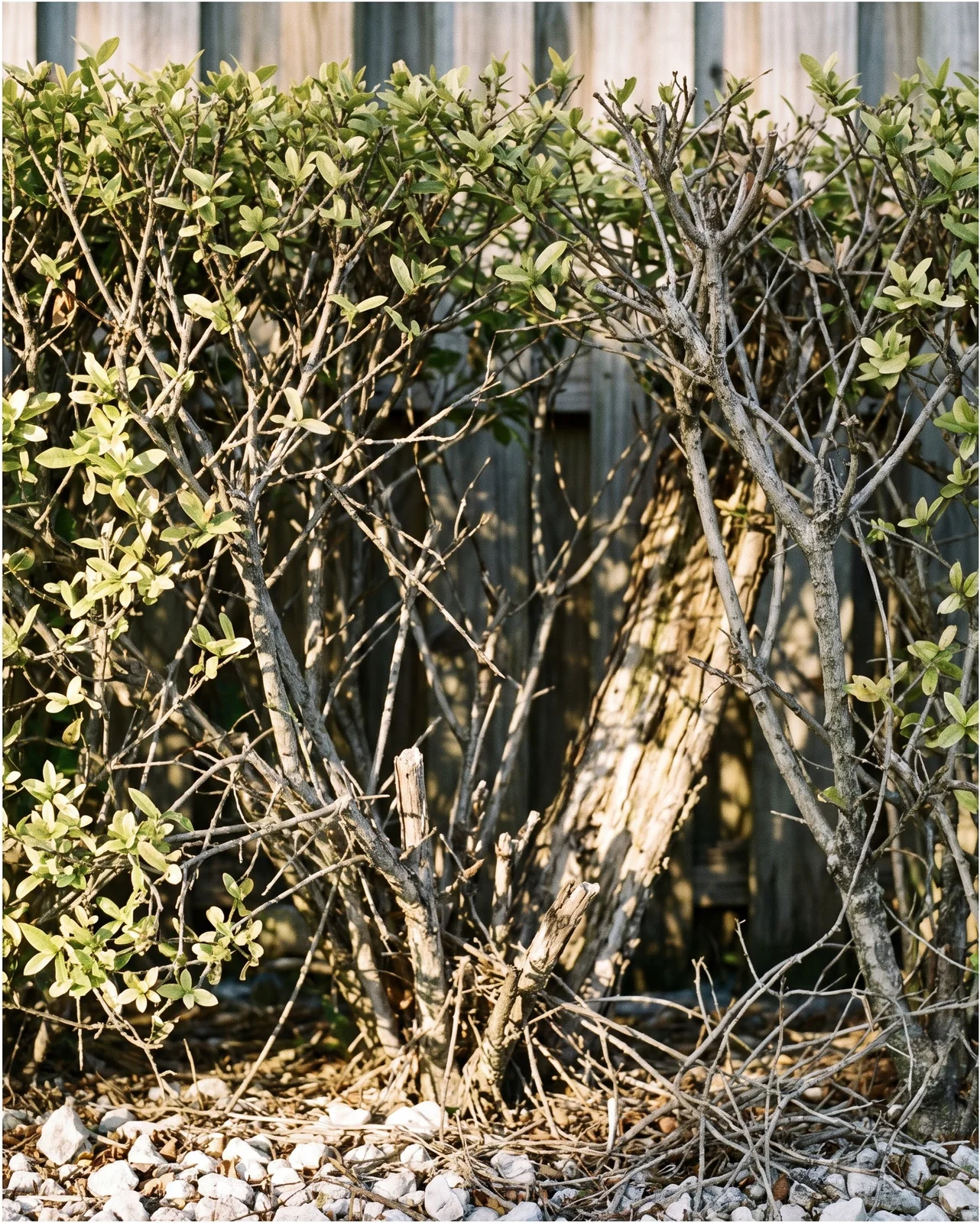
Ixora forms its flower buds at the tips of the branches, so repeatedly shearing branch tips may simply remove the emerging buds. The flowers bloom on new growth, so regular pruning without shears keeps the shrub bushy and prevents legginess. It handles shaping well and can be cut back to a single bud on each shoot. The plant can be pruned at any time, but constant shearing will reduce the flower display. Property line hedges are often sheared so constantly that there are few chances to see the flowers at all.
Major shaping is best done in late winter or early spring as new growth begins, though you can also prune in autumn after blooming slows. Take off no more than 30 percent of the top growth at once, and avoid repeated shearing of the tips. Ixora can be sheared into a low hedge of 4 to 6 feet. For a clipped hedge of 3 to 4 feet, dwarf and Taiwanese varieties are the better choice. Large-leaf selections like 'Nora Grant' grow 8 to 12 feet tall, and shearing them constantly to stay small can leave them thin and ragged after a few years.
How cold it takes and where the line falls
Ixora belongs in warm gardens, with hardiness generally set at zones 10 through 11. Some ratings extend into zones 9 to 11, with zone 9b as the northern boundary where frost and freezes injure the shrub. In the ground, it is intolerant of temperatures below 50 degrees Fahrenheit and cannot survive winter below that mark, though you can grow it in a container in cooler climates. Selections like Maui may tolerate 30 to 40 degrees in the garden, but container plants cannot handle temperatures below 55 degrees.
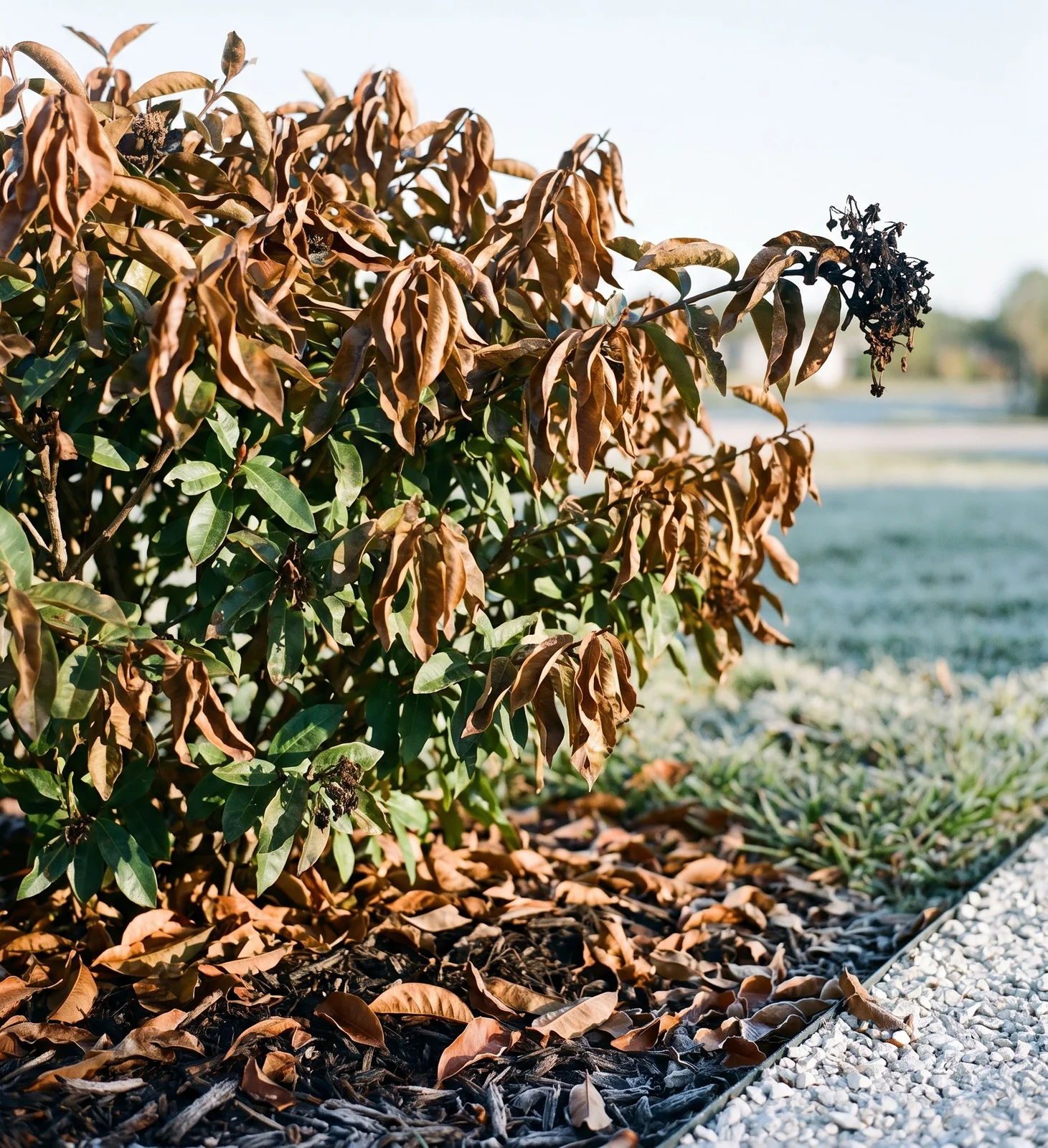
A passing cold snap may cause ixora to lose its leaves without suffering serious damage. Temperatures below 30 degrees burn the foliage, and drops to around 28 degrees cut plants back to the roots. Ixora cannot tolerate cold once temperatures dip to 20 degrees. Even so, both Ixora chinensis and Ixora coccinea have returned from the roots after near 20-degree freezes killed their top growth. Common varieties like Maui Red, Maui Sunset, and Nora Grant usually go down with the first decent freeze unless well protected. In zone 9a they generally return from the roots, but they are slow to recover. After a freeze, scratch the bark to check for green living tissue, and delay hard pruning until new growth starts in spring.
The orange cultivar Maui is thought to be more cold tolerant than other varieties. Even so, the plain species Ixora coccinea and Ixora chinensis remain the hardiest forms, while named hybrids like 'Nora Grant' are slightly more tender. No cultivar moves the northern line: ixora is hardy only in zones 9 and higher and will not survive winter outdoors in colder climates.
Containers, winter and life indoors
If you garden north of its hardiness band, grow ixora in a container that can move indoors when temperatures drop. Through the growing season, keep the pot in a sheltered, sunny spot with regular water and fertilizer, then bring it indoors in fall as temperatures cool. That move happens earlier than most expect, because potted plants feel the chill well before shrubs in the ground.
Indoors, ixora is simply waiting out the winter. It needs at least 8 to 10 hours of bright light each day indoors, though harsh direct summer rays can burn the foliage. Peak flowering requires full sun, so an indoor shrub by a window will hold its own until spring. If you are growing Plumeria alba, the other plant called West Indian jasmine, winter care shifts: north of zone 10, it overwinters indoors at 50 to 55 degrees with significantly reduced watering.
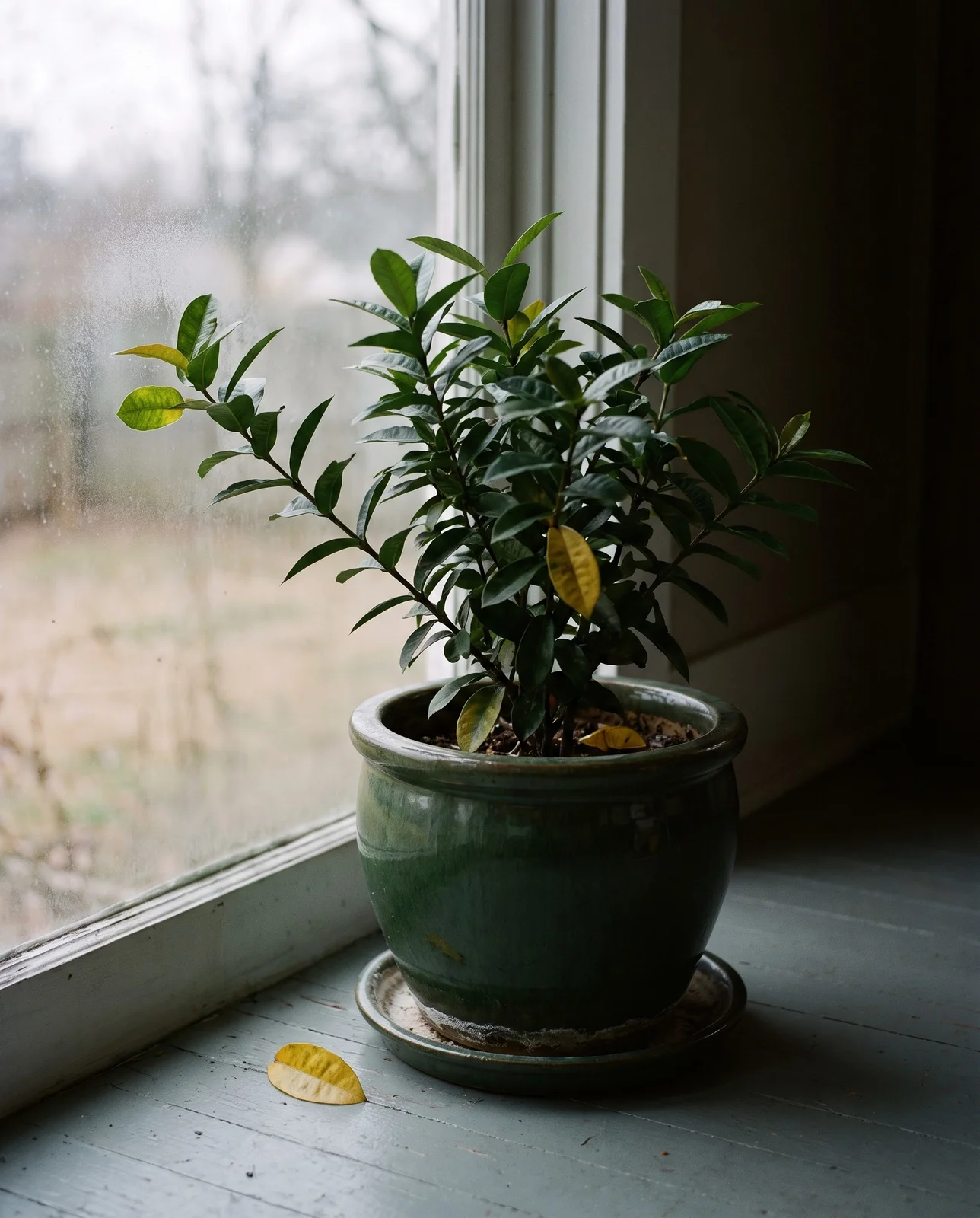
Does ixora bloom all year
Ixora blooms year-round in Central and South Florida, bearing clusters of four-petaled flowers in sunny spots. Across tropical climates the genus flowers throughout the year, blooming continuously under ideal full sun. Outside those climates, flowering comes in waves. Each flower cluster can last between 6 and 8 weeks. Because flowers form on new growth, the next round waits for new shoots to lengthen, leaving brief pauses between blooms in cooler or shadier gardens.
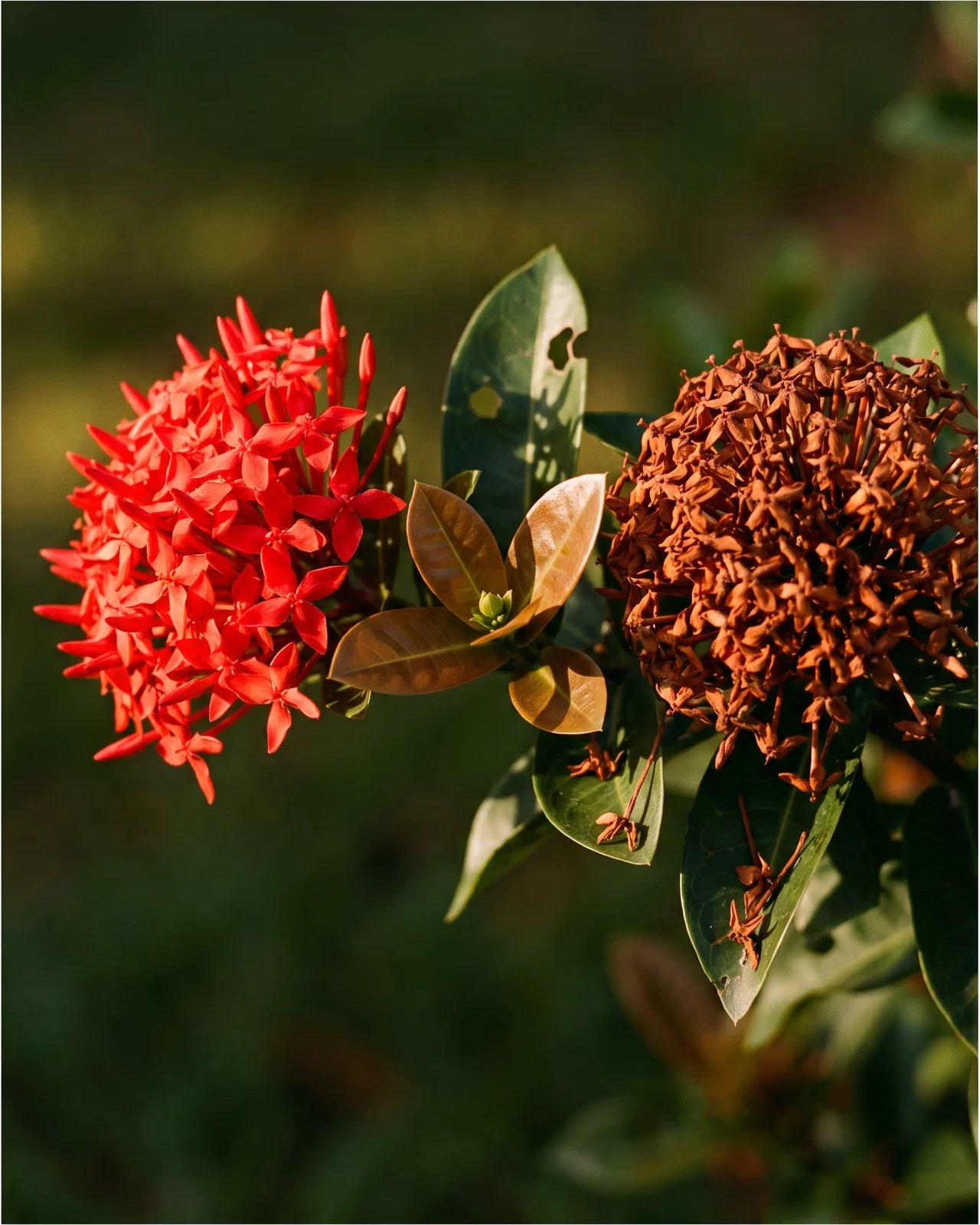
Where to plant it
Three things decide the spot: light, drainage, and distance from concrete. Full sun brings the heaviest bloom, though large-leaved varieties can grow in partial shade. Drainage comes second, with soil that drains freely and avoids waterlogging. Distance from concrete matters just as much, making a foundation bed along a sidewalk one of the hardest places to keep leaves green. Spread 3 inches of organic mulch around the base, keeping it pulled back from the trunk. Plan your spacing before digging, because ixora grows slowly and takes years to fill in gaps. In an open, sunny bed, ixora pairs easily with hibiscus where both share the same warm soil.
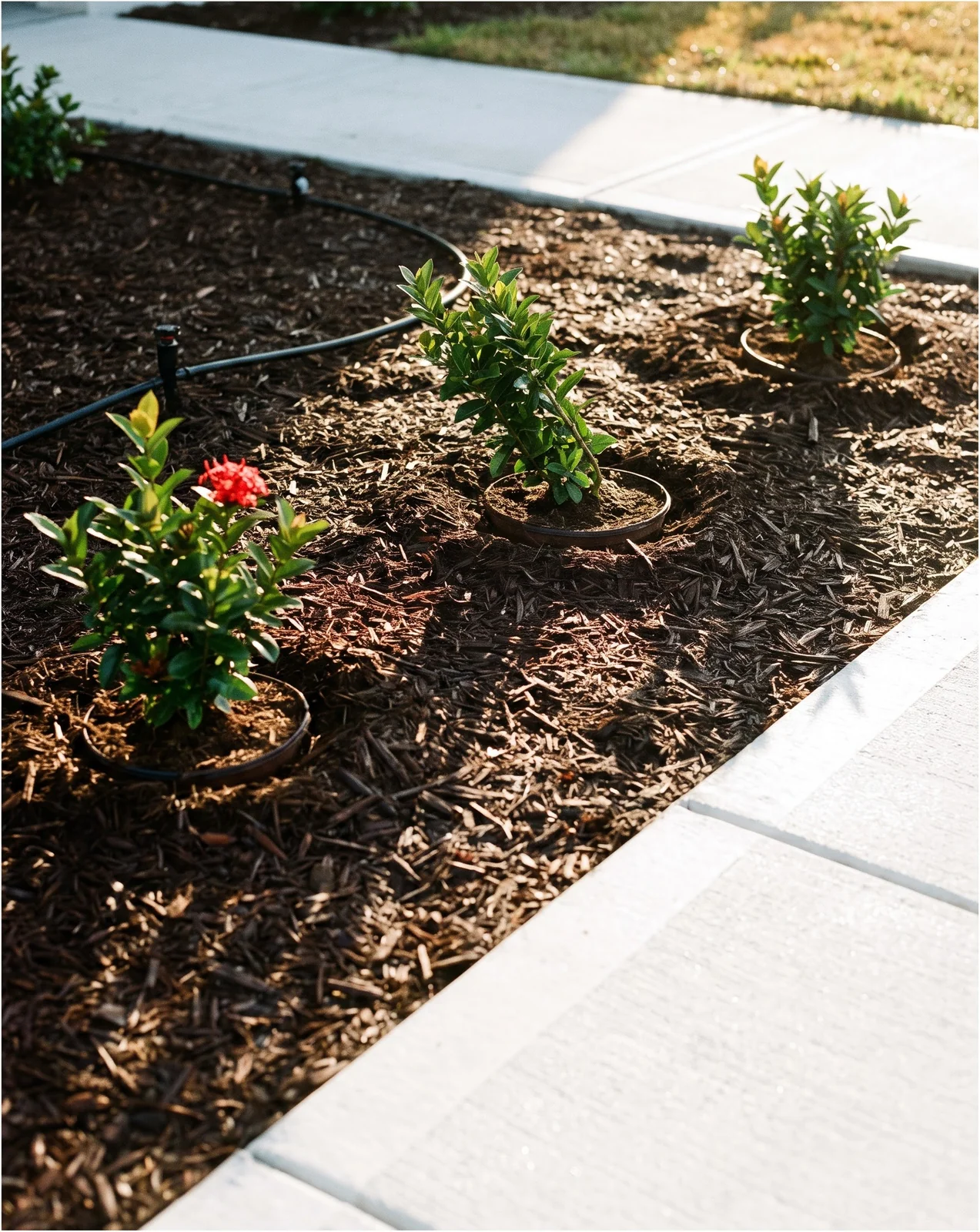
Watering
Aim for evenly moist soil that does not stay waterlogged, letting the top inch dry slightly between waterings, and do not overwater. Ixora is moderately drought tolerant and can handle saline irrigation water, though it does not do well with direct ocean breezes. When leaves turn yellow on a plant sitting in soggy ground, wet roots are often the cause before soil pH is blamed. Scrape the mulch back to check: if the top inch feels dry while the soil below stays cool and damp, your watering schedule is working.
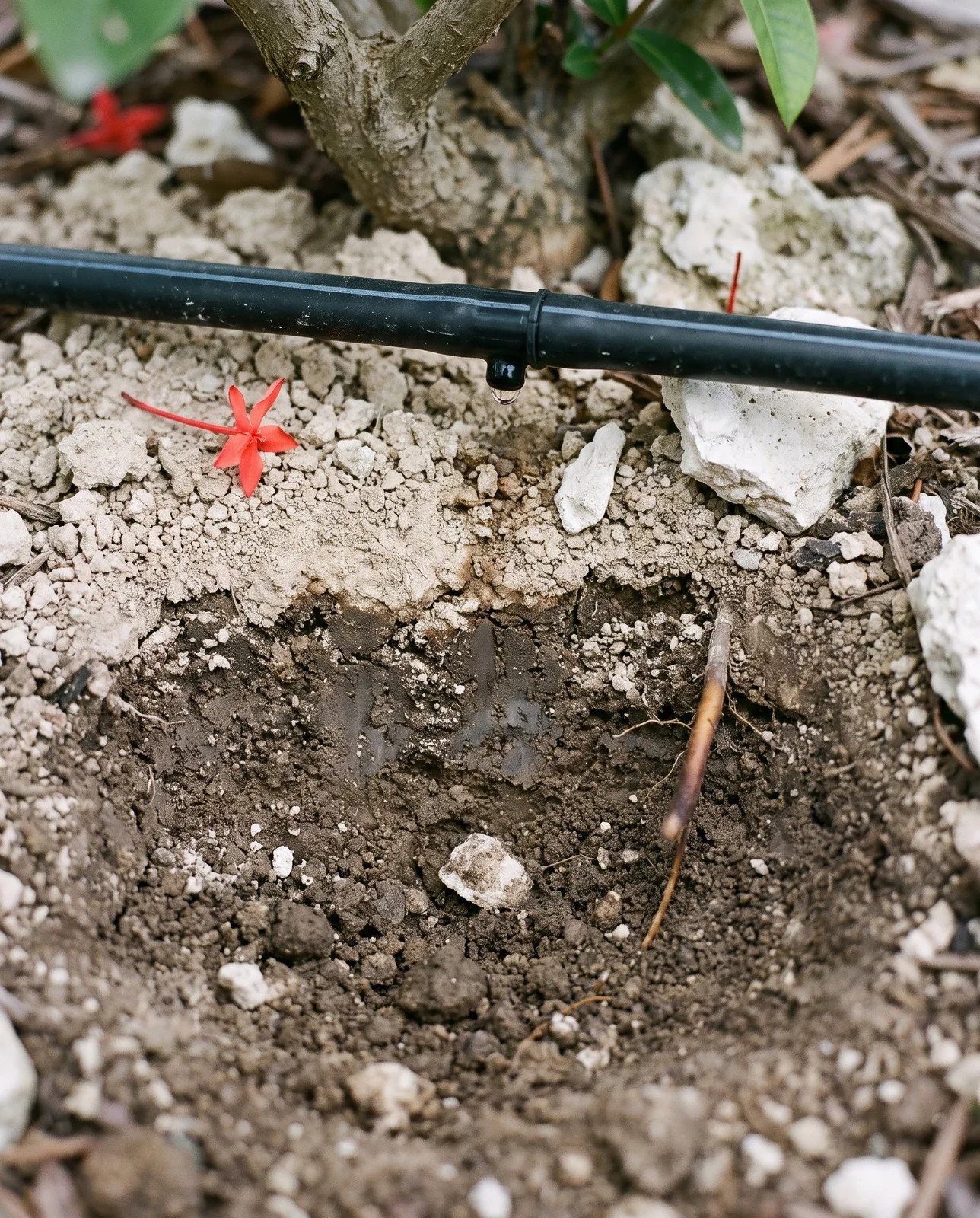
Feeding
Feed ixora for micronutrients so the foliage stays deep green and flowers form steadily. During the warm growing season, use an acid-forming or balanced slow-release fertilizer every 6 to 8 weeks. If your hedge shows leaf spotting or sparse flowers, switch to a slow-release 8N-2P-12K-4Mg blend with water-soluble micronutrients. Apply about 1.2 to 1.8 pounds per 100 square feet of root area, 2 to 4 times a year in February, May, August, and September or October. That formula keeps nitrogen modest while supplying the potassium and magnesium ixora needs most. Avoid pushing growth with soluble nitrogen when minerals are missing, because new leaves will only demand more unavailable nutrients, worsening both spots and chlorosis.
Named ixoras worth telling apart
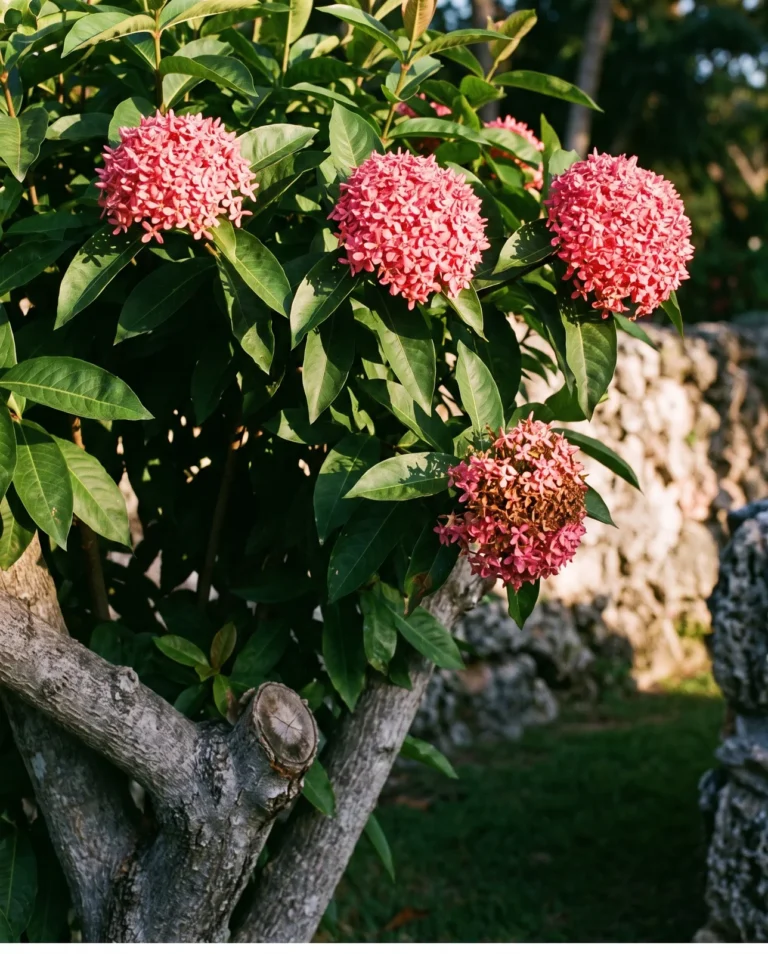
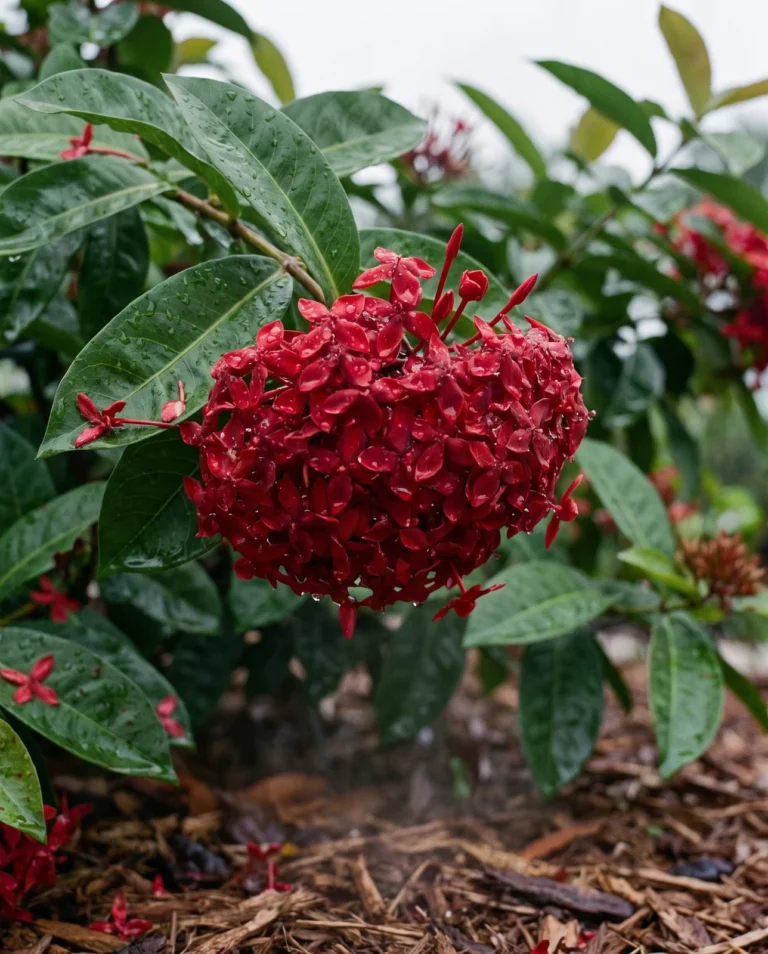
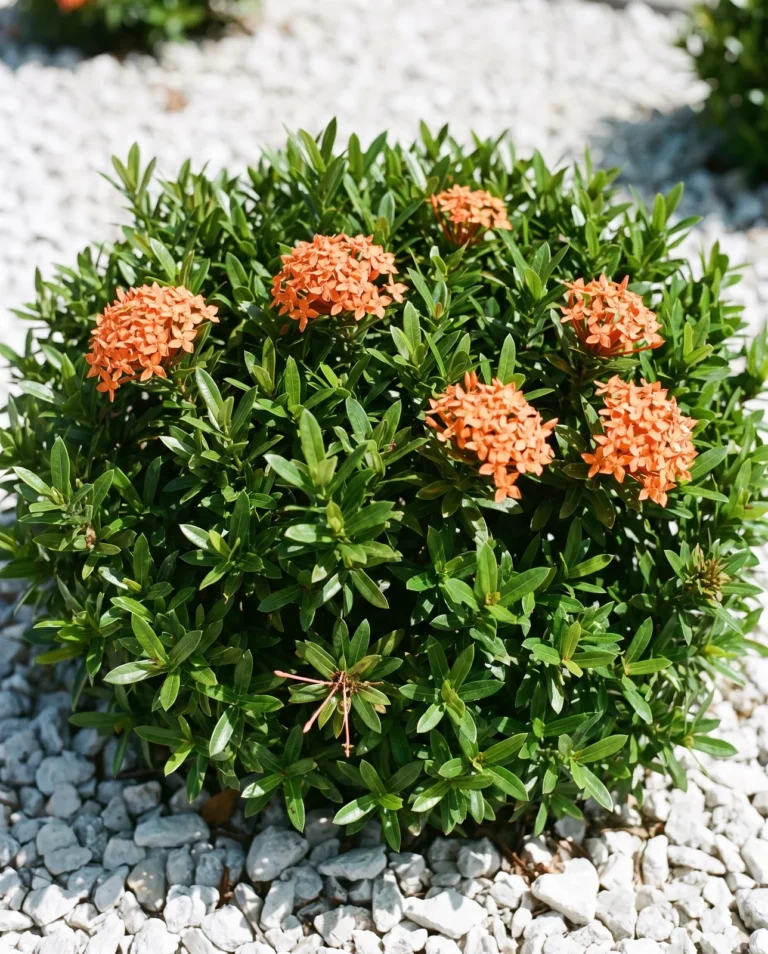
Every plant here is sold as an ixora, though several belong to other species in the genus. Check the mature size before picking a flower color, because size decides whether a shrub can stay a low hedge.
How long an ixora lives
How long an ixora lives depends mainly on how you prune it. A well-tended shrub can live for decades or longer. Hard cutting damages the plant and shortens that lifespan, leaving a heavily sheared hedge attractive for only 5 to 10 years. Large-leaf varieties show the strain fastest, since kinds that naturally grow tall thin out and decline after a few years of being kept small. Once a plant declines from repeated hard cuts, no amount of water, fertilizer, pest control, or pruning will bring it back. At that stage, replacing the shrub is the best way to make the planting look good again.
The dried flowers sold as a drink
Dried flowers of Ixora coccinea are sold as an herbal drink under names like Jungle Geranium, Rathmal, and Rathambala. These preparations repurpose the blooms for culinary use, though they carry cautions about potential laxative effects and advise consulting a healthcare professional. In warm tropical climates, ixora blooms year-round and has a long place in Hindu worship, Ayurveda, and Indian folk medicine. Known as Bakul in Sanskrit and Rathmal or Rathambala in Sinhala, its flowers, bark, and leaves are all used in traditional remedies. None of that means you should brew blossoms from a garden shrub.
Size and spacing
Space ixora bushes 36 to 60 inches apart in the garden. Getting that spacing right saves trouble later, because crowded plants invite shearing, and trimming off branch tips removes emerging flower buds. Match the planting gap to the variety you choose: dwarf kinds stay compact, while large-leaf selections like 'Nora Grant' need plenty of room to spread.
Pests
The main pests that trouble ixora are aphids, scale, bagworms, and nematodes. Aphids and scale are the two you will usually spot, crowding tender shoots and stems while leaving sticky honeydew that turns into black sooty mold. To clear them, spray with horticultural oil weekly for 5 weeks, applying it late in the day to protect the leaves from sun damage. The shrub is very sensitive to one or more pests or diseases that can affect its health or appearance. Nematodes damage roots beneath the soil while bagworms chew foliage from small silk cases, both weakening the bush without the obvious crusting of scale.
What to expect, year by year
How ixora develops over time, from a slow-starting youngster to a settled flowering shrub and a five-year-old hedge.
Year one takes patience while roots settle into the soil. Growth is naturally slow, so newly planted bushes stay distinct for a season or more before filling in. Flowers form on fresh new wood, so your first flush depends on good sun and how quickly roots take hold.
An established shrub blooms in repeating waves. Each flower head lasts between 6 and 8 weeks before fading, while fresh shoot tips push out to set the next round of buds. In Central and South Florida, this blooming rhythm runs almost year-round. It is common to see fresh blooms and fading heads on the very same bush.
By year five, your pruning routine shows its full effect. Repeatedly shearing a hedge flat cuts off the stem tips where flower buds form, steadily reducing the display of bloom. That severe shearing leaves a hedge attractive for only 5 to 10 years before it begins to decline. Shrubs shaped selectively by hand after each flush take a different path. A large-leaf selection grows toward 8 to 12 feet tall while staying leafy and full, and a well-tended planting can thrive for decades.
Four things people believe about ixora
Four common beliefs that catch gardeners out, and what ixora actually does in the garden.
The myth: Yellow leaves mean the plant is hungry, so more fertilizer fixes it.
The reality: Pouring on soluble nitrogen when the soil lacks trace minerals only worsens leaf spotting and chlorosis, because new growth demands nutrients the roots cannot find. To tell what is missing, look at where the color fades: an iron deficiency shows up on tender new growth near the tips, while a nitrogen shortage begins on older leaves at the bottom of the shrub.
The myth: West Indian jasmine is the name of one plant.
The reality: The name belongs to two unrelated plants. In Florida, ixora is commonly called West Indian jasmine, a name it shares with flame of the woods. The same common name also attaches to Plumeria alba, the white frangipani, a small tree with fragrant white flowers centered in yellow.
The myth: It is a houseplant.
The reality: Ixora is an outdoor tropical shrub suited to warm gardens like those in Florida. It is winter-hardy in zones 9 to 11 and cannot tolerate temperatures below 50 degrees Fahrenheit. Growing it indoors is demanding, because the plant needs at least 8 to 10 hours of bright sunlight each day.
The myth: Shearing keeps a hedge blooming.
The reality: Ixora can be sheared into a tidy hedge 4 to 6 feet tall, but tight clipping costs you bloom. Repeatedly shearing off the branch tips removes emerging flower buds, and constant shearing reduces the flower display.
FAQ
Does ixora like sun or shade?
Ixora produces the most flowers in full sun, though large-leaved varieties can grow in partial shade. Give it 4 to 6 hours of direct sun to partial shade daily for heavy bloom, or 6 or more hours of direct sunlight each day.
Why are my ixora leaves turning yellow?
Start by checking which leaves yellow first. If new leaves turn yellow between the veins while the veins stay green, that is iron chlorosis, which frequently occurs in lime-containing soils above pH 7.0. Yellowing that starts on the older leaves at the bottom of the plant points to a shortage of nitrogen.
How do you get an ixora to bloom?
Give it full sun, meaning 6 or more hours of direct sunlight each day, and keep the soil acidic with a pH of around 5. Hold off on shearing the branch tips, because flower buds form at the tips and constant pruning may simply remove them. Save any major shaping for early spring as new growth begins.
Can ixora survive winter?
Ixora can survive winter outdoors in zones 9 to 11, though zone 9B seems to be its northern-most limit because frosts or freezes will injure it there. Farther north, grow it in a container so you can bring it indoors when temperatures drop.
What is the lowest temperature ixora can tolerate?
Ixora is generally intolerant of temperatures below 50 degrees Fahrenheit, though certain cultivars handle 40 to 30 degrees. Temperatures below 30 degrees burn the foliage, and about 28 degrees can cut a plant back to the roots.
Does ixora bloom all year?
Yes, ixora flowers year round in tropical climates and across Central and South Florida. Each flower cluster can last between 6 and 8 weeks before fading.
Where is the best place to plant ixora?
Choose a sunny, well-drained spot set away from concrete. Concrete has a very high pH that causes growth and flowering problems, so avoid planting along walkways and foundations. If a soil test shows the ground is alkaline and mostly sand, do not plant ixora there at all.
Is ixora poisonous to dogs and cats?
No. Ixora is non-toxic to dogs, cats and horses, and the ripened fruits are edible.
What is the best fertilizer for an ixora?
Feed with an acid-forming or balanced slow-release fertilizer every 6 to 8 weeks during the warm growing season. If leaves show nutrient spotting, apply a slow-release 8N-2P-12K-4Mg formula with water-soluble micronutrients 2 to 4 times a year.
Is ixora a jasmine?
No. West Indian jasmine is a common name used for ixora in Florida, though the name is occasionally used for white frangipani as well. Ixora belongs to the family that includes coffee and gardenia. If you are looking for true jasmine, that is a different plant.
What is the average lifespan of an ixora plant?
A well-maintained ixora can live for decades or longer. On a heavily pruned shrub, that good-looking lifespan runs between 5 and 10 years. Plants that decline from repeated hard pruning cannot be revived, and replacing the shrub is the best remedy.
Interesting tips
- Ixora draws hummingbirds, keeps the garden interesting through winter with its unusual form or winter flowers, and is not known to be invasive.
- Take 4- to 6-inch tip cuttings, treat them with rooting hormone, and keep them lightly watered for four to six weeks until they root.
- Maui Sunset and Flame of the Woods are both common names for the same plant, Ixora coccinea.
Related Guides & Flowers

Types of flowers
The full index of flower guides on the site, by type and by name.
Bougainvillea
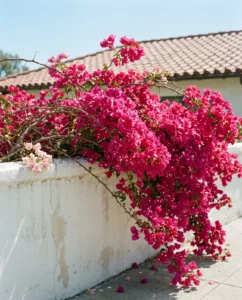
Another warm-climate shrub grown for color and often clipped the same way.
Oleander
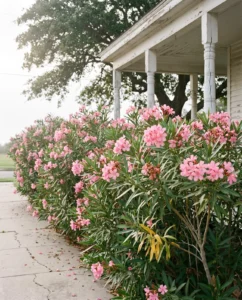
The other evergreen hedge shrub of the Sun Belt, with a very different safety record.
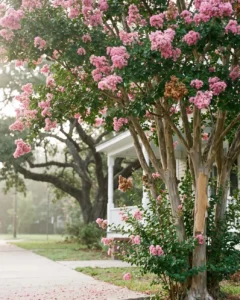
Crape myrtle
A southern flowering tree grown for summer color.
Enjoying our flower guides? Add YourFlowersGuide as a preferred source on Google. It helps more readers find us.
Add to Preferred Sources