Three plants called mimosa, and which one you have
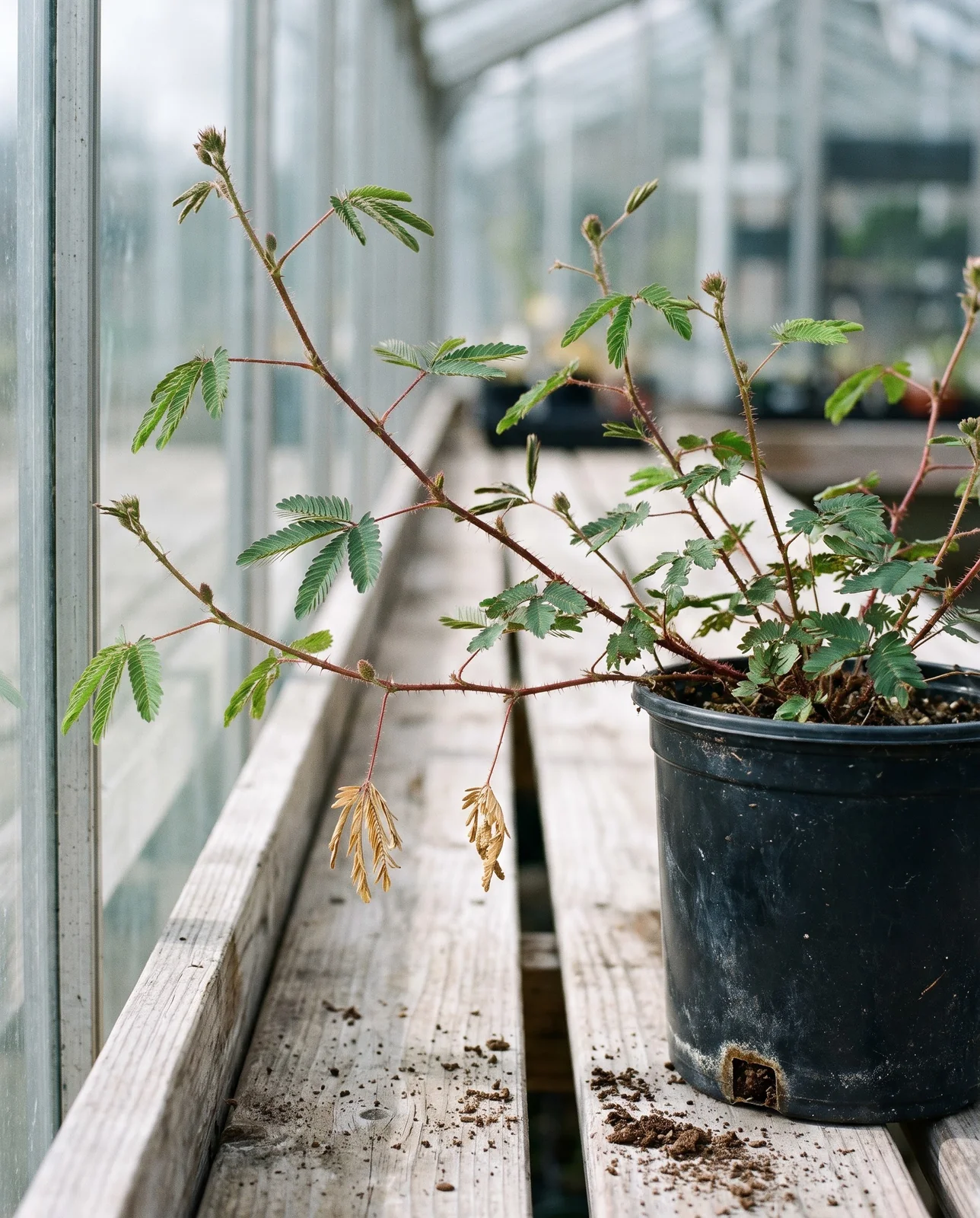
Three different plants share the name mimosa, and only one of them is a tree. The garden tree is Albizia julibrissin, belonging to the legume family under the genus Albizia. The sensitive plant grown indoors is Mimosa pudica, a true Mimosa in that same family. It forms a small, spiny shrub reaching about 3 feet tall with leaves that fold up when touched. The florist's yellow mimosa is Acacia dealbata, an acacia recognizable by bluish-gray, silvery foliage and round heads of bright yellow flowers. Florists sell these cut sprays as mimosa, though they do not belong to the genus Mimosa. They sell in large quantities every March, when people traditionally give them to women on International Women's Day in Italy, Albania, Russia and Georgia. Side by side, the three look very different: a spreading tree with pink powder-puff flowers, a spiny potted shrub, and a cut branch of silver leaves carrying yellow spheres.
The shared name comes from earlier botany. Albizia julibrissin was once classified under both Mimosa julibrissin and Acacia julibrissin, keeping the old name attached to a tree outside both groups. The genera Albizia, Mimosa, Acacia and Leucaena share similar traits, and people often interchange their common names. For anyone growing the sensitive plant indoors, it is not a practical poisoning worry for pets, because household animals are unlikely to eat enough of it to cause harm.

What a mimosa tree is, and how long it lives
Mimosa is a highly flammable, deciduous woody tree or shrub in the legume family, native to southern Asia from Iran to Japan. It also goes by silk tree, bastard tamarind and nemu tree. The species name julibrissin comes from the Persian gul-ebruschin, meaning floss silk or silk flower, pointing to the blossoms. The genus Albizia honors Filippo degli Albizzia, an 18th-century Italian naturalist who introduced the plants to Italy in 1749. When the tree first reached North America is unsettled. Some place it in 1745, others around 1785 or earlier. Another timeline puts the American arrival closer to 1814, after an introduction to England in 1745.
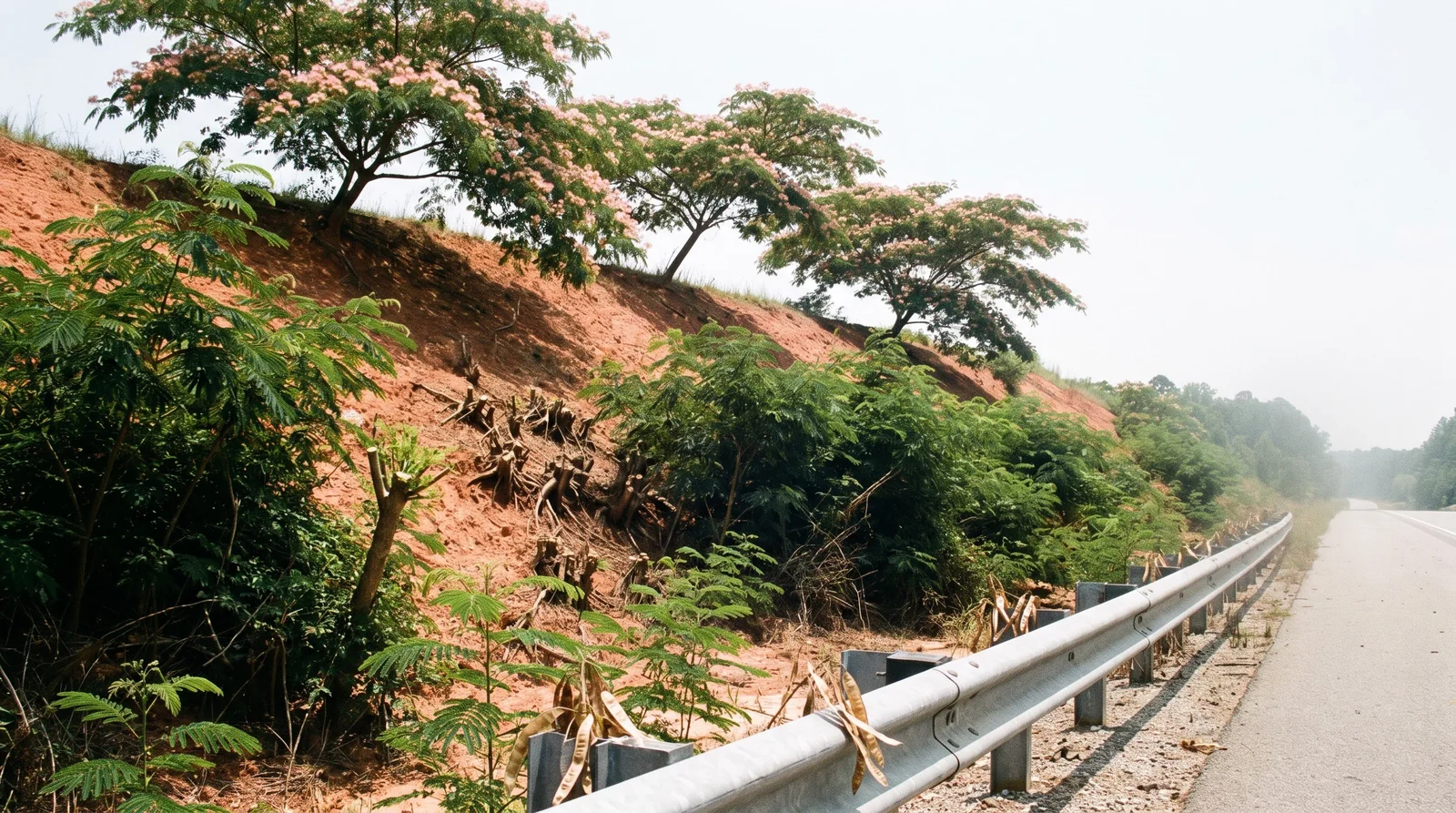
How long a mimosa tree lives depends on its surroundings. In favorable conditions it averages about 30 years, but it often proves short-lived at 10 to 20 years, lasting only 10 to 20 years in the Northeast. Even with an average life of 30 years, it has a reputation as aggressive, high-maintenance and short-lived, and planting it in home yards is not recommended. That aggressive habit shows up quickly along roadsides, grasslands, vacant lots, clearings and flood plains, where it settles into disturbed ground without any care.
What a mimosa tree looks like through the year
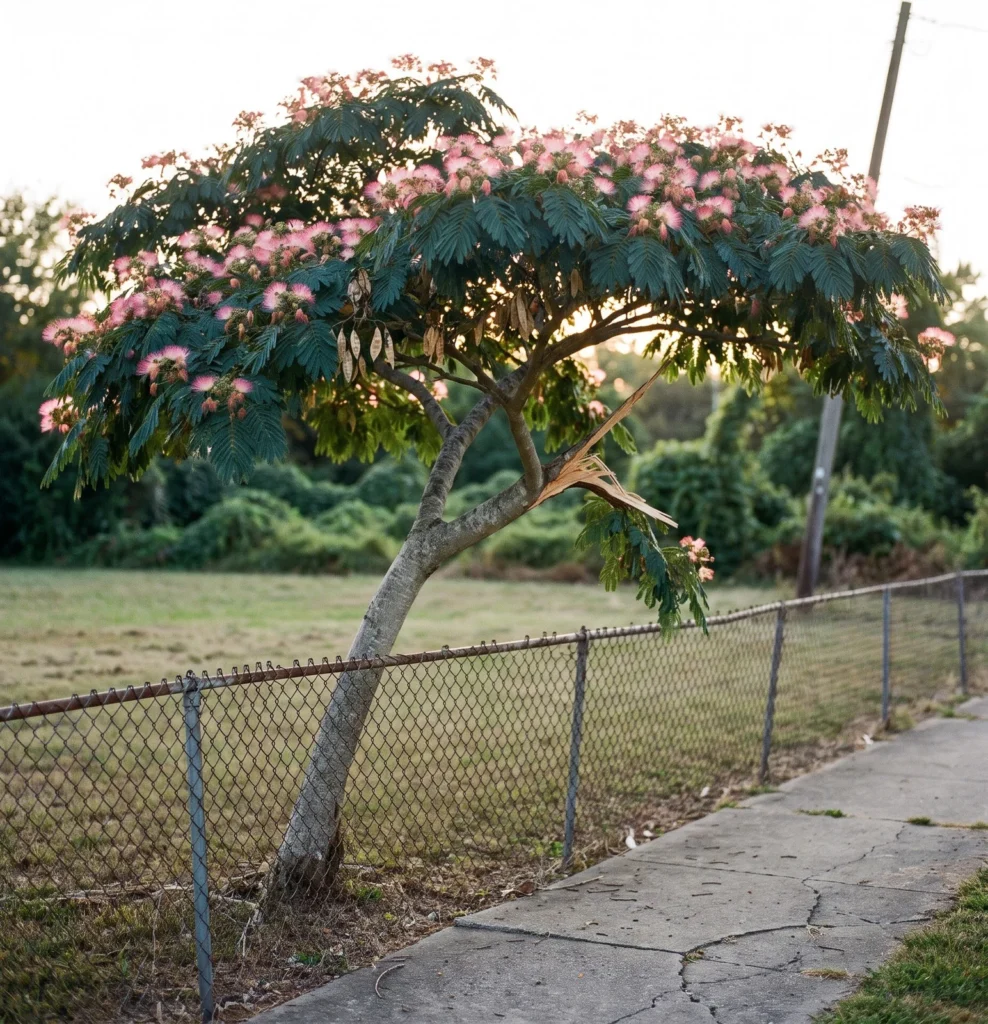
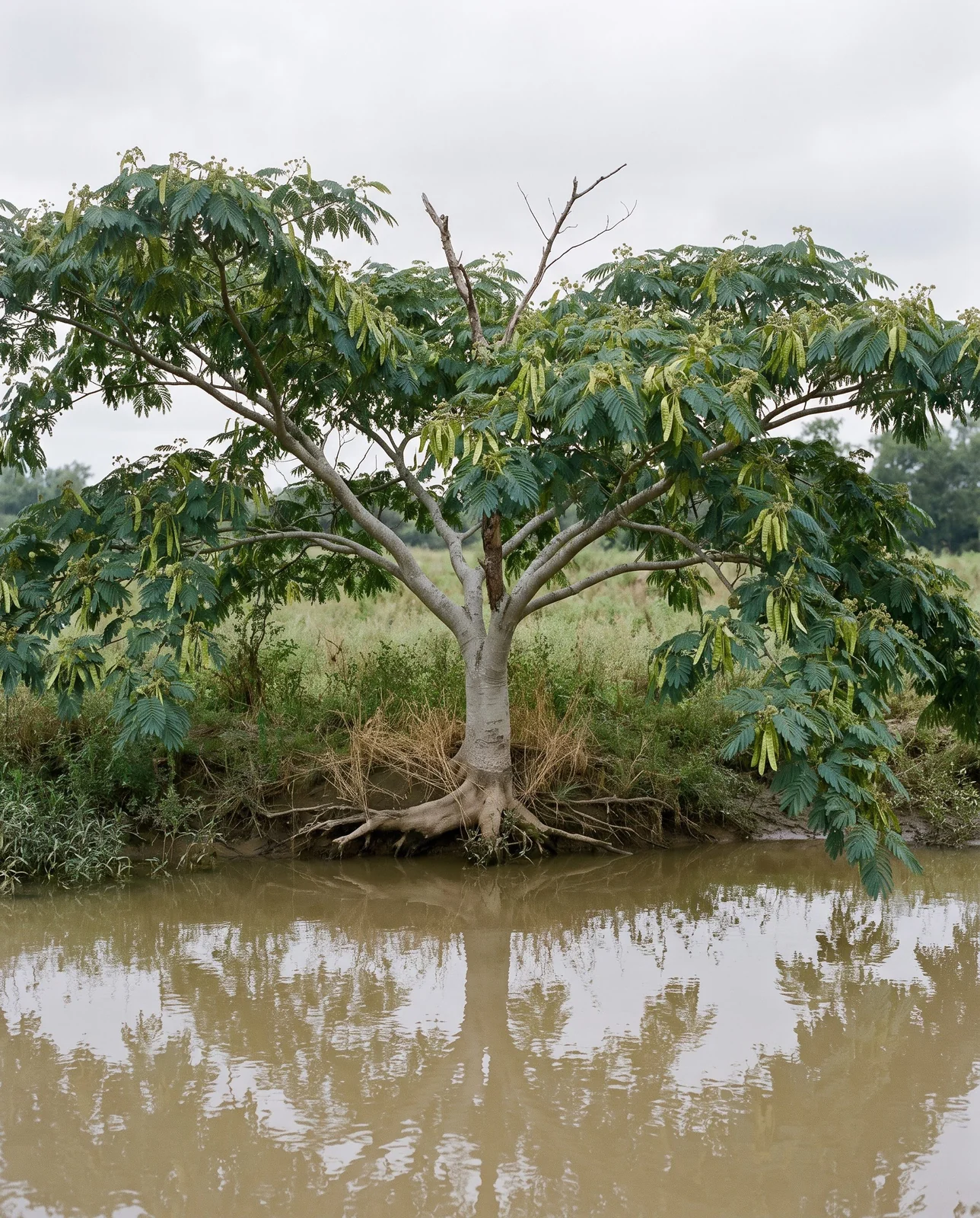
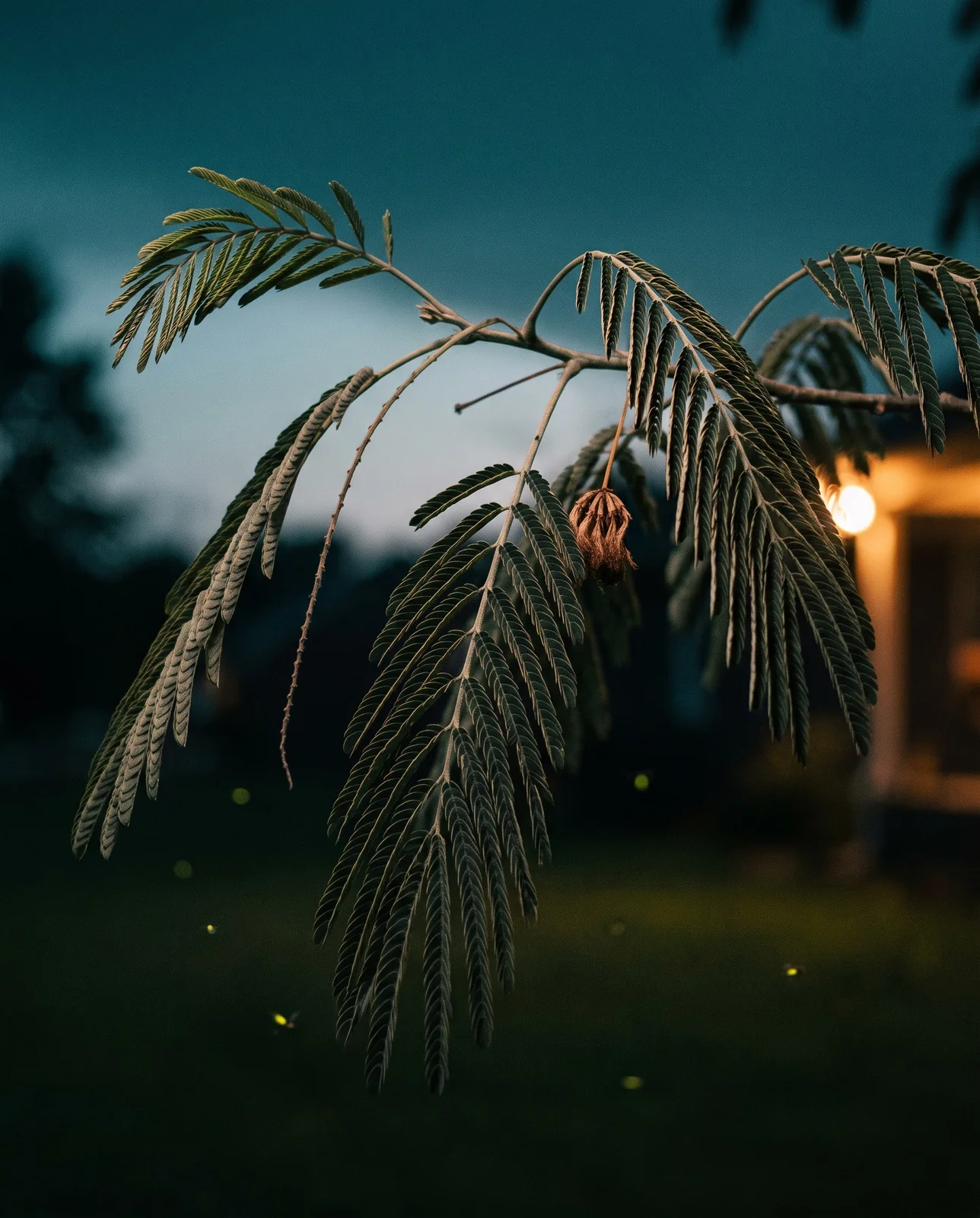
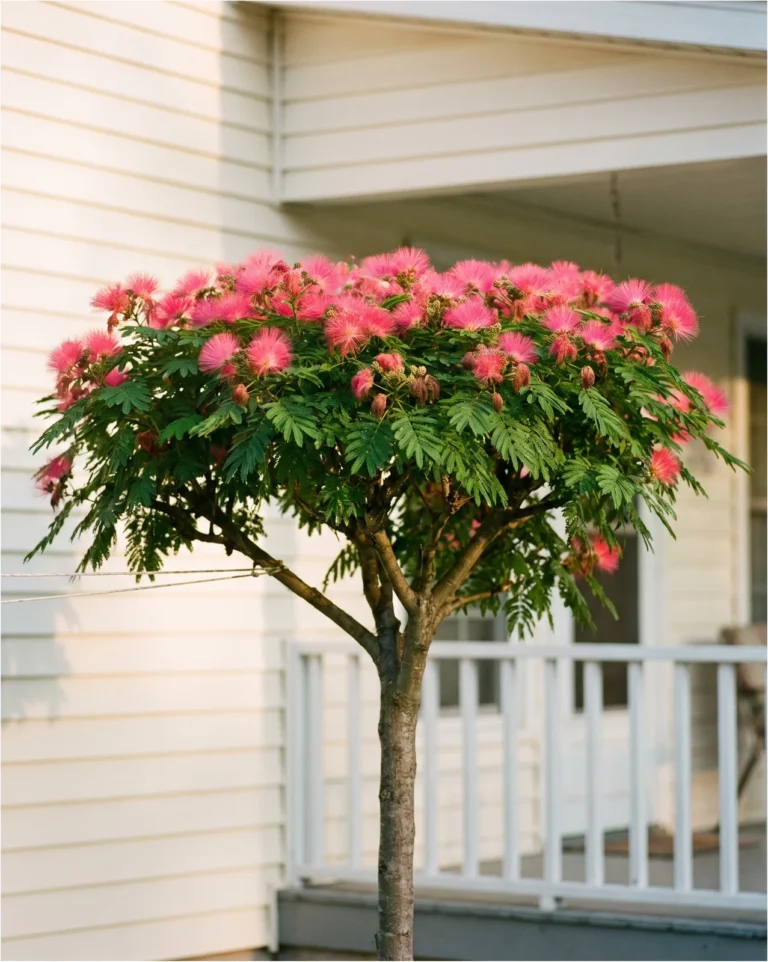
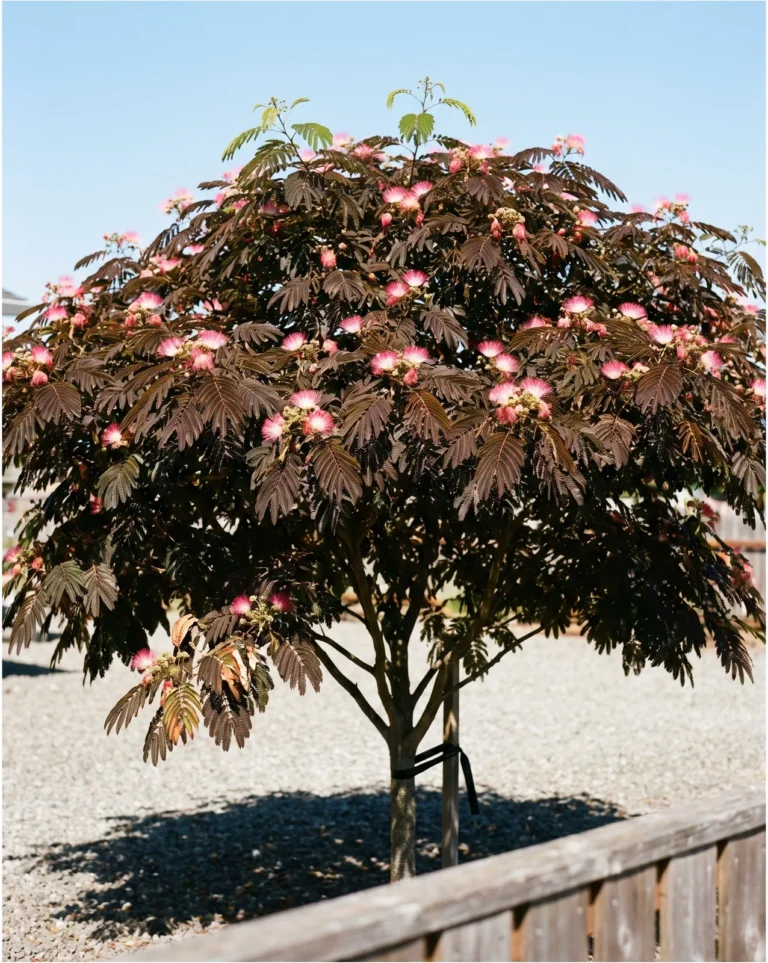
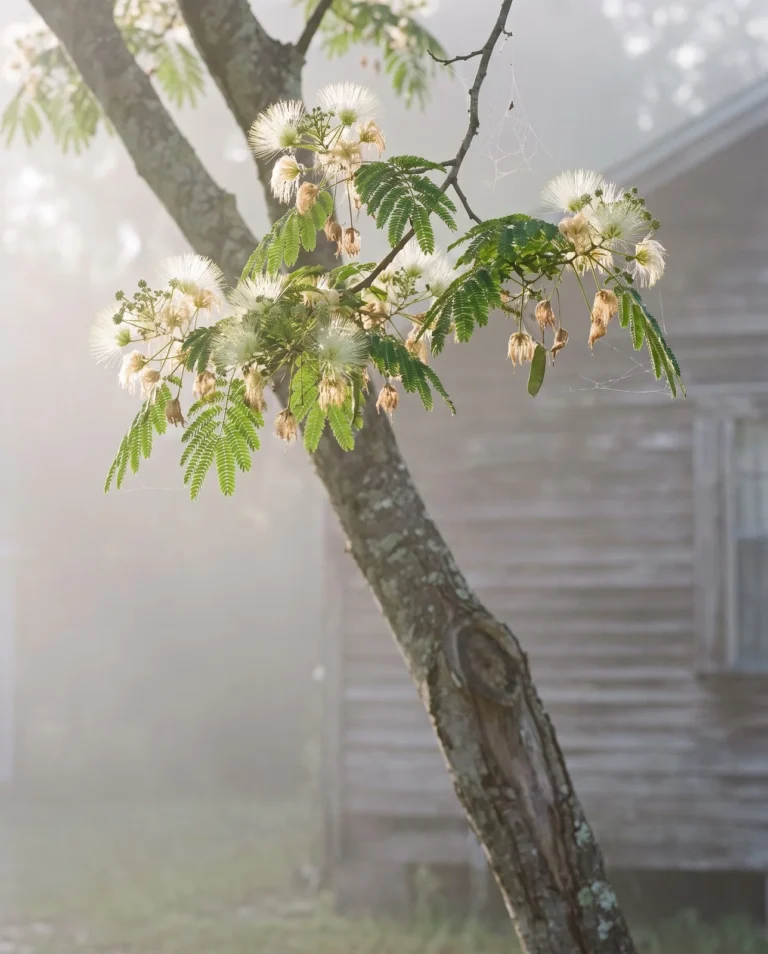
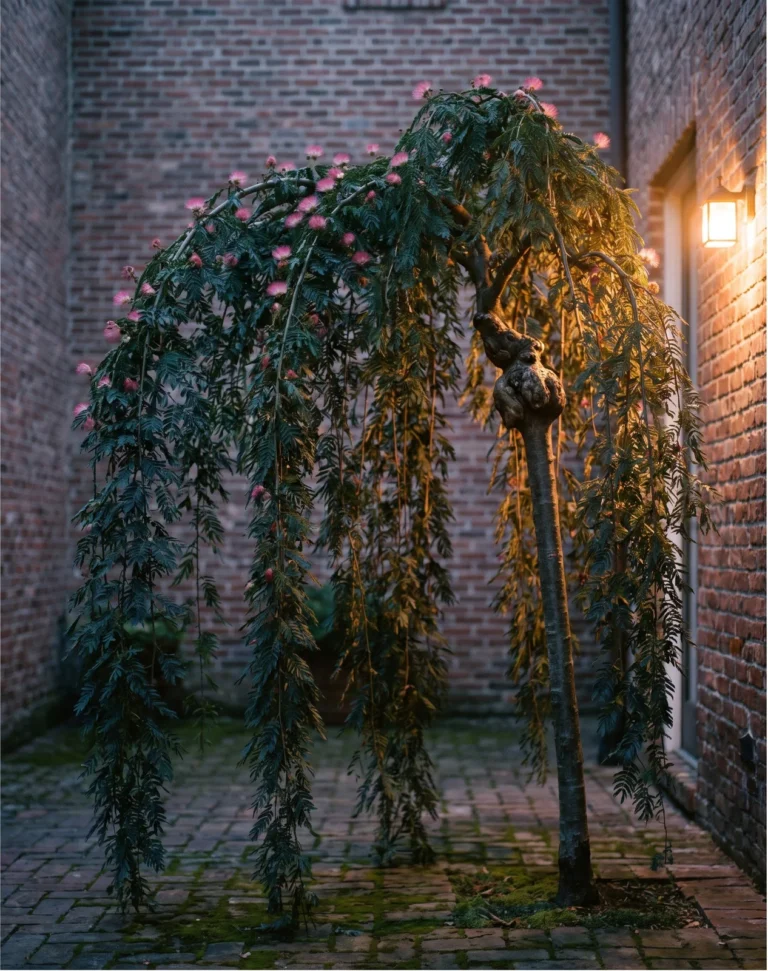
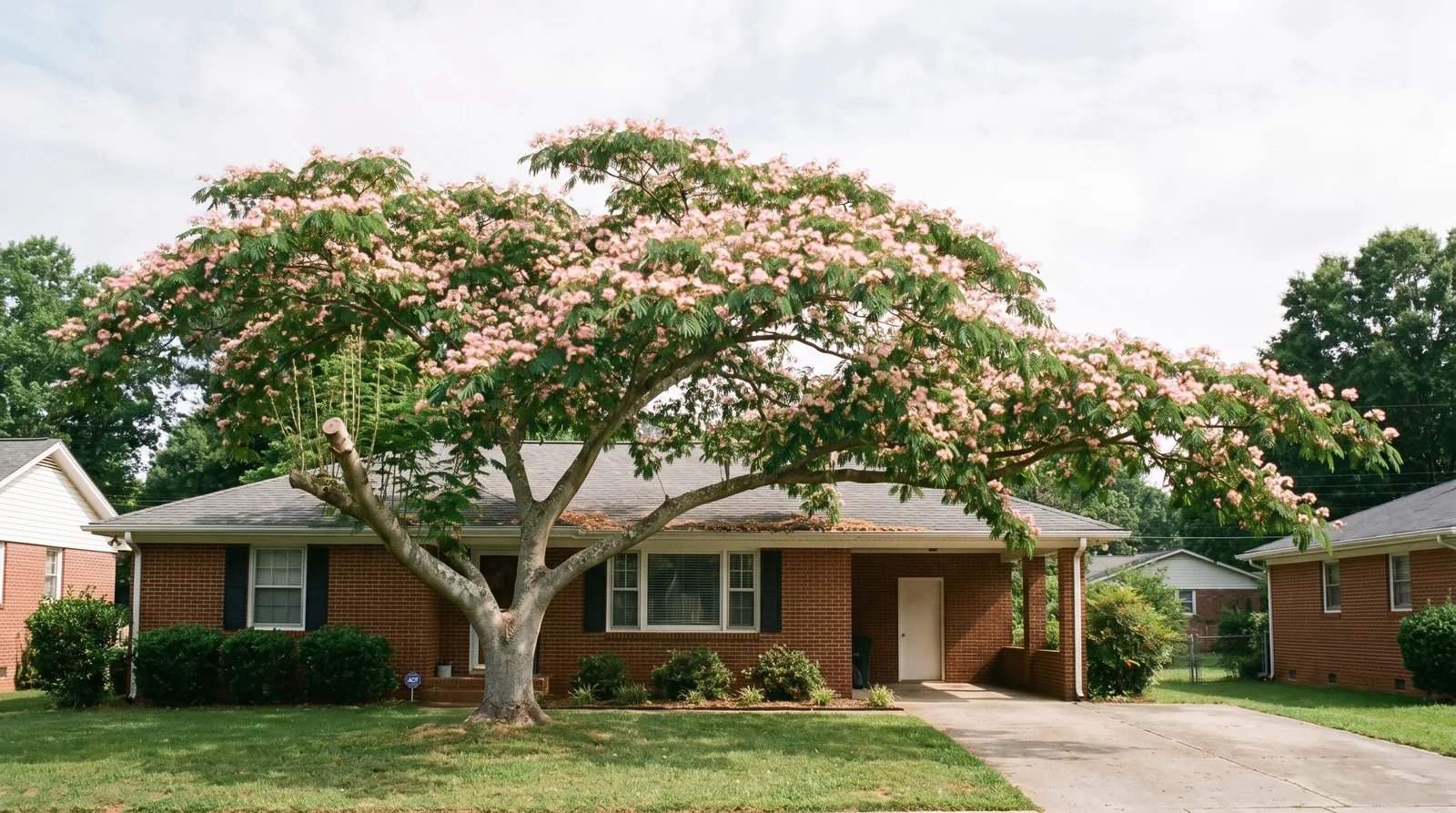
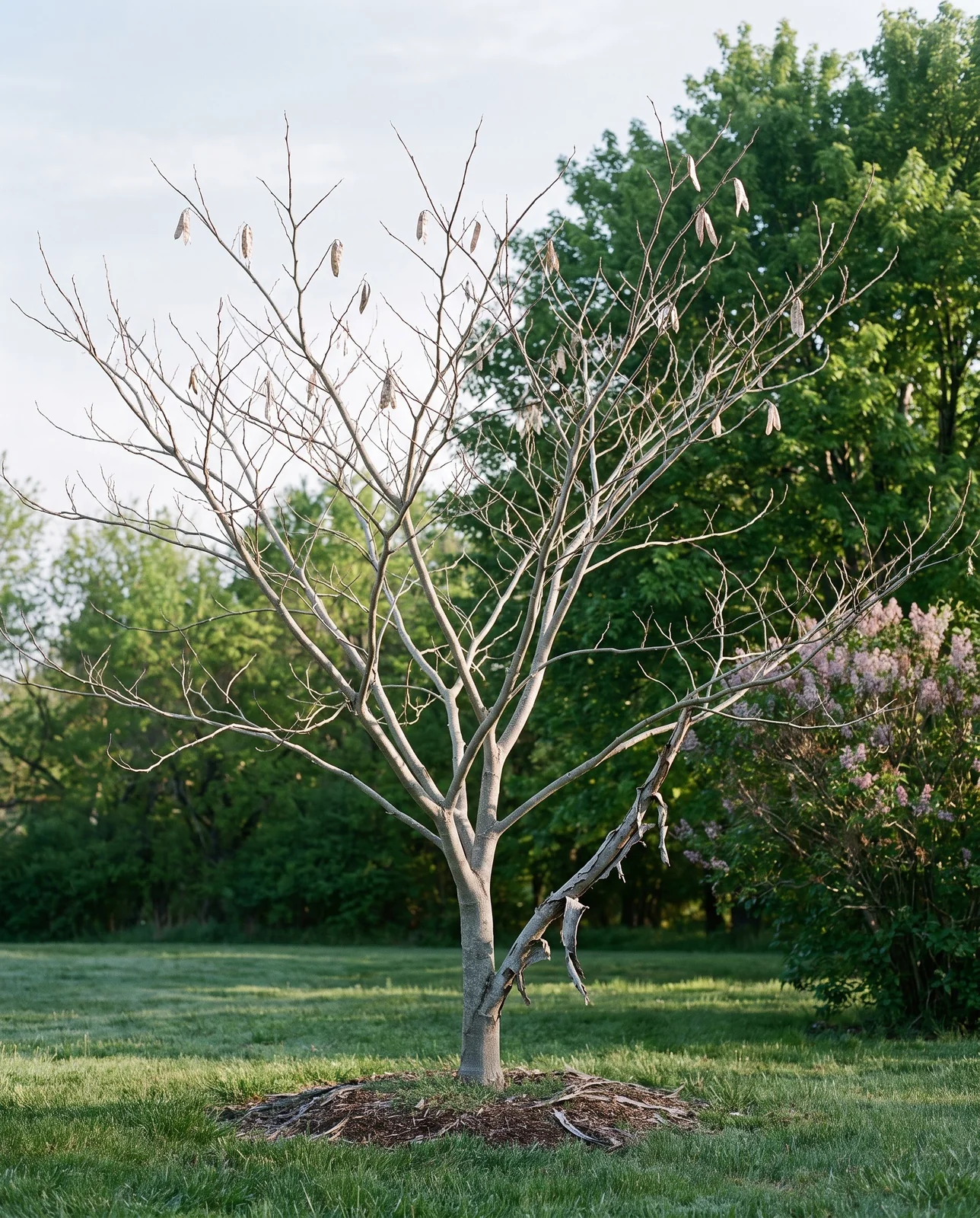
A mimosa tree stands out in every season by its branch shape: a short trunk, widely spreading branches and a broad, flat-topped crown, often growing into a vase shape with an umbrella-like canopy. The fern-like leaves grow on stems 10 to 20 inches long. A young tree carries 4 to 6 pairs of pinnae per leaf, increasing to 20 to 30 pairs as it matures. Each pinna is 2 to 4 inches long and lined with 10 to 20 leaflets about 3/8 inch each. These leaflets close when touched and fold shut at night, giving the canopy an open look after sunset. Smooth, light brown to gray bark covers weak, brittle wood underneath.
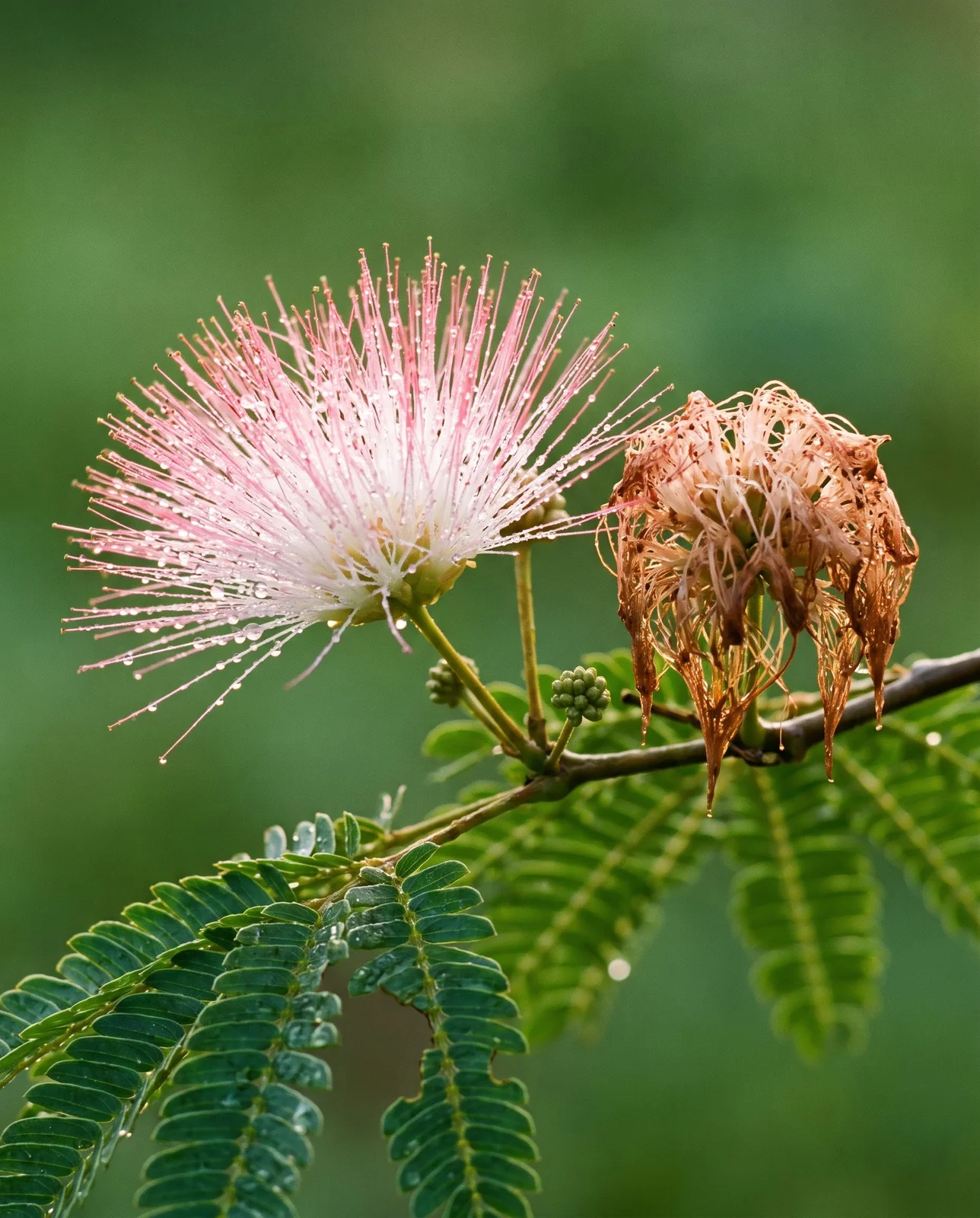
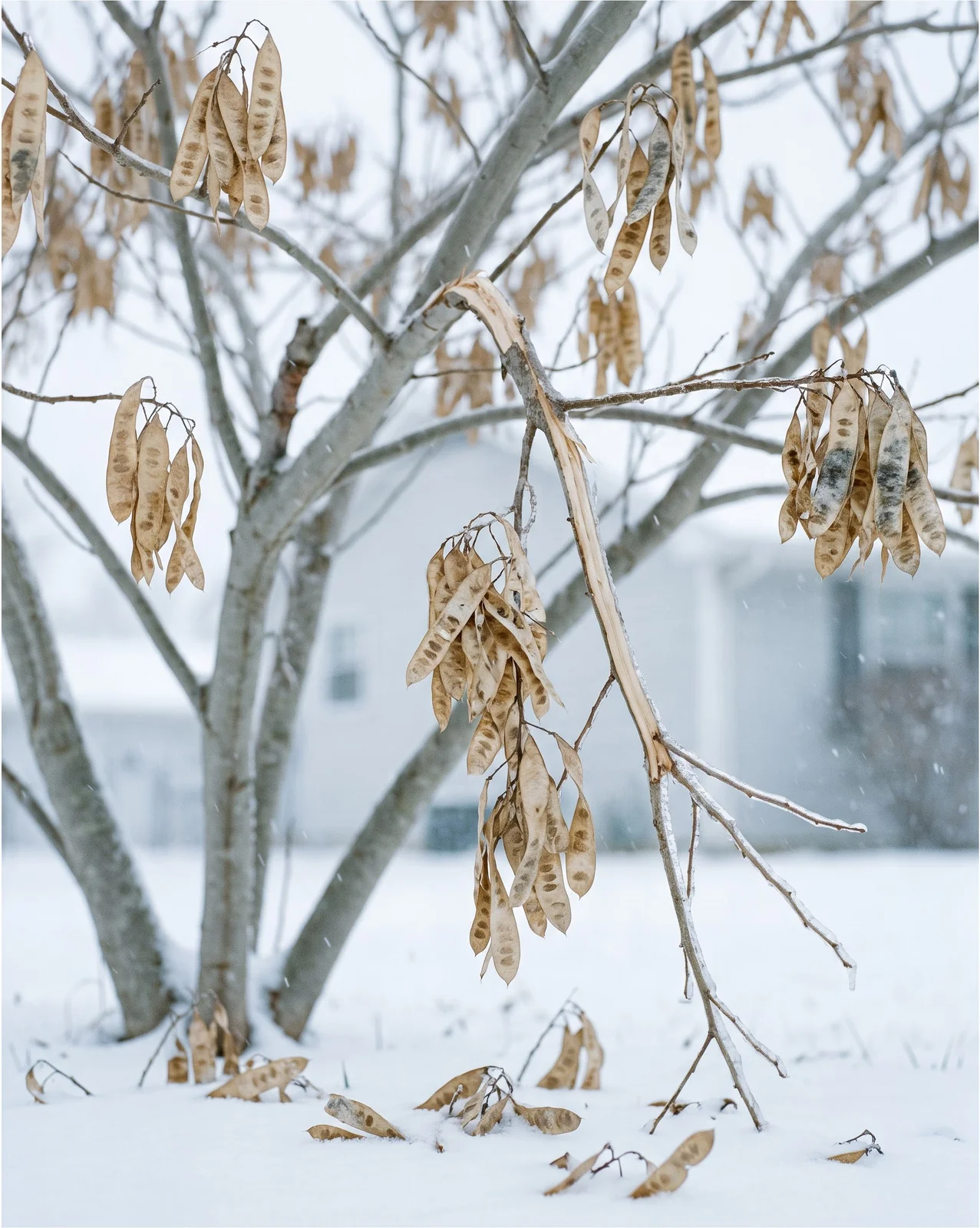
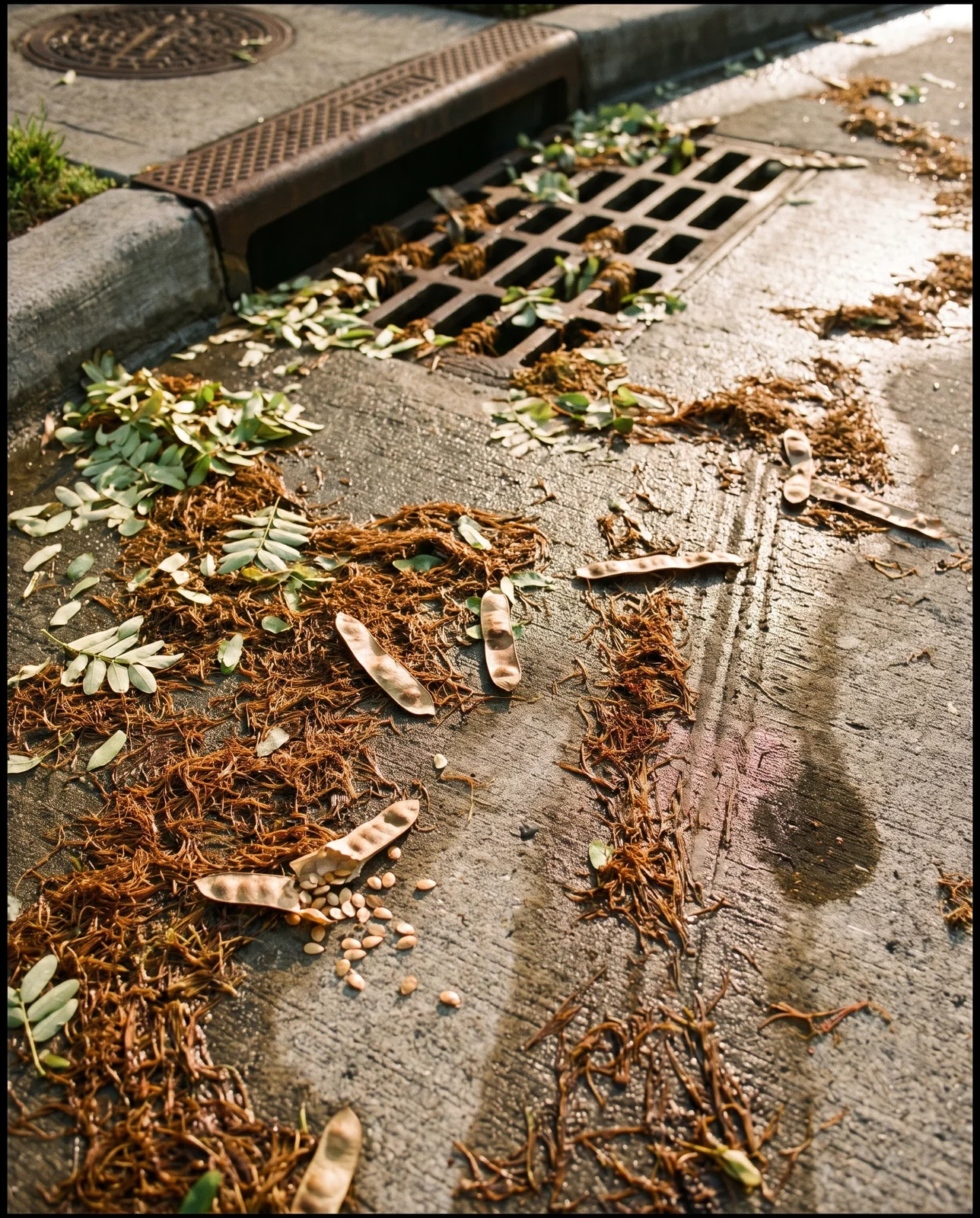
The flowers look like pink pom-poms, each formed by clusters of 15 to 25 fine silk strands. Bloom time moves with local warmth. Flowers appear from late April to early July in Florida, opening about two inches across. Other regions see bloom from May or June into July, while in Missouri the display lasts from May through August, with sweet-scented, tassel-like heads about 1.5 inches across. Flat seed pods first appear in June and mature from August through November. Each pod measures 4 to 8 inches long and about 1 inch wide, holding about 5 to 10 light brown oval seeds roughly 0.5 inches in diameter. The tree typically sheds its seed from September through November, and the pods may hang on the branches through the winter months.
Before you plant one: where mimosa is listed invasive
Mimosa is an invasive threat across much of the Southeast and East, and Florida takes the firmest stand. The tree counts as invasive across northern, central and southern Florida. Official advice warns against planting it for any use, because it spreads fast along roads and disturbed ground. Vascular wilt has killed many trees across Florida, but the advice against planting remains in place. The state gives the tree a Category 1 invasive rating. Some cities even ban planting it because of wilt and its weediness.
Other states treat the tree with similar concern. In Missouri, it counts as invasive, reseeding as far north as central Missouri. State advice there discourages planting it. Georgia places mimosa in Category 1 as a serious problem that invades natural plant communities and displaces native species. Tennessee marks it as an established invasive threat, and North Carolina also lists it. Eleven other jurisdictions also list the tree. Those include the District of Columbia, Florida, Georgia, Kentucky, Louisiana, Massachusetts, New Jersey, South Carolina, Virginia and West Virginia. New Jersey treats it as invasive, while New York currently does not. An invasive rating is not a legal ban, though: Florida still leaves mimosa off its state noxious weed list.
Spreading roots and tough seeds earn those listings. Mimosa adds nitrogen to the soil, forms thick groves from root sprouts, and drops lots of seed spread by animals and water. Most seed falls close to the parent tree, though water, wildlife and wind can carry it much farther. The trees can become a serious problem along rivers, where moving water carries the seeds. The tree makes seed in huge amounts, resprouts fast when cut, and easily invades slopes, disturbed ground and stream banks. It is also allelopathic, which means it releases chemicals that keep other plants from growing near it. While Florida and Missouri flatly call mimosa invasive and discourage planting, Virginia hedges that it may be invasive only in certain ecological situations, asking gardeners to consider that potential before planting.
It is already in my yard: seedlings, stumps and resprouts
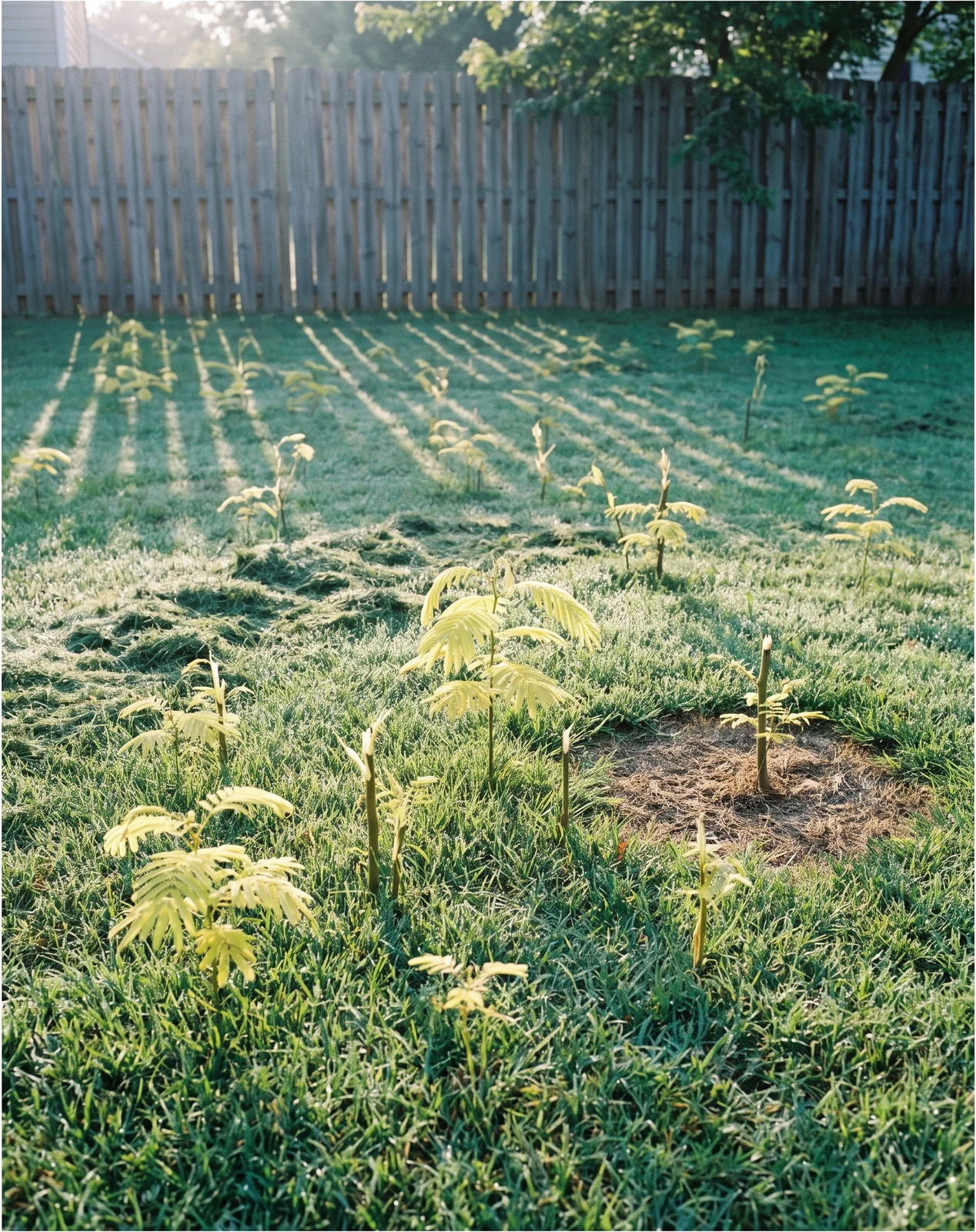
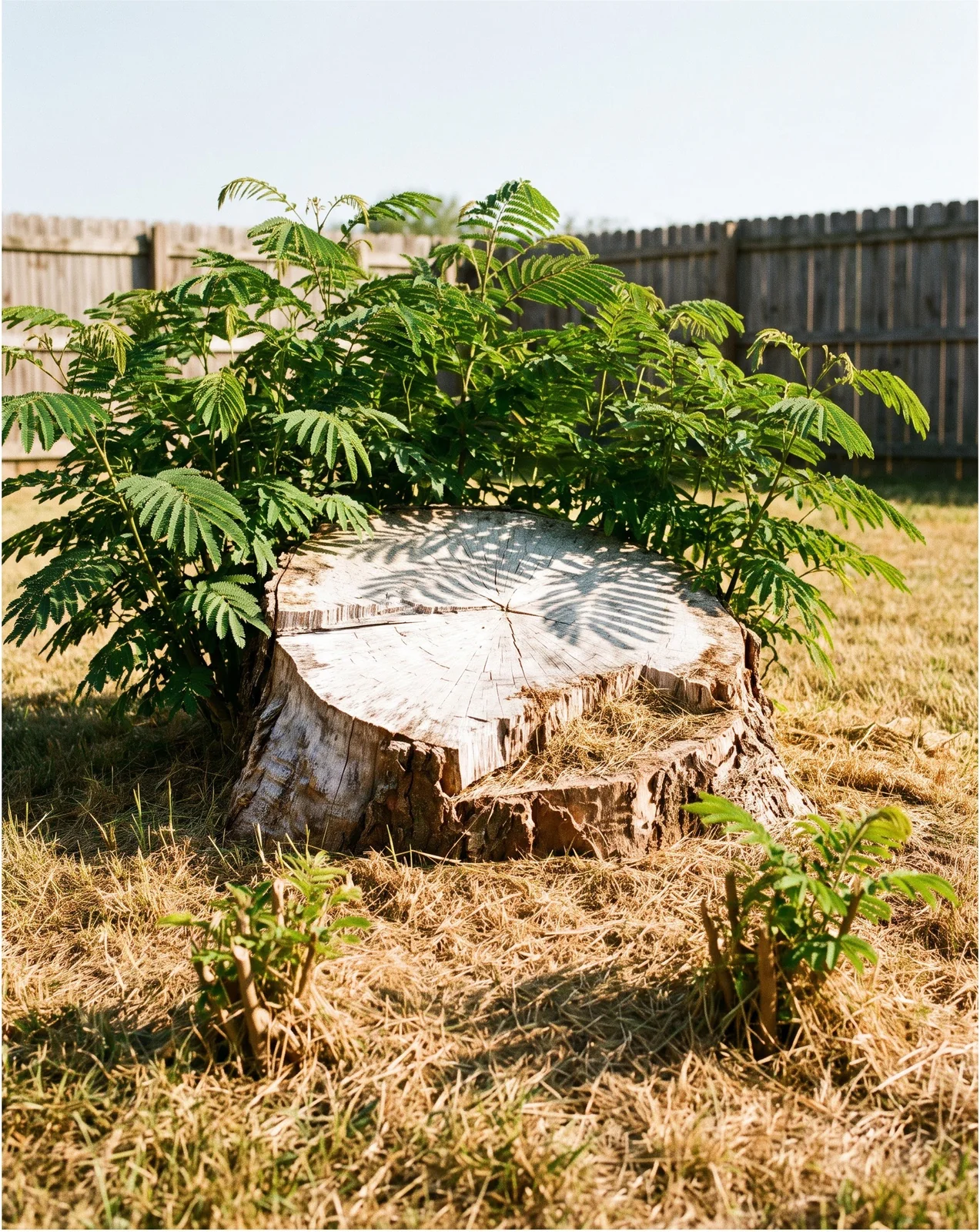
Cutting a mimosa tree down is only the start of the work, because cutting alone will not control it. When damaged or cut back, the tree redirects its energy into suckering and vigorous new sprouts, while unwanted seeds sprout readily in the bare ground. The most effective removal method is cutting the trunk down at ground level, but you have to either cut off new sprouts repeatedly as they appear or apply herbicide to the stump. Timing helps prevent another generation of weed trees. Cutting is most effective when the tree has begun to flower to prevent seed production. Leave a stump of 6 inches or less. If you apply herbicide, spray or paint the fresh cut within about 3 minutes of sawing, because natural turgor pressure in the trunk pulls the treatment into the roots before the cut scabs over.
Seedlings are the easier part of the job if you catch them early. Pull them up by hand as soon as they grow large enough to grasp and before they produce seeds. Make sure to lift the entire root system, because broken root pieces left in the soil can resprout. Girdling or sawing through the lower trunk kills the top of a mature tree. Resprouts are common and may require follow-up treatment for several years until the roots are exhausted. Resprouting happens readily after cutting, and mature trees drop abundant seed that running water can wash across the neighborhood.
Dormant seeds are what turn mimosa removal into a multi-year project. Impermeable seed coats protect seeds in the soil for years, with tests showing 90% viability after 5 years, and a related Albizia species has shown 33% germination after 50 years in open storage. Most of that seed drops right around the base of the tree. Those long-lived seeds and persistent stump sprouts explain why mimosa is difficult to remove. A yard that held a mature tree for years holds a deep seed bank, so pulling seedlings continues long after the stump is gone.
What to plant in place of a mimosa tree
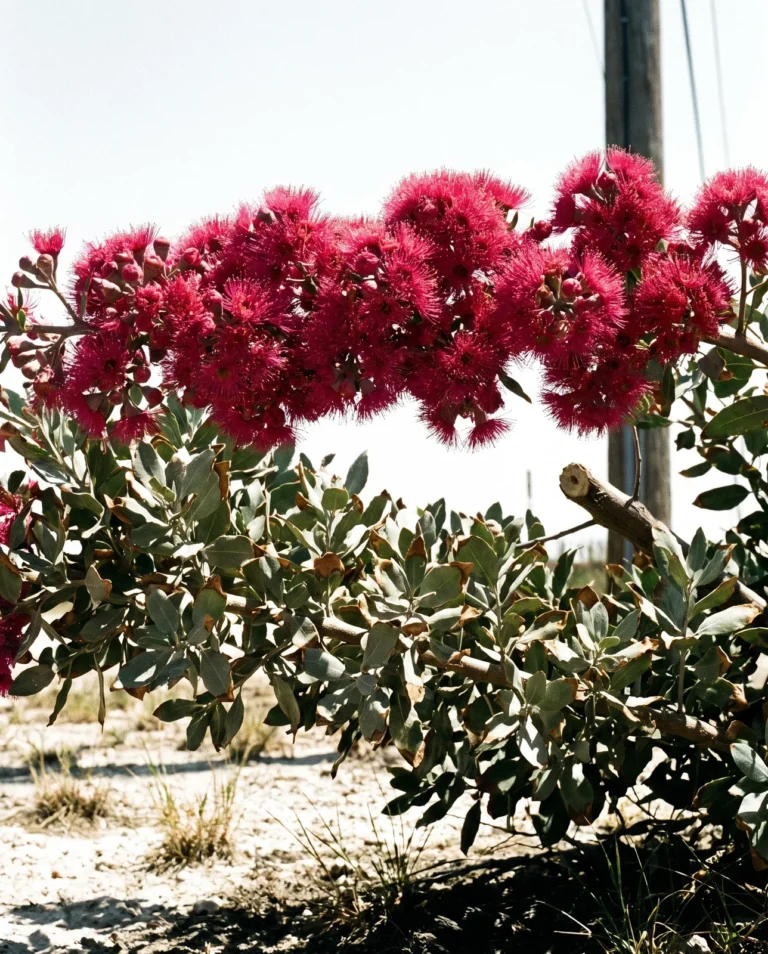
If you want a native tree to replace a mimosa, good choices include redbud, flowering dogwood, fringe tree, or smoke tree. In warm southern gardens, sweet acacia (Acacia farnesiana) and red bottlebrush give you a similar look without the invasive spread.
Mimosa tree hardiness zones and the zone 5 question
Mimosa grows reliably across USDA zones 6 through 9, though its warmth tolerance can reach into zone 10b. At its northern edge, it survives winter down to zone 6. Elevation also creates a colder boundary, and the tree is seldom found above 3,000 feet because winter cold limits its survival.
Standard mimosa is not reliably winter hardy in zone 5, and prolonged cold close to 0 F will damage the tree. A few cold-hardy selections push further north. 'E. H. Wilson' is reported hardy to zone 5, while the pink-flowering form rosea handles zone 5b and reaches 15 to 25 feet tall. You will also find 'Rosea' and 'Ernest Wilson' grouped as one selection, bright pink, hardier than the species, and 10 to 15 feet tall. Whether those names belong to one plant or two remains unsettled.
When and where to plant a mimosa tree
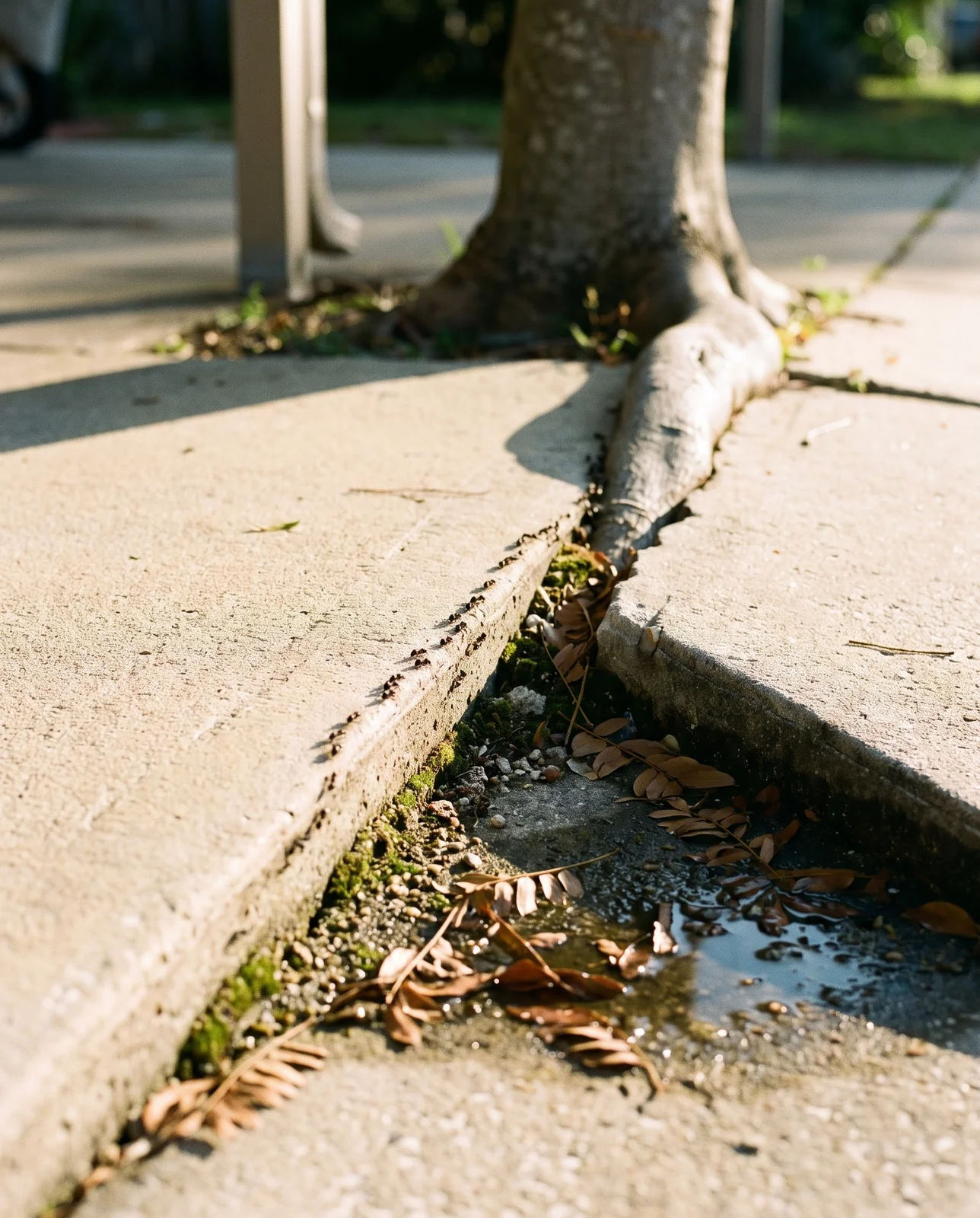
Plant a mimosa in spring after the last frost, once the soil warms to 55 to 60 degrees F. Give it plenty of room, allowing 24 to 60 feet of open planting space. Keep it well back from paving, because the tree typically grows from only two or three large surface roots at the trunk base. Those thick roots can lift walks and patios, and they make transplanting difficult as the tree ages.
Sun, shade and why a mimosa will not bloom
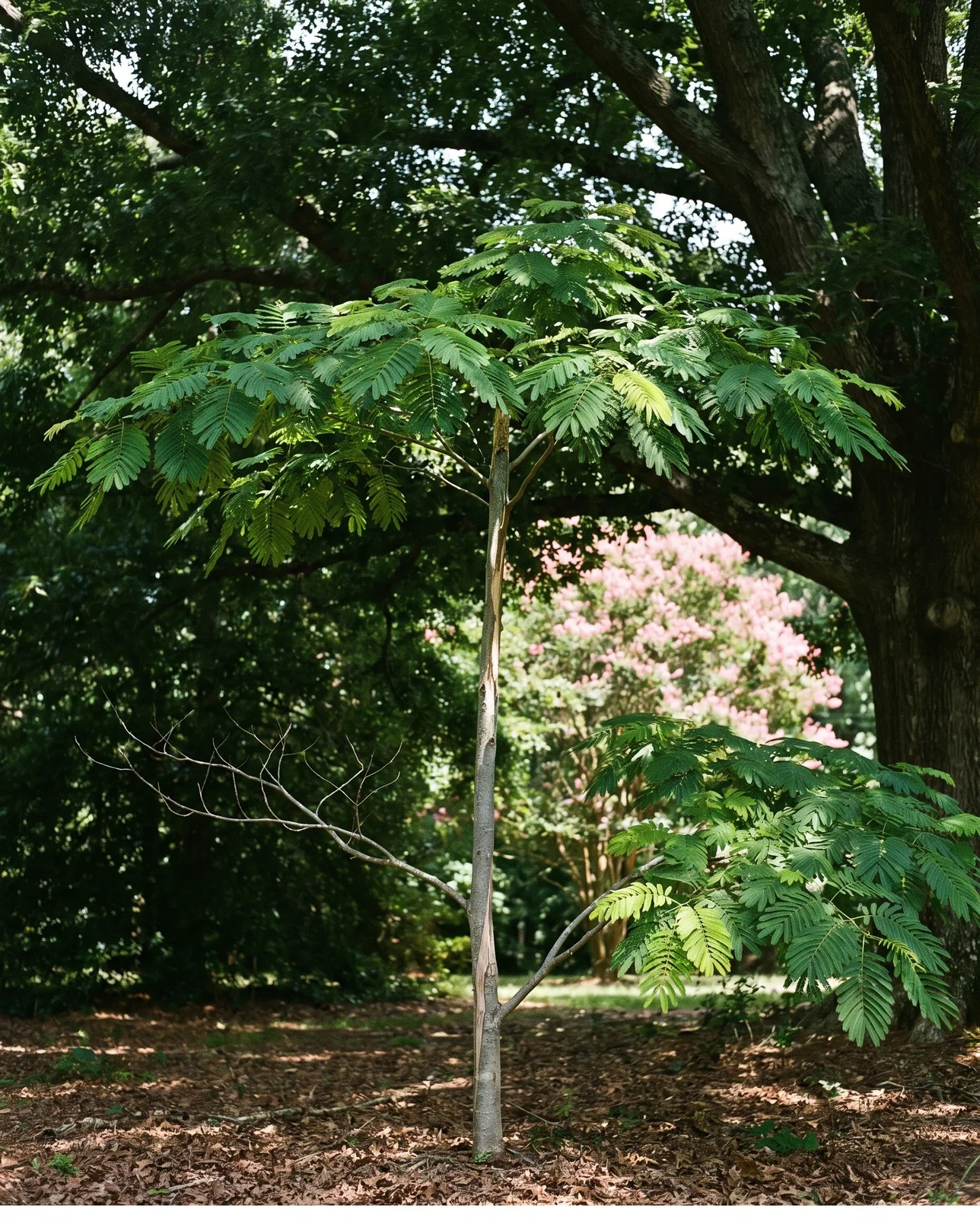
When a healthy mimosa refuses to bloom, shade is usually the reason. The tree grows and flowers best in full sun, although it tolerates light shade. In practical terms, full sun means 6 or more hours of direct sunlight each day, while partial shade delivers only 2 to 6 hours. A tree in partial shade may produce lush foliage, but it lacks the light needed to flower well. If a tree that bloomed well in past years stops, surrounding trees have often grown tall enough to cast it into shade.
Yellow leaves on a mimosa, and the cause with no controls
Yellow leaves on a mimosa can point to several issues, but the most dangerous is Fusarium wilt. This common and lethal disease occurs from New York southward, as well as in Louisiana, Arkansas and California. Albizia species are the only known host for the fungus, which clogs the vascular system, blocks sap movement, and brings about relatively rapid tree death. The spores spread through air, water and insects, with water acting as the primary carrier. Chemical controls are largely ineffective against the infection.
The first obvious signs usually appear in early to mid-summer, with yellowed, stunted, and wilted foliage on one or several branches. Those sick branches may drop their leaves prematurely later in summer, while yellowing and wilting continue spreading to more branches through fall. As the disease moves forward, cracks open in the bark, sometimes weeping gum or a white, frothy liquid with a fermented smell. Symptoms can also unfold differently: the foliage may wilt, dry, and shrivel while remaining green or yellowish for a time. Those leaves eventually fall as the branch dies, sometimes leaving only one side of the tree visibly affected in the first year.
Fusarium wilt is a lethal disease for which there are no controls. Even after the top of the tree dies, the roots may stay alive and continue pushing up shoots from the base of the trunk for some time. Your best option is to clear the site and replant with a tree from a different genus, since most tree species are not susceptible to this fungus. A sunny spot can take a crape myrtle for summer flowers, or a jacaranda for a similar ferny canopy in warm southern climates.
Wilt or something else
Three problems make mimosa foliage look sick, easily separated by where symptoms start and what appears under the bark.
What goes wrong with a mimosa tree
Common mimosa problems, starting with the one there is no treatment for.
Symptoms: sudden wilting and dieback from a common and lethal disease. What to do: there are no controls, and the fungus can spread to adjacent mimosa trees through underground root grafts.
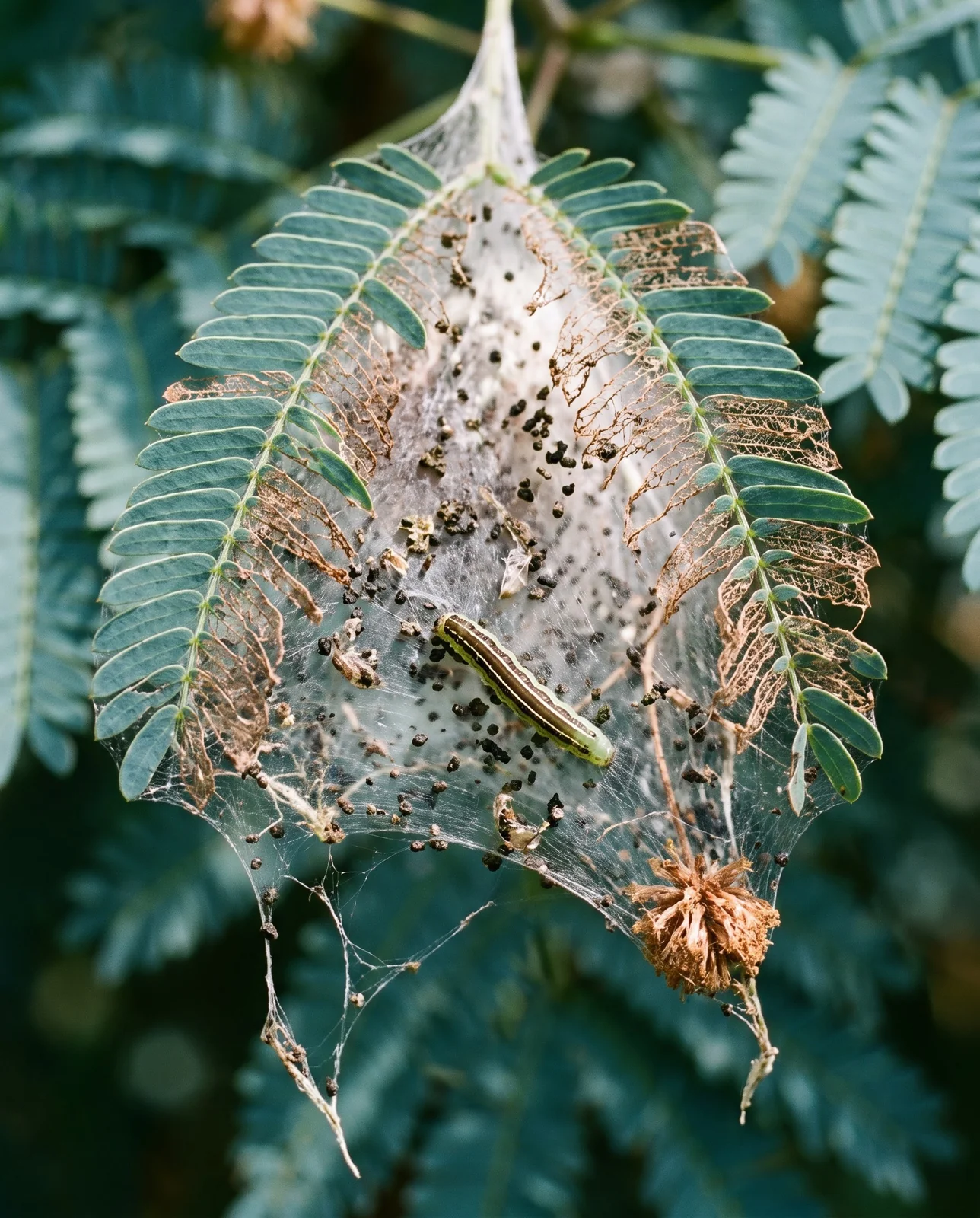
Symptoms: webbing and defoliation from moths whose adults emerge in late May to early June. What to do: clear away leaf litter under the tree, because the pest overwinters as cocoons in fallen leaves and bark crevices.
Symptoms: failing branches, stippled leaves, or rotting roots. The tree is susceptible to mites, shot hole borer, Armillaria fungus, root rot, and cottony cushion scale.
Symptoms: dense patches of volunteers, because self-seeding can produce numerous seedlings around an established tree.
The mess a mimosa tree makes
Litter is the complaint that outlasts the flowers, keeping you cleaning up for much of the year. The branches are brittle, creating a serious litter problem from broken limbs, fallen blossoms, and heavy seed pods. Between steady litter and disease risks, mimosa is generally considered an attractive but inferior landscape tree, best avoided where wilt is a problem.
Is a mimosa tree toxic to dogs and livestock
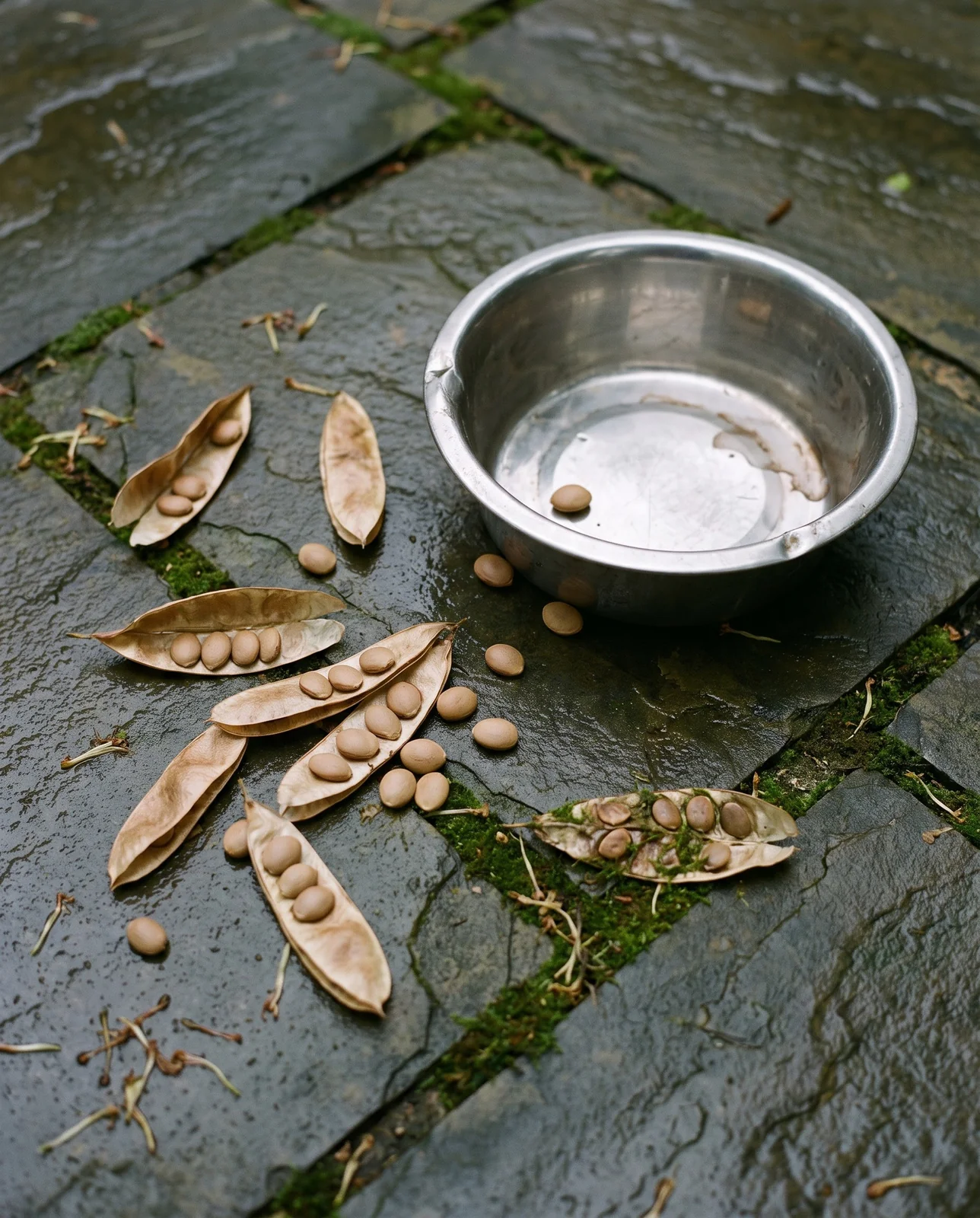
Mimosa seeds contain a neurotoxin that can be toxic to dogs and livestock if eaten, making the tree an acknowledged problem for dogs. Throughout the plant, alkaloids block vitamin B6, which animals need to produce neurotransmitters like GABA. Both seeds and leaves carry a poisoning risk, and related African Albizia species are well known for poisoning livestock.
Poisoned animals show exaggerated responses to stimuli, muscle tremors, abnormal neck posture, backing and turning behavior, and convulsions. Animals that eat a large amount in a short period may suffer convulsions that last a few minutes and recur. In feeding trials, sheep showed poisoning symptoms 12 to 24 hours after eating 1 to 1.5% of their body weight in ground pods. The ASPCA plant list does not include mimosa, though that guide compiles the most common plants and is not all-inclusive.
The bark and flowers were used historically in China to try to relieve anxiety, stress and depression. That reflects traditional practice without medical proof, and no preparation, dose or verified effect comes with it.
Pruning a mimosa tree and its weak limbs
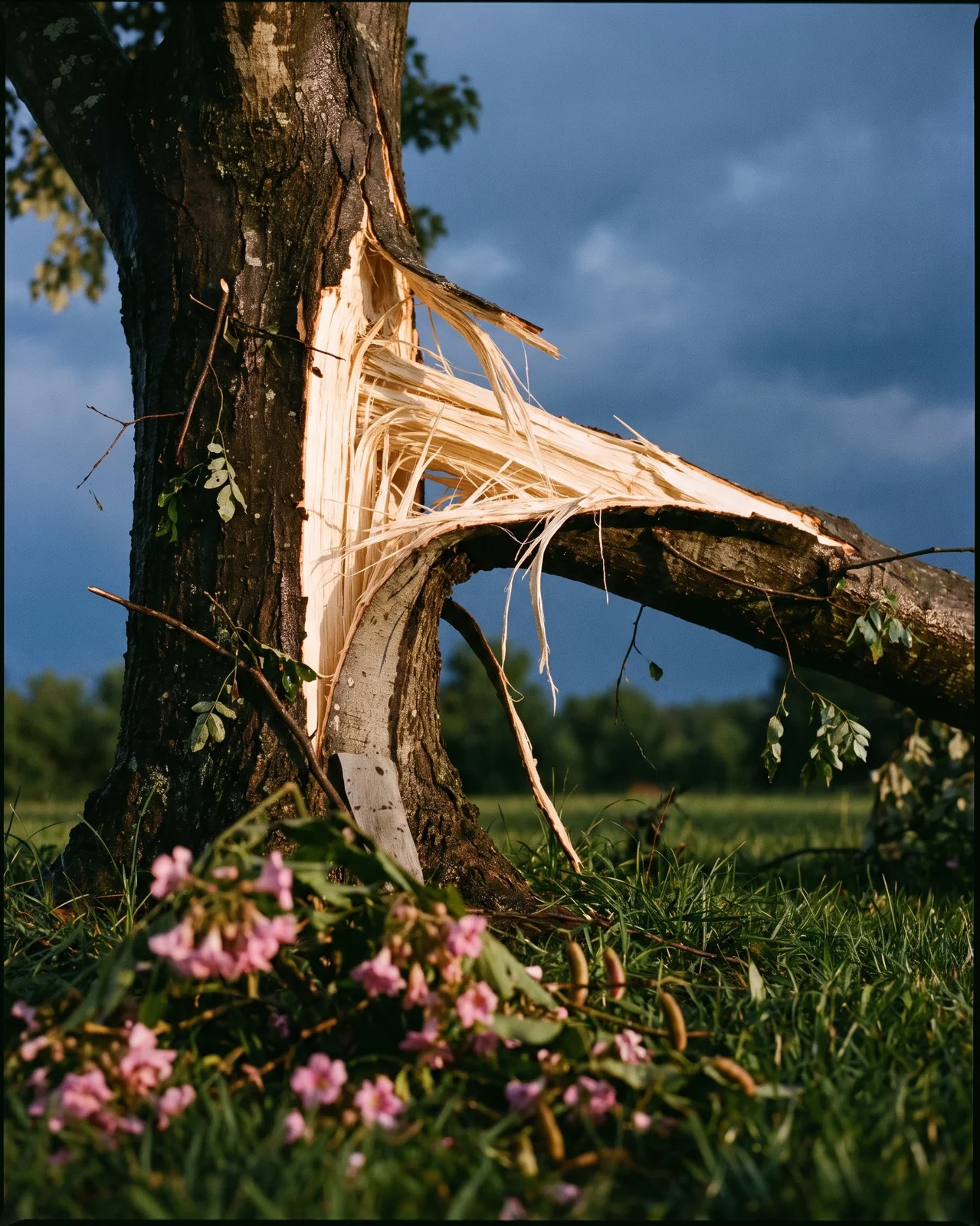
Pruning a mimosa is mostly a matter of clearing broken wood. The limbs are weak and may be damaged by strong winds, snow or ice. The wood is brittle and tends to break during storms, though the pieces are usually not heavy enough to cause damage.
Mimosa tree varieties worth telling apart
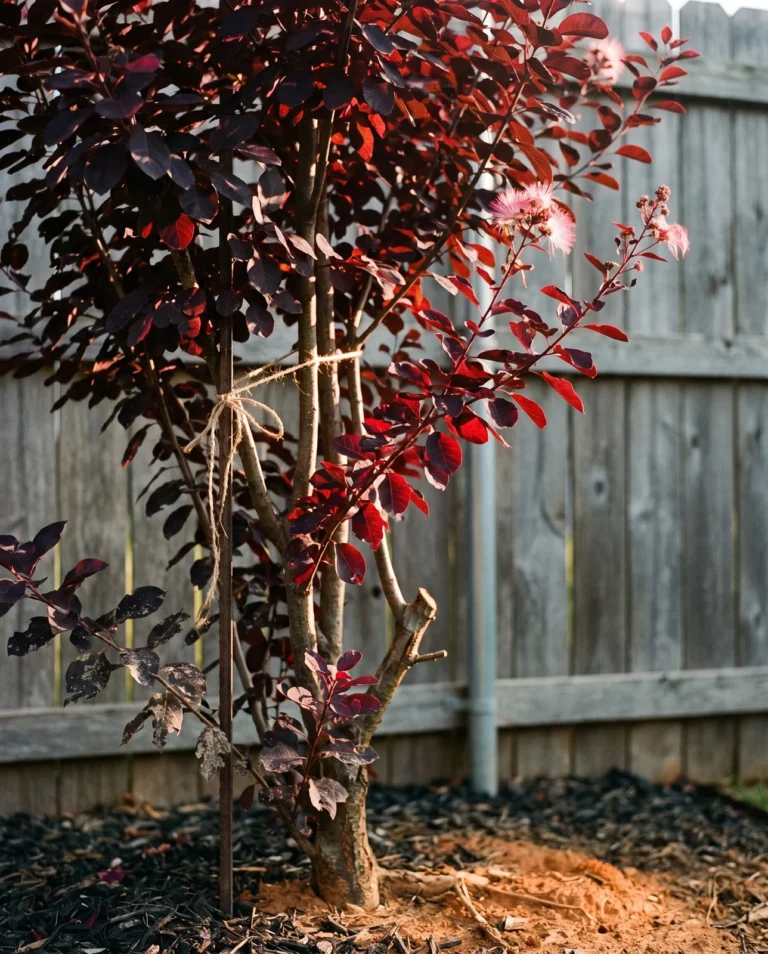
Cultivars differ in flower color, foliage and ultimate size, while cold hardiness and wilt resistance vary between them. Developing resistant trees required screening about 7,600 seedlings, and a later introduction, Union, was released in 1979 without wide testing at the time.
Soil and water for a mimosa tree
Mimosa asks for very little from garden soil and handles dry weather easily. It grows in clay, loam or sand across acidic to alkaline ground, handling occasionally wet soil alongside high drought tolerance. Salt asks for more caution: the tree has low tolerance for salty soil, though it shows moderate tolerance for airborne salt spray.
Mimosa tree height and spread
Canopy spread is the main dimension to plan around, because it usually outpaces the tree's height. Mature trees generally reach 20 to 40 feet tall and spread 20 to 50 feet wide. In Florida, they tend to stay smaller at 15 to 25 feet tall with a spread of 25 to 35 feet. Some trees reach up to 40 feet tall. Wider estimates place the tree at 10 to 50 feet tall under a canopy of about 20 to 50 feet. Because the spread usually matches or exceeds the height, a mimosa planted for shade easily sprawls across property lines.
Growing a mimosa tree from seed or cuttings
Mimosa grows easily from seed or from root cuttings. The method matters if you want a specific tree, because wilt-resistant selections must be propagated from root cuttings. Deliberate breeding takes patience, as natural cross-pollination resulted in only a 1.9% seed set in trials. For home gardeners, sowing seed by hand is rarely needed when wild seedlings already sprout freely without any help.
What to expect from a mimosa tree over the years
How a mimosa develops over time, from its first quiet springs to maturity.
The first springs can test your patience. Mimosa does not leaf out until very late in spring, so do not rush to cut down what looks like a dead tree. A bare crown while surrounding trees are in full leaf is typical for this plant well into the season.
The middle years bring the heavy flowering people plant it for, along with abundant seed. Because the tree readily germinates from abundant seed, a flowering specimen steadily drops seedlings across your yard and into land downstream.
Later years often bring disease. Mimosa is extremely susceptible to Fusarium wilt, though the disease is less of a problem in drier, colder regions. Your local climate largely determines whether the tree will last.
Mimosa tree myths worth clearing up
Five common misunderstandings about mimosa, from mistaken identity to disease and regrowth.
The myth: The mimosa tree and the sensitive plant are the same thing
The reality: They belong to different plant genera. The mimosa tree is Albizia julibrissin in the genus Albizia. The sensitive plant is Mimosa pudica, a branching shrub growing to about 3 feet tall with spiny stems.
The myth: The yellow mimosa at the florist is a branch of this tree
The reality: The florist flower is Acacia dealbata, easily told apart by its silvery, bluish-gray foliage and round yellow flower heads.
The myth: Yellow leaves mean the tree needs feeding
The reality: Fertilizer will not help if the tree is sick. Yellowed, stunted and wilted leaves on branches in early to mid-summer are the first noticeable symptoms of mimosa wilt. It is a lethal disease for which there are no controls.
The myth: Cutting it down gets rid of it
The reality: Taking down the trunk is rarely the end of the tree. Mimosa will resprout after being cut back or damaged. Because the roots spread by suckering, new shoots commonly push up after cutting, so you have to follow the cut with herbicide or repeated cutting.
The myth: It cannot be a real problem, the nursery sells it
The reality: A plant can be invasive without being illegal to sell. In Florida, mimosa holds a Category 1 invasive rating, but it is not classified as a state-listed noxious weed.
FAQ
Are mimosa trees good for your yard?
Generally not: mimosa is not recommended for landscapes. It reseeds itself and becomes weedy as far north as central Missouri, where planting it is discouraged.
Is a mimosa tree poisonous to dogs?
Yes, if they eat the seeds. The seeds contain a neurotoxin that can be toxic to dogs and livestock when ingested, making the tree a problem for dogs. The ASPCA has no dedicated entry for mimosa, but its list compiles the most frequently encountered plants and is not meant to be all-inclusive.
Why are the leaves on my mimosa tree turning yellow?
It is often Fusarium wilt, a lethal disease for which there are no controls. The first readily noticeable symptoms are yellowed, stunted and wilted leaves on one or several branches in early to mid-summer. A milder cause is Cercospora leaf spot, the only leaf disease of mimosa in the country, which is generally not serious enough to warrant treatment.
Can a mimosa tree be grown in zone 5?
Not reliably. The species is not reliably winter hardy in zone 5 and is hardy to zone 6. A cold-hardy selection called 'E. H. Wilson' is reported hardy to zone 5, and f. rosea is cold hardy to zone 5b.
What is the best time of year to plant a mimosa tree?
Plant in spring after the last frost, once soil temperatures reach 55 to 60 degrees F.
How long does a mimosa tree live?
Average lifespan is about 30 years, though the tree is often short-lived at 10 to 20 years, surviving only 10 to 20 years in the Northeast.
Does cutting a mimosa tree down kill it?
No. If you cut it back or damage it, the tree will resprout. Suckering helps the plant spread, which makes new sprouts common after a cut, so dealing with them takes herbicide or repeated cutting.
Are there wilt resistant mimosa trees?
Not reliably: three selections are reportedly wilt-resistant, but resistant cultivars are not widely available in the nursery trade. Strains of the fungus have been reported to overcome that resistance, and it also appears to break down where root-knot nematodes are present. In trials, when 600 vigorous survivors were reinoculated, 312 were still alive after 7 months, but only 78 were symptomless the following spring.
Is the mimosa tree the same as the sensitive plant?
No. The mimosa tree is Albizia julibrissin in the genus Albizia, while the sensitive plant is Mimosa pudica in the genus Mimosa. It is a small branching shrub growing to about 3 feet tall with spiny stems and leaves that fold when touched.
How wide does a mimosa tree get?
A mature mimosa typically spreads 20 to 50 feet wide and grows 20 to 40 feet tall. In Florida, trees tend to stay smaller, spreading 25 to 35 feet wide and reaching 15 to 25 feet tall.
Interesting tips
- Brown discoloration can be found in the sapwood of trunks and branches even before leaves wilt. On cut stems, the discoloration may appear as complete rings, and dark rings are present in the roots as well.
- The fungus enters through the roots and can be carried over in seed from diseased trees, so avoid collecting seed under a tree that died.
- An injection of pyridoxine can reverse the effects of the tree's toxins, so let your vet know if an animal eats the pods.
Related Guides & Flowers
Wisteria
The other Asian import Southern gardeners inherit with the house and then argue about.
Magnolia
The Southern flowering tree readers look at once a small one has to come out.

Cherry blossom
The other pink flowering tree planted for a few weeks of color a year.
Pink flowers
A run through pink garden flowers for anyone who came here for the powder puff.
Enjoying our flower guides? Add YourFlowersGuide as a preferred source on Google. It helps more readers find us.
Add to Preferred Sources